

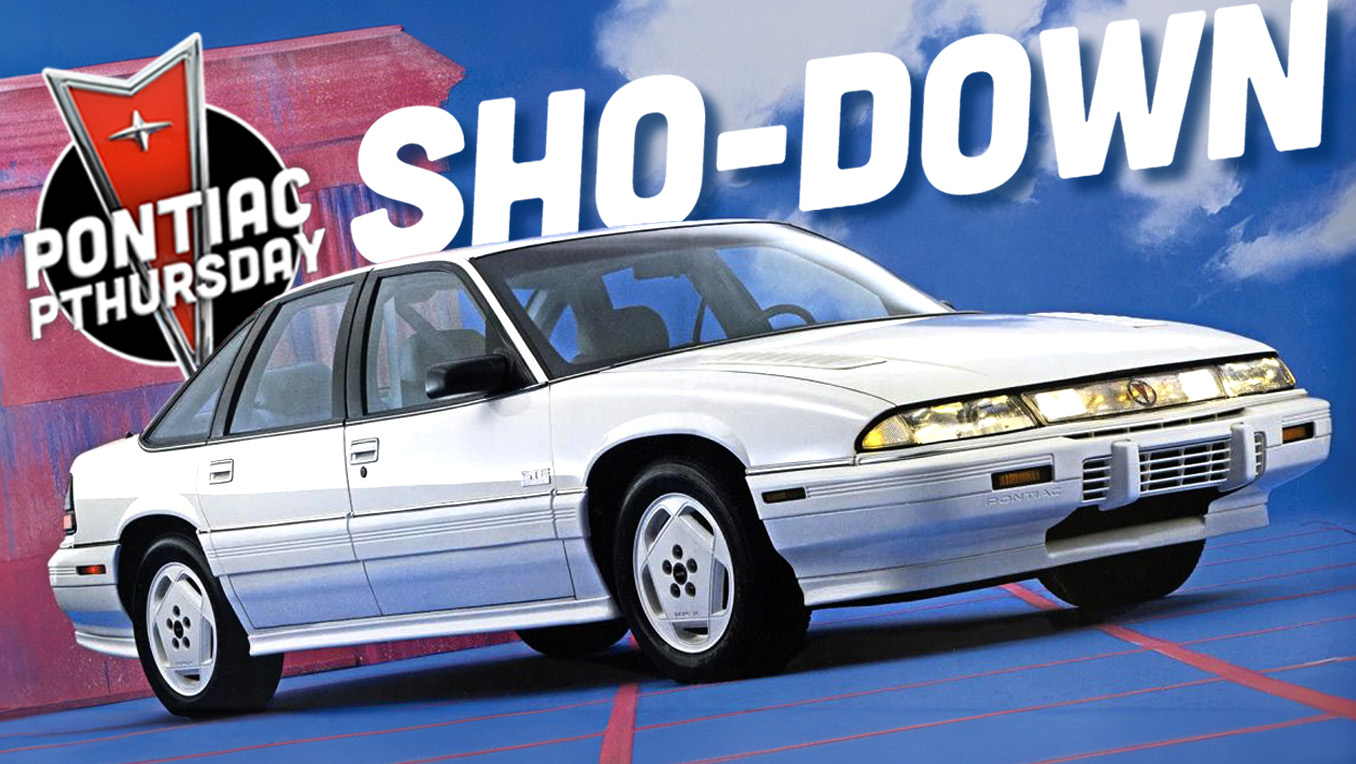
No one saw the Taurus SHO coming. A slick-looking Ford aero sedan powered by an impossibly high-tech, Japanese-developed powerplant was not something anyone expected to see in 1989, least of all General Motors. Such was the impact of Ford’s subdued high-performance family car that it overshadowed Pontiac’s revised entry into the segment, which most of us have forgotten about. Whether you remember the Pontiac Grand Prix STE or not, it deserves our attention today.
GOOOLE Goes Full On GOOOSTE
It must be tough getting branded as “Yesterday’s Big Thing.” In the early nineties, top-selling eighties musicians like Christopher Cross or Men At Work could have released the Greatest Album Of The Century, and nobody would have cared; the public had moved on to the Next Big Thing. A lauded Pontiac of the eighties once experienced this same sad phenomenon.


In 1983, Pontiac released its cause celeb of a sports sedan: the 6000STE (aka “GOOOSTE”), based on the new 6000 LE (“GOOOLE”) GM A-body platform car. With a “six headlight” front end (fog lights were the inboard lamps), blacked-out trim, and sporty alloy wheels, the STE showed that American was at least trying to make a European-style sport sedan.

The underpinnings were not spectacular by today’s standards, with the two-barrel carbureted V6’s “high output” being a mere 135 horsepower (compared to the standard engine’s even more pathetic 112). Still, the 6000STE managed to find a place on Car and Driver’s Top 10 list and Road & Track’s 12 Best Cars For Enthusiasts; Motor Trend called it “One of the few automotive bargains around.”

The STE steadily improved with features like rear disc brakes (ultimately with anti-lock), a tachometer (yes, the first one didn’t even have that), and fuel injection. In 1988, the 6000STE received GM’s first all-wheel-drive system, paired with a 140 horsepower 3.1 liter six and, unfortunately, a three-speed automatic.

That wasn’t enough extra power to keep people swooning. Also, the boxy 6000 was now nearing eight years old and looking considerably dated in the face of Ford’s new aero cars. The STE’s direct competitor, the Taurus, was about to make life really miserable for the once-universally-praised Pontiac.
SHO ‘Nuff Fast
It certainly didn’t look very flashy; in fact, the SHO barely looked much different from the Taurus you might rent from Hertz at the time. Still, under the hood was a motor packing the stuff of exotic cars.
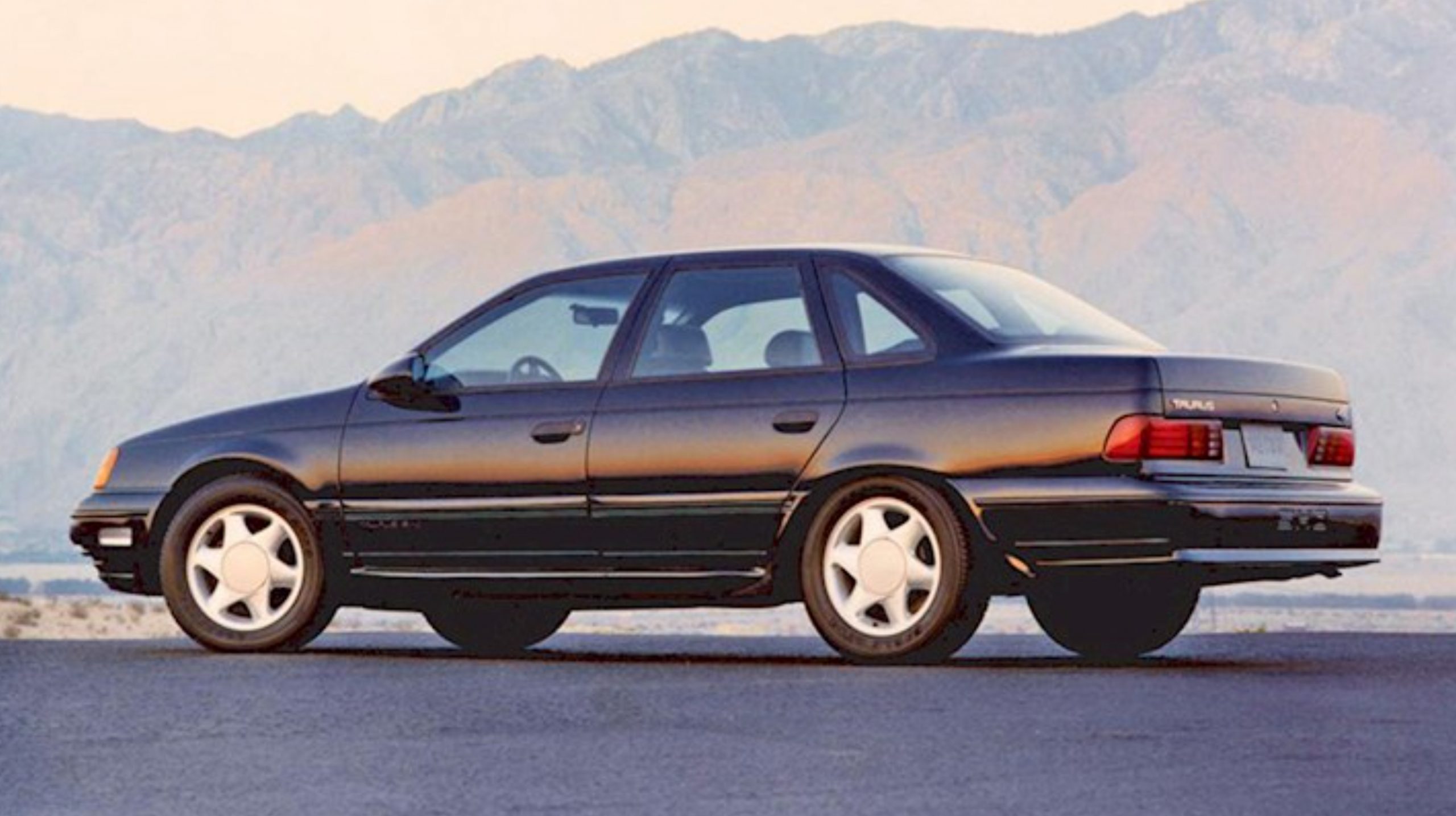
With double overhead cams and a 7000 RPM redline, this 220 horsepower V6 from Yamaha could propel this Taurus to sixty in a mere 6.6 seconds and a top speed higher than 140. That’s a second or so slower than the same year M5, but the SHO could be had for a fraction of the cost of the smaller hot BMW. Ford also had the audacity to release the SHO with a five-speed manual – a move that really got car geeks swooning over the mild-mannered-looking performance sleeper.

Suddenly, the poor 6000STE went from being sort of irrelevant to essentially invisible. Still, that didn’t stop Pontiac from coming up with its own super family car.
Better Than That Four Door Thunderbird, At Least
Pontiac’s first move was to take the STE badge off the old 6000 and find a new home for it. Up until now, the vaunted Grand Prix badge had never been placed on a car with more than two doors, but Pontiac decided that it was time to expand their well-received, all-new-for-1988 coupe into sedan territory. Far from being a travesty and disgrace to the name, the four-door Grand Prix was a rather sharp-looking car, and for the STE version, Pontiac had no interest in following Ford’s path of making a sports Taurus with a very basic outside and interior.

Up front, Pontiac added a full-width “light bar” nose in a manner not unlike the Mercury Sable; driving lights fit into the transparent “grille” area between the headlights while the rest illuminated with extra bulbs. The vented hood was quite racy for a mom-and-pop sedan.

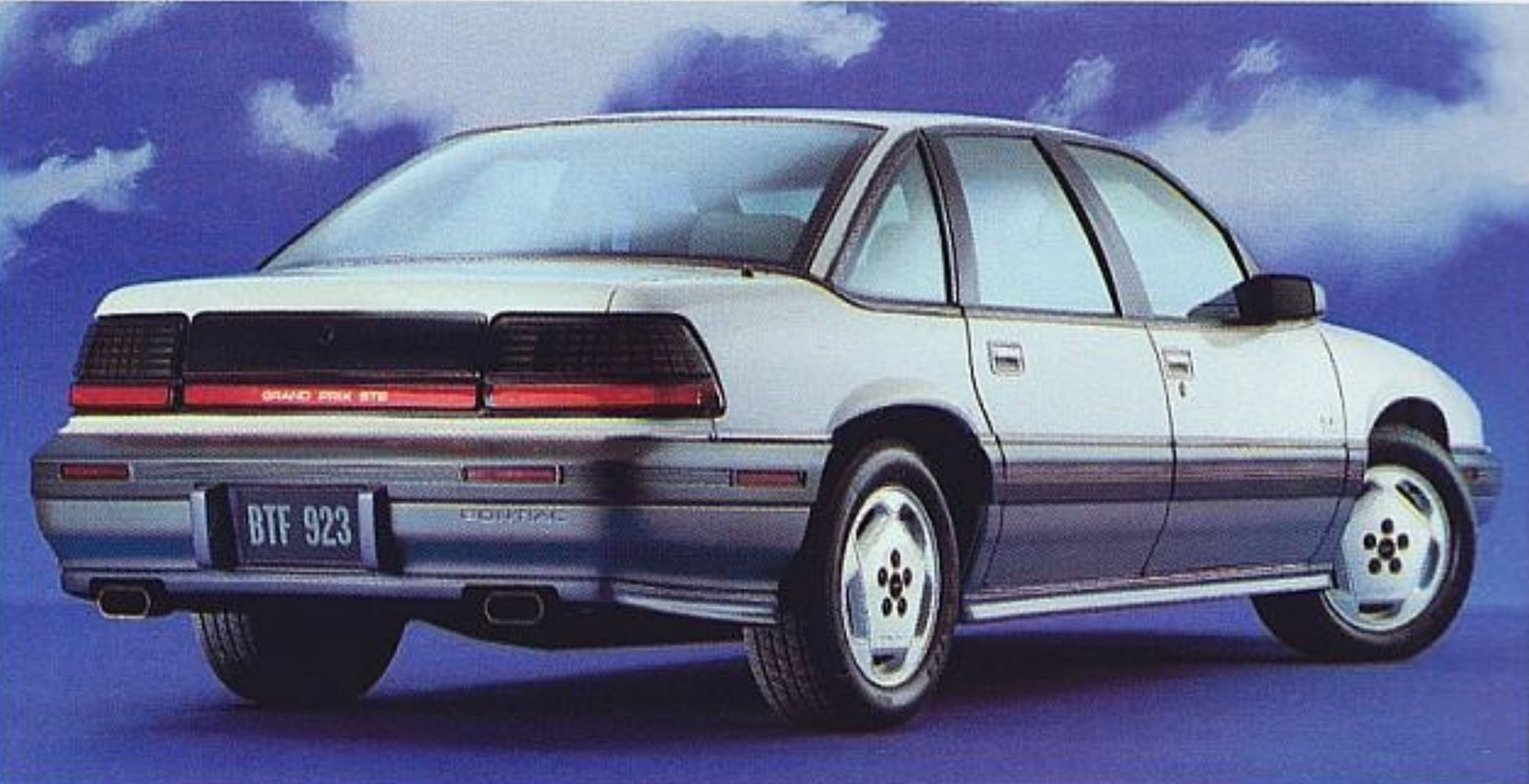
This special Grand Prix was adorned with the ride-Pontiac-ride “visual excitement” which Motorweek once described as “spats and spoilers hanging off the car like Spanish moss on an oak tree”. Oh, John Davis, you have a way with words. In back, a “heckblende” filled in the space between the black-grid, smoked-out taillights. Subtle ground effects finished off the look. Certainly, the whole car was more eye-catching than the restrained Taurus SHO, yet at the same time, it was rather subdued for a top-of-the-line 1990 Pontiac product.
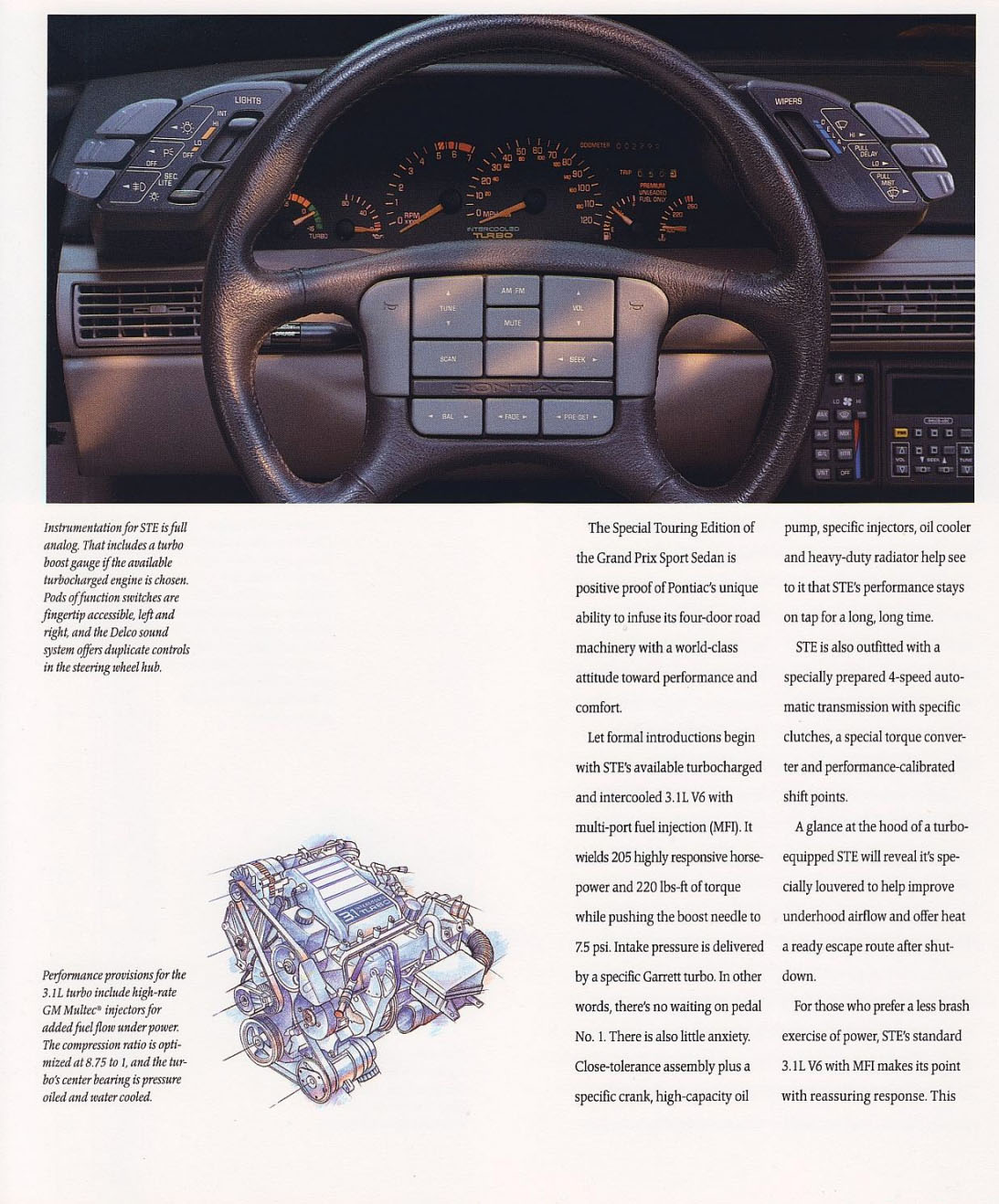
Inside, however, GM let loose with the full MC Hammer-era Pontiac treatment. A steering wheel covered in buttons? You’ve got it.
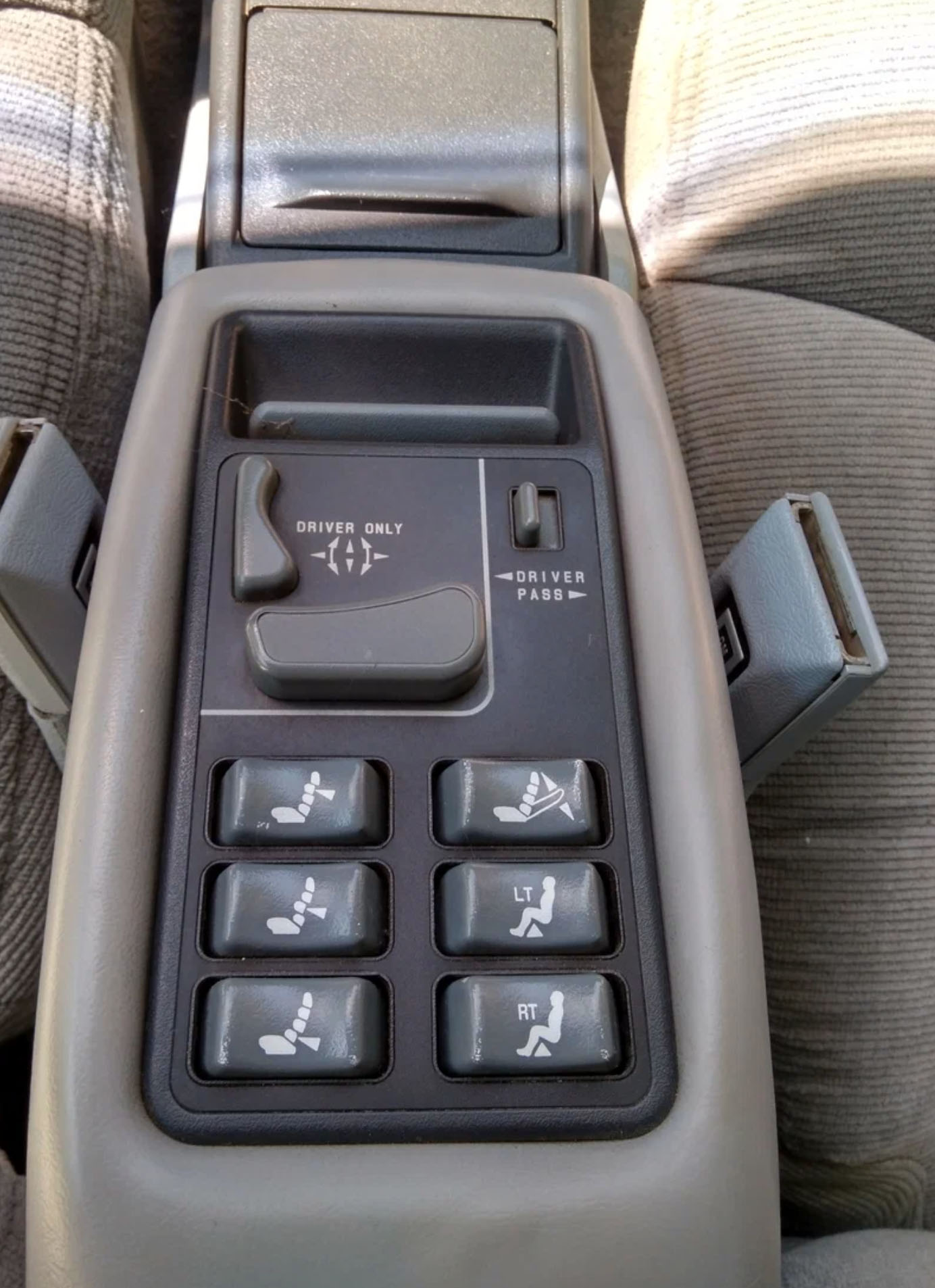
Between the seats, the console featured overwrought seat controls similar to those of the same-year Bonneville. Why does “driver only” get the logical seat-shaped switch while the passenger gets something entirely different?
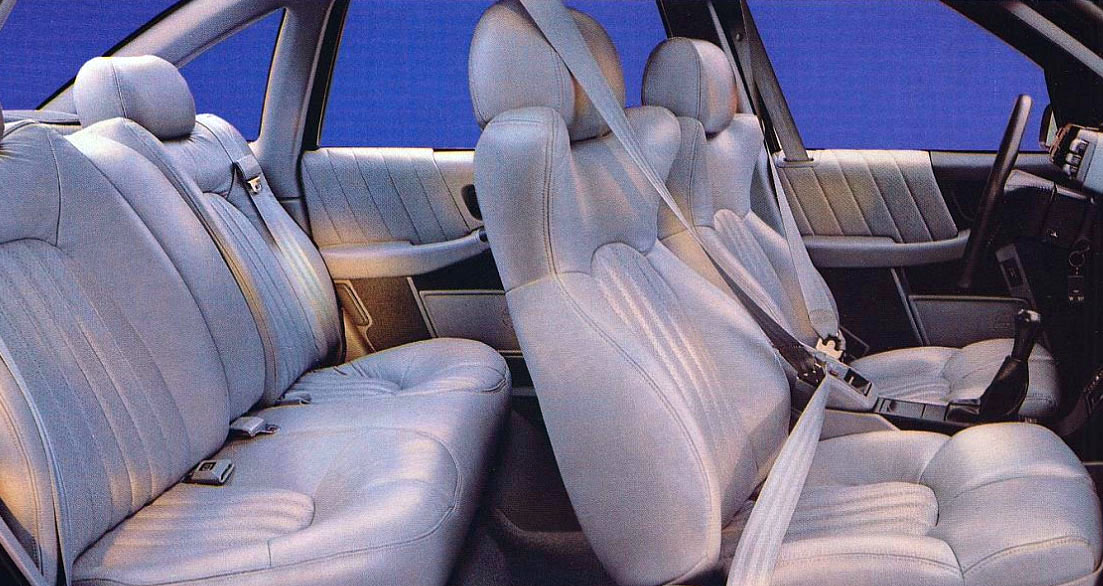
At least those seats look pretty comfortable with decent lateral support. Boy, Pontiac really went nuts with seats that looked like medical devices or something, didn’t they?
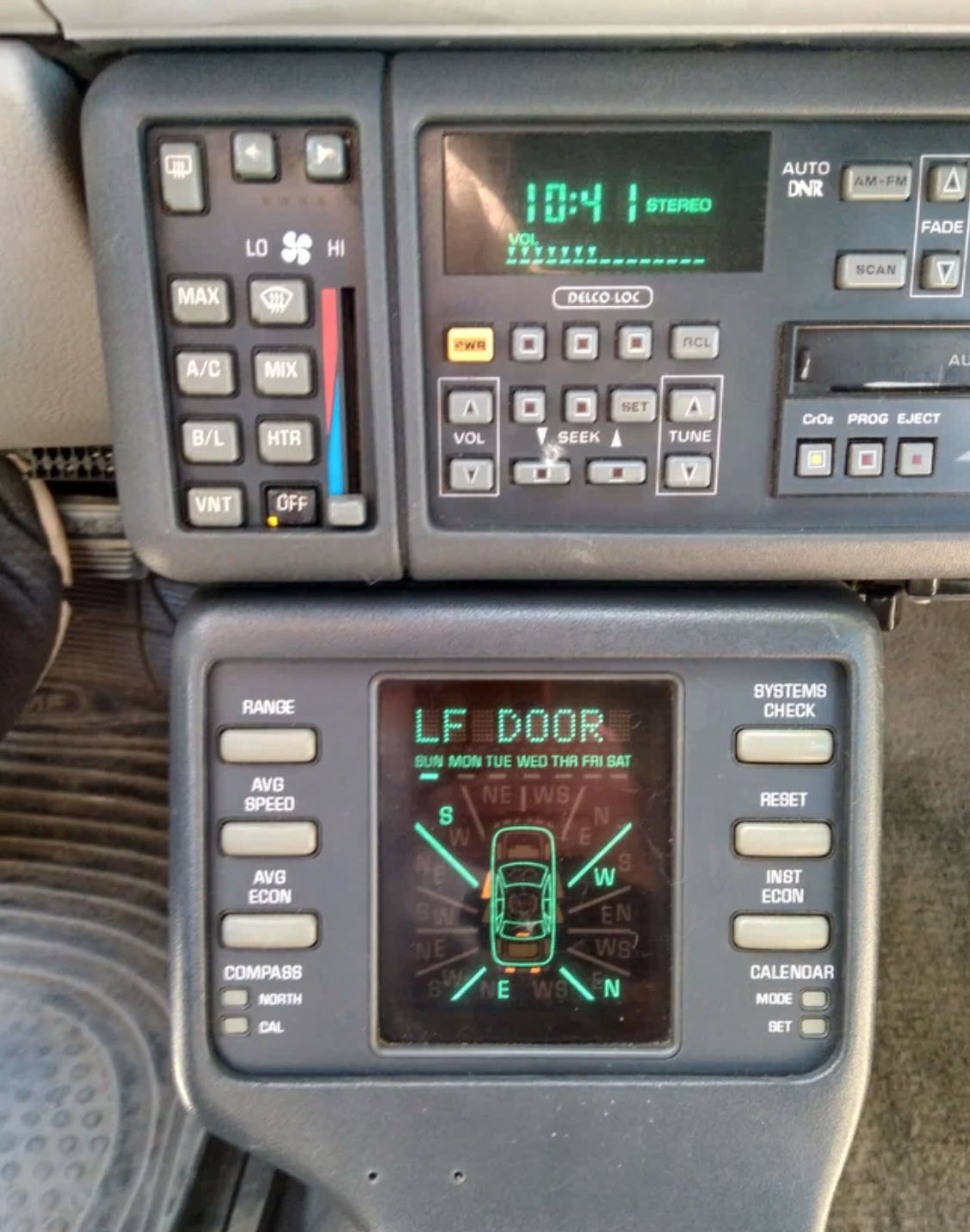
Displaying compass direction, date, and various “system functions” could have been done with a very simple, easy-to-read display, but Pontiac’s STE didn’t do that. Instead, we got a “DIC” (Driver Information Center) that packed this minimal amount of information into a freestanding Colecovision way down in front of the shifter.
Enough of the games and gadgets – is the same damn 140-horsepower six under the hood? Thankfully, no; Pontiac wasn’t going to let the Ford upstart totally overshadow the former critic’s darling.
Put The Puffer On The Pontiac
Ford used outside help from Yamaha to make its ultra-fast four-door family car, and the Pontiac crew found the outsourcing path made sense for them as well. General Motors went to ASC/McLaren, the partnership of the Detroit-area specialist best known for making convertibles for many (if not most) car brands at the time, and a division of the famous race car builder. The Michigan-based McLaren offshoot had begun in 1969, primarily to develop motors for Indy and Can Am cars, and they’d worked with Ford on the two-seat Fox Body Mustang/Capri in the late eighties.
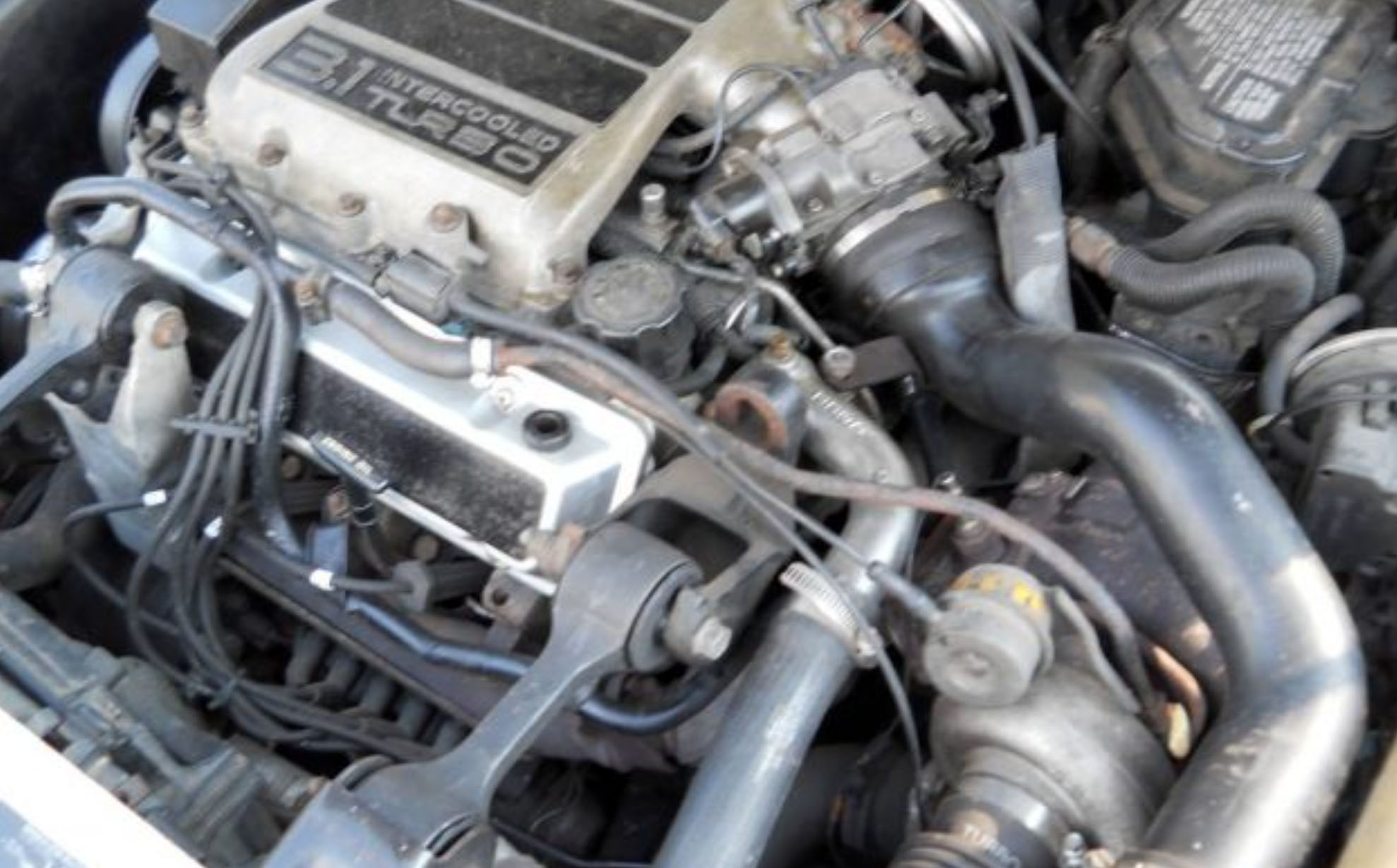
The Grand Prix coupe was the first to receive the ASC/McLaren treatment, which included adding a turbocharger and intercooler to the 3.1-liter six to pump output up to 205 horsepower; a huge jump from the 140 of the stock lump.
With the introduction of the first four-door Grand Prix, Pontiac offered the turbo mill as an option for the reborn STE sedan. Whether such a car was in the cards before Ford launched the SHO is unknown, but the STE turbo certainly couldn’t avoid such comparisons.
Motorweek got the turbo STE up to 60 in 9 seconds flat, a full two seconds slower than the SHO they tested the year before. I’ve seen figures from other publications that got the Pontiac’s sprint down to eight seconds or even a bit less. Being twenty horsepower down on the similar-weight hot Taurus and saddled with a mandatory four speed automatic meant that in a head-to-head race the poor Pontiac didn’t stand a chance. However, the dragstrip isn’t the only race that you need to consider for fast four doors, and the STE offered some compelling arguments over the Ford.
No PRNDL For The SHO
Say what you will about monochromatic sedans with ground effects, but any driver worth of his Members Only jacket in the late eighties wanted such a look for their sporting family car. It has to be said that the 1990 Grand Prix STE – for better or worse – certainly cut a more dramatic profile than the rather stock appearance of the SHO. Also, we Autopians might champion three-pedal cars, but the vast pool of buyers now and back then seem to disagree.
The fact that the SHO was available with the five speed was a small triumph, but in a move that seems unfathomable today the manual was the only transmission you could get for the fast Taurus; an automatic was not an option until the second-generation model in 1993. The hottest Pontiac Grand Prix STE’s automatic-only format might have gotten black marks from enthusiasts, but it had the potential to increase its popularity over the Ford by a significant amount.
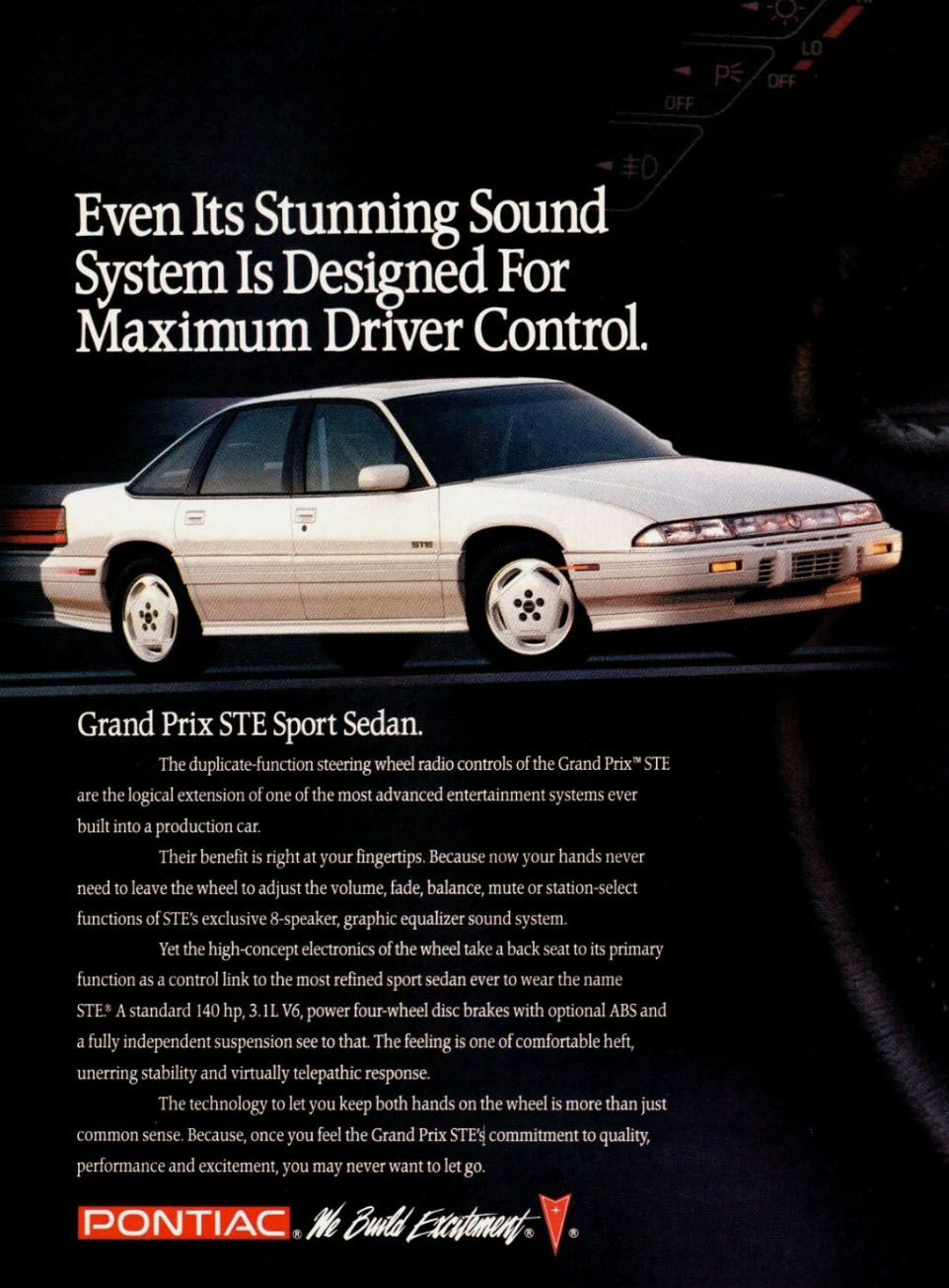
Not that it mattered in the end. It appears that a mere 1000 Turbo STEs were built for 1990; the only year the blower-equipped motor was offered in the four-door. Surprisingly, Pontiac didn’t give up and decided to still up the ante against the Yamaha-powered Ford.
Too Little, Too Late
For 1991, General Motors hit back at Ford with the LQ1 V6, also called the Twin Dual Cam or TDC motor. At 3,340 cc, it was an in-house bored-out version of the previous 3.1, and dual overhead cams actuating four valves per cylinder matched the specs of that enigmatic Taurus. This time, Pontiac was taking no prisoners; your LQ1-powered Grand Prix STE could be matched to an automatic or a Getrag 284 five-speed manual transaxle to effectively level up the playing field for a SHO-down.
Unfortunately, despite the 400cc advantage over the Yamaha-Ford, Pontiac’s LQ1-powered STE only managed to pump out 210 horsepower with the manual, or 200 with slushbox versions. Contemporary tests showed zero to sixty times of high-to-mid sevens, but nothing to match the still-faster Taurus. Without the King of the Hill status, interest in the hot Pontiac mid-sizer continued to wane. Only 1,833 LQ1 STEs found homes in 1991, and a mere 125 of those had the stick. Things didn’t improve for 1992; only 1,127 Grand Prix STEs of any kind left the factory, and only 57 of the 628 LQ1 versions that year were manuals. That’s rarer than the 1000 “Richard Petty Edition” coupes sold that year which still fetch reasonable numbers on auction sites.
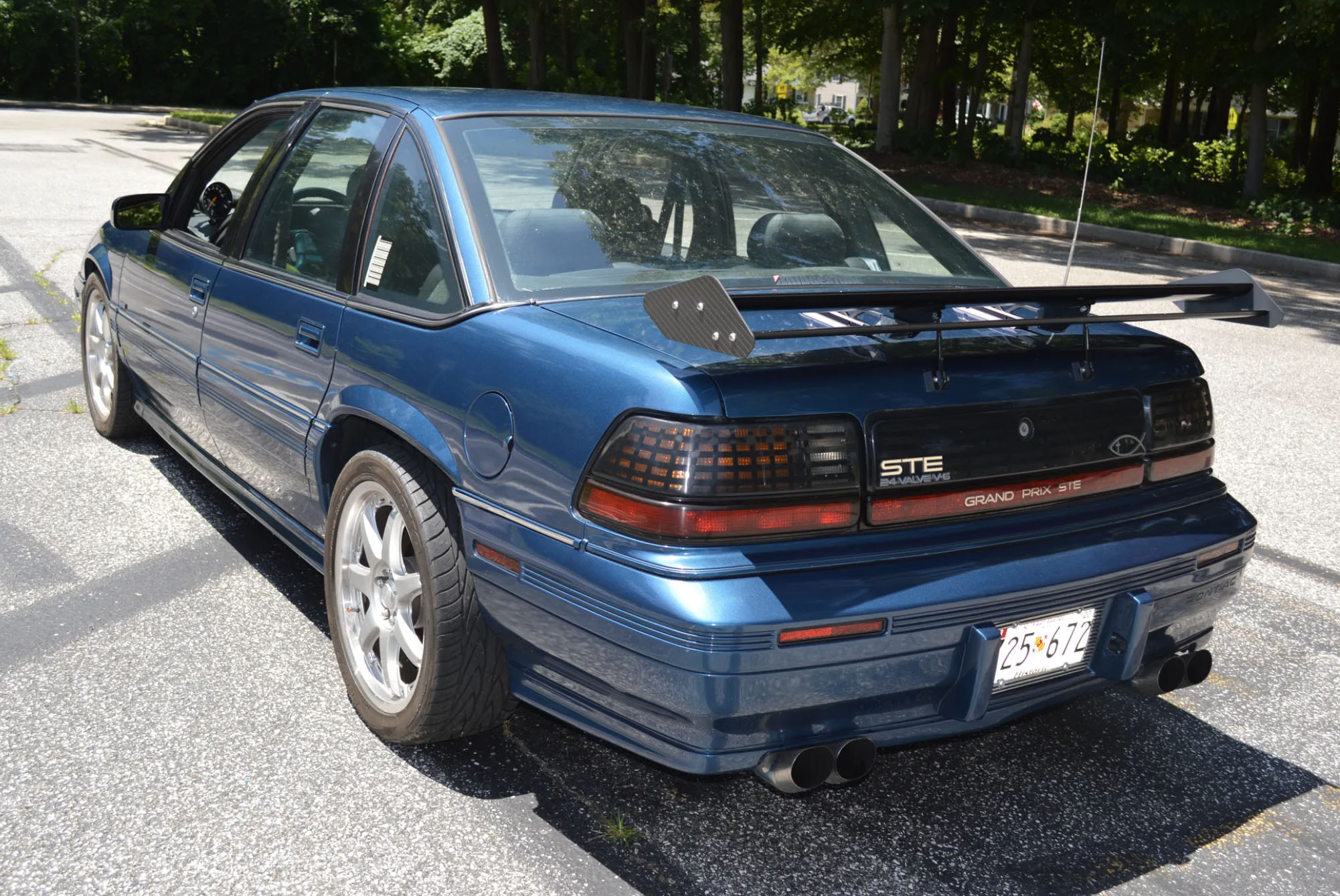
Any remaining examples today don’t seem to be so prized. This one below was listed recently for a mere $3995. The seller claims it’s the nicest one of those 57 made still in existence, which I don’t doubt.

My mental calculator has already more than doubled that price determining how much I’d need to spend altering the, uh, “questionable” modifications.
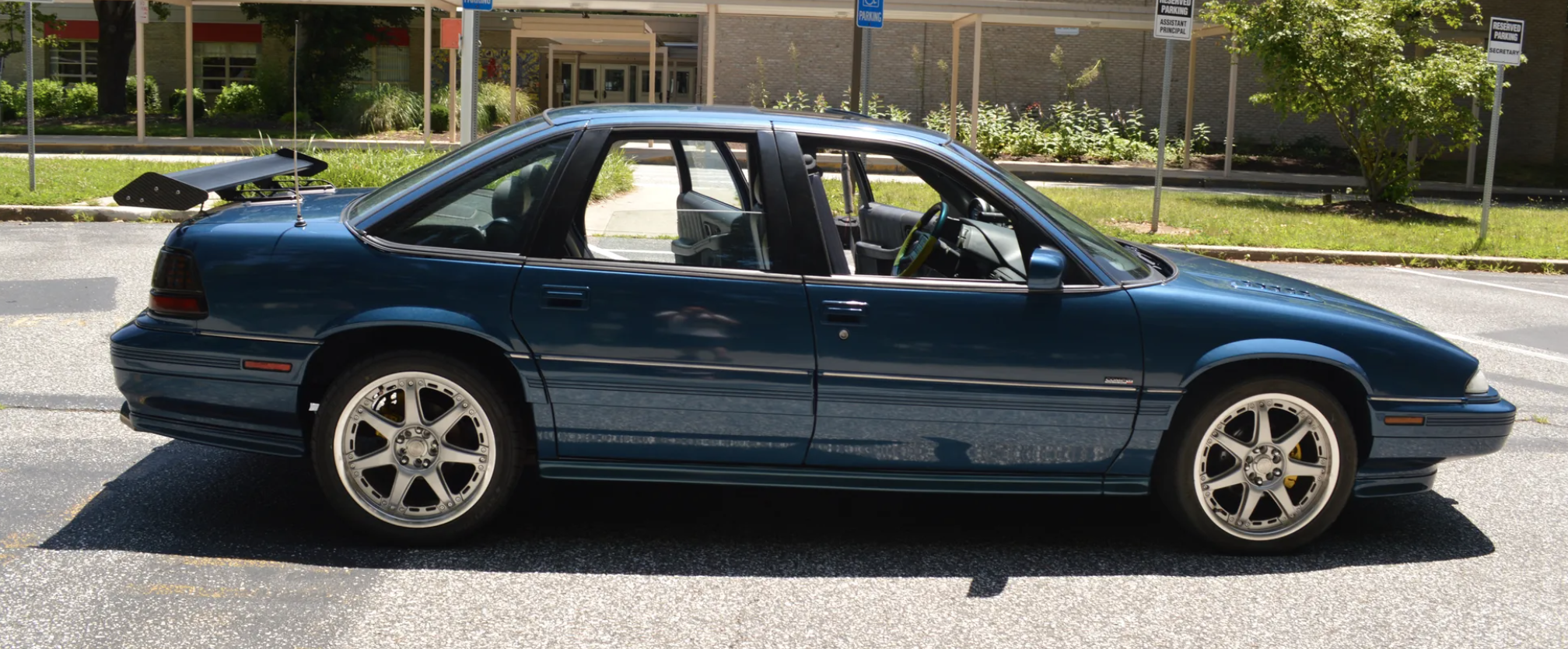
I guess I could just rubber-plug the spoiler holes for the ironing board wing? To each his own, but I couldn’t go around the block with that thing on there. And get me some GooGone for those stickers. Man, I’m just aching to put this thing back to stock since it’s so clean.
The inside is equally clean for a 188,000 mile car; possibly not as spacious as a Taurus in back, but still quite good.

Minor driver’s-side bolster wear on a 1990s GM car with this kind of miles on the clock is expected. Eliminating the offending yellow items in this thing would take but a few minutes, and you’d have a nearly perfect cabin.

If it runs as well as it looks, it would be a fun bargain for under $4,000. Good luck finding one of the other 56 built.
The Grandest Of Prix That Nobody Sees
For 1993, Ford threw down the gauntlet and finally offered an automatic for the second-generation SHO, a still subdued-looking car but now with a more sporting appearance than before.

Effectively, the Blue Oval had now eliminated any of the poor Grand Prix’s advantages. Only 505 LQ1 Pontiac STEs sold in this final year; reportedly only one grail-of-grails example was optioned out with the five speed. With that, the last manual transmission-equipped Pontiac Grand Prix of any kind ever, the STE saga was done for good.
Sadly, it looks like the 1990-93 Grand Prix STE has to be added to the pile of GM products from the Corvair to the Fiero and the Allante that showed great potential and finally got massaged or even drastically altered into the cars they were always meant to be only long after the spotlights had left them. The General just couldn’t seem to improve them fast enough to live up the hype, and buyers had moved on. Nobody even seemed to have noticed the passing of this sedan that was, by almost any standards, a far better car than the 6000-based STE that got all of the accolades.
Again, it sure sucks to be Yesterday’s Big Thing.
Pontiac Points: 77 out of 100
Verdict: Spicy powerplants, a choice of gearboxes, just enough flashiness, and plenty of practicality. Is this forgotten sedan one of the best Grand Prix to ever SHO up?
Top graphic image: General Motors





At first glance, I misread the funky script at the bottom of their ad as being “We build excrement”
Then the Spirit R/T waltzed in, downed a beer, and punched them both in the back of the head.
“I got your torque-steer right here you MFrs!”
Oof always disliked that grand prix front end preferred the 94-96 so much more.
If there is an airbag on that steering wheel, you’ll get a serious case of QWERTY face when you rear-end someone.
(Looks closer) Mouse belts?!! Run away! Run away!
I don’t believe there is an airbag, but yeah, if there were, it would send some chiclets flying.
With all those buttons it would be closer to a hand grenade than a safety device.
The W-bodies didn’t have motorized seatbelts, they had door-mounted belts that were intended to be left buckled in. The theory was, you’d open the door and just slide in under the belt. In practice, I don’t think anybody actually did that, and they got airbags in 1994, at which point the buttons mostly went away, with a few moving off to the sides of the wheel boss.
They did look weirdly-mounted. Trying to skirt the airbag/mousebelt regulations?
Yep, it was considered an acceptable “passive restraint system” under the regulations at the time!
Initially, NHTSA didn’t want those door-mounted seat belt anchors in the 1980s. GM blared back, citing the Volkswagen Rabbit Mk1 was fitted with the door-mounted shoulder belt anchor as extra cost option from 1975 to probably 1978. So, NHTSA’s knees buckled down…and allowed it.
If I had to choose between them, I’ll take the non-motorized ones every time.
Those light grey GM interior buttons are one of the most vomit inducing things in the automotive industry.
I love W bodies, and the GP, the STE was never really a SHO competitor, but I wouldn’t have cared, it looked way better.
Tho I love the second gen SHO, everyone after it sucked.
Wow, that is a rare one, I can honestly say I was not aware of. Wonder if they had pulled the 3.8 out with a big GN turbo on it, if they had a trans that could handle the output?
Well, there was a transmission in the GNX Turbo, so….’yes’?
GNXs were RWD, though, so it wouldn’t have worked in the FWD Pontiacs.
Ah! Good point!
probably the 4T80E, but that was a Northstar engine exclusive. The 4T65E-HD did not handle the later Supercharged 3800 Series II well, let alone a higher output GNX engine
The next generation W-Body Grand Prix, starting in 1997, got the Buick 3.8 with an Eaton supercharger instead of the turbo from the GN. They called ’em GTPs, and it was also an option in the Bonnevilles of that era.
Yep, the SSEi. A neighbor has one in okay shape that moves occasionally. Fun to see what a family sedan can do when the engine gets some extra ponies. Those supercharged 3800’s were sandbagged from the factory. Rumor has it that a few freaks that ended up with well matched intake ports, supercharger openings and exhaust manifolds by luck of the draw put down wheel power close to advertised engine output.
Lol, nope. They had the 440T-4 or the later 4T60 at that time. Both of which were not known for surviving high torque for very long. Fine daily driver transmissions but not great for performance off the showroom floor.
Yep, blew up the 440-T4 in my 2.8 MPFI ’88 Regal I had during college.
With all of what, 140 ft/lbs of torque? Transmissions were made of glass and prayers in those days.
High mileage, 8 years old, and glass like internals. My transmission guy said the Overdrive sprag exploded, wiping out third and reverse instantly. Said it damn near blew a hole through the case. He upgraded the internals to 4T-60 spec during the rebuild.
High mileage without fluid changes definitely does it. To be fair, college had more important things than cars to be concerned with.
Actually, the fluid was changed when I bought the car. I had a toolbox, jack,stands, and space at school. I made beer money performing oil changes, brake jobs, etc… for other students.
Those transmissions had mechanical weak points that fluid changes couldn’t improve. Lot of transmission shops made good money back then because the engines like the 3800 were pretty long lived, generally about two transmission lives.
I never went up against an STE, but the later GTP’s would embarrass my 89 SHO off the line if I wasn’t ready for them. They could just mash the go pedal, but I had to rev up the Shogun and dump the clutch to get a decent launch. “I didn’t know we were racing” wasn’t a valid excuse in the heady late 90’s FWD V-6 family sedan street racing scene.
Why did GM even try if they weren’t going to make it faster than the SHO? What exactly did they think would happen there? Also, I will state for the record again that I love every generation of the Taurus. Not sure why I do but I love that model.
The Taurus was awesome for its time. Great interior space, flexible platform, and the jellybean shape wasn’t too weird.
I hear the non SHO engines were dogs, but I can’t speak to that.
I hear the non SHO engines were dogs, but I can’t speak to that.
It depends who you ask for. 1st and 2nd gen output was average at the time. About the same performance as a 3.1 GM V6 or a Mitsubishi V6 powered Chrysler. Not even Japan and Germany had a considerably more powerful V6 in that class until the XV10 Camry and VR6 Passat debuted.
The problem is Ford sticked to the same Vulcan V6 for 20 years. So a mid 2000s Taurus with the base V6 was severely outperformed by pretty much any other midsize car, and even some 4cyl. Duratec V6 cars were quite peppy, though.
Does that include the Taurus that was a rebadged 500?
Yeah, even like that ugly ass thing.
Never knew you could get these with AWD, thats pretty wild, too bad they didn’t keep offering it on subsequent cars. Typical of GM to introduce an innovative feature and then ditch it when it didn’t immediately do record sales.
I drove a gran prix coupe once with the 3.4 v6 and 5 speed, fun in that Vegas-esque way pontiac had, but it was awfully rough and ready compared to a Maxima SE I test drove at the same dealer.
Last weekend I was at the local auto show, which is primarily for current model year cars, but tucked in the back there were some classics on display. One of which was a lovingly restored 1992 Pontiac Grand Prix STE. I couldn’t believe it. I guess it had sentimental value and it was paired with a late 80’s Suburban, also restored. I even took a picture.
That’s the kind of stuff I go nuts about at car shows. I couldn’t care less about the Camaros/Mustangs/Chevelles etc of the world now. Let me see the weirdo shit like that.
Agree! It’s funny how I’ll be amazed by a mint condition 1980’s Escort or LeBaron, while there are rows and rows of classic muscle cars to look at.
My local Honda dealer has a mint, 1st gen Prelude in brown on their showroom floor. It looks TINY compared to the SUVs and crossovers!
There’s a dude in my area that would bring a 1986 Cadillac Fleetwood to meets, completely stock, showroom-fresh, including the window sticker. I think it had maybe 5k on the clock.
I would skip the Corvettes, Challengers, Chargers, and Mustangs to get to cars like that.
To be fair, they were pretty tiny when they were new.
Ooh! This is where I get to brag that I saw a Subaru Sambar Kei pickup truck in town at a stoplight this weekend! Talk about tiny!!!
As tiny as the Hondy ACTY I see riding around town now?
Oh the memories. Had a friend with one of these. The buttons on the steering wheel were hilarious, and the passenger seat wasn’t power adjustable in all the same ways as the driver seat.
I also remember that the 3.4L had an odd powerband and none of the smoothness of the Yamaha engine in the SHO. Even with a stick the 3.4L just felt like it was never quite happy in any of the rev bands. Down low it seemed like it needed to be revved, but then when you revved it the power would hit a wall near redline, almost like it was designed to rev a lot higher but GM wouldn’t let it.
I could see them just as now why the SHO was the more desirable option.
The 3.4 had a happy midrange, that was it. GM was trying to save costs by using the old block with new heads.
Why did GM persist with the front and back bumperettes?
Also, the SHO was more than an engine, with serious cornering capabilities for a late 80’s sedan! (Thanks to their ‘partnership’ with Mazda.)
I don’t know any GM car of the era other than the Corvette and the pony cars that could hold their own in a handling competition.
Even a base Taurus/Sable handled better than a W-body. The rear transverse mono-leaf led to some pogo-ing and odd cornering behavior. My ’94 SHO was a treat on the Blue Ridge Parkway.
“Why does “driver only” get the logical seat-shaped switch while the passenger gets something entirely different?”
The “Driver Only” refers to the seat back adjustment. That little switch on the right was like the power mirror switch in today’s GM vehicles. It switched the controls from the driver side seat to the passenger side seat.
So when it was set to the passenger side, only the seat bottom could be moved up/down or fore/aft.
I believe the passenger seat back was still manual due to the fact that the 2-door Grand Prix still existed. That way you could still flip the side lever to access the rear seats.
My wife and I have this game we’ve been playing lately where we send each other increasingly ridiculous Pontiac commercials and dealer promo videos from the 80’s and 90’s. There’s something about that era at Pontiac; the cars may have the same awful underpinnings as the rest of the badge-engineered GM brethren, but damn if I don’t want to sit my butt in one of those crazy 26 way power adjustable seats and stare at a steering wheel full of redundant buttons! I’ve threatened that I may have to bring one of these things home if the right one pops up.
I completely forgot about the Grand Prix STE being a thing. I’ve coveted an ASC McLaren Grand Prix Turbo for a long time, but had no idea they dropped that questionably boosted 3.1 V6 in a 4-door. Adding that to the list!
What gets me now about that era of Pontiac advertising is how it really did focus on (per one of its more memorable campaigns) excitement as the brand’s main thing. We can quibble about whether it achieved it, but it really did go all in.
Sure it’s cheesy, but at the same time, it’s certainly miles better than the closest thing we have now, Dodge’s sociopathic jerk ethos.
Yeh I’ve said it on here before but I would love to have seen Pontiac continue to evolve as GM’s sporty brand with them killing off Buick instead, especially as the domestic car makers have all but completely abandoned sporty but practical cars. I owned two different sporty ’80s Pontiacs in my college years (’88 trans am, ’89 grand am se) and sure they were silly and over the top and poorly built but they still offered enough real performance to be fun in the early ’00s when I owned them.
In one corner, you had the sublime Yamaha V6 – would rev to the moon, a product of Japanese ’80s bubble-ness, probably the least Dearborn internal combustion engine put into a Ford up to the time. It wailed, and it gave a halo to the Taurus that we still fondly remember today.
In the other corner, you have plastic-fantastic GM’s response. The turbo engine – a weird footnote – and the 3.4 DOHC V6, kludged together from the block of a 60-degree pushrod V6, because half-assed looked better to the accountants.
At least GM made it produce less power, unreliable, and absolutely miserable to work on. What a pile of trash that probably cost more overall than a properly designed engine.
About the only saving grace to ’90s Detroit was that your domestic competition would impale themself on some self-inflicted idiocy. After tasting success so that they could seemingly pull ahead, without fail Detroit would do their Three Stooges act in some way, prompting a generation to never consider their products.
I was always under the impression the 3.4 DOHC was derated to avoid grenading the T4.
That tracks. Instead of finding/designing a proper transmission, they stick with something off the shelf. Very forward thinking!
At least they figured it out when they slapped the s/c on the Buick 3800. Probably their best V6 until they finally did the 3.6 dohc
Those seats came from a Star Trek set.
Before poo-poo’ing the power output of those first G000STE’s, do recall that in 1983-4 an Audi 5000S had all of about 112hp, the 5000 turbo 140, an 8V Saab Turbo or non-intercooled Volvo Turbo had 125 or so, and even the mighty BMW 533i only had about 180. The 325e only had 120 or thereabouts, and my Jetta GLI had all of 90 and was considered a pocket rocket. ’85 was when Saab and Volvo upped their game to 160hp with 16 valves and an intercooler respectively,
It was a very different era, and that car was actually shockingly competitive in the segment the first couple of years. Then as usual, the General mostly let them whither away, AWD but not enough power to make use of it and an antediluvian 3spd autotragic was pretty lame. Then Ford blew it away with the first SHO.
Thanks to dealership sales droids being dealership sales droids, I missed getting to have an ’85 STE as my car my senior year of high school. My grandfather decided to buy himself a fancy retirement car, and had seen the STE on display at the local mall and loved the look of the thing inside and out (the suede seats were really cool). Went to the Pontiac store in his little yellow ’80 Subaru hatch commuter mobile fully planning to write a check and drive home in one. The droids completely ignored the old guy in the cheap little car. Pissed him off to no end. Went across the street and bought an ’85 Oldsmobile 98 Regency for about $5K more than the Pontiac. Which I ended up driving for most of my senior year, he preferring to mostly keep driving his Suburban. And that horrid land yacht sucked donkey balls. Eventually my grandmother took over the Olds and gave me her ’82 Subaru sedan to go off to college in. Which I much, much preferred to drive anyway. It had a 5spd and actually wanted to go around corners at more than walking pace. I sure wanted to bitch-slap those Pontiac salesmen.
In 1991 I went to a Ford dealer and told the salesman: I’m looking at the new Escort GT, a used Probe GT, or a used Taurus SHO. He said, “YOU can’t afford an SHO!”.
The new Escort GT was ~$14K, The 2 year old Probe GT with cigarette burns and coffee stains on the seat was ~$16K, while I found a 2 year old, 22,000 mile SHO for $9,800, and I sold it years later for $3,000 with 160,000 miles with mostly panel rust issues. (The trim pieces trapped moisture along the hood and trunk welds.)
I contend that Ford didn’t sell nearly enough SHO’s because the salesmen were assholes, and they didn’t know that the family man/woman who drooled over the Mustang should be promptly directed to an SHO test drive! it was obvious to me that they didn’t have a stinkin’ clue.
Much the same reason they couldn’t sell Merkurs – all those leisure suited Lincoln salesdroids had no idea how to sell them. Or even pronounce the name. So much stupid in the industry, even though I fully understand why dealerships are a thing.
Also why GOOD LUCK to a tarted up Bronco competing with the G-Wagen, et al.
If salespeople spend a lot of time sitting around during off-hours, being available for walk-in customers, why wouldn’t they study the brochures and learn about their cars?
Right. They are not car enthusiasts, just chasing a buck.
You would think they could figure out that KNOWING THE PRODUCT actually helps you sell it. But too often not. But for sure, insulting the potential client is absolutely NOT how you go about getting a sale. And casting aspersions on their ability to pay is about on par with calling them names. That old dude in the crap car might have the wherewithal to write a check and buy your whole damned dealership…
I work in an industry broadly similar in how sales are done (though you sometimes have the option to buy direct, but usually through resellers, aka dealerships). Product knowledge is key. Though even then, some of our sales reps are NOT technical, they are relationship managers only. Which is fine, because they know when to bring in the guys with the product knowledge to help. The smarter car dealerships do similar things, but there aren’t enough of them.
Ancedotally – I hear car enthusiasts make terrible salesmen. They lack the “killer” instinct and can admit “Yep, our car sucks. The competition is better”.
You don’t have to be an enthusiasts, per se – but you certainly should possess basic product knowledge.
Bought a used ’94 5 speed SHO in ’01. Even then it was STILL quick. When new about all that would outrun it was an M5 or Corvette.
I recall that the Grand Prix was desirable at the time in its own unique way. No, it didn’t beat the SHO, but outside of that, it was still quite good.
And I love the way the Grand Prix GTP looked… even though I’d never want to own a car with the 3.4L “twin dual cam” engine.
Back then, the best GM W-body car was the Buick Regal with the 3.8L V6.
While it had way less performance than either the STE or the SHO, it was way cheaper and more serviceable.
Try to get parts for an SHO these days… good luck! With a 3.8L Regal of the same era, getting parts is no issue by comparison.
I think late 90s was peak Pontiac with the Grand Prix and their supercharged version (At least for what I remember since I was born in the late 80s). If you had a Pontiac, you were cool.
I love these articles. I don’t like a headline with a comma splice.
Copy editing around here lately seems to have gone from poor to nonexistent. I get picking your battles when you’re working with a small team, but being seen as a high-quality, authoritative source seems like it should be a long-term priority worth investing in. Quality is Job 1 and all that…
Ugh, those stupid Fisher-Price buttons. God, I hated GM products of this era for that single reason alone.
It was their 1980’s version of the giant touchscreen. (Although they had smaller touchscreens at the time. I guess they were forward thinking in a way….)
I always think of the bouncy chair I put my daughter in before she was walking—basically a sling on wheels surrounded by a table, on which were an array of big knobs, buttons, and objects she could play with. Just how I want to feel when sitting in my new $30K purchase: like an infant.
And somehow, car reviewers are impressed by all of this complication, losing sight of the basic point of an automobile.
I always really liked this generation of GP. It just looked nice to me, and still does.
Same! I love w bodies, esp the GPS!
My dad special ordered the STE with a stick. I was a kid, so I don’t know all the details, but the dealer played some shenanigans, he ended up with an auto, the car was a complete lemon, and after many months of time and money my school teacher parents didn’t have GM finally bought it back. It was the last GM my parents would buy, which is notable because my dads side was a lifetime GM family (my dad had worked parts, my uncle was a dealer GM, my cousin owned a Chevy dealership…)
GM dealer shenanigans must be “a thing”. Going back to the 60’s my uncle ordered an L88 Corvette and apparently the dealer took the order, acted like all was good, then just before it arrived they said the L88’s were all gone, giving him no chance to go anywhere else to find one. He still got the next best option, the 427 tri-power, but thats a big step down from the L88.
Around the same time, a different GM dealer put a bolt into my dad’s L88 engine he had put in his chevelle. Long story, but my uncle was going to buy the L88 for his Corvette and they used the dealer to swap them around, but they instead ruined the engine. They claimed my dad must have put the bolt in the engine, but he had been driving it for nearly a year with no issues….
I love the buttons. So many buttons.
Say what we will about the design, but this was right before Pontiac’s “ribbed for no one’s pleasure” era at least…that should count for something.
Maybe they expected a spontaneous hootenanny to break out in random parking lots.
https://www.google.com/url?sa=t&rct=j&q=&esrc=s&source=web&cd=&ved=2ahUKEwiKjaer2qyTAxVt5skDHezpIVUQwqsBegQIGRAB&url=https%3A%2F%2Fwww.youtube.com%2Fwatch%3Fv%3DTAexBL5eToE&usg=AOvVaw2b5C5KmHx7xnk8dfrSIjKJ&opi=89978449
Yo, the later grand prixs and berettas with the mounds of plastic ground effects were fantastic looking cars at the time! The checkered flag tail lights!!!! The red pin stripes!!!!!!!
(disclaimer, I was, like, 10 years old. So they looked a lot cooler than my dad’s burgundy on burgundy early 90s grand prix, but probably weren’t any better at being cars)