

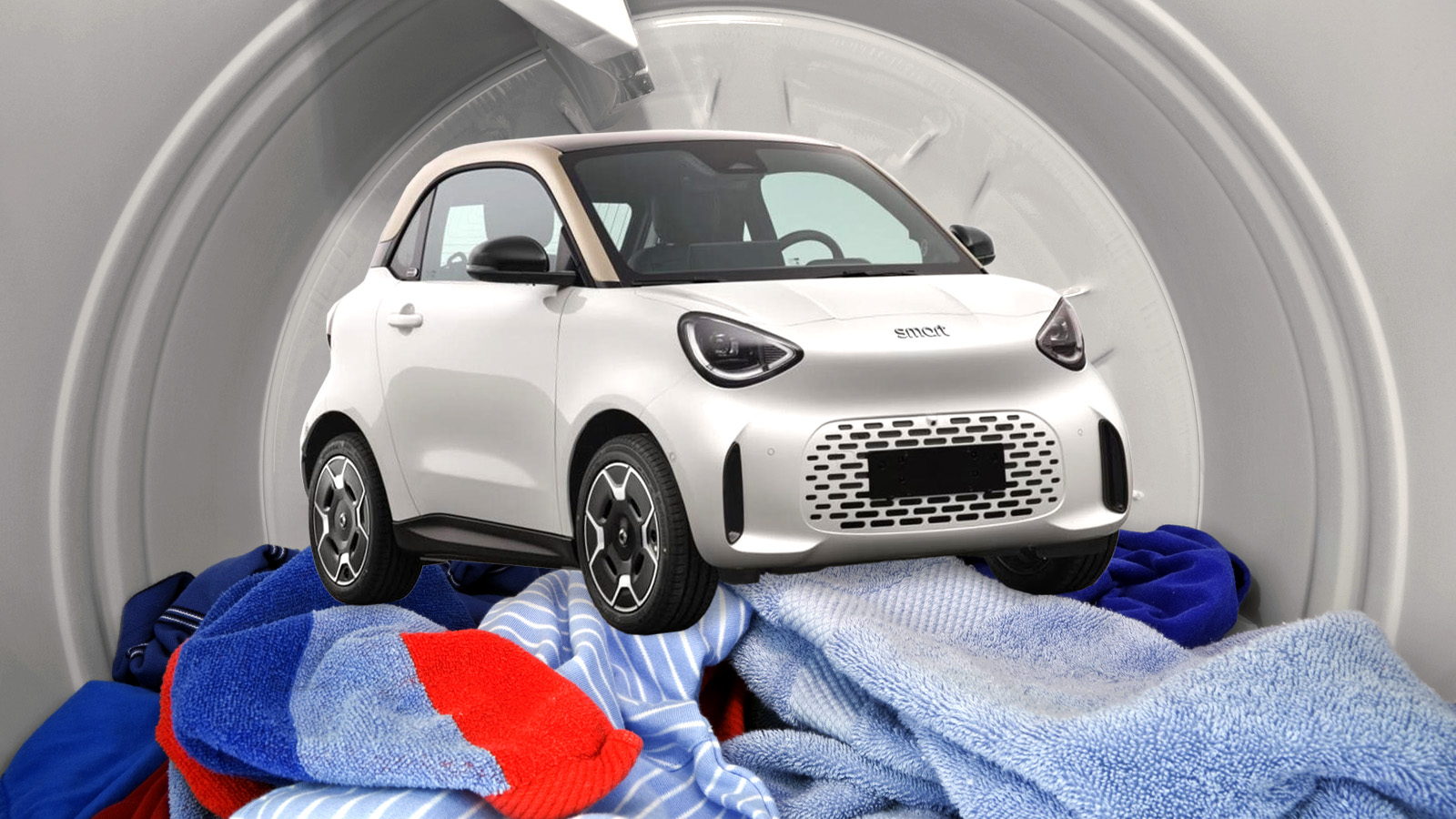
Smart, once the maker of tiny city cars that were as fashionable as a stylish watch, is getting back to its roots. The all-new Smart #2, the successor to the famed Fortwo, is launching in production form in October. But thanks to the wonderful quirk of how type certification works in China, the car has been revealed early. Finally, after so many teasers and hints, the car is showing off its lines in full, and am I crazy, or does this thing look like a crossover that was washed on hot?
For the past five years, Smart enthusiasts have wondered what Smart was going to do with the city car that launched the whole brand, the Fortwo. When half of Smart was purchased by Geely and the whole company moved to China, the Fortwo was left behind. It wasn’t updated, and it even continued to be made in France by Ineos, which bought the Smartville facility. Then, the car was cancelled entirely in 2024.


Smart has spent most of its revival launching a lineup of three electric crossovers and a plug-in hybrid sedan. The largest is the #6, the sedan that’s as big as a Toyota Camry with a 1.5-liter gas engine and a hybrid system that lays down up to 429 horsepower. It’s the least “Smart” vehicle that Smart has ever built. It’s not small, not cute, and doesn’t quite have the distinctiveness that Smarts of the past have. According to the China Association of Automobile Manufacturers and the Passenger Car Association, Smart’s plan to go all-in on bigger cars might not be working that well in the long term, as Smart sold only 29,986 vehicles in China in 2025. Allegedly, dealers are having so much trouble selling the things that new, unsold stock is getting sold through used car dealers at deep discounts.

Smart has previously said that it won’t make another city car unless it thinks it can make money from it. Well, that time is now, apparently, as Smart thinks that the city car market is growing and cannot be left without a proper Smart in it.
So now, the tiny two-seater is coming back with an all-new platform and design. Smart has been cute with the launch of the Hashtag Two, keeping fans on the edge of their seats with extremely rough sketches, images of shadows, and then a bombastic concept car. But nobody really knew what the real car was going to look like. The concept was so far out with its bench seat, wild wheels, and leather door handles that it was hard to figure out what would make production and what wouldn’t.
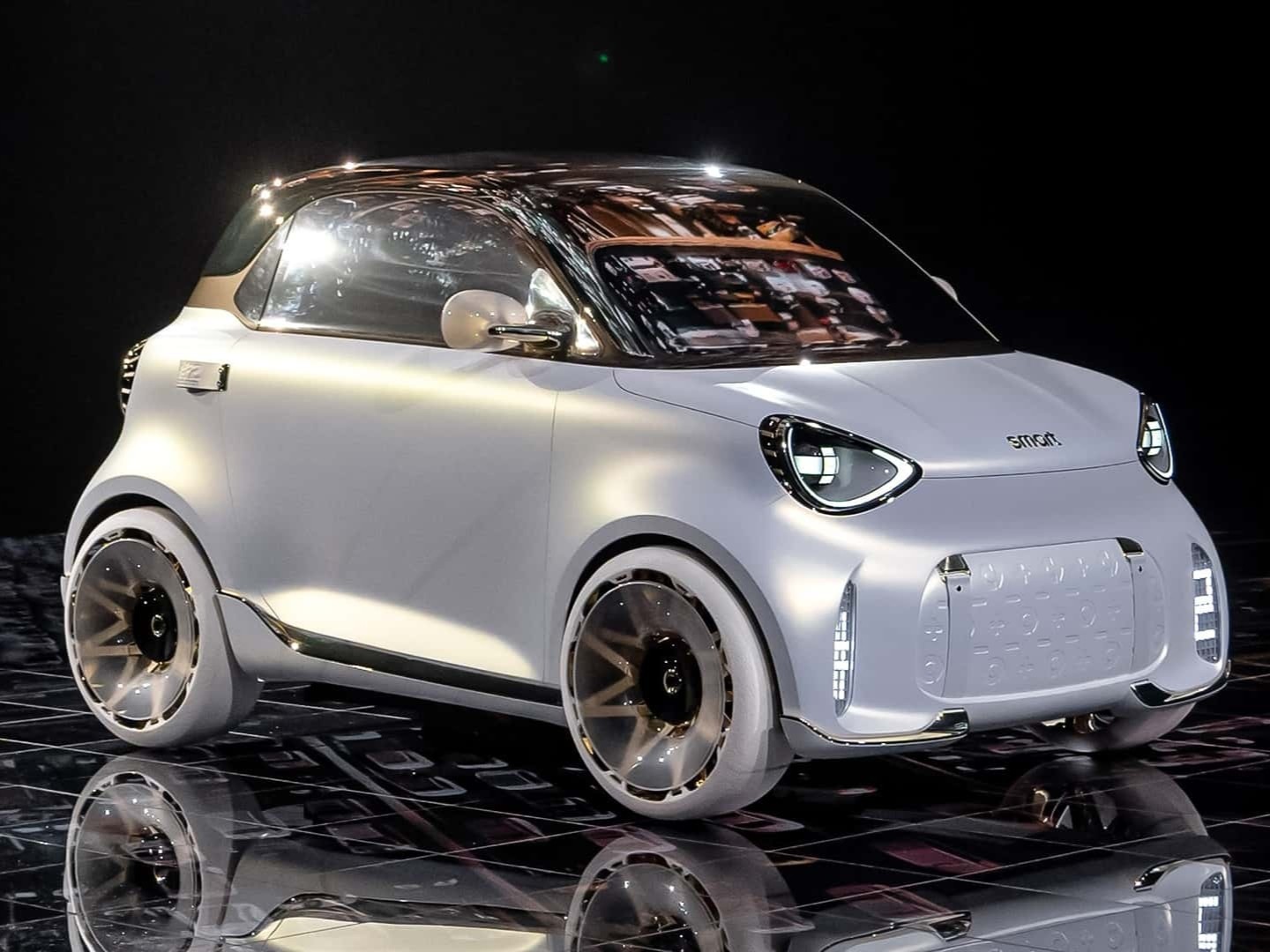
Things have been made even worse by AI “creators” who published entirely fake “unveilings” of the new car. It blows my mind how those videos have so many views. Thankfully, Smart has ramped up its marketing for the new car, and on August 1, it revealed the production #2’s design through murals that were painted in Berlin, Buenos Aires, Hong Kong, Melbourne, Paris, and Shanghai.
Take a look:
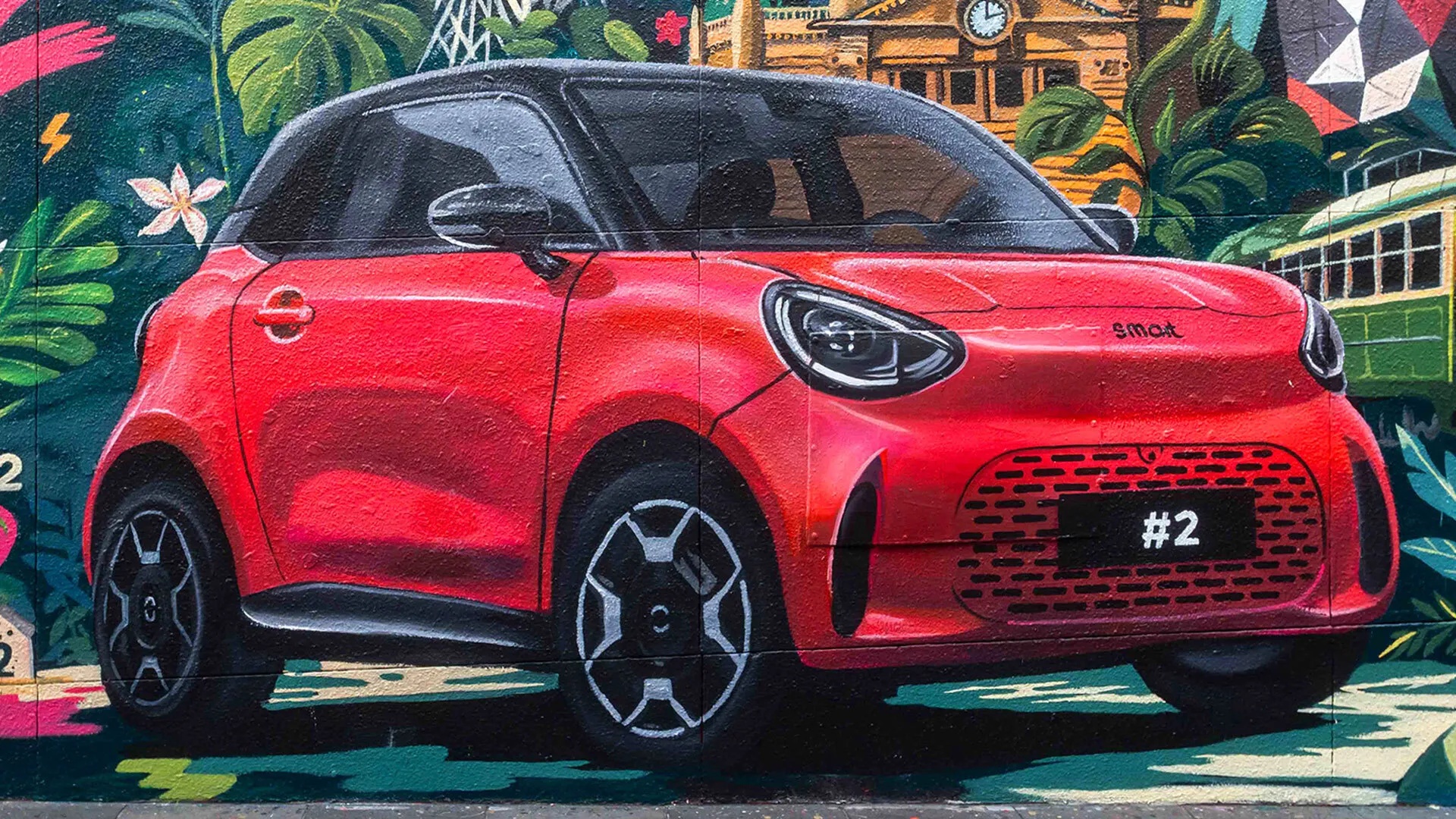
Given the production car’s official launch only two months from now, I figured that this was going to be our last teaser. While Smart might be holding onto its cards until the Paris Motor Show, the Chinese government just revealed the car in full.
I’m even more excited than I was before, but there’s something that seems off here, and I cannot quite put my finger on it.
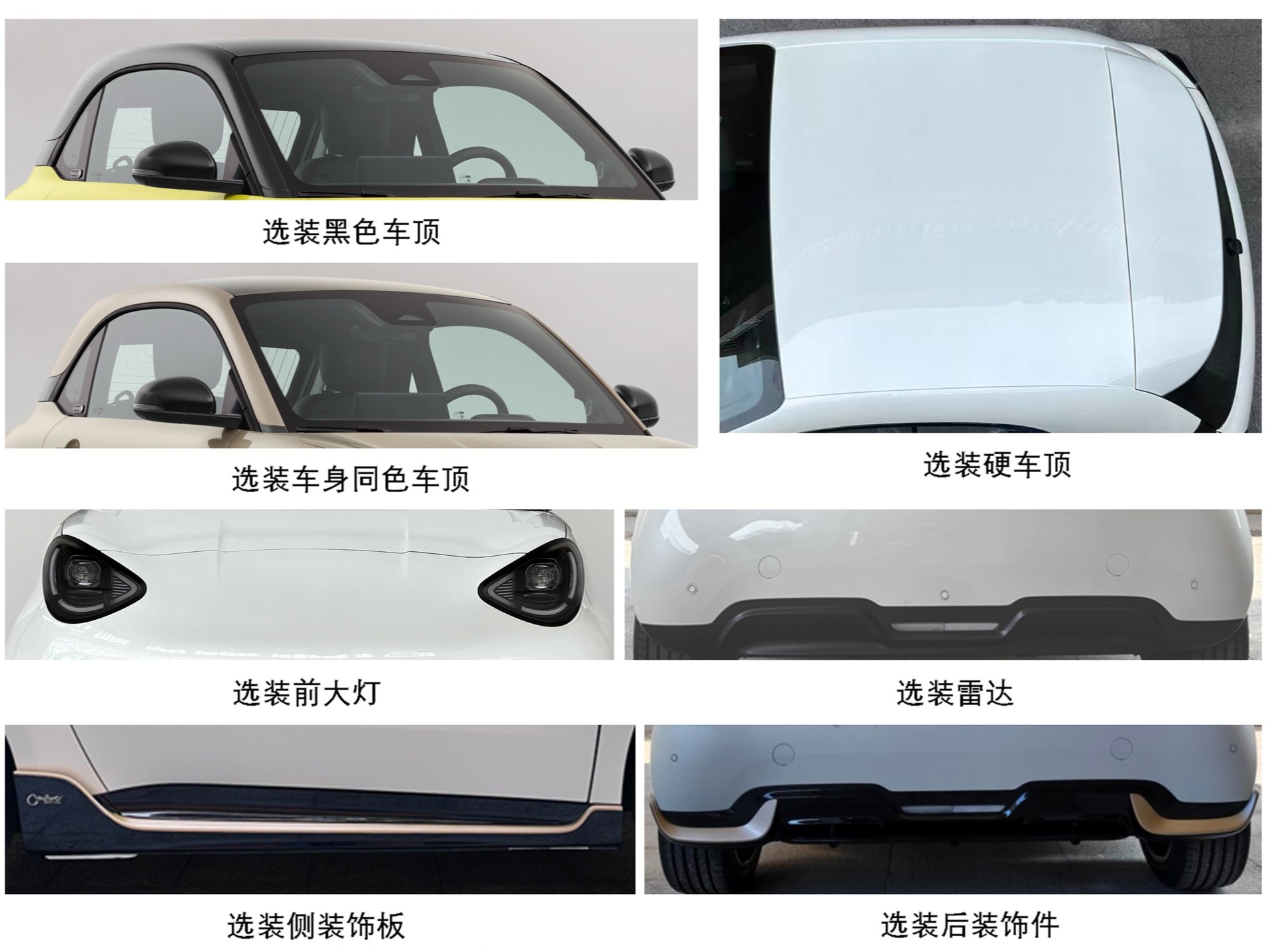
One of the quirks about China is that, as part of its type approval process, manufacturers are forced to show the government what their production vehicles look like. Type approvals are public, which means that vehicles are revealed long before the manufacturer itself wants to show the world. Here’s what our Chinese car correspondent, Tycho de Feiter, says about the process:
Every month, the Chinese Ministry of Industry and Information Technology (MIIT) publishes a list of new vehicles that have been approved for production. This is a remnant of the old planned economy. Automakers in China must request government approval for every new model and for facelifts of existing models. Production without approval is prohibited. The list includes passenger cars, vans, trucks, motorbikes, and scooters. There are specialized categories too, like street-sweeping cars and ambulances. For years, automakers have been trying to stop MIIT from publishing the list, but so far, without any success.
MIIT requires automakers to supply basic information and a set of photos of each new car. The specs include size, engine size, engine horsepower, and top speed. For EVs, automakers must hand over motor horsepower and battery type, but range is not required. Also, automakers don’t have to reveal the definite name of the new models. Most do, but not all. Some automakers like to do a bit of fooling around, supplying photos with several model names, or without any names at all.
Behold The New Smart!

While automakers apparently hate this process, it’s great for enthusiasts who don’t want to wait until an official unveiling. As Smart’s biggest fan, I have to thank China for getting me even more amped for the new car. Car News China got the scoop first, then Autocar picked it up.
I love to evaluate what a new Smart looks like compared to the Smarts of the past, and I’m excited to have images of the production car so I no longer have to guess and hedge. Let’s start with the front end.
Smart has said that its iconic Tridion Safety Cell will be making a return in the #2. That’s good, as the old Fortwos were remarkably safe for their size. A departure from the past, however, is that the Tridion Cell is no longer a visual element. In all previous Fortwos, Smart placed a metal cover over the high tensile steel cage, and then Smart usually painted it in a color that contrasted the body panels. It gave Smarts a distinctive look, and something you can point to when talking about safety.
Here, the car has what more or less just a standard body. The only contrasting element is the roof, which is one of those floating affairs that automakers have been addicted to since seemingly forever. Something new is the rear quarter window. In previous Fortwos, this window was attached to the door. This time, it appears to be affixed to the body.
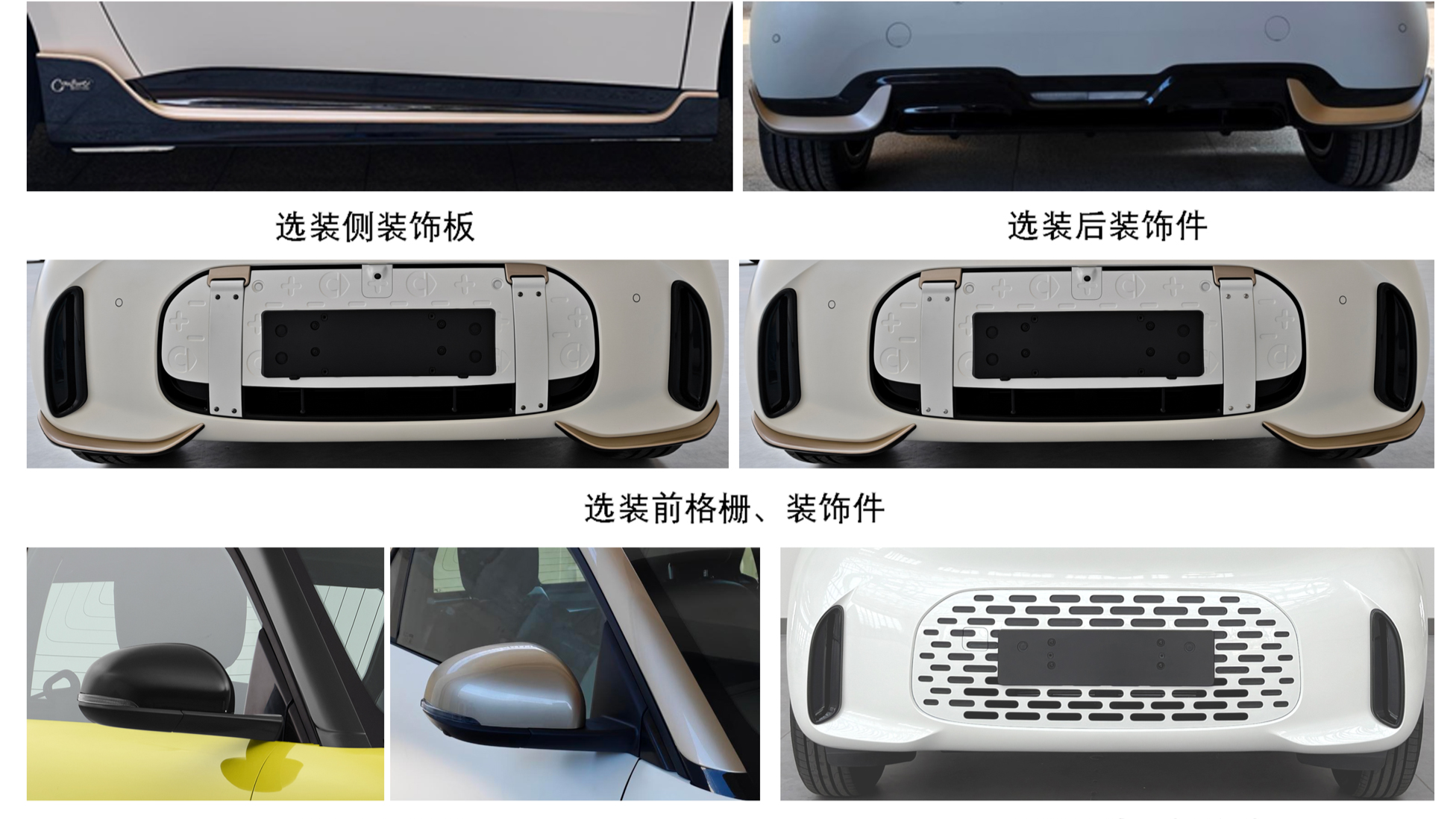
Thankfully, the vehicle is also toned down from the concept. The grille no longer looks like it’s eating a handbag, and the door handles are nothing to write home about. Amusingly, according to type approval documents, it looks like getting a grille that looks like it’s eating another car’s bumper might be an option.
My only real complaint about the front end is that sort of shelf element above the grille. Autopian Publisher Matt Hardigree said that the car has a “front butt” and now I cannot unsee that. Thanks, Matt! Otherwise, the front looks like an evolution of the Fortwo concept. The Fortwo has been a two-box design since 2014, and this car continues that trend.

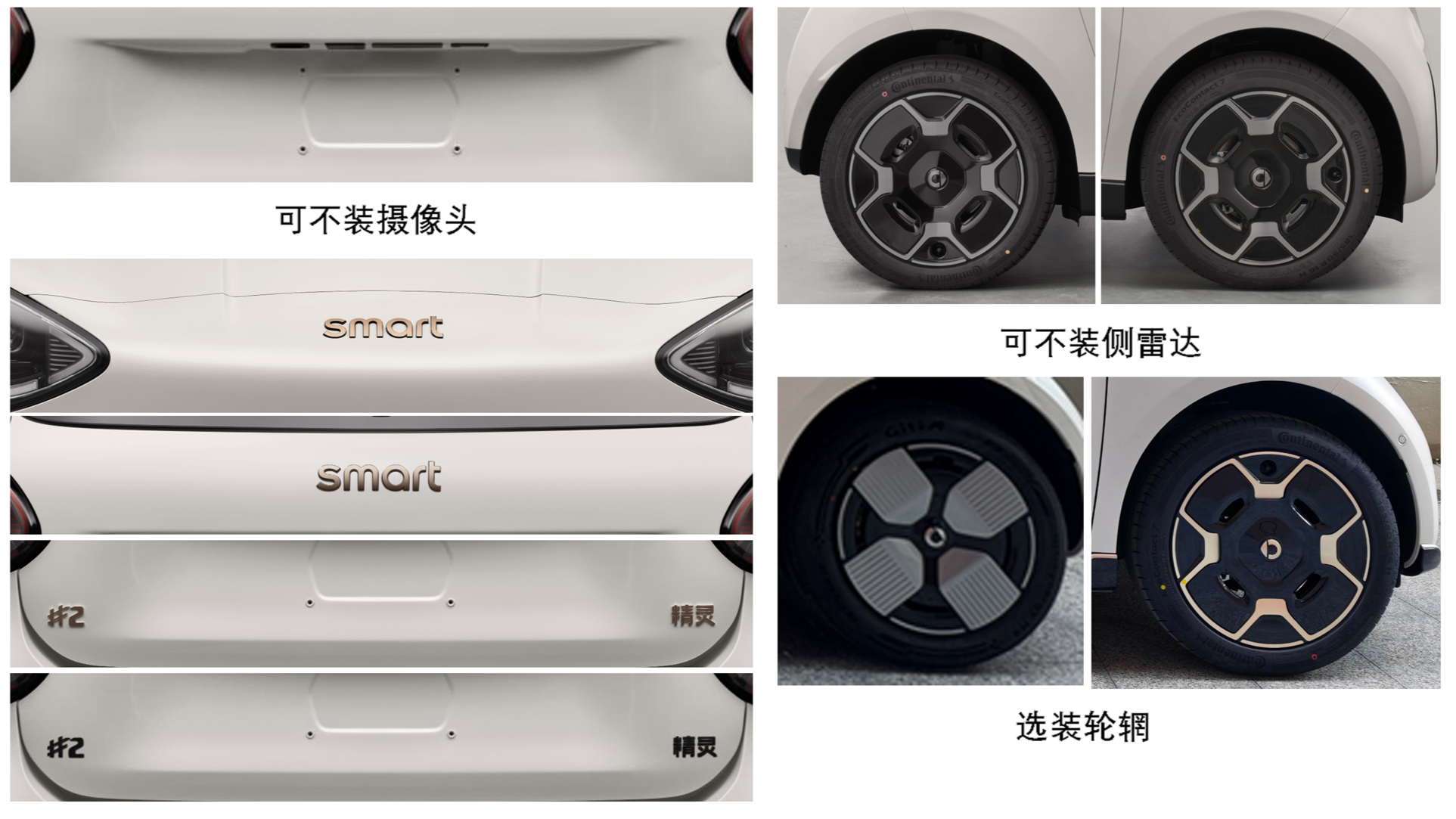
The rear end is my favorite part of the new design. Smart’s characteristic split-folding tailgate seems likely to make a return (check out the large gap between the tailgate panel and the bumper), as does the Fortwo’s rather tall rear bumper. The taillights are a round affair that look like an evolution of the third-generation Fortwo’s squircle taillights. The little bars of light from the concept car’s taillights did make it over, but the afterburner-like elements did not.
While we’re on the subject of lighting, the #2 has turn indicators in its mirrors, which is a first for a Fortwo, as no previous-gen car had that feature.
Something I find interesting is how high the tailgate sits on the #2. Previous Fortwos had their engines in the rear, so the tailgate had to sit high because it was above the engine bay. The #2 rides on a new native BEV platform, yet it still has the high gate. My only guess is that, given the relatively large battery, designers had to figure out where to stuff the rest of the components, and keeping with tradition was logical. The mockup of the platform seems to support this:

As stated earlier, Chinese type approval documents have basic specs in them, and that remains the case here, too. From Car News China:
Produced by Zhejiang Haoqing Automotive Co., Ltd., the Smart #2 is designed as a compact urban commuter with a seating capacity of two. The vehicle will be available in two body length options: 2,751 mm and 2,764 mm. Both versions maintain a width of 1,669 mm and a height of 1,555 mm, with a wheelbase of 1,875 mm. The car has a curb weight of 1,130 kg and a gross weight of 1,315 kg, capable of reaching a top speed of 140 km.
The Smart #2 is powered by a TZ160XS00A drive motor developed by Infimotion (Jiaxing) Co., Ltd., delivering a power output of 60 kW (80 hp). Energy is supplied by a lithium iron phosphate (LFP) battery, with individual cells produced by CATL and the total assembly managed by Geely. The vehicle is equipped with an Anti-lock Braking System (ABS) and an Event Data Recorder (EDR). An onboard Electronic Toll Collection (ETC) device is also available as an option.
The filing indicates customisation options for the Smart #2. Customers can choose between two tyre specifications: 165/65R15 / 185/60R15 or 185/50R16 / 205/45R16, which correspond to different track parameters. Additional optional features include a black roof, body-colored roof, hardtop, specialised headlights, radars, side decorative panels, rear ornaments, front grilles, mirror accents, and various wheel rim designs. Conversely, certain configurations allow for the omission of radars and cameras.
Based on these specs, I would expect the performance of the #2 to be somewhat similar to the old Fortwo EQ. That car had an 80 HP and 118 lb-ft torque electric motor that was good for a sprint to 60 mph in about 11 seconds. There are a few other interesting details in that list. At 2,491 pounds, the #2 will be slightly heavier than the old Fortwo EQ, which weighed 2,414 pounds. The top speed of the new car is slightly better at 86 mph, compared to the 81 mph speed of the old one. Tire sizes are also roughly similar to the outgoing car.
Here’s a reminder of what specs Smart itself has been willing to reveal thus far, from my previous reporting:
Smart said that the ECA platform is targeting 186 miles of range, DC fast-charging, the ability to top up from 10 percent to 80 percent in under 20 minutes, and Vehicle-to-Load capability. The concept vehicle measures about 9.16 feet long, or only 3.8 inches longer than a second- and third-generation Fortwo. Smart didn’t reveal anything else at that time.
This time around, Smart says that the new car should have a 35.7 kWh battery. Now, on its own, this battery isn’t all that big. I mean, GM will sell you a truck with a 205 kWh battery system. But 35.7 kWh is pretty hefty for such a tiny car. Consider that the outgoing Smart Fortwo EQ had a 17.6 kWh battery. The Fiat 500e, which is two feet longer than this Smart, has a 42 kWh battery.
[…]
Other good news is that the new model will be able to turn a full circle in only 22 feet, which is exactly as sharp as the third-generation Fortwo was able to turn.
Overall, the new car does seem like a vast improvement over the electric Fortwos of old. It has more than double the range while being only a few inches longer than the old car. The #2’s projected £20,000 price ($26,991) is even lower than what the old Fortwo ED/EQ was.
Still Excited

I am somewhat disappointed in some parts of the new car’s design. I will miss the visible Tridion Cell, and I cannot stop thinking about front butts. Something deep down inside me also fears that the car might be a bit too, we’ll say, generic. Smarts used to be bombastic, and this isn’t really that. It’s almost like the design of a crossover, but scaled down. Maybe the design will look better in person rather than in a white studio with harsh lighting.
The look also seems to go with the image that Smart wants to project nowadays. Remember, Smart is trying to be a “premium” brand now, and maybe having a car that’s adorable might go against the idea that Smart’s all grown up.
Either way, I’m still excited. I never thought I’d be an auto writer at a time when a new Fortwo came out. It’s a shame that I probably won’t get to drive it, but it’s still so cool to see this happening. Hopefully, this time Smart knocks it out of the park and makes a car that people both want and that Smart can make money from.
Top graphic images: Smart; DepositPhotos.com


It is the year 2026, and all cars, even Smarts, must be designed to look EXTWA ANGWY.
I don’t see butt. I see beer belly.
It looks like they reskinned an Ora White Cat and lopped off two doors.
I see a Smart ForTwo. I’ve getting no crossover vibes but it is a bit plain without the exposed safety cell.
Looks pretty Smart to me. Big thing is those 2-seater proportions, but the hint of Tridion cell helps establish that identity, even if it’s not the whole thing. I can buy this being Smart rather than the #6, which is just mediocre.
The headline reminds me of my mom.
So back in the 80s, my parents had a florist. To deliver flowers, we had a 1st Gen Caravan which was a boring beige color. On Sunday, mom and dad would take off the magnets with the florist’s name and drive to church.
When my mom’s health went against her (allergy to a common flower plus back problems), she sold off the florist, but kept the minivan. However, with being used as a delivery vehicle, the van became unreliable. Dad found a great deal on a beige 1985 Honda Civic 2 door hatch. And mom switched to that.
One day, while leaving church a lady walked up and asked mom what happened to her van. She pointed at the same color Civic and said “I washed it and it shrank”. Basically the same joke on the headline.
What made it epic wasn’t that the joke was exceptional. It was that the LADY BELIEVED MOM. This woman went all over church telling everyone that Mom had washed a minivan and gotten a small 2 door hatch.
I think to the average car enthusiast, and perhaps the average consumer (in places like Europe, where they’re more popular), this looks the part of the next ‘2’. To me, from the front, it looks an awful lot like the 3rd gen. The rear is different though. You’re probably missing the Tridion Safety Cell – they really should have kept that styling, even if they didn’t ‘need’ it for the safety part.
Are you sure there’s a separate tailgate? In that picture from the rear, that looks an awful lot like one solid hatch, and not a two-piece.
The visible Tridion thing is easy enough to fix with a vinyl wrap if anyone really wants it badly enough, dealers could even offer it as an option
I would wrap it in dazzle camo so everybody would think I’m driving the next Smart.
This seems like something that would work for most cars, even better than that person I used to work with who always kept the headlights on in his Volvo 760 so people would think it was a newer car with daytime running lights, his words
About 75% certainty about the tailgate. Both the concept and this car have a pretty large gap between the bumper and the tailgate panel. A gap that’s larger than would be needed for a typical tailgate closure. It wouldn’t even be the first time Smart’s had a tailgate panel that wrapped around the taillights, either.
It kind of just looks like a beefier Wuling Mini EV.
I don’t know how you are seeing a crossover, unless because it’s a two box profile, like, well, thousands of other small hatchbacks (and the original for two)…
I mean, I see Fiat 500 way more than I see scaled crossover, but I’m willing to be argued with…
Somewhere, an Abarth is revving in anger at being compared to a Smart. lol 🙂