

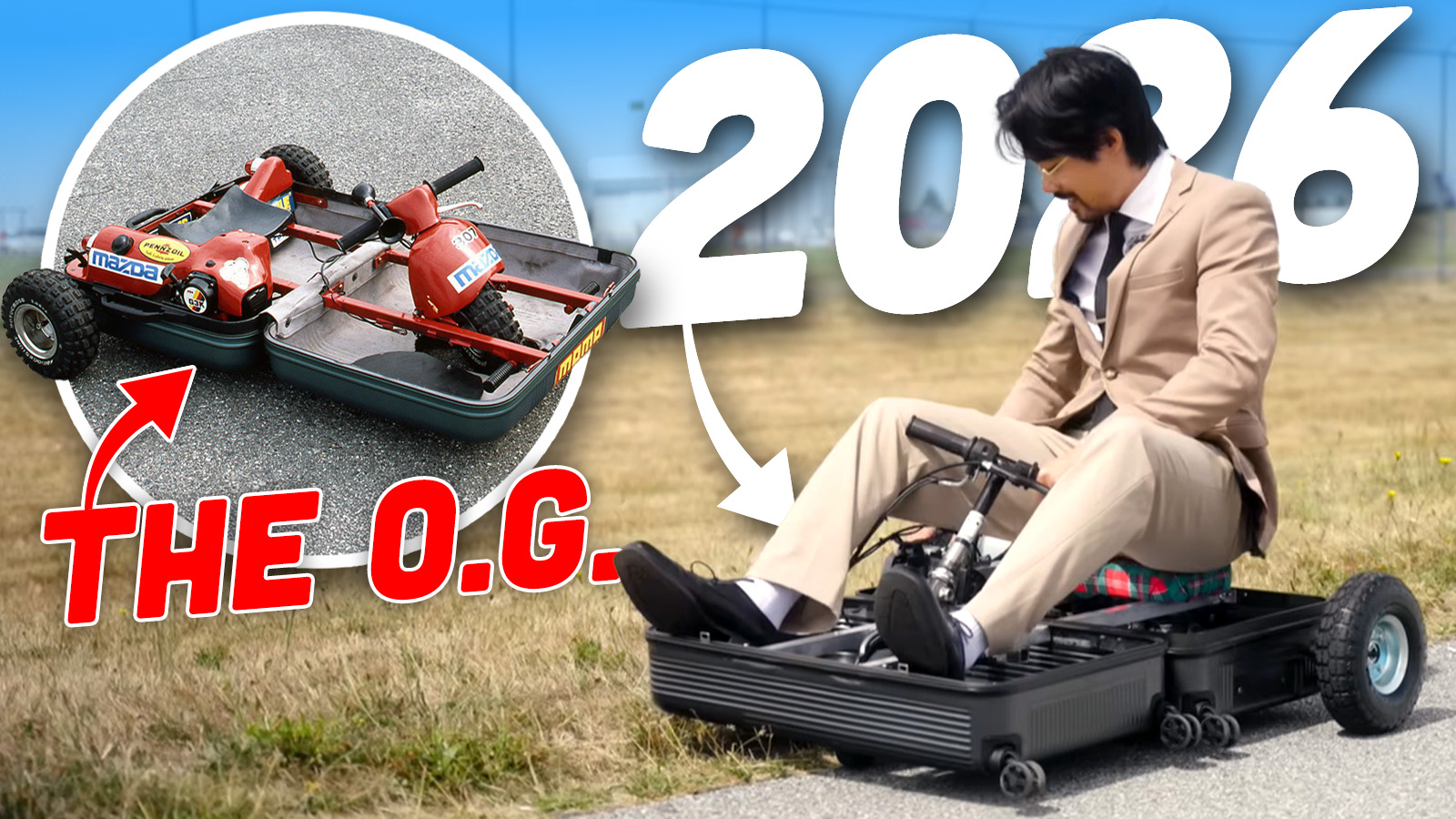
Throughout vehicle history, companies and engineers have been trying to solve the issue of last-mile mobility. Planes, trains, and automobiles can get you close to your destination in a city, but what if you want a vehicle to get you those final steps to wherever you’re headed? Some inventors have created folding motorcycles while others have made collapsible scooters. One of the silliest creations was perhaps the Mazda Suitcase Car of the 1990s, a tiny three-wheeled vehicle that was literally a suitcase on wheels. A mad YouTuber has recreated the Mazda Suitcase Car for the modern day, managing to make it both lighter and more practical than the Mazda version. And it goes relatively fast for how tiny it is, too!
Every few years or so, a company comes out with a concept for a vehicle that fits inside of another vehicle. You may remember that it was only a few years ago when just about everyone, myself included, was obsessed with the Honda Motocompacto. I still occasionally ride mine for the laughs, but have never actually used it for a “last-mile” application. The Motocompacto isn’t the only one out there. Today, you can buy motorized luggage and a folding electric motorcycle, too.


This idea isn’t even that new. Back in 1952, French inventor Clovis Boutet created a bicycle that folds up and stores in a suitcase. In the 1960s, Fuji Heavy Industries created the Fuji Go-Devil, a gas-powered scooter that shrinks into a little metal cube.

Last year, I wrote about Lawrence S. Shapiro’s Suitcase Cycle, a kit that converted small Honda, Suzuki, and Yamaha motorcycles into folding contraptions that fit into a special case, which then could be shoved into the luggage compartment of a general aviation aircraft.

Of course, the most iconic last-mile solution of all is the old Honda Motocompo, which was a two-stroke folding scooter built between 1981 and 1983, and could be found stuffed under the hatch of the Honda City.

Of all of these ideas, perhaps the most fun-looking of all of them was the Mazda Suitcase Car. Where other last-mile ideas were usually scooters and motorcycles, Mazda took a different path. Its last-mile vehicle was a suitcase that turned into a go-kart. The Mazda Suitcase Car made headlines and became the darling of TV news programs in the 1990s, but only three were built. Only a single example survives today, and you can’t ride it.
Faced with that unfortunate reality of never being able to drive the real deal, YouTubers Adam and Jabong, who operate under the handle of Bucket, decided to build their own Mazda Suitcase Car. Somehow, they did better than Mazda itself did. Check it out:
The Mazda Suitcase Car
If you’ve never heard of the Mazda Suitcase Car before, fear not, for Mazda has preserved its story pretty well:
The dawn of the 1990s: It was a pivotal time in history. Optimism was in the air with the end of the Cold War. Scientists had just invented the World Wide Web. Technology was going to makes us more productive and bring the world closer together. Anything seemed possible. It was an exciting time at Mazda, too. Overwhelmed with the demand for its then-new MX-5 roadster, the plucky carmaker would become in 1991 the first Japanese brand to win the 24 Hours of Le Mans and the only one with a rotary-engined car. The same year, it presented a hydrogen-powered rotary concept called the Mazda HR-X.
The prevailing atmosphere of confidence at headquarters in Hiroshima bred things like Fantasyard, an in-house competition held between 1989 and 1991 in which teams from different departments vied to come up with the best creative mobility ideas. Unimaginable in the gruelling global automobile market of 2020 and its ever-tighter budget constraints, Fantasyard aptly reflected the positive vibe three decades ago at a company long known for its unconventional approach. One edition of the contest would yield a particularly clever if somewhat bizarre winner.
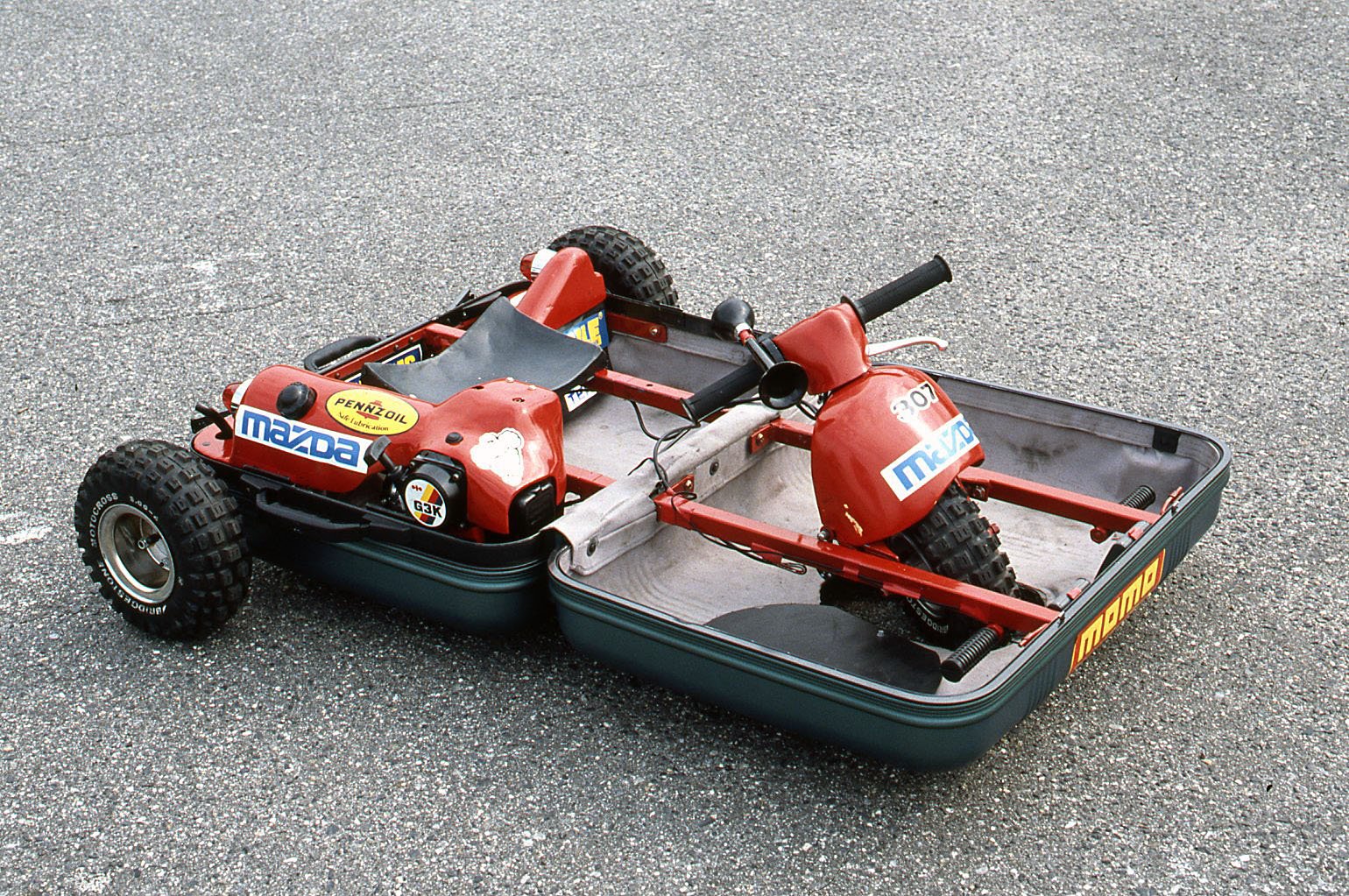
Namely the “suitcase car”, a three-wheeled concept supposedly inspired by a vision of getting around airports more efficiently. Its creators, a group of seven engineers from Mazda’s manual transmission testing and research unit, received a small budget to bring their vision to life. After purchasing a pocket bike and the largest hard-shell suitcase they could find, they got to work. The result was simple yet ingenious, with bits of the pocket bike including its 34cm3 two-stroke engine built into a 57cm x 75cm Samsonite. It took only a minute to assemble: Swivel the front wheel into the “upright” position through a removable section of the case, insert the rear wheels, attach the seat above the rear axle, and off you went. The 1.7PS powerplant could propel the contraption to speeds of up to 30km/h.
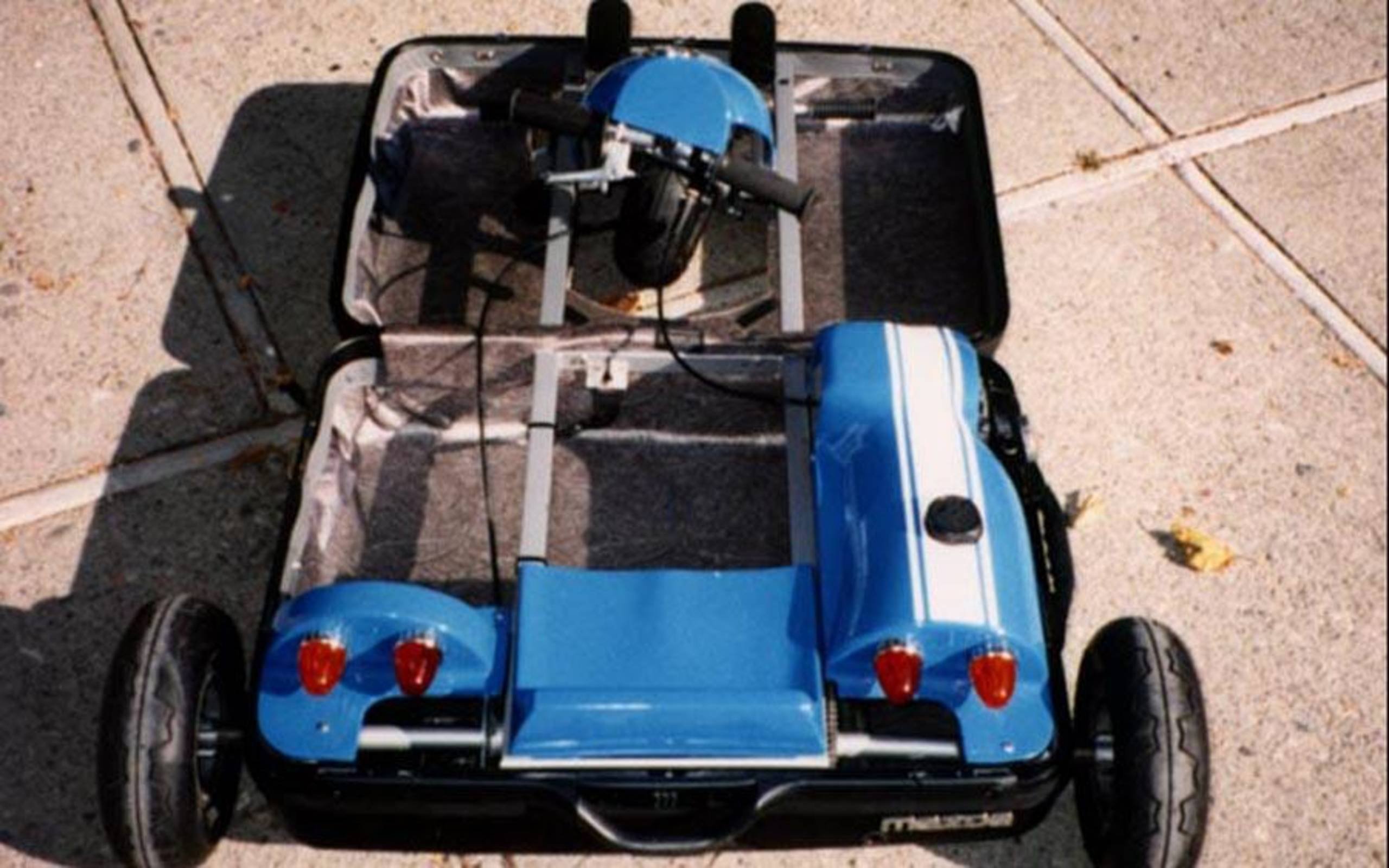
The Suitcase Car features a steel tube frame, a differential, a solid rear axle, handlebars from a pit bike, and a 33.6cc Komatsu G3K engine. A top speed of 18 mph wasn’t bad, either, especially when considering that the driver is sitting on a slice of foam basically only an inch above the ground with Samsonite as their only crash structure.
Amazingly, one version of the Suitcase Car had functional headlights, brake lights, taillights, horn, and even turn signals. It might have had more in common with a go-kart, but it technically could have been used as a super tiny car.

Reportedly, the Suitcase Car cost only $5,000 for its engineers to build by hand. Mazda says that the Suitcase Car had a low center of gravity and that those who drove it had a ton of fun. In that way, Mazda said, the Suitcase Car was like an MX-5 Miata. The Suitcase Car was also like Mazda’s first-ever car, the 1931 Mazda-Go, because both the Mazda-Go and the Suitcase Car had three wheels.
Unfortunately, at 70 pounds, the Suitcase Car was impractical as a last-mile solution. Sure, it fit into the form factor of a suitcase, but nobody wants to lug around a suitcase that heavy. Additionally, the weight was a problem because a lot of international airlines have checked baggage weight limits that are under 70 pounds. Also, a two-stroke engine wouldn’t be great for everyone else at the airport that you’d be scooting through.
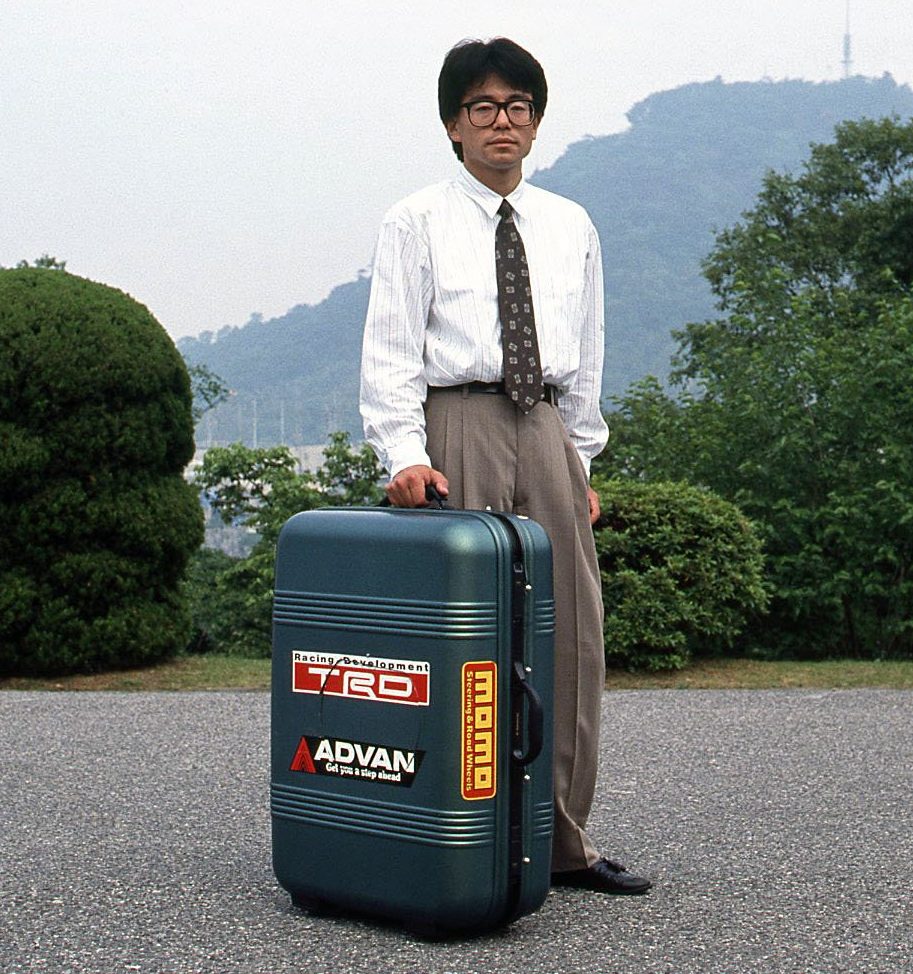
Mazda says that mass production of the Suitcase Car was never under consideration. Given the impracticality of it, Mazda clearly decided to pass up on limited production, too. Instead, the Suitcase Car went on a worldwide publicity tour, serving as a sort of portable billboard for Mazda. It even appeared on the Discovery Channel, Ripley’s Believe It or Not, and the Oprah Winfrey Show. The Suitcase Car was so popular, even, that Mazda built and promoted two more of them in 1991. One of them got to go to the Frankfurt International Motor Show, appearing alongside the iconic Mazda 787B.
The Modern Suitcase Car
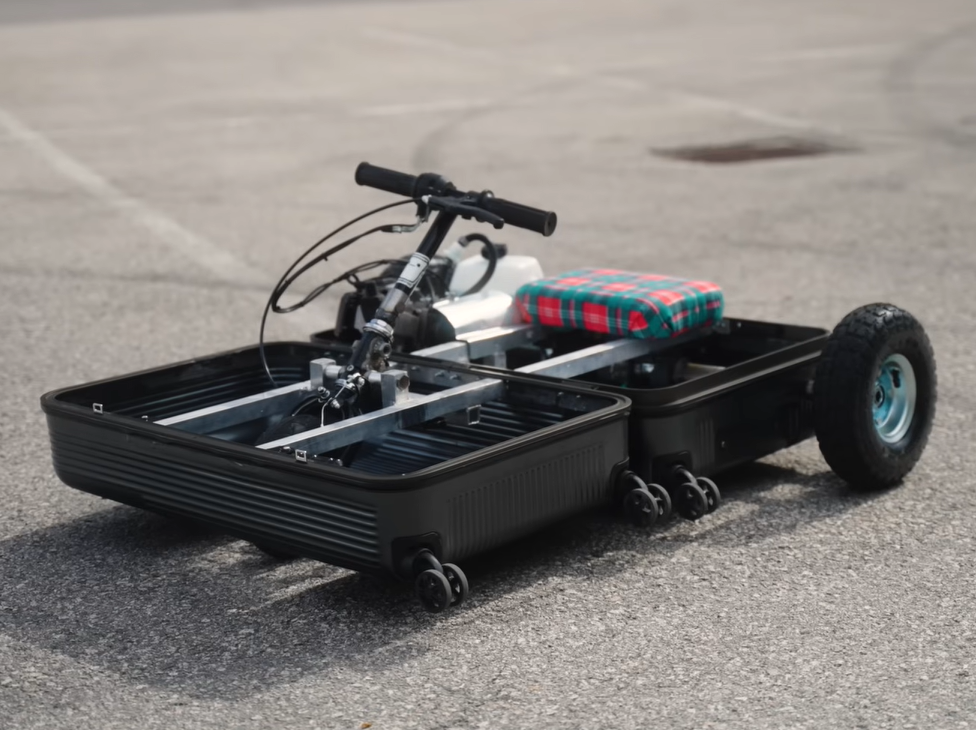
The American version of the Suitcase Car currently lives with Brad Lutz, and he doesn’t want to give it up anytime soon. Adam and Jabong weren’t content with not being able to own one, and decided to make their own car out of a suitcase.
Adam and Jabong replicated the Mazda effort from longer than three decades ago. They started with a Samsonite suitcase and a minibike, robbing the latter for its parts. Amazingly, Samsonite North America loved the idea, and gifted a Samsonite Rexton suitcase for the project. Samsonite says that the Rexton is the modern incarnation of the suitcase that the Mazda engineers used back in 1991, so the Bucket suitcase car would be a sort of spiritual successor.
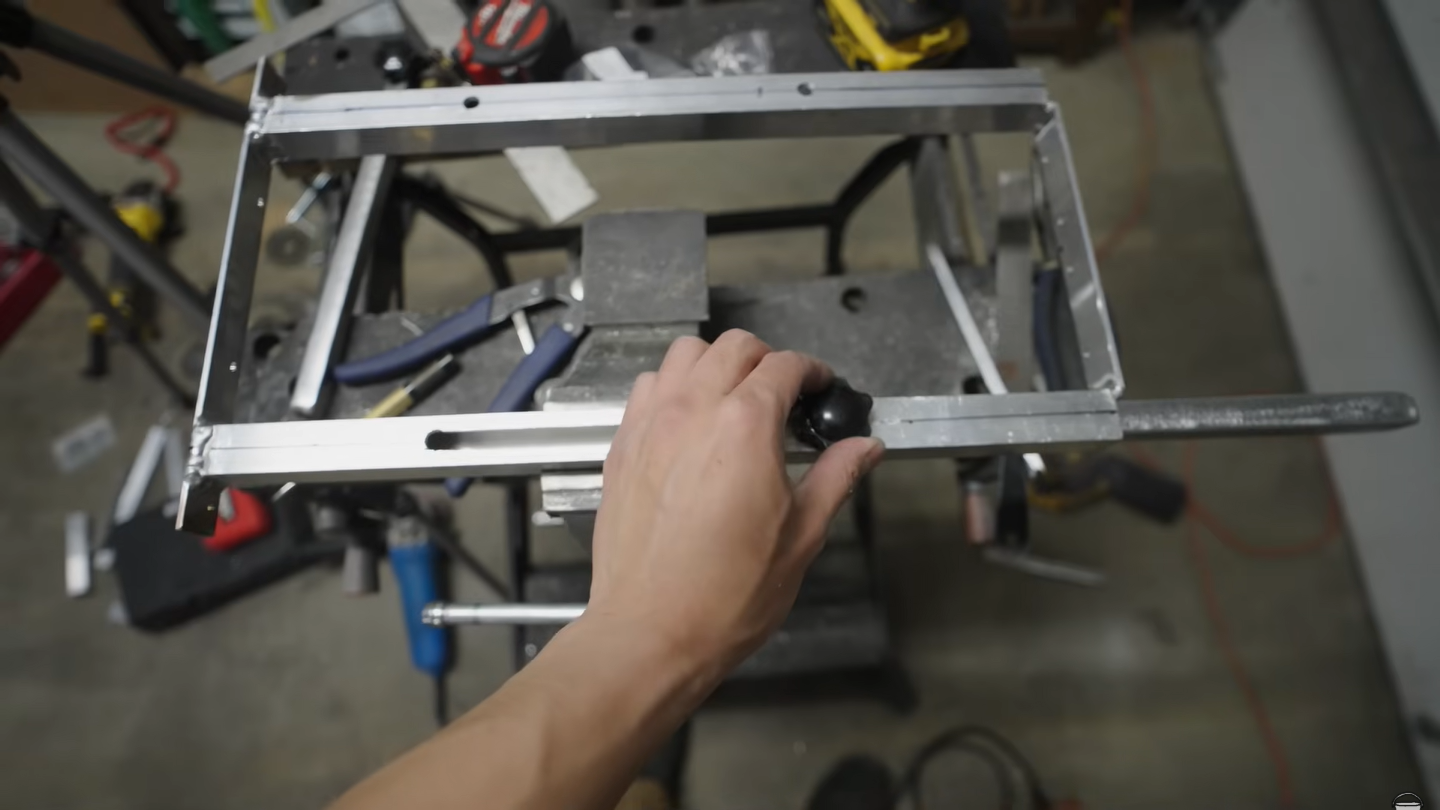
Since no blueprints or diagrams exist of the Suitcase Car, the Bucket crew had to get in contact with Lutz, who gave them close-up images of the Suitcase Car build. Using that as a guide, the Bucket guys began to cut the suitcase and fit the square tube chassis. More cutting, some aluminum welding, and an engine mounting bracket later, and the suitcase began to look like a car with its engine all bolted up.
Since the Bucket suitcase car has to be as functional as the Mazda version, the frame cannot be rigid all the time. But it also has to be strong enough not to taco while being driven. To achieve both, Bucket designed the frame to have two thinner tubes that slide in and out.
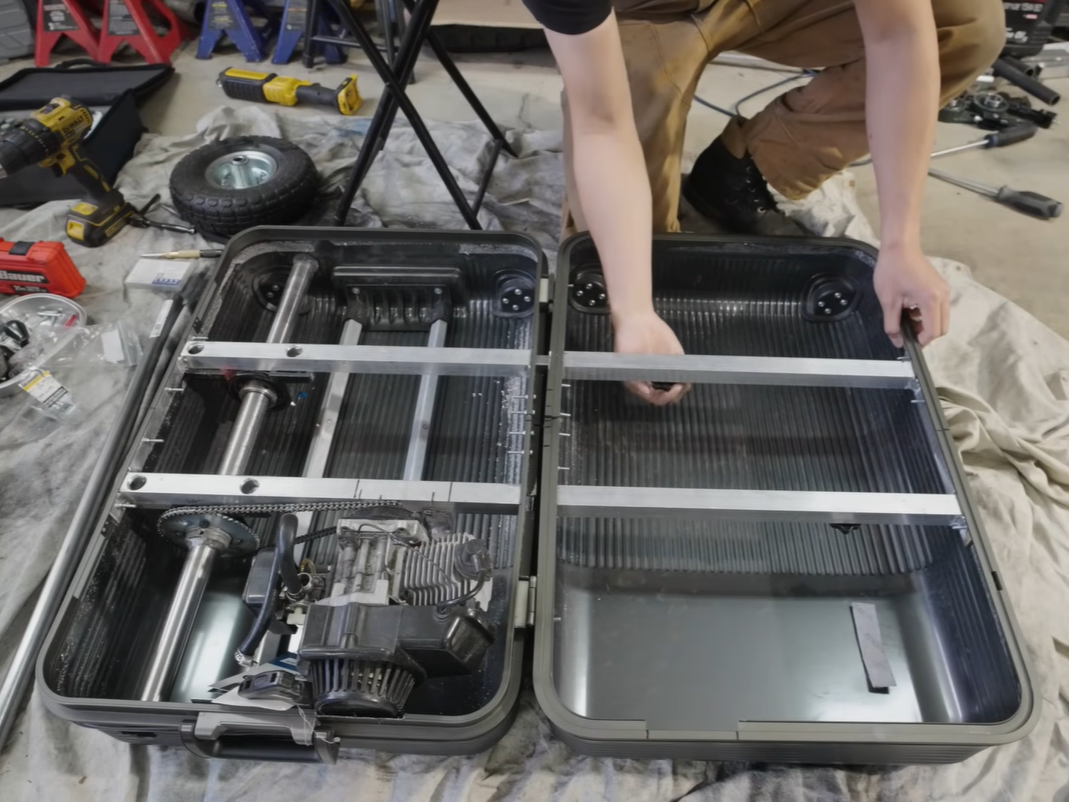
The front fork is the front wheel and brake from a Razor scooter, which was welded in and given a hinge that allows it to fold up and into the suitcase when the car is not being driven.
From there, Bucket fashioned up a fuel tank, chain guard, handlebar, and exhaust. All of which fit in the suitcase, just like in the original car.
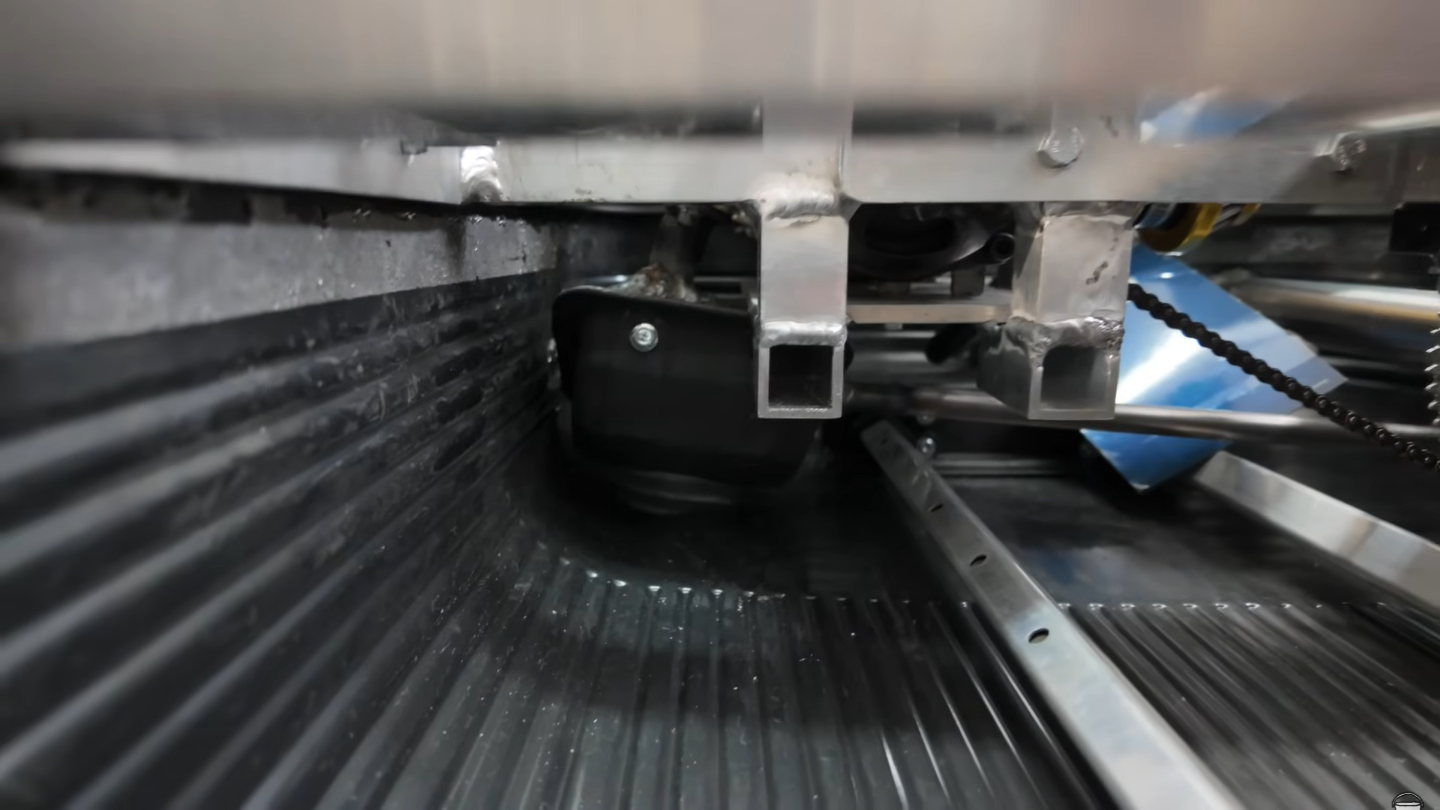
Bucket even got the neo-suitcase car to run and drive pretty easily, but the puny Razor scooter wheel couldn’t get the car to turn at all. The fix for that was pretty creative. The solid rear axle was cut in half, leaving one wheel powered and the other left to freewheel. This allows the rear wheels to turn at different speeds for much easier cornering.
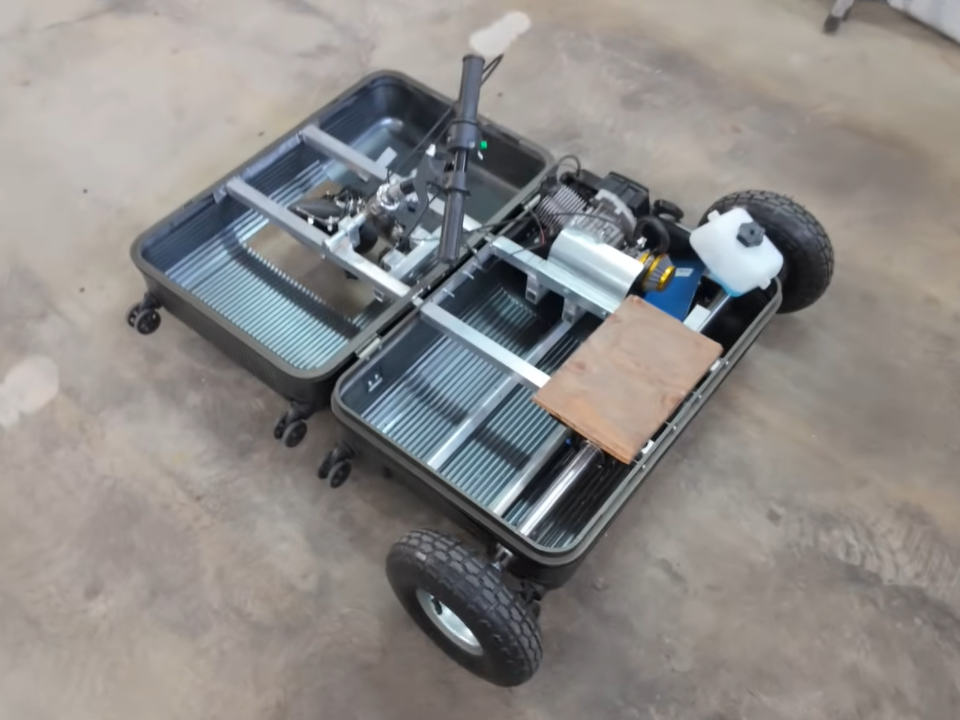
The finishing touch was a plywood seat with some foam, a little bit of fluff, and a rice bag stapled on. Like everything else, the seat also fits inside the suitcase when closed.
Like the real deal, the Bucket suitcase car does require some assembly. The wheels and the handlebar have to be taken out, the inner frame sliders engaged, and the service panel of the suitcase removed for the front wheel to fit through. From there, the handlebar has to be installed, the front wheel dropped into place, and the rear wheels locked into place. Thankfully, pins make installing and removing these bits go relatively quickly.
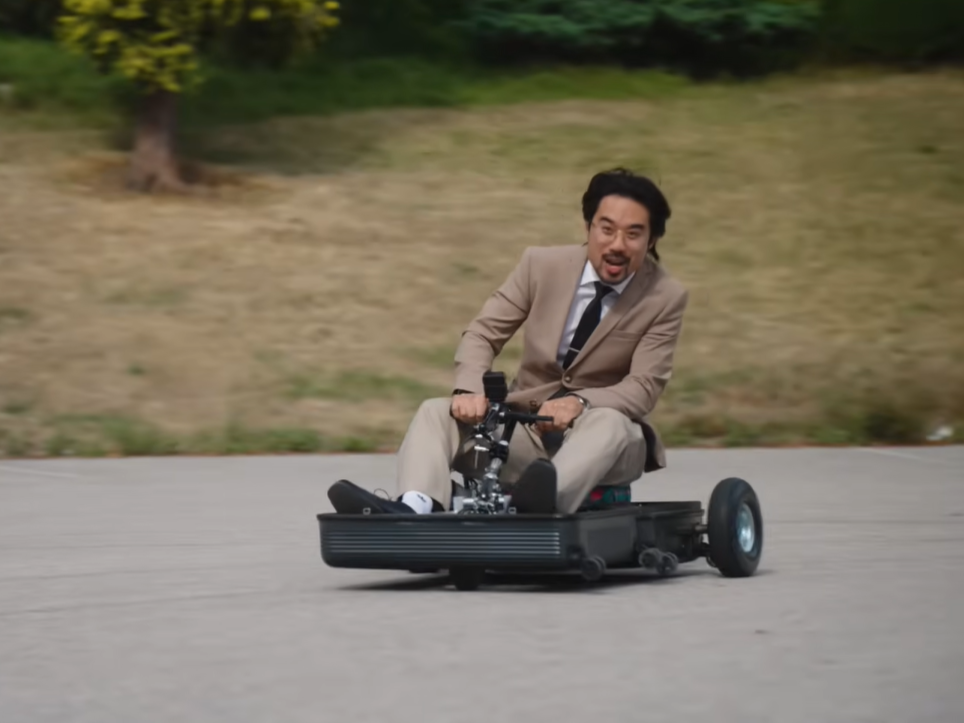
The Bucket crew even managed to improve on the design. Their version weighs only 56.8 pounds and has been clocked going 20 mph. Apparently, the engine does have a lot more in it, but the Bucket suitcase car is as terrifying to drive as it is fun. Technically, it does weigh light enough that some airlines would take it as checked luggage, especially if you have status. Click here to watch more Bucket.
Still Pointless, Still Cool
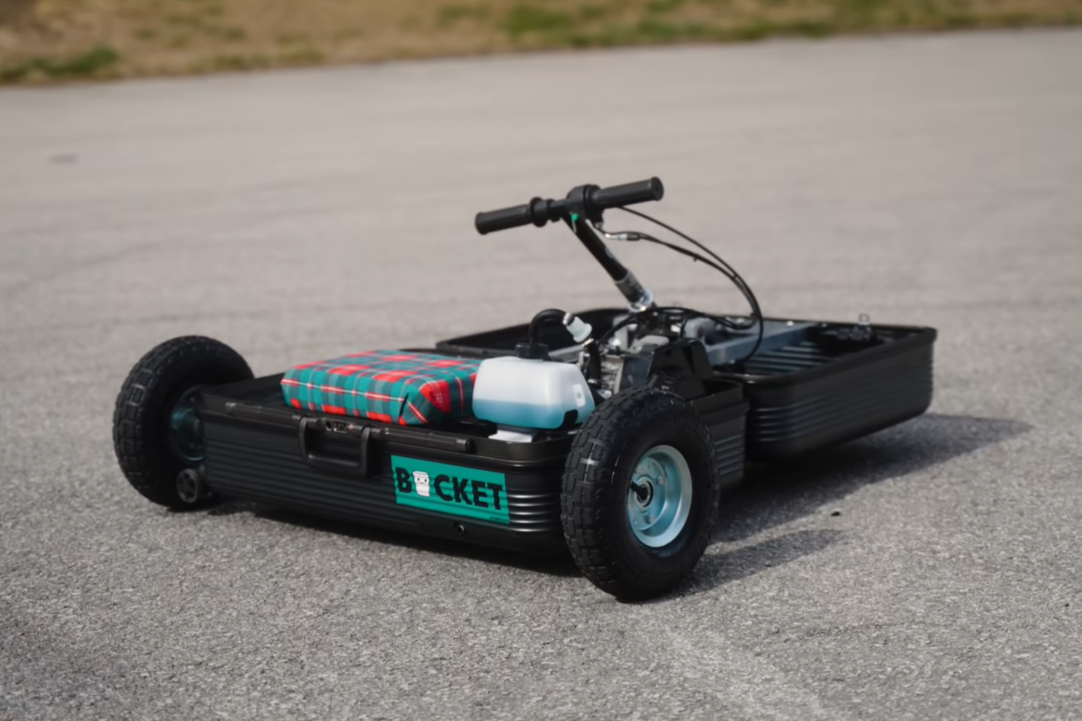
Of course, even as a lighter, faster, more dangerous suitcase car, the Bucket version doesn’t solve the biggest problem with the Mazda Suitcase Car. It’s just not really practical. You can’t drive it in an airport; it’s not going to replace a car; and it’s not like anyone wants to listen to a screaming two-stroke propelling you gate to gate anyway. But it does look really cool, and I suppose if you really want to take a go-kart with you somewhere, well, a suitcase car could work for that.
Either way, pointless or not, both the Mazda Suitcase Car and the Bucket version are neat little toys. I could totally see myself ripping around the neighborhood on one, or stuffing one into the back of a Cessna just for the giggles. Or, heck, it would be a fun little thing to have for car shows. Sadly, unless you break out a welder and a suitcase, you, like me, will have to continue to enjoy them from afar.
I hope these silly concepts never stop, however. I cannot wait to see what crazy idea someone comes up with next for trying to get people to the last mile.
Top graphic image: Mazda/Screenshot: YouTube/Bucket




Why does the Mazda suitcase have a Toyota TRD sticker on it? Advan and Momo understandably, but a TRD sticker has me scratching my head.
It’s more of a suitcase gokart than a suitcase car. Suitkart, if you will.
I love the plaid seat. And I love that Samsonite was onboard and gave them one. What I don’t love is that I have that exact same suitcase and that someone might mistake it for a Bucket and snag it off the carousel. Maybe I should get a sticker that says something along the lines of “Ceci n’est pas un Bucket.”
Why the heck do you not use it at AirVenture?
The EAA people are very particular about who is allowed to use motorized vehicles inside the event itself. Media can get access to golf carts, but I’d rather experience AirVenture like everyone else does. 🙂
What?!? They have ex-military fighters and bombers buzzing around and they’re afraid of a few hundred thousand scooters whizzing about?
Actually, I can see their point.
Go modern boyz. Make it an EV. Source components from an ebike. Add a freewheeling third wheel, Some creative carbon fiber or ally Tsquare. Light, environmentally dangerous and probably fun
Sounds like long-overdue progress to me.
yea pretty cool but pointless unless you are going to be in a giant parking lot or a school campus where you’d rather look like an idiot driving a suitcase rather than walk like a normal person.
*raises hand*
Now they need to race this thing against one of those motorized beer crates.
You can’t check anything with gasoline in it. The tank can’t even smell like gas.
I learned this when I tried to check a chainsaw.
Don’t ask.
I can just see that check-in:
Airline employee: Name?
Angry Bob: Angry Bob
AE: Checked bags?
AB: Just this chainsaw
AE: …
Not the same but you reminded me of the time the guy in front of me was checking in a pole vault pole.
Utterly delightful to watch.
I *love* that they resisted to go the easy route and make it electric.
These Bucket guys are hilarious. Last week, a friend of mine spotted them driving an NA Miata, 944, SC Gen 1 MR2, and a Tuned By Lotus Impulse — all clapped out and safaried up — heading for Tuktoyaktuk via the Dempster Hwy. That road is no joke. Their ever-changing choice of cars very much is. Can they be annointed Autopian Ambassadors? I’ll be watching for their next video.
The bigger issue is, you couldn’t travel with gas in the tank, and if the tank is empty when you arrive, how are you going to get to the gas station to fill it up?
Maybe if the engine was a diesel, you could run it on duty-free booze and/or perfume?
Is there a suitcase car category at Bonneville? Time to start one?
The original Mazda suitcase cars don’t exist anymore because they rusted out. Only Mazda could make a plastic suitcase rust LOL
“Unfortunately, at 70 pounds, the Suitcase Car was impractical as a last-mile solution. Sure, it fit into the form factor of a suitcase, but nobody wants to lug around a suitcase that heavy. Additionally, the weight was a problem because a lot of international airlines have checked baggage weight limits that are under 70 pounds. Also, a two-stroke engine wouldn’t be great for everyone else at the airport that you’d be scooting through.”
And, ironically, it has no luggage rack for the rest of your stuff.
Still weird it didn’t make it into a Bond movie at the time, though. Ambush at the airport, assassin flees on one of those motorized shuttle vehicles, fortunately Bond was issued a new suitcase car two hours earlier, chase through the airport and onto the street ensues
Maybe the protracted litigation over the film rights in the late 80s-mid 90s is what held that up
Replace Bond with Austin Powers and you got it.
There was a fine line between the Moore films and parody, to an extent, the Brosnan era as well
True dat.
I love the can-it-be-done aspect of the experiment and remain glad that we do such things for fun, and I’ve also spared a lot of thought to this exercise.
But I’ve been stuck on “trying to solve the issue of last-mile mobility”, because it’s been solved, and all we’ve been doing is trying to find an upgrade over Lucy‘s solution.
We’re made to walk, our legs make up a third of our body mass. With the exception of actual mobility aids such as wheelchairs, almost all last-mile solutions require some level of athleticism to operate. Crouching all the way down into a go-kart or operating a bike/scooter generally requires more strength, coordination and joint/ligament integrity than walking a mile, especially when said vehicles are ergonomically compromised to meet a secondary size/shape/weight requirement.
I still want the suitcase car, I think it’s awesome and would love to rip around in it and pull it out of the trunk at car shows.
Awesome, I was really hoping you guys would cover this video!
I see it has 8 spare tires mounted to one side as well.
Which could be handy.
Or not.
This was not made electric why??
I get sticking to the OG design, but they didn’t even really do that. The OG had a diff. I applaud these folks, but this could have been so much more, IMHO. I’m still very glad it exists.
I was wondering the same thing, and I’m going to guess it probably has to do with the weight of batteries. With a full tank of gas, this thing can probably travel farther than it could with an electric motor and batteries that weigh the same.
It’s also possible the brmmp brmmp rrrrrrr sound of the putt putt engine was considered more fun the mmmmmm of electric.
Isn’t it always!
It wouldn’t need a large battery. Say a 48V 10Ah LiFePo4 (realistically more than needed) at about 7 lbs and a 750W motor and controller combo of about 12 lbs (basically e-bike stuff) and I can’t imagine the weight is the issue.
Precisely. Theoretically, just need to get from one end of an airport to the other.
Came here for this
Looks like they already had a minibike just sitting around with a drivetrain to donate to the build.
I think it’s great they took on the bigger challenge of keeping it gas powered. Certainly much easier to toss in some batteries and a brushless motor in there, but this build is so much more interesting and authentic to the original this way.
Of course, electrical would have been 100x more practical, but not sure “Practical” was ever in the design requirements for this.
I fully agree.
It would be fun to make something you could actually take on a plane though, which to me, is a better goal.
Absolutely correct! I think you need two of these, one gas, one electric!
This video came up on my YouTube feed last night. I watched it because of the absurdity and I like seeing people doing difficult things.
I would not have watched or cared if they just threw some batteries and an electric motor at it. Boring…
Exactly!
Screaming through a crowded airport at 20+ mph on a 2-cycle folding kart with scooter steering is likely to become the final item on your Bucket list.
Gather a few people in the airport with their own suitcase cars, some red & green turtle shells, a few banana peels, and you’ve got yourself a race!
BRB, signing up for an Unreal Engine 5 license…
The original was also used in an episode of Family Matters, as a science fair exhibit at EPCOT, which was during the period when Disney mandated that every ABC sitcom do an episode at a Disney park to promote synergy
The flying part, I see a problem with it filled with gasoline. I haven’t flown in many years, is gas on the approved flying list? If not, then where would you fill up after you landed?
(The exhaust running through an enclosed airport seems like a problem too.)
If the creator can find a small enough diesel engine, maybe it can run on booze from the Duty Free.
Or even perfume!
Ha! I forgot about that part. Maybe bring a bunch of 3 oz bottles of “Gatorade” with you?
LOL, it would take longer to dump all the tiny bottles in the tank than to just walk to your destination.
No no. You only need to add one. You put in the rest once you’re underway.
Instead of a fuel tank, have a fuel magazine with the 3oz bottles. You wait until it starts sputtering, then you operate the bolt-action auto-loader to slam another bottle of fuel into the petcock.
Clarkson and Hammond did something similar on The Grand Tour
https://www.youtube.com/watch?v=T0pmXIAVsMQ
OK, I like this a lot, but without the LeMans racing livery, it’s half-baked.
Pity they couldn’t have had it at Monterey and had it staged next to the Autopian’s Autozam and the 787B.
Next year someone’s gonna show up with a mini Autozam.