

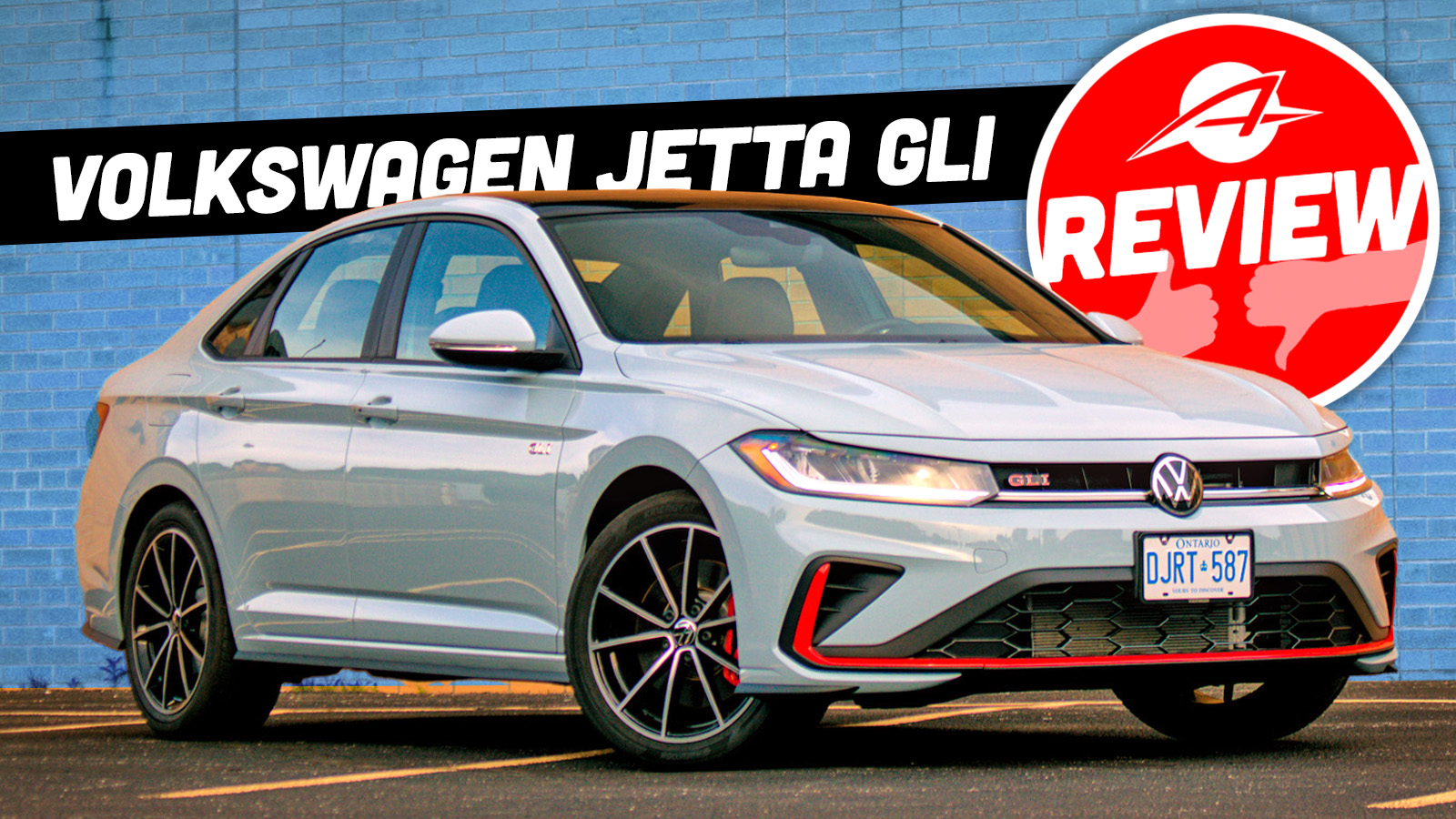
It feels like the end of the manual transmission is right around the corner. Options keep dwindling, and we’re not only about to lose another reasonably priced three-pedal car, but see an automaker exit the row-your-own market altogether. The 2026 Jetta GLI will be the last stick-shift Volkswagen sold in America. That’s it.
You’ll still be able to buy a 2027 Jetta GLI, but it’ll only come with Volkswagen’s DSG dual-clutch automatic. This is the last chance to dance, but is this turbocharged 228-horsepower sport compact a suitable dance partner? I spent a week living with one to find out.


[Full disclosure: Volkswagen Canada let me borrow this Jetta GLI for a week so long as I kept the shiny side up, returned it clean with a full tank of fuel, and reviewed it.]
The Basics
Engine: Two-liter twin-cam 16-valve turbocharged intercooled inline-four.
Transmission: Six-speed manual, optional seven-speed dual-clutch automatic.
Drive: Front-wheel-drive, electronically controlled limited-slip differential.
Output: 228 horsepower at 5,000 RPM, 258 lb.-ft. of torque at 1,700 RPM.
Fuel Economy: 26 MPG city, 36 MPG highway, 29 MPG combined (9.1 L/100km city, 6.5 L/100km highway, 8.1 L/100km combined) for the manual; 26 MPG city, 35 MPG highway, 29 MPG combined (9.5 L/100km city, 6.7 L/100km highway, 8.2 L/100km combined in Canada) for the dual-clutch automatic.
Base Price: $35,020 including freight ($37,545 in Canada).
Price As-Tested: $35,475 including freight ($38,045 in Canada).
Why Does It Exist?
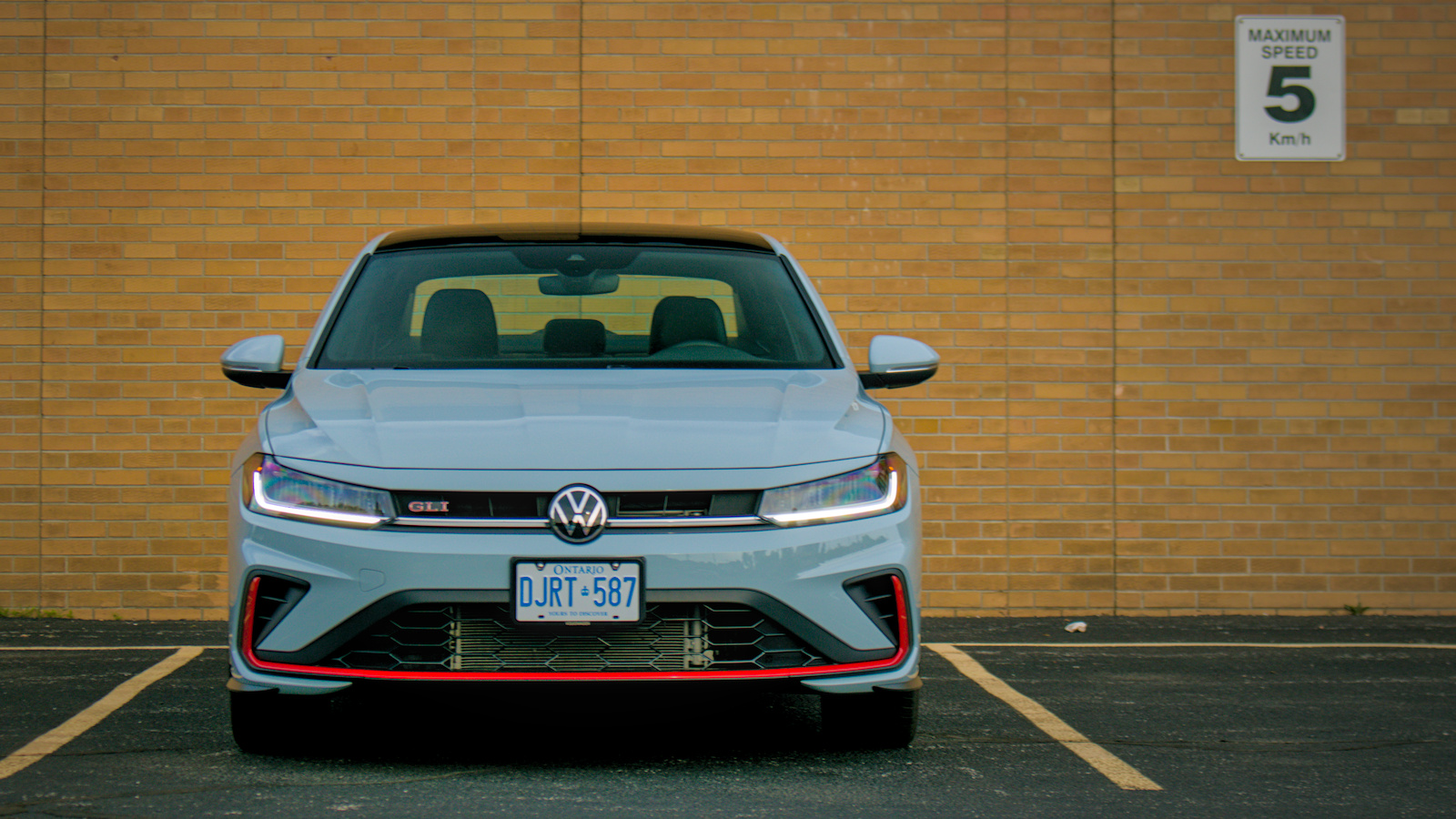
For the past half-century, the Volkswagen Golf GTI has been the archetypal hot hatch. Unfortunately, some Americans are still violently allergic to hatchbacks. Over the years, this has produced some styling travesties like the Ford Fiesta Sedan, but it’s also given us the wonderfully sensible Jetta GLI. It’s the sedan equivalent of a Golf, beefed up with more power and a crisper chassis tune. A perfect natural rival for the Honda Civic Si.
How Does It Look?
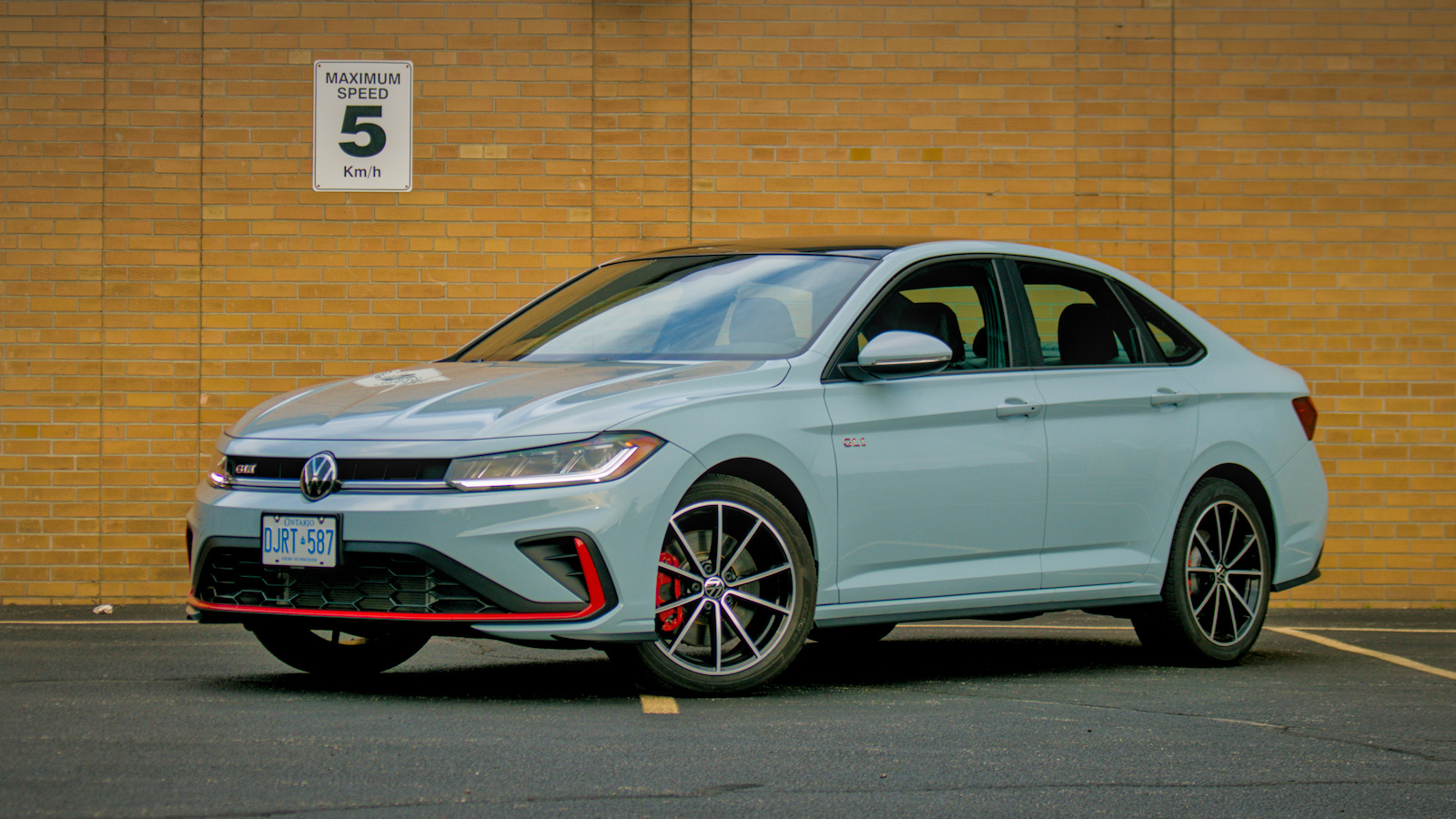
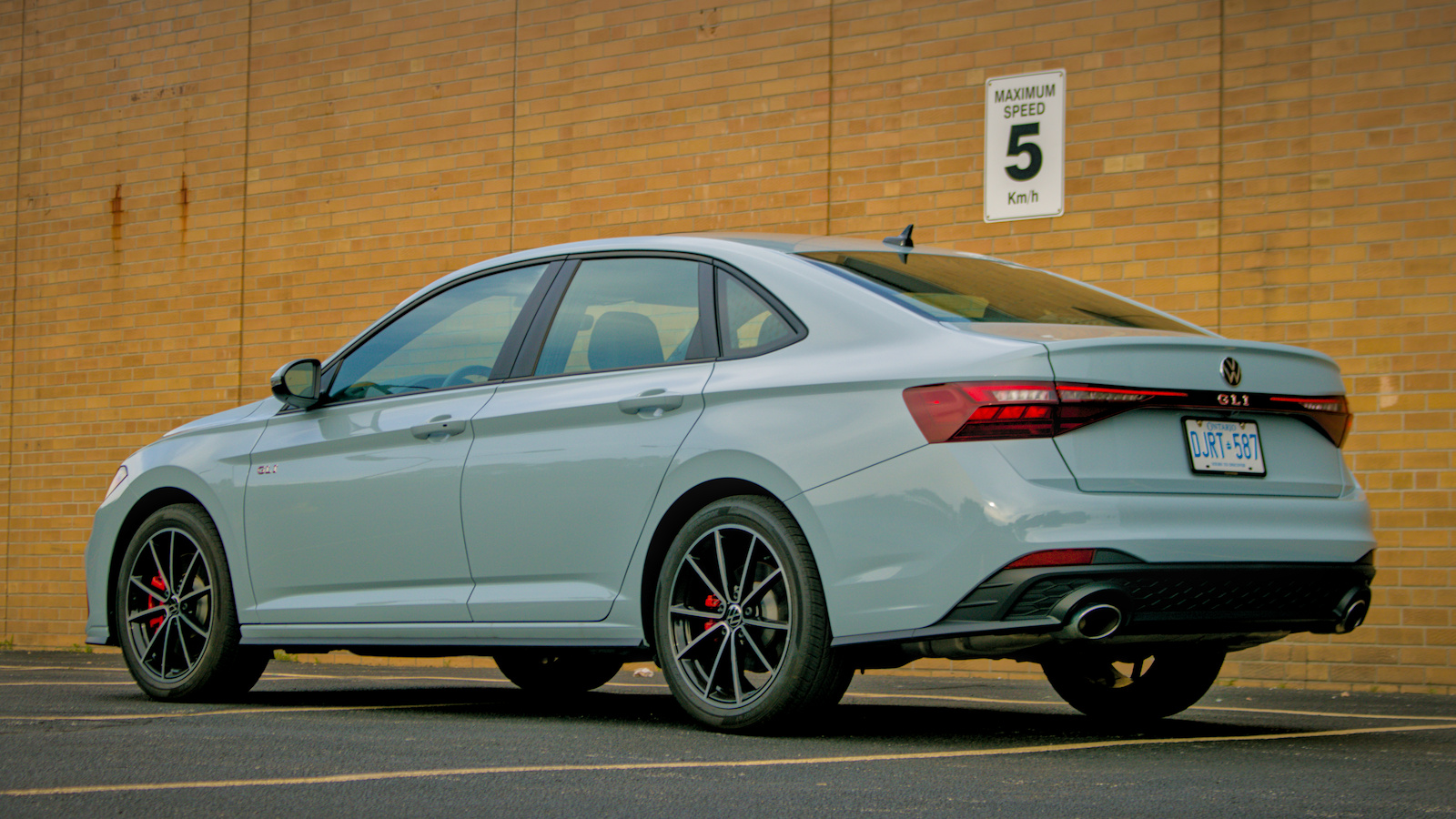
We’re now on the second facelift of the seventh-generation Jetta GLI, and it’s a slightly contentious one. Some of the shut lines on the nose are a bit clumsy, and the spokes of the diamond-cut wheels look a tad wispy, but it’s a Brooks Brothers suit compared to the Hyundai Elantra N’s boy racer look. If you wrapped the lipstick on the front bumper black and pulled the emblems off the doors, most people wouldn’t be able to tell the GLI from a regular Jetta. There’s something pleasing about that.
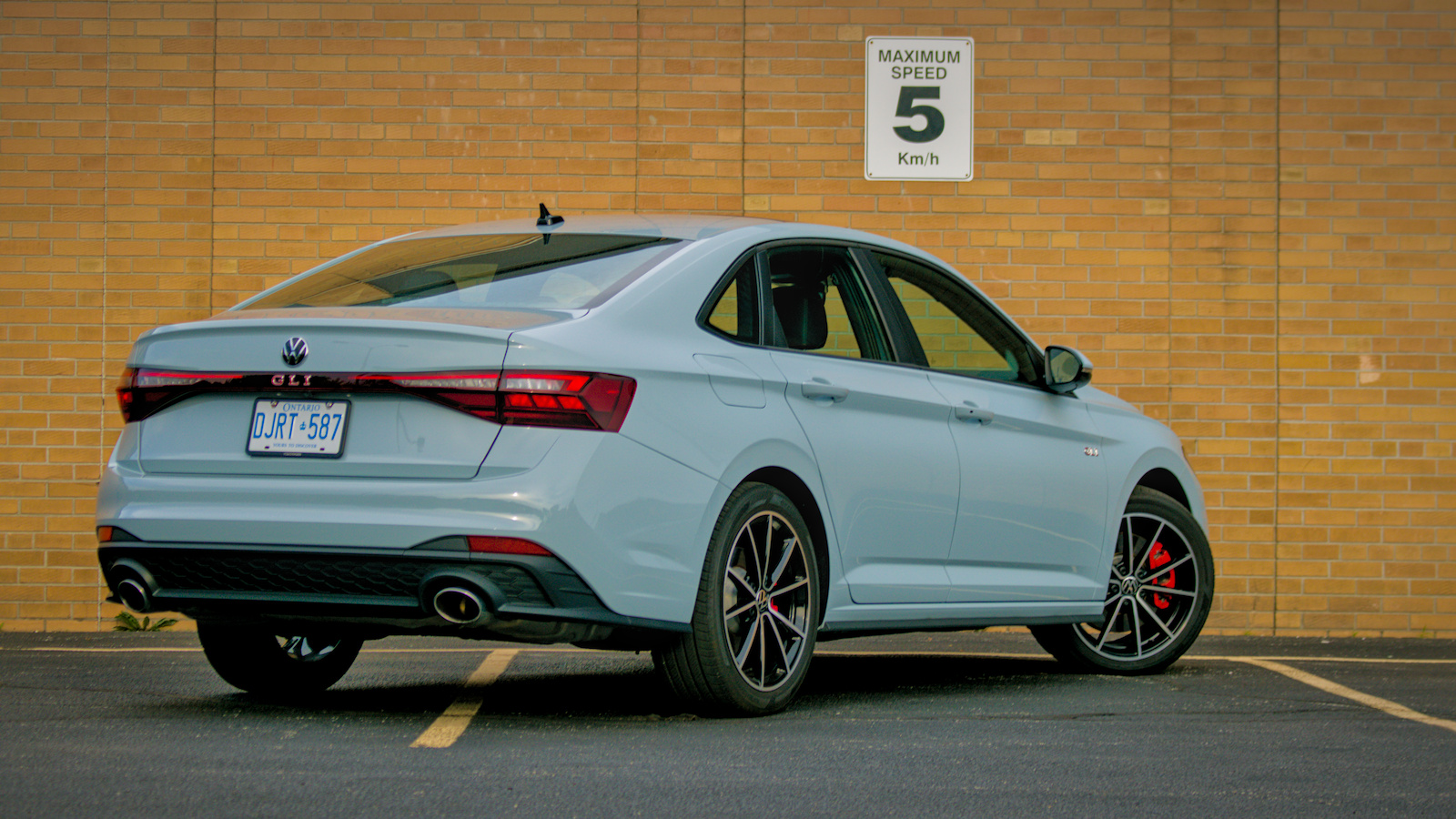
There’s a general handsomeness to this car’s profile, with chiseled lines breaking up the sheetmetal on a traditional silhouette. The creases low down on the doors continue to age like fine wine, and it’s pleasing to see two real exhaust tips poking out of the rear valence. That being said, I’m not so sure about the light bar across the upper grille at night. It’s a bit garish, and if I owned one of these, I’d be trying to unplug it before even leaving the dealer’s delivery bay.
What About The Interior?
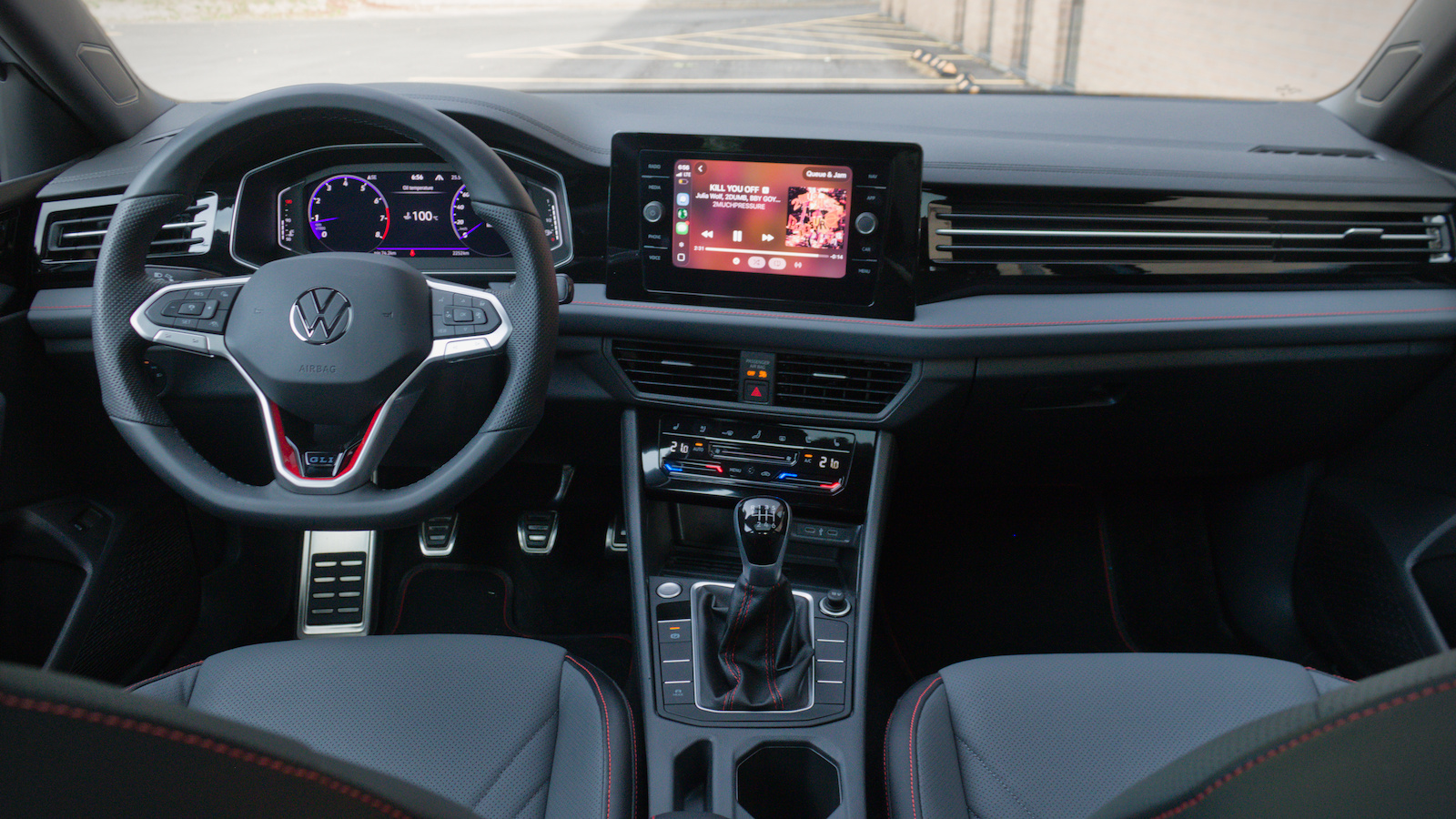
Slide behind the wheel of the Jetta GLI, and you’ll immediately be greeted by the return of physical buttons to the steering wheel. It’s Volkswagen’s course-correction for going all-in on capacitive touch controls several years ago, and while the climate control panel is still unfortunately devoid of real buttons, I’ll never miss accidentally activating the heated steering wheel whilst steering hand-over-hand. Moving beyond the wheel, the general quality of the GLI’s materials is a big step up from the Hyundai Elantra N, but doesn’t touch the Honda Civic Si‘s wonderfully upscale cabin. The GLI gives you stitched textiles on the dashboard and door cards, soft-touch surfaces up top, and lovely aluminum pedals, but the giant slab of shiny black plastic on the face of the dash feels like a miss. Still, everything feels solidly made, with no undue squeaks, rattles, or wiggly panels.
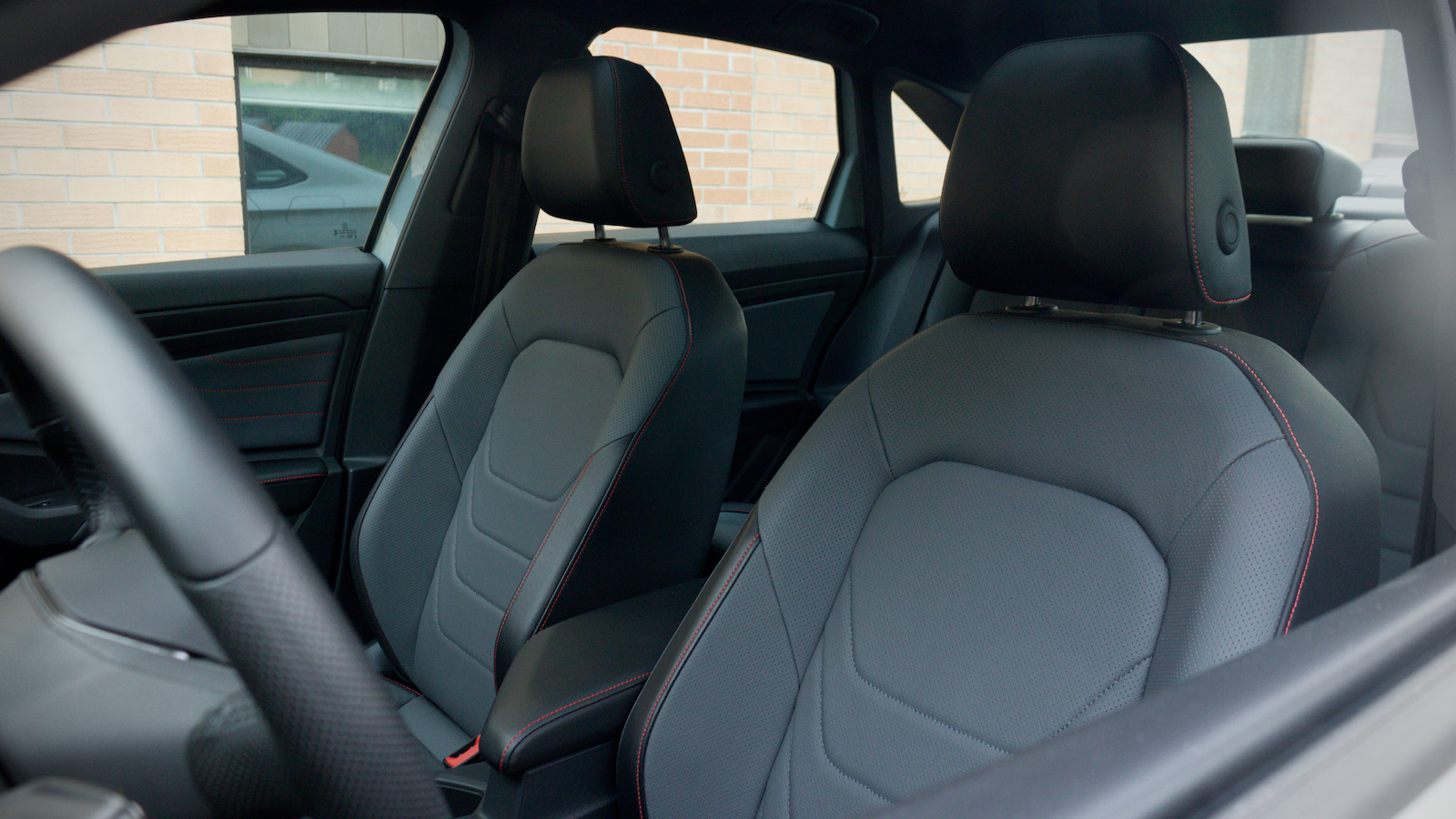
As for the front seats and driving position, it’s all well and good here. The power memory driver’s seat offers solid comfort and support, and not only is the leather on the steering wheel gorgeous, but the tilt-and-telescopic column offers a huge range of adjustment. That being said, there are a few evident cost-cutting measures on display in the GLI. Little spring-loaded tabs in the cup holders to keep coffees secure would be welcome, as would rear seat air conditioning vents. Still, aside from the lack of rear air-con vents, the GLI’s not a bad place for backseat drivers. Although the middle passenger will need to get around a fairly typical hump in the floor, there’s a surprising amount of space back there once you’re situated, and outboard passengers can have their rears heated. Talk about bourgeoisie decadence.
How Does It Drive?
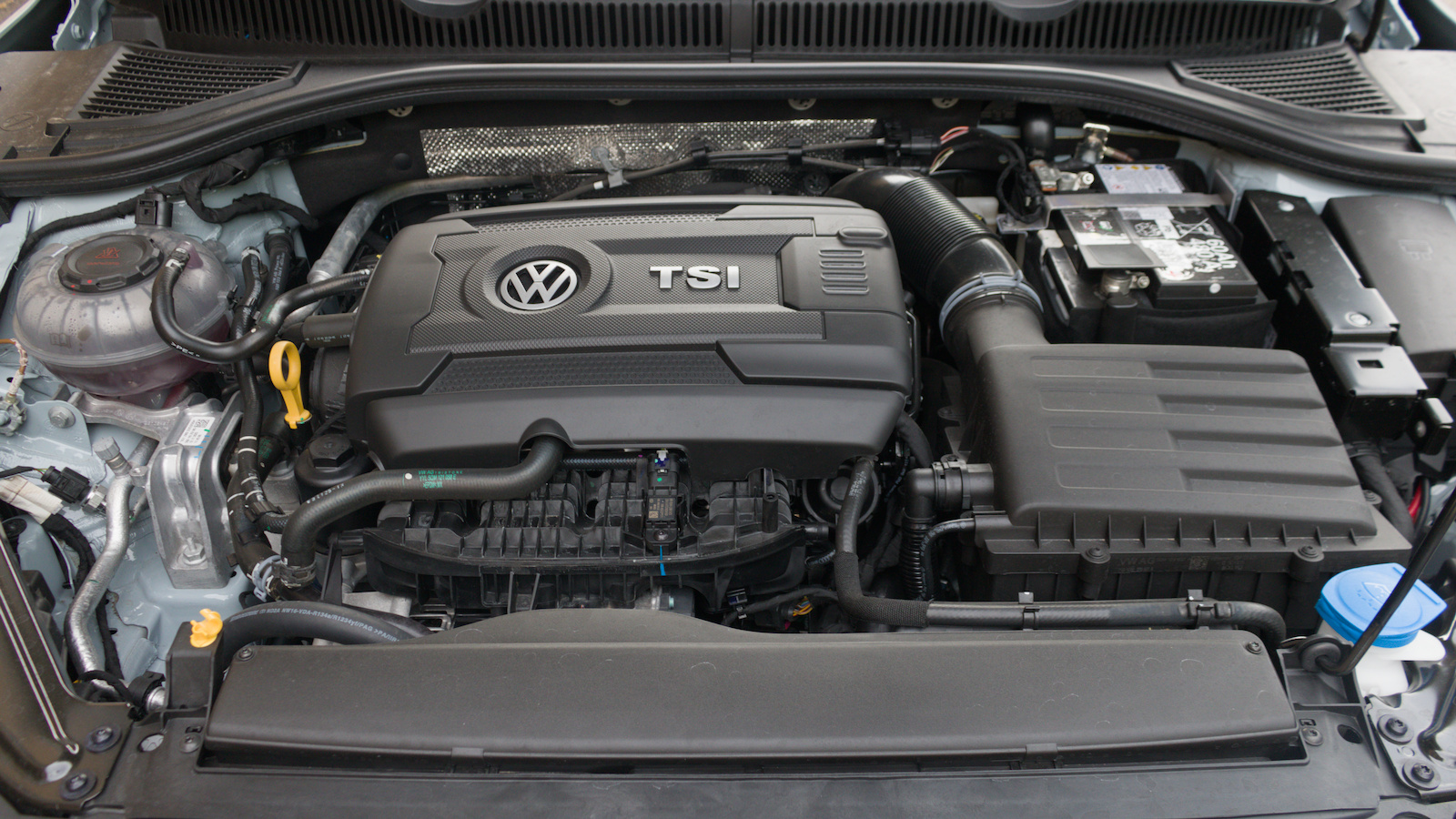
Under the hood of the Jetta GLI, you’ll find Volkswagen’s familiar EA888 two-liter turbocharged inline-four in a 228-horsepower state of tune. That might not sound like much, but between 258 lb.-ft. of torque coming in below 2,000 RPM and a reasonable curb weight of 3,247 pounds, this sedan flings itself down the road with admirable haste. Figure zero-to-60 mph in about six seconds, not a bad time at all for a fun daily driver. What’s more, this engine makes peak power on regular 87-octane gasoline, a significant advantage over the premium-sipping Honda Civic Si.
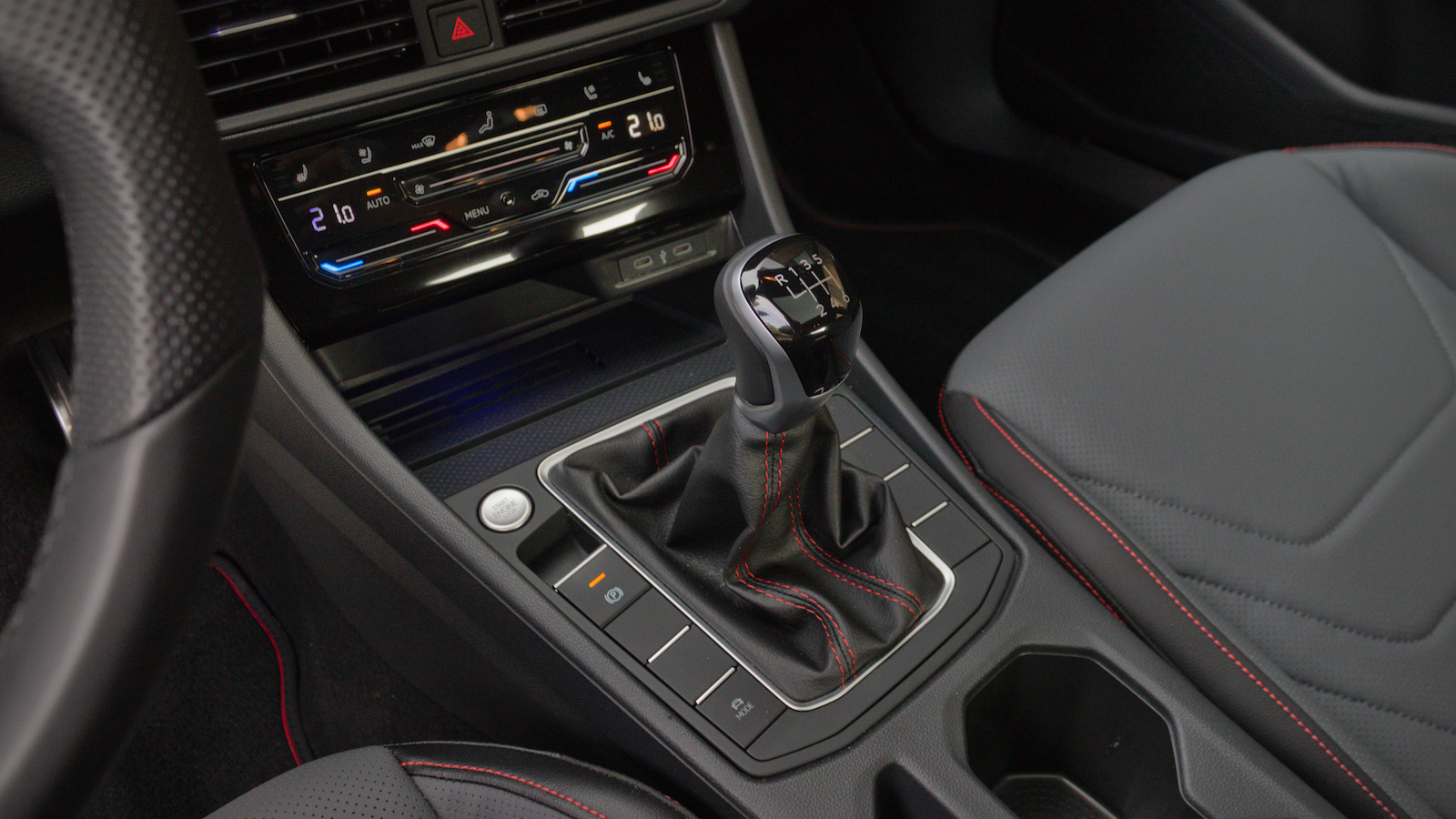
Of course, the big story for 2026 is that it’s the last call for a stick-shift Volkswagen. After the discontinuation of the six-speed manual in the Golf GTI and Golf R, the Jetta GLI is the last VW flying the three-pedal flag, so is it worth ticking the box to row your own gears? Well, the shifter’s nowhere near as crisp as the one in a Civic Si, the gearknob itself feels like it came in a cereal box, and second gear is hilariously long, topping out at north of 75 MPH. However, the six-speed in the GLI is wonderfully easy to drive, unencumbered by the significant rev hang that plagues the Honda. Anti-stall throttle compensation’s baked in to avoid any embarrassing moments at the lights, and matching revs on downshifts just takes a slight blip of the skinny pedal. It’s the sort of gearbox that adds engagement without hassle, and that philosophy carries through to the GLI’s ride and handling balance.
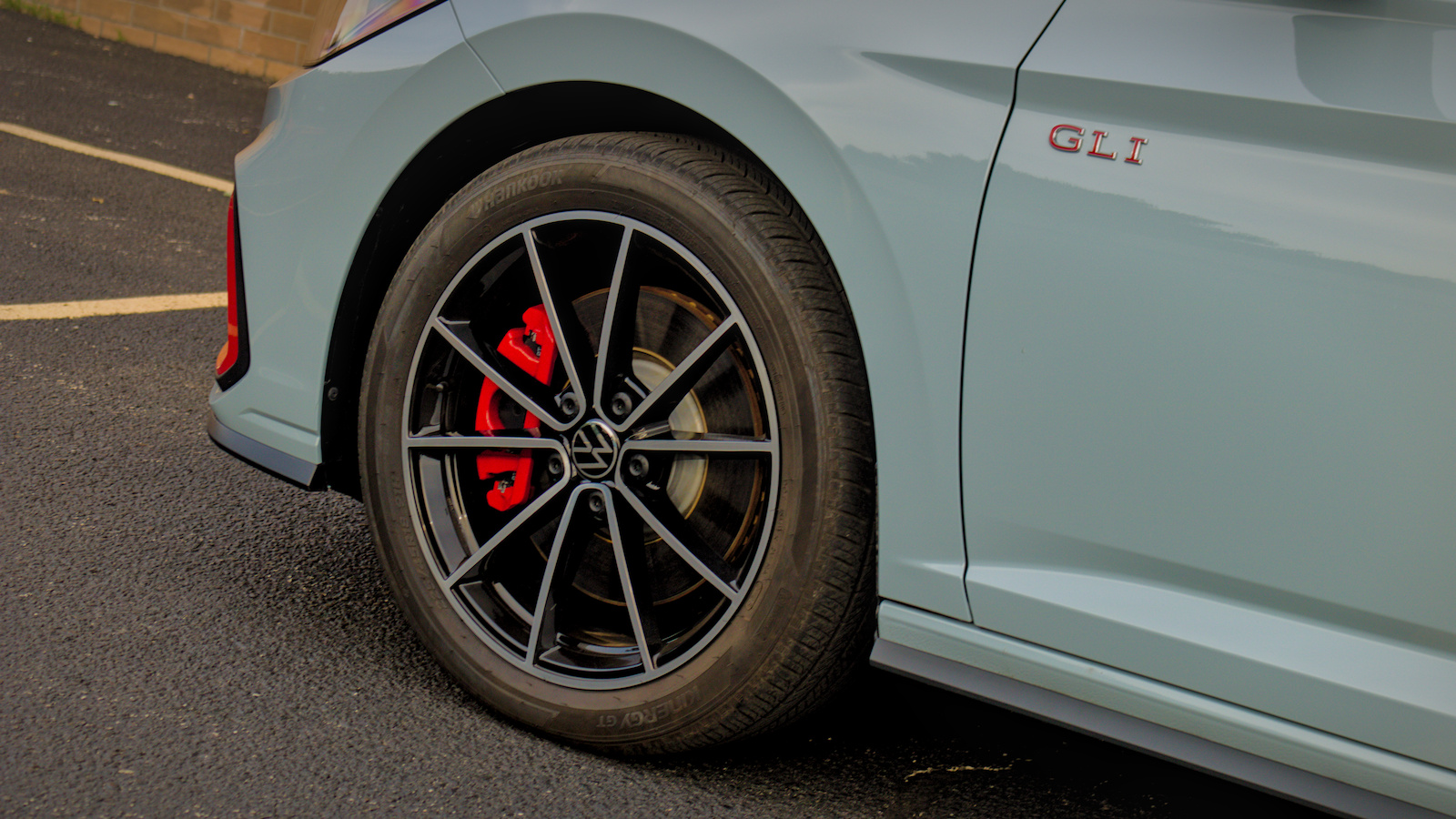
Once up to speed, it’s hard not to marvel at just how well the GLI rides. The masterfully tuned adaptive dampers offer up three settings, all of which are set up for potholed streets rather than pool table-smooth tracks. In comfort mode, this sport compact is no harsher than a regular Jetta. Normal mode is nicely judged, and Sport tightens up body control without ever jarring occupants. Pitch the GLI into a corner, and the steering weights up naturally while body roll’s kept fairly low. If there’s a weak spot, it’s either the non-defeatable stability control or the standard-fitment 620-treadwear all-season tire package. Though quiet enough, they just don’t offer the grip of a dedicated summer. Still, the electronically controlled limited-slip differential does an admirable job of managing traction out of a corner no matter how leaden your right foot is, and higher cornering limits are but a rubber swap away. The end result is a car you can happily throw around when you want a spot of delight, but one that also settles down beautifully for the slog of the daily commute.
Does It Have The Electronic Crap I Want?
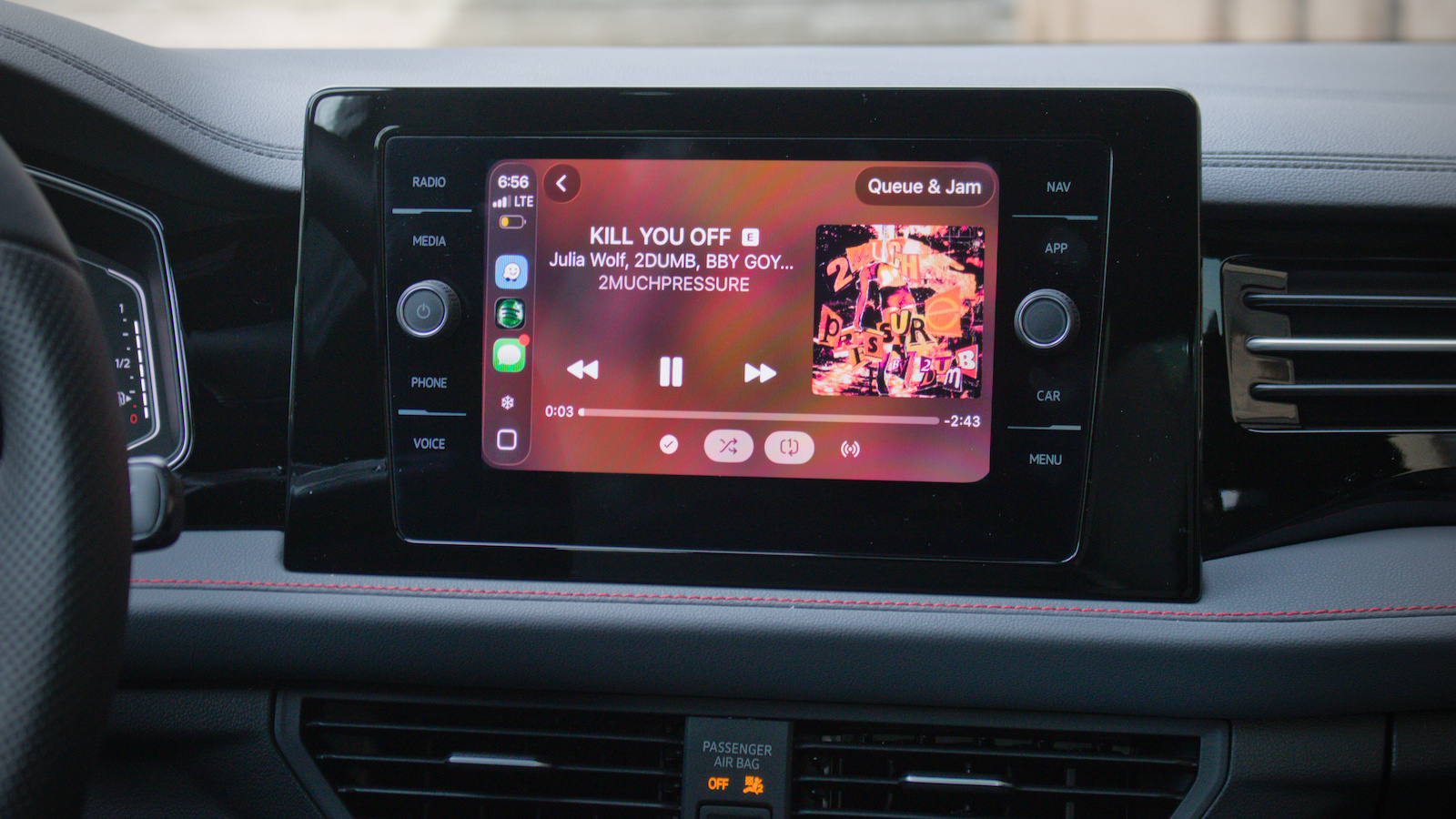
The Jetta GLI only comes one way: Loaded to the gills. Sure, the eight-inch infotainment screen is modestly sized by today’s standards, but you get navigation, wireless Apple CarPlay and Android Auto, a huge moonroof, heated and ventilated front seats, a heated steering wheel, dual-zone automatic climate control, a properly configurable digital instrument cluster, radar-guided cruise control, and a full suite of driver assist functions all as standard. Apart from the capacitive touch climate controls, it’s all rather user-friendly, and it’s difficult to want for much more.
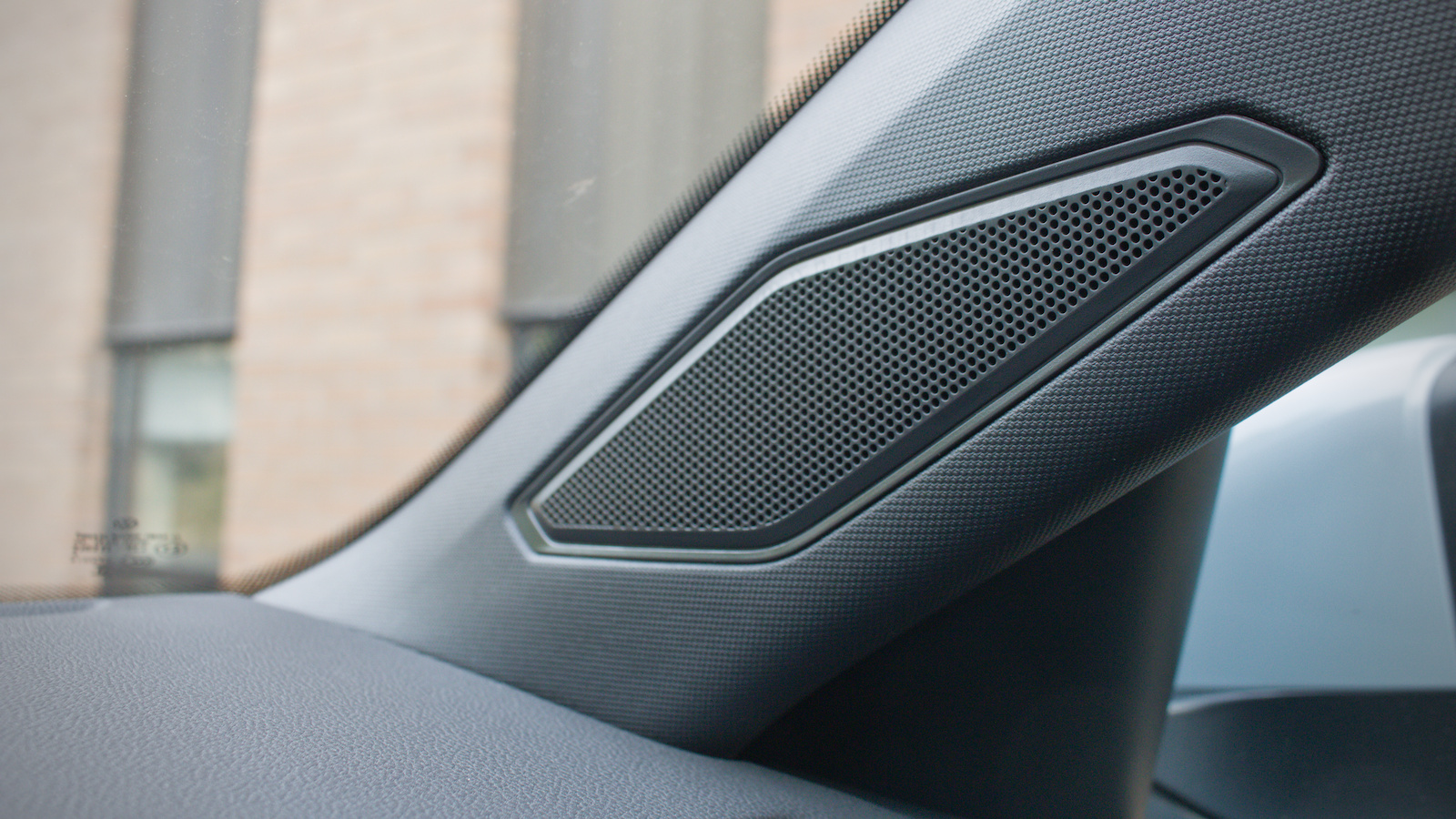
That being said, it’s reasonable to expect more from the GLI’s seven-speaker stereo. It doesn’t have the power of the Hyundai Elantra N’s Bose system or the clean low-end extension of the Civic Si’s Bose system, and overall dynamic range and clarity leave something to be desired.
Three Things To Know About The 2026 Volkswagen Jetta GLI
- This is the last year it’s available with a manual gearbox.
- You can run it on 87 octane regular gasoline.
- The list of standard equipment is absolutely enormous.
Does The Jetta GLI Fulfil Its Purpose?
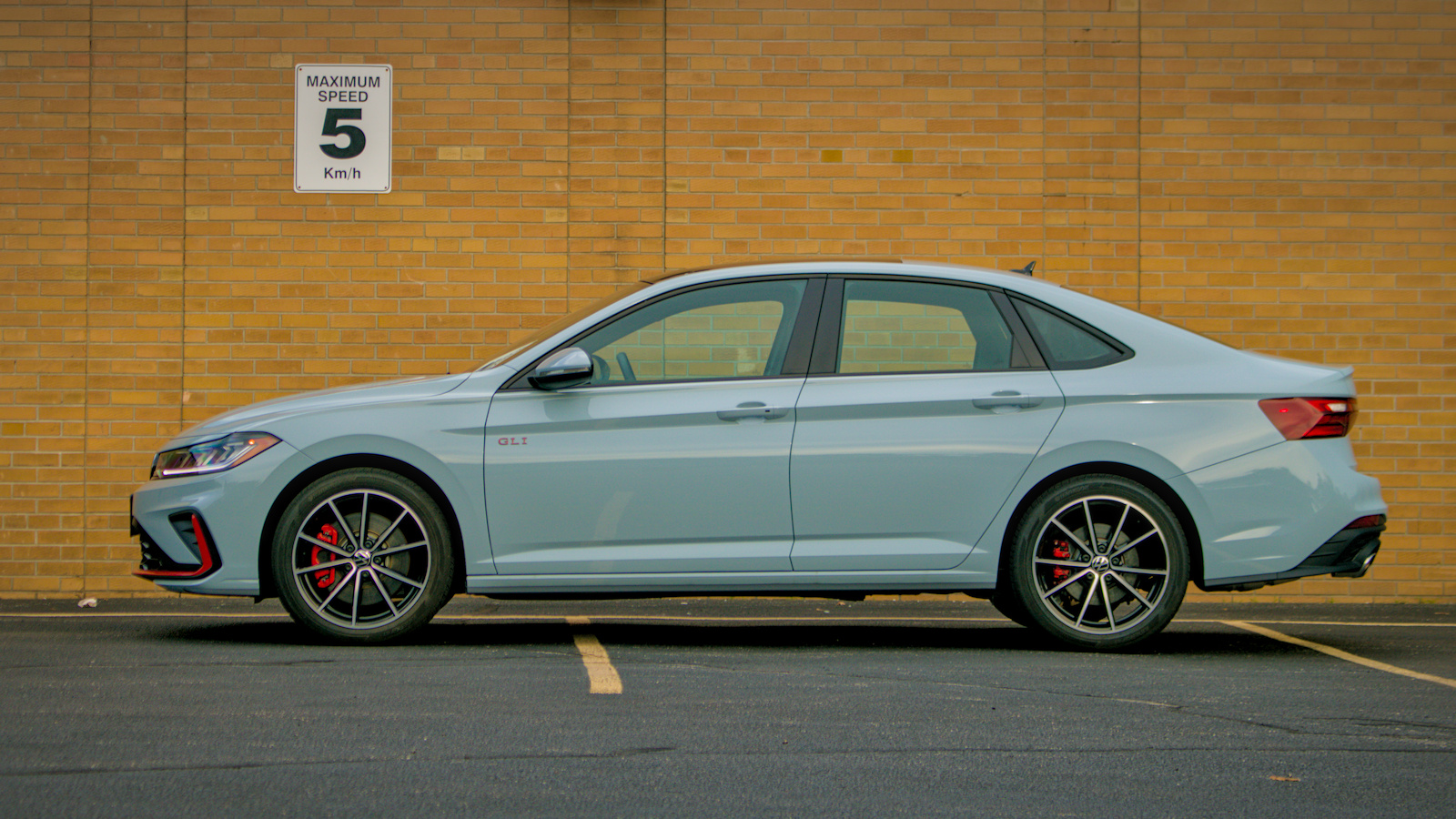
In many ways, the Jetta GLI is the sport compact sedan that Goldilocks would choose. Far stronger in the engine department than the Honda Civic Si, able to settle down into true normalcy unlike the perma-rager Hyundai Elantra N, this thing brings real performance to the table without much in the way of compromise. Add in the enormous list of standard equipment, and you really do feel like you’re getting your money’s worth for $35,020. In this car, you can have genuine backroad fun on Sunday, then do the lunch run on Monday without a single co-worker complaint about ride comfort. If that sort of thing tickles your fancy and you simply must have a manual gearbox, go out and buy a GLI before the stick-shift goes away for good.
What’s The Punctum Of The Jetta GLI?
A great daily driver for people keen on driving.
Top graphic image: Thomas Hundal


Throughout the history of GLIs, there have been two must-have models, the late “big bumper” Mk2 16v GLIs of 1991-1992 and the late Mk4 1.8T GLIs with the body kit of 2004.5-2005. I believe we’re looking at the next must-have GLI right here, the 2025-2026 years. They’ll be long known as the last manual VWs, and the facelift for ’25 traded the funky SUV-sized grille of the ’19-’24 cars for a slim grille that looks more like a classic VW. I know the light bar isn’t for everyone, but the overall look is quite an improvement and one of the Jetta’s best, the wheels are super lightweight from a limited edition European GTI, and again, it’s the last two years of VW manuals in the US. These cars will be sought after in the future like the late Mk2s and late Mk4s.
The 2009 Jetta Sportwagen 2.0T SEL
Sadly, given the current preponderance to put CAN Bus on every singe component in a car these days, doing so will probably immediately cause some sort of lighting error service vehicle immediately error message to pop up every time you power cycle the vehicle.
Ok, I’ll go get my blanket and relax in my recliner now like a good quiet old man.
I realize the Autopian needs dollars so talking about electronic crap is necessary, but I would love the odd bizarro review where the tech section is “Does it NOT have the electronic crap I DON’T want?”
I will happily pen you a Slate review that does this when I get mine.
I have a 2021 GLI with the manual that I have enjoyed immensely. It was a heck of a deal when I bought it new. Around $25,000 after a 1,500 rebate. It was the only reasonably priced sporty stick shift sedan available. At $35,000 it’s much less attractive, but I know you can only get it with the highest trim level now, so maybe it’s kind of worth it. It’s a real shame this is the last year for row your own. It’s not the greatest transmission in the world, but it gets the job done.
your 25k is now 31k -adj for inflation
Doesn’t matter unless peoples jobs matched that rate. Most haven’t come close. So for majority, its more expensive and not as attractive. Is that fair to VW? Nope, but it’s not fair to anyone really.
This car is an absolute screaming deal in Canada, or an absolute dog of a deal in the US.
~$38,000 CAD = ~$27,000 USD (1 CAD = 0.71 USD)
However, the warnings of a fellow Autopian member about EA888 powered VWs do give me pause.
I might consider leasing one before I’d consider buying one.
There’s what, 4 entries left in the segment? GLI, Si, Elantra N, WRX? I’m not sure any are a home run for me, they all have some big flaws.
An Si with some sound deadening and that weenie 1.5-liter engine swapped out with the GLI’s 2.0 might do it for me.
Yeh if the Si didn’t have such a wimpy engine I’d be very interested. Seems like such a whiff on Honda’s part, the Si could make power similar to the VW and still not be encroaching on the Type R’s turf.
A coworker just bought one of these a few weeks ago. From a styling perspective, the red line along the front looks sort of odd, in that they didn’t carry it any further than the brake calipers, unlike on Hyundai N cars. Also, I legit thought the wheels were crappy aftermarket ones the first time I saw the car in the parking lot. I don’t know exactly what makes them look so cheap, but they don’t hold a candle to other VW wheel designs. The rest of the car seems nice, but I’d rather have a 6-speed GTI hatch.
The red line at the front is misplaced, in my opinion. It should’ve just stayed in the grille like it’s always been.
Spot on. 1000% agree.
I share the same design gripes – I think the regular Jetta still looks good, but the GLI looks tacked together and overall went backwards in styling. I can’t put my finger on the wheels either, especially since they’re such a simple design (maybe that is the issue).
I think it is partly that they are a simple design, but the hub section of the spokes doesn’t seem designed around the VW logo – the logo itself looks like a sticker over an aftermarket wheel. I don’t actually hate the wheel design, it just doesn’t look OEM.
Always wondered why they went with the Hankook Kinergy tires on these. Its the one thing I don’t like on my wife’s GLI, although they are fairly long lasting. She’s on her second set at roughly 48k miles. Bad news is she’s got a sidewall bubble recently on the new set because of all the treacherous roadworks in Philadelphia this spring/summer. The one saving grace is they are pretty decent in the snow we had last winter and saved my hide many days when I couldn’t take my GTI to work since I only have full summer tires.
Not bad but the loss of the GTI hatch is nearly as bad as the loss of the manual. I may drive my 2013 forever.
the GTI hatch isn’t dead?
I think he’s talking about the 2-door last offered in 2017. I agree that it doesn’t look as good with 4 doors, but I would still buy a new one.
I have a 4-door hatch. I wanted a 2-door but took the deal.
It’s such a shame that the VB WRX is so ugly as to not even be mentioned as a comp here, even in the comments hah. When I look at this class of car, Si, Elantra N etc. my takeaway is I’d do WRX over everything besides an FL5 Type R.
Hoping whatever Subaru is cooking up for those two new WRX-related models rights the ship because yes, i want to consider one for my next up here in the Canadian foothills
Subaru have been really confusing about all of that, probably because they themselves are struggling with what to do. With the dust settled a bit now it seems clearer to me that it will probably be late mid-cycle refreshes for BRZ and WRX, where the WRX refresh also happens to include a hatch variant. I expect the top (non GT) trim WRX to get the STI drivetrain. But who knows!?!
Big question also remains if these variants will make it out of Japan – seems like another big tease if not.
Unnecessary shots fired.
The Fiesta was not the most attractive thing in the world, but there’s far worse out there, especially around its price point.
When it comes to small cars I really am kind of disturbed by the sedan variants. All I see is something that was tortured into a form it should never have taken to satisfy the weird American taste for the sedans. Fiesta, Versa (especially the earlier ones) and Mirage come to mind.
So the only manual VW is a $35,000 sedan?
That unibrow underneath the hood is… woof. It looks like those cheap “angry eyelid” stick-on things. Maybe on a black car it looks better.
They are bringing back the “boser” hoods of the late 90s-early 2000s VW car shows. Those started out two piece with the brow remaining above the grille when the hood was opened, like the current Jetta. Then people started crafting them to be a full once piece hood out of steel or carbon fiber. I doubt VW would make this a full one piece boser hood, probably for crash safety and ease of use.
Thanks for the comment! I had seen those hoods before, but didn’t know the term as I didn’t run in VW circles back in the day. Cool callback if that’s what they’re going for, I’m just not sure if it works without being a one-piece hood.
I’d consider leasing this if necessary, but having owned a few VWs I’d never buy one for long-term ownership again without literally having a gun to my head. They’re just too fiddly and problem-prone and often complex to repair as they reach the 7-10 year mark, with things falling off shortly after the warranty for that particular bit expires. At 10-15 years, replacing brackets, sensors, etc… becomes a regular time-consuming hassle IME.
Also, and I know this is just our dystopian reality, but wasn’t it just half a dozen years ago that this car was priced in the mid-upper $20Ks so that it undercut the GTI by a bit? Not that $35K is awful in today’s awful timeline, but (assuming you were going to have the car for more than a few years and actually own it for some masochistic reason) for that $ it really ought to have AC vents in back (along with a few USB ports) along with zero piano-black plastic considering how everyone’s been complaining about it for several years now. Also, for it’s price, the factory sound system ought to be of competitive quality.
If forced to buy/own one of these three: the GLI, the Si, and the Elantra N of course I’d drive all three, but would probably wind up buying the Honda. It hurts my heart a bit to admit this, as a former VW fanboy, but them’s the facts.
I bought a GLI Edition 30 new in 2014 for $24,500 and 2017 GTI SE (both manuals) for $26,500. $35k feels like a stretch for these, but a similarly equipped GTI is well into the $40s. The new prices of both don’t make me want to go buy a new VW especially now that I am paying cash for them now vs. 2014 and 2017.
The track on the infotainment screen is def on purpose
Well spotted.
I have a 2024 example, pre-refresh with the integrated infotainment and physical climate controls.
Got rid of the trash stock tires for Michelin Pilot Sport A/S meats, a worthy upgrade. Just installed a new Sportshifters knob this weekend, which makes for a much more satisfying experience.
Even the previous Beats sound system is pretty lackluster, but for some stuff it sounds decent if you work the settings properly.
Also real-world fuel economy is superb, i can get north of 30 mpg in rush hour commuter traffic and have seen north of 40 on the highway.
The 30 large (CDN) I paid for a very low milage CPO example was well worth the price of admission!
Once the warranty runs out next year i’ll be looking to add some more aftermarket performance parts to up the output, which, from what i’ve read, this car takes pretty enthusiastically.
I was curious to see how many stick shift GLI were actually available in the US, but it seems the VW dealers have a difficult time ticking the correct “transmission” box. Selecting “manual” in my search gave me a lot of listings for cars with automatic transmissions. Get your act together.
Best guess is there are less than 600 available nationwide. If you want one, get it before they’re gone!
I believe the dealers do that because the automatic can be put into manual mode. I had the same issue when purchasing my Miata years ago.
Salesman, “yea of course its a manual. Check out this plus and minus arrow on the PRND”
We removed the superfluous third peddle as it just made things more complicated when trying to text and drive. Plus who has the attention span to remember what gear they’re in? +/- is all you need. Let’s get you back into the finance office and seal this deal.
There is 3 manual GLIs at the dealership I frequent, North Penn VW. They seem to be a more enthusiast type people there though, at least my estimation by looking at the employee cars in the back lot.
It’s hilarious the way VW describes the interior upholstery color as “Grigio with Red Crust”
First thing I’d do after taking delivery of one in Monterey Blue is get rid of the GTI badges, swap in the chrome trim and 17″ wheels from the SE, swap in a GTI golfball knob, and get some plaid seat covers on those seats.
I wished they gave it the same seats at the GTI with the one piece backrest/headrest. I imagine shipping those seats over from EU distribution to the factory here may affect the price a bit
Very surprised to see the Civic has better quality materials interior wise, I still remember when the Jetta was the winner for materials choices, even closing the door felt solid.
That ended in 2010.
This is better than the 2011+ generation that had GM grade plastics everywhere. The doors still shut solidly, though.
Have you closed these doors? Having owned 3 other generations of Jetta/Golf, these doors are the most solid closing of the whole lineage. Don’t believe me? Read Car and Driver’s recent review of compact sedans. Interior quality on these cars is miles ahead of the prior generation (Mk6 2011-2018) and about equal to the current GTI. VW’s highest quality interiors didn’t last. The Mk4 and Mk5 gens were plagued with peeling “soft touch” finishes on the interior. It looks terrible when it peels, and you’re left with either stained, peeling finish or crude plastics under if you remove it. Halfway through Mk5, VW ditched the premium soft touch interior finish because it was so problematic. The Mk7 Jetta’s interior quality is closest to the late Mk5 cars (excluding the rear door cards, which are hard plastic on the new GTI also).
Pardon the ignorance (actually wondered it for years), what is the difference between a sunroof and a moonroof?
Interesting that this has 35bhp less than the GTI? Is it cheaper in America?
In marketing terms, a sunroof is a sliding steel panel and a moonroof is a sliding glass panel, but not every manufacturer abides by this convention.
Traditionally – A sunroof was a sliding steel panel.
A moonroof was a sliding glass panel on upscale American cars.
We don’t have moonroofs anymore, and rarely any steel sunroofs – Just glass sunroofs.
Thanks, for me both were sunroofs, metal or glass, but guess the differentiation makes sense. Thanks for the explanation to both!
My first “me” car had a moon roof, my first rental had a sunroof.
The moon roof was a class panel that I could tilt. It didn’t have a shade. If I wanted an opening, I parked the car, popped off the glass and put it in the trunk.
The sunroof was a metal panel that I could tilt to vent out some hot air, or retract into the roof to leave a big opening.
Most cars today have sliding glass panels that can do the moon roof thing (retract the shade and tilt), on the sunroof thing (retract the entire panel into the roof).
Ah, that makes sense. It’s not only the material, but the operation too!
1970’s Lincolns and Thunderbirds offered proper Moonroofs.
They were powered glass panels which were tinted “Rose, Silver, Gold, Jade and Brown” – and they had sliding shade panels.
I believe the GTI and GLI have different engines. The GTI is the Gen 4 EA888, the GLI is the Gen 3 EA888.
Good distinction, if true. While there were notable improvements between the Gen 4 MK8 and Gen 3 MK7/7.5 GTI engines, they’re both really good.
I think they are the most bulletproof engines since the basic N/A 2.0 of the 90s
Also, they certainly have a different appearance between the two vehicles (at least the shroud on top). My 22 GTI is just plain black plastic, my wife’s 22 GLI has the TSI logo on it and a different shape.
I know it’s not your first mention of the rev-hang of the 1.5T Honda, having driven EA888s, 1.5Ts, and others, I cannot say that I’ve noticed the 1.5T to be particularly offensive or even more intrusive than others back to back.
When Toyota offered the 2.0 with a rev-matching 6MT in the Corolla hatch, I recall not liking that at all. It felt very off to me.
Back on the VW, though, it is a shame to lose this. I’m less saddened than losing the GTI/R manuals, but it’s sad nonetheless.
I like the looks of this, sounds like it would be a fun daily on normal roads. Would remove the pop up-dash and would love to take about 2-400lbs off the scale. Take that weight off I think would make it seem much more nimble and fun on some twisty roads. A light tune and some stiffening of the chassis, might give you a fun little “sleeper” with this.