

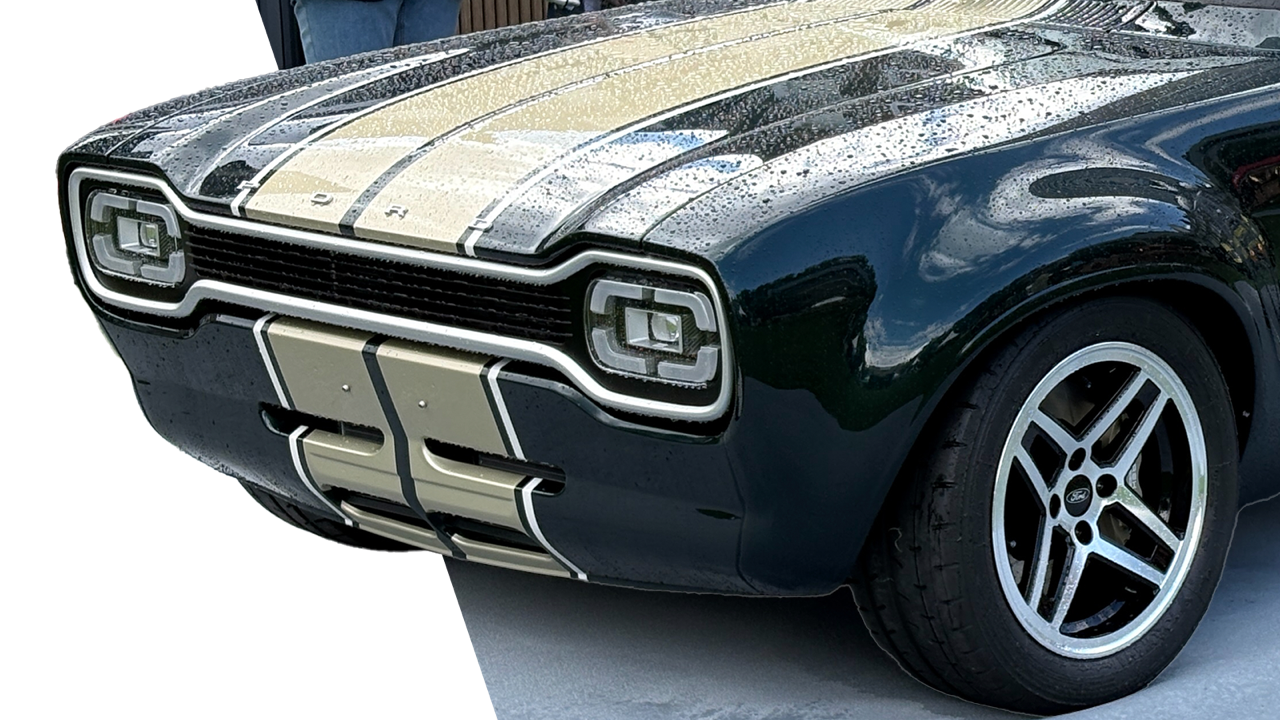
With state-of-the-art performance cars boasting almost unusable capability, it’s no surprise that older cars are really having a moment. Beyond record-setting prices for Lamborghini Murcielagos and Ferrari Enzos, updated classics are a big deal right now. The Tuthill 911K, the Evoluto F355, the Nardone 928. However, perhaps the most interesting modernized old car of the moment isn’t a restomod. It’s the Boreham Motorworks Ford Mk1 Escort RS, and it stirs up a level of sheer want I haven’t felt in donkey’s years.
Most Mk1 Ford Escorts didn’t start life as a hugely special car. After all, it was the replacement for the Anglia, so it was largely designed to be economical family transportation for Europe. The lowest-output model made just 40 horsepower from an 8:1 compression 1.1-liter pushrod inline-four. However, because rallying was so important, Ford ensured a skunkworks Twin Cam model with a beefed-up shell was available early on. It featured a 1,558 cc engine from the Lotus Cortina homologation special, and with about 109 horsepower hauling around as few as 1,653 pounds in racing trim, it was a hero right out of the gate. This sedan won the British Touring Car Championship, then the Tulip Rally, then the Austrian Alpine Rally, then the 1,000 Lakes Rally, all in its inaugural year. A legend was born, and after two years, Ford really doubled-down.


If you’ve ever seen the letters “RS” on a Ford, that can all be traced back to the Escort RS 1600. Twin cams, 16 valves, and 1.6 liters of Cosworth-tuned displacement resulted in 115 horsepower. With a nimble chassis, reinforced body, and a stout Cortina gearbox, it quickly became the winningest rally car of its day, and the homologation special Ford had to sell in order to compete became a hot commodity. Mind you, the twin-cam engine was high-strung, so Ford capped things off with the Escort RS2000. It may have been down on power over the RS1600 due to its two-liter Pinto engine, but some still consider this the ultimate fast Ford. The Boreham Motorworks Mk1 Escort RS is a tribute to that, but don’t call it a restomod.
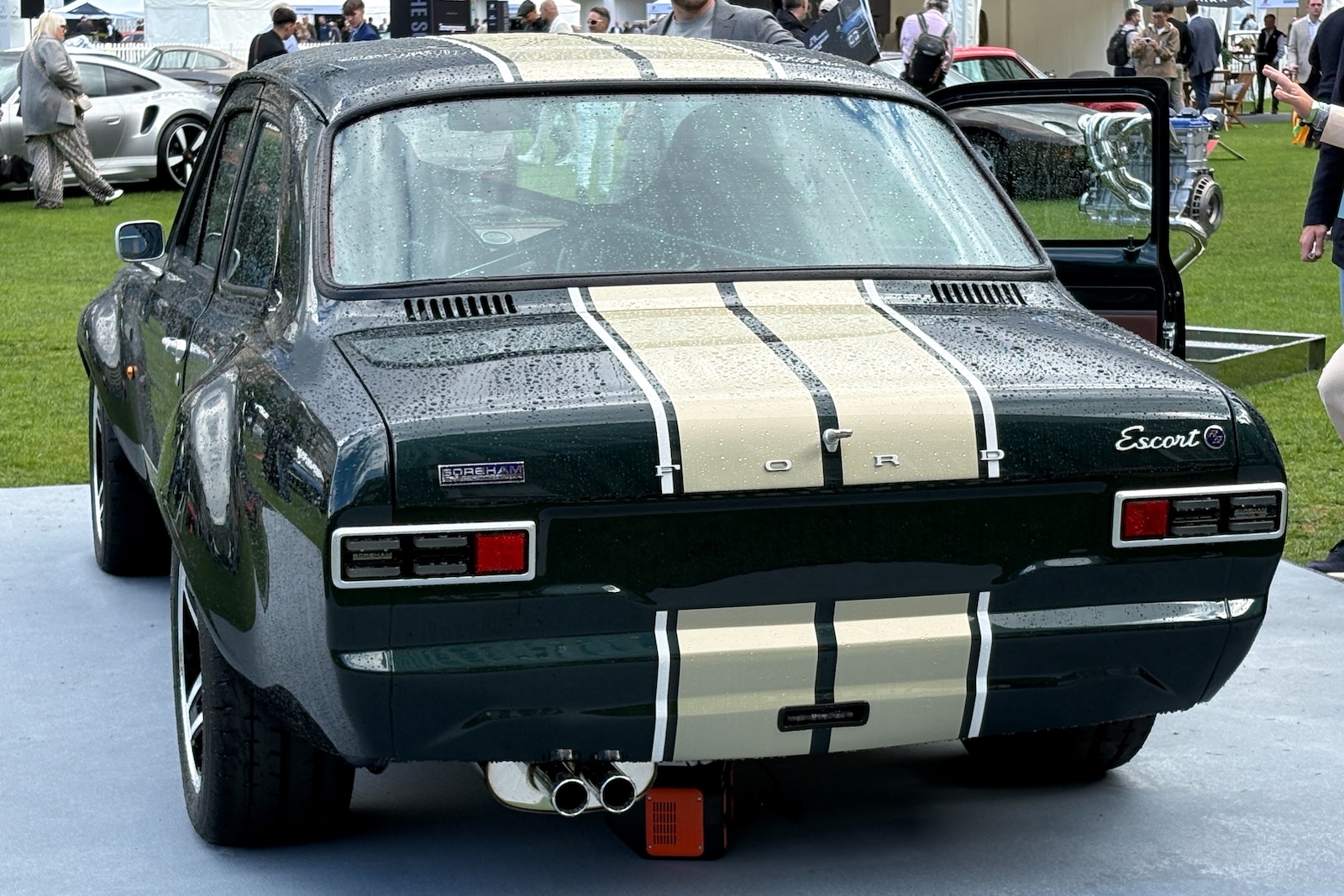
Each example of this British machine starts with an entirely new body and front subframe not modelled after the production car, but rather the Alan Mann competition cars of the period. This means the wheelbase has been altered, resulting in a longer dash-to-axle ratio that’s beautifully purposeful. How did Boreham do this without raising some IP red flags? By licensing production from Ford, of course. It’s a ground-up new car with the original maker’s blessing, a rather rare thing in a world full of donor cars.
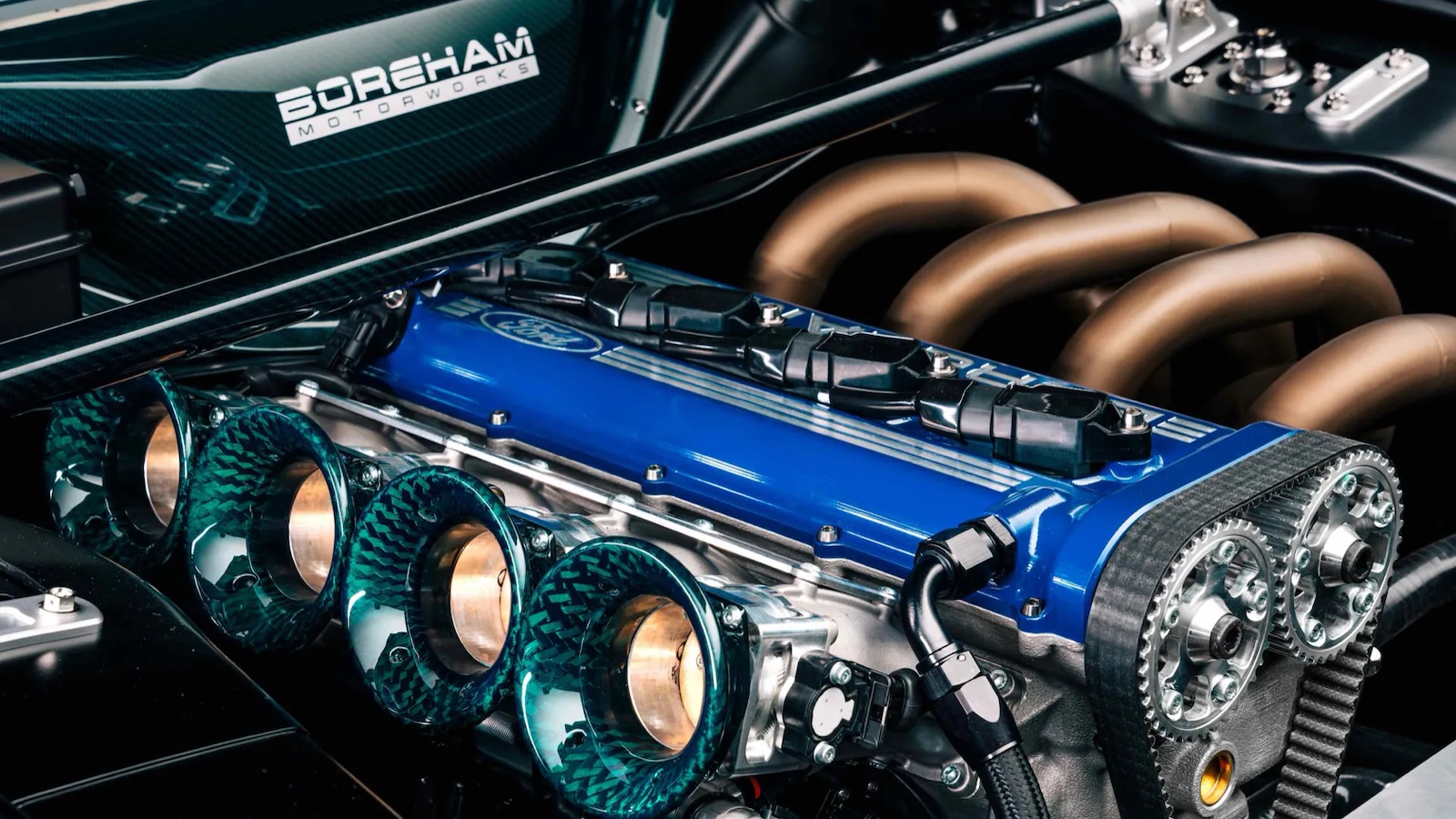
Standard fitment is a reworked twin-cam engine, now producing 185 horsepower and revving to 8,500 RPM. I’m sure it’s good, but when you’re playing in this echelon, you might as well splash the cash on Boreham’s Ten-K option. No, that’s not the price, that’s the redline of this 2.1-liter, ITB-equipped, 325-horsepower screamer. Ten thousand RPM. In a Mk1 Escort! Tick this box and you also get a dog-leg five-speed manual transmission, and if you think 325 horsepower sounds a bit low, wait until you see the curb weight of this thing.
Unsurprisingly, it’s a small number: 1,973 pounds. If I’ve done my math right, that’s 363 horsepower-per-metric ton. More than a Dodge Challenger SRT Hellcat. So how’s Boreham gone and done that? Well, the Ten-K engine option weighs just 190 pounds itself. The rear axle housing features an aluminum center section and titanium axle tubes. Lightweight dampers from motorsports specialist R53 shave precious grams, and the dashboard and door cards are made of carbon fiber. As is the giant X-brace across the rear of the cabin. As are the seats. As are the hood and trunk. Add it all up, and you get a car that should simply fling itself at the horizon. And when you get to a corner, six-link rear suspension and a limited-slip differential should let you power through with a dab of opposite lock.

Once you theoretically park this dream machine up, I’d imagine it’s impossible not to take a step back and be captivated by the way it looks. With its bubble arches, shaved bumpers, and gorgeous proportions, the Boreham Mk1 Escort RS is bite-the-back-of-your-hand pretty. I’ve seen Boreham’s older Mk1 Escort continumods in the metal before, and in that moment, I needed them more than I needed air in my lungs. The RS is just as beautiful. The respectful concave reinterpretation of the classic RS four-spoke alloys, the stripes, I even appreciate the tastefully modernized lighting, with the headlights serving as a nod to that vintage racing taped-up look.
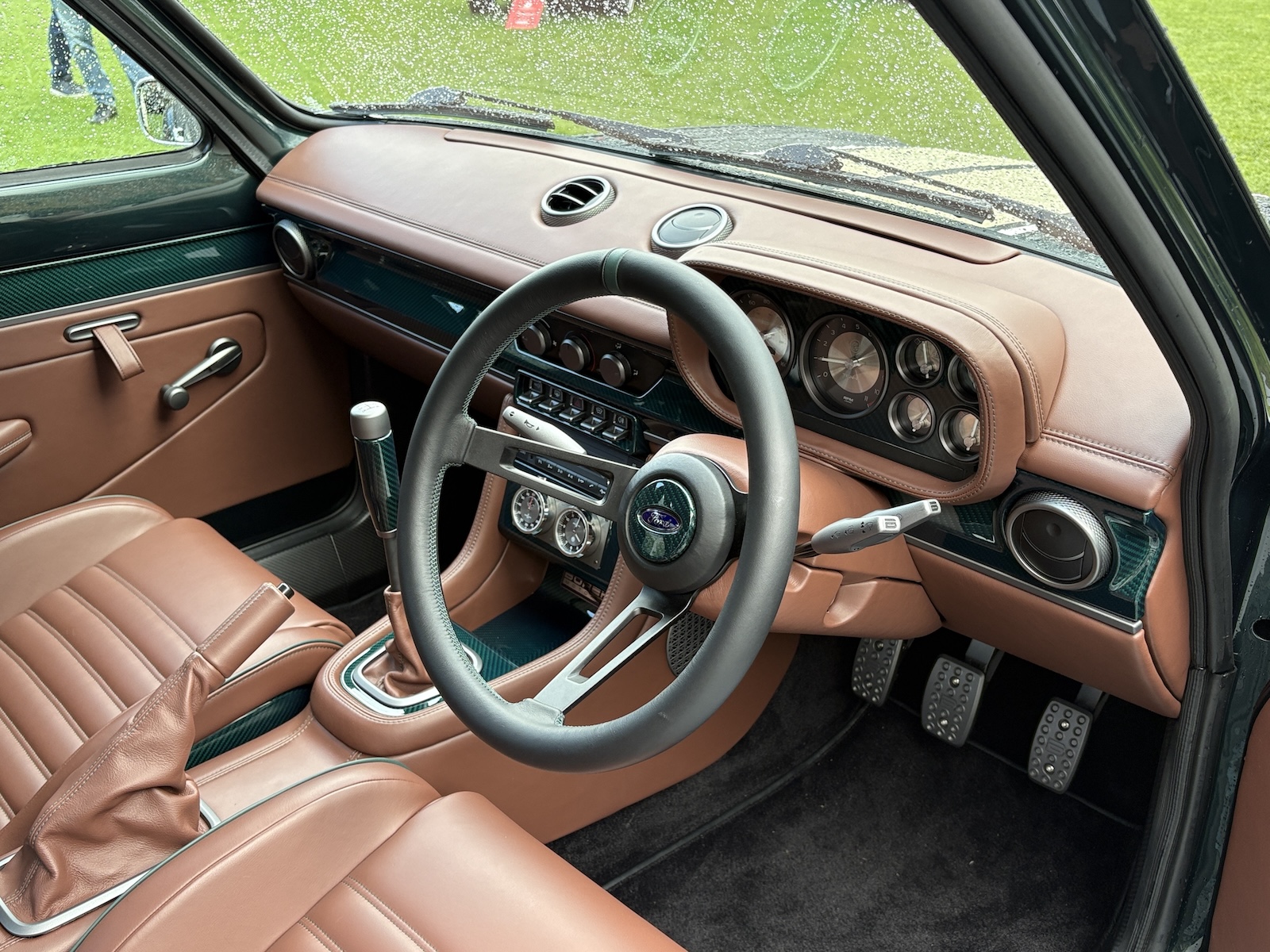
Peering inside, almost everything seems reimagined with the highest level of detail. The leathers, the switches, the metal trim, the optional Breitling clocks. Curiously, there are some off-the-shelf parts here that seem a touch unusual. Those relatively modern circular air vents, for example. And the radio, which looks a lot like a white-labelled Blaupunkt Skagen 400 DAB. Still, would you just look at those alloy-faced dials? Delicious.
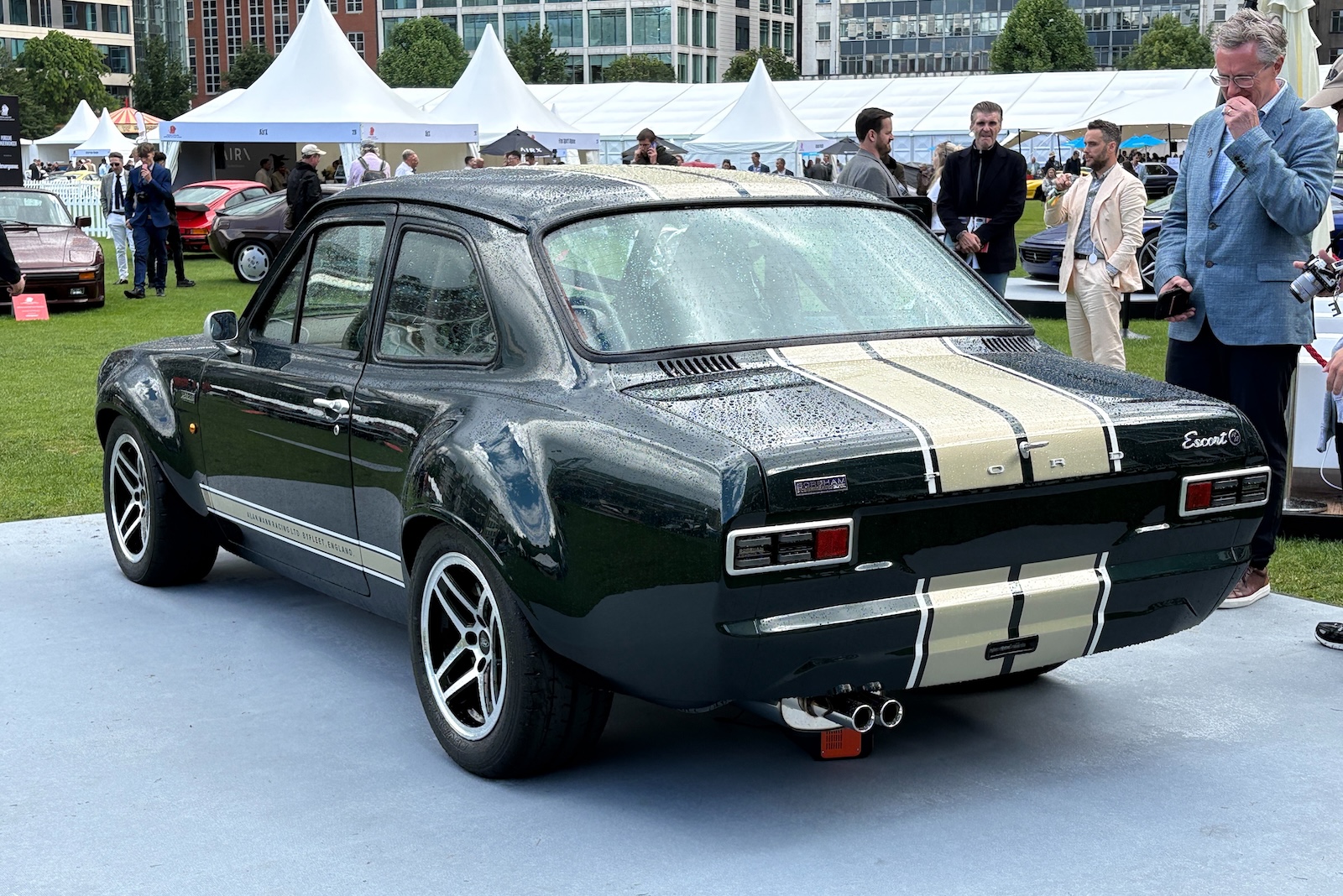
Understandably, when it comes to handbuilt machinery like the Boreham Motorworks Ford Mk1 Escort RS, production’s limited. Only 150 of these continuation cars will be made, but the price tag might not be as expensive as you’d expect. Figure a base price of $400,000. Supercar money, but a far cry from what restomods like the Alfaholics GTA and Singer DLS cost. You can even get it in left-hand-drive, and it comes with a two-year/20,000-mile warranty. Yeah, I’d take this over a Ferrari 296 GTB. Any day of the week and twice on Sundays.
Top graphic image: Adrian Clarke


come on 400K??? It was 250 on Jalop. seriously though, ugh
Exactly. Half of that, and…maybe. But if I can get a Ford GT for less than this, with the pedigree that has…
Cars are like candy. As a kid, I didn’t have enough money to buy what I wanted. Now I have the money, but there’s nothing I want.