


I’m not ashamed to admit that rain-sensing wipers are one of those things that I think are clever, but have never felt the need for. I mean, I can see when there’s rain on my windshield, and it’s just not that hard to hit a little stalk on the steering wheel column to turn the wipers on. I don’t exactly see the point of them, except perhaps if you subscribe to the notion that true luxury means the car should do everything for you without you having to debase yourself by touching a control: shift, turn on lights, and, yes, turn on the windshield wipers.
Modern cars use a pretty sophisticated and clever system that uses LEDs that shine infrared light into the interior surface of the windshield, and then light-sensitive sensors detect how much light is reflected back. The amount of light reflected back is different on a dry windshield than on one with water on it, based on the principle of total internal reflection. Essentially, this phenomenon alters the reflection and refraction of light on a wet windshield, and the sensors can send this information to a computer within the car’s CAN bus to activate the wipers and adjust their speed depending on just how wet the windshield is.


Here, this video will give a more detailed explanation than I’m currently willing to:
Now, one thing to realize about this modern method is just how dependent on advanced electronics like computers and small integrated sensors and infrared LEDs it is, and just how much math is involved. It’s a non-trivial solution to the problem, and it’s only quite recently that we as a species have been able to make such components cheap and reliable enough for a system like this to make sense.
That’s why when I tell you that the first mass-produced dynamically-adjustable rain-sensing wiper system was introduced way back in 1970, you should realize that we’re about to talk about something nice and strange, because 1970s technology was not remotely capable of a rain-sensing system like a modern car, at least not without filling most of the car up with clunky humming boxes of computer hardware.
The first mass-produced car that came with any sort of rain-sensing wiper system was the Citroën SM, introduced in 1970.
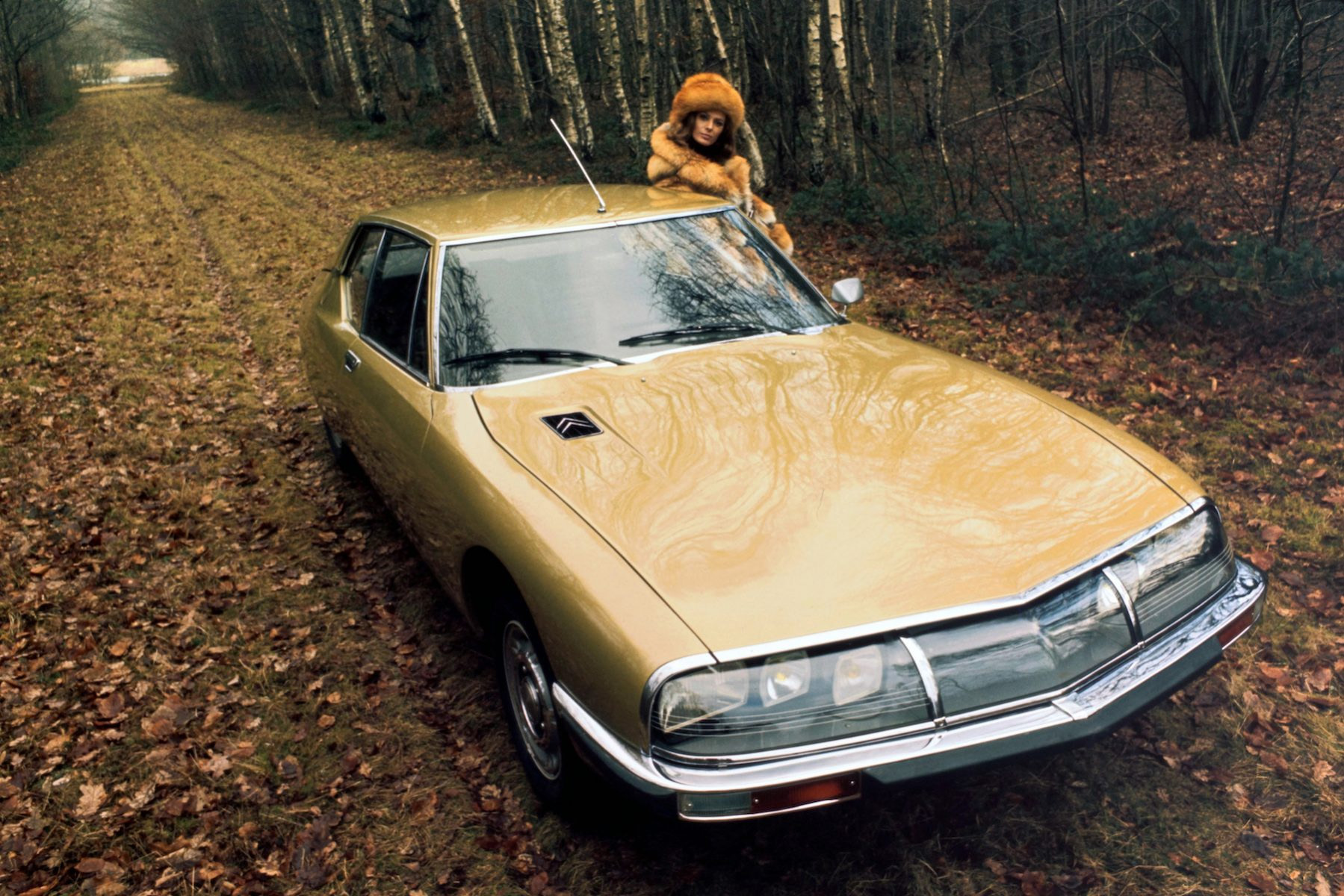
The SM was a sort of technological showcase for Citroën; it started out as a planned sportier version of Citroën’s DS, but soon developed into its own unique car, though it did adopt a lot of the SM’s advanced features, like the hydropneumatic self-leveling suspension and steerable headlights. The resulting car felt like an Earthbound spaceship, powered by a 2.7-liter Maserati V6 and so much ’70s sex appeal you’d think someone shoved Burt Reynolds into a Cuisinart and then brushed the resulting slurry over the leather seats.
In a car like the SM, an innovation like rain-sensing wipers made complete sense.

So, if there were no infrared LEDs or small computer modules or CCD cameras or any of the other components of modern car tech, how did they pull it off?
By being clever, that’s how. And, let’s be honest here, with this sort of engineering, being French probably didn’t hurt, either.

Citroën was sort of oddly circumspect about their rain-sensing wiper system, never really mentioning it specifically. In the owner’s manual, the system is part of what they just refer to as “intermittence.” And that’s not wrong – the rain sensing was part of their intermittent wiper system – but I do think it’s a bit odd they didn’t call it out more specifically.
That could be because the problem they seemed to be trying to solve was less about the obvious detect-rain-turn-on-wipers problem, and more about the more subtle how-do-we-make-better-intermittent-wipers problem. You see, where most intermittent wiper systems just use variable timing to adjust how often the wipers wipe, Citroën wanted a system that adapted how often the wipers wiped to how much rain was falling, and that meant that their system had to know when it was raining, and roughly how much.
Here’s how it worked: when you put the wipers in intermittent mode, the wiper system began to monitor the electrical current drawn by the wiper motor. If the current draw was high, that meant the windshield was dry, because there’s a lot more friction when trying to drag a rubber wiper over a dry glass windshield. When this condition was detected, the wipers moved less frequently, because there was less rain.
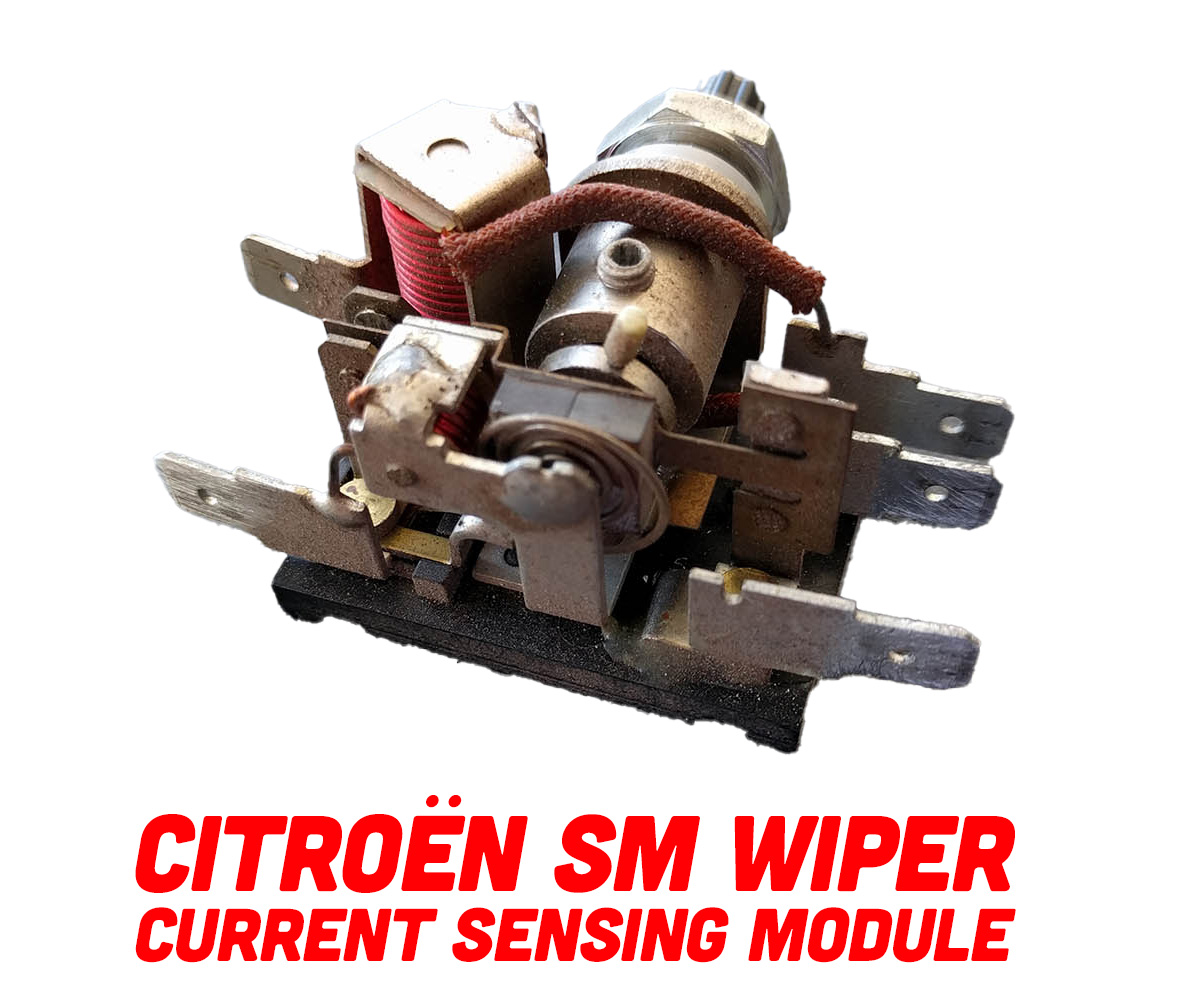
But when the current draw from the wiper motor dropped, that meant that there was less friction between the wiper blade and windshield, a condition that would be caused by the windshield becoming wet, likely from rain, (though to be fair, I suppose if a squirrel climbed on your roof and peed down your windshield or someone dumped a full bottle of Yoo-Hoo on your window, that would work, too) and the wiper speed would get faster until the current draw increased again, indicating a drier windshield.
So, look at what we have here! A simple, completely electromechanical system that is not just detecting when there’s rain on the windshield, but adjusting the wiper speed dynamically based on that feedback. Instead of detecting rain via total internal refraction or whatever I was going on about before, it was detecting rain via its lubricating qualities on the surface of the windshield. And you know what? They both work! Both methods are capable of detecting the presence of rain, but one requires zero computers or sensors.
Here’s the system in action; it’s maybe not especially dramatic to see, because the wipers just, you know, work, but I think it’s still worth showing:
I love this solution so much. It’s so clever and simple, and you can almost picture a room full of Citroën engineers sitting around a table thinking about ways to detect rain, when someone just remembered the visceral sensation of running a squeegee over a dry windshield, and how much different that was than sliding one across a wet one. It’s an engineering solution that seems like something based on feel, on the experiences of our senses in the real world, not on the understanding of complex math or physics, but gut-level engineering.
This approach may largely be gone, but I think it’s still worth appreciating.
Top graphic images: Bring A Trailer; Citroënvie


I like the thinking of indirectly sensing the amount of rain to produce adaptive intermittent wipers.
This triggered a memory of an aftermarket intermittent wiper system for A1 VWs that used replacement relay and a Nintendo style cheat code with the wiper stalk.
My Z4 had automatic wipers that worked so well it was about six months into owning it when I realised it had automatic wipers, and I wasn’t just switching them on via muscle memory and subconscious thought like I do in all my other cars.
It was very impressive, but also functionally the same as not having them.
The auto-dimming mirrors on the other hand I still miss. And the engine.
Positively steampunk cleverness!
Mister Saturday Night special…
I’ll take the SM car chase at the start of The Longest Yard over most of the car chases that followed in Burt’s career, including those in Smokey and the Bandit. There’s one moment towards the end where he gives a look towards the camera, but not at the camera that is the right amount of self-reference, better than his Cheshire cat grin directly at the camera in Smokey…it’s just such a great car chase and the best use/abuse of an SM that that springs to mind.
The auto wipers on my wife’s Mazda are super annoying… always wait too long to turn on. Wish it had regular intermittent ones.
What year Mazda? I have a 2022. I turned off the rain-sensing feature through the infotainment system because the seemingly random intervals bothered me. With that setting turned off, they just work like regular intermittent wipers.
It’s a 2024, I’ll see if I can do that! Thank you!
I had a 2013 BMW 3 series with auto wipers and they never seemed to work properly. I went back to just using the regular functions.
I generally like the rain sensor on my Mercedes, but it does sometimes act weird. Sometimes it waits too long to wipe, and other times it wipes like I’m driving through a biblical deluge when there’s been like two drops. Most of the time it’s just about right, though. Maybe the light refraction doesn’t always compensate for shadows or something.
Maybe someday, perhaps with the help of AI, engineers can figure out a way to automatically turn a car’s headlights on whenever the wipers are on. Because most drivers sure aren’t capable of doing it themselves.
Came here to say I’d settle for wiper-sensing headlights.
I’m pretty sure my 15 year old Dodge truck does that.
My 1984 Nissan Skyline had a piezoelectric/vibration-type rain sensor. Raindrop → tiny impact → vibration → electrical signal → wiper controller
The current system detects how much rain IS on the windshield and thus when to wipe. Citroen’s system detects how much rain WAS on the windshield when it last wiped and then extrapolates when to wipe next. It is a subtle difference, and probably doesn’t matter that much in application, but I am guessing that the Citroen system is slower to react to an increase in rainfall.
Simplify, then add swipeness.
Blame it on the rain? A French car with a Italian engine seems like a good way to set fire to the rain.
I’ve seen fire and I’ve seen rain.
My first car with rain sensor was a late 90s Citroën Xantia.
I have no idea how it worked, but it was nice 🙂
I loathed the rain sensing wipers in my Acura, they were never at the speed I wanted.
Same reason I always run my climate control in manual.
In retrospect, duh, I could have predicted the answer. But I didn’t.
I’ve only had 1 car with rain-sensing wipers- my old Saab 9-5 wagon. I don’t miss them much at all, with the rare exception of a day where the rain is constant but variable, and switching from intermittent to regular wiping and back repeatedly gets to be fussy.
Just imagine the number of Gitanes that went into figuring this out.
I think I’ll stick to my peril sensitive sunglasses.
Very cool bit of old technology, but did it really sense rain? As in, decide when to turn on the wipers for you?
It sounds like it relied on you to turn the wipers on, then adjusted the speed based on feedback from the previous wipe.
I have rain sensing wipers in that when I’m driving with my partner and it starts to rain she has lower tolerance for rain on the windshield than I do and will reach over and turn the wipers on. Alternately, she gets annoyed if the wipers are going too fast for the conditions and will adjust the speed.
Sounds like me. She hates when I don’t use wipers, even though I can see just fine.
To me, there is significantly more annoyance and distraction from wipers going when they aren’t needed than from the windshield being a bit wet.
Oh good, I’m not the only one.
I’ve had to slap my partner’s hand away from the wiper stalk while I’m the one driving. It’s a pet peeve of mine.
SPOT ON!!! The driver is the pilot in-command, the passenger is NOT the copilot, at best the passenger is the navigator. No passenger should ever attempt to control any aspect of vehicle operation unless directed by or authorized by the driver. This especially includes the radio, AC & widows. A light slap on the wrist is the appropriate response to a first time offender followed by increasingly strong verbal rebukes for repeated offenses. Of course, when the passenger is your significant other you may want to defer action until you reach your destination or forever ????
In one of my cars we have dual zone AC. It’s OK if the passenger adjusts their side. But otherwise I agree with you, and I’m pretty sure that most religions recognize spousal interference with car controls when not driving to be grounds for divorce.
Obligatory:
There are dozens of us!
it’s still sensing the rain, or at least the effect of the rain, which in this context is basically the same thing. It’s just using it to adjust intermittent wiper timing instead of on/off. But it’s still sensing rain.
I guess the key issue is that it has to wipe the screen to know if it’s raining, so the driver has to set the wiper to wipe unlike newer systems. But given the time period it’s an impressive achievement.
I wish I had something similar on my car. I have four intermittent settings, and the rain is always seems to be at 2.6.
On my BMW you have to switch to intermittent to get the wipers going, then you can set the sensitivity of the systems with the intermittent wiper control.