

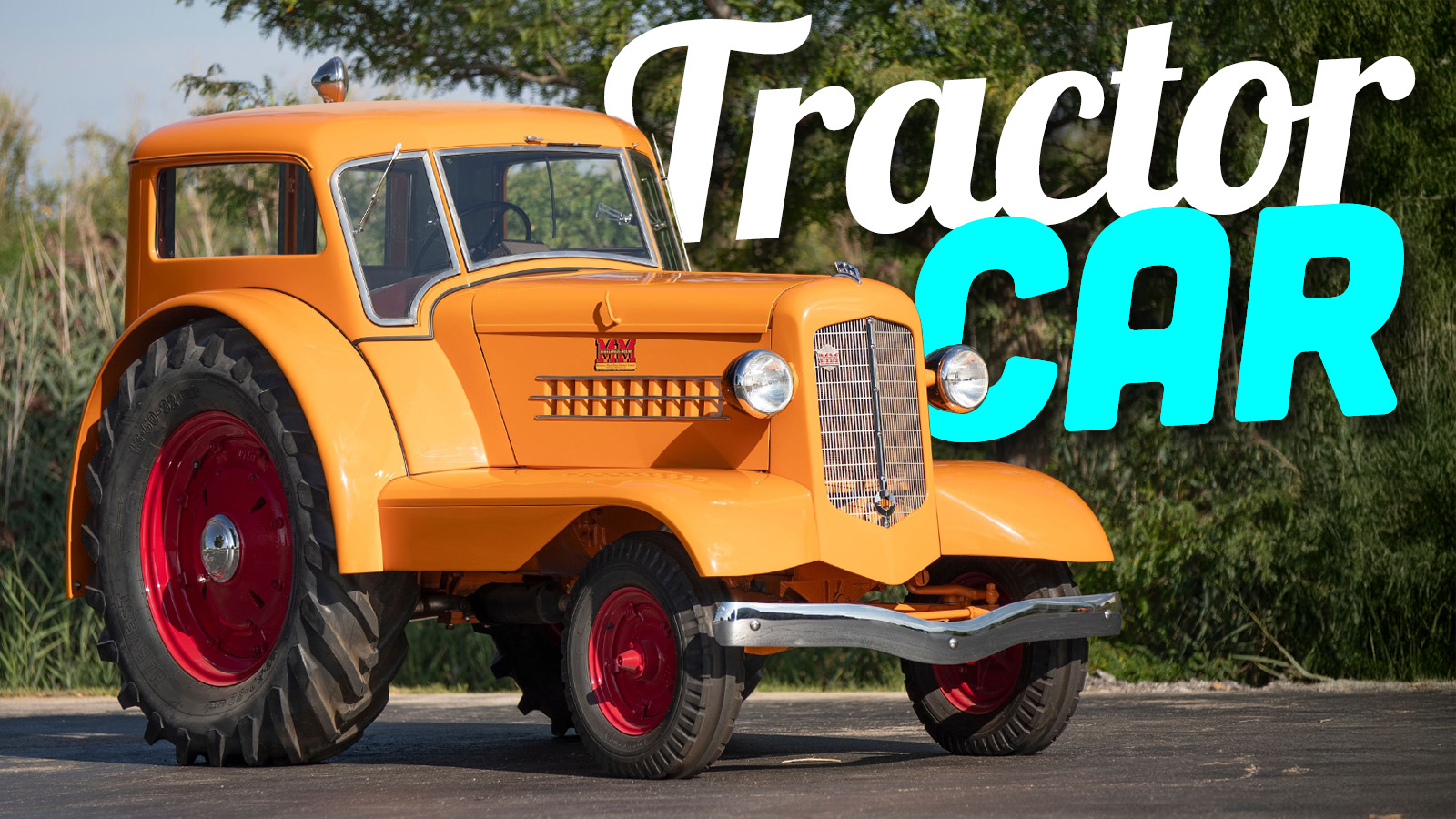
Farmers are often unsung heroes of everyday life. Without them, society as we know it would be very different. The farmers of today have advanced tractors and other tools that make their lives easier, but it wasn’t always this way. In the distant past, a farmer’s tractor gave them effectively no actual comfort and no protection from the weather. Then, after they got beaten by their tractor, they had to hop in their truck to bring their produce to the market. During the Great Depression, one company thought it had the solution. The Minneapolis-Moline UDLX “Comfortractor” was supposed to make farming life better by being the tractor that was also a car.
Most of history’s earliest tractors put work above anything else. As I wrote last year, by using a tractor, a farmer was able to produce higher yields than using manual tools alone. But those early tractors had little in the way of creature comforts. Many early tractors didn’t have a seat of any kind, and forced their operators to stand the whole time. The tires of these tractors were little more than steel bands; there was no suspension of any kind, and tractors were essentially the kind of vehicle that would give modern noise, vibration, and harshness engineers nightmares. In other words, you had to be as tough as a box of nails to be a farmer.


As Antique Power writes, when tractor development evolved in the late 19th century and the early 20th century, tractor manufacturers began caring about comfort, but only to a hilariously bare minimum. Tractors soon came with hard, unforgiving cast iron seats and fenders. These seats were not sprung and had zero padding. So, while the farmer got to sit, their body took a direct hit from every bump, rock, or undulation in their field. The seat was also a direct route for the tractor to send its vibrations into the soul of the farmer.

The next advancement in the tractor seat was holes in the seat. As silly as this sounds, it added some sort of airflow for farming on hot days, and an escape path for water when farming on wet days. But this wasn’t enough. Some farmers were fed up with getting beaten every single day by their own equipment.
The March 27, 1919 issue of Motor Age explained the problem. The magazine declared, “Seats fitted to most tractors are the same sheetmetal stamping that for years have been one of the answers to ‘Why do farmer boys leave home?'” It also stated that pretty much the only good thing about 1910s tractor seats was that they kept the farmer awake and didn’t degrade from use or weather. But it was hard for the magazine to imagine a worse seat in existence in terms of comfort. Some farmers tried tricks to make their seats softer, like bags of straw, but these only provided short-term comfort.
Some creative solutions were pitched. In 1918, the Kansas City Hay Press Company introduced the Prairie Dog Tractor, which featured a spring suspension and a wooden padded seat from a truck. This tractor was exhibited at a farming show alongside a Craig, which had a pressed-steel seat with deep walls and a pad, plus a Port Huron tractor, which had a padded seat like one of the era’s racecars.

These designs did not catch on, and the most popular tractors sold in America continued to have the same hard, unforgiving metal seats they had in the past. Some tractor companies eventually mounted their seats to leaf springs or to coil springs, but that was it. Going into the late 1920s, some companies finally started giving farmers padded seats.
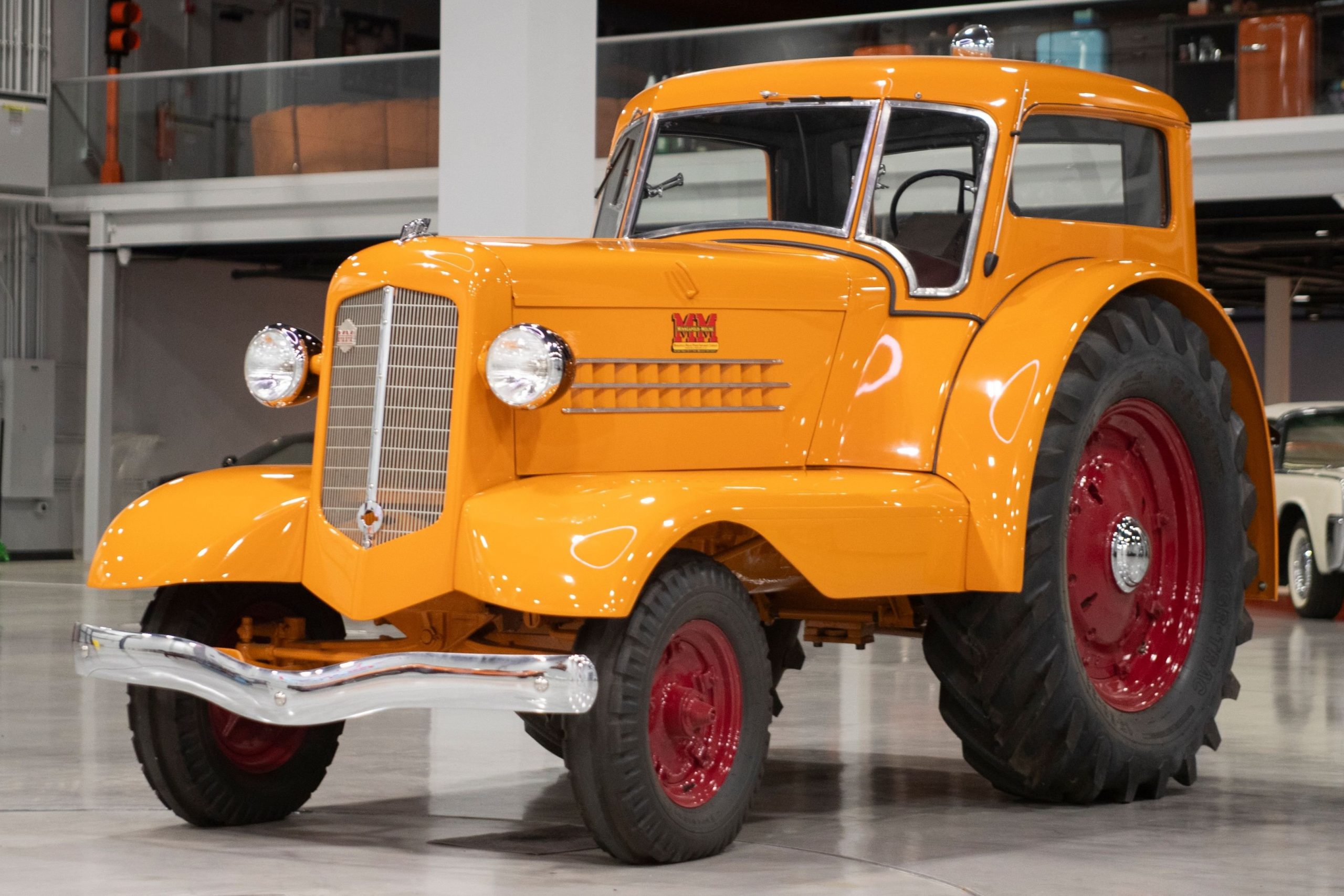
You’ll note that all of this work just focused on the seat. None of these companies were doing anything about weather exposure or other comfort issues. One major tractor producer, Minneapolis-Moline, didn’t just have the solution to a farmer’s comfort woes, but essentially wanted to reinvent the tractor itself. This is the Minneapolis-Moline “Comfortractor,” and it was the weird time in history when a tractor tried to be a car
Once A Tractor Innovator
Minneapolis-Moline was once a name that meant innovation in the tractor market. MinnPost details some of the company’s history leading up to the creation of the Comfortractor:
Minneapolis-Moline dates back to the Candee & Swan Plow Company of Moline, Illinois, founded in 1865. It became Moline Plow Company (later, Moline Implement Company), a major Midwestern producer of tilling equipment: plows, harrows and other tools for sowing grain crops. The Minneapolis Threshing Company began in Fond du Lac, Wisconsin, in 1874, and settled in Hopkins, Minnesota, in 1887. It concentrated on equipment for the last stage of small grain production: threshing. Minneapolis Steel and Machinery Company, founded in 1902, began by making heavy construction equipment and steam engines, then moved into vehicles, including tractors (the Twin City line, 1912) and buses. Its chief executive, Warren C. MacFarlane, engineered the 1929 merger of the three companies and became president.
The merger produced a company that served farming tasks year-round: tilling, planting, weeding, harvesting and processing. Such integration was needed to compete with industrial giants like John Deere and International Harvester. All three of the constituent companies made or had made tractors. After the merger the company trimmed tractors to a single line, Twin City, made in Minneapolis. Harvesters and, later, combines, were built in Hopkins, also the company’s headquarters; tilling equipment was made in Moline.
In its first full year of operation, 1930, Minneapolis-Moline earned a profit of slightly more than one million dollars on sales of about $13,500,000. Then two catastrophes struck. The Depression devastated farm country; farmers stopped buying equipment. Then, in September 1932, Warren MacFarlane was seriously injured in a car crash. He spent five months hospitalized, partially paralyzed. By 1933, sales had fallen to $2,336,000, producing losses of over $1,500,000 and a reduction of employees from over 3,000 to just 672. Losses grew to over $2,000,000 in 1934.
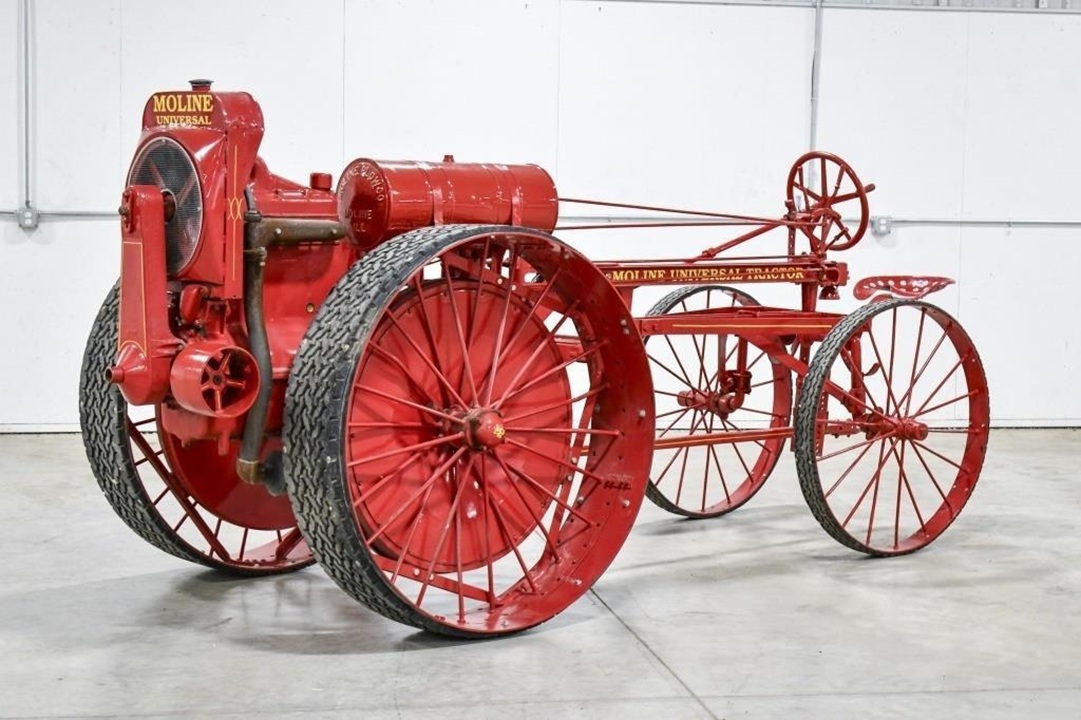
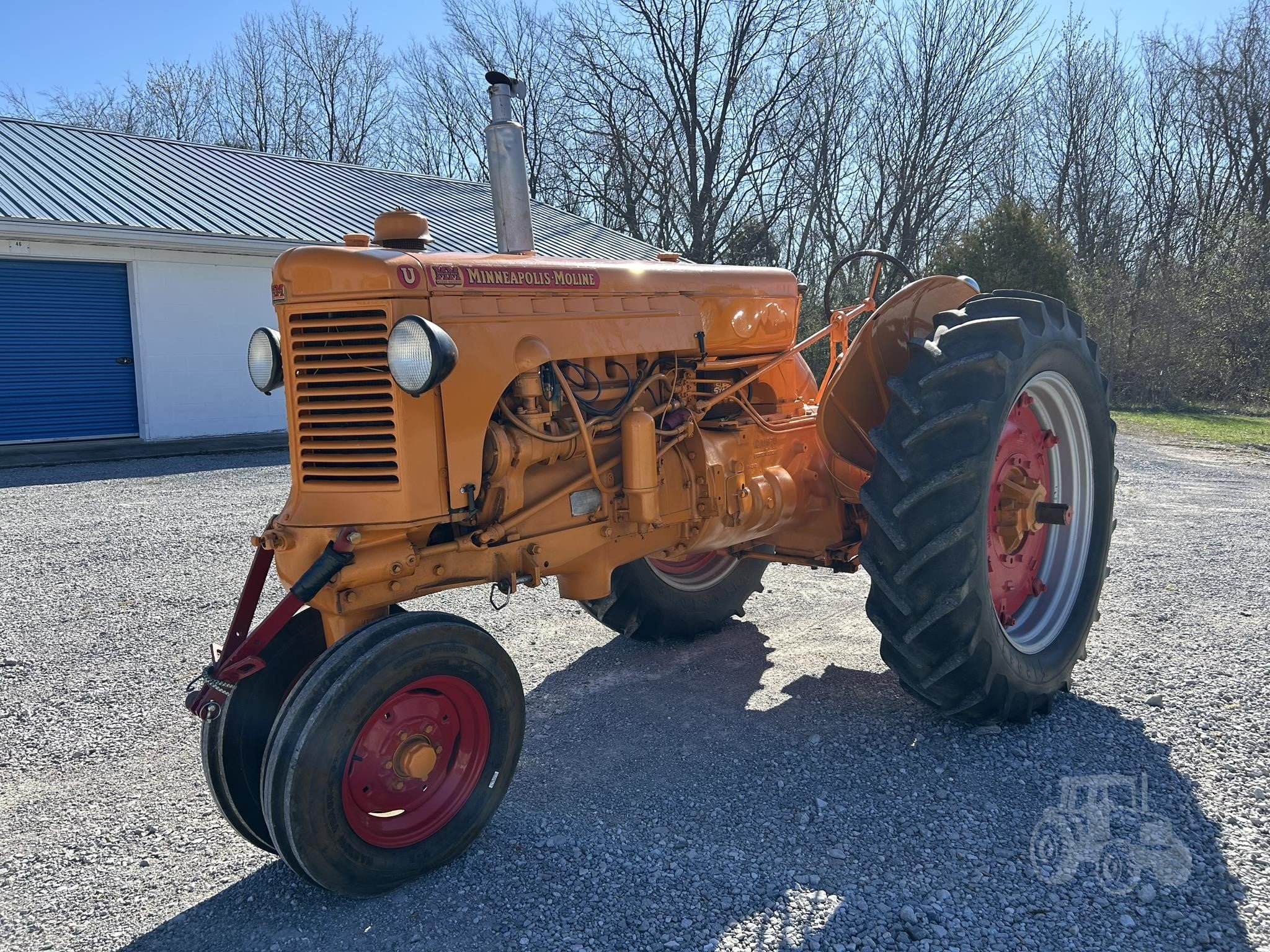
Minneapolis-Moline would become known for the Moline Universal (above), a popular and versatile tractor with interchangeable implements. In the 1950s, this concept would be taken further with the Uni-Tractor, which was designed to replace several different tractors with a single tractor designed to drive harvesters and other attachments. Minneapolis-Moline would also be known for building sorts of hot rod tractors. In the 1960s, for example, it had the G706, which featured a diesel engine that made 102 horsepower at 1,600 rpm. This was a sizable 30-horsepower bump from the company’s previous tractor. Minneapolis-Moline was even an innovator in front-drive technology for tractors.
But going back to the Great Depression in the 1930s, times were rough for Minneapolis-Moline, just like it was for everyone else.
Minneapolis-Moline, through the culture it absorbed from Minneapolis Steel and Machinery, was a member of the Citizens Alliance. According to the Minnesota Historical Society, this was an organization of over 200 banks, manufacturers, millers, and other businesses that fought hard against unionization in Minneapolis. Citizens Alliance leveraged its money, influence, connections, and power within city government, the media, and the police to stomp out unions for decades in the city. Later, Citizens Alliance would grow to over 700 members.
The Great Depression began turning the tide in favor of unions. Continued anti-labor practices, low pay, dangerous working conditions, increased unemployment, poverty, and desperation only emboldened the unions to fight harder. But now, strikes were gaining traction, as businesses began settling with strikers. In 1933, the New Deal weakened the Citizens Alliance, while the National Recovery Act made unionizing a protected right.
A series of strikes that turned violent would be a catalyst for many businesses to address worker demands. Unions gained traction, and even Minneapolis-Moline had to relent, signing a contract with the AFL Machinists Union in 1935.
While all of this was happening, Minneapolis-Moline still had to figure out how to keep farmers buying tractors during the Great Depression.
The Tractor Of Tomorrow, In 1938
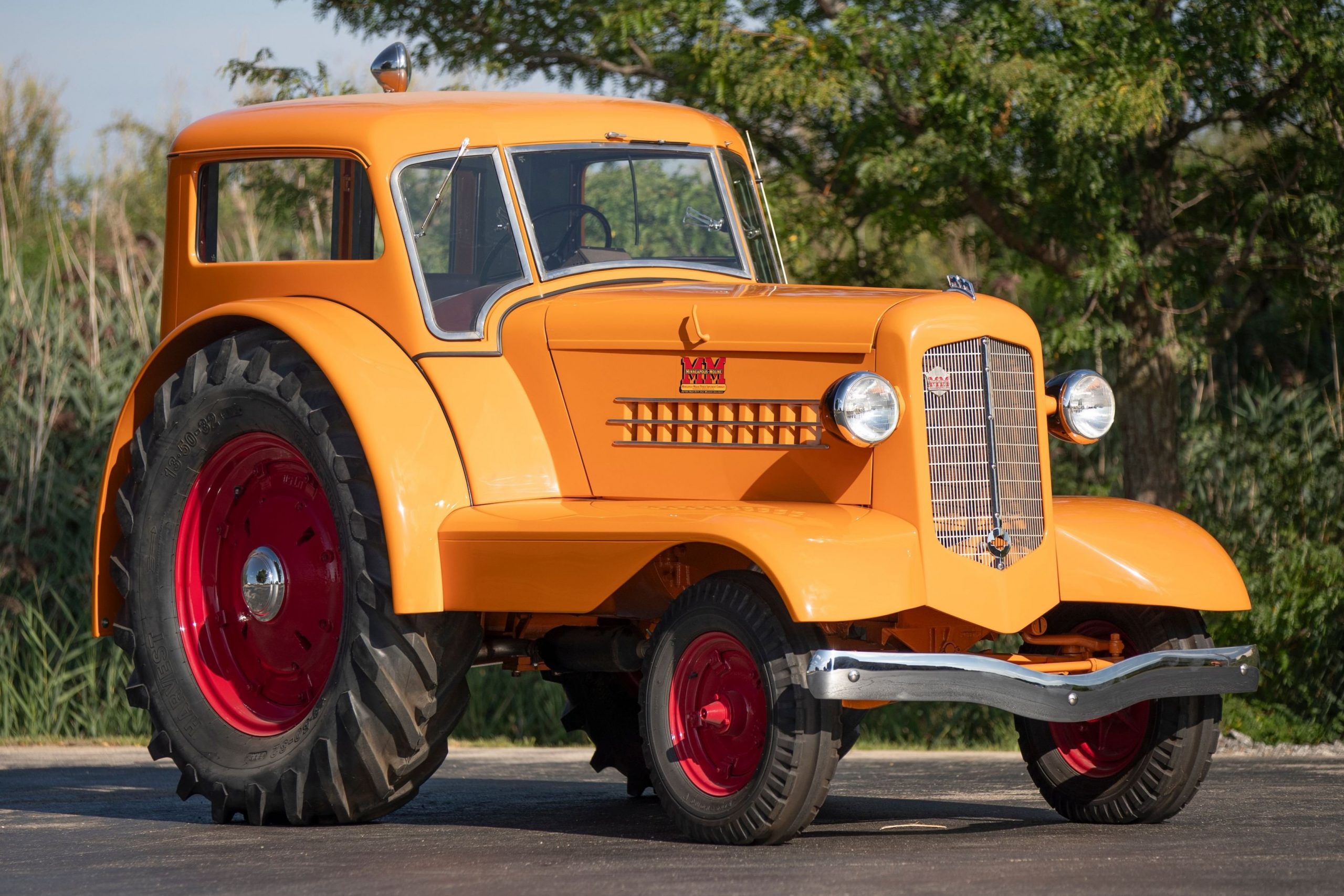
In 1935, Minneapolis-Moline listened to the complaints of farmers. In one survey, 50 percent of thousands of farmers contacted said that they’d like a cab on their next tractor. Tractors were miserable workplaces where farmers were subjected to clouds of dust, searing heat, sopping rain, and bitter cold. Seats were still hard thrones of metal, and every day of work took a toll on the farmer’s body. As Successful Farming wrote, the farmers had another complaint. They wished they could have some way to get their produce to the market faster.
After three years of development, Minneapolis-Moline responded with the UDLX, which was marketed as the Comfortractor. Introduced at the Minneapolis-Moline National Harvest Festival and Style Show in September 1938 to a crowd of 12,000, the Comfortractor stunned. It wasn’t anything that anyone had seen before, or really since.
In building the Comfortractor, Minneapolis-Moline essentially found an answer to every single complaint the company observed. A central element of the Comfortractor was its cab. The primary benefit of the cab was to keep the farmer out of the weather, a feature that, by itself, was revolutionary for the day. While Minneapolis-Moline wasn’t the first to put a cab on a tractor, as the 1977 article “The Comfortractor – A Dream Not Everybody Shared” by Dale C. Maley notes, the UDLX was probably the first mass-produced tractor with a cab.

This cab was properly luxurious, too. The operator got a car-style seat with thick padding and automotive-style controls. But Minneapolis-Moline didn’t stop there. Remember how I said that farmers wanted to bring their produce to the market more easily?
To Minneapolis-Moline, this meant merging tractor technology with car technology. If the farmer could just drive their tractor to the market, that would be much easier than transferring everything over to a truck. Even better, Minneapolis-Moline thought, if the tractor were made as comfortable and as practical as a car, the tractor itself could be the family car. The tractor would be two vehicles in one!
The Tractor That Was Also A Car
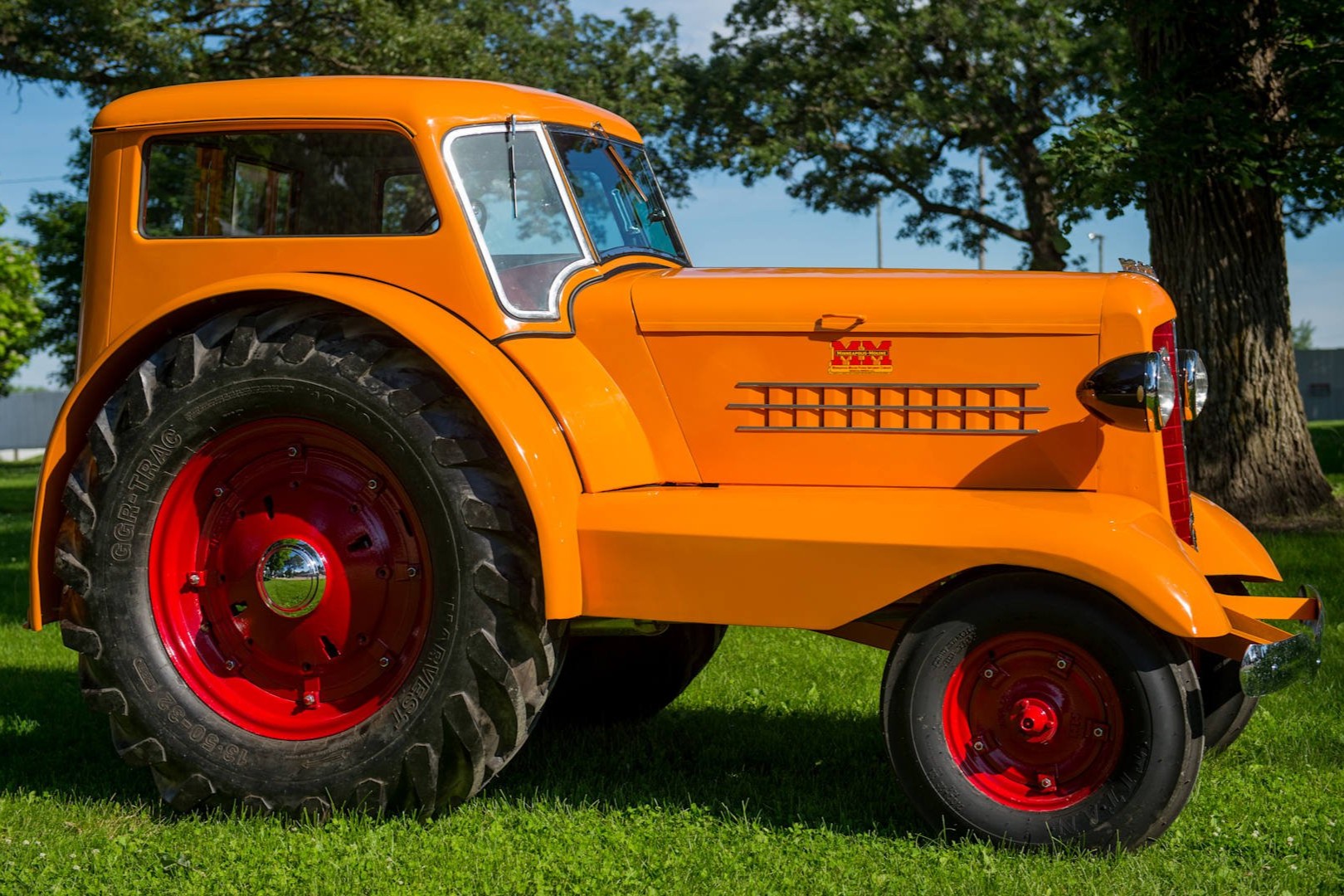
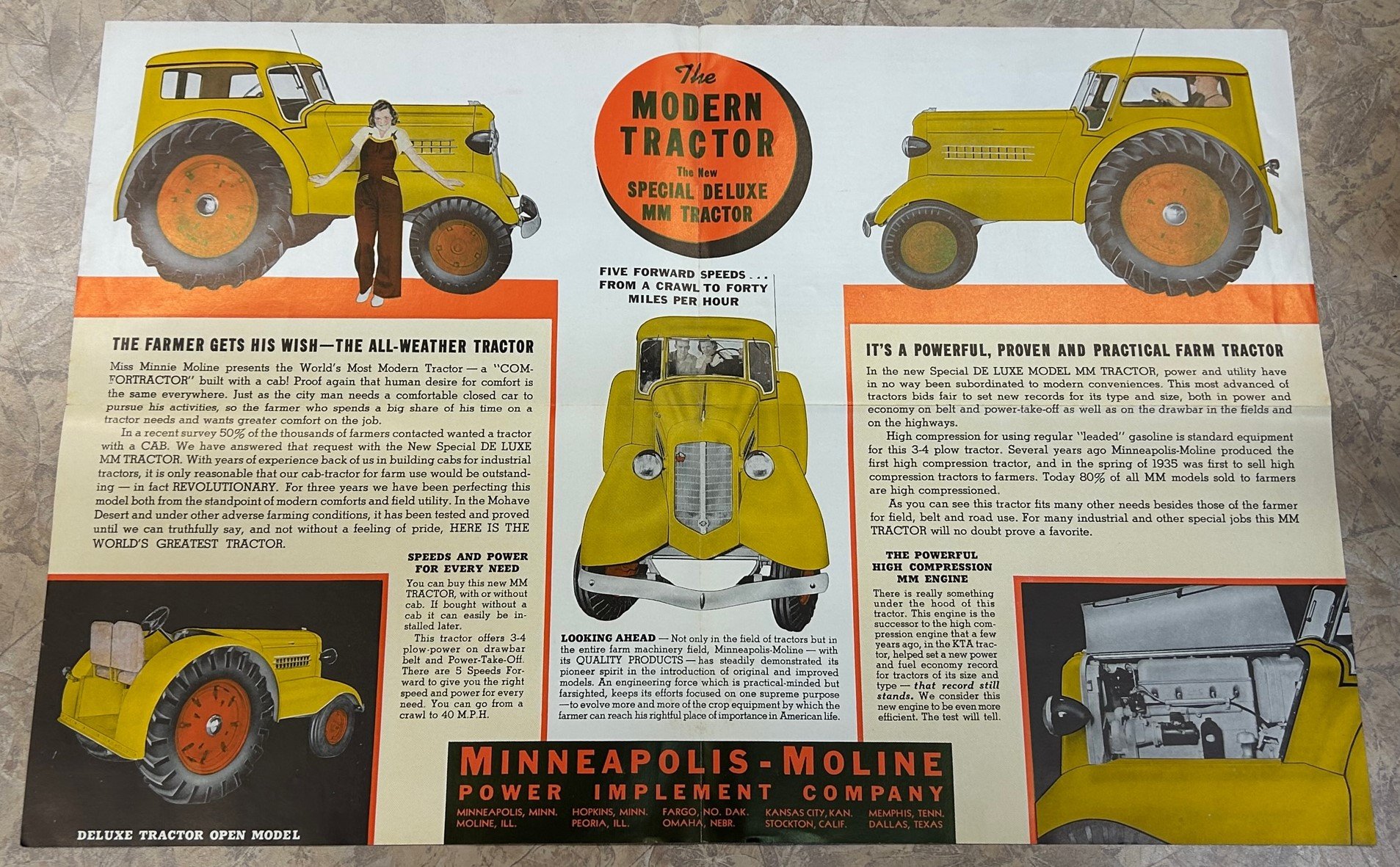
So, the cab became more than a comfortable workplace. The cab, which was built out of sheet steel with wooden supports, featured leather and felt seating for two, safety glass, windshield wipers, car lights, and car-style instrumentation with speed, ammeter, oil pressure, and coolant temperature. Convenience features were impressive for a tractor, and the UDLX had a rearview mirror, a cigar lighter, a clock, rubber floor mats, a glove box, dome light, a heater, and an optional Philco radio. Reportedly, the UDLX was the first mass-market tractor to come with the luxury of listening to the radio.
Since Minneapolis-Moline was now getting into car design a bit, it also let itself have a bit of fun with the look of the Comfortractor. America was still fully embracing the streamline era, and Minneapolis-Moline was quick to jump on the trend, giving the UDLX lines like it was meant to go 100 mph, even though it had a top speed of 40 mph.
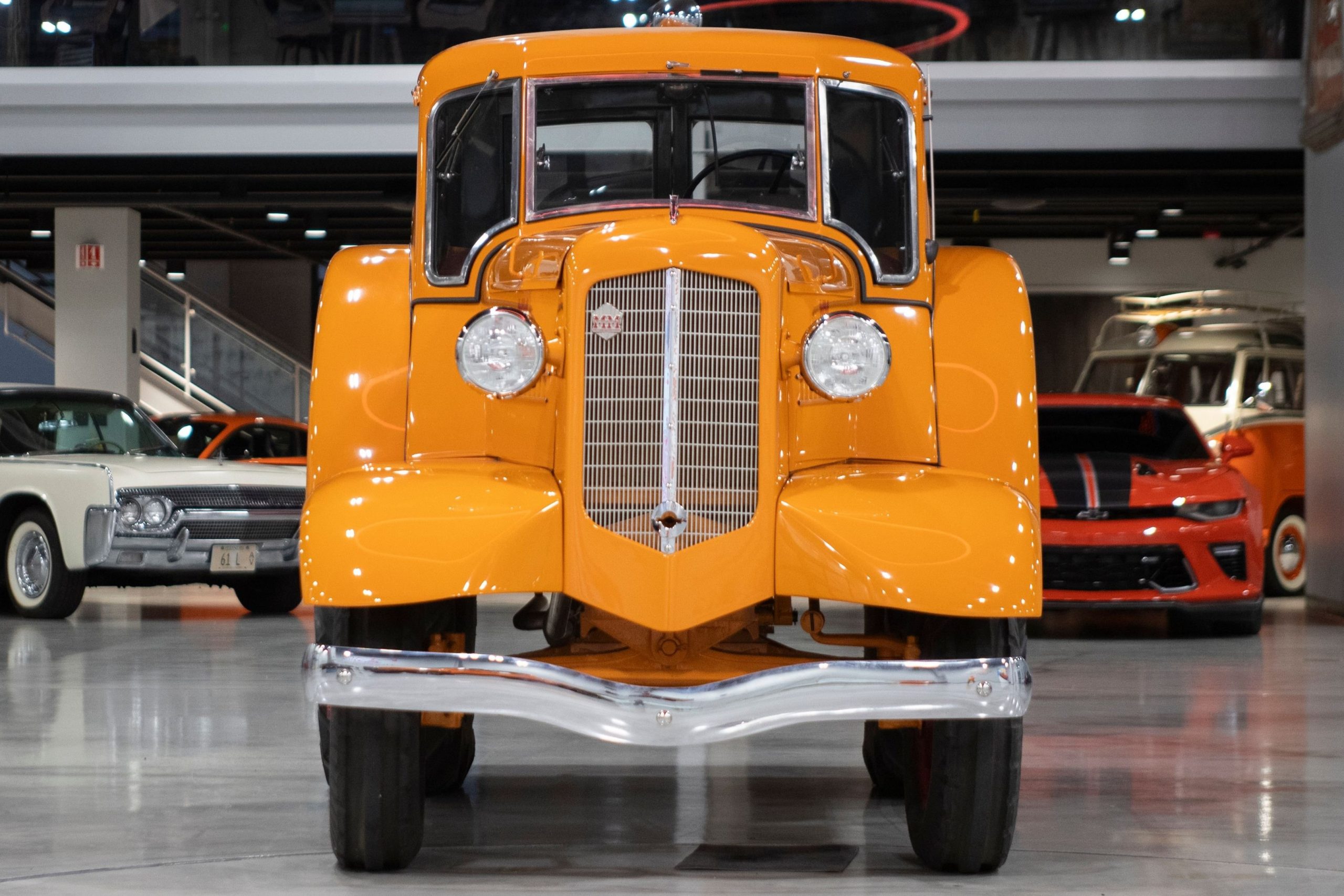
This was another departure for the UDLX. Tractors are vehicles where form generally follows function. Even the tractors of today are imposing blocks of metal, glass, rubber, and composites. While some brands add some style to their tractors, none of them would win a beauty contest. The Comfortractor looked less like a tractor and more like a luxury car with huge tires. It even had barn doors on its back like a panel delivery van.
For those who didn’t care about a cab – remember, only 50 percent of farmers said they wanted one – the UDLX was also available without the cab. That version still had two super-soft seats and car-like styling, but no weather protection.

Of course, the idea of making a tractor a family car could only work if it could drive like a family car. Permitting that 40 mph top speed was a unique drivetrain setup. Power came from a 283.7 cubic-inch gasoline straight-four good for about 39 HP.
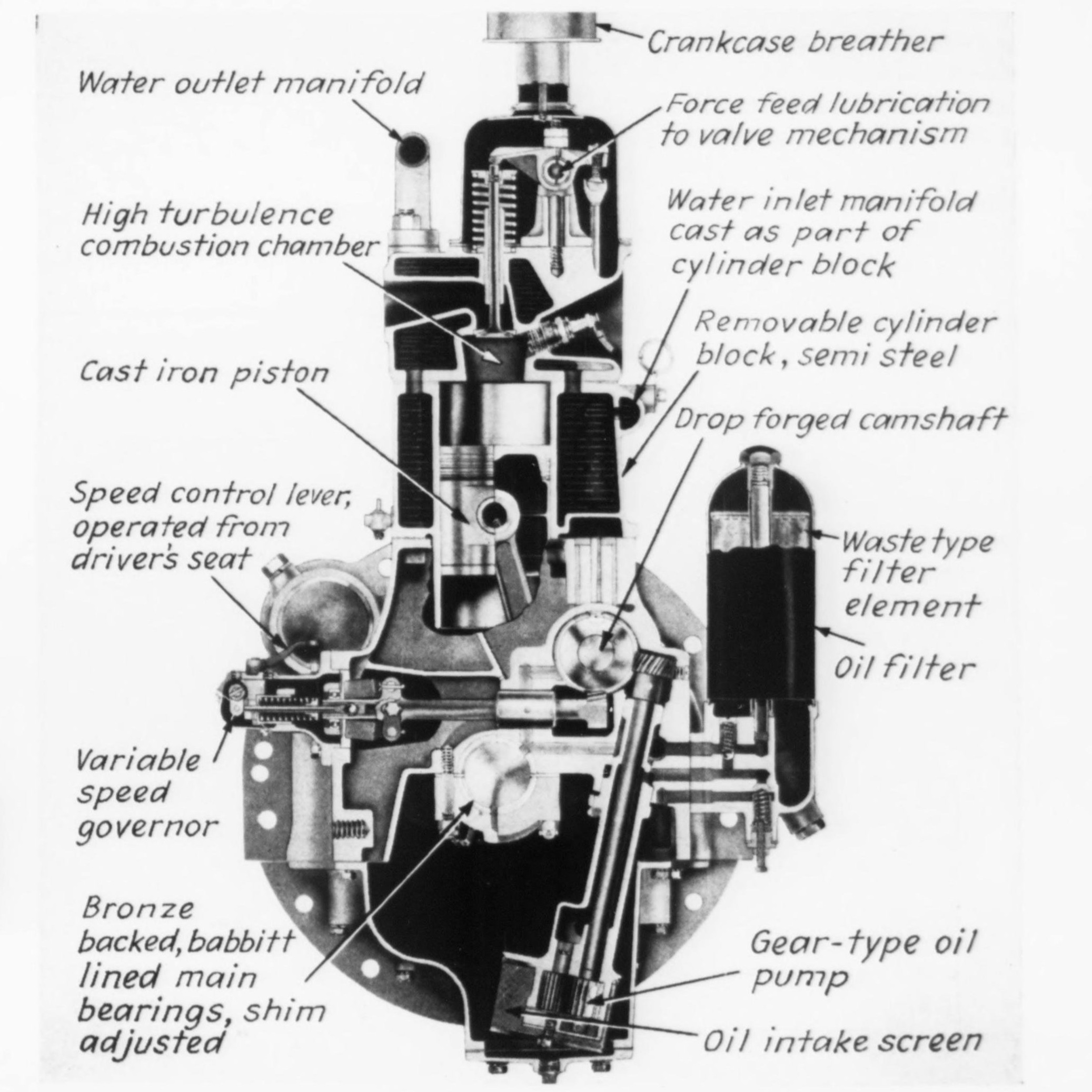
A 1939 issue of Product Engineering describes the engine’s materials:
Engine is Minneapolis-Moline four cylinder, develops 39 drawbar HP. Crankshaft is S.A.E. 1045 drop-forged steel, heat-treated: connecting rods are S.A.E. 1040 drop-forged, heat-treated steel: camshaft is drop-forged X-1020 steel, case-hardened. Bearings are bronze-backed, babbitt-lined. Tractor speed is controlled by manipulation of variable-speed governor, throttling engine between 300-1275 r.p.m. Governor is gully-inclosed and automatically lubricated. Belt pulley mounted on left side of engine operates at 2980 ft. per min. with engine speed of 1275 r.p.m. Front fender is easily demountable.
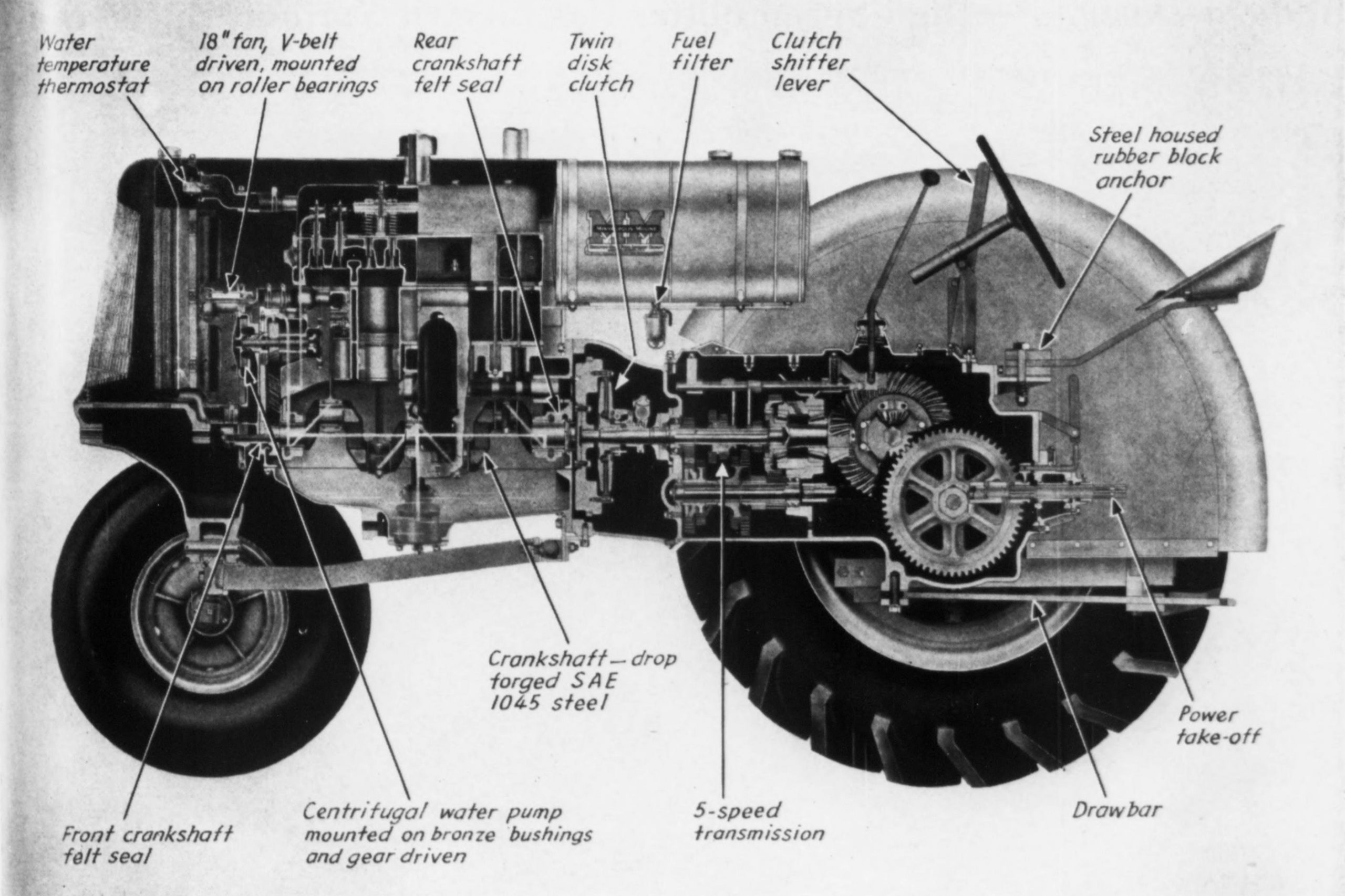
Pictured above is a cutaway of the cab-less “roadster” version of the Comfortractor.
A five-speed manual transmission had gearing for crawling and high-speed operations. First gear was for crawling, while fifth gear was long for road use. Top speeds for each intermediate gear were 2.7 mph for first gear, 3.5 mph for second gear, 4.7 mph for third gear, and 10.2 mph for fourth gear. Reverse got the tractor up to 3 mph.
In the first four gears, the engine was governed to 1,275 rpm, but in fifth gear, the engine was allowed to run up to 1,785 rpm. The transmission also had a lever that manipulated a countershaft throw-out, which disengaged all but fifth gear, which ran on a straight-through shaft. Reportedly, the logic here was to increase top speed by reducing friction losses in the transmission when in fifth gear. Helical cuts on third and fourth gears made shifting quicker and easier. However, the driver still needed to double-clutch as the transmission did not have synchronizers.
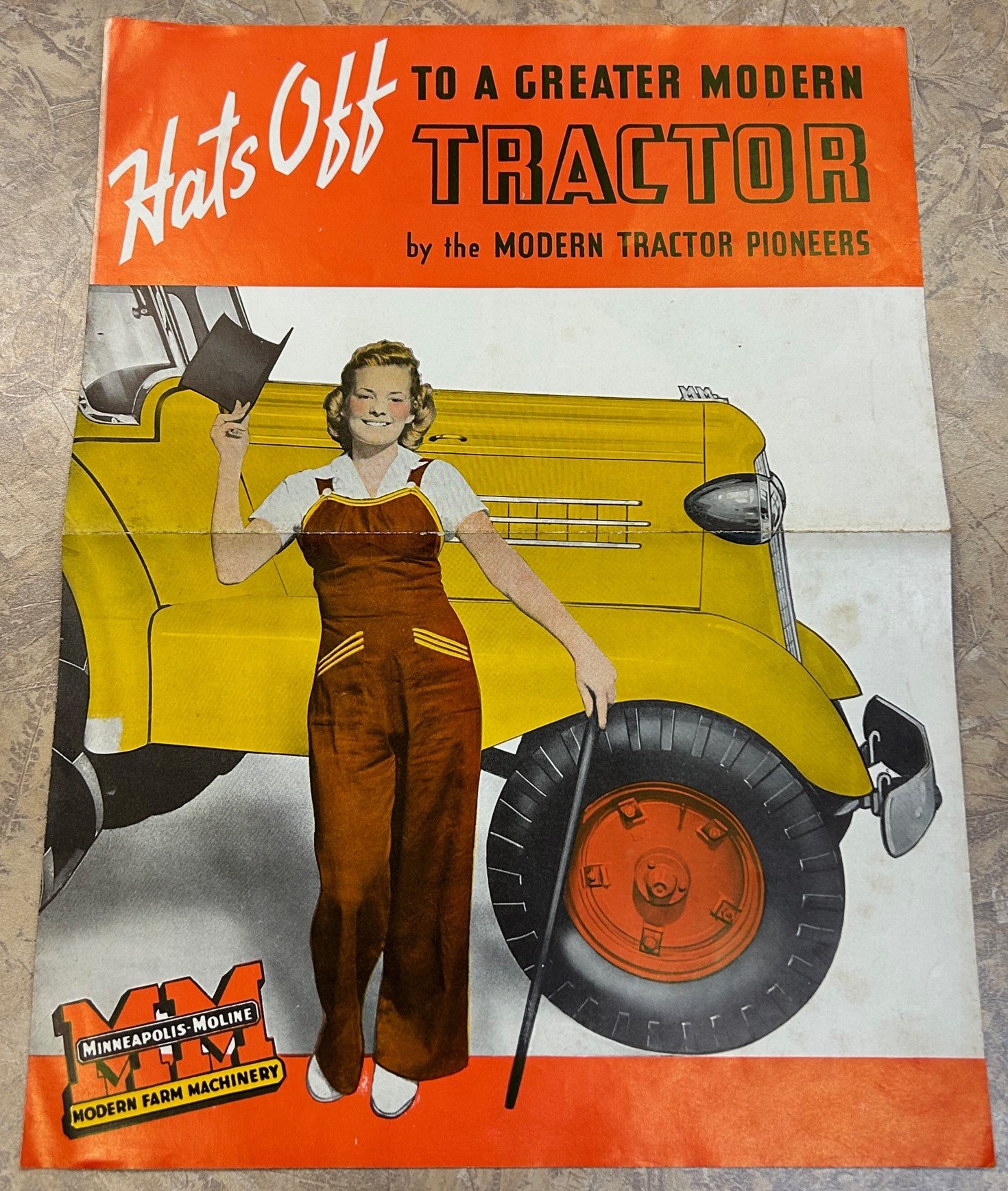
The Minneapolis-Moline UDLX was also a bit of a progressive tractor. Some advertisements displayed women driving Comfortractors.
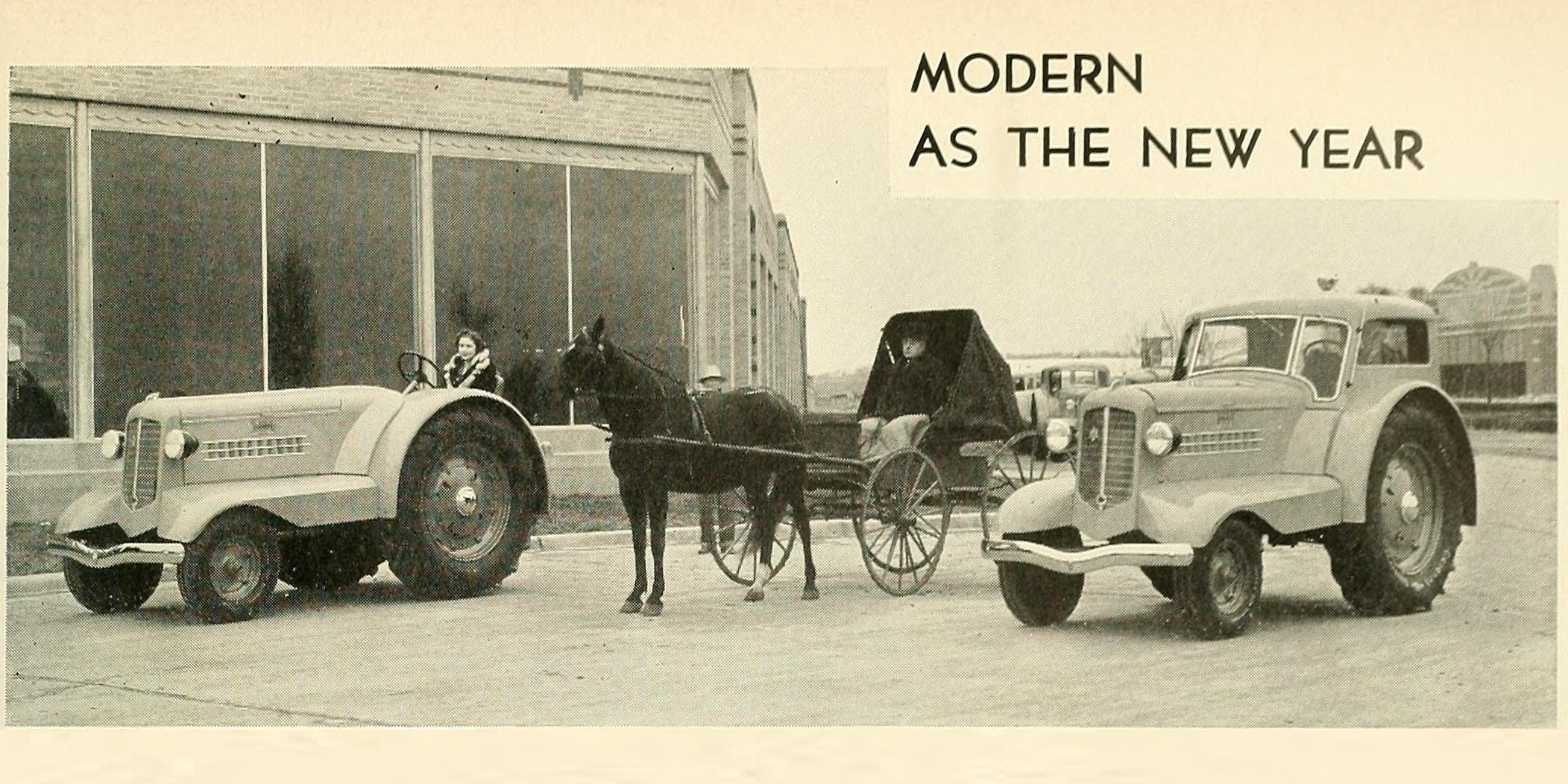
Such a grand tractor needed a grand entrance, and, according to the Comfortractor – A Dream Not Everybody Shared, the National Harvest Festival and Style Show in September 1938 was fashioned a bit like a gala. Only 12,000 people were allowed in to keep the venue from getting too crowded, and the 24-piece Gopher Orchestra kept the audience entertained. Minneapolis-Moline revealed the tractor the same way cars were at the time, with a big curtain pull, stage lighting, and a rotating stand.
In a way, this launch event was a bit of an ancestor to today’s agricultural equipment trade shows, but perhaps with even more theatrics. Anyway, the crowd went wild, and Minneapolis-Moline thought it had a winner on its hands.
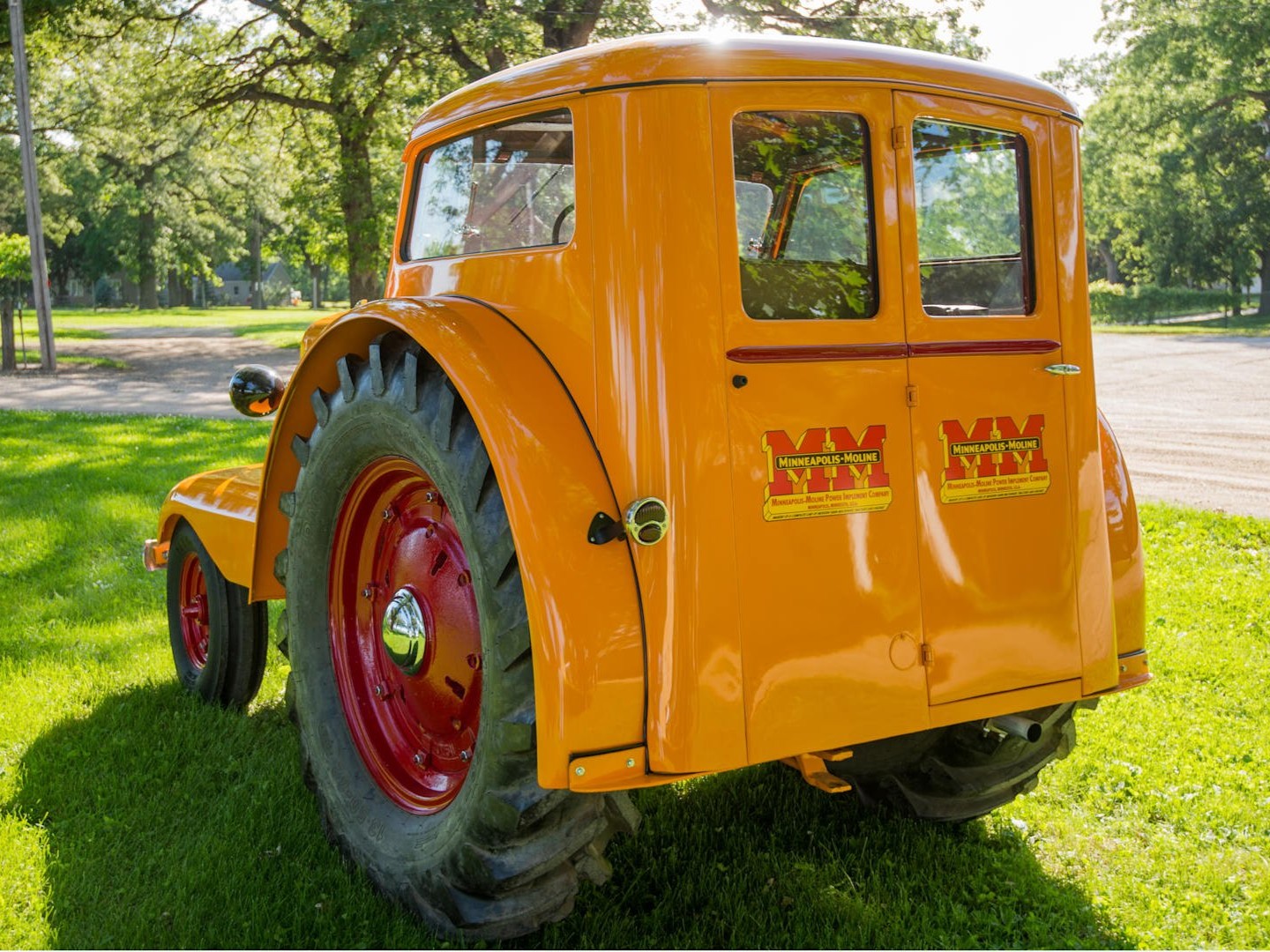
Early reviews were promising. In October 1938, Tom L. Wheeler of The Indiana Farmer’s Guide said that the tractor “really is quite revolutionary in style and design for comfort. I couldn’t help comparing it with the farming implements I used as a boy back on our farm in Ohio. We have come a long way in developing labor-saving machinery for the farmer, and now he can ride on a cushioned seat in a temperature-controlled cab and listen to the news of the world on his radio, while doing his plowing!”
But there was only one problem. Only 125 to 150 Comfortractors were ever sold.
Why The Comfortractor Was A Failure
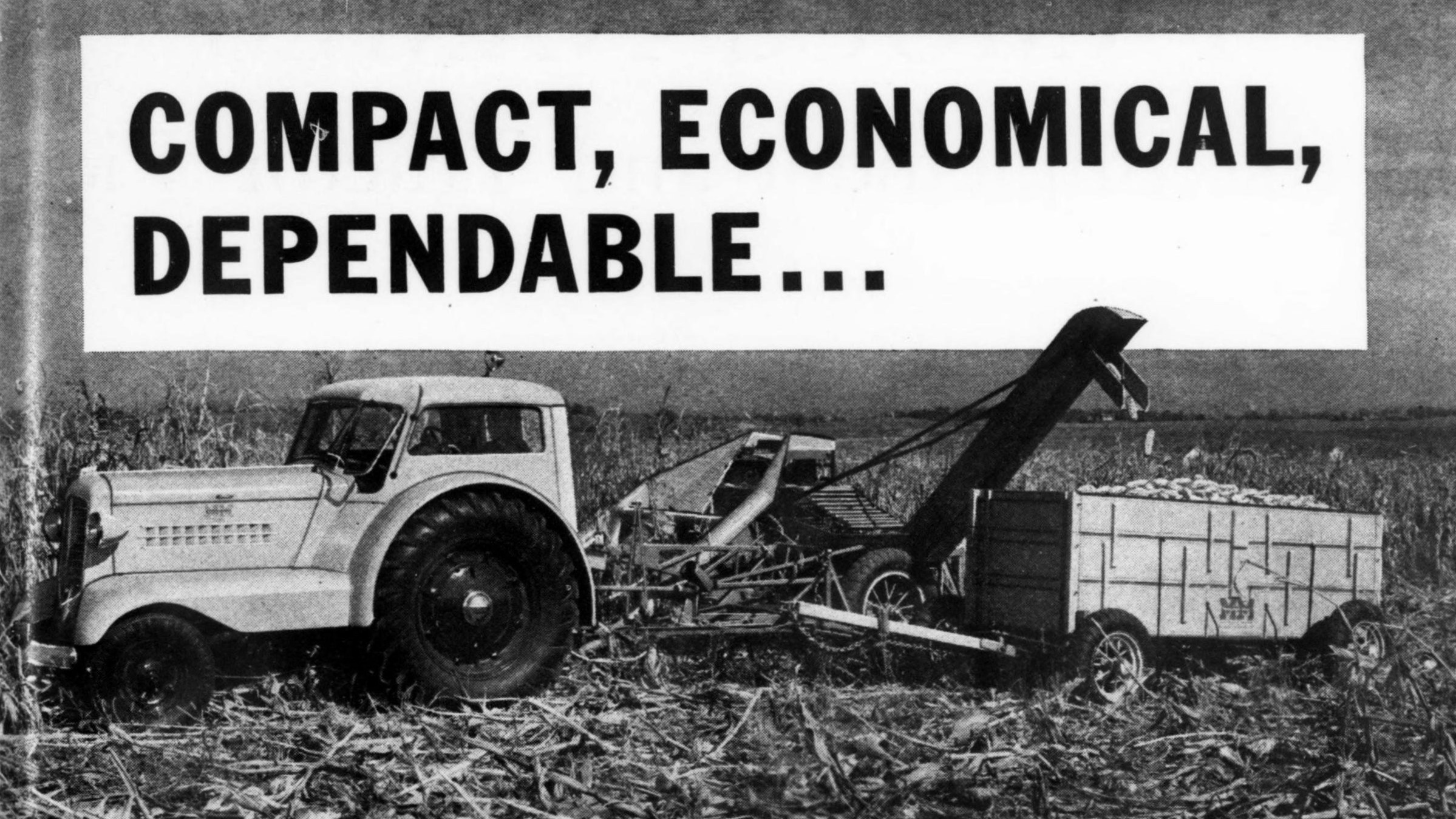
As Successful Farming wrote earlier this year, the Comfortractor failed for many reasons. The first reason was very simple: Price. The Comfortractor was a whopping $2,155. As the publication notes, any new typical 1930s tractor was about $1,000 and a 1938 Ford Tudor was only $725.
One of the selling points of the Comfortractor was that it was two vehicles in one. But it was priced like it was two and a half vehicles. If you wanted a new car and a new tractor at the same time, which was unlikely because it was the Great Depression, you were better off buying a car and a separate tractor. Successful Farming continues:
Even if you ignore the broader Great Depression, the UDLX still managed to launch at about the worst possible moment — right into the 1937–1938 recession. The Roosevelt administration tightened fiscal policy in an attempt to balance the budget and doubled bank reserve requirements to rein in inflation. The result was predictable: The money supply tightened, credit got harder to find, and the whole economy felt it for a year or two.
That matters because tractors are classic “durable goods.” When confidence drops and commodity prices fall out the bottom, purchases like that take a back-burner. And in the case of the UDLX, a premium-priced, style-forward tractor-car hybrid is exactly the kind of thing that doesn’t just get postponed — it gets postponed forever.
The Comfortractor – A Dream Not Everybody Shared illustrates the problem even further. In 1938, America had 6.8 million farmers. However, due to the slow adoption of tractors and the lack of money in farming, a whole five million farmers didn’t have a tractor at all. Those who did were more likely to spend what little money they had on a new car, which was less durable and cheaper to buy, and just keep their old tractor running.
So, the Comfortractor was just a poor value proposition. Making matters worse was, as Successful Farming notes, the culture around agriculture viewed farmers as being tough and masculine. Well, the Comfortractor was the opposite of that. The farmer of the Comfortractor could relax in their cushy cab listening to the radio while the farmer next door was getting blasted by heat and dust. The Comfortractor owner would look like their showing off, which was seen as a bit uncouth during the Great Depression. Minneapolis-Moline hoped to create an aspirational halo tractor, but might have sold the tractor version of wealthy peacocking.
Then there was the fact that, as Successful Farming explains, the Comfortractor was neither a good car nor a good tractor:
The Comfortractor had no front or rear suspension. None. On country roads, it rode like a dentist’s chair — every bump trying to rattle your fillings loose. The cab didn’t help, either. With the drivetrain sitting right under you, space was at a premium. Unless you were fairly short, climbing in was an exercise in back-pain management, and unless your passenger was built like a yoga instructor, two adults sharing that space was awkward at best. It was less a cab than it was a mechanical phone booth.
Then there was the weight. At close to 6,400 pounds, it had enough power to get moving, but not a very convincing way to get stopped. It had only rear drum brakes, and most accounts suggest they were…optimistic at anything resembling road speed.
In other words: As a tractor, it was complicated and expensive. As a car, it was loud, bouncy, and still very much a tractor.
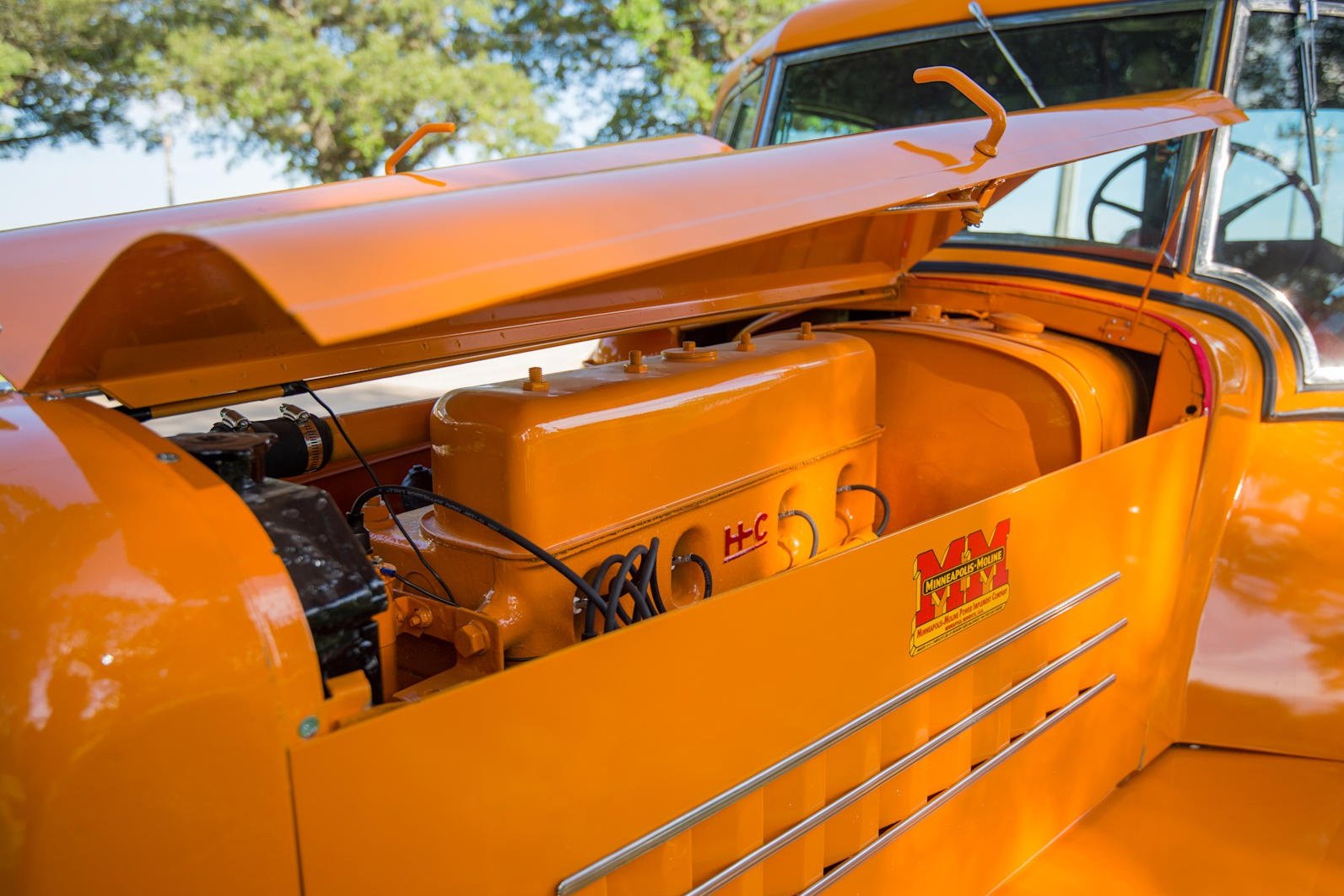
Another problem was that the engine dumped much of its excess heat into the cab, which made for sweltering days on the job. Only the windshield opened for ventilation, and it didn’t offer much relief. Reportedly, some Comfortractor owners got so desperate for a reprieve from engine heat that they took the distinctive hoods off their tractors, hoping to redirect the heat elsewhere.
The Comfortractor – A Dream Not Everybody Shared makes the argument that the UDLX might have also been too much of a revolutionary change. Minneapolis-Moline didn’t so much make an improved tractor as it completely reinvented the tractor, and perhaps buyers weren’t willing to get experimental.
Reportedly, the Comfortractor was such a failure that, in 1941, Minneapolis-Moline recalled all unsold examples, ripped off their cabs and luxury features, then converted them into conventional tractors. It’s rare to see a failure so bad that the manufacturer tries to erase the vehicle from existence. Other notable examples include the copper-cooled Chevrolet of the 1920s and the Suzuki RE-5 rotary motorcycle of the 1970s. Honestly, it’s amazing that the Comfortractor even managed to be on the market for three years.

As for Minneapolis-Moline, it would later enter a period of decline as it got traded around to different companies. In 1951, it was absorbed by BF Avery & Sons, and then by Motec in the early 1960s. The company’s final caretaker was the White Motor Company, which acquired it in 1963. The last Minneapolis-Moline-branded tractors were built in 1974.
Today, surviving Comfortractors are highly collectible. Apparently, there might be 25 or 30 or fewer examples remaining, and one of them has sold for as much as $210,000.
The UDLX Was Perhaps Decades Ahead Of Its Time
The sad part is that the Comfortractor wasn’t a bad idea. Minneapolis-Moline’s market research didn’t fail it. Farmers really did want a cab and did want some comfort features. They also wanted a more efficient way to get their produce to the market.

Minneapolis-Moline just went about the worst way of implementing those good ideas. A tractor with a cab probably would have sold, but Minneapolis-Moline went too far in making it look like a streamliner. A tractor with carlike features and comfort could have gotten some legs, but Minneapolis-Moline priced it well beyond reach for many. Add in the comically terrible timing, and this tractor was probably doomed from the start.
However, the core idea was sound. Today’s tractors come with large cabs with lots of visibility, cushy seats, air conditioning, and even entertainment. Many of the big swings that Minneapolis-Moline took with the UDLX are commonplace today. In a way, the Comfortractor was just three decades too early. Weirdly, the idea of a carlike tractor didn’t die with the UDLX. Kubota and Ford both flirted with carlike tractors later on, but the carlike tractor would never catch on.
All of these projects are decent evidence that, sometimes, combining two vastly different classes of vehicle into one sounds great on paper, but doesn’t work in reality. As it turns out, cars should be cars and tractors should just be tractors. But I’m still happy that there are engineers out there who tried their hands at wacky ideas like this, anyway. Thanks to them, the world remains a bit more colorful.
Top graphic image: Bonhams


Great article, thanks Mercedes! I’ve always been fascinated by this tractor model. There was nothing else like it, before or after.
I can remember seeing a restored one of these at a county fair.. Just a short distance from the equipment dealers’ displays of the latest tractors. The UDLX really did point the way for modern tractors with full cabs, comfortable seats, and useful instrumentation.
I will say that at the time (late 1970s) Tractors with cabs did still carry a bit of a luxury connotation, but cabs were also necessary to protect all the advanced electrical and early electronics that the high-end machines were starting to have. It was morphing into more of a sign of having the latest ag tech, which meant the “luxury” of saving time and getting more work done — but at a hefty initial price tag for one of those machines.
Fast forward to today, where planting and harvest times requires farm crews to be out in all weather, at all times, out straight — the climate-controlled cab, ergonomic seat, and all that lighting hung off the roof and fenders aren’t luxuries; they’re essentials in a machine that’s become both office and workhorse at the same time.
I’ve seen a couple of these at antique equipment shows in PA. They always get my attention. Another “It’s a great idea in theory, but…” kinda things
The adorable overalls on the brochure model would sell like hotcakes today
I have always loved this thing, and I feel like the modern world has painted most solutions into a box and we rarely come up w something novel anymore.
Are you sure this isn’t a character from a Disney CARS movie? I can see a herd of them stampeding now.
What a great read!!!!!
40mph tractor? More like TRACKtor
I love me a good tractor post.
Appreciate the shout-out for the G706. I have a 1962 Massey Ferguson 97, which was built by Minneapplis Moline and IS a G706 underneath the Massey Ferguson styled sheetmetal. https://drive.google.com/file/d/1c7ojrEvWk0puyZy3W3_wT_lH6dqmpxo1/view?usp=drivesdk
Combining trips is always a good way to save fuel as long as the kids don’t get bored and start thrashing around.
You cultivated a great sentence.
Such a cool tractor cos-playing as a car. I have one of these little Ertl diecast in my collection and have gotten to see restored examples in person several times. Too bad it never took off, but it’s not really a surprise that a poor-functioning expensive vanity-tractor wasn’t a big hit in the late 30’s.
Who knew?
Another awesome article, Mercedes.
The German company, Lanz, did something similar with their “Bulldog” tractor, though the end result was more like a mix of a tractor and an early civilian Jeep. Here’s a video with a selection: https://www.youtube.com/watch?v=uhQa5Ji3rtA
The Eilbulldog is the holy grail of Lanz tractors. It was developed to pull trailers at the incredible speed of 25 mph before semis hit the market.
Unfortunately, the museum site offers only a translation of the headline, but Google Translate is your friend:
https://www.technik-museum.de/en/community/museum-stories/220-kilometers-with-the-eilbulldog-part-1/
Thanks for the link, that’s better info than I was able to easily find. I only knew about these because of a miniature of one I acquired some years ago. I figured a tractor with a 10 liter, single cylinder, 2-stroke engine you had to pre-heat with a blowtorch would be right up the alley of folks around here.
Torch has probably had to have a lie down in a dark room.
The Lanz Bulldogs are the stars at every German tractor meeting. Especially those which (unlike the Eilbulldog) get started by attaching the steering wheel to the flywheel. Basically, everybody who runs around with a blowtorch gets followed by a crowd.
It was also loud inside, the uninsulated steel cab just allowed the engine noise to reverberate around inside
So, the only real comfort benefits were the cushier seats and being protected from rain, otherwise, it was actually less comfortable than a regular open tractor under dry conditions
Farmers also didn’t like the fenders, which tended to get caught on things, and the outward visibility was poor. Basically, a less useful, less functional tractor that also made a pretty crappy car, for more money than a decent tractor and a decent car combined. Really would not have wanted to be on the team that had to figure out a way to sell these things
But, market research was in its infancy back then, and, even today, what people say they want in focus groups is often quite different from what they’d actually buy with their own money in the real world. If anything, M-M’s results suggest farmers would have been happy with a collapsible fabric rain canopy they could set up on their tractor as needed, and maybe an overdrive gear on their farm trucks
Great article! If you’re interested in a part 2, look into Doodlebug tractors. Kind of the inverse of what Moline did.
rollin on dubs before it was cool.
I bet this thing just plows into turns.
We didn’t even have cabs on our tractors is in the 2000s! Granted that was because my grandad didn’t like them…. one had like a steel canopy (that was the older one) and the newer one was open. Then we got a brand new Deutz-Fahr for the orchard and a cab would have been a pain in the butt! But the two old Fords were the farm tractors were either open air or open sided affairs.
The lack of brakes on that thing must have been terrifying at 40mph! I recall driving home after mowing our orchard on the old Ford 3000 and went down what would be considered a mild incline in a car, but looked like a cliff in that Ford with poor drum brakes only on the rear, a heavy(ish) mower on the back, at like 40km/h (whats that like 25mph?) and realising that if I put the clutch in to shift down to engine brake I’d probably be in the stone wall on the opposite side of the intersection, and if stomped on the brakes at that speed I’d probably lock the tractor up and be in the ditch – oh did I mention I was probably like 13 or 14 at the time!!! I’d hate to think what that would have been like in a 1930s suspension-less tractor at 70+km/h!
Well don’t just leave us hanging! Did you manage to stop it in time?
Nope. I died. It sucked.
I actually don’t remember what I did, whether I just pulled straight out onto the highway chancing it, or if I managed to slow it down with the nearly non-existent brakes. All I can remember was freaking out that I was going too fast and that pushing the clutch would be bad.
I got to see one of these at the Savoy! It was really cool!
It beat the Edsel in how long it was in production.
They seem to have gone from idea to implementation without passing through analysis.
This makes more sense than today’s brodozers.
Didn’t early tractors park at the side of a field and pull the equipment across the field by belt/drive?
I could see that transitional time being a bit rough as it moves from those stationary machines to one that will directly traverse the field.
That’s a steam-driven plough. The steam engines were too heavy to move over the fields.