

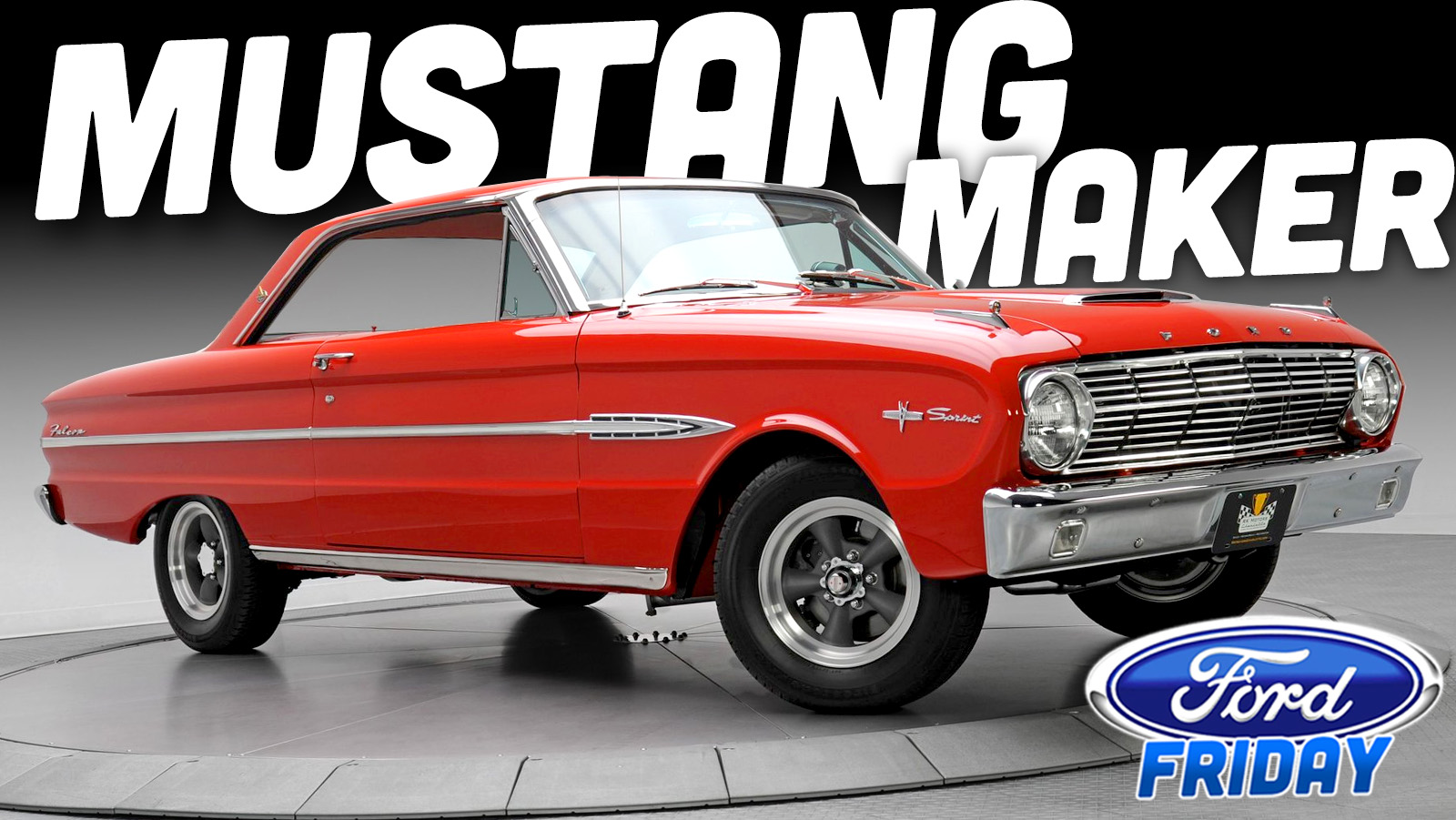
Sure, most of us love Mustangs, but it’s disappointing that it destroyed at least one good car. Worse than that, this car was also a Ford.
No, I’m not talking about Cars and Coffee altercations; don’t be rude! I’m referring to a two-door sedan that gave its mechanical components to create this new Pony Car in 1964 and then saw itself made redundant within months. Even today, this car that ended up being totally eclipsed by the very car it begat remains rather forgotten by many enthusiasts.


That’s a shame, since as an all-around practical car, performance sleeper, and international rally racing star, the Falcon Sprint deserves more respect. At the very least, you should know that it exists.
Falcon? More Like A Pigeon
Nearly seventy years ago, try as they might, Ford and General Motors could no longer ignore smaller cars. From imports like Volkswagen to bit-player domestic competitors like Nash and Studebaker, the market for cheap and economical entry-level cars was exploding with young first-time buyers and those wanting a second car in the booming postwar economy.
Chevrolet gave us GM’s entry in the form of the 1960 Corvair, a rear-engined subcompact that matched the likes of the Beetle, Renault 4CV, and Fiat products with a very European layout and overseas flair.

Ford, on the other hand, decided to simply downscale a very traditional domestic sedan. Front-mounted straight six, three-on-the-tree transmission, rear drive on a live axle, and boxy styling that looked like a big sedan left in the dryer too long. Their 1960 Falcon, even by some Ford executives’ later admission, was possibly the most boring car ever to turn a wheel on an American street. It turns out that dull was good.

Sales for 1960 were a whopping 456,703 cars, increasing to over 489,000 for the following year. Ford pretty much ate up all of the market that the independents had made inroads in and ultimately killed brands like Studebaker and forced others to huddle together as American Motors.
The Corvair would turn out to be an overreaching move for GM; sales were around half the number of Falcons. Consumers seemed to prefer a radiator up front, a trunk in back, and a traditional heater, among other things. Even if buyers were to accept its rather unconventional specs, the Ralph Nader book Unsafe At Any Speed painted these Corvairs as oversteering deathtraps and ultimately made them market failures. Chevy eventually had to accept defeat and released a conventional Falcon clone with the 1962 Chevy II (Nova) to complement the now-slow-selling Corvair.
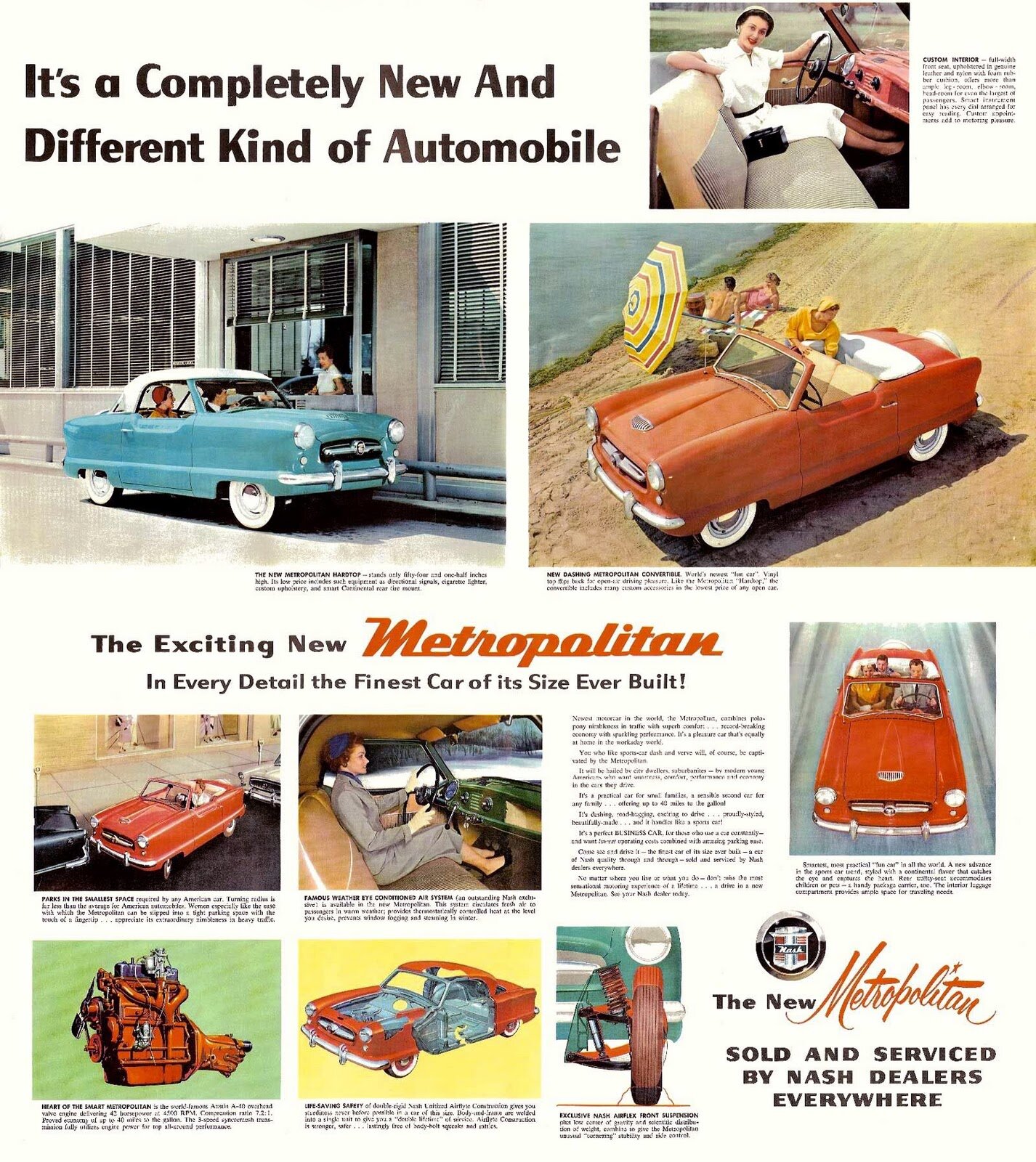
Notice that the Falcon below is being shown driven by the Mom, ostensibly as the family’s first-ever second car. Look at this thing: could you get more conventional and sleep-inducing?

Still, just because the standard Falcon was rather uninspiring didn’t mean that they couldn’t make it into something more fun. Chevy added a turbocharger to their Corvair to make a performance version of their entry-level car, but Ford took a more basic and arguably more effective approach.
The Answer Is Always V8
Midway through the 1963 model year, Ford introduced the Falcon Sprint as either a two-door hardtop coupe or convertible to counter the likes of Chevy’s hottest Corvair and the performance versions of the very last Studebaker Larks. With a 260 cubic inch V8 under the hood making 164 horsepower, the Sprint lived up to its name.

The “Sprint” package also added sporting goodies like a line-of-sight tachometer, bucket seats, and a “rallye type” steering wheel. A four-speed manual was optional but “would be the choice of most expert drivers,” according to the advertising.

All this “Sprint” and “like a sports car” talk was just advertising jargon for this early, heated-up econobox, right? Surprisingly, no. Ford took this thing racing, and it delivered.
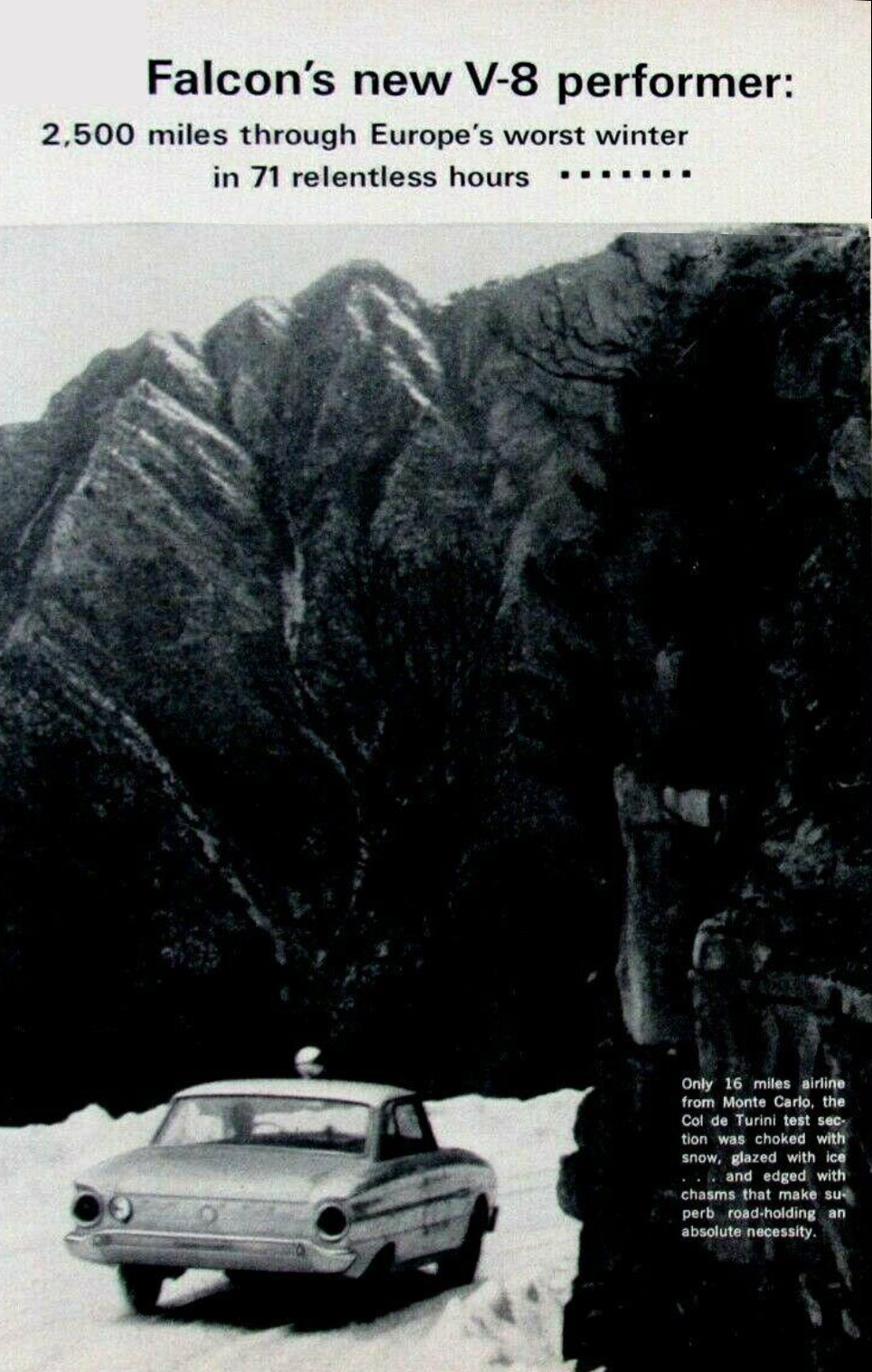
Yes, Ford entered the Falcon Sprint in the Monte Carlo Rally, and it didn’t fall to bits. Far from it.
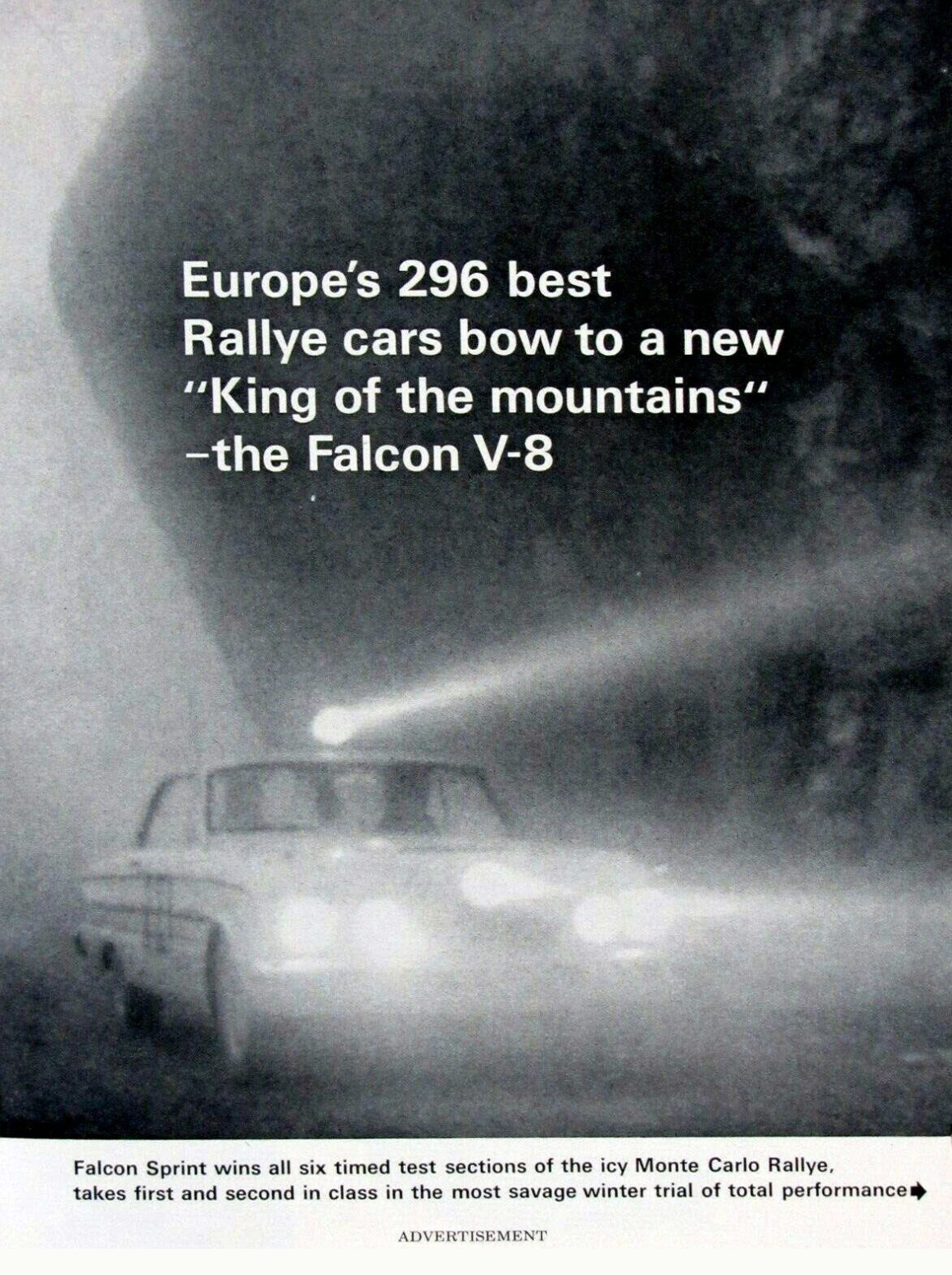
According to the advertisement, the Falcon was one of only a third of the 296 entries to survive that race. It finished first in class, first in every one of the six special sections, and first over every other sedan in a three-lap elimination.
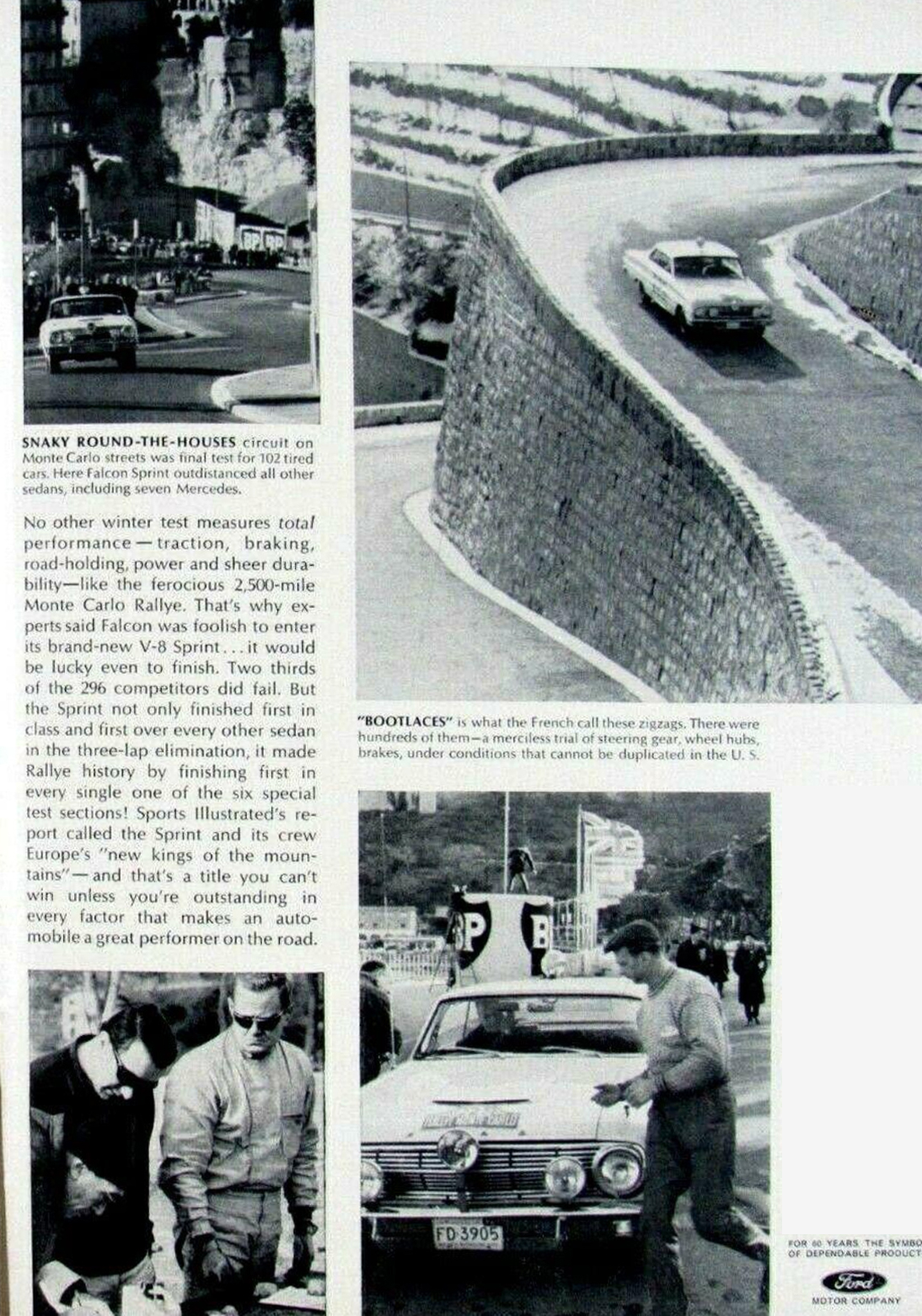
These “elimination” competitions are like watching “Herbie Goes To Monte Carlo”, but they’re pretty punishing and amusing. This was after the 2500-mile rally was completed! They really beat the crap out of this little Falcon, and it just came back for more.
For the abbreviated 1963 1/2 model year, Ford was able to sell 10,479 of the race-proven hardtop Falcon Sprint and 4,602 convertibles. The second-generation Falcon premiered for the 1964 model year and saw a new body design that scrapped the curved, sort of dowdy look of the 1960-63 car for a more angular and aggressive style. This mini-Galaxie appearance even makes the car seem far larger than the first-generation, but in fact, it’s only half an inch longer.

Beaten By Horseplay
In April of 1964, showgoers at the World’s Fair in New York were stunned by a new kind of car on display at the Ford booth. With a long hood, short tail, and aggressive face, this so-called “Mustang” took the event and the American public by storm. Here was an affordable car with the looks of something far more sporting than its price would suggest.

What sort of magic existed under this new Mustang’s well-received sheet metal? It was none other than Ford Falcon bits, with an available V8; it was essentially a Falcon Sprint in a fresh new set of clothes. This meant that this new Mustang was going to be a rather reliable, easy-to-maintain, and deceptively quick piece of kit.
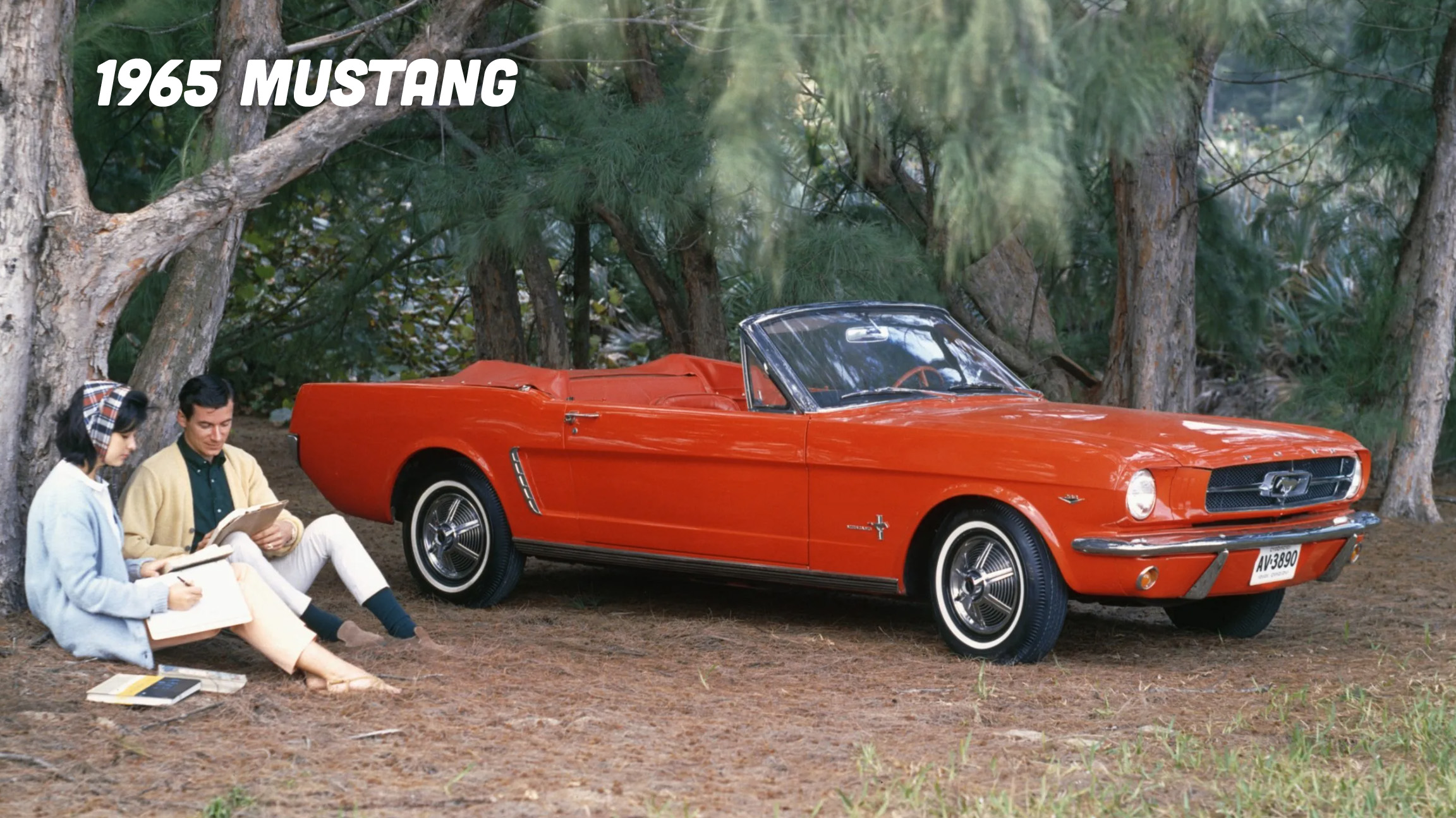
This also meant that the poor Falcon Sprint was now going to look like yesterday’s news overnight. Ford kept the Falcon Sprint alive for the 1965 model year, now with the 289 V8, but the sales numbers fell off a cliff. Only 2,806 hardtops and 300 convertible Sprints were sold against the 559,451 Mustangs that shared the Falcon’s underpinnings.
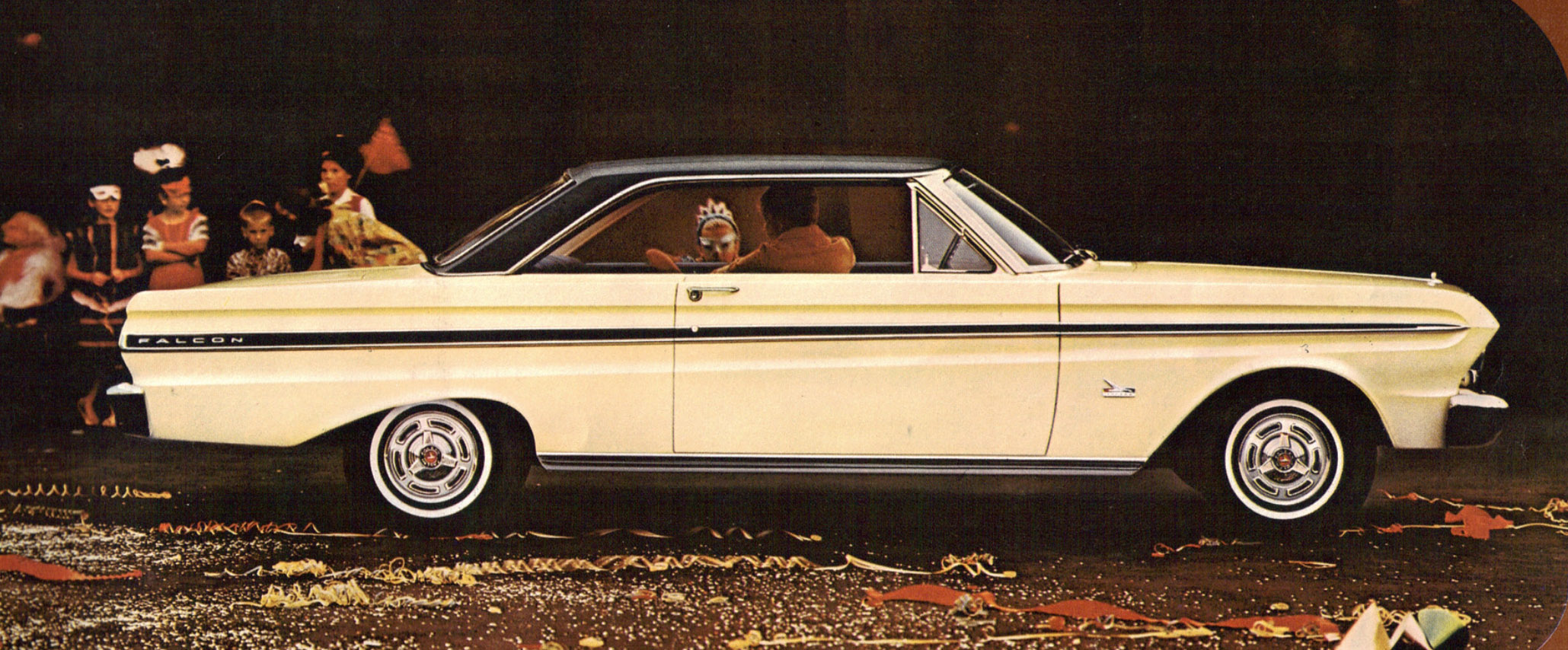
With such meager sales, the Sprint was dropped. It wasn’t the only one to suffer; the entire Falcon line actually struggled from the attack of Lee Iacocca’s “pony” car and never really recovered.
Prices Are Starting To Sprint
The rarity of the Falcon Sprint and its legitimate Pony Car-sized featherweight-class muscle machine credentials actually haven’t gone unnoticed by enthusiasts. It might have been a tough sell against the Mustang in its period, but today their prices are on par if not higher than similar-year and same body styles of Mustangs. Hardtop Sprints in good shape average around $25,000, but less-than-perfect drivers can be found for mid-teens. The even more rare convertibles will sell for anywhere from high thirties to over $80,000, significantly more than many drop top ‘Stangs, but still a reasonable price for something so thin on the ground.
What’s funny is that some modified examples will sell for more than the original ones if the work is done right. This rally car replica that sold last September for $78,000 is a fun example of that.

The price isn’t a bad deal when you consider the work that was done to transform it into a restomod that’s far more capable than the ones that ran the Monte Carlo Rally decades ago.

According to Bring A Trailer:
It started as a California black plate car and was fitted with a 331ci V8 equipped with Edelbrock aluminum cylinder heads, Mahle forged pistons, and an Eagle crankshaft and connecting rods. A Tremec TKO five-speed manual transmission, four-wheel disc brakes with Lincoln front calipers, red leather Cobra bucket seats, a dash-mounted Smiths tachometer, a MotoLita steering wheel, an exhaust system with cut-outs, and an upgraded clutch, flywheel, drive shaft, rear end, and suspension were also installed.

Obviously, you could get your own for a lot less and build it up any way you’d like. If you like Mustangs but think it’s a bit too Camry-ubiquitous, the Sprint is a rare, left-field classic choice.
Mustangs Run, But Falcons Fly
After 1965, Ford seemed content to let the Falcon go back to being a dull-as-Hell rival to other glamorous-as-turnips competitors like the Plymouth Valiant. The performance crown for more practical coupes than the Mustang fell onto the somewhat larger Torino chassis. If you wanted something like the Mustang but just a hair larger with a more family-friendly back seat and trunk, you were out of luck. The Falcon was left to slowly die out before being replaced by the Maverick in the early seventies.
This is a shame, and it makes you respect the Monte Carlo Rally-winning little Falcon even more. Sure, the Mustang might have gone on to be one of the most successful sport coupes of all time, but it’s important to remember that its legacy stands on the shoulders of a forgotten compact coupe that never really had a chance to get the recognition it deserved.
Top graphic image: RK Classics




About a decade ago, the Das Awkscht Fescht aka The August Fescht had the Falcon as its feature make.
One of the cars at the show had Pa tags that read U R Prey. My wife and had a pretty good laugh about it.
I think the V8 Falcon is a pretty good Q car.
Immediately made me think of this work by Aaron Kaufman (GMG), he was legit & ahead of his time! https://www.youtube.com/watch?v=GjLFLxdywVk
I’ve always eyed the Falcon/Comet as an attainable Mustang alternative. I was a Mustang fanatic as a child, but once I got old enough to own one I was self aware enough of what other Mustang owners were like and decided to buy a Dakota instead (This was well before the Cars And Coffee era) around 2005 I realized the genetic lineage of the Mustang and have been eyeing one as an affordable alternative. That resto mod cited in the article is about exactly what I’d want, probably without the extra lighting though. Fortunately my Civics are faster and safer than a 60s Falcon, so I probably won’t ever chase this dream down int he real world.
Great article! In the early 80s, I had a neighbor with a Falcon convertible from that era. If I had known all this back then, I would have asked him a lot of questions. I am pretty sure it wasn’t a V8. But it was a good-looking car and he took very good care of it.
I looked all over trying to buy a Falcon Futura convertible in 1981, and they were expensive and hard to find then. All of the bits that fit on first-gen mustangs fit on Falcons. That’s how I ended up building a Malibu convertible out of the junkyard.
An art school friend had a 2 door wagon with a 351 in it and some sort of hand controls because he had lost the use his legs motorcycle racing. Unfortunatly a few years later the driver’s door wasn’t quite right and he fell out of the car trying to slam it shut on the 405, ran over himself and died.
Other than the killing him part, it was a neat car.
That’s pretty grim.
Culturally in South America, the Falcon was always the car of the secret police — right up to at lest the mid 1980s in places like Chile and Argentina.
Usually with dull grey bodywork.
I knew an exile in Paris who used to freak out if he saw something similar.
Much more joyously the murder and mayhem of Mad Max was underpinned by a Ford Falcon, albeit one with a supercharger so big it blocked the view from the windscreen…
I love these and would love to build one like that rally style one! A note on pigeons, they are also quite underrated. In vertical take off they can go 0-60 in 2 seconds, and are faster than falcons in level flight, so if a falcon misses its stoop it’s gotta climb all the way back up and try again to have a shot at a catch.
Pigions are awesome. I rescued one that got tangled up in some netting, and it was in pretty bad shape. It sat in my lap for about 20 minutes, with its mate looking on from a few feet away, then they flew off. I don’t think it survived very long, but for the next 3 years, its mate would always be hanging around. It was kind of sad.
They can survive losing feet and all kinds of crazy stuff, so it might have made it a little while. Tough little birds.
The (especially ’60-’64) Falcon is one of my car soft spots. I had a friend with a V8 powered one in high school and it left an impression.
It’s funny that Australia figured out to simply market and design the Falcon as the sedan version of the Mustang but that idea never even tried to happen here in the states and the Falcon was dead in the US by 1970.
How did US Ford not see the Mustang success and not go “ah the Aussies made the Falcon a 4 door Mustang and it’s selling well! Let’s do that!”?
It got replaced by the Maverick in 1970.
Unfortunately the Maverick Grabber was only available as a two door. The,four door Maverick does resemble the Australian Falcon. You could make a case that a Maverick Grabber was a continuation of the early Mustang fastback
Sadly no Maverick wagons except for the 200 Brazilian Ford dealer Souza Ramos converted in 1978 and 1979 -but just look at it, it’s beautiful.
https://www.instagram.com/reel/DCt98PCOfE3/
I was 10 years old when I went to the New York world’s fair with my family, and I vividly remember seeing the new Mustang there! Then my aunt got into collecting those ’64 1/2 models later.
I went as a 10 year old too!
The world has been something of a disappointment in some ways, I’m telling you.
Did you take the ride?
https://www.youtube.com/watch?v=XsdthnMf78s
Let’s not forget the Comet and Fairlane’s roles in all of this. The Comet was the “Senior Compact” version intended for Edsel that proved a market for something a little larger which begat the Fairlane and the Intermediate segment. Since it was even larger and heavier Ford developed the “Fairlane V-8” as an optional powertrain. That was what made the Sprint possible the engine and brakes from the bigger Fairlane. When the Mustang came along it too benefited from the Fairlane branch of the tree.
Meanwhile the “Intermediate” segment the Fairlane had created had heated up by the mid 60’s and it too took several bites of the Falcon’s lunch before the Mustang galloped in and ate the rest.
Where is my friend @-67Mustang? Hate to say I told you….
And then it got reinvented as an Australian legend. So it wasn’t all bad.
My parents came close to buying a 1967 Falcon Sprint. I was sorry they passed it up.
Great story!
It’s just obscene to describe a Corvair as a “subcompact”. A first-generation Corvair was over 4.5 metres long. That’s a fucking barge, especially at the time. A 1959 Mercedes-Benz 120, an aspiring luxury car, but admittedly the outgoing model at the time, was shorter than that. A Mini was just a tad over 3 metres, like two thirds of the length of a Corvair. A Peugeot 403 was about the same size, but that was considered a rather large, luxurious car. A Beetle was just a hair over four metres and considered rather long because of its packaging.
I had a 403 for a while, nice car, sure. Large and luxurious? Those words never crossed my mind. Also had a 1960 Falcon for a little while. 144 cu in. Slowest car ever. My diesel 504 wagon with an automatic was faster. I was once driving the falcon up a hill and it just kind of got slower and slower, until all forward motion stopped. Motor still going, car slowly creeping backwards down the hill (it was still in drive). Sold it for $200. My friend then bought it a couple of years later and actually restored it. He said it could make it up the hill after that.
I can’t tell if you’re more humorously commenting on the absurdity of such a physically large vehicle being considered to be a subcompact or questioning the use of the term, so my neurodivergent ass will assume the latter and point out that the classification is by interior volume and those cars were terribly inefficient in terms of interior space for their footprint. However, when the Corvair was new, that wasn’t really a term, so I’m not sure if this is a later categorization based on present standards or counting back from the earliest cars classified as SCs. For example, the Nova would have been considered a subcompact when the term was first popularly used, therefore I suppose someone could follow that trail back to the Corvair it had replaced and classify it as the same.
The Corvair and later Chevy II/Nova were marketed as Compact cars as was the Falcon.
For the earlier models, they would have been post-defined as the terms weren’t really used then and the agencies who established the classifications didn’t exist, but if those successors were compacts, then it makes sense that their predecessors would qualify for the same. In that case, SC is just wrong. Ultimately, comparing interior volumes to the standard would give the correct answer, but I really don’t care enough to put in the effort to find it. It does make sense more as a compact, though, as WTH would a Nash Metropolitan have been, then?
It is actually the former.
The Corvair was not considered a Sub-Compact. It the Falcon and Valiant created the Compact segment. Ford and GM didn’t have an entry into the Sub-Compact segment until the Pinto and Vega.
Ford did offer a follow-up to the Sprint. The third-gen Falcon had a Future Sports Coupe model that was available with a 289 and 4-speed Hurst shifter. It was on a shortened Fairlane chassis, so it was a few inches wider and longer than the previous Falcon, but would definitely be viewed as a lightweight compact back in the day.
Ford probably felt they had to compete directly with Chevy’s Nova, but they ultimately never matched the early success of the Falcon. The Nova became a huge best-seller in the 1970s, overshadowing the Falcon’s successor, the Maverick.
Thanks for the Falcon reference.
For 2-3 years, I drove a 1966 Mustang. The Falcon Futura Sports Coupe has such a similar side profile!
1965 Falcon’s proportions (hood, door) so close to the Mustang’s:
https://www.autabuy.com/classifieds/104481616-1965-ford-falcon-futura
1968 Falcon’s profile so much like the Mustang’s:
https://www.classic.com/veh/1968-ford-falcon-futura-sport-coupe-8k22t148039-nw7OQ2n/
https://www.ebay.com/itm/374188010840
Excellent article on the 60-65 falcon, a car truly forgotten by most as the genetic bones of the 1st generation mustang.
A couple of quibbles concerning your timeline of events
‘forced others to huddle together as American Motors.’
AMC was formed in 1954, with the Nash Rambler as the original successful compact on the market in the mid-late 50’s that along with vw spurred the creation of the falcon by ford.
‘Now slow selling’??? Yes GM did create the Chevy II due to the Corvair not matching the falcon’s sales, but over 200,000 sales yearly through 1965 and over 100,000 in 1966 before sales fell off a cliff for 67,68, and 69 is not a failure.
Finally, the impression was given that Nader’s book caused slowing sales of the early 60’s Corvair, but it wasn’t published until 1965, when it did have some impact on the 66-69 sales.
Again great article on the falcon and the rally car and Sprint models.
You beat me to it. The Nader book had no bearing on Chevy’s decision to pivot to a conventional compact. It was not only the success of the Falcon that prompted the Nova, it was likely also the success of the Rambler American.
And, yes, AMC was cobbled together way before the Big Three got really serious about compacts. Prior to the 1958 recession, AMC was actually suffering because of its compact product line, and was fortunate to be in the position to offer cheap, conventional wheels when demand surged. The advantage was short-lived, but it was enough to give AMC some breathing to finally launch a full product line.
Yes, the combination of the 1958 recession and AMC having the Rambler American available briefly vaulted AMC into 3rd place in market share behind Ford and Chevrolet, allowing some breathing room to develop modern compacts and midsize cars for the early 60’s
It’s truly amazing that the Rambler American used the original 1950 chassis with reskinned exterior up until 1963.
Reminiscence time. My first car was a 1963 Falcon Tudor done up in a beautiful two-tone primer grey. I airbrushed (read: rattle can w/ stencil) graphics on the hood that read “La Bomba” with the “O” replaced with a bomb. I bought that car for $300 and it had a seized engine and a “welded” rear diff. We got the (inline 6, 144ci) engine busted free and in the process busted the rear diff, too. Opening up the pumpkin revealed that the “weld” was actually… JB weld.
I dumped a few hundred dollars into that car, including replacing the rear axle, new carburetor, and general work to get it drivable again. I drove it for a couple of years in high school, including a couple of road trips to visit colleges. It was surprisingly reliable, and it was fun as hell to load up with 5 teenage guys and pin it. I even took it drag racing one night during classic car night at the strip.
Sold the car when I went to college for $300. By then, I had also crashed it in the snow and bent up the driver’s side rear quarter panel. It left with a trunk full of bits and bobs, a good running engine and solid transmision. I look online for Falcons once in awhile and see that examples in similar condition are at or near five figures now.
I’m often not a fan of resto-mods, but that one looks to be done right.
I hate the big wheel/rubber band tire look on a classic.
That blue Falcon droptop w/ the bright red interior is giving me all kinds of feelings….
Since the Falcon Sprint was ~90 lbs. lighter than the equivalent ‘Stang, I suspect its performance was every bit as good, if not a tick better. And, of course, what fit the Mustang as performance/handling upgrades fit the Sprint as well. For those reasons, as well as rarity, I’d prefer the Falcon.
Also because I remember, as a wee lad, seeing one in action at several California Sports Car Club races we attended. Looked like a NASCAR ‘stock” car, and sounded like one, too. I don’t remember how well it did, but it sure sounded wonderful.
I think I actually prefer most of those V8 Falcons over the early Mustangs.
I’m one of those people who would also like a Falcon like the one in the first photo or even the picnic convertible even if they came with a straight-six and a three-on-the-tree.
Thanks for the informative article!
Beyond the mechanical connections (even to the extreme of if you pry off the steering wheel hub pony emblem on the original Mustangs, you’ll find a Falcon one underneath), there was a racing one too – the UK’s Alan Mann Racing campaigned both the Falcons at Monte Carlo and then, for their first race ever as a model, Mustangs at the Tour de France.
Not sure if Alan Mann campaigned any Falcons or Mustangs in rallies and road races, but the most famous Falcons and Mustangs in rallies and road races were entered by Ford France.
They eventually switched to Escorts and then stopped outright.
I have a ’65 Falcon that is a very “rare” and odd beast.
Base, base, base model white four door with blue interior. No side mirrors, no windshield washer, no real optional anything.
EXCEPT for the 289 and C4 automatic. Bought new by an Oklahoma school teacher in December of ’64. It’s quick, and I dream that she was some kind of Little Ol’ Lady from Pasadena dragging chumps on Friday nights with this thing. Most Mustang upgrades fit right on it without modification. It’s fun and didn’t cost what the Sprints do, but will still run with them.
Before your car — or the Sprint — ever existed, Henry Ford II commissioned the legendary Bill Stroppe to stuff a 406 c.i. V8 with automatic transmission in a poor, unsuspecting four-door Falcon. As you can imagine, it was about as tight a fit as it could be.
Many years later, I had a talk about it with Bill. Sadly, he didn’t know what became of it, but recalled it went through rear tires like crazy.
My across the street neighbor lady growing up, Mrs. Dede Doughty, had an early Falcon 2dr with the V8 and auto for at least a couple decades. Pretty sure she had it at least from my being in middle school until she died shortly after I graduated from college, though I don’t think she bought it new. Her daily driver all that time – kind of amazing for a ’60s car in Maine. Can’t see her ever racing for pinks though. No idea how spec’d it was, never had a ride in it, but you can’t miss that burble. It looked very plain-jane, black with IIRC a blue vinyl interior.
Of course, thinking about it now, it was likely only ~10 years old when she got it, and she retired when I was in Jr. High not too many years after. I’m getting old…
Proof positive that sex sells. The Falcon was roughly as sexy as your grandmother in a bra and panties, and the Mustang was only marginally less practical in an era when people really didn’t give the first shit how comfortable thier kids were in the back seat. They were lucky to be getting a ride in the first place.
“The Falcon was roughly as sexy as…”
You just had to go there – Ew.
🙂
What’s wrong with a gilf?
Yeah there are Grandmas in their thirties nowadays
That’s the really old-fashioned way.
True. But I prefer my gilfs in their 60s.
I am never one to kink-shame. I just judge on the inside.
Bless your heart.
Just remember before they were wearing granny panties they were sexy enough to give Grandpa a stiffy.
Times were harder then.