

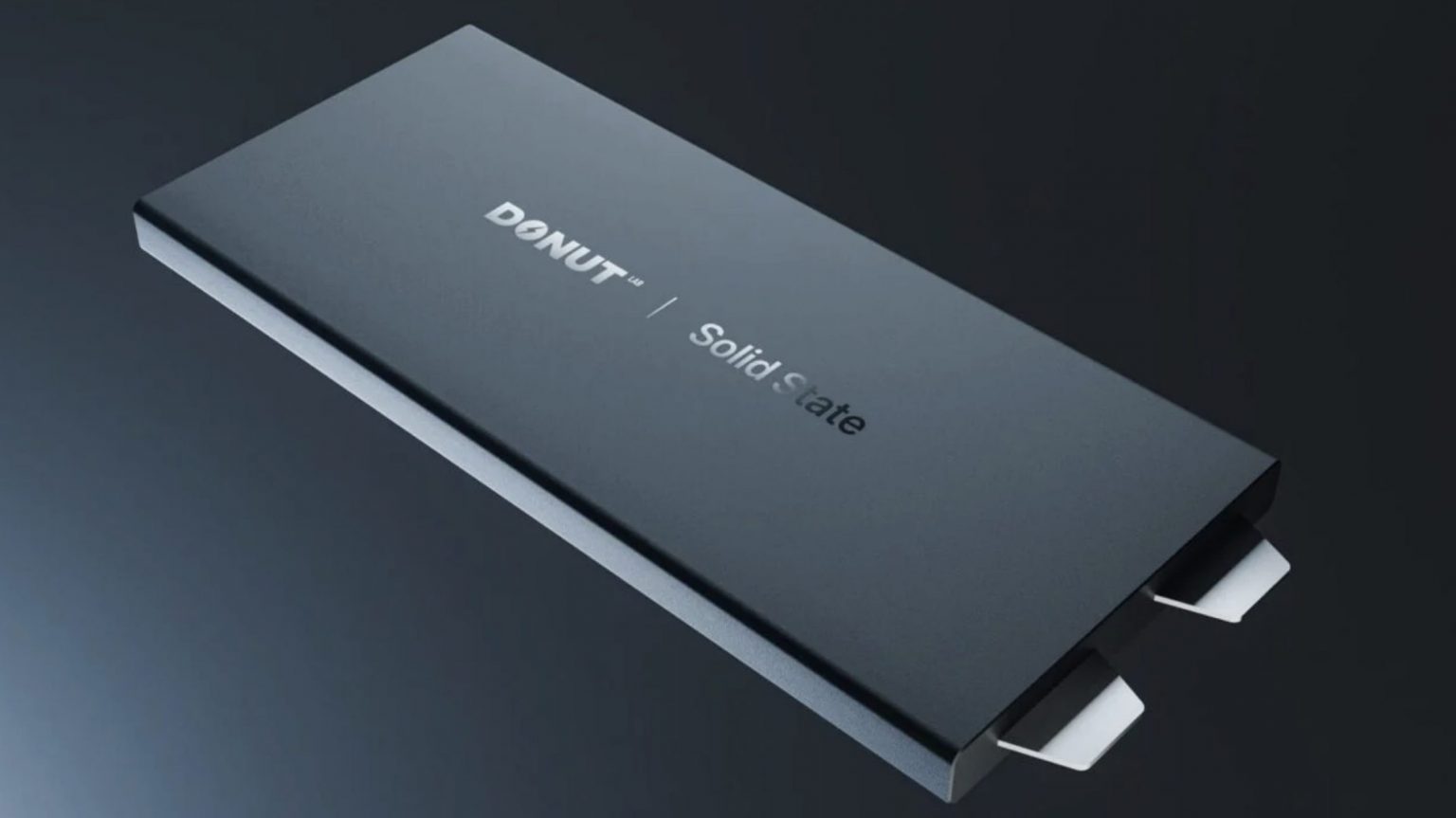
Back in January, Verge Motorcycles and Donut Lab made a bold announcement that the world’s first production vehicle with a solid-state battery would ship that quarter. The battery technology in the motorcycle, the Donut Battery, is stated to have a density of 400 Wh/kg, the ability to charge in five minutes, and survive more than 100,000 cycles with minimal degradation, all while being cheaper to make than a lithium battery – and out of 100 percent green materials, at that. Donut Lab has thus far failed to prove the biggest claims, and now the co-founder of a company partnered with Donut Lab is blowing the whistle, saying that the promises were exaggerated.
This story comes to us from Finnish newspaper Helsingin Sanomat, which has been investigating the claims of the Donut Battery since its announcement. Lauri Peltola, the co-founder and former Chief Commercial Officer at Nordic Nano, claims that the Donut Lab Donut Battery’s promises about energy density, charge cycles, and degradation have not been achieved. More, Peltola claims that Donut Lab’s claim about being able to mass-produce the battery is being misrepresented.


Peltola has filed a criminal report against Donut Lab, claiming misleading communication and empty promises. But what’s going on here? It comes down to how Donut Lab has handled the launch of this battery right from the start, and the fact that, despite numerous tests and several videos, none of the important claims have been proved yet.
A World-Beating Claim
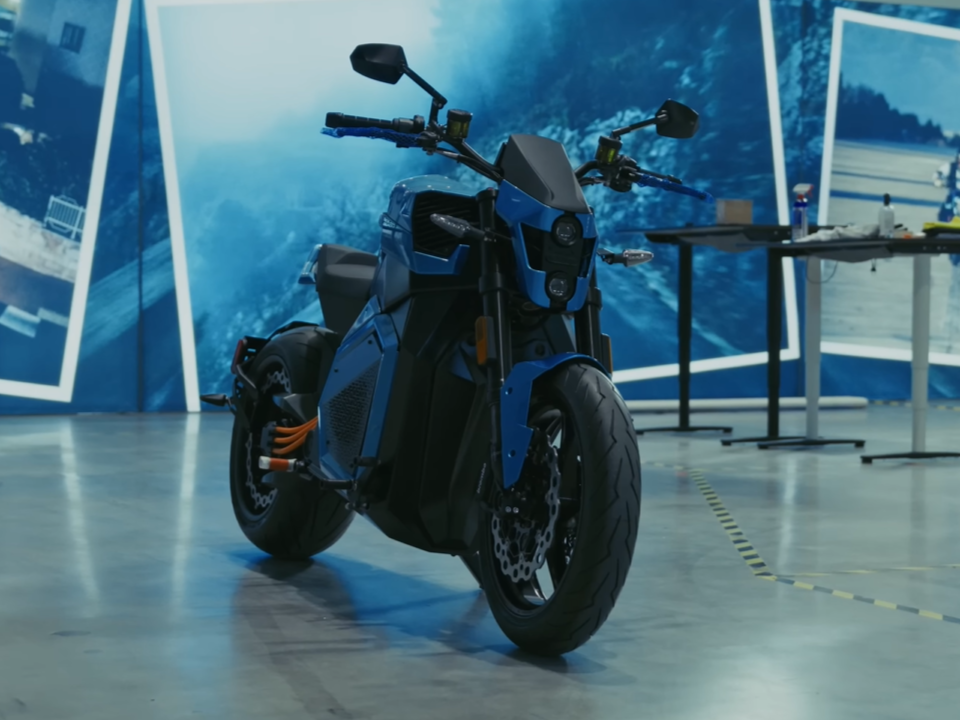
The Verge Motorcycles and Donut Lab announcement shook the world of technology and electric vehicles. Several companies, research organizations, and engineers have been developing solid-state batteries for decades. Svolt Energy, LG Chem, BASF, MIT, Oxford, Toyota, Brown University, the Massachusetts Institute of Technology, QuantumScape, Solid Power, ProLogium, Factorial Energy, CATL, BYD, Nissan, Blue Solutions, and Honda are all just a portion of the entities researching solid-state batteries.
The technology is real and does exist. There are even working prototype vehicles out there getting their power from solid-state batteries. Back in September 2025, Volkswagen, QuantumScape, PowerCo, and Ducati unveiled a functional prototype electric motorcycle that had a real solid-state battery inside of it. There are numerous companies that claim their solid-state batteries are right around the corner from production. So this isn’t a fantasy, nor is it unrealistic.
But there have been challenges in getting these batteries out of the laboratory. Autoblog recently reported on how Honda has been working on making its solid-state batteries stay in one piece. That same report notes how Toyota hasn’t yet figured out how to build solid-state batteries at scale. Then there’s the whole issue with the dendrite formation that kills batteries.
Yet, somehow, Donut Lab beat the entire world to the punch. Donut Lab has been around for only two years, and the company it was spun out of, Verge Motorcycles, has been around for only eight years. The whole world is wondering how this tiny upstart beat massive corporations, universities, and everyone else to create the holy grail of batteries. The very first production Verge TS with a solid-state battery has been built, crated, and shipped to some undisclosed location, too.
Verge Motorcycles was founded in Finland in 2018 by Tuomo Lehtimäki, Marko Lehtimäki, Ville Piippo, and Henri Vähäkainu. The motorcycle they began marketing was the invention of engineer Teemu Saukkio. Verge established a manufacturing center in Estonia, which has been producing Verge TS motorcycles for years. What made Verge stand out in the crowd was its “hubless” wheel motor that looks like a donut. Marko Lehtimäki, the brother of Tuomo, would then found Donut Lab in Estonia, which serves as more or less the technology company spinoff of Verge Motorcycles. Donut Lab makes the Donut Motor that powers the Verge TS.
Marko Lehtimäki has a history with tech ventures. In 2011, he founded AppGyver, a development tool to build apps through a graphical user interface rather than code. Marko’s name is also on Asilab, a company that claims to have made an AI that “thinks” and learns like a human brain. The company says it has “the world’s first true AI superintelligence,” but has yet to actually demonstrate it.
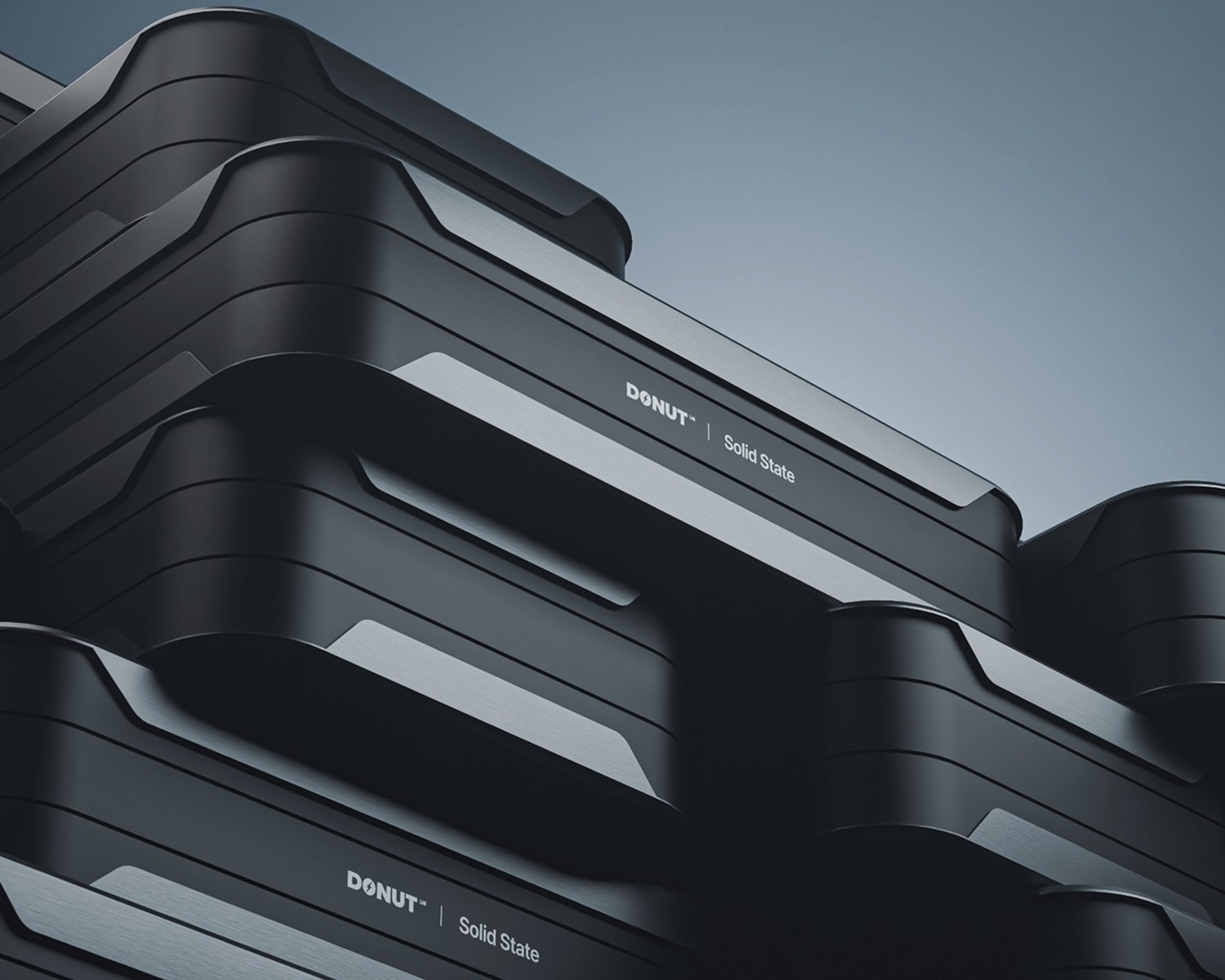
Marko and Donut Lab have made some incredible claims. Here’s what I wrote in January:
Lehtimäki claims his team has made a battery that can charge in only five minutes, will last more than 100,000 cycles with almost no degradation, is cheaper to make than lithium-ion batteries, delivers 400 Wh/kg, and is made out of 100 percent green materials. Simply put, Verge and Donut Lab claimed to have built the holy grail of batteries.
[…]
Donut Lab claims that this battery is better than any other in that it retains 99 percent capacity in minus 30 Celsius and also when it’s above 100 Celsius, unlike lithium chemistry. Donut Lab also says you can run the battery to zero or charge it to 100 percent as many times as you want without hurting it. As for lifespan, Donut Lab says it’ll last the entire life of the vehicle, making the threat of having to replace a worn battery a thing of the past. The company then talks about these cells not having thermal runaway problems, weighing less than lithium batteries, and, somehow, even costing less to make than lithium batteries.
As if all that wasn’t unbelievable enough, Donut Lab then claims, “In fact, we found ourselves designing a slower charging speed so riders can plug in and actually have time to drink a latte and enjoy it instead of downing an espresso and rushing back to their bike.” Weirdly, Verge also says that its version of the Donut Battery will last for 10,000 cycles rather than 100,000.
Donut Lab has been eager to post all of these claims in several videos, like this one:
There has been no shortage of people calling out Donut Lab. Words like “scam” and “hoax” have been thrown around rather often by experts and even executives of major corporations.
I Donut Believe
To prove the doubters wrong, Marko Lehtimäki and Donut Lab launched the “I Donut Believe” website and video series. In this series, Donut Lab submits sample battery cells to the state-run VTT Technical Research Centre of Finland for third-party verification. I have written about these tests several times, so I won’t rehash them much here. Read my previous coverage by clicking here, here, here, and here.
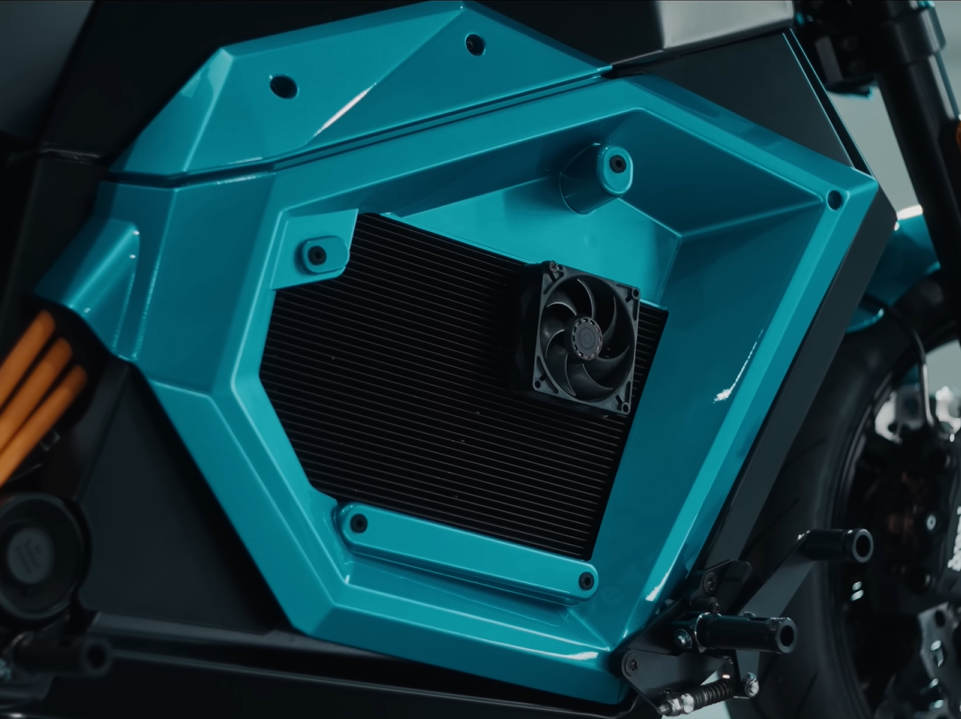
The short version of it is that VTT has confirmed that single Donut Lab cells can charge in roughly five minutes, don’t experience thermal runaway when damaged, can be cooled using giant heatsinks and fans, and self-discharge slowly. That’s it, none of the actual huge claims have been proven.

Donut Lab has since started to do its own tests, and the results don’t match the marketing. When Donut Lab started this journey, it said that the battery could charge in 5 minutes. Then, Spencer Cutlan of Verge Motorcycles said, quote:
“The world-famous 35-minute charge time is now under 10 minutes. Yes, under 10 minutes.”
Then he said, quote:
“In fact, we found ourselves designing a slower charging speed so riders can plug in and actually have time to drink a latte and enjoy it instead of downing an espresso and rushing back to their bike.”
Note that he did not specify a percentage. But we can guess what he meant. A 35-minute charge time usually refers to going from 10 percent to 80 percent. How does the battery hold up?
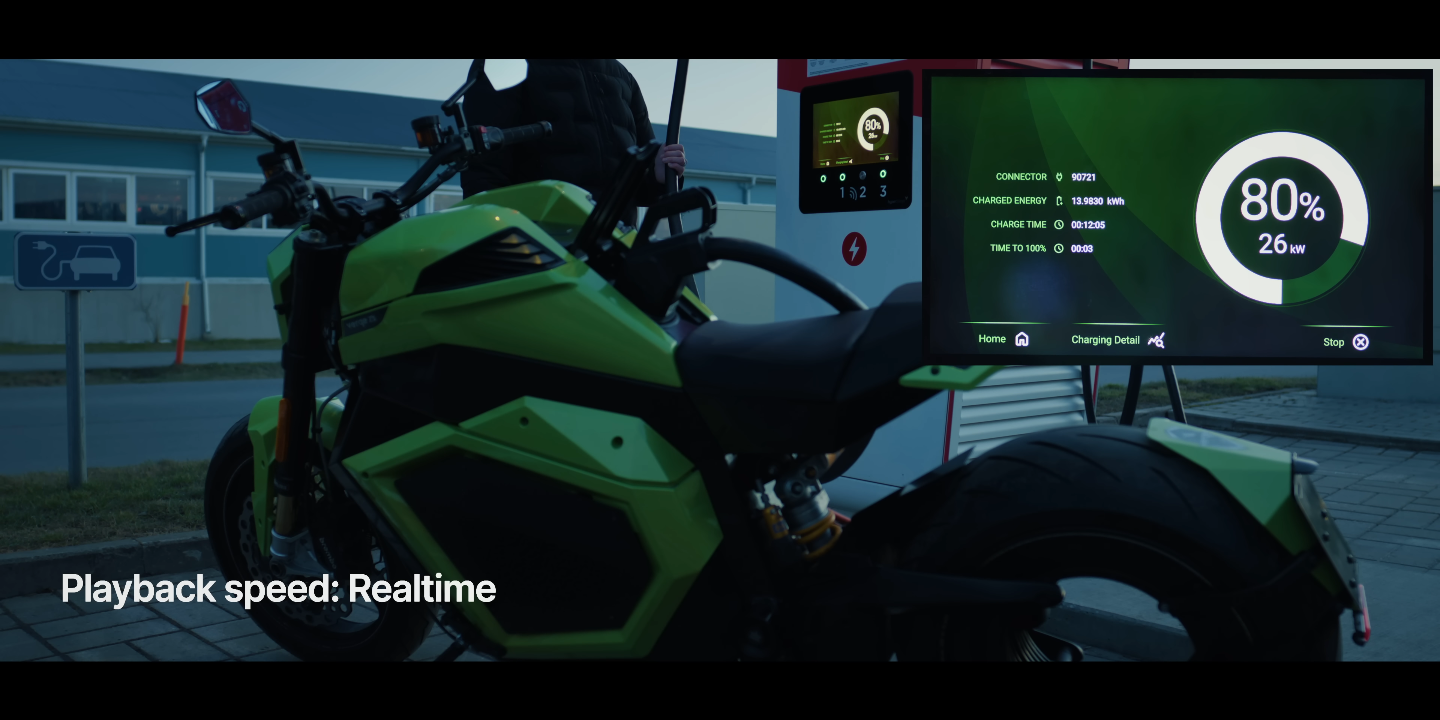
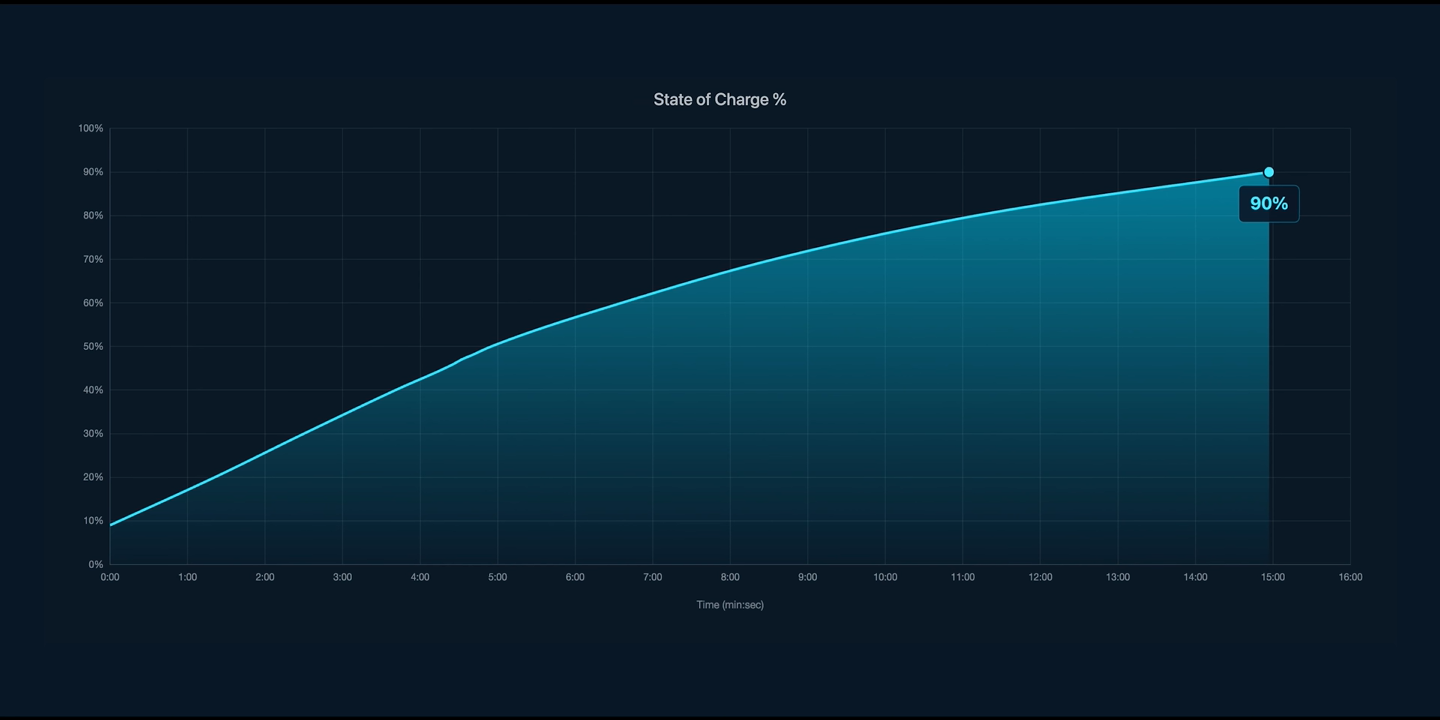
In the Donut Lab test, the standard-range solid-state battery charged from 10 percent to 70 percent in nine minutes, seven seconds. It then hit 80 percent in 12 minutes, three seconds. Donut Lab says that to get to 90 percent would require 15 minutes. So, the “under 10-minute” claim holds up only so long as you don’t expect the battery to get higher than 70 or so percent.
This has never made sense to me. The Donut Lab guys claim the battery can charge twice as fast. Why not have it charge as fast as you claim it can and thus make the 10-minute charge claim true? The explanation that they want you to get a coffee is just silly. If I want to get a coffee, I’ll park my bike and get one. I don’t need my charging throttled for a completely arbitrary reason.
Donut Lab then arbitrarily changed the “I Donut Believe” release schedule from once every week to once every two weeks. What has Donut Lab done with the extra time? On April 1, it published an interview with Marko with no new information, but did include the launch of a merch store where you can buy a hoodie for $142.
On Wednesday, Donut Lab published another video (embedded below) that contained no new information. Now, we’re just wasting time, it seems.
A Finnish Newspaper Investigates
Let’s return to the start. Today, Helsingin Sanomat published a story detailing the reported whistleblowing by Lauri Peltola, the now former Chief Commercial Officer at Finnish battery startup Nordic Nano.
There has been a longstanding rumor that Donut Lab is rebadging a Nordic Nano supercapacitor as a battery. Donut Lab denies this rumor. Donut Lab hasn’t been exactly clear on Nordic Nano’s involvement in the Donut Battery. However, Helsingin Sanomat‘s investigation has reportedly found that the Donut Lab batteries were to be manufactured by Nordic Nano in Imatra, Finland. Nordic Nano was founded in 2024 and Donut Lab owns shares in Nordic Nano.
In Helsingin Sanomat‘s report, Peltola challenges Donut Lab’s claims, roughly translated into English:
According to Lauri Peltola, it has become clear to him over the spring that the promised battery properties, such as energy density and charging cycles, have not been achieved. The readiness for mass production has also been misrepresented, he says. According to Peltola, the company does not have the promised capacity for mass production and large production volumes of batteries. He says that the production line is not scheduled to be completed until later this year and its production capacity is not as large as Lehtimäki claims. “I want to emphasize that these are really serious matters. Donut Lab’s operations do not fit with my own moral concept,” Peltola says.
According to him, the Donut Lab collaboration has begun to disrupt Nordic Nano Group’s other business operations. The company’s production facility can manufacture solar panels, for example. Peltola is one of the founding partners of Nordic Nano. He says that he filed a criminal report independently and at his own discretion. Donut Lab also owns shares in Nordic Nano.
Helsingin Sanomat says that Helsinki police have confirmed that a criminal report has been filed against a battery technology company this month. Meanwhile, Peltola says that he filed a report with the Financial Supervisory Authority and the Chancellor of Justice’s external reporting channel. This should trigger a whistleblower investigation against Donut Lab to see if what Peltola is alleging is true.
There’s more. According to Helsingin Sanomat, Peltola might be onto something:
HS Visio has previously reported that Donut Lab’s battery technology comes from a small German company called CT-Coating. Donut Lab has not publicly stated this. HS Visio has seen email correspondence between Donut Lab, CT-Coating and Nordic Nano Group from the end of March. The content of the correspondence supports Peltola’s claims that at least some of Donut Lab’s promises have been misleading or exaggerated.
The emails give the impression that Donut Lab’s battery technology relies entirely on CT-Coating. The division of labor is roughly that CT-Coating develops the technology, Nordic Nano is responsible for battery production, and Donut Lab acts as a productizer and commercializer of the technology. In the emails, Donut Lab asks CT-Coating for measurement results that would match the promises made to investors and customers regarding charging rates. Based on the emails, these were not provided. It seems that the cooperation between the companies is not entirely straightforward. A CT-Coating representative complains, among other things, that the messages of the Las Vegas battery announcement were not all agreed upon.
The correspondence shows that CT-Coating has stopped product development of the previous battery. Apparently, this is the battery that Donut Lab introduced in January and that has been tested in the VTT laboratory. All of CT-Coating’s product development is now focused on developing a new type of battery. In emails from the end of March, Donut Lab asked when it would be able to conduct the first tests. In a video published in early April, Donut Lab’s Marko Lehtimäki announced that the company is coming out with battery version 2.0, which is even better than the previous battery. CT-Coating’s new battery technology is therefore still in the development phase. Therefore, Donut Lab or Nordic Nano cannot yet order even all the equipment needed for production, and it takes time to receive them after ordering.

According to the report, batteries developed by CT-Coating in 2024 were tested and were found to have a density of 268-297 Wh/kg, a far cry from Donut Lab’s 400 Wh/kg claim. Further, notes, nobody has seen any patents from Donut Lab, which is a bit weird given the thousands of patents Toyota alone has for its research.
Helsingin Sanomat ended its story with a rather fantastic interview with Marko Lehtimäki, which reveals some interesting insights that we haven’t seen before. In the interview, Lehtimäki confirms that the 100,000-cycle claim hasn’t been tested, but extrapolated from “lower numbers.”
Here are the most interesting parts, roughly translated to English from Helsingin Sanomat:
It’s about the alleged energy density, cycles and manufacturing capacity, they have promised too much.
“What we are delivering to customers, that battery has an energy density of 400 Wh/kg.”Have you already delivered them to customers?
“There have been no 400 Wh/kg batteries delivered to customers.”When are you planning to do it?
“In the very near future.”What does that mean?
“This is getting to detail level. In the near future.”In January, you promised that the batteries would be available immediately.
“We may have cells with different specs that have been delivered to customers. The volume that we are delivering from a large production line corresponds to what we have announced.”[…]
According to our information, you have promised things too far in advance and your promises are not quite true.
“Now you have to remember that what we will deliver to the customer and what cell individual we have tested, for example at VTT, are not necessarily the same thing.”Isn’t there a slight contradiction in that you have different cells that you deliver to customers and different cells where you get the test results?
“I won’t comment in depth now. We will open up all the issues here.”You just said that you send different cells to VTT and different cells to customers, so wouldn’t that be worth it…
“I didn’t say that exactly. What I’m saying is that there are use cases where a certain cell may be suitable and another may not be suitable. We will have more information about this in the coming weeks, whether there are different cell generations. It is completely normal for manufacturers to have different cell sizes.” “We have tested the cells that are in Verge’s inventory. It is quite true that they are solid-state cells that are in use. They are the ones that have been tested at VTT. Then there are other cells that will be brought to customers.”Your launch method is exceptional. Do you want to open up and explain why you have chosen this method of release?
“There are intellectual property and patent issues and all sorts of things, so certain technologies may not necessarily be open and everything else of that nature.”So you want to sell the product before it’s ready?
“No, no, not at all. That’s not what it’s about.”[…]
When will we get information about energy density? That’s what everyone here is waiting for.
“We have a very clear idea in our own heads about what and when to announce. These are multidimensional things, this launching of revolutionary technologies. It’s true that the Verge has a solid-state battery in the box, and it’s true that 400Wh/kg solid-state batteries, which are manufactured on our production line, will be delivered to customers this year.”
This is not the whole interview. I highly recommend reading the Helsingin Sanomat story. Unfortunately, it is behind a paywall, and you’ll need to translate it. But I do have the important pieces up there.
Still Waiting
Nordic Nano and Donut Lab publish a joint statement claiming that Peltola “made claims concerning Donut Lab, despite not having the necessary knowledge of battery technology or the overall picture of the development work. The individual is not a shareholder of Nordic Nano Group, nor are they involved in the working group developing Donut Lab’s battery. Nordic Nano Group does not share these views of a single individual.”
Donut Lab denies having committed any crime and says that the tests at VTT will continue. Nordic Nano and Donut Lab then say they are investigating this matter with their legal advisors. Click here to read the full statement.
So, that’s where we are now with the Donut Battery. Somehow, the biggest claims remain unresolved, even though Verge Motorcycles has built at least one motorcycle; it hasn’t been delivered to a customer. Now, there’s this whole curveball.
If this new report is true, then Donut Lab is beginning to look a little bit closer to a sort of Fyre Festival or Theranos sort of deal. If the reports are wrong and the battery ends up exactly as advertised, Donut Lab is going to have the underdog story of the era, and maybe even a Nobel Prize. But I hope that Donut Lab really did beat the world. I really do. I’m neither a hater nor a believer. I’m just waiting. I will also continue to keep track of this situation as it unfolds.
Top graphic images: Donut Labs; stock.adobe.com





I’d assume Mercedes is spinning up her story about the latest (very bad) findings. Surprised it’s not out already honestly.
OUCH
Def waiting for the Mercedes take.
“Guys, we SLOWED the charging time so you have time to grab a latte!” yeahok.gif
These claims seem in-cruller-dible, especially how they glazed over so many details. I’ll beignet that they’re already scrambling to cover this one up.
Good post Merceedes
I Am a hater… of bullshit
And this (from Donut labs) sure smells like bullshit
It sounds like Donut labs is trying to repackage battery tech from CT and passing it off as their own and attempting to have the manufacturing handled by someone else, whos now filing for a criminal investigation…
So what exactly is Donut Labs proposed value add to this other than taking their own cut and instigating a tremendous amount of hype?
BC if your article is correct Donut had Not figured out how to scale CT Coatings battery either, which Would be a tremendous value add if they could/did/will do…
It’s the ol’ one-two punch of tech startups.
Act One: promise something so revolutionary, it’s impossible, but get the hype train rolling before the truth has a chance to puts its boots on and start raising funds.
Act Two: Money go poof and Chapter 11 saves the day.
“Beginning”? They began to look like a scam when they made a bunch of outrageously unlikely claims. Every video they produce as “evidence” makes them look more like a scam, as every single one fails to prove any of their claims (despite the fact that they say otherwise, which is gaslighting at its finest).
At this point there is approximately a 100% chance they’re Theranos 2.0. Actually, Theranos might have been more legitimate looking than this because at least they faked some tests to “prove” their vaporware worked. Donut isn’t even bothering to fake the tests, they’re showing us the failed results of their tests and calling them a success.
Their series of LinkedIn posts are as you describe them.
-> Post “evidence”
-> Commenters say the content didn’t prove any of the claims
-> Executives chime in the comments saying “No, we did.”
-> No further interaction
And it goes on and on ever since the first drip-fed content.
The AI of batteries.
“If this new report is true, then Donut Lab is beginning to look a little bit closer to a sort of Fyre Festival or Theranos sort of deal.”
In the same vein, as I was reading, it made me think of the Raëlian* sect when they claimed the first successful human clone circa 2002….
*In short, this sect believes “Elohim” aliens are our creators and saviours. They also force women to nudity and polyamory, with the greatest honours if Raël (Claude Vorilhon), the Guru himself, so desires. Fun fact, he is a failed crooner, turned motorsports journalist, turned guru. I even once stood a couple meters from him when he tried ice racing a mid-engine rwd VENTURI 400GT against purpose-built tubular chassis, 4-wheel-steering ice-race cars (like the Opel Tigra in Gran Turismo 2)
Elohim backwards is Mihole, which is where all of that BS can go.
Thanks for taking the time and effort to compile and give us this update/overview Mercedes. There’s so much stuff about Donut on Youtube that I don’t bother clicking the random videos anymore, even the shorts, figuring that I’ll hear about it if by some chance it all turns out to be true.
Enough of this already, just make with the monorail.
So, even if the energy density isn’t what they claim, even if the charging rate isn’t what they claim, isn’t this still an advancement in battery technology? If they can ever mass-produce it?
They could install the battery in a Nikola truck ????
Fake it til you make it. Or a whistleblower comes along
extraordinary claims require extraordinary evidence.
I really wanted them to be Farnsworth. But it sure as fuck is looking like a house of cards. Even if they do turn out to have a real thing, oof that interview of contradictions and vague statements and doubling back strongly indicate that guy is a sham.
House of cards? More like a house of donuts 🙂
My original position was “it has to be true b/c it would be insane for a company to promise the moon only 3 months from now.” Plenty of companies lie, but they usually give themselves some runway by saying the early prototypes are promising and they expect production to ramp up in the next 36-48 months (or whatever).
If this is all a bunch of BS, I’m eager to watch the Netflix documentary to learn what the execs expected was gonna happen.
“Hey, the richest guy on the planet over promises and under delivers all the time, what if we applied that to motorcycles?”
“His only mistake was promising the results were two years away. Time to reinvent the game.”
Then we have the regular promises of something happening in Two Weeks™
EM has been promising autonomous driving for literally 10 years now
Yep. But I’m referring to Elmo’s orange pal who promises everything in two weeks.
Funny story. A wealthy friend of mine, who is not a car guy, bought a Model S Plaid. He was excited when he told me that it was “FULLY SELF DRIVING”. I had to burst his bubble.
Gotcha. Orange one is a life long con man, even had someone else take the SATs so he could get in to Penn State undergrad…
Bigger question is how and what does it say about us as a country that this individual was voted in twice, especially when there are oodles of better and more qualified people that could have been chosen instead.
To bring it back to cars. Imagine the positive vehicle and infrastructure improvements that could be made!
<Home Alone aftershave shock gif>
Yup, that’s what it sounded like. Even if the people involved had respectable pasts, it means nothing. If anything, it’s just a scammer playing the long game.
I still feel like this company is being taken entirely too seriously even here. Is it hedging in case they somehow genuinely turn out to be brilliant underdogs with a battery breakthrough? FOMO, not wanting to be the WW1-era general who said airplanes would never have a meaningful role in warfare?
It’s like the “space datacenters” thing. People report on it like it’s a real discussion and not a weird scam that contradicts all known laws of physics, technology, and reality.
If we all treat Donut’s battery as an obvious scam, and it turns out to be real, that doesn’t make us retroactively foolish. We’re acting on the information that is available to us, which overwhelmingly indicates a scam.
It’s our publication’s policy to avoid hard conclusions like “scam” unless there is rock-hard, undeniable evidence backing up that conclusion. Why? Well, if somehow a company were to pull a rabbit out of their hat, and it turns out their product isn’t a scam, that can become a whole headache for a publication. I’m not talking about reputation, either, but legal drama. One competitor of ours has gotten in so much hot water over the years that they’ve paid out more than my salary in settlements to different companies.
That’s why most publications let other people call questionable ventures a scam. It’s not a writer calling them a scam, but the chairman of Svolt Energy, this Nordic Nano guy, and so on.
Ohhh. Right. I forgot about the liability side of things. It makes sense that the main thing to do is to present other people’s claims, viewpoints, etc. for readers to conclude upon, rather than making a complete judgment as a publication. I get it now.
I’d add there’s also an ethical component: you have a pretty big megaphone and claiming fraud would have real consequences for the company in question (and its employees). So yeah, you better be damn sure.
So much that, too. Plus, y’all know me, I have to *try* to be mean, even to something I don’t believe in. I don’t like being negative!
“and so on.”
*Cue the Autopian comentariat*
For some more context.
As far as I have been able to see, Marko Manninen
https://www.youtube.com/@MarkoTManninen/videos
has assembled the best information available (before, but compatible with, the Finnish newspaper Helsingin Sanomat article).
He also tried to analyse how it can all fit together.
It is not perfect and he he admits it, but it is the best approximation I found.
Mainly exposed in his last 3 vidéos :
https://www.youtube.com/watch?v=pOsIzRrghJM
Donut Lab Solid-State Battery — The Ledger | Following the Money, the Paste, and the IP (Ep.13)
https://www.youtube.com/watch?v=xz1IPu8pmBQ
Donut Lab Solid-State Battery — The Physics | Three Mechanisms Hiding in One Patent (Ep.14)
https://www.youtube.com/watch?v=yEvUq5ZRu7g
Donut Lab Solid-State Battery — The Printer | Where a Quasi-Capacitor Becomes SSB (Ep.15)
As it is rather long, I will give the two aspects that can explain, if not justify, the peculiar and evasive communication style of Donut Lab :
The IP landscape seems a real mess, developed over decades with multiple players and contains a heavy load of NDA’s.
The technology, both the chemistry and manufactoring methods, is not an evolution of existing battery technologies;
it evolved from attempts to make solar cells with a screen printing technology. (This was the starting aim of Nordic Nano, and explains the point of view of the wisteblower.)
The first patent making the jump to batteries came in 2016.
These differences in technology make it plausible/possible that the tradeoffs are not the same as those of other existing battery technologies.