

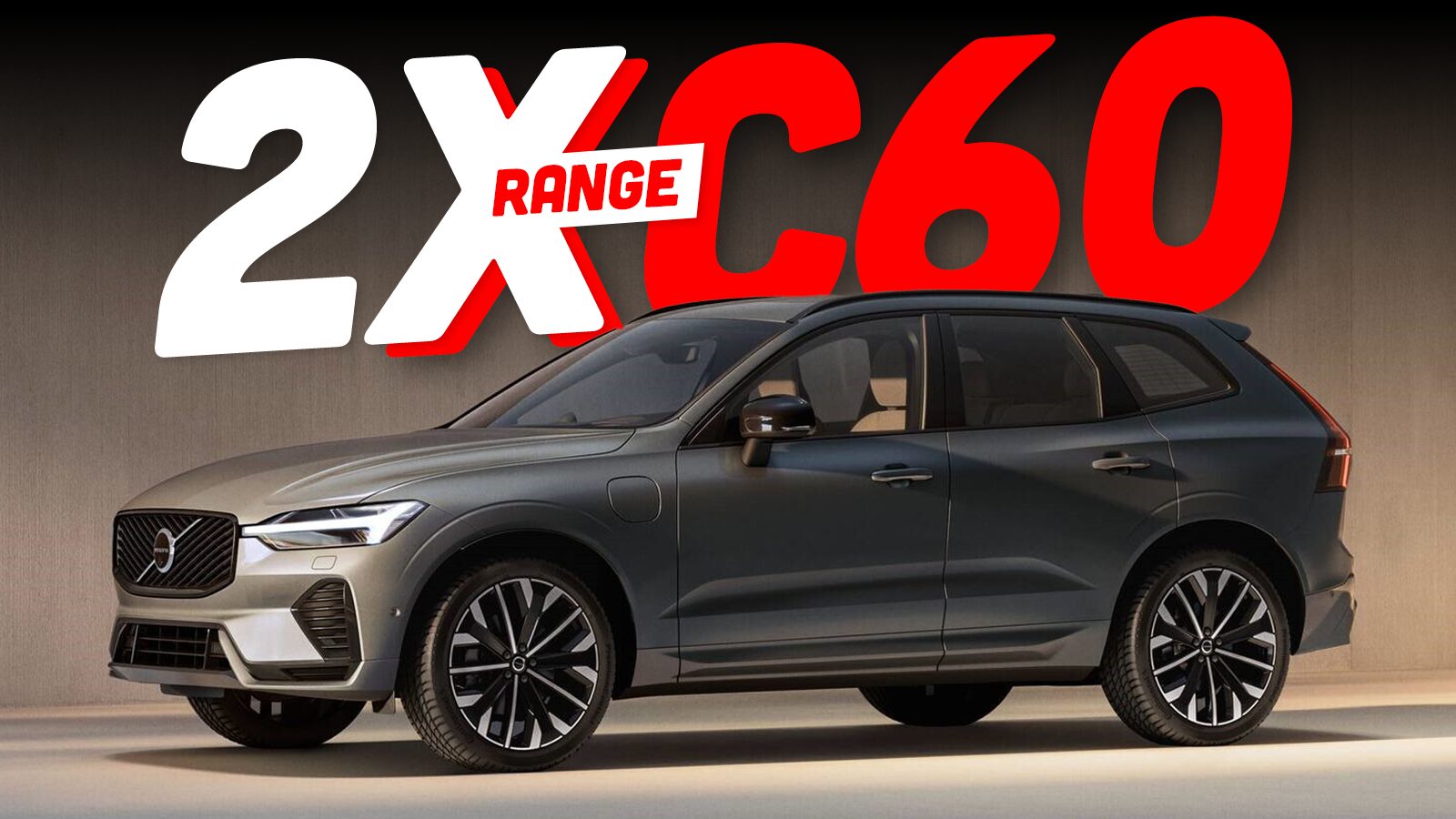
The Volvo XC60 might not be the newest compact luxury crossover on the market, but it’s still rather good. The interior’s lovely, the seats are all-day comfortable, the optional Bowers & Wilkins sound system is excellent, and the styling’s wonderfully refined. A small nip/tuck for 2026 brought in a crisper infotainment screen, a revised grille, new wheel designs, and a variety of revamped interior finishes. Compared to a current BMW X3 or Mercedes-Benz GLC, Volvo’s compact crossover just feels lovelier. However, the plug-in hybrid variant is now in a weird spot.
While a 2022 update increased electric range to 35 miles, the plug-in hybrid segment’s come a long way since then. A Mercedes-Benz GLC 350e can do 54 miles on a charge, and then there’s the deadly rival within Volvo’s lineup. Not only is the new EX60 compact electric crossover a proper 322-mile EV in P10 trim, it’s actually at price parity with the XC60 plug-in hybrid.


The obvious solution here is to rework the XC60 plug-in hybrid, especially since battery chemistry and construction techniques have come a long way since the XC60 PHEV’s powertrain update for 2022. As Automotive News reports:
The standout upgrade is a beefier battery for the 2028 XC60 T8 plug-in hybrid that is expected to more than double — and potentially nearly triple — its current 35-mile electric-only range, people with knowledge of the plan told Automotive News.

Needless to say, a 70-mile plug-in electric range would be a significant upgrade in usability. Even though such energy capacity would make it harder to completely juice up the whole battery pack from empty overnight on a 120-volt socket, a big upgrade in electric-only range means more commuting and errands could get done before dipping into combustion power. Critically, extra battery capacity could play a significant role in cold-weather performance, as having the energy aboard to run a PTC resistance heater and provide propulsion for a decent distance could result in proper winter readiness.
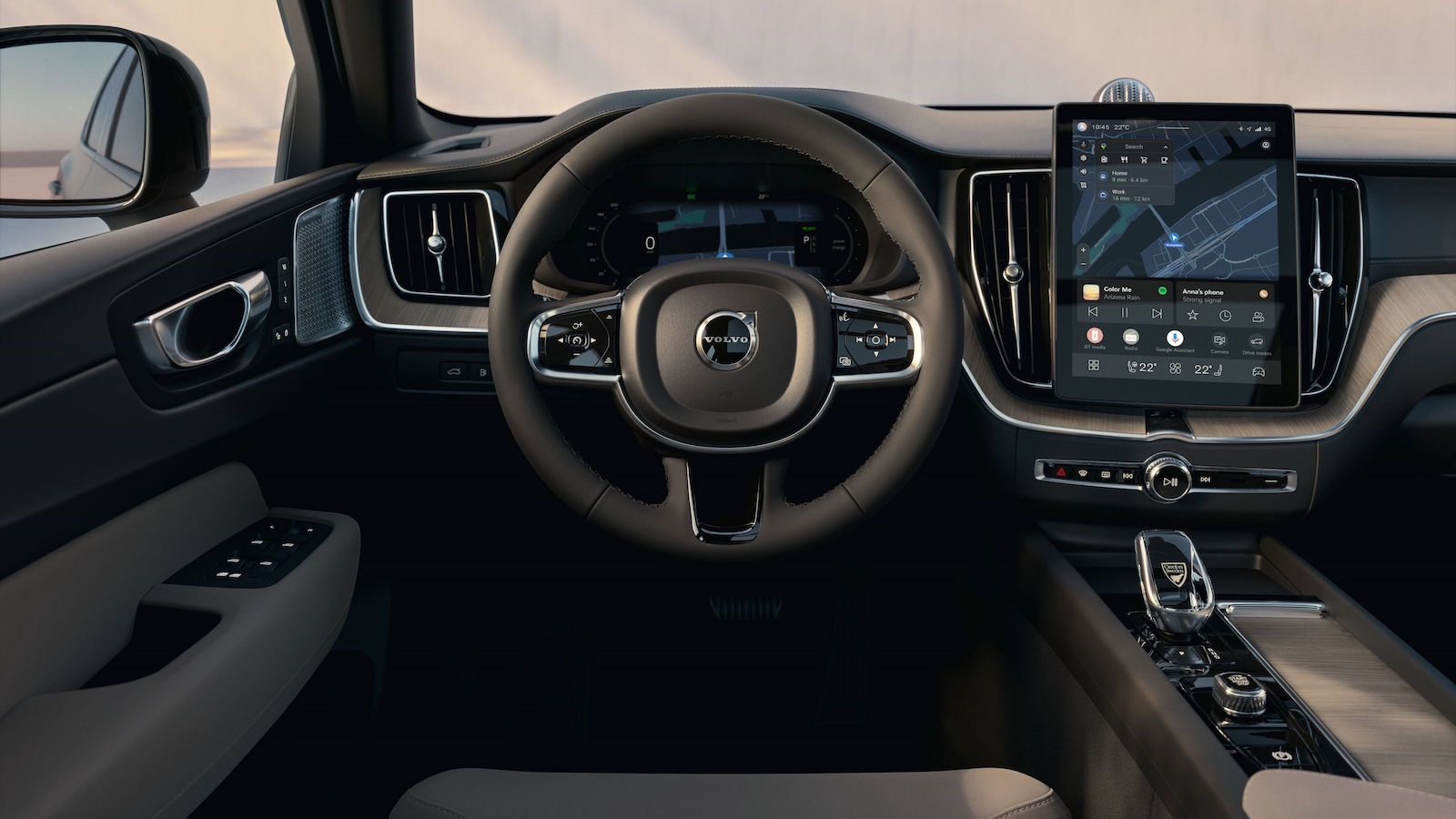
Of course, a longer-range plug-in hybrid isn’t the only major update reportedly planned for the XC60. Automotive News reports that a more powerful variant of Volvo’s familiar four-cylinder engine will appear, and critically, the XC60 will be made in America. You’re probably sick of hearing about the tariff situation by now, so I’ll keep things brief: The XC60 is currently built in Sweden for the U.S. market, which means it’s subject to tariffs on the whole car. Meanwhile, Volvo has an assembly plant in Ridgeville, South Carolina which is in America. Moving production locally should result in better supply and lower costs.

Even though we first saw the second-generation Volvo XC60 nearly a decade ago, it sounds like there’s still plenty of life left in it. It’s still a beautiful thing, and if the reported longer-range plug-in hybrid model comes to fruition for the 2028 model year, it could continue to live for a very long time indeed. More than 70 miles of distance on electric power alone would be a big deal, enough to tilt the tables in Volvo’s favor.
Top graphic image: Volvo




I currently get 40 to 48 miles of EV range on my RAV4 Prime, season dependent. With 70 miles, I could get to our farm on EV only, charge on a Lvl 2 charger up there, and come home on EV only. I go far enough regularly that I’d still use engine, but that point A to B trip is my personal measurement.
Plus, I am a HUGE Bowers and Wilkins fan boi, and recently let our 81 Volvo Wagon go.
My current use case is a weekly trip to the grocery store, a few errands around town and then a monthly 1500-mile round trip to help my 90-year-old mom. So, a BEV is a non-starter for me. I don’t need 70 miles of EV propulsion ordinarily. But I do need the ability to go further than that without a lengthy delay.
Given the extreme complexity and expense of modern auto platforms along with how good they are I am all for keeping them around longer and longer. It lowers manufacturing costs sure but also allows for the aftermarket/repair knowledge base to grow and make maintaining and extending the life of these complex beasts at least a little bit easier. And it should allow oems to make them more reliable over time, though that depends on how they prioritize things…*coughnotstellantiscough*
Great! Now put it in a wagon.
I don’t think there’s a point to this much range in a PHEV. At what point do you just chuck the engine away and make it a full BEV?
I suppose if you’re one of the few with a 100 mile commute, but that market has got to be small – and again, better covered by a BEV surely?
It’s not just the range. All batteries tend to last 3000 charge cycles before they are toast. That means that the volvo battery should be good for 70miles*3000 cycles which is 210000miles on battery alone. And if one drives about 50:50 EV and ICE (as one should to prevent ICE side issues, especially in cold climate with oil dilution and condensation), one should not need to get new battery within lifetime of the vehicle.
Once again, Thomas is applying the concept of range anxiety where it doesn’t belong. Running out of plug-in power in a PHEV is a non-event. It won’t leave you stranded. If you never want to buy gas again, you should buy an EV. Longer PHEV range comes with the drawback of added battery weight plus the ICE system’s weight. Instead of counting trips taken without using the ICE, just look at your total gas usage over the longer term. My 20-mile Ford PHEV has recorded 65 lifetime MPG over nine years. That’s the only stat that matters to our environment, or my budget.
Finally! Though ideally it would be an E-REV, not a PHEV so you’d get full power/torque all the time regardless of battery or range-extender operation.
80-100 miles battery-only range is the sweet spot. Most commutes are less, but add a side-trip or two (Dr, Grocery Store, AutoZone…etc) then you’d blow through the typical 30-40 miles max range of most PHEVs. My daughter’s Escape has 40-30 miles max, and her daily is just about 50 miles. A trip from my house to the burbs/Costco is also about 60 miles round trip. The newer battery tech should allow 80 miles range even on a smaller battery, and still let you just about top it off over-night on 120v (120v at 15 amps = 1.8 kw… so a 20 kWh battery should take about ~11 hours to fully charge at 120v.. and probably only 3 hours or so with a 7kW 220v level-2 charger).
Waiting, waiting, waiting for an E-REV with 80+ miles of range on the battery / 4+ miles/kWh efficiency / and a ICE-Generator happy meal to extend the total range (battery + gas) to 500 miles. Gimme! Gimme! Gimme!
I’ll take it wrapped up in a Mazda RX-VISION / ICONIC concept car package.
Agree, the thing that really rubbed me the wrong way in my old Pacifica PHEV was when you asked for too much torque and the combustion engine, that had been off for sometimes a month, immediately turned on and went to a moderately high load point. Torque demands take priority over engine health in a PHEV. Fewer hours on that engine for sure, but damn some of those hours are going to be hard.
I’m sure you have good reasons for not wanting a full EV, though the use cases you described sound like they’re well-suited to one. A PHEV would be fine if you can live with the engine occasionally turning on, you’re still doing almost all your miles on electricity. An EREV seems like the best fit for you assuming you need the combustion fuel capability, but these are all speculation for now, I’m waiting to see if anyone can pull it off at a somewhat reasonable price… hybrid drivetrains are so good and not all that mechanically complex that I doubt there’s much cost savings in the supposedly simplified EREV drivetrain, or at least whatever savings are there are going to be more than offset by the bigger battery and e-machine.
Thanks. We actually have a 24 Ioniq AWD limited since we can charge at home with a level-2 220v outlet in our garage. That handles all our local stuff and it’s a very nice around-town high performance sedan. I don’t recommend EVs to anyone who can’t charge at home.
We also have a Maverick Hybrid AWD with 4K towing. Handles all our truck/haul/trailer stuff and is our road trip vehicle too. low 40s in town, low 30s on the interstate. It’s a Lariat so it’s nice even for longer drives.
Daughter is the use case for the PHEV. She’s between positions but anticipates having an apartment with -maybe- 120v outlet in the garage/car port? No idea what her commute will be, but her Escape PHEV is a good fit for her right now since home charging is questionable for her. BTW it has the same drive train as the Maverick but with a much larger battery and an on-board level 1/2 charger. When the battery is depleted it’s still a great hybrid (as is the Mav).
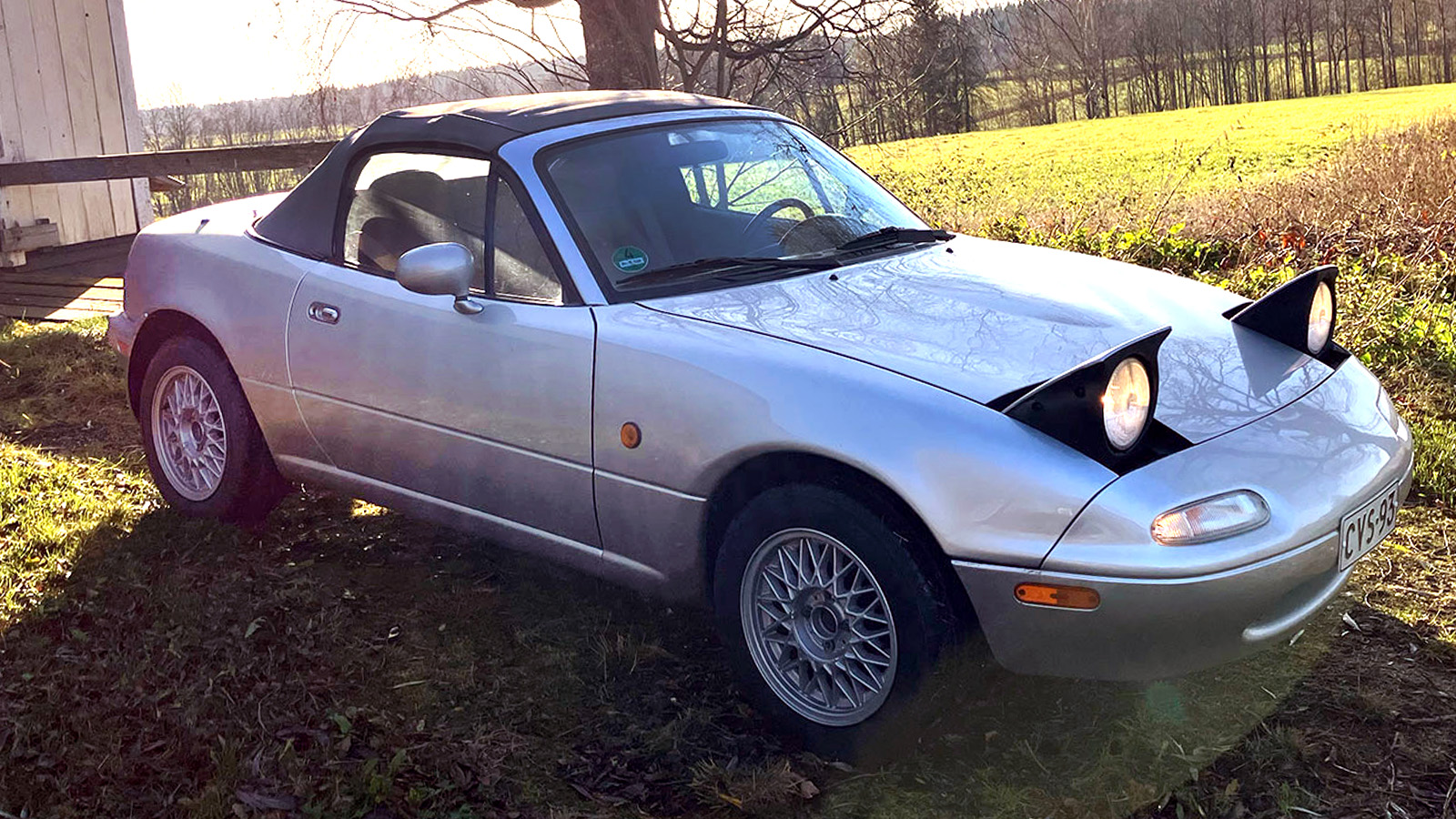
…and I keep my classic antique auto 1991 Mazda Miata (BRG 5 speed special edition) to scratch the topless sports car itch for me when I get in the mood.
I feel lucky to have a fleet, but IF I was limited to only one vehicle, an E-REV with 80-100 miles battery range would be the ticket. The upcoming Scouts look interesting, but really wish there was something less all-terrain in size and capability. I’d prefer at Maverick-sized truck or suv or even a mid-sized sedan as my do-everything. I don’t need an off-road beast, just a civilized AWD system for performance and sometimes crappy weather.
Great stuff, nothing in that fleet I can argue with! Agree owning an EV doesn’t make sense unless you can charge at home or work, though the 120V charging is surprisingly viable for a lot of people, but 50 miles/night for your daughter is pushing it even with a very efficient EV (maybe can make up the gap over the weekend?), but the Escape seems like a perfect option for the time being… EV for most of the day and a good HEV the rest of the time. Toyota I think does the same thing (Ford may even be licensing this from Toyota) with the same powertrain on their hybrids… just add more battery and a charge port on the PHEV versions.
Our family has owned our first EV for a year now and no longer have towing requirements so I’m thinking about switching over our second vehicle (which happens to be a Ram EcoDiesel so I try to avoid driving that up these days @ >$5 / gal). The 1-2x / year road trips are a bit more effort to navigate but our kids and dog need 20-30 minutes each stop anyway so it hasn’t been an issue.
I don’t see the point for more than 50 miles of range for a PHEV
Let me explain. If I get home at 6 PM and leave home at 6 AM, I have 12 hours of driving. If I’m putting a tow into the water with an PHEV and not jumping into the deep end with an EV, I’m not going to put in a L2 charger, but plugging it in next to the beer fridge.
And a L1 charger in 12 hours isn’t going to add much over 50 miles of range.
With that being said, there is a place it could be a good thing. A Rav4 PHEV will do a 5.5 second 0-60 time on a full battery. However, when the battery is low, this goes to over 8 seconds. A PHEV with a bigger battery can do a couple more hoon runs before it goes back to acting like just a hybrid.
It all depends on your commute I suppose. In my profession and location, FF in Texas the average commute time is 45 min and about 30 miles from work. This range is now to the point of actually making a lot of sense. Granted at the price of a brand new Volvo probably not for a while but a used one/used 2027 rav4 prime a few years from now could be a great buy.
I can absolutely see 50 miles (of effective) range. But 100 miles doesn’t make sense. If you are going to put in a L2 charger, why not just getting an EV?
Because 50+ miles of range would easily cover all of my wife’s weekday driving. Except the frequent weekends we take to western Kansas and the lake of the Ozarks where we won’t have L2 charging access. This is where the gas part is ideal for us.
https://www.theautopian.com/phev-charging-data-for-kia-and-hyundai-revealed/
It does appear that ppl are charging thier PHEVs and that additional range is a plus for at least some of them.
I hope this comes with DC fast charging, or else it’s gonna be hard to take advantage of a plug-in hybrid if you don’t have a dedicated home charger. My daily in China, an EREV, does 100+ miles of EV range, and I recently moved to a new place without a charger. It fast charges at 50kW, nothing groundbreaking but still finishes within an hour, even in the depths of winter (-20c, without preconditioning). So I just charge whenever I visit the local mall, and I haven’t filled up in over two months! Still have half a tank of gas left after ~1500 miles.
If there’s access to a simple 120v / 15amp circuit it may be possible to top it off with 80 miles of range overnight without the need of a 220v/level-2 outlet. Might take 10 hours but if you come home at 6 pm and drive off at 6 am you’d be okay.
I wish I had three-phase AC charging here, but it’s not really a thing in China apart from Teslas, Taycans and some of the earliest BYDs. Most EVs just AC charge at 7kW (220V, 32A)
But I see your point, the charger at my last place was a bit wonky and derated itself to 3.5kW (220V 16A). I was still plugging in every day, and it was still more than enough to keep the battery topped up.
Finally the US starts getting what the rest of the world gets. 70, or even better would be 100, miles of electric range is worth plugging in for. It also makes better use of slow public 6 kW L2 chargers. Those aren’t powerful enough to charge a 300 mile range BEV much in the time most people spend there. But they’ll charge a 70 mile range battery a meaningful amount and cheaper than gas.
Nope, they won’t. No one will, because it doesn’t exist.
The rest of the world simply lists numbers in ratings that are more advantegous than the EPA cycle used in the US.
Even the Euro cycle is less stringent than the US one, the Chinese cycle is completely unreliable.
The best currently available anywhere is 50-58 miles per US standards.
At least for cars with PHEV drivetrains with a “worth plugging in every night” range for the average driver. Generally to feel comfortable people seem to need a range greater than what they use in a typical day. That’s kind of why the BEV market seems to have shaken out on 250-300+ mile range vehicles for the US.
I’m about 10 miles short every day with mine. I can get by filling up once every six weeks or so with overnight L1 charging
This is untrue. Cars like the Lynk & Co 900 come with 115-137mi of WLTP range with 45-52kWh batteries; the smaller battery should get at least 80mi, and larger one at least 100mi on the EPA cycle with very conservative estimates. A more neutral estimate would be 100 & 120mi EPA, respectively.
There’s at least 10 similar 3-row SUVs that have similar or higher range ratings and battery capacities sold outside the US.
Cheaper than gas is not true across the board. Places with heavy population, like southern New England where cars like this sell well, have relatively low gas prices but high electricity prices which make it generally a wash at best (excluding during this brief interruption by the Iran conflict).
The larger battery, if it could power the HVAC system would be a huge plus. My old PHEV used to have to run the engine more often than not throughout the year to provide heat, even if you wanted to drive in EV only mode. I basically drove to work with a full charge using it as hybrid because the temperature was cooler in the morning and usually resulted in the engine coming on for heat anyway, might as well use the engine power to warm it up faster since the engine just running to warm up for heat seems like a big waste and bad for the engine as it never fully warmed up. I would then engage EV only mode on the way home, after waiting for the engine to run long enough to warm the cabin, hoping the one warm up cycle provided enough core heat to not have to come on again before getting home. This is way more thought than your average driver wants to do.
After having V6, turbo diesel, PHEV, turbo 4 cyl gas car (87octane) and now full BEV for my last 4 cars in the same climate over the past 16 years (and other cars before them), my favorite so far is full BEV (’24 Y Performance), even with the few range shortcomings I deal with a few times annually. In normal times though, it is barely cheaper to run than the 290 hp turbo 4 cyl (Sonata N Line) I owned. If I factor in the electricity used to precondition it everyday, almost full year round, it might even cost more to operate. Basing my math on observed mpgs, and efficiency along with 2025 historical fuel costs ($2.90 or less per gallon 87 octane / $0.33 per kWh for electricity in the Boston area).
I don’t understand the advantage of 100 miles of range here. The typical 30~50 miles makes sense because that’s a very common range necessary for American drivers on a daily basis. Making it 100 just means you are lugging around a bigger battery for very little reason, especially when you’ve got an engine ready to burn dino juice right there, for those times you need more range.
How many people commonly driving 50-100 miles per day, wouldn’t be better served by a cheaper “standard” hybrid, or a simpler BEV? If you need to go more than 100 miles, a 30~50 mile electric range plug-in really isn’t worse than 100 mile range one, and depending on your total distance and charging options, potentially worse than a full BEV.
I had a coworker who regularly drove 119 miles to work one-way, total of 238 miles each day. I used to drive 80 each day when I lived at my previous place. Some places just are like that. Cheap home is far away from the place where work gives you enough money to live.
I’m not saying people like that don’t exist. But it certainly isn’t representative of the general driving trends in North America.
But even then, wouldn’t something like a 300-400 mile range EV be even better for that daily commute?
I just think the general advantage of a PHEV is that the battery is small–thus taking up less physical space/weight and being cheaper–and then the gas engine makes up for that small battery. Making the battery bigger gives you he downsides of an EV and the downsides of an ICE vehicle; big battery to cart around, complex…
I have a 70 mile daily commute, about 30 minutes each direction. It’s going from a suburb to a rural destination on a limited access highway. No, I’m not moving out there. Having a BEV has made it a lot less of a hassle. Plugging in at night has given me back a lot of time.
A PHEV is sort of a compromise towards the lower side of the equation. The local commute can be done onbthe battery, but weekend trips are on the ICE. But it’s like the worst of all worlds. Extra weight. Requires plugging in almost daily. The pure hybrid would be a better system, such as the Prius.
The person who isn’t ready to “commit to” a BEV while getting most of the advantages. Although with the downsides of lugging around a spare ICE most of the time IMO. But the person buying this sees the ICE as a backup worth having.
I believe the average commute is only 32 miles round trip which is why the original volt had 40 miles of EV range to cover that. However there are also plenty of people that do errands after work and having an extra 20-30 miles to do those makes sense to build in. I think that really puts the most useful amount of range around 50-60 miles. According to Google AI only 2.9% of commutes are greater than 75 miles, so I agree 100 miles seems like overkill for a PHEV and just extra weight/cost.
Still waiting for this style system to show up in a Colorado/Ranger.