

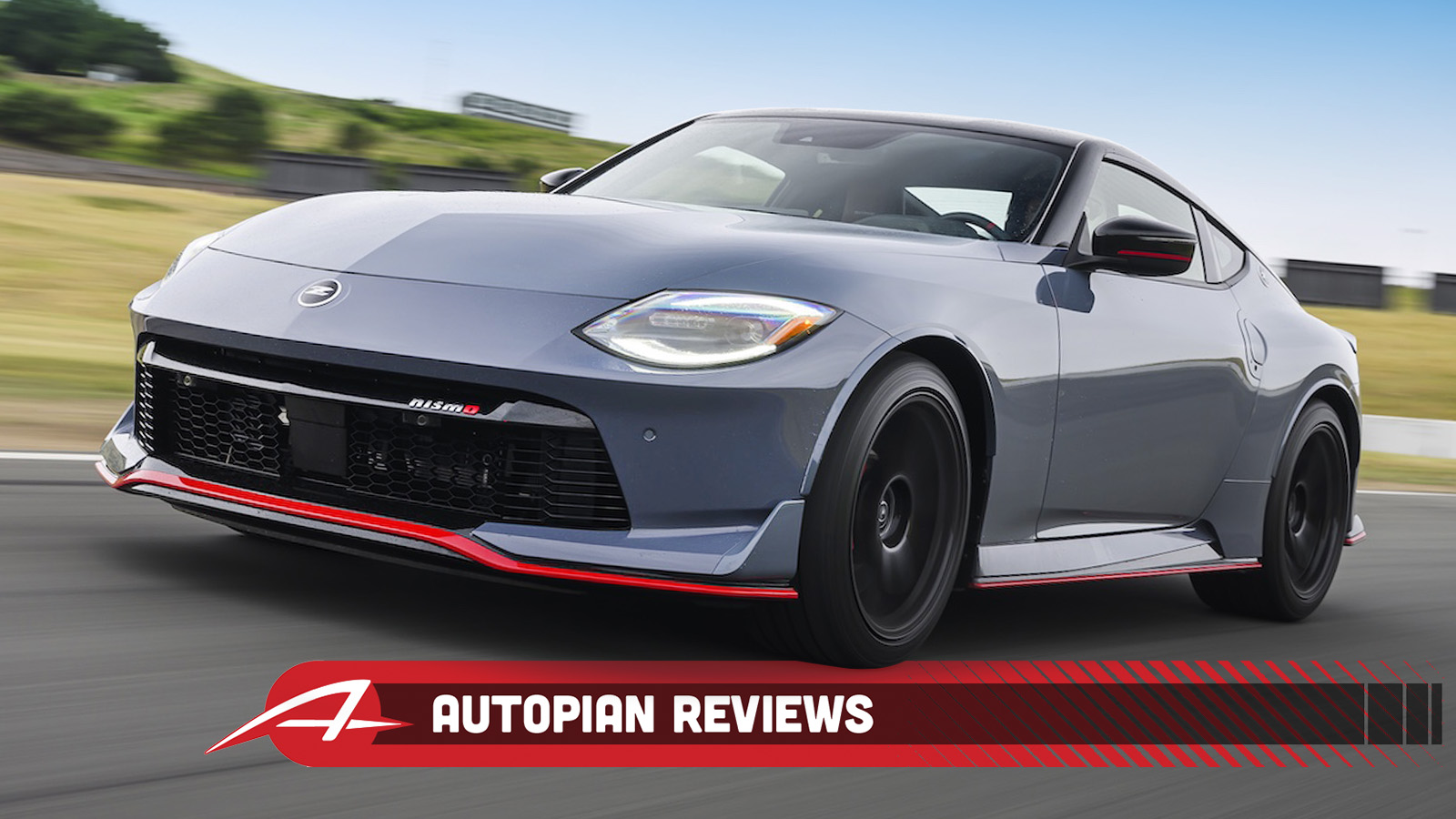
When I stepped out of the manual Nismo Z at Sonoma Raceway, all I could think of was how pleasantly surprised I was. Truth be told, up to that point, I had almost forgotten that the 400Z even existed. Even after being asked to attend the Z press launch by The Autopian, I was more excited for the experience of going to a press launch than for the car I was supposed to review. However, I came away from the event genuinely impressed with the manual Z Nismo.
The 400Z is a bit of a survivor, maybe even a bit of an anachronism. With the recent or upcoming extinction of the Toyota Supra and the Jaguar F-Type, it may be the only remaining (deep breath) front engined rear drive (FR) dedicated two-seat coupe available with a manual gearbox left in the US marketplace. That fact ruined my day when I realized it, and you have my sincere apologies if it is currently ruining your day. In fact, the Nissan Z (along with the Mazda Miata) is one of the only front engined two-seaters you can get in the US for a five figure price.


[Ed note: I am so excited to be bringing you our first-ever car review from a member. That’s right! We know Liyan because he’s an active commenter and a big part of our Discord. It’s just one of the many perks of becoming a member. Please see his full write-up on what the experience was like. – MH]
The Basics
Engine: Turbocharged 3.0-liter V6.
Transmission: Six-speed manual.
Drive: Rear-wheel-drive.
Output: 420 horsepower at 6,400 rpm, 384 lb.-ft. of torque at 5,200 rpm.
Fuel Economy: 17 MPG city, 24 MPG highway, 19 MPG combined
Body Style: 2-Seat Coupe.
Starting Price: Not Yet Announced, but 2026 Z Nismo (automatic) start at $67k including freight.
Why Does It Exist?
Similar to the Miata, the Z is a bit of a passion project for its company. Multiple times, without prompting, Nissan personnel mentioned that the car is not really a moneymaker, but it is important to Nissan to have a Z in its lineup. Sports cars might not sell in bunches, but they get people talking!
For 2027, Nissan has updated the Z with styling and mechanical changes. The big news is that the Nismo trim is, finally, available with a manual gearbox instead of being confined to a 9-speed Jatco automatic. Nissan stressed that it takes feedback seriously and the lack of a stick was the top complaint the company heard.
Nismos also now feature the brake rotors (but not the brake calipers) from the GT-R. The non-Nismo trims get an updated front fascia and additional color choices. All models have retuned suspension and an updated fuel tank that should prevent fuel starvation on track.
How Does It Look?
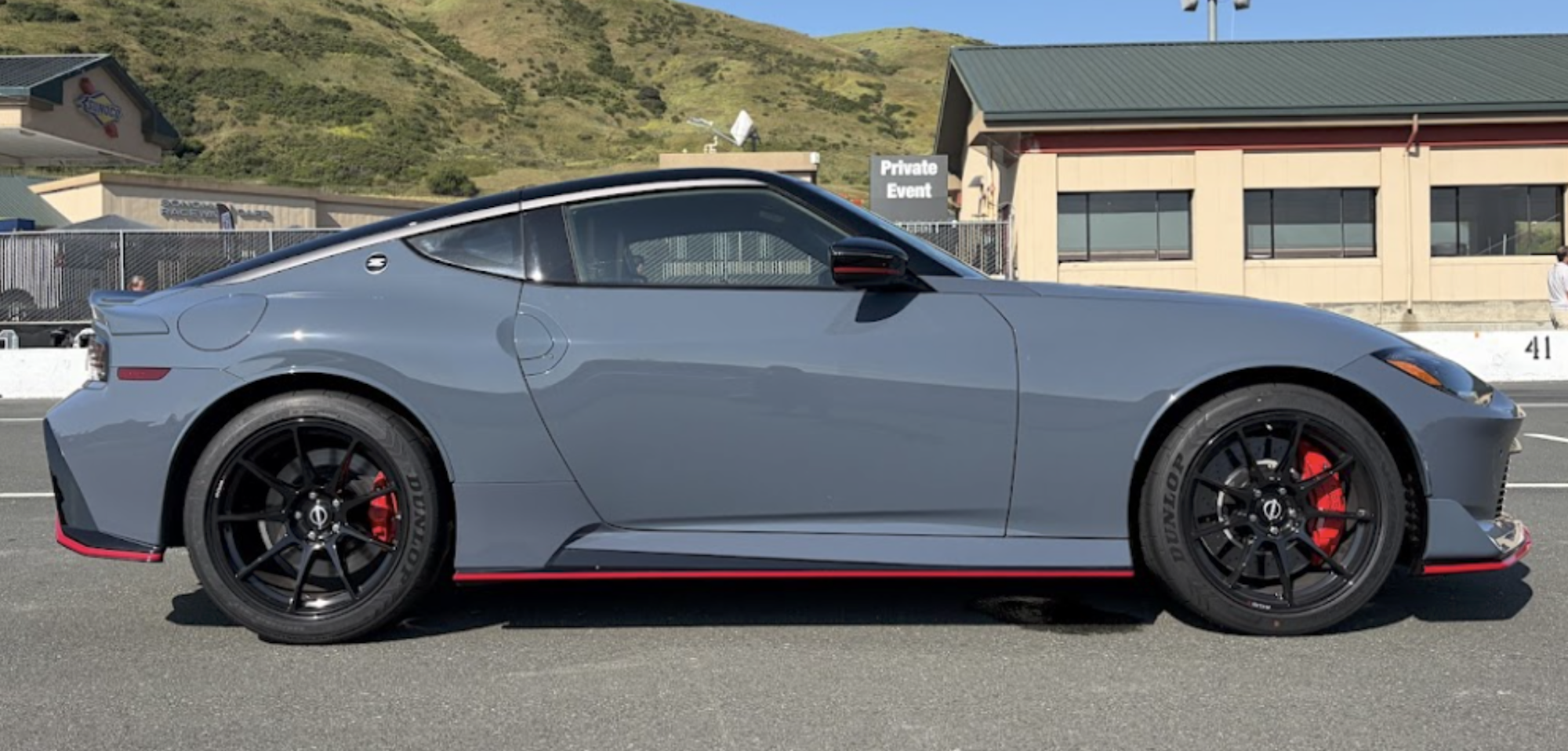
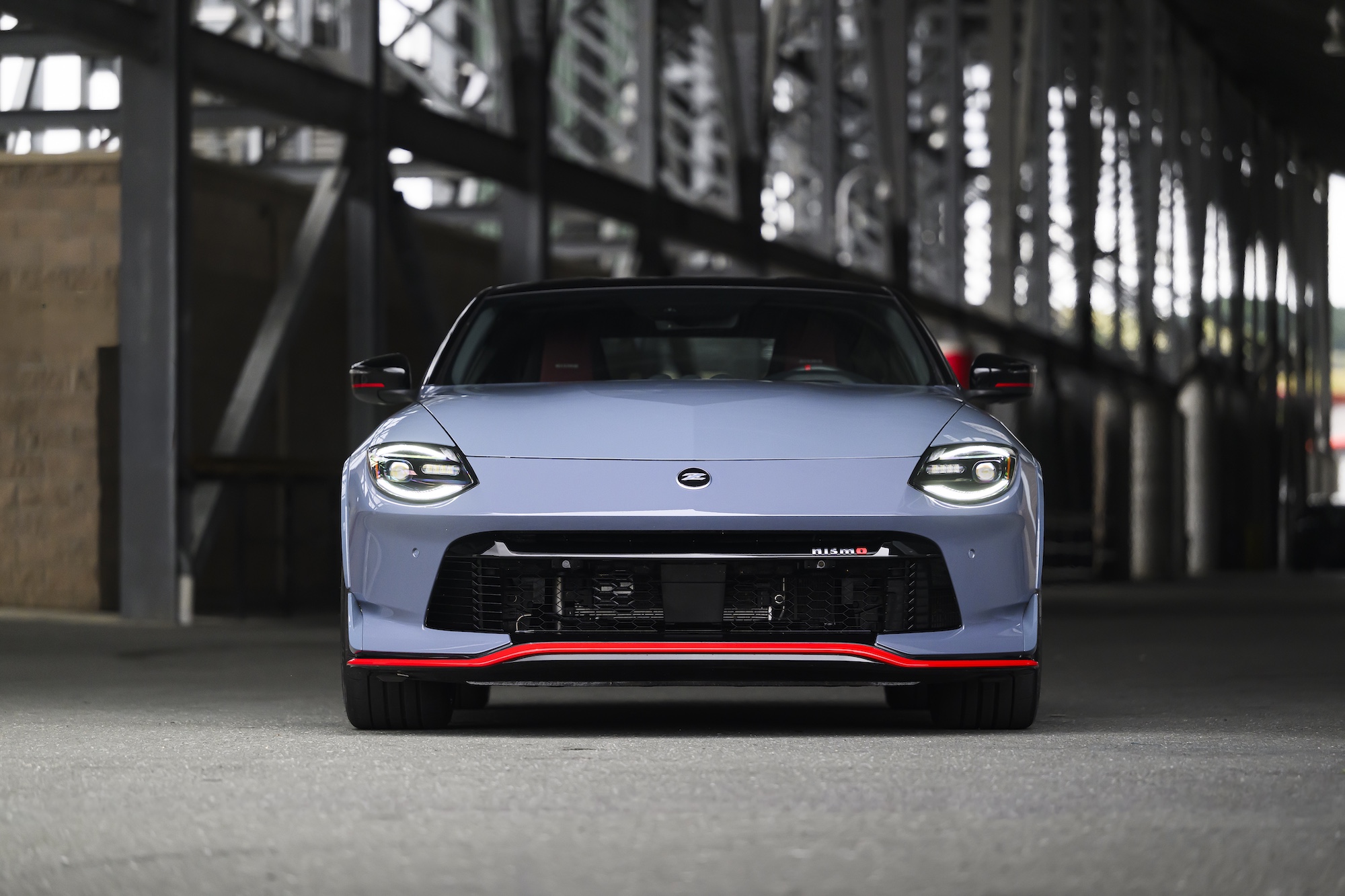
By my eyes, the Nismo’s styling is unchanged for 2027. It’s still the same classic long hood short deck profile with perhaps a too-smooth-for-current-times front end. Though extra scoops and spoilers generally just make a design noisier, the Nismo’s extra surface excitement does well to add some points of interest to a design that would otherwise be too soap bar-y.
Furthermore, Nissan has updated the non-Nismo Zs with a new front bumper that has less of a gaping hole and also a bit more profile on the sides.
How About The Inside?
The Z interior is generally a nice place to be, and the seating position is not ridiculously low by sports car standards; it’s a fairly approachable drop into the driver’s seat. The seats themselves are comfortable, the gauges legible even if more color contrast would be appreciated, and the HVAC controls and even the infotainment offer knobs and buttons. This is an interior that just makes sense.
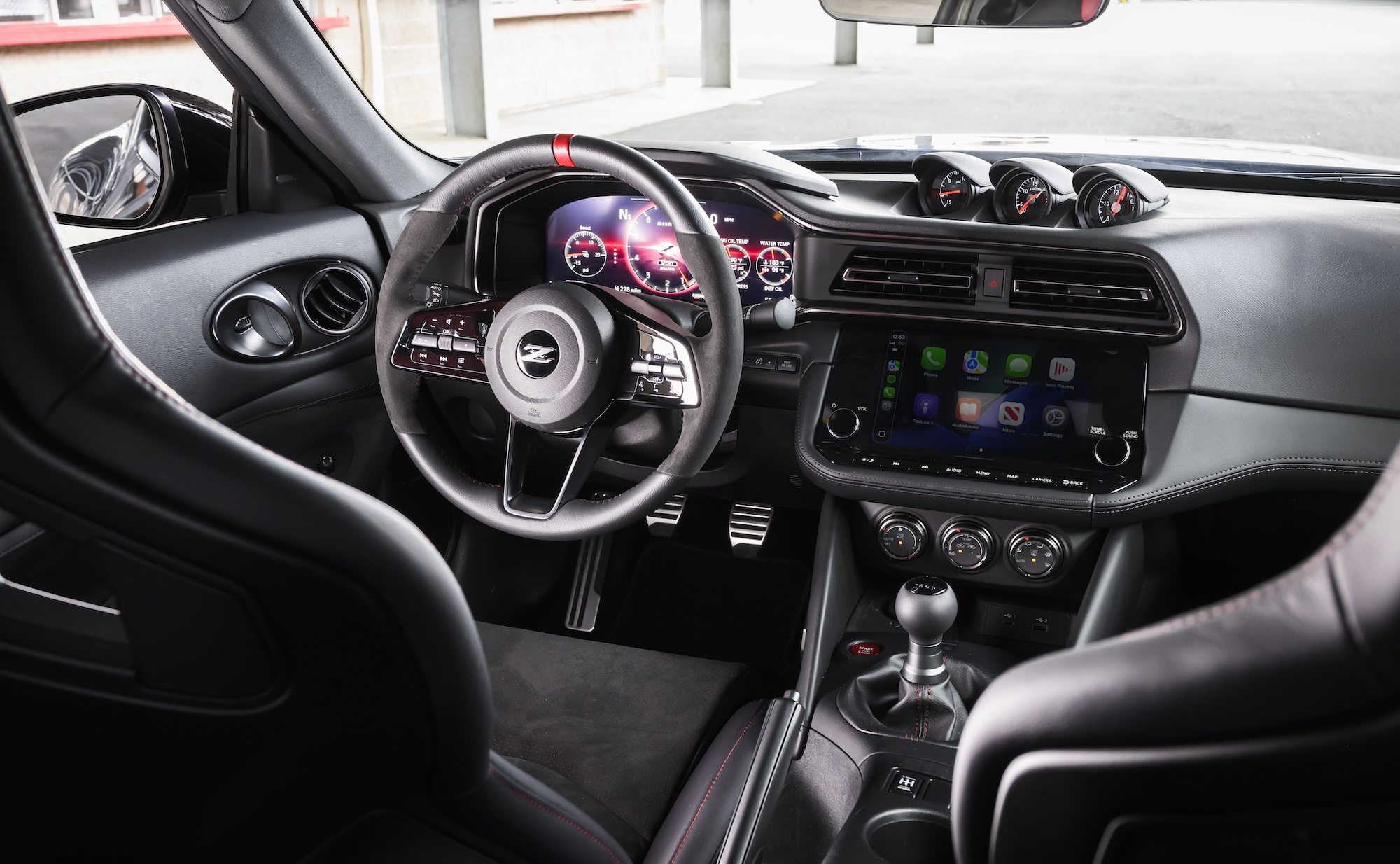
Materials and surfaces were generally pleasant, with soft touch materials where you would expect them and stitching located in areas to help impart a premium feel.
However, to me, it seems the interior feels more like something suited to an MSRP that starts with a four than something that starts with a six. This feeling was exacerbated by the Nismo trim’s all black interior color scheme, instead of having the ability to enjoy more interesting interior hues. Also, stripping power seats out of the Nismo trim did not help the feeling that this interior struggles to match its price, even though I realize there are significant weight savings in a manual seat.
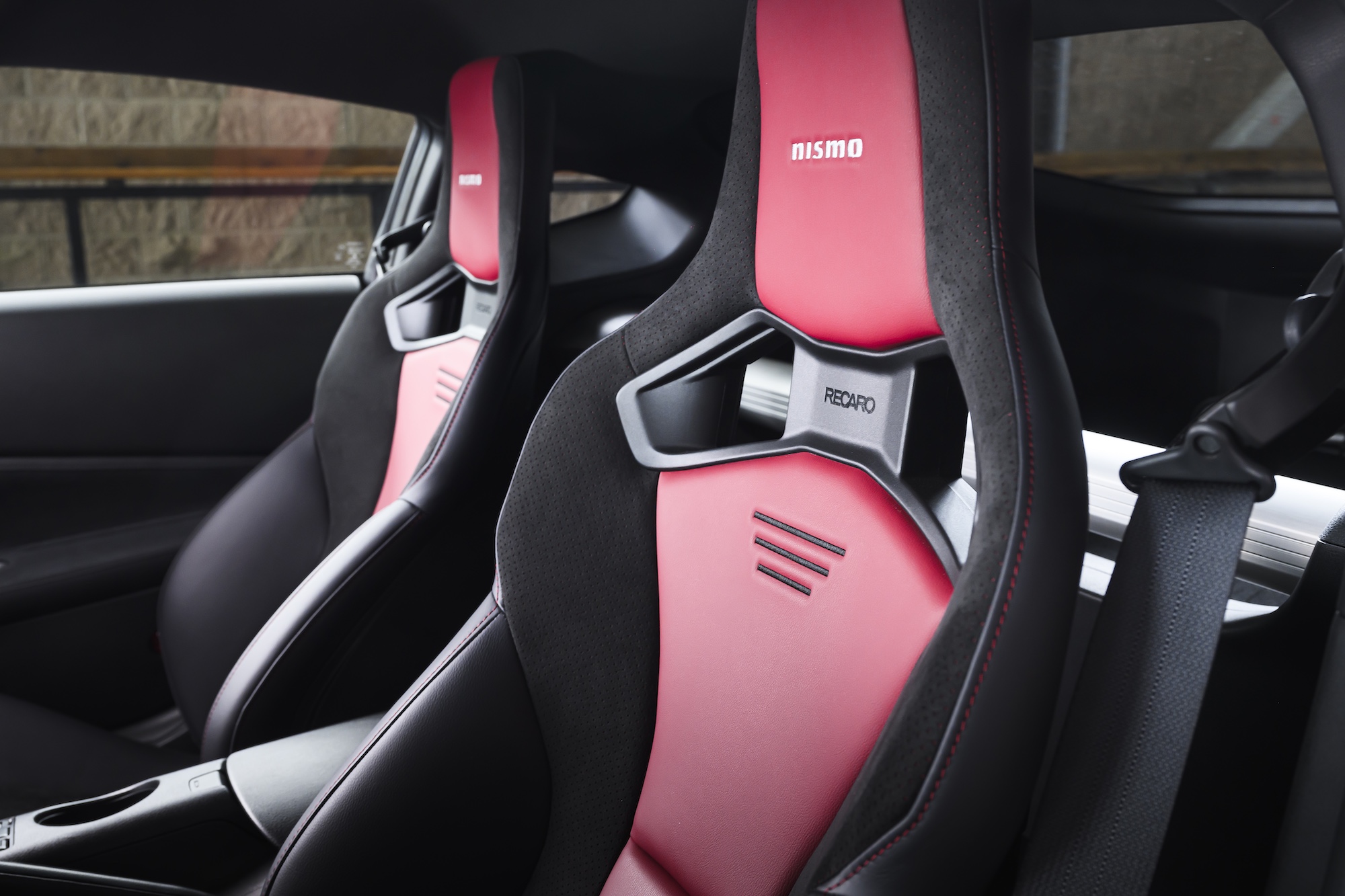
Headroom is fairly limited. At 5’9” and with a helmet on, I had to adjust my seating position to avoid the headliner, but I otherwise found the cabin to be comfortable. Besides headroom, there was plenty of adjustment left in the seats to accommodate frames larger than mine. The trunk space was not copious, with a quite high load floor, but the trunk opening is large so you can load items easily.
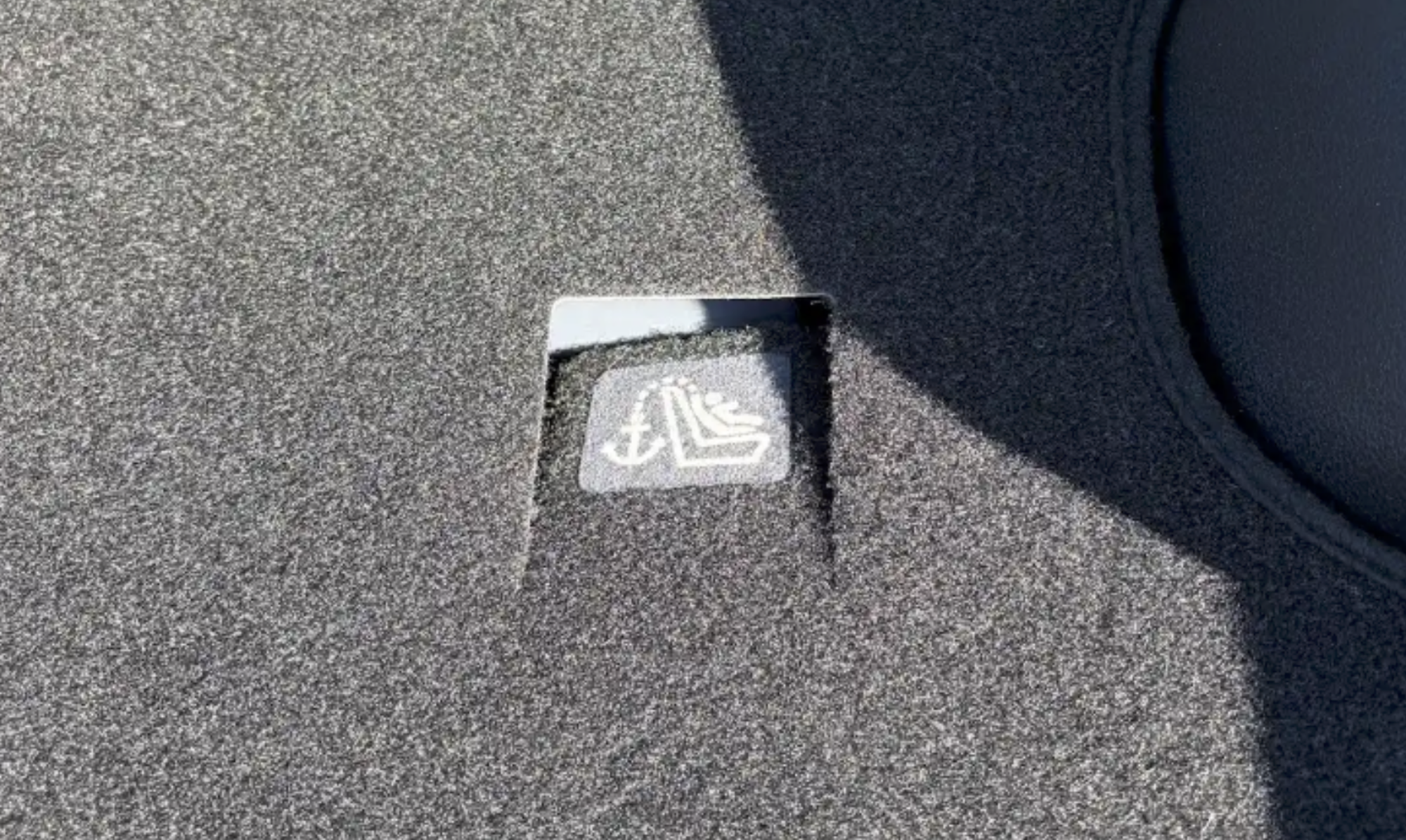
There’s an ISOFIX top tether in the trunk for the passenger’s seat. For someone like me, with young kids whom I would like to take along for a fun drive, that’s definitely a selling feature!
How Does It Drive?
The underlying architecture of the Nissan Z is old enough that it can legally drink. The current version of Nissan’s Z-car is built on an evolved version of the 370Z chassis and in fact shares the same Z34 chassis code. Compared to the 370Z, the wheelbase is the same and the differences in width and height are negligible. And the Z34 chassis is an evolution of the Z33 chassis of the 350Z, which was launched all the way back in 2002. The Toyota Prius was not yet a hatchback at that time.
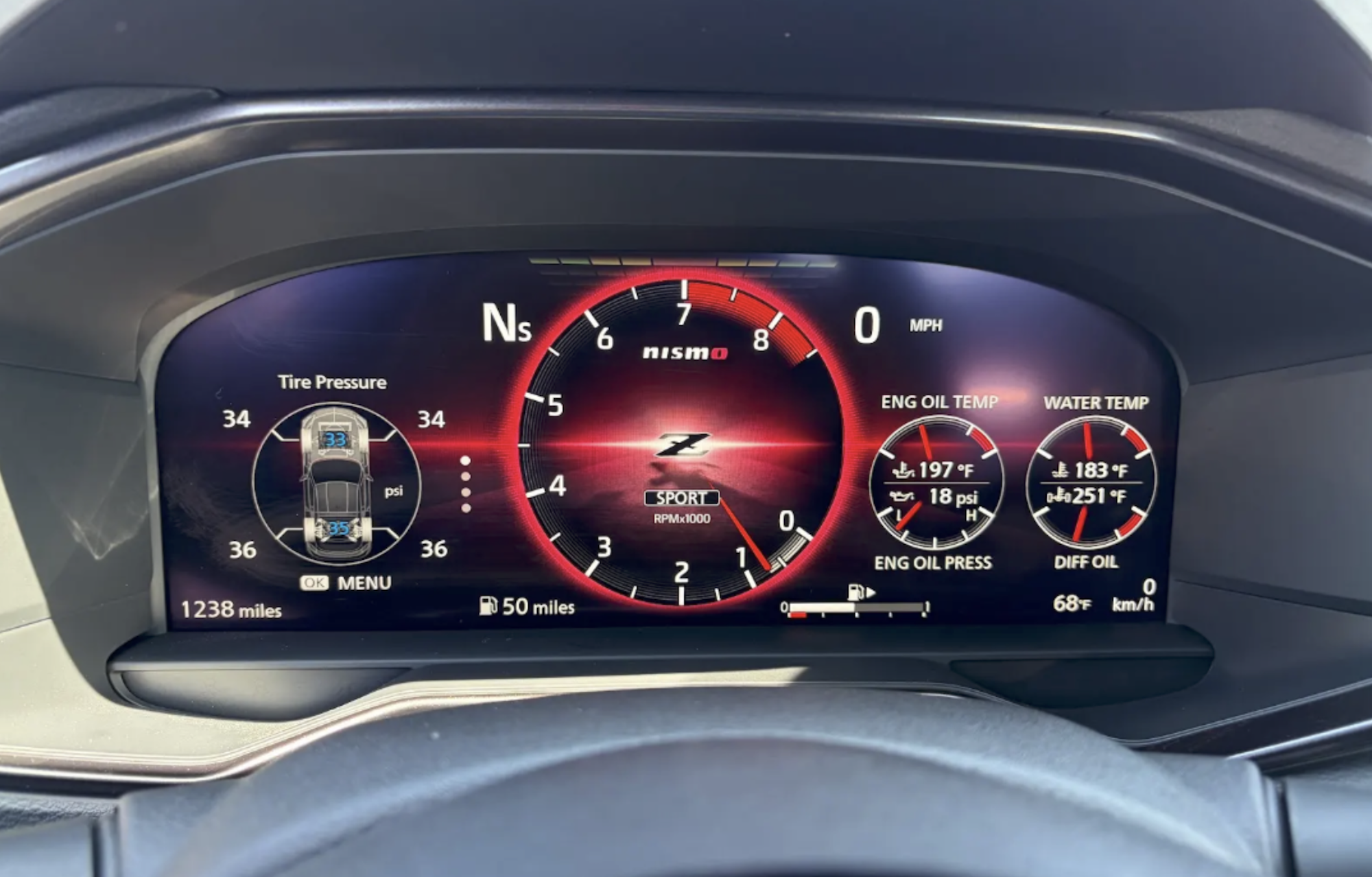
Which is to say, my dynamics expectations were not high, especially given that I’m used to driving a Lotus. And yet, with constant refinement, even old bones can perform well, and the Z Nismo was definitely an example of that.
At Sonoma, Nissan had us drive a Performance trim Z first. The Performance still had a GT car bit of softness to the handling where it takes a beat to settle. By contrast, the Nismo has different tires, springs, dampers, bushings, retuned steering, etc. Basically the entire suspension has been gone over.
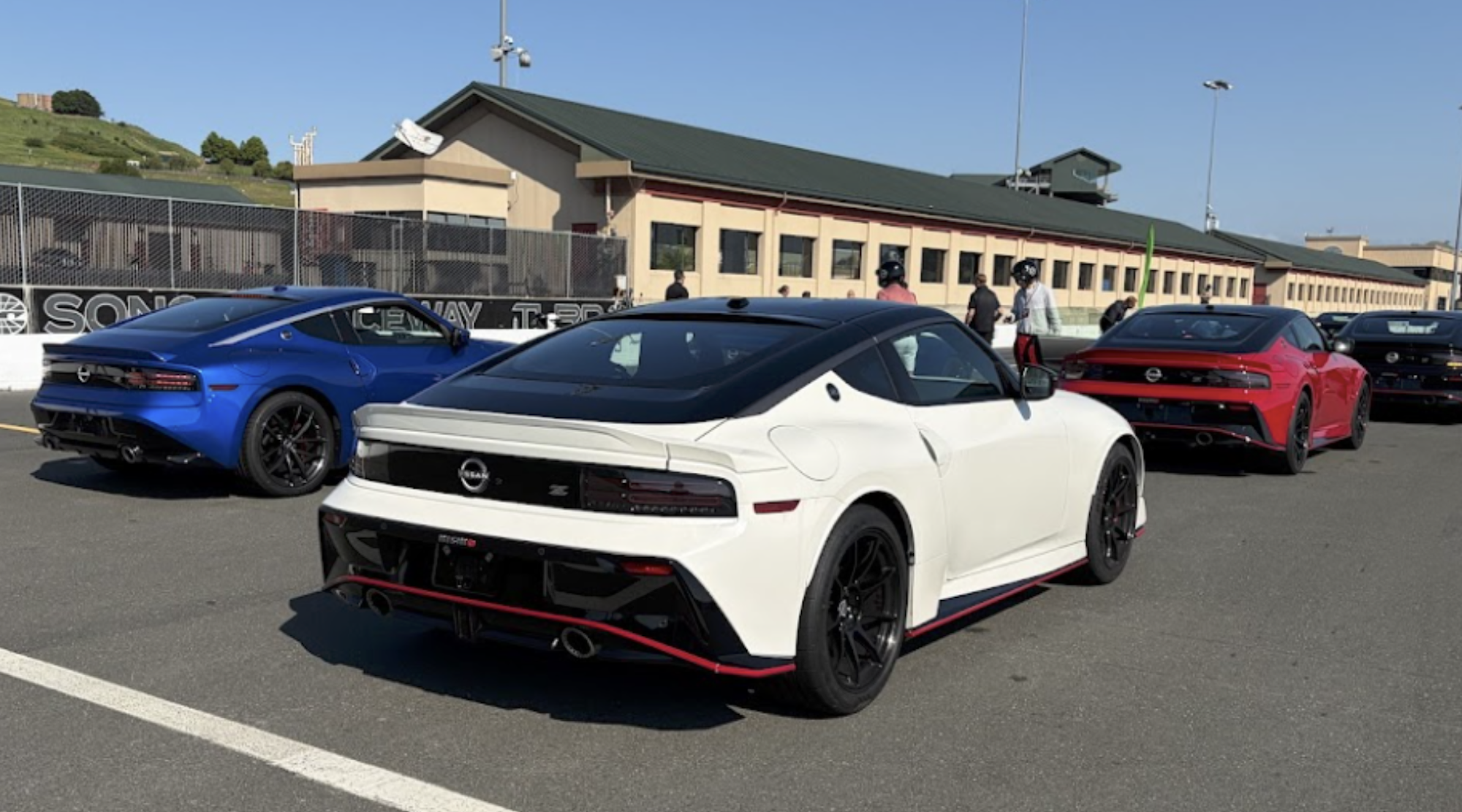
Those changes transform the car, as the Z Nismo feels very coherently tuned, with a front end that responded well to trailbraking and was very forgiving of overdriving. The Nismo had noticeably more grip than the Performance, allowing for the rear end to be very stable on power.
Speaking of power, the Nismo feels like it does indeed have 420 horsepower, but it’s not power than punches you in the face. Instead, the turbo comes on boil relatively progressively, though there is of course still some lag, with a large midrange swell of torque that then feels like it tapers off after 6,000 rpm.
The manual transmission shifted well, with defined gates, but I thought it was a bit lacking in mechanical feel. The rev match feature is seamless, and if you wish to heel and toe yourself, the pedal positioning, especially with the Nismo’s stiffer brake pedal, is well set up for that.
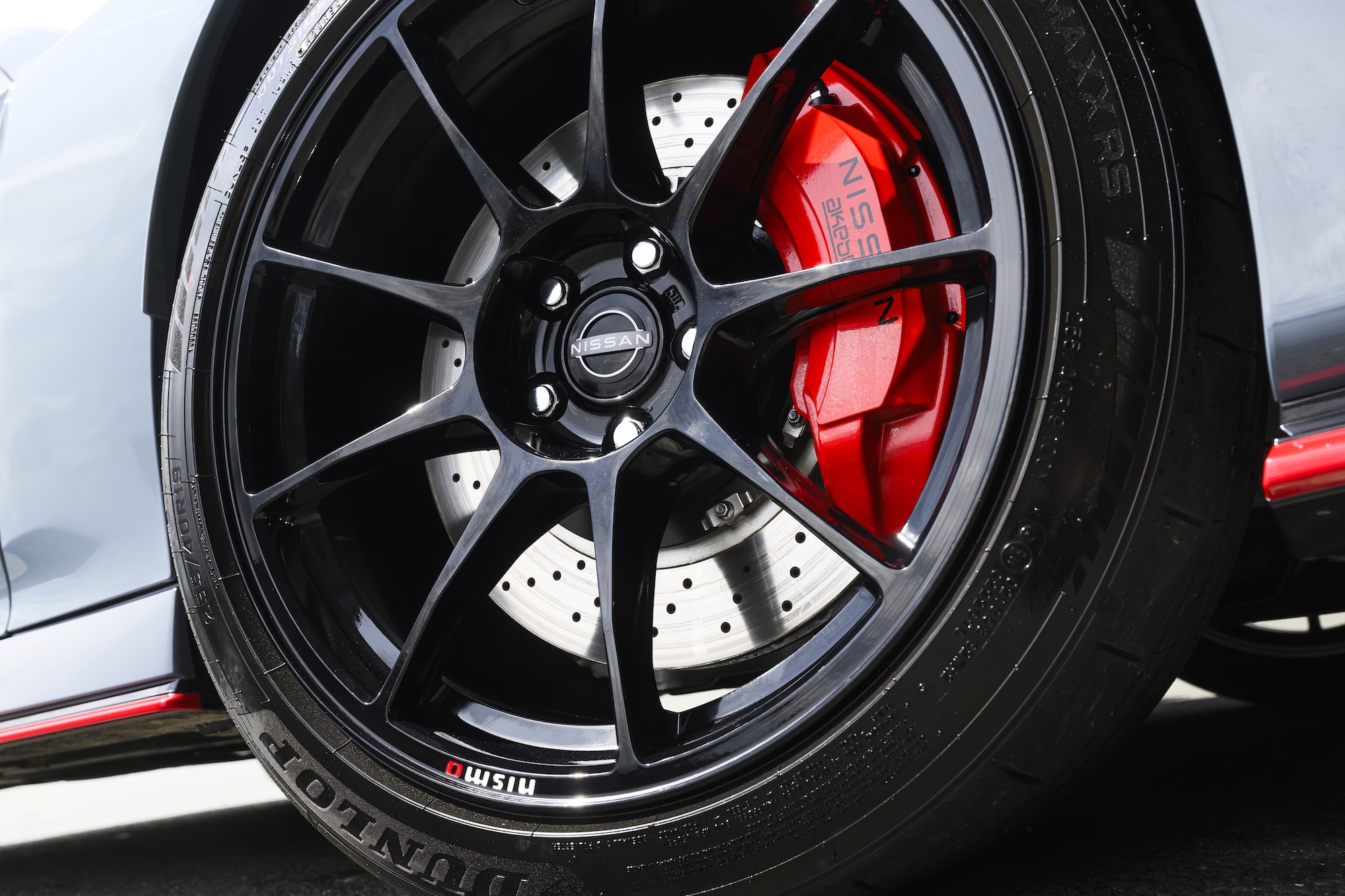
On the subject of brakes, the brakes of the Performance trim would fade, but the Nismo’s braking package (GT-R rotors but Z calipers) always felt like it offered plenty of stopping power.
Overall, the Z Nismo felt like a very coherent package. This is a car that can be used as a GT car, with a ride that isn’t punishing, but a car that can still provide fun on track. Is it a track optimized package? It is not, and it’s better for it.
Three Things to Know About the Nissan Z Nismo Manual
- Nissan did validation testing at Buttonwillow Raceway in the summer, running 30 minute continuous track sessions in 95 degree weather.
- The Nismo suspension rides at least as well as the non-Nismo suspension, despite being more buttoned down on track.
- Nismo models have independent cylinder ignition timing while non-Nismos only adjust cylinder timing based on the firing of the first cylinder in the sequence.
Does It Fulfill Its Purpose?
At this point, the answer to that would be “yes” pretty much by default. However, the manual Z Nismo is actually a very enjoyable car to drive, with good handling, good power, good brakes, and also a general sense that it isn’t taking itself so seriously that it would only work on the track. This is a vehicle that you can have fun with while still enjoying on your daily commute. It’s a trackable GT car in the old school sense and for that it should be celebrated.
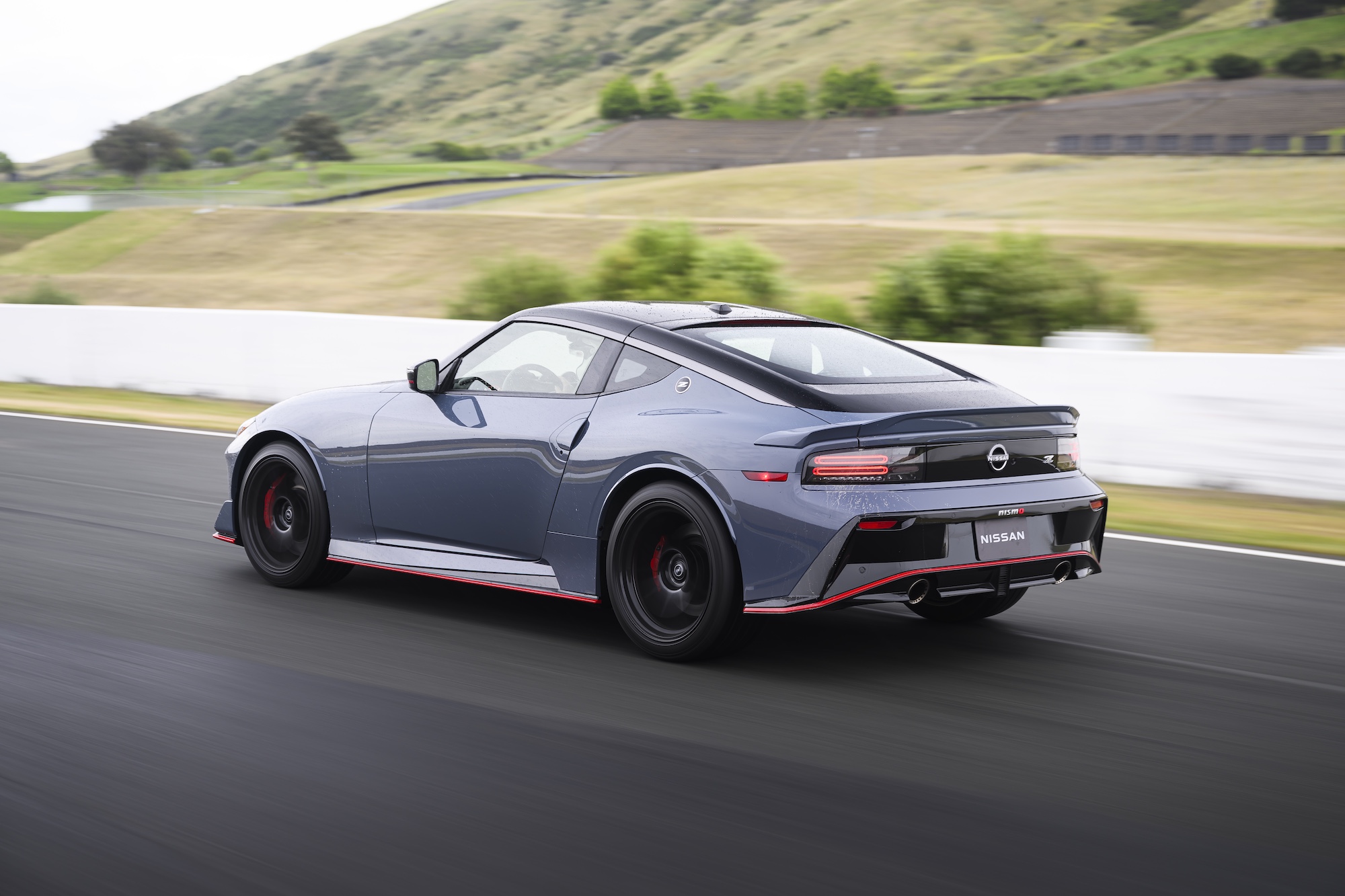
In fact, I’ve been considering getting another two-seater that I can use for fun rides with my kids and, more than once, I was thinking “this would work.” The main issue is, at probably $67k or more MSRP, the asking price does feel high for something that doesn’t offer power seats.
On the other hand, this is the top-of-the-line Z (cheaper trims are definitely available) and a top-of-the-line Toyota 4Runner is also that price. And this is literally the last two seat manual FR coupe.
So, Are You Getting One?
I couldn’t get spousal approval. I don’t mean that as “I theoretically couldn’t,” I mean I asked when I got home and literally couldn’t.


Wow. Manual seats. I had a lot of cars with manual seats. And multiple drivers. Not a big deal for me. A MSRP that starts with a 6 is.
But great write up. I’m happy you were given the opportunity and think you did a great job.
Thanks! I actually like manual seats! But the problem is this feels firmly like a GT car first and a track car second (not a bad thing at all!). And if your first job is to be a GT car, manual seats don’t quite fit the vibe, but I also think that’s just me and Nissan very much regards Nismo as a performance subbrand and not a GT one.
My issue with the Z has always been that ive always liked them, but not more than the outgoing model, and certainly not at the price of the new one compared to other things.
Now repeat that for 30 years.
I do wish for its continued success though as I watch the Z platform take the place of the S chassis and hope these dont do the S15 early death
I love the new Z, I followed the development and rumors like a hawk. I was all in on in the “Analog” complaints from some folks as a good thing. It was perfect and I wanted one with all my heart.
I then sat in one and I didn’t fit. Head tilted 45 degrees with the seat all the way down, much like the Supra. Damn Japanese engineers…
Thanks and welcome Liyan!
Not my cup of tea personally the current Z, but it’s semi easy on the eyes and I’m glad there’ll be a manual version, even if they’ll cost over $67K.
It was a well written review, but the very incorrect ‘400Z’ relentlessly throughout the article was frustrating and distracting. That one is on the editors. If you’re going to let a reader post articles, at least make them use correct names and terminology.
I quite like everything about the he Z except for one item, the trunk is very small. It’s a similar sized car to a Porsche 944, but has 1/5th the trunk space it seems. I’m not sure where all of the space in the rear end ended up but it seems very inefficient.
I don’t know if it’s because it’s so uncommon, but the Z strikes me as such a good looking car the rare times I catch a glimpse of one.
That 3rd picture of the side view is great, and for once the added Nismo bits actually work for me.
Manual is the way this car should have launched, but the entire Z launch was botched for many reasons so I doubt it would have helped.
The big problem of the Nismo, at $67k, is that you’re in BMW M2 territory now. Sure, you don’t get the 2 seat traditional sports car look (which can be a plus, practicality-wise) – but you end up with a significantly better car all around.
That was a well written review. Well done, Liyan.
The comments on the interior rang true to me (from pictures at least). It’s great to have buttons and a no-frills dashboard, but do the seats need to be manual? Like, I still want to drive it on the street and have nice lumber support.
Two words: Curb weight.
Good review. And bravo for making this, Nissan!
Damn, I discarded discord.