

There’s an election going on in California today and I’m grateful to not be in the state so I don’t have to get too invested in the outcome, mostly because, from a casual glance, it seems that 900 people are running for governor and 1,200 people are running for mayor of LA. I don’t have time for that. I also don’t necessarily have time for a long, discursive rant about gas car bans, but somehow both have landed on my plate this morning.
The Morning Dump is going to be a lot of smaller news stories weaved into a larger narrative, primarily because I don’t want this to become The Evening Dump. It’s going to center on something that came up recently in the race for California’s governor. If you weren’t aware, California has a non-partisan jungle primary, wherein the top two candidates move onto a runoff. This is a bad system that results in sometimes whacky outcomes, though regular partisan primaries also result in whacky outcomes, so it’s not like I’m offering up a better solution.


Two of the leading Democrats appear to be former Health and Human Services secretary Xavier Becerra and billionaire climate activist Tom Steyer. That the billionaire is the more environmentally active candidate here is interesting and, again, one enters the vortex of nonsense that is California politics at their own risk. You have been warned.
One Of The Candidates Told The Truth And Maybe Shouldn’t Have

Having worked on campaigns in the past, including a gubernatorial campaign in a large state, one of the ways you get endorsements is by filling out these long surveys from various interest groups, newspapers, The Expanse fan club, et cetera. In a survey from Politico, Becerra wouldn’t commit to California’s 2035 gasoline ban:
“California should transition from gas-powered vehicles when it makes sense — when infrastructure and affordability are there for California families,” he wrote in response to a question about whether California should maintain the strategy.
Becerra reiterated that position in an interview this week, arguing that the pace of the shift away from fossil fuels is dependent on support from the federal government, car manufacturers and the state’s own budget — all of which are in flux.
“We’re not going to live in a world that’s make-believe,” Becerra said. “If you could tell me where those things are, I could give you a much more precise answer. And if anyone says they can give you that answer, then they’re just making a lot of inflated promises.”
I spend a lot of time on BlueSky, which is a social network for performatively unhappy progressives and genuinely happy furries, and they were not enthusiastic about this response. Neither was Steyer, who jumped on the answer by saying this:
We know the reason why. Chevron and Big Oil have backed Xavier Becerra, spending well over $1.1 million collectively to boost their candidate of choice. This is the same Becerra who proclaimed, “You need Chevron. I need Chevron,” and called Big Oil cutting him a check “their prerogative.”
The reports paint a clear picture: Big Oil sees Becerra as the candidate who will protect the status quo.
Not my pig, not my farm, and I am not defending Becerra here on taking the money, but when you’re running against a billionaire you gotta spend a lot of cash, and it has to come from somewhere. It opens you up to attacks like this, so your mileage may vary on whether or not it’s worth it (if you’re in Texas, taking oil money isn’t as much of an issue).
However, I don’t think Becerra is necessarily wrong about the gasoline car ban. The reality is that it probably won’t work, that California has been historically bad about encouraging good outcomes for electric cars, and that propping up infrastructure and encouraging more hybrid sales will probably result in less fuel usage faster than failing to get people to adopt EVs. Reality and politics are not the same thing, so maybe it was more electorally convenient for him to lie about his feelings and continue the Newsom policy of pretending like it’ll all be fine if we just clap our hands and believe.
California Could Do It, But It’s Very Hard
The best argument for requiring companies to adjust to nothing but EV sales by 2035 (as both California and Europe have promised) is that even if we fail it’s a reasonable expectation that EV adoption will end up much higher than doing nothing. Many scientists and rational people (like me) believe there’s a climate crisis, and it’s therefore somewhat galling to say we should be pragmatic about all this. It upsets people. I totally get that. My personal belief is that not only should we make it possible for more people to own affordable EVs, but that we should reduce the necessity of having a car for commuting in general, which reduces energy consumption and leaves more room on the roads for enthusiasts to just go and have fun. Win-Win!
That’s true, but also it’s fragile in our modern version of representative democracy, and the politics of it are terrible. What do I mean? There’s a Patrick George TMD from 2023, when the Biden Administration announced it was making a big EPA push, I think about all the time. Patrick said getting all Americans into EVs could be “America’s next moon landing.” That’s not quite what happened, but this ended up being darkly prescient:
I do expect “Biden is forcing you to buy an EV” to be some kind of talking point in the next election. But this EPA stuff isn’t the same as an outright ICE ban like Europe (and California) are doing, just a huge push toward efficiency and zero-emission cars. Right now it’s safe to say that battery EVs are the furthest along in that race and getting the most support in terms of infrastructure buildout.
But we’re in an election season, right? (It feels like we always are; thanks, cable news.) Realistically, even if you’re a fan of this stuff or hate it more than anything, it’s worth asking what happens if Biden loses the White House in 2024, or the Republicans take the Senate.
Some experts I spoke to yesterday say that since these EPA rules deal with cars from 2027 onward, and the soonest a new president could toss them would be in 2025 and 2026 after their election, the car companies will already be on this course by then and that will be tough to reverse.
We know what Patrick didn’t know, which is how the election turns out. I will add, in full disclosure, that Patrick finished that paragraph by saying he thought the auto industry was “going largely electric anyway” and that’s amusingly something we used to debate all the time. He’ll ultimately be correct about EVs being the predominate car at some point in the future, it’s just that he, David, and I never quite agreed on how far away that future is.
It turns out that the politics of even what the EPA was trying to do were terrible. This gets very complicated, but there was never a national ban on gasoline-powered cars, even though by allowing California to have its own mandate (that other popular states followed) it did create something that amounted to a quasi-national ban. I don’t think President Trump won the election by saying he was going to stop a ban on gasoline cars, but it did make it politically possible for the President and a Republican-controlled Congress to effectively kill the Inflation Reduction Act, neuter penalties for violating fuel economy standards, and otherwise make the selling of EVs that much harder. While most Americans still think global warning is a problem, there’s been an alarming pessimism about whether or not anyone will do anything about it.
What’s most annoying about this is that, in the past, a Republican President (albeit, a Californian) teamed up with a Democratic Congress to address these problems and did so successfully. The California Air Resources Board, the EPA, and the passage of the Clean Air Act all worked together to result in serious change. As the EPA recently wrote:
The U.S. vehicle pollution control under the Clean Air Act is a major success story by many measures:
- New passenger vehicles are 98-99% cleaner for most tailpipe pollutants compared to the 1960s.
- Fuels are much cleaner—lead has been eliminated, and sulfur levels are more than 90% lower than they were prior to regulation.
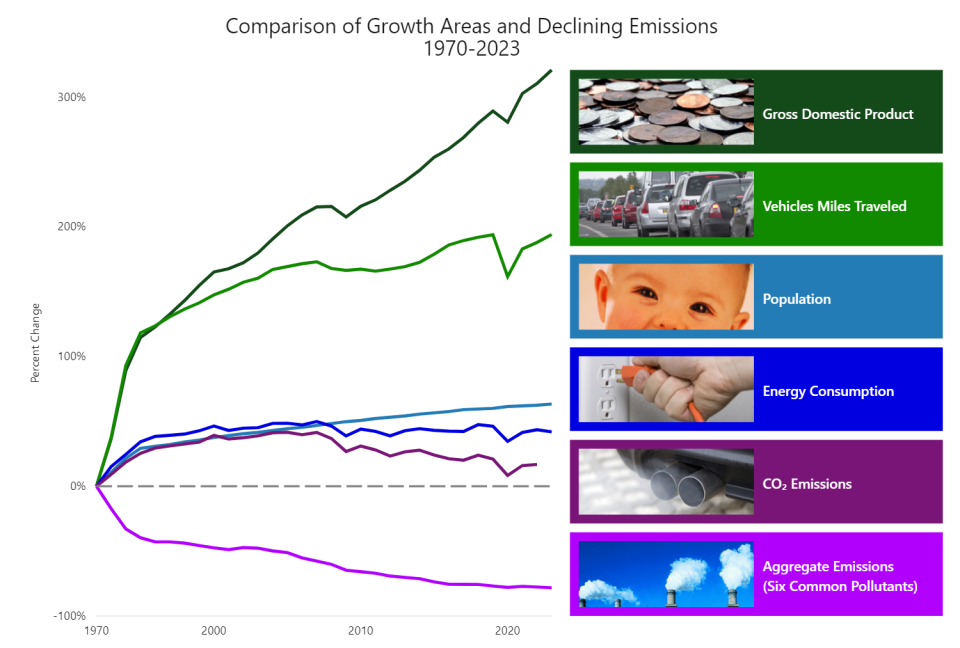
- U.S. cities have much improved air quality, despite ever increasing population and increasing vehicle miles traveled.
- Standards have sparked technology innovation from industry.
- Reducing pollution from transportation sources has led to healthier air for Americans.
When it comes to making electric cars happen, though, I’d say that California’s results have been fairly mixed.
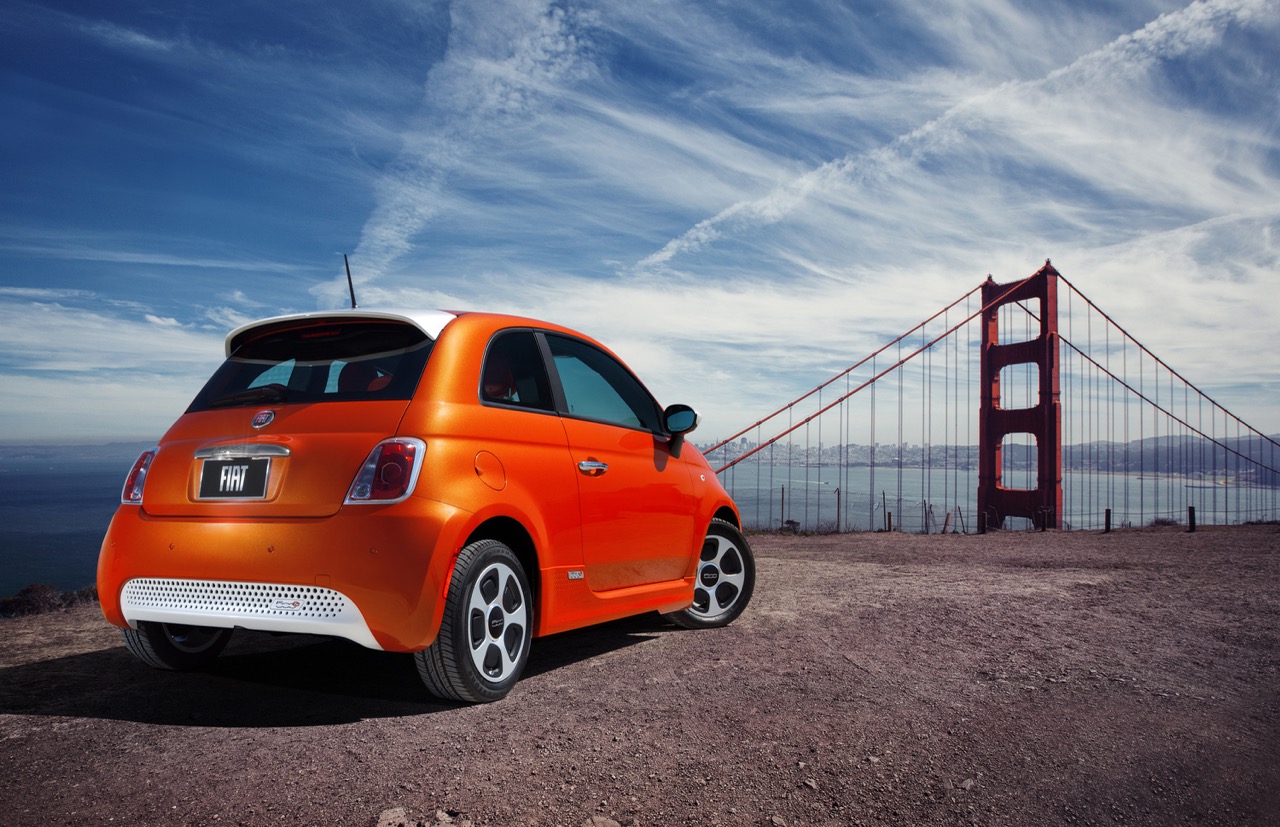
With the notable exception of Tesla (which also required a ton of money from the federal government go get off the ground), the state’s previous attempt to require EV cars sales resulted mostly in costly dead-ends typified by compliance vehicles that didn’t go anywhere. Anyone remember the Fiat 500 EV? The Plug-in Hybrid Subaru Crosstrek? The Honda Fit EV?
Maybe Steyer is correct and Becerra is wrong. Maybe this is absolutely practical and achievable. I don’t think it is, and I don’t think it’s terrible to say that it isn’t obvious what’s going to happen.
China Doesn’t Have An ICE Ban And The EU Is Already Trying To Walk Back Its Own Ban
People love to point to China as an example of what’s possible, but China is not a democracy and what they’re doing, I think, is often misunderstood. This is a country that’s invested so heavily in electric cars that it has an extreme level of overproduction and desperately needs to sell cars to other markets. And even then, last year only 55% of new cars sold in China last year were EVs. That’s in a country where there’s more choice, more affordability, and more infrastructure for EVs than anywhere else in the world.
There’s also Europe and, in particular, places like Norway, which is a country that mostly sells electric cars and has done so by subsidizing the cost of EVs by selling everyone else petroleum products. Even then, it was a gradual subsidy and tax that led Norway to this outcome.
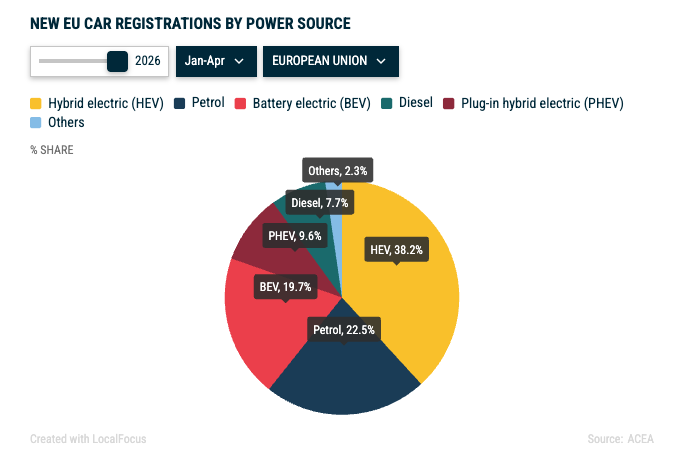
Looking at the most recent EV sales in Europe show that gas prices are leading people to battery electric cars, PHEVs, and so many hybrid. Hybrids are the fastest growing part of the market and will likely remain so into the near future. Even with the increase in sales, the EU continues to walk back and adjust its EV bans in light of consumer preference and the reality that the aforementioned overproduction in China means the continent is at risk of being overrun by government subsidized cheap Chinese EVs. Also, you know what’s a large, advanced country that doesn’t have a national ban on gasoline cars? China.
The Very Visible Hand Of The Market To The Rescue

If you are a regular reader of TMD you have been down this road with me before, so I won’t entirely restate the point. If you care about the environment, and think it’s an emergency, you should want the fastest route to reducing emissions. That’ll involve a lot of EVs, but the existence of EVs doesn’t mean ignoring the interim step of hybrids. There are some consumers who may want an EV but lack the infrastructure to drive one (I’m one of them). There are some vehicle types that are popular, like trucks, that aren’t necessarily ideal EVs for everyone in every situation.
Americans do not like being told what to do, but they are logical enough to see that purely ICE-powered cars make a lot less sense in most situations and are therefore adopting hybrids at huge rates. While the President may not believe in global warming, or particularly care for electric cars, he has inadvertently helped adoption by starting a war with Iran that has caused gas prices to shoot through the roof.
Not every automaker puts out monthly sales data, but there’s a clear pattern with the automakers who do. Just this morning Hyundai and Kia released their reports and it’s a good time to be selling hybrids. Here’s Kia’s release:
Kia’s hybrid models saw significant growth with Sportage Hybrid (+171 percent); Sorento Hybrid (+101 percent); and Carnival Hybrid (+32 percent); each achieving best-ever May sales records and Carnival Hybrid also setting its best-ever any-month sales record.
Overall, Kia’s hybrid models (+179 percent) and electrified models (+133 percent) delivered the highest monthly and best-ever May year-to-date sales totals in company history.
And here’s Hyundai:
Electrified vehicle sales continued to drive overall growth, highlighted by the best ever hybrid vehicle sales month, up 90% year-over-year. Tucson HEV (+ 10%), Santa Fe HEV (+30%), Elantra HEV (+29%), and Sonata HEV (+250%) all achieved new May records.
Hyundai’s electric vehicles also posted gains, up 10% across the category and a new May record. IONIQ 5 (+28%) also established its best May ever, reflecting the benefits of Hyundai’s continued commitment to the EV market.
That’s good! Electric cars for some, miniature American flags for everyone else. And I also think the market responded to the potential government requirement for electric cars by producing a lot of relatively expensive electric cars. While Honda has abandoned its EV plans in the United States for the moment, automakers like Ford are pressing ahead with more affordable electric cars that will be sold without the federal tax credit.
Bans are not always great policy and almost never great politics, which is extremely true in the automotive world. What Becerra said was maybe bad politics, but it was a recognition of the reality of where California’s policy is an imperfect solution to a very real problem.
[Ed Note: I’ll just note that it was obviously always going to be gas prices that push people to drive EVs once those early adopters had bought in. And second, I think both governments and car companies pushing products that people don’t want is always a recipe for disaster; working in harmony with the market (focusing heavily on pushing hybrid options) instead of butting up against it would have reduced our overall CO2 emissions by a huge amount. -DT].
Ok, Now A Song
That’s right, let’s go back to Malaise Era Los Angeles with Rose Royce’s “Car Wash,” the unforgettable eponymous bop from the slightly more forgettable film.
The Big Question
Ok, have at me! Maybe I’m wrong!
Top photo: DepositPhotos.com


One of my favorite songs, and a fantastic movie too! Thanks!
Trains, man.
https://youtu.be/sN7e38Q7e1U
My new commute includes a 70 minute ride on the BART (train). The other option is 40 miles of pure traffic. The benefit is I get to read and comment while I commute, leaving me ready for home when I get home. SF and the bay area have great public transportation and it works great. Some crazies, but they are mostly harmless.
I am fine with Bacerra, everyone takes money. Steir is a bit of a clown, but would be fine with him too, maybe. It has been surprising that we got what we got for choices.
BART is a million times better than trying to deal with all that traffic. I only used it a few times a month. But I only tried driving in one time. and riding in one time. BART is the answer.
Bloody Hell, Matt, I’d only just got Barry White’s version of Just The Way You Are from going round and round in my head, and now you’ve gone and rammed Car Wash in there.
It’s an ear worm I’m happy to have stuck in my head!
This is probably common knowledge on here but I feel like the general public doesn’t understand that there are no pollution controls for CO2. Burning a gallon of gasoline in your 1960 Chevy emits the exact same amount of CO2 as burning a gallon in your new Prius. The only difference is you’re using a less in the Prius.
Inteseringly enough the prius might emit more CO2 per gallon. That 1960 Chevy probably has alot of unburnt hydrocarbons in the exaust which do not become CO2.
Even better for CO2 is if you dump the Chevy in the ocean afterwards then you will get some real carbon sequestration.
My takes on this topic (I have an EV and a gas car):
I think the most effective way to encourage EV takeup is still financial, most people like to save money.
I would love to see what the world where all the money spent on EV rebates and charging stations had first went into building nuclear and hydro plants st looks like.
I can say for sure it would have led to less cumulative emissions than we have now. It would probably set us up better for future EV’s.
I hope it would be some where between star trek and fallout (before the bombs dropped).
And you are correct about less cumulative emissions, although it really wouldn’t matter that much. Other countries are still building coal/natgas plants like crazy, making improvements in the US largely moot.
On point 2 you’ve got it backwards: an EV run entirely on coal-generated electricity is still cleaner at the end of the day, by quite a bit. And that’s been the case for many years now. Waiting until we have fully renewable generation would just mean more pollution in the grand sum of things. An ICE vehicle does not get greener as the grid does, it stays the same forever.
https://ev.aaa.com/articles/coal-powered-electric-cars-still-cleaner/
https://www.epa.gov/greenvehicles/electric-vehicle-myths#Myth1
https://www.forbes.com/sites/mikescott/2020/03/30/yes-electric-cars-are-cleaner-even-when-the-power-comes-from-coal/
And on point 3: Home solar panels are becoming very common as they’ve gotten cheaper (and will continue doing so). My brother is getting paid by the electric company for his excess generation, and he doesn’t even have an EV. Home solar panels could end up driving the price of electricity down significantly.
The key incentive for a burgeoning technology and infrastructure can never be frugality; the investment is massive and has to be recouped. That’s why EVs are all expensive luxury vehicles and cheap EVs have consistently failed in the market. That’s why you heard about GM losing money on every Volt and Bolt. That’s why Tesla started with a luxury sedan and only barely built a $30k EV by technicality some 10 years later.
My Trumper family leased and then bought an EV because they already had solar, and the difference in “fuel” costs and the net metering payback penciled out to cover the car payment, and that was at 2024 gas prices.
EVs are better than gas cars for most people, and when the Leaf and Bolt are running in the same price neighborhood as the cheapest gassers, I don’t see any excuse for why we shouldn’t be targeting at least 90% EV sales in 2035.
If you don’t want a ban, just pull the fossil fuel subsidies and the market will adjust real fast, I imagine. Downside is that high gas prices are going to hit low income folks running clunkers in rural areas harder than people who can buy new cars.
Banning the sale of new gassers sure seems simpler since it lets the folks with more money absorb more of the cost instead of unnecessarily jacking up gas prices for people who can’t afford it. Add in some actual funding for public transit and high speed rail while you’re at it.
Then we get a lot more of the people who don’t want to drive off the road so the car nuts can go fast.
No need to ban gas cars which is not simple, trust me we are not ready yet in multiple ways even in 8.5 years , there are other forms of taxation that are less regressive. Here are a few examples to get you started.
1) Extra sales tax on new gas vehicles.
2) a graduated tax on yearly registration ( more valuable car pays more)
3) EV only parking in preferred locations, maybe with free L1 charging?
4) higher diesel tax, or higher gas tax with rebates for low income.
We already have property tax (required as part of registration) tabulated based on vehicle value in some states (I’ve lived in at least three). I think something that combined value and GVWR would be a good option to help offset the huge gap between the gas tax and actual road maintenance expenditures. That’s a bit off topic here, other than how many states are using punitive EV registration fees to disincentivize EV adoption.
Something that almost happened, but seems unlikely now, would be putting a price on carbon emissions and adding that either into the purchase or registration fees on all vehicles. It would be a lot easier to calculate for say, a lease, where you’re buying your miles up front, but more difficult to implement on a purchase. Having to disclose your odometer would be minimally invasive, and also tie back into that use tax aspirations of the gas tax, but people are less sensitive to periodic small charges versus a large up front thing, I’d expect, so IDK if it would heavily influence behavior or not.
I’m not sure I believe we’re not ready to ban the sale of new gas cars by then, but I agree it’s not the only way we could reorient things. I seem to remember the Rewiring America folks had some good policy proposals, and one of the best schemes I’ve seen, if the feds were to reimplement an EV credit was this one that targets the most polluting vehicles first:
https://www.niskanencenter.org/electric-vehicle-subsidies-are-going-to-the-wrong-drivers-and-were-paying-for-it-in-carbon-and-cash/
Credits are a good idea too, forgot about those. If we subsidized EV’s really heavily you wouldn’t have to do any new taxes on gas cars, people would just naturally pick an EV in most cases. The way the previous tax credits were done was not ideal, if they ever do them again hopefully it’s better implemented.
I would be happy to being wrong on how EV ready we are in 2035. Let’s meet back here in 8 years and see who was right.
Sounds like a plan!
Last I looked into it (which was years ago, to be fair), there actually aren’t many subsidies for fossil fuels. It’s a well-developed technology that doesn’t need any help turning a profit. But of course that may have changed with the current administration.
I think the more important focus would be forcing fossil fuel producers to pay for the environmental costs of their industry instead of letting them socialize it onto the government to clean up (with us footing the bill).
But like you point out, we run into the fact that the system is set up to be regressive and always hurt the poor the most. Costs are always passed on to the consumers.
There are lots of ways to tabulate them, but those externalities are often considered part of those subsidies.
https://en.wikipedia.org/wiki/Fossil_fuel_subsidies
While I think environmental externalities should be considered a subsidy, that’s not what most people would consider one, so I took your comment as referring to direct financial support and tax breaks.
I meant all of the above.
I don’t think he was saying that EV’s emit more CO2, I think he was having a defeatist attitude like:
“it doesn’t matter if we reduce CO2 emissions here, other places will emit even more to make up for it”
Also the Volt was awesome.
I don’t see any way to interpret his comment that way. I liked the Volt too, but it was sadly never the success GM hoped for and would be interesting to see if they ended up recouping the R&D by the end of its run. Low margins make it very hard to justify the big R&D investment of an entirely new propulsion system, as well as manufacturing methods.
In Germany we pay roughly an average of 0,3€ or 0,35USD when charging at home. At charging stations, it usually is between 0,40€ to 0,8€ depending on which one you chose.
But even with 0,5€ per kWh it is still cheaper to run an EV here compared to an ICE.
I just sold my Volvo XC70 and replaced it with an EV. Can charge for free at work, luckily, or for 0,27€ at home.
That’s nice of your work to offer that, mine threatened that anyone trying to sneak an extension cord to charge would be fired.
It’s mainly due to them being too lazy to track it. We have 2 charging ports at work, mainly for the people who drive a company car. As my company is cheap and did not want to invest more money, they forgot to implement any form of tracking of usage and so on. But also on the other side, HR allowed private use.
So maybe one day it may change, until then I will try to charge my car at work as often as possible. Got it in April. The last 3000km did cost me 30€, as I had to charge once at home and once on the way.
“too cheap to meter” – fellow LeShow listener?
as gas price goes through the roof, more people will be looking in to purchasing an EV, and the dealers will happily add 5K~10K markups
Am I the only rational person here who questioned the statement that Chevron and Big Oil combined donated $1.1 MILLION? REALLY $1.1 MILLION DOLLARS is going to buy the election in California? Soros spends more than that on small city district attorneys. That is even less than what LA spent on filling reservoirs. Heck LA spent more on fixing fire engines than this and they have a huge lot of broken fire engines.
I have to disagree with you Matt. If you look at the big picture California is actually on the road to 100% EV adoption. Their horrible economic decisions have made it unaffordable to own a house. So as it keeps getting worse middle income families will be moving into their cars and I think we all agree electric cars are better living spaces. They need to work on putting charging stations every telephone poll because while the roads are becoming undrivable for so many reasons protesters, homeless encampments, drug needles popping tires the roads will be where all the cars are parked permanently. Those EVs won’t be driven anywhere but parked hooked up to the telephone polls and they will be mini houses.
“Their horrible economic decisions have made it unaffordable to own a house”
We can thank Chevron and our Boomer Parents for Prop 13 which fucked up the CA real estate market starting in 1978.
Oil money will continue to win, America will continue to build only luxury EVs, California will miss their 2030 target by a hilariously wide margin, and RAM will build a V12 4500 designed by ChatGPT.
Solid 2026 retrospective
The article mentions more than once how Hybrids are steadily taking over. Home solar adoption is widespread and renewable energy is taking over the grid. It’s happening far later than it ever should have, but better technology does eventually prevail.
I’m in CA and I must admit that I put off my election research so long that I wound up relying on my neighbor’s cheat sheet (we’re similar politically, etc… so I’m fine going with her research).
But I wanted to mention that I assume Californians already buy plenty of ‘environmentally friendly’ cars… surely more than any other state in America both in real numbers and per capita. You cannot swing a rabid opossom without literally hitting multiple EVs. Of course, this presumes that EVs are ‘environmentally friendly’ more or less. It used to be Priuses were everydamnwhere, but it’s been EVs for the past decade+, with about half being Teslas and half being everything else.
At least that’s how it is for Southern California (LA, where I am).
If you want a better society, environment, living conditions, Stop rewarding monopolies and loud loonies. Generally your average human prefers being liked, and wants to feel good about themselves, and will go as far as being nice to others to that end. We follow incentives that we think will benefit us, but thoughtful care is needed by anyone setting the incentives. No government is perfect, and we are the farthest off the rails now in my lifetime. I was at Valley Forge for our bicentennial. I was 12 then, lots of uniformed reinactors, Cannons shooting polystyrene cannonballs, real lead musket balls formed right in front of me, and placed in my hand still warm enough to require juggling. I am greatly saddened by the thought of the most obviously corrupt, immoral, reprehensible president to ever hold the office, presiding our 250th. The scrap of optimism is that We, as a nation, recovered from the civil war, and need to again-“in order to form a more perfect union”
On that last bit: did we, though? It seems like a good sized cross section of people never got over losing…
“More Perfect”
I don’t think it’s ‘didn’t get over losing’ as much as it is a reaction to his daily words and actions. There’s a big difference.
He means losing the civil war, not the last election.
OK. Reading the post back, I see how this is possible. Thanks. 🙂
“a reaction to his daily words and actions” is apt in both.
Your CNN regurgitation is very good!
Foxy!
The majority agree. The lack of celebration nationwide as we approach the 250th speaks to the moment.
You know the economy is fucked when rightists start saying “Guys, did you know it’s America’s BIRTHDAY!!!“
Beyond the economy, that’s for sure. The bicentennial seemed to be universally celebrated. Now. Well, hard to celebrate when you hate your neighbor.
Don’t be so easily triggered and offended, cupcake.
“Anyone who doesn’t toe the Fox News party line 100% is a CNN viewer!” – Retard
You can’t “regurgitate” what you don’t consume. I haven’t had cable since 2005. I rely on a wide array of trusted global sources and academic studies. There is a wealth of knowledge available to anyone that has the interest and patience to sift out the chaff.
Thank you.
i think the element missing from this excellent discussion is that 28% of all greenhouse gas emissions (in us) is from “transportation” – cars, trucks, trains, airplanes, and ships.
just one of those is ‘the little guy’, thus the focus on personal vehicles. i don’t buy the low-hanging fruit argument.
we don’t seem to going after the other transportation modes. neither are we going after industry, agriculture, commercial and residential buildings, nor electricity generation with any overt enthusiasm.
The reason is it was never about emissions all along.
Making companies change is an expense. Making consumers change is sales.
Source? Every one of those you listed is getting pressured and regulated into cleaning up, at least when the adults are in office. Could we do more? Absolutely, but with how much corporate money is in politics, systemic change will always lag behind pressure on individuals to change personal habits. Unless we get money out of politics that isn’t going to change.
This.
All of those are also being targeted. Also, to get to a 100% requires a lot of 5% (about twenty or so); if all of those 5% emitters say the same thing then nothing will happen.
As for the headline, this is absolutely the case, but not the way you think.
The big driver for Americans demanding tiny fuel sipping cars in the 70s wasn’t actually the price of gasoline. Gasoline was, inflation adjusted, cheaper than today.
The problem wasn’t that you couldn’t afford gas, but that you couldn’t get it period. If you had the wrong license plate, you weren’t allowed to get into the hour long line to get gas. If the station didn’t run out of gasoline, you could only get 10 gallons, and for a lot of the giant cars from the early 70s, that was only 1/3rd a tank.
I’m like my dad was in 1978. I have a perfectly fine running car. Mine gets 23 mpg, my dad’s got about 12, but, like dad, I have an old car that is reliable, comfortable and easy to drive. Sure it cost more to drive, but I don’t drive that much and it’s a lot cheaper than getting a new-to-me car.
In 1979, things changed for dad. He couldn’t go get a fill up once every other week. He wasn’t allowed to. He could, if he was lucky get a quarter tank every other day. Each time he got his 1/4 tank of gas, it was about an hour wait in line to do so. Although it cost more to do, he sold the old giant car and got a newer smaller car that got significantly better gas mileage.
Right now, if we have a real gas shortage where I can’t fill up my car whenever I want to, I will be shopping a used EV as quickly as I can before those prices go up too bad. Just like Dad shopped for a small car when it happened to him in 1979.
Dad never went back to big cars. He stayed with mid sized cars and stopped driving full sized ones. 1979 was a big change in his car buying habits. I expect that if we had a real gas crunch with rationing ala 1979, you would see people switch to EVs by the crate load and never go back.
Unless something changes drastically that very well may happen sooner than later. We’ve (the world) been drawing down on stock piles of crude over the last 3 months and estimates are that they’ll be burnt up in July.
I’ll also add that despite what the White House says, it seems we’re no closer to a deal than the day we started this war.
https://oilprice.com/Latest-Energy-News/World-News/IEA-Global-Oil-Stocks-on-Track-for-Historical-Lows-Ahead-of-Summer-Peak.html
Yeap. I expect that in July, we will start seeing serious gas crunches.
This will change things.
Why do so many people say they can’t do an EV? There’s no charger.
There are those that say “well, for daily driving, I could do an EV, but for road trips, I don’t think I could.”
Thing is that back in the 70s, this was the same attitude for small cars. “Sure, I could daily a Pinto, but who wants to do 8 hours of driving in a Pinto?” and so full sized cars sold well.. right until it became not just expensive to daily a full sized car, but impossible to.
When people got the small cars to Daily, they started figuring out that 8 hour drives were uncommon even with their full sized car. So they didn’t go back to them.
I could see that happening with EVs. So many think “what about…” and can keep a gas guzzling ICE because they can get gas. But if gas is not available, they will be forced to switch to EVs and might find that their worries about range and charging access are unfounded.
I was one of those, then I noticed that even the “quick” gas stops were about 15 minutes with the kiddo. At that point, may as well plan a meal break with a charging stop and it’s all a non-factor.
We did keep an ICE in the stable for towing but we use the EV for about 85% of our driving needs. Honestly, I don’t know why I was so hesitant to make the change.
I’m still ICE all the time. There’s a symmetry to my Dad in 1978.
Dad had 2 cars in his fleet in 1978. Both had a lot of miles and both drank fuel like a college kid drinks energy drinks. Between them, and their giant thirsty engines, he used about 40 gallons a week of high test (98 octane).
Both cars were cheap to buy, maintain, insure and register. So, the math worked out that keeping 10+ year old cars that drank high test was a lot cheaper than getting newer cars that were more efficient. Dad had this idea that “when something breaks on these old things, I’ll replace them with something that gets better gas mileage,” but since they were still running well and he was thinking of retiring early and he put off a swap to a newer less thirsty car.
I’m in the exact same place. I have 2 cars. Both have insane miles (one over 300k). Between them, I need 20 of gas a week. Doing some quick math, I can’t justify a new-to-me car. Gas would have to be $11/gallon to mean I spend as much a month on gas for one car than the payments on a $25k used EV. So, until something major breaks on the cars (or I can pay off some stupid debt I built up), I’m sticking with the old ICEs.
1979 changed the rules for dad. He couldn’t get 40 gallons a week of high test. He was forced to switch and once he did, he never looked back. I figure that if something happens where it becomes difficult to get my 10 gallons of gas a week, I will be forced to look for an EV.
I strongly suspect I’m not the only one. One of the reasons I suspect this is that I’ve notice used EV values going up recently, because more people are getting them as a 2nd (or 3rd) car for the routine around town stuff.
Thanks for this comment and those higher up the thread. Well written and thoughtful.
If the government didn’t push the market to getting people in EVs, the market (especially our market…) wouldn’t have made it a viable option. Their representation of the public interest was clumsy and ineffective, but it would have been dramatically worse if they had embraced an ultra-moderate “hybrid-centric” solution.
Also, of course it’s only appropriate that this featured opinions from Bluesky, the platform of familiarity over solutions. Knockoff corporate Mastodon that’ll have all the same problems of Twitter within a few years, but it’s blue and made by Jack Twitter himself, so it must be good.
Not saying Mastodon has done a perfect job of being an accessible platform to adopt (organizational sluggishness was a problem, but they finished a lot of administrative setup and got EU digital sovereignty and open source funding).
Is it much better than people staying on TwitX? Yes, absolutely. But it’s really just a non-solution that further entrenches the status quo.
Bluesky was the market response to a sudden power vacuum. If organizations representing the public interest hadn’t kept investing in the operation and further development of Fediverse platforms, people would have no better options.
(Also if anything in my response has “you didn’t read the article” problems, it’s because I live in the PNW and California politics give me despair. I blame the even higher concentration of BigTech/startup people and excessively sunny weather.)
The United States of America is on the verge of collapse, mark my words. Low-wage workers are on the verge of spending more to get to work then they’ll earn for their shift. Those folks can’t afford an EV, and maybe not even an e-bike. Why bother going to work if you’re gonna lose money in the process?
I have maybe 20 years left on this earth, and I’m not moving out, but I doubt that I’ll be living in the USA as we currently know it when I die.
Things will go downhill but not a collapse, the US is just behind Europe in their managed decline, just watch them to see the future.*
Assuming no nuclear war*
When people can’t feed their families, bad things will happen. Rampant crime. Theft, burglary, looting, marauding. Law enforcement can’t possibly keep up. It’s coming.
Probably but I disagree on the timescale. Collapse would be like a year? I’m seeing more of a decline over decades. Greece is a good example. Right now hundreds of billions of government funds are spent on stuff that isn’t a necessity, if things get worse you would hope some of that spending would be cut.
Also there is plenty of food in the country barring a supply chain sabotage and worst comes to worse the US could stop feeding the world. Lots would die but not in the US.
No, because the incredible problems the US has have never been dealt with, just papered over with money. When the collapse comes it will be dramatic.
You might be right about a dramatic collapse, I can think of a few things that could cause it (an invasion, nuclear war, massive solar storm) but we are also coasting along on infrastructure built by our parents and grandparents, that infrastructure won’t dissappear overnight and will provide advantages until it wears out.
I can’t think of any “incredible problems the US hasn’t dealt with” besides government corruption and incompetence (which would lead to a slow decline as money is siphoned off) , can you give more examples?
The banana republic-style income gap, racial tension, lack of opportunity and social mobility (amongst the developed countries, we have one of the most rigid systems – if you are born poor, you tend to stay poor, mass propaganda to the contrary notwithstanding), vanished industrial base, significant educational struggle (anti-intellectualism, illiteracy, getting exponentially worse), xenophobia, misogyny, and the aforementioned corruption and incompetence.
There is also very little free competition – monopolies, monopsonies, and (to a lesser extent) government choosing winners – what the economists call a “system of rents”. We are a third world country with a Gucci belt and cheap energy, but we are reaching a point where energy prices are no longer low and people are getting into credit card debt to eat.
That last paragraph really speaks to me and sadly I don’t know of a possible solution some of these companies are global and have the market cornered and politicians in their pocket. I’m going to go ahead and just make the best life for my family and keep my kids off the internet.
Yeah, that’s sort of my default, too, but then I feel guilty about not being part of any sort of solution. I like what people are doing in Albania right now (search for Sazan if you are unaware) but I am afraid that Americans typically turn on each other and almost never towards their actual enemies.
Best.
Regarding Xavier Becerra and what’s he claims is needed to transition to BEVs completely is more or less bullshit.
The way I see it, the #1 thing California needs is to figure out ways to bring down electricity rates in the long run in a sustainable way.
The electricity rates in California are crazy.
Which is why every new home being built has solar. We have sunshine most days here in the central valley.
Like, the loser gets whacked? I knew politics was cutthroat, but that seems a bit over the top, no? 😉
That didn’t stop one party from claiming there was. The modern Republican party habitually lies. The sooner the majority of the country figures that out, the better off we’ll be. Which is somewhat ironic, given that the people who vote Republican will by and large talk your ear off about how corrupt all politicians are, but have a massive blind spot on the ones they voted for.
I don’t live in California, but if it’s a choice between a guy who is making pragmatic and accurate statements but has some problematic donors, versus the guy who is a problematic donor (you don’t acquire a billion dollars without some skeletons in your closet), I know which one I’m picking.
Look at how quickly they made up the one about James Talarico being vegan, out of whole cloth.
You mean James Talarico, née Jane? (according to the Republicans)
I’d forgotten they made that up too.
There never was a national ban on ICE vehicles but CAFE was set to hit a goal of +53mpg before it was changed. which would either mean every car needed to be a prius or there needed to be a huge increase in EV production, something like 40-50% of all cars would have needed to be EV’s with the standard mix of other cars. (we are at like 6%)
Sure saying “ban” would have been factually incorrect but “EV mandate” was pretty damn close to the truth. People forget this is why all the manufacturers rushed EV production and lost billions (and probably why Toyota didn’t mind, they had the prius & others).
I was with you until the end. Becerra is a corporate Dem no better than Schumer, Pelosi or Jeffries. I don’t trust billionaires in general but the system is set up to reward random business owners with vast fortunes due entirely to luck, first mover advantage, timing, location, etc. Elon Musk and Bezos didn’t get their fortunes because they were machiavellian geniuses, they’re morons who got lucky at the casino. Steyer has the most progressive platform and that’s what really matters after decades of failed neoliberalism enabling the right wing to become fascist and undermining the middle class with pro-corporate policies.
That’s fair. Like I said, I’m not in California so I had never heard of either of them until this post. I still think this specific criticism is unfair, but nobody should actually vote based on such minimal information.
My reference points are:
The public transport systems in Montreal, Tokyo, and Singapore are clean and safe to use. What is it about Californians that we have this mentality to destroy our public trains, buses, and other general public areas like restrooms. Can’t speak for other cities since I haven’t used their train system, but feel free to chime in.
LA’s public transport system isn’t bad, but isn’t great either. “LA” is very sprawled out, having a metro system that completely covers the entire area isn’t going to happen, but for now the system does hit enough areas to make it useful. However, it smells, is dirty, and at times absolutely dangerous to use with all the crazy people on it. I used to commute far for work, I’d have to switch off between metro and driving. Sitting in traffic killed me mentally, so I’d switch to public transport. I’d then get tired of dealing with all the crazy people on the trains and switch back to driving.
Trains should be something that makes your life easier, but in LA using the train feels like a punishment for not being able to afford a car.
That’s a long way of saying we’re far from being able to reduce the necessity of having a car for commuting, there are a lot of other things that needs to be addressed first, at least in LA.
The answer to the homeless / mentally ill issue we have in the US is generally the lack of federalized (mental) health care.
Also, a two tiered justice system that keeps letting people back out into society that are not fully rehabilitated, not prosecuting crimes, and letting those with the means to do whatever they want with a slap on the wrist. Its the ugly truth that most people do not want to address.
TBF that last group doesn’t usually ride the train.
Fair, but it all needs an overhaul.
Three-tiered imo – the lumpenproletariat suffers no consequences and nor do the wealthy, but if we were to do something we would pay twenty times over. Even if eventually vindicated, a middle-class person would have lost their job and home by that time.
This is all true. As a first step, CA needs to send all the crazies on the street who were given a bus ticket here by their state back to their own states and have them deal with it on their level. As a californian, I don’t need my already high taxes to pay for other states’ problems. I think there was some statistic published where like half of the homeless interviewed here were actually not even from this state originally.
If I was homeless I would rather live there than where I am, nicer weather for sure
This is true.
In Tokyo, Singapore and San Francisco – The fastest way to get around is via mass-transit. So people from all walks of life are on the trains and busses.
In Singapore – if you litter, the fine for a first offense is $1000 SGD (almost $800 USD)
In Tokyo, the littering fine is 1000 Yen (@13 USD)
In Montreal, the littering fine is $280 for a first offense.
In San Francisco and LA, the littering fines are … well … nobody knows because it’s rarely enforced. You could go months without seeing a police officer outside of a car.
Tokyo and Singapore is intriguing to me, they both have a similar goal, which is an orderly society, but 2 different ways of going about it. Tokyo does it through culture and making immigration very hard to maintain that culture, Singapore does it through a heavy hand of law enforcement.
Japan always was an orderly society, thanks to its culture and self-enforced isolation. Singapore tried to replicate that in a multicultural, very disruptive and messy trade entrepot. Hence the force and fines. This worked due to buy-in from all sectors of society; they all knew Singapore would be subsumed into Malaysia if they slipped up. The Chinese and the Indians did not want that, and Singapore also attracted those Malays who preferred a multicultural society – the ones that did not always had the option of crossing the causeway.
I can strongly recommend reading Lee Kuan Yew’s autobiography (with the occasional grain of salt); it inspired me to go visit 20 years ago.
Cool thanks for the rec, I’ll add it to my list of books to read.
I think we need competition in everything. If the Chinese can build a car Americans want to buy let them sell it and let the other companies try to figure out how to do it as well. If people want to buy a gas car for it works for them or an ev because it works for them let them. You see compentiton with fast charging in the same parking lot there could be one provider that is almost double the other. The expensive provider get almost no customers the cheaper one busy. But no one checks so there is no gas war situation.
Trying to force people to do things they will revolt and go the other way plus have a negative view of the thing you were forcing them to have. I knew people that bought Teslas early then bought new gas cars because they thought they wouldn’t be able to in the future. I’ve talked to others that were considering going electric or hybrid but didn’t for the same reasons.
We are supposed to have a free market so let it function like one. Like solar I am of the option they should ban the door to door sales people unless they are working under some subsided program. As they are anti consumer and it’s a consumer protection but other then that let it be competitive. Don’t let permitting cause chaos. The same with the public charging there needs to be clear pricing and it needs to be easy to get though permitting. If the power companies can’t bring in power then fast track some kind of on site generation.
Lets get rid of all oil, gas, farming, logging, ranching, mining subsidies also. If they cannot make it on their own, too bad.
We should end corporate welfare for sure if there isn’t a direct reason like national security or fostering innovation let them figure it out. And give family ranches and farms and leg up over big ag.
Robust antitrust would spur innovation and create a healthier market, vs. our increasingly concentrated monopoly economy.
“National security” is a loophole big enough to drive….everything through.
True, needs to be a better way to put it. They have abused ” security” and “safety” for years to do what they need to do.
Here is a good youtube channel to explain the family farm mythology https://www.youtube.com/@FarmToTaber
She is ok but I’ve always seen her angry at everyone. One part of the picture but not the whole picture. Big dairy farms have the manure pits and can hire crews to manure hual spread to their hay or silage lots. Or maybe have the manure tanks and crew they do it themselves. Monoculture is more efficient in some sense but you loose the cycle. Dairy farms are one of the only monoculture farms where they have that cycle still. The math works because it’s there and they have to do something with it anyway. If they can reclaim sand then another win for the cycle. The dirt farmer would have to buy that mature pay to haul it and probably spread it wherever. They are squeezed by big ag on both sides. Here is someone who explains the non dairy farmer way well. https://www.youtube.com/channel/UCHj5ZcAUjIChITTq9-caYnA
I’m also a “let the market do its thing” kind of guy, but that works best when the market is homogeneous. The problem with saying “let the Chinese auto industry compete in America unrestricted and let the markets decide” is that the Chinese government has had its finger on the scale of Chinese car companies for years. So it’s not American companies competing with Chinese car companies, it’s American car companies competing with China itself.
It doesn’t have to be a free for all. Treat it like they did for metal for years if the Chinese are subsidizing them charge a large enough tarrif and then some to even the field. Banning things outright just means they don’t have to compete globally. No perfect solution but have to find middle ground. You don’t want dumping but don’t want absolute protectionism.
If communism is so bad at producing desirable goods, what’s the worry? Free markets aren’t supposed to be fair. A new company spun off of Google to disrupt the meat industry, let’s say, would be able to undercut the existing players because Google can fund a loss leader strategy ad infinitum. You’re tacitly admitting the problem with unregulated markets and why they lead to monopoly.
The real issue is that Chinese car manufacturers can undercut first world companies with exploited labor that is nearly free. We shouldn’t be racing to the bottom against second and third world industry in regard to labor rights and compensation.
i’ve seen “externalities” peppered in the comments, but the truth is, that’s the answer. if you had to pay for all of the negative consequences of fossil fuel consumption in a gallon of gas, that gallon would be a lot more expensive. period.
Time to stop letting these mooching freeloaders socialize their environmental waste onto us taxpayers, right? Imagine having a functional left wing party that could message like that. Instead it sounds like alien language because we’ve spent decades with two right wing parties at the helm.
The problem with Becerra isn’t so much that he took money from Chevron. It’s that he took money from AIPAC and the Resnicks.
We are suffering from the ramifications of the limitations placed on the Servicemen’s Readjustment Act of 1944 on enviromental, economic and social levels.
It was instrumental in the creation of sprawling mass suburbs – and the traffic jams associated with it – the decline of urban neighborhoods and systemic inequality. Digging us out of that hole is going to require more than EVs, but they’re still worth it if you have the right lifestyle or enough money to offset the difference in cost.
“maybe the market will be better at getting consumers into environmentally friendly cars”.
No shit – really? Trying to do this from the supply side by forcing what manufacturers make is, has been, and always will be *epically stupid*, and just results in “commercial vehicles”, aka pickup trucks, being used widely as family cars and other dodges to get around those regulations. If you want consumers to make better choices, influence the DEMAND SIDE. Norway didn’t get a huge penetration of EVs early because they are a nation of oil-hating shrub huggers, they did it because the Government made it cheaper to buy and run a Tesla Model S than a *Golf* by incentivizing the purchase of EVs, and strongly disincentivizing the purchase of ICE cars. VERY high taxes on ICE cars and fuel, VERY low taxes on EVs, tax credits, free parking, free tolls on EVs, etc.
Tax gas to $10+/gal and see how fast EV adoption happens. And for the people who for various good reasons can’t or don’t want to go electric, at least there is then real incentive to buy the least, most efficient vehicle that can get you by, rather than a Canyonero so that twice a year you can pickup mulch at Home Depot, and the poor little dumplings in the back don’t have the indignity of their shoulders touching or their delicate knees having to contact the back of the seat in front of them.
And as a bonus, making cars MUCH more expensive to run incentivizes running them a lot less by making smarter decisions around where and how to live. And while we are at it – incentivize working from home as much as possible, as commuting is about the worst environmental disaster foisted upon the planet. Gee, let’s make millions of people drive to central locations so they can stare at a screen and talk on the phone all day to people in *different* central locations. THAT makes sooooo much sense!
Today, on “Kevin Yelling At…Us.”
Wonder what it’d be like for you to take the train from FL to ME for the Snowbird reverse migration?
Not what we wish it could be, which would be glorious, but what it is CURRENTLY like.
I’ve done it! I took the Amtrak Autotrain north back in 2020. Annoying due to the Covid restrictions, but “fine”. Could certainly be lots better if Amtrak had decent funding from, I dunno, $7-8/gal in gas taxes… Currently very much NOT cheaper than driving, but I needed to get a car to DC that I didn’t entirely trust to make the trip – a certain Volvo 940GLE that I may have mentioned on the Brickslist once or twice…
We don’t need to “get there” by tomorrow – but a plan to “get there” over time would be rather nice. Impossible given the political environment in this idiotic country of course.
My state is about to cause absolute chaos via the moron current governor’s plan to “eliminate property taxes”. It’s inevitably going to go to a vote, which is like letting a pack of wolves and a lamb vote for what’s for dinner.
Oh yeah! I remember you talking about that. That car must have hated you for some reason, as it seems to be trouble-free outside of your care. Same as your P2, right?
LOL – no property taxes.
Sure, nobody likes paying taxes, but then….I don’t want to hear “they should do XYZ to help the citizens.”
Sir, you decided that one man is, indeed, an island. This is the result. Leopards…face….etc.
No, the P2 has been somewhat hateful for the new owner too. But yes, I did manage to fix the GLE after all that trial and tribulation, and it behaved impeccably for a long time for the new owner, including multiple annual trips from DC to NH with nary a hiccup. Then it had some sort of major dilemma after 3-4 years, can’t recall what or what the result was.
Old car fun… Why my preferred era centers on 15-20 years ago. Cars had evolved to be GOOD, and smart enough to fairly clearly tell you what ails them most of the time, but the stupid hadn’t been ladled over them yet. I feel like about 1995 to 2010 was a golden era for new car introductions.
It would be like the train ride in the movie White Christmas, probably.
Not sure I get it. The Bing Crosby/Danny Thimas White Christmas is some thick, smarmy propaganda
Sorry – my comment was Gen X style sarcasm.
That was “Danny Kaye”. Yep, I’m old.
Ah, crap. It was one of those old Dannys.
It was a weird-ass movie.
Yup. $10 a gallon gas will get lots of folks looking at EV cars. If Calif added further real incentives such as $50 annual registration, free parking statewide, and then doubled registration for gassers, already crazy high, it would make far more impact than silly pie in the Bluesky bans on new gas cars.
But even then – there need to be real taxes on EVs too. Cars are terrible in so many ways beyond carbon emissions, and EVs are just as bad as ICE cars in all of those other ways, and worse in some.
People need to be incentivized to drive less.
But we need the plebes in the offices to justify the real estate costs
We really don’t. But you know that. Sucks to own a bunch of commercial real estate though. Too bad, so sad.
Oh yeah, I am aware. Way more productive at home. That said, I do love recording studios and video facilities
Different horses for different courses. You don’t go to a studio to stare at a screen and talk to people in distant locations on the phone all day. But per Google, about 60% of the current US workforce are white collar office workers who mostly do exactly that. Getting a significant portion of them off the roads twice a day feels like the easy button.
I’ve been working from home other than onsite engagements for going on 20 years. No way would I go back to any more commute than rolling over in bed and checking my e-mail, or driving to the airport a couple times a month. I’d retire first. But my company is actually smart. We were approaching 50% WFH pre-pandemic, went 100% over a weekend and nobody noticed, then post pandemic have settled in at about 90% WFH (there has been some growth since too). And they took the opportunity to significantly downsize our expensive suburban Boston office footprint (with much less people space and much more datacenter lab space). We have people in 28 states currently.
Corporate idiocy knows no bounds though. I have a friend who has been an IT project manager for TD Bank for 15+ years. He was hired as a remote employee, never had a desk in a TD Bank office. Then they had a new CIO come in who wanted “everybody in the office for collaboration”. Yeah, they didn’t have nearly enough office space for everyone (they had IT people working in retail branch basements), AND he worked with literally NOBODY else who was based in Maine. So for about a year the poor guy had to schlepp into an office, find a space in a conference room or the cafeteria to plonk down his laptop, and talk to the same people in Canada and New Jersey via Teams as he did from the comfort of his basement. Until the new CIO got replaced by a new-new dude who put things back the way they were. But that guy decide that “agile” and “lean” were the new hotness (without investing in any sort of training or changing around their processes to fit… <facepalm>
Yeah – “collaboration” edicts. Okay, motherfucker. You’re coming to my meeting.
Weird to get told to work together by someone who is used to being a king and doesn’t understand the nature of the work I do.
Open offices were the bane of my existence pre-COVID. And I had a situation then where I could WFH for intense head-down stuff. I really really wanted all the commuters (me included) off the road
Whoever came up with the idea of the “lines of open tables in a big room instead of cubicles” idea needs to be drawn and quartered and their head displayed on a pike at the building entrance. Cubicles weren’t great, but this nonsense is HORRIBLE. I have clients who have to work in those environments and I have no idea how they get anything done. VERY collaborative when everybody has noise-cancelling headphones on… I generally get to hide in a conference room or the server room at those locations for the few days I am onsite typically. And thankfully.
Oh, and does your company need comms or creative people, btw? Sounds like they should hire me.
Sadly, no, because not only would I love to work with you, I’d get a few grand bonus for getting you hired, LOL. We are looking for a couple more high performance computing technologists though.
It really is a unicorn company – I still pinch myself for getting in even after all these years. And definitely the sort of place you pretty much have to know somebody, or the company knows you. Industry revolving door at work. Though in my case, I grew up with our IT Director in Maine. I definitely had an “in”.
Yes, totally agree. Commuting is awful. Incentives can help here, as well as changes to policies that got us into commuter hades in the first place.
My commute is 1.5 miles and I drive less than 5000k a year. It was careful and intentional. I don’t live in the best neighborhood as a result, but I like all the neighbors. (can’t work from home in my field) I’ll never commute again.
Convenient how the carrot is always supply side and the stick is always demand side…