

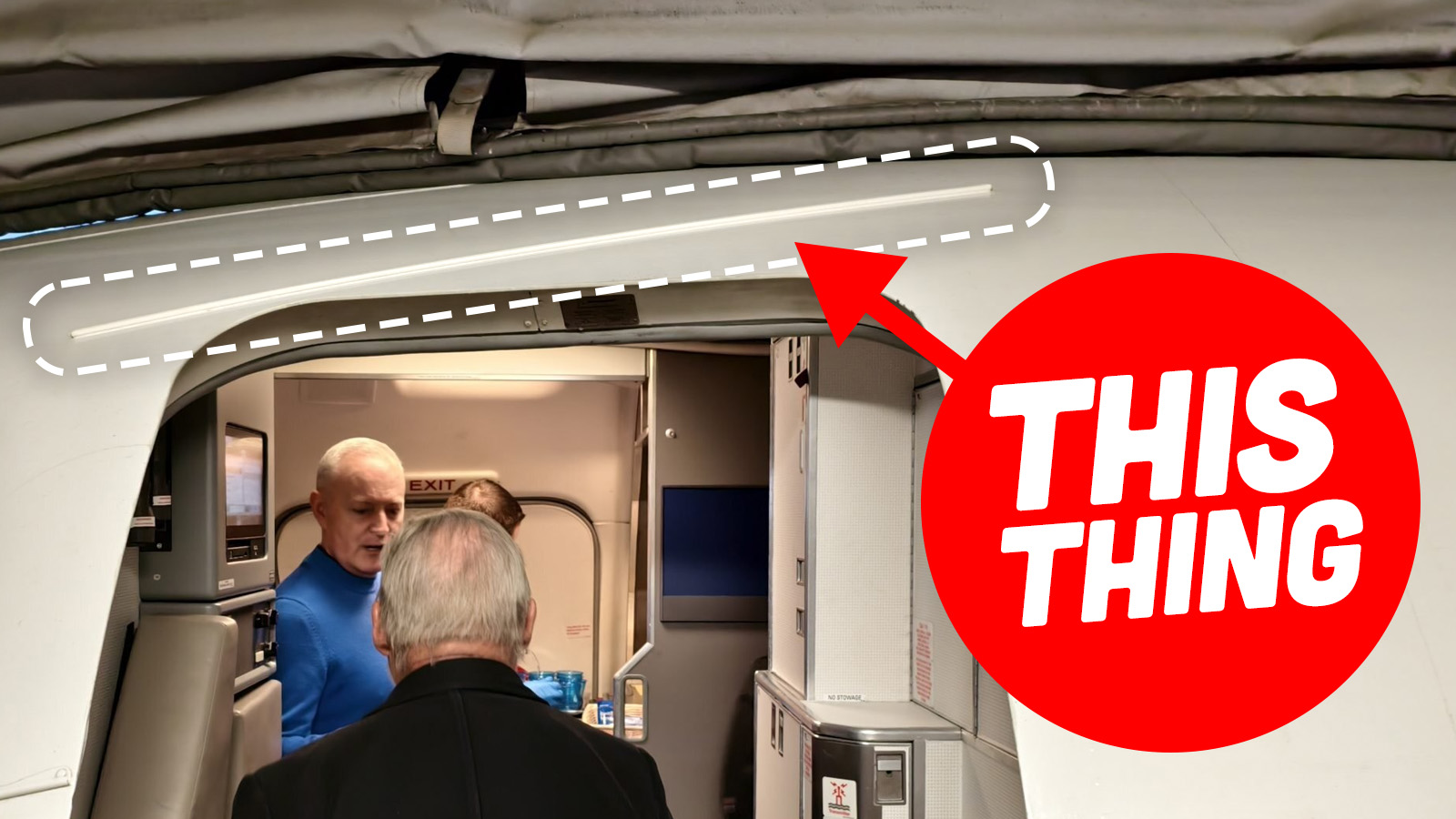
Today’s commercial aircraft are marvels of engineering designed to get millions of passengers safely to their destinations over a lifetime of tens of thousands of flight hours. Basically, every single part of an airplane serves a practical purpose, be it safety, efficiency, aerodynamics, or performance. There’s a chance that the last time you boarded a plane, you noticed a really tiny ledge above the cabin door. It looks so inconsequential that you might think its practical use is limited. That is true to a degree, but these ledges do serve a purpose in making flying a little better for both crews and passengers.
There’s a video circulating around the Internet showing an aircraft’s open cabin getting subjected to a deluge of water from a storm despite the jet bridge being attached to the aircraft. There are a few factors that led to this soggy incident. One of them was the fact that the fuselage’s built-in method to divert incoming water just couldn’t keep up with the flow.


Coincidentally, the timing of this video is rather perfect, as I’ve wanted to expand on my series of stories that explain the neat bits that make airplanes and the safety of modern aviation work. I’ve noticed that some people, including our very own Jason Torchinsky, have wondered why aircraft have tiny ledges above their doors. Upon first glance, for some, the ledges seem to be for aerodynamics. Their existence is even simpler than that, but they come with one major limitation.

How Planes Deal With Water In Flight
Flying into adverse weather conditions can come with risks. Aside from reduced visibility, you might run into heavy rain, strong thunderstorms, snow, icing, or other weather phenomena. Thankfully, pilots are trained on how to handle various weather situations. The aircraft they fly also come with clever solutions to combat the environment.
Icing is a serious subject in aviation, as ice build-up increases drag, reduces lift, and interferes with instruments. Planes can use hot air and electrical heating to help ward off ice build-up on wings, sensors, probes, engine intakes, and more. The hazards and solutions to aircraft icing have been covered in depth by the Federal Aviation Administration, the National Weather Service, the Aircraft Owners and Pilots Association, and so many others.
Rain carries its own risks. If rain accumulations freeze, for example, that can cause dangerous icing conditions. Rain can also be a bit of a headache even when there’s a low risk of icing. Pilots flying through a downpour can face reduced visibility through their windshields. Rain also brings the risks of turbulence, windshear, strong updrafts or downdrafts, microbursts, thunderstorms, and hail. On the ground, wet runways can reduce braking action. Water ingress can also damage sensitive aircraft systems.
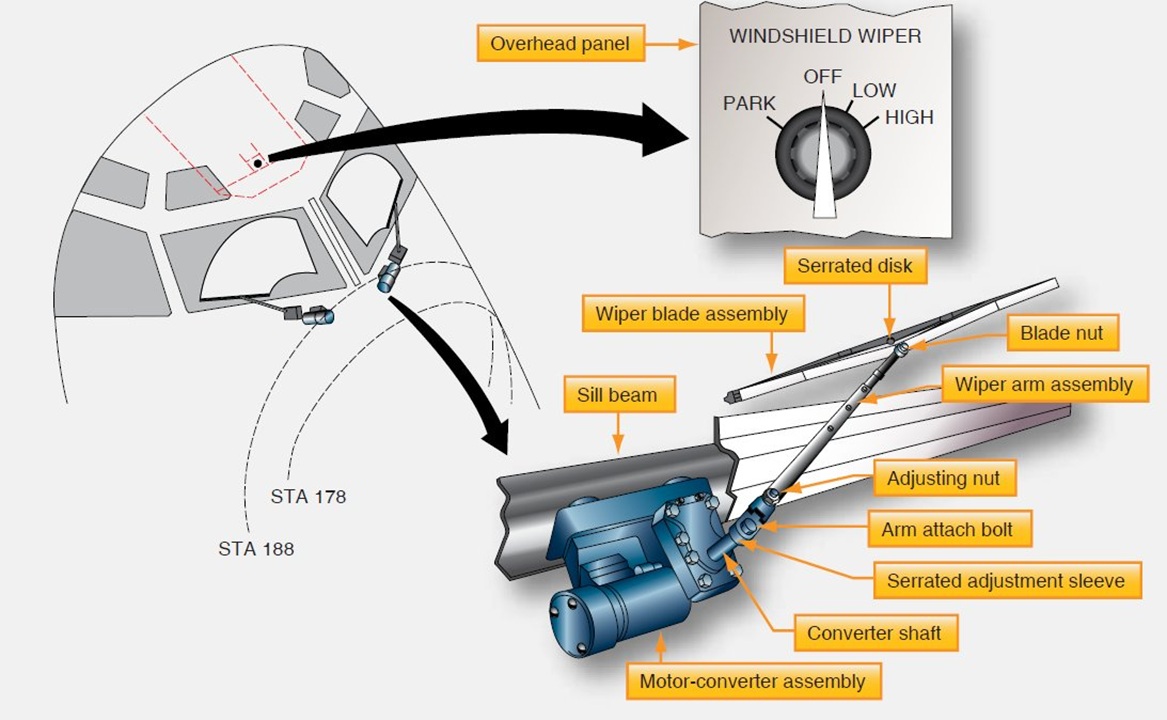
Planes do have some methods to deflect and control water. A visible method that you’ve likely seen is a windshield wiper system. Most transport aircraft with wipers use electric motors to move the wipers, and some older types use hydraulics. However, as the FAA notes, slipstream aerodynamic forces reduce wiper arm pressure, therefore reducing the effectiveness of the wiper system. Likewise, the wiper can run only so fast, and there are situations where the plane has to deal with so much water that the wipers are ineffective.
There are other ways to control water on the flight deck’s windows, like hydrophobic coatings.

The FAA explains how that works:
Some aircraft models use a surface seal coating, also called hydrophobic coating that is on the outside of the pilot’s/copilot’s windshield. The word hydrophobic means to repel or not absorb water. The windshield hydrophobic coating is on the external surface of the windows (windshields). The coatings cause raindrops to bead up and roll off, allowing the flight crew to see through the windshield with very little distortion. The hydrophobic windshield coating reduces the need for wipers and gives the flight crew better visibility during heavy rain. Most new aircraft windshields are treated with surface seal coating. The manufacturer’s coating process deeply penetrates the windshield surface providing hydrophobic action for quite some time. When effectiveness declines, products made to be applied in the field are used. These liquid treatments rubbed onto the surface of the windshield maintain the beading action of rain water. They must be applied periodically or as needed.

Another alternative to windshield wipers is the pneumatic rain removal system. Some aircraft use electric blowers to jet heated air at the flight deck windows to both warm the windshield to prevent icing and break up water into smaller particles.
An older, discontinued method of water control was the use of “Rainboe,” a chemical repellent that was sprayed onto windshields while the aircraft was in flight. It was found that Rainboe contained toxic CFC 113, and its production was banned in 1996. That aside, chemical-based repellents had the downside of hazing up or smearing when inadvertently applied to dry windows. CFC-free fluids have since taken the place of Rainboe.
Keeping Rain Out Of Planes

Another concern of aircraft engineers is keeping rain out of the aircraft while it’s at a gate. When the cabin doors are open, rain has a path of getting into the aircraft. At a minimum level, this can make passengers miserable as they board or deplane the aircraft. It also adds to the workload of the flight crew as they now have a mess to clean up.
Water ingress can also go further than just wetting the floor and passengers, too. On some types, like the Boeing 747, the main avionics bay is located right under the forward cabin door that’s open during the boarding process. As shown in at least one incident with the 747, there is a risk that, if water gets in through the open main cabin door, it can seep into the avionics bay.

On passenger aircraft, a jet bridge can help reduce water ingress. Jet bridges have a seal that leans against the aircraft, which helps to keep the weather out when boarding. However, the effectiveness of the seal on a jet bridge can vary wildly due to the weather, aircraft type, condition of the seal, and how well the jet bridge is aligned.
Planes have a built-in way to lessen the blow from rain. At the top of every door is a thin rail. This rail (below) serves the very simple purpose of keeping rain that runs down the top of the fuselage from leaking into the interior. The benefit is three-fold. Passengers don’t get rained on the moment they arrive at the cabin door, the flight crew doesn’t have to clean up water, and the maintenance crew doesn’t have to worry as much about water ingress. Some gutters also stretch out over the door hinge mechanism, too.

When a jet bridge is resting on the side of the aircraft, the rain gutter adds one extra layer of protection. Water that leaks past the jet bridge seal can drip down the aircraft away from the passengers and aircraft interior.
I have not been able to determine exactly when rain gutters were introduced to aircraft. However, I noticed that vintage prop-driven airliners like the Douglas DC-3 and the Douglas DC-6 do not have rain gutters. I have found that early jet airliners like the Boeing 707 and Douglas DC-8 do have rain gutters.

Some aircraft use flat rain gutters, while other designs have their rain gutters curve with the airflow around that part of the fuselage. Rain gutters are such a big deal that Boeing highlighted that it changed the Boeing 787’s rain gutters after input from airline customers:
Rain gutter: When customers found that water was not being properly deflected over a passenger entry door, they requested a change. Boeing relocated the gutter to function more efficiently. The solution means happy customers, who had fewer water and maintenance issues, and happier and drier passengers. This was a significant enough change to process to require certification work with the FAA.

There are limitations to rain gutters. They can be only so large, so if there’s enough water streaming down the fuselage, the water can dam up on the gutter and spill over. Likewise, the gutter can’t do anything about heavy rain or wind. It can only try to control the water streaming down the top of the fuselage.
That brings us back to the post that’s getting shared around social media (click here if you cannot see the embed below):
United trials onboard showers
byu/skyfaring55 inunitedairlines
Apparently, this all went down at Newark Liberty International Airport. It’s hard to tell exactly what went wrong here, but it looks like the jet bridge seal is overlapping with the rain gutter on the aircraft. That alone can cause an issue with the jet bridge seal while also defeating the purpose of the gutter at the same time. There could have been other causes, like the seal on the jet bridge was in poor condition or the jet bridge wasn’t in perfect alignment. Either way, there was enough water that the plane’s and the jet bridge’s defenses against water weren’t working.

It appears this flight continued without further incident, so the immediate aftermath was a big mess to clean up and some wet passengers.
There you have it. Multimillion-dollar planes are not a whole lot different than your house or your car when it comes to water evacuation. Planes employ some helpful technology to keep pilots’ vision clear and your head dry. Yet, unlike so many airplane parts, the rain gutter is so refreshingly simple. It’s just a strip of metal that redirects water. It doesn’t even have a special name like some aircraft parts; Boeing says it’s just called a “rain gutter.” I love that.
So, the next time you’re boarding a plane on a rainy day and you don’t see water about to drip on your head, you might have a jet bridge seal or a rain gutter to thank for that. It’s such a small thing, but even the small things can make flying just a little bit better for everyone.
Top graphic image: Author


Ah, forward avionics bay getting water ingress from the open door.
A tale as old as time.