


“I owe you a 10-second car.” In 2001, Brian O’Connor’s debt to Dominic Toretto was somewhat of a tall order. The only street car that could match that without gratuitous modifications was the then-seven-figure McLaren F1, and building up the mythological Mk4 Toyota Supra to such levels was said to take at least fifteen grand and possibly overnighting parts from Japan. These days, things are different. Cars have grown hilariously, stomach-churningly quick out of the box, and when you combine that with depreciation, it means you can buy a used Tesla Model S P100D—a bonafide ten-second car—for less than $25,000. How about them apples?
Granted, the P100D wasn’t the first variant of Model S electric sedan to slip beneath the 11-second barrier. That would be the P90D with the optional Ludicrous Mode equipment, but finding one of those slightly earlier cars with the right mix of equipment is a little bit of a crapshoot. Sure, it did click off the quarter-mile in 10.9 seconds at 122.7 MPH in Motor Trend testing, but for a while, ticking the box for Ludicrous Mode included physical equipment not found on all P90D models.


We’re talking Inconel battery contacts and a special high-voltage pyro breaker, not exactly the easiest of driveway DIYs. Add in the fact that well-used vehicles may suffer from slight performance degradation, and even if you find a cheap Model S P90D with Ludicrous Mode equipped, it might not click off a ten-second pass at your local drag strip.
In contrast, the Model S P100D is a slightly different beast. Not only did it come with an upgraded battery pack and a meaningful bump in torque over the P90D, every single 2016 through 2018 Model S P100D came standard with Ludicrous Mode, which plunged the quarter-mile time deep into ten-second territory. When Motor Trend tested one, it ran the quarter-mile in 10.5 seconds at 125 MPH. Bonkers stuff, made even crazier by just how cheap these cars are today.
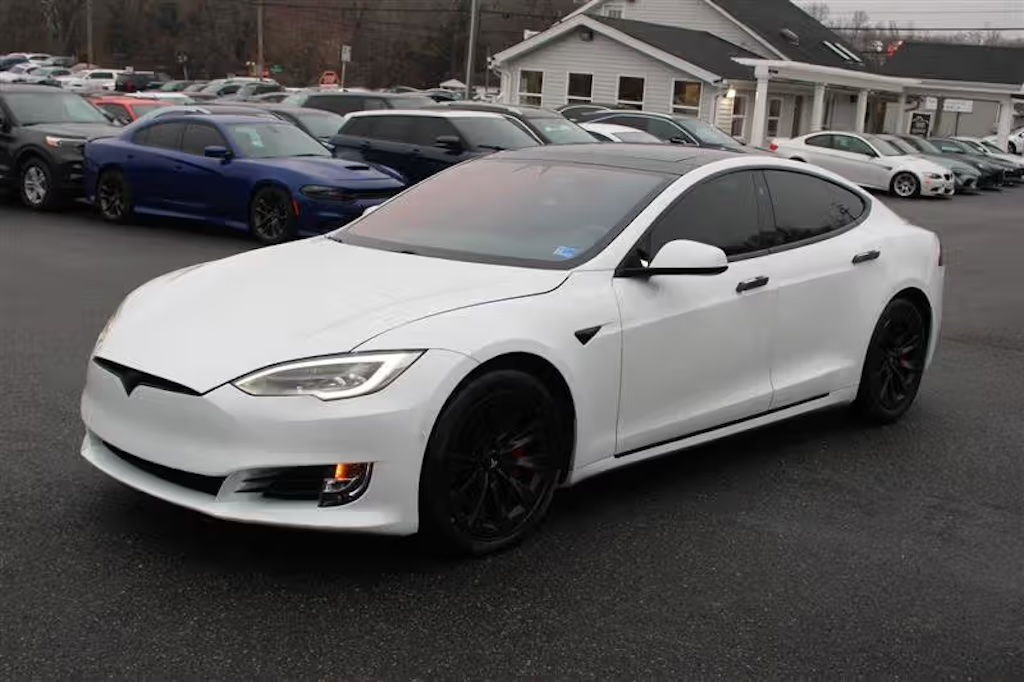
Take a look at this 2017 Model S P100D up for sale in Virginia. While the blacked-out trim isn’t hugely confidence inspiring, 99,808 miles on the clock isn’t bad, and $21,499 is an outrageously low price for something this quick. That’s less expensive than the cheapest new car in America, a Hyundai Venue that takes nearly nine seconds to reach 60 MPH.
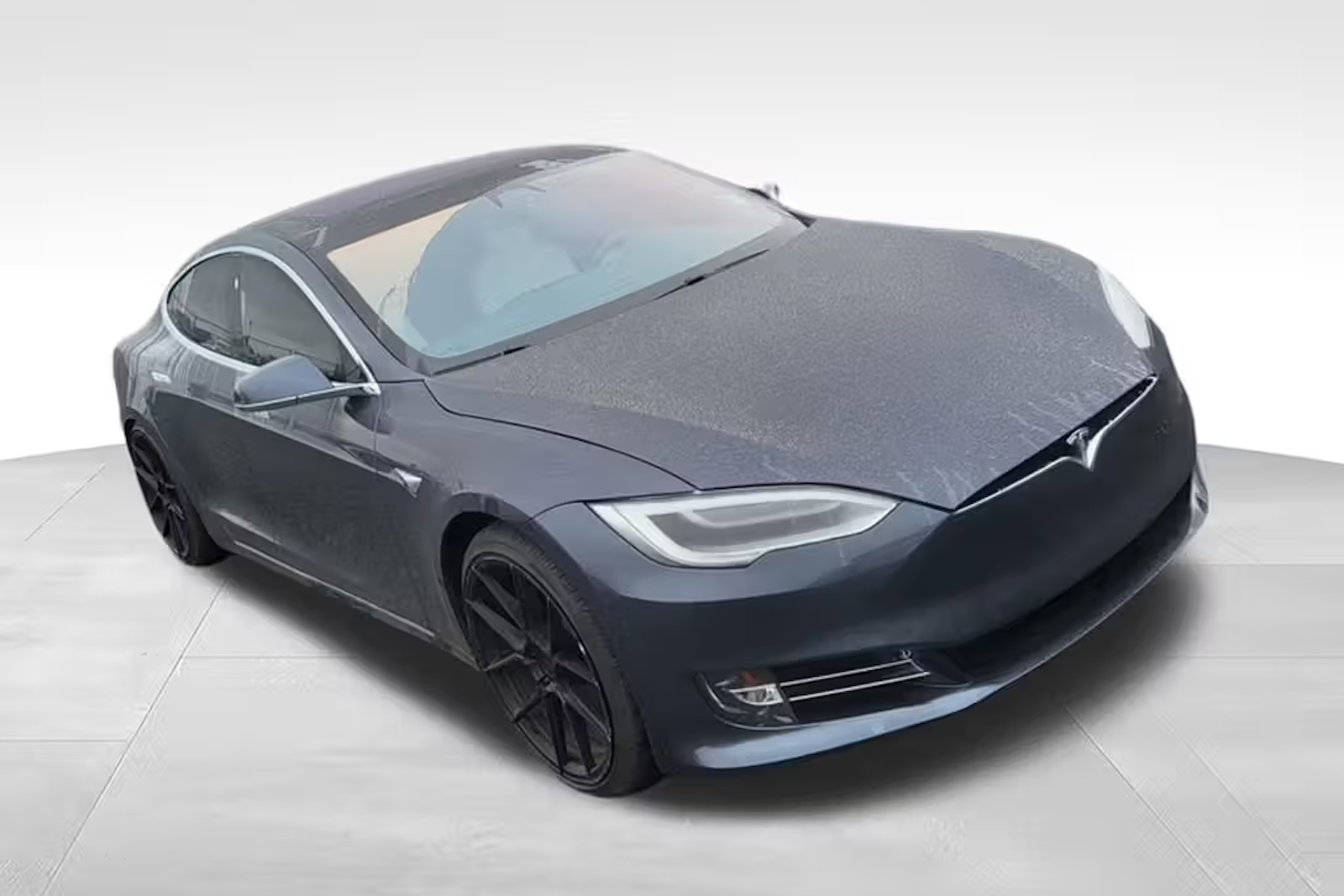
If you’re willing to spend a bit more money, you’ll likely find something like this 2018 Model S P100D up for sale in Washington. With a reasonable 88,400 miles on the clock, it’s listed for $24,999. Admittedly, that’s only a dollar less than $25,000, but this one looks like it hasn’t been messed with beyond a set of surprisingly expensive forged aftermarket Ferrada F8 wheels.
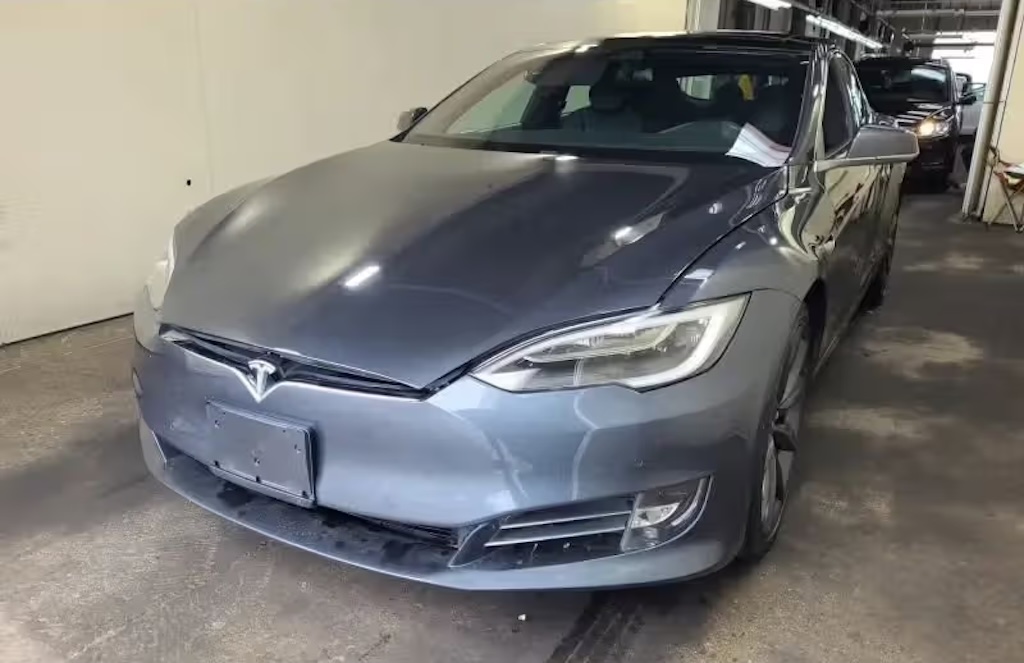
Splitting the difference, here’s a 2016 Model S P100D up for sale in Oregon. It’s bone-stock and has 89,949 miles on the clock, and it’s listed for $23,990. Yep, 24 grand for a bone-stock ten-second car. We truly live in absolutely crazy times.
You’re probably wondering what the catch is beyond any unfortunate image-related connotations. Well, no decade-old high-performance luxury sedan is going to be completely trouble-free, and the Model S P100D has been around for long enough that we’ve seen common failure patterns develop. Understandably, a car of this size and weight is going to be hard on suspension components, so don’t be surprised if you have to replace some control arm bushings on models pushing nigh-on 100,000 miles. Granted, that applies to everything of this genre, but do you know what doesn’t? Sealing problems that are generally considered fixed with a coolant delete. Yep, a coolant delete.
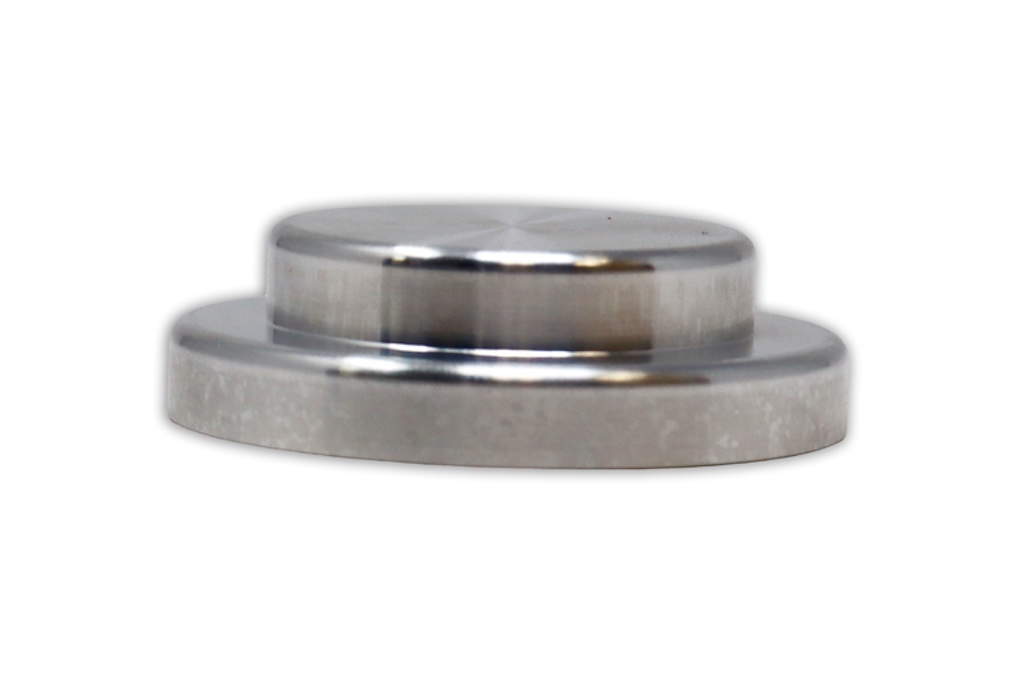
See, Tesla’s large drive unit used in many pre-2021 Model S sedans features internal cooling paths that can leak over time. Once that happens, the result is a properly expensive bill, something to the tune of $6,500 to $8,500. The fix is to stop coolant from flowing to the rotor, and while Tesla has its own “Revision U” drive unit that debuted in 2023 to permanently eliminate this issue, EV West sells a far less expensive solution for existing drive units. It’s a $40 cap that’s a little labor-intensive to install but can prevent an enormous problem down the road.
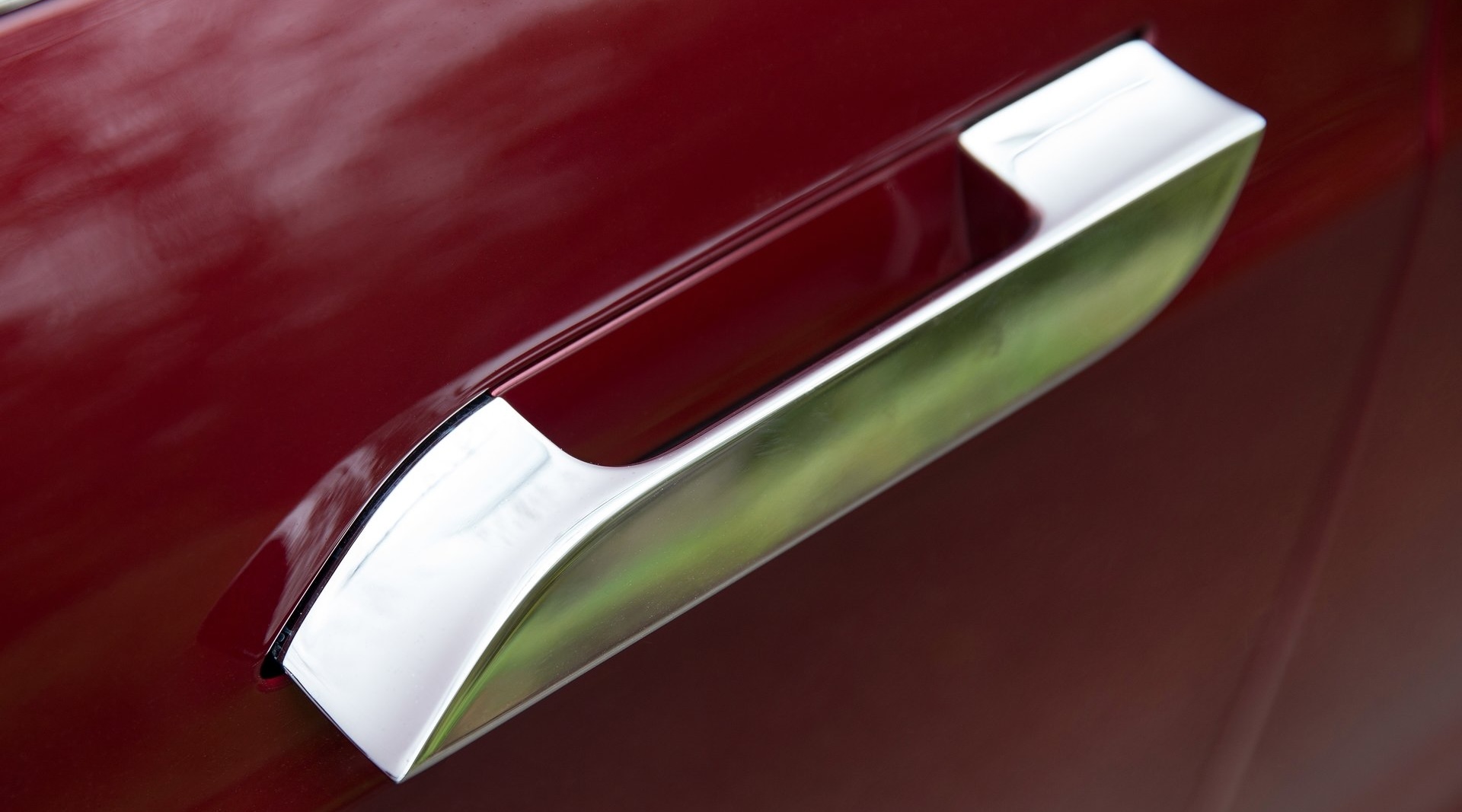
On the body side, there are a few annoying issues that pertain to many Model S variants, starting with the silly electric door handles resigning from their duties. The cost to fix this can vary widely due to how the handle has failed. Some just need a $50 rebuild kit you can buy off Amazon, some require full replacement that can cost up to $1,000 per door handle. It’s also worth noting that earlier P100Ds with the Intel Atom-based media control unit can conk out, and an updated media control unit runs about $2,000.
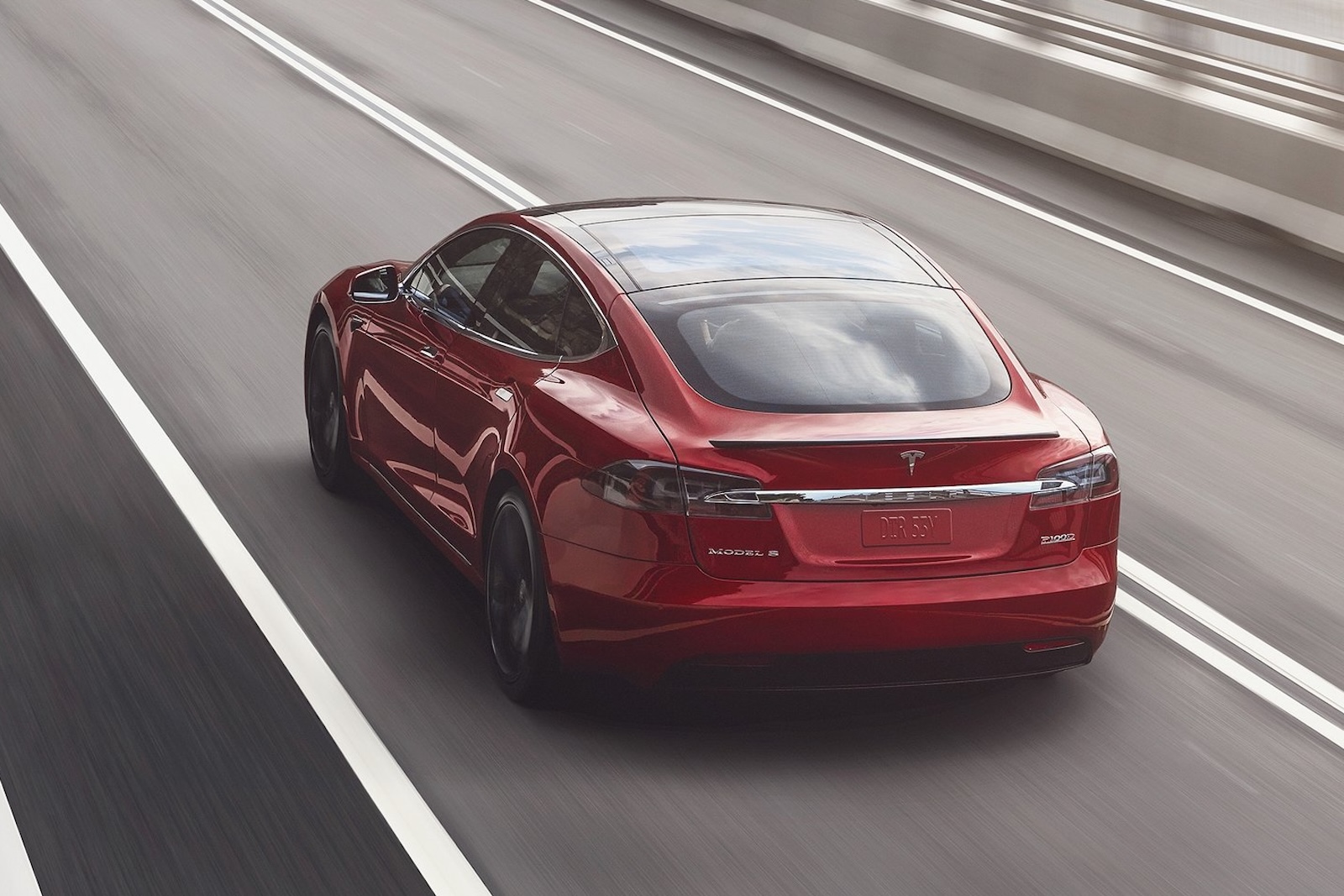
Still, in the grand scheme of things, it’s now possible to own a somewhat reliable 10-second car for the price of a new economy car. One that’s perfectly streetable, loaded with creature comforts, and mostly just works as a car. Considering the fifteen grand baseline Jesse gave in “The Fast And The Furious” works out to $27,984 after inflation, if you owe anyone a ten-second car, maybe just pick up a used Model S P100D. It may not be as cool as building a wrecked Toyota Supra into a quarter-mile hero, but it sure is cheaper and easier.
Top graphic image: Tesla/Universal


White supremacist, hypa-artiste, douchboy CEO aside, there are few things I’d rather own less than an early/old and likely pre-abused Tesla Model S.
1 – it would be nice to be able to determine how much the drive unit is leaking at the point of purchase. because it seems like they all do at some point.
and
2 – it is all fun and games until the thing goes into limp mode because one of the AA batteries in the cell has degraded enough to imbalance the whole brick.
It’s easy to see if it’s leaking by pulling the speed sensor. If it’s wet then it’s leaking and needs to be dealt with fairly immediately – if it’s dry then it’s all good. Also worth noting that there is a 10 year warranty on battery and motors.
Early Lucid Airs are starting to creep into the mid-30s. Now that’s a tempting proposition.
But how long will Lucid really be around?
However long the Saudis want them to be around. They did just kill off LIV Golf so they have some excess funds…
I think the real story here is that absolute acceleration and speed have been democratized and are just a couple of things that affect the value and desirability of a car.
In the Model S’s case, yes, P1000D examples can be had for well under $30K. The thing is, nobody wants the pre-2021.5 models with the older interior and pre-facelift exterior. They look dated, they have crappy materials and they generally transact for half the price of post-facelift ones, which still generally cost over $40K.
Meanwhile, people will trip all over themselves to pay $50K+ for a Lexus GS F, a car that is not only slower than any flavor of Model S, but that also trails its competitive set (AMG E 63, M5, CTS-V) in theoretical and practical terms. It’s all about perception, and whether a car offers something special beyond outright speed.
Another car that has fallen a lot in value, but that is still more desirable than the Model S: the original Charger and Challenger SRT Hellcat models. Older examples have crept into the mid-$40K range.
Slower in a straight line, and much more fun to drive while also being built better.
Correction to the article: The Intel Atom MCU is the good one. The early model S/X (till 2018) have the Nvidia Tegra MCU, which will fail and needs to be upgraded to the Atom MCU. If you’re buying an early model S just consider that upgrade (if not already done, most have been upgraded already) a cost of buying the car.
There is one other option called an eMMC replacement , which was covered under a recall and is normally done free if the screen has gone completely black. This will solve the screen issue, but you will still be stuck with very old, laggy UI.
That’s stupid fast for cheap money. Unfortunately the side effect of such a purchase means you have to drive a Tesla model S P100D.
As these kind of EVs flood the marketplace, it’ll make an awesome time for “engine” swaps. Slap this under a crusty c-10 and have fun.
The inverse has already happened, with at least one twin turbo big block chevy powered drag car making north of 1700hp.
real question is, is anyone talented enough to decontent the heavy battery to the point that a basic 5.3/4.8 LS powering a generator to make an Erev version make sense from a weight reduction vs range extension point of view.
The problem is packaging. You can fit anything when you cut the entire car apart. However anyone looking for a EREV daily isn’t interested in what it would take to make a LS genset fit in an effectively stock interior. Not to mention you don’t need that much power, a much smaller 3-4 cyl engine would be plenty and might actually package.
From there, good luck with all the control system integration to make it function.
the LS is the darling because they are compact in general and make good grumbly sounds. It make little sense to convert anything to an Erev other wise really, except maybe for cost purposes. an early LS is still probably far cheaper than a 20K battery, but the conversion stuff is likely one off and far from cheap in the end.
Grumbly sounds aren’t a thing for gensets, they generally run at one RPM to make peak generation power, and that’s it. If you do dynamic RPM you are just wasting fuel and making less energy.
The “unfortunate image-related connotations” are unfortunate, because the Model S is the one Tesla that I would get if I was going to get one.
Those connotations, combined with where the money goes to get parts and service, are more than enough that I still wouldn’t want one of these if someone offered one as a straight trade for my 2017 Bolt.
This is good news. I’ve been looking for something I can show off to others on the freeway, flooring it to catch gaps in traffic, weaving between lanes at 100mph, getting really overconfident in my Vin Diesel-like abilities, and then pinballing it off the Jersey barriers once I inevitably lose control.
I didn’t want to spend more than $25,000 for this experience. Now I don’t have to.
Did you change the beer to a Yoo-Hoo to avoid MSN’s overzealous filtering?
My contrarian view: Who needs it?
Own a Swasticar? I’d rather put a out a campfire with my face.
Aren’t these the versions that can do exactly 1 full-power pull before they go into limp mode?
I tried and couldn’t find it, but Motortrend or Car and Driver or someone did a test of a Tesla vs a Taycan when they came out, and the Tesla was fast exactly once. The Taycan was fast every single time, at least 10 pulls back to back.
However, $25k is a good price!
Too bad I’d have to be seen in public in a Tesla.
Just slap a “I bought this used” sticker and your ready to roll.
I think that was related to doing a Nurburgring run or something like that where power would get reduced for heat/cooling reasons.
So this is the Tesla I end up putting all-mechanical door handles yes?
My god, Vin Diesel before he was old enough to drink Corona…What a weird image. Did you PS out his hair? Brilliant.
No, he’s of legal age, this was just taken before he hit it big. He went from doing ads for Street Sharkz to ads for Yoohoo and then, finally, to the movies.
Lol, most of the ‘kids’ in FnF were around 30 when the first film came out, Vin would have been about 33/34 in that picture.
I can’t help but think about those “high school students” in Tokyo Drift.
They could easily have been parents of high schoolers.
If you want a cheap 10 second car buy the cheapest car you can find and pay someone to drop it out of an airplane, from a helicopter or a really high cliff. It is less of a waste
Model 3 performance is maybe .5 sec slower in the quarter. You can get a 2019 or 2020 with about 80k mi for around $15k. With the amount of model 3 out there parts are cheaper and more available.
Even crazier–you can buy a 10-second giant-ass luxury SUV for 55,000 GBP.
https://www.youtube.com/watch?v=z5n4t1IsHew
With better tires and track surface you may even nudge it into the 9-second range.
I too watched Camisa’s video about the Model S. While I do find Tesla’s approach of continuous improvement and the elimination of siloed departments to be interesting, and legitimately forward thinking. Tesla’s inability to get basic quality right, the difficulty of sourcing and installing repair parts, and the consistent ‘we know best’ attitude makes them completely unappealing as a used vehicle proposition. The thought of $1,000 door handle replacements wouldn’t make me touch this thing with a pole.
Are we about to see that SDVs age like cell phones and simply become e waste once the manufacturer has determined that a product is end of life?
If we were smart as a society, we’d have a program in place to strip the battery modules out of the “used up” EOL appliance EVs and rack them into grid-scale storage facilities to help with evening out the generation/demand imbalances for renewable power.
It is happening – https://www.redwoodmaterials.com/news/update-california-ev-battery-recycling-program/
He’s wrong on the doorhandle price cause they don’t need to sell the whole unit anymore. They just retrofit the internal parts for much less – I think it’s closer to $260.
Wow I remember thinking about one of these before I bought my Hellcat. Somehow the Dodge product isn’t the worst at depreciation.
Not a bad deal. Teslas are generally easy to work on for common stuff, with a few glaring exceptions. Looking at you, 3/Y cabin air filter. Check if the car in question has lifetime connectivity or if premium connectivity will be needed at $100 a year.
Then check if that is your lifetime or the lifetime of the car.
A stupidly cheap performance bargain, except it comes with all of the unwanted Tesla spyware. It just sucks that all of the available EVs had to be ruined with tech bloat straight from the manufacturer. Slate would be a nice exception, but it appears they won’t be out before federally-mandated spyware and tech bloat becomes the default for all new cars.
Now, that said, I’d like to someday put the smaller motor with a carbon-wrapped rotor making 300-ish horsepower from a PLAID into my electric Triumph GT6 conversion. 20,000 RPM would be properly nuts in that thing, and with a battery upgrade, I could have a 30-40 kWh battery in it with the car weighing hundreds of lbs less than it did as a stock ICE.
Seems like every Telsa owner in CA is testing to see if their car is a 10sec car every chance they get.
If they aren’t, then you know they’re using FSD.
That’s why FSD used to drive so bad. They trained it to drive insane like them.