


For decades, the Shelby Mustang has been one of the most revered and desirable forms of Ford’s thoroughbred pony car. Carroll Shelby was no stranger to slapping his name onto rare fast vehicles, be it the 1966 GT350 convertible, the Daytona Coupe, or the Dodge Shelby Dakota. But there’s one rare Shelby that you might not have even heard about. Shelby once joined forces with a parts distributor in Mexico, which led to the creation of the Shelby de Mexico GT350. The weirdest version was sold in 1969, and it looked like no Shelby Mustang that you could buy in the United States.
In April 1964, attendees of the New York World’s Fair caught their first glimpse of a new kind of Ford. This new car, the Mustang, was small, sleek, and sporty. As Hagerty writes, the Mustang was a product of a changing America. Going into the 1960s, our nation was firing research satellites into space, the Civil Rights Movement was gaining traction, John F. Kennedy became President, and there was generally a more youthful energy.


Lee Iacocca, who had been with Ford since 1946, rose through the ranks to become the vice president and general manager of the Ford Division in November 1960. As he reportedly remarked to Hagerty in the past, he took the helm of a Ford that had an image of being a brand for older buyers. Market research showed potential strong demand for an affordable car that dripped with style. This car could perhaps bring in the 18-year-old to 24-year-old demographic that Ford missed out on.

In 1962, designs of a sporty car were presented to Henry Ford II, who gave the car a cold shoulder. Ford brass would then reject the project three more times, as they didn’t see the need to make a car for younger buyers, and didn’t want a repeat of the Edsel failure. Yet, after those multiple failures, Iacocca eventually got the green light.
Iacocca would be proven right in 1964. Production kicked off in March, and Ford went on to sell 303,408 Mustangs that year. Sales only increased from there. Yet, despite the smashing success, Iacocca feared that the Mustang lacked sufficient performance to back up its looks.

Carroll Shelby would rectify that concern, and along the way, several Shelby Mustangs would see the light of day and become legends. Shelby fever even reached Mexico, which led to the creation of the weird special we see here today.
The Original Mustang’s Speed Merchant
As MotorTrend writes, Iacocca’s concern about the Mustang’s performance was valid. The muscle car era had taken off in earnest with the Pontiac GTO, and the Mustang was gaining a bit of a reputation for being more show than go. The hottest mill for a standard Mustang in 1965 was the 289 cubic-inch High-Performance “K-code” V8, which put out 271 ponies, and magazine tests had shown that it was fast in a straight line, but slow in corners.

Iacocca turned to the man who knew how to go fast with a Ford engine, Carroll Shelby. The Ford-powered AC Cobra and Shelby Daytona Coupe had shown impressive success on the track. The Daytona, for example, took second in the 1964 International Championship for GT Manufacturers, trailing only slightly behind Ferrari. Then, the Shelby demolished Ferrari only the year later. MotorTrend continues:
Shelby—a man who’d made a name for himself racing and developing purpose-built sportscars—initially scoffed at the idea of trying to turn the comparatively massive, sedan-based Mustang into a road course performer. But Iacocca wasn’t having it. “In 1964, when Lee Iacocca said, ‘Shelby, I want you to make a sports car out of the Mustang,’ the first thing I said was, ‘Lee, you can’t make a racehorse out of a mule. I don’t want to do it,’ Shelby explained while reflecting on the project during an interview. “He said, ‘I didn’t ask you to make it; you work for me.’”
Despite his apprehension, Shelby soon set to work turning Ford’s new coupe into a formidable machine on and off the track. The result was the road-going 1965 Ford Mustang Shelby GT350 and the race-prepped GT350R, the latter of which went on to dominate the SCCA’s popular B-Production road racing class as well as the early years of the Trans Am series that took shape a few years down the road.
Although the 1965 Mustang Shelby GT350 differed substantially from the GT350R race car, much of the former’s development was dictated by the B-Production race class rule set. Those rules stipulated that manufacturers would have to sell at least a hundred examples of a given car to homologate it for racing use, and Shelby knew that trying to sell unadulterated race cars in that quantity would be difficult. SCCA rules also mandated that a race car’s road-going counterpart needed to retain either the race car’s engine configuration or its suspension setup, so Shelby chose the latter for the GT350.

The GT350 harnessed the power of the High-Performance 289 V8, but instead of making 271 HP, Shelby massaged more juice out of the engine. The GT350 version sported cast-aluminum valve-rocker covers, a Cobra high-rise intake manifold, a four-barrel carburetor with special jetting, and welded-tube headers for an output of 306 HP. The cooling system was also upgraded to handle the extra beef and racing duty.
The GT350 also had a fiberglass hood with a large scoop, structural stiffening, a deleted rear seat, and a wood-trimmed, sporty steering wheel with a prominent Cobra right in the middle. The GT350 was given SCCA’s blessing to run in the B Production Class, but if you wanted to get more hardcore with it, there was also a racing version. From Car and Driver:
The race-ready version consists of a $1500 package of options—all of which are available separately for the street machine—including an oil cooler, extra-capacity radiator, “blueprinted” (to optimum factory specs) engine with racing cam, cold air plenum chamber feeding the carb from the hood scoop, larger straight-through mufflers, front and rear brake cooling ducts, a whole new instrument panel with oil temp and fuel pressure gauges, deep-bucket racing seat, fiberglass front bumper and underpanel, plexiglass windows, (including a vented rear window that also acts as a spoiler), 32-gallon gas tank, roll bar, shoulder harness, fireproof interior trim, fire extinguisher, any one of three other rear axle ratio from 3.70 to 4.33, and true magnesium racing wheels with 7-inch rims and low-profile racing tires.

The GT350 would prove to be just the car that Iacocca was looking for, and racked up historic wins on the track. Shelby also punched out the GT500, which featured a spicy 428 cubic inch V8.
It was during all of these successes that Carroll Shelby entered into a perhaps unexpected partnership with a vendor outside of the United States.
Bringing Shelby To Mexico

The Shelby de Mexico GT350 was the work of Shelby and Eduardo Velázquez Chavez, a man who wanted to bring the love of Shelby to Mexico. As Mustang Illustrated wrote in 1991, Velázquez grew up in Mexico City, Mexico, in a deeply political family. His grandfather was in the Mexican Revolution, and his father was a diplomat. Velázquez attended a German-language private school, and the University of Mexico, then studied in Europe before coming back home to Mexico.
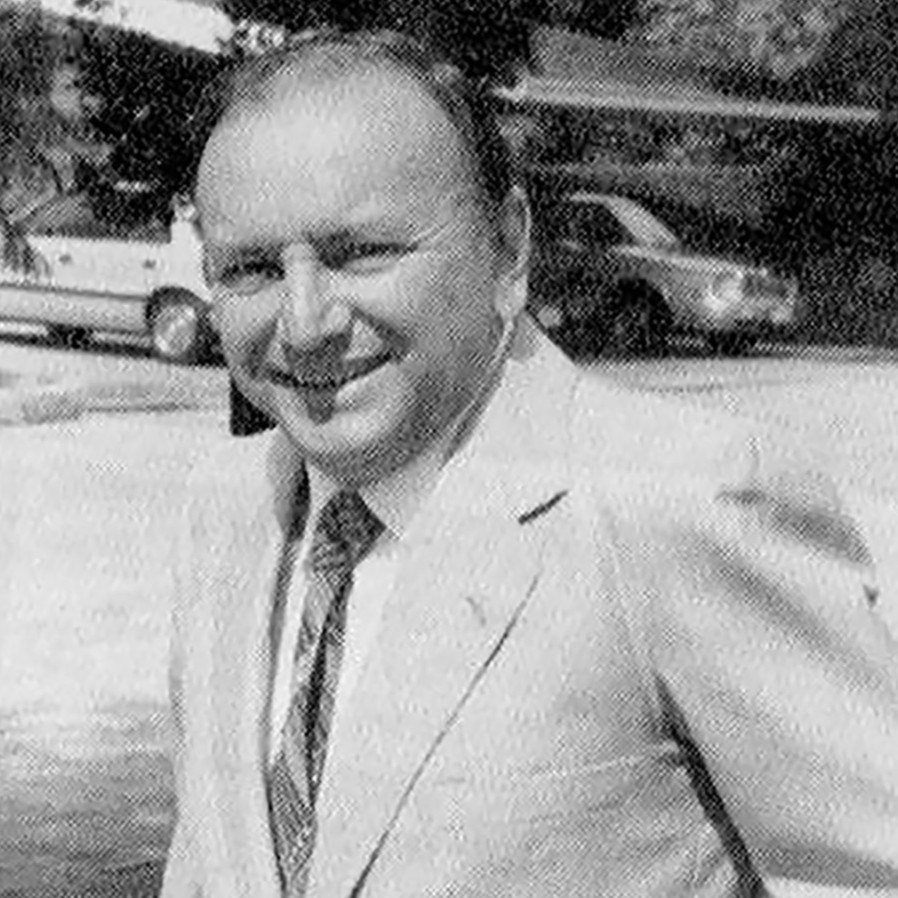
In 1960, Velázquez went to work in a law office, where he would help with litigation, including a controversial corporate dispute, for five years. When Velázquez came out the other side with sizable earnings, he decided to follow his childhood love of cars. Mustang Illustrated notes that he got into the car parts business and started slinging bits for the Volkswagen Beetle, which was the most popular car in Mexico at the time.
Velázquez wrote about what happened next, from the Mexican Mustang Registry:
I first was involved with Carroll Shelby in February of 1965. I was then an automobile parts distributor in Mexico and I knew of the high quality and improved performance that Shelby’s Cobra parts could provide for a Mustang. In Mexico, Mustangs had begun to be manufactured by Ford’s Mexican operation, Ford Motor Company, S.A.. Because of import restrictions only the base notchback model was produced – but there were still many parts that could be sold for these cars, including special tires, shock absorbers and suspension components; engine parts like camshafts, pistons, manifolds and carburetors; and tachometers and steering wheels for the cockpit.
I started dealing with Shelby American’s Parts Manager, Timothy Foraker. Tim had the task of selling and distributing Shelby and Cobra parts to Ford dealers in the U.S.A. and it was his responsibility to see that everything went smoothly. Since I was applying for the distributorship for all of Mexico, the proposition was attractive to him. After one year of distributing Cobra parts I became the largest single customer for Shelby American’s parts and accessories. My company was able to remain so throughout 1966, 1967, 1968 and 1969. In January of 1966, in order to have a special Mustang for demonstration, racing and sales promotion, I took a 1965 Mustang Hi-Performance notchback to Carroll Shelby and Lew Spencer’s Hi-Performance Motors in Los Angeles where the car was equipped with every possible special racing part that could be installed. Tim Foraker again helped me with the parts selection for this car. I left the car in Shelby American’s hands and when I returned one month later I had the privilege of meeting Mr. Carroll Shelby.
I met with Carroll in his office. The very first thing I took note of was his beautiful secretary who invited me to wait for him in the outer office. Although I was especially eager to meet him, the wait was worth its while, with such an attractive woman to look at. I recall that her name was Linda. Linda soon showed me into Carroll’s office and I was taken aback by its earthiness and simplicity. It was an extension of Carroll’s personality and intelligence. We became friends immediately and we had a long conversation. Carroll was very interested in learning how we distributed parts to the Ford dealers in Mexico; what our terms were, our shipping policies, how we approached the individual parts managers to convince them of the value of carrying the products and even what the most popular parts were. Carroll also provided me with valuable advice on how to best market the products. After this conversation he said he would like to invite me to dinner at his house that evening. I arrived at 7 o’clock and was met two beautiful Swedish senoritas who were living there. They were students at UCLA and they kept house for Carroll and on occasion, prepared dinner. I could not believe my eyes, but we finally sat down at the table to eat – by candle light – starting off with a couple of Carroll´s Margaritas, followed by Swedish home-cooking mixed with chili, wine, some whiskey and topped off with Drambuie and coffee.

That Hi-Performance notchback was a successful racer. With Juan Emilio Proal behind the wheel, the car won the 1966 Mexico Toluca Road Race and then scored two more wins in Mexico City. The Mustang would race to a further three more wins, three second-place finishes, and a third-place finish over a run spanning 17 races.
At that dinner, Shelby talked about wanting to visit Cozumel to skin dive the reefs and visit the pyramids with his friends. Shelby’s crew included astronaut Scott Carpenter and his wife, North American Aviation oceanographer Andreas Rechnitzer, and various other marine experts. All of them boarded Shelby’s own Douglas DC-3 and embarked on an adventure. Velázquez’s dad flexed his political influence to score the President of Mexico’s mansion on Cozumel for the trip, which had a full cooking staff and expansive facilities. The party was later joined by various racers and car dealers, and grew into a massive operation. Apparently, the exploration went off without a hitch, and Velázquez and Shelby became friends.
Together, the men founded Shelby International, S.A. of Nuevo León, which did business as Shelby de Mexico. Along with selling Shelby parts, Shelby and Velázquez wanted to bring the GT350 to Mexico.
Mexico’s First GT350s
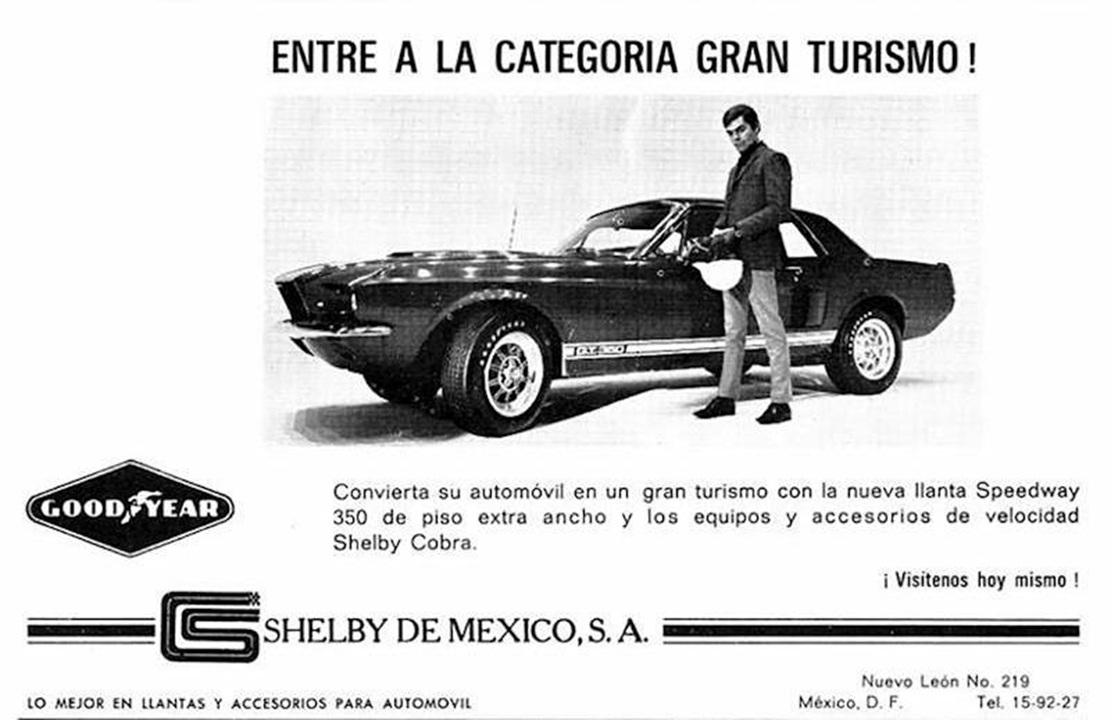
In 1967, Ford of Mexico President Siffren Bass sent some Mustang GTs to Shelby de Mexico, where they were converted to GT350 specification. Mexico’s first GT350s, which were sold in 1967 and 1968, were largely similar to the ones from the United States. From Street Muscle Magazine:
169 cars with 289 V8s were bequeathed high-performance cams and lifters, aluminum hi-rise intakes, and Holley 715 cfm carbs with Cobra aluminum air cleaners. Koni shocks, stiffer springs, Shelby 10-spoke 15-inch aluminum wheels, performance tires, performance Tri-Y headers, Ford dual-point ignitions, a fiberglass hood and decklid, Cougar taillights, and GT350 rocker stripes added further performance and panache.
Inside, a Shelby tachometer and wood-rimmed steering wheel were installed, along with GT350 dash emblems.
Thus, aside from being notchbacks instead of fastbacks, and lacking the American Shelby upper side scoops, the Mexican Shelbys were, for all intents and purposes, dyed-in-the-wool GT350s. Another 203 Shelby de Mexico GT350s were built in 1968 to this same spec.
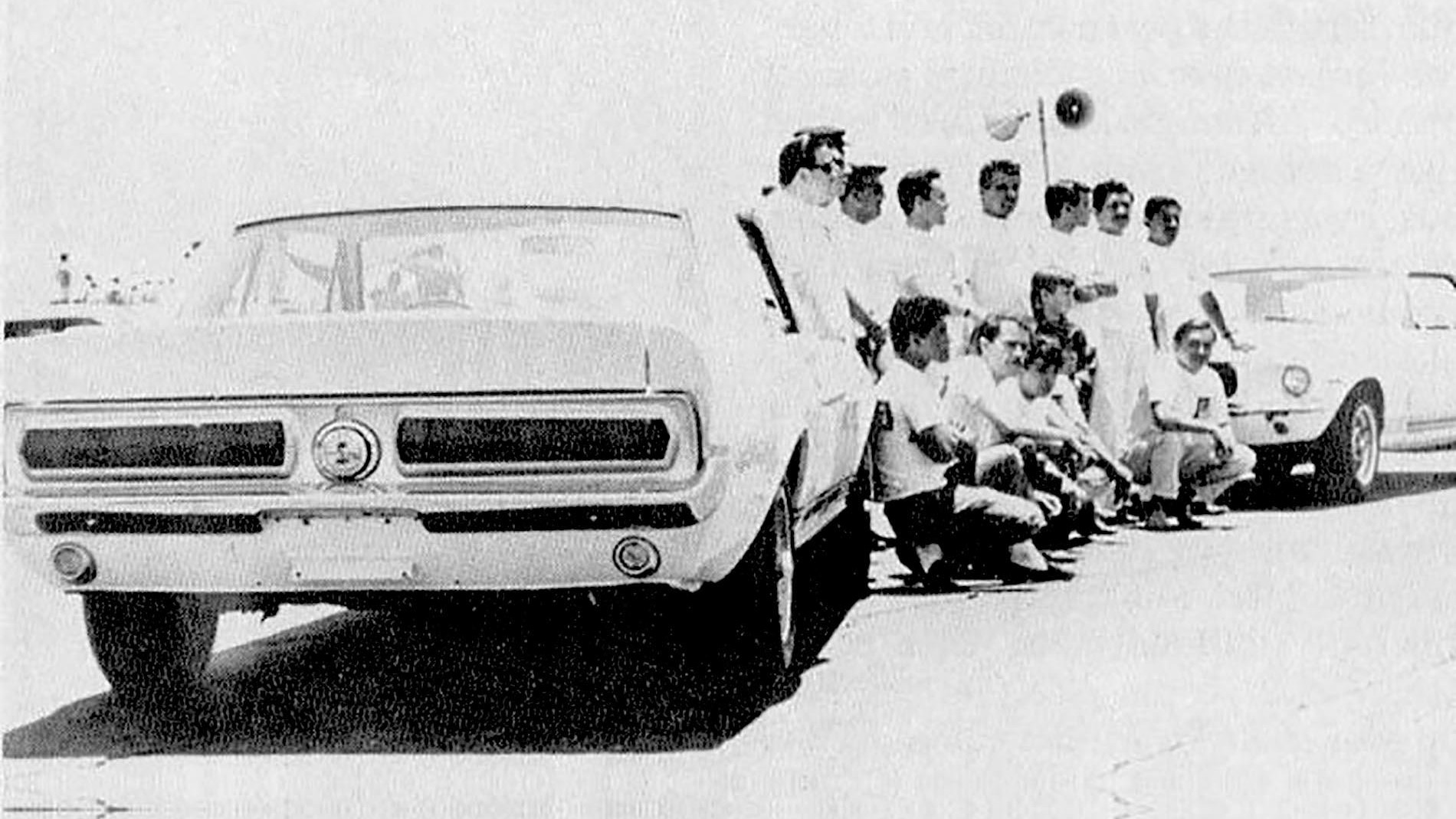
One more differentiator was that, as Mustang Illustrated notes, local regulations stipulated that the cars built in Mexico had to have at least 45 percent of their parts sourced from Mexico. In the case of the Shelby de Mexico GT350, this meant an engine, interior upholstery, rear axle, and even tires made in Mexico.
Shelby de Mexico then took these cars racing, too, scoring wins all across Mexico, from Acapulco to Veracruz and many places in between. The racing program was successful, as racing fans would go to their local Shelby de Mexico dealer after watching one of the cars win races. Shelby de Mexico’s racing team was also smart with marketing. The rear of the car was always painted with the name of whatever Shelby de Mexico dealer was local to the province they were racing in. That way, buyers knew exactly where to go to get their own Shelby parts or Shelby de Mexico GT350.
Shelby de Mexico Got Weird

Then, something weird happened in 1969. The Mustang had gotten a redesign that made it a little bigger, wider, heavier, and meaner than before. Shelby Mustangs also got their own styling update to set themselves apart from the Mustang GT, with an elongated front clip, a recessed grille, dual headlights, Ford Thunderbird taillights, a bumper exit exhaust, and more.
These changes, which were done in-house by Ford and not by Shelby American, did not reach south of the border. Worse, the Shelby GT350’s M-code 351 Windsor V8 was also not produced in Mexico.

This meant that if Shelby de Mexico wanted to continue selling a GT350 locally, it would have to make a car that was vastly different than the GT350 that was sold in the United States. Velázquez and his engineers embraced the challenge, creating the rare 1969 Shelby de Mexico GT350.
To build the “Shelbymex” GT350, as it’s sometimes called, 1969 Ford Mustang GTs were procured from Ford of Mexico, and then fitted with 302 cubic inch V8s that were produced in Hermosillo, Mexico. The cars were then adorned with the same go-fast parts, including the Koni shocks and stiff suspension, as the earlier Shelby de Mexico GT350s. Backing everything up was a Borg-Warner four-speed synchronized manual transmission.

What made the Shelby de Mexico GT350 really weird, aside from having been built using local parts, was how Shelby de Mexico differentiated the GT350 visually from the GT.
The front end of the Shelby de Mexico GT350 remained the same face found in the GT, Mach 1, Boss 302, and 429. But to make it stand out, Shelby de Mexico’s engineers gave their GT350 a selection of hoods. Buyers could choose from the regular Mustang GT hood, or get a fiberglass hood with a sort of gill intake, or a fiberglass hood with a NACA duct. Optional was a front splitter. According to Velázquez, the headlights weren’t typical automotive lights, but the landing lights from some sort of aircraft.

In the rear, buyers could opt to have their cars sporting sequential Mustang taillights or 1965 Thunderbird taillights. But the most bombastic change is what happened with the roof. Ford of Mexico did not produce fastback or convertible Mustangs. So, according to Velázquez, to make the Mexico GT350 look like a fastback, his engineers formed two buttresses out of fiberglass.
These buttresses bolted into the hardtop, and then extended over the rear quarters. Each roof was then finished in black or white vinyl. The rest of the car was sold in either green, blue, gold, red, or black. White was available, but only for racing versions. Other options included the choice of drum or disc brakes, a spoiler, a black interior, or a white interior. This is why some of the survivors today have vastly different options, yet are also still factory-spec.
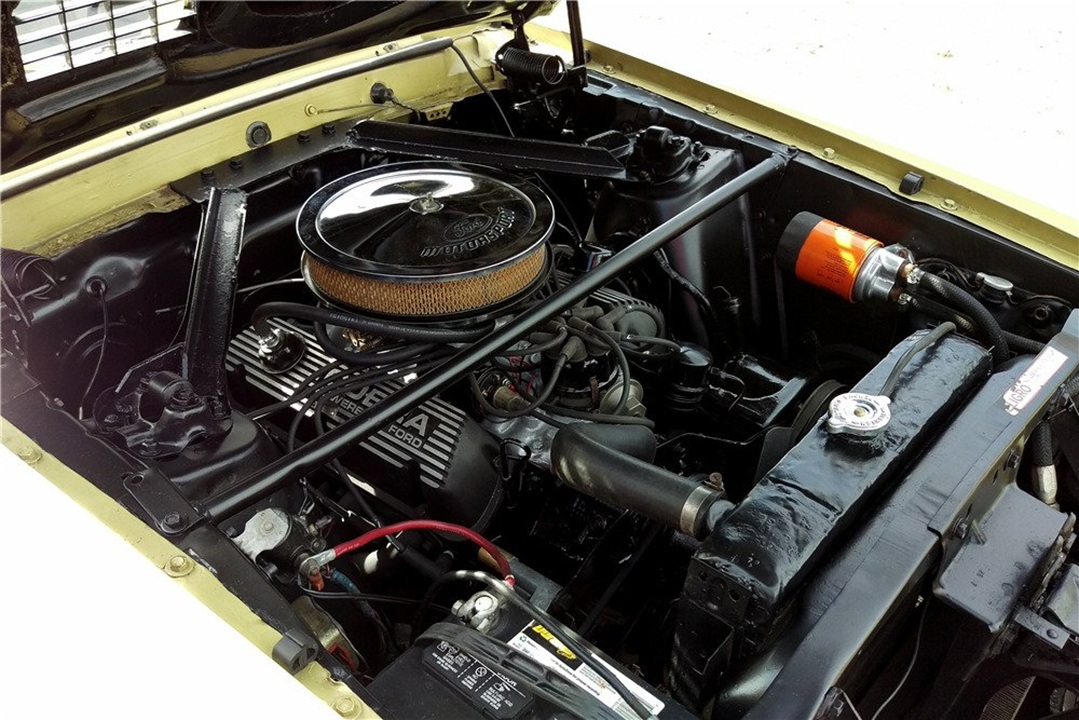
Horsepower figures are not quoted for the Shelby de Mexico GT350. However, advertisements talked about the car’s Goodyear Speedway 350 tires and said that you could turn your own Mustang GT into a GT350. For reference, the 351 cubic-inch V8-powered Shelby GT350 in the United States made 290 HP. I also couldn’t find an original price for any of these cars.
The End Of Shelby De Mexico
1969 was the Shelby de Mexico GT350’s hottest year, with 306 units sold. Unfortunately, the success was short-lived. Shelby ended his partnership with Ford in summer 1969. Then Siffren Bass, who supplied Shelby de Mexico with cars, retired from Ford of Mexico due to an illness. As a result, there were no Mexican GT350s that year.
Velázquez was forced to diversify, and by 1972, Shelby de Mexico had a lineup of oddballs. There was the Shelby Maverick, which had a 302 cubic-inch V8, and the GT351, which had a 351 cubic-inch Windsor V8. Shelby de Mexico also dabbled in the luxury market, building what it called the Galaxie “Continental.” This was a Galaxie that Shelby de Mexico had converted into a Continental Mark II, complete with opera windows, a trunk tire kit, and special trim. Shelby de Mexico also turned Ford LTDs into limos and Mustang hardtops into fastbacks. Here’s the GT351:

Velázquez claims that the Galaxie Continentals were so popular that shops in the United States copied him. Allegedly, they also got the attention of Ford, which told Shelby de Mexico to cut it out. Velázquez obliged and shut down Continental production in 1973. By 1974, Velázquez shuttered Shelby de Mexico entirely. Later, he got into the business of selling building materials and following his family tradition of politics.
Finding usable images of the other oddball Shelby de Mexico specials turned out to be harder than expected. The best I can show you is this replica of the Shelby de Mexico Maverick:

While Velázquez claimed to have made successful cars, the raw numbers aren’t as impressive as you’d think. As I noted earlier, the company’s best year for the GT350 was 1969 when it sold 306 of them. Only 200 Shelby Mustang GT351s were built, and another 300 Shelby Mavericks were churned out of the factory in Nuevo León. The Galaxie Continental was better, moving 750 examples in 1971 and 1,500 more in 1972.
It’s unknown how many 1969 Shelby de Mexico GT350s are still around. Many GT350 buyers actually used them for racing, and it’s believed that many, if not most, of them were crumpled up in crashes on racetracks. Of all of the 678 Mexico GT350s built from 1967 to 1969, fewer than 100 are thought to have made it to today. They sell for decent money, too. One went for $115,500 in a Mecum auction in 2023.
It’s Wild That These Cars Are Even Real
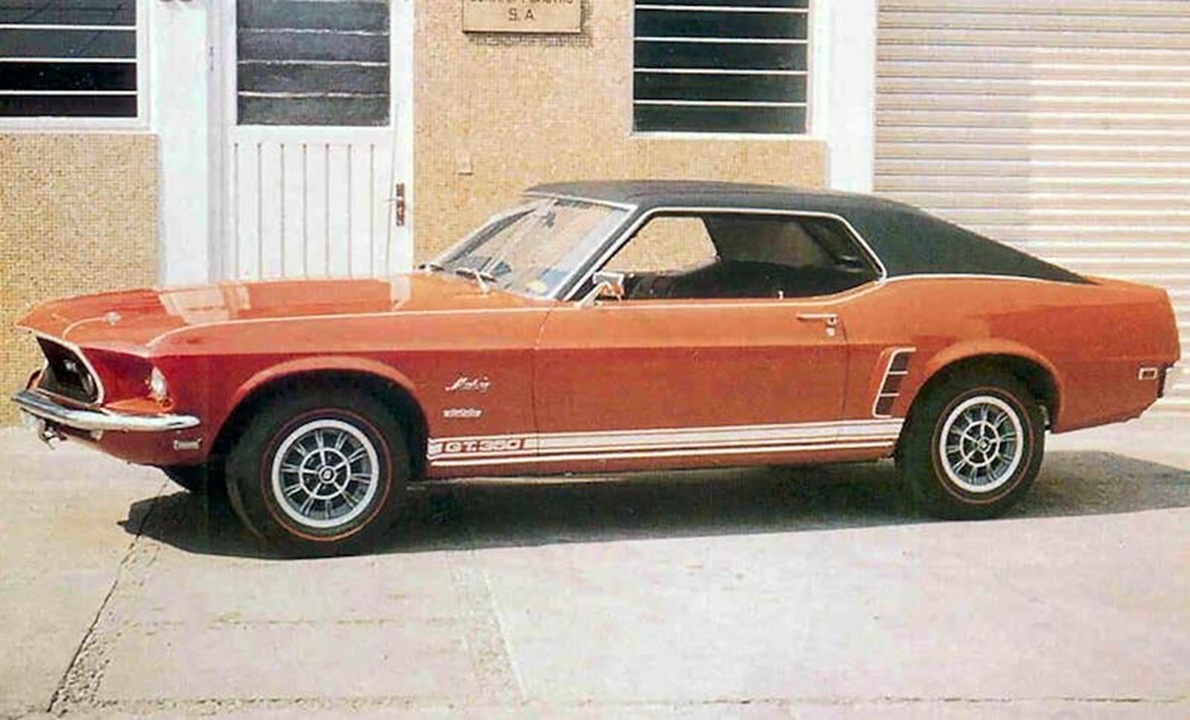
I think the wildest part about this whole story is the 1969 Shelby de Mexico GT350. If you didn’t know any better, you might think that someone slapped some parts on their Mustang GT and called it a GT350. It looks like the kind of car Rockstar might make to have a classic Mustang in Grand Theft Auto without pissing off Ford. It looks nothing like its sibling from the north.
Yet, somehow, this was something built by a factory and given Carroll Shelby’s blessing. When faced with not having the right parts, a team of engineers just did their own thing and created something beautiful. Then, only 306 of them were sold.
So, one of the rarest Mustangs you might not have heard of was never even sold in the United States to begin with. But should you happen to find one of these and have enough cash for it, you’ll be getting an interesting piece of history. Just be prepared to tell everyone that, yes, it really is an actual GT350.
Top graphic image: Mecum Auctions


I knew about this and hoped you would also mention the Shelby Maverick, which you did.
Having grown up literally within sight of Mexico, I’ve long been fascinated with Mexican market oddities. Several ’70s and ’80s Mexican market Fords were a mish-mash of US Ford and Mercury products. Mexican Fox Mustang hatchbacks were Mercury Capri shells with a Mustang front clip, whereas the notchbacks were Mustang shells with a Mercury Capri front clip and tail lights.
I beg to differ but Carrol Shelby didn’t slap his name on go fast cars. He created the big engine in a small light car. He never sold out and he saved Ford from the morons of the Ford family that thought because their last name was Ford they had any inkling of running a car company. The history of Ford he’s been hitting heroes then when it saves the company fire them and pretend a Ford actually saved the company. There isn’t a Ford alive today that has any knowledge or interest in building a car.
Looks like an AI interpretation of a mustang!