

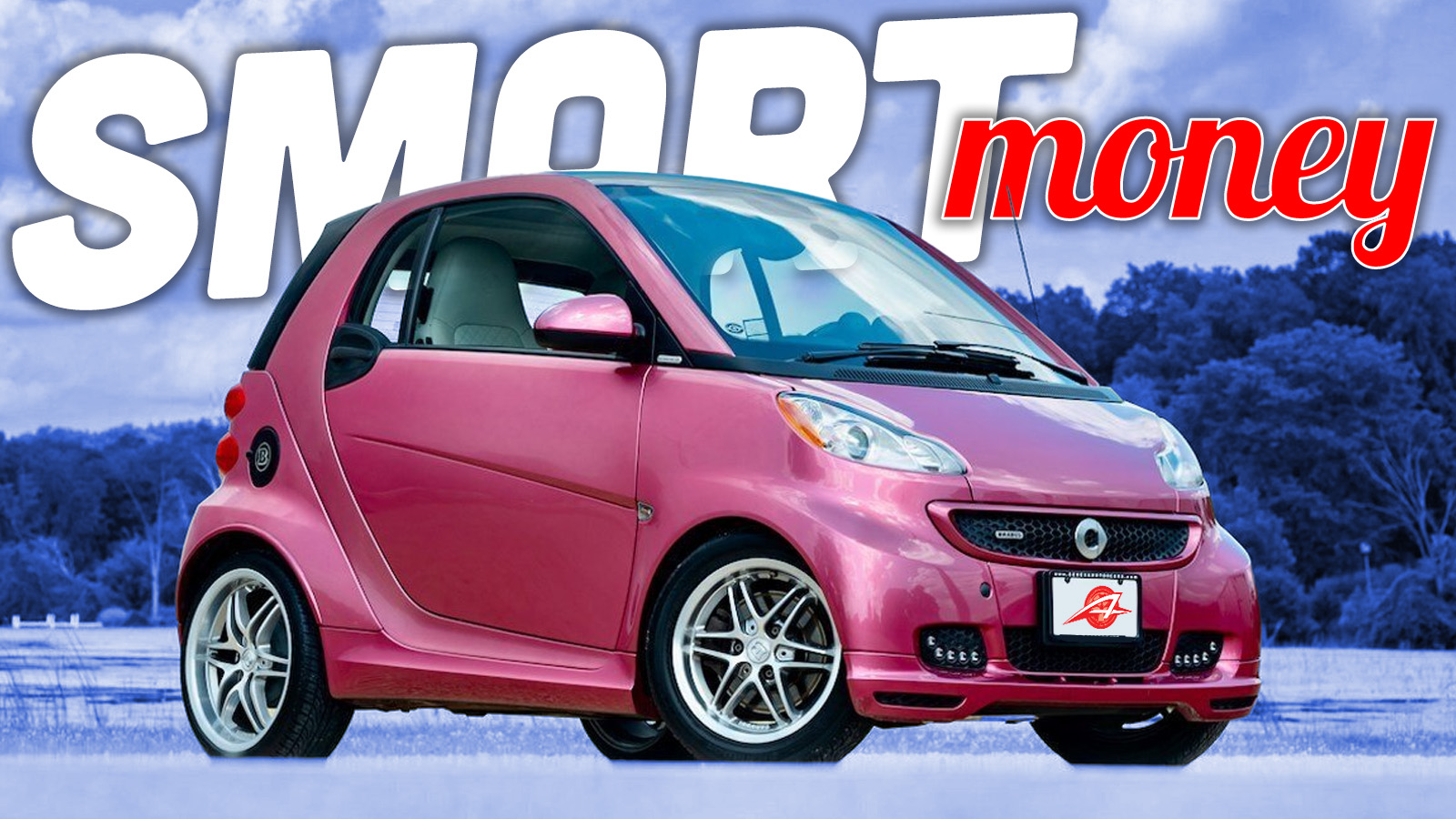
When the Smart Fortwo launched in the United States in 2008, it hit with a base price of $11,590. For that dough, you didn’t get an air conditioner, power windows, or even a radio. A handful of years later, Smart launched a halo model that was the exact opposite. So long as you had well over $30,000 to burn, you could get the absolute apex of Smart Fortwos in America. This is the Smart Fortwo Brabus Tailor Made, the rare Smart where the only limitation is the engine, your imagination, and your wallet.
For decades, the wizards at Brabus have been putting a magic touch on high-end German cars, namely Mercedes-Benz, Maybach, and recently, Bentley. Brabus has long tweaked Smarts, too. Usually, buying a Smart with a big black “B” on it means you’re getting better handling, more horsepower, more luxury, and a Smart that makes a statement that’s a little different than “I’m cute.”


Sadly, when Smart USA brought Brabus to America in 2009, it left all of the horsepower shenanigans in Europe.

America’s version of the Smart Brabus mostly amounts to a cosmetic package with flashy wheels, a body kit, a sporty suspension with a mild drop, a center-exit exhaust, and a few metal bits inside to go with your leather seats. Still, even without the extra go, America’s Smart Brabus cars looked slick, and they remain revered in the American Smart community today.
At first, the “regular” Fortwo Brabus was the top of the pile, the baddest, most expensive Smart you could buy in America. Then, as part of Smart’s refresh in the 2010s, Brabus offered something a little crazy to Americans. This violently pink car is one of them.

Have It Your Way
The 2009 Smart Fortwo Brabus model that I mentioned above was technically a single-year model. Smart USA said it would sell 1,500 of them, and that’s all. It’s unclear just how many Brabus were sold that year, but Smart USA held to its word, and the Brabus did not return for 2010. Smart USA then went without a Brabus for two additional model years.
Then came 2013, which was a big year for Smart USA. That year, Smart USA announced a big facelift. The Fortwo had gotten an interior facelift, new colors, two additional airbags, and a better warranty in the two years prior, but now the car was finally getting an exterior styling change, too. In 2013 (earlier for European markets), the Fortwo got a new grille, sportier bumpers, and slightly more sculpted side skirts. It was a nice refresh, one that gave a slightly new look to a body much of the world had seen since 2007.

The big news for America was that Smart fans finally had more choices again. Smart was already slinging an all-electric version of its iconic city car, and now the Brabus made a triumphant return. But this time, Smart USA had a few tricks up its sleeve.
If you didn’t like any of the colors offered from the factory, Smart USA had been running a program called “smart Expressions” where you could customize your Smart to have any color or graphic you want. If you wanted Hello Kitty on your car, Smart USA was happy to do it for the cost of the $1,350 wrap, plus $300 installation. If you wanted a clone of Ford Mystichrome, Smart would do that for a starting price of $1,550, plus $100 per hour of installation.
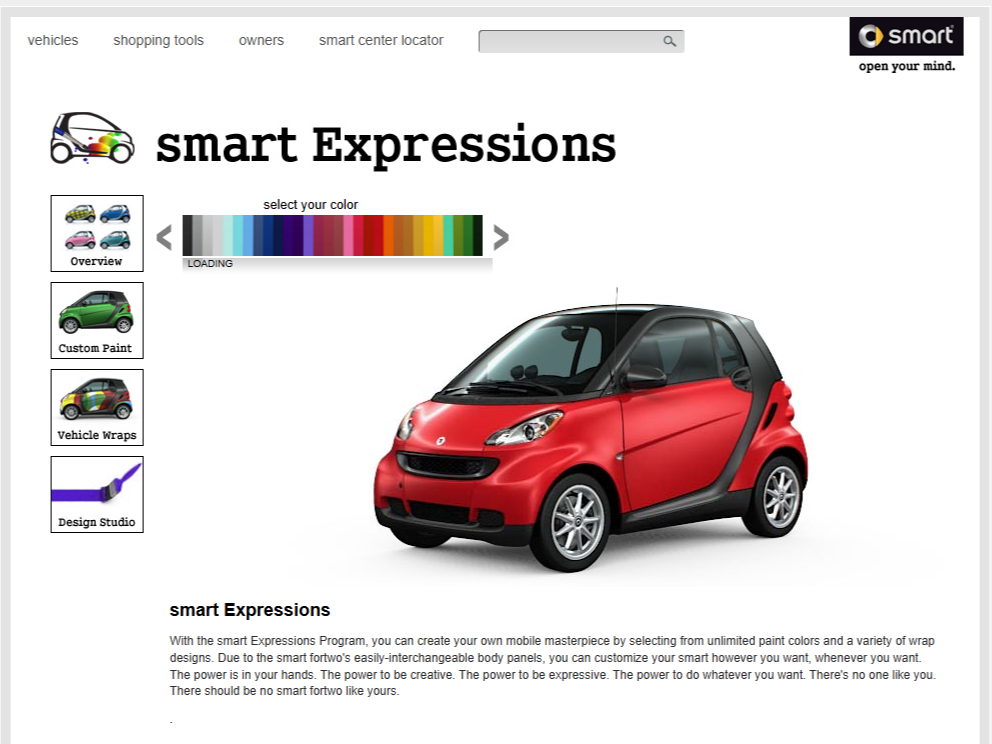
If you couldn’t choose a custom color or wrap, Smart USA let you choose from 93 colors or 35 pre-designed wraps from its existing catalog.
That was neat enough, but what if you wanted to go hardcore with it? What if you wanted multiple colors and wanted to slather them all over your interior or even wheels? For that, you had only one choice: The Brabus Tailor Made.
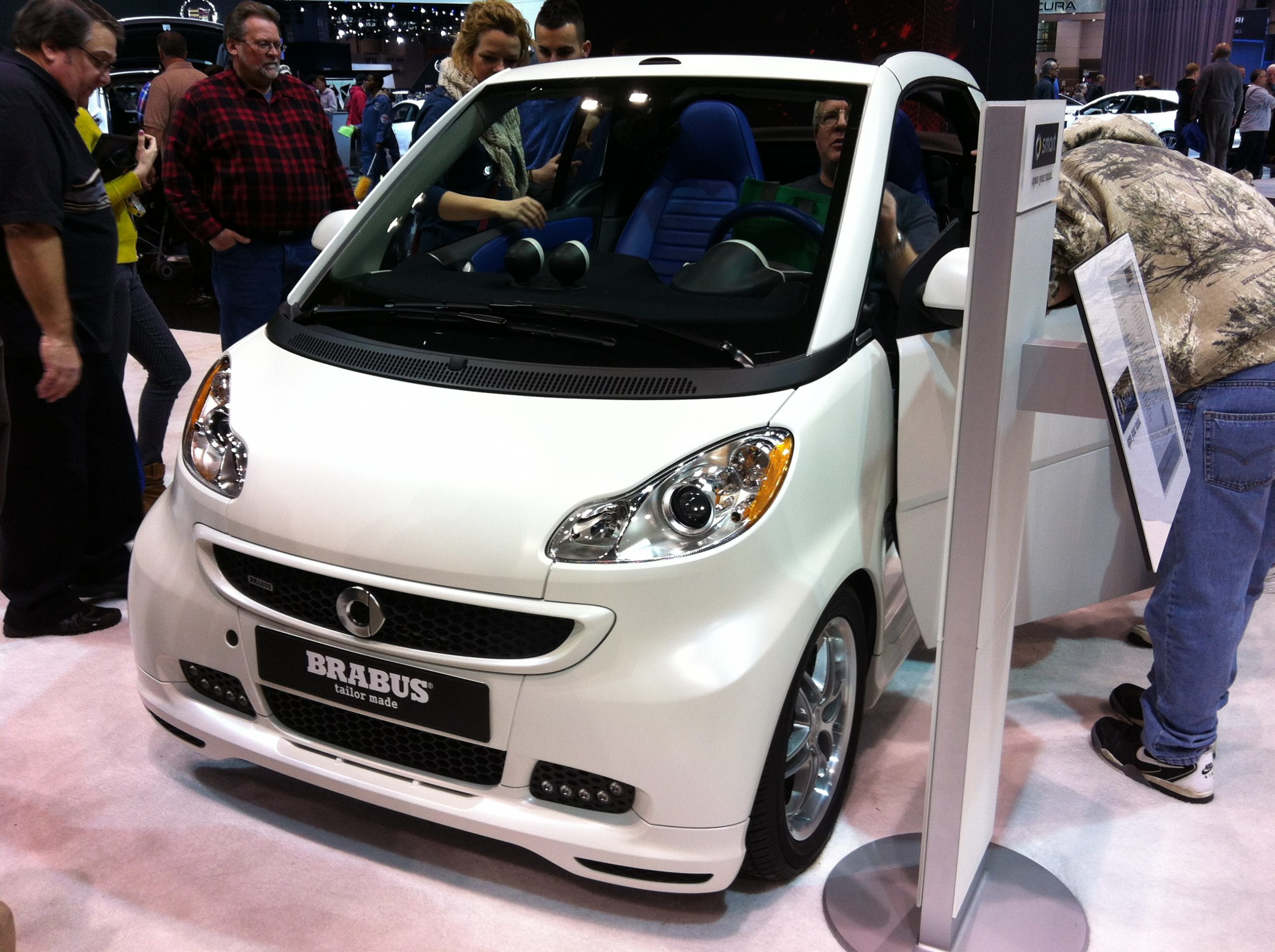
Here’s how Smart described the program when it first launched in Europe:
[S]mart’s tailor made programme aims to meet the requirements of all those customers who want to drive a smart fortwo customised to their own ideas in line with the principle “Anything is possible”. To accomplish this smart is offering extensive special equipment options in addition to the normal equipment variants. For example, customers can choose the exterior colour, types of leather and cabrio soft top colour from a wide range. There are barely any limits. The following are available:
Paintwork in around 23,000 different colours
Leather in around 100 colours and exclusive design variants
Several cabrio soft top colours
The whole smart and smart-BRABUS range of accessories
Those who feel overwhelmed by all the possibilities can choose from attractive “tailor made” packages.The tailor-made models are made-to-measure in the truest sense of the word. This means that not only are they individually made; they are customised at the factory with masterly craftsmanship using top quality materials and parts tested by the manufacturer – of course with a full manufacturer’s guarantee.
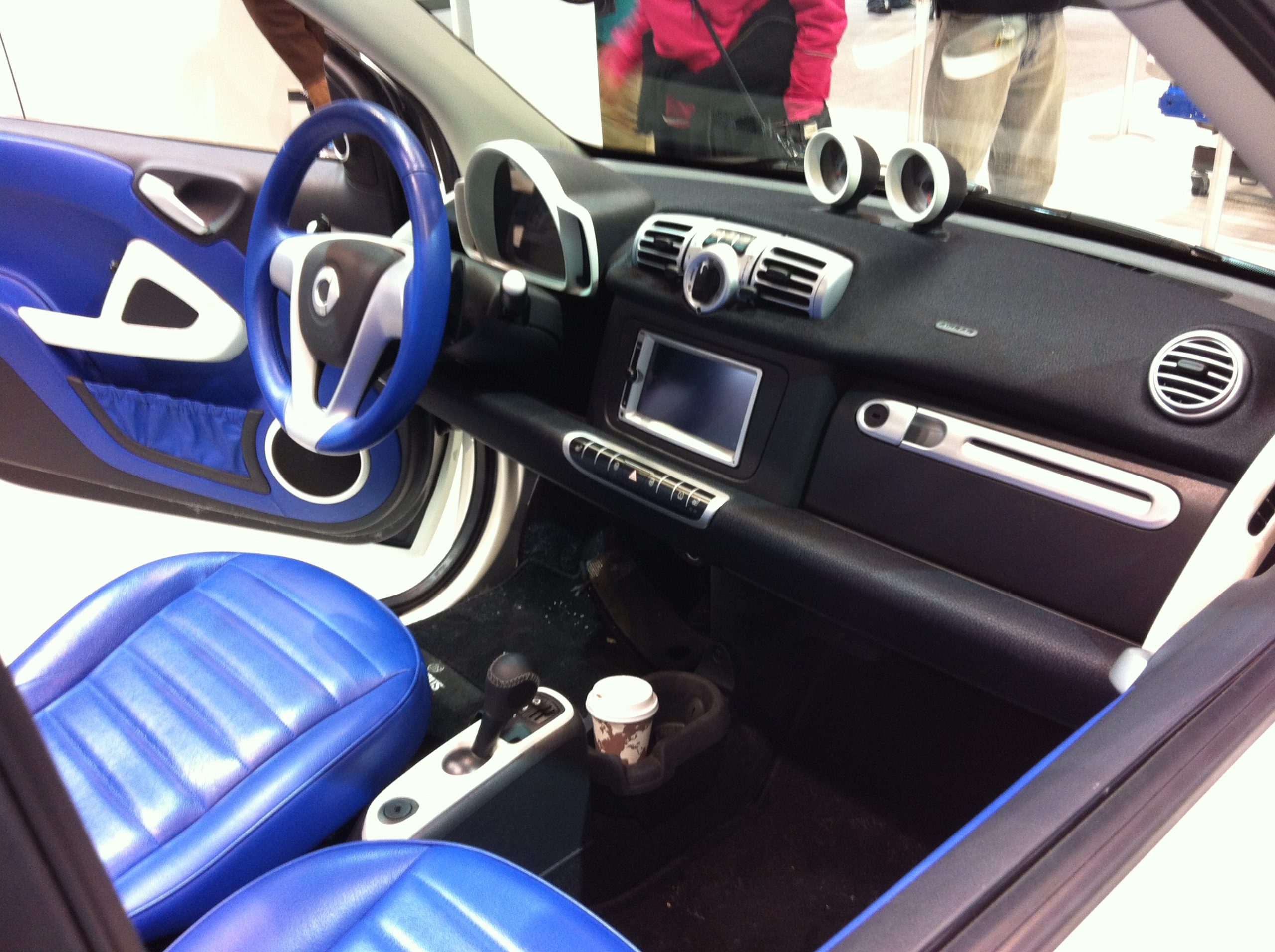
In a glorious change from the usual, Smart did not nerf the Tailor Made program when it came to America. Just as Smart promised, you could choose any color you wanted, have it applied to the car any way you wanted, and then combine it with the full set of Smart and Brabus options. If you wanted to make a Smart Fortwo version of the Volkswagen Golf Harlequin, you should have been able to do that! Really, the only limit was how much you were willing to pay.
Likewise, if you couldn’t really figure out what you wanted to do, Smart USA also sold “default” versions of the Brabus Tailor Made, like this beautiful cocoa version:
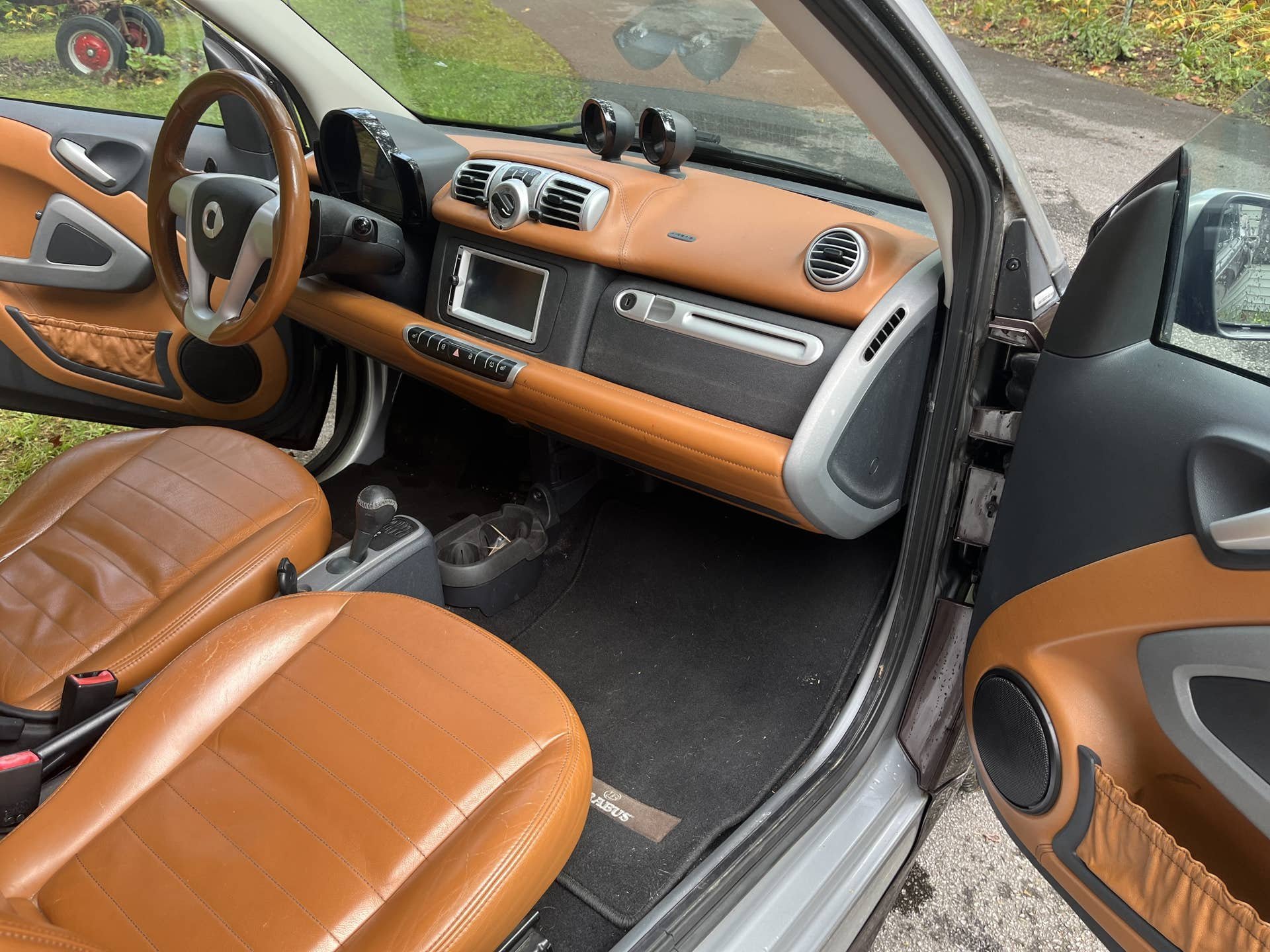
Honestly, the press release undersells how awesome the Brabus Tailor Made cars are. I’ve seen a few of these in person, and it’s like looking at a completely different Smart. The paint quality is amazing, and the color is rich. Inside, the Tailor Made leather is leagues better than the leather offered in the standard car. Everything feels so soft, so supple, and high quality.
The best comparison I could make is that it’s like Smart looked at the Aston Martin Cygnet’s ‘Q by Aston Martin’ program and thought, “yeah, we can do that.” Autopian co-founder Beau Boeckmann has a Q-customized Cygnet, and its leather gives off a pleasantly intoxicating aroma. The Smart Fortwo Brabus Tailor Made had the same thing going on! Smart was even willing to slather that leather all over the dashboard.
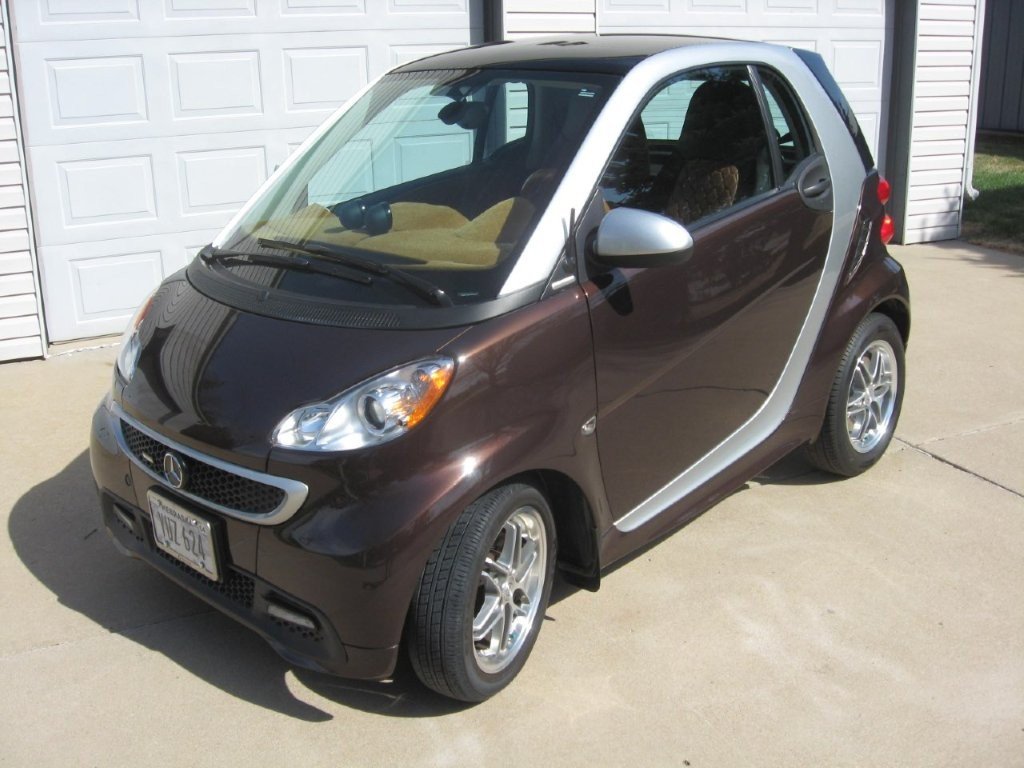
The catch was that you had to be pretty loaded to get one of these Tailor Made deals. In 2013, the lowest Smart Fortwo was the Pure at $12,490. A step up was the Passion Coupe at $14,890, and the top of the normal trims was the Passion Cabriolet at $17,890. The Brabus package was a $3,500 lift on top of the price of a Passion Coupe or Passion Cabriolet.
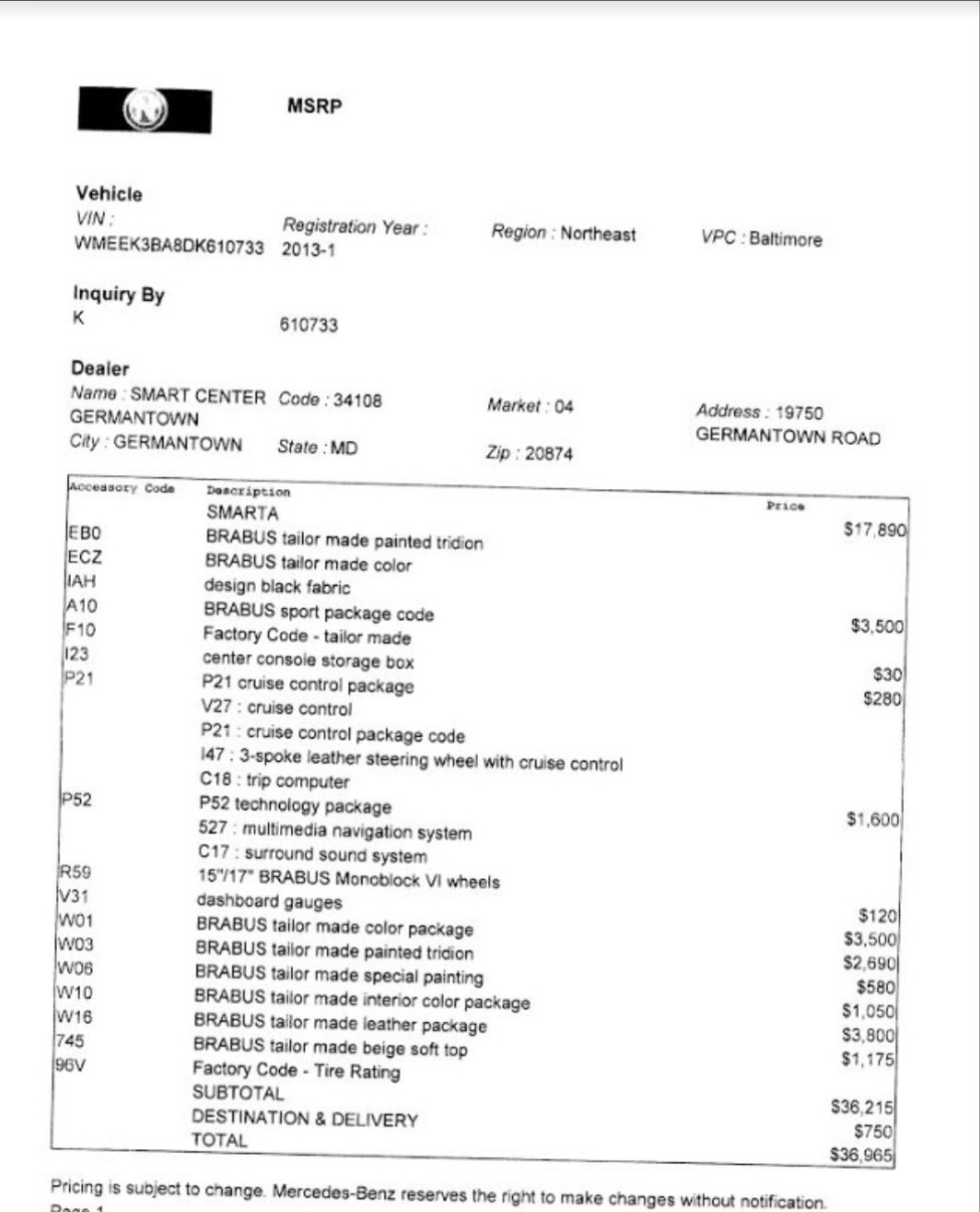
A Brabus Tailor Made started off as a regular Brabus. Let’s say you start off with a convertible. That’s $21,390 before you choose your color or any additional options. Brabus would then charge thousands for all of your custom colors. Click here for an example invoice from one custom Brabus Tailor Made build that added up to $36,215 before fees. Why yes, that’s basically three times the price of a Pure!
What You Get In Smart’s Old Halo Car

While it was a hefty price to pay for a Smart, what you got out of the other end was essentially a one-of-one car. Well, assuming nobody else copied your exact build, anyway. That’s what the seller of the 2013 Smart Fortwo Brabus Tailor Made for sale on the MB Market claims. So far as I can tell, there are no other Tailor Mades in this configuration in America, and that’s exciting!
Whoever ordered this car originally went hard on a metallic pink theme. The exterior is standard-fare Brabus, plus a whole lot of pink from top to bottom. Check out how rich this color is!

The real magic happens inside, where there’s a glorious mix of pink trim and white leather. I love the attention to detail here. Everything from the turn signal stalk cap to the trim around the shifter was more of that metallic pink. Even the speaker trim rings are pink!
The build of this car is a bit fascinating to me. In Brabus guise, a Smart comes with black leather heated seats, power windows, power mirrors, air conditioning, some metal trinkets in the cabin, and other minor bits. Sadly, only the European versions got a Brabus-specific gear knob and Brabus-branded instrumentation. Options for this vehicle would have included an alarm system, cruise control with a trip computer, an upgraded stereo, ambient lighting, and some other accessories. The original orderer of this vehicle opted against the cruise control and also skipped out on the alarm system. But they did get the ambient lighting and a cargo cover.

I’m so used to seeing Brabus cars with basically every option box checked, so I was initially surprised a few bits were missing. However, I do get the decisions on the option sheet here. Due to technical limitations involving the extra airbags that later North American Smarts had that the European ones didn’t, Smart USA was unwilling to equip a car with both cruise control and flappy paddles from the factory.
Thankfully, you can always get an aftermarket cruise control and keep the flappy paddles.

I also understand not ordering an alarm system. The alarm systems in North American Fortwos are notoriously sensitive and will basically start blaring if a stiff breeze hits the car. However, this does mean that, while you might spend more than $30,000 on your flagship Brabus Tailor Made, there will forever be blank buttons on the button bank (above).
At some point in this car’s past, someone replaced the factory touchscreen stereo with a cheaper aftermarket unit. The install looks good, and I bet it does offer more features than the dated factory unit. Personally, I would have gone for a more factory look with a unit that didn’t have piano black plastic.

When this listing went up, the MB Market claimed that this car has 101 HP, but that’s not actually true. Only the European version makes that much power.
When Smart launched in America, it only certified a single engine and a single tune of that engine. Every gas-powered Smart sold from 2008 to 2015 (known to Smart fans by its chassis code of 451) has the same Mitsubishi 3B21 999cc three-cylinder engine with 70 horses and 68 pounds of twist on tap. Every one of those Smarts also comes with the five-speed automated-manual transmission. This flagship Brabus Tailor Made is no faster than a base-spec Pure.
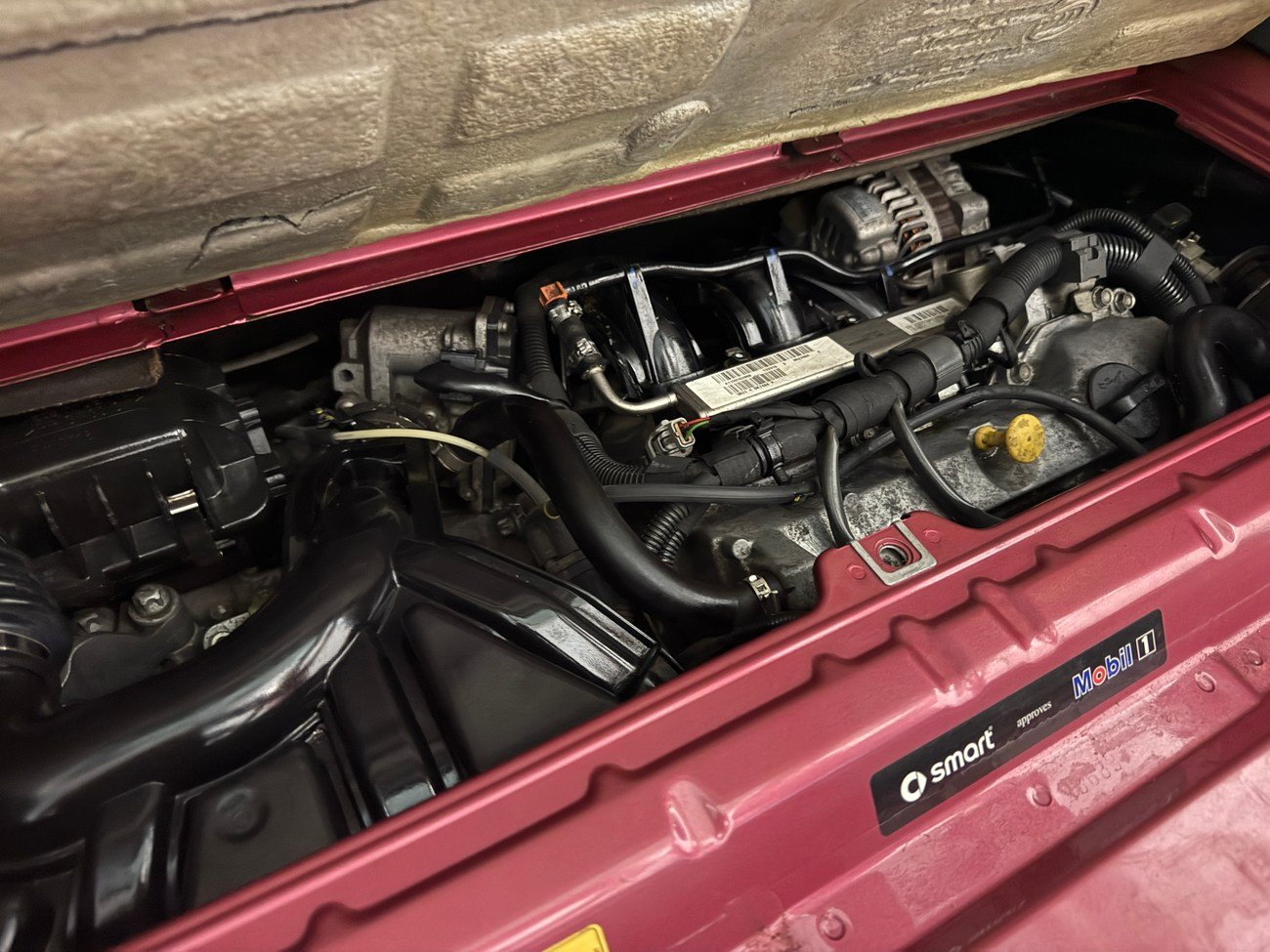
To the credit of the MB Market, the platform edited out the error this morning.
It Really Was Very Expensive For A Smart
An order sheet is not shown on the auction page. However, I ran the VIN to get the option packages on this Smart. It has a $3,500 custom body color package, a $2,690 safety cell color package, $3,800 special leather, $1,050 to have the pink inside the car, $190 for ambient lighting, $120 for a tachometer, $1,600 for the sound system and a couple of other odds and ends. That’s at least $30,000! It’s even worse when you plug it into an inflation calculator. When new, this car was the equivalent of $46,401 today.

The car is noted to have two owners on record and only 14,226 miles. Based on the admittedly few sales that other Brabus Tailor Mades have sold for, I wouldn’t expect this one to sell for anywhere near its original sticker price.
Whoever buys this car is getting one of the rarest variations of the Smart Fortwo in America. While I cannot confirm if it’s truly “one-of-one” as the listing says, I’d bet money on there being fewer than 10 hot pink Brabus Tailor Mades in America. The buyer will also be able to say with total honesty that anyone who looks at the car is gazing upon what more than $30,000 of Smart Fortwo looked like in 2013, and honestly, that’s still pretty wild. This is what the absolute peak of Smart looked like 13 years ago.
It is also a dream-spec Smart for me. I’ve wanted a hot pink and white Smart for longer than a decade now, and this is basically the car I’ve had in my dreams for so long. Personally, I would have made the dashboard white leather and the steering wheel pink — I’ve never said I had good taste — but this is close enough! Sadly, I cannot picture myself spending over $10,000 on a 13-year-old Smart, even if it is my Holy Grail. But I have no doubt that whoever spends that kind of dough will love their unique pink ride.
Top graphic image: MB Market Listing


I remember sitting in a regular smart while the sales-lady (with her Appalachian like decolletage was pointing directly twords me, I’m assuming it was her only selling ability) and she was trying to explain the advantages this car had over, say a 10 year old Toyota Corolla. And it reminded me of the conversation in idiocracy in the white house about Brandow.
It has what drives crave and all.
I want a yellow one. Put some school bus livery on it. Call it the Brabus Micro Bus.
Go ahead and buy it, then sell off a bunch of your other cars/ busses and go capture your white whale/ holy grail configuration.
So why was this better than an Abarth Fiat or a Cooper Works S Mini?
It wasn’t, which is why more of those cars were sold, and why Mini is still in America, and Smart is not. Poor Smart.
I lived in an Appalachian town of about 15,000 for a few years in the late aughts. There was one guy, the director of the local theater (the one where Jay Leno was playing when he took that bad fall last year, oddly enough), who was determined to bring big city culture to us benighted mountainfolk. Part of this was driving the only Smart for miles around. Maybe you could justify something that expensive, with terrible safety, comfort, gas mileage, and no back seat or storage even in Pittsburgh… But anywhere else in Southwestern PA, it just made you look like a jaggoff who should’ve just bought a Focus.
On the other end of the state, Bensalem police bought some as errand/court cars for cops dropping off stuff at the crime lab or spending the day at the courthouse. Of course, other departments either bought random used cars from the state surplus property warehouse or used semi retired Crown Vics
Maybe my memory is playing tricks on me, but I have a hazy recollection of an NYPD Smart complete with a light bar on the roof putting around midtown Manhattan. I mean why not? They had such a mix of cars back then. Chevy Impalas, Ford Fusions, some Nissan Altimas…
NYPD had a couple hundred Smarts, actually! Last time I was in NYC, I saw two parked near Times Square. Inside, a big sticker on their dashboards instructed officers to refrain from exceeding 40 mph. If I recall, the cars were (are?) used for parking enforcement, issuing tickets, and patrols in spaces regular police cars can’t fit. lol
Thanks for the sanity check. A couple hundred. Wow! The NYPD has such a distinctive, cool livery on their fleet. The destruction of an NYPD Impala in the final scenes of The Bourne Ultimatum is definitely up there on my list of great film chases.
So weird to me to overpay so much for something with almost no likelihood of investment potential and then barely drive it before selling it off to someone who does the same. Maybe it just proved to be much worse to drive than they envisioned, but I’ve seen similar things with other cars, too. I like the color.
Have you ever driven a Smart? It really is horrible to drive, it must have been thé worst car to drive on the market, or certainly in the top 3. Two reasons: the suspension was extremely harsh, it had almost no give, and the low profile tires didn’t help, of course. There have been other cars that were just a tad larger that proved that it is possible to build a comfortable micro car. Second reason: the gearbox: it baffles me to this day that they decided to launch the car with this gearbox, it’s incomprehensible. Anything would have been preferable, even an old style automatic (with a torque converter). Not only did it shift extremely slow, but it would shake the car back and forth so that you would think the driver was driving a manual for the first time in his life (yet it was an automated manual).
There’s a reason that they never earned a single penny through the entire lifespan of the Smart ForTwo, the majority of buyers were companies that either used it as a cheap company car (the leasing offers were quite compelling), or they used it as a moving billboard. Compared to the price of a billboard at a prominent location it must have been a bargain.
No, I know could tell the compromises inherent to such a design and I know myself well, so I could tell I’d hate it, but seeing them rocking front to back on the highway due to the aerodynamics would have been enough. It seemed like an overpriced, under-deliver toy (typical European) with poor reliability, performance, and relative economy vs competitors that were better in every way except the parking party trick that is virtually useless in the US as the spaces are more than large enough for a bigger footprint and clearly defined and parking head first in a sideways spot is (I believe) illegal, anyway. The compromises in the shape all but dictated it would have a harsh ride, something I also don’t care for and often complain about even with modern SUVs that are supposed to be geared for daily driving, not sport (but, of course, the high cg and large delta between net and gross vehicle weight along with stupidly fashionable massive wheels also demand a fairly harsh suspension). Obviously, though, I’m not the target for the car, but for someone to spend so much and not know what they’re getting (no test drive before hand?) or find out they can’t contend with it afterwards seems weird to me. And not just the Smart, I see this with all kinds of cars—people spend way too much on them, barely use them, then move them on at a huge loss. If I’m spending more on something to get exactly what I want, I’m going to either keep it forever or drive it into the ground. If they’re the type to get quickly bored with things, surely they must come to recognize that in themselves at some point, yet they continue to indulge that foolishness. Or maybe they don’t. Somehow, I still tend to give people way too much credit. If they have the money, that’s one thing, but I’m talking generally lower end cars and those people have much smarter things they could do with that money than disappoint themselves or kick the boredom can down the road a short distance.
I think the automated manual box was a thing at the time to boost the EPA by a couple paper MPGs. Ford did that with the DCT in the Focus, too, and ruined an otherwise great car for people (I had the manual and it was bulletproof as well as being a better car than the rest of its class when it was new). They could have reverted to a true auto or a wet clutch DCT, but the former wouldn’t have hit that magic paper 40 mpg and the latter would cost a few extra dollars and the compartmentalization of budgets seem to leave companies unable to distinguish warrantee and lost future customer costs from production costs (and the things were cheap enough that they could have added a bit more to the price, advertised an all new transmission, and made out).
I agree with most of that, except that a tiny car doesn’t necessarily have to be flawed. My last car was the first generation Citroen C1/Toyota Aygo, and it was a really good car. I had originally bought it for someone else, but after driving it for a week, i decided to keep it for myself, and drove it for over 5 years. It was a great city car, but it was totally fine on the highway as well, and even though it was maybe only a foot longer than the Smart, it had 4 doors and 4 seats, and you could actually travel with 4 adults in relative comfort (yes it was cramped in the rear, but still acceptable). It had a 1000cc naturally aspirated engine, but to my surprise it was just as powerful as the Smart’s turbo-charged engine, and a tad more economical.
I think the Smarts biggest shortcoming was the fact that they tried to make it something it could never be: they tried to make it not-an-economy car, and they failed gloriously.
I don’t know how I gave the impression that I was talking about all small cars, but I was only talking about the Smart here. I only buy compact cars, so I have nothing against small cars. However, the EU market is different than the US in regards to small cars. Here, smaller than the compact class have largely been either outright junk or just poor value for the money, but even the few good ones (Honda Fit) appealing to a fairly small demographic where they need to sell higher volumes to be profitable due to lower margins. Between the way the US is set up with lots of places requiring long journeys for basic stuff (this is why the average annual mileage is much higher in the US and why we tend to prefer large cruisers), the appeal is limited. Due to this, the traditional domestic market only ever reluctantly builds (or captive imports) them, which never helped the general social perception of them as miserable cheapskate cars. Imported companies with better small cars might offer better vehicles, but end up costing more for certification (and the US’s different requirements) and importation. To compensate, they often came cheaped out, making them little better than domestic stuff in terms of value. With the high floor on production costs for everyone, smaller than compact is almost always inferior to compact for a minimal difference in price to the consumer and the smaller car often also comes with higher overall ownership costs. In order to get the price down, the cars are very cheapened out, which makes them less durable and pleasant to own and with less sophisticated chassis, which further limits appeal, which means they need to sell at even higher prices to make up for the reduced volume, which makes them intrude into compact territory. To get them down to a low price they can advertise to pull people in, they are often decontented, but once optioned with popular equipment, they get back up to being awfully close or overlapping a lower option compact that probably comes standard with much of that equipment. Compacts also have larger engines and, due to generally better aerodynamics (the longer footprint doesn’t require as much height to try to have some interior volume and the greater lengths reduce wake drag for the same height) and more torque that means the engines don’t work as hard, so that the mileage penalty is minimal, the driving is more relaxed, and the engines will tend to last longer, which is more appealing to most buyers. Then, because compacts are large enough that they can be built on a platform that can be more readily shared over a greater span of vehicles and sales prices (it can be 3 times the lowest price version), they get a lot more money thrown at them, making them more durable and better to drive, and so a much better value. Because of all these things, they also have better resale, so with rare exception that I only expect to be more rare with all this excessive mandated “safety” (government and private enterprise tracking and control of citizenry) garbage, we don’t see good cars here that are smaller than compact (which aren’t so small anymore).
I have been to the US a couple of times, and I did a road trip cross country (from Connecticut to California and back) in a Corolla that i bought for 500$. Used car prices were different in 2000, because this car was rust free, clean inside and outside and very reliable. From what I read, nowadays such a car would cost around 5k (it was 12 years old).
But I do remember that this was considered a small car, whereas in Europe, a Corolla or a Golf was quite frequently used as a family car.
As you correctly state, we don’t usually drive very long distances. Other reasons for our preference for smaller cars are fuel prices and parking: lots of people are apartment dwellers, and many of them have to look for a space in the streets every day, after coming home from work. That is a serious hassle, so the smaller your car is, the easier it is.
And yes, all of these things have an influence on what’s on offer. A great example is Japan: in Japan you could buy a fully loaded kei car since the 1980s, whereas in Europe, a small car with power windows was still considered an absurdity (thankfully these days are over).
However I do understand the American mindset: most people would prefer to drive a bigger car, if it wasn’t for cost and practicality. It’s just more comfortable, there’s no way around it.
Mercedes Streeter trying not to write about the Smart again (and failing):
I formally propose that paints, colorways, hues, shades, tones, and any other such chromatic descriptors enumerated or hereby implied be stricken from consideration as valid and significant differentiation for purposes of labeling a car or vehicle “one-of-one.”
It can be “unique,” which may sound like a distinction without a difference, except that “one-of-one” implies that this:
– was a vehicle that in all likelihood was manufactured in several identical copies;
– is amended or modified from by the manufacturer or designated aftermarket customizer or tuner;
– in such a way as to make material and nontrivial adjustments to the engine performance, driving characteristics or other such non-superficial modifications
– that could have been but were not repeated on any other example of this identical year, make, model.
Otherwise, my truck is one-of-one for having the dreaded white-paint-peel in its specific pattern and a cigarette burn in the driver’s seat from its past life as a rental.
Neat looking pink paint on that Smart though.
Counterpoint: anything that encourages sales and take rates of actual colors is approved.
Ooh, that is a very good counterpoint.
I’ve been on a hot streak of yellow Hot Wheels wagons lately and I have been completely psyched.
I wanted a Smart Roadster so damn much. Even with the hot garbage transmission. It could not possibly have been that hard to swap in a Honda DOHC VTEC motor and transmission to make it pass smog, even in California.
I would love a Roadster Coupe, personally, but live in one of those states that’s weird enough about post-1967 non-USDM imports that would make it never worth risking
I forgot why I had no interest in the Smart until you reminded me of the features.
It’s like half the car of a Civic for the same price in 98, functional for a single occupant who never needed to share the interstate with a Suburban.
Plus that 1998 Civic had a real manual transmission, one of the best on the market at any price, instead of Smart’s whatever that was.
My 98 Civic had a CVT. Not my choice, wife couldn’t drive stick at the time. Transmission needed replacement by 10k miles and it took more than five visits to the dealer to even get it diagnosed – and that was just because one of the techs walked by while I was arguing with the service advisor.
I haven’t owned a Honda or CVT since.
That’s interesting I was thinking I used to see several that looked just like that around the dc area. I also saw at least one around la around that time. I think someone like paris hilton had one and people followed. I’ve also heard some mb dealers had the fancy pink smarts to catch the eye of teenager with parents coming into buy their new mb. If they couldn’t sell the fancy one they could sell a wrap and some upgrades.
oooo pink! Yeah that smart car is cool!
Is that the same I3 that the Mirage has? Will the Jatco Xtronic CVT bolt on? Asking for a friend 😉
Bullshyte!
The Jatco CVT is nobody’s friend.
OK. This or a 25mile Yugo. Whacha picking?
Monday’s Shitbox Showdown 😛
I’d rather have one of these. I’d mod it until I fit! Then mod it some more for handling and moar powuh. https://www.rocketbunnypandem.com/products/rocket-bunny-racing-suzuki-twin-r-kei-32-gt-r
I had no idea that existed and now my life is better for knowing it!
Rocket Bunny redeems themselves with kits like this vs those stupid exposed fastener widebody disasters.
Yeah, those define the carbuncle look.
I love this kind of thing. “Ferrari” Fieros were embarrassing, but things like these aren’t intended to try to fool anyone and are funny and adorable.
I’ve seen similar body kits for the gen 1 Ferd Ka. I think I’d actually fit in one of those after some seat and interior surgery and the tuning options are much greater. Still a DIY import jobs, but parts are likely more available.