

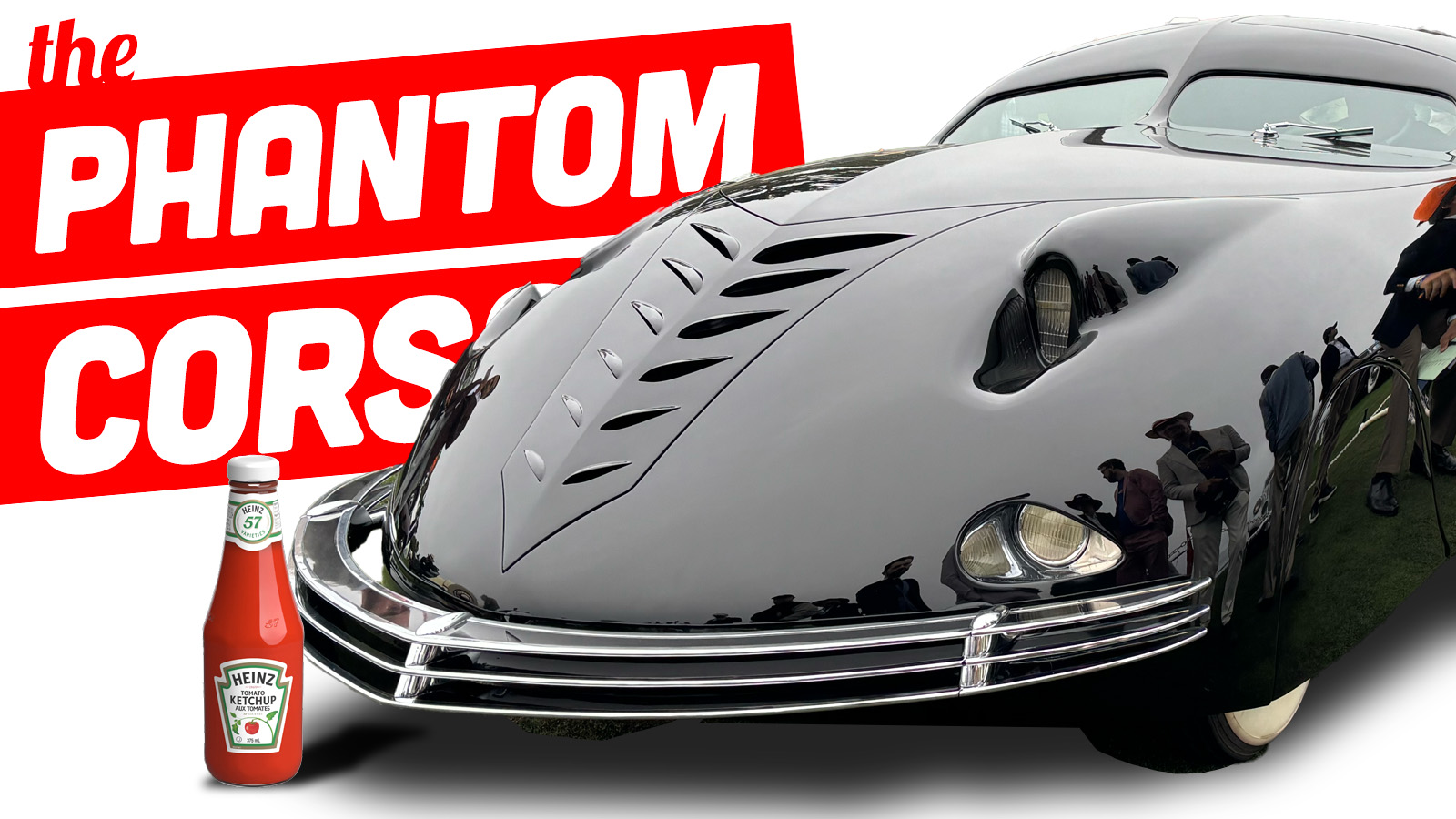
One of my favorite things about going to the Concurs d’Elegance at Pebble Beach, aside from the joys of knowing my entire net worth (that includes my kidneys’ resale value) is a rounding error for most of the people I’m trying not to bump into on that storied lawn, is getting to see cars in person that I’d only seen in books, often since I was a kid. This has happened more than once, and it’s not that different than seeing some celebrity that you’ve been a fan of for years, only a car is a lot less likely to mutter something racist under its breath when you approach it.
This year, there was a car there that was very much one of those cars I’ve been looking at pictures of since I was old enough to crack open a big coffee table book about cars: the Phantom Corsair. The name alone is evocative enough to get people excited; the car itself does not disappoint. The Phantom Corsair is a massive strange thing, a glossy black refugee of daydreams about the future from the 1930s.


The car seems to have attracted a lot of attention as a result of its appearance at Pebble Beach; the last time it was at the Concurs was almost 20 years ago, back in 2007. That’s a whole generation ago! It’s long past time people got to see this deeply odd and impressive machine.
I did a little reel about the Phantom Corsair, but it’s also worth exploring in a bit more detail:
View this post on Instagram
The car does indeed owe its existence, at least indirectly, to ketchup. The designer of the car, Rust Heinz, was the grandson of H.J. Heinz, the man who made sure ketchup would always be flowing in vast, crimson waves for everyone who craves it. Rust had been interested in boat and automotive design most of his life, and even designed a promotional vehicle for Heinz in 1935, the Heinz Comet:
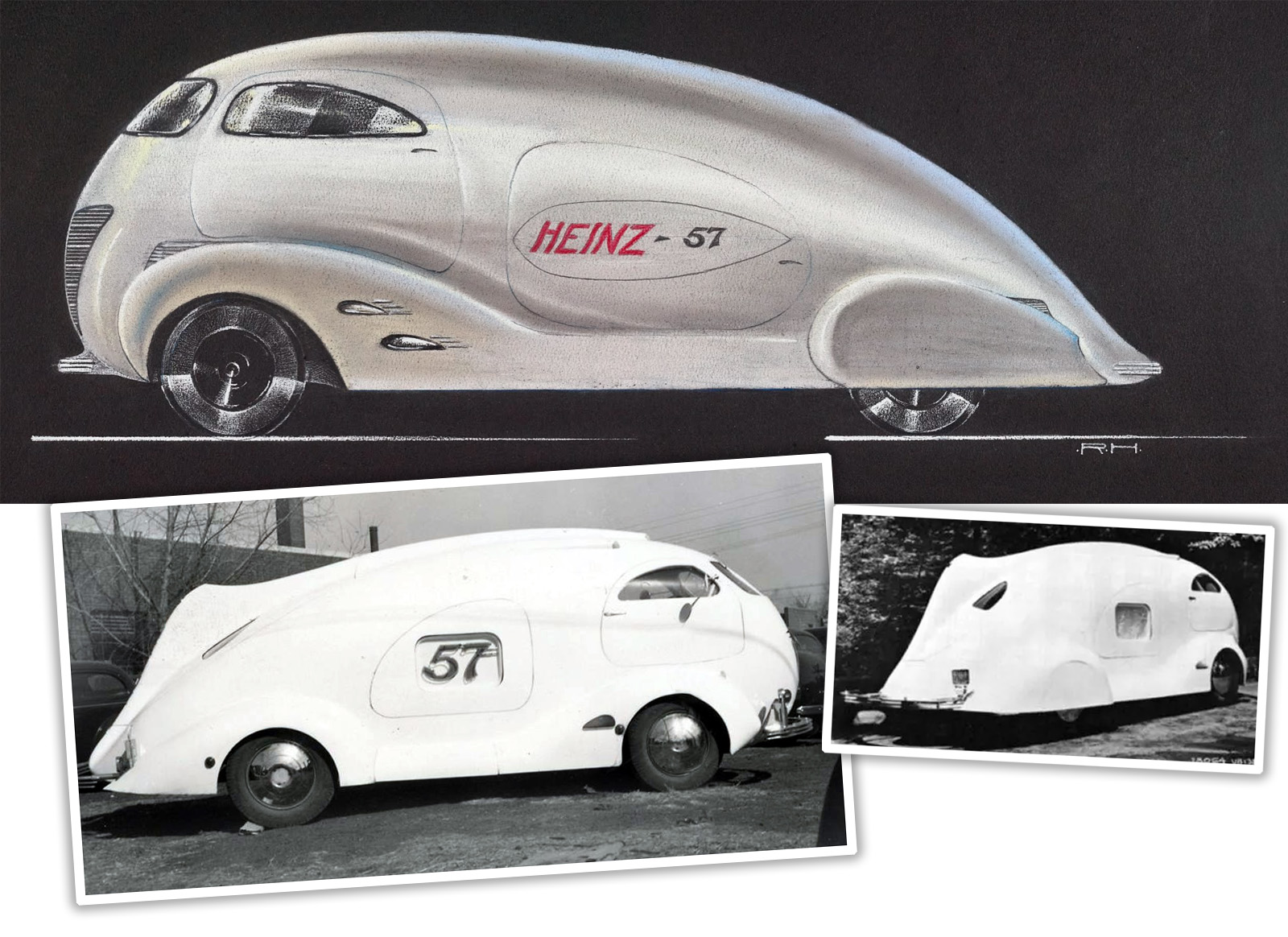
The Comet was built on an Autocar truck chassis, and the bodywork was done by the Square Deal Body Company of Michigan. The rear of the streamlined van opened like a hatch, presumably to load or eject any of the 57 varieties of products that Heinz claimed to sell. It’s not really recorded specifically anywhere that I’ve found, but Rust Heinz must have been pretty delighted to see one of his automotive creations made real, because he started work on what would become the Phantom Corsair soon afterwards.
Sadly, Rust was one of the few in the Heinz family that shared his enthusiasm, as his immediate family was not interested in bankrolling his next automotive project. Fortunately for Rust, his aunt was willing, and she provided the financial support to begin the project that would become the Phantom Corsair.

It’s not like Rust didn’t make any materialistic sacrifices to make the car happen, though: he gave up his personal Cord 810, which would become the chassis and drivetrain of the new car. That’s already a pretty advanced place to start: the Cord 810 was a cutting-edge car when it hit the scene in 1935. Not only was it the first car with pop-up headlights, but it had a 4.7-liter Lycoming V8 engine making about 125 horsepower, connected to a front-mounted differential that put that power through the front wheels. There was also an advanced four-speed preselector gearbox, and independent front suspension. This was an ideal platform to start with to build a futuristic dream car.
Rust worked with Bohman & Schwartz Coachbuilding Company in Pasadena, California to develop his designs into an actual car, and some sources suggest that clay models of the car were wind tunnel-tested, so this may not be entirely an aerodynamics-by-vibes sort of design like most of the streamliners of the era.
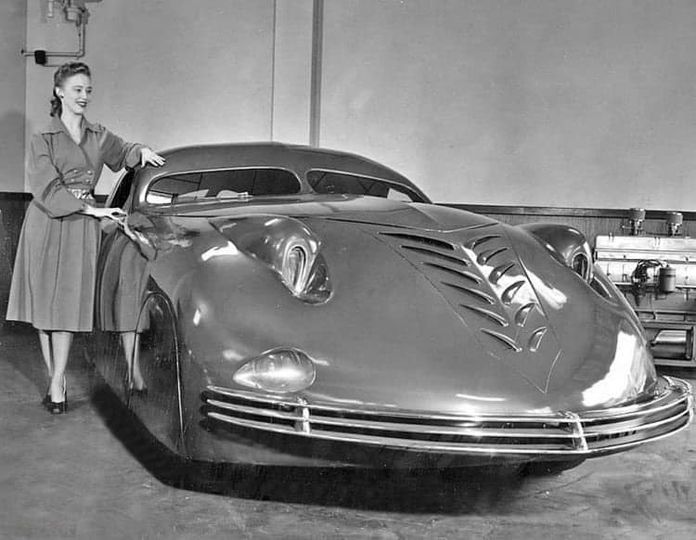
The look of the car was striking; incredibly long and impossibly low, with all four wheels skirted, small windows, and an overall imposing presence. The front end has an almost fern-like array of air intake vents to feed that often-overheating radiator, and there were four prominent headlamps; a pair of low-mounted driving lamps faired into the body and set under plexiglass covers, and a pair of narrow Woodlites integrated into the top of the body in their own pods.
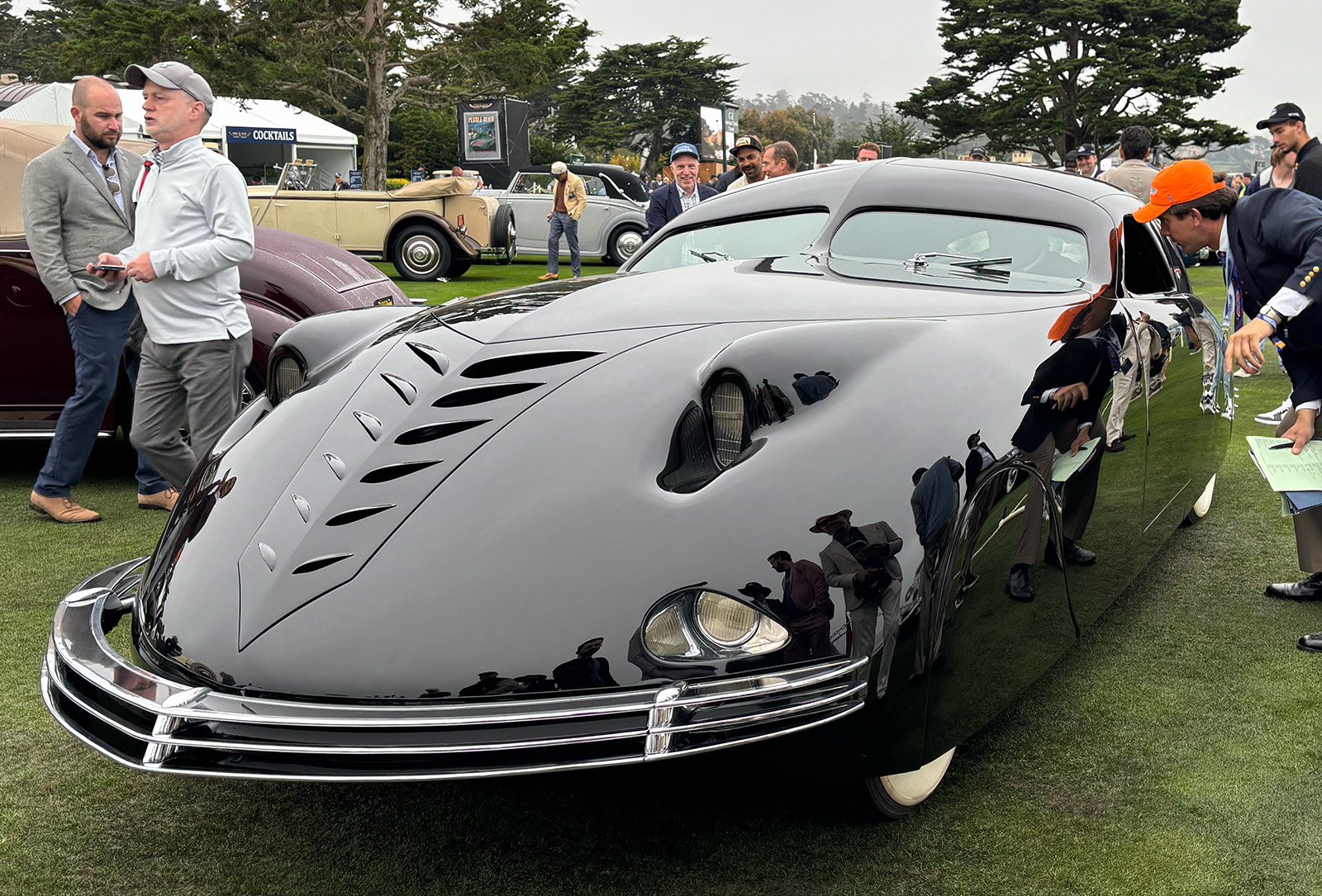
I’m not sure I’d go so far to say that the car was actually pretty, but it was certainly striking and had a metric crapton of presence. Back in 1937 when the Phantom Corsair was first exhibited, it really felt like the future, bold and powerful, a sleek and inevitable coming of a future dominated by technological prowess.
And the Phantom Corsair wasn’t all talk! There were plenty of techy wonders built into that car, like electrically-actuated door handles. Sure, we’re all sick to death of them today, but I think the Phantom Corsair may have been the first car to truly implement them.
There were also a considerable amount of safety features incorporated into the design, like tempered, mutli-layer glass, extensive use of rubber and cork padding all over the interior of the car and dashboard, and a steel safety cell for the occupants.
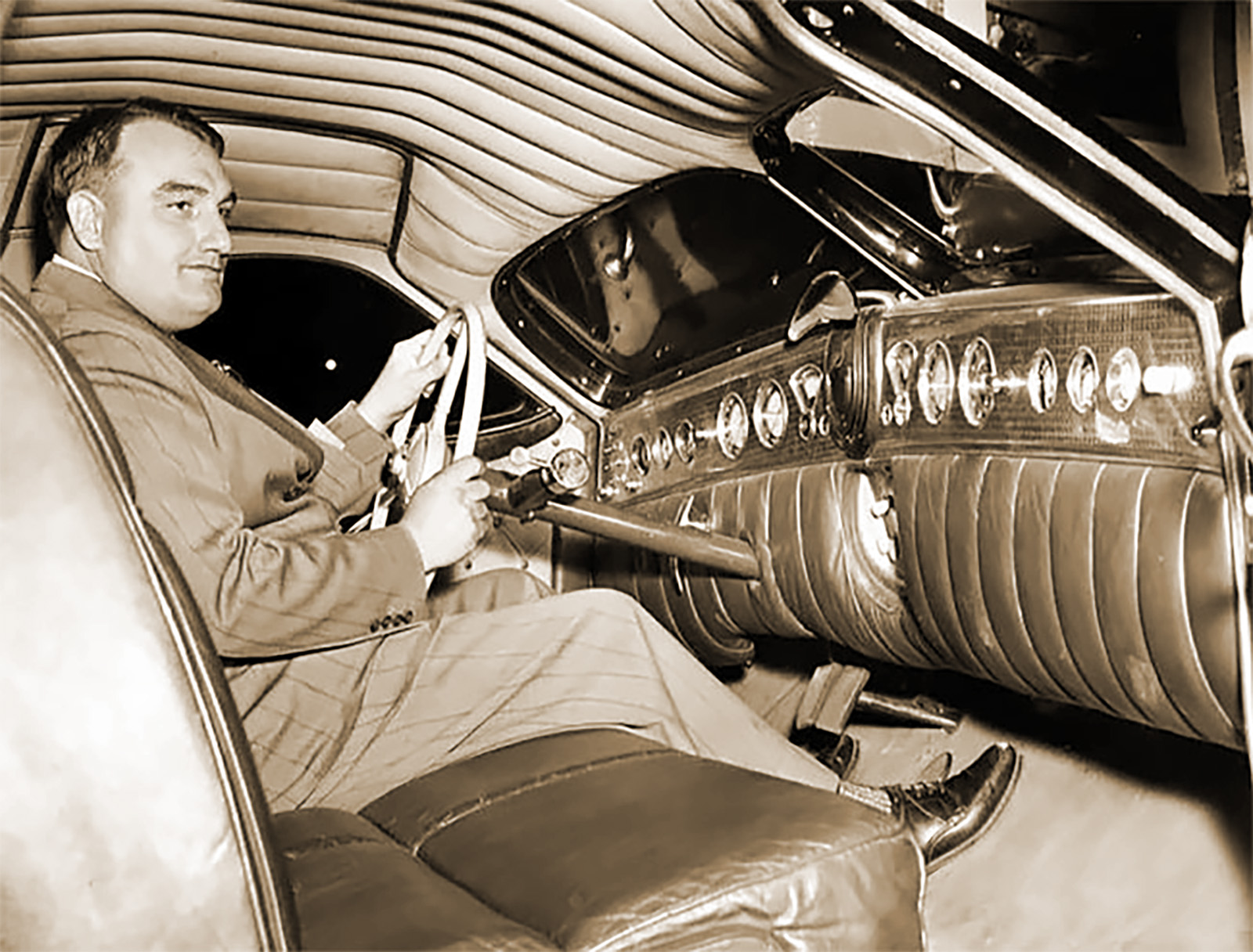
The interior arrangement was a bit odd. The car sat six people, though four of them would sit abreast in the wide front bench seat. That’s Rust himself there behind the wheel, and his position was actually one in from the left, meaning there was room for one passenger to the driver’s left and two on the right. There were also two jump seats in the back of the car, who shared that space with a pair of large and well-appointed bar cabinets full of delicious, nutritious liquors.
Instrumentation, as you can see, was extensive, including an altimeter and compass, among other gauges. And look at all of that rubber/cork padding, on the lower dash and the whole headliner! And note how the doors cut into the roof!
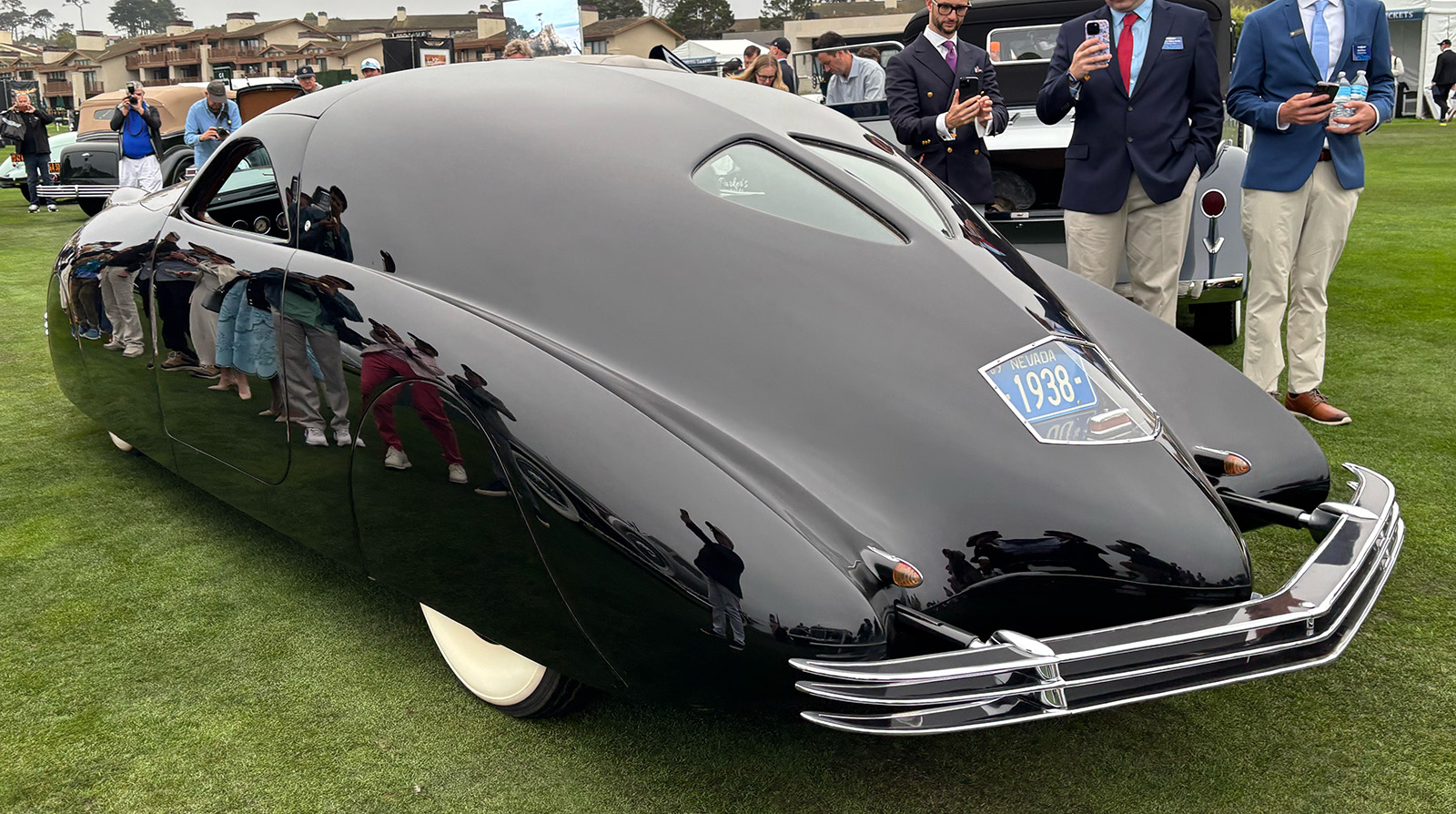
Strangely, there was no provision for a dedicated trunk; I suppose if you had four people or less and didn’t mind restricted bar access, luggage could have gone in the rear seat area. Also notable are those triple-bladed bumpers, which were mounted on hydraulic struts, another very forward-looking innovation.
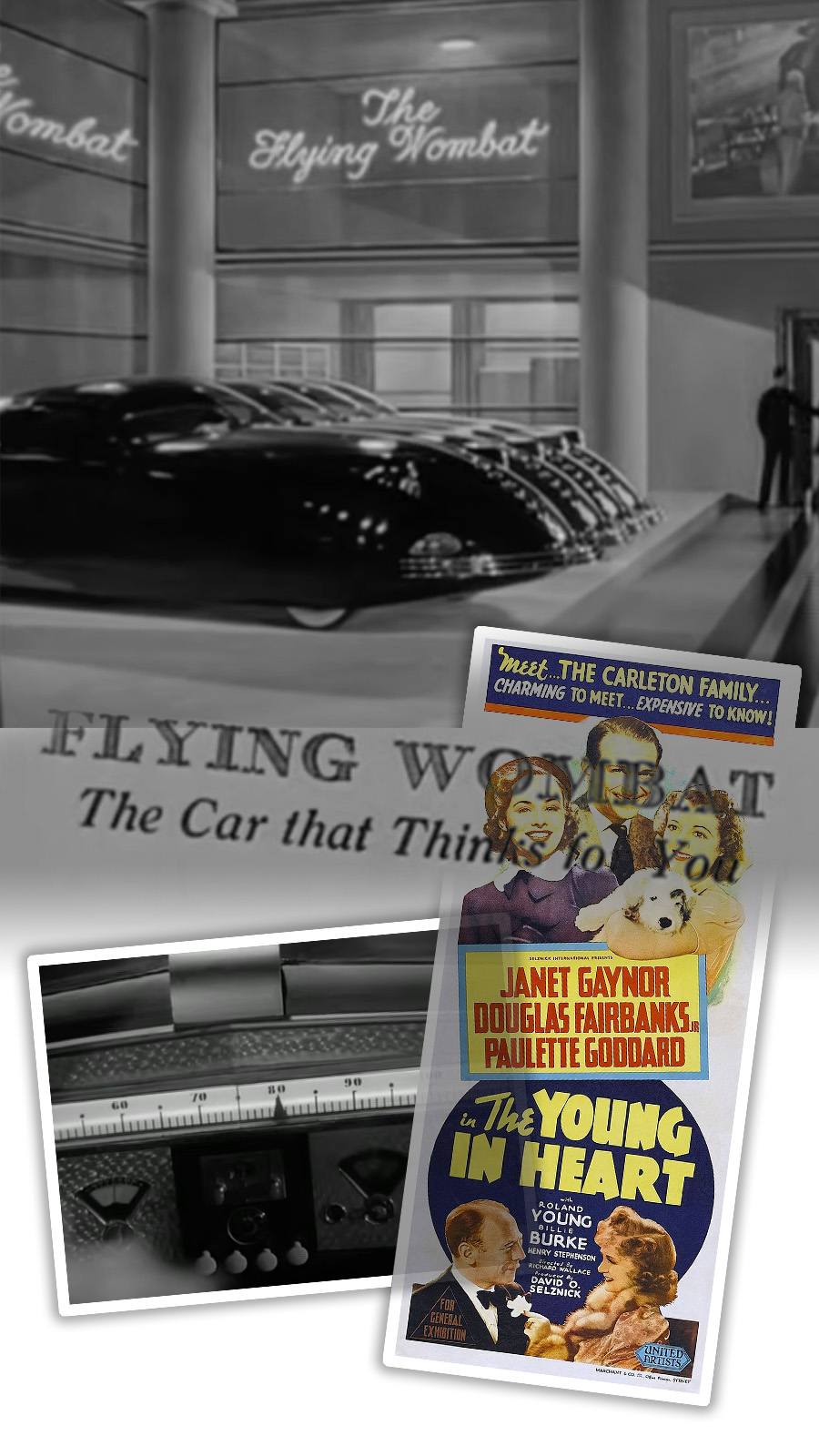
Interestingly, the best (and only?) footage of the Phantom Corsair in action comes from its role in a 1938 David O. Selznick movie, a comedy about a family of con artists, one of whom gets a job selling a car called the Flying Wombat, which was played by a Phantom Corsair. Camera tricks were used to give the illusion of a whole showroom full of Flying Wombats, and there’s actually a good number of very spirited driving scenes with the car:
They’re really wringing that thing out in these scenes! Knocking over cyclists and swerving around goats – that’s a good time right there. To really sell the recklessness and speed, it looks like a huge strip-type speedometer has been superimposed on the dashboard, too.
Despite the publicity the Phantom Corsair got from its peach of a movie role, mass production was never to be. Tragically, Rust Heinz was killed in a car crash in 1939, when his friend, who was driving, attempted to retrieve a hat that had flown off. Any hopes of production for the Phantom Corsair died with Heinz that day.
It’s not likely the Phantom Corsair would have been a huge success, though, mostly due to its considerable price. Heinz was planning on selling the car for about $12,500 in 1938, which comes to close to $300,000 today. This was never going to be a volume car.
Still, it’s an incredible machine, and one of the earliest concept cars of any type. I’m very happy to see how much attention it has gotten in its first big public showing in almost 20 years, and I hope this will help promote interest in all manner of strange and wonderful cars from long ago, condiment-related or not.


This thing is giving me trypophobia-level revulsion. Kill it with fire!
His death was pretty tragic, Torch glossed over what I think are sad elements.
I think the main one, he was only 25 years old. A friend was driving Rust’s car (a Buick convertible) and the friend’s hat blew off, after turning around to get it they were struck by a car. If they were driving the Corsair, not only would the hat have stayed put, the protection designed into it would (likely) have prevented Rust’s fatal head injury.
Something else to notice; the shut lines on the hood are perfect in the newer photo than the publicity shots. Cars in shows like this are restored beyond new, so a car that looks like it just rolled off the assembly line isn’t close to winning a concourse show. Kinda sad.
Somehow the Ride of the Valkyries horn is even worse than a Dixie or La Cucaracha horn!
Good to see this car again – loved the movie footage, that’s the first time I’ve ran across that. I remember reading about this many years ago at an earlier Pebble Beach showing, and after buying the 1999 First Edition Hot Wheels version of it.
Does David know that ‘Rust’ is an acceptable first name?
Wait, is it Delmar’s real name?
Don’t need hydraulic struts on the bumpers when they julienne everything in their path. Those are practically razors.
In the past, cars were shown with a nice lady next to them, today with JT instead. Also nice.
IMHO it looks like a mutant crab!! No claws but
a face only a mother could love! Mother Crab!
Enlarge the windows, replace the Woodlites with pre-67 VW units and paint it a better color and it’d be an attractive car.
This is the third time that the Flying Wombat has shown at Pebble.
(1990 & 2007)
I guess reruns are popular.
When the showings are ~20 years apart, it leaves time to generate enthusiasm.