

I spend a significant portion of my life thinking about Jeeps. I am so obsessed, in fact, that I not only studied engineering so I could work for Jeep, but I recently built a WWII Jeep from scratch. Recently it became clear to us here at The Autopian that I need an outlet for this obsession, and so say hello to our first installment of “Jeep Thoughts With David Tracy.”
I’m told this is a reference to some kind of show that starts with “Deep Thoughts With,” but as my upbringing in Germany has broken my understanding of American pop culture, I have no clue what that show that is. Anyway, today’s random thought is this: There are three Jeeps that are, by far, the most important vehicles in the brand’s history. They didn’t just change the course of Jeep, they changed the whole industry.


Let’s talk about those three Jeeps.
The Obvious One: The World War II Jeep
I’ll start with the World War II Jeep, because it remains one of the greatest vehicles of all time (Jay Leno calls it the greatest, though I personally think that honor goes to the VW Beetle).
Most people will say the reason why the WWII Jeep is so great is that it helped the allies win World War II, and that’s fair. To me, the two main things that make it great are:
- It was a grand slam on the first swing
- It inspired every single iconic 4×4
Sure, those two points are related, but let’s get into it. I wrote about how the World II Jeep came about in my piece “Why The World War II Jeep Is One Of The Greatest Automotive Engineering Achievements In History,” so I’ll just keep this brief: A group of 16-ish employees from Butler, Pennsylvania’s “American Bantam” developed what became the World War II Jeep in a mere 49 days.
49 days!

And sure, there were plenty of changes between that first prototype and the final design — the Go-Devil engine came from Willys Overland and the stamped grille was a Ford idea — but the blueprints of the World War II Jeep were created by a tiny group of enginerds in Butler, PA who were fighting to keep their tiny company afloat.
View this post on Instagram
And what’s amazing is that this design from over 85 years ago still remains one of the best off-road platforms in the world, as I learned in Moab (more on this later):
View this post on Instagram
It’s unlikely those 16 engineers realized at the time that they had changed the course of automotive history, as I wrote in my piece:
But the Jeep isn’t just a masterpiece because it was an excellent tool for allied forces during WWII; the vehicle’s genius has been proven time and time again well after the war ended in the form of copycats. Just look at the world’s most legendary non-Jeep off-roaders: the Toyota Land Cruiser, the Land Rover, and the Ford Bronco.
Toyota has sold tens of millions of Land Cruisers over the years; Land Rover is a brand built entirely on off-road SUV offerings; and Ford calls the Bronco an “SUV Family,” with two Bronco vehicles selling in absurd quantities. And all three of these iconic brands owe their existence directly to the World War II Jeep.
I could go on and on, but that the very first of a brand’s cars is its most important is hardly a revelation, so let’s move on.
The Jeep Cherokee XJ
If you ask Google what the three most important Jeeps of all time are, it will spit out:
The three most important Jeeps ever are the Willys MB (the original WWII icon), the CJ-2A (the first civilian Jeep that created the off-road market), and the XJ Cherokee (which revolutionized the SUV market with its compact unibody design)
It got 1 and 3 right, but there’s no world in which the CJ-2A is a top three Jeep. Why? Because it and pretty much every Jeep up until the early 1970s was based so heavily on the WWII Jeep. The CJ-2A is basically a beefed up Willys MB with different axles, a revised transmission, and a set of timing gears instead of a timing chain. It’s just not different enough to make this list.
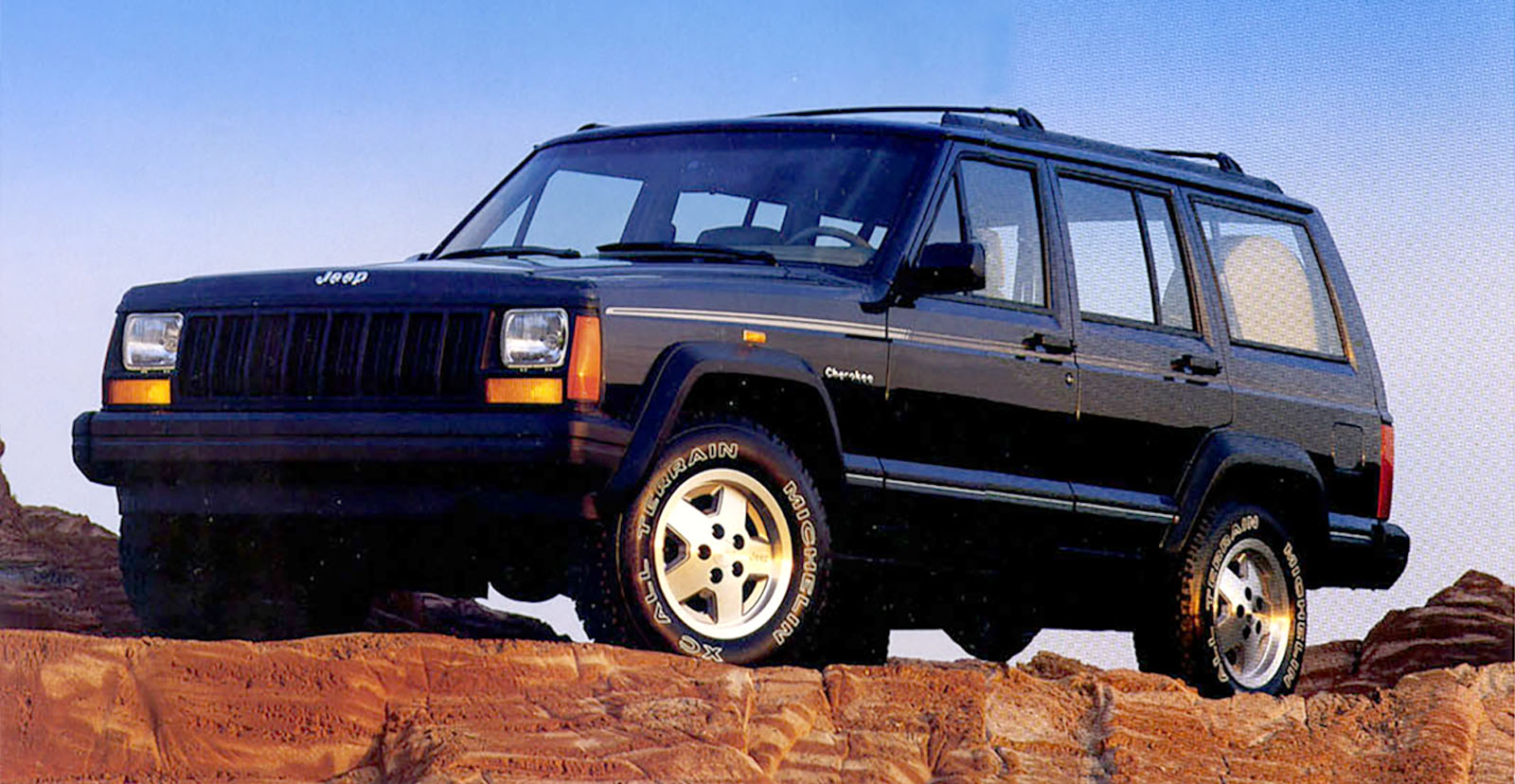
Google’s AI did nail the Jeep XJ, though. The vehicle was a humongous change for the brand, which in 1984 offered only niche open-top CJs and huge, gas-guzzling Wagoneers and trucks. The Willys MB may have brought Jeep into the world, but the Jeep XJ brought the brand into the mainstream.

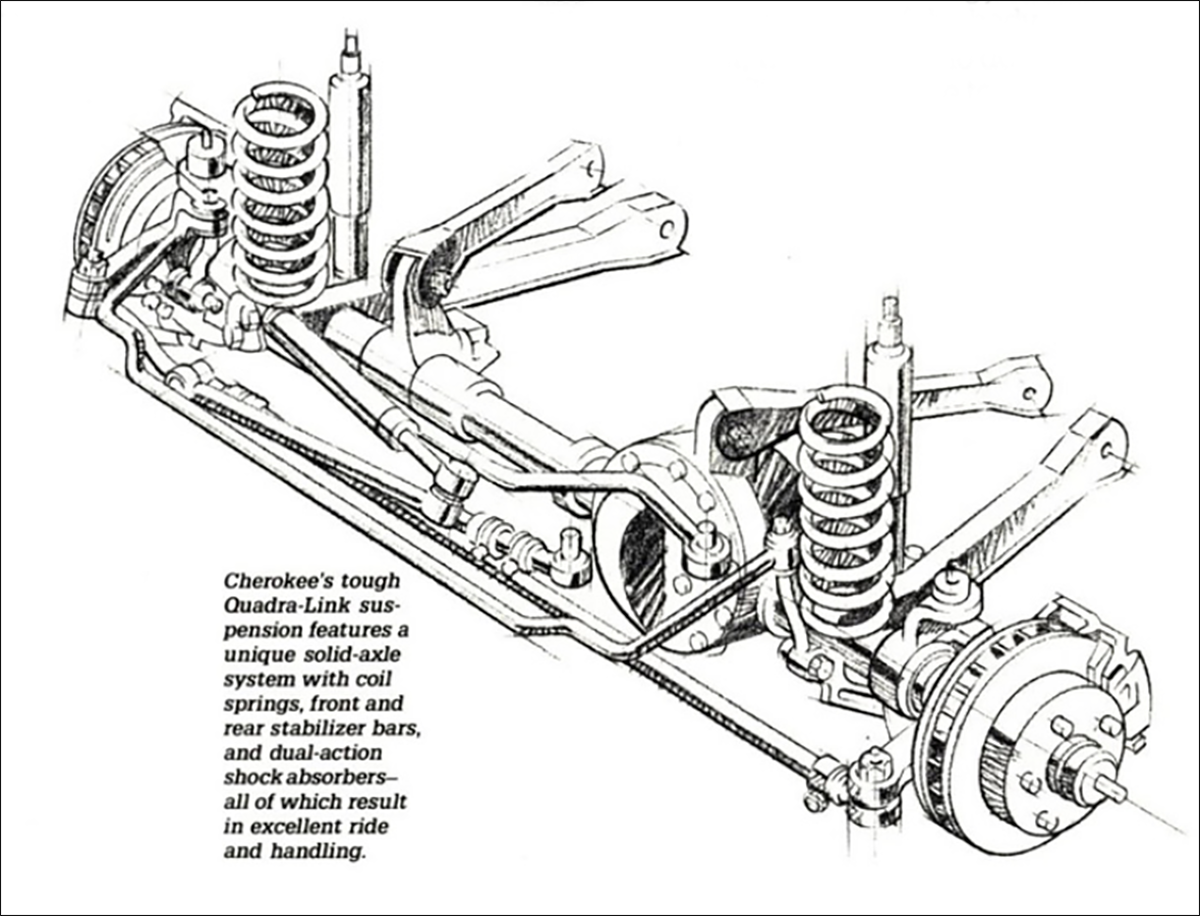
The XJ was unlike any other Jeep before. If you turned in your 1983 Jeep Cherokee for a 1984 model, you’d be getting 90% of the interior volume but with 1000 pounds less curb weight. You’d get more off-road capability, much better fuel economy, a transfer case that you can now shift while you’re moving (“on the fly”), a revolutionary Quadra-Link suspension that would define the suspension setup of pretty much every solid-axle SUV to follow, and a truly modern and cushy interior.
Jeeps before were trucks; the XJ marked the beginning of Jeeps For Everyone. And indeed, everyone bought an XJ. Over the span of 1984 to 2001, Jeep sold over 2.8 million of the things, and though the XJ wasn’t the first unibody SUV (there was the military M151 MUTT in the 1950s), it did inspire pretty much every automaker to offer unibody SUVs, which would later be called “crossovers.”

What brings so many to the Subaru brand (and to crossovers like the RAV4 and CR-V and Escape, etc.) today — economy, comfort, some off-road capability — is what brought so many to the Jeep XJ and to the future Jeeps that it inspired (Grand Cherokee, Liberty, etc.).
The XJ, the best-selling Jeep model in history, was a juggernaut that ensured the survival of the brand, helping keep Chrysler afloat during the challenging 1980s. To this day, it remains beloved by all who experience its amazing blend of hard-core off-road capability, reliability, and comfort (relatively speaking on that last one).
The Jeep Wrangler JK ‘Unlimited’

The final Jeep that rounds out the top three most important vehicles from the iconic off-road brand is the Jeep Wrangler JK. It debuted for the 2007 model-year, helping Fiat Chrysler — the company that came out of the 2008 bankruptcy — build a path towards profitability, and ultimately becoming the second best-selling Jeep ever at 2.1 million units (the WK2 Grand Cherokee may have later eclipsed it, narrowly).
I don’t think the average person — or Google’s AI — truly understands how important the JK was. In 2006 Jeep was selling niche Wranglers in low numbers, as well as more mainstream offerings like the Liberty, Grand Cherokee and then-new three-row Commander. All three of these mainstream vehicles were only so-so off-road, but they appealed to customers who wanted to buy into the off-road image created by the Jeep Wrangler.

The Wrangler has always been the flagship whose rugged image everyone buys into when they purchase a more mainstream, more livable model like a Renegade or Grand Cherokee or Liberty. But what if you could take that flagship and make it livable? What if, instead of drooling over the too small, too rough-riding Jeep Wrangler at the dealership and ultimately buying the more practical Liberty someone could just buy a practical Wrangler?
This was the JK. It changed the game in ways not even Jeep realized.
At first, the brand thought it would sell few of the four-doors, but in the end, roughly 3/4 of all JKs sold were four-door “Unlimiteds.” And my god was the JK hype huge. Jeep sold roughly 200,000 each year, many to families who otherwise would have bought a Liberty or Rav4 or full-size pickup truck. The JK was a vehicle so appealing that it drew in people from every part of the marketplace. It created a larger-than-life off-road aftermarket worth billions of dollars, and it established new cultures like the whole “ducking” thing where Jeep owners put rubber ducks on one another’s cars.

The four-door Wrangler Unlimited was a game-changer. It was larger in every dimension; its wheelbase helped it ride better than ever before; it eventually received an engine and transmission that yielded relatively decent fuel economy; its interior offered bluetooth and available navigation, and for the first time a Wrangler offered power windows and locks.
The WWII Jeep had brought the Jeep into existence, the XJ had brought Jeep into the mainstream, and the JK — and the current JL that it inspired — brought the flagship into the mainstream.
These are the most important Jeeps of all time, and I’m hoping the next time I Google this, the AI summary has the correct answer.
If you have any thoughts on what you’d like to read in my next installment of Jeep Thoughts With David Tracy, let me know in the comments!
Top graphic image: Jeep


I wasn’t expecting the JK. But your logic is sound. I had one in 2011 after once having a 2001, but while it gained those creature comforts, it lost a lot too. It lost personality. The 2001 rolled, shaked and shimmied. It had only 1 button on the steering wheel — the horn. The JK — it was a car almost like any other (doors off, etc., yes). So I get that it went up in sales volume and made the Wrangler accessible to many more, it also lost a lot of what made the 2001 great. If I had to do it over again, I would have kept the 2001.
The XJ is the only vehicle I’ve ever owned two of; a ’91 2WD and a ’98 with 4WD. Sure, the ’98 had power windows and locks, but I liked the older one better. If only it hadn’t blown that head gasket…
Dang, I did NOT anticipate the JK! Makes sense, from the parameters you’re talking about. But I will say, as others have, that the JK somewhat inhabits the space that the ZJ created, which has never really been filled since…well, the original ZJ was discontinued. But hey, you can take the top off.
As much as I love the ZJ, I agree with the placement of the XJ on this list. Even though the ZJ pretty much made the modern SUV trend, the XJ got the ball rolling. And it’s definitely a classic!
I also agree with the JK; I get to drive a JL frequently, and it sort of feels like a combination of a Wrangler and an early Grand Cherokee. It’s surprisingly great for road trips. (Also, why does my mom’s TJ never get ducked?)
Made more impressive by the fact that those 16 engineerds managed to scrounge up that first Jeep, while wearing ties!
I think the real mistake at Jeep headquarters these days was to avoid converting all 2 door jeeps into LJ sized versions. It seems like a shame as the small amount of additional metal makes a surprisingly large difference with regard to living with a 2 door unit. Also the LJ has a cult following now, so the fact that they continue to ignore this is really surprising.
A childhood friends family had an old farm Jeep. Memory has faded a bit, but it was very similar to a flat fender but was a civilian model. It had a little farm scene and shift patterns on the name plate on the dashboard. IIRC it had a PTO as well. I’m guessing it was some model they shifted production to after the war.
Us kids enjoyed driving it around their property.
SJs definitely should be on this list instead of the XJ. The Wagoneer and original Cherokee are pretty much the prototype of the modern Jeep Wrangler Unlimited, heavy duty axles, transfer case, and enough power. The XJ was just the 80s kneejerk reaction to the fuel crisis, where the only lever they had to pull was downsizing, instead of increasing the fuel economy of the larger vehicles people actually want to buy.
I’d put the Grand Cherokee above the JK. But that’s me.
When I went to serve as staff with Peace Corps in the Dominican Republic, I had the intention of buying a XJ. However, the Peace Corps XJs weren’t dependable and had all sorts of problems. They had two beat-up Nissan Patrols that actually got you there and back. I ended up buying a new 1990 4Runner which is still running there. So, though I agree with the XJ’s impact in the States, I’ve never thought of it as a great 4×4. On the other hand, my 2015 Wrangler Unlimited Rubicon is a great vehicle.
Yes, but the JK Unlimited is basically a beefed up XJ with removable top and doors and a worse engine. Jeep may not have realized it at the time, but the 4-door Wrangler is the true successor to the XJ. Solid front and rear axles, go anywhere, etc. etc. The Libertys/Cherokees that followed the XJ are not the same vehicle, they just inherited the name because they fell into (roughly) the same segment.
As a non-programmer learning programing for the first time, Jeep is like the worlds messiest Github repo. Branches, and forks and uncommitted updates all over the place, all trying to reference a single main that is actually 3 different mains. At this point, I wonder if anyone at Stellantis even knows what base code they are working on.
As a DevOps person this made me LOL!
Bahahaha! I’m a software engineer and I also chuckled. They certainly are trying to shoe-horn a lot of disparate products into one narrow ethos.
By contrast, Land Rover does it well. Discovery, Defender and Range Rover are distinct, elegant separations, and are able to leverage similar platforms across segments for a full-fledged lineup.
If I wanted to rile up David, I say; “a Land Rover is a Jeep done properly”.;)
No ZJ or Wagoneer? Those are very important, the ZJ may have ushered in the United States love of the SUV. It was the perfect vehicle at the perfect time.
The Wagoneer is the American, Land Cruiser or Land Rover. I have loved the Wagoneer since I saw the movie the Great Outdoors.
This. The ZJ is up with the Explorer as the basis for every car today being a lifted hatchback.
Solid agree here, the ZJ became the face of the SUV, or at least the co-face with possibly the Explorer. And the ZJ was so much better than the Exploder in almost every way.
I own a ZJ, and I love my ZJ, but I think the ZJ’s got the same problem that the CJ2A did: It’s just not different enough from the XJ Cherokee.
Pretty much everything we can say about a ZJ, we can draw a line back to that XJ and add, “but a bit more.” It’s a bit nicer on the inside. That V8’s a bit more powerful. It’s maybe a bit bigger and a bit more aerodynamic.
The XJ was revolutionary. The ZJ was iterative. Is it better? Sure, that’s why I have one. It’s not the rig that defined an industry, though.
I’ve been long tempted to pick up a cheap JK Wrangler with a blown 3.8 and dropping a little diesel mill in it.
This post is not helping to quell that desire.
Hope this helps: https://www.cummins.com/en-na/case-studies/jeep-wrangler-repowered-cummins-r28
I agree with this list. I have owned jeeps for 30 years and have been a fan for so long I remember driving to jeep lots to look at Comanches and Cj-7s.
Totally with you on the WWII Jeep and XJ. I’ll have to stew some more on the JK. It’s true offering 4 doors was a very smart move. They’re everywhere.
I plan to keep my 99 XJ until it reduces itself to a pile of rust (halfway there) and need to assemble a 1955 CJ-5 project someone gave me years ago…
Not the Brooks Stevens designen Willys-Overland VJ Jeepster? Fascinating F head just like Rolls Royce – all the complexity of overhead valves with the efficiencies of a flathead? No?
Anyway, I always liked them. Perhaps the only Jeep that looks good wearing whitewalls. For some reason they always seemed like what people with Packards drove when they were being casual.
I think it would be easier to just say the Wrangler in general. I always think of the YJ or TJ 1st. I hardly even knew much about the Unlimited. Jeeps are cool but I’ve just never been into them much. Of course the Willys MB and XJ are awesome, but for some reason I always think of the Wrangler 1st
I had completely forgotten the Commander was a thing.
Me too.
I wouldn’t be surprised if the team who worked on the Commander have forgotten it too.
A pale imitation of the VJ Jeepster.
I hope they have. Otherwise, it might keep them awake at night.
I cannot, I owned a 06 Commander 5.7L Limited. It was not good. My JKU has more rear cargo space and 2x the MPG.
So you’re the one who bought a commander!
used, it was nearly $1 off per mile off MSRP. We thought it would be better than a minivan. we were wrong.
That timeframe is impressive I do agree. But in a way I feel perspective is needed.
These engineers most likely whipped around in old model Ts that demonstrated some amazing off-road skills with a flexy chassis back in the day. There are many YouTube videos showing this.
The model T had a Livingood 4WD conversion kit one could fit to the car back in the 1910s. Made it a beast off-road.
Apply this to a simple short wheel base 4wd easily shipped and repaired for war use?
Makes sense. Smart men.
Vanadium steel frames for the model T.
My dad used to use Craftsman vanadium wrenches, and sometimes they needed Archimedes‘ cheater bar
“Give me a cheater bar long enough, and I shall move the world,” to do the job and an 8 foot pipe would bend them one way, then back the other untill they were pretty mutilated and he’d take a bucket of them back to the Seats store for replacement. Amazing stuff. We had a lot of stuff made out of model T frames and front axles and used oil well drilling rod, and it never broke.
Google seems to think that the Jeep Wrangler 2007-2012 is the worst jeep or all time.
Can you do an entire article disproving that? Maybe we can fix their sucky AI
There are a lot of contenders to that throne.
Google AI relies way to much on Reddit as a “reliable” source.
I would generally agree with that sentiment. However, his thoughts are “most important” not “most reliable”. The JK sucked in almost every way compared to the TJ/LJ and was improved in many ways with the JL- and it very much still qualifies as most important because of how (as David mentioned) it fundamentally changed the way people looked at and bought Jeeps. It’s popular. It looks good, despite missing the loaf grill. It sucks, but that doesn’t make it unimportant.
The 3.6L they stared using in the JK in 2012 made a world of difference. It was like a totally different thing.