


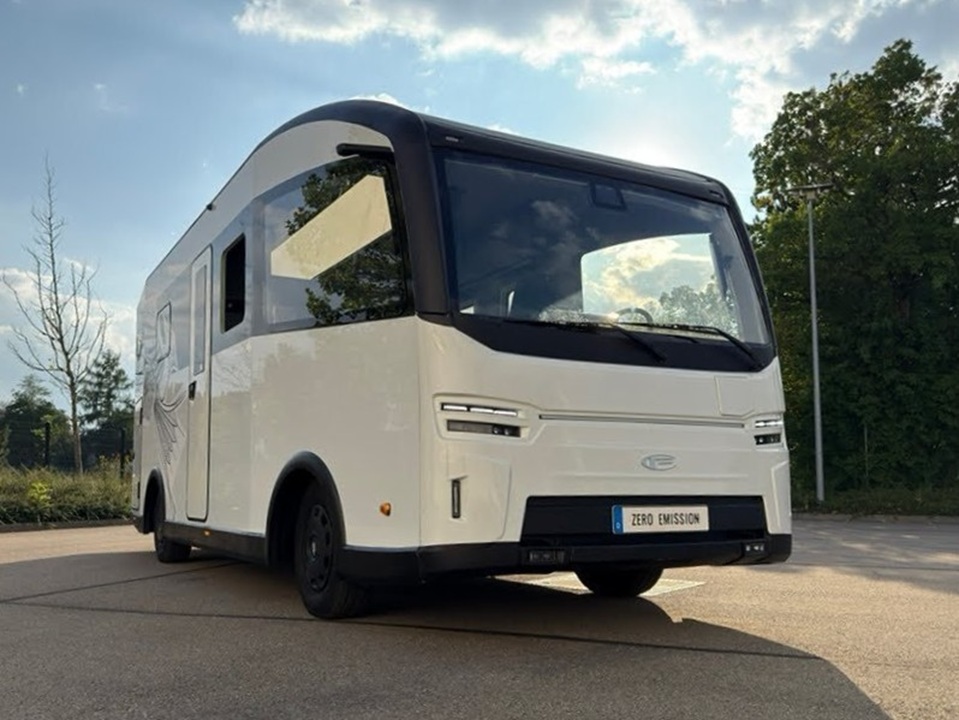
Electric cars have transformed the way that people around the world drive, with technology and range great enough to have entirely replaced internal combustion for some drivers. But there’s one market where electric technology has struggled, and it’s motorhomes. Manufacturers have found it difficult to build a motorhome that’s both sizable and could get decent range without massive batteries. One company thinks it has the solution. The CityFreighter and Vöhringer Evolve motorhome has been demonstrated to go 248 miles on a single charge with a battery nearly the same size as the one in a Lucid Air. But there’s a catch.
The state of all-electric motorhomes is a sad one. At the beginning of the 2020s, the best RV manufacturers did was build out Ford E-Transits into camper vans. Some prototypes, like the Winnebago eRV and eRV2, were tested. These RVs had only 100 miles of range and potential price tags so high that Winnebago decided against putting them into production.


When I drove the Winnebago eRV2 a few years back, I learned that Winnebago had conducted extensive market research. They found that Winnebago buyers are not like electric car buyers. RV buyers want to be able to go a long distance between stops even though, statistically, most camping trips happen within a few hours from home. Unfortunately, many of these manufacturers believe that finding a platform to enable high range while also keeping pricing accessible is rather difficult. Remember, RV manufacturers are secondary vehicle manufacturers. They put a living space on top of someone else’s vehicle. So, the bulk of the RV industry still burns gasoline or diesel.

Now, to be fair to the industry, there are companies that convert gas vans to electric and then convert those into Class B motorhomes. Some of these things can go up to around 250 miles on a single charge. But you are pretty much out of luck if you want to sleep in something bigger than a Ram ProMaster.
In the past, I have covered how Harbinger Motors was working on an all-electric Class A motorhome with Thor Industries, but this idea never materialized in a production vehicle. Instead, Thor and Harbinger made the world’s first extended-range electric motorhome. I still say that this motorhome is one of the greatest things Thor Industries has done in decades.

If you don’t want your Class A motorhome to burn fuel at all, you’re back to where you started. Coachmen and Grounded RV started to build large electric motorhomes with advertised ranges better than 270 miles. Then General Motors pulled the rug out from under them by canceling the BrightDrop platform.
Today, if you want a pure electric RV with good range, you’re pretty much left with the likes of Pebble and Lightship, and those companies make self-propelled trailers, not motorhomes. That’s where CityFreighter, Vöhringer, and friends come in. These companies think they’ve figured out how to make a Class A motorhome go the distance without loading it down with an obscene number of batteries. Their demonstrator, the Evolve, shows that they aren’t just blowing smoke, either.
American Bones
The Evolve made an appearance at the 2026 Caravan Salon in Düsseldorf, Germany, last month. Normally, I don’t cover motorhomes that the bulk of our readers cannot buy. However, this one piqued my interest because the biggest piece of the Evolve puzzle, CityFreighter, is an American company.
Here’s what the company says about its history:
In 2016, CityFreighter founder Michael Schoening — originally from Heinsberg, Germany, now based in Santa Barbara, California — bought his first Tesla and became convinced the future of transportation would be electric. What followed was almost a decade of prototypes, setbacks and persistence.
The CityFreighter story is really a story about persistence. Two actual vehicles were built along the way — a first prototype in 2018 and, in 2021, the CF1 electric delivery van — neither of them show cars, both built to prove that the architecture could work. At nearly the external footprint of a Mercedes eSprinter, the CF1’s over 20 m³ of cargo volume outdid it by roughly 50%, and beat even the purpose-built Rivian Amazon delivery van on space efficiency.
Years of conversations with people across the industry — from BYD’s Stella Li to former BMW i3 leader Uli Kranz — sharpened the thinking. A trip through China’s truck manufacturing plants delivered a simple realisation: building a commercial vehicle isn’t “Mars technology.” It’s engineering, supply chain, manufacturing and experience. That challenge became a test: load a demonstrator to its full 4.25-tonne gross vehicle weight, and drive it — Autobahn, country roads, mountains. The result was more than 400 kilometres, in a demonstrator, not a record-tuned production vehicle. The push to finally build a physical demo came from Euramax CEO Harmen Kruit, who put it simply: “You need to show them something they can touch and feel.” That became this vehicle — designed and built at the same time, with partners across the industry contributing their own networks and latest innovations along the way.
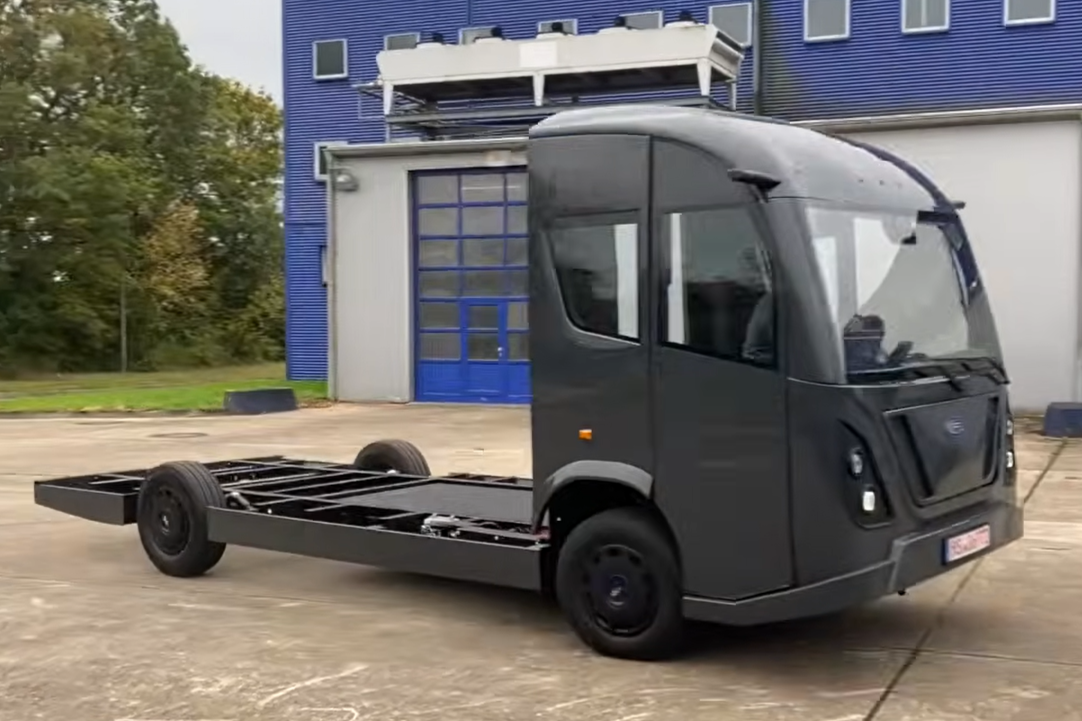
CityFreighter’s goal is to build an all-electric commercial chassis cab truck. The company sees its Evolve platform, which remains under development, underpinning food trucks, delivery trucks, motorhomes, buses, ambulances, or anything else that would normally use an ICE-powered chassis cab vehicle.
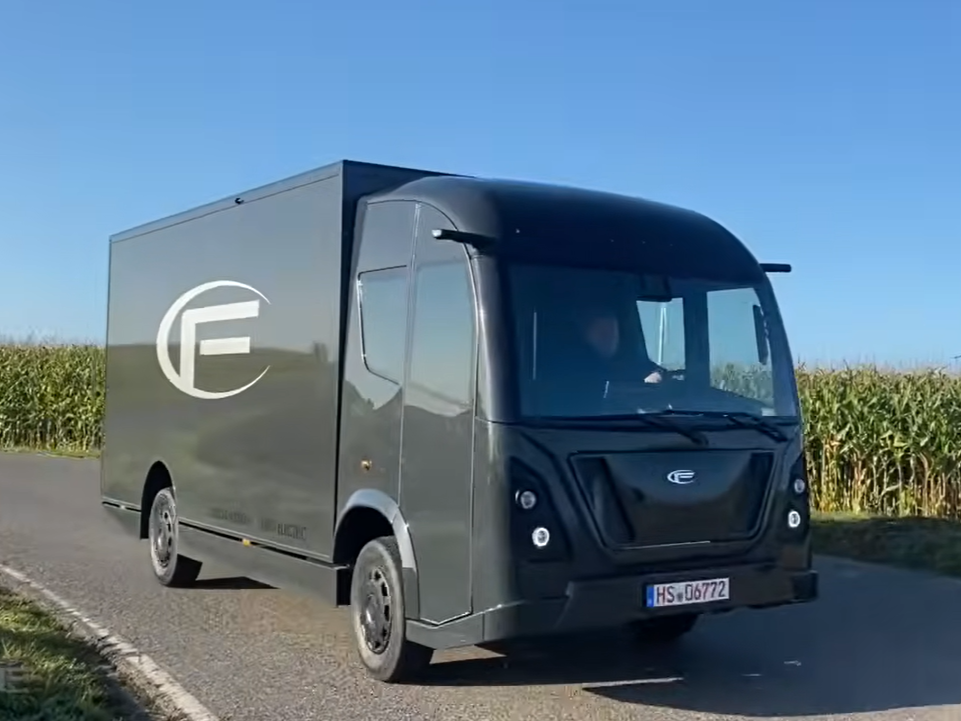
CityFreighter is remarkably thin on technical details about the Evolve skateboard platform itself, but says it’s modular and “AI-Driven.” At least the company does have functional prototypes out there, the most comprehensive of which is the Evolve motorhome.
A Sort Of Superleggera Motorhome
The Evolve motorhome starts life as a prototype CityFreighter Evolve skateboard.
CityFreighter says that the frame of the Evolve permits “future-proof” packaging, as it supports a wide variety of battery sizes and configurations. A very basic illustration on CityFreighter’s site depicts a single large battery, two batteries stacked on top of each other, two batteries next to each other, and a set of batteries sharing the space on the frame with some under-frame components of whatever is mounted on top of the platform.
CityFreighter notes that the battery system is designed to be easily repaired, serviced, and upgraded without messing with the rest of the vehicle. The idea here is that a customer would be able to use a CityFreighter for decades, just like commercial customers use diesel trucks today. CityFreighter’s Schoening is bold enough to say that his platform will be so good that you could buy a motorhome on this platform and it’ll last the rest of your life.
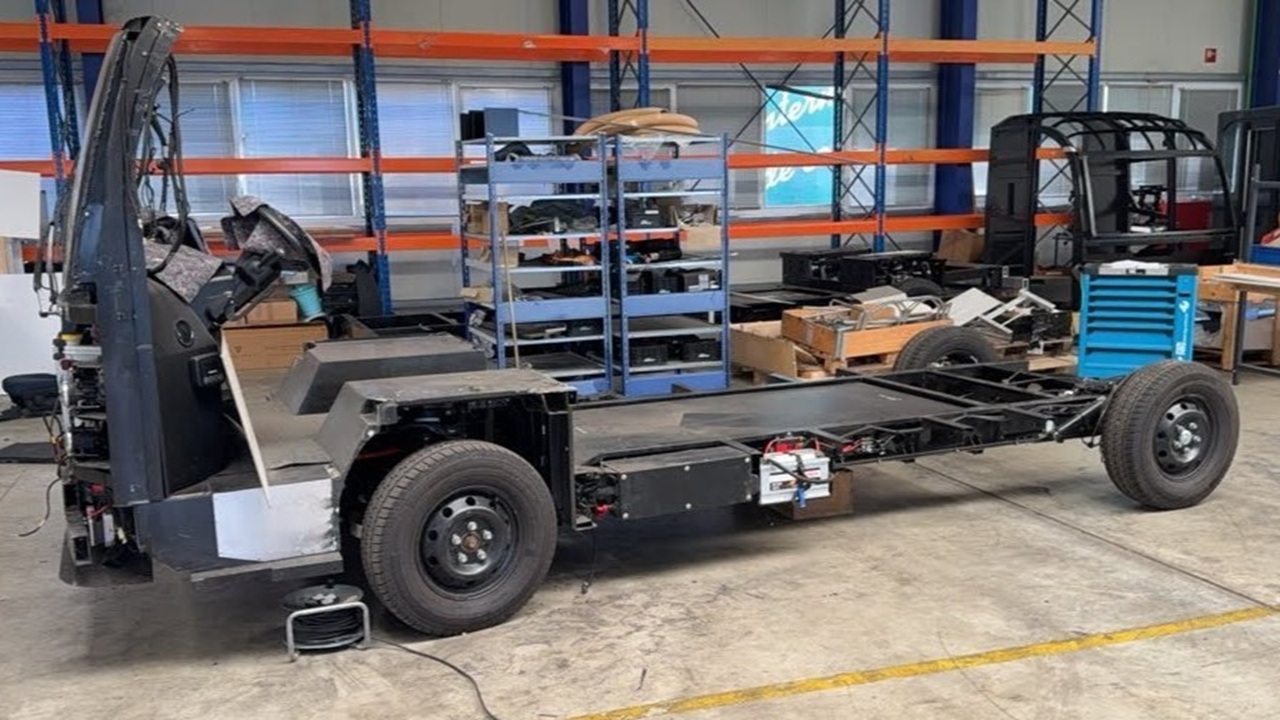
The Evolve demonstrator uses a 128 kWh battery that’s capable of DC charging from 10 percent to 80 percent in 20 minutes at 200 kW. The battery system also supports vehicle-to-load and vehicle-to-grid functionality along with over-the-air updates. It’s also not just a traction battery, either, as it can provide power to the service body, bus, or motorhome on top.
Rounding out the platform is a 214 HP electric motor.
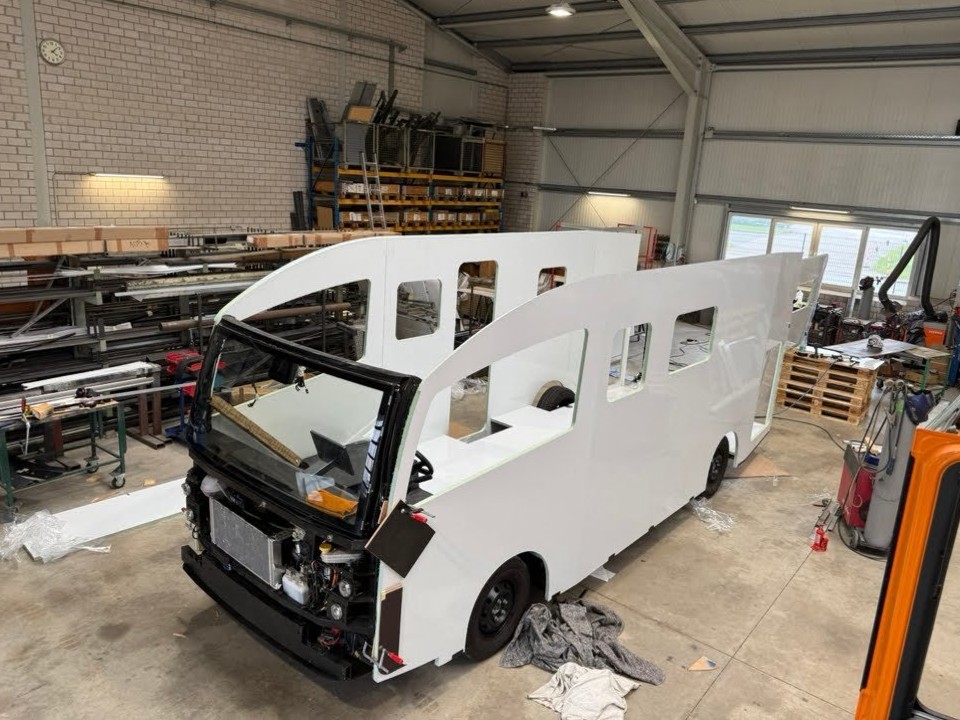
Turning the CityFreighter Evolve platform into a motorhome involved a set of many more manufacturers. Vöhringer supplied the living environment’s materials, Ross Design penned the interior design, Motive Development designed the RV’s body, and Euramax built the body. Dometic then tossed in some appliances, Jokon and Nolden handled lighting, Isringhausen made the seats, and OPES Solar Mobility rounded out the build with solar panels. Having a ton of partners is normal for RVs. Here in America, RV manufacturers often don’t even make their own frames.
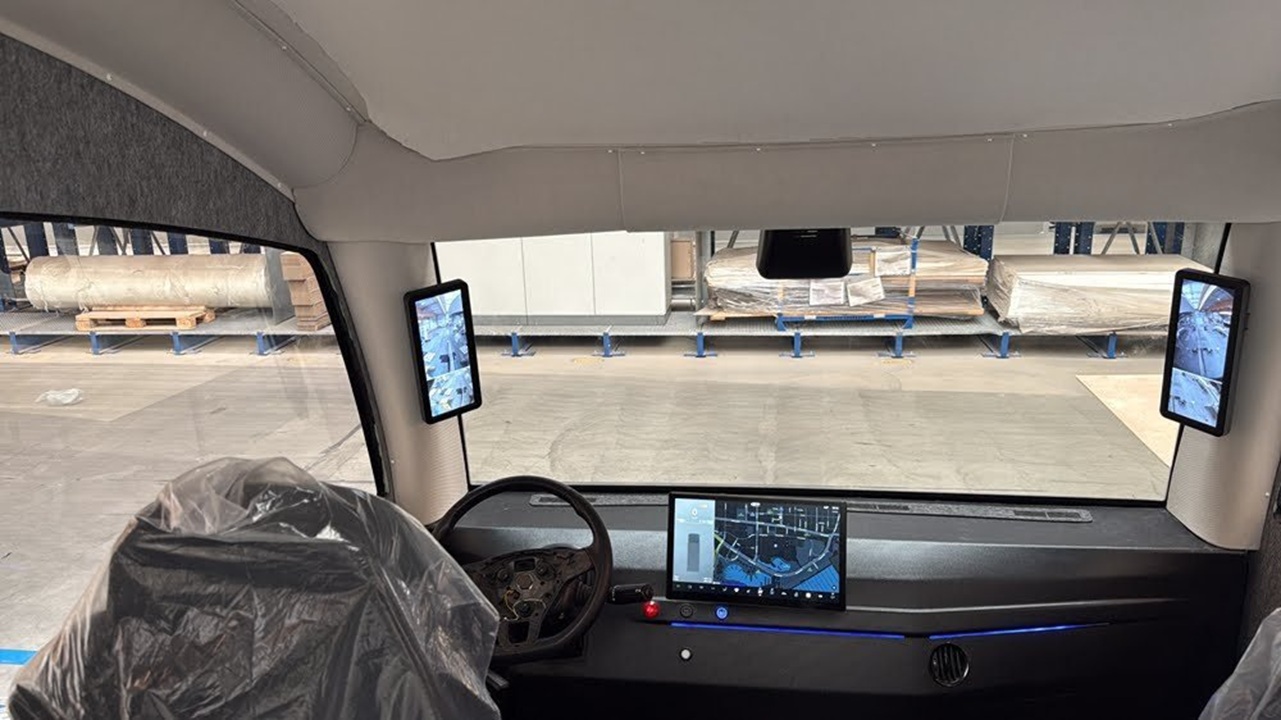
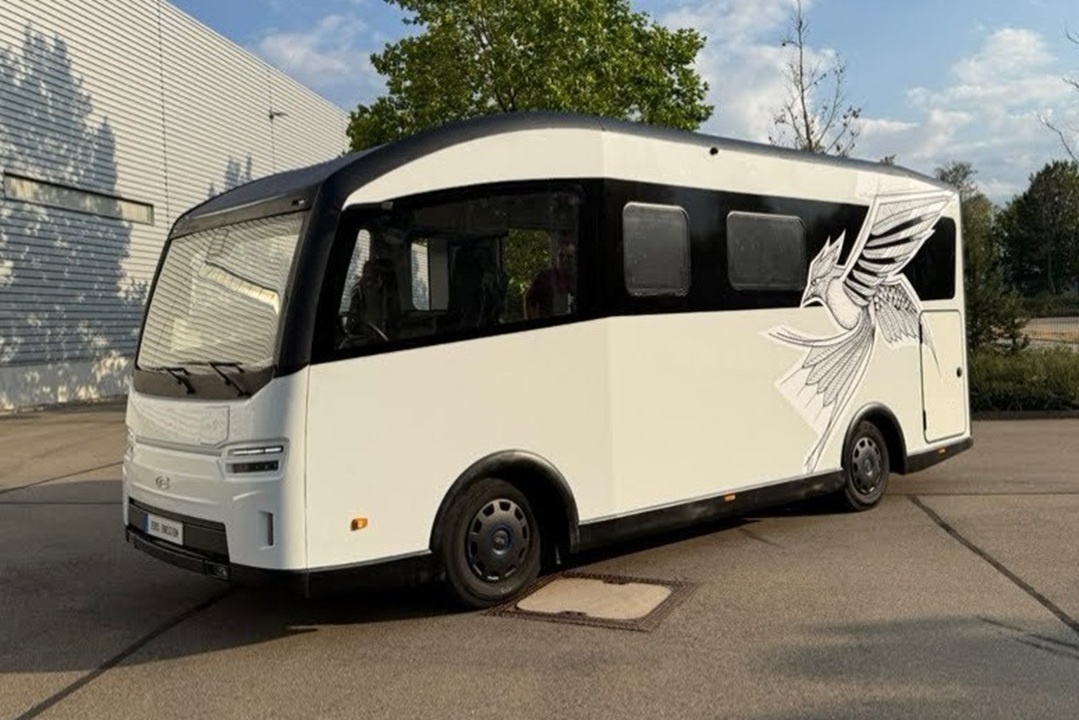
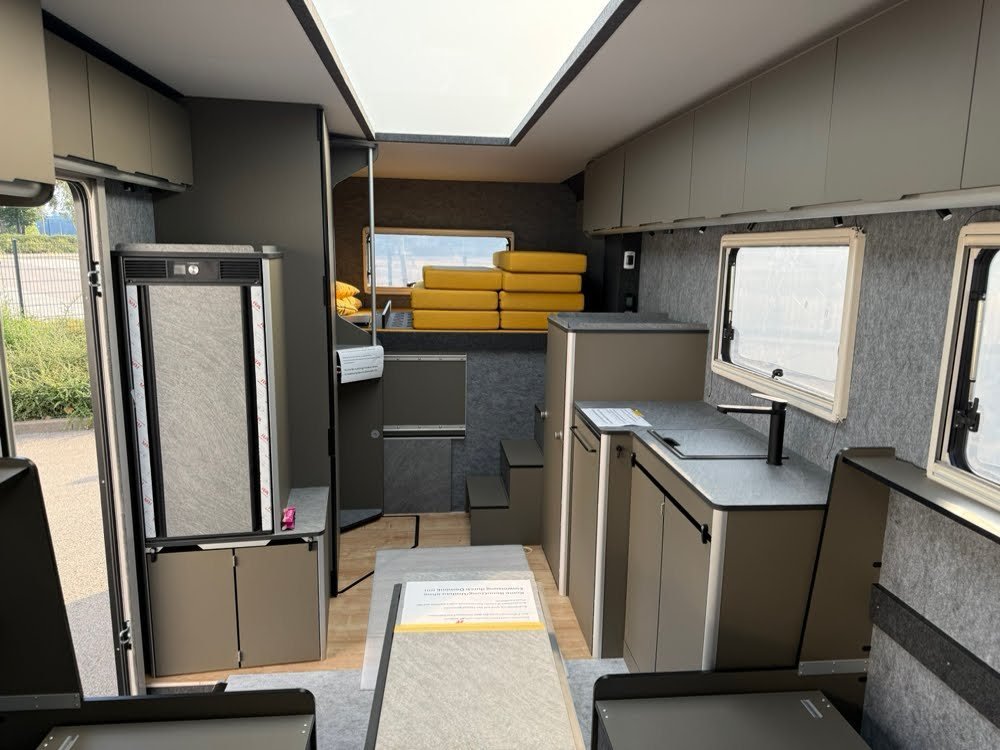
The completed Evolve motorhome measures 22.8 feet long, 7.7 feet wide, and 8.9 feet tall. The interior features 17 feet of living space, and the all-electric platform means that the floor is low and flat for the entire length of the interior. To build out the living space, Vöhringer provided Airply, a form of ultra-thin plywood sandwich with a layer of foam in the middle. This material is said to weigh 45 percent less than typical RV plywood.

Other lightweight touches are found in the body, which is made out of a composite. The design of the coach is said to have been inspired by a droplet of water.
Amazingly, the interior is fully functional, including a bathroom that looks relatively cozy and even a bed to sleep in. The floor sits so low that it’s only a couple of steps to get inside. Everything in the RV is powered by the main battery, but also gets energy from the solar panels covering the roof. Another nice touch is that the walls are covered in felt to reduce road noise.
All of this adds up to 7,716 pounds (3,500 kg) of empty weight or 9,369 pounds (4,250 kg) when loaded. The companies involved in the build wanted to make a motorhome that could be driven on a European B-class driving license. It’s been tested in the real-world, too, and CityFreighter has found that the 128 kWh battery is good for a solid 248 miles of range.

CityFreighter notes that the 128 kWh battery isn’t the biggest battery the platform can fit, and that the chassis would be able to be configured with batteries providing over 280 miles of range. To put that into perspective, a Chevrolet BrightDrop needed a 173 kWh battery pack to hit 270 miles of range. The BrightDrop also wasn’t a chassis cab, but a whole delivery van, which made RV conversions a bit clunky. The longest BrightDrops were 24 feet long, but had only 14 feet of space for an RV build. So, in theory, the CityFreighter can do more with less.

That’s the theory anyway. Right, so here’s the catch.
It’s Just A Demonstration Of What Could Be Done
CityFreighter currently produces zero chassis, and the Evolve motorhome isn’t even going into mass production. Instead, CityFreighter and its partners expect to produce a handful of examples around 2028. Apparently, the real goal here is to demonstrate that it is possible to make an electric Class A motorhome have usable range, and demonstrate the potential of the CityFreighter platform.
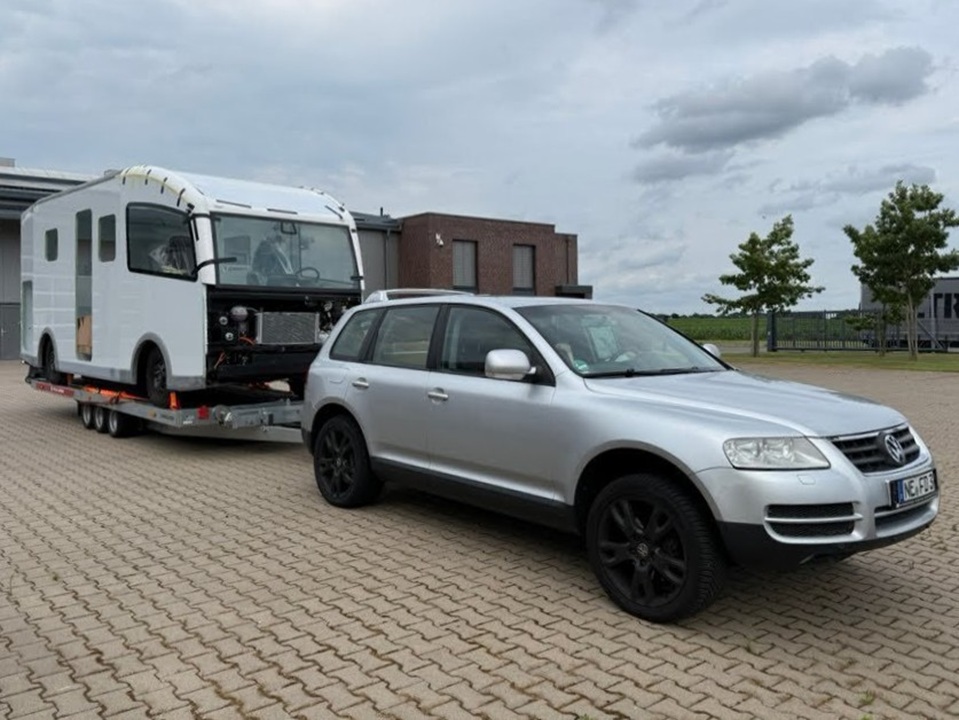
Ultimately, it’s going to be up to America’s and Europe’s RV manufacturers to actually take that step to build a motorhome on an all-electric platform. It doesn’t even have to be on the CityFreighter platform, either, as there’s more than one manufacturer out there with an all-electric platform for commercial vehicles.
With that said, I’m not sure I would expect to see any all-electric Class A motorhomes soon. As it is, some automakers and governments are already letting their foot off the accelerator on their EV plans. Will a prominent RV manufacturer want to invest the resources to make an all-electric motorhome, considering everything that’s going on right now in the EV world? It’s hard to say. I can say that Winnebago has gone quiet about its electric motorhome plans, and Coachmen gave up the moment the BrightDrop was canceled. Even Grounded RV, which was founded as an all-electric RV company, now builds ICE-powered vans into campers.
Still, I do like what CityFreighter and Vöhringer achieved here. The Evolve is a motorhome that has range closer to what theoretical buyers want to see, but does so with a much smaller battery than what you’d find in some of GM’s electric pickup trucks and SUVs. I’d like to think that, if these companies ironed out the concept further, the range could be even better. But, sadly, the Evolve is just a demonstrator of a future that could be. I’d love to take that future for a spin.
Top graphic image: CityFreighter


Big problem is that European class B driving license limits total vehicle weight to 3.5 tonnes.
So you will need a heavy goods vehicle license class C to drive this.
They are not the first EV maker to struggle to get a vehicle in at under 2.5 tonnes, which then gives you one tonne for people, luggage and, possibly a small trailer.
To pile on a little, their recharging math doesn’t seem to work. 20-80% in 20 minutes with 200kw charging? That’s 76.8 kw-hr delivered in 0.333 hours = 230.6 kw delivered on average. That would likely need 300kw peak charging. As a side note, I am so pleased you gave al the figures required to do the math (and a little pleased that the numbers looked suspicious to me right off the bat, look who is learning to estimate charging times)
yeah… We really need to stop talking about stuff like this. They cant even be bothered to write the copy on their own website and just outsource it to ChatGPT, red flag the first.
Red flag the second: They brag about building a 1-off cargo van that they optimized for a single variable – cargo space. Whoopdee doo, you beat a Rivian van that actually has to optimize for the rigors of mass production and daily heavy use.
Red flag the third: Then somehow that cargo stat (if it is even true) is supposed to bolster their other, more fantastical claims of huge range on a chassis they are not actually producing because they tested it themselves and got a number?
Nah.
LMK when average caravanner Hans can go buy one and the WLTP also says it gets 248 mi. That will be legit impressive. Before that time this is just vaporware AI hallucinations mixed with made up stats designed to attract seed money.
Those specs just flat do not add up. No way is a 120something KWh battery pushing a sail like this for 280 miles. No way!
I’m guessing there isn’t crash testing on RVs. Look at what it looks like without foam filled thin plywood installed. Then think about how resistant the foam filled plywood would be to an accident.
If you have ever seen a trailer or motorhome after an accident you would be appalled
I always like to look up the offices of startups like this. The Santa Barbara address is a co-working space and the Germany address is also a RV dealership, boat storage yard, and healthcare consultant…
Solid. LOL.
I like a lot about this but have two reservations- First only 214hp to pull 7,000lbs+. That seems woefully underpowered. And why, oh why, did they have to have the walls made with any wood? If this will “last a lifetime” as claimed, I assure you that it won’t given that there is luan plywood in the walls…
Electric vehicles have a massive amount of torque from a stop. It’s probably not as slow as that hp number indicates.
Crap made in the 70s and 80s towed that all the time with crappy gas motors and drum brakes.
Very slowly, and at a glacial acceleration pace. I noticed a huge difference towing my ~6000 lb boat between my 88 F-250 with 230hp, my 05 Lincoln Navigator with 300HP and my current 14 Ram 1500 with 395 HP. The Ram drives and accelerates towing like the F-250 did empty.
The incredibly revered 7.3 Powerstroke from the 95-97 F-Series had 215 horsepower and could tow 10K+ lbs on top of its 5k lb curb weight.
As they say “Horsepower sells cars but torque moves cars.”
I imagine it will feel pretty quick off the line. My Express has the 6.0 and 6 speed transmission. So quite a bit more HP, but 1st gear is basically a stump puller – get off the line and it’s shifting at 5mph and it can be….less than smooth…. if you are trying to hustle it. So this is also likely a case of smooth = fast.
Everything will last a lifetime. It’s just that nobody says if it’s the lifetime of a Mayfly or a Greenland shark.
So, most motorhomes fall between two edge cases:
I think as long as batteries are expensive in terms of money and environmental cost, a hybrid sollution would work best for both edge cases and everything in between.
It would seem that if CAFE requirements encouraged OEMs to build hybrid vans and cutaway chassis (and plug-in hybrids) the RV manufacturers would very much want to take advantage of those. As it stands, they have few options but to develop their own solutions. A plug-in hybrid awd transit would be an awesome base vehicle for so many RV shapes and sizes.
I just like how it looks like something from the 1940ies, like a Chenard-Walcker or Renault van.
So many lightweight but strong composites out there for the marine industry. If coosa board wasnt so expensive it would be great for rvs. Smart they are using lighter materials. Probably enough range to get around to campsites in Europe. Substained power use for charging at campsites could be an issue
Speaking of the marine industry and camper industry, I’ve had this idea that a fiberglass boat company should make a camper shell out of an upside-down hull.
So, flip it over to make it a houseboat RV?
I’ve often thought about it. I think the cheapest and easiest way would be a bass boat company. They could extend walls on of their molds / bucks and spray it with the chopped fiberglass. Some are using a kind of spray foam like coolers use in-between layers of chopped fiberglass. So you would be more or less inside a cooler. Plus those companies are mainly in the middle of the county alot in Tennessee, Kentucky , Arkansas. So they have space to build and much lower costs the a traditional ship yard. They often build their own trailers for the boats already so they could build an aluminum trailer then bolt and epoxy the fiberglass shell on top of it. They also are already shipping them out by truck so they have the relationships tand the infrastructure to ship completed units.
Basically what I was thinking.
And then I always take it even further and think, “Why just fiberglass boats? Why not aluminum ones!”
And then we’d get Airstreams that were a bit more dent resistant, but a bit more angular. And costs? Uhhh, I don’t want to think of the costs.
It’s down to cost, skill, time that adds to cost. Aluminum welding is a lot harder then riveting. With these new laser welders might not be such an issue though. They have continued to be built just less and at higher prices and not so consumer facing. There is a aluminum resurgence happening in the yacht industry. Aluminum hulls were mainly built for commercial or military uses over the last 30+ years.
Marinette were great aluminum boats they started in the 50s? but ended in the early 90s because of luxury taxes. I think from about 23′ up to about 46′. Most production was ’27 to 36′. Various other companies had tried aluminum yachts in the 60s and 70s. Wellcraft and others had built some. Broward builds aluminum large to mega yachts and was able to keep going.
Some semi commercial hulls have continued to be aluminum. There are a few yards and the Pacific Northwest, Australia, nortic, northern European countries building center console boats. Some of them have built larger boats and yachts.
There are some yards in south Africa that have been building aluminum hulls for yachts. They do a lot of aluminum welding in south Africa. That’s why superformance has their cars built there. Yards in Turkey that also specialize in it.
Australia is going big into it they had been building commercial hulls but getting back in to yachts. They call all the smaller aluminum boats “tinnys”. Lots of smaller operations happening there. Simular things in new Zealand. Aluminum yachts are becoming a thing in Thailand, China is expanding. There are some yards in Vietnam that might be getting into it.
Would love to have a i3 style REX. Get one of Streeter’s favorite quiet generators!
Get rid of whatever the AI crap is first, and then it would be worth considering.
The weight needs to be reduced as much as possible, and they have made great strides in doing that. In the future, as battery power density improves, the available range will improve as well. Range anxiety concerns will diminish as well.
The economics of motor homes are rather weird. They are mostly owned by wealthier individuals and retired folk, who have enough money to do whatever they want. If they want electric, they’ll get electric. If they decide that that is not what they want, they will get something else. Even if gasoline goes up to ten bucks a gallon, most of the Winnebago crowd will still be chugging along in the slow lane as much as ever before.
Kudos to CityFreighter for pushing the electric envelope. This is a good kind of progress.
I still think a range extended electric platform is the way to go since a highly fuel efficient, emissions controlled, low NVH range extender would be useful as a generator of both electricity and heat while actually camping.
100% agree with you on this. A pure EV RV is nuts. For highway running a steady state small engine should easily push an aerodynamic brick down the road while charging the battery. Use the battery in city, low speed situations and switching the powerplant as needed. Park up and you have your genset that shouldn’t annoy your neighbors. How hard is this to figure out.
What if? Seems like they got the ball down field but decided to go for the field goal to tie instead of a TD for the win. I do wonder about leaks with a seperate roof instead of a overlap but you need to have the solar chargers on top. I didn’t see water waste water mentioned. I would not buy an all EV RV anyway I’d at least need a generator with a fuel tank of some sort gas, diesel, propane that could generate some kws in case I run out of power.
248 miles is not enough and trying to get that beast into typical ev chargers is not going to be easy. There is great camping 3 hours from my home up in the Sierras, but that range is going to drop fast climbing a mile high to get to camp.
Depends on where the charger port is but I would like an extension cord just in case. Maybe the campgrounds offer charging? At least quieter than a generator running all night long.
I was at a campground this June that had rv hookups. They said specifically no EV charging. Now since EV motorhomes are new, you could probably get away with it for now.
Darn. If only. This would be a wonderful vehicle. And solve the EV camper towing range issue. Park it in the driveway, run a 240v cable and have whole home backup power for a few days when it’s not being used. Or let the utility access 30 kWh for grid services and earn a paycheck when it’s sitting. Which it realistically will be more time than not.
I was thinking this would be better as a trailer that charges while towing similar to regeneration brakes but just from the wheels turning when towed like the old bike lamps. You get to the campground and it’s all charged up for free. Use the power and recharge on the way to your next stop. And generator just in case
That energy has to come from somewhere. The somewhere in this instance would be the tow vehicle. Given how energy is lost converting between electricity, mechanical energy, back to electricity and then to a voltage sufficient to charge a battery, just let the trailer free wheel. For charging a house battery while in motion, roof mounted solar works well. That’s what I do on my little camper. A 200 watt panel hooked into a MPPT charge controller charges the 12v 100 Ah house battery. Works nicely.
Another nice touch is that the walls are covered in felt to reduce road noise.
I couldn’t imagine buying a used one. Yuck.
That’s how I feel about this new trend of fabric dashboards. I detailed cars on the side for nearly 15 years. It’s hard enough to get people’s filth off hard plastic sometimes.
So cheap GM PLASTIC?
Really no one thought of velour or rich Corinthian leather?
Well, I mean, given the demographics of the average Class C and Class A motorhome buyers, isnt there a good chance the ones already on the market can last the rest of their owners’ lives?
This could explain the lack of RV durability, lifetime use might be pretty short? This cracked me up more than anything in quite a while.
You know, Lincoln-Mercury salesmen used to brag that the Grand Marquis was the last car you’d ever buy
ROFL – almost certainly true in most cases. My great uncle Myron bought a new one and died a couple months later.
LOL
I’m not going to touch that one. 🙂