


I’ve been covering the automotive industry for nearly 20 years, and what always surprises me is that there are always more cars. So many cars. Cars that maybe you remember, but I have entirely forgotten, or never knew existed in the first place. The MCA Centenaire is one of those not-so-rare rare vehicles, although this one has a wild story and a surprisingly long history. It’s also an important precursor to almost every supercar that came after it.
So far as I can tell, there are only two Monegasque automakers. If you’re unawares, Monegasque is just the asshole’s way to say someone or something from Monaco. You don’t say Monocoan or Monacese, because both sound vaguely like epithets. Monegasque, on the other hand, is pronounced like a wine you’re too uncultured to order at a restaurant.


Venturi is the company from Monaco you might know, although they never got around to making that many cars. The fact that a place so small even has two car companies is kind of impressive. How is this possible? When your entire country is one square mile of concentrated tax evasion these things just sort of happen.
The other company is MCA, aka Monte Carlo Automotive, not to be confused with Adam Yauch, the way more famous MCA (RIP). It was founded by sometimes race car driver Fulvio-Maria Ballabio in 1983, in order to have something to compete with the Ferraris and Lamborghinis of the world. That didn’t quite happen, but the car that was eventually created by the company is remarkable.
The Centenaire Is The Blueprint For All Modern Supercars

I had a chance to see a super low-mile Jaguar XJR-15 in person at the RM Auction in Monterey, and what’s always struck me about these cars is how much they’re basically just an XJR-9 Group C car sprinkled with some Peter Stevens and TWR magic. They’re great, and I was chuffed to inspect one up close, but it’s not a practical car. It is the exceedingly uncommon case when someone says “a race car for the street” and there’s almost no hyperbole to be found.
Because it has a carbon-composite chassis and a carbon fiber monocoque, the XJR-15 is a sort of homo habilis of supercar development. In my mind, the way that it goes is that you had the world of supercars typified by the Lamborghini Countach, then the XJR-15 happens, then Gordon Murray and Stevens get together and make the McLaren F1, which changes the world.

Broad Arrow Auctions is going to put an MCA Centenaire under the gavel, and in their write-up, they make the case that it, not the XJR-15, is the missing link. Specifically, Broad Arrow contends that it beat the XJR-15 because it was unveiled in May 1990, a full six months before the big Jaguar (more XJR-15s were built).
The team behind the car is a who’s who of F1 and racing greats:
MCA was founded in 1985 by former Formula 2 and CART driver Fulvio-Maria Ballabio, who assembled an extraordinary roster of Italian motorsport talent to realize his vision. The operation was led by technical director Carlo Chiti, the legendary Italian engineer whose extraordinary resumé includes his extensive involvement with the design of the Ferrari 156 Sharknose Formula 1 car, which helped Scuderia Ferrari secure their maiden constructor’s title and Phil Hill his first driver’s title in 1961; establishment and management of Alfa Romeo’s immensely successful Autodelta competition department; and designing the V8 engine for the illustrious Alfa Romeo 33 Stradale road car. The Centenaire would be the final project Chiti worked on, as the motorsport luminary passed away in 1994. Former Alfa Romeo Sporting Director Pier Luigi Corbari, AGS Formula 1 specialist Marcel Zunnino, and former Formula 1 driver/constructor and carbon composite mastermind Guglielmo Bellasi also contributed to the project. Ballabio ultimately secured a 1990 agreement with Lamborghini to supply their potent V12 powerplant, further elevating the Centenaire’s remarkable performance pedigree.
A Lambo V12 and a carbon-fiber monocoque do not, on their own, give the MCA the full right to claim credit to a slot in the F1 family tree. What’s interesting to me is that the Centenaire looks both more modern than the XJR-9 and also a bit more like a real, roadgoing car.

The blend of massive power, Le Mans-inspired tech (especially the early/first use of a monocoque), and livability is what makes the MCA special.
Is This Thing For Real?
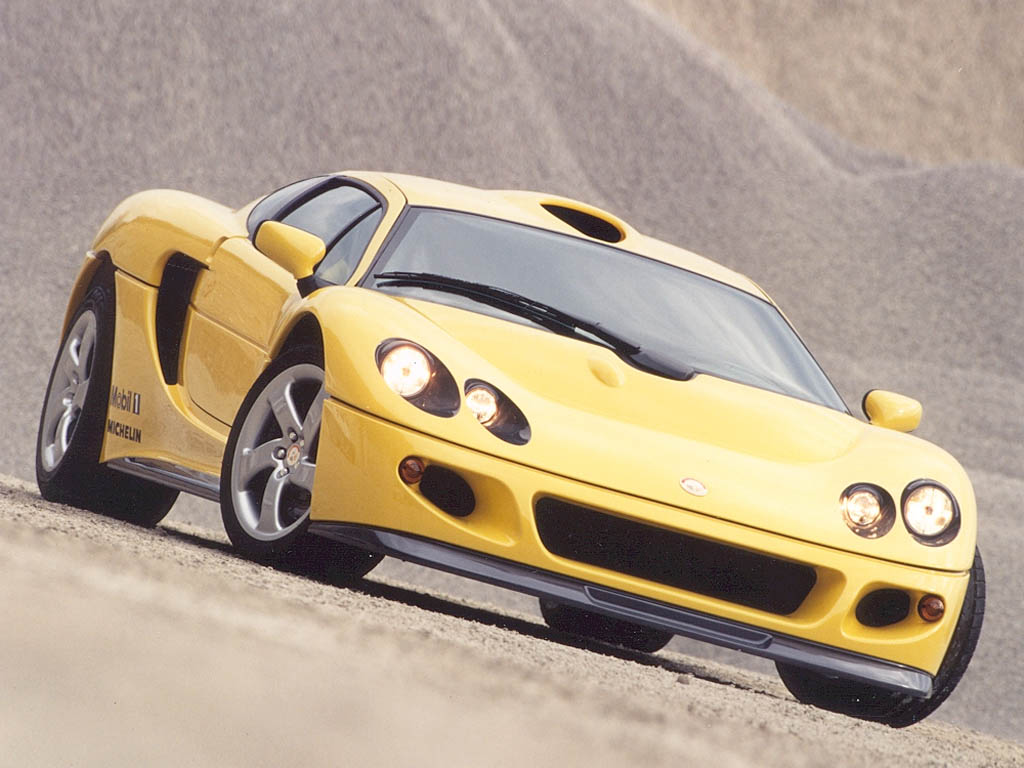
The MCA Centenaire has a bit of a troubled history. The company made a handful of cars, was sold, tried to go racing, and then became the Méga Monte Carlo. At one point, the legendary Phil Hill set off to Monaco with John Lamm to drive the car for Road & Track and … it didn’t go great:
Chiti attached his laptop computer to the engine-management system by umbilical cord, the V12 roared into life, and we can report that his V12 makes a wonderful and powerful noise. Was it now time for my drive?
Chiti punched a few more characters into his laptop; the engine stopped. Ecco! Was that not magnificent?
“Yes, Carlo, but can we go for that drive now?”
Well, no. The weather in Italy was terrible last week …
Chiti goes on to explain that the guy set to fine-tune the engine had to go to Barcelona for testing, so they didn’t quite get what they wanted out of the test drive:
So what can you learn from driving a car that’s rolling down a hill? Certainly that its carbon fiber chassis feels as solid as any structure I’ve ever experienced, every bit the stable platform necessary for the Monte Carlo’s race-derived suspension. Also, that even with a populace as cosmopolitan and blasé as the Monegasques, a car as exotic as the Monte Carlo GTB still commands quite a crowd—whether rolling or roaring along.
Oh well. The car itself would continue on with various powerplants in various forms under various owners until the late 1990s (the yellow version above is from 1998 and has a Mercedes V12, I think, which also makes it a proto-Pagani), when it entirely disappeared. The version for sale is the original car and, as Broad Arrow claims, this makes it possibly the first “road-going production car fitted with a carbon fiber chassis.”
That claim on its own makes it valuable.

I have a pretty decent guess where those taillights come from, though I’ll leave it to the crowd to confirm I’m correct. It’s quite interesting from the front as well.

It’s just a little piece of forgotten history that might turn out to be extremely important or, if you can get it and keep it running, a vehicle that will probably be a one-of-one wherever it shows up.
Top photo: Broad Arrow Auctions


it looks great at an angle, but the straight on shots at the end of the article turn it into a car no one would pay for.