


The Muntz Jet makes most cars seem downright boring. There are so many vehicles out there whose history amounts to the manufacturer needing a model to slot in between their lower mid-tier offering and their higher mid-tier offering. The Muntz, though, was the project of a guy who acted like a crazy person and pioneered cheap televisions and named his daughter “Tee Vee.’ It’s a machine styled like a sleek torpedo with a chrome mouthguard and it has an interior slathered in snakeskin.
It’s just not a fair fight; the Muntz Jet is a fascinating machine, and because of that I have to convince my Autopian co-founder Beau not to sell it.


This is part of our Should I Sell It series, where “I” is referring to my Autopian co-founder Beau, who is paring down his collection of fascinating cars in an effort to find them loving new homes while finally telling their amazing stories. Even though I have no stake in the collection and, let’s be honest here, no right to impose my opinion, I still am going to try, especially when it comes to cars like this 1952 Muntz Jet.
You can see the whole episode above. Beau comes in wanting to sell it — I can tell you that — but I think you’ll appreciate how I fought for this car by digging into this particular car’s racing history.

First, Some History About Earl ‘Madman’ Muntz And The Muntz Jet
Earl Muntz was one of those people who seemed to have a certain kind of inner frenetic inexhaustible energy to just do things. Muntz dropped out of school at 15 to start working, had a used car lot by age 20, and had the largest Kaiser-Frasier dealership in California by age 26.
Muntz had used-car lots in Glendale and Los Angeles, and cultivated a “madman” persona — one that has become part of our cultural unconscious at this point — of a crazy guy who buys high and sells low because he’s nuts. But if you’re willing to take advantage of one man’s mental illness, the savings get passed on to you!
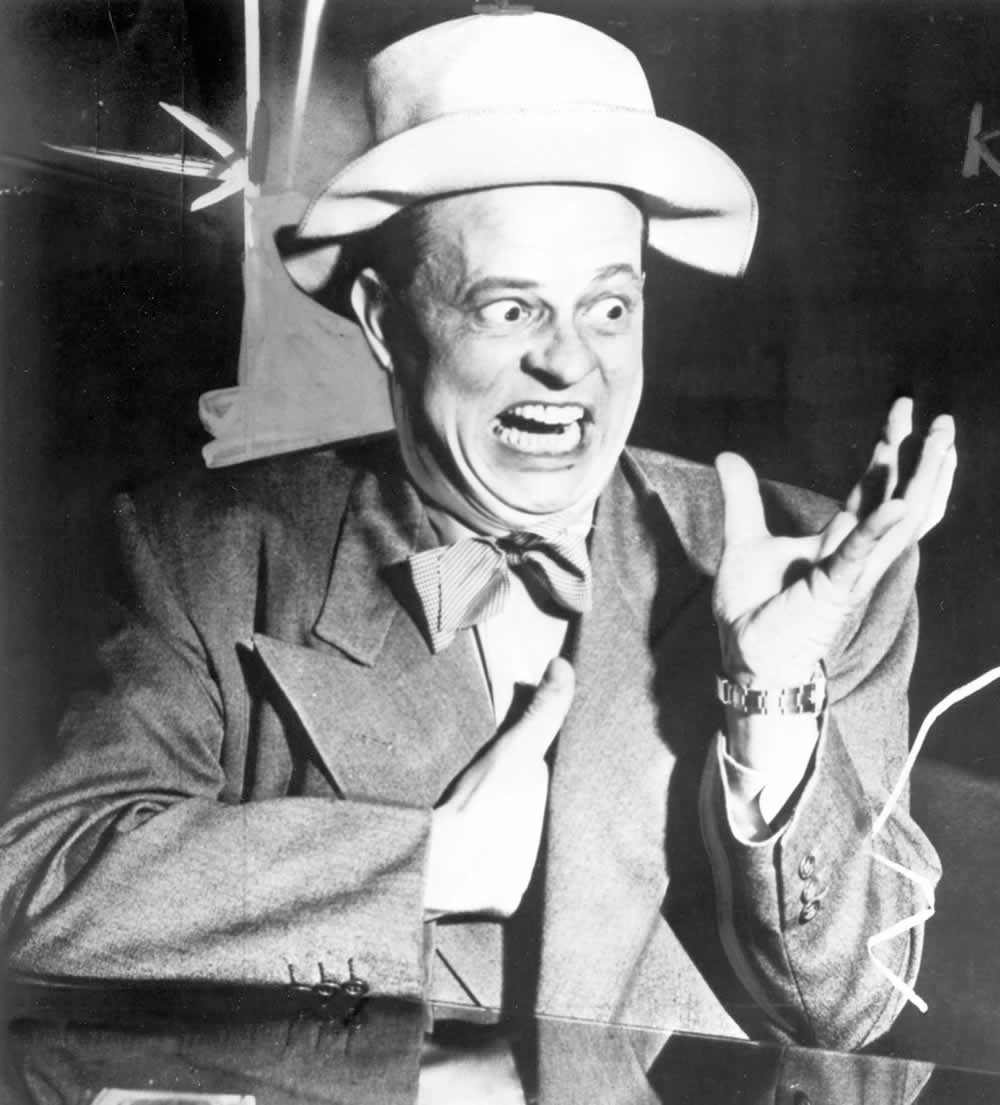
And with deals like these, hell yeah you’ll take advantage!
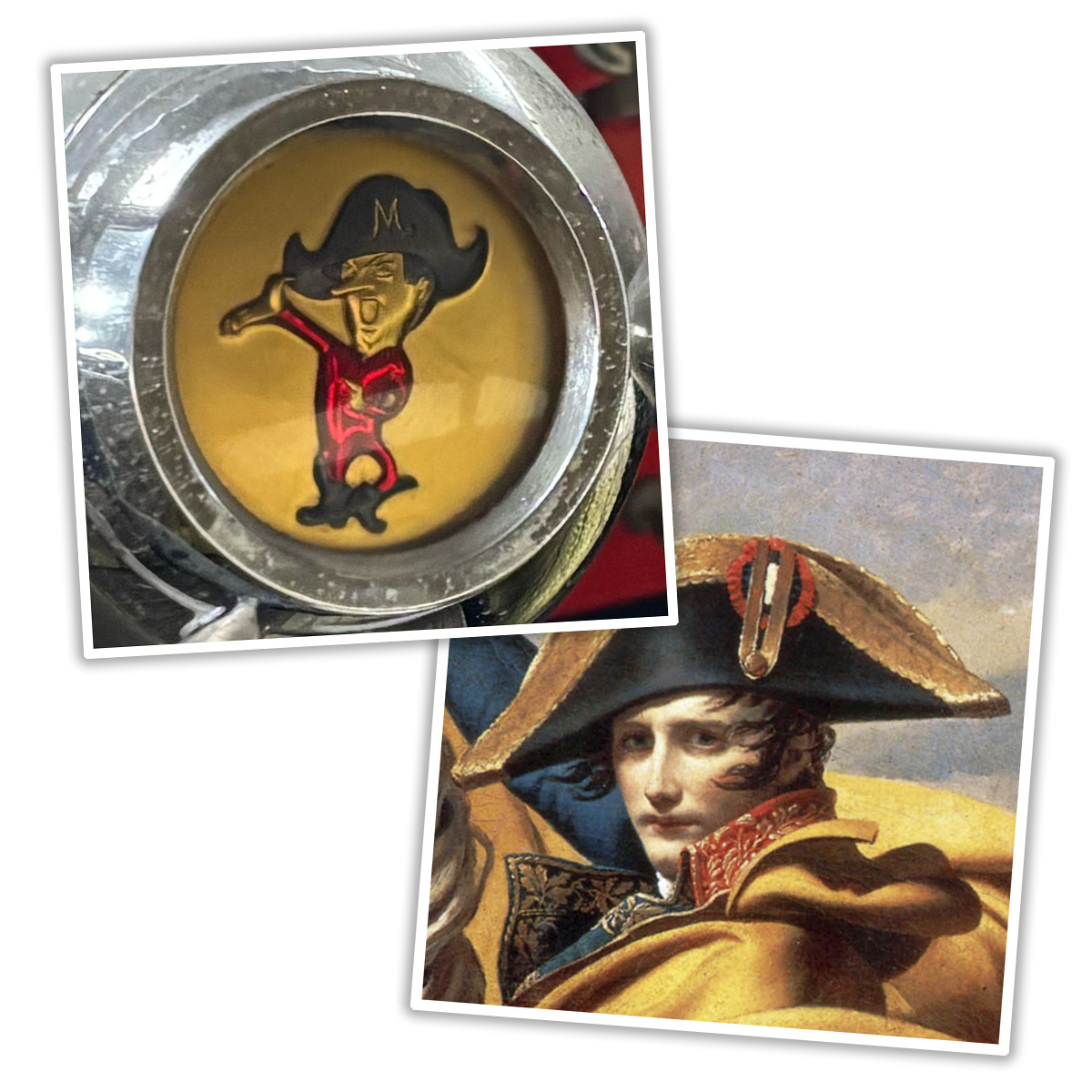
Muntz also played into the strange old trope of crazy people thinking they’re Napoleon, which is why the badge that was used on the Muntz Jet features a cartoon Earl Muntz in a Napoleonic hat:
In addition to used cars, Muntz was the first person to make a truly affordable television set. His TVs (he coined that term for televisions, mostly because it was far easier for skywriters to produce) were the first to break the $100 barrier, and he accomplished this by being very clever. Where most major TV manufacturers were adding a lot of complex circuitry to ensure their TVs could pick up broadcasts from far away, making them great for rural use, Muntz realized that if his target audience was urban TV buyers – people who had TV broadcast towers often just blocks away — then they simply didn’t need all that complexity.
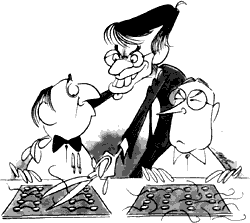
Muntz hated over-engineered wastefulness so much, he came up with a process that came to be known as “muntzing” wherein he would look over the shoulders of his engineers, and if he saw them using a component, say a capacitor or resistor or something, that he felt was unnecessary, he would take some snips from his pocket and cut it out. If the TV still worked, that component was out. If it didn’t, okay, it can stay. Using this method, Muntz distilled down his hardware to the absolute essentials.
But let’s get back to the car. The Muntz Jet actually started life as a Kurtis Sport Car, an aluminum two-seater designed and developed by California-based Frank Kurtis, of race car-building Kurtis Kraft fame. These cars didn’t sell (only about 17 were built), and so Kraft sold the rights and tooling to the car to Muntz for a pretty dirt-cheap price.
Muntz stretched the car to include a rear seat, making it more of a fast touring car than an outright sports car, and the cars started out as aluminum with a Cadillac V8, but later versions switched to steel construction with a Lincoln V8.
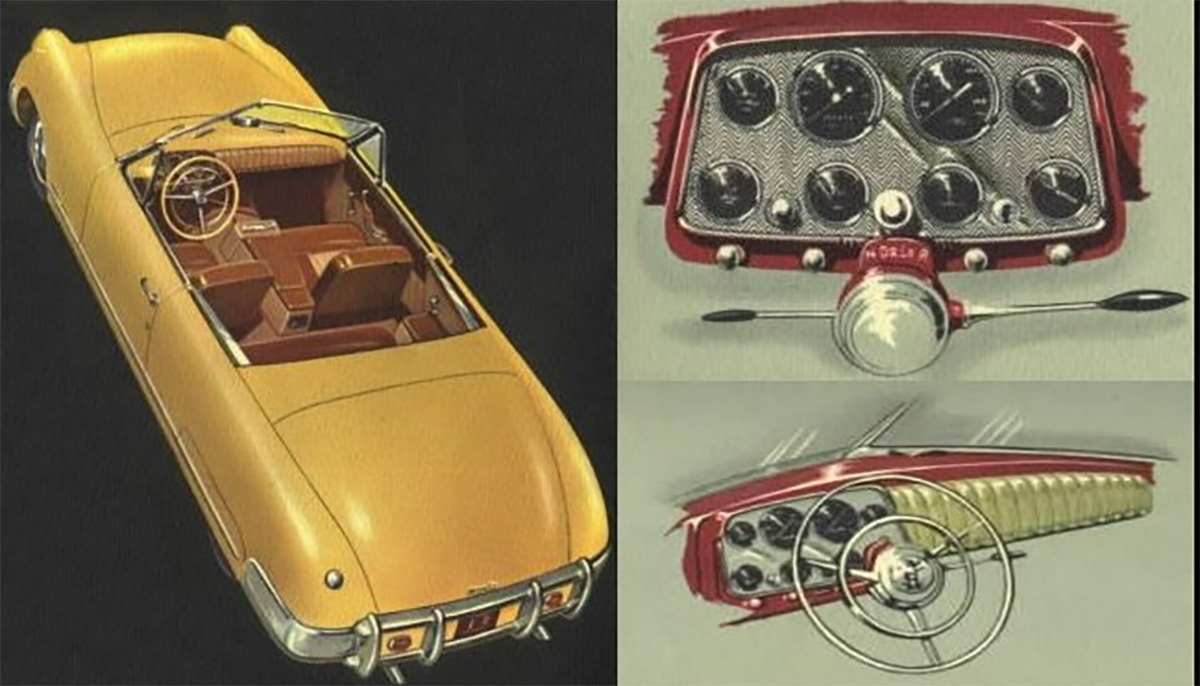
Muntz built and sold the jet between 1949 and 1954, building some in Glendale, California, and Evanston, Illinois and Chicago. Living up to his “madman” persona, each Jet sold for about $5,500 (around $67,000 today), but cost around $6,500 to build, which is not really great for business. About 198 Jets were built, losing Muntz a good bit of money.
The aluminum construction of the early Muntz cars, a carryover from the original Kurtis design, was switched over to steel sometime during the later production run at the Glendale factory, and all of the Illinois-built cars were all steel. This will become important later, if you’ll stick with me.

In so many ways, the Muntz was a car ahead of its time. While its drivetrain was pretty conventional, its body design was much sleeker and more understated than most 1950s cars, but still very distinctive. It didn’t rely as heavily on overdone chrome jewelry or ostentatious fins or anything like that, instead keeping a very clean profile.
The inside did get some ostentation, though, mostly through the use of materials, in this case snakeskin, and lots of it. Every surface that can be snakeskinned has been snakeskinned. Some of these surfaces are ahead of their time, too, like the padding on the dashboard or that center armrest/console, and that novel housing for the radio. This thing also has a bonkers number of instruments and indicators, including a gradient meter; I can’t think of another car that has that.
Any Muntz is cool just on its own merits. Only 198 were made, so they’re pretty uncommon. But Beau seems ready to get rid of this car, all the same. I don’t think he should, because this particular Muntz has some real pedigree behind it, and I think is pretty special even among Muntzes. Let me explain.
Why This Particular Muntz Is Worth Keeping
I reached out to the Muntz Jet Registry, and they happened to have some information about this car, M125, the 20th Muntz built at the Glendale facility. Beau himself was born in Glendale, so that’s already a bit of a fortunate parallel.
This Muntz was fitted with a special factory option, a $400 Edmunds Kit that included new aluminum cylinder heads, a dual intake manifold with a pair of Cadillac-sourced carbs, and a Mallory ignition system. We know this, because there’s a letter describing it all, and noting that it was from the factory, which means it’s all “stock”:

This was important because the then-owner, Robert Major, intended to race it. And he did.
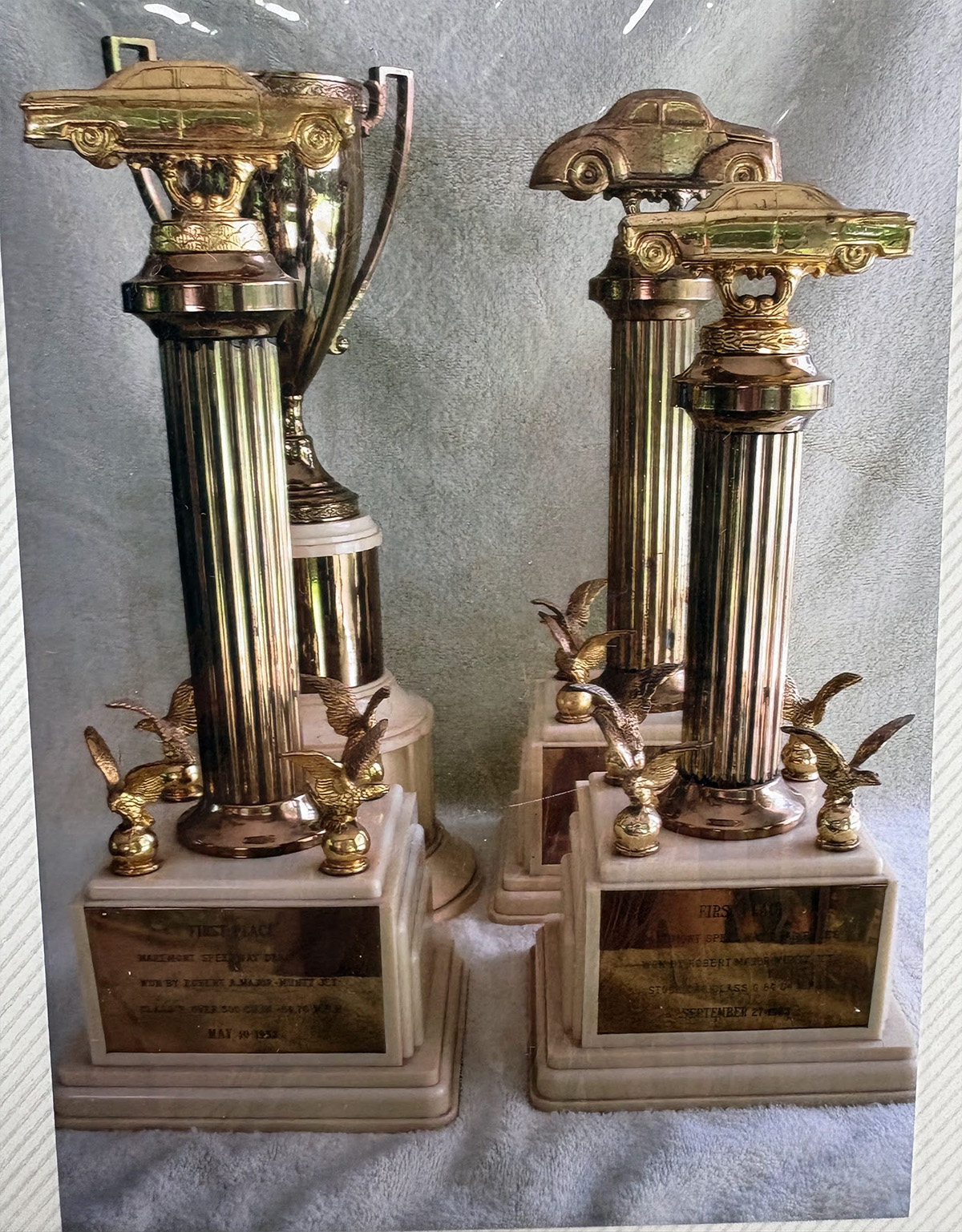
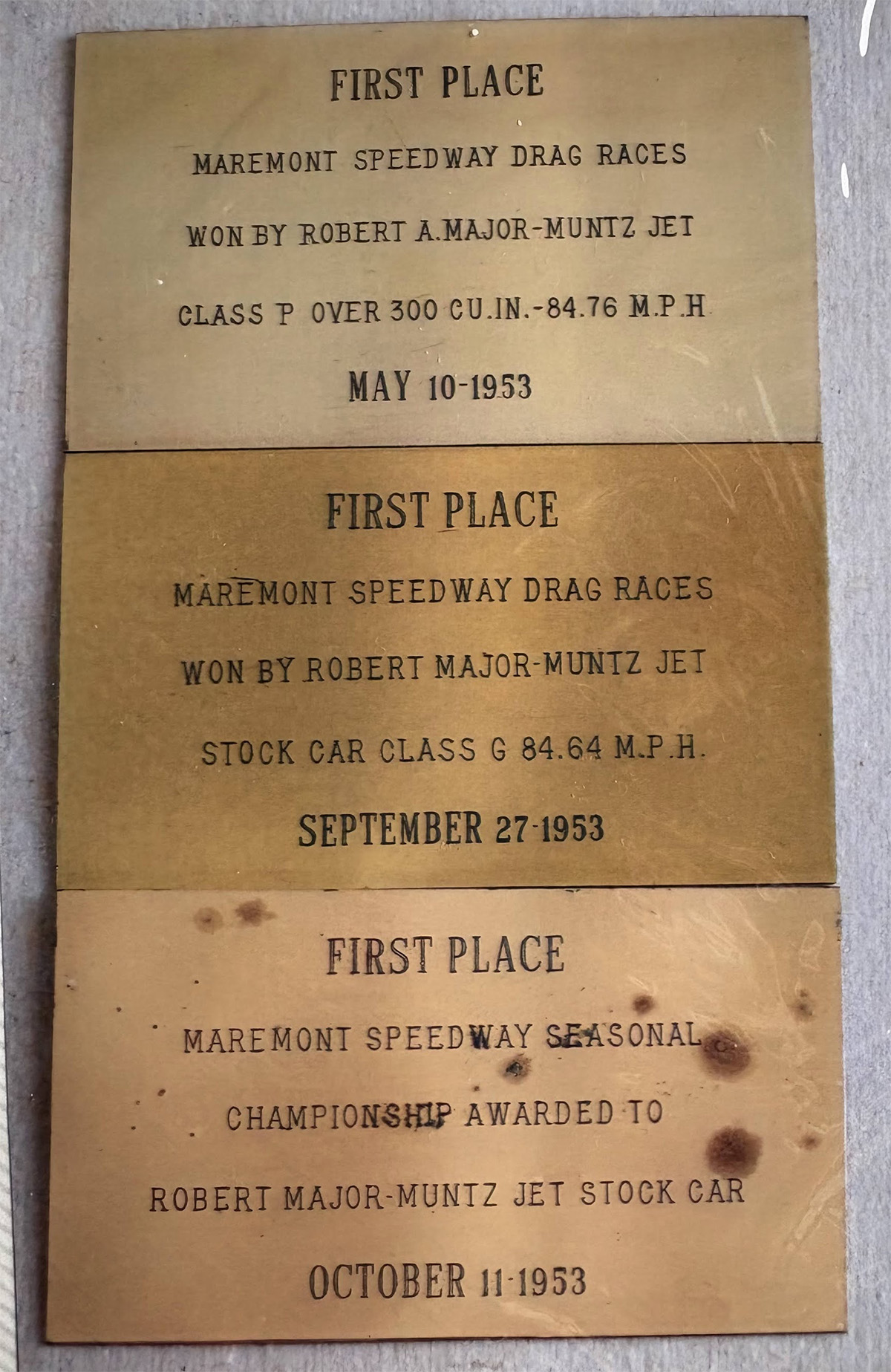
Major drag raced this Jet and won the Seasonal championship in 1953, along with other first place awards. The car had a pretty successful racing career, which is not something I’d have expected from a Muntz Jet, really.
Back in the day, the car was green – it was described to me as “mint green,” though I think personally I might classify this as more of an, I don’t know, emerald?
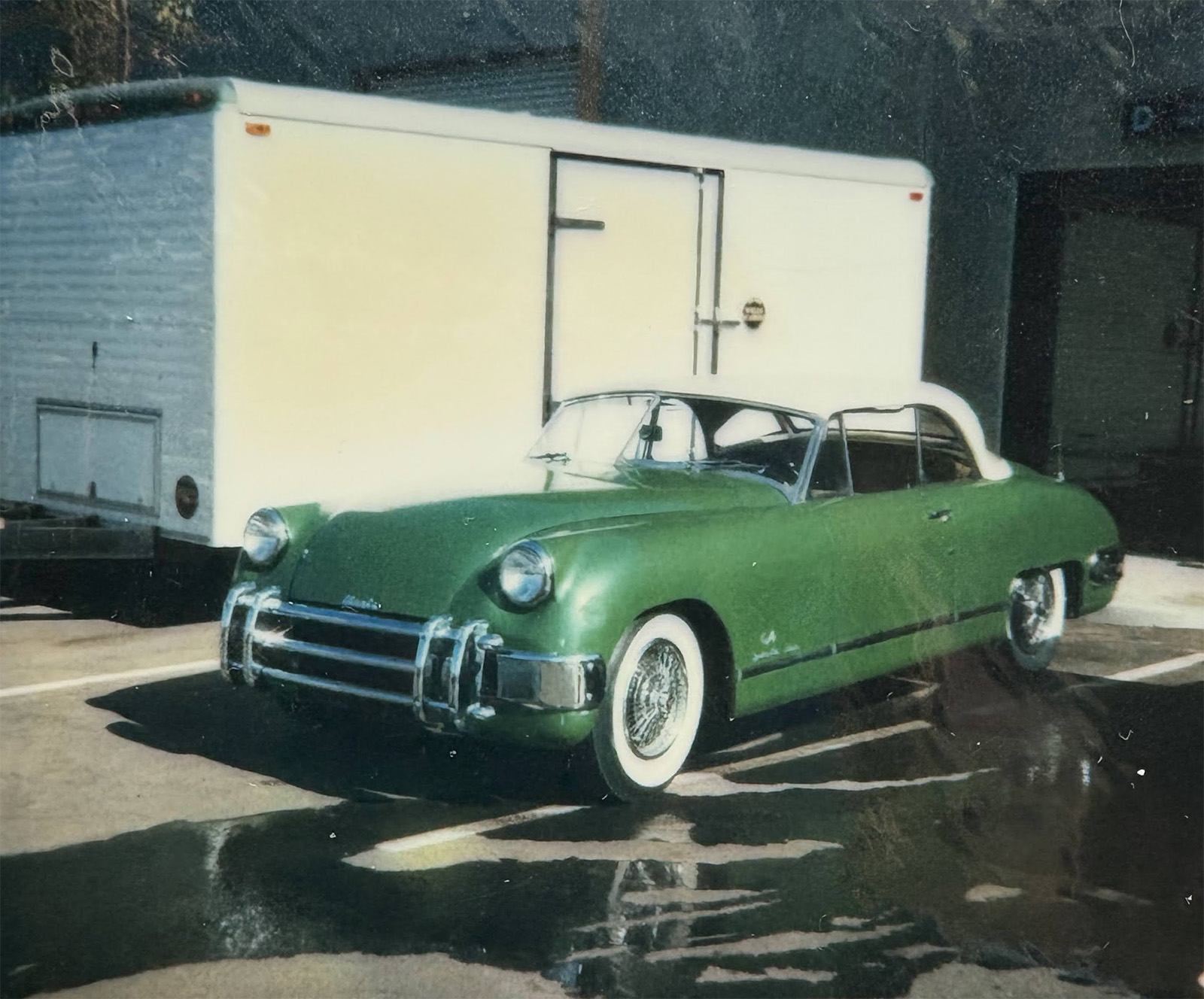
It looks great, regardless, and the racing history is incredible. After its racing career was over, the car ended up in a museum! Not just any museum, either, but in the famous Harrah’s collection in Las Vegas:
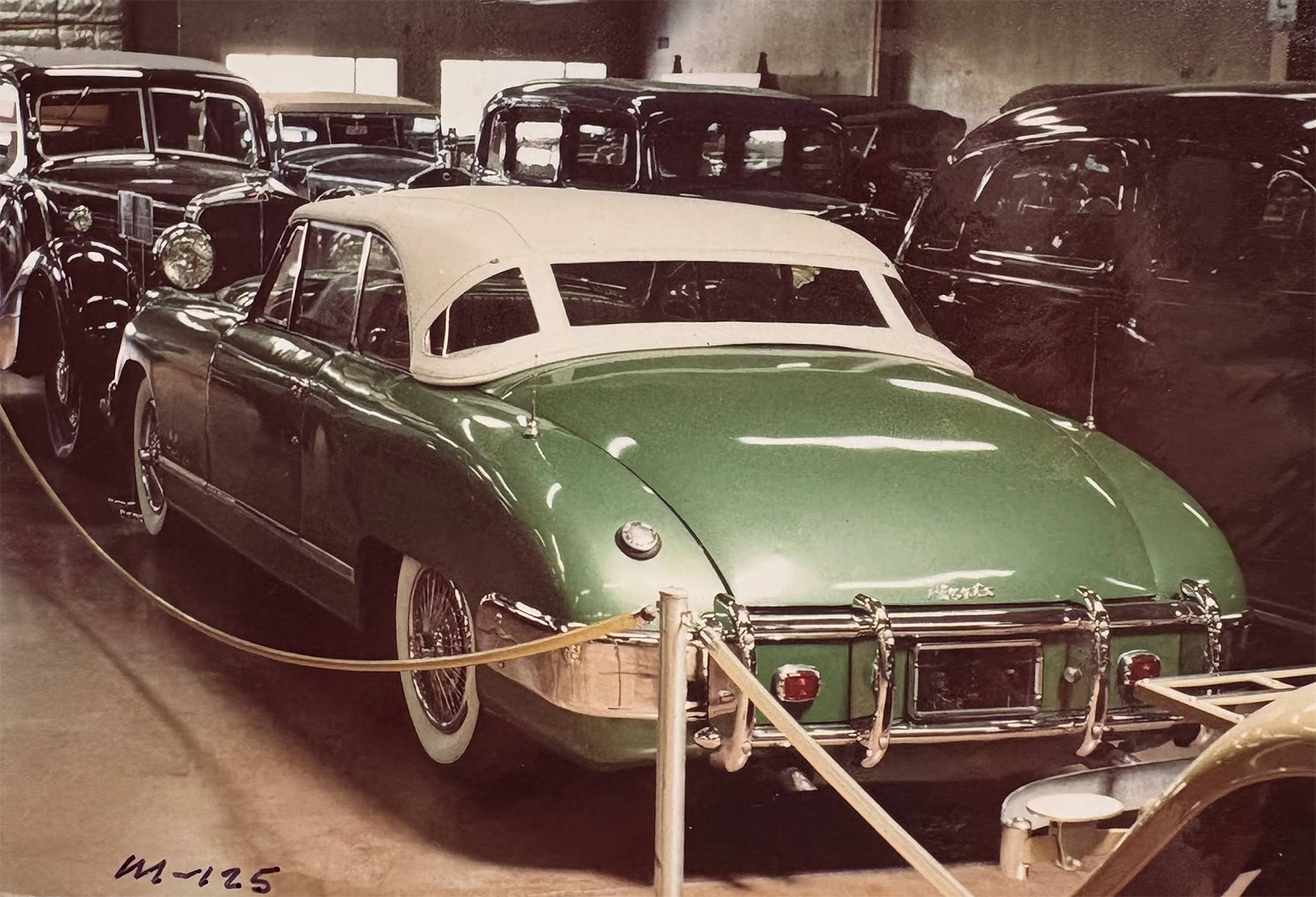
All of that is cool, and gives the car a fascinating backstory. But there’s even more. And, while it’s pretty geeky, I think it makes this car a one-of-one Muntz.
So, M125, as I said, was built in Glendale right at the point where the transition from aluminum doors and fenders to steel ones was happening. So what does Beau’s car have? Steel or aluminum? If steel, it would be the first all-steel Muntz. If aluminum, it would be the last aluminum Muntz. The answer turned out to be even better than I hoped.
I had no idea until we were filming the episode, so we got a magnet to test. We stuck the magnet to the fender. Clonk. It stuck! So, the first steel Muntz, right? Well, not so fast. We stuck it on the door. Nothing. No stick. Aluminim. And the rear fender? Same thing! 
So, here’s what I think: I think this may be the only true transition car, where they had steel panels ready, but still had some old doors and rear fenders to use up, so this Muntz is a bit of a Chimera, with both aluminum and steel parts.
Maybe there were one or two others like this? Maybe? But I don’t think so. Records all say this was the point of transition, and I think this is the lone hybrid-materials car, making it a one-of-one Muntz.
I think with the racing pedigree, the hot engine upgrade kit (with documentation), the stint in the Harrah’s collection, and the unusual mixed-metals build, this is a very special Muntz.
But is that enough to convince a determined Beau to keep it? Watch and see what Beau thinks, and check out the auction in November to see his ultimate decision!


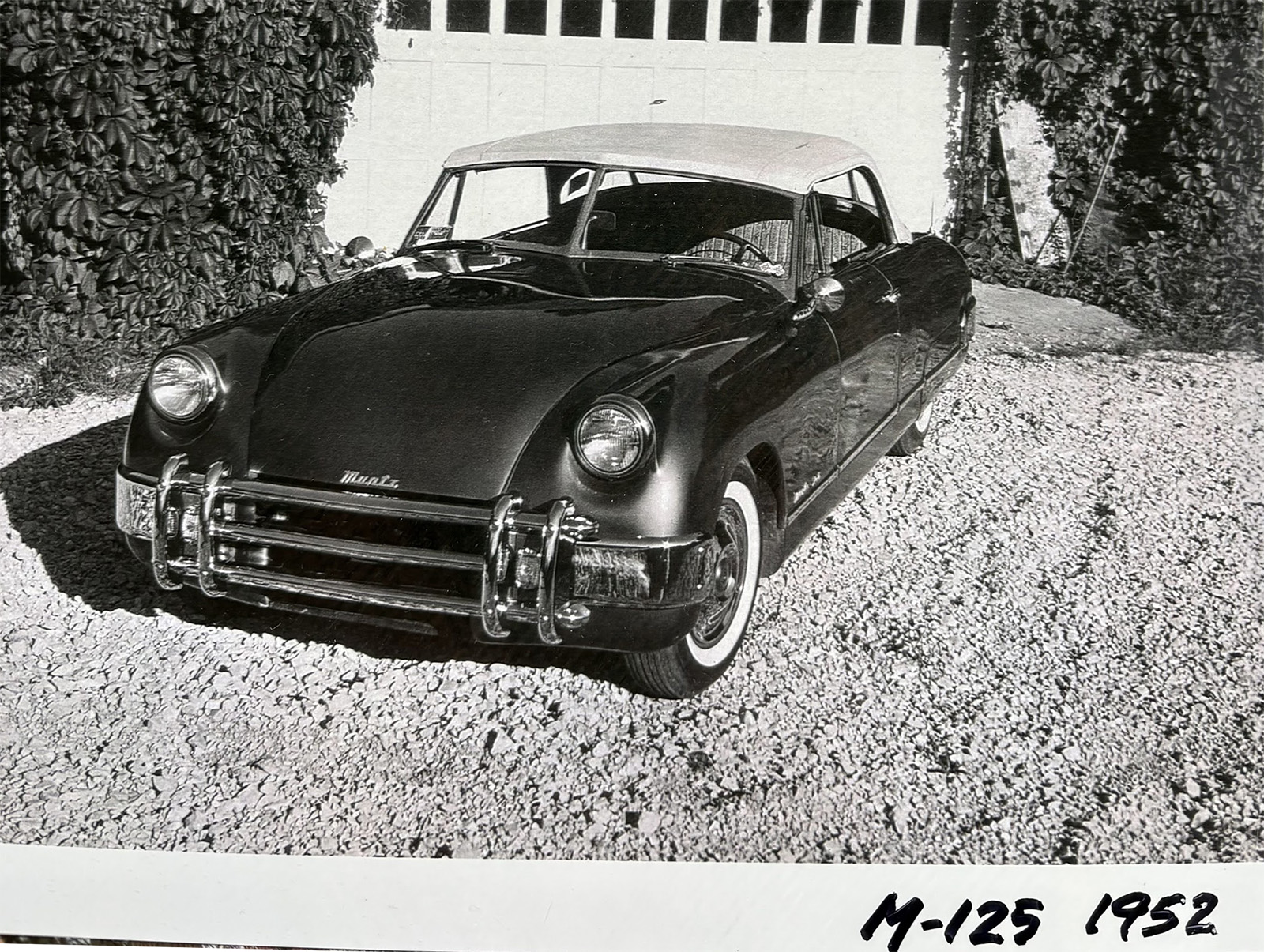
That car looks great in red, but even better in green with whitewalls. Strangely the B&W photo from 1952 makes the car paint look quite dark, possibly red? Really curious about the color history of the car now.
It’s a fascinating piece of automotive history, but I’d be willing to let it go. Possibly the most unique features about it are the original go-fast bits and the some-aluminum, some-steel body. If nothing else, keep it in an extremely dry place so it doesn’t react itself into dust.
Not being the original owner by a long shot, it’s just a car. A unique car with an interesting story, but still. I’d try to get it into a museum somewhere.
A more prosaic explanation for the steel and aluminum construction could be that it was one of the last all aluminum cars, but got into an accident(s) requiring the replacement fenders, which by that time were all steel.
Also, a gradient gauge is the same as an inclinometer, lots of cars have had those over the decades – including the lowly Tercel – though most of these would’ve been off-road vehicles. Probably pretty rare back in the early 50s, especially on a sports car.
Fun article. Hope Beau hangs on to this one.
Is it possible it was all aluminum but suffered front end damage, with no aluminum replacement parts available? I’m sure it came from the factory that way, but I felt the need to throw that turd in the punchbowl.
Great minds and all that … got me by 30 seconds.
This is a really cool car. But here’s the thing: really cool cars should be in the hands of people that want them, not people that don’t. If Beau is in inclined to sell it, then he should. That way someone that wants it will have it, and someone that doesn’t, doesn’t.