

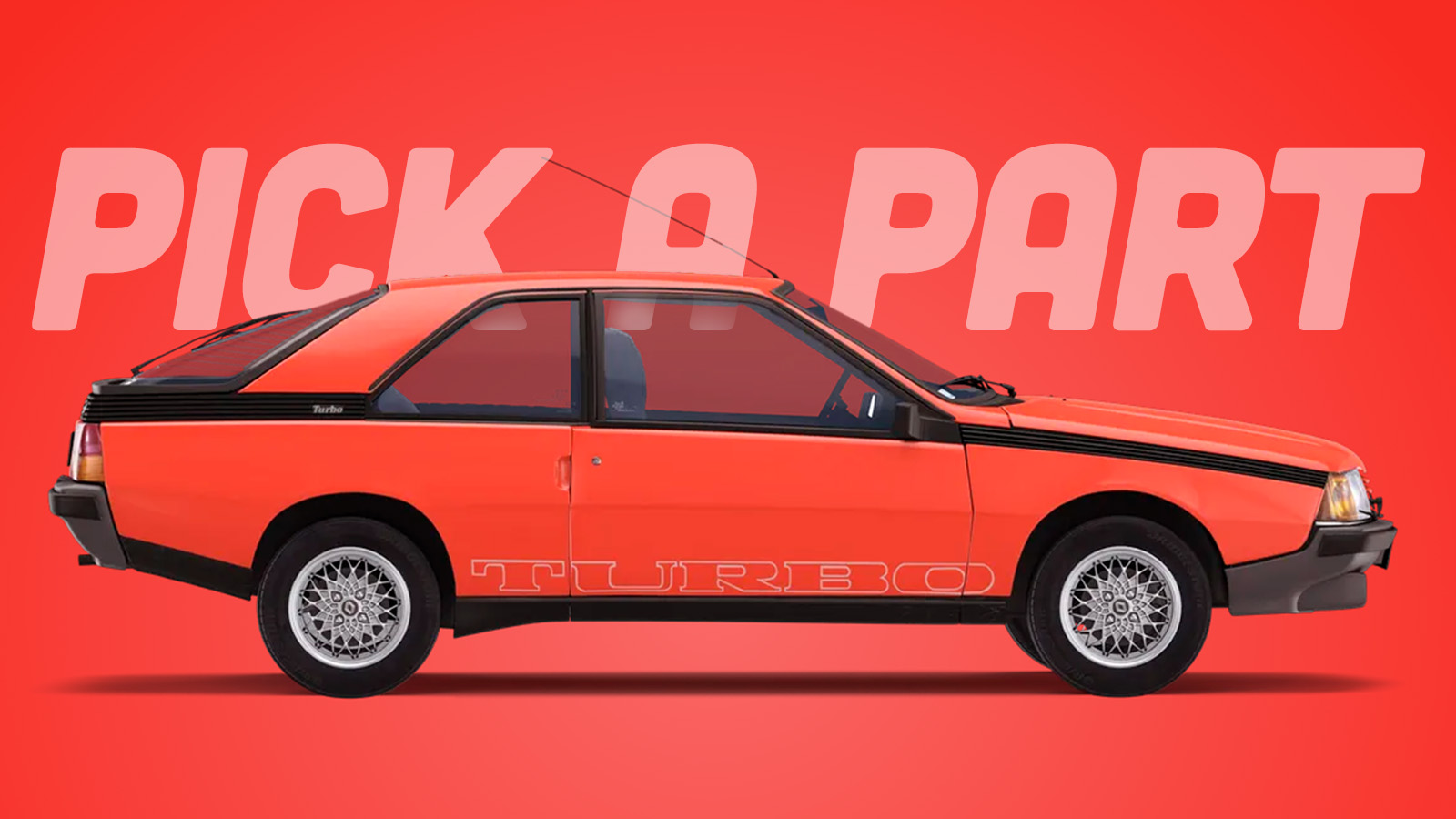
There’s an automotive detailing shop around here that, after business hours, re-opens as a semi-legal bar/ketamine den targeted at the automotive detail enthusiast crowd. It has a sort of midcentury LA-area Chinese restaurant theme, and it’s called Detail Orient. It’s pretty sporadic when it’s open, but when it is I like to check it out, because there’s always some interesting things being discussed or shown, like this couple that collects exclusively heater control knobs from 1970s Japanese cars or a guy who I think must be the world’s leading expert in exposed car door hinges (his presentation of original Mini vs VW Beetle exposed hinges was sublime, even if it was over five hours long). There’s always interesting car-detail stuff happening.
Anyway, the other night I went in there to find two angry groups of people shouting at one another and occasionally flinging a glass or a meatball at one another. There was a stack of car brochures in between the two groups that hinted at what all the foofaraw was about: the Renault Fuego.


I’m not clear how or why the Fuego argument started, but I soon got the gist: they were talking about what the punctum of the car was. This concept is one we’ve used here at the Autopian before; I defined it when introducing our micro-review format that I vainly hope would get me off my ass to write more reviews I have backlogged:
In a Micro-Review the goal is to get you the important information and distill down what you actually need to know into two take-aways: first, the three most significant traits of the car, good or bad, and then one final punctum of the car, a term I’m borrowing from Roland Barthes and the art criticism world. Essentially, what it means in this context is what is it about the car that actually manages to get your attention. It could be a detail or one feature or the feeling you have when you walk away from it. It doesn’t have to be rational or qualitative, but it has to be what the essence of that particular car feels like.
So, as you probably surmised, a punctum would be a big deal to car detail obsessives: it’s that crucial detail that somehow catches your attention, even if you’re not sure why. And these Fuegonauts were divided between two crucial Fuego details: one group insisted the bubble glass rear hatch of the car was the key punctum:

…while the other group insisted the crucial detail was the fact that the Fuego was the first production car to have a keyless entry system, which was called the “plipper” after its inventor Paul Lipschultz:
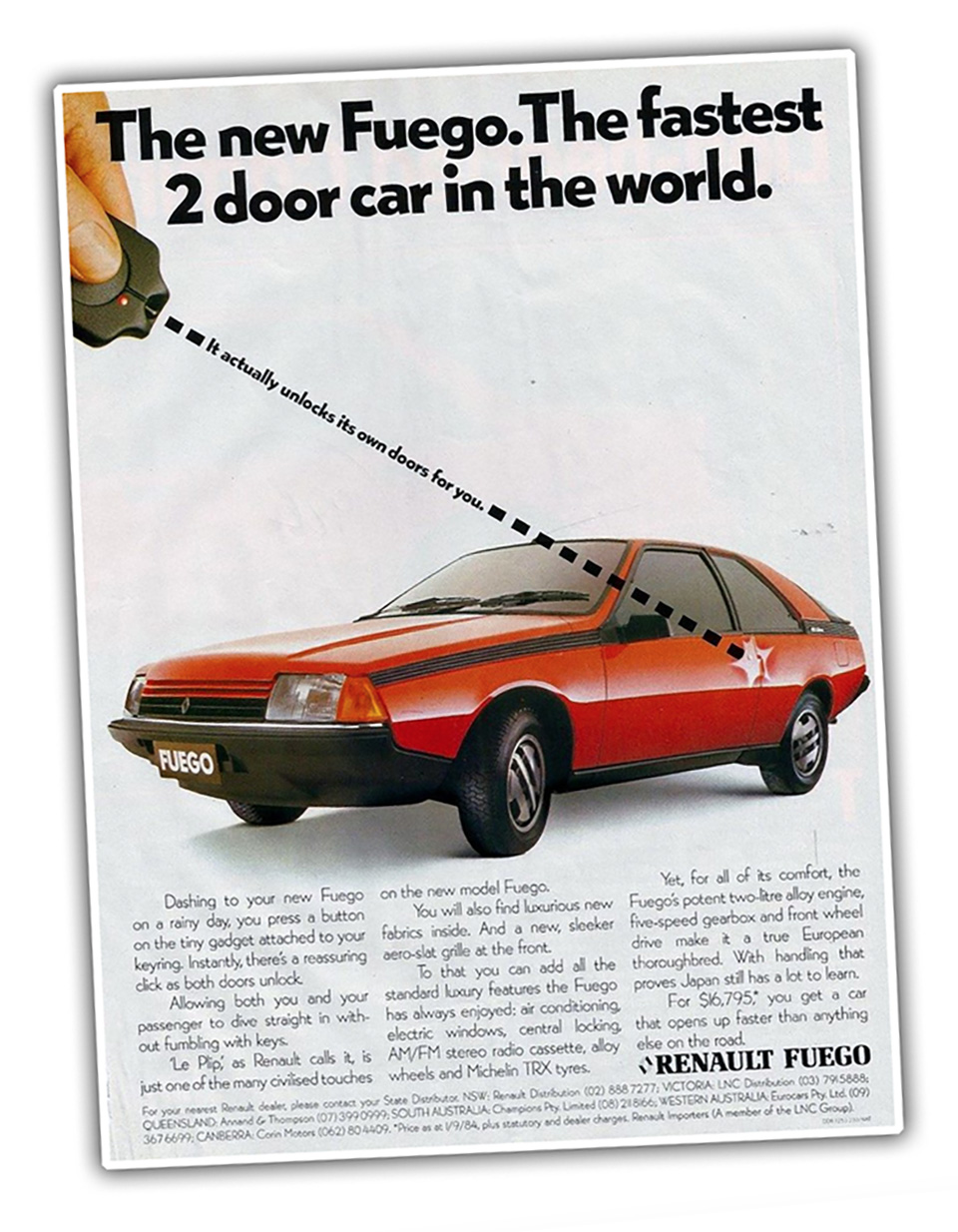
Oh, there was also a third group that maintained that the punctum was that, for a while, the Fuego was the fastest diesel production car you could buy, but the members of that group were driven out of the club pretty early on when one of them took an entire piña colada in a coconut to the forehead.
While I could see the points both sides were making – the bubble window hatch was absolutely a crucial styling element and put the car in a category with much more upmarket cars like the Jensen Interceptor or the Porsche 944, and the keyless entry thing is incredibly influential and has become a part of the modern driving experience for nearly everybody today – I think the actual punctum of the Fuego is something different.
It’s this:
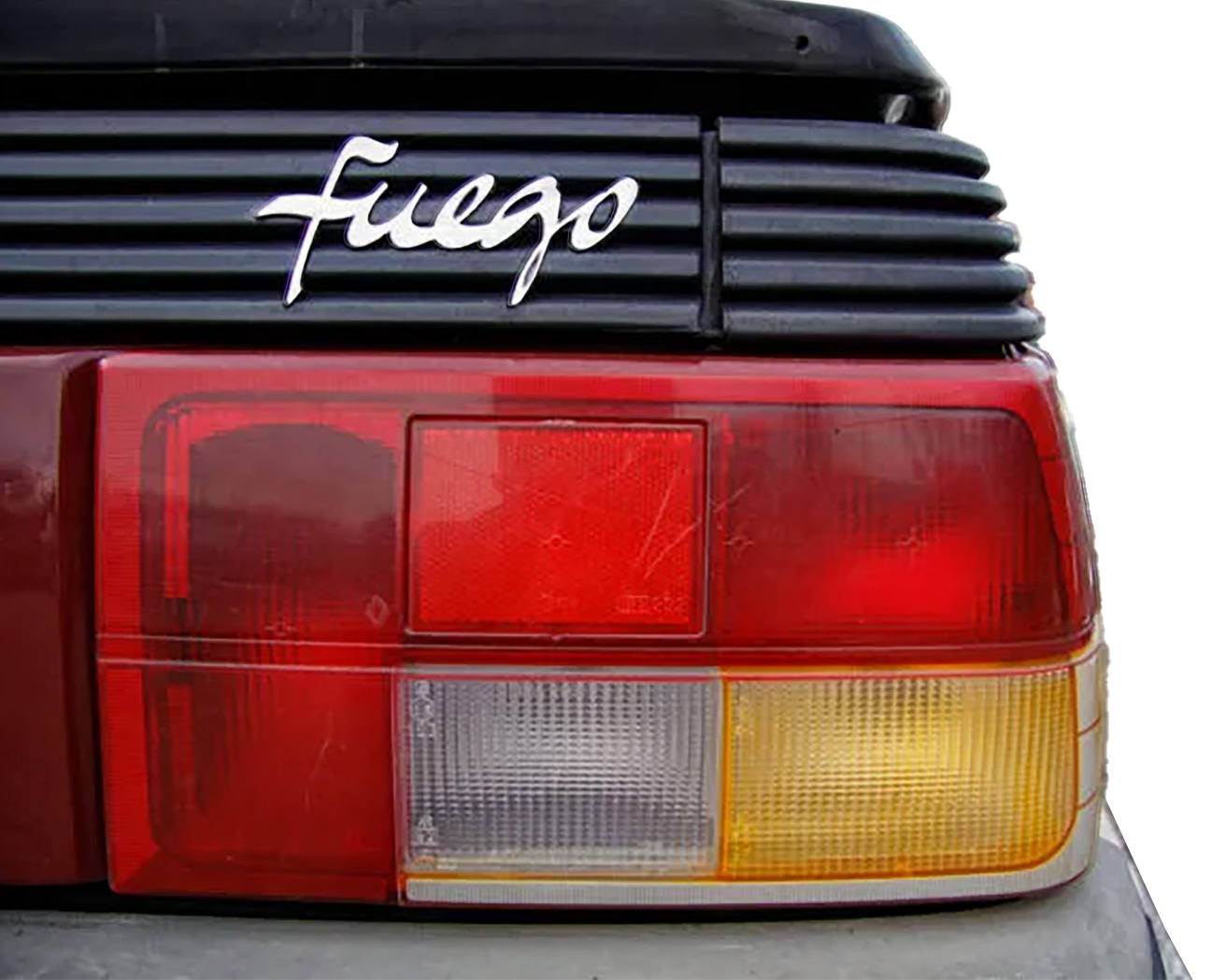
See it? It’s that ribbed black plastic band. The band encircles the entire car around its, um, carquator – oh wait, there’s a car word for that: beltline. It encircles the car’s beltline with those black plastic ribs and seems to also encompass the window areas, making for a striking graphic element that really helps define how the Fuego feels.
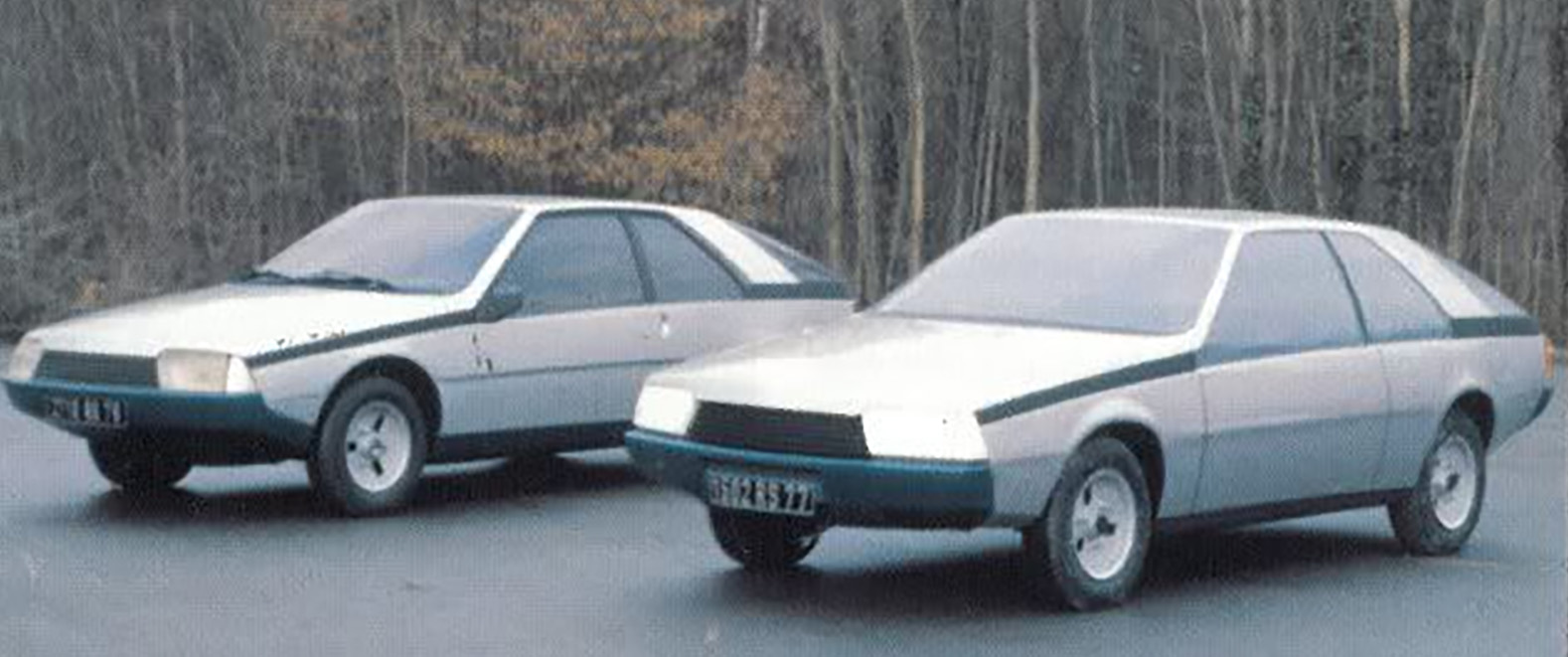
This element has been part of the Fuego’s design from early concepts, as you can see above, and I think when one looks at a Fuego, that’s the detail that lingers, somehow.
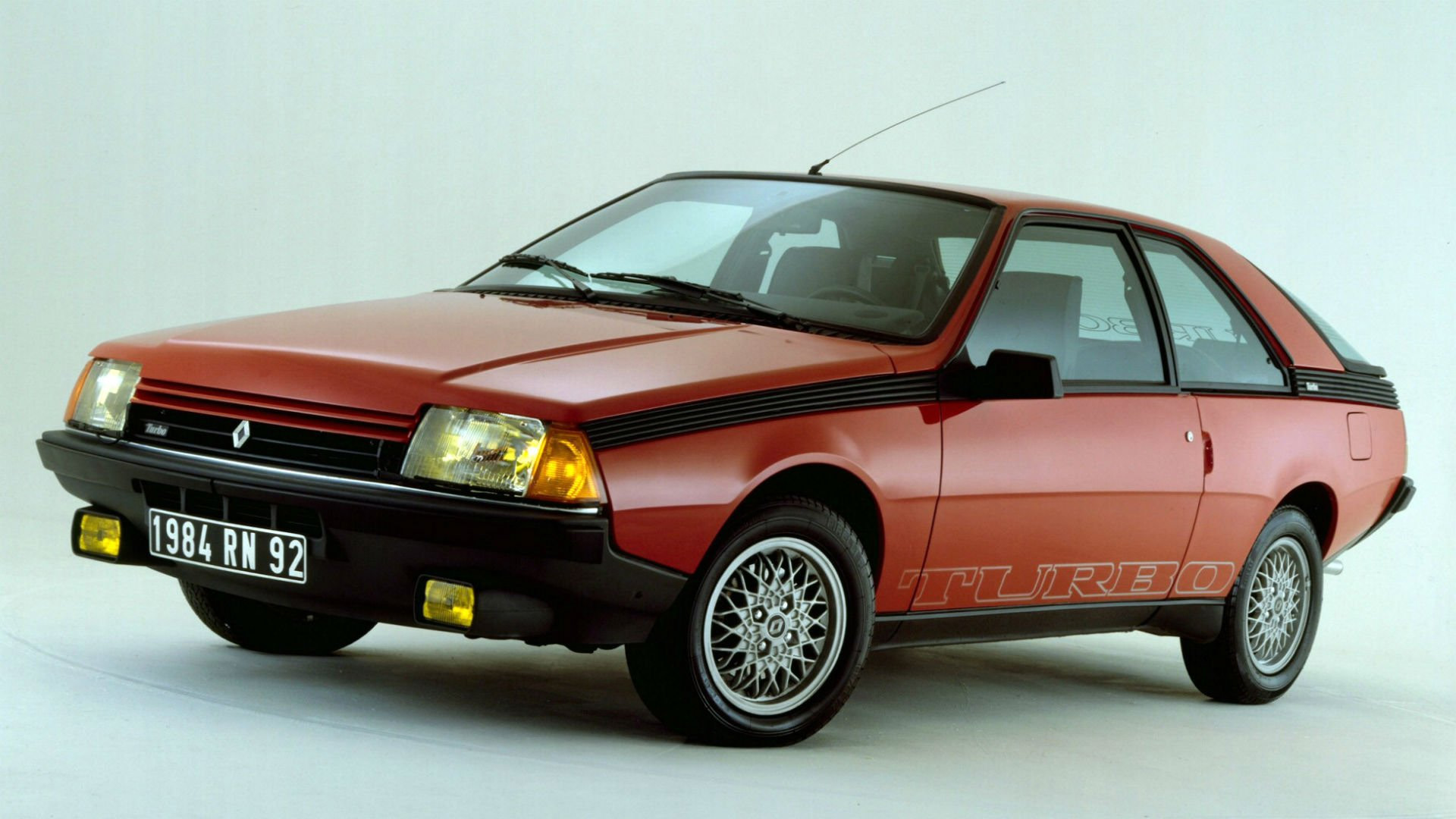
In person, it’s even more notable, as it has a strong tactile quality to it that makes you want to run your fingernail over it, making a satisfying bzzzzt sound. There’s something so ’80s about it, too, really anchoring this car in its era.
It’s not exactly a stripe, not exactly trim, but something all its own, and unique to the Fuego. That’s why I think the ribbed black beltline treatment has to be the punctum of the Fuego!
Seeking to end the struggle between the two groups with my unassailable logic and reasoning of this Third Way, I climbed up on the bar and loudly made my case that the ribbed black beltline is the punctum, and maybe we should all just stop fighting and come together in happy Fuego unity.
And they did come together! It worked! Sort of.
They just joined forces against me, and I’m told it was a half-empty beer keg that hit me first; I don’t remember much until I awoke in a nearby dumpster, reeking of booze and blood and what may or may not have been raccoon urine. Luckily, I was able to fish my phone out of my severely-wedgie’d underpants and call a friend to pick me up and bring a pair of pants to replace the ones that had been re-fashioned into the crude, ragged turban I found on my head.
I can’t wait to go back next week! I hear there will be a talk about the punctum of the C4 Corvette! It has to be those rear side reversing lights, right?


100% correct that the ribbed black surround is the Fuego’s punctum as defined in the piece. There were a bunch of similar-ish cars at the time, but the Fuego is the one most likely to be remembered, and it’s because of that plastic strip. It’s certainly not because of the car’s reliability.
I had a Fuego as a rental in Ireland. Pretty nice car, A diesel, with auto stop/start, nicely seamless. It worked very well and was not a pain. totally unlike my wife’s Kia Soul stop/start, which did not work as well.
I agree 1,000%. As I was reading this I was absolutely thinking how could the punctum NOT be the plastic, ‘finned’ waistline?
Wow, 11.6psi maximum boost. That must have gotten it up to the mind bending speeds of 55mph!!!
These were always odd to me. I always seemed to see them either completely run ragged or in a junkyard. Also hate how we got the shitty standardized headlights instead of the composite headlights.
They got trashed pretty quickly for a variety of reasons, including their initial quality (job #47 at Renault at the time) and the owners’ demographic, which tended to be aggressively carefree working class dudes in their 20s and 30s who didn’t treat those shitboxes very well. Think boy racer crossed with Depardieu, drinking Ricard and cheap Kronenbourg and smoking gitanes or gauloises (not Marlboros or Dunhills or Pall Malls).
Of course the ribbed plastic is there to generate vortexes which greatly improve high-speed fuel consumption….
The fact that it is actually Le Plip and not some substance induced haze that Torch has entered is the punctum of this article.
So, what exactly is Autopian’s punctum????
Poop?
Spaghetti in showers?
Rust Jeeps?
Seedy taillight bars?
It’s got to be one of those options, right?
“Weird is good.”
The Autopian! It’s Oddly Funucational!
Is it true that the 944 liftgate glass is the same glass as the Fuego’s, but flipped over?
Corvette mentioned?
I’ve always loved how these things look. I know they are crap, but I would totally buy one if it was available near me.
Considering that Torch mentioned ketamine in the article… I’m guessing that Hardibro or Mercedes must have some titillating footage of our resident taillight fetishist relishing in a K-Hole filled with dreams of bizarre French conveyances.
I never guessed that he’d be Karma-farming on the astral plane. Didn’t have that one down on my Autopian 2026 bingo card.
Auto journalists raved about these when new. I was big into autocross then and nobody in the clubs bought one, despite the turbo version. The styling was interesting, but the build quality looked very cheap up close.
Some cars become shitboxes, abused by time, weather, or heavy driving.
These were born shitboxes. There was a lot of turmoil in manufacturing at the time, with near-constant gridlock between management, the French government (part owner), and very, very powerful and very, very left-wing (overtly marxist) unions. The economy wasn’t doing well. Materials and energy suddenly cost a lot more after 1973 and 1979 oil crises. Some models fared better than others, but the Fuego got the short end of the quality stick.
When you started talking bubble hatch, I was like, “Hey, the ribbed beltline trim is RIGHT THERE!” I’m glad we actually agree on that.
Also, I’m assuming Detail Orient is a work of fiction and any resemblance to real detail shops, living or dead, is purely Occidental.
Spot on,
I found one of these in a junkyard, and if I remember right, it had a squeeze bulb under the driver’s seat that inflated the bolsters on the seat. So bizarre.
My sister’s MR2 had the lumbar bulb as well, I think it was somewhat common in the 80s.
Yes, in the Mustang GT and Daytona (K-car version) too IIRC
I think a lot of Fords from that era had this.
Still in use even, you can buy kits to add adjustable lumbar support to your ride, or some seatcover manufacturers offer them as an option. Or you do what a buddy did and swipe a blood pressure cuff (or sphygmomanometer if you’re nasty) from the university clinic and shove it under the upholstery of his old Ranger.
Ford/Merkur used these as well.
Yesterday I drove past the junk yard near my house and thought to myself, ‘if I had binoculars and looked in there like Where’s Waldo, what might I find?’ And I concluded that the craziest thing I’d find would be a Renault Fuego… And i haven’t done it yet, but Fuego twice in 24 hours has entered my thoughts. Side effects of medication?!
If you experience Fuego for more than 3 hours, please seek medical help immediately.
Mental help might not be a bad idea too.
If I’m experiencing fuego for more than 3 seconds I’m calling the fire department.
Hmmmm … well there was an Autopian Asks about this model on 9/11 so perhaps that planted the idea?
Whether it was planted, which it probably was… We’re now up to three!
Are you gradually becoming the great cornholio?
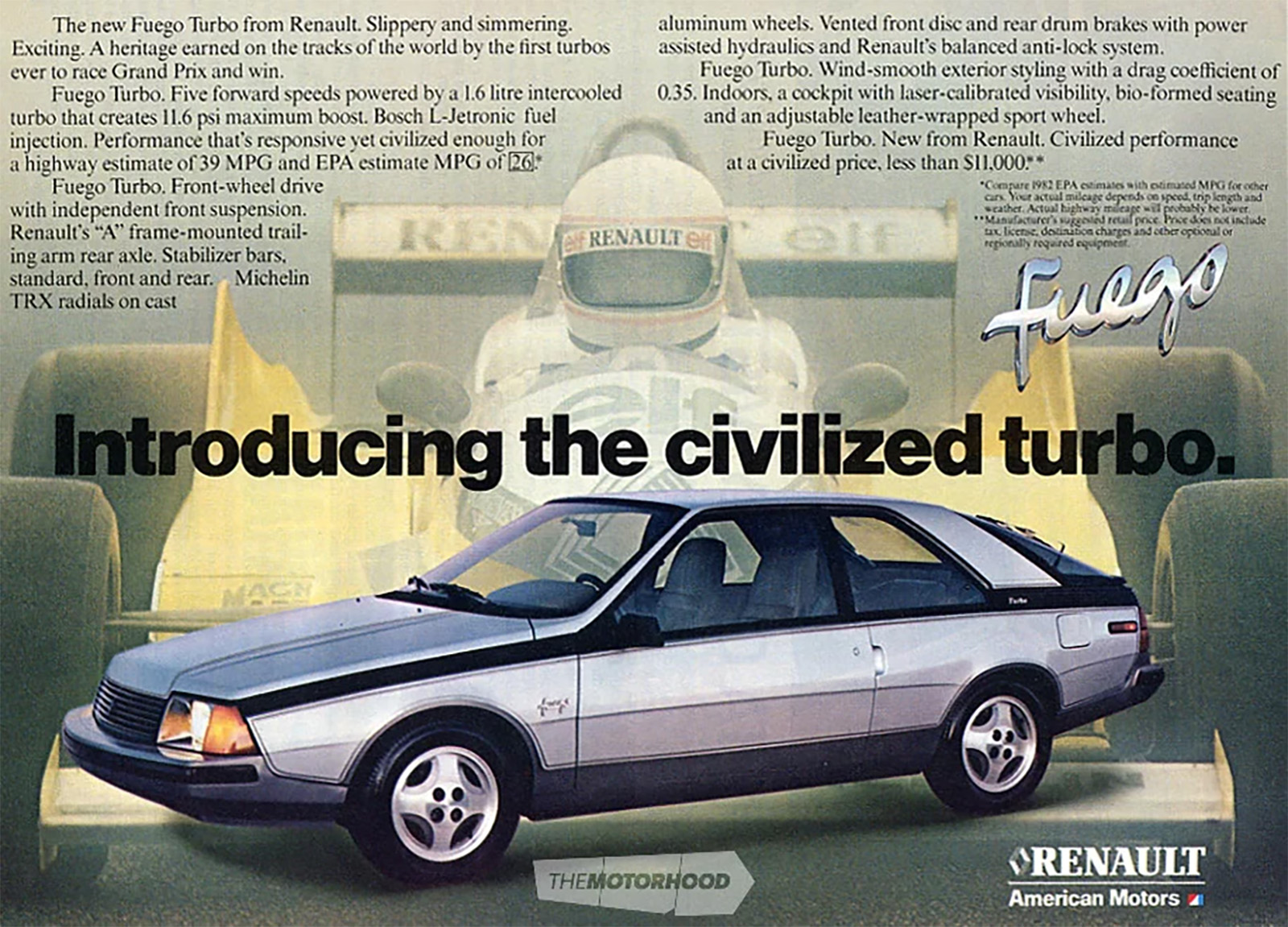
That ad: The AMC ad people really tried to run with the idea that this Renault was more “civilized” than an equivalent SAAB? If this was a European market ad I’d assume it was just continental arrogance but since it’s for the American market I guess it just means it’s slow.
The black ribbed belt was a signature of the designer – Robert Opron, and attempted (quite successfully) to split what was a chubby car into one made from two elegant halves.
This was also made to a lesser degree on other Renaults – the 18, 20,30, and even the 5, not always with ribbed plastic – sometimes with all-around plastic protection or just with stickers
Alfa Romeo sort of copied this with the 75/Milano which had a solid-black belt that sometimes incorporated a rear wing.