


The American electric motorcycle market has been a tough one to crack. Bike manufacturers have been finding out the hard way that riders aren’t really interested in spending tens of thousands of dollars on motorcycles that can’t travel 100 miles on a highway. Now, one of the biggest companies in the business in America, Harley-Davidson spinoff LiveWire, is issuing a warning. Apparently, if something doesn’t change soon to arrest the company’s cash bleed, it might not survive another year.
Electric motorcycle adoption is going well in some parts of the world, like China and India. Out there, where motorcycles are often used as primary forms of transportation, going electric makes a lot of sense. Electric motorcycles out there are subject to lower barriers to entry and enjoy low running costs. Add swappable batteries, strong charging networks, and advanced battery technologies, and I see why riders are ditching internal combustion for electricity. A lot of these bikes are also operated in hyper-dense urban areas where riders don’t really have to worry about highway range.


The situation here in America is different. Here, riders generally buy motorcycles for fun, and the average motorcyclist still owns something with four wheels. The desires of the American rider are demanding for an electric motorcycle. Many riders want to be able to take road trips or to be able to ride all day, even if their typical ride isn’t that.

Electric motorcycle manufacturers have attempted to cater to the American buyer by selling higher-range fare here. However, the current limitations in battery technology make this a risky proposition. The primary way to get more range out of an electric motorcycle is to load it down with batteries. This works, but it also results in a heavy motorcycle that might cost $15,000 or more, and still might go only 90 miles on the highway. Go the other way, and you get a lighter and cheaper bike, but with range that makes riders shrug before they head to their local Honda dealer.
The list of dead electric motorcycle brands is depressingly long. Sondors failed in 2023 and was followed by the deaths of both Energica and Cake in 2024. Other notable failures include Damon Motorcycles, Alta Motors, and Brammo. Erik Buell’s Fuell couldn’t even survive long enough to put its electric motorcycle into production. To Cake’s credit, it managed to get revived this year, but it’s not yet known what that company’s future looks like.

LiveWire, the manufacturer spun off by Harley-Davidson, has managed to stick around for years despite missing basically every sales target and a balance sheet that resembles the sinking of the Titanic. Now, as LiveWire itself is admitting in its Form 8-K filing with the Securities and Exchange Commission, the poor conditions at the company are finally catching up, and it’s not sure if it’ll even make it another year.
High Expectations, Low Sales
Before we get to LiveWire’s SEC filing, let’s take a look at how LiveWire got to this place. At first, LiveWire wasn’t a company, but a division within Harley-Davidson. A dedicated team of engineers spent several years working hard to bring Harley-Davidson into an electric future, and I imagine they were quite proud when the Harley-Davidson LiveWire hit the road in 2019. I know I was stoked for that bike. It’s my favorite electric motorcycle to this day.
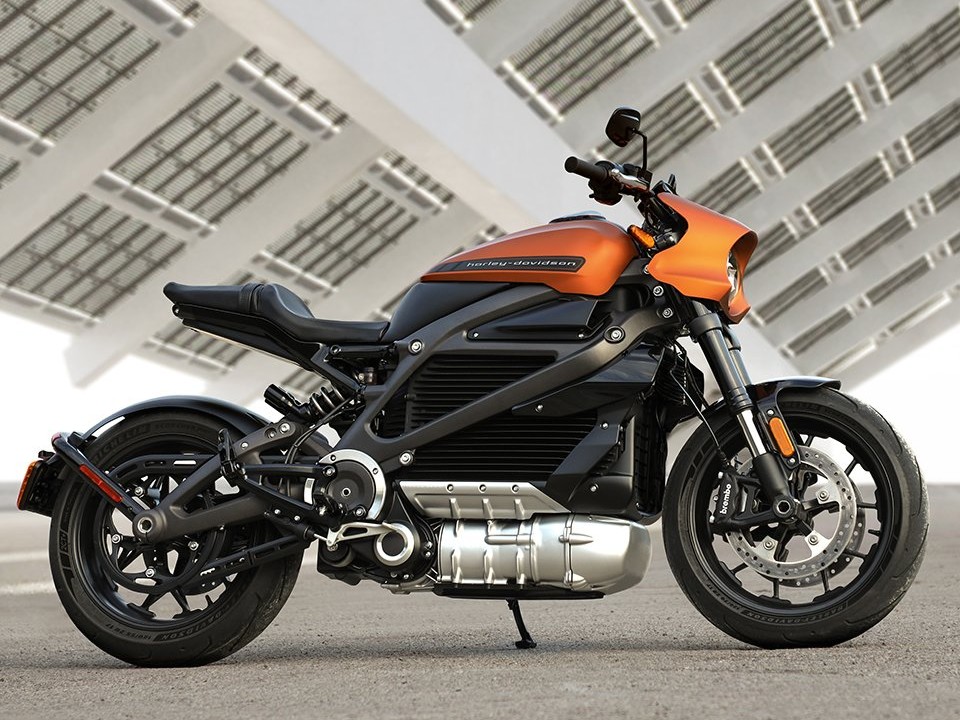
Yet, for everything Harley-Davidson did so right with the LiveWire, even figuring out how to make it loud-ish, the bike’s price was never in the “nailed it” column. The LiveWire launched with a price of $29,799, which resulted in near-universal derision from the motorcycle press and riders alike. Harley-Davidson never released sales numbers while the LiveWire was a member of its lineup. But in 2021, Harley-Davidson dropped the LiveWire’s price to $21,999. Then, in fall 2022, LiveWire was spun off as an independent company.
Since then, LiveWire has made its sales and earnings public, and the numbers have been hard to grasp. In 2021, LiveWire sold 461 motorcycles, followed by 597 motorcycles in 2022. LiveWire’s plan to pump sales up involved the launch of the S2 middleweight platform, which featured motorcycles in the mid-$10,000 range. This did help LiveWire’s situation, but only a little. In 2023, LiveWire sold 660 motorcycles, followed by 612 units in 2024 and 653 units in 2025.
What’s so sad about these numbers is that, back in 2021, Harley-Davidson was so confident in the LiveWire. It projected that it would sell 53,341 LiveWires in just 2023 alone and 100,000 units annually by 2026. To say that the LiveWire experiment hasn’t come close to expectations would be a gross understatement.

These slow sales, combined with the costs of doing business, have meant that LiveWire has burned cash every single year it’s been in business. The company says it lost $85 million in 2022, with losses deepening to $116 million in 2023. Net losses continued in 2024 at $93.9 million and $75.1 million in 2025.
LiveWire has tried to turn the tide in its favor. The LiveWire One, which is the Harley-Davidson LiveWire by another name, is now just 13,999, or less than half the price it cost in 2019. The three S2 middleweights now start at $11,999, while the company’s newest motorcycles, the S4 Honchos, start at $4,999. Deliveries of the S4 Honcho began only in August, so it hasn’t really had time to make a difference. LiveWire does sell thousands of Stacyc kids’ electric balance bikes, but even those aren’t turning a profit.
When LiveWire was spun off from Harley-Davidson in 2022 by a SPAC merger, Harley planned on keeping a 74 percent stake. Since then, Harley-Davidson has increased its stake to close to 90 percent, and has also absorbed many functions of the company. So while LiveWire is technically independent, Harley still has its fingers on the scales.
LiveWire’s Bad October

October was a turbulent month for LiveWire. On the 27th, the Wall Street Journal reported that Chief Executive Officer Karim Donnez resigned the week before. At the time, LiveWire shares were down by 62 percent since the beginning of the year, and the company said that it expected to lose another $80 million this year. Last year, Harley-Davidson said that it was no longer investing in the company, meaning that LiveWire was more or less on its own.
A special restructuring committee was installed at LiveWire, and its first move was appointing Roy Gallagher, senior managing director of Ankura Consulting Group, to be LiveWire’s chief restructuring officer. LiveWire is paying Ankura $140,000 a month for Gallagher’s work. Now, yesterday, LiveWire’s Form 8-K report went public, and conditions are even sadder than expected.
LiveWire says it sold only 358 electric motorcycles by the middle of this year, and only another 241 units were moved in the third quarter. In terms of money, LiveWire says it’s lost $18.6 million this quarter. This is better than the $19.4 million that LiveWire lost in Q3 2025, but it’s not enough of a change. As for the $80 million that LiveWire expected to lose this year? The SEC filing has a statement about that:
As a result of the actions discussed above, including the formation of the Special Restructuring Committee to review, evaluate, and negotiate any debt or equity or other financing, sale, restructuring, recapitalization, strategic transaction or other transaction, we are withdrawing our previously issued guidance of a LiveWire Group operating loss between $70 and $80 million for the full year 2026.
LiveWire Issues A Statement About Its Future

But what’s worse is the bolded subheading that says “Liquidity and Going Concern.” In it, LiveWire says:
Management has determined that conditions and events raise substantial doubt about the Company’s ability to continue as a going concern within one year after the date the Company’s September 30, 2026 consolidated financial statements are issued. The Company’s recurring operating losses, negative cash flows from operations, limited liquidity resources, and anticipated future funding requirements contributed to this determination. The Company continues to evaluate and pursue comprehensive financing and other strategic alternatives, which may include significant capital raises, strategic partnerships or investments, sales, and other strategic transactions, intended to support the Company’s operations and execution of its business plan; however, there can be no assurance that such efforts will be successful or that any such transaction will be available on terms acceptable to the Company, our lienholders or stockholders.
In case you thought LiveWire might have been being a bit dramatic, this report was followed by a statement from Harley-Davidson CEO Artie Starrs saying that there is “substantial doubt about the company’s ability to continue as a going concern.” Starrs also said, “We don’t intend to fund the operating losses of the team going forward. The team there has been working on other forms of capital. What’s been announced has been announced.”
What Happens Next

So, LiveWire is in trouble; there’s no doubt about that. What happens next?
Well, LiveWire’s product portfolio still has some hope. The Honchos have a chance to be successful, and LiveWire says it has some big news for the motorcycle show in Milan next week. LiveWire is also entering into the very lucrative electric dirt bike market after it acquired Dust Moto. So there’s a chance that LiveWire can turn it around. But these new products have to do a ton of heavy lifting to turn the company’s fortunes around.
As for other ways to turn the company around, LiveWire already detailed its plans above, which will combine with the company’s restructuring efforts. Of course, it’s way too early to tell if any of it will be successful.

If I were in charge, I would roll LiveWire back into Harley-Davidson, cancel the LiveWire One, discontinue every S2 middleweight, and focus on the parts of the electric motorcycle market that are doing well. That means bikes like the new S4 Honchos, the scooters it’s teased in the past, and electric dirt bikes. Sure, doing this would make LiveWire a very different company than Harley-Davidson imagined, but at this point, it seems LiveWire is on a ticking clock, and time is running out.
LiveWire shares have fallen 42 percent after this news, and now, LiveWire’s market value is at $193.09 million. The company has a ton of work ahead of it, and, apparently, not a lot of time to do it. As a huge fan of LiveWire, I sincerely hope the company can figure out a way out of this. Can LiveWire be the company that beats the trend of electric motorcycle manufacturers folding? I suppose we’re going to find out.
Top graphic image: LiveWire


Put a fork in it, it’s done. )-:
Harley desperately needs a shot in the arm with new, younger, customers.
Increased costs of living are contrary to a thriving motorcycle market in the US, so I can only expect it to do worse in the near term. Especially with ongoing tariffs impacting cost of business, I don’t see a standalone Livewire business being sustained.
It would genuinely be cheaper and, likely best for the brand, to roll it back into HD and pare down the options as Mercedes suggests. Give it some chance at surviving the next two years.
Motorcycles are the modern Iron Horse – just you, the machine, and the horizon. That’s what Americans buy and you CANNOT change that in a year (or five, or ten).
We have too much “how the West was won” cultural nostalgia for the antihero riding into the sunset on his trusted steed. You’ve gotta sell a buyer on that. I don’t know how how you do that with a battery and no hot swap infrastructure.