


Back in 2019, Harley-Davidson started sales of an incredible machine. The LiveWire, the Bar and Shield’s first production electric motorcycle, looked and rode like it was ripped right out of the future. But with a staggering price of $29,799, few riders took up the opportunity to ride the LiveWire. Now, some seven years of slow sales after its launch, the LiveWire One, as it’s called now, is nearly half the price it used to be. Maybe now is finally the time to ride Harley’s coolest electric bike.
A couple of years after launching the LiveWire, Harley-Davidson spun its entire electric division off as its own company, itself named LiveWire. One of the biggest struggles faced by the LiveWire team, even back when they were a division of the Motor Company, has been getting people to buy their bikes [Ed Note: That’s kind of the problem. -DT]. Consider that the LiveWire One, which has a real-world range of around 100 miles, was priced like a flagship bike. That made it a tough sell. When the LiveWire went onto the market, the same $30,000 it commanded could have purchased you a Kawasaki Ninja H2, which was the fastest streetbike in the world at the time.


As time went on, LiveWire started dropping the price of the One. The first change from LiveWire as a standalone company was to drop the price of the LiveWire One to $21,999. That was a great start, but still a whole heap of cash for a bike with unavoidable limitations. The bike’s price then lingered at around $22,799 for a while before dropping to $16,499 in 2025.

The LiveWire One hasn’t been the only steed to get price cuts. All of LiveWire’s entire middleweight lineup, which includes the S2 Alpinista sport standard, the S2 Mulholland cruiser, and the S2 Del Mar street tracker, has seen hefty drops in pricing, and all of them are in the name of getting people to spend their money on a LiveWire. Meanwhile, LiveWire has also added the affordable S4 Honcho minibike line and now Dust dirt bikes. The company sold only 653 motorcycles in 2025, up slightly from the 612 units it sold in 2024. Previous years weren’t any better, with 660 units finding homes in 2023 and 597 units getting sold in 2022. According to LiveWire’s investor reports, it burns tens of millions of dollars to churn out those hundreds of units, too. For example, LiveWire lost $85 million in 2022, and losses deepened to $125 million in 2023.
It’s sad when you remember that, back in 2021, LiveWire was so confident in itself that it projected that it would sell 53,341 electric motorcycles in 2025. To say that LiveWire hasn’t come close to its expectations would be an understatement. Obviously, something has to change, and LiveWire is pulling the lever that might matter the most: price.
LiveWire has a handful of cheaper bikes in store for riders right now, and perhaps the most impressive price drop of them all is LiveWire’s flagship, the bike that started it all.
Harley-Davidson Showed The World What It Could Do
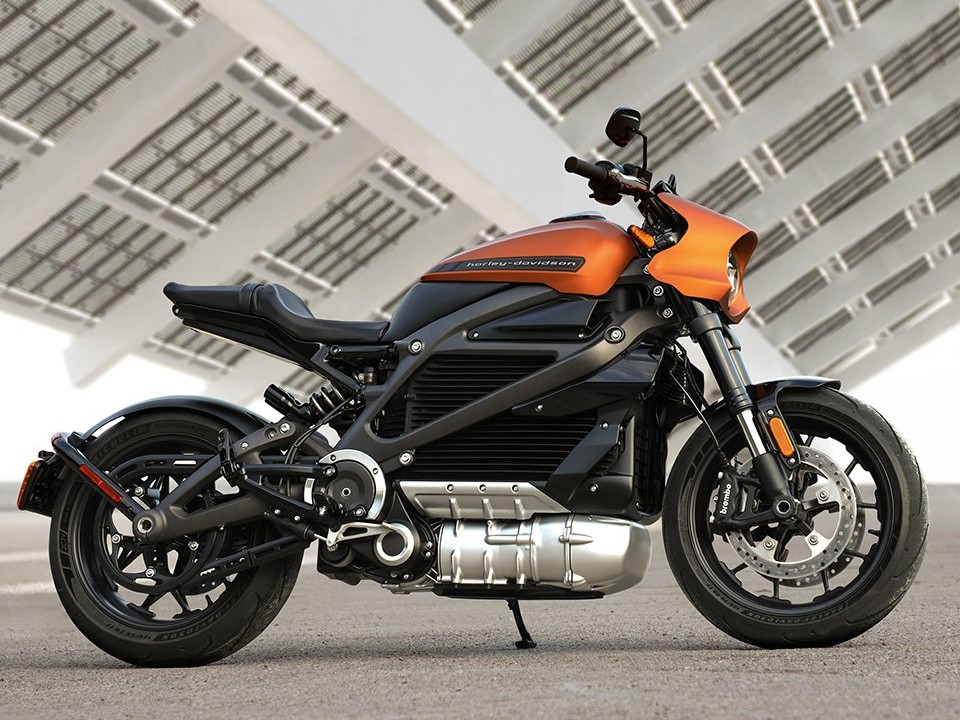
The LiveWire One, née Harley-Davidson LiveWire, was born from a research project that was revealed to the public in 2014. Back then, Matt Levatich was at the helm of the Motor Company, and he saw Harley reinventing itself for the 21st century. Project LiveWire was supposed to be for motorcycles what the electric guitar did to music. This was all a part of Levatich’s grand plan to make Harley more accessible, fresher, and maybe even a technological leader. In true Harley fashion, Project LiveWire was even loud, using a bevel gear in its driveline to emulate the sort of sound that a turbojet makes.
Later, the LiveWire would be one of the halo motorcycles of the More Roads To Harley-Davidson growth plan, which was supposed to finally rid Harley of its associations with “biker” culture and promote a new Harley that was more for everyone. The LiveWire, along with bikes like the Pan America, the Bronx, the Custom 1250, and even an electric scooter, were supposed to pave the way to the Motor Company’s future. Locally, I personally witnessed Harley-Davidson proudly backing Pride rides and even flying the rainbow flag on its social media. Scarlett Johansson swung a leg over a LiveWire prototype in Avengers: Age of Ultron. It was an interesting time, for sure.

The LiveWire would end up delayed, but when it finally launched in 2019, riders all around the world were wowed. I mean, even the press release got me amped up back then:
Power
The LiveWire motorcycle is powered by a permanent magnet electric motor that produces instant torque the moment that throttle is twisted– which results in incredible acceleration performance for a thrilling ride. The motor is located low in the motorcycle to lower the center of gravity and help the motorcycle handle well at all speeds and easy to control when stopped. The LiveWire model is designed to produce a tone that increases in pitch and volume with speed –a new sound that represents the smooth, electric power of the LiveWire motorcycle.
Chassis
Powertrain performance is maximized by a chassis designed to deliver nimble, agile handling for confident control on urban streets and a thrilling ride on curving backroads. Combining the powertrain as a stressed member within the aluminum frame to increase rigidity, the LiveWire features premium high-performance fully adjustable Showa® suspension. The Showa® BFRC-lite® (Balanced Free Rear Cushion-lite) mono-shock rear suspension is complimented by Showa SFF-BP® (Separate Function Fork-Big Piston®) up front, balanced to match the performance and adjustability of the rear shock and deliver exceptional low-speed damping control – ideal for composed control in typical urban riding conditions. To improve the control and performance of the motorcycle further LiveWire is fitted with Brembo Monoblock front brake calipers gripping dual 300 mm-diameter discs to deliver outstanding power with a crisp feel for confident braking performance. Confidence when riding is boosted with cornering-enhanced Anti-lock Braking System (ABS) and Traction Control System (TCS) – both of which are standard features on the LiveWire model – and co-branded H-D/Michelin Scorcher tires (180mm rear/120mm front). The rider can also tailor the performance of LiveWire with seven selectable riding modes – four of which are set as standard from the factory and a further three modes that can be defined by the user.
Technology
A color touch screen TFT display (thin-film-transistor, a type of liquid-crystal display noted for high image quality and contrast) located above the handlebar offers the rider a wide range of information on a screen that’s bright and easy to read. The display unit is tilt-adjustable to afford most riders a perfect viewing angle. The TFT screen also allows the rider to access the interface for Bluetooth connectivity, navigation, music and more. The LiveWire motorcycle features a RESS (Rechargeable Energy Storage System, or the main battery) composed of lithium-ion cells surrounded by a finned, cast-aluminum housing. The LiveWire motorcycle is also equipped with a small 12-volt lithium-ion battery that powers the lights, controls, horn and instrument display. Charging can be completed using the on-board Level 1 charger that plugs into a standard household outlet with a power cord that stores below the motorcycle seat. LiveWire can also be charged with a Level 2 or Level 3, DC Fast Charge (DCFC), through a SAE J1772 connector, (USA), or CCS2 – IEC type 2 charging connector in international markets. All Harley-Davidson dealers who sell the LiveWire motorcycle will offer a public charging station with DCFC.

I still remember my first ride on a LiveWire like it was yesterday. It was 2019, and I was contributing to Out Motorsports just for the fun of the game. I heard Harley-Davidson had a ride event taking place near me, and I wasted no time in getting there. The LiveWire was the first electric motorcycle I had ridden and to date, remains one of the best. I’m still not quite sure how the engineers at Harley did it, but to me, the LiveWire was everything I loved about my Buell Lightning, but all-electric. It was stupid fast, it rode like the pivot point was where my butt was. If I didn’t know any better, I would have thought that Harley secretly put Erik Buell back onto the payroll for one last ride.
The LiveWire had 105 HP and 86 lb-ft of torque available pretty much at a dead stop, and I spent every second on it with a big, stupid smile on my face. Its other specs, including a 110 mph top speed and up to 146 miles of range from its 15.5 kWh battery, also seemed decent. Then my heart broke at that $29,799 price tag.
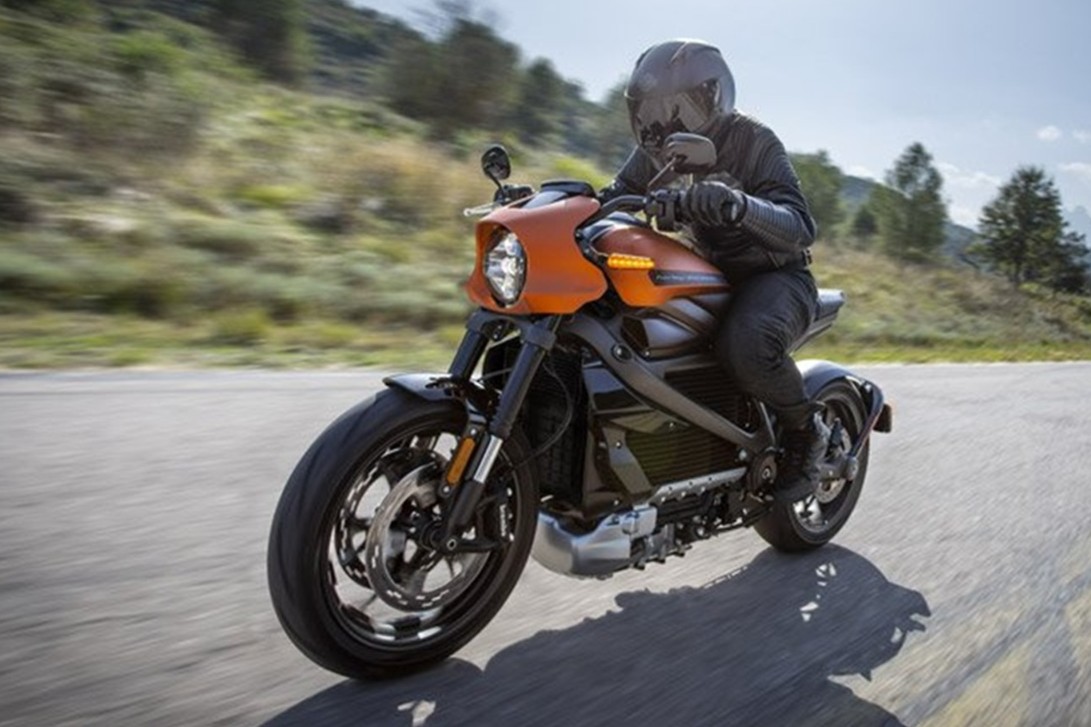
I wasn’t the only one. Motorcycle journalists everywhere adored how the LiveWire rode just to have their excitement totally extinguished by the price. The only way buying a LiveWire made sense was if you were wealthy or you got a good discount in buying one used. The price changes over these past seven years have softened the blow, but even $16,000 is a pile of cash.
That’s ignoring the unfortunate reality that, while the LiveWire One is currently marketed as a “sport touring” motorcycle, it can’t tour unless you have all the time in the world to ride across the country. Doubly unfortunate is that, in my experience, there’s nothing that the LiveWire One does that you cannot get in a cheaper motorcycle. So the primary selling point for the One is to get an electric motorcycle designed by Harley-Davidson. So I’m not entirely surprised that the order books slowed down after an initial rush of early adopters.
Perhaps The Price It Should Have Always Been

But now, after all this time, the folks at LiveWire have a carrot to dangle in front of riders. At a starting price of $13,999 before fees, the LiveWire One is now less than half the price it was when it launched in 2019. That’s incredible. But what are you getting for that money?
Not much about the LiveWire One has changed since 2019. It still makes the same 105 HP, still has the same 110 mph top speed, and still has the same 15.5 kWh battery. The biggest difference between a 2026 and a 2019, pricing aside, is that the tank says LiveWire instead of Harley-Davidson.
So, it’s a seven-year-old platform, which would normally be ancient in EV development time. But its spec sheet isn’t all that bad. The LiveWire One hits 60 mph in three seconds, can charge from dead to full in just an hour, has a 30-inch seat height, and weighs 562 pounds. Honestly, this sounds a lot similar to some of the other electric motorcycles I’ve written about in recent times.

But unlike those new bikes, the LiveWire One has been around long enough that it’s known to be pretty reliable, and while LiveWire hasn’t sold a ton of them, they have a pretty strong support group of owners.
Of course, buying one of these will expose you to some quirks. The LiveWire One can feed from a Level 1 charger, a Level 2 charger, or a DC fast charger, but the catch is that the bike is incapable of actually charging at Level 2 rates. If you plug into a Level 2 charger, it will charge at a Level 1 rate. So, you can either charge in as little as an hour, or in as long as 11 hours. This sucks if, like me, you like to ride through rural areas where the hottest chargers might be Level 2 units.
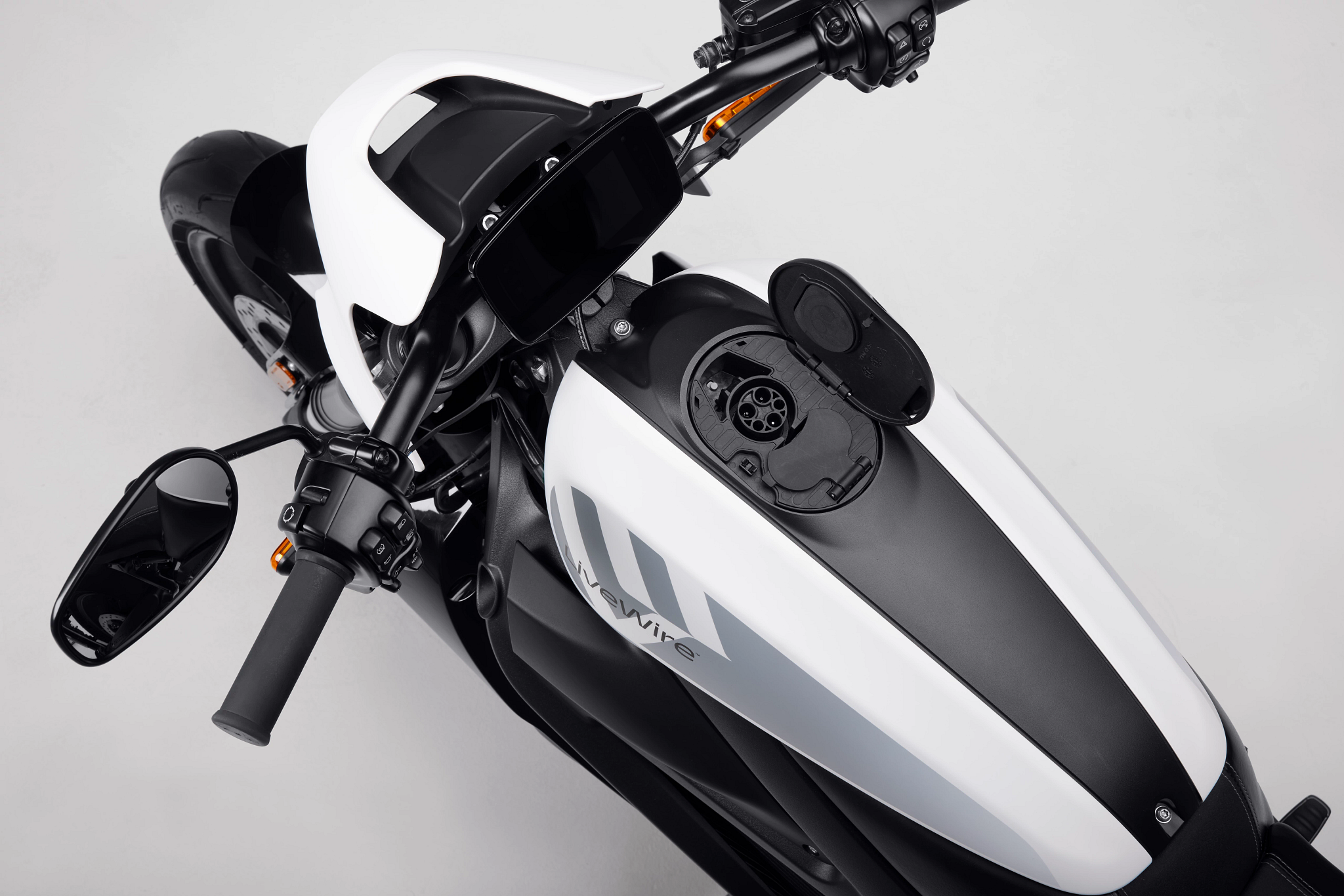
Of course, if you were an early adopter of a LiveWire One, this price drop probably hurts a little. But that’s sometimes the unfortunate risk of being first in line to try new tech. The big question, of course, is if this latest price drop will bring LiveWire the sales it’s been wanting for so many years. Right now, I think that’s too early to say. I think that, at this new price, the LiveWire One might attract some urban riders.
I have no idea if LiveWire’s lower prices and its new affordable electric minibikes will be what finally pumps its numbers up. But I will say that, to date, the LiveWire One remains one of the best motorcycles I have ever ridden, and they’re now getting dangerously close to being within my personal range of “affordable.” That’s exciting. I hope that’s the case for other riders, too.
I also hope that LiveWire finds success; I really do. It probably looks like I’m being hard on LiveWire, but it’s actually one of my favorite electric motorcycle brands right now. I think in another reality, LiveWire could have been the future of Harley-Davidson. Who knows, maybe it still is. For now, it’s just great that the company is moving in the right direction on pricing.




I’ll beat that dead horse till it resurects – very few of the real advantages of an electric car vs an ICE one port to electric motorcycles vs ICE ones. As amazingly innovative as the Livewire looks, it will be even better with a modern ICE in. Would the V-Rod be resurected in that design, no one would ever look at the Livewire.
Once again:
** Electric cars bring supercar performance (in straight line) for regular car pricing.
** Electric motorcycles bring superbike pricing for regular anvil-heavy bike performance (if that).
** Sports bikes are all about power to weight and the normal, standard offering is a very performant ratio.
** Electric sports bikes are not a thing, as performance still lacks, and weight is nowhere where it should be.
** Commuter bikes sip gas and tend to be inexpensive.
** Commuter electric bikes are chased upwards by scooters on the low end and squeezed downwards by overwhelmingly better ICE commuter bikes at lower prices. There’s no bracket where they can exist. Yet.
Grand touring and luxobarging – something here about all the vibes a regular bike brings that electric ones lack – feeling, range, etc.
And so on.
All in all, a Livewire can only grab attention because the V-Rod has been out of production for 9 years now.
The best description of the current electric/hybrid motorcycle folly is a guy from another forum I write in: Guy got a new unsold Kawasaki Hybrid for $6k out the door. He loves it for that price, and is ready to live with its quirks (which are real) for that price. But that’s what – half price or less? How much did Kawasaki lose on that one?
Motorcycles are not cars. The paradigm is different there.
If it had a Level 2 charger I’d be all over it. I’m always bookmarking Harley Livewires on fb marketplace… Ridden demo bikes twice and each time I enjoy how unique it feels.
Sean from Bikes and Beards bought a used one that won’t charge. It’s been broken for years and several HD dealerships have been completely unable to fix it. Parts prices are crazy. The charging unit where put the plug is $9000. Apparently there’s some license dispute between HD and Samsung, who built a lot of the components, and even HD can’t get parts or knowledge about it.
Hard pass.
It’s worth pointing out that the photo at the top shows a woman wearing an unbuttoned jacket paired with a tshirt.
Companies putting out press photos like that deserve to be shamed.
Not going to mention the guy in the plaid suit and sneakers?
This bike’s problem beyond them not selling is why it’s not selling. This feels like the problem Dodge ran into with their EV Charger. Much as the Fratzonic “exhaust” speaker doesn’t sound like the rumble and roar of an ICE V8, the turbojet emulating bevel gear that doesn’t sound like anything like what people are used to isn’t going to cut it either.
The ~100 mile range doesn’t help.
But good luck to them!
I am so tempted. I was super excited about this bike and honestly considered it at $20k. . .
When you see something that was listed at 30k be reduced do 13,999, it kinda makes a fella wonder.
Wait, no, I know what is going on, the executives hoover up all hte profits and don’t care about any long term growth, like most corporate bullshit. Meanwhile the engineers and designers who create it are thrown scraps.
HD offering the Livewire at 1/2 its initial price gives me questions about their entire pricing model.
It’s an over seven year old electronic motorcycle design that hasn’t been selling well. I don’t think it’s the pricing model you should be questioning, but the financial solvency of LiveWire as a whole. This reeks of drastic inventory reduction more than it does of some idea that HD has just had a fat margin on top of it this whole time.
Compare a Gold Wing start price and an HD Road/Street Glide feature for feature. HD pricing is insane.
A properly designed fairing set to increase that range by 25% coupled with the ability to actually charge at level II rates, plus an upgrade to 800V architecture to enable the most out of the fast charge infrastructure, all combined would go a really long way to making it more practical, and wouldn’t cost much more to build.
If it had an honest 130-150 miles range at 70 mph on the highway and could charge from 0-100% in 20 minutes at a Tesla V4 Supercharger, that would be adequate for touring. One could conceivably and comfortably cover 1,000 miles in a 20 hour ride charging when down to maybe 20% and back to 90%, including other breaks, if the route was planned correctly and nothing went wrong.
Doing this would make it look more like a Buell than a Harley Davidson, but maybe that’s not a bad thing.
I’ll take “Claims not based on reality” for $800 Alex. The damn thing was $30,000 when it first came out, and was on the leading edge of electric motorcycles. They didn’t leave out level 2 charging and 800V battery architecture because of a small additional cost. Even adding those things today would be significant costs, especially considering they sell only like 100 of them a year, so they don’t have many units to spread that cost out over.
How many of them they would sell would determine the total additional cost per unit. I was referring to components. EV chargers, motors, and controllers are surprisingly cheap to make in volume on a per-unit basis. Consider how much of that $30,000 price tag was engineering, design, tooling, factory, and marketing costs.
When this bike was designed DC chargers were maxing out a 150 kW and the Livewire can’t even take advantage of that level of charging because the battery is aircooled (like every motorcycle at the time). Liquid cooling adds weight, cost, and bulk. Same with installing a larger AC charger – Zero’s is 20 lbs and takes up a bunch of room.
All things are possible with unlimited funds and size but motorcycles don’t have either. There is a reason that nobody has made a successful large electric motorcycle to date.
As a non-EV engineer, I was slightly confused as why they chose to liquid cool the motor and a couple electronics, but didn’t expand it over to the battery. I know most contemporary E-motorcycles of the time also have air cooled batteries, but they also air cool everything. So they already invested in liquid cooling stuff that generally wasn’t done at the time, but they didn’t go all the way.
Air cooling the battery makes for a much simpler design that is less expensive to build and service. Relative to motors and controllers, modern power-dense batteries tend to make very little heat. The Molicel P42A pack I use in my quad build has never even gotten warm after flogging the thing around. My pack doesn’t have any cooling at all. The drive system uses 12 kW peak and this 90 lb vehicle does 0-60 mph in under 9 seconds, not bad for a “bicycle”. Nothing I do can make the battery warm, because it’s capable of around 50 kW peak, and I’m not using it to anything near its limit. The air-cooled controllers are a different story though: they get hot quickly and prevent me from cruising more than 55 mph, even though the bike is capable of a much higher top speed for short bursts(It’s been up to 82 mph). The controllers are the weak point in the whole system. The motors are air-cooled as well, and have gotten warm to the touch, but only after flogging the thing around hard, racing cars at stoplights.
Not level II or supercharger compatible though, but it doesn’t need to be. The battery in it is only 2 kWh.
20 lbs is not that bad of a penalty for this. Cost is more on an issue, but that becomes less so when you’re not building them in low volume.
I think another $1,500-2,000 added to the cost per unit, and maybe another 30-40 lbs total mass, would go a very long way to improving the bike, so much so that the value added to the product would more than make up for the additional costs imposed, and expand the pool of potential buyers as a result.
Wow, that list goes from “oh, sure” to “wha?” real quick.
Fairing – No problem. Good idea. Aero on bikes is ripe for improvement.
Level 2 – Not sure where you’re going to tuck a 2nd, larger onboard charger.
800V – So a different battery structure, different BCM, different cables and harnesses. Just make a new bike.
Expecting 800V architecture for a 7 year old electric motorcycle design is silly. Sure, hindsight tells us that’s the way things are moving, but back then? Lunacy. Heck, plenty of large battery 4-wheel vehicles are being released today that aren’t even 800V architecture (looking at you Rivian R2).
Plus, I wonder if charge speeds as fast as they want would have required liquid cooling the battery. The One charges from 0-100% in like an hour. Getting that down to 20 minutes is bound to create a fair bit of heat management problem. Especially when the current design requires the bike to be moving to work effectively, and charging means it is standing still.
Good point. Liquid cooling for triple digit kW charging, and battery priming, which I don’t think LW knows much about.
In another comment, I proposed a 220S4P Molicel P60C pack to replace the prismatic cells Livewire uses. The P60C can charge at up to 5C without cooling. You might be able to get away with a sub-20-minute recharge time using air cooling, while doing so from a fast charger. The electronics controlling the pack would be the limiting factor for the charge rate, getting nowhere near the maximum power of a Tesla Supercharger. You would need temperature monitoring at the cell level and automatic shutoff though, because when something goes wrong, it will go very wrong very quickly otherwise.
I don’t believe there’s sufficient volume in the battery pack to fit 800v worth of batteries. It’s 346v now; doubling the cell count to get to 800 necessarily adds cell structural material filling up the fixed volume of the pack, which must then necessarily reduce available cell volume for battery chemistry. It’s a bad suggestion.
They would need to use a smaller form factor battery. The Samsung prismatic cells used are set up as a single series string, which does simplify things a lot, at the cost of a voltage limit imposed on a motorcycle-sized pack.
At 15.5 kWh of prismatic cells though, one could fit in a pack of Molicel P60C, 220 in series, and have each parallel string set up as “blades” as Tesla has done, and it would still be relatively simple. You’d end up with a 220S4P pack of around 19 kWh, the cells alone capable of 400A continuous. You wouldn’t need to use them to anywhere near their peak current, so air cooling would remain adequate. You’d need temperature monitoring at the cell level while charging at a fast charger, but not for level II. The entire pack including housing/BMS plus charge system and any added cooling fans would be around 200 lbs in that case, the cells alone ~130 lbs.
I was assuming a smaller form factor battery, more or less halving the volume of the individual cell to be able to double the cell count. You wind up at least doubling the amount of cell packaging material and if you’re keeping the pack volume constant, that means sacrificing actual battery capacity.
You’d replace the volumetric efficiency of prismatics with round cells?
So the minimum volume of a 220S string is about 5.3 liters; the 4P pack is 21 liters minimum. Divide that by an idealized packing ratio for regular cylinders (91%, I’m rounding a bit here and there but it’s in your favor) = 23 liters at the absolute minimum. That’s just cells, no volume assumed for any of the other non-negotiables like BMS or, indeed, wiring.
I’m looking but not finding any kind of numbers on exactly how large the existing LiveWire battery pack is. But 23 liters feels colossal, and that’s just the cells. I think it gets too big.
As a fully-assembled pack, it would get closer to 25 liters. The one in the Livewire S2 Del Mar appears to be 96S6P to get 10.5 kWh, but that’s a smaller bike. Total cell volume, not counting anything else, for the 10.5 kWh pack would be ~14L.
It’s closer. The can am is about $10k now. I think they both really need to be significantly under $10k for most people to even think about it. They probably won’t have significant buyers for a decade.
The CanAm can rightfully be cheaper. It’s battery and motor are basically half the size. It’s also a newer design.
They range and top speed are close enough to be competitors. Harley built an EV Harley and probably needed to build an EV buell. The can am is about equivalent to a 600cc rotax. The Harley is roughly equivalent to their 1900cc “117” engine.
Youtube “Bikes and Beards” is trying to revive a dead LiveWire. Very few dealers and very expensive parts going bad, perhaps due to the previous owners neglect.
Rebuilding a Mikuni carb for a gas powered bike is much easier.
I loved he found the actual engineer who wrote most of the interface firmware. Then the Harley dealer he goes to all the time goes oh yeah we work on those but not really anymore. Absolute mess and good illustration of why right to repair needs to be mandated. Someone needs to ship a few broken ones to Ukraine they will crack all the modules and it will become less of an issue.
hell, ship them all to Ukraine to make them into T-2 Battel droids.
honestly the disconnect from the Harley dealer network for service and even just charging is likely to be about as big of a misstep as it was for Genesis to decouple from Hyundai. it really results in a purchasing consideration if the De-tethering for the inevitable warranty or even just service is a thing.
Genesis was decoupled from Hyundai because people spending Genesis money expect to be treated differently than a Hyundai dealership offers.
which is true, but also a concern if you go to say a medium to large sized city in one and need an oil change or warranty repair. When you have to have the car towed a 100 miles away when the Hyundai dealer is just down the street is the point I am trying to make is all.
Might be part of it. The dealers aren’t into them and it shows. But the other power sports dealers haven’t been into the electric stuff either. All the manufacturers almost need to go in together to make ev bike service centers. Then do direct sales as well as thorough the dealers. If the dealers still want in let them but make sure they are actually displaying, attempting to sell, and working on them.
I don’t think the live wire buyer is a Harley buyer. Im sure they do the whole here is this girl to show you our store buy some stuff and we can add it on to the loan. They are really a merch store that has motorcycles. It seems like everything Ewen McGregor touches turns to gold. Harley wasn’t ready and didn’t understand the market. They wasted an opertunity. They should have look at what a bmw gs cost in 03 taken half of that then ran it though an inflation calculator to figure MSRP.
The Harley Dealer near me still has a Level 2 charger outside the service door, but sound like that is perhaps not as good of a thing as you would imagine. Still, I would have no idea where to shop a livewire if I wanted one now. and I doubt they still have the special safety stall set up to work on them.
It was handled so bad I don’t think there is the normal we are the largest selling dealer thing happening. Harley really needs to let their dealers sell other brands. If that means helping to bring in Chinese and Indian brands that aren’t being sold elsewhere then they need to do that.
They are just so merch focused I don’t know how they will do that. Plus the dealers have been so problematic. So many have had to close or sell so many the new people are more business savvy less grumpy old dentist.
I think partly they have created a culture that can’t be fixed so they are doomed to fail.
The two hd dealers I know best both went bankrupt and the local ford dealer that has been diversifying bought them. He keeps buying more as more to bankrupt. But he also has a history of selling new brands next to his cars. So I think on some level he is buying these because he thinks they will bring in other brands or he will just open a universal power sports dealer in part and the Harley in the other. He only sells the livewire out of one and that’s the better known more centrally located location. And I know they don’t sell many. I don’t think there are enough live wires out there for most of the dealers that have maybe sold one or two to have a dedicated bay for them.
Mercedes, would you buy this over the S2?
I have ridden a version back in ’14 when they were showing it as “Project Livewire” and didn’t hate it. This is actually not a bad price.
I used to work for a certain public DC charging brand, and I only ever fielded calls from LiveWire owners in NYC or San Francisco. They were nicer to work with than any Mercedes-EQ driver.
What fees? Are they mandatory? If so then add them in and list that number as the price.
Normally I would, but LiveWire doesn’t advertise the fees.
It’s the roughly 100mile range that gets me.
It then takes you hour(s) to get going again; this is DOA to me for anything but dedicated commuting.
I’ve had ICE motorcycles with similar range, but in 5 minutes I can refuel and be on the road again.
This is now a very tempting package. Like schedule a test ride tempting.
The lack of L2 is really limiting, but not surprising, there’s little space on a bike to stuff one.
Still, this is essentially a big jump forward in a 7 year old package. It’s all about the money.
I’m not a motorcycle person, but damn if I didn’t really enjoy the Apple TV documentary “Long Way...” series with Ewan McGregor & pal Charlie Boorman. It’s the third “season” of the series, “Long Way Up” that features the LiveWire, but I strongly suggest watching them in proper chronological order, with the first of the series “Long Way Round”, then “Long Way Down”, “Long Way Up” and finally “Long Way Home”.
https://tv.apple.com/us/show/long-way-up/umc.cmc.1nv0tluok21c2f8549mdjqdnh
Worth watching with the free 7 day trial if you don’t have Apple TV. In Order:
https://tv.apple.com/us/show/long-way-round/umc.cmc.13c4zk3hpybm6u0cfk1x0vyi
https://tv.apple.com/us/show/long-way-down/umc.cmc.cal17ey3zhv2lx3xkzjqjstb
https://tv.apple.com/us/show/long-way-up/umc.cmc.1nv0tluok21c2f8549mdjqdnh
https://tv.apple.com/us/show/long-way-home/umc.cmc.26p8x4co2wl0ztetek4gmkf6r
I rode a Livewire back in 2019 and thought it was a fantastic bike let down only by the price. It would work perfectly for my commute but $30K was WAY too much for a city commuter bike. At $15K there would have been a very strong chance I would have bought one as I had a very positive experience with my 2016 Spark EV.
I also knew it would be a struggle for Harley as the salesman that did the demo knew nothing about the bike and had no interest in it. I was also yelled at and heckled by other Harley customers out in the parking lot. This was in very EV friendly Portland, OR.
EDIT: The Livewire was also proof that Harley could make a bike that handled well and have good brakes. I had hope for the Bronx but that bike never made it to markets and the excellent Revolution engine is stuck in a cruiser frame with no suspension or the Pan Am ADV bike that is the price of a BMW GS but only about 80% finished.
Let’s face it, H-D’s biggest error wasn’t pricing the bike too high, it was not building in a subwoofer for fake motorcycle noises big enough to wake everyone within a 1-city-block radius, because I swear that’s half the reason people buy them.
They could have even beat Dodge to the farttronic name. Now they would have to call it some dumb like hoggin around sound.
Once you think of Harleys as musical instruments playing in a very specific musical sub-genre, everything starts to make sense.
I’ve ridden one of these… I love a lot of things about it, but not seating position. It’s very ‘muscle bike’.
Did they ever fix the display issue? Last I heard they were failing at a very high rate.
I assumed the seating position was rough because, as the kids used to say, I’m “big boned.” A little relieving it’s not just me!
As for the display issue, HD apparently has a fix for it under TSB M1704, which appears to be the same screen that LiveWire has been using since a 2024 revision. Time will tell if that does the trick long-term.
“the bike is incapable of actually charging at Level 2 rates.”
So it can very fast charge or very slow charge but it can’t very Goldilocks charge?
That’s a strange omission.
It is the reality of fitting an EV charger in the very limited space of a motorcycle. For AC charging (Level 1 / 2) the charger is located on the bike and the faster the charge rate the larger that charger has to be and the more heat it has to get rid of. with DC charging (Level 3) the charger is outside of the vehicle and the only hardware on the bike is the large positive and negative cables from the outlet to the battery.
Zero motorcycles charge at 3kW like the Livewire but also have an optional Level 2 charger that is 6kW that goes under the “tank” cover but to get it you have to give up 3.6 kWh of battery
7 years ago I thought is was a mistake for Harley to offer DC charging instead of 6.6 kW AC charging. At that time there were less than 1,000 DC CCS chargers in the USA. Today there are 74,000.
Well I’m not an electronics engineer so I can’t say if it’s an engineering limitation or a cost cut. Given the sky high original asking price had I been a potential customer I’d have expected full level 2 charging unless it was actually not physically possible for the technology of the time or within the budget of even that eye bleedingly high asking price.
Then again I also expect batteries in my cell phones to be swappable. Funny how that used to be a normal feature and now it’s not for, you know, *reasons!*.
Cell phone batteries aren’t swappable because they increase volume, increase weight, reduce reliability, make waterproofing more difficult and aren’t needed by essentially all customers. If they mattered that much, someone would make a mainstream Android with them.
That’s weird since I am still rocking my 10 yo flagship LG with a swappable battery which is no bulkier or heavier than a modern phone with an equivalently sized screen. In fact I’d say screen size is much more responsible for phone bulk.
I’d keep my LG forever, or at least as long as 4G is around except LG abandoned my phone with Android 8.0 as the last official update. The hardware is certainly capable of running a modern android OS but LG has not released access to certain key features. That’s not a technical problem but a company policy problem.
I don’t see how swappable batteries can reduce reliability at all, especially since if the battery is a swappable component you can fix a failed battery in 5 seconds with no tools for about $10 and carry several charged batteries around to fix a drained battery in the same time. Swapping batteries is easy enough even a toddler can do it. That INCREASES reliability.
My older Samsung Galaxy S5 was also a flagship phone with a swappable battery yet offered IP67 water resistance. So I don’t see swappable batteries as being a deal breaker for that feature. The USB and 3.5mm ports were the bigger concerns for water intrusion.
As to being not needed I have found that feature extremely useful, so much so it’s a top feature I look for.
As to being not needed I have found that feature extremely useful, so much so it’s a top feature I look for.
Great news! I found one, the Samsung Galaxy XCover6 Pro!
https://www.gsmarena.com/samsung_galaxy_xcover6_pro-11600.php
It even has a 3.5mm port. Unlocked refurbished examples runs about $130-$160 USD.
This is all BS from the cell phone manufacturers. The real reason is they want you to buy a whole new phone when your battery dies.
Yep!