


Summer is coming, which means that many Americans will start to bake under their motorcycle jackets as they commute to work. If you’re riding a motorcycle propelled by internal combustion, it can feel like you’re in an oven as you’re hit from the heat of your bike and the heat of the air around you, and riding in extreme heat can lead to exhaustion or heat stroke if you’re not careful.
There is gear out there to help make your rides cooler, but I think I found what’s possibly the weirdest gear idea I’ve seen in years. This is the Chiltier pod and vest, and it uses a technology found in tiny refrigerators to keep you cool or, alternatively, warmed up, while you’re on a motorcycle.


Chiltier isn’t the first to add cooling capabilities beyond ventilation to riding gear. There are also vests that you can submerge in water or fill with ice packs. More elaborate than that are vests that feature a cooler and pump to circulate chilled water around the rider. Here’s what an Alpinestars evaporative cooling vest looks like:
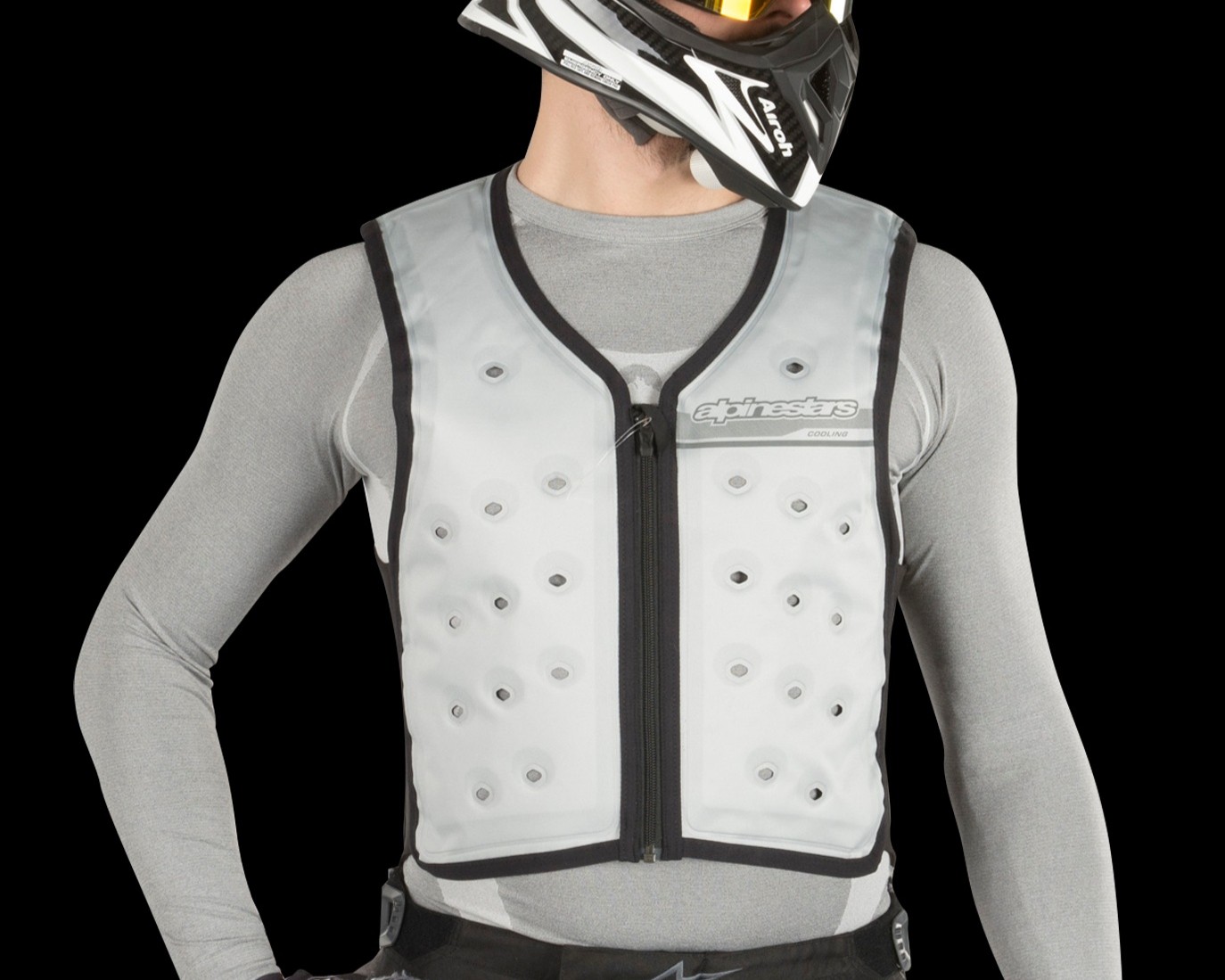
Most of those vests have a sort of limitation. Those that use ice packs lose effectiveness as the ice melts, and those that work on evaporative cooling will have to be rewetted periodically. Evaporative-cooled vests also don’t work well in high humidity. The ones that are just refrigerators that you mount to your motorcycle cost $1,500 and up.
Of course, some of those above issues can be solved in minutes. But what if you didn’t have to worry about ice, bladders, or ice packs? What if you had a vest system that had the capability of keeping itself cool and had no compressor?
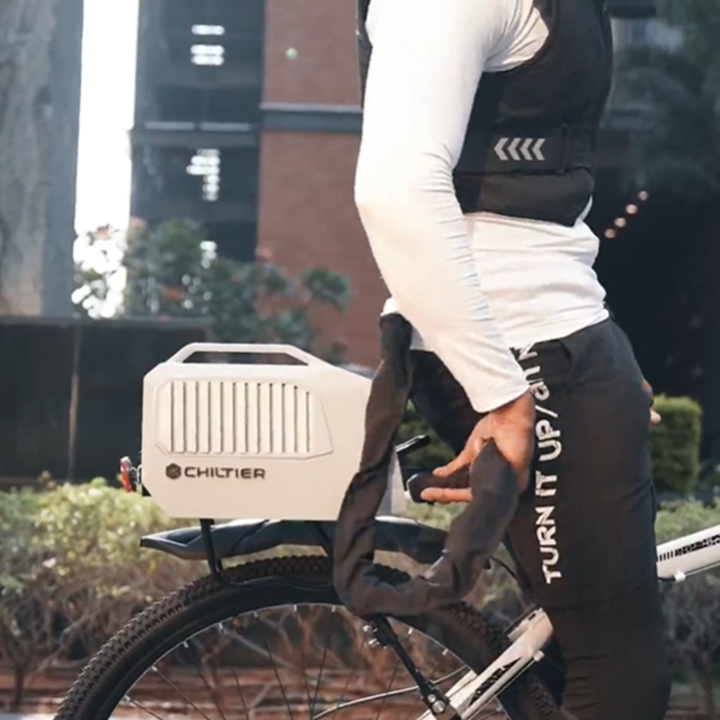
That’s the future being promised by the Chiltier by Psyxi Machines. This gadget doesn’t need ice because its cooling comes from a Peltier cooler, also known as a thermoelectric cooler. This is the same technology often used in tiny refrigerators, and can also be used to warm you up, too.
Solid-State Cooling
The Chiltier brand was founded in 2023 in New Delhi by engineer Kulpreet S. Sahni. Something a bit fascinating about Sahni’s history is that he’s spent the past two decades as an engineer in the gas, oil, and ship design industries. Apparently, the idea to make a personal climate system that heats and cools itself came when Sahni was analyzing conventional air-conditioner systems. Sahni believed that air-conditioners are inefficient because they bring down the temperature of an entire room rather than an individual. Remember this, because it will be relevant later.

The decision to make this system a vest came after Sahni found himself frustrated getting overheated while trying to play golf. He thought that there just had to be a way to give a person air conditioning, no matter where they were. So, Sahni combined his belief that compressor-based air-conditioners were inefficient with his desire for personal cooling.
Sahni’s solution was to turn to a proven technology, the Peltier cooler, also known as the thermoelectric cooler. It works on the Peltier effect, which was named after French physicist Jean Charles Athanase Peltier, who discovered the phenomenon in 1834. In the Peltier effect, a current is passed through the circuit of a thermocouple. Heat radiates from one junction while it is absorbed at the other junction. The U.S. Department of Energy explains further:
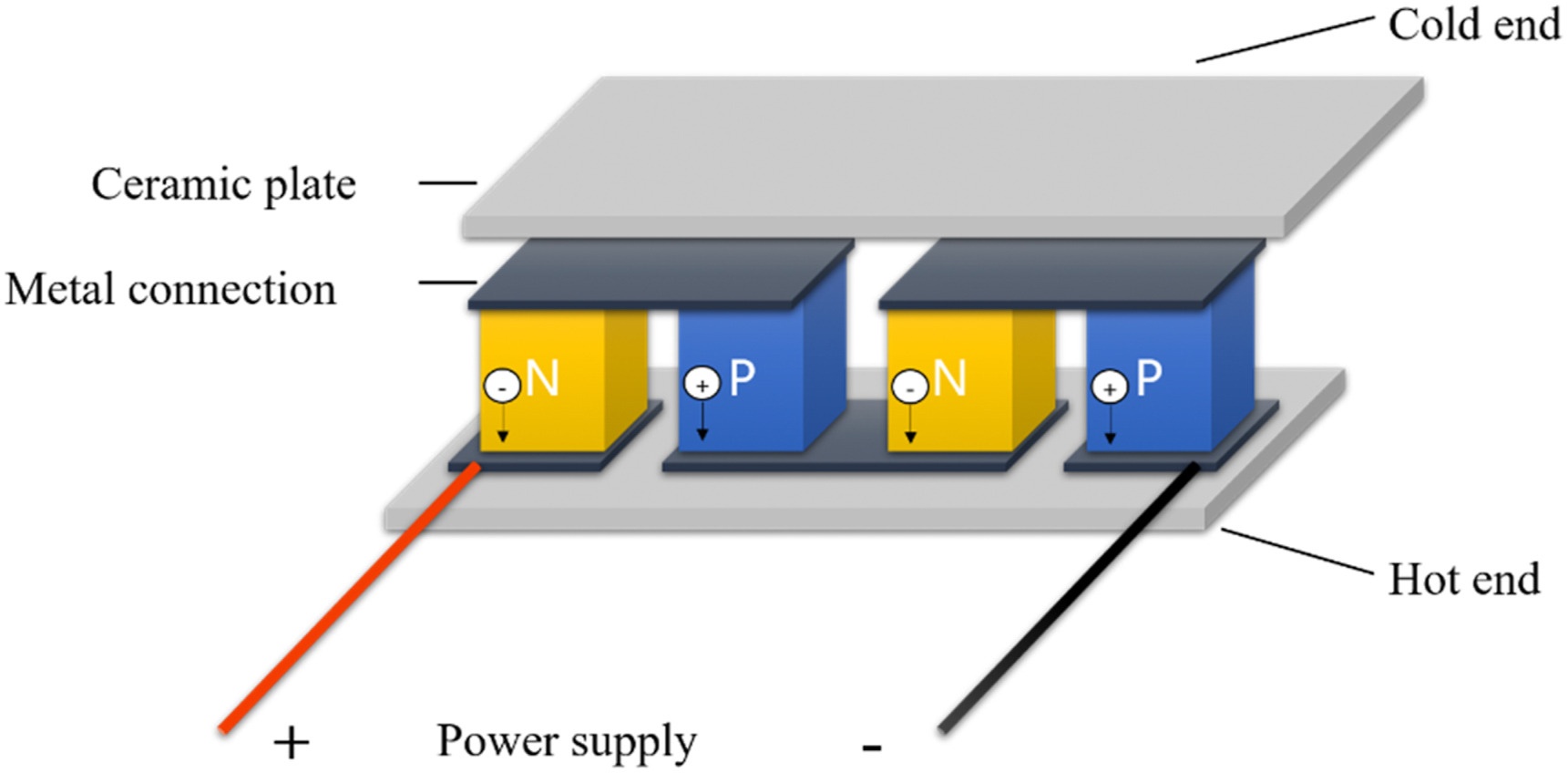
As their name suggests, thermoelectric cooling systems rely on electricity flowing through two different types of conductors – such as different types of metal like copper or zinc. When DC voltage is applied and direct current runs from one conductor to the other, there’s a change in temperature where the two conductors join. When this small thermoelectric effect is multiplied by creating junctions between two ceramic plates, a cooling effect strong enough to keep appliances and computers cool is created.
One plate is the “cool side” while the other is the “hot side.” The cold side goes inside an ice-free cooler or wine refrigerator, while the hot side is connected to metal fins that act as a heat sink to help dissipate excess heat on the outside of the appliance. Thermoelectric cooling (TEC) is also known as solid-state cooling, because there is no liquid refrigerant running through the machine. Instead, solid metal is used to transfer thermal energy.
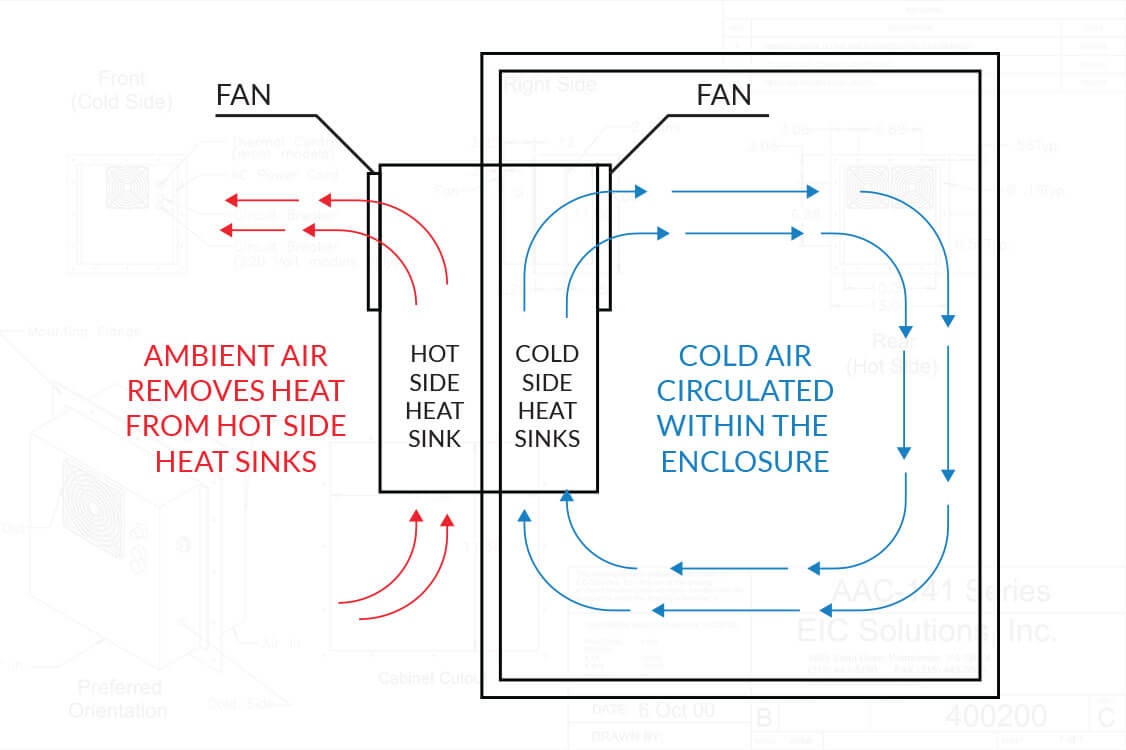
In general, TEC works best in small spaces, particularly for electronic devices where there simply isn’t enough space to put a compressor-based cooler. In a small size cooler, these systems are also quite efficient and may use less electricity than a compressor-based unit of the same size. Thermoelectric cooling also allows for very fine temperature control, to within 0.1 degree under certain conditions.
There’s a good chance that if you’ve purchased a tiny refrigerator or wine cooler before, you’ve encountered a device that runs on a Peltier cooler. Some of these devices can also use their TECs to turn the refrigerator into a warmer, too.
Like A Mini Fridge For Your Motorcycle
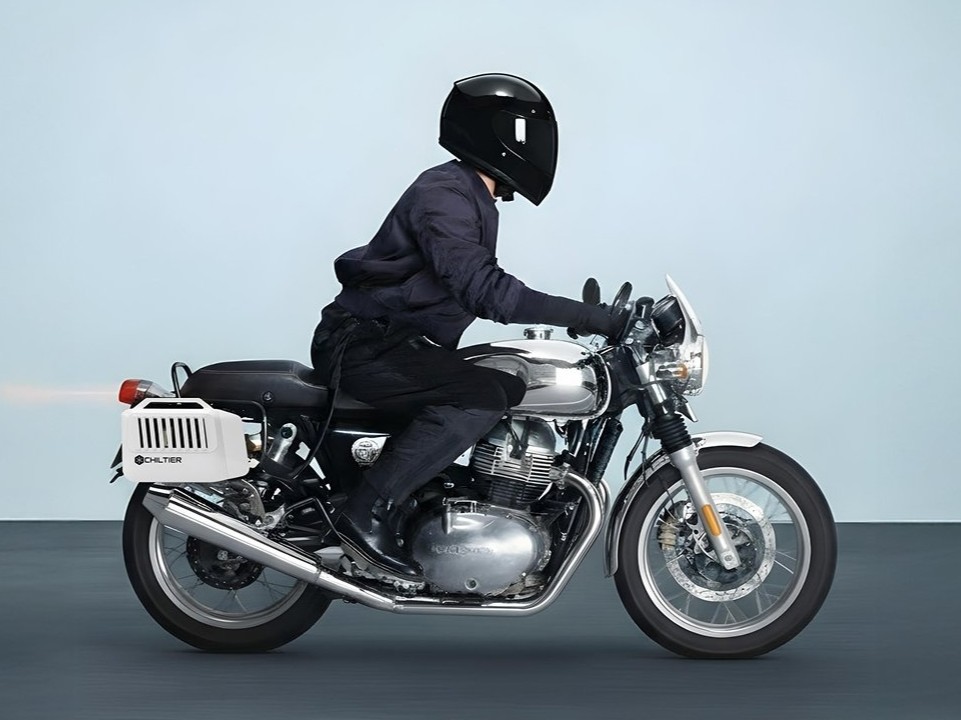
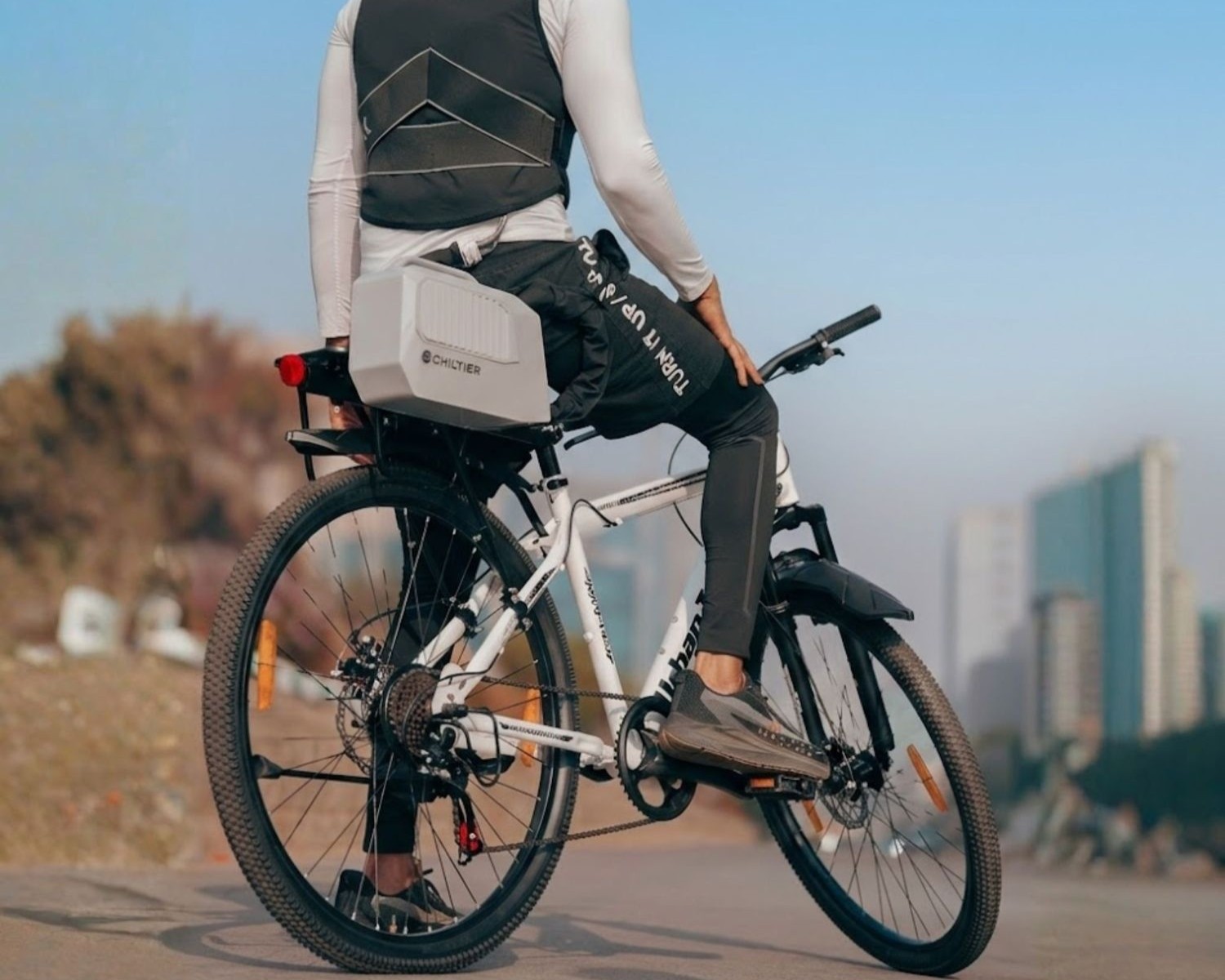
Sahni has spent the past eight years taking a Peltier design and packaging it into a vest that can warm or cool its wearer. The Chiltier is targeted primarily at motorcycle riders, but the brand sees itself creating versions for bicycle riders, hikers, construction workers, or anyone else who might want to stay cool or warm on the move.
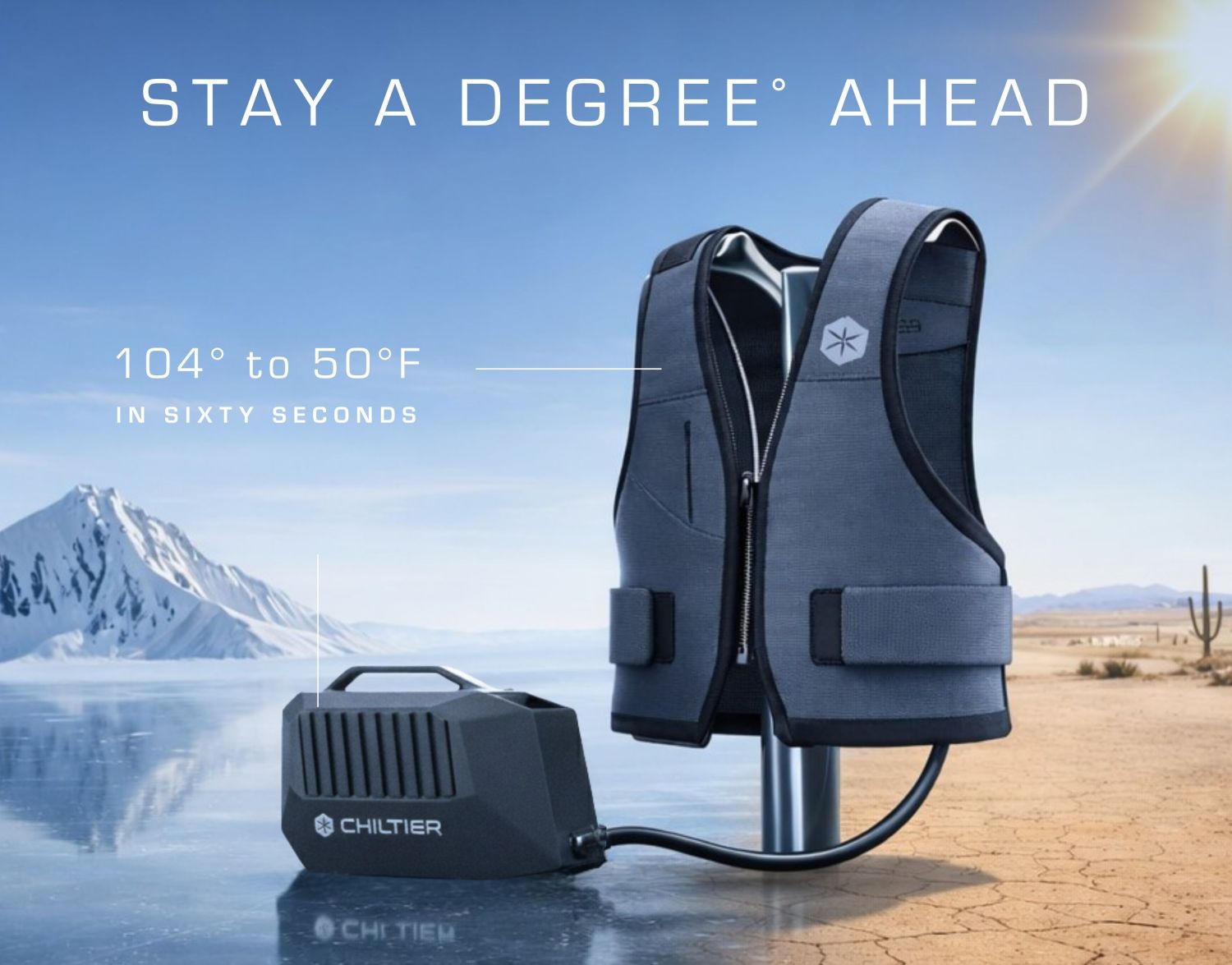
Chiltier’s design is a weird combination of existing ideas. The part that cools the wearer is the Hydro Vest, which has water-based cooling pipes in it. This is similar to the aforementioned vests. Chiltier believes that fluid pipes are more efficient than fan-based systems.
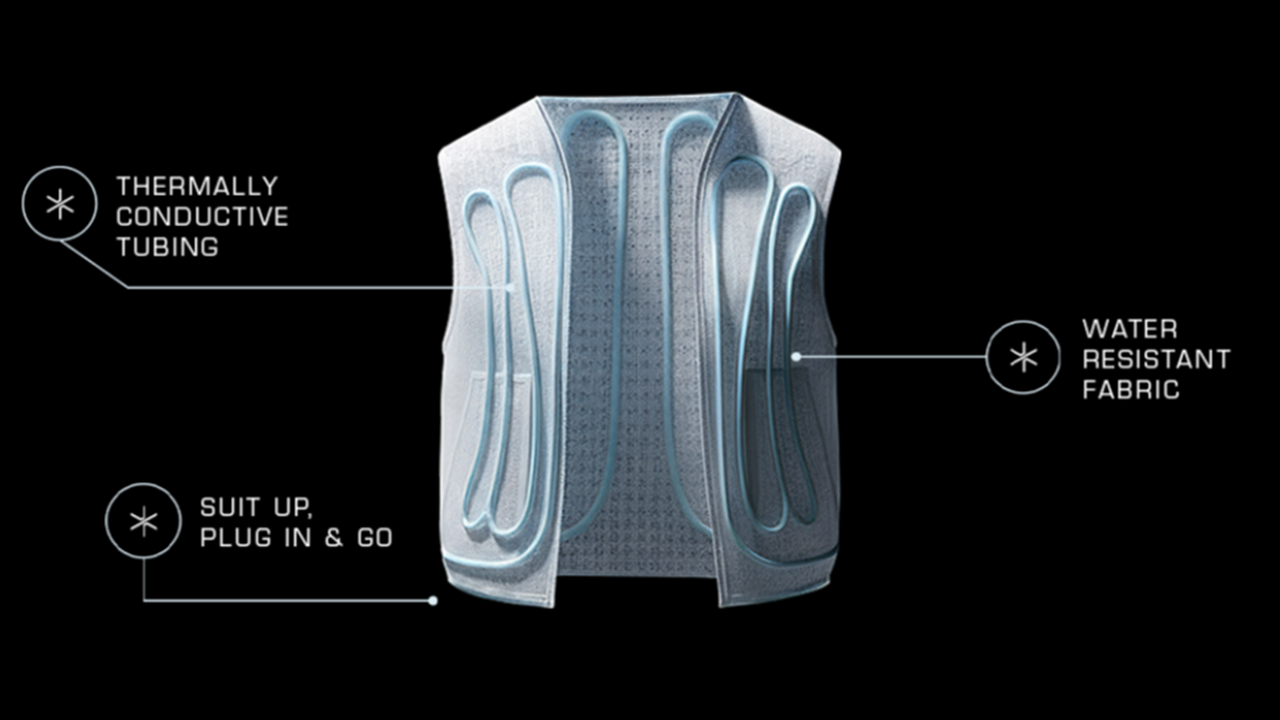
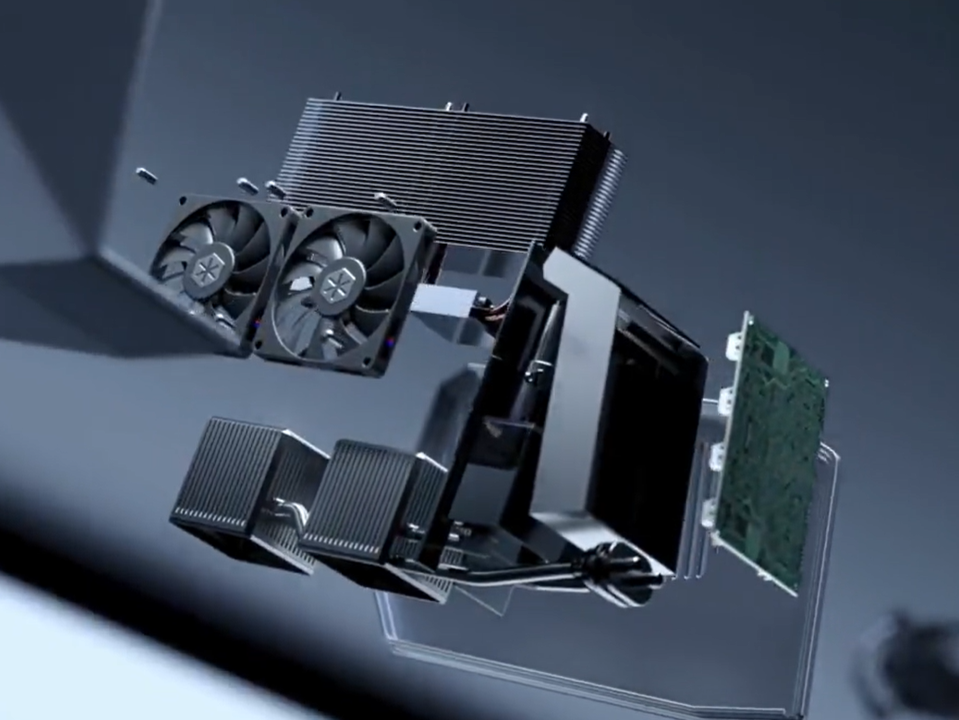
Attached to the vest is a set of pipes that connect to the Thermo Pod. This device contains a couple of Peltier coolers, a couple of heatsinks, a pump, two fans, and a control board. Power input is 12 volts DC, either from a battery or the motorcycle’s electrical system.
This module more or less does the same thing as the ice cooler of some other vests, but without ice. The pump circulates fluid from the cold or hot side of the Peltier modules and through the vest. Chiltier expects you to mount the Thermo Pod to your motorcycle or bicycle, and then connect the vest and yourself to the unit through the pair of tubes. It looks properly goofy, for sure.
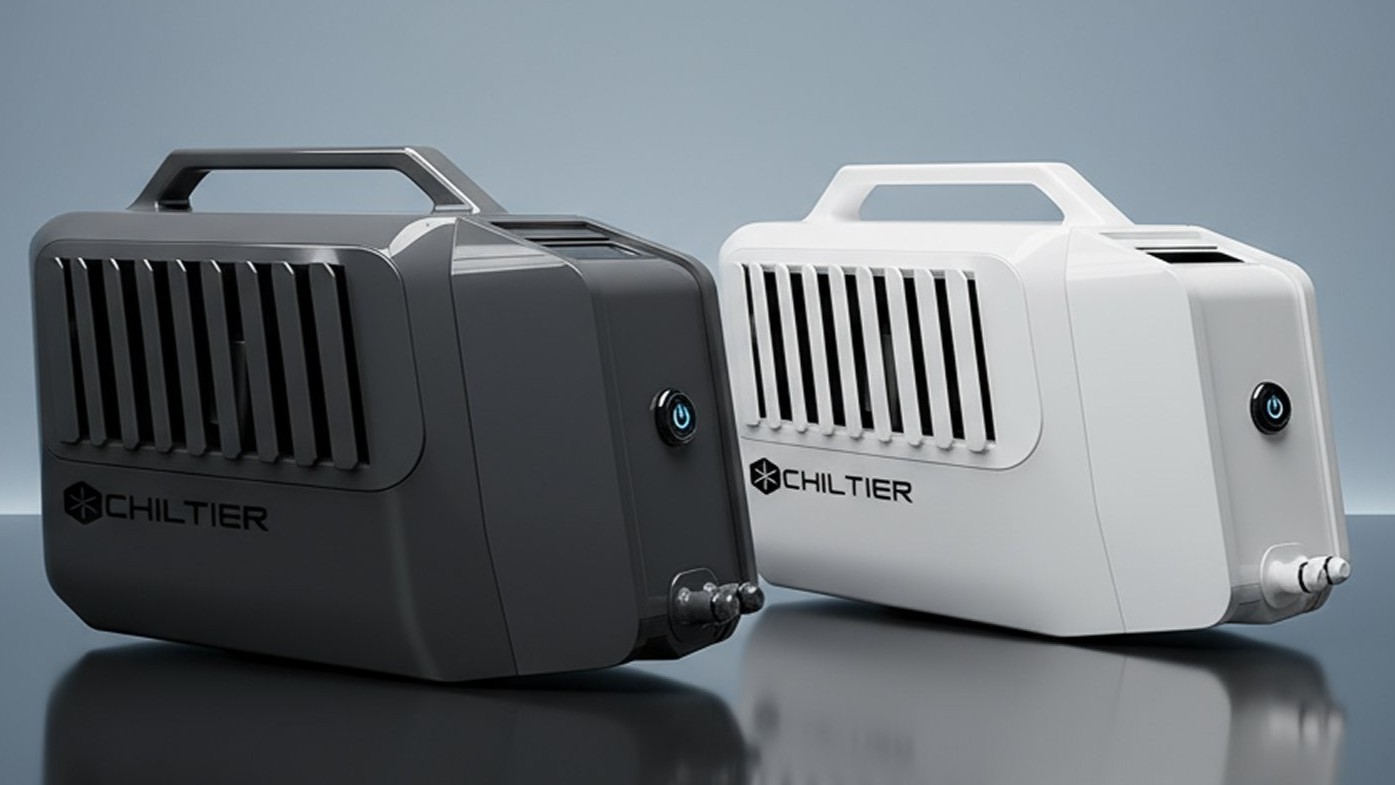
Chiltier claims that its system consumes 10 percent of the power of a compressor-based air-conditioner, but few specs are provided. Chiltier says that the unit’s peak consumption is 132 watts. It also puts out less than 20 dB and weighs around 2.2 pounds. The Thermo Pod also measures 12 inches long, four inches wide, and 7.8 inches tall. The vest and tubing hold 300 ml of fluid. The company believes that the system will run for four to eight hours on an unspecified battery.
Chiltier makes some huge claims. The brand’s website says, “The world’s first wearable thermoelectric system that heats or cools your body in seconds.” Graphics also claim that the vest goes from its upper limit of 104 degrees to its coldest limit of 50 degrees in one minute.
This sounds awesome at first. I remember when I tested the new Can-Am Origin and Can-Am Pulse in Texas on a 114-degree day. I was extremely heat-soaked by the end of the day. Covering myself in water offered only a temporary reprieve, and it was so hot that, even with my vented jacket, it felt like I was riding in an oven. So, I get the appeal of something like this.
A New Flavor Of An Old Idea
Peltier cooler-based vests already exist. Some of them don’t have the liquid tubes and instead use fans. But I did find at least one vest that used a Peltier cooler, a pump, and liquid pipes just like this one. That vest doesn’t place the cooler and pump in an entirely separate unit. So, I’m not sure Chiltier’s claim about being the “world’s first” is entirely accurate.
Chiltier isn’t even the first company to take a swing at this idea. In 2018, a team of French engineers invented the Chill Ride. This vest uses liquid tubes and features heating and cooling like the Chiltier. However, that device didn’t use a box with Peltier coolers in it, but heat exchangers and a heater bolted to the forks of a motorcycle.

Back in 2014, EntroSys teased its BikeAir system (above), which attached a compact air-conditioner to the tail of a motorcycle and pumped the cold air into the vest through a tube. Yes, this was a real air-conditioner for motorcycles! So far as I can tell, neither the Chill Ride nor the BikeAir entered mass production. However, you can buy Peltier cooler vests today.
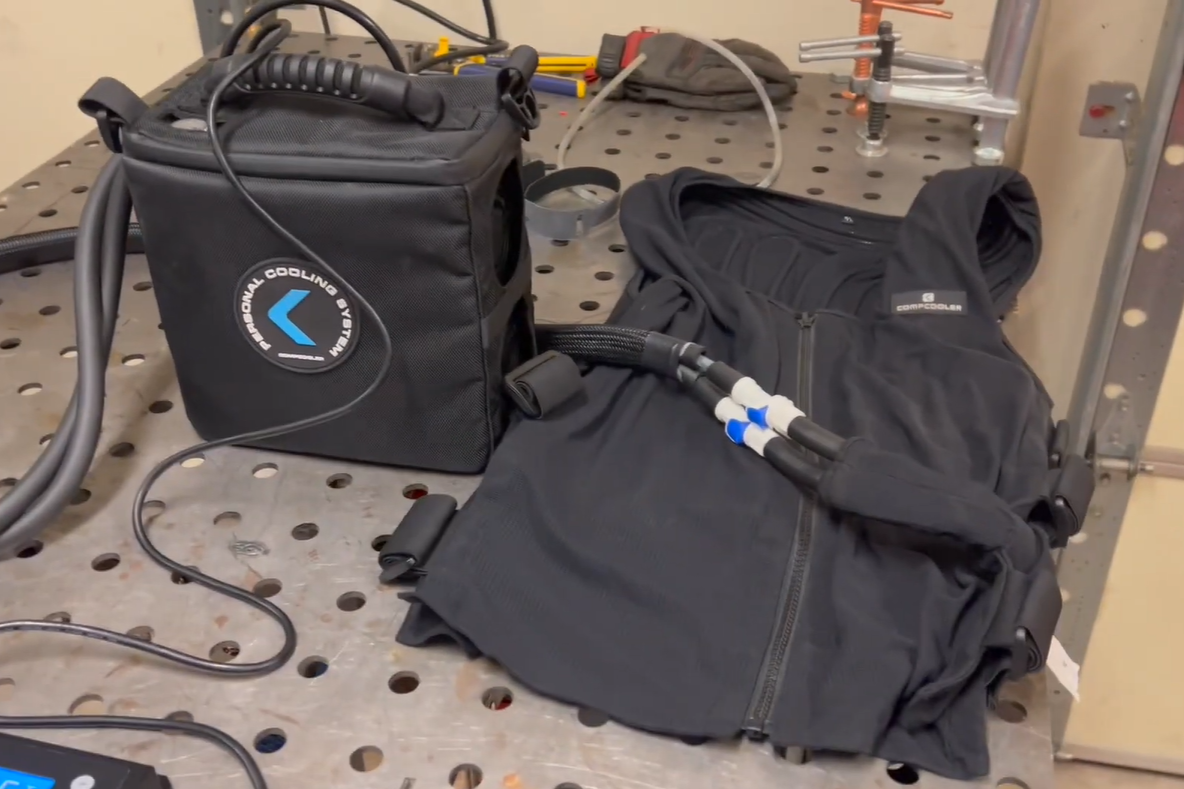
You can even buy a spectacularly expensive vest that has water pipes and a mini compressor-based refrigeration unit attached to it. Here’s what a thermal chiller vest from Compcooler looks like:
Either way, this idea has been pitched by various companies and designers for more than 16 years now. Something I’m curious about, and something that hasn’t yet been addressed by Chiltier, is what happens in a crash. Will the tubes just pop out? Will this require a special mount to fit onto a motorcycle?
Then there was that whole efficiency claim made at the start of this. As a reminder, Sahni thinks air-conditioners are inefficient. The sort of hilarious twist is that Peltier coolers are known for their rather horrible efficiency. There’s a reason why your kitchen’s refrigerator isn’t using this tech. But wait, there’s more! From the U.S. Department of Energy:
TEC is entirely dependent on the ambient temperature for its ability to cool. Unlike a compressor system, which can maintain sub-freezing temperatures in certain applications, a thermoelectric device can only bring down the temperature to a certain point below room temperature. This may not be a problem indoors if you have central heating and air conditioning to limit extremes in temperatures, but the temperature difference can be a big deal in RVs or camping applications. While thermoelectric cooling does offer fine temperature control, it’s crucial to understand that this is only within the range allowed by the outside temperature on any given day.
Thermoelectric coolers also don’t dehumidify the air around them. The ceramic plates simply transfer heat away from one area and into another, leaving the moisture content of the air intact. This is wonderful when dehumidifying may not be a desired result; for example, cigar humidors which should stay quite moist as they cool. Since TEC doesn’t have any influence over the humidity levels in a humidor, it is much easier to keep humidity levels steady without having to constantly add moisture to keep up with a compressor’s dehumidification. In cold climates a thermoelectric cooler can also be run in reverse, which will allow it to operate as a heater to maintain the perfect temperatures for cigars all year round.
Coming Eventually?
To say that another way, Peltier coolers don’t work as well in the extreme heat conditions that you’ll likely want to use them in while riding a motorcycle. It’s possible that, by using more than one TEC and having the tubes, the Chiltier will remain cool on a really hot day. However, Chiltier offers no real explanation of its device’s actual performance.
Chiltier is expecting to put its device on Kickstarter in the coming days, with a launch possibly sometime this year. Apparently, the company has taken in no external funding at this time, and Chiltier has a total of four employees. Pricing hasn’t been announced yet, but the company is directly targeting the U.S. and European motorcycle markets.
Admittedly, I’m not all that sold on the Chiltier. I don’t want to attach an inefficient mini fridge to the back of my motorcycle, and existing cooled vest solutions seem to work fine for most riders. However, the idea of a motorcycle “air-conditioner” is fascinating. Of course, this is a super tiny startup that’s going to rely on Kickstarter, so it could also be entirely vaporware. But at the very least, it is fun to think about. If you ride a motorcycle, hike, or ride a bicycle, would you strap a Peltier cooler to yourself?
Top graphic image: Chiltier


Hi Mercedes,
Love the totally appropriate name given what you do.
Also, I appreciate being featured in an article that our PR company didn’t initiate, saves money.
Please allow me to answer a few of the questions you have raised, not to change your mind, but just to clarify what we are doing.
I don’t think we ever said that we use 10% of the power of an AC, thats physics 101, given the COP difference. A 1.5 Kw is the size of a room aircon. If we did at any point that’s unfortunate and was not cleared with me, and I apologise.
With regards to the system, what we have tried to achieve, and broadly succeeded in, is ensuring that the Thermopod enclosure has a microclimate a few degrees below ambient using a mix of passive and active cooling including a forced air system when the Bike is in motion. That allows the ΔT to be maintained at below 20C (68f) which is a good zone to be in. Any colder and your body enters into heat preservation mode and in essence the body and the system are fighting each other. Anyone who uses an ice vest will no doubt be aware of this issue. Brute force cooling is not the answer according to us, its better to let the two systems work together. We have tried to build a system which has as little thermal resistance as possible.
The tubing, or micro-channels in the latest iteration are made from an extremely conductive polymer developed by us. This combined with a conductive T shirt means the choke point is actually our skin, which conducts at 3.5W m/K, less than our tubing. The round structure of existing tubing means a lot of liquid has to be cooled, meanwhile, we use less than 200ml in the tank. We have a phase change based coolant that is safe and hypoallergenic, amongst other things. All this took a while. The tank and tail bags will have a PCM layer, and heat reflective coatings all around. We are also trialling a system using a selective emitter material that reflects heat back into space ( ultimate Uno reverse card). All these give use minor increments in cooling and efficiency.
We have built a portable and modular system, and this is just one use case. We have started the process of FDA approval for thermoregulation for people with diseases like Multiple Sclerosis, where temperature regulation is an issue. We are also going to start medical trials for a cold cap for Chemotherapy. Other use cases include automobile seating, cooled recliners, office chairs etc.
I loved the comment about the cooled crotch, as its one of the best areas to extract heat due to the Glabrous skin in that area as well as the plams, soles and the forehead. To this end we will be producing gloves, shoes and a Balaclava. We will however, give the crotch a miss.
We have a magnetic connector at the vest end, with a pressure breaker so you dont drag the Thermopod with you.
Unless you are on a touring bike we don’t recommend a direct connection, more a battery which receives some charge through a USB portand that allows the battery to last longer. The stator in such bikes does not have enough capacity and that would either drain the battery or blow a fuse. In the next phase we are looking at thermoelectric generators to add extra life, however that involves research with manufacturers and we aren’t at that stage yet.
I agree with all the comments regarding the peltier COP issue, which was what we had to design around. The company is funded by me, thats why I took so long, no investor pressure. Above 120f, however, the efficiency falls rapidly. Our peltiers have a copper substrate, and are much more efficient than hobbyist modules.
This is a passion project for me, and we truly believe we have built something that works well, but users are the ultimate judge.
Thanks again for writing about us, I see we may be the smallest company you have covered.
Happy to answer any questions, and our US agent would be arranging trials, which anyone would be welcome to sign up for.
We also have an affiliate program on Kickbooster where 8% of any sales go to the referrer ( terribly cheeky of me I know)
Kulpreet