


The Volkswagen Phaeton is Volkswagen’s first and only luxury car. When it hit the market nearly 25 years ago, the company had never built or sold anything like it. It was a moonshot as much as anything, a realization of a dream for VW’s chairman, Ferdinand Piëch. Why couldn’t Volkswagen, which was having the time of its life around the turn of the millennium, make the best car they could, using the finest parts and engineering from all the various luxury brands it controlled?
The result wasn’t a rebadged Audi A8: it was closer to a Bentley, as the Continental GT and the Flying Spur shared the Phaeton’s platform, scaled up from the Audi. Piech wanted a car that could do 300 km/h (186 mph) all day and sell it under the Volkswagen badge, wearing a distinctly Volkswagen design of the era. The Phaeton also introduced some very interesting engines. Customers could choose from such dazzling powerplants as the six-liter W12 engine, a 450-horsepower, 48-valve all-alloy sculpture that packed within smaller dimensions than the 4.2-liter V8. Or for those who wanted to drive a very fancy diesel-engined car, the five-liter V10 TDI could be chosen. All of these engines were also available in the Volkswagen Touareg SUV, and all of them were also paired with automatic Tiptronic gearboxes. And then there was the entry-level powertrain, for those who wanted to spend less.


What A Savings
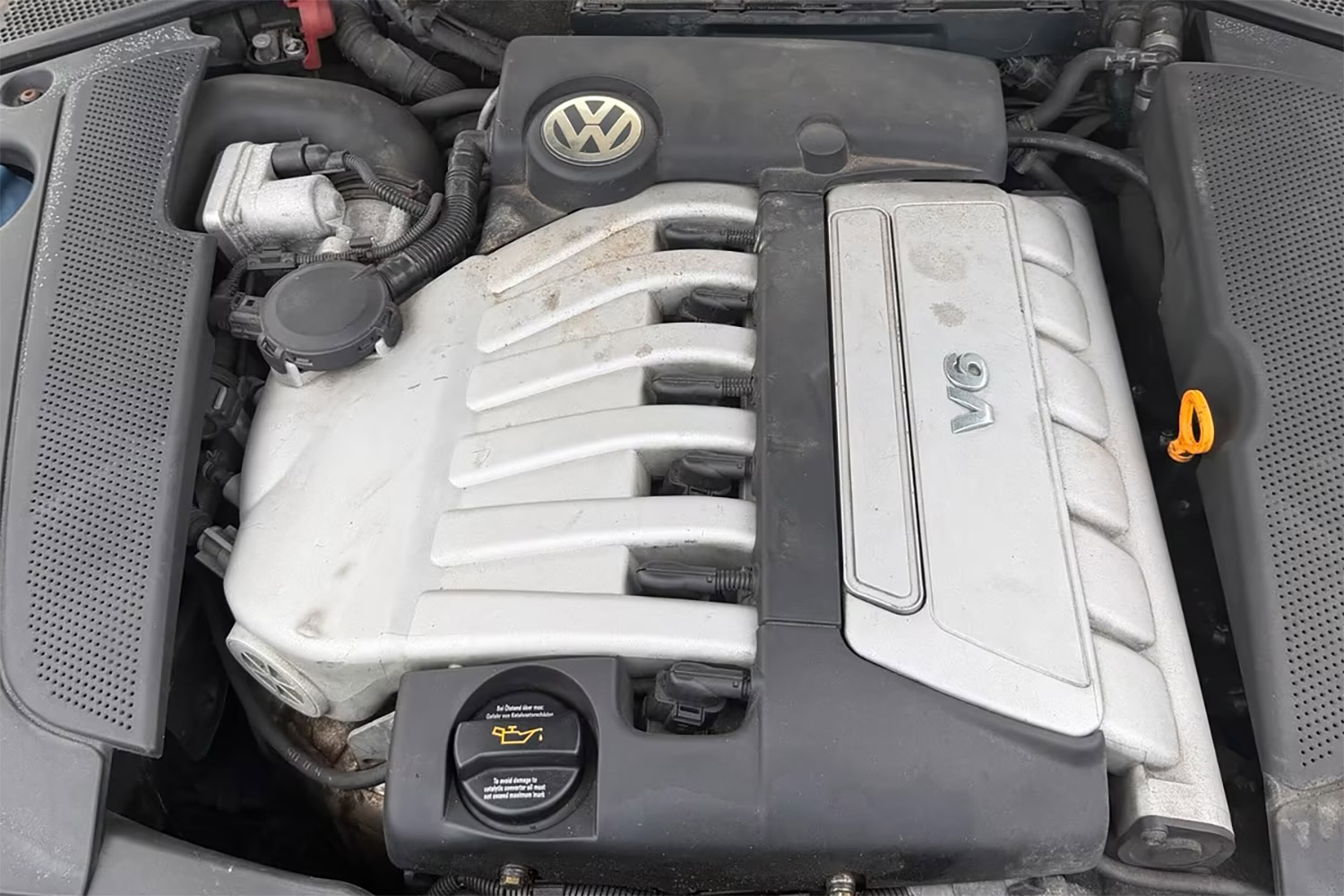
For context, no matter how you view the biggest and best German luxury cars, they have often also been available in very basic configuration, for customers who were successful enough to drive the largest available car, but thrifty enough to choose the smallest engine.
Take, for example, the Mercedes-Benz W126: ideally, it would be a 500 SEL or a 560 SEL, with plenty of power from a big V8. Yet, in Europe, it was available and often sold as the 260 SE, taking the same straight-six as in the W124- generation Mercedes-Benz 260 E, a completely fine car by itself, and fitting it in the big S-Class. It was largely the same engine as in the 300 SE, just less powerful, and it was also available with a manual gearshift and cloth seats, without air conditioning. A while ago, an ex-North Korean Embassy 260 SE came up for sale in Finland, and of course it was the most basic version imaginable. You could also get the W140 with a manual gearbox, paired with the 2.8-liter straight six and badged as the Mercedes-Benz 300 SE 2.8. Cloth seats really belong in one of those. Later on in the 2000s, an S250 CDI was offered with a four-cylinder turbodiesel.
BMW didn’t offer a gasoline straight-six smaller than three liters in the E32 7-Series, but by the time it was succeeded by the E38 7-Series, a 728i was offered as well as a 725 tds turbodiesel. Audi happily sold a front-wheel-drive, 2.8-liter A8 from 1997 on, after the model range had been launched with bigger engines.
Six Speed Phaeton
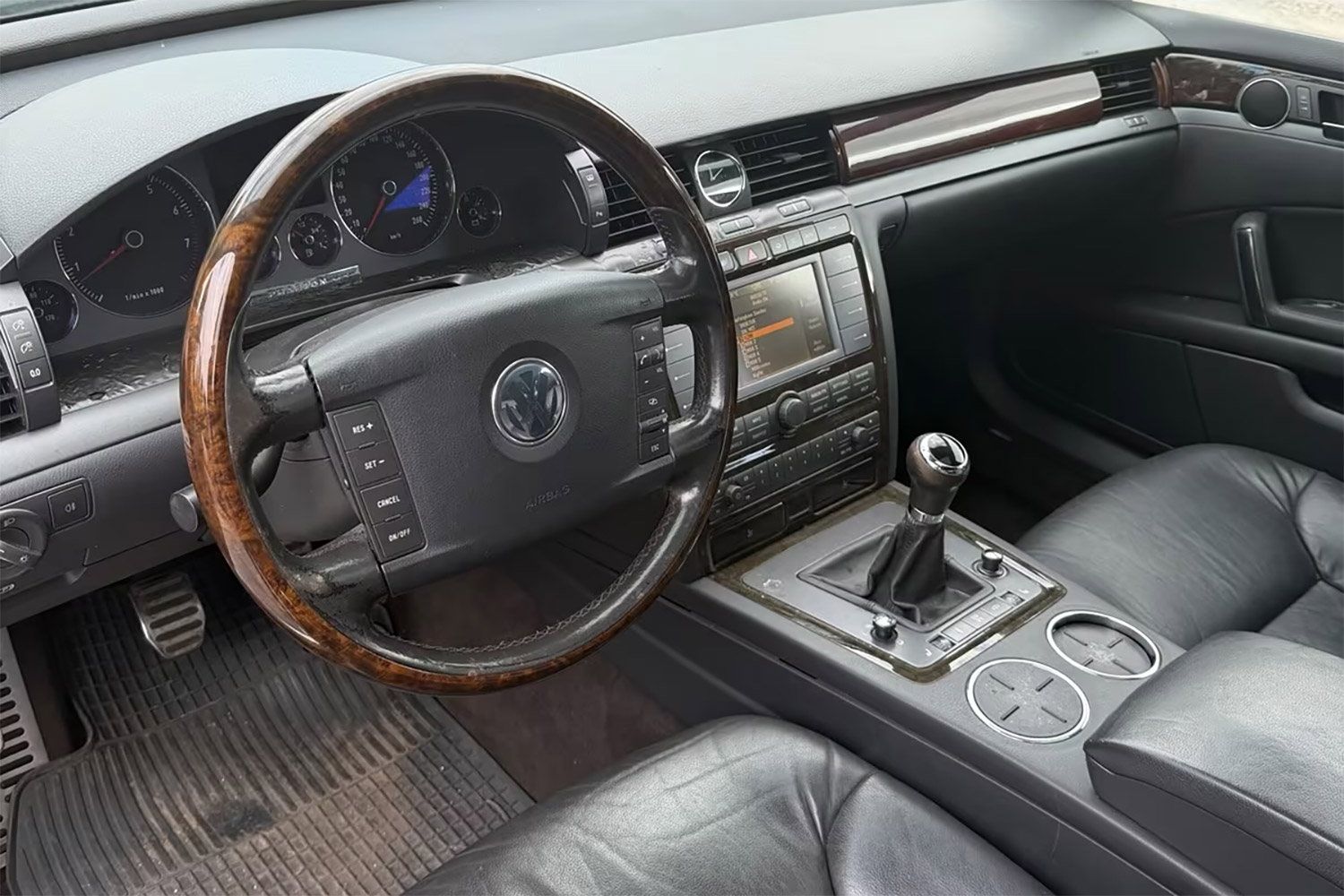
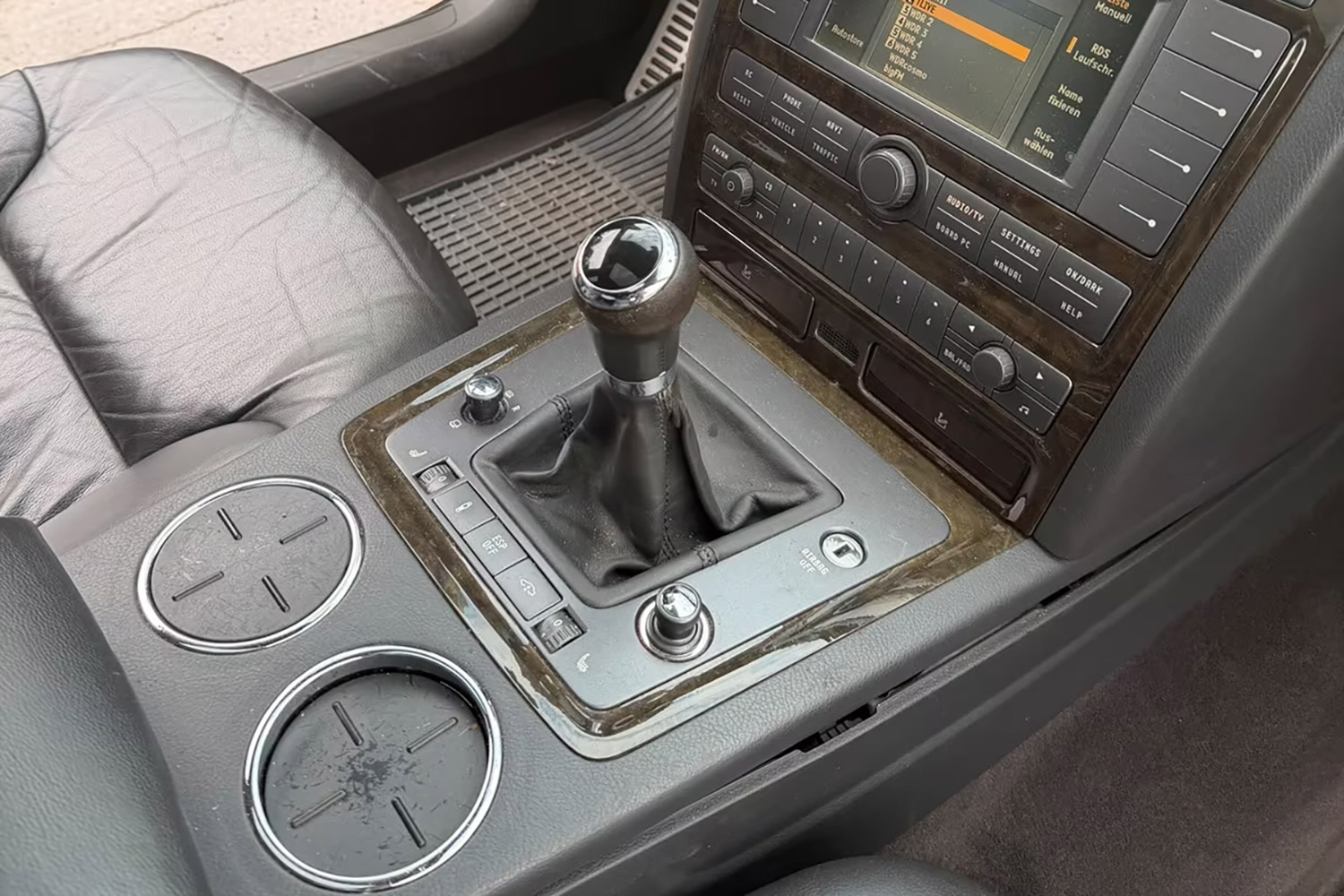
The Phaeton was no exception. For a brief period after its launch in 2002, it was available with a six-speed manual gearbox for European buyers who chose the 3.2-liter, 240-horsepower VR6 engine. Imagine hustling a two-ton Phaeton with a manual gearbox!
In fact, were you to specify a manual shifter for the car, you would also shave a little off the 0-62 mph time: the 3.2-liter Phaeton sprinted to 100km/h in 9.4 seconds with the Tiptronic gearbox, but the “6-Gang” did so in 8.9 seconds. The caveat? Front-wheel drive only. You couldn’t get a manual Phaeton with the 4Motion all-wheel-drive, meaning the dream combination didn’t exist, nor could you choose a bigger engine than the 3.2-liter VR6. Still, 240 horsepower meant it wasn’t woefully underpowered.
While the manual version was the cheapest available Phaeton, Tiptronic wasn’t a significantly costly option. Looking at the 2003 German price list, the manual car in five-seater configuration cost 56.200 Euros, and with just a 1.650 euro upgrade, you would be cruising in self-selecting comfort. Four-seaters with the more statesman-like, electrically adjustable rear seating were 10,000 Euros more expensive, but the price gap to the W12 engines was immense.
If you wanted 12 cylinders, the car easily cost 100,000 Euros. The German Auto Bild magazine noted in its manual Phaeton test that choosing the base V6 saved you enough money to buy a Mercedes-Benz E-Class (presumably E200).
“The Phaeton palace is – currently – automotive heaven on earth. Superbly crafted, garnished with the finest components, sensational, 18-way adjustable seats, and sophisticated showpieces. Even the way the wooden panels glide silently in front of the air vents to protect sensitive passengers from drafts – you could almost charge admission for that. Especially since the V6 3.2 is by no means lacking in features and doesn’t have to forgo anything truly essential. Thanks to air suspension and selectable damper settings, the Phaeton can be either a limousine or a sports car.
The Phaeton V6 draws its appeal from perfection in every detail and from the realization that a W12, which costs 37,300 euros more, doesn’t offer much more.”
It makes sense that Volkswagen soon introduced the 4.2-liter V8 as a cheaper option, but it still cost over 90,000 Euros. The V10 TDI was available from 82.600 Euros, but not every customer would have wanted a diesel.
Not A Sales Success
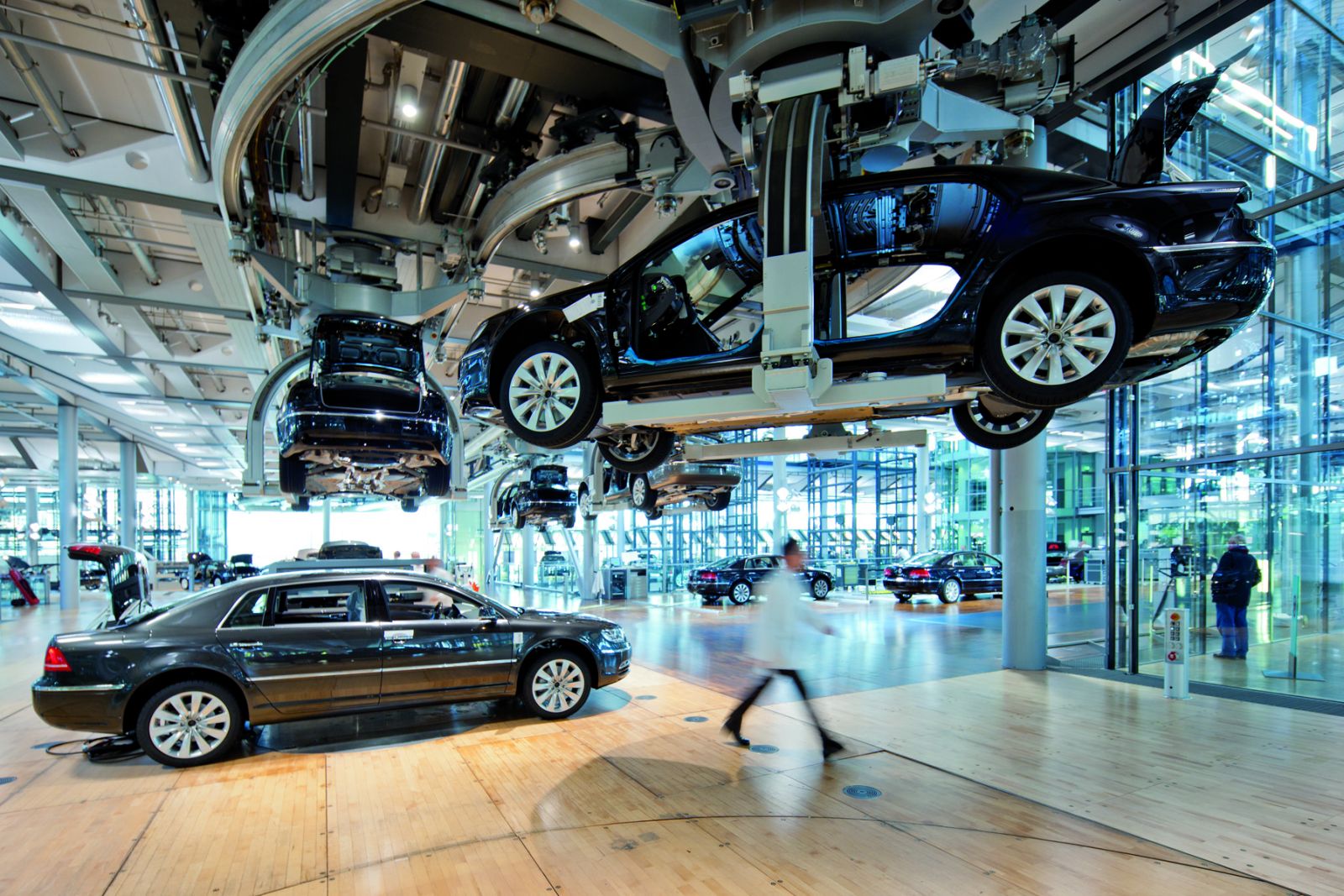
Then there’s the question of how many customers even wanted a Phaeton in the first place. Volkswagen had prepared the special factory, the Gläserne Manufaktur in Dresden, for an annual output of 20,000 cars. Instead, they built six thousand cars per year, and it took four years to pass 25,000 units. The car cost Volkswagen a lot, as research analysts have calculated the total bill at two billion Euros. That means nearly $40k per car, a huge portion of the VR6-engined cars’ MSRP if you look at it that way.
One billion Euros went to build the aforementioned Transparent Factory (above), which moved into building the electric Golf in 2017 when the Phaeton’s final facelift version had ceased production, and after that, the ID.3. No cars are currently produced there, as VW shuttered the factory to save costs in late 2025.

The Phaeton, built to celebrate the success of its manufacturer, could never shake the badge it was born to wear. Customers chose more prestigious brands, no matter the engineering that went into the Phaeton. If it unfairly wore the tag of being just a Big Passat, it’s especially galling that it was actually manufactured with a drivetrain that made it just that, despite its platform and Campagnolo trunk lid hinges.
Auto Bild noted the engine sounded good and suited the car fine, wondering whether the extra price for the W12 was actually worth it as the 3.2-liter engine wasn’t underpowered at all. Put short, they didn’t hate it, declaring it good value and only noting that the manual gearbox didn’t fit the picture.
“Acoustically refined and restrained when cruising effortlessly, it delivers a sporty undertone when accelerating. And what the V6 does with the 2.2 tons of luxury cargo is more than astonishing. 0-100 km/h in 8.9 seconds, top speed 245 km/h – wow, those are sports car figures.
But that’s hardly a reason to send the base Phaeton to customers with a six-speed manual transmission. While the gearbox is precise, it suits a luxury sedan like jogging shoes on a double-breasted suit.”
These days, manual Phaetons are exceedingly rare. Volkswagen only sold them for a couple of years, 2003-2004, likely phasing out the six-speed soon due to a low take rate within a slow-selling model line. They sometimes pop up on German and East European car sales sites, but often the listings are erroneous and clearly show the Tiptronic shifter instead. If VW only built a few thousand Phaetons per year in those years, manual cars must have been made in the hundreds at best.
You Can Still Find Them In Europe
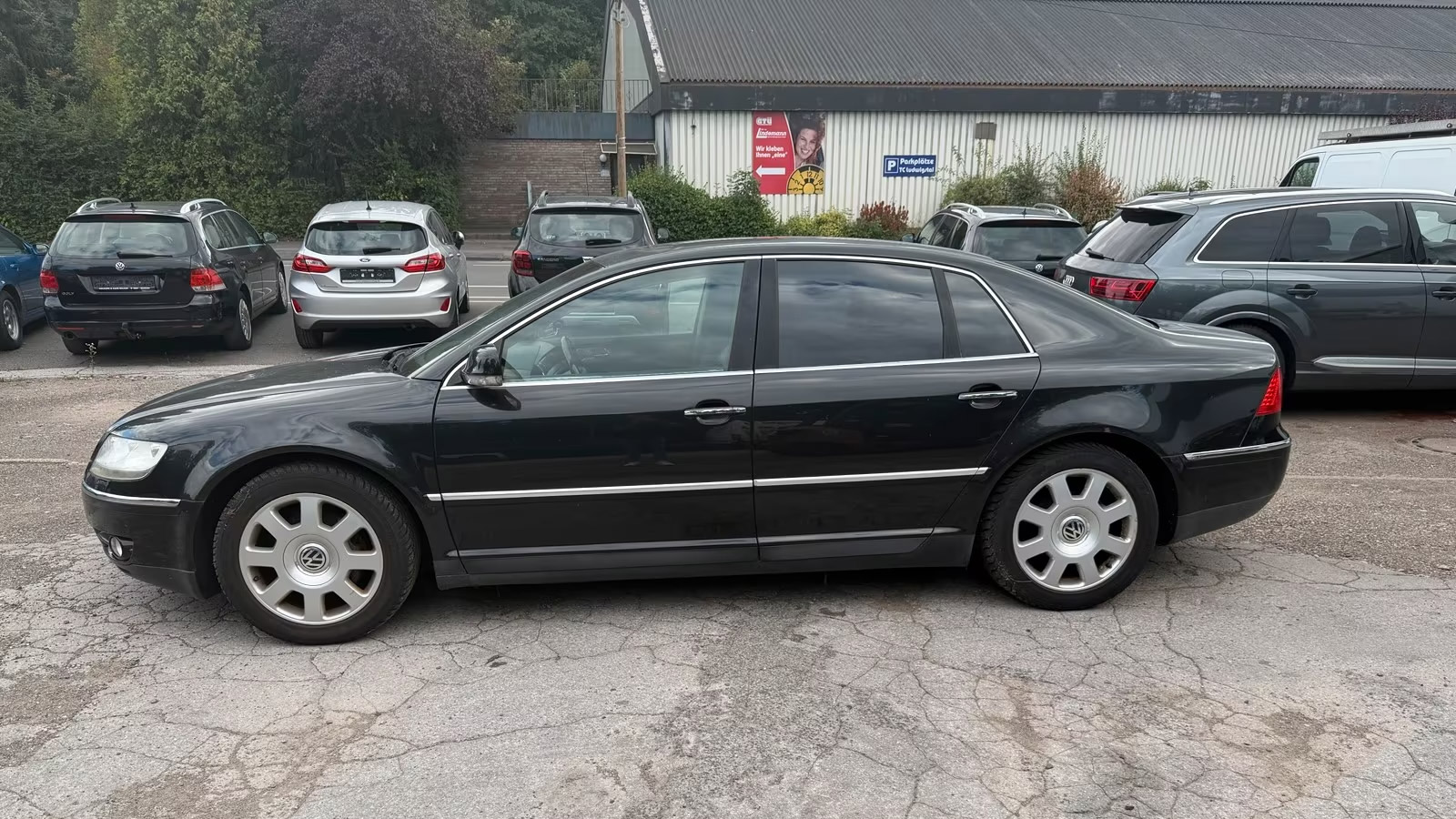
Imagine, then, my complete satisfaction at seeing this cheap 2004 Phaeton advertised on Kleinanzeigen, the German used goods site that used to be run by eBay. While it’s done 200,000 miles and doesn’t currently have valid TÜV roadworthiness inspection, it costs just 2,800 Euros, a fine price for a running and driving Phaeton that surely just needs a few small items to pass inspection.
As all these ads usually say, “Motor Getriebe laufen gut” (Engine and gearbox work well), and the Getriebe in question is the six-speed manual, as seen in the ad pics. The interior is still sumptuous, it has the trick vents and fancy seats, and it rides on air like the more expensive Phaetons. Base Phaetons were fitted with very modest-looking 16-inch alloy wheels in a manhole-cover design, but for some reason you almost never see them on cars advertised for sale. Cloth seats seem interestingly uncommon, too, and even the manual car here has leather.
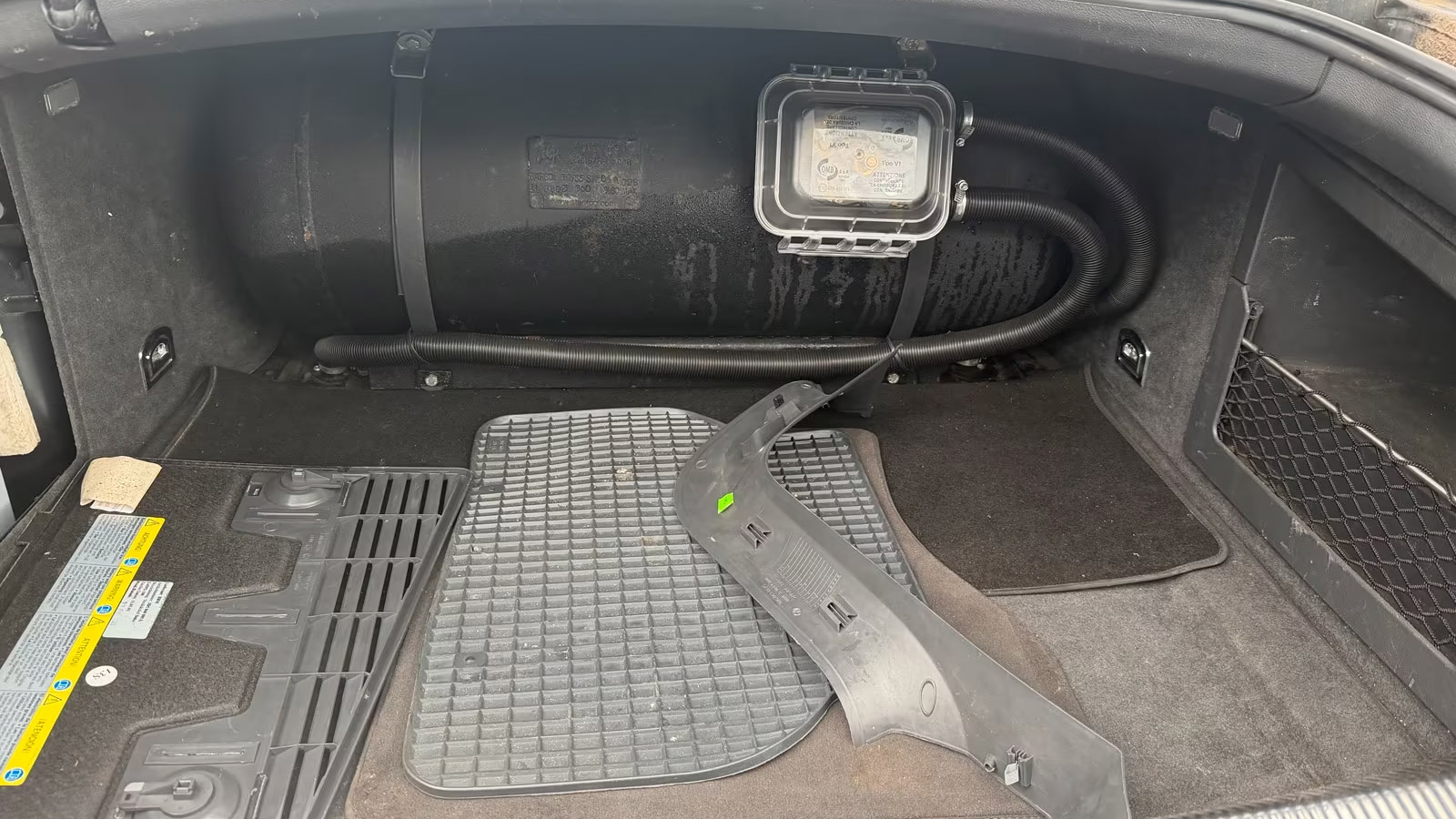
The photos also show that the car has been converted to LPG, which is relatively popular in Eastern Europe as it’s a cheaper fuel, and it does offset some of the running costs of a larger gasoline-engined car. However, running on LPG does reduce engine power and provides worse fuel economy. It burns cleaner than gasoline, but in some older engines it can introduce valve wear.
Somewhere in America, there’s a street named after my dad … I mean, somewhere in Germany, there’s surely a one-owner, base-spec, manual Phaeton with low miles, ordered new by somebody that was about to retire after selling their business, but being so careful with their money that the car would have no optional extras at all. Ideally, it would have accumulated very few kilometers in these past twenty years, just enough to keep everything nicely lubed.
Phaetons, with their complex electronics including twin batteries, do not like sitting, and the front end is so full of stuff in the bigger-engined cars that the repair procedure videos seem daunting. A VR6 doesn’t necessarily mean a free ride to Easy Town, even compared to maintaining the W12, but paired with a completely normal manual gearbox it almost seems as sensible as a B6 Passat, just likely to be less rusty. And unlike the B5 Passat and the Phaeton, you couldn’t get the B6 with a V6-manual combination, either.
(Photos: Kleinanzeigen except Volkswagen where noted)




With regard to the big-cars with small and diesel engines thing, it certainly used to be fairly common in Germany for a car to be included in a compensation packet, but fuel to be all on the employee.
Led to senior execs not that into cars being concerned about the consumption of the big cars they could pick.
Also, fancy hotels, airlines etc in Europe might have a fleet of S-classes but wish to minimize running costs. I think that’s where all the S250d cars went.
While the gearbox is precise, it suits a luxury sedan like jogging shoes on a double-breasted suit.”
I just responded on the Ram Mega Cab about pricing but here is another situation of “those times.” I see people on TV all the time now wearing a full suit with Jordans or sneakers of some kind. So does this mean a 6 speed fits this car just fine now?
They failed because in the end they were big pieces of shit that had VW-type problems on steroids. So many better, more reliable options than these things.
SWB VR6 6M : The Sporty Shorty of Phaetons!
A friend of mine has a Phaeton V6 TDI (auto), and last year we took it to Monaco. Bentleys on every other street corner, but no Phaetons anywhere. We greatly amused ourselves by imagining the kids in the back seats of a boring Bentley, getting all excited about spotting a Phaeton.
The other thing you don’t mention is that the pictured Phaeton is SWB. Volkswagen never sold a SWB Phaeton here in the ‘States.
I can’t think of too many budget car brands that successfully built and sold an up market luxury vehicle, meaning made money. At least not without creating a whole new brand.
Boom boom shak-a-lacka boom boom? I see your Was (Not Was)
“While the gearbox is precise, it suits a luxury sedan like jogging shoes on a double-breasted suit.”
In the US, it’s not uncommon to see weather guys on TV wearing suits and Hoka sneakers.
The saga of the Phaeton’s makes me sad, deep down. I have my reasons for not being a fan of VAG, but the Phaeton really was a “moonshot” car and I wish I could afford to fuel and maintain one. I mean, I could, but I choose to spend my retirement money a bit more wisely.
And being of beyond retirement age and dealing with neuropathy in my feet and living in a fairly hilly area, I no longer want to deal with a third pedal.
Heck it’s not uncommon to see TV news people WEARING a suit jacket behind the desk while only wearing underwear and slippers.
But only the weather people walk around without a desk in front of them.
Neuropathy sucks!
I think it became trendier after the 2002 review was written!
Is this Mercedes’ Alt? 🙂
Super-interesting Antti, thanks! 😀
Before I swore off VWs altogether (after owning about a half-dozen of various kinds) I seriously pondered getting a Phaeton. It was handsomely understated and I never had a truly luxurious car (I hadn’t bought my problem-prone Mercedes CLK at that time) so that idea was appealing too. I’d seen them up close, and liked what I saw.
AFAICR, we never got the option of the six cylinder engine in the US… I assume the base engine was the eight. I’d have been OK with the six I’m sure (I’m never in a rush to get someplace) and given the kind of car it is/was, the autobox would have been fine too.
Of course, I’m glad that I never bought one, as it would probably have caused me to forego VWoA products even sooner than I did. If I saw a wrecked one in a junkyard now, I’d love to swipe the trunk hinges of course, even though such a find would surely have them priced high what with the internet and all.
The real problem with the Phaeton is that it was an unreliable VW without the prestige of premium name unreliable VW cars LOL
You could probably spend $2800 a month to keep a Phaeton on the road! OK, so the engine isn’t as crazy complicated or expensive as the W12, but the rest of the car sure is 🙁
Too bad Toyota didn’t sell the Century here or anywhere outside Japan.
Toyota did sell Century outside Japan albeit in very tiny number to China and Middle East market. About 100 LHD Century were produced with some earmarked for the ambassador duty.
😮
I did not know that!!!!!!!!!!!!! WOW!!!
As far as the W126 is concerned, Mercedes even made a 280 S until 1985. The venerable M110 engine delivered all of 156 hp to those who were wary of the newfangled “fuel injection” stuff.
Which is why Mercedes-Benz kept the nomenclature denoting cars with fuel injection into the 1990s when the last of the carbureted engines were discontinued.
Just imagine they made a carburated W124 200 until 1990, even as a T. 105 hp and 14.5 seconds to 100 km/h (62 mph in Burmese units) with the slushbox. At least it was much quicker than the 200 TD diesel (72 hp, 23.0 seconds), but that one was considered glorified farm equipment even by its owners.
Either this or the owners didn’t want to pay DM 4,297.80 premium for the fuel injection system (€2,197 adjusted).
I remember visiting the Gläserne Manufaktur in 2015. Yes, the entire floor was made of wooden parquet, which struck me as repulsively decadent even at the time.
Neither the factory nor the car have aged well.
On the other hand, they were always ready for basketball or bowling!
That would make far more sense than all the corporate bull$#!+ VW spouts about its alleged plans for the defunct factory.
and they cant figure out how they got billion$ in the hole. A unique combination of german stubbornness and arrogance.
So, basically a German version of the V12 Toyota Century? At least it seems like they did it better as it seemed to be more successful in the global market than the V12 Century ever was.
Yeah, but at least Toyota actually knows how to make cars
I’ve always had the impression that Toyota didn’t want to sell more Centuries, especially outside Japan. There would have been far more Phaetons if Ferdinand Piëch had had his way.
The exclusivity is the point.
I wonder which dignitaries didn’t get an allocation 😛
Yeah, fuck that stupid allocation shit
Toyota did sell Century outside Japan albeit in very tiny number to China and Middle East market. About 100 LHD Century were produced with some earmarked for the ambassador duty.
Kind of. But there was a difference in philosophy in how the cars were built. Toyota leaned into conservative engineering and deeply under-stressed components. Volkswagen threw every technological bit of showmanship it had at the Phaeton, and even made the factory itself an experience.
My experience now owning two Phaetons is that the mechanicals are relatively understood (the suspension, engine and transmission aren’t markedly different from those of a contemporary Audi)…but the cosmetic parts are difficult to find and the electronics architecture for the earlier ZAB ones (which are the only ones that were sold in the US) is downright esoteric. On the point of the former category, Volkswagen decided to get clever and use some kind of really hard plastic on the bumper covers, and they are quite brittle and difficult to find. My last Phaeton was totaled because it was involved in a minor fender-bender and no one could find an intact bumper cover anywhere in the United States.
Geez, get a load of Auto Bild ensuring future VW press car access.
“Superbly crafted”
GUFFAW! That didn’t age well.
8.9 seconds is pretty pokey for a luxury product even in 2003. The German press probably wouldn’t want to admit that the housefrau Camry with 200hp and a slushbox would outrun this wunder panzer. And it’s not like this was a small diesel with good fuel economy.
No, it didn’t age well at all. But to be fair, the inside of a new Phaeton was an experience in itself. I agree that it created the impression of luxury exceeding the contemporary S-class by far.
Alas, the Phaeton was (in the immortal words of Paul Keating) all tip and no iceberg.
VWs/Audis of the era had immensely good perceived quality when new. Nobody could match the panel gaps, the soft touch plastics, the feeling of solidity in the Golf or Passat class.
Eventually the windows dropped into the doors and coolant migration became a thing… Imagine finding coolant in your tail lights!
https://www.audiworld.com/forums/a8-s8-d4-platform-discussion-190/coolant-leak-through-wiring-harness-2862459/
Been there, done that. As the former owner of a Golf IV Variant I can relate both to the perceived quality (the soft-touch plastics eventually got sticky) and to the dropping windows in both front doors. One pane even managed to stay in one piece.
No coolant in the taillights, though.
I think it was hair gel remnants in hands that ruined the interior door handles.
I can definitely rule out that explanation in my case. 😉 But it’s true that the interior door handles were usually the first crime scenes and the plastic deteriorated into an almost gooey mess.
(And I’m absolutely not making a There’s Something About Mary reference. Cameron Diaz was massively cute, though.)