

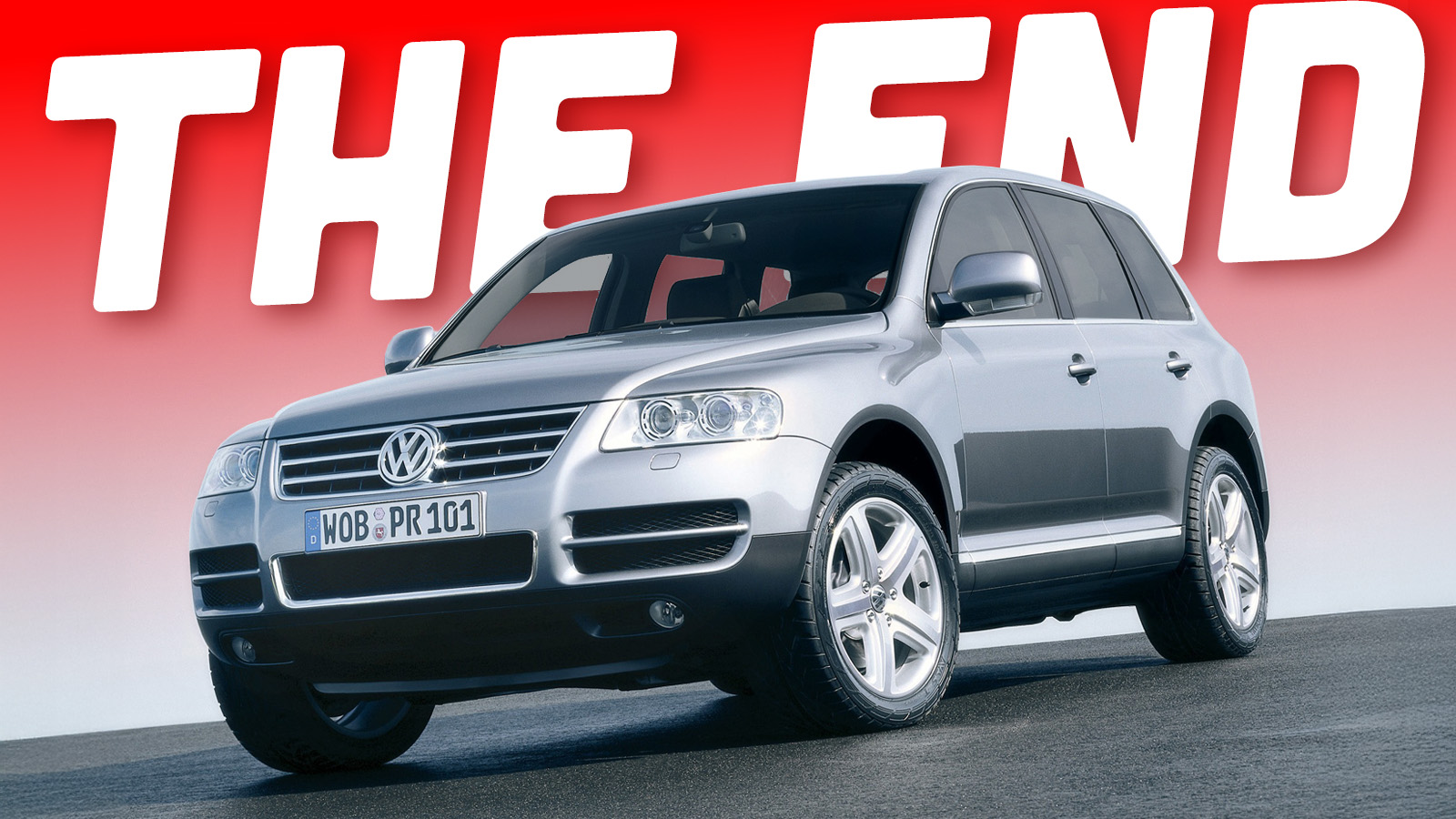
In 2026, Volkswagen will pull the plug on not just its greatest SUV, but one of the most underrated SUVs of all time. For nearly 24 years, the Volkswagen Touareg has been a serious towing and off-roading beast wrapped in friendly looks, and most people don’t even know it. Here’s why the world is going to get a lot duller next year.
The Volkswagen Touareg hasn’t been sold in the United States since 2017. Its replacement was and remains something entirely different. The Volkswagen Atlas can’t tow as much weight, doesn’t have nearly as interesting of a powertrain, and has none of the Touareg’s off-roading prowess. But it is a cash cow, as it’s a cheaper crossover with three rows of seats. Buyers have voted with their wallets, and the Atlas appears to be a better fit with American Volkswagen buyers, who care more about the school run than towing a sizable Airstream.


But that doesn’t mean that the Touareg was a bad SUV. I’d say it’s just the opposite. When the Touareg launched in 2002, it represented the apex of what Volkswagen could do with an SUV. It was a showcase of inventive engineering and proved that tough SUVs didn’t need to look like a Lego brick, handle like an outhouse, or accelerate like a glacier. The Touareg, along with its fancier and faster Porsche Cayenne sibling, were proper super SUVs and it’s amazing that they even happened in the first place.

An Unlikely Development
What’s fascinating is that the Touareg’s development didn’t initially start with Volkswagen. Back in the early 1990s, Porsche, which was not married to Volkswagen at the time, was edging close to collapse. In 1992, the company reported 240 million Deutschmark loss. Porsche attempted to stem the bleeding by optimizing production, reducing staffing, and developing the cheaper, more accessible Boxster.
However, it was found that while the Boxster was a brilliant entry point into Porsche, the Boxster and the 911 alone couldn’t save Porsche. Hans Riedel, the board member in charge of Porsche’s sales, ran an analysis. Riedel found that the leaner, more accessible Porsche had only bought itself time. Anton Hunger, the communications head for former Chairman of the Executive Board Wendelin Wiedeking, said, from Porsche: “It was apparent that the sports car had its limits on the market.” “The sales division had clearly demonstrated this using market research. In the long run, Porsche would have ended up on a downward slope again.”
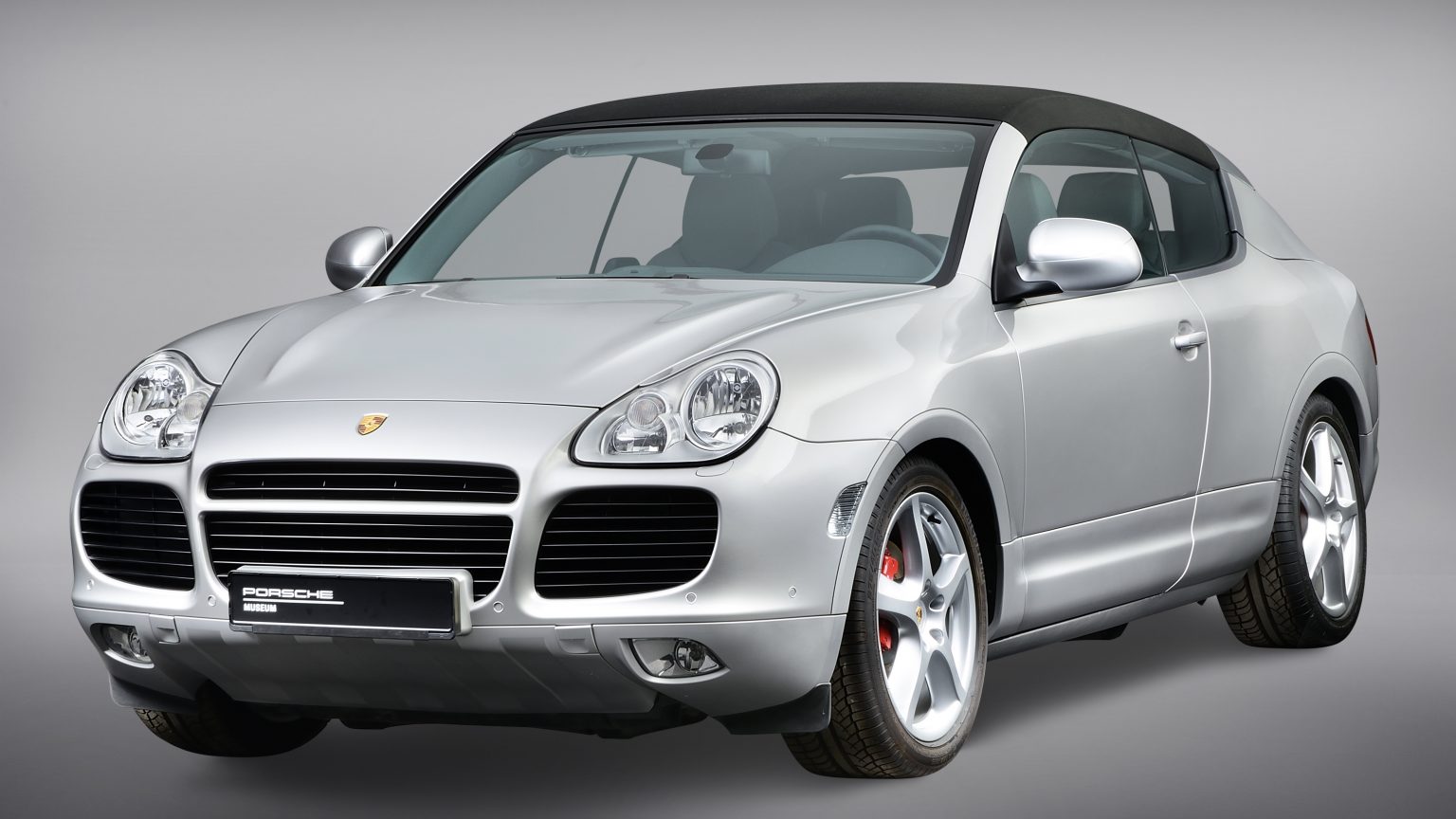
Porsche realized that, if there wasn’t any more juice to squeeze out of the sports car market, the proposed “third Porsche” would have to be something entirely different. By now, it was the mid-1990s, and Porsche considered five different vehicles that were not sports cars.
Naturally, Porsche looked to its largest market, America, for ideas on what to do. There were two major trends in America at the time, minivans and SUVs. Eventually, Porsche’s five concepts were narrowed down to two. Porsche’s research had shown that minivans were popular with families, so maybe it should have made a family car. The company was seriously considering making a seriously fast minivan, but the U.S. arm of Porsche wasn’t fond of that idea. That left Porsche with its answer. It was going to build an SUV. In hindsight, this was the right call. While the minivan was popular in the 1990s, the SUV was the next big thing.

Of course, a Porsche SUV couldn’t be just any ol’ SUV. Porsche couldn’t just build a German equivalent of a Ford Explorer and call it a day. It had to have that Porsche DNA, so it had to be fast, it had to handle well, and it had to be something someone would aspire to own. Unfortunately, Porsche wasn’t really in a position to make its own SUV entirely from scratch, so it looked for a partner. At first, this was Mercedes-Benz. Porsche thought it could take the body and tech of the M-Class and infuse it with Porsche engines, chassis and design. Mercedes-Benz liked the idea and rubber-stamped the partnership in summer 1996, only to bail before the year was out.
This left Porsche to shop around again, and this time, Porsche landed back at its old friends at Volkswagen. This time, crazed engineer Ferdinand Piëch was at the helm, and not only did he love the idea of a super Porsche SUV, but he figured Volkswagen could use its own version of it. Piëch was on a mission to move Volkwagen upmarket and flex the Group’s engineering muscles. During Piëch’s rule, Volkswagen would print out such awesome vehicles like the Phaeton, the New Beetle, the Passat W8, and ever faster variants of the Golf. A techy and surprisingly hardcore SUV was a perfect fit for a VW that was reinventing itself.
The Super SUV From Volkswagen

The Volkswagen Touareg and Porsche Cayenne were developed on their own specific platform that was co-developed between the two brands, and when they launched in 2002, they had almost entirely flipped the SUV script. I wrote about the awesome engineering behind the twins before:
Everything about these SUVs is alternative. Engineers liked how reliable body-on-frame SUVs were, but also liked the stiffness offered by a unibody platform, so they tried to make a chassis that was the best of both. As a result, the Cayenne and the Touareg utilize a unibody with an integral frame structure. Porsche and VW are so confident in the structure that they think you can lawn-dart your SUV into terrain without tweaking the unibody.
Porsche and Volkswagen then loaded their respective SUVs with real off-roading equipment. Both SUVs can get on their tippy toes thanks to air suspension, have nearly Jeep-like off-roading angles, and ford around 23 inches of water. Both were designed to conquer slopes as steep as 45 degrees and ride along banks as sharp as 35 degrees.
All of this was supported by a permanent four-wheel-drive system with an automatic center differential. You could also lock the power split to be equal between the axles or crawl your way around with the low range. The Germans were also super serious about limiting slippage, employing a combination of limited-slip differentials, off-road traction control, and ABS to limit unwanted wheelspin. It even had an early form of downhill assist. Volkswagen and Porsche then sold you a package that added underbody protection, sliders, and even a locking rear differential.

Touaregs have proven themselves to be shockingly good when the going gets tough. Sure, these SUVs look all soft-like — I’ve heard some people confuse the Touareg with the Tiguan before — but they are anything but. Touaregs have been taken through Moab, skipped across the desert in Johnson Valley, and even participated in Dakar. Actually, I’m underselling that last one. Volkswagen’s racing version of the Touareg won three times in the Dakar rally, beginning in 2009. Volkswagen also drove a second-generation model from Tierra del Fuego in Argentina to Alaska in under 12 days.
The awesome part is that this off-roading prowess wasn’t locked to the most expensive version. I used to own a 2005 Volkswagen Touareg VR6, a base model. Yet, mine still had the permanent four-wheel-drive, the center locking differential, limited-slip differentials, and the excellent off-road traction control.
My old Touareg was so good off-road that when I took it to Holly Oaks, a Michigan off-road park often used as a proving ground by Detroit automakers, it managed to climb a steep, technical hill while on regular street tires and on a worn out lowered suspension. It even impressed Jeep man David Tracy.
It Got Cooler
But remember how I called the Touareg and the Cayenne super SUVs? Being good off-road was only a third of the magic. From my previous coverage:
Both SUVs also serve different roles. The Porsche Cayenne was the spiciest of the two. Here in America, a Porsche Cayenne Turbo S had a 4.8-liter twin-turbo V8 making 550 HP. That thing boogied to 60 mph in 4.4 seconds, or nearly a second faster than my Saturn Sky Red Line.

On the other hand, the Touareg better embraced the burly off-roader role. Its engines never got as spicy as the Porsche’s, but Volkswagen did give us something special with the 5.0-liter V10 TDI, sold beginning in 2004 and bowing out after 2008. This engine is a stupid, corrupting piece of engineering. It’s gear-driven and has two of everything. That’s two turbos, two air filters, two sets of piping, and even two ECUs. This beast sees itself as more or less two five-cylinder diesel engines, not one mean V10. It even sounds ridiculous, combining the best hits of a Cummins soundtrack with that of a Lamborghini.
The fascinating thing about this engine is that all of this complexity did not result in a huge power number on paper. This V10 diesel makes 310 HP and 553 lb-ft torque, or similar numbers to what a 6.0-liter Ford Power Stroke made. However, the V10 TDI’s power hits like a sledgehammer. The power comes on early and hard, putting your head into the headrest and keeping it there until you’re well above 100 mph.

Versions of the Touareg outside of America could have such options as Volkswagen’s iconic 444 HP W12 engine and even a six-speed manual transmission.
The final piece of the puzzle is the fact that these were small-ish SUVs (by today’s standards) that towed 7,716 pounds. These things were luxurious, fast, and towed a lot of weight for their size. I think both the Cayenne and the Touareg are both deserving of being called “super.”

It didn’t stop there, either, as the platform that underpinned the “Treg” (as enthusiasts sometimes call them) would become the basis for the Audi Q7. Later, the Touareg and Cayenne would share roots with the Bentley Bentayga and the Lamborghini Urus, all extremely important vehicles in the VAG portfolio. It’s hard to deny just how important the Touareg was.
Volkswagen didn’t exactly let the Touareg wither, either. Later iterations of the Touareg got more refined interiors and updated technology. Touaregs would get tech that we take for granted today like adaptive cruise control, collision avoidance systems, adaptive suspension, and multiple cameras. While the V10 diesel didn’t stick around, a V6 diesel did, and it pumped out great power and fuel economy without as many headaches as the V10.
The Touareg Wasn’t A Hot Seller
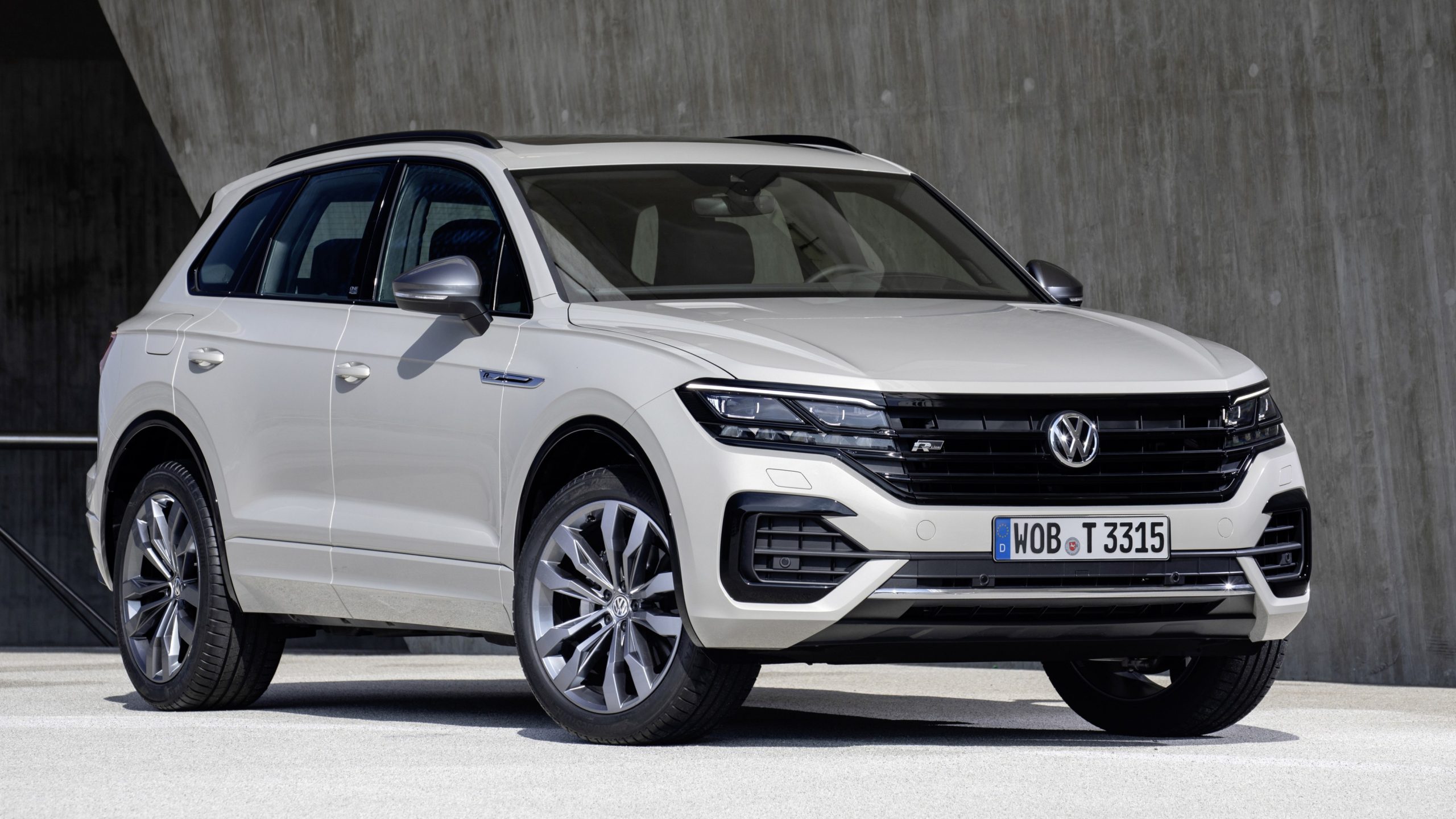
The Touareg never lit sales charts on fire. Depending on who you ask, between 2003 and 2017, the Touareg sold under 130,000 units in the United States. At the time of publishing, Volkswagen has managed to move only 1.2 million Touaregs worldwide since its launch. But at the same time, this sort of made sense. The Touareg was a halo car for Volkswagen. The base VR6 model had a starting price of $35,515 in 2004 ($62,127 in 2025) whereas a V10 TDI was $58,415 ($102,187 in 2025) before you piled on any options. The Touareg was always expensive.
Despite the slow sales, the Touareg managed to capture some superfans. Admittedly, I am one of them. Back in 2022, I wrote about how people were spending over sticker to purchase some of the last Volkswagen Touareg TDIs in America after they were fixed post-Dieselgate.

It’s even easier to see why Volkswagen killed the Touareg in America when you compare final prices. In 2017, the cheapest Touareg was $50,405. In 2018, the cheaper Atlas, which gave up 2,700 pounds of towing capacity and off-road capability, but gained an extra row of seats, was $31,745. Honestly, for Volkswagen of America, this was probably a no-brainer. The Atlas has sold like hotcakes, too, with sales exceeding 70,000 units in most years.
I also need to note that Volkswagen also softened the Touareg dramatically over the years. In 2018, the Touareg entered its third generation. It kept the high tow rating, but shrugged off most of its off-road gear to be more of a luxury on-road SUV. So, in a way, keeping the Touareg would have probably been pretty redundant, anyway.
One Last Ride

If you’re one of our international readers, you still have a chance to score a Touareg new. The Touareg will be bowing out in 2026 with a Final Edition that will be launched in March. This will set you back more or less the equivalent of $87,500, or more than $30,000 more than Americans would pay for an Atlas SEL Premium R-Line. Apparently, the Final Edition, which Volkswagen insists is in all caps, is just a cosmetic package that puts “Final Edition” badges on the exterior and interior. That’s it.
Volkswagen’s announcement is pretty sad. The Touareg has gone from being a seriously underrated beast of an SUV, perhaps one of the most underrated in history, to being dead. I’ve said it before, but it seems like Volkswagen is on a path to killing fun. Volkswagen used to take chances and used to take big swings. Not all of these swings hit, and as a serial Volkswagen owner I can tell you that reliability was sometimes a joke, but at least Volkswagen wasn’t afraid of having a ton of fun.
Nowadays, it seems like Volkswagen just wants to sell you big, Americanized crossovers, or a van that looks spectacular, but had middling range and an unattractive price. At least the Golf R is still kicking! Still, I keep on imagining the day when Volkswagen gets crazy again and does wild engineering projects just to show that it could. Maybe, one day we’ll see that again.
Top graphic image: Volkswagen


Should have been Ferdinand Porsche’s grandson, chief of the 917 project, and major Porsche stockowner, “crazed engineer Ferdinand Piëch”.
Also, the main reason Porsche family members are no longer allowed to work at the company.
I’ve had a 2012 Touareg TDI (V6) for about 5 years and it’s been an awesome vehicle so far. I bought it for towing a small camper trailer after an MDX V6 proved insufficient, and the Treg diesel power was eye-opening. I just did a ~800 mile road trip for work last week and I’m constantly amazed at how smooth the vehicle rides and how much power is available even at 80+ mph highway speeds. An added bonus it that the V6 diesel sounds great too. I know it is only a matter of time before something goes off the rails, but I’m going to enjoy the hell out of it until that time comes.
This is sad news. I always thought the Touareg looked better than the Cayenne. And I’m not sure why, but I assumed it was more capable than the Cayenne. At least off road.
I’m not an off roader, so it was more an academic experiment than a practical risk/reward discussion in my head. And it’s been about 50 years that I really spent much time intentionally exploring limits of adhesion and 0-60 times.
And after being treated poorly by VWOA, a Touareg was never a serious consideration. I remember even before all that thinking the name was a brave choice. How do you pronounce that. It sounds African. Just stuff that I didn’t think would resonate well in this country (USA).
I was fairly impressed by a rental Tiguan eight years ago. Not for its offroad capabilities, which I didn’t explore, but for its on-road composure and surprisingly good fuel economy. But those bastards will never get another dime out of me.
The maddest version of Touareg platform is Audi Q7 V12 TDI, the only diesel V12 engine fitted to the passenger vehicle.
Mercedes, you would have to wait until 2033 to import Audi Q7 V12 TDI. That is unless something changed between now and 2033.
I’m going to give my new kid the stupidest hard to pronounce name for most people to say or remember, or spell right ,and expect the little bastard to live more than 30 years said the VW daddy sperm donor. I still remember the stupid commercials when it came out with the weird looking little animal. Part lizzard, part leopard I think. VW needs to get it’s shit together and just start making cheap slug bugs again dammit.
When the Touareg came out, I wasn’t very interested in off-road specs, but I did think that the first gen had some awesome capabilities. Fun story: the local buy here/finance here lot by my office had a first gen in the front row display. I went to look at it, and noticed that the upper part of the door cards were scratched/torn to hell–a sure sign of some very active dogs having been on-board. The lot owner saw me looking and came over to talk. I said I bet if you turn on the ignition the dashboard would look like a Christmas tree, but I’ll give you $1,500 cash for it. He smiled and walked off. About a month later I saw that same Touareg with a woman in the driver seat being towed back to the lot by a rope behind a pickup. I’m guessing she was on a test drive.
Conversely, I paid $1500 cash for a Peugeot 504 I bought in 1978 with 60K on the odometer. Drove it for 90K more and got $900 for it when it was totaled by a Plymouth station wagon about seven years later. Definitely the least expensive vehicle I have ever owned.
I had two Touaregs in succession at the beginning, both V8s, and then VW stopped the V8s, so I switched to a new 2008 Cayenne. I did a lot of trailering cars and the Cayenne was just tougher and better for offroading additionally. – had selectible low gear.
The Touaregs were beautifully finished, though the Cayenne had a stripper spec. I just wanted that V8. Had no nav,a basic radio, no sliding roof. But it was very, very tough. I used to trailer cars between my home in Toronto and Scottsdale AZ. I did 200,000 miles in the Cayenne.
Bulletproof and sold it in 2022 to make way for a Cayenne GTS V8. Overall the Touareg was perfectly adequate and comfortable and I might have stuck with it if the V8 had continued to be available.
They made V8 Touaregs with low range (and air suspension) through 2010.
Great write up and details! The project name was VW Colorado. But the Dakar version shared only the name with the Touareg and not much more
They’re definitely becoming a cult-classic – especially the first-gen.
Real offroad chops, a well-appointed cabin, and comfortable highway cruising.
Crazed engineer Ferdinand Piëch is Ferdinand Porsche’s grandson and Ferry Porsche’s nephew.
Many of us probably know Hagerty’s The Carmudgeon podcast, but for those who missed it, here’s a really fun episode on Piech:
The Full Piëchisode Podcast Bonus! — The Carmudgeon Show w Jason Cammisa & Derek Tam-Scott — Ep 145
https://www.youtube.com/watch?v=tA8F2Be4t38
Related Icons episode:
https://www.youtube.com/watch?v=1KKiqibOxoc
The latest victim of trimflation 😛
Now you have to step up to the Q7/Cayenne/Bentayga
Tale of two Touaregs.
One: An impossible-comparison with the ‘cheap’ Atlas – against a vehicle designed for the American market to prioritize size. The Touareg was clearly, and will always be, the superior vehicle that feels more luxury than its badge would suggest (see, also, VW Phaeton).
The other: An unreliable nightmare ‘luxury vehicle’ to owners costing a premium to buy and maintain – yet without coming with an Porsche/Audi badge to show off that you are better than other people.
That’s about right. Although I would argue the gen. 2 Touareg didn’t feel quite so luxurious as the first one did. But the Atlas feels–and is–a couple of orders of magnitude cheaper. It’s also transverse-FWD-based, on the same modular MQB platform as the Golf and Jetta.
As I said in a different comment, I think the gen. 2 Touareg mostly looked like poor value compared to the WK2 Grand Cherokee, which was just as capable and which felt just as solid…imbued as it was with Daimler engineering, since it shared its platform with the 2012-2019 M-/GLE-Class and 2013-2019 GL-/GLS-Class. At the same time, the Grand Cherokee offered nicer materials and more-potent engines. The Touareg’s killer app was the TDI.
I have a feeling VW died on the vine due to competition from Audi coming out shortly afterwards.
If you’re going to pay a premium, the Q5 & Q7 make more a statement than any VW would.
Would a Grand Cherokee Royale with Cheese cross-shopped with a typical VW shopper? Maybe.
The Grand Cherokee has historically been Jeep’s upwardly mobile model, appealing to people from all walks of life. So it definitely got cross-shopped with the Touareg.
The Tuareg and Pheaton were never for people who give a crap about pretending to be better than other people.
To be fair, the L322 Range Rover came out a year or two earlier and was a similar kind of unibody SUV with fully independent suspension and off-road prowess. The story was that when BMW took over Rover Group (incl. Land Rover), it was so horrified at the outmoded P38 (itself allegedly an iteration of the Classic Range Rover) that it canceled a P38 facelift planned to debut in or around 1999, and instead set upon the P38’s replacement, the L30/L322.
That said, the early L322 did not have anything like serious pace. It was heavy and the BMW 4.4-liter M62 V8 made under 300 HP, and at 5,400 RPMs. The BMW 3.0-liter M57 turbodiesel I6? Even slower.
The Touareg and Cayenne were the first SUVs to blend that level of off-roadability with performance and speed and good handling. I’ve never understood the hate for the Cayenne, in particular, because it really is that good and more than deserving of the Porsche crest.
But the current generations of both, as well as the Urus, Bentayga, Q7 and Q8, are on a variant of the Audi MLB platform (replete with engine-forward layout) and are soft-roaders.
I’m sure BMW still has PSD from JLR.
It wasn’t JLR back then. Jaguar was already under Ford (as of 1989/1990), but it was the rest of Rover Group. And the big deal was that pretty much the entire Rover lineup needed re-doing, at considerable expense. That was going to cause BMW’s own stock to go down, so it fired Dr. Reitzle (who orchestrated the whole buyout of Rover Group) and then kept MINI and sold off the other pieces, including Land Rover to Ford.
Dr. Reitzle popped up at Ford just in time to receive the new L322 Range Rover. The L322 was chock-full of expensive BMW components (it was said that a single M62 engine purchased from BMW cost Ford as much as it did to make an entire Mustang), but there was no time to change it up.
Jaguar and Land Rover got coupled more closely with the L319, aka Discovery 3/LR3 and its close sibling, the L320 Range Rover Sport. Those were developed wholly under Ford, and their V8 engines were the gen.2 Jaguar ones. They also shared electronics with Jaguar as well as Volvo. The L322 got Jaguar engines starting in 2005, for the MY2006 facelift. Jaguar and Land Rover were sold off as a package to Tata Motors of India in 2008, and that’s when Jaguar Land Rover (JLR) was formally established.
True.
Disco3 (and LRS), however, was a bit of a beast being an unholy marriage of unibody-BOF.
They were heavy AF. I had a 2015 LR4. Ford called this platform T5 internally, and was going to base the gen. 4 Explorer on it, but it was deemed too expensive, and instead the Explorer got a heavy refresh with the same body (but a new frame) in MY2006.
Yes, also because built to high load spec … or overbuilt
Sounds like the BMW engineers weren’t involved with the buyout… “We paid how much for this?!?”
I need to fix mine and put it back on the road. It’s been sitting for about a year when I broke something and now it’s leaking something from around the radiator that hasn’t dried up. I just put a new battery in it and I’m about to move into a new house and don’t want it leaking over that shiny new garage floor. I don’t want to get rid of it, ever, but also parts are becoming scarce. I’d love a W12 in about 5 years as they hit the 25 year import ban, but I do love the Audi V8 that’s in mine too. I’ve just realized I’ve owned a Touareg (2 so far) for a quarter of my life. I don’t really want to imagine life without one.
It also didn’t help that the Germans picked a name that most people in America couldn’t pronounce. If I remember correctly, one of the whole ad campaigns focused more on people trying to pronounce Touareg than the actual vehicle
I believe it was Jeremy Clarkson who said that VW names were like “car crashes in your mouth.” And between the Touareg and the Phaeton (of which I own an example), I can see it. And even the ones that were relatively easy to pronounce were somehow cursed with ambiguous vowels: “Is it TI-guan, or TEE-guan? ROU-tan or ROU-tahn? And what the heck is Eos?!”
For the Touareg in particular, it was named after the Tuareg people, a nomadic population in Northern Africa, but the spelling was altered.
There’s one YouTuber I know who calls the Tiguan the “Tig-E-uan,” which, huh, I’ve never even heard it said like that. Mr. Regular recently did a review of the Arteon where he spent most of the video saying “ArtReon.” Though, knowing his humor, maybe that was a dig, somehow?
Ah, Volkswagen and its silly names. lol
I don’t know how you get Tig-E-uan. That’s hilairous.
That said, people manage to screw up even pedestrian names. There was a woman at the Enterprise I frequented who always called GMC’s mid-large crossover an URR-cadia.
Eos is the Greek goddess of the morning. Yes weird names indeed but better than some numbers
Now presenting the new Volkswagen 3-series !
Yeah that just sounds silly.
Eos. Goddess of dawn
Touareg is a normal version of Tuareg. Both are in use.
What is the Venn diagram overlap of American who need to tow a 7000lb+ trailer and people who want to own an overpriced European SUV? Pretty slim, I’d bet. And the number of people in that slim overlap is exactly the sales figure for the Touraeg.
I think the Range Rover is also rated for that amount, so a few more.
Every one of the larger Land Rovers has been rated to tow exactly 7,716 lbs, for quite some time. Such is the case for my ’20 Range Rover.
Makes sense, it’s 3500kgs, so it’s a weird number when put into weird American measurements, but it makes sense in metric.
Know what? A 1982 Volvo 245 was also rated to tow 3500kg. With 120HP.
Yeah… I have no explanation for that one.
European tow weights are weird like that. Their trailers have lower tongue weight percentage, more centrally located axles, and are towed at much slower speeds. Bonus is that you can tow pretty sizable trailers with “smaller” cars.
One of the quirks about the Touareg (at least when applied to American standards) is that, while it has a hefty tow rating, its tongue weight limit is 770 pounds, or a strict 10 percent limit. It also has a somewhat low payload for American standards. But again, that’s not really a problem in Europe where tongue weights are a lower percentage of total weight.
I didn’t know all that until your article last week about the German trailer.
And for the rest of us there’s the Ford Excursion.
I bet 95% of the people owning a new Touareg NEVER towed anything.
The VP of Engineering at my job drives a late TDI model, and his other car is an Audi A6 allroad, just with those selections I know he is good at his job.
This could go either way
Pay cuts/layoffs so the VP can actually keep his cars running LOL
or perhaps no RTO and allowing fully remote shit because he understands if you can’t always make it to work because of his shitty VW products 😛
My first thought, after having to work on so many in the past, is how much of a pain in the ass it is to replace the cabin air filter. They are prime examples of the Piech era of Volkswagen especially with their V10 TDI power plants. They are cool and capable as hell, but good lord were they finicky.
I believe this to be the Correct™ take. Cool when working, very uncool when not.
The 2nd Generation lost a lot of the cool factor for some reason.
The gen. 2 lost all of the cool engines other than the TDI, and largely seemed to most people like poor value compared to a swankier Grand Cherokee for less money. You really had to be a special kind of person to buy a Touareg.
I met someone in a racing paddock whose tow rig was a V10 TDI Touareg. He didn’t seem to mind dropping the subframe and powertrain once a year to do routine maintenance.
I guess if you have the space and equipment to do an engine-out job, more power to you. I’m just some schmuck with a Harbor Freight floor jack.
I’ve been on the hunt for a tow rig for various activities and I have that nagging “Touareg” echoing in the back of my head. I know how to work on them, but actually working on them is the tricky bit.
Hmm, it must have regressed. On the first gen, it’s – remove two screws in the passenger footwell, remove lid, slide out filter…
The Touareg really cost people money, especially Wheel of Fortune contestants.
They had to buy lots of vowels for that one.