


The lithium ion battery, as we know it today, was designed by a Dr. M. Stanley Whittingham, who created the technology in the 1970s while working for Exxon. It is an American invention, and one we should be proud of (eventually, Whittingham was awarded the Nobel Prize for it) for many reasons. Then, for less obvious reasons, the United States ceded most of the technology behind and manufacturing of those batteries to other countries.
Ford, with the help of Chinese battery giant CATL, has just shipped its first LFP batteries for the Ford Fathom, as part of the company’s plans to offer affordable EVs in the United States. This is a big deal, and I want to use some of The Morning Dump to explain why. I’ll then talk about Audi’s CEO, because the knives are out. Being a leader usually means being a target in one way or another, and after failing to unseat the head of the UAW it looks like Rich Boyer is back to his original job.


How much is a Koenigesgg worth? A lot. How much is Koenigsegg worth? Less than you’d maybe guess.
From Marshall, With Love And Electrons
I want to talk about a little company that got very good at batteries. It was just a bunch of smart people, seeing the possibilities of lithium ion chemistry and how it could help power a huge shift towards electric cars. In particular, the company got very good at making lithium iron phosphate (LFP) batteries. It had a bunch of government backing as the government, at the time, thought that being a leader in electric cars and plug-in hybrids was probably advantageous. Eventually, this company was part of one of the first Chinese/American battery tech JVs (if not the first).
The company was A123 Systems, an American company who provided batteries to Chinese carmaker SAIC. Here’s a Reuters report from late 2009:
“This is a major commitment to the Chinese market,” said Jason Forcier, who leads A123’s automotive division, in an interview. “We are looking to be basically the market leader in China, both in the truck and passenger car market.”
[…]
Forcier said the Chinese bus market was an attractive segment for the company in the short term, given the government support for electricity-powered buses.
The passenger car market was much more lucrative in the long term, he added.
Whether it was the Fisker-of-it-all, or the Chevy Volt-of-it-all, A123 wasn’t able to turn all its joint partnerships and US Department of Energy grants into a real business. They were just a little early, maybe, and so the company went bankrupt. Who purchased it? China’s Wanxiang Group.
Now we’re living in the inverse world where Ford, after a lot of political back-and-forth, is producing LFP batteries at scale in a Michigan plant. Where did the tech and know-how come from? A Chinese company. This makes some people upset, though it’s worth asking if those were the same people mad that the US government was funding battery production nearly 20 years ago. Pay for it now or pay for it later, but you’re always going to pay for it.
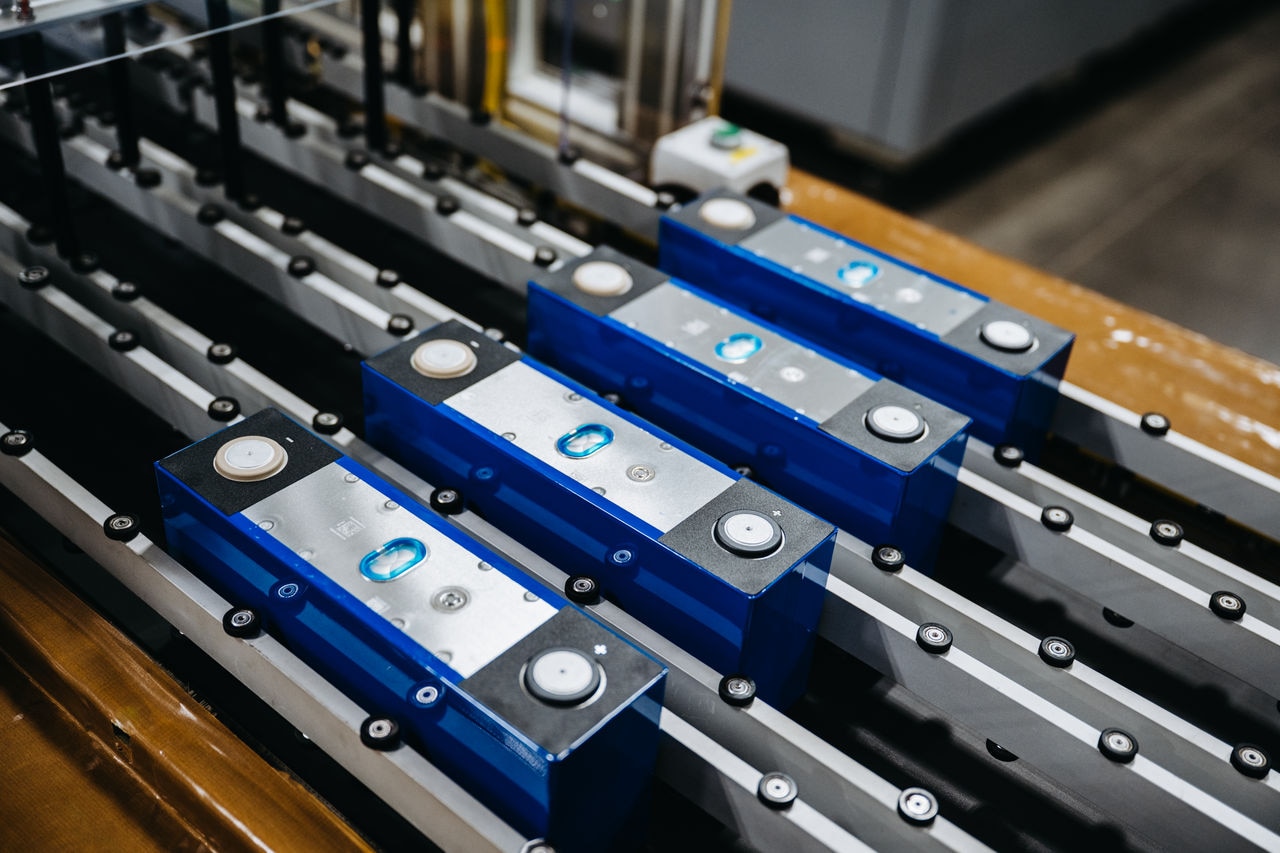
Ford is making those batteries for its Ford Fathom pickup truck, and thinks it’ll be able to assemble a bunch of them efficiently, and at a low cost:
The BlueOval Battery Park Michigan assembly lines can deliver 40 cells every minute, making it among the fastest LFP prismatic battery assembly lines outside of China. That pace helps drive down battery costs, and the facility has capacity for more. But speed must go hand in hand with quality.
This is important for many rah-rah American reasons, and for the general affordability of electric cars. That’s not why it’s a big deal.
The only truly successful EV automaker to ever come out of America, thus far, is Tesla, and Tesla was only able to scale up and reach actual profitability because it was able to make its own batteries. It’s such a key part of the car, and in a universe where protectionism is on the rise, it’s even more important now to achieve that level of vertical integration. GM is the second most successful EV automaker in the US, having achieved moments of rolling profitability. It also makes its own battery packs here.
There are a million steps between Ford deciding it wants to build an affordable EV and actually producing a successful and sustainable vehicle. This might be the most important one.
Audi’s Big SUV Concept Was Reportedly A Flop

Audi’s CEO Gernot Döllner has no shortage of haters, though perhaps the haters are right? That’s the feeling you get if you ever read Germany’s Manager Magazin, which has a big feature on the man. The first anecdote, which I haven’t seen reported anywhere else, involves the next Q7 e-tron.
This is, allegedly, a big deal for Döllner and Audi CCO Massimo Frascella, who have both put a lot of time into getting the Q7 just right:
Accordingly, the first major test of the Q7 a few weeks ago, before carefully selected participants (traditional Audi buyers, potential new customers) in a “Car Clinic,” was very important; important dealers were also likely invited. Previously, Döllner and Frascella had presented two vehicles for small production runs, such as the new Concept C coupé. With a car like the Q7, however, massive profits are made in good times. The design has to be perfect.
But the test results were a thumbs down. The feedback was catastrophic, says a Döllner companion, a real disappointment. The Q7 failed in direct comparison with the also-tested and significantly more muscular combustion-engine SUV, the RS Q8. Dietmar Scherer ( 56), the former series manager responsible for the Q8 until his departure in the spring, had been heavily involved in its development. He had emphasized the Audi-typical muscularity around the wheels and had the car built somewhat closer to the old design language.
Not great. The company, according to this report, is going to have to spend a lot of money fixing the design. I wonder if there’s a related burn from TMD favorite Klaus Zellmer? Of course there is!
The additional costs alone are extreme for a company that, according to corporate guidelines, must reduce its investments by almost €10 billion over the next five years. But something else is almost more dangerous for Audi: Many at the Ingolstadt headquarters are secretly delighted by Döllner’s design debacle. They gleefully recount how, even on a company trip, the then Škoda CEO Klaus Zellmer (59), soon to be Volvo CEO , had criticized the new Audi design as being too narrow. They mock Creative Officer Frascella as the “New Mussolini.”
That’s rough.
Rich Boyer Is back On The Shop Floor
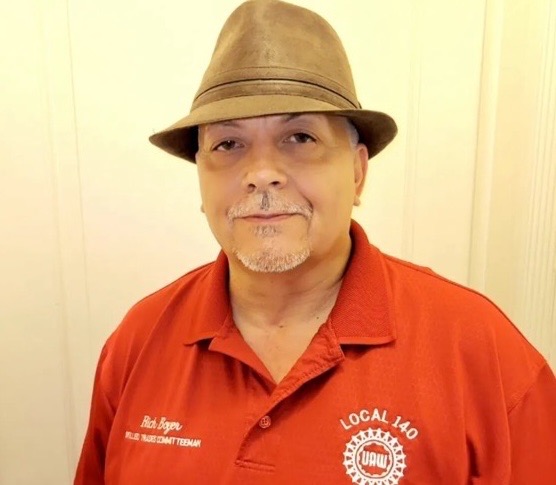
UAW Vice President Rich Boyer wasn’t a big fan of current President Shawn Fain, and unsuccessfully tried to unseat him this year. Much like Cincinnatus returning to his plow, the Detroit Free Press reports that Boyer is back to his old job:
Dressed in a pair of black-and-white Converse Chuck Taylors, blue jeans, a U.S. Army cap and a UAW jacket embroidered with his name, Rich Boyer blended in with the throng of workers filing out of Warren Truck Assembly Plant on Mound Road at the end of a recent workday.
Boyer had just clocked out of a 12-hour shift on a job he knows well, even if he took a four-year break from it to serve as a vice president of the United Auto Workers.
At 64, after losing a bid to become president of the UAW, Boyer is back to work, serving as a millwright in the powerhouse of Warren Truck, where Stellantis manufactures the Jeep Wagoneer.
This is a great story and I highly recommend you read it.
Koenigsegg Valued At About $1.4 Billion
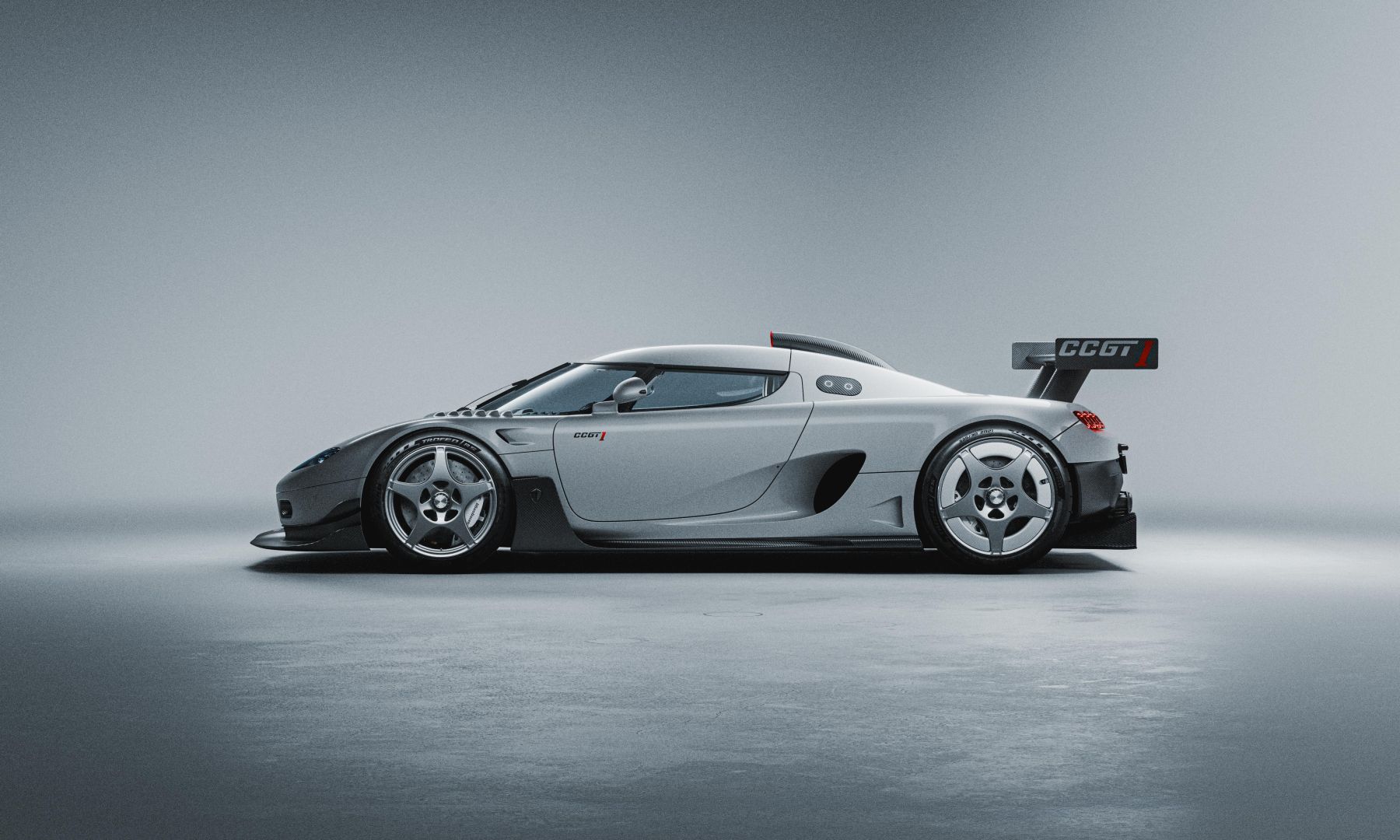
Christian von Koeingsegg is an odd duck in some ways. Just ask him about how he thinks gravity works! It’s a really charming kind of oddness, and while he looks and sounds like he could be the next villain to try and kill James Bond, I’ve always found him to be fascinating and gregarious in person. This is probably why Koenigsegg is my favorite of the hypercar manufacturers.
How much is the company worth? From Bloomberg, we get this rough idea:
Koenigsegg Automotive AB, the Swedish maker of multimillion-dollar track-focused cars, has sold a minority stake to a private equity firm owned by Temasek Holdings Pte, valuing the manufacturer at about €1.3 billion ($1.4 billion) as it weighs going public.
The maker of the $4 million Sadair’s Spear hypercar raised €20 million from private equity firm 65 Equity Partners, a wholly-owned unit of Temasek, Singapore’s state-owned investment company. 65 Equity Partners will become the second institutional owner at Koenigsegg, which makes less than 100 vehicles annually.
“This is primarily about bringing in a good partner as a minority shareholder for the future, not about raising cash,” Chief Financial Officer Johan Ekdahl said. The company can comfortably finance its investments and product development through its own cash flow, “but of course the new share issue also creates a bit of extra headroom for future investments.”
That feels low to me.
What I’m Listening To While Writing TMD
This keeps popping up on my Instagram feed, so please enjoy Chloe Slater performing ‘Fig Tree’ live at The Beach House Sessions. The ending kills me every time.
The Big Question
I’m going to Retromobile today and tomorrow, is there anything you want me to catch up with? If not that, what’s your favorite hypercar?
Top photo: Ford


Tell us the most regular-car vehicle at that fancy New York retro car show. Also let us know how much it would cost a regular-car-person to attend if they were to drive there in their classic car and have to pay for parking outside.
Regarding A123
“They were just a little early, maybe, and so the company went bankrupt.”
You know what else helped cause them to go bankrupt? Quality control issues that led to battery pack fires… which let to an expensive recall of Chevy Bolt battery packs and that was likely the biggest thing that did them in.
And for big automotive companies like Ford, in the future, making your own battery cells and battery packs is as important as making your own engines and electric motors.
It’s a key part that is expensive to get from a 3rd party.
If you have enough volume (and a company like Ford certainly does), it likely makes sense to start manufacturing cells yourself.
To answer the question on whether the same people opposed A123 getting government seed money and opposed Ford licensing CATL tech: yes, it was the same people. Those people have massive fossil fuel investments and are protecting their little fiefdoms. Screw the future of the human race, I got mine!
Matt, we need all of the coverage on old Delage’s
Domestic LFP production is a very good thing.
Not just for cars, LFP dominates in stationary storage applications, which will become more critical to the grid as time goes on. Also, it doesn’t hurt that CATL is the leader (along with EVE and BYD) for LFP technology globally.