

When approaching any administration’s automotive environmental policies, it’s easy to fall into the trap of giving politicians too much credit. For good or ill, consumer preference is the most important guiding force, and regulators do their best to shape policy around that preference to meet their political goals.
The aim of Democratic presidents in recent history has been a balance of encouraging environmental responsibility while maintaining economic stability. The aim of the current president, ostensibly, is improving consumer choice and lowering costs. However, in rhetoric and in action, this administration doesn’t show much regard for the environment, with President Trump calling the health threat of climate change “a scam.”


It’s here I should reiterate that both The Morning Dump and this website does not shy away from engaging in politics, as cars are inherently political, and sticking your head in the sand and pretending like that isn’t the case accomplishes little. Arguably, we are the most political major car site, as we’ve actively campaigned for changes to laws regarding small cars. What we aren’t is partisan. Cars are a great way for people of different views to engage with one another, which is getting harder and harder to do. My neighbor is about as diametrically opposed politically from me as possible, but he still sends me videos of the cars he’s working on and updates me on their progress.
Now that I’ve said that, allow me to make everyone mad. If a President Kamala Harris were in office she’d be doing some of the same things President Trump is doing, just without the rhetoric. Even before the election, President Biden was already finding ways to walk back or slow his own environmental policies. At the same time, what President Trump is promising doesn’t make a lot of sense and likely isn’t going to result in car ownership getting cheaper, and, in fact, it might make car ownership more expensive if you consider the cost of fuel.
That’s a lot. Normally, I cover a lot of different topics, and I’ll just touch on some other news quickly after the larger discussion about fuel economy.
The EPA Will Lower Targets To 34.5 MPG From 50.4 MPG By 2031

Back when President Biden’s EPA announced that it was going to dramatically increase fuel economy targets and increase incentives in order to get people into electric cars, we called it “America’s next moon landing.” Why? Even in China, where every possible lever to get people into electric cars has been pulled, the majority of vehicles on the road are gas-powered.
Whether you think getting people into electric cars is a good or a bad thing (I think it’s a net good thing), it was never going to be easy. The targets being set by the Biden administration were always going to be hard, and just a few months after being announced there were already reports about how the EPA was planning to walk some of those requirements back, or make them easier for automakers to achieve.
Going back to the Obama administration, there was a lot of hullabaloo and back-patting about increasing fuel economy standards, while the new regulations left open the light truck loophole, which is often correctly blamed for vehicles getting larger. The Biden administration also left it open. In an attempt to shield automakers from huge price swings, and to protect consumers, the EPA developed a complicated system that gave automakers credit for all sorts of things, including stop/start technology and air-conditioning refrigerant choice.
This gets way more complicated, and whether or not the waiver that allows California to essentially set emissions policies for the rest of the country remains in place is going to be more impactful than whatever the EPA says.
A good example of how this was going to go no matter who gets to ride around in Air Force One is Europe, where the politics of climate change are less contentious and there’s a lot more consensus on this issue. The EU is also backtracking on its EV rollout, mostly because it’s going to be too hard and expensive to achieve. The harsh reality that EV fans have to accept is that automakers were as driven by an inaccurate read of the market because of Tesla as they were by government regulations or incentives. Automakers had already shifted investments heavily towards EVs in the United States before the Inflation Reduction Act, and many of those same automakers were changing their minds before it was clear who was going to win the 2024 presidential election.
What both previous Democratic presidents tried to accomplish was saying all the right things about helping the environment, while trying to build a regulatory structure that prevented cars from getting too expensive too fast. It’s my belief that the politics of this was all wrong, and the push for electric cars, including the $7,500 tax credit, probably harmed the switch to electric cars more than it helped. While there was never a true EV mandate, there was enough of a push that it gave the Trump administration the ammo it needed to dismantle what Democrats built.
I suppose you could say that Democratic presidents were virtue signaling about the environment while also being quietly realistic about what was actually achievable (the Biden administration also did this with its energy policy). What we have now is, basically, the opposite. Say what you will about signaling virtue, if you’re a major political leader, what’s the benefit of signaling vice? How is that better?

I’m currently reading the David McCullough John Adams biography, and Adams makes a great point in a letter to Mercy Otis Warren:
Public Virtue cannot exist in a Nation without private, and public Virtue is the only Foundation of Republics. There must be a positive Passion for the public good, the public Interest, Honour, Power, and Glory, established in the Minds of the People, or there can be no Republican Government, nor any real Liberty. And this public Passion must be Superiour to all private Passions. Men must be ready, they must pride themselves, and be happy to sacrifice their private Pleasures, Passions, and Interests, nay their private Friendships and dearest Connections, when they Stand in Competition with the Rights of society.
If you view the threat of climate change as something that can impact our basic ability to live on this planet, then passing laws in order to reduce those effects is sensible. That’s about as basic as rights get. If you view the threat of climate change to public health as a scam, as basically this entire White House seems to do, then it doesn’t matter.
At this point, if the very real science of climate change hasn’t persuaded you, and just the experience of living on this planet right now doesn’t seem different, nothing anyone is going to say is going to matter (whether you think the focus on cars, versus maritime energy consumption or data centers or whatever, is misplaced is another kind of argument).
The Trump administration has attacked the environment at every level, including through major efforts like trying to revoke California’s waiver , and more recently, through minor changes like attacking stop-start technology. The stop-start debate can be seen as the weakness in the half-measure approach of previous administrations. While stop-start technology can reduce fuel consumption, the initial rollout of it was bad, and there are companies that did a poor job of implementing it. With the introduction of 48-volt architecture and hybrids, this isn’t as much of an issue for newer cars, but it’s a good political win for the current administration to crow about doing something. Are they overexaggerating the effect of reducing a credit for stop-start? Absolutely. Jalopnik‘s Erin Marquis did the good work of reaching out to every major automaker to see if they’d suddenly stopped building cars with ESS, as the White House implied, and no automaker had.
This is all pre-text, basically, because here’s Reuters on what the administration is doing:
The Trump administration will soon announce sharply lower vehicle fuel-economy standards, reversing a push by the prior administration to force automakers to build more fuel-efficient vehicles, Transportation Secretary Sean Duffy said Monday.
Under Republican President Donald Trump, the federal government has not detailed the final standard, but automakers expect it to be similar to a December proposal from the National Highway Traffic Safety Administration. That proposed a fleetwide average of 34.5 miles per gallon (14.7 km per liter) by 2031, down from 50.4 miles per gallon (21.4 km per liter) under former President Joe Biden, a Democrat.
There’s more:
NHTSA in December proposed retroactively revising down the 2022 fuel economy standard and then raising it between 0.25% and 0.5% annually through 2031. Biden increased required fuel efficiency for cars by 8% annually for model years 2024 and 2025, 10% for 2026 and 2% annually from 2027 to 2031.
Automakers get future compliance credits for achieving higher-than-required efficiency in prior model years, so the Trump administration’s retroactive change to 2022 will make it easier for the companies to meet future fuel standards.
The California-of-it-all aside, this is a large difference, though I think it’s likely that future Democratic administrations were going to find different ways to give automakers breaks (there’s a way to view both the tax credits for building EVs and the tax credits as a large offset to the penalties for failing to meet fuel economy requirements).
While the current EPA is lowering its standards for improvement and making it easier on automakers to meet goals–which is a net bad thing if you care about the environment–the overall impact on the cars automakers are actually going to build is not really clear yet. While EVs are going to come to the market at a slower pace, even with the $7,500 tax credit in place, it was clear that the conditions for EVs to be successful weren’t being met because the introduction of a bunch of new products didn’t result in a huge increase in buyers.
““We are about to announce a common-sense fuel economy standard because we want Detroit to build cars that Americans want to buy — not cars that Democrats want Washington to build,” said Duffy yesterday.
Fundamentally, people want efficient and affordable cars, which is why automakers are rushing to build hybrids. For all the rhetoric from Trump cabinet members about making cars cheaper, carmakers cannot turn their entire production strategies on a dime, and most automakers are wary of having a change in political parties in Congress and The White House again. Carmakers are also, generally, global companies, and aren’t going to start developing V10s for midsize sedans that can’t be sold anywhere else.
I think it’s possible and maybe even likely that this will cause a drop in the average cost of cars (NHTSA estimates $930 per vehicle, but I’m not sure I trust that number) by reducing some compliance, but I don’t think it’ll change the cars people actually want.
You know what also probably doesn’t help car affordability? Tariffs. The biggest impact will likely not be in the development of new, inefficient products for which there’s not much of a market, but rather the longer continuation of older products (the return of the Hemi-powered Ram for instance). The longer life of some car platforms, though, is also the result of spending too much on electrification and therefore not having money leftover to develop different cars.
Will that lower the net cost of car ownership? Not if fuel prices keep going up. In the absence of some extreme effort, the effects of supply and demand are real, and more EVs would have likely meant lower gas prices. We’re in the middle of the second global energy shock in a decade, both caused by shortsighted military action, and if an administration was really committed to lowering prices for Americans, encouraging electric cars and hybrids would be a good place to start.
A best case scenario is that automakers says “thanks” for the break they’re going to get from fuel economy penalties and put that money into new EVs, like the Ford Fathom, and more hybrids. A worst case scenario is that GM, Ford, and Stellantis completely give up on more efficient automobiles, causing America to become a stilted backwater that allows China to take over the car industry for the rest of time.
My guess is we’re a lot closer to the best than worst case scenario, but time will tell.
Chinese Automakers Are Looking To Find An Even Better Foothold In Canada
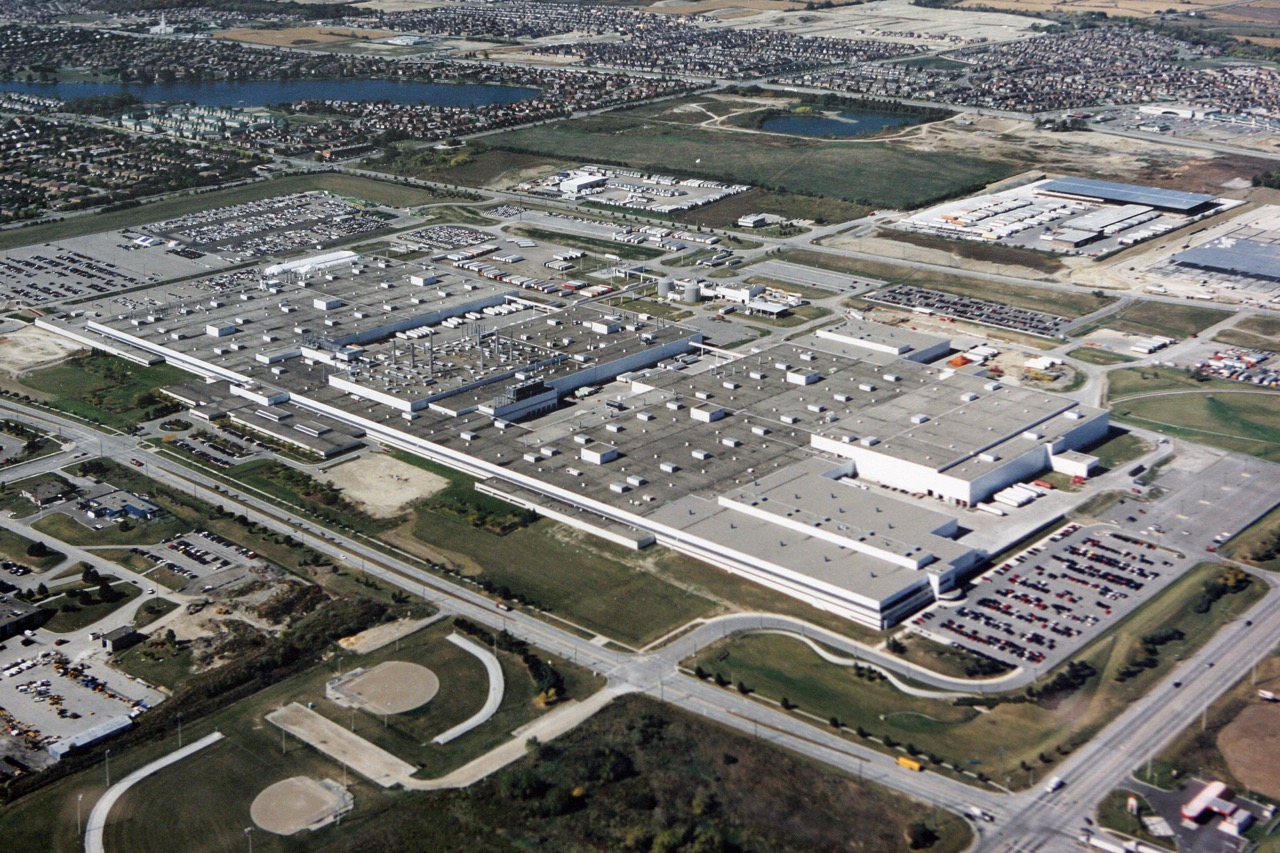
Could Chinese automakers build vehicles just miles away from the United States? Sure. In fact, with tariff policy being what it is and the ongoing trade war between the US and Canada, it sometimes feels like the Trump administration is purposefully making it easier on Chinese automakers.
From Bloomberg via Transport Topics:
Chinese carmaker BYD Co. inquired about taking over an idled Stellantis NV plant in the Toronto suburbs, according to a local politician, signaling possible global interest in Canadian auto hubs in the midst of a trade battle with the U.S.
Patrick Brown, the mayor of Brampton, Ontario, said BYD approached him about six months ago to talk about making buses at the factory. Stellantis had been retooling the plant to manufacture the Jeep Compass, but the company halted that plan last year when the U.S. adopted a policy of tariffs on foreign autos.
Brown said he also received inquiries from Leapmotor International, a joint venture between Zhejiang Leapmotor Technology Co. and Stellantis, as well as from an Italian automaker. Bloomberg News reported in April that Stellantis was discussing options for building electric vehicles in Canada with Leapmotor.
BYD’s first North American facility, I think, was building buses in California, which it still does.
The Government Of Lower Saxony Will Be The Decider

In today’s installment of what’s going on with VW?, we have The Wall Street Journal detailing all the troubles at the company, and the most likely outcome:
The government of Lower Saxony has sometimes positioned itself as a consensus-builder that can help other Volkswagen shareholders and workers see eye-to-eye.
If no compromise is reached, the two sides could return to negotiations, or Blume and his team could call an extraordinary general meeting of shareholders to vote on the most contentious parts of his agenda.
Under German corporate law, such proposals would normally need the support of 75% of shareholders. But Volkswagen is subject to a special “Volkswagen law” that raises the threshold to 80% for the most important decisions, potentially giving the state of Lower Saxony a blocking minority. Those legal complexities have never been put to the test.
If VW goes nuclear it’s going to be nuts.
Nokia Replaces VW

If you’re old enough, you remember almost everyone having a Nokia cellphone, and then you remember almost no one having a Nokia phone. With VW faltering, Nokia will replace the company on an important index.
Nokia Oyj is regaining its spot in the euro area’s main stock benchmark as Volkswagen AG loses its place in the latest sign of the difficulties facing the region’s automotive industry.
The Finnish mobile network-equipment maker will be added to the Euro Stoxx 50 prior to the market open on Sept. 21, index compiler Stoxx Ltd. said in an annual review of the gauge, ending a one-year exile. French utility Engie SA will also enter, while Dutch information services company Wolters Kluwer NV drops out.
Nokia shares have more than doubled in the past year as investors rewarded the company’s push into artificial intelligence and cloud infrastructure.
That stings.
What I’m Listening To While Writing TMD
Let’s get the energy up. If you’ve read this far, your reward is “Sure Shot” by the Beastie Boys.
The Big Question
All of this matters, but how much does it matter?
Photo Credit: Ford



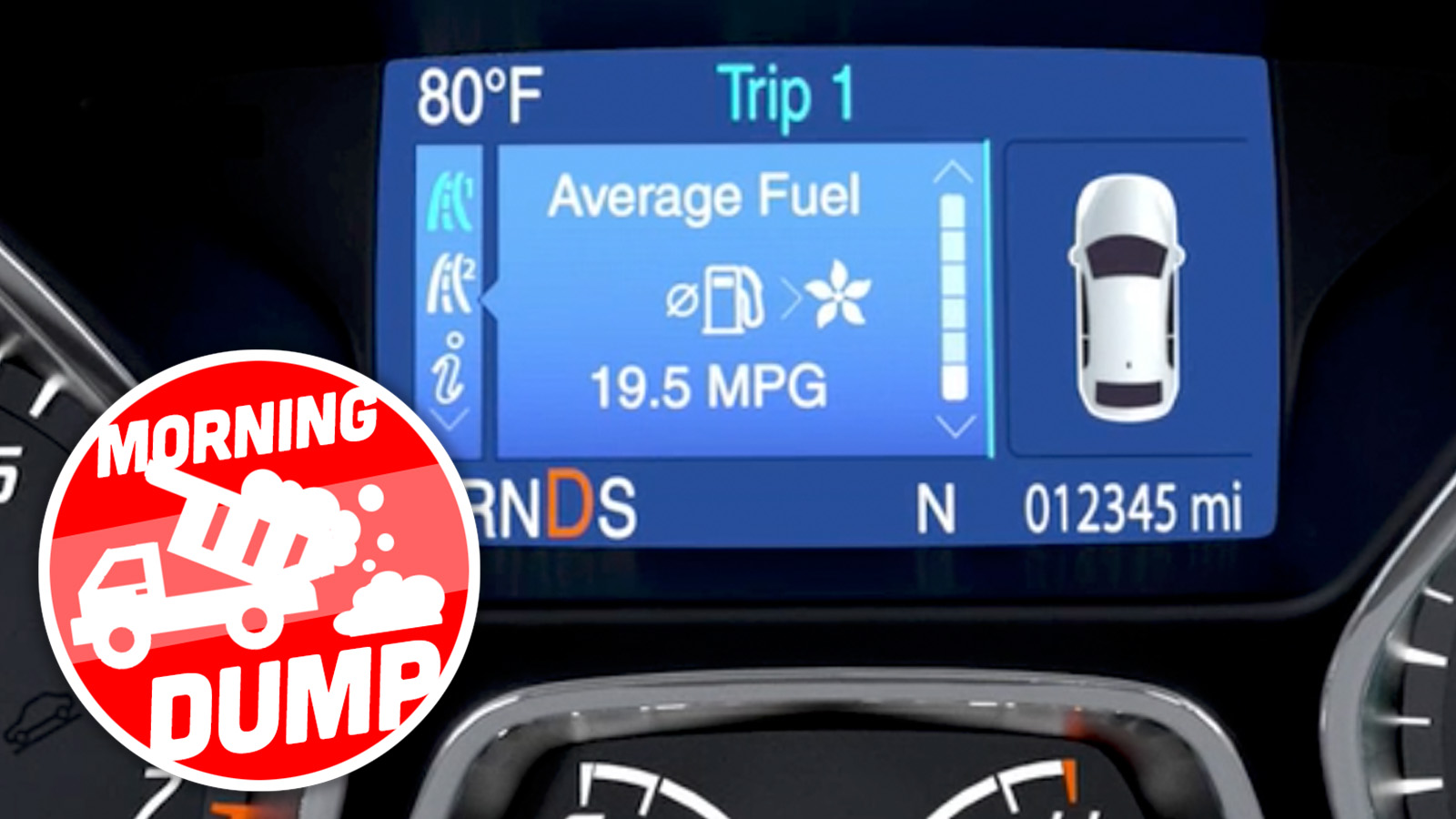
Get out of my head, Hardigree! The topshot is basically the cluster of my Focus hatch daily and that Adams autobiography is about my ancestor!
Ugh biography, not autobiography. Duh
You don’t have to work hard to convince me that neither American political party cares about the environment.
One actually had a party platform and active incentives for companies and individuals which were intended to positively address climate change – while the other griped about trans kids, held closed-door meetings w/ Big Oil representatives, and paid companies who were going to install clean energy facilities to cancel their plans.
But yeah – Totally the same.
Do both sides have issues? Sure. But one side’s issues are the size of a modest single family home, while the other side’s are the size of Trump tower. Which is which is left as an exercise for the reader.
Feels like a lot of people are ignoring that politics has often been about choosing which party or candidate is the lesser of two evils, and that the lesser evil is still the better choice. And in some instances the lesser evil is much, much less evil.
And then they vote for the candidate which is a failed businessman/f*lon/p*do anyway – because the price of eggs!
What does it matter and how much? ICE vehicles cause smog and particulates, which are bad because smog and particulates cause cancer, lung disease, and other serious ailments resulting in millions of early deaths, not to mention the incredibly high medical costs of keeping those afflicted, but not dead yet, alive.
On the other hand ICE vehicles are cheaper, and decades of wage stagnation combined with tens of millions of blue collar jobs lost forever because of trade agreements that only benefit shareholders, plus unregulated AI combined with automation that will continue to destroy even more blue collar and white collar human jobs, make the population’s increased need for inexpensive cars something that cannot be ignored by politicians. Over the past fifty years, anti-competitive and pro monopoly executive, congressional, and judicial moves (special mention here of Citizens United) have pushed us toward what is essentially a government controlled by the top 1/10 of 1%. There are no real regulations if all you need to do to get around them is the one-two combo of dark money political donations and lawsuits in friendly courts.
All of that is why, as a nation, we no longer have a luxurious choice between clean and dirty cars. To answer the question, this particular policy change doesn’t matter even a little bit.
The overwhelming majority smog and particulates present in our air do NOT originate from light duty passenger tailpipes and would not be reduced in the slightest by pushing consumers into battery electric cars and trucks.
You got a credible source for that claim? From what I can tell, passenger vehicles account for about 2/3rds of those pollutants in the US. See, for example, the study linked below.
https://pmc.ncbi.nlm.nih.gov/articles/PMC10825624/
Not to be an ass, but do you? You linked to a study on the environmental effects of COVID lockdowns wiping out the majority of all economic activity including heavy trucking and manufacturing – the actual remaining sources of smog and particulate pollution.
On a per-mile basis, light duty passenger tailpipe emissions have been reduced more than 99.9% since the days of smog. If you want to do more, you have to find another stone to squeeze blood from.
I would suggest trying the EPA Air Emissions Inventory, which has data online for 1990-2023.
I admit that it’s a little bit confusing. They used the changed mixture of vehicle traffic during Covid and the changes in observed pollutants as a way to determine the relative contribution by vehicle type.
FWIW, Gemini thinks the light duty/passenger vehicle contribution varies between about 25% to 75% of the vehicle total, depending on pollutant.
https://share.gemini.google/dkpk3AjTW5SJ
If you’re interested in a good faith discussion, I feel that the onus is on you now to show some evidence for your claim that the “overwhelming majority” of pollutants don’t come from light duty vehicle vehicles. I’ve done my part to contribute more than just my opinion to the conversation.
Finally, I think it’s great how much progress we’ve made on smog. I lived through the 70s, so I’m very well aware how much worse things were. However, the health consequences, not to mention climate change, are still very real and cost tens of thousands of lives and hundreds billions of dollars in the US every year.
(See my other comment for references)
I’ll try to stop by later today, but I’m off to work now and the Thursday meeting schedule is busy.
I hope I didn’t come across as to combative, because this IS something that needs good faith discussion, because it’s difficult for even non-laypeople to wrap their years around the scale of invisible things being measured here.
For just one small piece of perspective, consider that the pre-regulation, uncatalyzed vehicles emitted in the vicinity of 10,000-20,000 mg/mi NMOG+NOx and 50+ mg/mi particulates on the standardized drive cycles we use today. The systems I’m developing for my OEM customers today for roll out in the next 3-5 years target 10-20 mg/mi pollutants and 0.5 mg/mi particulates. Heavy duty diesles largely escaped the regulations that produced this outcome until 20 years ago, and continue to escape enforcement of those regulations even today.
Hey, appreciate the tone of your reply. Given that you’re actually working on the systems, it’s a pleasure to be talking with somebody with expertise.
OK… so the EPA NEI does have the data were looking for here and there’s a pretty cool tool for navigating it that… Sort of works. There’s no way I can see to post a direct link, but the data is there. It’s defaulting to 2020’s data, which is probably a bit skewed and I haven’t figured out how to change that, but I don’t think it’s skewed enough to significantly alter the point.
Total annual national emissions of VOCs, NOx, and PM2.5 are 46000, 5800, and 8800 kilotons, respectively. The only one of those for which mobile emitters (of all types light, heavy, ground, air, sea, and off-road) are the largest source is NOx at 45%, with stationary sources close behind at 38.5% and biogenics and fires making up the remainder. All mobile emitters account for less than 5% each of VOCs and PM2.5.
Of the 45% of NOx originating from mobile sources, only 9.6 percentage points (27% of 45%) is from light duty non-diesel vehicles. This is actually a lot higher than I expected and I’m very curious why this is! But it’s nevertheless a lot harder to move by adding more 9s onto the end of the 99.9% reduction that’s already taken place in the light duty space. I suspect that it has more to do with older vehicles still in service than it does with vehicles certified in the last decade.
All of this is not to say that emissions controls are not worth developing (I wouldn’t be doing my own job security service if I did) – take a trip down to Mexico or anywhere else 2-stroke mopeds remain popular and see just how fast air quality can get away from you when the mobile sources are only a few feet away – but perspective must be maintained if regulations are to drive real improvements in air quality.
Automotive regulations have been dragged into the culture war and the result is already becoming high costs that benefit no one.
Agreed that this should be evidence based, and I get the point that there is perhaps better ROI to be had in other sectors, at least for some of the pollutants.
That being said, light duty vehicles emit something like 1/6th of all greenhouse gases in the US, and the obvious solution to that, EEVs powered via solar etc, also comes with tons of other additional benefits for owners and the world.
The larger point is that these regulatory rollbacks take us further away from an obviously desirable goal for meager short term gains (unless you consider owning the libs a benefit).
Here is just one potentially unintended impact of the EPA change.
-Ford splits production, they roll out new engines and model generations in Europe first, and then the US a few years later. This makes Ford a lot of money now, and saves US customers a little now. After a few years, the logistics of having spare parts of two different cars comes back to bite everyone, increase warranty costs, increase customer repair costs, etc. The word gets out and sales drop in the 5-10 year timeframe.
-A smaller company cannot afford to split the models, so they upgrade the US version along with the rest of the world. They sell fewer in the US than they could have, but after a few years they become a lot cheaper to operate, they stay on the road longer, and the companies long term reputation is significantly increased lead them to much better than expected sales in 5-10 years.
Carrot works better then the stick. Governments of the world got into being the stick and then found out people are sick of that as soon as it begins. It’s still chaos and still a problem because political extremism. People have to choose not from the best but who will do the least harm. The people that should be running for office now are smart enough not to be. People that try realize you can’t deal with idiots and leave. And the press is telling everyone that very vocal minorities are the majority. That’s a global problem. The majority of people just want a stability and not told what to do.
EVs will win out when they are ready to. They can be good and cheap. At the same time they are only as clean as where they are getting their electronics. It’s going to be a slow burn and still the idea of forcing everyone to do it quickly was absolutely nonsense especially as they didn’t ease regulations to build charging and generation capacity quicker. Nor did they for any of the factories or plants needed. Planned economies don’t work. Yet we have little morons yelling it has to happen. Government need to be the safegaurd the the watchdog. That’s it.
Solar is also a great thing, the problem is government money attracted scammers. Those clowns knocking only had to sell one system a month. They took all the profit and left people with a debt, a systems didn’t work, and a bad taste in their mouth. Building code has gotten so corrupt. It’s only corporate interests now. The whole stamped junk lumber thing just because they had a monopoly and could opened peoples eyes. But it goes beyond that. Anytime safety is mentioned someone is going to take away rights and rip you off in the process.
The word justice has a similar problem. It can be taken to mean just anything. What’s justice for one is not to another. Property, food, live stock have all been taken in the name of social justice. I look at Europe and there is one county that bucked the system because it had been thorough it all before. Now they are better because they didn’t cave. I can’t believe what Poland has done in 2 decades. They have had 3 decades of freedom and have brought themselves up. The baltics have also done a decent job as have many of polands other neighbors who have been there done that and told the EU thanks but don’t do that. Poland was a country everyone fled from. It’s staring to be a country people flee to. As are some of its neighbors that held the line.
We seem to be in a era of communisms revenge. It’s propped up by money from people who want to see the downfall of the west. Who have people acting like it’s 1939. Yet are claiming people are victims who aren’t and actual victims are oppressor. Because Marxism there is only victim or oppressor. That’s binary system where they will fight saying nothing else is. Insane behavior.
It’s not surprising Chinese want to take over Canada capacity leap motor doing as well as they have is. Stellantis might keep it in the family that’s also surprising. I still think they are on track for a fire sale.
I don’t think it affects the average consumer much. Gas is $4, and if Cadillac chose to reintroduce the 2027 Fleetwood Talisman with an EPA rating of 8city/12highway, I don’t think they’d get many buyers.
Considering how many office workers buy giant trucks that are pretty fuel inefficient, I don’t know if that’s true.
I was hoping there was going to be a more in depth analysis of the proposed change in fuel economy standards beyond the shouty top level ‘Down from 50 to 35 mpg!’ numbers, because whenever there is a big swing like this the devil is always in the details.
One of the biggest proposed changes is pretty fundamental, and helps explain a lot of the gap between ‘new’ and ‘old’ targets. Namely, any vehicle that doesn’t use fuel at all (i.e. EVs) are excluded from the CAFE calculations. Just with that change alone you’d have to lower the top line target number just to keep the targets from becoming de facto much more difficult.
Another major change is that it eliminates CAFE credit trading, so companies with gas-guzzler lineups can’t just buy credits from companies that sell primarily fuel efficient vehicles only.
Finally, there was a *really* significant change to how vehicles are binned into ‘light truck’ versus ‘car’ categories; currently ~70% of LD vehicles sold in the US are ‘light trucks’ for the purposes of CAFE, but under the new revision of the rules the current fleet would be flipped and it would be 70% cars (basically closing the loopholes that crossover SUV’s are designed to exploit). The footprint rule complicates everything, but for a mid sized sedan (or crossover) footprint that change alone would be like hiking the 2031 fleet CAFE requirement from 55 to 61 mpg overnight.
Matt is right in pointing out that everything is politics, and politicians will *say* things that make what they’re doing look like it is what their base wants – thus blue team will make big splashy headlines about how tough the CAFE rules are going to be (51 MPG!) while quietly tweaking the details of the rules in the background to make it something that won’t crash the whole automotive sector. Now we have the opposite – red team is making big splashy headlines about how they’re throwing out the rules those other bunch likes so much, but quietly in the background they’re tweaking the details of the rules to make it something that won’t crash the whole automotive sector.
In general, don’t panic – it’s what they want so they can control you. If you really want to know what is actually going on, resign yourself to doing a bunch of reading on your own – opening the eCFR to see what the rules actually say is a good place to start.
Logic and reason in a political discussion, no we can’t have that.
Remember to vote for Turd Sandwich this November, cause he’s better than that crazy Giant Douche.
Sure. If you really want to discourage EV production, remove their MPG from the manufacturer’s overall fleet rating. Also, get rid of any incentive ($7500) to build them in the first place.
Even our most backwards state (TX) continues to expand solar at a nice clip and offers tax exemptions for residential solar. Yes, THAT TX.
Tesla doesn’t care. They have never sold a gas car and Musk gets to sell his crap to the government, anyway, for whatever price he cares to charge.
The nearest relief could come in November, if the country votes rationally, and any day ending in Y if father time does his job. Otherwise, we have a couple more years of lower prices, no wars, and bigly improvements in our every day lives.
Gross.
The administration lowering MPG targets while opening “Freedom” gas stations that dont pay their suppliers of gas, while everything is so expensive thanks to their decisions, not a single OEM will follow their Michael Scott way of running the country.
Somehow, we’re living in the golden age of cars. We have an amazing variety of choice, cars that are fast, safe, fun, clean, and reliable, and generally fuel efficient. Yes, they tend to be pricey but they also have a lot more content than the old Valiant.
This is a result of government regulation, corporate design and engineering, and consumer demand over a few decades. There’s no denying that government fuel economy, emissions, and safety standards have led to better cars now than ever before.
That’s not to say that the system is perfect, but it has made fairly steady forward progress until now, across many political changes. However, the current administration isn’t basing policy or science or market realities – it’s more about burning down the house that others built, plus some toxic midnight Big Mac-fueled game of magic 8 ball / ouija board to figure out what random policy change is going to be tweeted next.
Any carmaker that radically changes their product mix because the toddler in chief throws a hissy fit is probably not going to succeed for the long-term.
In the end, it’s the economy, stupid. Gas prices will inevitably and generally go up until gasoline goes away. If I have a choice between a car that gets 35mpg and one that does most of the same stuff but gets 50mpg, I’m usually going to buy the more efficient one.
Well put together comment!
Hypothetical imperatives don’t apply to cars:
That’s why CAFE standards need to drive innovation, we have seen the cycle of fuel shock –> small cars –> cheap gas –> big cars over and over since the 70s.
In addition very few people face the consequences of ICE engines. If bunnies literally burst into flames when a gas guzzling car passed by maybe, but the slow creeping death is too slow for people to cop to. (Ironically the people against guberment intervention love the boiling frog metaphor, yet don’t see we’re already boiling frogs.)
I think the second biggest road block to engaging in better energy technology is misinformation, like the cute cartoons depicting the EV being charged by a smoke belching power plant. Or that range is even an issue for 80% of commuters.
“Somehow, we’re living in the golden age of cars. We have an amazing variety of choice…”
We do?
No Ford cars other than the Mustang.
No GM cars other than the Celestiq, CT-something, Bolt
and CamaroMercedes-Benz, BMW and Audi have cancelled coupes & convertibles left and right – and good luck getting a wagon that’s not a faux-offroader or SuperSportsWagon.
But if you want a 4-door Truck or SUV – Tons of choice for you!
I was using “cars” more broadly for personal transportation choices – I’d include CUVs and SUVs and minivans and trucks in our array of options.
But if you restrict it solely to cars in the traditional sense, we still have an embarrassment of riches even if some manufacturers don’t have many offerings.
I happen to drive a Maverick hybrid, which I use as a “car” (personal transportation for me and maybe some passengers) 95% of the time and a truck (hauling and toting) 5% of the time. I can’t afford to have two vehicles. Given that the Maverick drives as nice as any car from 10-25 years ago, gets better fuel economy than many cars, and is cheaper than the average vehicle transaction price even fully loaded… I think Ford is meeting my needs even without a Focus or a Taurus.
You know what is a massive avoidable source of carbon emissions and a nightmare cocktail of toxic pollutants? Blowing things up. Just saying.
Sounds like you’re a Strait Shooter! Any interest in working for SecDef?
Only answers to SecWar now.
BYD has a bus factory in Canada already. It opened in 2019 in Newmarket Ontario.
But, yes, the Lancaster California factory precedes it.
So BYD is not, exactly, a completely “foreign” company at this point to either Canada or the US from that aspect.
To borrow a phrase from old Top Gear, the 50.4 MPG fleet average goal was “Ambitious, but rubbish.”
I remember when the US was a “Can Do” country.
Now we’re a “Gosh, it’s so hard – and so inconvenient – and whatever those other people tell me to think… Why even bother?”
35MPG sounds like a good target to have in all honesty if you get rid of the footprint rule. It would remove the incentive to make vehicles comically big with no interior space to show for it, and maybe we’d start having cools “cars” again in a decade.
Get rid of the footprint rule, extend the definition of “light truck” to anything under 15,000lb GVWR and hold them and cars to the same standard as cars. Since that’s what even a lot of dually crewcabs get used as, cars.
35 CAFE is 24.5 EPA combined on the window sticker. The 2025 fleet average (EPA combined) was 27.2 mpg. Trump is setting standards in 2031 lower than what was achieved already.
That and his move to retroactively change the standards from 2022 to 2026 will be challenged in court and could see the regulation overturned in court.
I guess the whole CAFE thing should go too… What’s the point of getting a rewarded for something that’s supposed to improve fuel economy as it should naturally show up in the real world fuel economy results.
Things that improve CAFE do improve real world EPA fuel economy.
The problem is that we have not adjusted down the CAFE numbers in the same way we have the EPA numbers so the public is confused.
I’m a major supporter of EVs for people IF they can charge at home. They make sense on paper and in practice, IF you can charge at home. Road tripping isn’t bad especially if you like to stop and have lunch and enjoy the trip IF you leave fully charged FROM home. I would love to shove an EV to everyone under the sun, but there are limitations to it.
What other have said as well, our personal vehicles are large contributors to climate change, but not as much as our Energy grid, shipping, and dare I say the 1%. Nuclear is getting a second wind lately and even though it is flawed, it is the best option we have for long term clean energy. It doesn’t help that the US sold the patents and IP for solar, wind and battery chemistry to China in the 90s and 00s. There are larger fish to fry in my opinion well that doesn’t stop the fact that more efficient our vehicles are the cleaner our local environment will be.
Passenger vehicles represent a very sizable chunk of global CO2 emissions. Transportation makes up ~20% of global CO2 emissions, and of that, ~45% are from passenger vehicles. ~30% is from trucking, ~11-12% each for aviation and shipping.
https://ourworldindata.org/co2-emissions-from-transport
Thanks for this info!
Bottom line, lead times in new vehicle and powertrain development are vastly longer than the 2 years and change he has left in office, at most, so no automaker is going to make major changes to their product mix or R&D strategies solely based on that, if actual market demand isn’t demonstrating an actual need for change (which is what really caused the reevaluation of EV plans and the return to interest in hybrids). And, realistically, demographic trends point to a progressive Dem taking office in 2029 and probably holding it to the end of the century, barring another fluke novelty candidate
Automakers love money and hate uncertainty. Spending money to comply with regulatory changes whose future is uncertain after 2028 is not going to happen. Decreasing fleetwide fuel economy in a world where Iran has realized that they can bring the global economy to its knees by blocking a strategic waterway isn’t going to happen. And, in an age of largely global vehicle architecture, producing vehicles that will be noncompetitive in any country outside of ours won’t happen either.
It’s more performative fuckery from an administration that is basically a three-ring circus full of ass clowns. I’ve decided that it does no good to be continuously outraged by every stunt they pull at this point. Vote ’em out this fall, vote the rest of ’em out in ’28 and never let ’em back in again.
The single minded focus on EVs over not only hybrids and plug-ins, but other ways of reducing emissions throughout the country and the world, has always seemed awfully suspect to me.
Climate change may be real (I certainly believe so) but the idea that it’s an existential emergency doesn’t jive with slow-walking nuclear power, ignoring carbon capture, allowing ships and planes to pollute as much as they want, income limits on EV credits, and so on.
I’ve said it before and I’ll say it again. If every personally owned car and light truck in the US was magically converted to an EV tomorrow, global emissions would drop less than 1%. It’s not a panacea and too often it seems like people want it to be.
It’s politically unpalatable, but a carbon tax is the way. The externality that we want regulated is carbon emissions, not internal combustion engines or any other specific source.
Taxing fuel would be the fastest way to push adoption of fuel-saving initiatives (as well as reducing subsidies to the oil industry – up-to-and-including the warmachine).
It would sure be political suicide in the current political environment, but likely the right thing to do.
The federal gas tax hasn’t been raised since 1993. Tennessee (where I live) phased in a 6 cent increase over multiple years, completing in 2020. Prior to that 6 cent increase, it hadn’t been raised since 1989.
The political will is weak.
If I recall correctly, the current federal gas tax is also not tied to inflation. So in addition to not being raised in decades, is also worth significantly less today than when it was set.
I think the first step should be to simply tie it to inflation so it keeps pace. People will still scream, but its hard to be too mad about tying the tax to inflation…
Pie in the Sky: I would also like to see a gas-tax replaced with a usage tax based on miles driven which should accommodate future fuels. Maybe with discounts if your vehicle meets certain criteria such as zero emissions, fuel efficiency, light weight (less wear on roadways), etc. With so many service shops reporting mileage nowadays it seems relatively easy to implement (If Carfax can report mileage…..). For the people that rarely take their car in somewhere, ask them to do an annual (free) check-in to report their mileage, if they don’t, charge them some insane amount (ie: 25K miles with no discounts) to incentivize.
Agreed on all points. Cars are a drop in the bucket compared to power generation, industry, shipping and the airlines.
Not really. Transport is the second largest source of carbon pollution and passenger cars are the largest source in transport.
https://survive-climate-change.com/personal-transport-emissions/
Cars are low hanging fruit… but all the fruit eventually will need to be picked.
Cars and trucks are responsible for about 25% of CO2 emissions in the US — hardly a drop in the bucket.
Emissions from cars and trucks cause tens of thousands of premature deaths and a wide range of serious cardiovascular health effects annually in the US. Health impacts from vehicle emissions in New York State alone cost about $16B in 2016.
And it’s not like we have to suffer to solve these problems. Anyone who has spent much time in an electric car knows that they’re vastly better for 95% of use cases; smooth, quiet, quick and with much lower operating costs if you’ve got rooftop solar, or live in a place with cheap electricity.
https://share.google/aimode/2I8hmhbwi0TjY46af
https://www.epa.gov/greenvehicles/fast-facts-transportation-greenhouse-gas-emissions
https://ie.unc.edu/news/new-study-identifies-leading-source-of-health-damages-from-vehicle-pollution-in-12-states-and-washington-d-c/
I’m personally a fan of decarbonization through green power initiatives. Right down to grid decentralization through things like solar on houses.
The more spread out the load is, the more resilient the grid, and the less infrastructure we have to build overall.
It’s one of those “help the environment” and “save money long-term” kind of win-win scenarios.
Yes, we need to get as far away as possible from the 1970s “environmentalism” (actually degrowth) attitude of “building anything is bad”.
Build things! Drive down costs! Replace old infrastructure with new, more efficient stuff! There’s so much low-hanging fruit out there.
That’s definitely true. Of all the things to be stuck in the past it’s the one that shouldn’t be. At least the AI bubble has allowed for nuclear power to finally have the hands removed from its neck. You couldn’t build a new one and some have gotten operation permits 40 year after what they were initially designed for. Some optimization have been made over the years but still what will be essentially 60 year old infrastructure. Because the industry has been over regulated. Makes zero sense.
Corn ethanol with carbon capture would be extremely competitive in a carbon tax environment. This is a problem for those who would like to pick winners and losers.
So much of the issue is separated from US consumers by multiple layers. International sipping and commercial air travel are huge contributors. But the only ‘direct’ way for an average person to direct it is, as you pointed out, ‘degrowth’. Buy less, use less, do less. That’s not going to work, people aren’t willing to make that kind of sacrifice to the levels needed voluntarily, and if it’s regulated, people will revolt.
Maybe modifying behavior through taxation will help, but it’s a slow process, push too fast and here comes the revolt again.
Personally I curb as much as I comfortably can, but I know in the end it’s not making a dent. Maybe as the natural disaster rate climbs people will tolerate more change.
Personally my focus is on local emissions not carbon. Automobiles are major contributors to the local emissions in our cities that cause smog and respiratory disease. They put out their pollution at the ground level right in the middle of population centers. Despite ever increasing emission regulations our local air quality has not been getting better in many major cities and air quality is declining in some.
Huge gains were made early on but continuing to nibble along the edges with gas cars or hybrids is not going to move the needle on local emissions.
Planes and ships may not have carbon limits but they do have every increasing regulations on local emissions. If it has an engine it has a emission regulation. Ships, planes, locomotives, generators, lawn mowers, excavators, tractors ….
Luckily most things that we do to address local emission also reduce carbon.
Who do you think “slow walked” nuclear power? Could it be the same people who are slow walking solar, wind and EVs?
The oil industry! You’re talking about the oil industry!
Why do you think that ships and planes are allowed to pollute as much as they want? Why do you think that there isn’t engineering and legislation aimed at reducing those emissions as well? The US has implemented regulations on the fuel quality and emissions on ships within US waters, which has been driving changes industry wide. Within aviation, fuel use is the #1 operating costs for airlines, so for decades there has been constant development work done to reduce the fuel use per passenger mile.
Transportation makes up around 20% of global CO2 emissions, and of that, passenger cars are the largest share at ~45%. Trucking is ~30% and aviation and shipping are each ~11-12%.
https://ourworldindata.org/co2-emissions-from-transport
The Toyota Camry proves 50.4 MPG IS achievable even in an affordable midsized production sedan. And that’s with a drivetrain *only* achieving 41% TE. It could beat that with a more extreme Atkinson cycle engine like BYD’s 48% TE engine or perhaps Mazda’s upcoming Skyactiv3 engine (although Mazda has over promised and under delivered before). Hyundai also has a few 50 mpg hybrids. There is still room for improvement in hybrids
I don’t think the problem is technical but is the marketing driven American consumer preference for oversized, overweight, pedestrian smashing aerodynamic bricks and manufacture’s addiction to the much greater profitability of those vehicles.
The full-size Crown still does like 44mpg, so even big sedans can be more efficient than the tinny econoboxes of decades past
Hell, if you do lots of Interstate driving with the cruise control set at a reasonable speed and behave, even a 5.7 Hemi in a Charger or Challenger will very easily do 30mpg on an extended highway run (while, in the real world, a Pentastar V6 in a RAM 1500 is going to be more like 23-25mpg tops with the eTorque mild hybrid)
In the real world, a Pentastar V6 in a RAM 1500 is going to be more like 23-25mpg tops with the eTorque mild hybrid
I got 27 MPG on the highway in one of those. Granted it was at 55MPH in the right lane but there’s nothing stopping RAM drivers from doing the same. If anything I think large trucks and SUVs SHOULD be relegated to the right lanes at slower speeds for the safety of others in smaller, more fuel efficient vehicles.
I’ve put 9,000 miles on one since the middle of July, and 22-23 is the best I’ve been able to do, which is actually slightly worse than the 130,000 mile 2023 1500 Tradesman it replaced. At first, I figured it was a break-in period thing, but I’m increasingly less sure of that
What needs to happen is slower vehicles, or ones with excessively nervous or timid drivers, need to stay to the right instead of cruising down the turnpike in the left lane doing 60 in a 70 in their Subarus while the right lane is clogged with semis doing the exact same thing
If those Subarus are driving well below the posted speed limit MAYBE they should move over. 60-70 gets into prima face territory and is still likely going to be well above minimum speed limit. Conditions can certainly lower speed limits but they never raise them. So whether they should move over is subject to conditions.
If OTOH those Subarus are driving the posted speed limit they are perfectly entitled to use the left lane and that fact should not bother you whatsoever.
But if you’re complaining that those Subarus are blocking you from speeding then YOU, not the Subarus are the problem. Speeders have no entitlement and therefore you’d have no basis for complaint whereas they do since your speeding in a full sized pickup would put them at greater risk.
So if you are a speeder instead of making the roads more dangerous how about slowing down and enjoying the fuel savings instead mkay?
You shouldn’t be going slower than the posted speed limit in the left lane, you just shouldn’t. Right lane, as long as you’re above any posted minimum, fine, you can poke along there to your heart’s content, but if you are honestly telling me that you – yourself – putter along at 10 under in the leftmost lane of a multilane highway, than you are actually violating traffic rules and are a problem
Again depends on the conditions. Posted speed limits assume ideal conditions. In heavy fog for example NOBODY should be driving the posted speed limit. Same with rain, icy road, maybe even night time if it’s dark enough and there’s a chance of a moose ahead.
If conditions are ideal then yes a car driving below the posted speed limit should move over or speed up to the posted speed limit.
Yes too many Americans are oppositional, defiant toddlers and love their big trucks they never use but somehow still need to tow 80k lbs uphill at 100 mph for 1000 miles.
Global players will continue to push for efficiency, because outside of this continent, customers demand it (and, in many cases, other governments mandate it).
My 2023 Kia Rio gets 55 mpg at 55 mph and it does not even have automatic start/stop. I think 50 MPG is probably achievable without hybrids as long as cars are not shaped like bricks.
True and 50 mpg EPA combined is about 62.5 mpg CAFE
CAFE numbers still use raw test results and have not been adjusted since the 70’s. EPA mpg numbers that we see on the window sticker have been adjusted down multiple times since then.
The dems at least try to accomplish something. As far as I can tell, all the GOP does is try to reverse anything the democrats enacted while accomplishing ZERO worthwhile and generally just taking us backwards.
Be honest with yourselves. Unless you are rich, name one single thing that is better today than it was 2 years ago. Oh, except for the price of fucking eggs.
It’s like a freaking endless cycle of one party screwing things up, the other getting them mostly fixed, and then here we go again.
Yes like every petty grievance from the 1950 to today is their platform. Like how does demolishing the Kennedy Center help Americans live better?
Or renaming bodies of water, frankly, I don’t think that was really an issue for, well, anyone, including average voters on the right. Like, really, nobody, at all, cared about the existing names of a lake and a gulf, to the extent that they even thought of them at all
“I know you are but what am I?”
For me it’s electricity. PG&&E has never been cheap but I was shocked to see they lowered their EV charging rates a few months ago to below those of 2 years ago. It doesn’t make up for the stupidly high rates of the past but its a start.
Maybe ancient computer hardware too. My computer uses DDR3 and I bought a pair of 8GB sticks a couple of months ago at almost exactly the same price I paid 10 years ago for my existing pair despite the RAMpocolypse. I dunno what they would have costed 2 years ago though. Same with video cards. I bought a somewhat newer/better card to replace my even older card. The price was lower than when I looked a few years ago. Thankfully I bought a fuck ton of hard drives and a raspberry pi 4 for a Covid project. I’d hate to be shopping for those now.
Also maybe lower end, used EVs. From what I can tell the asking prices have come down on Chevy Spark EVs, Chevy Volts, Ford Fusion Energis etc, even with the federal rebate accounted for. Its just my impression, not a through analysis though.
Very insightful piece on the current political situation. I could only add these points:
(1) If we look at today’s levels of horsepower, performance and emissions, the EPA has, it could be argued, been the best thing that’s ever happened to the internal combustion engine. Regulations have resulted in cleaner, more powerful engines, and horsepower per liter is at an all time high.
(2) The money’s been spent and automakers are not going to decontent vehicles because they no longer have to meet certain standards. Not when a potential new administration is very likely to dismantle Trump’s policies. So, not much is going to change.
Love the member badge! I agree on both points. The President CAN have a huge impact on how cars operate, but this specific action isn’t probably as impactful as some think.
Yes and No. It really depends on how long things stay the same and what happens in future elections.
NHTSA held CAFE standards flat from 1990 to 2010 for cars and 1996 to 2006 for trucks. Congress also held CAFE fines steady so the inflation adjusted cost dropped every year. In that timeframe:
Car companies moved the focus away from fuel economy and shifted to making cars larger, more tech heavy, and more powerful.
The shift from cars to trucks is a big part of that, if the percentage of total sales represented by cars had stayed the same over that period, you wouldn’t have seen that drop-off, but light trucks were already getting close to half the market by 1999/2000
At the time there was no reason to move from cars to trucks with CAFE flat and fines decreasing in real terms. That is unless you want to make your cars larger and way more powerful.
That change was happening all during the ’90s, light trucks jumped from 35% of the market in 1990 to 50.3% in 2000 (they’re now around 76% today), large cars were the first part of the passenger car market to die out as pickups and SUVs ascended
Yes, but it was a market based shift not CAFE based shift.
I think Matt threaded that political needle as best as possible.
I agree. What a thankless job that must be in this current environment
Good policy does change over time. The current inflammatory commentary doesn’t help, but setting an ambitious goal and cranking it back after weighing consumer tolerance and discussion with manufacturers is reasonable in my reckoning. All that said I do tire of some folks thinking my electric truck is a political statement – it was a data driven choice based on my use case.
To some people intent matters.
Not sure if this is partisan or not:
I just want intelligent and competent people running the government.
That does not seem to be happening now.
Best we can muster is a distraction from your real issues.
Can I interest you in a lake?
Oh? Not distracted enough?
Perhaps reigniting new hostilities in a foreign country will work this time.
They should’ve saved “Lake America” for the Grand Canyon.
This comment is underrated.
Renaming the Grand Canyon “Lake Trump” would also fit the bill on a number of levels.
This is the same argument I used to make about my dating standards. No one bought that either.
Lol, you gotta try.
Agreed!
Funny. I thought it was to enrich himself and his family and to “F” the Rest of the USA and The World.
He’s certainly accomplishing that mission!
“They let you do it. Just grab ’em by the …”