

When approaching any administration’s automotive environmental policies, it’s easy to fall into the trap of giving politicians too much credit. For good or ill, consumer preference is the most important guiding force, and regulators do their best to shape policy around that preference to meet their political goals.
The aim of Democratic presidents in recent history has been a balance of encouraging environmental responsibility while maintaining economic stability. The aim of the current president, ostensibly, is improving consumer choice and lowering costs. However, in rhetoric and in action, this administration doesn’t show much regard for the environment, with President Trump calling the health threat of climate change “a scam.”


It’s here I should reiterate that both The Morning Dump and this website does not shy away from engaging in politics, as cars are inherently political, and sticking your head in the sand and pretending like that isn’t the case accomplishes little. Arguably, we are the most political major car site, as we’ve actively campaigned for changes to laws regarding small cars. What we aren’t is partisan. Cars are a great way for people of different views to engage with one another, which is getting harder and harder to do. My neighbor is about as diametrically opposed politically from me as possible, but he still sends me videos of the cars he’s working on and updates me on their progress.
Now that I’ve said that, allow me to make everyone mad. If a President Kamala Harris were in office she’d be doing some of the same things President Trump is doing, just without the rhetoric. Even before the election, President Biden was already finding ways to walk back or slow his own environmental policies. At the same time, what President Trump is promising doesn’t make a lot of sense and likely isn’t going to result in car ownership getting cheaper, and, in fact, it might make car ownership more expensive if you consider the cost of fuel.
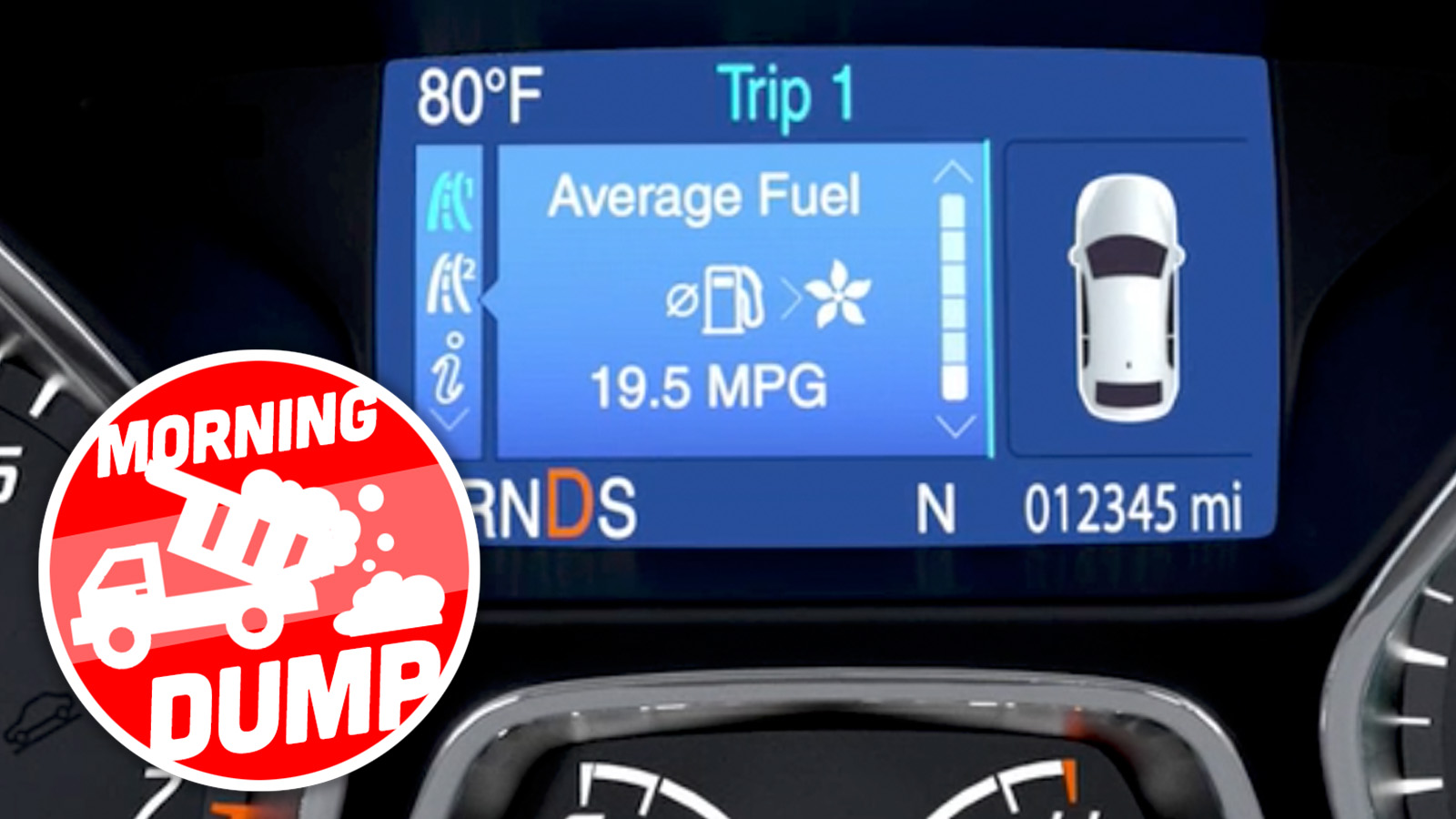
That’s a lot. Normally, I cover a lot of different topics, and I’ll just touch on some other news quickly after the larger discussion about fuel economy.
The EPA Will Lower Targets To 34.5 MPG From 50.4 MPG By 2031
Back when President Biden’s EPA announced that it was going to dramatically increase fuel economy targets and increase incentives in order to get people into electric cars, we called it “America’s next moon landing.” Why? Even in China, where every possible lever to get people into electric cars has been pulled, the majority of vehicles on the road are gas-powered.
Whether you think getting people into electric cars is a good or a bad thing (I think it’s a net good thing), it was never going to be easy. The targets being set by the Biden administration were always going to be hard, and just a few months after being announced there were already reports about how the EPA was planning to walk some of those requirements back, or make them easier for automakers to achieve.
Going back to the Obama administration, there was a lot of hullabaloo and back-patting about increasing fuel economy standards, while the new regulations left open the light truck loophole, which is often correctly blamed for vehicles getting larger. The Biden administration also left it open. In an attempt to shield automakers from huge price swings, and to protect consumers, the EPA developed a complicated system that gave automakers credit for all sorts of things, including stop/start technology and air-conditioning refrigerant choice.
This gets way more complicated, and whether or not the waiver that allows California to essentially set emissions policies for the rest of the country remains in place is going to be more impactful than whatever the EPA says.
A good example of how this was going to go no matter who gets to ride around in Air Force One is Europe, where the politics of climate change are less contentious and there’s a lot more consensus on this issue. The EU is also backtracking on its EV rollout, mostly because it’s going to be too hard and expensive to achieve. The harsh reality that EV fans have to accept is that automakers were as driven by an inaccurate read of the market because of Tesla as they were by government regulations or incentives. Automakers had already shifted investments heavily towards EVs in the United States before the Inflation Reduction Act, and many of those same automakers were changing their minds before it was clear who was going to win the 2024 presidential election.
What both previous Democratic presidents tried to accomplish was saying all the right things about helping the environment, while trying to build a regulatory structure that prevented cars from getting too expensive too fast. It’s my belief that the politics of this was all wrong, and the push for electric cars, including the $7,500 tax credit, probably harmed the switch to electric cars more than it helped. While there was never a true EV mandate, there was enough of a push that it gave the Trump administration the ammo it needed to dismantle what Democrats built.
I suppose you could say that Democratic presidents were virtue signaling about the environment while also being quietly realistic about what was actually achievable (the Biden administration also did this with its energy policy). What we have now is, basically, the opposite. Say what you will about signaling virtue, if you’re a major political leader, what’s the benefit of signaling vice? How is that better?

I’m currently reading the David McCullough John Adams biography, and Adams makes a great point in a letter to Mercy Otis Warren:
Public Virtue cannot exist in a Nation without private, and public Virtue is the only Foundation of Republics. There must be a positive Passion for the public good, the public Interest, Honour, Power, and Glory, established in the Minds of the People, or there can be no Republican Government, nor any real Liberty. And this public Passion must be Superiour to all private Passions. Men must be ready, they must pride themselves, and be happy to sacrifice their private Pleasures, Passions, and Interests, nay their private Friendships and dearest Connections, when they Stand in Competition with the Rights of society.
If you view the threat of climate change as something that can impact our basic ability to live on this planet, then passing laws in order to reduce those effects is sensible. That’s about as basic as rights get. If you view the threat of climate change to public health as a scam, as basically this entire White House seems to do, then it doesn’t matter.
At this point, if the very real science of climate change hasn’t persuaded you, and just the experience of living on this planet right now doesn’t seem different, nothing anyone is going to say is going to matter (whether you think the focus on cars, versus maritime energy consumption or data centers or whatever, is misplaced is another kind of argument).
The Trump administration has attacked the environment at every level, including through major efforts like trying to revoke California’s waiver , and more recently, through minor changes like attacking stop-start technology. The stop-start debate can be seen as the weakness in the half-measure approach of previous administrations. While stop-start technology can reduce fuel consumption, the initial rollout of it was bad, and there are companies that did a poor job of implementing it. With the introduction of 48-volt architecture and hybrids, this isn’t as much of an issue for newer cars, but it’s a good political win for the current administration to crow about doing something. Are they overexaggerating the effect of reducing a credit for stop-start? Absolutely. Jalopnik‘s Erin Marquis did the good work of reaching out to every major automaker to see if they’d suddenly stopped building cars with ESS, as the White House implied, and no automaker had.
This is all pre-text, basically, because here’s Reuters on what the administration is doing:
The Trump administration will soon announce sharply lower vehicle fuel-economy standards, reversing a push by the prior administration to force automakers to build more fuel-efficient vehicles, Transportation Secretary Sean Duffy said Monday.
Under Republican President Donald Trump, the federal government has not detailed the final standard, but automakers expect it to be similar to a December proposal from the National Highway Traffic Safety Administration. That proposed a fleetwide average of 34.5 miles per gallon (14.7 km per liter) by 2031, down from 50.4 miles per gallon (21.4 km per liter) under former President Joe Biden, a Democrat.
There’s more:
NHTSA in December proposed retroactively revising down the 2022 fuel economy standard and then raising it between 0.25% and 0.5% annually through 2031. Biden increased required fuel efficiency for cars by 8% annually for model years 2024 and 2025, 10% for 2026 and 2% annually from 2027 to 2031.
Automakers get future compliance credits for achieving higher-than-required efficiency in prior model years, so the Trump administration’s retroactive change to 2022 will make it easier for the companies to meet future fuel standards.
The California-of-it-all aside, this is a large difference, though I think it’s likely that future Democratic administrations were going to find different ways to give automakers breaks (there’s a way to view both the tax credits for building EVs and the tax credits as a large offset to the penalties for failing to meet fuel economy requirements).
While the current EPA is lowering its standards for improvement and making it easier on automakers to meet goals–which is a net bad thing if you care about the environment–the overall impact on the cars automakers are actually going to build is not really clear yet. While EVs are going to come to the market at a slower pace, even with the $7,500 tax credit in place, it was clear that the conditions for EVs to be successful weren’t being met because the introduction of a bunch of new products didn’t result in a huge increase in buyers.
““We are about to announce a common-sense fuel economy standard because we want Detroit to build cars that Americans want to buy — not cars that Democrats want Washington to build,” said Duffy yesterday.
Fundamentally, people want efficient and affordable cars, which is why automakers are rushing to build hybrids. For all the rhetoric from Trump cabinet members about making cars cheaper, carmakers cannot turn their entire production strategies on a dime, and most automakers are wary of having a change in political parties in Congress and The White House again. Carmakers are also, generally, global companies, and aren’t going to start developing V10s for midsize sedans that can’t be sold anywhere else.
I think it’s possible and maybe even likely that this will cause a drop in the average cost of cars (NHTSA estimates $930 per vehicle, but I’m not sure I trust that number) by reducing some compliance, but I don’t think it’ll change the cars people actually want.
You know what also probably doesn’t help car affordability? Tariffs. The biggest impact will likely not be in the development of new, inefficient products for which there’s not much of a market, but rather the longer continuation of older products (the return of the Hemi-powered Ram for instance). The longer life of some car platforms, though, is also the result of spending too much on electrification and therefore not having money leftover to develop different cars.
Will that lower the net cost of car ownership? Not if fuel prices keep going up. In the absence of some extreme effort, the effects of supply and demand are real, and more EVs would have likely meant lower gas prices. We’re in the middle of the second global energy shock in a decade, both caused by shortsighted military action, and if an administration was really committed to lowering prices for Americans, encouraging electric cars and hybrids would be a good place to start.
A best case scenario is that automakers says “thanks” for the break they’re going to get from fuel economy penalties and put that money into new EVs, like the Ford Fathom, and more hybrids. A worst case scenario is that GM, Ford, and Stellantis completely give up on more efficient automobiles, causing America to become a stilted backwater that allows China to take over the car industry for the rest of time.
My guess is we’re a lot closer to the best than worst case scenario, but time will tell.
Chinese Automakers Are Looking To Find An Even Better Foothold In Canada
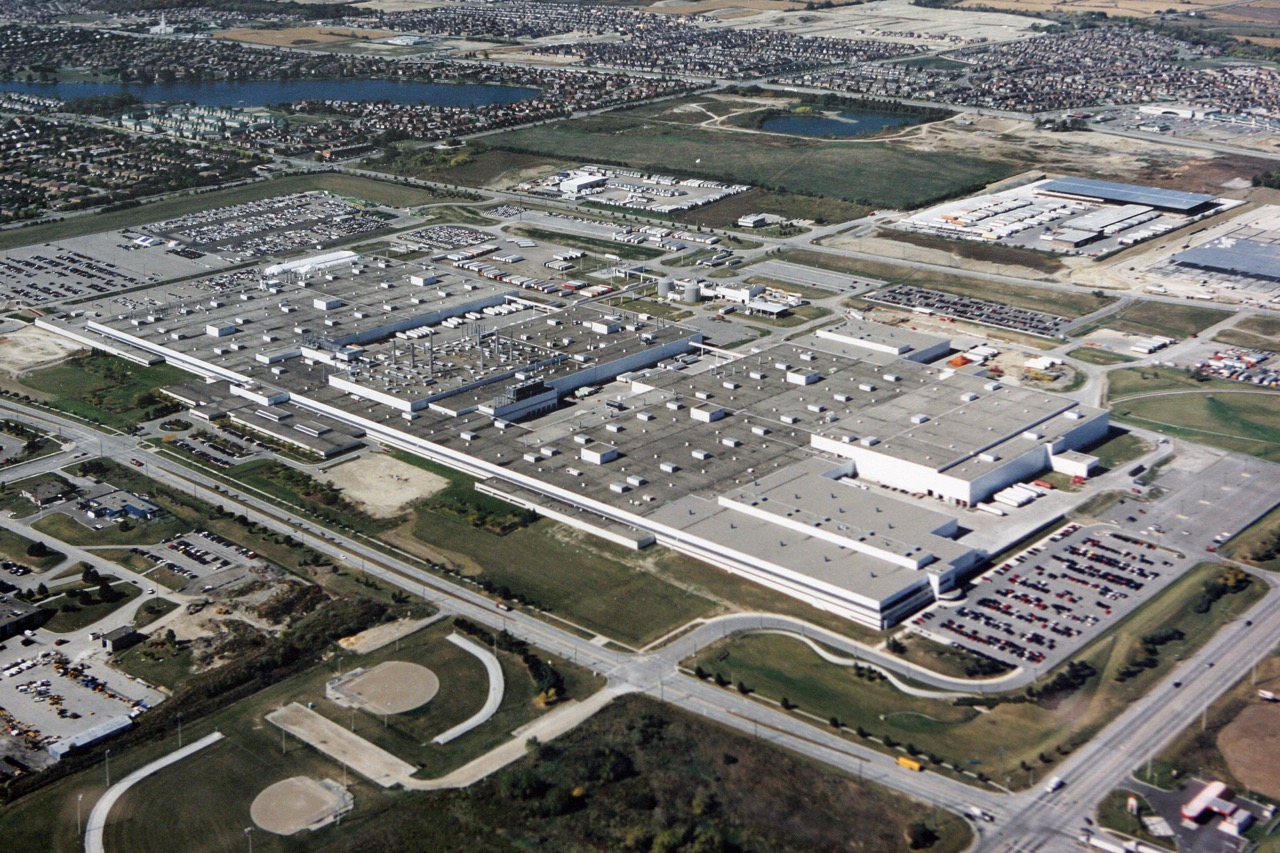
Could Chinese automakers build vehicles just miles away from the United States? Sure. In fact, with tariff policy being what it is and the ongoing trade war between the US and Canada, it sometimes feels like the Trump administration is purposefully making it easier on Chinese automakers.
From Bloomberg via Transport Topics:
Chinese carmaker BYD Co. inquired about taking over an idled Stellantis NV plant in the Toronto suburbs, according to a local politician, signaling possible global interest in Canadian auto hubs in the midst of a trade battle with the U.S.
Patrick Brown, the mayor of Brampton, Ontario, said BYD approached him about six months ago to talk about making buses at the factory. Stellantis had been retooling the plant to manufacture the Jeep Compass, but the company halted that plan last year when the U.S. adopted a policy of tariffs on foreign autos.
Brown said he also received inquiries from Leapmotor International, a joint venture between Zhejiang Leapmotor Technology Co. and Stellantis, as well as from an Italian automaker. Bloomberg News reported in April that Stellantis was discussing options for building electric vehicles in Canada with Leapmotor.
BYD’s first North American facility, I think, was building buses in California, which it still does.
The Government Of Lower Saxony Will Be The Decider

In today’s installment of what’s going on with VW?, we have The Wall Street Journal detailing all the troubles at the company, and the most likely outcome:
The government of Lower Saxony has sometimes positioned itself as a consensus-builder that can help other Volkswagen shareholders and workers see eye-to-eye.
If no compromise is reached, the two sides could return to negotiations, or Blume and his team could call an extraordinary general meeting of shareholders to vote on the most contentious parts of his agenda.
Under German corporate law, such proposals would normally need the support of 75% of shareholders. But Volkswagen is subject to a special “Volkswagen law” that raises the threshold to 80% for the most important decisions, potentially giving the state of Lower Saxony a blocking minority. Those legal complexities have never been put to the test.
If VW goes nuclear it’s going to be nuts.
Nokia Replaces VW

If you’re old enough, you remember almost everyone having a Nokia cellphone, and then you remember almost no one having a Nokia phone. With VW faltering, Nokia will replace the company on an important index.
Nokia Oyj is regaining its spot in the euro area’s main stock benchmark as Volkswagen AG loses its place in the latest sign of the difficulties facing the region’s automotive industry.
The Finnish mobile network-equipment maker will be added to the Euro Stoxx 50 prior to the market open on Sept. 21, index compiler Stoxx Ltd. said in an annual review of the gauge, ending a one-year exile. French utility Engie SA will also enter, while Dutch information services company Wolters Kluwer NV drops out.
Nokia shares have more than doubled in the past year as investors rewarded the company’s push into artificial intelligence and cloud infrastructure.
That stings.
What I’m Listening To While Writing TMD
Let’s get the energy up. If you’ve read this far, your reward is “Sure Shot” by the Beastie Boys.
The Big Question
All of this matters, but how much does it matter?
Photo Credit: Ford



We’ve given up on private virtue, so public virtue is an impossibility. John Adams would been appalled at the idea the President has these powers. If you want enforce your private virtues, vote in a Congress that will write legislation saying,”all private cars must have a 50 mpg rating. Pass the bill, have the President sign it. No more of the Congress BS of tossing the President the powers that he possesses to change the mileage standards. Have the Congress stand up and clearly vote for it. They won’t, so stop imposing YOUR private virtue on others.
Diesel prices jumped another 10 cents over night. Seems it would have been a good idea to insulate ourselves from war and other volatile issues, by moving to an alternative energy source for homes and transportation. That was Biden’s 2022 IRA Act. One could only have an opposition to moving forward if it conflicted with one’s politics and beliefs.
“ Fundamentally, people want efficient and affordable cars” says who? Consumers have shown over and over again, that they want the biggest, thirstiest vehicles they can possibly get
That’s s small percentage of Americans with a certain ideological bent. That problem will be dealt with.
Counterpoint:
You too easily discount the importance and the multilevel penetration of the IRA Act with the partisan “too much, too soon, no one was ready” for it argument. I contend future historians will look at and declare it was getting the intended job done, before the Trump administration sabotaged all elements of it. Important points:
Critical materials and rare earths. These are in the news everyday. Our modern civilization can’t function without them. Yes, China has them locked up right now. The IRA Act would start with both local mining (or friendly purchasing) all the way to processing on US soil in new US facilities (jobs). This is where I mention the Trump family is investing in such materials and mining operations overseas for personal gain. They say one thing, and do another.The materials mentioned in #1 have multiple uses. Not only for EVs, but for aspects of renewables energy, which will give us true ENERGY INDEPENDENCE in this era of yet another Middle East oil war. Research which energy sources came online and where investment money is being directed. That trend is accelerating. The IRA Act would have supercharged it.Factories, and more jobs. Real manufacturing being brought back to the US. This was the IRA Act. Some of those battery factories are now on hold or cancelled, thanks to Trump, who promised to bring back manufacturing. Again, don’t overlook the utility storage aspect use of those batteries. Such an application of mass production was guaranteed to bring down manufacturing costs in the area, making EVs cheaper. R&D would have continued at the same pace, with revolutionary advancements common place.
I would like to add something to this that doesn’t get covered much unless you do a deep dive into the Ira Act. Most, as in majority, of those new factories were specifically placed in red districts, most of which had depressed economies, and needed jobs badly. This was a brilliant chess move. If anyone messed with them, it would be very apparent who did it. Hopefully, eyeballs and blame are on the Republicans.
I recall someone asking Biden about this, and his answer was ” Because they need it most”.
The bastard!
Nah, Republicans do just fine at chess themselves. They just let the funding go through in those areas, and credit the current administration for the benefits while cutting similar funding in other areas and decrying it as “wasteful”
Edit: Autopian page formatting removed my numbered bullet points, making my post look like a mishmash.
Yeah you can look at the Chevy Bolt EV which moved to having a battery built in the US, creating American jobs, after the IRA act and now has gone to a battery made in China,removing those jobs, after this administration scrapped the IRA.
I agree that people are ultimately going to vote with their wallets and choose fuel-efficient offerings, but it would not shock me at all to see the current administration outlaw hybrids or at least mandate a massive federal tax on hybrids. My state already screws me over on my registration because I drive one.
No administration will ban a product that many western allied countries produce in large quantities.
42 of 50 states are already taxing them due to lost gas tax revenue. There have been left and right federal administrations (and two Trump admins) since the dawn of hybrids and EVs and none have introduced a tax on them to make up for lost gas tax revenue. When they probably should, but in a way that aligns to the lost revenue of their lowered fuel consumption.
Taxing those vehicles to make up for lost gas tax revenue doesn’t preclude the possibility of a ban mentioned by the other poster. This administration is taking its marching orders directly from its oil industry donors. There is no denying this fact. That industry is threatened.
All it would take is a few oil execs getting in his ear and tell him some nonsense about how all hybrid batteries eventually fail and will cost $20k to replace, and how there’s nothing more reliable than a good old V8.
I agree it’s unlikely that they do a full ban on hybrids and that they’d probably try to ban EVs first, but we’re not even 2 full years into this clown show yet, so nothing would surprise me at this point.
In a decent country you’d be rewarded, or at least not punished, for choosing a vehicle that consumes and pollutes less, but I understand that nothing is more important than money.
Nah, I think hybrids at this point are seen as the compromise that staves off EV rollout. They’ll tax them a bit extra, especially PHEVs, but an outright ban risks a BEV boom. You can ban those too, but then US automakers get wrecked by the likes of BYD in the long run.
Regarding your quotation: “There must be a positive Passion for the public good, the public Interest, Honour, Power, and Glory, established in the Minds of the People, or there can be no Republican Government, nor any real Liberty“. I had similar thoughts recently when I visited the Boone NC area, and noticed an alarming number of young males driving trucks and (still!) rolling coal. They don’t care about the public good – I feel they actually dislike the folks they’re dumping carcinogenic diesel particulate matter onto.
Sadly common in eastern Iowa, as well. These jokers drive trucks like they’re Corvettes, flooring it at every green light, leaving us all in a black cloud. Especially unpleasant if I’m in the Miata. When I’m in my Tesla, they’ll sometimes pull up next to me and do it on purpose.
Reason for commenting #1: Eastern Iowa mentioned!
Reason for commenting #2: I drive a 2020 Bolt and there was a while when I lived in Des Moines where I was getting coal-rolled at least once a week. This was offset somewhat by every time an old guy earnestly asked me about my Bolt while I was waiting in line at the local ice cream joint. I think it says something about the duality of man, sir…
“The EPA Will Lower Targets To 34.5 MPG”
Ah yes… Crooked Trump and his gang of Deplorables continue to put effort into making the WORST decisions possible.
“Chinese Automakers Are Looking To Find An Even Better Foothold In Canada”
And because of the way American voters voted in the last presidential election, a complete 180 is being done here in Canda and Chinese automakers are now being welcomed with increasingly open arms.
“All of this matters, but how much does it matter?”
If you’re a self-centered asshole who just wants to get as much as you can… and screw everyone else and future generations, then it won’t matter at all.
But if you actually care about the kind of world your kids will inherit, then you would/should care A LOT.
I have kids. I care A LOT. And with the oil industry being a key Trump/Republican supporter, I will continue to buy the most fuel efficient vehicle that suits my needs… which is to say that if my future vehicles aren’t all BEVs, then they’ll at least be plug-in-hybrids
While we will dearly mourn the loss of our greatest friend and neighbor, mass production of Chinese vehicles in Canada can’t happen soon enough.
I sincerely hope that the Brampton site goes to BYD and not any type of Stellantis partnership. If Stellantis ever wanted to come back, they need to give back every taxpayer dollar they stole, plus a lot more so there’s no hard feelings.
These automakers have lobbied Trump to do this crap, all so they can produce vehicles in the future that won’t be internationally competitive.
My take is the administration is exploiting the last amount of excessive profit from (for) the oil industry because they know that a green future is absolutely going to happen.
You can’t exploit a solar panel, wind turbine, or hydro. Once they are built, they just produce with minimal exploitation required.
well said – the sugar rush of burning fossil fuels makes everyone feel great for the moment since its relatively inexpensive and juices all kinds of economic activity, cheaply, for the short, and short-sighted run
There is a lot of evidence to support this contention. Looking at the huge investments in renewables that the oil countries of Saudi Arabia, Kuwait, and Emirates are making. Another interesting fact to throw in is that the country of Norway, a big oil producer, started to divest its sovereign fund from oil.
They’re even going after bike lanes now.
“DEI bike lanes,” per Super Genius Sean Duffy.
Yeah, insane. None of it makes any sense at all.
Bikes don’t use fossil fuels, so in that sense I suppose it does.
In the meantime, this administration is hellbent on doing what it can to keep that infrastructure from being built.
the best thing they could do is peg the passenger vehicle fuel economy standards to that of trucks.
TBQ, all of this barely matters. What matters most is what you decide to do every day in your own life.
50.4mpg was absolutely one of the reasons automakers rushed to EV’s and lost $ big. It was always going to be walked back eventually.
If they had spent their time following the early Tesla playbook, they could have had competitive EVs without needing to rush and without losing large amounts of money.
I’m OK with that as long as they don’t follow the Tesla interiors and tech.
But we got the worst scenario, they copied the Tesla screen and interiors with some bad powertrains.
Tesla “lost” buckets of money, it was just money they never had and it was someone elses. GM, Ford, Chrysler et al would have had to spend (lose?) shareholder dividends in order to pay for it.
I just asked Gemini, and Ford paid out $26B in dividends since 2011. Tesla has spent $26B in R&D since 2011. Claude says Ford Paid out $32B. Chat GPT says they’ve paid out $34B.
Now GM:
Gemini says $20B . Claude says $15B, and CGPT says $13B.
“Tesla has spent $26B in R&D since 2011. “
And what did they get for that $26B?
-Tesla Model S
-Tesla Model X
-Tesla Model 3
-Tesla Model Y
-Cybertruck
-An energy storage business
-The best BEV charging network out there
And of those things I listed, all except the Cybertruck are money makers for Tesla.
Though I’m no fan of Musk, I’d say that Tesla got a lot for the $26B spent… including bottom-line profits on most of their BEVs.
The really large energy/environmental goals have a habit of falling short. From a philosophical standpoint, I’d much rather we set lofty, aspirational goals that we 80% achieve rather than say “eh, not gonna happen anyway”.
I agree with the perspective that market forces are stronger than any one policy, and that the overall impact of this won’t be major.
For better or worse, the US is a large and profitable enough market that automakers can and will design US specific models. Ironically, it’s the lack of environmental regulations (with a healthy dose of tariffs) that will cause Malaise 2.0 and put the US out of lockstep with the rest of the world.
On the positive side of things, we will probably keep buying manual N/A GT3s longer than the Europeans will.
Hey Matt that is a well written, well researched article. It was only about the science and financial specifics and I wouldn’t change or challenge a word.
I just came back to see the members with TDS and actually see which political party was actually looney tunes
Don’t leave us waiting. Is it the Liberitarians?
So if you agree with everything he’s saying about the science/finances, why are you supporting someone who is vehemently anti-science and is continually making choices that screw the country over financially?
The fascists backing the Republican Party?
Trump Dickriding Syndrome?
“… if you’re a major political leader, what’s the benefit of signaling vice? How is that better?”
It makes you “relatable”, “down to earth” , and anti- “elite”. Humans are weird.
You’re really moving the goalposts with your definitions of “political” and “partisan”, aren’t you? If our queer siblings and contributors are snatched off the street, will speaking of it be against your rules?
Human rights and saving the environments we live in shouldn’t be “political”, but here we are, and you make me reconsider my membership every time you say crap like this.
What are your definitions of “political” and “partisan”?
Nope just not a Jalopnik communist
Partisan would be saying “Everything Trump is doing is awesome and if you disagree with me you are a … (insert insult for left side of the isle here.)
I think in talking about politics this website does an awesome job of discussing the politics without being partisan. It is impossible to completely divorce all personal opinion from what a writer may write, but I think they do an awesome job around here of not being partisan.
I would peg most of the writers on this website as being on the left side of the isle to various degrees. But I believe they all recognize that left side of the isle is still in the same room as those people like me that are on the right side of the isle.
Threatening to cancel your membership just seems to say “If you don’t toe the same line that I do I will never talk to you again and expel you from my life.”
We have lost the ability to have a vigorous and spirited debate about an issue while still keeping our respect for each other.
Nice comment!
Easy buddy.
This is a new low for this website. But not for Disney.
Point to you my good sir.
What is your definition of “saving the environment” if I propose to kill all disabled and retired Americans in order to reduce carbon emissions and you oppose that, does that make you anti-environment?
The vast majority of people disagree on the “how” and “how much” and disagreement is OK.
This website is owned by a car-dealer chain.
Not all rectangles are squares, and not all political conversations contain partisan points.
Calm down.
I think the EV push was no small contributor to us getting the f-monkeys we have now. The goals were unrealistic and ignorantly optimistic and I knew it wouldn’t happen, but it was great red meat for propaganda channels to shout, “they’re going to take away your gas car and make you drive an EV!” Most people don’t like being told what to do or forced into things (or made to feel like that’s the case) even if it’s for their own good and some of them will refuse and resist doing something they were inclined to do if there’s the appearance of it being compliance with an order. In the end, it worked against their goal, per the usual. They are so consistently inept that I lean further and further toward it being intentional, that they’re essentially there to offer voters a false sense of choice and ready source of distractive division that ultimately supports the agenda of the regressives.
But as stated despite no actual discontinued ICE laws the laws would require no ICE vehicle
Except they were never going to happen, like EU’s EV mandate that’s being rolled back (and the EU is better positioned for the changeover in multiple ways). They can pass laws saying it should rain in AZ, but that doesn’t make it happen. It was neither practical nor possible to anyone who knew better, but they thought the messaging would sell well to voters because that’s how incompetent and out of touch they are (and this wasn’t even the first time they tried it). What it did very well instead was provide convenient campaign material for the other team to rile people up against them.
If I put my tinfoil hat on, remember when they suddenly proposed banning gas stoves? Really gives fuel to the conspiracy that somebody was proposing the craziest ideas to help Trump.
Banning gas stoves is a good idea, what’s your point?
Because a majority of people disagree with that opinion. Only about 15% strongly support that.
They are stupid and wrong. And I’m right. Gas stoves are poisoning children and they have no reason to exist.
And yes, they’re all I’ve known as a halfway decent cook, but I’ll happily replace mine when I can.
Sweeping generalization, probably not much change to what car companies are doing now. You’re talking entities that have oil tanker type turning radii, not 2 seater sports car nimbleness. And they’re not going to fall all over themselves to follow something that may be undone in about 2 years. They’ll have their PR people figure out a way to make themselves look good and like they’re following the current regulations.
Any big change like wanting folks to buy EVs needs a lot of carrots, not just sticks.
Be great if someone figured out a good way to incentivize car companies to build and sell modestly priced EVs and hybrids. Obviously, car companies want to make money, but can the government figure out a way for them to be happy with making not as huge a profit margin on small, cheap cars so such vehicles can be a part of their lineup. And make them desirable so folks actually buy them.
As a non-partisan californian who just wants government with some sense and doing it for the country and state, i got no love for trump or his incompetence. California’s govt is also not doing itself any favors either with a lot of inane proposals and laws especially in response to Trump. For example, yes gas prices be high due to war with Iran. California’s response, let’s decide what kind of tires people can buy. We’re all Fucked either way.
“California’s response, let’s decide what kind of tires people can buy.”
I’m for it if the tires to be banned are loud, pose a danger (like being slicks, bias plys, undersized sidewalls, etc) wear out too fast, etc.
i’m all for how about we fix the list of much bigger problems first.
We tried that too:
https://www.npr.org/2025/09/03/nx-s1-5494532/california-high-speed-rail-change-of-direction
And the government of California that can’t manage to do anything while spending trillions of dollars is who you feel comfortable to make that decision?
It’d go a lot faster if they’d actually use eminent domain and ignore the NIMBY bullshit.
All of that trouble was in red districts. You try and do something nice for the economically depressed areas, and they turn on you.
More like they cash in.
But let’s not worry about the billions spent on the train to nowhere. No tracks maybe it fly’s
Those billions aren’t coming back anyway.
The problem is that they want to mandate OEM tire options, which are usually terrible. The worst sets of tires I’ve experienced were all OEM sets and it wasn’t even close. I think I’d rather roll the dice on a pair of Long Dongs or whatever Chinese discount brand. It also restricts choices for people who want to tune their ride a certain way—maybe they want quieter and longer life or better traction. I don’t even know how it factors in winters when very few (none?) OEMs offer them as options and none will rate as high for efficiency as the typical all season fitted to new cars. The idea is to make sure people have tires that are the ones that were used in EPA testing so the results match the sticker more readily and OEMs strive for higher numbers on tests, so they’re in theory better than many aftermarket options for mileage. I have almost always bought more performance oriented tires for my cars than OEM and I’ve always beaten EPA ratings. For more recent cars, that also includes using 5W-30 instead of EPA 0W-xx BS. Many OEM tires are notoriously short lived (at least some of that down to having less tread depth to increase mpg on paper) and I’ve always found them to be more expensive compared to better aftermarket tires, so this fails as an environmental goal and in being consumer friendly. This would also reduce competition, which means tire tech doesn’t advance as much and prices probably go up. Typical politician parasite nonsense.
As someone who prioritizes MPG in my tire choices I don’t mind this. And in my shopping I’ve found MPG oriented tires also tend to be longer lived and quieter than more performance oriented options. Which again I’m fine with since the level of performance these tires offer is plenty for my needs.
That said can I get a mandate for some &%$# OEM sidewall?!
Ignoring half of what I wrote, OK, but besides eco tires being a joke, your position is only applicable for a few cars and some of us actually like to drive and most people prefer better traction to a real world theoretical tiny mpg improvement. For everyone else, the tires cost more and last a shorter length of time (as they likely would for you—you ever price OEM tires? The times I have, they’re far more expensive for tires I replace them with that last far longer and come with better capability and better mileage from reputable companies). Worst tires I’ve ever experienced were eco “tires” fitted to my sister’s hybrids Civic. When the battery died and there was no electric assistance, it didn’t have enough power to outrun a fat guy on a cruiser bicycle, yet it would inexplicably spin the tires from a stop and braking distance and handling was like something domestic from the 1950s. To top it off, that car never achieved the sticker EPA, being only a couple mpg away from my mother’s standard Civic that came with real tires and had respectable power and capability while she did not drive for economy. With the ridiculous obsession and costs of very long odds safety we’re sold, it’s shocking that those very real safety liability tires should have never been allowed on the road. Losing 1k lbs of unnecessary crash safety on most cars would do far more for the environment than any shitty tire.
The tires that came on my current car were also complete trash and were the same POS they fit to a Prius. Second worst tires I ever experienced: shitty braking, unpredictable traction in all spheres of use, squealing like bias plies in turns without even pushing hard, and trash wet weather grip. They were Michelins, too, not some cheap ass company, and they lasted less than half as long than the Continentals I replaced them with that were half the price and even get better mileage. Car before this, was the opposite and also terrible—grip only for dry performance driving, but with lousy balance characteristics, and wore out like track tires. None of these cases had better results for the environment and that’s excluding cost of crashes resulting from increased braking distances and poor handling capability. I’d bet teaching people to drive a little more economically would make a bigger difference even if the majority continued to ignore it (yet they’d continue to complain about gas prices as they fuel their oversized vehicle they cruise at 90+ and jackrabbit from lights in).
Not sure what you think I ignored but whatever.
“you ever price OEM tires?”
Once, long ago. I didn’t buy them, not because they were expensive but because they were awful 1950s tech bias plys. I went with modern radials which were way better.
I did however love the Michelin Energy Saver tires that were OEM on my Accord. Unfortunately those are no longer available in that size. The Continentals I bought instead are OK but not quite as good.
“The tires that came on my current car were also complete trash and were the same POS they fit to a Prius. Second worst tires I ever experienced: shitty braking, unpredictable traction in all spheres of use, squealing like bias plies in turns without even pushing hard, and trash wet weather grip.”
If those tires are as bad as you say wouldn’t you expect millions of Prius owners to be complaining too? Or for the accident rate of Priuses to be unnaturally high due to dangerous OEM tires?
“I’d bet teaching people to drive a little more economically would make a bigger difference even if the majority continued to ignore it (yet they’d continue to complain about gas prices as they fuel their oversized vehicle they cruise at 90+ and jackrabbit from lights in).”
I agree and include maintaining tires inflated to the pressure on the doorjamb if not a bit higher to maximize MPG, safety and wear. I find adding each fill-up to the maintainence log helps do this since any MPG drops between fill-ups is almost always the result of low tire pressure.
A non partisan Californian is just an actual sane democratic that we all need more of
I agree, but in CA’s defense, 95% of the population wouldn’t notice. I would argue they should allow you to buy anything you want if you actually ask if you can, fill out a form, and present it to the tire places. Easy workaround.
I otherwise agree this state is a bit overboard on a lot of stuff. But, a lot of that stuff dictates how the rest of the world works, being the 4th largest economy on the planet.
you’re probably right, but how much is too much? And why are they wasting time on tires when they should be thinking about not having enough refinery capacity, or maybe importing cheaper oil, etc. It’s like if you need heart surgery, but you put that off so you can get your teeth whitened first.
Looking at a map of US refineries I wonder if it might not be better for Arizona and Nevada to build their own refineries.
https://www.smartdraw.com/map/templates/petroleum-refineries-map.png?bn=1510011160
Both have plenty of cheap, open (and in the case of Nevada pre-contaminated) land and political leanings one would think would be amicable to the blue collar petro jobs that would come with refineries.
maybe it’s just easier for AZ and NV to pipe/ship it in or there’s just not as much oil to pump nearby. Also, they have nowhere near the population density that CA does.
That population density also means a HUGE market right next door with plenty of money to (quite literally) burn.
As to proximity to oil as a dealbreaker the reason California has its refineries on the coast is California imports 61% of its oil, some from Alaska, some from Canada, some from South America, some from the Middle East which for the record is pretty damn far away. And oil can be pumped hundreds of miles through pipelines. So lack of proximity to oil fields shouldn’t be a dealbreaker.
As a result of the current admin running on not much else other than “apply suffering to chosen pariah group”, being pro-human is now partisan behavior.
I’m uninterested in breaking bread with the opposition because at this point they are gleefully calling the cops on their Latino neighbors for speaking Spanish, their female neighbors for traveling out of town, and their journalist neighbors for printing facts.
It is not on me to change this perception. That’s on you. You guys hired people who killed American citizens for disobeying the federal government. You guys are backing another vague forever war without asking questions. YOU have to prove that my conclusions about you, your affinity groups, and your policies are wrong. With explicit actions, not words.
Pretty sure the people you are referring to have no interest in you, your conclusions or your bread other than as a target.
Which is why I will not be participating in the “politics ceasefire”.
I will be heaping blame, shame, guilt, and anything else I can fling in their general direction (Kia Tasman?) at every opportunity, forever.
Social conservatives are miserable haters who want everyone to suffer as much as they themselves opt into.
And you support trillions of dollars in fraud, and are against helping those in need,
I am assuming you are attacking the admin that has to date found trillions of dollars of fraud and you are against stopping the fraud?
Lol, lmao. Sure, buddy. Love the digital service being shuttered.
I can’t hear you over the no-bid contracts awarded to your buddies to fail at resurfacing a pool.
Gonna put that in the fraud column too?
How many American citizens are you willing to mulch so you can get lied to about how much fraud they’re finding?
10?
100?
Everyone who voted against you?
You remember when your guy spent millions to refit a plane he was given for free? Or the reflecting pool? Or the $400M ballroom he’s building for himself? Or the billions he’s made since taking office? Or the insider trading he and his cronies are doing? Or are you just mad because the Fox New told you that somewhere someone got food stamps who technically didn’t need them?
DOGE and this administration wasted more money in finding no fraud.
LOL.
Your administration couldn’t find its own ass with both hands and a flashlight.
And Trump could never run so much as a two car funeral.
Believing DOGE’s grandiose claims at the outset meant that someone was gullible and naive, but at least a little understandable as getting carried away or being overly optimistic or generous. Continuing to believe them after the fact despite all evidence to the contrary is just sad.
TBQ: This all matters very little. The biggest effect is that manufacturers will use a different set of loopholes to get around these standards.
Like it or not, this is reflecting the will of the people. I see no evidence the public at large is concerned enough about climate change to make the sacrifices required to meaningfully address it. I see no reason to believe people will choose low carbon options en mass (small cars, small houses, less AC, etc.) unless those options are otherwise more appealing than high carbon alternatives.
Realistically, if people are so concerned about climate change, why is there so much kvetching about the cost electricity, gas prices, and airfare? The best way to prevent climate change is to use less energy. The most efficient way to reduce energy usage is to make energy more expensive. Yet, when gas goes up 10%, people (including many on this site) get angry.
I think it is important to be honest as a society about what we believe and what sacrifices we are willing to make. I presume at least some of the pushback from the right on climate change comes from goals that are currently unachievable without extreme measures. Honestly, if my choice is climate change and life-as-we-mostly-know-it or no climate change and living without hamburgers, pickup trucks, or airplanes, I will take my chances with climate change. I highly doubt I’m the only one with this view. It might help if we focused on realistic goals that acknowledge that, for most people, some climate change is an acceptable trade-off to live the life we currently know and enjoy.
Some of us do care. I put solar panels on the roof of my house 10 years ago. My wife’s daily driver has been a leased EV for the past 9 years. I don’t drive some big, dumb, honkin’ pickup truck as my daily. The payoff? I don’t spend a lot on gas, and my electric utility bill is about $20/month to stay connected to the grid. Where’s the problem with that?
The payoff? I don’t spend a lot on gas, and my electric utility bill is about $20/month to stay connected to the grid. Where’s the problem with that?
So you are doing this out of self interest? I would find your example more persuasive if you told me you spent $100,000 in energy efficiency improvements and got $10,000 in savings in return. From what you wrote, it doesn’t sound like you have made any sacrifices at all. There is nothing wrong with that – it is good to have concrete examples of how climate change measures don’t have to be sacrifices at all.
Some of us do care.
As I wrote:
I see no evidence the public at large is concerned enough about climate change to make the sacrifices required to meaningfully address it.
My point was that society at large is not willing to make substantial sacrifices. There are plenty of individual people who are willing to make sacrifices. You might care a lot about climate change. You are not representative of society as a whole, though. Again, it is important to acknowledge what people actually think/value. It is hard to get people to change if you don’t understand their priorities/values.
I don’t drive some big, dumb, honkin’ pickup truck as my daily.
Huh. I don’t know a polite or constructive way to respond to this. This is such a judgmental, shitty attitude. You are a prime example of why some people are so resistant to climate change mitigation efforts.
You brag about your “sacrifices” (which, apparently, were the economically rational decision) and judge other people without making any attempt to understand why they have made their decisions. You just assume they are bad people.
You use your EV and your solar panels to brag about how wonderful you are. I hate to use buzzwords, but it is hard to call this anything other than virtue signaling. Plus, you are presumably still using more energy than you need to (and thus are contributing to climate change) because you are living a first-world lifestyle. I presume you could make more steps to reduce your personal climate footprint, but you would rather do the minimum required to feel superior to others.
Your attitude is only going to make people even more resistant to climate change measures. Congratulations.
Well, I did spend $32k in 2016 dollars to install solar. That was a financial sacrifice in the short term in order to achieve several objectives: the reduction of monthly cash outlay, avoidance of increasing electric utility rates (which are very high in California where I live), as well as reducing fossil fuel related emissions at the generation facility. I haven’t run the numbers myself, but when my solar PV system was planned, the estimated payoff (vs just paying for electricity from Edison) was 12 years.
I suppose that the “hidden” message in my response was: It doesn’t have to be a sacrifice.
What really bugs me is when people choose to drive big, inefficient vehicles AND THEN get really upset when gas prices rise.
I suppose that the “hidden” message in my response was: It doesn’t have to be a sacrifice.
I agree with this 100%. Some climate change mitigation efforts make sense for more than just the climate. It isn’t always intuitive that these projects save money in the long run, though (one example I see occasionally is people questioning why we should build wind turbines when we still need the same amount of fossil plants; I can see where people wouldn’t realize that building fossil fuel + wind power can be cheaper than fossil fuel alone). I think it is great to highlight projects that have financial or other benefits in addition to just fighting climate change.
I am planning to install a PV system with a home battery in the next few years. I’m not sure if it will pay for itself (electricity is cheap here), but it will at least partially offset costs. The battery and solar panels will also be very nice during power outages, which happen quite often here (some parts of my neighborhood went without power for 2 weeks after our last hurricane).
What really bugs me is when people choose to drive big, inefficient vehicles AND THEN get really upset when gas prices rise.
You will find no disagreement from me. I also find this frustrating. I have sympathy for people who legitimately need bigger vehicles, but those that buy an inefficient vehicle out of preference shouldn’t complain.
Yep. People can adapt but it is hard to do so without experiencing the circumstance you need to adapt to. I just read a 1992 edition of Wheels magazine where a bunch of car company CEOs where being asked about greenhouse gas emissions and what they thought and it was all about gritting your teeth, adapting to the challenges and understanding that if they didn’t they wouldn’t be around. This was in 1992 by the way. Yes there has been some positive action since then but gee I bet it wasn’t as tough as they were anticipating.
Developed/”first world” countries are also just an interesting time and place to happen be alive (which I guess is also true of all times and places LOL). The vast majority of the world’s population live in developing or poor countries. As all those people and countries “catch up,” standard of living wise, to where we happen to find ourselves, it will be so interesting to see how systems (human and natural) develop. But overall our first world livelihoods, world view, and broadly, as you say, “life-as-we-know-it’s” aren’t representative of life as most people in the world experience it, so I do think there is, or should be, some acknowledgement of the responsibility folks who happen to find themselves in our situation have to doing things, dare I say, “better.”
The problem is that the tech that results in saving fuel on the massive, heavy vehicles of today while maintaining expected performance results in spending more on the vehicle upfront and along the way, likely more than offsetting the modest *real world* fuel economy gains from the technology. That is not a win for anyone’s wallet.
The real way to do it is to tax the Hell out of fuel itself, which both incentivizes efficiency AND even more importantly, IMHO, incentivizes driving as little as possible. Huge win-wins which forcing manufacturers to hit a fuel economy target when thier buyers don’t REALLY care don’t do.
If we want to get serious about incentivizing people to drive as little as possible, we need to ban all of the back-to-office mandates.
I’m guessing a lot of businesses are using them to get people to quit instead of having to lay them off and pay severance, but for those that need to keep their job, all it is is a gigantic resource drain in the employee.
My wife drives 45 minutes three times a week to sit in a cubicle and do Zoom calls all day (just like she does the other two days a week when she’s WFH) and then wastes another 45 minutes driving home each day.
At the IRS’s 76 cents per mile rate, it works out to over $200/wk in uncompensated travel expenses (though when that rate was set by the government, gas was much cheaper) plus effectively an extra 4.5 hours of uncompensated “job time” each week. And the job is exactly the same whether she’s sitting in a cubicle or her home office. It’s pretty stupid, actually.
There is another side to getting people back in the office. A few actually. For context, I work from the office 5 days a week whilst my wife works 3 at home 2 in. 1) people coming into the office stimulates the economy of that area – I will often spend 20 bucks a day on lunch and a coffe for example, those businesses don’t get that if I was at home and I was just drinking instant and making a sandwhich at home. 2) because my wife works from home, in order to make home not feel like work, you ideally need a whole extra room. Home should be an escape. In our case that meant getting a 3br unit rather than a 2br unit, call it about an extra 180k on our mortgage where I live. 3) if everyone worked at home and to be frank spent more time around each other there would be more arguments and unfortunately therefore more domestic violence. This isn’t even taking into account performance of workers in office vs at home. I say this as someone who makes mo hiring decisions nor manages anyone, I am just a lowly underling, but as much as my wife and I fared really well together during covid and Victorias many lockdowns, as much as my own commute whether public transport or car or bike takes 2.5-3hrs out of my day (plus if I take the train thats 1hr to read a book plus a 15 min walk at each end, good for my fat 134kg ass), I personally think working in an office and having seperate work and home environments is a good thing.
WFH may work for some people and not for others but if workers were given the choice one way or another everyone wins.
This is a very interesting point and speaks to general city planning and suburban sprawl. I think it’s why, at least where I live, central downtown centers are looking into rezoning office space for more mixed use residential. That would help with #1 and if more co-op workspaces were available, #2 and #3. There are a myriad of challenges; plumbing (kitchens, bathrooms), fire escape egress, natural light, etc. and how flexible a space that’s already built can be to convert back if conditions change. I personally love WFH, but I’m single with a dog. The dog acts as the commute that separates work time and me time, but not everyone has that.
I could not be paid enough to waste that much of my time commuting.
Right from my very first city job back in 2008 I got used to at least an hour each way. Everyone is different now. I do think working only a few suburbs away would be awesome – you still get to separate your home and work environments but you’d also actually be able to see your house in daylight during the week in winter months. When we bought our unit it was july (middle of winter her in Melbourne) and I basically didn’t get to really see it and appreciate it until September
As one who has worked from home for going on 20 years (when not onsite for client engagements), for a company that is now 95% wfh post-pandemic, I could not possibly agree with you more. We have people in 30+ states now.
There is just no reason for the overwhelming majority of white collar folks to have to drive to a central location to stare at a screen and talk on the phone all day. The whole “collaboration” excuse is complete and utter bullshit other than in a few niche industries. It’s all about micro-management, a way to reduce headcount as you say, and not wanting to see expensive real estate they own or can’t get out of sit empty. My company, run by people who are actually GOOD at it, took the opportunity to drastically downsize our expensive suburban Boston HQ footprint and saved a fortune every month. They even gave everyone a small pay bump to cover electricity and whatnot for the wfh! At this point the HQ is basically a small datacenter with a few offices and some hotel cubes for people who are passing through. Maybe 10 people work there regularly anymore, mostly because they don’t have good wfh situations – small kids at home, spouses who also wfh, or too many roommates.
The worst is when “big corp” gets a new C-suite idiot who decides that wfh is suddenly bad and makes everybody work in an office, even though they have nowhere near enough office space because they have emphasized wfh for years. I have two friends who have gone through that nonsense in the private world, and another who has to deal with it now that the leadership of the Federal government is via idiots. Both private sector friends eventually got to go back to working from home, but I assume the third is stuck until sanity returns in ’29.
Are you guys hiring?
Always, but it’s a tough place to get into, and it’s mostly sales and sales support positions. Professional Services is just another product that we sell, though an important one. You pretty much have to know somebody, or be known in the industry.
Oh well. 🙁
The “president” and his pathetic party is about to suffer the biggest epic loss in US political history in approximately 60 days and lowering fuel economy standards aren’t gonna’ do jack shit for his base whom are most likely driving around in huge lifted, diesel pickup trucks and not thrilled stuffing their meager paychecks down the tank.
So that’s cute. Its fucking over. We’re done. And when its done- better be some people who do the right thing and get this fucker in front of a jury ASAP.
At this point, I really don’t care about a show trial. I just want him out. Or better yet, the Grim Reaper gets his act together and solves the problem permanently.
I don’t give a shit either. If all he does is crawl back to Florida fine… But so long as he’s around the GOP is going to do whatever he says. Its so fucking stupid. They all sold us out in the name of a con artist who is good at ONE thing…which is what he did, except this time it was all of the rest of us who paid for this bullshit. He needs to go and if the party that enabled him, well in my dream they would cease to exist and maybe a more sane party would take their place.
You’re making an assumption that the election results are going to be recognized and accepted by the losing side.
I truly hope it’s actually that easy, but I fear it’s not going to be.
At the end of the day you need to remember that these people are seriously stupid. As in- I have a distant relative who worked for the Trump 1.0 admin, has met with him on several occasions- told me he was without a doubt the most clueless and utterly incompetent person she’s ever met and that even then a lot of his cabinet members were equally in the dark. I do not think they actually understand how pissed off the country is or how VERY motivated the populace is. The defeat is going to be so overwhelming that it will be totally undeniable. A lot of the GOP secretly wants this shit to end too. So if they were wise they will let the cards show where they fal
They will be. I have no fear what-so-ever about that. They can fight it in court again, and maybe that takes some time just like last time. But they will lose, just like they did last time. And I truly think the American public is sick to death of this sore losing.
Ultimately, Trump’s wins in court get the headlines, but he loses a HELL of a lot more than he wins.
One of the problems with CAFE is that it is complicated and confusing to the general public. 51 mpg in 2031 is not real in any way that matters in the real world. It only exists because CAFE wants to keep their formulas the same.
Bottom line, automakers have been meeting CAFE requirement even though the real world fuel economy numbers (27.2 in 2025) isn’t close to what the CAFE number says (44.2 mpg)
However, both sides lean into this fiction. The Biden administration got to claim fuel economy numbers way higher than reality and their base is happy to think everyone will be driving 51 mpg cars. The Trump administration gets to use that 51 mpg number to convince their base that the target cannot be achieved.
It really is time to redo the system used to calculate CAFE and “Official MPG” for the sticker. At the root it is still based on something thrown together ~50 years ago. I think the reason for the divergence is the public outcry over sticker numbers that were unrealistically high. So they did changes to bring those more in line.
Meanwhile the CAFE numbers are a bit of a hot potato. I think they were just too afraid of making it look like they are rolling back standards when they really weren’t.
Yes, it was consumer backlash that caused the changes to EPA mpg. This last one went too far and now it is easy to beat EPA ratings.
Yes, CAFE numbers and EPA numbers should match. I’d say it is a combination of looking like they are rolling back numbers and inertia. Takes effort to fix something and nothing to keep doing the same old thing. Unlikely to happen today with the large cutbacks.
While we are at it can we have just one federal department regulate fuel economy? Both NHTSA and EPA do it and they don’t alway agree.
CAFE is stupid to start with. Regulating supply while doing very little to influence demand just creates unintended consequences, like everybody driving around in fat, heavy, inefficient pickups and SUVs. Which to some extent “footprint CAFE” kinda-sorta fixed – but with the unintended consequence of ruining affordability, reliability, and longevity across the industry. If efficiency is a goal that is deemed to be good for society, then do things to influence buyers to make efficiency a priority, and then leave the automakers alone to meet those priorities. That was how Europe largely did it for decades, with a very obvious difference in what the typical car looked like on the street. And as I have said elsewhere – other knock-on effects like less sprawl, better public transit options, etc.
Of course today the Europeans are going full-guns from BOTH directions with draconian CO2 emission (and “regular” emissions) regulation (fundamentally fuel efficiency by another name) of automakers AND all of the taxes on the buyers to drive consumption down as much as possible.
The only way to solve all of these problems is to bring matter and antimatter together.
But what if the warp field becomes unstable and we get locked into a repeating time loop?
Oh God.
Could you imagine the last 2 years repeating over and over again.
I’ll take this over 2020-2022, but only because of ending up in the hospital 5 times in those 2 years.
Fuck cancer.
This is always the thing with Trump, though. I agree with dialing back some of the fuel economy regulations because it’s clearly driving bad design on modern cars (wet belts, anyone?) that reduces their lifespan, which is terrible for the environment. But even when I agree with the goal of something this administration does, the way they do it is always so wrong that it negates any of the benefits.
Which, of course, is the problem with having a policy that basically boils down to “Whatever the Democrats want I’m opposed to”. He’s not doing this to make anyone’s life better, he’s doing it to own the libs. When that’s the starting point of any decision you make, it’s nearly impossible to actually do any good for the country.
And of course, the fact that the Democrats were already doing the right thing here but couldn’t acknowledge that publicly is in no small part due to the stupid social media-driven society we live in. You can’t explain why reducing fuel economy requirements will actually be better for the environment and the economy in 144 characters, so they just don’t talk about it and the Republicans get to drive the narrative (see also: the non-existent EV mandate they dreamed up to rile up their base). There’s no room for nuance in modern politics, but most political issues are incredibly nuanced.
I don’t have a solution for that, but thank you for coming to my TED talk. 🙂
No, his first priority is “how can I profit from this\get my name on this”, THEN it’s about owning the Libs.
Big Question:
I don’t think fuel economy or safety needs to be mandated any more. There just needs to be a standard way of measuring it.
Safety is a selling point in today’s world. If you make a 0 star rated car that forces IIHS to come up with a category below “bad”, it isn’t going to sell. And throwing in a toy called “Little Johnny’s Bag o Glass” instead of an airbag isn’t going to help.
As for fuel economy, it either is a selling point or it is ignored. Some people do the math and figure out if an EV or hybrid will pay for itself with lower fuel bills. For this group, a vehicle with better economy will sell better, if the price is right.
Then are the ones that don’t look at the fuel economy at all. I need a truck that can do X,Y, and Z. For many, having a bigger fuel tank is more important than a better fuel economy, because they figure if they are towing/hauling a lot, the EPA estimated fuel economy is going to be bogus anyway. For this group, they are going to get a low fuel economy vehicle most likely regardless and having weird mandates to try to get them to pick a more efficient vehicle is just going to piss them off and lead to dumbassery like rolling coal.
Safety and fuel economy mandates have done their job. People won’t buy an unsafe vehicle any more and about half of them won’t get a gas guzzler any more.
I feel like the recent Taylor Farms (and similar) food safety debacles would indicate that de-regulating industries can lead to negative effects far faster than expected. I do see your point but worry that if that were to become law we’d see a slow but steady race towards the bottom on many fronts.
As an example, and maybe
it’s my personal hobby horse but look at all the stupid alternative turn signal designs that have been popping up, I don’t think any argument can be made that this improves anyone’s safety but because there’s no clear winner and you’re only screwing other people if you buy a new car with hard to quickly read turn signals.
As for the stuff like light locations, how door handles work, etc, I’m a big fan of working with Europe, Japan, South Korea, and China and having a global standard. Cars shall have the following lights and light colors, shifter shall be like this, door handles shall be like that, etc. They shall be tested in the following ways and the results shall be published and easily available.
Let’s take a for example. Most US trucks are banned in Europe because they don’t pass the NCAP testing for pedestrian safety (or come close to passing).
If we did NCAP testing on big trucks, the question would be if we should ban them. Nah, let them sell. But then watch lawyers for pedestrians absolutely rip up defendants by showing “look you HAVE this test data available, Either you didn’t read it, or you ignored it. This means you are liable for the injury to my client.” This happens a couple times and insurance rates for trucks will skyrocket for pedestrian safety problems. Manufacturers that improve their trucks will be able to advertise that their trucks have lower insurance rates.
I agree that manufacturers will try to cut corners, because they always will. But that’s on the consumer. Get a new car with a 1 star rating and high insurance rates or get a slightly used car with 5 star ratings and low insurance rates.
No offense…. but that’s sort of stupid. Doesn’t take a genius to see from past and current experiences that given the chance, companies WILL take EVERY single opportunity- if allowed- to cut corners and if you took away safety and fuel economy they will absolutely make less fuel efficient and less safe cars.
I think Hoser’s point is they will be required to state thier fuel economy and crash rating but there is no requirements for what that is from the government.
I think you are right in that we will end up with imports of “unsafe” cars equivalent to what any developing country has today.
As long as people know what they are buying I’m OK with that however.
You got my point, but I may want to withdraw it. The number of people that read ratings, check reviews, look for recalls is a LOT less than those that just get whatever is shiny on the lot.
“You’ve got to remember that these are just simple farmers. These are people of the land. The common clay of the new West. You know… morons.”
-Jim the Waco Kid.
Good point, I bet the % of autopian readers that check reviews, ratings and specs approaches 100%. On the other end of the spectrum I personally know people that have bought a brand only because of their commercials. (Subaru)