

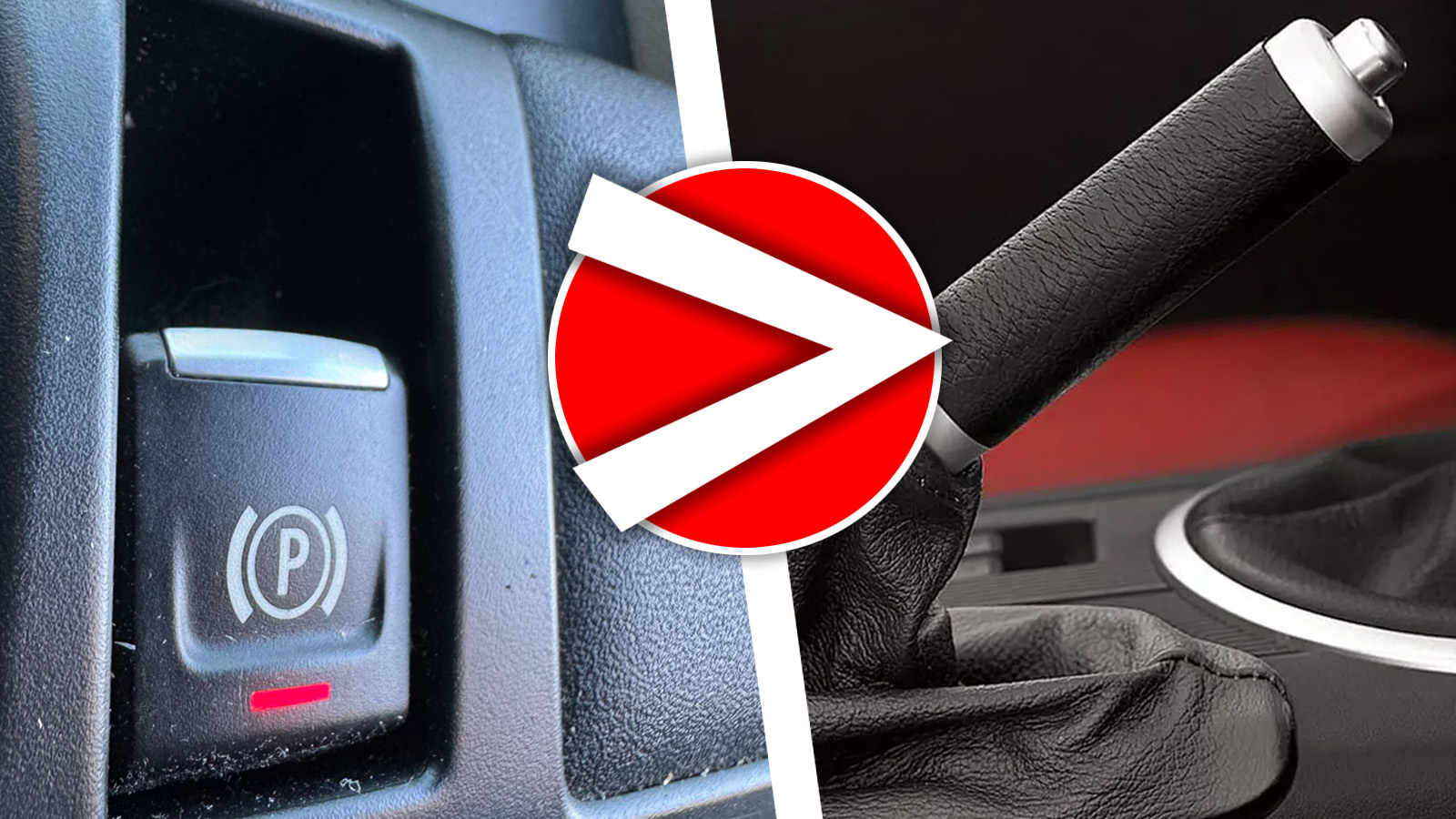
Electronic Park Brakes used to be the bane of car enthusiasts’ existence, but a decade hence, I’ve completely come around to them. They manage to do something that manual park brakes rarely could: Work consistently. With that said, they do introduce a bit of complexity, even adding a rubber drivebelt to the brake caliper. Yes, you read that right; if you weren’t a fan of timing belts or serpentine belts, now there are likely two more in your car, and they’re part of your braking system.
Hand brakes. You all remember them because, before roughly 2012, parking brakes were either hand levers or foot pedals, and there were few other options. In my experience, the vast majority of cars with either had, at best, a park brake that would hold the car on a 10 degree incline. Anything steeper, and you better hope you have the steering wheel turned so you hit the curb.


Many cars that hadn’t had their park brake cables recently adjusted had borderline useless E-brakes, and what’s sad is that those brakes took up precious space and added significant weight to the vehicle. It’s for this reason that I’ve come around to loving electric park brakes, even though I know this is controversial among car-geeks.
Look at all these Reddit posts that are anti electric park brake:


The answer to the question about why so many people hate on electronic park brakes is twofold. First, by removing the handbrake you eliminate the driver’s ability to modulate brake pressure to the rear wheels, which is something that makes folks feel safe in different driving conditions. (With that said, an electric park brake is still useful when in an emergency; it doesn’t just lock the wheels, it is designed to bring your car to a stop in a controlled way — see video below). The second reason why folks don’t like electric park brakes is that, especially in a sports car, folks want to rip the hand brake and initiate a sick drift. You can’t do that with an electric park brake; the handbrake turn is dead.
Of course, there’s also the fact that a dead battery means your car won’t roll without you somehow sending power to the electric motors controlling the rear brakes, and the elevated cost of having to replace rear calipers.
But there are clear advantages to electric park brakes, which typically come in two flavors. First, there’s the cable-style electric park brake, which involves just replacing the hand lever/foot pedal with an electric motor that still pulls a cable). The more popular electric park brake now features electric motors in the rear calipers — motors that lock the pads against the rotors to keep the vehicle stationary.
One of the biggest advantages of this more advanced EPB system over a mechanical park brake is packaging and weight savings.
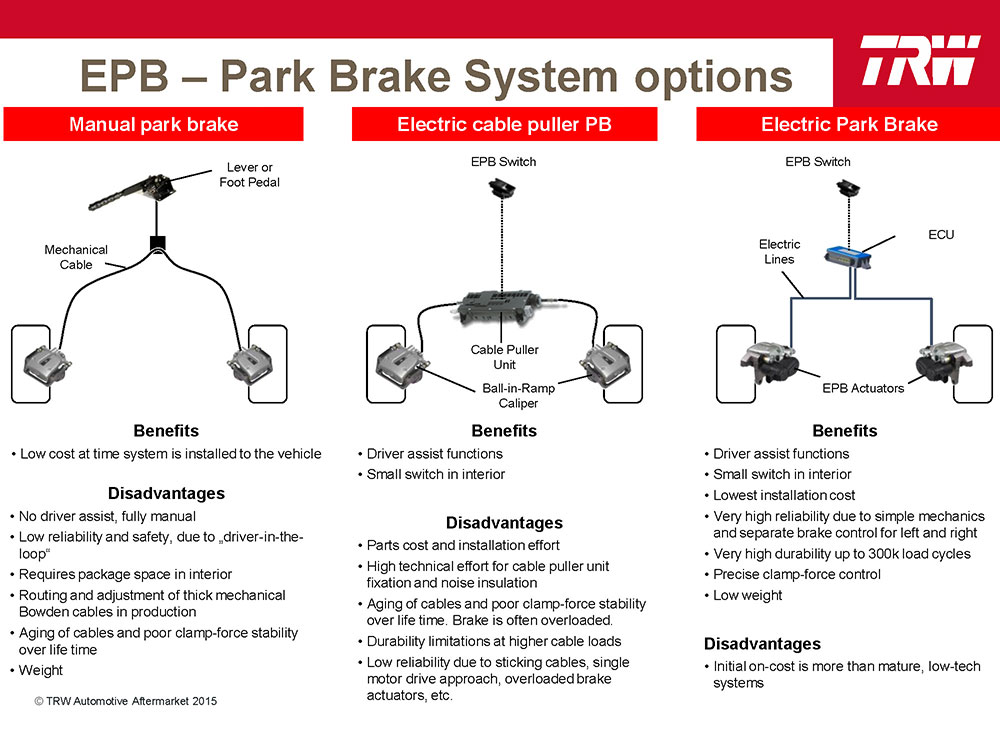
This may seem counterintuitive; isn’t an electric switch, plus electric motors in the calipers, going to increase weight? Actually, no. The park brake handle, park brake ratcheting mechanism, the cable, and the separate drum brake mechanism usually found inside the “hat” of a rear disc brake is significantly heavier than an electric park brake switch, a controller, and some electric calipers and wiring. Wards Auto spoke with electric park brake supplier ZF back in 2018 and learned why EPBs have become so prevalent:
“The electric park brake is a remarkably versatile technology ideal for larger light vehicles,” Manfred Meyer, ZF senior vice president-global braking, says in a news release. “For example, it can result in a weight savings of up to 20 lbs. (9 kg) or more for commercial vans, larger trucks and SUVs when compared to conventional drum-in-hat park brakes.
“This can lead to enhanced fuel economy and reduced (carbon-dioxide) emissions and, by eliminating the park brake lever or pedal, it frees up space in the interior cabin and activates with the touch of a button.
“EPB offers important potential safety advantages and can contribute to automated functions that assist drivers,” Meyer adds. “EPB can work in conjunction with electronic stability control to help allow for improved emergency stops, or help relieve fatigue in traffic-jam situations by holding the vehicle stationary when needed and allowing the vehicle to move forward when it’s safe to proceed.”
The bit about interior space is important, because packaging a parking brake pedal or lever in a cab is not easy, and trying to route the large cable mechanism is often a downright nightmare. Just as an example, below is the park brake mechanism for a 2008 Saturn Vue. Look at those two huge cables that have to be routed all the way from between the front two seats to the rear wheels:
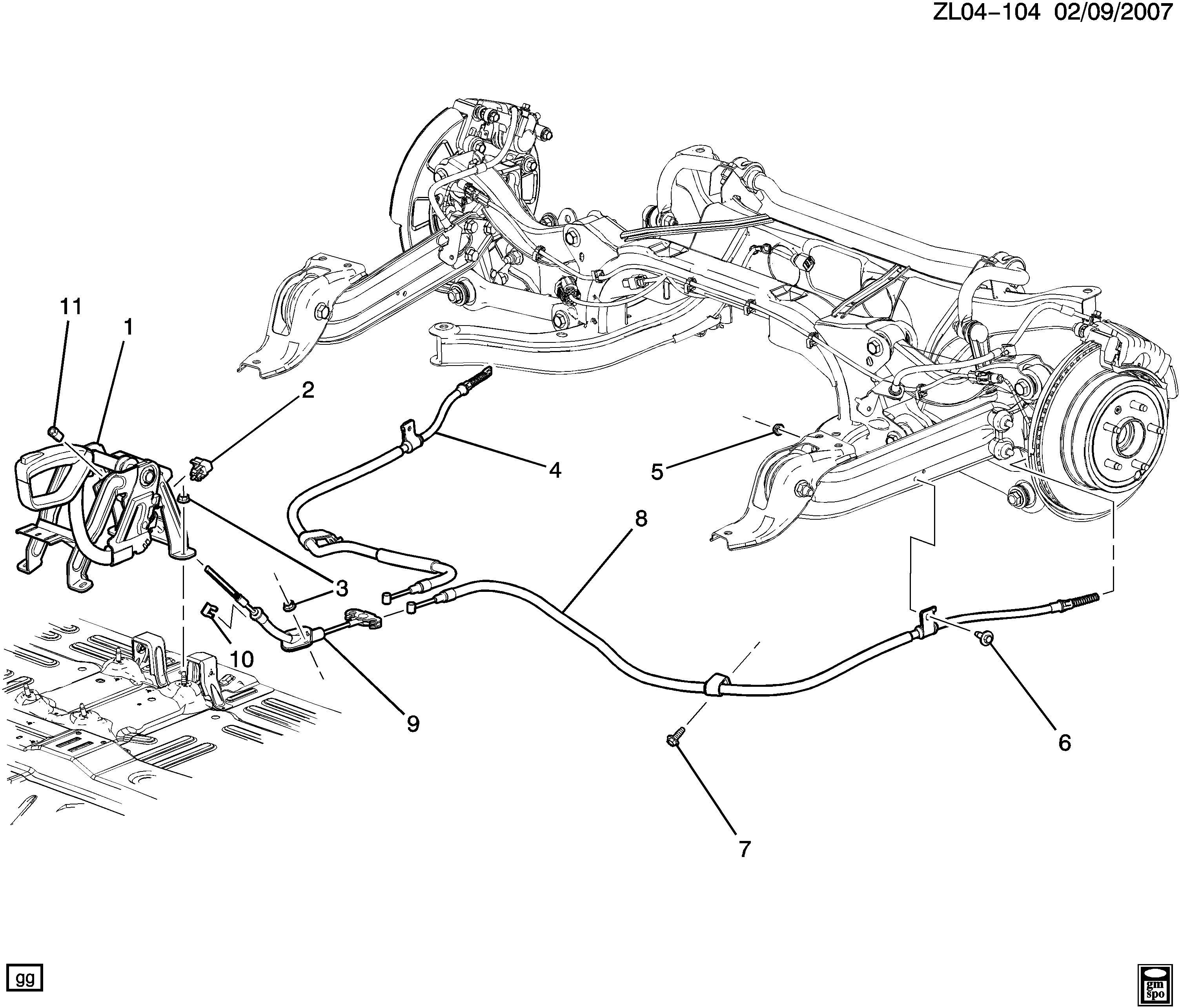
And look at how heavy and giant the handbrake mechanism is:

The worst compromise is the drum brakes in the hat of each rear rotor:
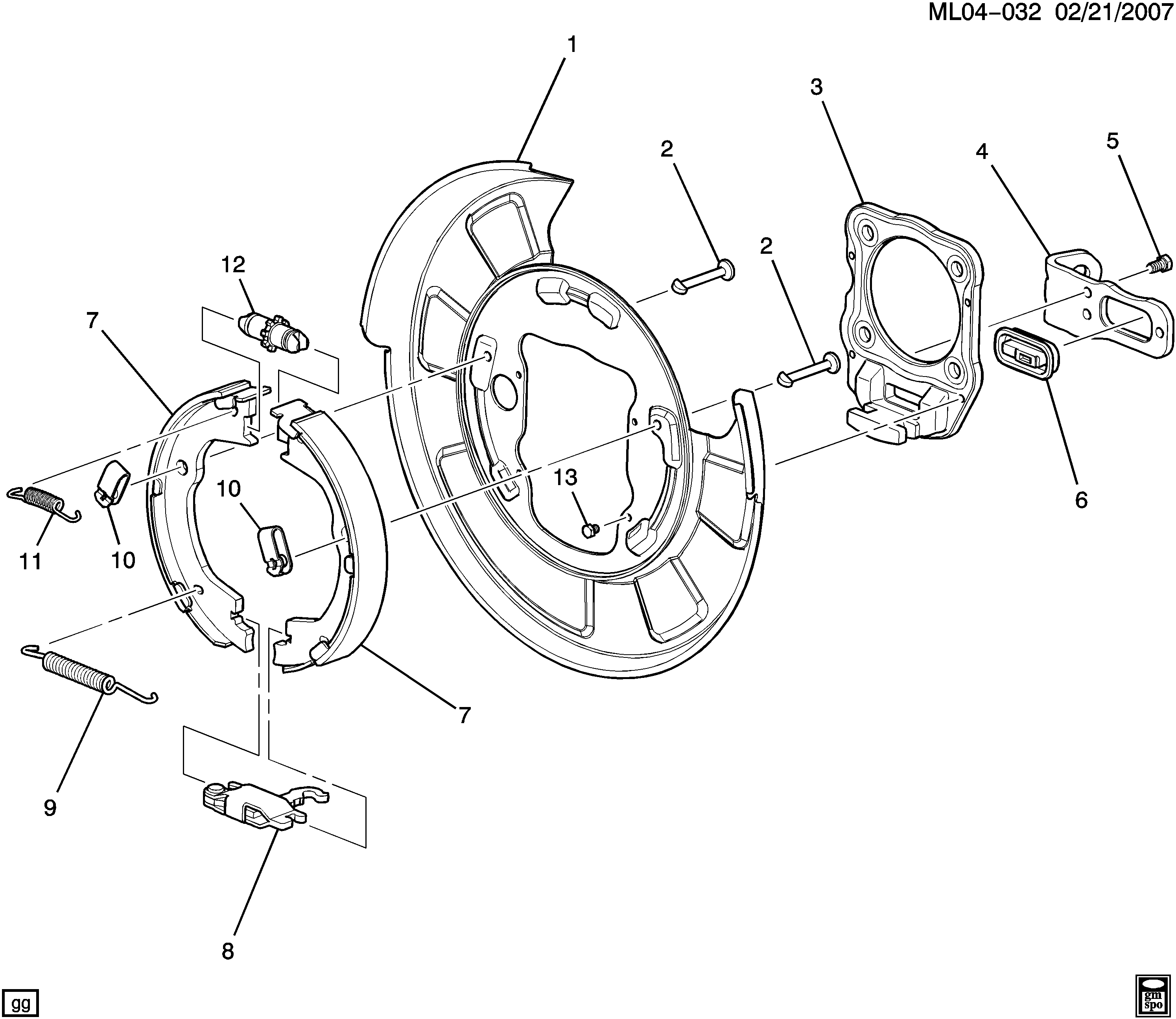
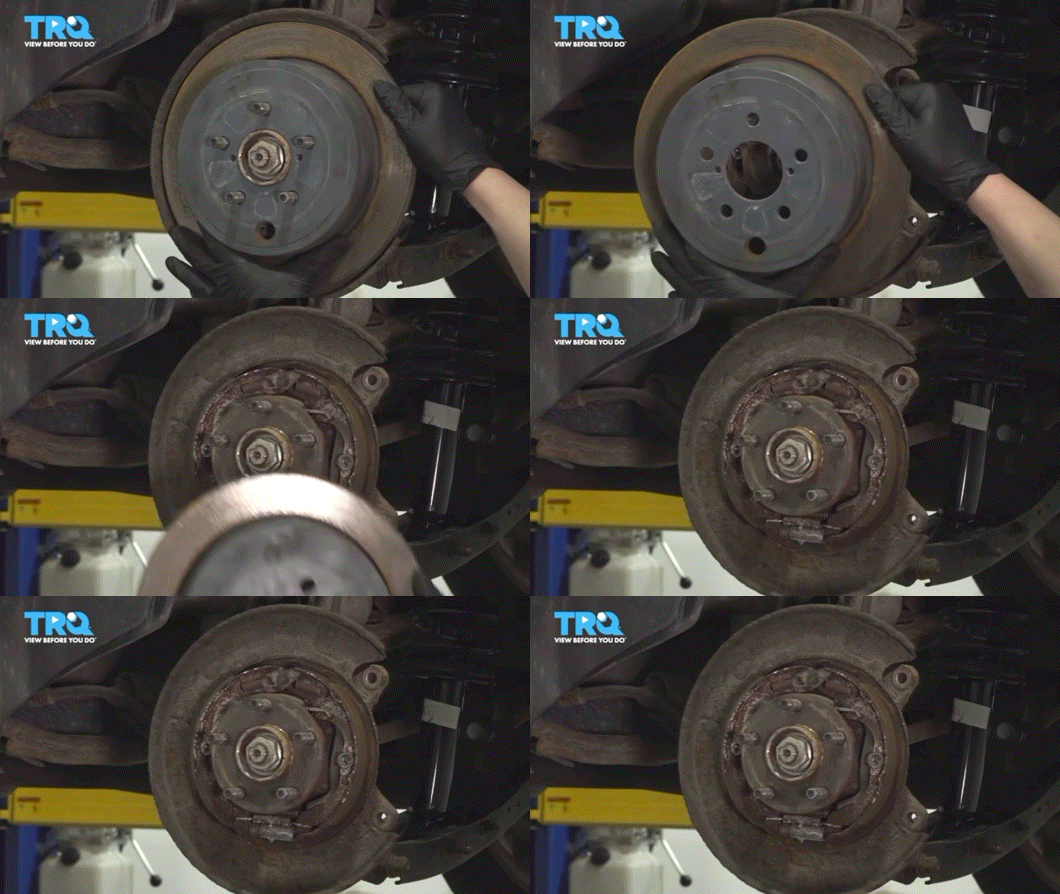
Below you can see what drum brake looks like under a disc brake (this is a Subaru) — yes, most pre-EPB cars featured both a rear disc brake (for normal use) and a rear drum brake (a park brake). It’s insanely complex and annoying to service, and that’s in addition to having to tighten an adjustment bolt to keep the cable taught as it stretches. (Meanwhile, EPB systems with cables automatically adjust for cable slack, and modern ones without cables can adjust for brake pad wear — no service is needed).
(And don’t even get me started on hand brakes/foot brakes in the rust belt, where cables tend to seize up).
Anyway, you get the point. Electronic Park Brakes are clearly superior to foot brakes, and they’re also superior to hand brakes in any car without hooning intentions.
There is one thing, though, that I wanted to share that made me pause. Let’s have a look at what an electric park brake caliper looks like.

It’s basically a regular brake caliper, but with a plastic electronic actuator on the back of the 
Instead of just hydraulic fluid pushing the back of the piston when you hit the brake, there’s also what’s called a “pressure nut” that threads onto a spindle, which gets spun by a little gearbox:

The reason for the gearbox is that, in order to get sufficient torque to lock the rear brakes, you’d either need a large, higher torque motor, or you could use a small, low-torque motor and use a gear reduction to trade some of its RPMs (electric motors spin very fast) for torque. That is to say: The motor spins fast, but the input gear that spins the spindle (which pushes the pressure nut against the piston to lock the brakes) spins slowly, but with lots of torque.

It’s surprising how intricate the gears are in each brake caliper. It’s actually a planetary gear set whose external ring gear is actually a sprocket for a belt that is connected to the electric motor. Chinese gearbox/transmission manufacturer ZHAOWEI breaks it down:
EPB have three important parts: an electronic brake module, a control motor, and an electric switch in the cabin. When the driver operates the switch, it sends a command to the electronic brake module which senses that parking brakes need to be used. Then, the module commands the control motor installed in the brake calipers to operate. Brake pads then are forced on the disc thereby restricting the movement of wheels.
The EPB control motors installed on the left and right brake calipers of the rear wheel both consist of DC motors and micro gearboxes. The gearbox developed by ZHAOWEI has a compact structure, small size, and large torque, and can change the direction of the DC motor’s driving force. The gearbox for EPB can operate quickly under situations with high torque and a high current.
ZHAOWEI has modified the gear and tooth profile of the electric park brakes, which can improve the effectiveness and manufacturing accuracy of the gearbox under high-frequency vibration.
The EPB with micro gearboxes can allow vehicles to park stably even on slopes. The system also has thermal compensation, which means that if the vehicle is forced to park, the rear brake disc will have a gap between the friction plate due to the temperature drop, and the motor will start automatically. This will drive the compaction nut to compensate for the gap caused by the temperature drop to ensure parking is smooth.
Zhaowei doesn’t mention belts in that writeup, though its photo below shows the belt drive that connects the motor to the planetary gearset:

Zhaowei mentions a gear reduction of 120:1 to 160:1. ZF says its ratio is 120:1, with 40:1 of that being in the planetary gearing and 3:1 being the “belt drive ratio.” Here’s more from TRW, which is owned by ZF:

Here’s where TRW talks about the drive belt:
The electric motor drives the actuator gearbox via a toothed belt.
The two-stage, planetary gearbox integrated in teh actuator, converts the rotary motion of hte motor via the toothed belt with an overall gera ratio of ~120:1 into a clamping force of up to 25kN.
Want to actually see the belt? Well, Raybestos tore apart an electric park brake in a YouTube video and revealed it:

Generally, you won’t see that belt, because the motor and gearbox (which are connected by the belt) are typically contained in a plastic actuator that you just bolt to the back of your electric park brake caliper piston:

Anyway, I didn’t realize brakes now had gearboxes and rubber drive belts, so I figured I’d share.


Excellent article, as always, David. There are a few other things that come into play with electric parking brakes. Government regulation requires parking brakes to be able to hold the vehicle on a steep hill while requiring no more than 500N of force to pull the parking brake handle. As vehicles got heavier and heavier, this requirement became very difficult to meet. Drum-in-hat parking brakes were one way of helping because the braking material could be made from a very high friction material that would eat the rotors if they were used as regular brakes as well. But since parking brakes are meant to be used only while stationary, the aggressive materials never caused wear on the drums since they were never spinning. Electric parking brakes solve this problem because the clamp force they produce is independent of the effort it takes for the driver to activate them. All he/she does is pull a switch. The 500N requirement basically drops out of the picture.
The extreme gear reduction that electric parking brakes use does mean that a low torque/high RPM motor is able to achieve the clamp force required to hold a heavy vehicle on a hill, but it also means that the system can’t be back driven. Once the motor turns off, there is really nothing that stops the force in the system from turning the gears in the opposite direction and un-clamping the pads. However, the extreme gear reduction means that even a small amount of friction means that the clamp force is not enough to cause all those gears to spin in the reverse direction.
Lastly, electric parking brakes mean that they can be activated independent of driver interaction. In the Model S, we used this to get rid of the parking pawl in the transmission. The parking brakes always activated when the car was put into park and this prevented any roll-away issues.
I really miss your guest articles and wish you’d write more.
As far as your last point, it makes the most logical sense given the application and is probably the best solution 80% of the time. I just wish it were less of a pain in the ass to deal with when something breaks. On the flipside I’d hate this on a track oriented car. After a 1 hour session going as hard as I can the last thing I want to do is park it with the parking brake engaged. You can get around this in a manual by shifting into gear and turning the engine off though this comes with risks if on a hill, and in an automatic or DCT you can solve this by engaging 2 gears at once without needing a parking pawl. Is there a good work-around in EV or eCVT-land that can immobilize a car even on a hill without using the brakes or any electricity?
Beautiful context from The GOAT.
Why don’t more cars automatically apply the parking brake? Both of my cars are capable of it, because they do it when I park on a slope, but they don’t do it all the time. So I do it manually, because I hate the car rocking as people exit.
My 2026 Ram has a user option to have the vehicle set the parking brake every time it is put into Park. I use this option. But it is a PITA when you are at, say Costco, at peak shopping time, trying to swiftly reverse into a parking spot, and accidentally twist the shift knob beyond R and into Park, then having to wait for the parking brake to fully set before you can release it.
Yes, my Pacifica had that option and it was really nice. I don’t think I managed to activate it accidentally.
I really liked being able to set the option to automatically engage the parking brake when I shift into park, and releasing it when shifting out. But I have always been religious about using the parking brake, anyway. It always makes me wince when my girlfriend just puts her car in park on an incline and just lets it sit on the parking pawl.
It makes me wince even more when she puts my car in park on a slope without applying the parking brake.
I completely sympathize.
Depending on manufacturer, they may have spec’d a system that is mostly designed for compliance rather than function. I know at least one automaker who went cheap and only applies automatically on steep slopes, but will absolutely wear out too quickly if used every time you park.
That way if you wear it out because you live on a hill, it’s a non-warranty item due to excessive use.
The driver strength part is an interesting one that I never thought about until I got my motorhome. Mine happens to be the lightest GVWR of its chassis series so I get a traditional foot pedal for the rear drum brakes but all the larger ones had to go to a fancy (ie. expensive, complex) auto parking brake because they were too heavy for a parking pawl to hold reliably and it would have taken way too much force for people to use manually. Even the foot pedal one is a bit iffy – I’m not a small person and it takes some umph to set it firmly.
My Model S is the only vehicle I’ve had new enough to have an EPB and it’s an interesting thing to get used to. I like the UX side of how it works – basically invisible to the operation of the car.
Thanks to David and Huibert – these are the technical articles and replies I’m looking for! I’m a day behind (dang work and chores) but as soon as I read this article I took a look under my Silverado EV and found the motor-planetary-belt mechanism. And wondered why I never wondered why there is a quick whirring sound when I park the truck. Makes total sense, the vehicle weighs near 9000 lbs, gonna be hard to package in a manual parking brake with sufficient mechanical advantage for this beast.
Yay Huibert Mees!! 😀
Fascinating! I was just wondering if my EVs had an actual parking prawl in the gear reduction unit. I have all Hyundai EVs, so not the same as Tesla, but it’s interesting to know that some EVs did away with that feature.
Nothing but respect for you David, but I hate them. A friend had his electronic parking brake fail. Luckily this happened at home. Though his brake wasn’t set it defaulted to the locked position. He followed all the procedures to unlock it but to no avail. The dealer sent a flatbed and loaded it by dragging its wheels. The repair was $1300. I’m spitting in the wind as all the manufacturers use them now. It’s all whiz-bang until you have to pay the piper and your car can’t move.
Will anytime prefer the simplest solution!
Plus you can make cool handbrake turns with the “manual” handle type ones 😎
Drum parking brakes are *insanely complex* and annoying to service? Compared to this electronic bullshit?? David, you have been snorting too much iron oxide my lad. Drum parking brakes are STUPID simple as a rule. It’s literally a lever to spread the shoes and some springs, a cable to pull the lever, and a rachet and handle to pull the cable.
What IS a bit more complex are manual parking brakes that just use the caliper and disc rather than a separate drum ala some Saabs and VWs. But still simpler than gears and belts and motors and computers – oh yeah, and for much of the country all the electric monkey motion is out in a saltwater bath a good chunk of the year – because that is just *ideal*. And plastic gears and housings in a high-torque application? Yeah, that’s going to end well. And by “end well” I mean for the profit margins of the dealer’s parts and service department.
Nope, nyet, no-thank-you to this nonsense, I am OUT.
There’s the enthusiast me who loves old-school park brakes and has rebuilt a metric shit-ton of drum brakes and can do so with his eyes closed.
And there’s the engineer me who sees the differences for what they are. The advantages are irrefutable, which is why EPBs are so prevalent.
The question is, advantages for whom? Like so much of modern automotive engineering, they seem extremely refutable to me from a long term ownership perspective.
The only good one I know of is older GM RWD cars and trucks, including the F-Body cars. It’s a very simple one-piece horseshoe style shoe and no scary springs or anything. You just pop the old one out and pop the new one in 😀
Thanks, I hate it! ????
I’m ok with electric parking brakes, as long as I can easily change brake pads without needing a computer to reset them. We had a Macan where you could manually wind the parking brake back in with a big Allen wrench when changing pads, that was reasonable.
In my best Jedi voice:
Sans hooning, this is the way.
This is the way would be Mandalorian.
I have spoken.
I KNEW I had it wrong.
My van has a manual park brake and my car has an electronic one. I don’t really have any preference between the two. Like David said, there are genuine benefits to the EPB. That said, the EPB automatically sets when I park on a hill. Why can’t it automatically disengage when I switch into Drive??? I’m sure it’s some safety-related decision, but I’ll still gripe about it.
My vehicles with a EPB and some of my vehicles with a good old fashioned mechanical P. Brake release when put in drive.
This is wild! I didn’t know any of this.
The parking drum in the rotor is a huge improvement vs most of the original calipers with parking function. They are not hard to service, in fact they are so much easier to deal with than those parking brake Calipers as well as less likely to need to replace said calipers.
The only problem with drum in rotor parking brakes is that in most cases the shoes are bonded. The problem is since they are a “non-wear” item rust eventually works its way under the lining and the bond fails. Depending on the exact circumstances that can wedge under the other shoe locking the wheel. So you do need to replace the shoes once they hit 15-20 years old depending on your climate. To be fair I used to see some drum braked FWD vehicles that have the same issue, the lining de-bonds before it wears out.
Then of course there is the DIY aspect, depending on the vehicle you may need a more expensive scan tool to be able to replace the pads or calipers and of course those calipers will be more expensive.
Hand brakes are better than the old style of push-on and then push-off foot pedal parking brakes with no release handle. Old trucks would have a parking brake pedal, a foot-operated high beam switch, clutch pedal, regular brake pedal, and then the gas pedal in the driver’s side footwell.
My son’s ‘65 Rambler had all those PLUS a foot-pumped windshield washer. It was like playing the organ with your feet.
My first car, a ’62 Sedan Deville, had all of that plus a foot switch that would advance the radio to the next push-button station.
On my ’23 Ranger I use the olde schoole parking brake on my slippery driveway to keep the open differential from letting one wheel go bananas. The verdamt truck won’t let me push the brake and throttle at the same time like in my 20th century trucks.
My friends with electric parking brakes also have AWD so the driveway is no trouble for them.
My DCT motorcycle had, instead of a clutch lever, a parking brake lever! They made it really far away from the handlebar so that during the learning curve days you didn’t accidentally pull the brake when you thought it was time to shift.
The parking brake was a cable-pull caliper on the other side of the swingarm from the rear brake. Fun times putting the rear wheel back in and slotting the rotor into two calipers.
Yup the good old “parking brake posi”, that “one weird trick” got me unstuck more than once back in the day.
Both our recent cars have EPBs and I am a big fan. At first, I hated it, but it just works and I don’t have to think about it. I may change my tune when I go to do my first brake job on one. I’ve also gotten used to the start/stop when sitting at a light. That said, I do appreciate that BMW gives a physical button that turns that on/off and it stays off for good unless I turn it back on.
What I like about the electric-brake is that it just works.
Want to hold on a hill as you feather the clutch? It’ll hold you until you have forward momentum.
There’s no guessing on if it needs adjusting.
Or they could just do it correctly and have the mandated stability control system seamlessly activate the service brakes for hill hold like good cars do. You know, the hydraulic system that is fully capable of stopping the car and is far more robust and redundant than this plastic electric bullshit?
Or better still, have a properly placed handbrake lever and do it old-school as I was taught in driver’s ed 40 years ago and had to demonstrate competence at to get my license.
I won’t argue your first point, as my car does have a brake-hold to stop rollback.
But the only thing the lever offers over the electronic switch is modulation. Which might be nice if you wanted to slow down for a full-on brake failure instead of an abrupt full-brake, but that has thankfully not happened to me.
I can confidently say that outside of trying to slide the rear of the car in the winter, there’s been only one time that I felt I needed to modulate the parking brake: it was winter in a rwd open differential truck and I needed to apply some resistance to the one tire spinning on someice to get up a slight hill.
No, what the lever offers over electric actuation is *simplicity* and not costing you a crap ton of money in fixing/maintaining it at some point. If you are going to just serial lease this modern bullshit as so many do then I guess that doesn’t matter.
This post needs a hot take tag. I changed my sister’s brakes recently, but FIRST had to replace the front screen that was broken, because that was the only way to access the menu to release the parking brake. A lever would have saved so much time and money.
I got stuck in a parking spot in a rental Mercedes with an electric brake. The people who rented the car said the same thing happened to them. I had backed into an uphill spot and evidently was supposed to set the brake at a particular step in the process of parking? The freakin’ car would just not let us drive away when we got back in until I went through a very particular routine which I invented through trial and error.
Being a rental, we chalked it up to previous abuse and deferred maintenance.
10000%. Electronic parking brakes are a service nightmare for alignments, brake jobs, even something as benign as spinning the wheel. These stupid things are so obsessive about nannying that they can’t conceive of being off or unlocked with anything less than a diag tool to dig into the ABS to tell it, yes, really, turn the goddamn parking brake off. Horrible things.
I think you nailed it. The underlying tech is good especially for modern heavy cars, but the implementation is abysmal and infuriating. I’d love it if modern cars had 2 sets of jump posts: one to unlock the parking brake and force it into Neutral, and your typical jump post meant for a dead battery instead of a dead car. (Even nicer would be at least one door that can open with a key while the battery is disconnected, and a way to access the battery once you’re in there whether it’s by opening the hood, trunk, lifting the seat, whatever.)
I think this is really what it is about most e-tech that I hate the most: it’s not inherently the technology, it’s the near exclusively dogshit implementation thanks to safety-obsessed prioritization (that often works against that very goal and enables or even encourages bad habits while penalizing good ones) and the general terrible programming that’s emblematic of the Age of Enshitification.
This annoys me to no end, no primary system should be screen dependent. To flip the perception, imagine if our phones had something like the GPU go through your keyring for some reason, complete absurd!
Our 2024 Trax LS has motors and gears, no belts in the EPB.
But the 1.2L turbo-3 has a wet timing belt and a wet oil pump belt to make up for it. 🙂
If it brings you any solace, compared to Ford and Stellantis GM had the foresight to spec Kevlar threads in their belts from whichever supplier they used. I haven’t read/hear/seen any issues with the 1.2 or 1.3L wet belts.
Still, you would never see me accept the “lifetime” interval change that is specc’d in the manuals.
The 2024 Chevy Trax owner’s manual says to change the belts at 15 years or 150,000 miles, whichever comes first.
“Every 240 000 km (150,000 mi)
• Change rear axle fluid, if equipped with AWD. Do not directly power wash the transfer case and/or front/rear axle output seals. High pressure water can overcome the seals and contaminate the transfer case fluid. Contaminated fluid will decrease the life of the transfer case and/or axles and should be replaced.
• Drain and fill engine cooling system. Or every six years, whichever comes first. See Cooling System 3 225.
• Replace the oil pump drive belt and timing belt. Or every 15 years, whichever comes first“
Handbrake turns in my old Miata were fun when I was 20, but I can’t say I really miss a traditional parking brake.
My dad doesn’t “trust” electronic parking brakes which I think is hilarious.
I was perfectly happy with the foot pedal parking brake on my Mercedes. I too am much too old to be hooning cars.
I trust that EPB on pretty much anything will be a very expensive pain in the wallet eventually. Across 50+ cars the worst I have ever had to spend is $40 for a set of parking brake shoes on a 20yo Volvo or two. I can only imagine the parts desk guy’s glee when one of these electric calipers decides to take a dirt nap. Which you can bet it will before it’s 20 years old. Probably long before.
Ha! Zeppelin parking brakes!
I hate that I can’t open the drivers side door on a modern car without the car freaking out and locking the wheels. Though admittedly it’s a feature that would have kept Anton Yelchin, and presumably others, alive. That and a proper multi-position shifter…
On another note, the EPB saves overall vehicle weight, but how does it impact unsprung weight at the wheel? At first I thought it might be heavier, but given that you’re pulling out the drum brake and associated mechanism, I wonder if it saves weight there as well?
Growing up in the 70’s I always assumed two things in cars never worked: The AC and the “emergency” brake.
Then around 1980 my dad bought an Olds 98 and I added power antennas to that list.
If we’re making a list I’d add the dash clock.
Good point. Were were poors so we got that vaguely clock shaped blank dial next to the speedo…
I didn’t know how to act when I realized the middle dash cluster position on my 1983 F-100 could have a tachometer instead of a blank plate!! Junkyards were so great for stuff like that. It was of course still a base model truck, but now with a tachometer and factory clock above the radio.
Been driving over 40 years and could count on one hand the amount of times I have actually used the parking brake. From manual sports cars to 24 foot box trucks the transmission did a perfect job. In fact I have had to push start my manual cars more often than I used the parking brake.
You should start using it occasionally though… e-brakes seize up when they’re not used and then don’t work when you need them.
Having done dozens of rear brakes on cars with drum parking brakes within discs, I can’t disagree more with them being difficult and complex. Worst case, you turn a nut to release the shoes if they’ve embedded themselves into the drum. I even prefer them to the rotating piston e-brake system for cars that don’t have the drums as I don’t have to find the appropriate adaptor. The other positive is that the drum is a fully redundant system, not relying on the main calipers, and (though this isn’t a huge issue) it keeps what might be hot brake pads from burning onto the rotors when the cars is parked and brake applied. I have never had an issue holding a car on a steep hill with a mechanical brake—even on my Legacy where a lot of handbrake turns stretched the hell out of the cable (this prompted me to learn left-foot braking, which was far more useful) so that the handle tore the rubber dressing around it from having to pull it up higher than it had been designed to work. As for weight savings, how much is sprung vs unsprung, drum hat vs rotating piston? The drum probably isn’t any lighter, but I’d bet the mechanical rotating piston is a lot lighter than e-junk in terms of unsprung weight. Funny how cramped these shitty new cars are despite their massive external dimensions that packaging a handle or foot pedal (when 99% of cars only have two pedals) is such a challenge.
I still much prefer the other style of manual parking brake you didn’t mention. The one used by many Honda’s and Mazda’s where there’s a lever on the caliper that squeezes the pistons together. Replacing pads is a bit more annoying as you need to screw the piston back into the ratcheting mechanism each time, but they seem to be the most reliable out of all of the designs. Interior space is a valid concern, but the vast majority of mechanisms are far smaller than what you showed.
“ especially in a sports car, folks want to rip the hand brake and initiate a sick drift”
Real sports cars don’t need a hand brake to drift.
But it sure is fun
Love this feature on my Tesla. It just works. No worries about rolling back on a hill.
I have been driving since 1991 and never once have I had a problem with a manual park brake. Is that atypical?
It seems extremely common on Domestic vehicles that are bigger and on VW’s and BMW’s but I don’t think so on most other cars. I think the type that David’s mentioning that uses a drum inside the rotor tend to fail a lot and are generally used on heavier vehicles, but the type that have a ratcheting piston are extremely reliable but they probably don’t work well past a certain weight.
I wonder what the fuel and carbon improved measures are from reducing 20 pound parking brake on a fully loaded semi at 80,000 pounds?
Well, Semi brakes work the opposite of normal brakes in that it takes an action to keep the brakes from being locked up on all axles…
As far as full size trucks I doubt there’s any benefit other than reliability as it’s insignificant compared to the solid rear axle, but on something like an M3, Corvette, or Miata it would be measurable, but the point there is to improve the handling. I much prefer the ratcheting caliper based manual parking brake over anything else but they’re not really that effective past about 3000-3500Lb, but I think I’d prefer an electronic one on something like a truck, and am undecided on something like a 4000Lb Blackwing on which I’d prefer.
Me neither with 1M miles of driving, including one car I stretched the hell out of the cables on.
On older cars I’ve had the problem of them gradually doing jack until they get adjusted.
Interesting, but do I still have to set the e-brake while in N to avoid getting stuck in P on a hill?
Have they considered filling them with oil? I hear wet belts are more efficient and reliable.
Just wait until a seal fails and they get filled with brake fluid.
What could possibly go wrong?
Literally everything.