

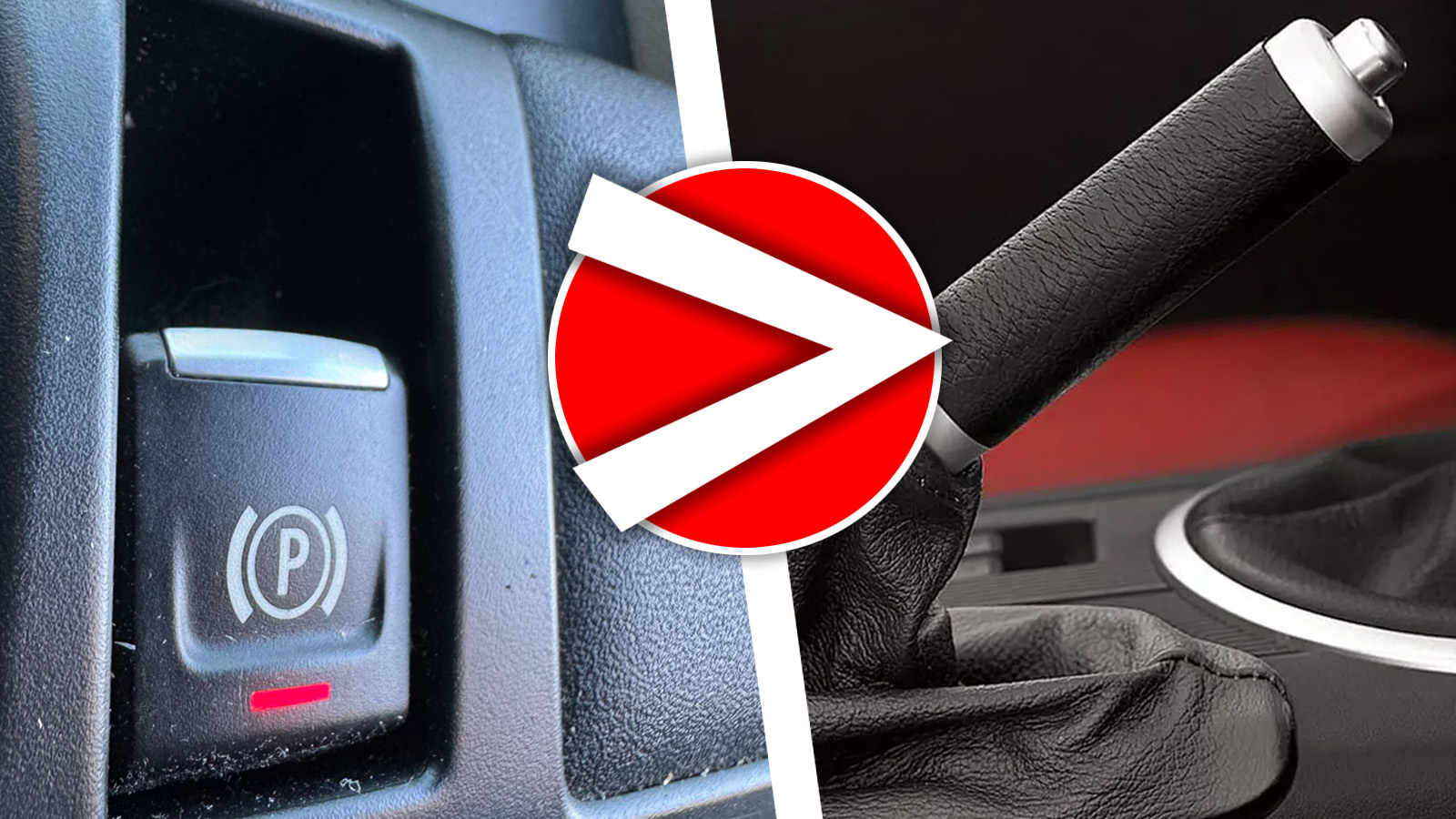
Electronic Park Brakes used to be the bane of car enthusiasts’ existence, but a decade hence, I’ve completely come around to them. They manage to do something that manual park brakes rarely could: Work consistently. With that said, they do introduce a bit of complexity, even adding a rubber drivebelt to the brake caliper. Yes, you read that right; if you weren’t a fan of timing belts or serpentine belts, now there are likely two more in your car, and they’re part of your braking system.
Hand brakes. You all remember them because, before roughly 2012, parking brakes were either hand levers or foot pedals, and there were few other options. In my experience, the vast majority of cars with either had, at best, a park brake that would hold the car on a 10 degree incline. Anything steeper, and you better hope you have the steering wheel turned so you hit the curb.


Many cars that hadn’t had their park brake cables recently adjusted had borderline useless E-brakes, and what’s sad is that those brakes took up precious space and added significant weight to the vehicle. It’s for this reason that I’ve come around to loving electric park brakes, even though I know this is controversial among car-geeks.
Look at all these Reddit posts that are anti electric park brake:


The answer to the question about why so many people hate on electronic park brakes is twofold. First, by removing the handbrake you eliminate the driver’s ability to modulate brake pressure to the rear wheels, which is something that makes folks feel safe in different driving conditions. (With that said, an electric park brake is still useful when in an emergency; it doesn’t just lock the wheels, it is designed to bring your car to a stop in a controlled way — see video below). The second reason why folks don’t like electric park brakes is that, especially in a sports car, folks want to rip the hand brake and initiate a sick drift. You can’t do that with an electric park brake; the handbrake turn is dead.
Of course, there’s also the fact that a dead battery means your car won’t roll without you somehow sending power to the electric motors controlling the rear brakes, and the elevated cost of having to replace rear calipers.
But there are clear advantages to electric park brakes, which typically come in two flavors. First, there’s the cable-style electric park brake, which involves just replacing the hand lever/foot pedal with an electric motor that still pulls a cable). The more popular electric park brake now features electric motors in the rear calipers — motors that lock the pads against the rotors to keep the vehicle stationary.
One of the biggest advantages of this more advanced EPB system over a mechanical park brake is packaging and weight savings.
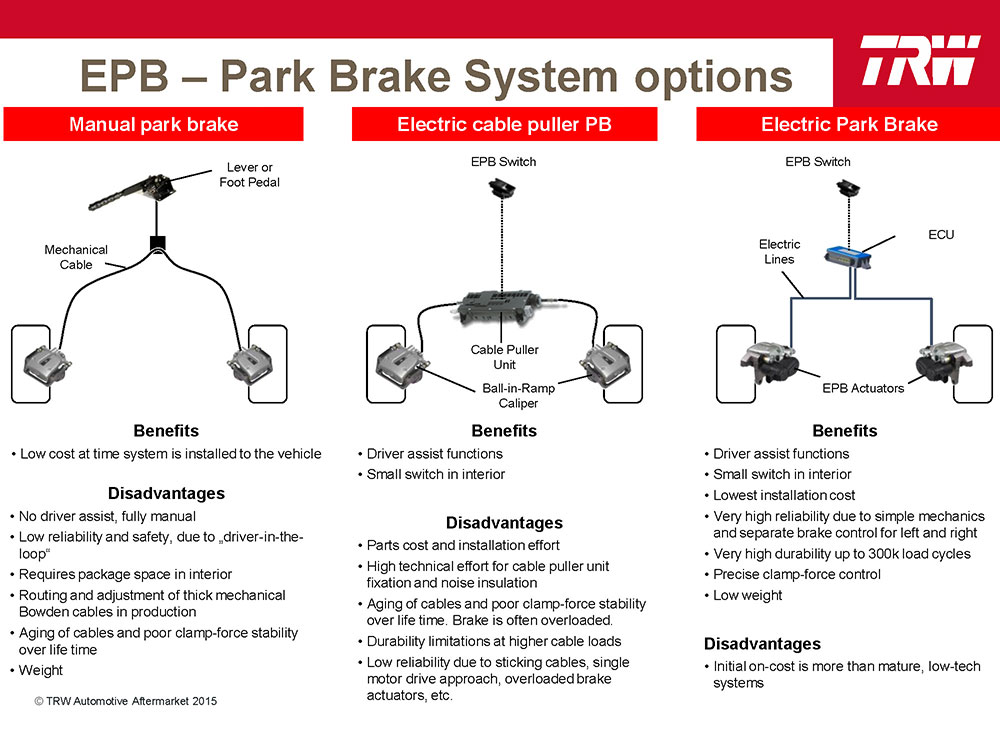
This may seem counterintuitive; isn’t an electric switch, plus electric motors in the calipers, going to increase weight? Actually, no. The park brake handle, park brake ratcheting mechanism, the cable, and the separate drum brake mechanism usually found inside the “hat” of a rear disc brake is significantly heavier than an electric park brake switch, a controller, and some electric calipers and wiring. Wards Auto spoke with electric park brake supplier ZF back in 2018 and learned why EPBs have become so prevalent:
“The electric park brake is a remarkably versatile technology ideal for larger light vehicles,” Manfred Meyer, ZF senior vice president-global braking, says in a news release. “For example, it can result in a weight savings of up to 20 lbs. (9 kg) or more for commercial vans, larger trucks and SUVs when compared to conventional drum-in-hat park brakes.
“This can lead to enhanced fuel economy and reduced (carbon-dioxide) emissions and, by eliminating the park brake lever or pedal, it frees up space in the interior cabin and activates with the touch of a button.
“EPB offers important potential safety advantages and can contribute to automated functions that assist drivers,” Meyer adds. “EPB can work in conjunction with electronic stability control to help allow for improved emergency stops, or help relieve fatigue in traffic-jam situations by holding the vehicle stationary when needed and allowing the vehicle to move forward when it’s safe to proceed.”
The bit about interior space is important, because packaging a parking brake pedal or lever in a cab is not easy, and trying to route the large cable mechanism is often a downright nightmare. Just as an example, below is the park brake mechanism for a 2008 Saturn Vue. Look at those two huge cables that have to be routed all the way from between the front two seats to the rear wheels:
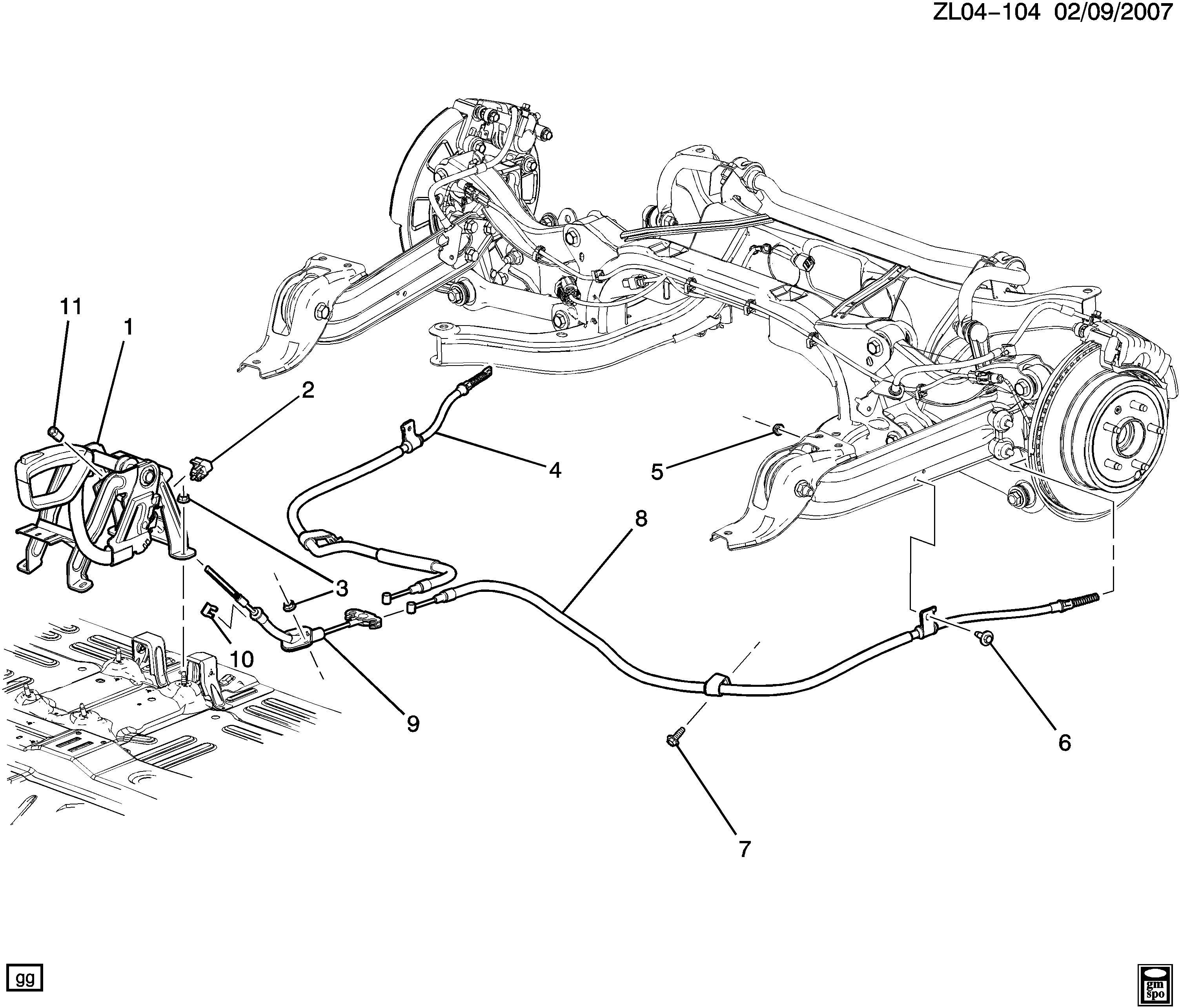
And look at how heavy and giant the handbrake mechanism is:

The worst compromise is the drum brakes in the hat of each rear rotor:
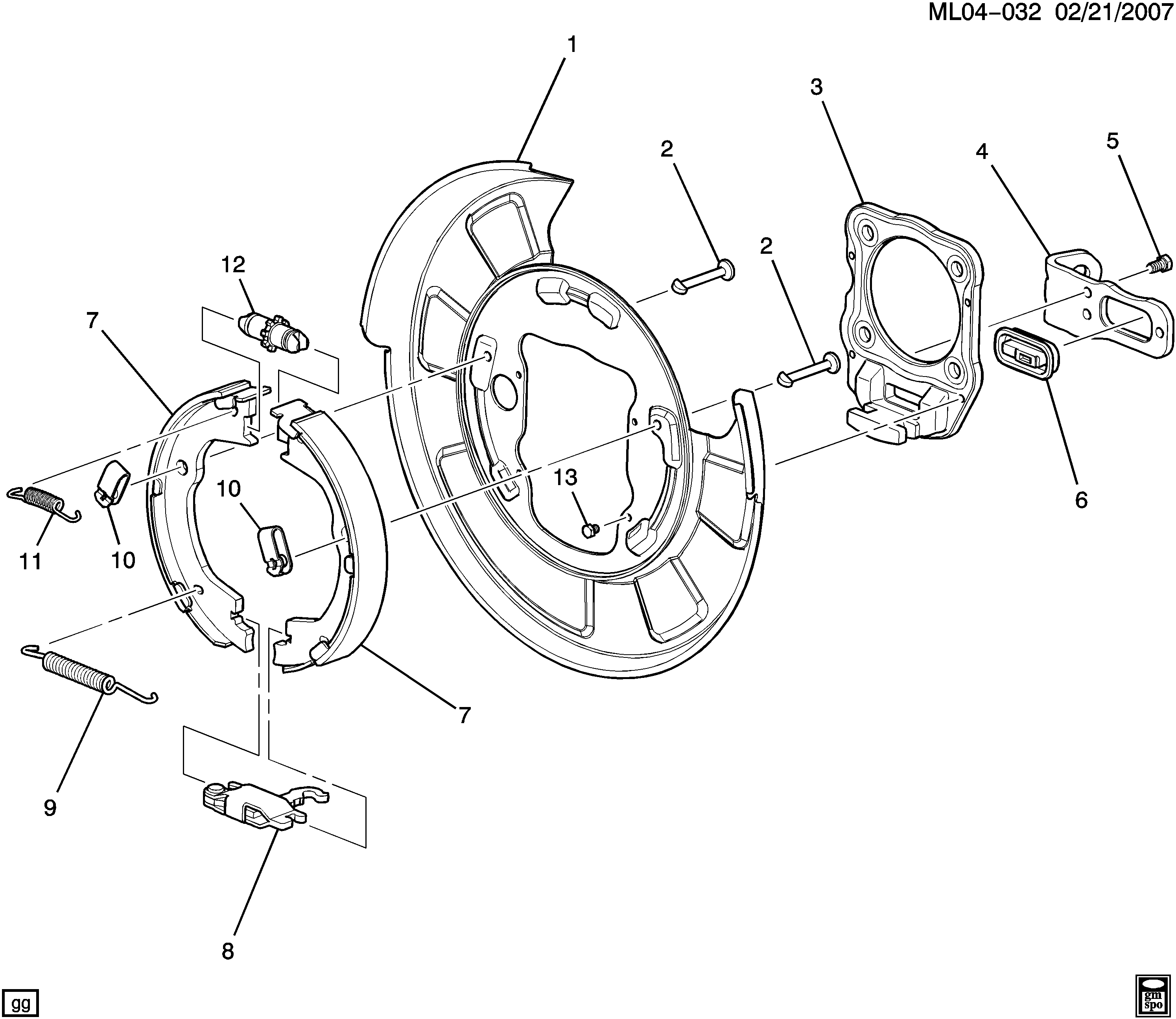
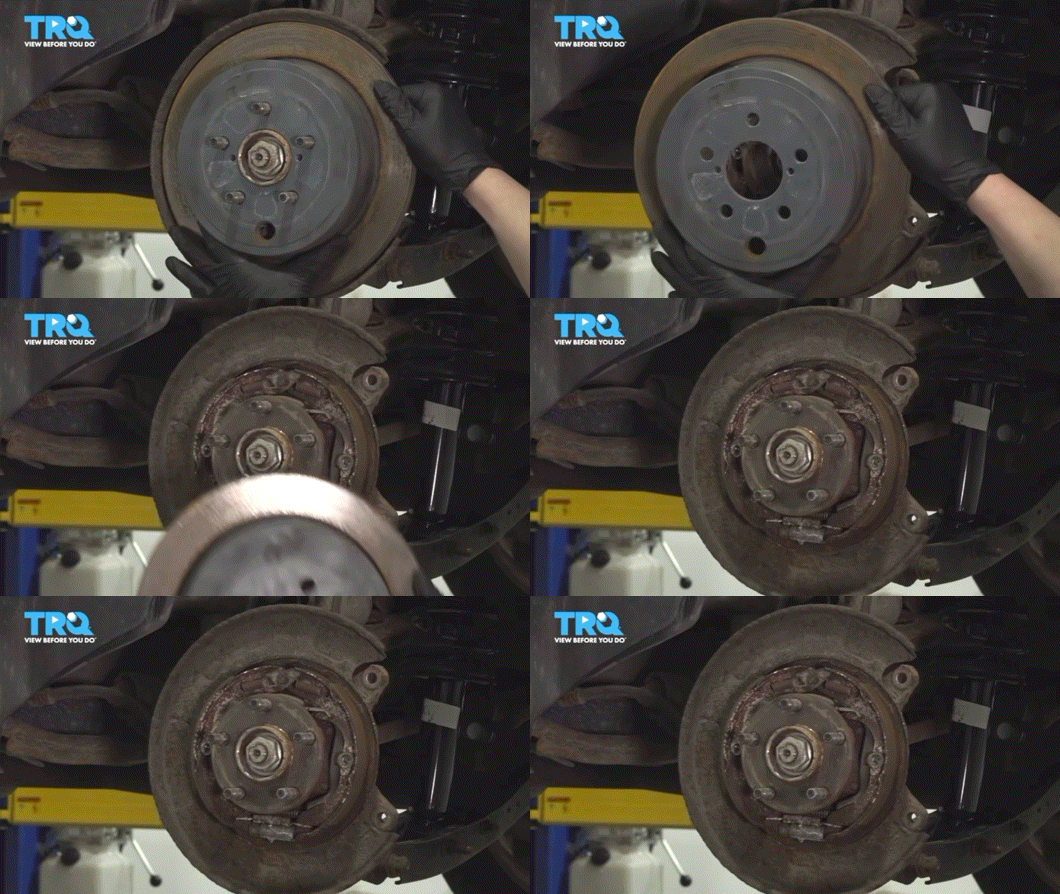
Below you can see what drum brake looks like under a disc brake (this is a Subaru) — yes, most pre-EPB cars featured both a rear disc brake (for normal use) and a rear drum brake (a park brake). It’s insanely complex and annoying to service, and that’s in addition to having to tighten an adjustment bolt to keep the cable taught as it stretches. (Meanwhile, EPB systems with cables automatically adjust for cable slack, and modern ones without cables can adjust for brake pad wear — no service is needed).
(And don’t even get me started on hand brakes/foot brakes in the rust belt, where cables tend to seize up).
Anyway, you get the point. Electronic Park Brakes are clearly superior to foot brakes, and they’re also superior to hand brakes in any car without hooning intentions.
There is one thing, though, that I wanted to share that made me pause. Let’s have a look at what an electric park brake caliper looks like.

It’s basically a regular brake caliper, but with a plastic electronic actuator on the back of the 
Instead of just hydraulic fluid pushing the back of the piston when you hit the brake, there’s also what’s called a “pressure nut” that threads onto a spindle, which gets spun by a little gearbox:

The reason for the gearbox is that, in order to get sufficient torque to lock the rear brakes, you’d either need a large, higher torque motor, or you could use a small, low-torque motor and use a gear reduction to trade some of its RPMs (electric motors spin very fast) for torque. That is to say: The motor spins fast, but the input gear that spins the spindle (which pushes the pressure nut against the piston to lock the brakes) spins slowly, but with lots of torque.

It’s surprising how intricate the gears are in each brake caliper. It’s actually a planetary gear set whose external ring gear is actually a sprocket for a belt that is connected to the electric motor. Chinese gearbox/transmission manufacturer ZHAOWEI breaks it down:
EPB have three important parts: an electronic brake module, a control motor, and an electric switch in the cabin. When the driver operates the switch, it sends a command to the electronic brake module which senses that parking brakes need to be used. Then, the module commands the control motor installed in the brake calipers to operate. Brake pads then are forced on the disc thereby restricting the movement of wheels.
The EPB control motors installed on the left and right brake calipers of the rear wheel both consist of DC motors and micro gearboxes. The gearbox developed by ZHAOWEI has a compact structure, small size, and large torque, and can change the direction of the DC motor’s driving force. The gearbox for EPB can operate quickly under situations with high torque and a high current.
ZHAOWEI has modified the gear and tooth profile of the electric park brakes, which can improve the effectiveness and manufacturing accuracy of the gearbox under high-frequency vibration.
The EPB with micro gearboxes can allow vehicles to park stably even on slopes. The system also has thermal compensation, which means that if the vehicle is forced to park, the rear brake disc will have a gap between the friction plate due to the temperature drop, and the motor will start automatically. This will drive the compaction nut to compensate for the gap caused by the temperature drop to ensure parking is smooth.
Zhaowei doesn’t mention belts in that writeup, though its photo below shows the belt drive that connects the motor to the planetary gearset:

Zhaowei mentions a gear reduction of 120:1 to 160:1. ZF says its ratio is 120:1, with 40:1 of that being in the planetary gearing and 3:1 being the “belt drive ratio.” Here’s more from TRW, which is owned by ZF:

Here’s where TRW talks about the drive belt:
The electric motor drives the actuator gearbox via a toothed belt.
The two-stage, planetary gearbox integrated in teh actuator, converts the rotary motion of hte motor via the toothed belt with an overall gera ratio of ~120:1 into a clamping force of up to 25kN.
Want to actually see the belt? Well, Raybestos tore apart an electric park brake in a YouTube video and revealed it:

Generally, you won’t see that belt, because the motor and gearbox (which are connected by the belt) are typically contained in a plastic actuator that you just bolt to the back of your electric park brake caliper piston:

Anyway, I didn’t realize brakes now had gearboxes and rubber drive belts, so I figured I’d share.


Excellent article, as always, David. There are a few other things that come into play with electric parking brakes. Government regulation requires parking brakes to be able to hold the vehicle on a steep hill while requiring no more than 500N of force to pull the parking brake handle. As vehicles got heavier and heavier, this requirement became very difficult to meet. Drum-in-hat parking brakes were one way of helping because the braking material could be made from a very high friction material that would eat the rotors if they were used as regular brakes as well. But since parking brakes are meant to be used only while stationary, the aggressive materials never caused wear on the drums since they were never spinning. Electric parking brakes solve this problem because the clamp force they produce is independent of the effort it takes for the driver to activate them. All he/she does is pull a switch. The 500N requirement basically drops out of the picture.
The extreme gear reduction that electric parking brakes use does mean that a low torque/high RPM motor is able to achieve the clamp force required to hold a heavy vehicle on a hill, but it also means that the system can’t be back driven. Once the motor turns off, there is really nothing that stops the force in the system from turning the gears in the opposite direction and un-clamping the pads. However, the extreme gear reduction means that even a small amount of friction means that the clamp force is not enough to cause all those gears to spin in the reverse direction.
Lastly, electric parking brakes mean that they can be activated independent of driver interaction. In the Model S, we used this to get rid of the parking pawl in the transmission. The parking brakes always activated when the car was put into park and this prevented any roll-away issues.
I really miss your guest articles and wish you’d write more.
As far as your last point, it makes the most logical sense given the application and is probably the best solution 80% of the time. I just wish it were less of a pain in the ass to deal with when something breaks. On the flipside I’d hate this on a track oriented car. After a 1 hour session going as hard as I can the last thing I want to do is park it with the parking brake engaged. You can get around this in a manual by shifting into gear and turning the engine off though this comes with risks if on a hill, and in an automatic or DCT you can solve this by engaging 2 gears at once without needing a parking pawl. Is there a good work-around in EV or eCVT-land that can immobilize a car even on a hill without using the brakes or any electricity?
Beautiful context from The GOAT.
Why don’t more cars automatically apply the parking brake? Both of my cars are capable of it, because they do it when I park on a slope, but they don’t do it all the time. So I do it manually, because I hate the car rocking as people exit.
My 2026 Ram has a user option to have the vehicle set the parking brake every time it is put into Park. I use this option. But it is a PITA when you are at, say Costco, at peak shopping time, trying to swiftly reverse into a parking spot, and accidentally twist the shift knob beyond R and into Park, then having to wait for the parking brake to fully set before you can release it.
Yes, my Pacifica had that option and it was really nice. I don’t think I managed to activate it accidentally.
I really liked being able to set the option to automatically engage the parking brake when I shift into park, and releasing it when shifting out. But I have always been religious about using the parking brake, anyway. It always makes me wince when my girlfriend just puts her car in park on an incline and just lets it sit on the parking pawl.
It makes me wince even more when she puts my car in park on a slope without applying the parking brake.
I completely sympathize.
Depending on manufacturer, they may have spec’d a system that is mostly designed for compliance rather than function. I know at least one automaker who went cheap and only applies automatically on steep slopes, but will absolutely wear out too quickly if used every time you park.
That way if you wear it out because you live on a hill, it’s a non-warranty item due to excessive use.
The driver strength part is an interesting one that I never thought about until I got my motorhome. Mine happens to be the lightest GVWR of its chassis series so I get a traditional foot pedal for the rear drum brakes but all the larger ones had to go to a fancy (ie. expensive, complex) auto parking brake because they were too heavy for a parking pawl to hold reliably and it would have taken way too much force for people to use manually. Even the foot pedal one is a bit iffy – I’m not a small person and it takes some umph to set it firmly.
My Model S is the only vehicle I’ve had new enough to have an EPB and it’s an interesting thing to get used to. I like the UX side of how it works – basically invisible to the operation of the car.
Thanks to David and Huibert – these are the technical articles and replies I’m looking for! I’m a day behind (dang work and chores) but as soon as I read this article I took a look under my Silverado EV and found the motor-planetary-belt mechanism. And wondered why I never wondered why there is a quick whirring sound when I park the truck. Makes total sense, the vehicle weighs near 9000 lbs, gonna be hard to package in a manual parking brake with sufficient mechanical advantage for this beast.
Yay Huibert Mees!! 😀
Fascinating! I was just wondering if my EVs had an actual parking prawl in the gear reduction unit. I have all Hyundai EVs, so not the same as Tesla, but it’s interesting to know that some EVs did away with that feature.
I don’t do handbrake turns, so I’m fine with either.
However, implementation matters. My Ram’s parking brake literally rusted to pieces in about 5 years. I had to replace the shoes on both sides, and the whole drum brake system was a rusty mess.
The EPB in my new truck works fine, but I hate the logic they employed for automatic engagement. Instead of always engaging when in park, it only engages if you’re on a sufficient incline, which sometimes is less than I expect. As a result, there have been several times I’ve accidentally disengaged the EPB because it was already turning on when I hit the button. I suppose I should check if they pushed a software update to allow it to be engaged every time.
I do like that if you’re in the hitch camera view, it always engages when you put it in park so the truck doesn’t roll after you get it in place. I just wish it behaved that way all the time.
I currently own vehicles with manual and electronic parking brakes. The cable driven ones are the style that simply pull the caliper (Mazda has been doing this style forever, and its much better than the drum inside the tophat version).
My experience with the EPB is that it actually made the rear brake job slightly easier. Mazda has a button and pedal dance you can do (some sequence of the EPB switch, gas pedal to the floor and start/stop button) that will fully retract the EPB for service. As stated, many other manufacturers are not like this and may require special scan tools, etc. I know someone who tried to hardwire power to the motors to retract them and get around needing a scan tool…they ended up frying the car’s ECU in the process. I believe this was on a VW.
That being said, I still prefer the cable driven just for the controllability (well, mostly just the fun) of winter driving a fwd car, which is no fun at all, otherwise. I have gotten decent at weight transfer with left foot braking to get a good fishtail going, but it’s much more simple and fun to be able to just grab a handful of e-brake going into a corner.
I’ve never actually had a cable completely seize in the sleeve, but have had them get sticky to the point I disconnected one side and dealt with half the e-brake power. Currently have a separate issue with the NA Miata where the arm/pawl on the caliper itself sticks. It’s not due to excessive corrosion and is easily unstuck by pushing on the pawl, but annoying nonetheless. One day I’ll pull apart the caliper and try to fix it.
Not all of the EPB motors have an integrated belt and planetary gear set. I’m pretty sure that the ATE Teves (Continental) EPB motors rely on a multi-stage reduction gear set and the multiplying force of the forcing screw/ball nut interface to allow a small DC electric motor to apply enough oomph to the brake pads to hold the car.
All the mechanical parking brakes I have come across were self adjusting for cable tension/pad wear provided you used the parking brake regularly. I’m pretty sure the reason mechanical parking brakes developed a reputation for being out of adjustment and/or seized is because the vast majority of drivers never use them. I’ve never had issues with mechanical parking brakes in my family’s vehicles, but we all use the parking brake habitually.
The corollary to the above is that, from my perspective, the best thing about electronic parking brakes is they get used consistently because they tend to be automatic. And there is still a button if you want/need to take ‘charge’ yourself. I was a skeptic initially but I have zero complaints now.
I habitually use the parking brake in any car because I care about the transmission, but automakers really need to standardize how electric ones are implemented. They should all automatically engage when a certain action is performed (e.g. turning the vehicle off in park or neutral, depending on whether it’s automatic or manual, or putting the automatic transmission in park) and disengage when another is performed (e.g. putting any transmission in gear while the vehicle is running). Obviously you can still override them if needed, like when you have to tow a FWD vehicle. Seems pointless for them to be electric if you still need to manually operate them.
On a related note, the worst implementation I’ve personally had experience with was in a 2025 Chrysler Pacifica (sorry DT if you ever got to work on this model in any way). It always engaged automatically when I put the van in park, but would only automatically disengage when it felt like it when I put it in gear. I’d say half the time I ended up having to disengage it manually.
On my F-150 the parking brake doesn’t automatically disengage when put in drive but rather then throttle is applied in either drive or reverse. Initially I was skeptical but I really like that way of doing things. Great for hill starts in either direction without any extra thought required and impossible to leave it on when you start driving.
I bet quite a few people in the hobby robotics community would be interested to know there is an off-the shelf (and potentially junkyard salvageable) source for small, high torque 12v gearmotors. Windshield wiper and power window motors have long been popular, but they don’t have the extreme reduction these do.
I think it would be fair to add these items to the Benefits of manual parking brakes:
-Can modulate braking
-Works without electronics and power
Great deep dive David, but saving weight and reducing emissions? I’ll take handbrake turns while living in snow country any day. Also, my car’s hand brakes were easy to adjust, my Tacoma’s replacement cable was $25 and took an hour tops. Finally, adding the issue of an immobilized car when the battery is dead or the car is damaged is a pain in the ass. I visited Scotland and rounded a corner to find a stranded Mercedes car in the middle of the road (at night). They had hit a deer and the car bricked itself and could not be rolled off to a safe spot on the shoulder. All because the parking brake deployed with the airbags. The car was still in Drive, but was not running. It had power too, but the “safety” overruled us pushing it. Stupid modern cars.
Show me how much space, weight and emissions are saved. I’ll offer up my wife’s 2022 Civic Si. Honda can replace the electronic brake with a manual one and we shall see. I volunteer. It’s our only vehicle modern enough to have one. Probably also our last modern vehicle.
The least reliable parking brakes are the ones that use the rear pads/calipers for the parking brake. They almost always need new calipers every time you do a rear brake job. Most of the time, it isn’t the parking brake cable that seizes; it’s the caliper. Most EPB systems use this design as well, so you often you need a special scan tool to electronically open/close the calipers.
The drum in hat is more complicated and heavier and more expensive. I wonder how much of the weight savings is due to using the rear caliper for parking brake instead of a separate drum in hat.
The best parking brake setup I’ve seen is in older GM RWD cars and trucks. A simple one-piece horseshoe style parking brake shoe with no springs or anything.
It’s interesting to hear how much the “combo rear brake caliper with parking brake lever” is being criticized in this thread. They seem to me like the most elegant packaged solution. I did rear brakes on my 2016 Caravan recently and did not find it particularly weird or difficult to work with.
(But understandably if the mechanism seizes from disuse and then you try to work on it, it will probably be a royal pain. I could see that)
My guess is it comes down to the implementation rather than the concept.
I’ve had two vehicles with the combo deal. One worked fine altho a simple pad swap was more involved to retract the piston but not a real issue. The other one was just a flat-out POS that never stayed adjusted properly, the levers would seize up occasionally, and even when it was properly adjusted (briefly) it did a poor job actually holding the car. Same concept – different implementation.
My other cars with the separate drum are all set it and forget it. Other than having to sometimes back off the shoes to swap a rotor they just do their thing and hold the car as well as expected with no drama. Maybe it’s just an easier design to not screw up.
My only car with an EPB is about 6 years old so only time will tell where it falls on the spectrum.
The extra step of stepping on the brakes before pulling the button really pisses me off because sometimes they just don’t register if you don’t step on the brakes hard enough. The car should be capable of doing the parking brakes without me stepping on the brakes, but the automakers just make me do it anyway for some stupid legal reason.
Ah yes, when I’m trying to move a car that won’t start and that e-parking brake automatically engages Every Single Time the vehicle comes to rest… *chef’s kiss*
Zero complaints, few things have been as successful at pissing me off.
They eliminated the E-brake turn, and then they wonder why young people aren’t reproducing anymore…
It’s been well documented that nothing turns a teenage girl on more than a well executed handbrake turn! (never mind the implications of 40-something guys and teenage girls, that bit has aged like milk)
https://youtu.be/mopar3ddxOM?si=g5DgG3XyfciSz2hd&t=230
I’m pretty sure the implication was, this was in reference to their teenaged selves. The whole bit was about cars owned by teenagers.
That should have been abundantly clear given the title “Teenage Challenge” but this is the internet…
I felt it was best to just address it up front.
New car I have doesn’t even have an option for a parking brake. Car is in “Park” so the “Parking Brake” is enabled. Like the “Ghost Host” on the Haunted Mansion at DL.
I’m fine with it. It just can never, ever break (no, not brake). Just like the giant effing screen on the dash.
New mini?
2026 C-HR
Which one? I hate how Toyota has two models under this name
There is only one in 2026 with that name. The EV (prior years were ICE or hybrid). Comes in two levels: XSE (we have) and some lower level one without the electric passenger seat, which was standard on our 13-year-old Lexus.
They also offer the slightly larger bZ.
There’s still a different model sold in Europe and Australia that’s basically a Prius Cross. That’s weird, I thought all of these bZ based EVs had a separate parking brake switch somewhere just in case you need to manually release it for whatever reason.
Referring only to the US market, as yeah, there are a bunch of same names for different cars and different names for the same cars around the world.
That’s possible. I haven’t looked yet. All I know is that the parking brake magically is engaged when the car is put into park, so I, an assumed lazy average car buyer, don’t have to do it myself.
That’s how most (if not all) modern Toyotas with anything but a manual transmission work. The only exceptions I can really think of are probably models that have been in production forever (like the ProBox).
Great article! From the glass is half empty side, what will the repair cost be when they cease to function? Or just malfunction? Any time you add complexity repair costs will increase. My Toyota Solara and Toyota Highlander both have 180, 190 + miles and the parking brakes both work fine. No repairs have been needed this far. Have made sure that area behind the rotor gets cleaned every brake job.
Other people can do what they want, but I’ll tell you one thing: I’ll never not own at least one vehicle with a mechanical parking brake, and a manual transmission.
I see one big problem though, you can’t do sick drifts with an electronic parking brake. Checkmate, David.
Benefits? yes, but the electronic e-brake system is still not perfected. You still cant modulate the braking force, you cant use it like a fully manual system in a hill start situation nor in a hand brake turn or initiate a drift. The last two are rarely used at all but serves as a cherry on top for the hill start feature that can arguably be a daily routine for many people with a manual transmission. The e-brake system is also arguably more complex, and costly. It makes sense to use in some cars but not at all in all cars
Manual cars come with hill hold now, because of this …
My 92 Subaru had an all mechanical hill holder system that worked great.
One of the fun ways to use EPBs is to subtly pull the button while someone is driving because they will be really confused why their car started braking by itself. I will point out that emergency braking using the mechanical calipers is actually pretty rare. Every system I’ve worked on will do the emergency braking using the ESC hydraulics (like AEB) which gives the benefit of 4 wheel braking and ABS etc control to keep the car from spinning out. If there’s an electric or hydraulic failure, then it will go to the EPB motors themselves (and they can still modulate clamp force to unlock on slippery roads)
When I drove wreckers, some of the rigs at the shop had brake locks, where you stand on the brakes, flip a lever, and the brakes stayed stepped on. All four hydraulicly locked. Not a long term solution, but excellent for when you have to winch a car out of a tree.
The salted roads of the upper midwest snow zone have long rusted most of the old school lever and cable parking brakes to junk. I have actually heard the cables snap went the lever is pulled.
Same. The saltbelt destroys cable-systems.I’ve had cables seize up in their sheaths loads of times.
Loads of times!!! My clutch cable on my 1970 Jeepster Commando I owned in MN in the 1990’s, needed replaced as soon as I bought it.
I remember when my parking brake cable was scaling inside of its sleeve and my mechanic asked whether I wanted to replace it with a stainless version. Um, yes please!
Yes, the rewarding sound of a snap followed by a loosely flopping handbrake followed by a trip under the car to make sure nothing is dangling dangerously.
Ah, memories.
I think this is one of those times I hard-disagree with a David take. There’s three points that make me categorize EPBs mentally as “Unnecessary electronic doodad”.
Number one is serviceability – needing access to the vehicle infotainment/screen, submenus, or a scan tool to retract and recalibrate them. I helped someone replace brakes and pads on a car with an EPB and it just seemed ridiculous that this is part of a pad slap.
Number two is failsafe/fallback operation. Battery dead or motor won’t actuate? Your car is rigidly stuck now. Have to find a way to retract the caliper manually or a means to boot up the infotainment system. A dead battery in a “modern” car causes so much more pain than it has to, IMO.
Number three is modulation. I actually dislike manual foot pedal parking brakes as well because of this, but at least I can usually pop the ratchet or release lever just enough to make it work. I like the ability to controllably (and mechanically) independently engage one set of brakes. I am a prolific parking brake user, and many people aren’t, so this point is kind of a personal preference.
EPBs to me represent the continued slide from cars being mechanical objects to electronic doodads and the “software defined vehicle”. Added complexity, added down-the-road parts to find or bypass or replace, added reliance on OEM software and ecosystems. Understandably, cars are built to target “the average Joe”, but the continued devolution (as I see it) of systems towards electronic and software control in lieu of mechanical systems simply makes cars less serviceable, more expensive when you have to do that, and in the long run more prone to hard failures. It turns a Gaussian distribution of failure probabilities and their workarounds to something more peaky and narrow.
Most cars are calibrated to do a clamp force that is based on the road grade
It makes rear brake service slightly more challenging, but park brake service is many times easier.
Agreed on the battery-dead point (I included that point in the piece).
Totally understand the modulation thing.
Overall, from an engineering standpoint, for the average car, I still think EPBs are far superior, particularly from a reliability/parts complexity standpoint. But I understand why enthusiasts like it old-school.
You just showed the EPB unit with all the gears and belt and you’re saying that is easier than a drum brake to service? You’re throwing that away and paying a few hundred dollars for a new one if that breaks, there’s no servicing.
My Volvos had these, and once you understood how they worked, they were pretty simple to work around when doing a brake job. Just pop the motor module off, and wind the piston in with a T40 socket, and bolt the motor back on. Way less of a PITA than dealing with the drum-in-hat style.
With a drum in rotor style no need to do anything with the parking brakes when replacing the pads and/or rotors. So I don’t see how having to take the motor off and retract the piston with a socket is easier in any way.
Sounds like you’ve never needed to adjust parking brake shoes. Or had slack/tension in the cables move the shoes enough to make it hard to get the rotor back on. Though, most people who don’t use the parking brake have the shoes rusted in place, so it’s not an issue…
When I had to do a brake job on my M45, getting the drum-in-hat brakes adjusted and even after the previous owner’s years of neglect SUCKED.
I’ve adjusted them many times, in fact did my F-250 about a month ago, easy peasy. I find it no harder to put the rotors back on than on any drum braked vehicle which yes is harder than a rotor, but much easier than dealing with a P. Brake equipped caliper.
In my various BMWs I’ve only had to adjust the rear brake shoes one time. Other than that, the only times I’ve had to mess with them was when replacing the rear wheel bearings.
Manual or electric, does it really matter if owners do not bother to use the parking brake?
I now have my first vehicle with electric parking brakes, and it automatically activates.
That is a good thing. My Subaru does not do this even as a menu option, which surprised me as it wants to do everything else unless i turn it off.
I don’t mind them. Though the electrical tab broke on the wire for it on like year 2 of my Subaru, and the only way to fix it was replacing a $400 electrical cable that ran like halfway up the car. So it survived with a zip tie for like 6 more years after that.
It’s a “tempoary fix”. Unless it works. Then it’s just a fix.
Good point, is a “temporary fix” that likely outlasts an actual fix really temporary?
My 2016 Mazda 3 actuate the caliber directly without separate brake pads. One reason I bought the car used is that the new ones went electronic. The only downside to that brake setup is you need to twist the caliper while retracting it during service. I doubt that setup is much heavier than electronic brakes. Sorry I’m in the manual camp
I’ve had 25 cars, only two have been drum-in-hat, most have been on the rear calliper like that.
Same, every rear-disc car I’ve ever had has used this method. That’s why I always keep one of those cube tools that goes on the end of a socket wrench and has different nubs on each face for turning different brake pistons to retract them for pad changes.
With the EPB, you typically just select “Brake Service Mode” in the settings menu and the motors retract the pistons so they’re all ready for new pads. That’s one nice advantage of the EPB.
My main problem with EPBs is that in an emergency no one has the muscle memory to find the switch if the main braking system has failed.
I’ve only had brake failure a few times, but grabbing that handle before I had time to think about it definitely saved me from destroying my Astra GTE.
My wife’s Lexus has EPB and my plan for brake failure in that is to just slam into stuff until it stops. I’ve no idea where the button is, which is a sign of how unobtrusively perfect the EPB installation is.
Not every vehicle with EPB allows you to retract the system and relearn the pads with a setting in the menu, some require a scan tool to do so and not just a basic one.
Volvos are exactly this way. But two screws and a T40 gets the job done.
Yes, unfortunately my 2018 Mazda3 has the EPB, which means no fun in the winter, though I’ve gotten decent at weight transfer with left foot braking to get a good fishtail going. It does make the brake job slightly easier though, as you don’t need to rotate the piston to retract, like you mentioned. Mazda has a button and pedal dance to retract the pistons (something with the EPB switch, gas pedal to the floor, and start/stop button), so very simple there.
I still very much prefer grabbing the manual e-brake in our 2014 CX-5 to initiate some good sideways action (the only way to do it in that car really. Since you can’t fully turn off stability control, you just have to overwhelm it with so much angle it can’t react fast enough).
All of the Mazdas I’ve owned with manual parking brakes were the style that just pulled the caliper, which work great and seem to be pretty reliable overall.
My solution was to purchase a caliper piston tool from Hobo Freight at a reasonable price. It makes the rear brake service a snap.