

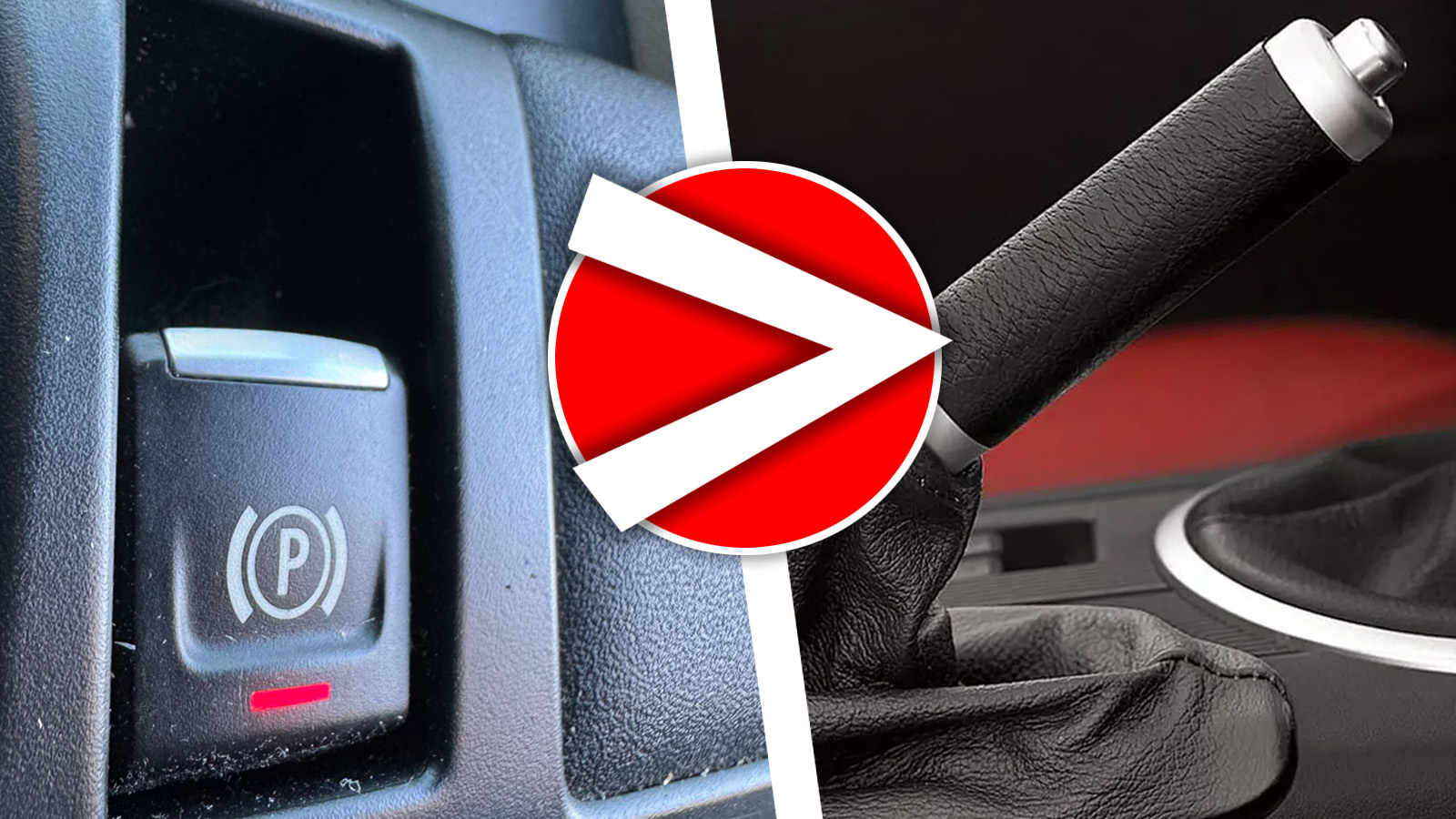
Electronic Park Brakes used to be the bane of car enthusiasts’ existence, but a decade hence, I’ve completely come around to them. They manage to do something that manual park brakes rarely could: Work consistently. With that said, they do introduce a bit of complexity, even adding a rubber drivebelt to the brake caliper. Yes, you read that right; if you weren’t a fan of timing belts or serpentine belts, now there are likely two more in your car, and they’re part of your braking system.
Hand brakes. You all remember them because, before roughly 2012, parking brakes were either hand levers or foot pedals, and there were few other options. In my experience, the vast majority of cars with either had, at best, a park brake that would hold the car on a 10 degree incline. Anything steeper, and you better hope you have the steering wheel turned so you hit the curb.


Many cars that hadn’t had their park brake cables recently adjusted had borderline useless E-brakes, and what’s sad is that those brakes took up precious space and added significant weight to the vehicle. It’s for this reason that I’ve come around to loving electric park brakes, even though I know this is controversial among car-geeks.
Look at all these Reddit posts that are anti electric park brake:


The answer to the question about why so many people hate on electronic park brakes is twofold. First, by removing the handbrake you eliminate the driver’s ability to modulate brake pressure to the rear wheels, which is something that makes folks feel safe in different driving conditions. (With that said, an electric park brake is still useful when in an emergency; it doesn’t just lock the wheels, it is designed to bring your car to a stop in a controlled way — see video below). The second reason why folks don’t like electric park brakes is that, especially in a sports car, folks want to rip the hand brake and initiate a sick drift. You can’t do that with an electric park brake; the handbrake turn is dead.
Of course, there’s also the fact that a dead battery means your car won’t roll without you somehow sending power to the electric motors controlling the rear brakes, and the elevated cost of having to replace rear calipers.
But there are clear advantages to electric park brakes, which typically come in two flavors. First, there’s the cable-style electric park brake, which involves just replacing the hand lever/foot pedal with an electric motor that still pulls a cable). The more popular electric park brake now features electric motors in the rear calipers — motors that lock the pads against the rotors to keep the vehicle stationary.
One of the biggest advantages of this more advanced EPB system over a mechanical park brake is packaging and weight savings.
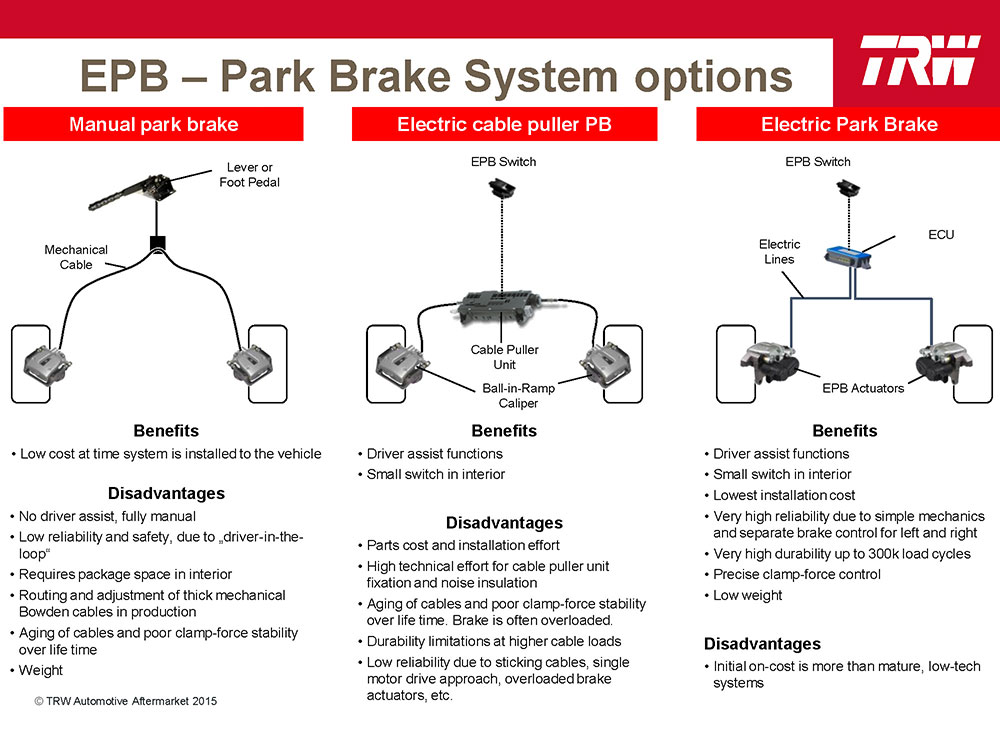
This may seem counterintuitive; isn’t an electric switch, plus electric motors in the calipers, going to increase weight? Actually, no. The park brake handle, park brake ratcheting mechanism, the cable, and the separate drum brake mechanism usually found inside the “hat” of a rear disc brake is significantly heavier than an electric park brake switch, a controller, and some electric calipers and wiring. Wards Auto spoke with electric park brake supplier ZF back in 2018 and learned why EPBs have become so prevalent:
“The electric park brake is a remarkably versatile technology ideal for larger light vehicles,” Manfred Meyer, ZF senior vice president-global braking, says in a news release. “For example, it can result in a weight savings of up to 20 lbs. (9 kg) or more for commercial vans, larger trucks and SUVs when compared to conventional drum-in-hat park brakes.
“This can lead to enhanced fuel economy and reduced (carbon-dioxide) emissions and, by eliminating the park brake lever or pedal, it frees up space in the interior cabin and activates with the touch of a button.
“EPB offers important potential safety advantages and can contribute to automated functions that assist drivers,” Meyer adds. “EPB can work in conjunction with electronic stability control to help allow for improved emergency stops, or help relieve fatigue in traffic-jam situations by holding the vehicle stationary when needed and allowing the vehicle to move forward when it’s safe to proceed.”
The bit about interior space is important, because packaging a parking brake pedal or lever in a cab is not easy, and trying to route the large cable mechanism is often a downright nightmare. Just as an example, below is the park brake mechanism for a 2008 Saturn Vue. Look at those two huge cables that have to be routed all the way from between the front two seats to the rear wheels:
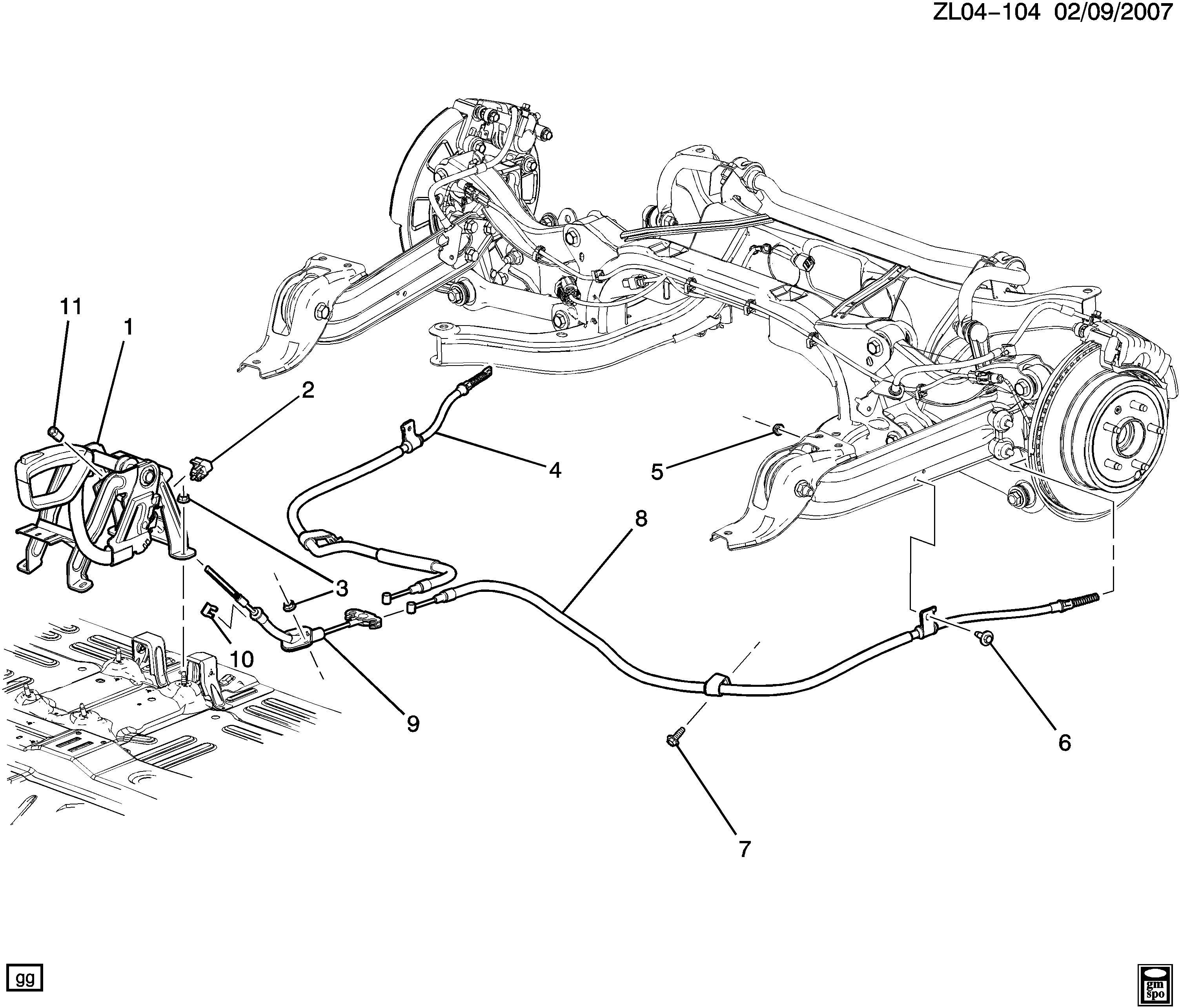
And look at how heavy and giant the handbrake mechanism is:

The worst compromise is the drum brakes in the hat of each rear rotor:
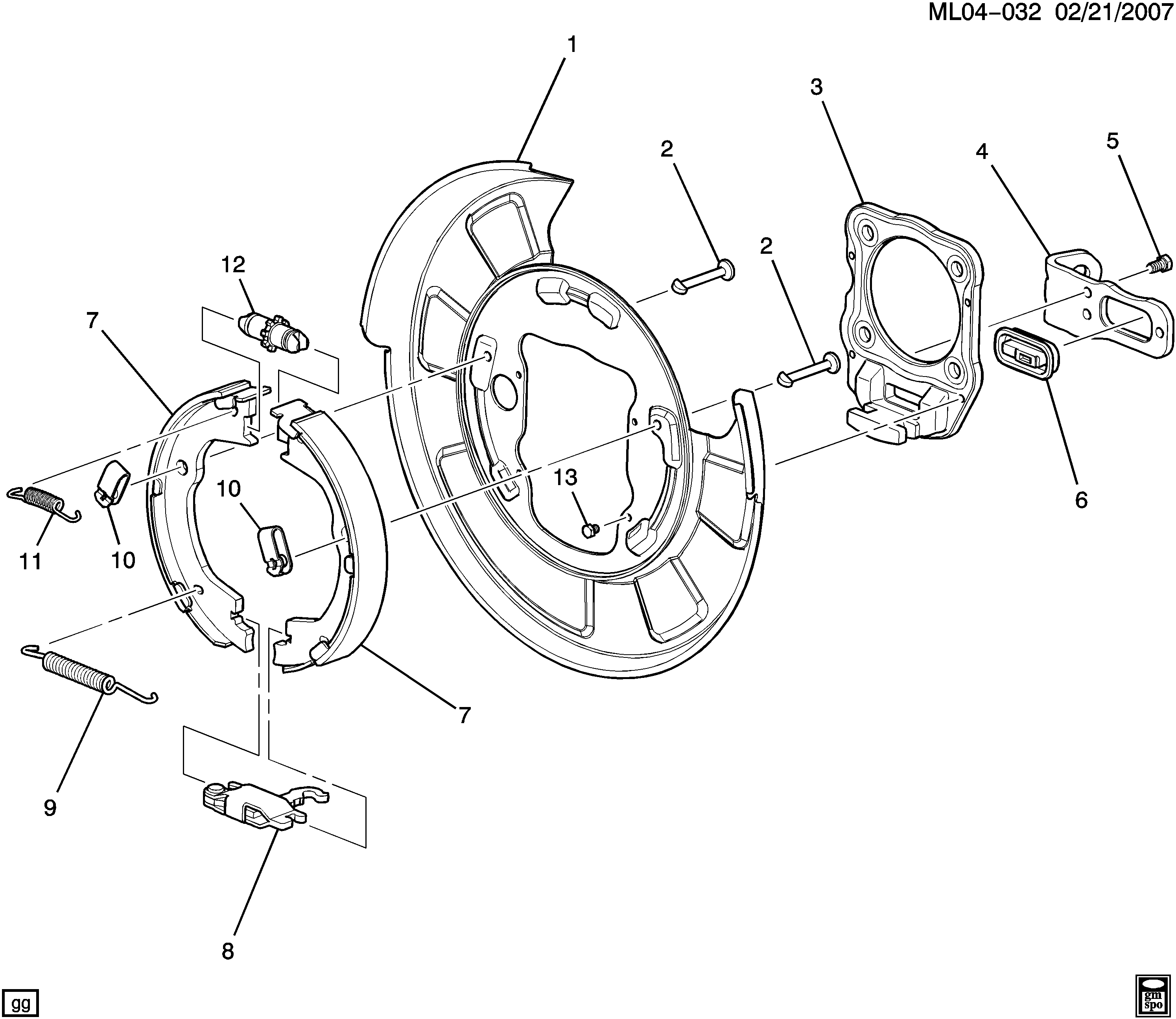
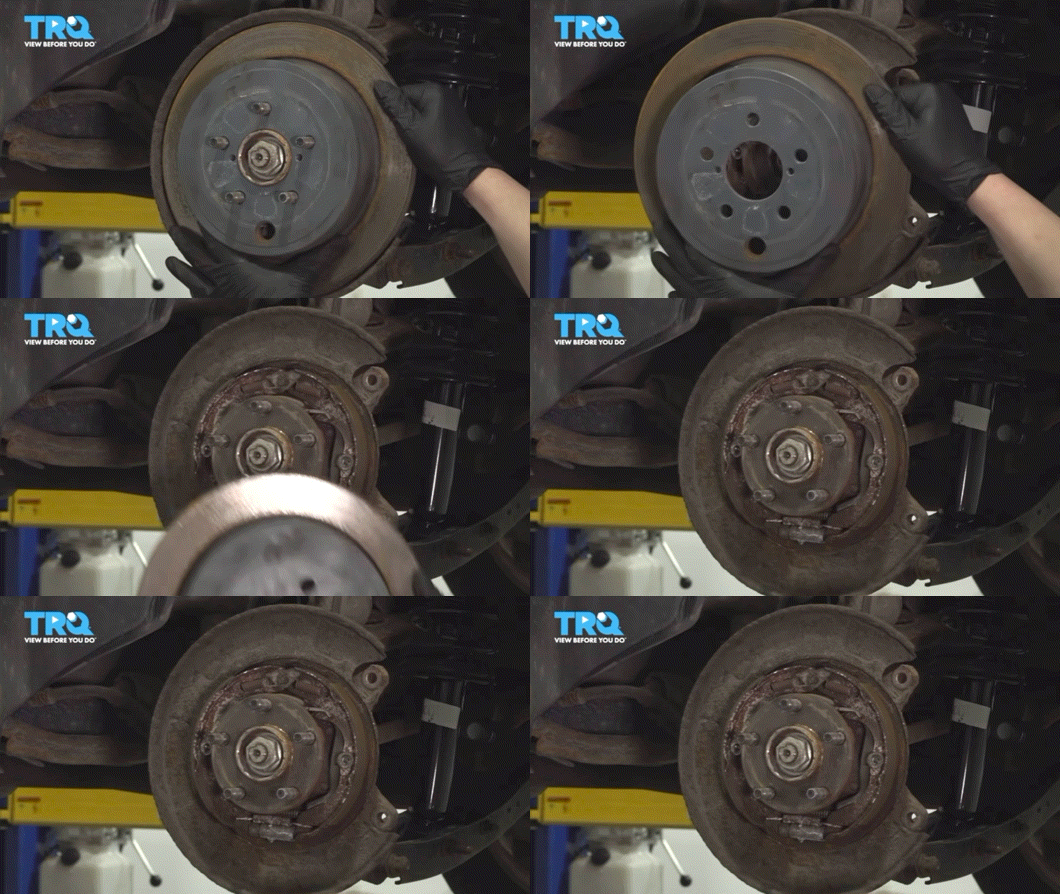
Below you can see what drum brake looks like under a disc brake (this is a Subaru) — yes, most pre-EPB cars featured both a rear disc brake (for normal use) and a rear drum brake (a park brake). It’s insanely complex and annoying to service, and that’s in addition to having to tighten an adjustment bolt to keep the cable taught as it stretches. (Meanwhile, EPB systems with cables automatically adjust for cable slack, and modern ones without cables can adjust for brake pad wear — no service is needed).
(And don’t even get me started on hand brakes/foot brakes in the rust belt, where cables tend to seize up).
Anyway, you get the point. Electronic Park Brakes are clearly superior to foot brakes, and they’re also superior to hand brakes in any car without hooning intentions.
There is one thing, though, that I wanted to share that made me pause. Let’s have a look at what an electric park brake caliper looks like.

It’s basically a regular brake caliper, but with a plastic electronic actuator on the back of the 
Instead of just hydraulic fluid pushing the back of the piston when you hit the brake, there’s also what’s called a “pressure nut” that threads onto a spindle, which gets spun by a little gearbox:

The reason for the gearbox is that, in order to get sufficient torque to lock the rear brakes, you’d either need a large, higher torque motor, or you could use a small, low-torque motor and use a gear reduction to trade some of its RPMs (electric motors spin very fast) for torque. That is to say: The motor spins fast, but the input gear that spins the spindle (which pushes the pressure nut against the piston to lock the brakes) spins slowly, but with lots of torque.

It’s surprising how intricate the gears are in each brake caliper. It’s actually a planetary gear set whose external ring gear is actually a sprocket for a belt that is connected to the electric motor. Chinese gearbox/transmission manufacturer ZHAOWEI breaks it down:
EPB have three important parts: an electronic brake module, a control motor, and an electric switch in the cabin. When the driver operates the switch, it sends a command to the electronic brake module which senses that parking brakes need to be used. Then, the module commands the control motor installed in the brake calipers to operate. Brake pads then are forced on the disc thereby restricting the movement of wheels.
The EPB control motors installed on the left and right brake calipers of the rear wheel both consist of DC motors and micro gearboxes. The gearbox developed by ZHAOWEI has a compact structure, small size, and large torque, and can change the direction of the DC motor’s driving force. The gearbox for EPB can operate quickly under situations with high torque and a high current.
ZHAOWEI has modified the gear and tooth profile of the electric park brakes, which can improve the effectiveness and manufacturing accuracy of the gearbox under high-frequency vibration.
The EPB with micro gearboxes can allow vehicles to park stably even on slopes. The system also has thermal compensation, which means that if the vehicle is forced to park, the rear brake disc will have a gap between the friction plate due to the temperature drop, and the motor will start automatically. This will drive the compaction nut to compensate for the gap caused by the temperature drop to ensure parking is smooth.
Zhaowei doesn’t mention belts in that writeup, though its photo below shows the belt drive that connects the motor to the planetary gearset:

Zhaowei mentions a gear reduction of 120:1 to 160:1. ZF says its ratio is 120:1, with 40:1 of that being in the planetary gearing and 3:1 being the “belt drive ratio.” Here’s more from TRW, which is owned by ZF:

Here’s where TRW talks about the drive belt:
The electric motor drives the actuator gearbox via a toothed belt.
The two-stage, planetary gearbox integrated in teh actuator, converts the rotary motion of hte motor via the toothed belt with an overall gera ratio of ~120:1 into a clamping force of up to 25kN.
Want to actually see the belt? Well, Raybestos tore apart an electric park brake in a YouTube video and revealed it:

Generally, you won’t see that belt, because the motor and gearbox (which are connected by the belt) are typically contained in a plastic actuator that you just bolt to the back of your electric park brake caliper piston:

Anyway, I didn’t realize brakes now had gearboxes and rubber drive belts, so I figured I’d share.


Excellent article, as always, David. There are a few other things that come into play with electric parking brakes. Government regulation requires parking brakes to be able to hold the vehicle on a steep hill while requiring no more than 500N of force to pull the parking brake handle. As vehicles got heavier and heavier, this requirement became very difficult to meet. Drum-in-hat parking brakes were one way of helping because the braking material could be made from a very high friction material that would eat the rotors if they were used as regular brakes as well. But since parking brakes are meant to be used only while stationary, the aggressive materials never caused wear on the drums since they were never spinning. Electric parking brakes solve this problem because the clamp force they produce is independent of the effort it takes for the driver to activate them. All he/she does is pull a switch. The 500N requirement basically drops out of the picture.
The extreme gear reduction that electric parking brakes use does mean that a low torque/high RPM motor is able to achieve the clamp force required to hold a heavy vehicle on a hill, but it also means that the system can’t be back driven. Once the motor turns off, there is really nothing that stops the force in the system from turning the gears in the opposite direction and un-clamping the pads. However, the extreme gear reduction means that even a small amount of friction means that the clamp force is not enough to cause all those gears to spin in the reverse direction.
Lastly, electric parking brakes mean that they can be activated independent of driver interaction. In the Model S, we used this to get rid of the parking pawl in the transmission. The parking brakes always activated when the car was put into park and this prevented any roll-away issues.
I really miss your guest articles and wish you’d write more.
As far as your last point, it makes the most logical sense given the application and is probably the best solution 80% of the time. I just wish it were less of a pain in the ass to deal with when something breaks. On the flipside I’d hate this on a track oriented car. After a 1 hour session going as hard as I can the last thing I want to do is park it with the parking brake engaged. You can get around this in a manual by shifting into gear and turning the engine off though this comes with risks if on a hill, and in an automatic or DCT you can solve this by engaging 2 gears at once without needing a parking pawl. Is there a good work-around in EV or eCVT-land that can immobilize a car even on a hill without using the brakes or any electricity?
Beautiful context from The GOAT.
Why don’t more cars automatically apply the parking brake? Both of my cars are capable of it, because they do it when I park on a slope, but they don’t do it all the time. So I do it manually, because I hate the car rocking as people exit.
My 2026 Ram has a user option to have the vehicle set the parking brake every time it is put into Park. I use this option. But it is a PITA when you are at, say Costco, at peak shopping time, trying to swiftly reverse into a parking spot, and accidentally twist the shift knob beyond R and into Park, then having to wait for the parking brake to fully set before you can release it.
Yes, my Pacifica had that option and it was really nice. I don’t think I managed to activate it accidentally.
I really liked being able to set the option to automatically engage the parking brake when I shift into park, and releasing it when shifting out. But I have always been religious about using the parking brake, anyway. It always makes me wince when my girlfriend just puts her car in park on an incline and just lets it sit on the parking pawl.
It makes me wince even more when she puts my car in park on a slope without applying the parking brake.
I completely sympathize.
Depending on manufacturer, they may have spec’d a system that is mostly designed for compliance rather than function. I know at least one automaker who went cheap and only applies automatically on steep slopes, but will absolutely wear out too quickly if used every time you park.
That way if you wear it out because you live on a hill, it’s a non-warranty item due to excessive use.
The driver strength part is an interesting one that I never thought about until I got my motorhome. Mine happens to be the lightest GVWR of its chassis series so I get a traditional foot pedal for the rear drum brakes but all the larger ones had to go to a fancy (ie. expensive, complex) auto parking brake because they were too heavy for a parking pawl to hold reliably and it would have taken way too much force for people to use manually. Even the foot pedal one is a bit iffy – I’m not a small person and it takes some umph to set it firmly.
My Model S is the only vehicle I’ve had new enough to have an EPB and it’s an interesting thing to get used to. I like the UX side of how it works – basically invisible to the operation of the car.
Thanks to David and Huibert – these are the technical articles and replies I’m looking for! I’m a day behind (dang work and chores) but as soon as I read this article I took a look under my Silverado EV and found the motor-planetary-belt mechanism. And wondered why I never wondered why there is a quick whirring sound when I park the truck. Makes total sense, the vehicle weighs near 9000 lbs, gonna be hard to package in a manual parking brake with sufficient mechanical advantage for this beast.
Yay Huibert Mees!! 😀
Fascinating! I was just wondering if my EVs had an actual parking prawl in the gear reduction unit. I have all Hyundai EVs, so not the same as Tesla, but it’s interesting to know that some EVs did away with that feature.
I’ve had two cars with an EPB of some sort–a BMW and an Acura. Annoyingly, one wanted the switch to be pushed down to engage it and the other wanted the switch pulled up. Pulling up is more intuitive to me. Neither automatically applied it when placed in park. The first time I heard a RAV4 automatically engaging its EPB years ago, I thought that was a clever idea.
One thing I’m not clear on… Does the EPB use its own caliper or is it just another way of actuating the conventional one? Someone has already mentioned their hesitance to stick the pads to the rotor after an hour of hot laps or perhaps coming down off a steep decent.
Interesting and well made points. I still say a parking brake handle is superior – it doesn’t rely on electricity to engage or disengage, there’s no computer in the loop, and you cant rip a handbrake skid with a button. Having had to tow a vehicle with an electronic parking brake that was completely dead, I appreciate controls that can be operated independently of electricity.
Plus, my dog knows it’s time to get out of the car when he hears the ratchet of the handbrake.
Really took the concept of the timing belt article, and said “How can I match or even surpass that level of being blatantly incorrect”
I stand by the timing belt article. If your car needs a major engine service to go 100,000 miles, I’m not calling it a king of reliability. Nope.
My Mach 1 Mustang needed timing chains at 100k miles because of the guides wearing out and the chains had dug into them putting small amounts of metal into the engine. They were way more difficult to replace than timing belts which can typically be knocked out in a few hours. I have seen many timing belts with 200k+ miles on them as well. They really aren’t that common of a failure point. Chains can only be as good as the supporting components.
Yep, only a vehicle with timing components that last 200K+ counts as a king of reliability (and there are plenty of vehicles that fit into that camp).
Counterpoint: electric parking brakes suck balls, and nearly all the supposed ‘benefits’ on that TRW slide are benefits only to the OEM, and not to the owner of the vehicle. Maybe some drivers actually enjoy the ‘driver assist functions’, but I frankly doubt it: if you have an automatic transmission with a parking pawl, most people don’t use them at all. If you have a manual, a hand brake is clearly superior for parking and hill hold/start assist.
OE’s clearly don’t actually give a hill of beans about weight savings – see the trajectory of light duty curb weight since 1980-something. This is an ease-of-assembly benefit, pure and simple. Which is fine as far as it goes, but don’t give the OE’s a free assist in their gas-lighting campaign that this is actually a good thing for you, dear right-thinking customer, despite the evidence of your own eyes and experience.
I completely agree. Listen, I miss pulling the handbrake on my BMWs as much as anyone, but I hated servicing and adjusting the secondary drum brake. The EPBs get rid of so much complexity.
Those long cables had the tendency to corrode too, and are often a pain to replace. Salty winter roads coupled with American drivers who rarely use their parking brakes mean that traditional, cable-operated parking brakes are probably completely ineffective for half the cars on the road.
One other huge benefit of EPBs is that, in a lot of cars, they automatically engage and disengage. Idk why, but Americans never use their parking brakes. This is very region-specific behavior. However, if the car uses the parking brake automatically, driver behavior doesn’t matter!
I’ve recently done pad and rotor replacements on some Hyundais and Lincolns with EPBs. I had to buy a cheap tool to retract the caliper piston back into the caliper by rotating it, but otherwise, nothing was really different about servicing the braking system.
Here here!
Each model has it’s own method for releasing e-brakes for maintenance purposes. Some are a real PIS.
Disagree, ease of changing brakes is a bigger concern than a slight weight increase. Also electrical issues have happened multiple times for me, sure I could have probably found some way to get power to the E-brake after an ECU failure but if rather not have to.
I’m not saying that manual handbrake mechanisms (lever, cable, drums, etc.) don’t weigh more than the equivalent EPB mechanism, just that it’s not a big deal – a few pounds here or there (maybe even 10 pounds!) in a car that weighs thousands of pounds? It’s almost a rounding error…
Growing up in the UK, where everyone drives (or at least drove) manuals, you learn on a manual. You take your test in a manual.
One of the skills is the hill start – you start with the car parked (with the handbrake on), and you have to be able to start and drive away uphill _without rolling back at all_. And when I say ‘at all’, my driving instructor had me sit in the car, then he put an egg just behind a rear tire (tyre), on the ground and touching the tire. Then he watched me try it. If the egg cracks, that’s an instant failure.
You have to use the handbrake and the clutch to modulate movement. With 3 pedals, as soon as you take your foot off the brake, you will back unless you have a handbrake!
As a San Francisco resident of 30 years, you need a handbrake to hold you on hills. It’s not a choice, unless you’re fine with rolling back every time you want to pull away…
This is a bad take.
Most if not all cars with EPB have auto hill hold as an option. This essentially automatically operates the parking brake as you pull away.
When driving in San Francisco, I always leave plenty of space between me and the car in front when stopped on a steep hill. Less of an issue these days with so few manual transmissions.
I got to be pretty adept when I had my manual MR2.
I have had 3 manual cars built since 2011 and all of them automatically hold the brake when starting uphill.
Plus the annual MoT ensures that your handbrake is in working order.
It’s so ingrained for me that I pretty much always put the handbrake on any time I’m stationary. Although that might be because my driving instructor insisted on it, “if you sit with your foot on the brake, and someone rear-ends you, your foot might slip off the brake and you’ll hit the car in front as well”.
I guess he was professionally paranoid, having to spend all his time in cars driven by 17-y/o’s who don’t know how to drive.
I put a majority of my Jetta’s 165 K miles when sold around Seattle, which also has hills. It was still on its original clutch which would have been impossible without a hand brake. Volkswagens do not come with a “hill holder” system.
Maybe you can answer a question that’s been rattling around my head for at least two years. A British member on a forum I used to frequent said that it was mandatory to apply the parking brake at a stop sign/light. Failure to do so would be an immediate fail on a driving test. Is that true? It seemed nutty to me.
I don’t remember that, but it wouldn’t surprise me. Certainly I think you MUST apply the handbrake on any sort of a hill start.
The TDI I had was reasonably torquey at low rpms. I got pretty good at holding the car in place with the regular brakes, clutch in and when the coast was clear, lifting my right foot from the brake to the accelerator and start releasing the clutch with maybe a few inches of rollback. But there are a lot of steep hills around here where it was easier (and safer) to use the handbrake to prevent rollback. Two feet and a hand > just two feet. I had 165,000 miles on the original clutch when I sold it. I’ve ridden with people who found uphill starts challenging and abused the hell out of their cars’ clutches. And I know people driving automatics who give it more gas instead of applying the foot brake at an uphill stop. That’s got to be hard on the AT internals.
I dislike EPBs. I vastly prefer manual handbrakes.
One of the big things I don’t like about an EPB as I have no control as a driver other than on or off. The COMPUTER chooses how much force to apply, how quickly I slow down as a result of that etc.
With a handbrake, I have that control as the driver. I can pull on it lightly enough to start slowing me down, but can also let off slightly (while still braking) and then pull it harder again….I have the ability to MODULATE it, but with an EPB I do not at all. Most EPBs, when held to engage their ’emergency mode’ come on with a set amount of force as the vehicle slows down. Yes, the computer may be increasing that force safely to slow me down from a faster speed, etc, but it’s still just a linear curve controlled by the computer…~I~ have no control over it other than ‘on’ or off’ by holding the EPB button/switch/handle.
For example, if I was driving in traffic on a flat highway and my brakes go out, I can modulate a handbrake fairly quickly and intuitively to slowly get to the shoulder and pull over with surrounding traffic while having full brake control with it the whole time.
With an EPB, the second I start pulling on it, it’s slowing me down quickly however fast the computer wants….if there is traffic behind me, that could be quicker than I would like in that cars behind me could rear-end me. The second I left OFF the EPB handle, I suddenly have ZERO braking until I pull it again, which then takes a few miliseconds for it to re-actuate before I suddenly have braking force.
With a handbrake, I can control that braking force 100% the entire time.
Hard to put into words, but does that explanation makes sense?
You say EPBs bring the car to a stop in a controlled way…yes, they do, and it’s obviously a safe way that does work…my point is just that I very much dislike that I am not in full control OF that ‘way.’
Last week I gave my 13-year-old grandson his first driving lesson (on my property). It was a little nerve-wracking not having that handbrake between the front seats.
This is a matter of “intended use versus potential use,” framed in terms of “parking brake versus emergency brake.”
Not to creep people out, but there’s a very similar debate among users of semiautomatic pistols: slide stop versus slide release. The component in question is the little tab or lever that locks back the slide (the top part that stays backward after the handgun’s been emptied or racked, as most people have seen in countless shows). It varies from weapon to weapon, but how it functions is hotly debated between manufacturers and consumers. At any rate, it’s generally a tunable part that users can configure to their preference. Some manufacturers insist that it’s a stop (meaning that it’s only intended to hold the slide open) while many users insist it must be able to function as a release, i.e. it must be relied upon to drop the slide in case of an emergency reload… if you slam a magazine in and need to get the pistol into battery immediately, carefully retracting the slide a bit and pushing down on the lever is more than one should have to do in a life-or-death situation.
In economic terms, it’s a matter of utility cost: Can I maybe use this thing to save my ass or is its functionality limited by the policy of intended use instead of potential use?
Long story short, I’d prefer to keep emergency brakes available in emergencies.
Sorry, I cannot get behind this take at all.
“… and they’re also superior to hand brakes in any car without hooning intentions.”
So, like, virtually no cars I’m interested in.
Those tiny gearboxes and belt-actuated (?!?) mechanisms are expected to be less troublesome than the simple addition of drum brake shoes inside a disc brake hat? I know which setup I’d rather work on, and I’ve replaced a few e-brake pads.
“In my experience, the vast majority of cars with either had, at best, a park brake that would hold the car on a 10 degree incline.”
As a former San Franciscan, I call BS. Conventional handbrakes are not nearly that unreliable. And of course you curb your tires. Suggesting otherwise is like saying you shouldn’t have to fasten your trouser button if you have a good enough zipper.
A handbrake is important to have for so many reasons: braking in an emergency such as the failure of your primary hydraulic system (hence the name e-brake), hill starts, getting drifty, slowing down without triggering your brake lights, etc.
I’m reminded of an argument I had with a 4x4ing friend when I sent him a picture of a truck with dual spares on the back and said “Am I crazy for thinking this might be a good idea?” He told me it was insane overkill and added that he’d never actually had to change a tire. I told him that I’ve never had to use a fire extinguisher but still keep them around all over the place. He said that was false equivalence. I said he was wrong.
You’re right. “I’ve never been in a head on collision so why should I use a seat belt?” SMH.
You’ve caught my curiosity: In what circumstance does a driver need to slow down more rapidly than coasting, but not want to trigger the brake lights?
When your radar detector gives a credible chirp.
The first car with an electronic parking brake I have owned is my Forester. TBH, I don’t really know what it has because it is a manual transmission and still has the hand lever. It also has ‘hill assist’ or whatever else they called it to keep the car from rolling backwards (which is very easily accomplished by using the brake lever in the dozens of other manual cars I’ve owned).
The drawback? It doesn’t release fast enough. I had the car for a while before I realized there is no way to jump quickly away from a stop light without risking a stall. Whatever mechanism is used to release the algorithm-controlled brake is not fast enough to allow for a spirited start from 0mph.
Of course, it’s a forester with a manual transmission that could be generously described as ‘industrial,’ so it’s not built for quickly rowing through the gears. Still, sometimes you may want to rush a left turn if you’re the first one at a stoplight. With the E-E-Brake you’re not only not making the jump, but you’re going to need to start the stalled vehicle. That potentially puts the driver in a more dangerous position depending on the attention of the following driver.
I guess in anything auto it doesn’t matter, but manual vehicles should either have a very quickly-releasing E-E-Brake or just a manual cable system. IMHO, I’d vote for manual because you know no automaker is going to spend the money to properly calibrate the electric one for the 0% take rate manual version.
My 2008 Lexus ls460 has an electronic parking brake that sets automatically when you put it in park. It’s such a nice feature. We here recently look at cars for my mom and a lot of newer and much more expensive cars had electronic parking brakes that didn’t set automatically and some of the placement of the switches was baffling.
I would disagree with TRW and think they should list “no driver assist, fully manual” as an advantage for the traditional parking brake, not a disadvantage. I’ll give you it’s an edge case but if your car’s ECU fully bricks itself at 70 mph, you have a way of bringing the car to a controlled stop.
I agree, or at the very least that point is common to all 3 classes of brakes as the vast majority require one to manually engage the EPB I believe.
In a standard (or any car really) the advantage of manual parking brake is being able to easily validate your parking brake is engaged from outside the car. Having to open door and actually flick lever if I get the “did I or didn’t I doubts” on my manual is a huge pain.
Also, is the rubber belt or whole plastic housing/gear set a full life item ? I see this as an issue for future collectors of cars……amongst other things slowly yielding to entropy.
Yet another part of the car that’s computer controlled instead of mechanical. I’m sure software-car designers love it, but I do not love software-cars.
I’d consider it an advantage, but as my mum’s got older her grip strength has reduced, and she can’t pull on a handbrake as strongly as she used to be able to.
And that’s how her Golf ended up rolling halfway down a hill, narrowly missing several other cars before somehow finding a hay bail to slow it down.
Fortunately mum wasn’t in the car at the time.
I never saw mine use the parking brake my entire childhood and adolescence.
Whenever I borrowed her car I made a point to pull the handbrake so it would stay limber and not fail inspection on being frozen up, especially in her later years when I was mostly giving it a shakedown/”Italian tuneup” and seeing if there was something she hadn’t noticed over time that needed fixing.