


I’m here in LA, helping to get things together for the Galpin Car Show, and that also means I’m on West Coast time, which means I have to do Cold Start the night before, but I was traveling all day and haven’t had much sleep and here I am up way too late, the cruel deadline of Cold Start staring me in the face, standing between me and the promise of sleep. Okay, fine, Cold Start. You win. But I’m going to talk about something really trivial, just out of spite.
How trivial? How about a gas cap? That’s pretty trivial! But, somehow, I’ve managed to get myself interested in this bit of minutia. It’s a specific gas cap I’m thinking of, perhaps the most famous example of a kind that’s almost extinct now: the unashamed, exposed gas cap, designed for ease of removal.


Specifically, I’m thinking of this particular gas cap that was used on some liquid-cooled Volkswagens and at least one Porsche in the early 1970s into the 1980s. This gas cap:

You remember this gas cap, right? I can almost feel the pebbled textured plastic on my fingers just looking at that thing. These gas caps were interesting, because while exposed gas caps have been present on cars for decades, they largely went away in the 1950s, when gas caps covered with a flap in the body began to become the norm.
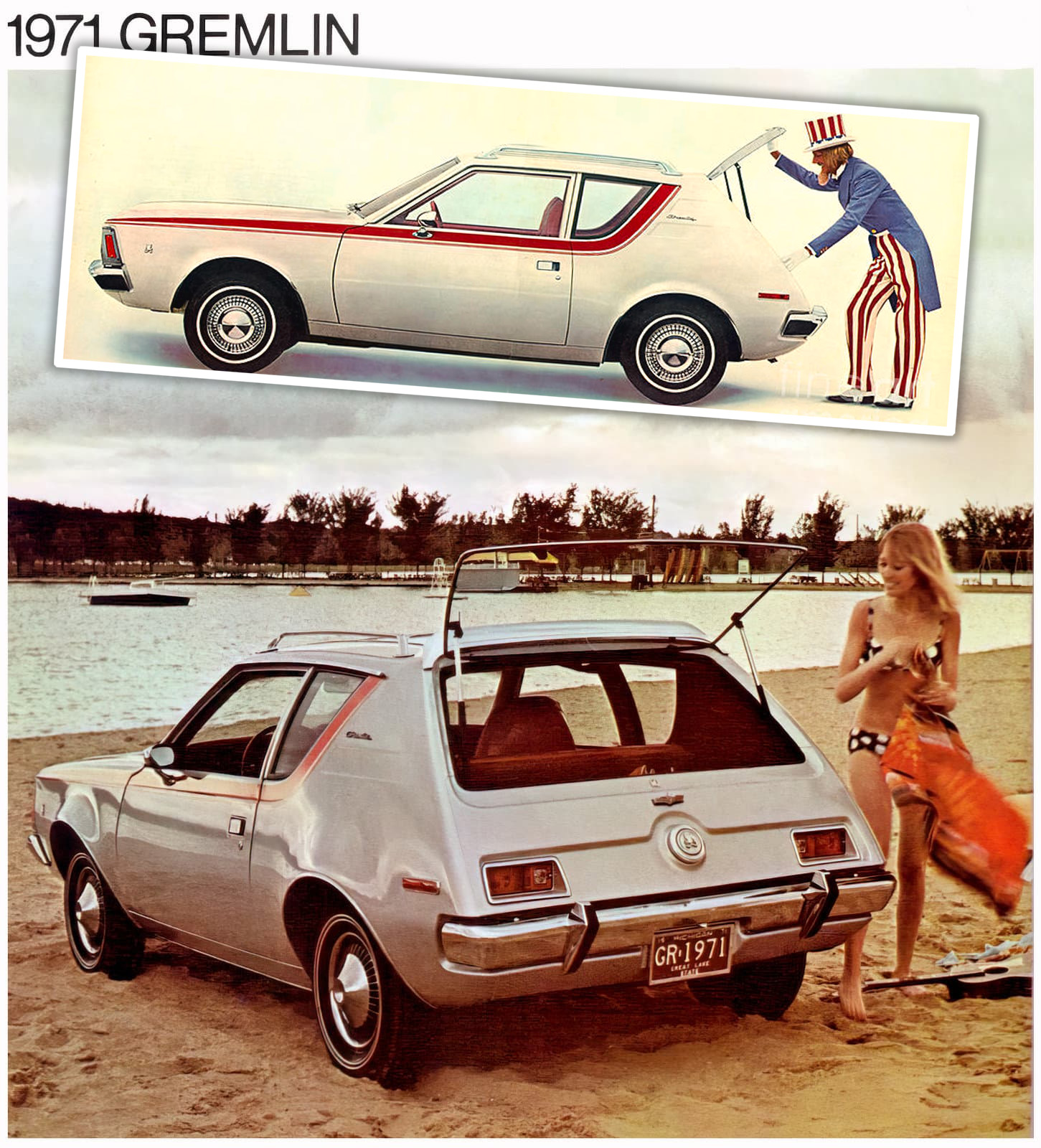
Sure, there were other cars that used their gas caps as decorative elements, like the Ford Mustang or AMC Pacer, but for the most part, carmakers were ashamed of their fuel fillers, hiding them behind little flaps.
And that’s basically how VW did it, too; earlier air-cooled Beetles and Type 3s and Buses and so on had fuel fillers inside their trunks, but when VW moved to external fuel fillers (around 1968), they were hidden behind flaps.
The first VW I can think of with an external fuel filler (I mean, aside from utility/military-focused vehicles, like say, a Kübelwagen or Type 181/Thing) was the VWK70 from 1970:
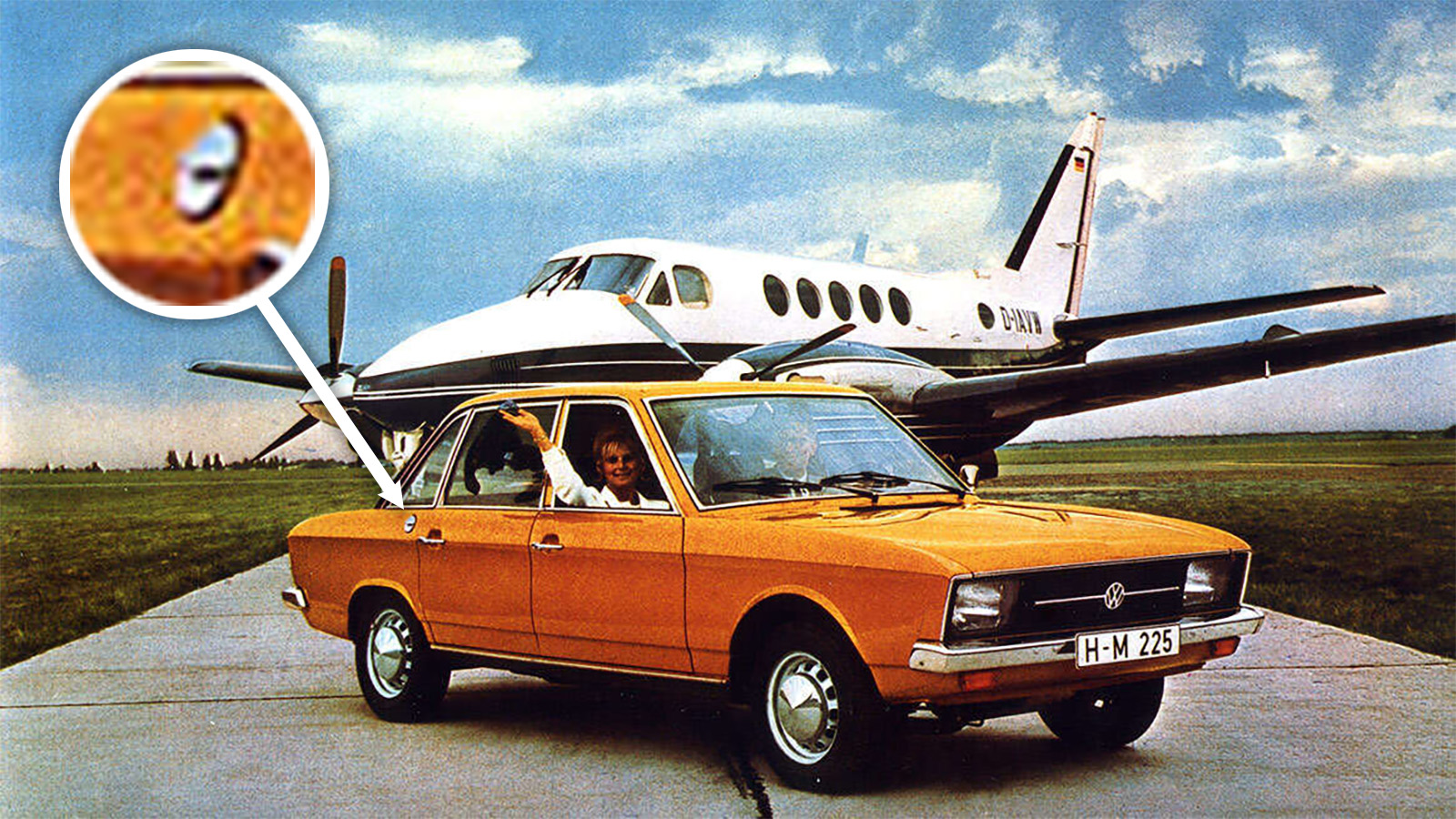
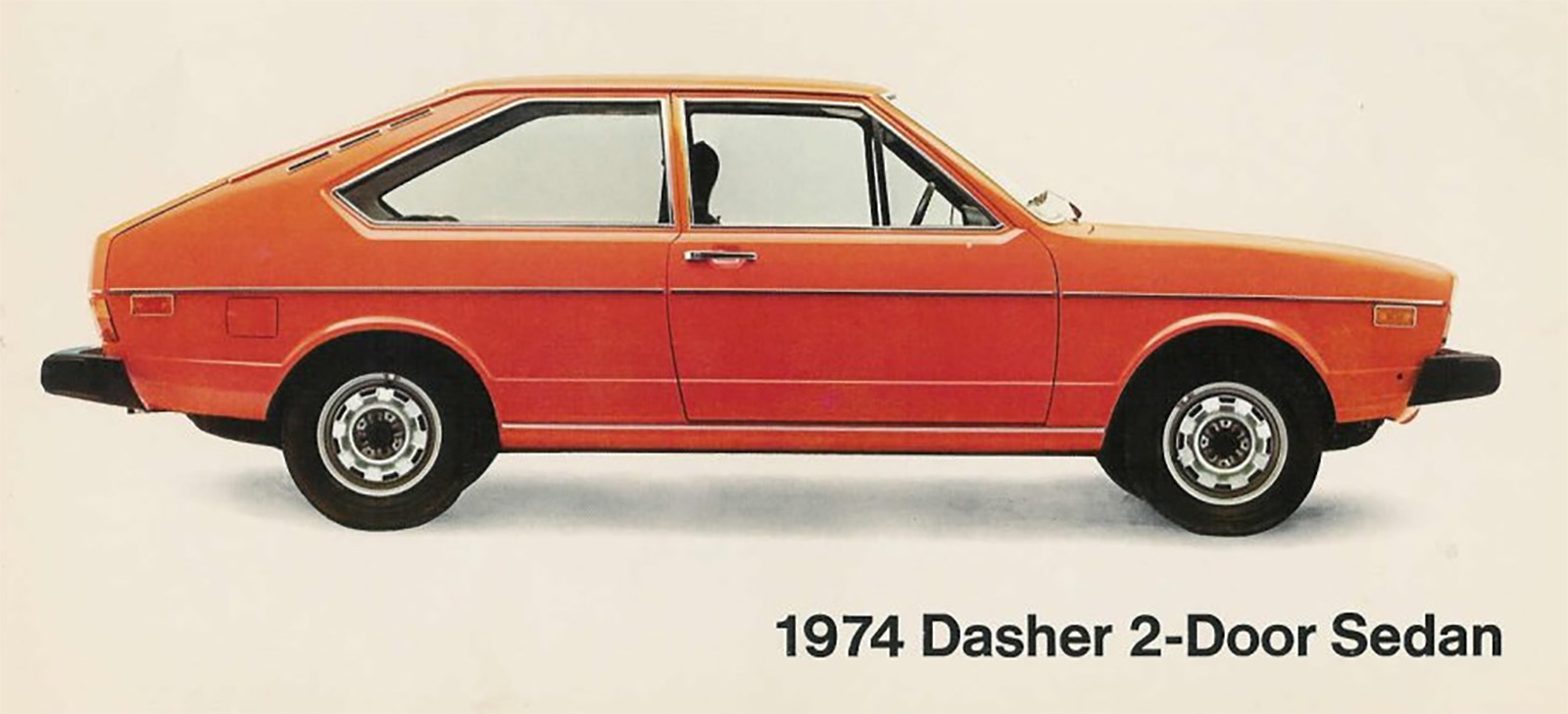
This was also VW’s first liquid-cooled car, coming from VW’s acquisition of NSU, the front engine/FWD/liquid-cooled DNA of which would soon take over the whole company. Interestingly, though, the first VW-developed and NSU-inspired liquid cooled car, the Passat/Dasher, had a fuel filler covered with a flap, as was traditional:
Around this same time, 1974, VW seemed to be exploring a lot of fuel filler concepts. The idea of not hiding the fuel filler was taking hold, a notable example of which is the Audi 50/VW Polo, which still hid the actual fuel cap behind a flap, but they made that round flap into a design element, repeated on both sides, even if one was a fake:
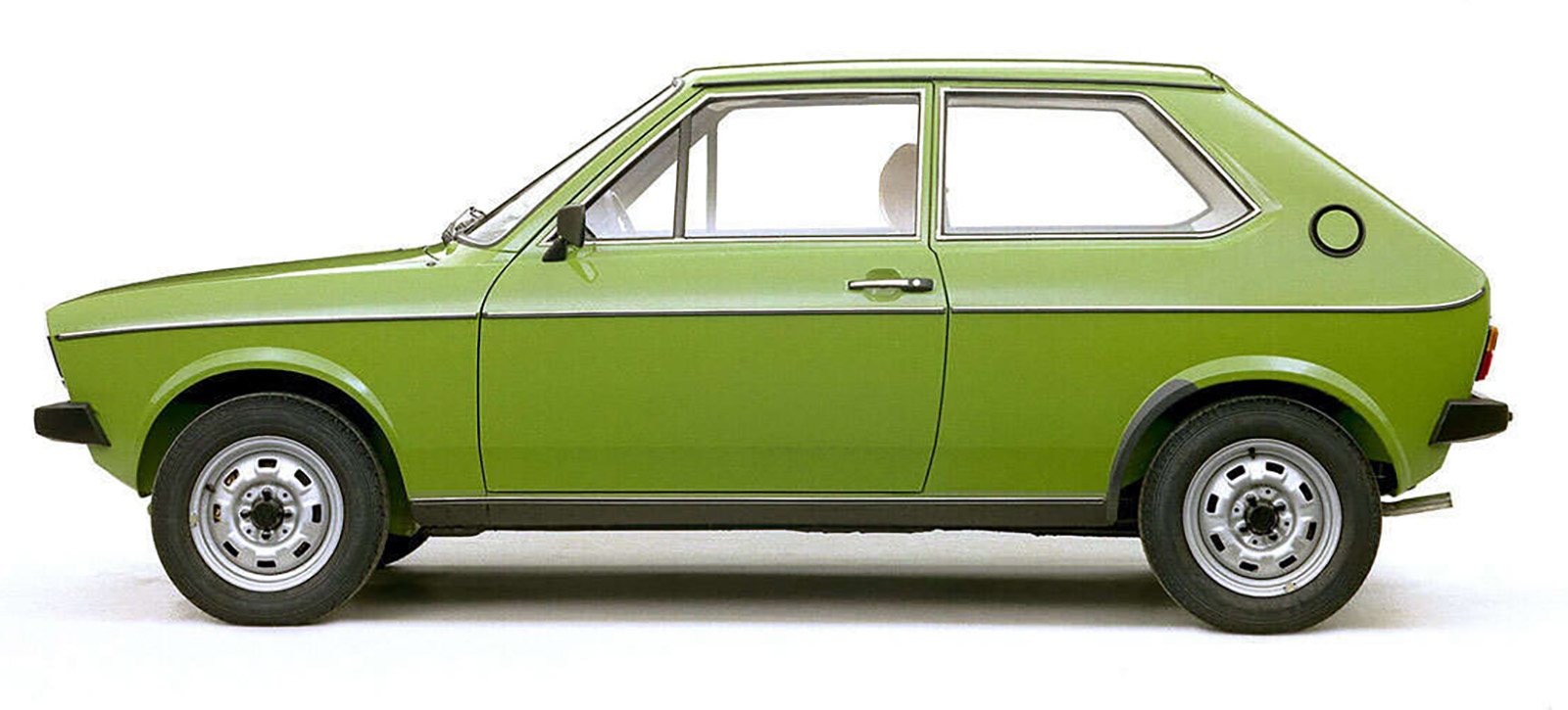
I think the fake round one was an air extraction vent? Whatever it was, I always thought those circles were a novel detail.
But the fuel cap was still being hidden; the Golf changed that:
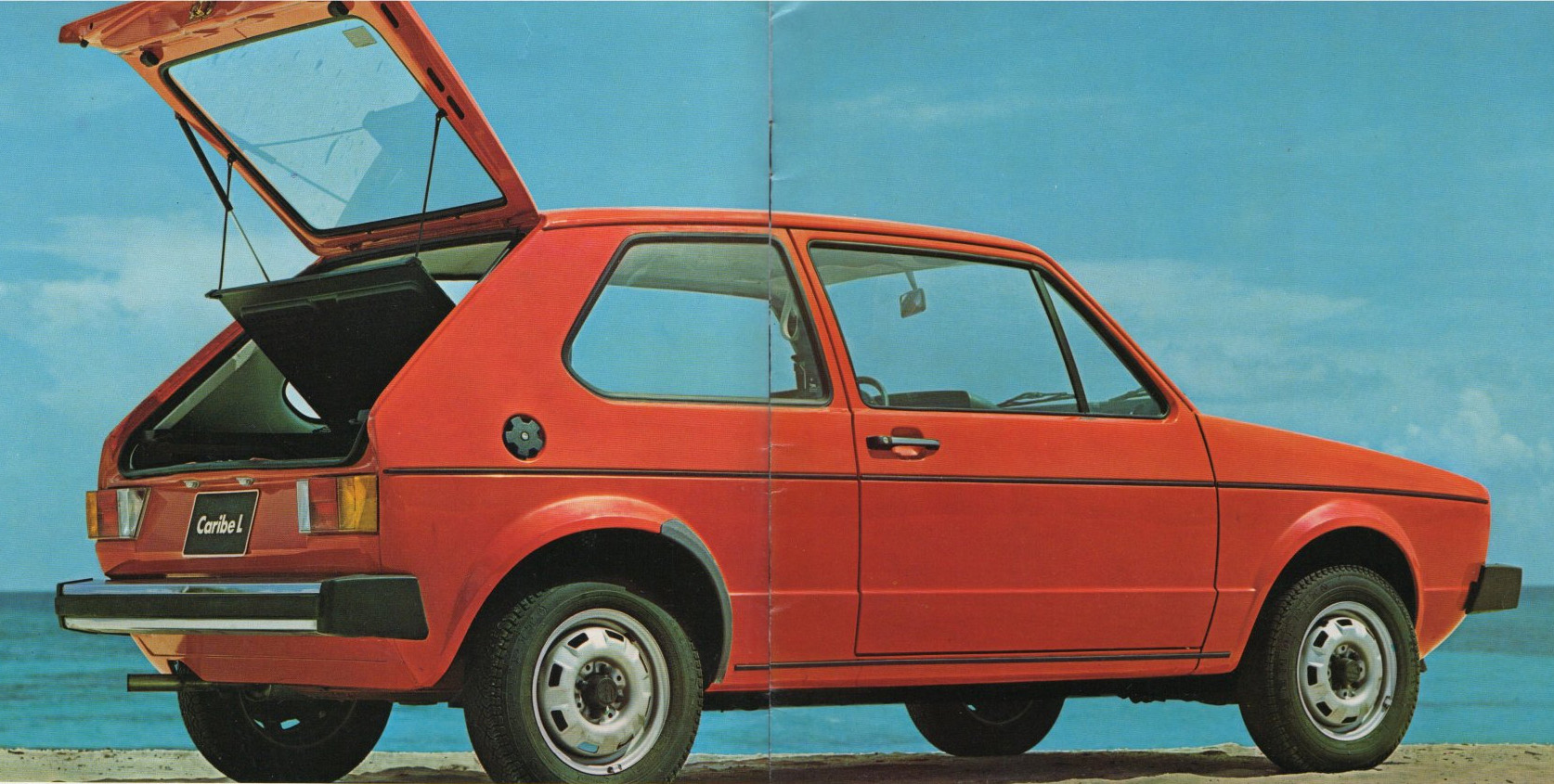
First launched in 1974, the Golf introduced the world to the five-pointed star-like black plastic and lockable fuel cap. The five lobes made it very easy to put your matching five fingers onto to twist off. The lockability was a sad byproduct of the fuel crisis, when gas became actually worth stealing, and compensated for the flaplessness, since many cars had lockable gas flaps.
Mostly, I’m just taken by how there is no longer any attempt to hide the gas cap, and it’s out there, proud and utilitarian yet stylish.
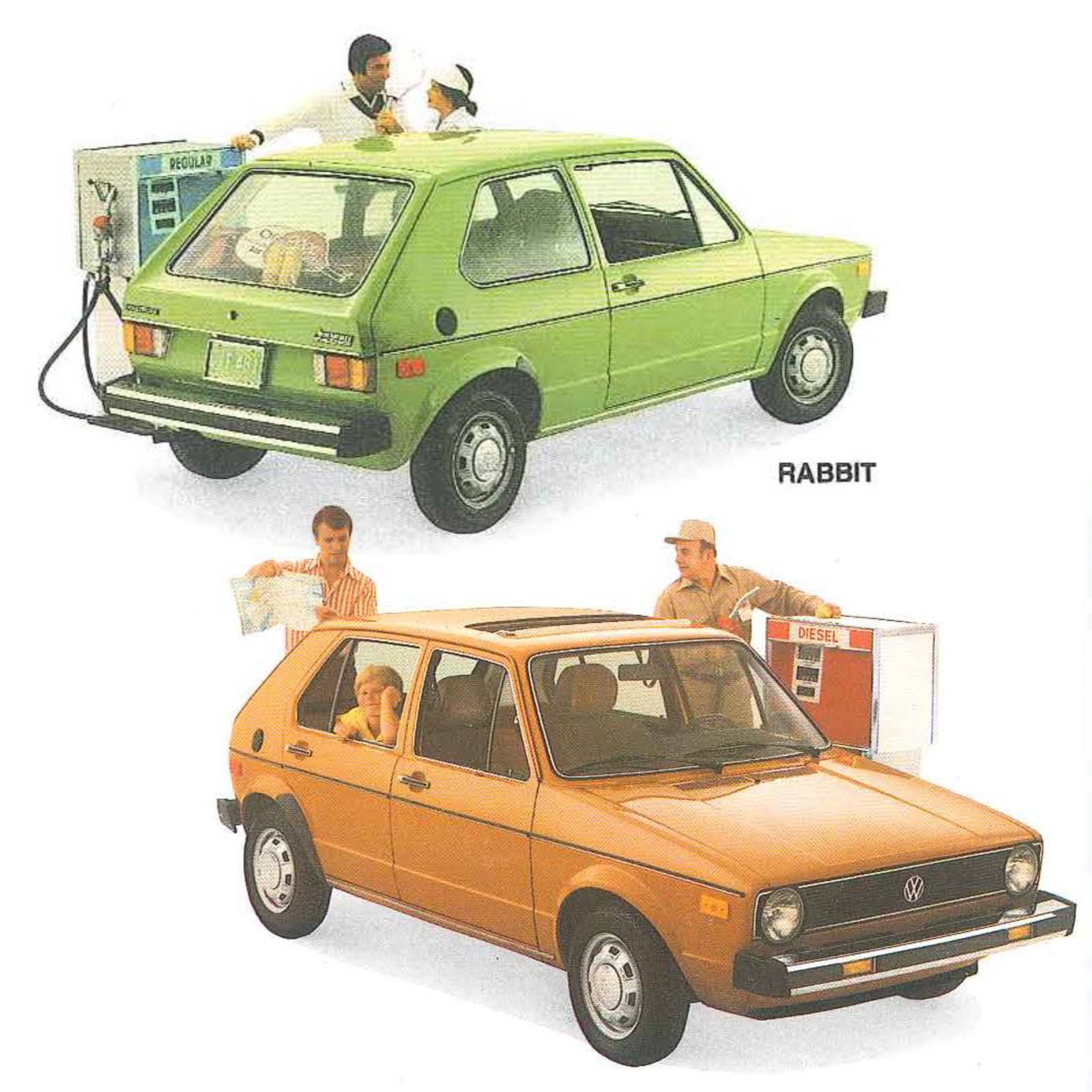
Considering how obvious the fuel filler was, it’s kind of surprising how these Golf/Rabbit drivers managed to pull up to the wrong side of those fuel pumps. Oh wait – VW was trying to show they didn’t need the fuel, right? In that case, the obviousness of the gas cap becomes a marketing tool.
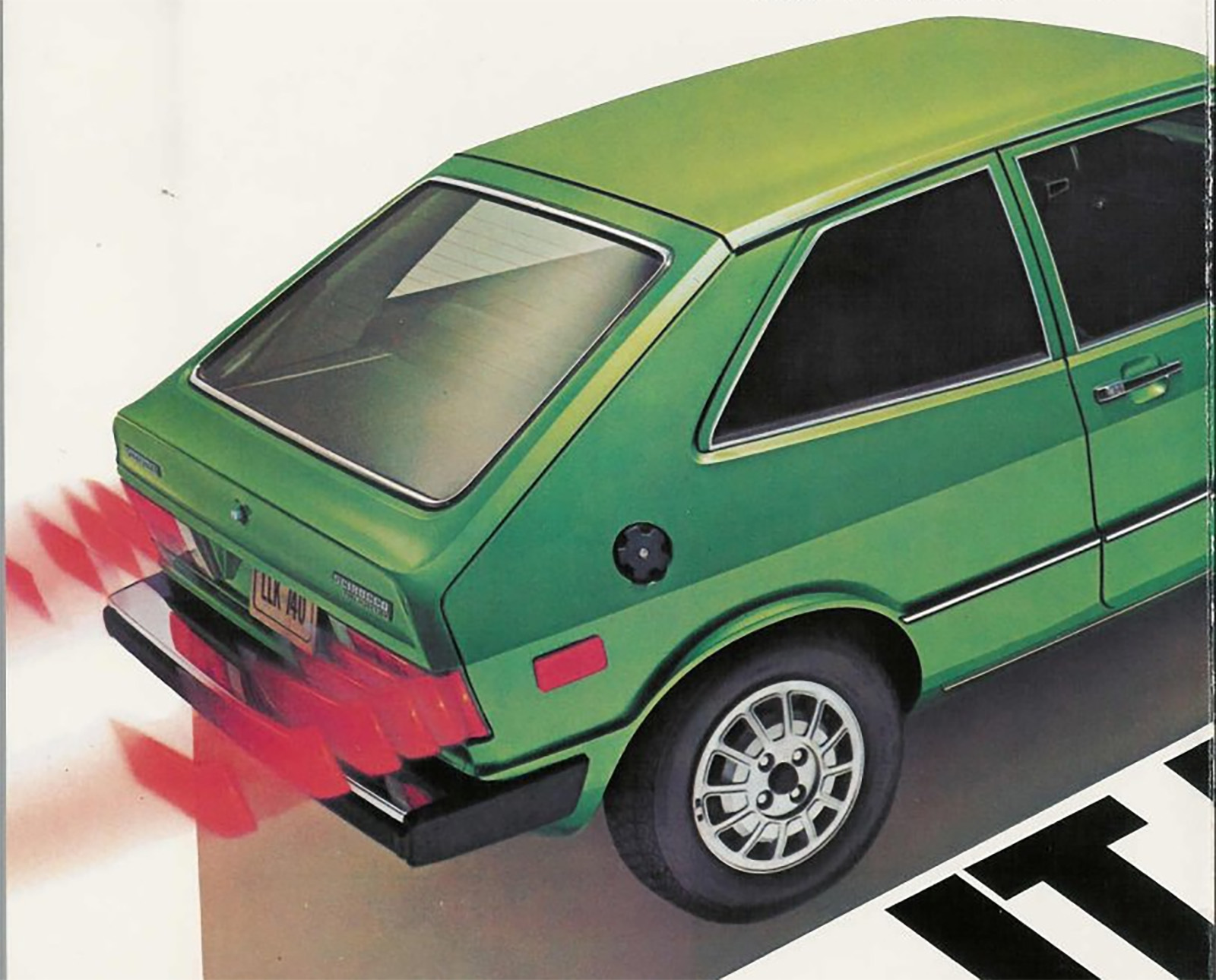
The VW Scirocco, from 1974 also, used the same cap, and it worked well in the sportier context of the car, and that was taken even further by Porsche, who used the same humble cap on their 924:
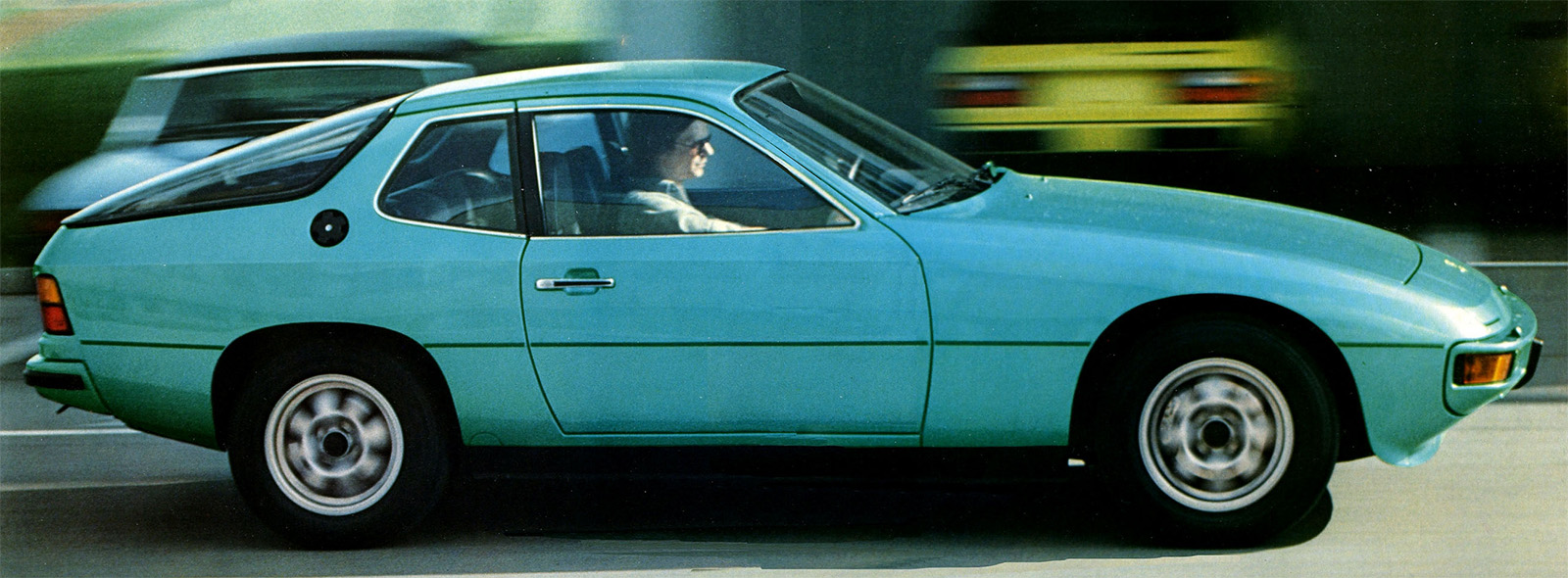
These gas caps have a sort of Bauhausian form-follows-function appeal to them, maybe even a little exaggerated. They’re graphically interesting to look at, a little asterisk punctuating the flanks of these cars, and they actually were quite easy to get on and off, even in gloves.
Why be ashamed of a fuel filler? Why not celebrate it, like these gas caps do? What’s so great about a fuel door? They trap rust and can break off – why not just a bold, proud cap like these?
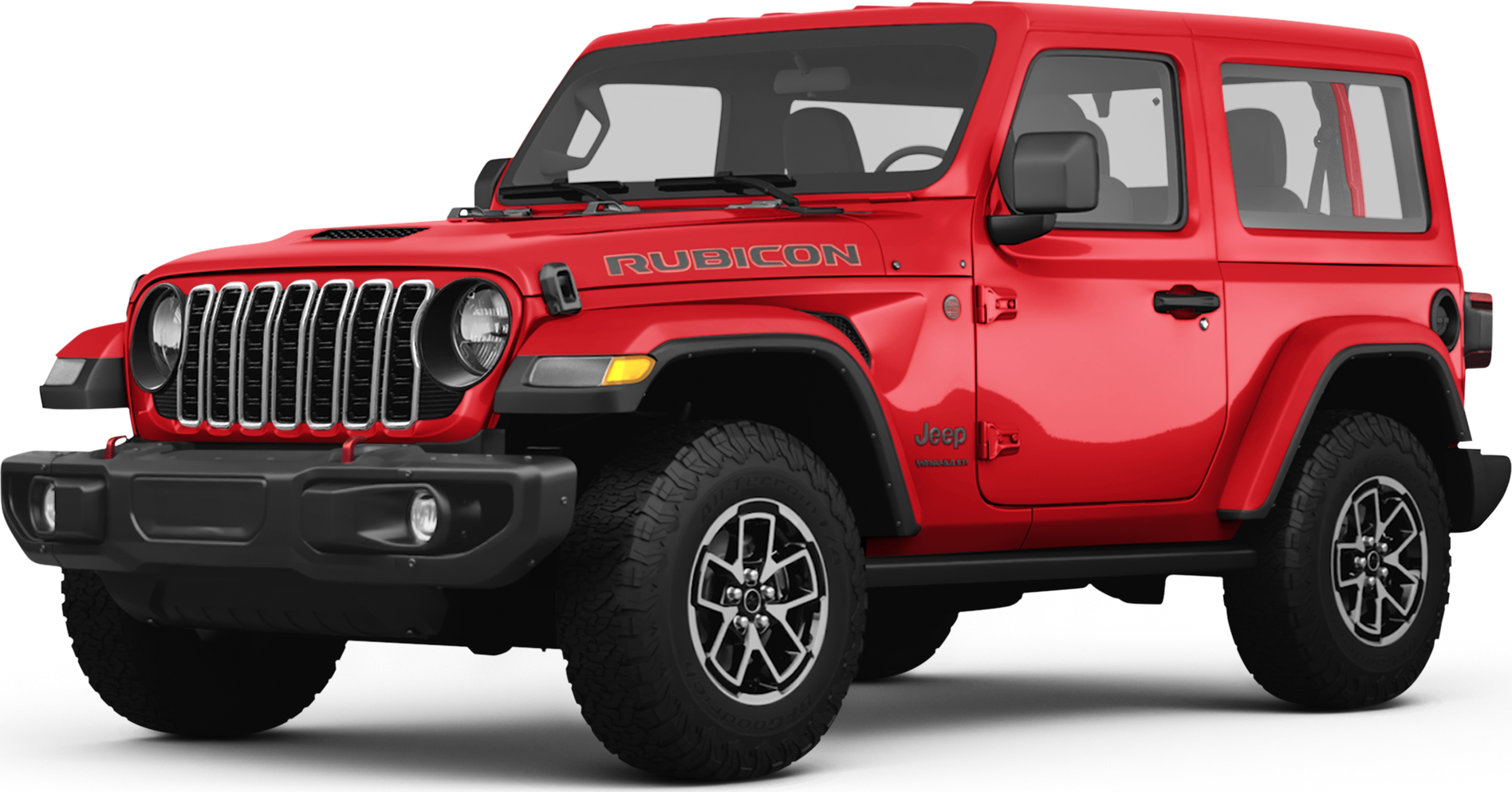
For whatever reason, the exposed gas cap is just about gone from modern cars. Out of all modern cars, can only think of the Jeep Wrangler as still having an exposed gas cap? There may be more, but not many. I guess there are likely aero reasons why the exposed bold gas cap has gone away, but I think I miss them, at least a little bit.


I remember going from non-secure cap to locking cap and now my wife’s car has no cap. There’s a door you open from a button on the dash, but behind it is just a flap covering a hole just the right size for the nozzle. That was a bit of a surprise.
I loved the gas cap on my 1967 C10 pickup. Right next to the drivers door on the cab.
It was chrome and it just looked cool.
https://bringatrailer.com/wp-content/uploads/2023/06/1968_chevrolet_c20-deluxe-pick-up_IMG_3015-2-1-80207-scaled.jpg
are we back to gas theft levels of gas prices yet?
These gas caps had locks.
I hear exposed gas caps and I think of the dual capped Jaaaaaaaags. Fairly sure there’s a pretty unbroken line of cap-as-a-design-element from the 50s until the 80s
I guess it’d be hard to have an exposed plug receptacle for an EV. Might lead to concerns.
The way I remember it, the liquid-cooled VWs except the K70 have nothing to do with the K70 and everything to do with Audi, the Audi 80 and the Audi 50 in particular, which were re-branded as the VW Passat and the VW Polo, respectively. The Golf, probably the most famous VW after the Beetle, does not have a direct Audi equivalent (at least not back then), but was built from the same basic architecture.
The K70 was a good car, but way too expensive to be a commercial success.
Jaguars had 2 gas cap right ? Until when ?
1992, for the Jaguar XJ12 and Daimler Double-Six
Of course, the TR6 has a proudly exposed gas filler cap, all shiny and chrome like, right between the top and the trunk lid, staring up at the sky!
Perfect location to spill fuel on your paint. Loved the look hated the utility.
For some reason I thought maybe my old 944 Turbo had an exposed cap. Photos show I am wrong (again), but I do remember the little leather flap that was attached. Likely to keep the gas pump handle from scratching the paint?
The little leather flap on my 944 fell apart years ago. The 924 (in Canada anyways) ditched the exposed gas cap by 1980. The ’82 parts car in my driveway uses the same door, cap and leather flap as my 944.