

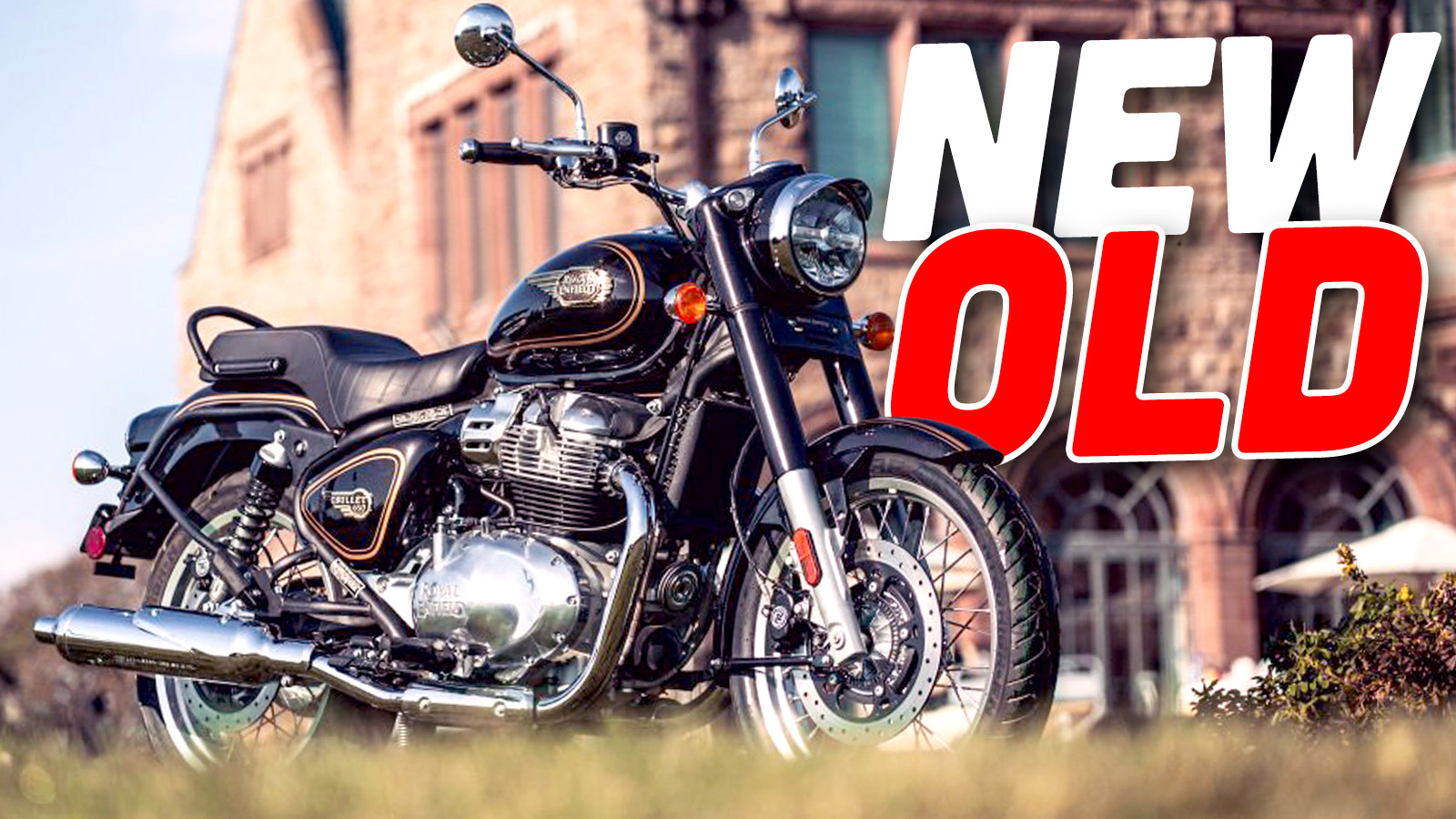
Motorcycle companies love boasting about their heritage. Indian prints “since 1901” on each of its engines, while Harley-Davidson is proud to have been around continuously since 1903. Royal Enfield has different bragging rights, as it claims to have the motorcycle that’s been in the longest continuous production. That bike is the Bullet, which has been in production since 1932, and America is finally getting the hot Bullet 650 that the rest of the world has already been enjoying. Like all Royal Enfields, it won’t even bust your bank open to buy, either.
Royal Enfield proclaims that the Bullet has been in continuous production since 1932. That is technically true. There has been a Bullet model in continuous production since 1932. The Bullet even remained largely unchanged for decades. But like any nameplate that’s been in production for long enough, the Bullet has evolved. The Bullet of today sports a modernized frame, a modern engine, and even fuel injection.


America has been without a Royal Enfield Bullet since 2020. Instead, we got the Classic 350 and then the Classic 650, which follow a similar formula to the Bullet, but rock different styling, ergonomics, seats, and engine tuning. Finally, after six years, Royal Enfield is firing another salvo, and America will have a Bullet again. The new Royal Enfield Bullet 650 takes RE’s common 650 platform and drapes it in history.
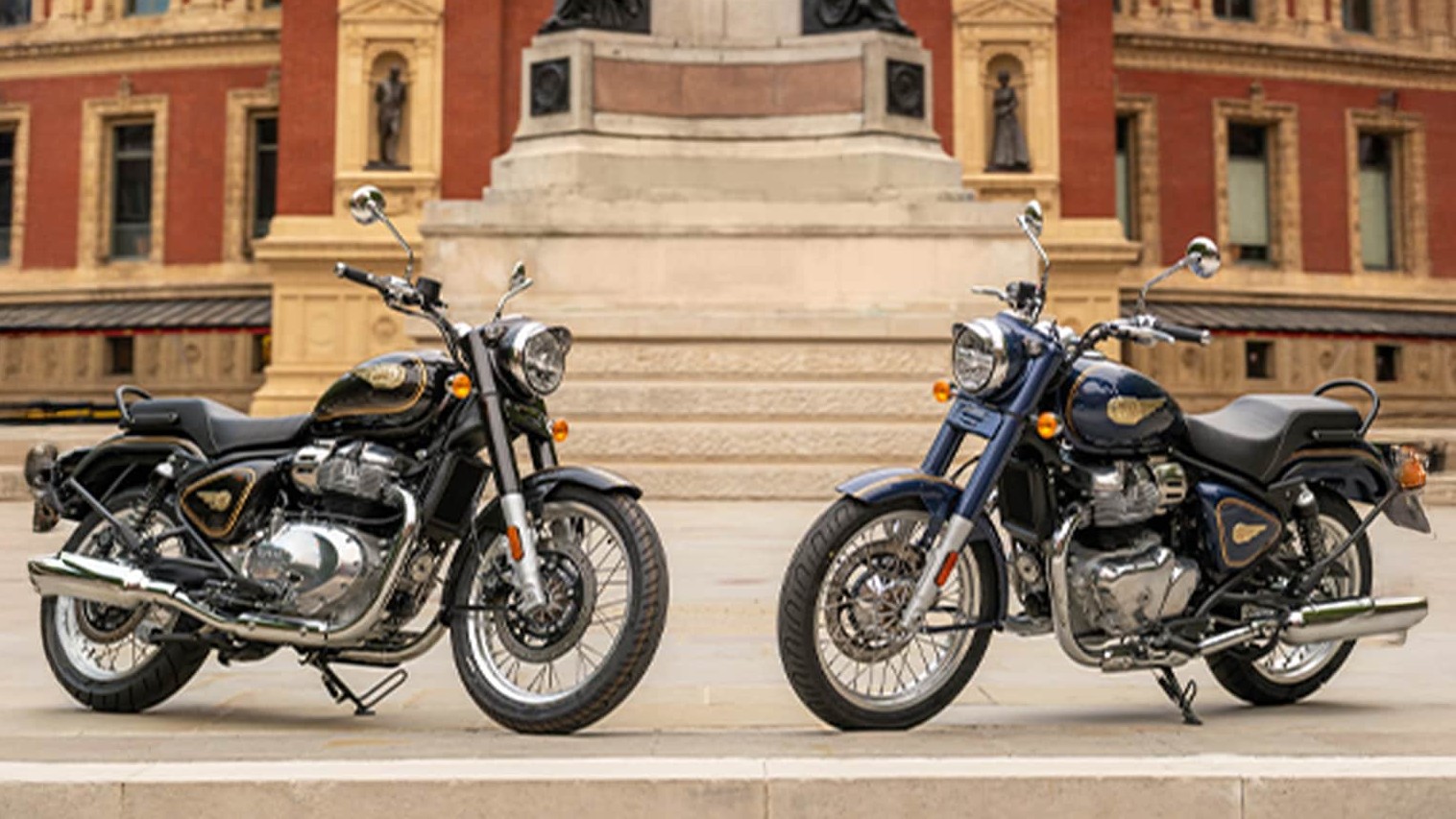
Made Like A Gun Since 1932
The Royal Enfield Bullet story is about as colorful as Royal Enfield’s history itself. Our friends at RevZilla give a quick rundown:
The first Royal Enfield to carry the Bullet name appeared in 1931 (or ’32, depending on which model history you read). That first round, which was available in 350 cc and 500 cc versions, had a rigid frame and girder fork, typical of the period, but a noteworthy four-valve head. A few years later, the company briefly flirted with a three-valve head, before reverting to four valves. As with most civilian vehicles made in Britain, there was essentially no development during World War II, or in the immediate post-war period. In 1948, the International Six Days Trial was held in San Remo, Italy. Vic Brittain and Charlie Rogers, who were members of their country’s “Trophy” team, rode 350 cc Royal Enfield factory specials. Those prototypes had alloy two-valve heads, swingarm rear suspension, and telescopic front forks. They presaged the 1949 Bullet and a period of notable trials success, including a win by Vic’s son, Johnny, at the prestigious Scottish Six Days in 1952.
At that time, the Indian government sought a rugged motorcycle for military and police use in India’s mountainous border regions. The 350 cc Bullet — which was dominating trials sport — was an obvious choice. At first, Bullets were shipped from Redditch in “complete, knocked-down” form and assembled in a factory in Chennai (also known as Madras). In 1955, a new company, Enfield India Ltd., was formed. Around that time Royal Enfield (in England) modernized the factory in Redditch in advance of releasing an updated 1956 Bullet. Enfield India licensed the design and acquired the old tooling required to make 1955 350 cc Bullets from scratch. It took a few years, but eventually Enfield India was capable of producing bikes using virtually all-Indian components.
In 1970, the original Royal Enfield company succumbed as part of the broader collapse of the British motorcycle industry. But Enfield India went on producing that 1955 350 cc Bullet, virtually unchanged, for decades. The company had a steady customer in the Indian government, but the bikes were also a hit with civilian riders (who had limited choices, because India protected its domestic industry with prohibitive tariffs).

Royal Enfield didn’t even start building unit construction engines — where the engine, transmission, and ancillaries share the same casing — until 2007. Fuel injection didn’t come until around the same time.
Technically, the Bullet 350 is the one with the longest continuous production. Bullet 500 production ended in 1961 before being revived in India in 1985. The classic Bullet was also never available with an engine larger than a 499cc single. Either way, the new Bullet 650 has a lot to live up to, and it seems Royal Enfield is giving the bike its best shot at success.
Classic Looks With A Dash Of Modernity
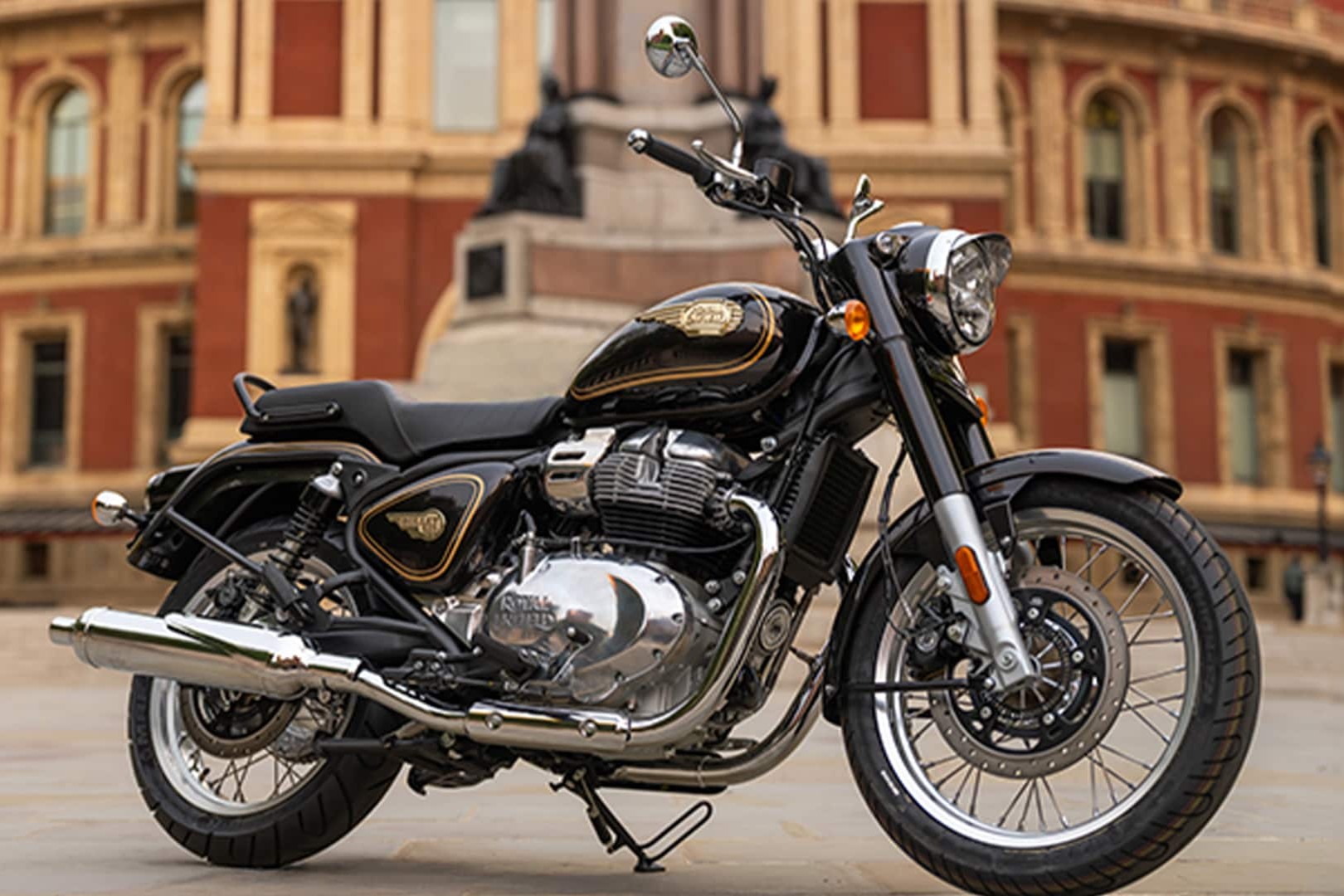
The Bullet 650 launched in other parts of the world last year, but as often happens in the automotive and motorcycle spaces, America had to wait to get a piece of the action. Royal Enfield made a big occasion of this launch, rolling the Bullet 650 out alongside classic RE steeds at the 2026 Audrain Concours Motor Week in Newport, Rhode Island, earlier this month. Special guest Jay Leno did the honors of announcing the bike for America.
The Royal Enfield Bullet 650 is, at its core, similar to the rest of Royal Enfield’s current 650s. Enfield’s air-cooled 650 twin platform debuted in 2017, and while it’s rather simple by modern standards, it was a huge upgrade for Royal Enfield.
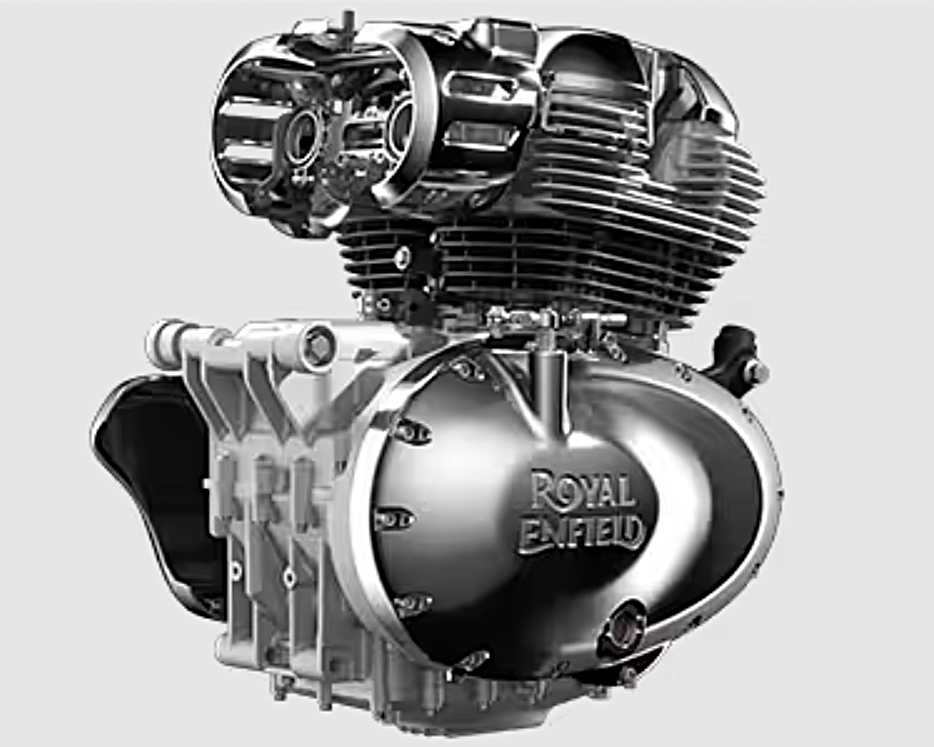
It sports four valves per cylinder and a single camshaft. The pair of pistons fire 46.4 horses out of the stable, accompanied by 38.6 lb-ft of torque and a six-speed transmission. This is more than twice the power of Royal Enfield’s 350cc platform, which makes 20.2 HP. Notably, a modern Royal Enfield 650 can exceed 100 mph. That wouldn’t be impressive for any other bike maker, but it was a big deal for Royal Enfield. Just being a twin alone is huge for the Bullet, as the bike has historically used single-cylinder engines.
The platform also utilizes a steel tubular spine frame and rocks features like dual-channel ABS, LED lighting, ByBre brakes, Showa suspension, and fuel injection. If you’re looking for tech, well, bikes on the 650 platform have monochrome LCD odometers, USB ports, and an optional tiny screen for turn-by-turn directions.

The 650s are considered to be luxury items in India, where riders make the most out of engines with very little displacement. However, the 650 platform is immensely important for Royal Enfield because these bigger machines make up more than a quarter of Royal Enfield’s exports. They make more sense for markets like North America, where bikers expect to be able to ride at higher speeds without stressing out their engines.
In the Bullet 650, you get a machine styled like the Bullets of old, with a teardrop tank, black paint, gold hand-painted accent work, and a thick seat. That seat is said to be 31.5 inches off the ground, and you get wide bars and a peg position that emulate the Bullets of old. This should be a pretty relaxing ride for those leisurely cruise nights. Further amplifying that old Bullet look is the combination speedometer and headlight bucket, which has what Royal Enfield calls twin “tiger eye” lamps.

This is just a fancy way of saying that the headlight has secondary pilot lights next to it. An example of what these lights looked like in the past is pictured above.

In keeping with the vintage aesthetic, the Bullet 650 has 41mm forks up front with twin shocks taking up the rear. A single 320mm brake disc is up front, which gets munched on by a twin-pot caliper. A 300mm plate is found in the rear with its own twin-piston caliper. All of this rides on a 58.3-inch wheelbase plus a 19-inch front wheel and an 18-incher in the rear.
This spec sheet makes the Bullet 650 very similar to its siblings, which include the INT 650, Continental GT 650, Super Meteor 650, Classic 650, Shotgun 650, and Bear 650. Yes, Royal Enfield has many 650s, and it manages to sell all of them! Each is just different enough to make them feel unique. Think of this platform like how Volkswagen used to make a zillion models out of the Golf’s platform.
Still Affordable

Royal Enfield says you get all of this for $7,499, when painted in Cannon Black. There’s also a special edition called the 125th Anniversary Edition Hypershift Classic 650, which comes in a shade-shifting orange for $8,499. If you live in one of the many places in America that faces winter, and you want one last blast before the snow comes, Royal Enfield says these bikes should be hitting dealers about now.
Somehow, everything seemingly keeps getting more expensive, but Royal Enfields stay affordable enough. I love that. Admittedly, I am a newer fan of Royal Enfield after picking up my first in 2023. Sure, these bikes aren’t as fast or as reliable as any Japanese steed, and don’t really have the cachet of something like an Indian or a Harley-Davidson. But you know what? Royal Enfield is still one of my favorite brands right now. Enfield knows what younger riders want and keeps on churning them out. I am not surprised one bit that it keeps breaking its own sales records.
The addition of the Bullet 650 gives Royal Enfield a rather substantial lineup in America, which now spans 14 models across various riding styles, not including the Flying Flea. Honestly, I adore the fact that Royal Enfield is one of those companies that announces cool bikes, actually puts them into production, and then sells them in America, too. I wish more companies did that.
Top graphic image: Royal Enfield




You can get a 2024 and 2026 Bullet 350 in North America if you prefer the traditional single cylinder layout. I like the styling of the 350 over the 650. I have not ridden the 650 but many like the riding 350 better. Minus the slower top speed of course. The 650 Bullet is appealing but I wish they had called it something else. Much like the EV Mustang. For me the Bullet has always been a single thumper.
I have a 2024 model to avoid the LED lights on the 2026 model.
Love these bikes, but, they are about #100s too heavy.
It’s a good looking bike minus the exhaust. Looks too small. A larger diameter to meet more towards the size of the muffler would look better i believe.
It’s called a peashooter exhaust and they were popularized with 60s British bikes. They have good airflow and create a notable exhaust note.
Many years ago circa 1978, I found a 1962 Cycle magazine in the basement of the electronics store where I was employed, and saw an ad for a Royal Enfield 650 twin – it was love at first sight – unfortunately RE was long gone from the USA. 40ish years later RE re-introduces a new 650 twin and my dream bike had returned, only to find me in my 60’s, with my riding years well past. I still have thoughts about what could have been…
Motorcycles are dangerous. They offer no protection for the rider, so they have to rely entirely on their own gear. But no matter how much leather and armor they have on, there’s no way to account for ignorant drivers they have to share the road with. A new Royal Enfield could cost $5 and I’d still have trouble recommending that biker life to anyone because they may well end up dead through no fault of their own.
Which sucks, because man motorcycles are deeply cool.
Yes, and when I go skiing the snow is also cold. 🙂
Motorcyclists understand and accept the risks, but it is not for everybody.
That’s totally fair, and I respect everyone that rides and isn’t an asshat on the road.
Thanks! I’ve been riding for 35 years but I’ve never thought about the inherent dangers! ????
Having spend many years riding a 650 single cruiser, going to a twin is a huge upgrade.
Further amplifying that old Bullet look is the casquette and twin “tiger eye” headlights.
What the heck are we talking about here? There is not one photo in this article showing twin headlights in ANY fashion.
I added clarification to that section. The headlight bucket is surrounded by two smaller lights that Royal Enfield calls Tiger Eyes. Sorry for the confusion.
Thank you so much for clarifying that. The huge search engine was useless.
I have a made-in-India, classic British nameplate, cheapo motorbike already; one of the Triumph 400 thumpers made by Bajaj. (I’ve still never owned a Brit Bike!)
With 6 fewer HP and 150 fewer pounds to haul around, and for $1000 fewer dollars, I think I can live without the phony historic claims of the RE, like the “made in Redditch” sticker on the tank, and stick with the Triumph.
If you really want ’60s styling and performance, there’s a new Triumph 400 thumper with even less HP than mine (why?!?) and slathered in phony classic styling cues, called the T40 Bonneville.
The T40 was covered not too long ago. I guess less horsepower and phony classic styling is my jam, because I kinda want one.
I can live without the phony historic claims of the RE
Yeah I don’t get this, Indian is doing the same thing. I hate Harley, but at least it’s actually been constantly producing motorcycles in Wisconsin for 123 years. Indian counting 125 years ignore the multiple times it was owned by VC as a brand name only and years it spent just producing merch.
Royal enfield has been dead to me since they switched to a unitized gearbox.
I wanted to build a diesel motorcycle during the aughts and those early enfield imports with the separate gearbox were the best way to bolt an aircooled yanmar diesel off of an industrial plate compactor up to a motorcycle frame.
Harley boxes were just too big.
By the time I got the time and money together at the same time they’d moved to these modern unitized engine/gearbox. And I’d moved to modern triumphs.
I mean the modern enfields are undeniably better machines and no one needs a janky 7hp diesel motorcycle but sometimes that doesn’t feel like the point.
It’s an admirably simple-appearing bike for modest money. Yamaha’s closest competitor, spec-wise, appears to be the XSR700 for $1000 more. Honda has nothing close; Rebels slot in both above and below this power tier though their prices seem to be more in line. Suzuki’s 650 is more advanced and costs more and frankly looks more like a lower-tier sportbike than this bareknuckle cruiser. And Harley doesn’t do anything in this rig’s weight class, and certainly not its price tier.
It’s enough power to cruise – throw some bags on and it’d be great for long weekends. It’s small and light enough for commutes with sufficient size – depending on the obliviosity of your local fellow commuters – for other drivers to notice you.
Nice bike, nice price.
The Yamaha has 50% more power, plus over twice the brakes, and weighs significantly less to boot. It might not look as cool but it’s a better deal IMO.
Yeah, I figured each of the Japanese manufacturers were likely providing more power even from less displacement, but I didn’t have time to look up output specifications. The Honda Rebel 500, despite being only two-thirds the displacement, delivers approximately equal power to the Royal Enfield. And while costing about the same it may also be the better deal considering Honda’s better reputation, not to mention far greater representation on the service side.
In my opinion, it’s not the main criteria for this kind of bike. If you do the same math for let’s say Harley, they are also underpowered and too heavy.
I didn’t say it was or wasn’t, just responding to the other poster about that one specific bike comparison. I don’t disagree though.
But if I were in the market for a bike like that, I’d probably go Triumph.