

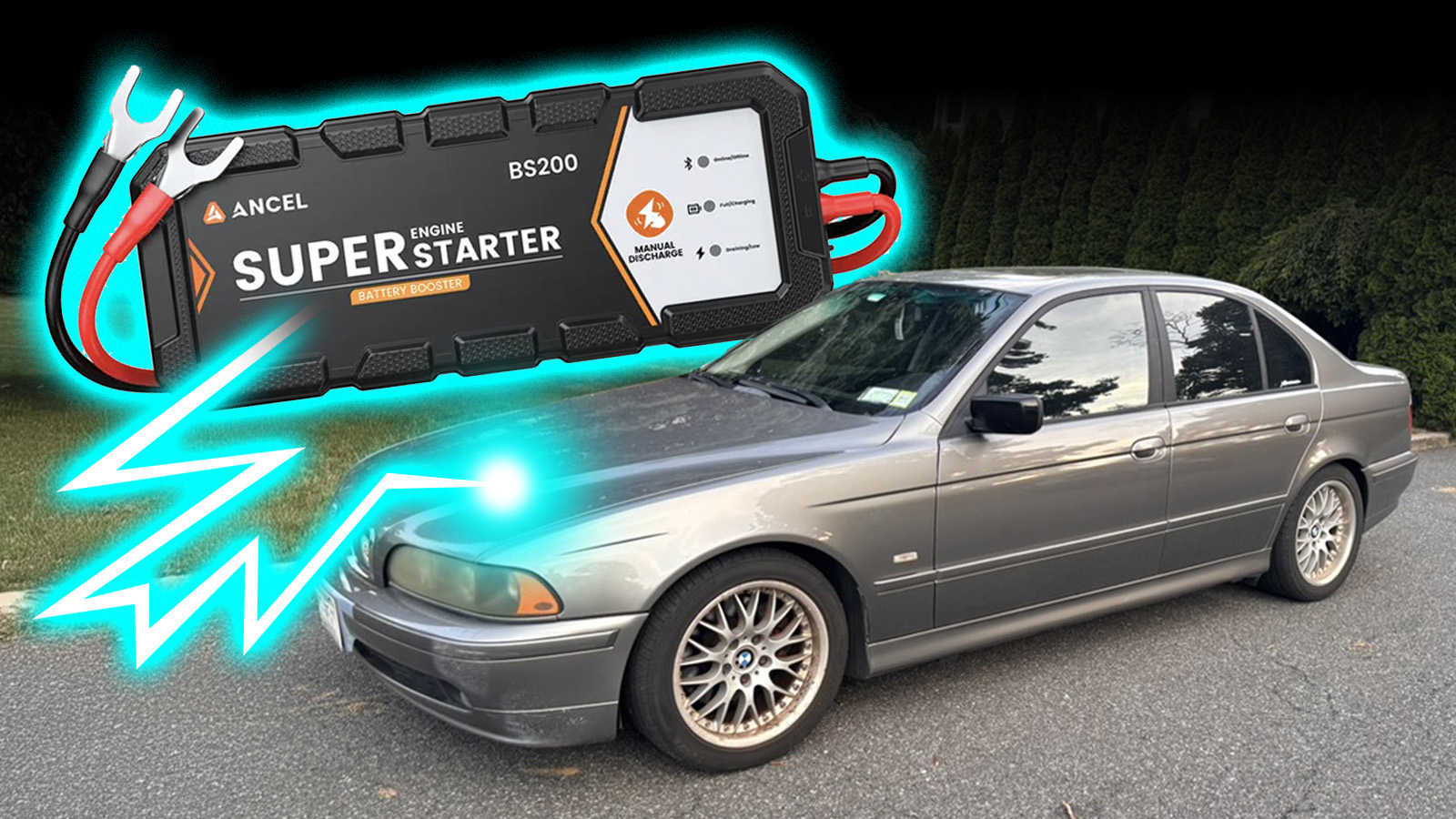
I am a car enthusiast without a garage. I park my beloved high-mileage manual E39 “Clive” in a city parking lot, with no ability to trickle charge the battery when it’s sidelined for long periods of time. There’s also a slow parasitic draw that I think is linked to the aftermarket system that I use to play music from my iPhone. My lazy solution has been to disconnect the battery when I know I’m going to put the BMW on ice for a while. If I forget to do it, I often have to jump my car’s battery, which is annoying when I’m in a hurry (the only time this seems to happen).
While I typically recommend a portable jump pack to anyone with an old car, I often find that when I need that particular bit of technology most, the portable jump pack is also dead. Some of this is my own fault, because I could either be more thoughtful about how I take care of the car or the battery, and just be better about disconnecting the battery. I know another E39 owner who has a little solar cell that trickle charges the battery, which probably isn’t going to work in a public lot, even if it’s a clever idea.


It’s gotten bad enough that I’ve had to lug the very heavy 12V battery out of the awkward trunk position in the BMW in order to take it to AutoZone for a quick refresh more than once. I hate doing this, which is why when aftermarket tools builder Ancel reached out to see if I’d test out its BS 200 Super Starter, I decided to be at least a little proactive and try to address the problem.
My expectations were low, as I’d never even heard of a super capacitor-based starter assistant before and was only vaguely aware of the company. The promise of using algorithms to “intelligently detect” the stress on a battery during startup and therefore surge energy to protect the battery sounded like silly marketing-speak to me.
It’s now been six weeks of putting this system through its paces and, other than a slightly tricky installation due to the E39’s rear-mounted battery, it’s honestly been the best upgrade to the car since I purchased it. The stress of not knowing what’ll happen when I turn the key is gone, leaving me room to get stressed about entirely new things.
What Is A ‘Super Starter’ Anyway?

The concept of a jump pack is fairly straightforward. Every version I’ve had is basically a large lithium-ion battery with an attachment for jumper cables. You attach the cables to a dead battery, turn the car on, and hope you charged your battery pack full enough to get the car to crank.
A ‘Super Starter’ battery booster is a little different. For one, the rectangular box doesn’t live in your glove compartment; it’s permanently attached to your battery and charges itself off the very thing it’s supposed to charge. Rather than being used temporarily in an emergency, it is there to always assist with the battery under load.
Because chucking another lithium-ion battery on top of your (probably) lead-acid battery isn’t a great idea, the BS200 Super Starter uses super capacitors instead of traditional cells. The benefits are the BS200 stores very little energy (just 2.3 watt-hours, compared to 60-80 for most jump packs), can recharge quickly, and can discharge a lot of power quickly. It’s also less susceptible to degradation due to large temperature changes. The downside is that you’re not going to be able to use this to charge your phone.
Installing It Is (Theoretically) Easy
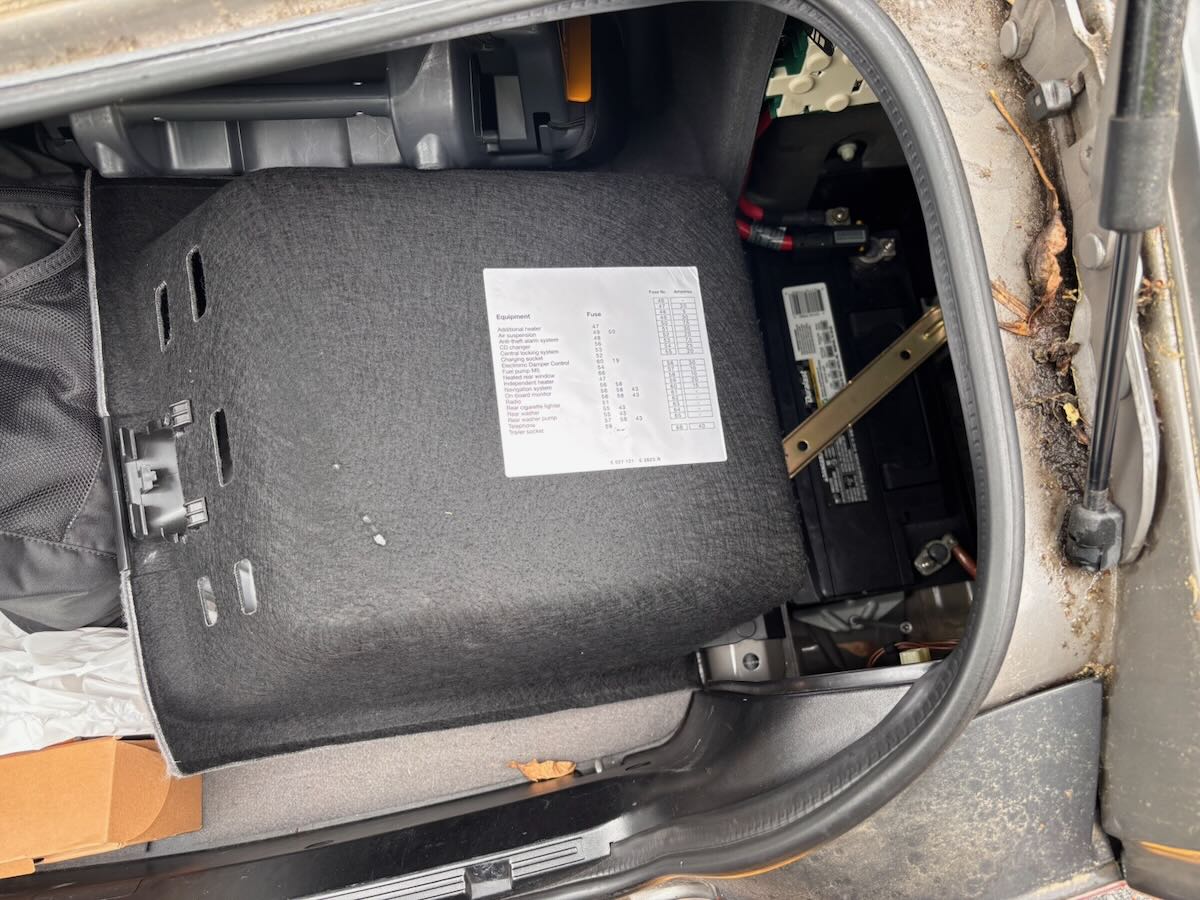
The BS200 is clearly designed for use in a vehicle with a battery in the engine bay, which covers probably 90% of applications. My E39 is not most vehicles, and so the battery is in the trunk behind a panel. It’s also bolted into that little trunk well with a crossmember. Nerds!
When I went to install the BS200, I realized that not only would it not sit easily on that battery (which is the recommended placement), but I could not have it on the battery and close the access panel at the same time. My initial thought was just to run the negative and positive cables around that panel. That wouldn’t work because the cables, while appropriately long for an under-hood installation, are too short for my around-the-panel solution.
Out came the drill.
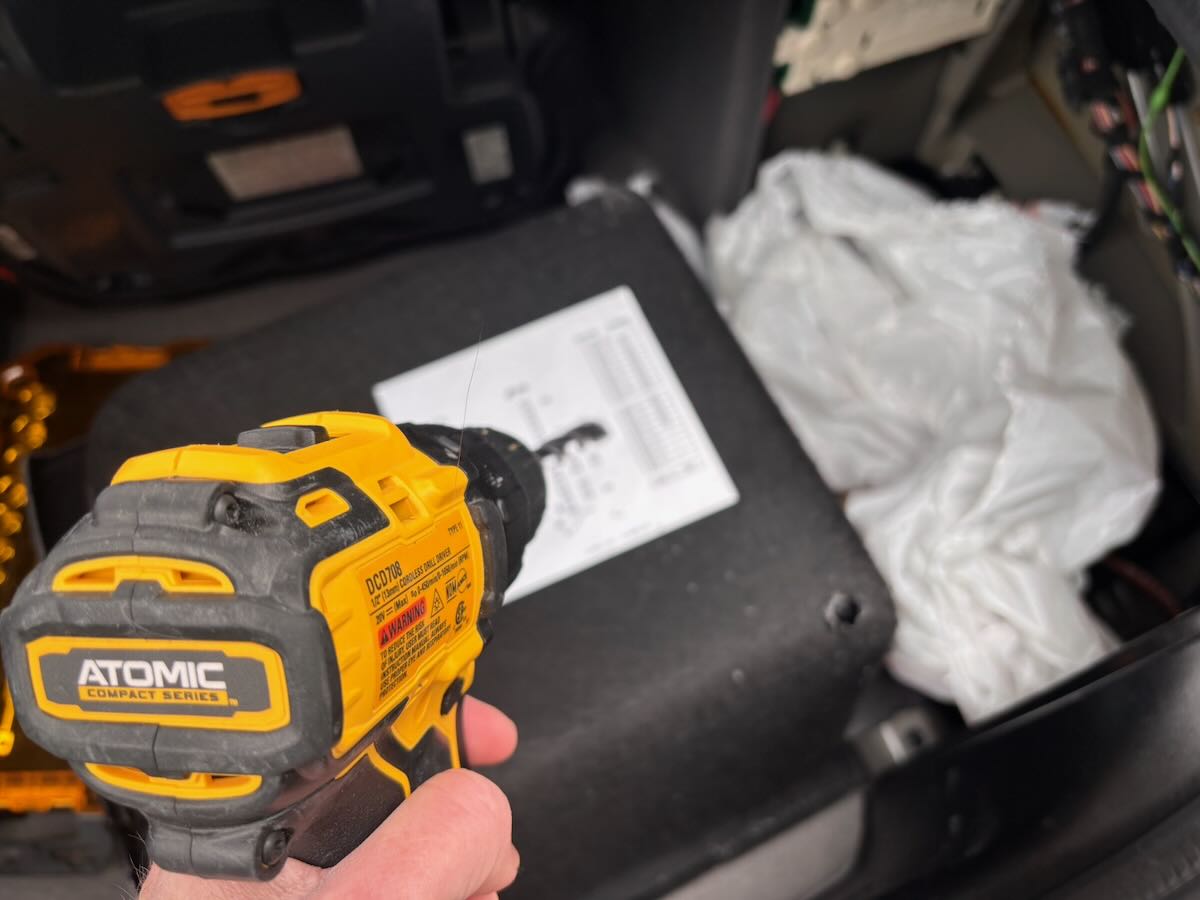
I ended up putting two holes in the panel and then running the cables through them. This also didn’t quite work as I couldn’t get the angle just right to keep the panel open enough to actually tighten the clamps around the battery terminals. Double nerds!
Eventually, I realized that I could line up the super starter dead in the middle and, with a socket wrench extension, I could juuuust tighten everything up and make it fit. While it takes up a small amount of trunk space (that I wasn’t using), it ended up being an elegant solution, and I’m happy with the way it looks.
The Big Test
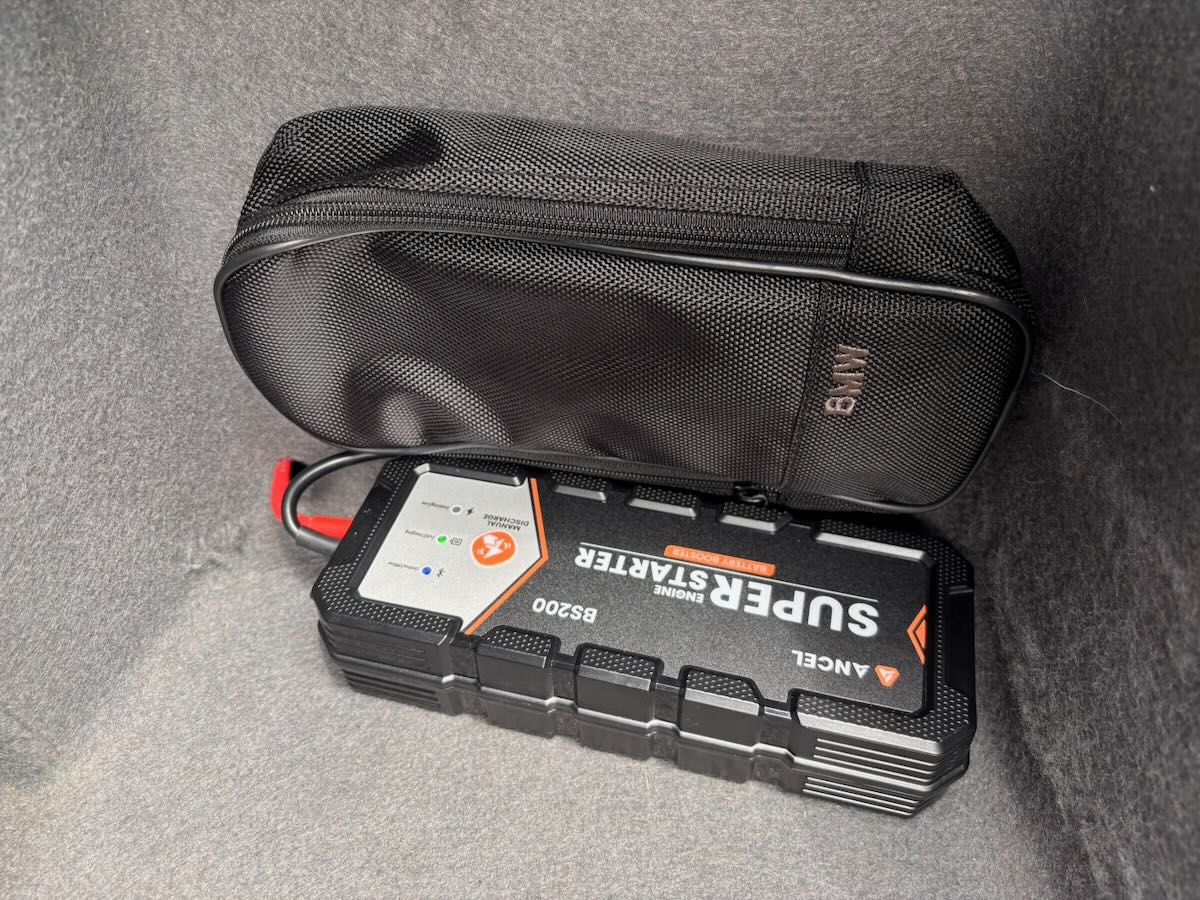
Before installing the Super Starter, Ancel recommends charging it up fully using the USB-C port on the side. Because the supercapacitors need so little energy, this happened in less than an hour. The BMW had been sitting for a while, and I was worried it wouldn’t start at all. With a quick turn of the wrist, the glorious inline-six fired right up, although the app showed the battery was dead. Hmpf.
Just to be safe, I quickly updated the firmware in the BS200 (it connects to your phone via Bluetooth), and it showed the battery was at 20%, which was probably right:
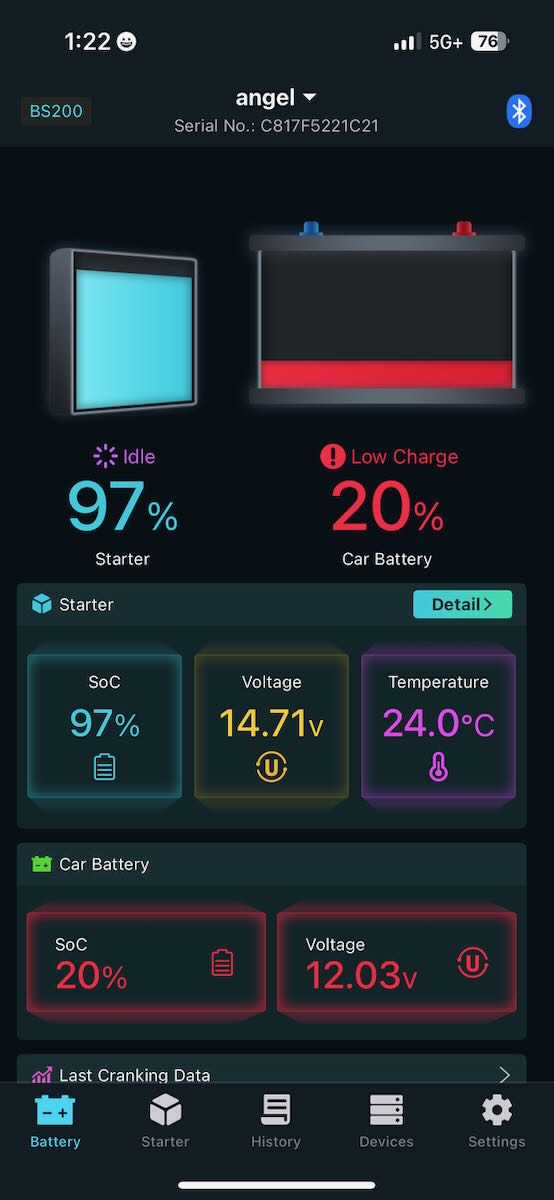
The app is pretty good, gives you a history of battery performance, and has a button you can press to dump all the energy into the battery if it’s really, truly boned. Once the battery is in decent shape, the starter recharges itself. This wasn’t the big test, though. I knew I had a lot of trips coming up and was picking up a NISMO Armada, which meant the BMW would be sitting for a while.
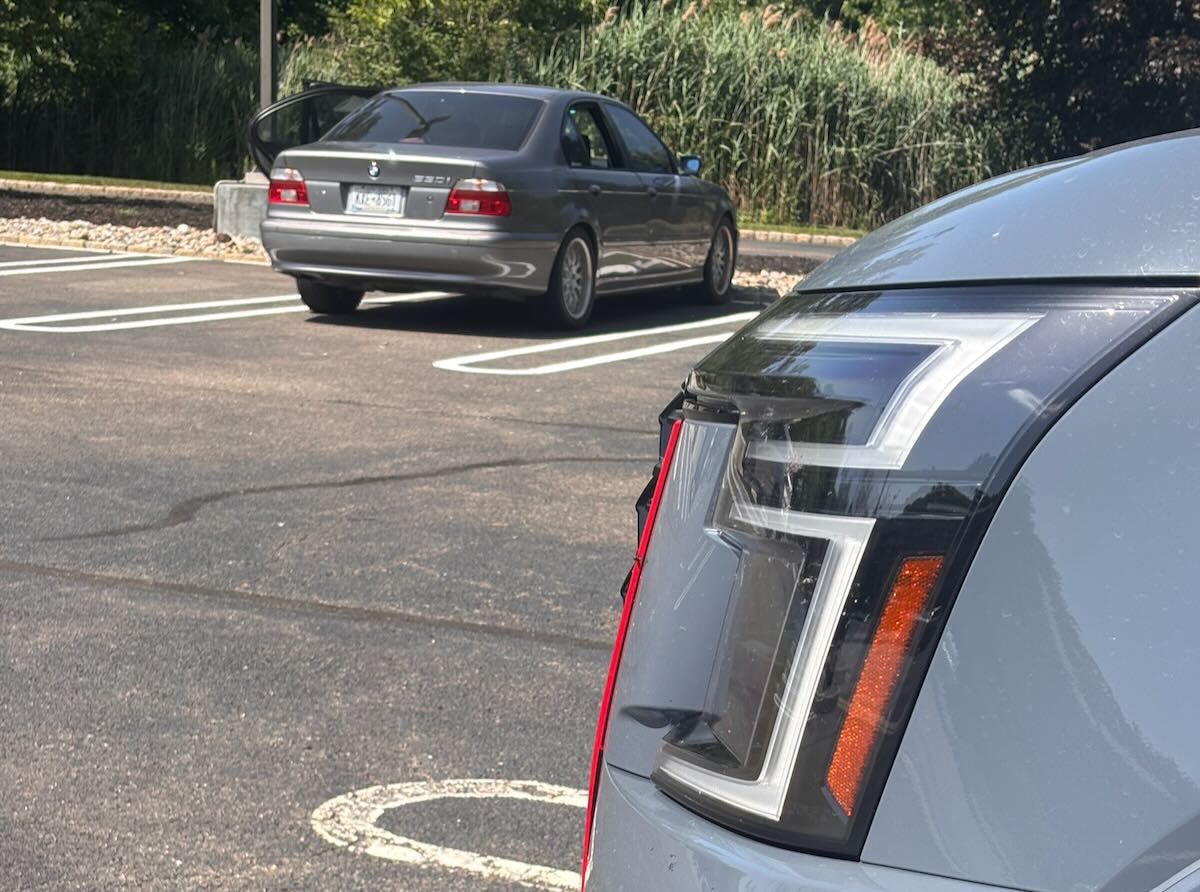
I didn’t disconnect anything and, it turns out, I left my A/C on, my radio on, and did all the things I usually try not to do when I leave the BMW parked for a while. By the time I returned from my trip, it was over 100 degrees, and it was going to be a huge pain if the battery was dead.
As you can see in this Instagram video, the car started up just fine.
View this post on Instagram
I was greeted with my A/C pumping and Soundgarden coming out of the radio. I welcomed both as it was over 100 degrees in that parking lot. This was repeated a couple of weeks later when I went on another trip and left Clive parked for 10 days. I hopped in, turned the key, and drove off like nothing ever happened. In cold weather testing, Car and Driver found the Super Starter also performed well.
Should You Buy A Super Starter?
If you have a trickle charger or drive your car frequently enough, this probably isn’t a big issue for you. While Ancel claims that reducing the energy required by the battery to start/run your car could extend the life of your battery by years, I haven’t had it long enough to independently verify this. If you almost never deal with dead batteries, just get a lithium-ion jump kit and try to remember to keep it charged.
However, if you do end up in this situation frequently, it’s kind of a no-brainer. In the time I’ve had it to review it, the price of the BS 200 on Amazon has dropped $50 to $149. If you have a turbocharged 3.0-liter engine or a naturally-aspirated engine that displaces more than 3.5 liters, there’s the BS300 at $237.99, and for large trucks or big V8-powered cars the BS400 is $279.98.
In addition to reducing stress on the battery (and on the driver), I do like seeing in real time how long it takes to drive around and recharge the battery. When passengers are in the car, I’ll leave it up on the screen and feel like Paul Walker in The Fast and the Furious minus the manifold danger.
[Ed note: Ancel sent a pack to review. This review also includes affiliate links, which means we may get a commission if you buy one. – MH]




You enabling SOB.
Installed this a few days ago.
Car starts on less than half a crank of the starter.
Tight fit.in the engine bay of my Tourx, but made it work.
Its straddled to a quite pricey Odyssey yellow top.
So.far so good.
Haters gotta hate.
Ancel has been pushing these pretty heavily. Its not a “bad” idea. But its just a bandaid with an app.
For something that gets installed in your vehicle, I’d be looking at a new battery to replace the weak one. (Cheap AGM’s are $150) And maybe fixing the parasitic loss.
I’m down to 7 cars, there’s no way in heck I’m buying one of these to install in each car. If a battery is dead, I’ll grab a jump pack.
$300 is at the entry point for superior batteries like the Odyssey, so you have to consider that.
I’ve gone through 3 batteries on my 2020 regal tourx.
Lets see if this helps or blows up my car.