

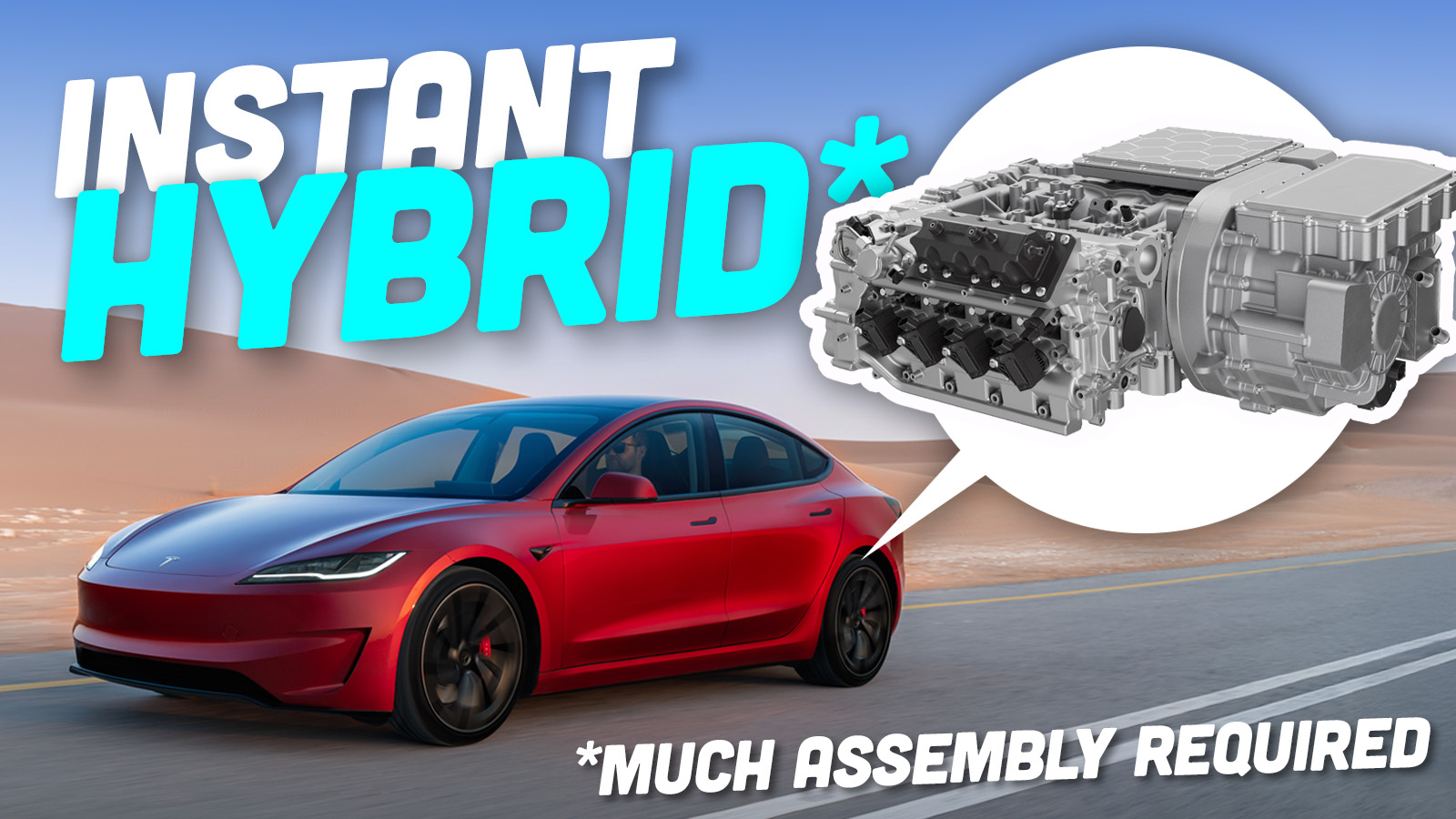
It’s no secret that the march to electrification has hit a few roadblocks in recent times. Some automakers are canceling projects while others have seen reduced sales. Yet, hybrids are showing strength with customers practically piling into showrooms to pick them up. What do you do if you’re an automaker that designed a BEV platform and suddenly want to go hybrid? Horse Powertrain has an idea. This is the new X-Range C15 Direct Drive, and it’s essentially an all-in-one hybrid drivetrain that’s supposed to help automakers quickly adapt BEV platforms to HEV.
Thankfully, the sky is not falling with EVs. But the market today is a bit different from how it used to be. The federal government ended the New Clean Vehicle Credit, the Previously-Owned Clean Vehicle Credit, and the Qualified Commercial Clean Vehicle Credit last year. That cut some incentive to buy an EV. Then there are the tariffs that make it harder for Americans to access EVs that aren’t built here. Add in a heavy dose of political change, and, as we reported in March, EV registrations have fallen in America from 8.3 percent of the light vehicle market to 5.1 percent of the market.


We’ve now seen a bevy of canned EV projects from Chevrolet’s brilliant BrightDrop vans to Honda’s American EV strategy. The Honda-Sony Afeela 1 is gone, as is the Ram 1500 EV, the Ford F-150 Lightning, the Volvo EX30, and others. Meanwhile, Toyota’s hybrid defiance looks like it was a smart call. Horse Powertrain thinks it has a solution for the companies that engineered BEV platforms and now suddenly want to compete with more hybrids. How? Horse wants an automaker to bolt its X-Range C15 Direct Drive into the backside of an existing EV platform to get a hybrid for less time and cost.
Cleaner Engines For OEMs
Horse Powertrain isn’t really a name that the common driver or enthusiast will interact with, but it is a pretty big deal for OEMs. It started in 2024 as a joint venture by Renault and Geely, with the goal of combining over a century of engineering knowledge from the two brands into developing cleaner internal combustion and hybrid powertrains. Last year, Saudi Arabia’s state-owned oil company, Aramco, also joined Horse.
Today, Horse operates 18 manufacturing plants and five Research & Development facilities across three continents. Currently, Horse pumps out more than eight million powertrains per year to several customers. Horse makes powertrains for Geely and Renault, but also for Volvo, Nissan, Mercedes-Benz, Proton, and Mitsubishi.
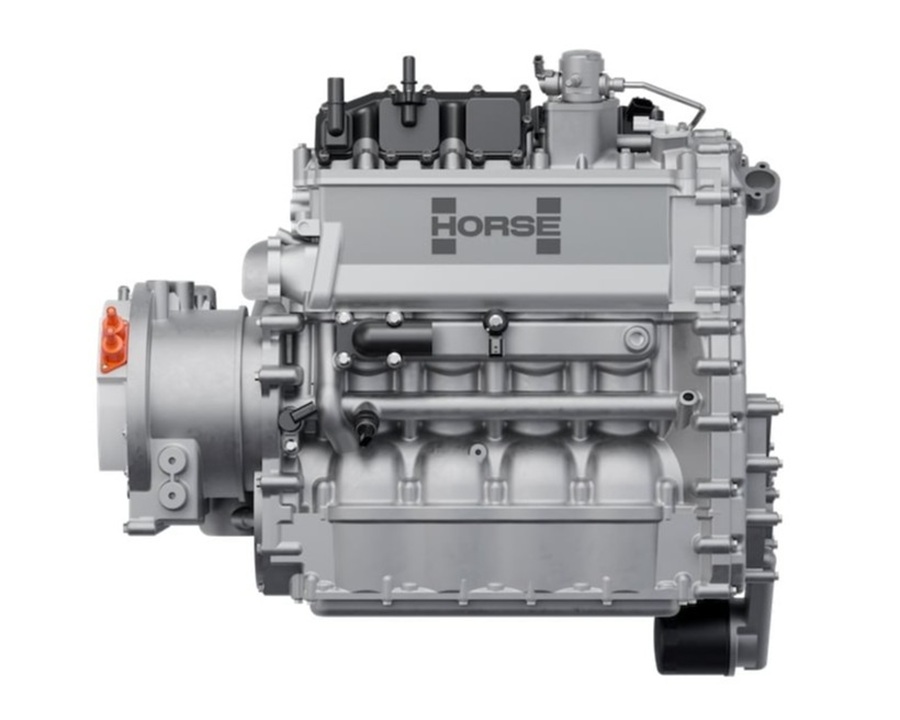
One of Horse’s big debuts last year was its C15 engine. This little 1.5-liter inline-four, direct-injected mill is shaped like carry-on luggage and pumps out up to 94 HP when naturally aspirated and up to 161 HP when paired with a turbocharger. Horse also developed it to be able to run on e-fuel, if that were to ever become commercially available in the future. It has a built-in generator and is intended to be the engine used in a range-extended EV.
This engine is only a single model in Horse’s engine portfolio, which contains everything from the 108 HP three-cylinder, 1.0-liter Horse S10 to the 280 HP turbocharged four-cylinder, 2.0-liter Horse V20 Performance. Horse wants to offer OEMs at least a dozen different engine options, and, depending on the model, they might run gasoline, diesel, hydrogen, methanol, e-fuel, or LPG. These engines can also be bolted to hybrid systems or be used as an EV’s range extender.
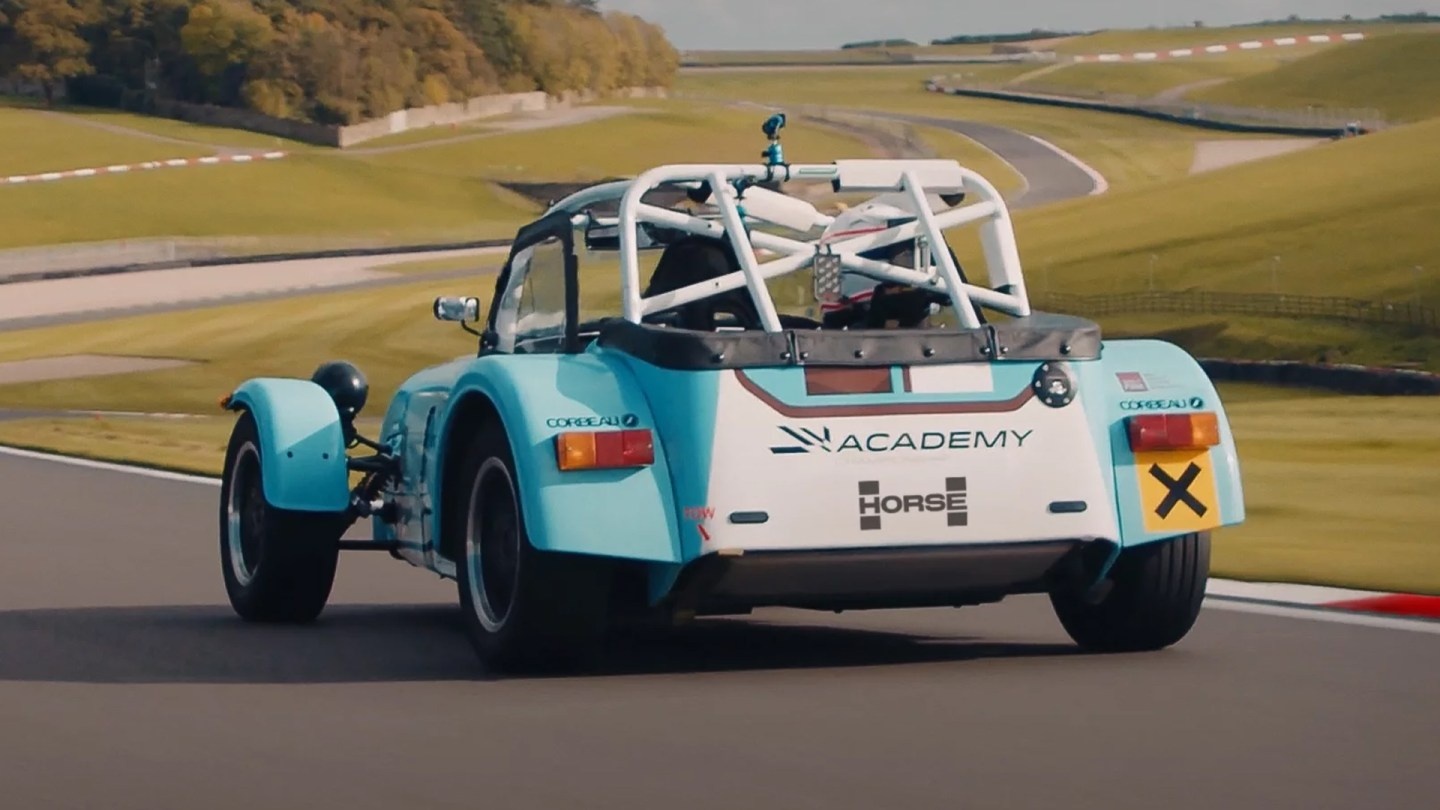
Not all of Horse’s applications are meant for electrification. For example, the Caterham Academy runs Horse HR13DDT engines in its lightweight track cars (above). Sadly, Horse doesn’t sell its powertrains to the general public, so you can’t easily obtain one of the company’s engines for your next track build.
All-In-One Hybrid-Powertrains
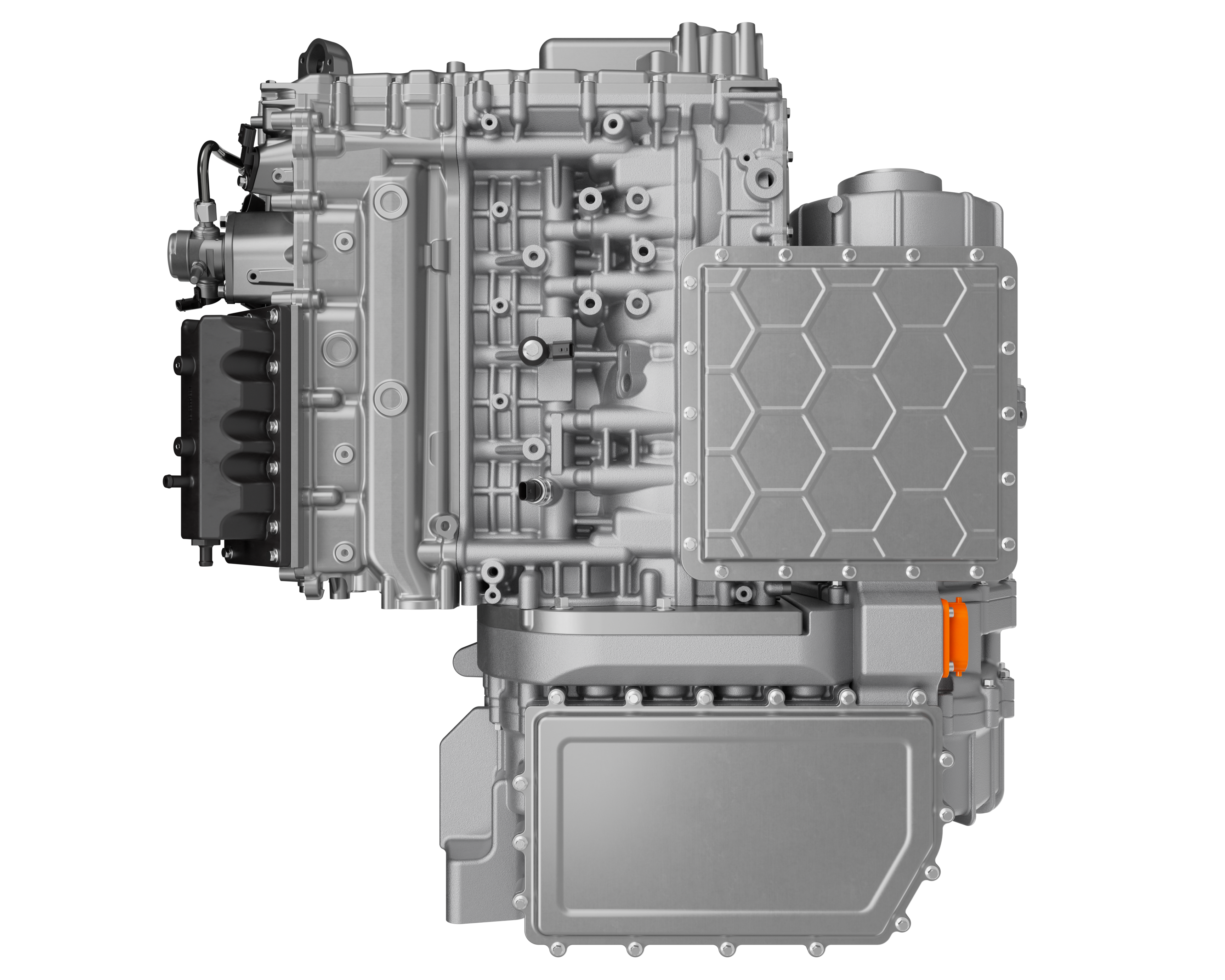
These engines, along with Horse’s selection of transmissions, are supposed to ease an automaker’s stress. Instead of having to develop a new car from top to bottom, Horse can take some of the load off. Then there’s Horse’s fascinating X-Range powertrain system. The whole idea behind X-Range is that an automaker that suddenly wants to make a parallel-hybrid, a series-hybrid, a plug-in hybrid, or an extended-range EV on an existing BEV platform can now do so more easily.
[Ed Note: I want to note that “easily” is relative, here. It’s certainly easier (especially financially) than developing an all-new platform, but adapting an EV platform to accept a combustion engine is far from trivial. There are numerous packaging constraints (gas storage, exhaust routing, etc.), crash performance implications, and emissions considerations. There are all sorts of validation tests (thermal, vehicle dynamics, and on and on) that need to be gone through. It’s not exactly easy to do this, and it’s likely you’d end up with something far from optimized given your platform was designed to have a gigantic battery pack between the axles, and its aerodynamics package was developed around limited cooling system capacity (as EVs don’t require a ton of cooling). I do think a range extender is a great way to offer both an electric model and a more palatable, higher-range, less-concerned-about-infrastructure option. But to implement it into an existing vehicle: tricky. Going to a regular hybrid would seem even trickier. -DT].
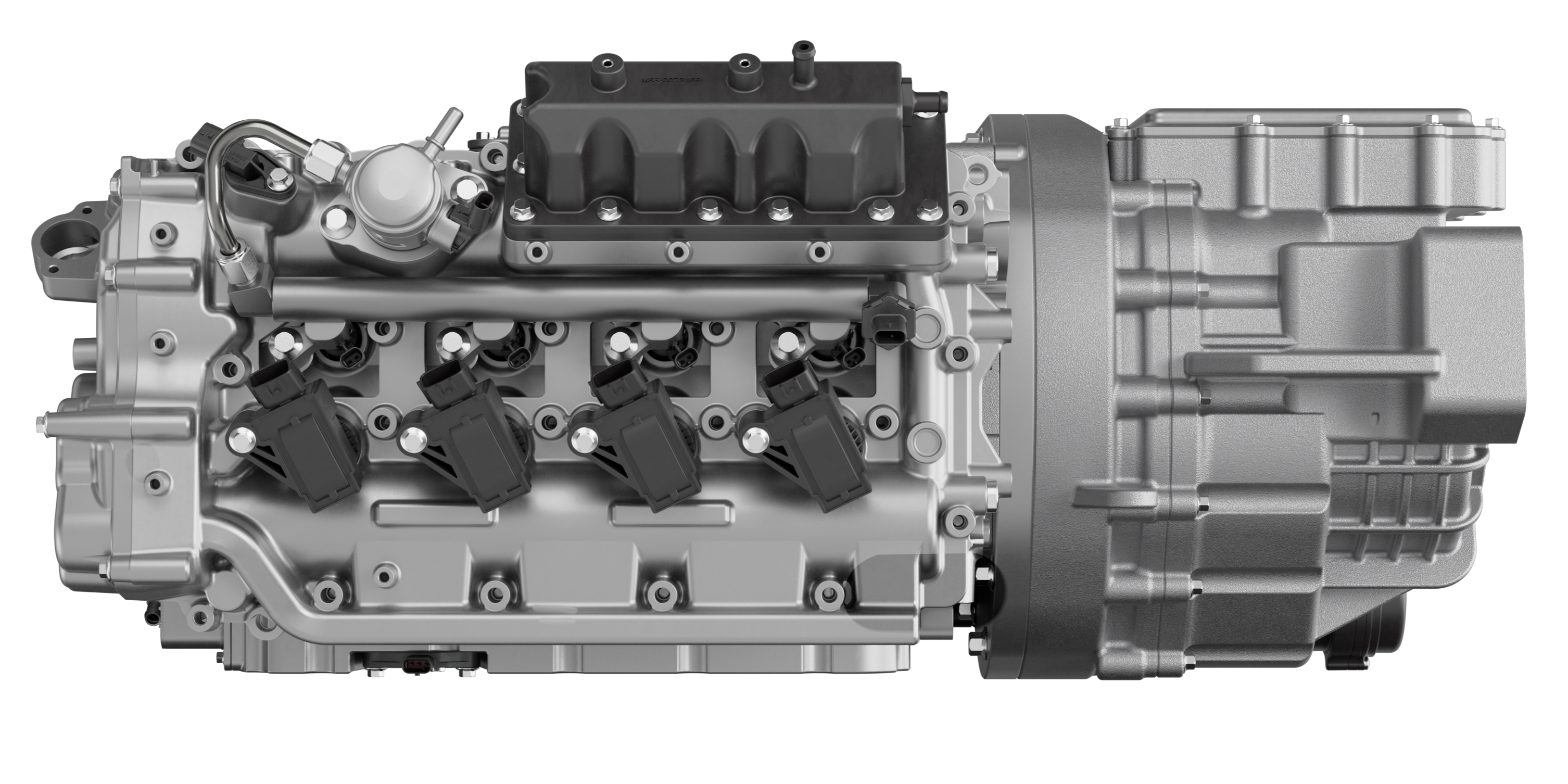
The X-Range C15 Direct Drive packages the aforementioned C15 engine paired with a dedicated hybrid transmission and two electric motors. One of the electric motors acts as a generator in parallel or series modes. The second motor drives the vehicle, and it can either drive the vehicle by itself, as would be the case in an extended-range EV configuration, or drive the vehicle in tandem with the engine, like a standard hybrid.
The engine pumps out the same power I noted above, while the eTraction system is said to be able to push out more than 268 horsepower. Attached to all of it are all of the electronics required to make the hybrid system work, and the package is designed to integrate with other components like a DC to DC converter, an on-board charging system, and an 800-volt charging booster.
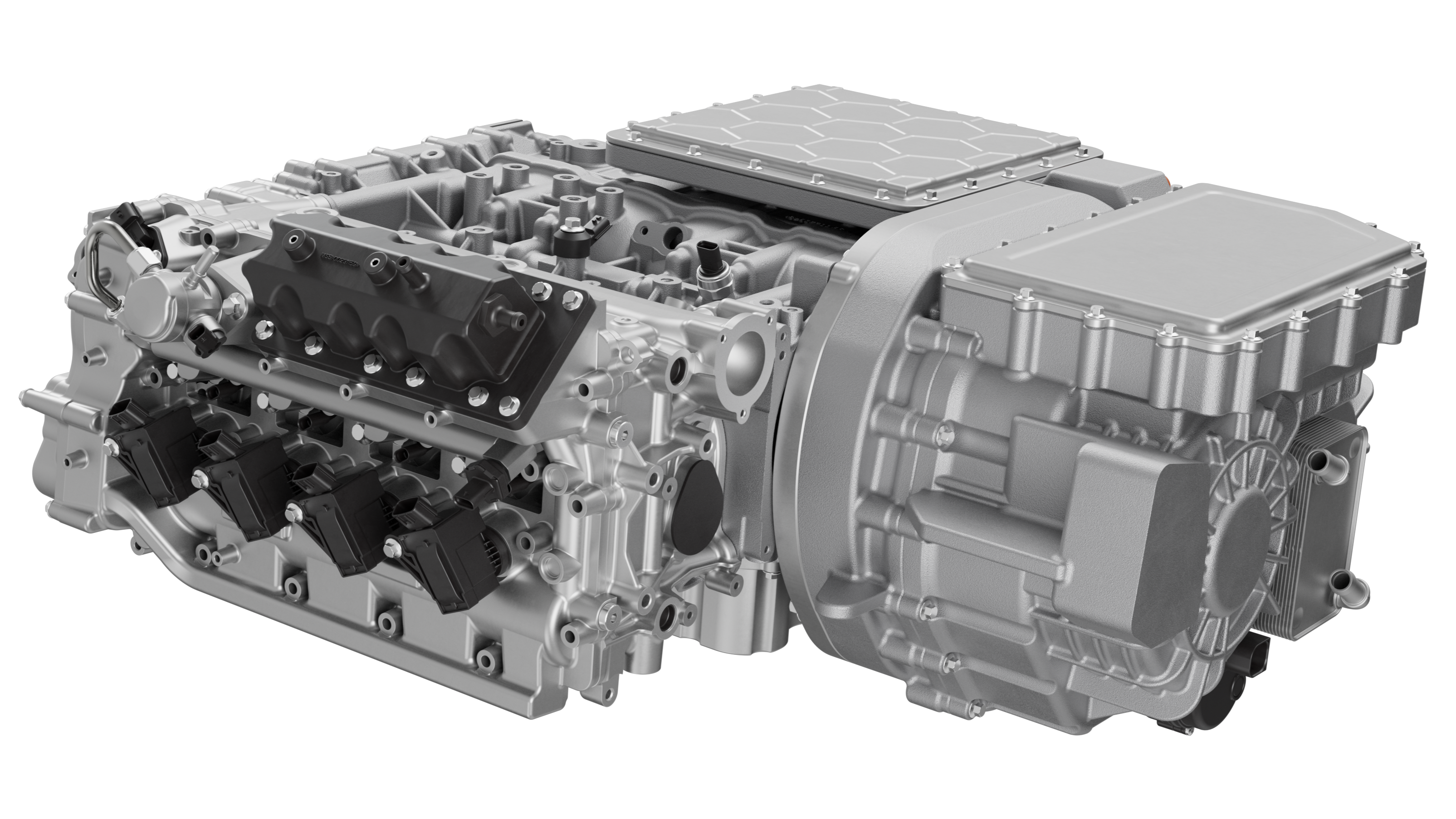
All of this equipment is packaged neatly up into something that resembles a big metal suitcase, and it’s supposed to replace the rear axle motor of a pure BEV. It can then be combined with a front drive motor to provide AWD, if desired. Horse is pitching the X-Range C15 Direct Drive as an easier and cheaper way to spin up hybrid production. Of course, “easier” in this case means compared to starting from scratch. This is not going to be a direct swap by any means and will require additional engineering to function. From Horse:
Matias Giannini, Chief Executive Officer of Horse Powertrain, said: “The X-Range family of powertrains is about reflecting today’s market realities, allowing automakers to pivot from BEVs to hybrids and range extenders on a single platform, quickly and at scale. The X-Range C15 Direct Drive is an ‘all-in-one’ powertrain, allowing BEV platforms to be converted to HEVs, PHEVs, and REEVs with little redesign or tooling changes required, dramatically reducing time-to-market, amortizing BEV investments, and catering to the diverse array of mobility needs in today’s global market.”
The X-Range C15 Direct Drive is actually the second all-in-one solution offered by Horse. The other is the X-Range F15 Direct Drive, which follows the same concept, but replaces a front electric motor with the all-in-one hybrid system. Notably, the F15 (below) is a vertical setup that would take up some front-end volume, while the C15 is more of a pancake.

Who Will Be First To Use It?
In theory, both of these powertrains are great ideas. Instead of just abandoning their BEV platforms and blowing billions of dollars, an automaker could make adjustments and offer hybrids. Or, an automaker might be able to be relatively flexible when regulations get upended.
It’s unclear how close to production the X-Range C15 Direct Drive is. It’s also unclear what automakers might pounce on this idea. For now, Horse Powertrain says that you can find the X-Range C15 Direct Drive on display at the 2026 Beijing Auto Show, Hall A1, Booth A111, on April 24.
Honestly, while being able to convert a BEV into a hybrid sounds pretty cool, I’d love to see what a backyard engineer could do with the package. A hybrid kit car? An upgrade for an old and tired early-generation hybrid? I guess we’ll have to wait and see what comes of these packages.


Or for alot cheaper option allow a EV to charge while driving and make a space in the frunk where a commercialaly available generator could go. No testing needed, what happens next is on the customer.
For trucks even easier, put the generator in the bed.
There’s been a lot of DIY work done on that front to the F-150 Lightning over at it’s forum site. I think the chief constraints were the generator’s cost, power output limit, and NVH.
I beleive it. , its like the famous “pick 2” you can get one cheap and strong but it’s loud. I remember doing the math on a nice quiet Honda generator it would only charge like 5 miles per hour.
I’m a patient man.
Eventually these will wind up in a Pick Your Part, so I should start looking for a clean but non-running Corvair.
I’m leaning towards VW Type IVs, for which some engine components are challenging to find.
I’m sick of looking for a replacement for it that I actually like, so I’m getting one of these to stuff under the hood of my Mazda5.
This kind of system makes me think of how Continental and Lycoming would make engines for various car manufacturers. It seems in this era when there is a lot of consolidation of legacy car brands and simultaneously lots of new car brands springing up that it would be a good time for a company to supply engines/hybrid systems to multiple automakers. Almost every automaker has a 2 L turbo 4. Why waste all that R&D money when you can buy a hybrid engine and slap in in whatever car you want to build? I guess the big risk if if the engine has some major flaw resulting in recalls across multiple manufacturers. That could sink an independent engine maker.
I believe that Top Gear pioneered this type of hybrid conversion in the later builds of the Hammerhead Eagle i-Thrust.
Long live Geoff!!!
I wonder if these will ever be made available ever to the retro conversion communities. There quite a few ICE to BEV conversion companies, but I imagine a lot of vehicles could handle this as type of conversion as well.
I’d love to have the opposite. Or something like it. A bolt on hybrid pack for an existing pure ICE. I had a Prius, swapped the batteries out from time to time, not too hard. My 05 Tundra could sure use a small battery/hybrid system, there are probably a ton of people out there with older trucks that would love to make their setup more efficient without having to buy a brand new rig. Similar to a Deboss Garage/Edison Kit but to a much smaller degree. I’m amazed I haven’t see a story yet here about those guys, or maybe I’ve missed it!
I always wondered if you could hook a Prius engine and motor-generator unit to the driveshaft of a Toyota pickup.
The transverse engine + transmission combo to longitudinal conversion will probably be a big wrinkle (maybe the Subaru eCVT would be easier – if you can get it all working together harmoniously) but it’ll definitely be easier to just bolt on a motor in front of the transfer case (4WD) or driveshaft (2WD) and look into whether converting the engine to generator duty will do the trick.
But then we’ve just built a Via Vtrux or Honda hybrid.
I’m looking forward to when we have an equivalent “LS swap” with an electric motor/battery combo that takes up the same space/weight the V8 engine normally would. Battery density needs to improve quite a bit still, but even a 100+ mile range and ~200hp would be pretty compelling.
Let’s package this all into the back of a Ford Festiva / Kia Pride.
268hp generator, a small battery, and an EV drive motor to the rear axle.
What could do wrong?
The last time it was done absolutely nothing went wrong.
I’m really glad David added this note because the difficulty in resolving emissions and crash performance with a full drivetrain swap is much bigger for an OEM than a shade tree mechanic doing an LS swap.
I really don’t see BEV-centric companies like Tesla or Rivian ever entertaining a hybrid configuration. For better or for worse, their entire vehicle platforms are built around being a BEV: things like structural batteries, smaller cooling capacities, etc.
As a systems engineer, the biggest challenge I see is not in physically swapping in this drivetrain, fuel tank, electrical connections, etc, but all the necessary firmware communications between Horse’s system and the OEM. Sure, everyone uses CANBUS, but the way OEMs uses those communications protocols often vary widely. Previous powertrain-swapped compliance vehicles don’t have a great track record in this area: Tesla made the RAV4 EV powertrain for Toyota (only sold in CA, I think), and while mechanically it was apparently a competent system in its day, it was plagued with all kinds of electrical gremlins like the dash displays shutting off, vehicles not activating, etc.
Shoving an engine in the rear of a vehicle never intended to have an engine at all? WCPGW?
I’d rather see someone come up with a system that can be slotted into the frunk area of an EV that provides a small range extender. That way you don’t have to replace any of the drivetrain, you’re basically sticking a generator in the “engine” bay (or anywhere else, since it won’t directly drive the wheels).
A gasoline range extender was considered for the Model 3 early in the development stage, when there was still uncertainty as to whether they could get battery costs down to an acceptable level to hit the price target, but, then quickly abandoned when it appeared that wasn’t going to be a problem. And, also, Musk didn’t want to alter Tesla’s positioning as exclusively a maker of pure EVs.
I wonder if anything from that thought bubble made it into the final car from a structural or packaging standpoint that could facilitate a range extender retrofit? My guess is not, I think the idea was discarded too soon for any trace to make it into the production car, but it would be kind of neat to see someone do it
Any chance of getting some dimensions on those drawings and a weight? I’m curious to know how much battery has to come out to make room for these REXpacks and how much is left for gas.
Also why not make these smaller, like maybe 30-40hp and let the battery do most of the work?
I wish! I guess those drawings are for automakers’ eyes only.
No biggie. I expect it to be similar to an I4 motorcycle engine/transmssion, something like a BMW K100 or so.