

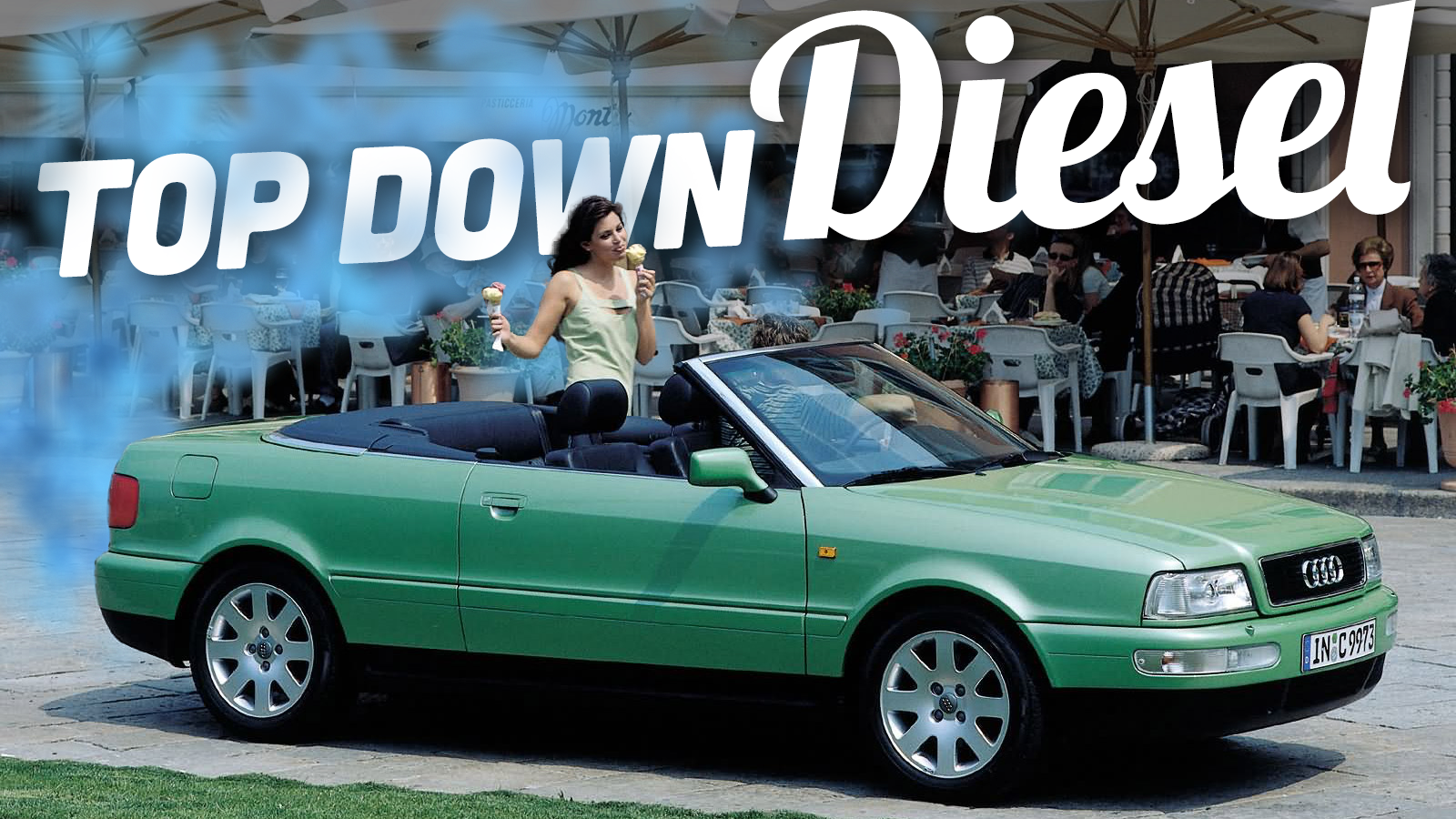
Rarely have two different things met in such an incongruous way as the diesel convertible. On one hand, you have your wind-in-the-hair experience, the outside world, the smells and sounds … and then you have the smells and sounds of a diesel car. Granted, the newer the car, the less clattery or coal-rolling it is going to be, but you’re still going to be more acutely aware of the way internal combustion is handled in those particular cars. On the other hand, if you’re really into open-top driving, so much so that it’s not just for Saturdays and Sundays, you might as well get around with one of the more frugal options available. That’s where a 1990s-2000s turbodiesel is really at home, getting the most miles and smiles out of a gallon.
The diesel convertible is a uniquely European phenomenon, strongly related to the zeitgeist of the diesel car up until the Volkswagen Dieselgate emissions cheating scandal turned the tables around. For some time in the 2000s, it felt like you could get anything with a diesel engine here: it wasn’t simply Passat wagons and Mercedes taxis that clattered around, getting 45-50 mpg, but convertibles as well. In the right use, being driven enough so that everything isn’t sooted up, a diesel can be an excellent choice. In a free-spirited convertible, it brings a touch of the real world with you.


When I still had a 100-mile daily commute, I got around in a Volvo XC70 D5 with the 163-horsepower five-cylinder turbodiesel and a six-speed manual gearbox. It was perfect for the task, as my daily route was mostly straight country roads, and I enjoyed the good, supportive seat that only Volvo seemed to be able to do so well. Sticking to the speed limit, I was able to get 40mpg out of it, which felt great – especially because in those days, diesel cost as little as five bucks per gallon. In European terms, that’s nothing– these days it easily costs double.
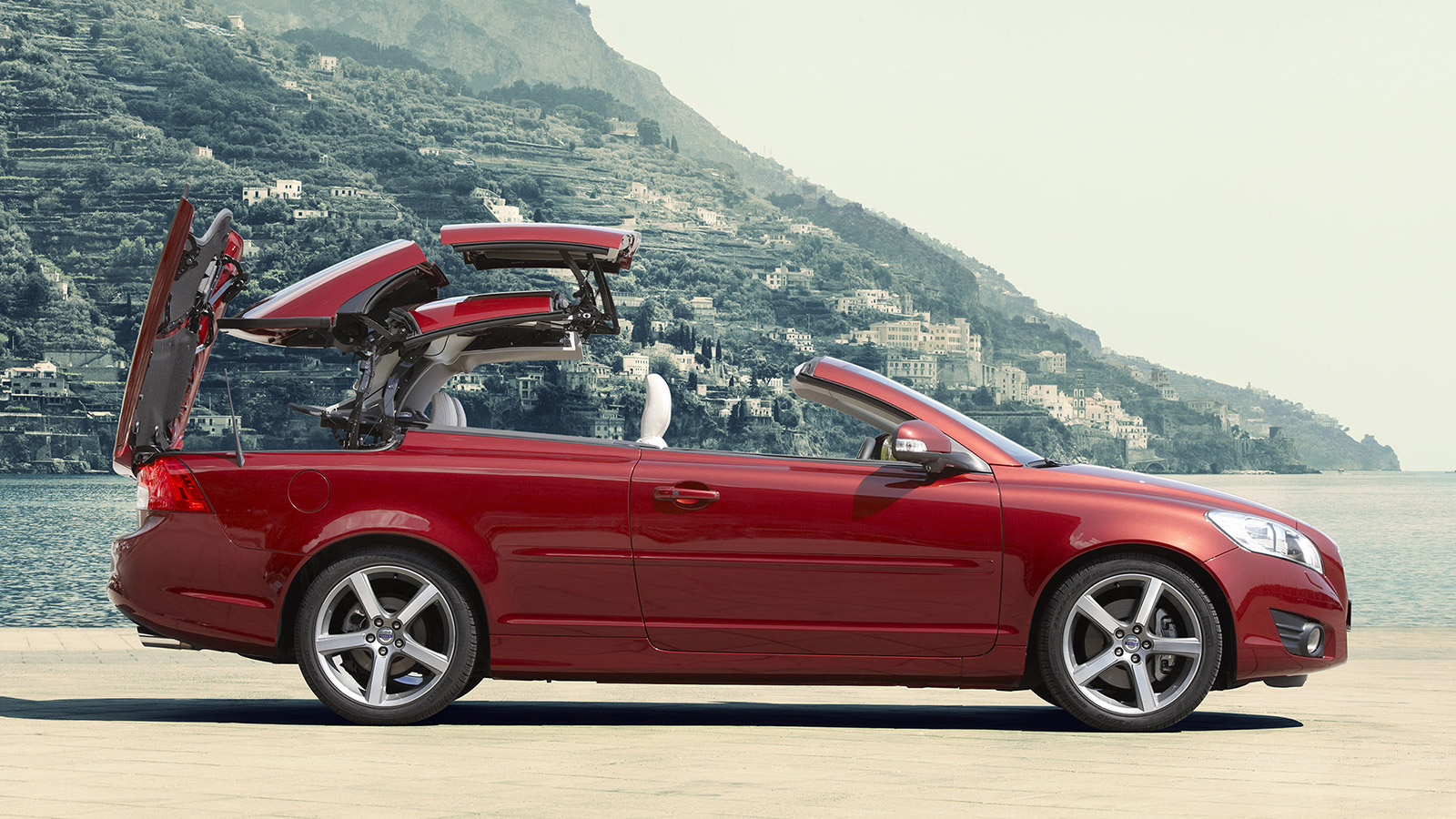
It amused me to no end that you could get the same drivetrain in the Volvo C70, so I could have commuted with the top down all day every day. Sure, you couldn’t get the C70 with the AWD the XC70 had when it rolled out of the factory gates, but the system was broken on my car anyway, and it was FWD only at that point.
Mercedes-Benz And BMW Are Still At It

Mercedes-Benz is still building diesel convertibles, as it offers the current CLE convertible with a 220d turbodiesel option. It’s a two-liter mild hybrid powerplant with 197 horsepower out of the diesel engine and a 23-horsepower assist from the hybrid system. It gets 48mpg combined, which is quite a bit better than the comparable CLE 200 gasoline version manages.

Back in the day, you could get the R172 generation SLK convertible (above) and the big W221 S-Class with the same engine, if you chose the SLK 250 CDI for weekends and the S 250 CDI for the weekdays.
Both cars got 204 horsepower out of a biturbo setup, and there must have been some synergy benefits from running the same engine in your fun car and your serious car. The SLK managed 47mpg combined, while the bigger and heavier S-Class still did 41.
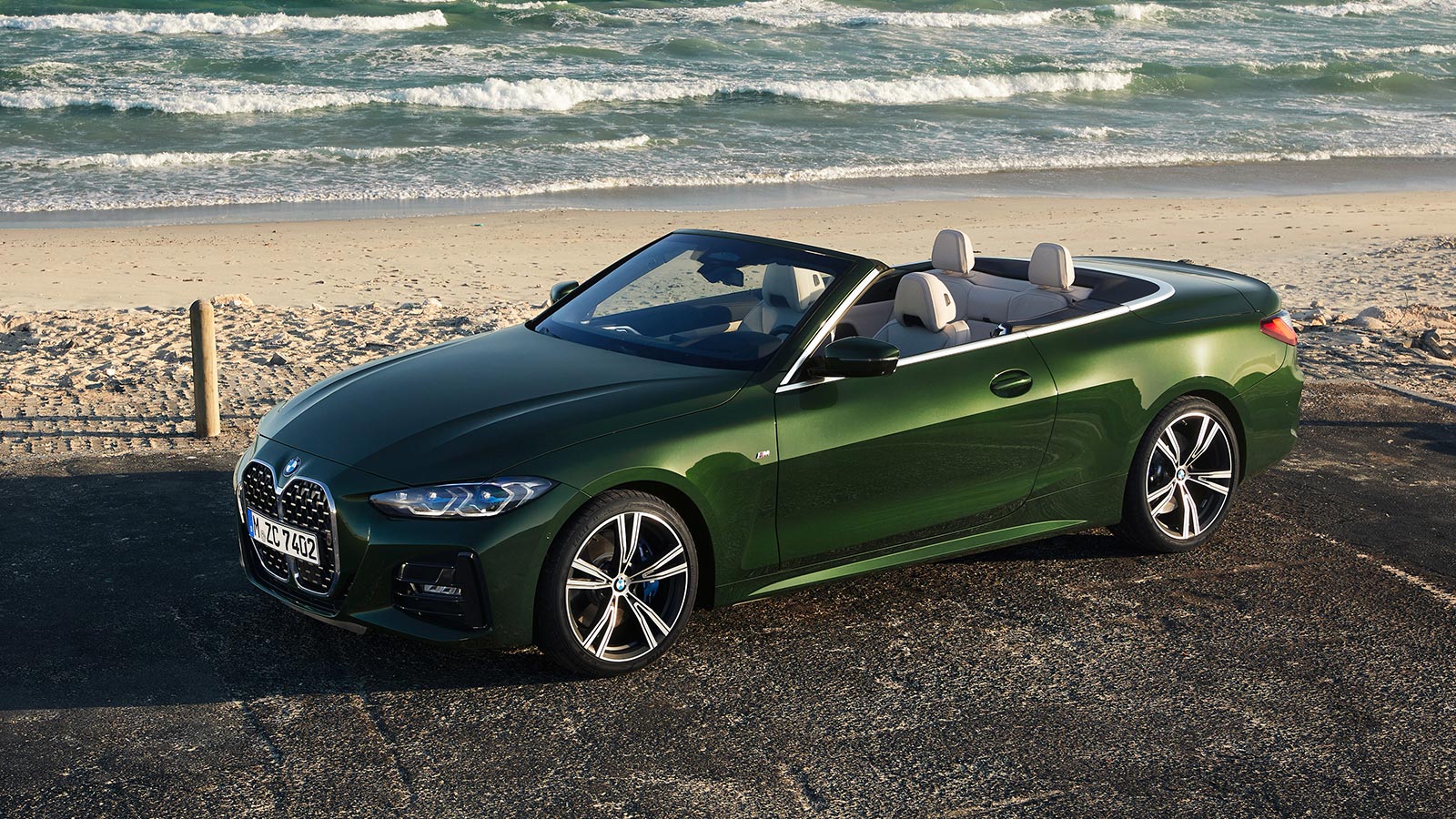
Currently, European buyers in selected markets can get the BMW 4-series as a regular 420d diesel convertible, but you can also specify an all-wheel-drive M440d convertible, which is pretty bonkers. With 340 horsepower, it does 0-62mph in 5 seconds, and returns 34.5 mpg.
Audi discontinued the A5 convertible in 2024, as the current A5 generation doesn’t include a drop-top version. The earlier A5 was sold as a diesel, but Audi has some earlier cabrio diesel history of its own.
1990s TDI Cabrios from Volkswagen and Audi

After Mercedes-Benz built the 1936-1940 260 D, a 45-horsepower diesel passenger car that was available in both landaulet and traditional convertible form, the first post-war diesel cabriolets were the 1990s Volkswagen Golf Mk3 TDI and Audi Cabriolet diesel.
Both the Audi and the VW had a 90-horsepower 1.9 TDI, but in the VW it was transverse, and in the Audi 80-based Cabriolet, longitudinal. The Audi was built all the way until 2000, with the last ones built by Karmann. After production ended, there was a short gap before the B6 generation A4 convertible was introduced: again by Karmann, and again as a diesel as well.
Audi also sold the later TT Roadsters with turbodiesels, so the Mercedes-Benz SLK 250 CDI wasn’t the only diesel roadster sold. At least Porsche didn’t put a diesel in the Boxster; BMW did offer the E46 as the 330cd convertible, as well as the 6-series as the 640d.

The Mk3.5 version of the Golf Cabrio, the one with the Mk4 front end, also got a 110-horsepower diesel. While these are the first official-official Golf Cabrio diesels, some Internet message boards note there was a small batch of UK-registered and RHD Golf Mk1 GLD diesels in the early ‘80s.
Photos of a 1981 Cabrio were posted online, but these were likely to be gasoline cars retrofitted with the diesel engine either before or after shipping them to the UK, as a factory official Mk1 diesel cabrio didn’t exist.
These days, the only drop-top that Volkswagen builds is the T-Roc Convertible, VW’s own CrossCab. It will reportedly be phased out in 2027, and it was never available with a diesel, unlike the regular T-Roc.
Americans Were Briefly Converted

Another effort from Volkswagen was the New Beetle TDI Cabrio, which was also sold in the United States. It’s a noteworthy car, as is its successor, the Beetle Cabrio, as those are likely the only diesel cabrios sold in the United States! However, I’m happy to be proven wrong.

If we’re talking North American car sales, we can include the Smart ForTwo. Smart sold the ForTwo with the CDI engine in Canada, and there were even a handful of Brabus edition CDI convertibles in Canada.

Still maintaining the Mercedes-Benz tangent, the C123 generation coupe was only sold in the United States as a 300 CD diesel in its final years. Some of those have been converted to convertibles, as Mercedes didn’t produce a factory convertible out of the C123. The above shot is of a Crayford Engineering converted UK-market 280 CE called the St. Tropez. Jason Cammisa spotted a brown 300 CD convertible on the road once.
The following C124 generation was available as an open-top version, but it didn’t get a diesel from the factory. As well as later CLKs, the G-Class convertible got a V6 diesel.

You could also get an American convertible car with a diesel; however, despite being made in Michigan, it wasn’t sold in the States. We’re talking about the third-generation Chrysler Sebring convertible, which received the Volkswagen 2.0 TDI “Pumpe düse” engine, badged as “CRD” to continue the naming convention for Chrysler.

As well as the engine, the roof system was German, as it was produced by Karmann. All Sebring CRD convertibles were destined for export, so it’s unlikely any were left behind on American soil.

While the Saab 9-3 provided the base for the Swedish-built Cadillac BLS, no convertible version was developed of the BLS. That also means that there wasn’t a diesel BLS convertible, even if the BLS was made with the Fiat-sourced TTiD turbodiesel in sedan and wagon form, with 150 or 180 horsepower.
Reportedly, Saab once brought a single 9-3 TTiD cabrio to the US to show it off, but didn’t include the turbodiesel in the import program. Opel put the same 1.9 engine in the Astra cabrio, which was also sold as the Buick Cascada, but Buicks didn’t get the diesel.

As for Ford, it quickly introduced the diesel version of the again Karmann-designed 1990s Escort Convertible after noticing Volkswagen sold the competing Golf Cabrio as a TDI. The Euro Escort was available with the 1.8 TD with a Golf-matching 90-horsepower figure, up until 1998.
The later second-generation Focus convertible was also sold with the 1.6-liter PSA diesel engine, as were cabrios from Peugeot and Citroën using the same engine, as well as the Volvo C70 mentioned earlier. You could get the funky and flawed Citroën Pluriel with a diesel, too.

The aforementioned Dieselgate ended up accelerating electrification for European carmakers, and the once-popular diesel alternatives have been largely phased out, as well as some entire model lines that used to be available as convertibles.
These days, oddballs such as the Alfa Romeo Spider’s diesel version seem nearly unimaginable, but that’s why we have car nerds to remember all this stuff, for trivia rounds if nothing else.
Top graphic image: Audi


Wow, my mind is blown. I never, ever thought to put 2 and 2 together and even consider that there would be diesel + convertible. For some reason, just never thought of it. So interesting! I never would have learned it if it wasn’t for the Autopian. This is why this is THE BEST SITE ON THE NET EVER!
Now where is my brown manual diesel wagon?
One of the most Euro car configurations is an A4 quattro TDI convertible, manual, with a tow bar on it.
Dieselgate was a blessing in disguise. Passenger cars should never be diesels.
The EU’s push for diesels based purely on CO2 emissions (while ignoring the far more toxic and life threatening particle emissions) is already going down as a historical mistake of monumental proportions.
I can’t imagine a more stupid application for diesel than a convertible.
The EU didn’t have to push hard…
At that time diesel was costing something between 20 to 50 Eurocents less per liter than gasoline..
For those that refilled the tank once or twice a week it was not negligible.
In parallel the constructors were aligning the diesel and gasoline prices to the point that in some case it was cheaper to buy a diesel car.
I’ve driven a bunch of small diesels*, and they mostly drove pretty similar to the petrol version.Not the sort of engine you’d want in a sports car, but perfectly fine for a relatively boring daily driver. I guess convertibles are typically supposed to be ‘fun’, so a diesel isn’t the best choice, but for a grocery getter it was fine.
That said I did once drive a Ford Mondeo which had the top spec turbo diesel, and a six-speed gearbox. It had a really tiny power-band, and if you changed gear at the wrong time, it was pretty gutless, but if you got your shift points just right it stayed spooled up and was legitimately fast. Keeping it always in the power became a fun game for the couple of days I was driving it anyway 😉
*my driving instructor’s car was a Peugeot 306 diesel, which he’d picked because the low-end torque made it a lot harder for new drivers to stall.
My driving instructor had a VW Golf MK4 with the 1.9L diesel Pump Duse making 150 horses. That car was legitimately fast, especially when driving on the back roads and he was late. The grin on my face after the lesson was unbelievable.
convertibles with diesel engines should never have existed, diesels suck.
Why does she have 2 ice cream cones?
COTD. Maybe some training for ice cream eating enthusiasts?
Because she doesn’t have a third hand.
Why do people at concerts and sporting events always buy 2 beers at a time?
I am that guy. I bring a koozie. I hate standing in line
Don’t forget the Wrangler with the Eco Diesel.
We tried.
Thanks.
+1 came here for this
Good call!
A K5 Blazer/Jimmy with a 6.2, however many civilian models they may have built, would half-count, I think – more of a landaulet.
I used to blend used cooking oil into my Diesel wagon. (Yes, it was brown, had a stick shift, and RWD.) Never did the full conversion, but you can pour it right into the fuel tank if ambient temperatures are warm. Sitting at traffic lights with the windows down, my car smelled like egg rolls. Made me hungry. I would spend a lot of money on egg rolls if I had a Diesel convertible.
“Have an Egg Roll, Mister Goldstone
Have a napkin, have a chopstick, have a chair!”
I wish we got more diesels here in the US. I got the joy of renting a 2019 BMW 750d (that’s a quad-turbo I6) to drive around Bavaria, including unrestricted sections of the Autobahn. It was awesome, and it got 40-ish MPG in US numbers. The only thing that sucked was that it was the SWB 7 Series, which hasn’t been sold here since the F01/02 generation that ended in MY2015. Either way, a diesel is fantastic in a large German sedan for long journeys.
That said, I’ll pass on a diesel convertible. I like the gasoline turbo V6 in my ’22 Audi S5 Cabriolet just fine, and it still does as many as 36 MPG on the interstate at 80 MPH…which is plenty.
Even with the added complexity of AdBlue they are still pretty impressive. I recently recommended a 330d Touring for a friend which uses his car for work (often doing 350-400 mile trips).
But other than those specific uses, and mostly in German premium brands they are gone.
“Back in the day” wasn’t that long ago.
The W207 E Class Cabriolet was available with 3 diesel motors and 6 gasoline engines in Europe just back in 2013
https://www.oudemercedesbrochures.nl/CA207_0613de.html
With the same 248hp as the smallest gasoline 6 cylinder, but with more torque than the V8 (620 vs 600NM in the E500 and 340NM in the E300) – the E350CDi would have been a no-brainer.
Not for the convertible. For the Coupé possibly. If you don’t mind the diesel clatter.
I refer you to page 86 of the above referenced and linked German-market brochure.
I have lived the heyday of the diesel in Europe. My family has owner diesel-engined cars and I have too.
It doesn’t matter how good they got, they still have the clatter. They are not nice engines.
Yes they are fast a frugal. But for a convertible other things matter.
Get the (hypotetical) E400 if you need a diesel-like experience.
I’ve driven an E400 Cabriolet- It was all the diesel clatter without the diesel economy or abundance of power.
Have you driven the diesels? Because Daimler diesels weren’t especially refined or quiet…
Topless Diesel.
Diesel convertibles are just plain wrong.
Also, in the heyday of diesel many people that bought diesels didn’t really need them since they didn’t drive enough to justify the price difference (sounds familiar to our full-size-pickup-buying American friends?).
But little by little prices were equalled out, diesels enjoyed stronger residuals and last but not least the turbocharged versions enjoyed strong mid-range torque that made them much faster in the real world than their (frankly anaemic) petrol-powered equivalents.
This also gave us oddities like the Golf GTI TDI (150bhp 1.9 TDI) or the Ibiza Cupra TDI (160bhp 1.9 TDI). But I guess that is a story for another day.
The Autopian needs you writing longer articles. Iberoamerican nerds of the world, unite!
Well if they come back with an offer… 😛
Also, in the heyday of hybrids many people that bought hybrids didn’t really need them since they didn’t drive enough to justify the price difference (sounds familiar to our hybrid-buying worldwide friends?).
(Full disclosure – I drive a Prius, amongst other things.)
Also, in the heyday of EVs many people that bought EVs didn’t really need them since they didn’t drive enough to justify the price difference (sounds familiar to our EV-buying worldwide friends?).
I am not surprised diesel convertibles didn’t gain a foothold in the US. Top down antics are fun, but I don’t want to sniff diesel fumes when stopped. Maybe they should’ve been sold as biodiesels so it would smell like fries at the same stoplight rather than stinky diesel.
For sure. It’d be a niche of a niche segment. Of all the things to put a diesel in here in the US, I should think that a convertible would be among the absolute last choice. Here, diesel passenger cars aren’t a given as they are in Europe; they are a specific choice. So yeah, a diesel convertible absolutely isn’t likely here. Volkswagen would sooner release another Phaeton here (and price it the same as an Audi A8 L) than would any manufacturer try and sell a diesel converible.
But I’m sure all three potential customers for such a thing would be thrilled.
You don’t smell a modern diesel, only when you spill during filling.