

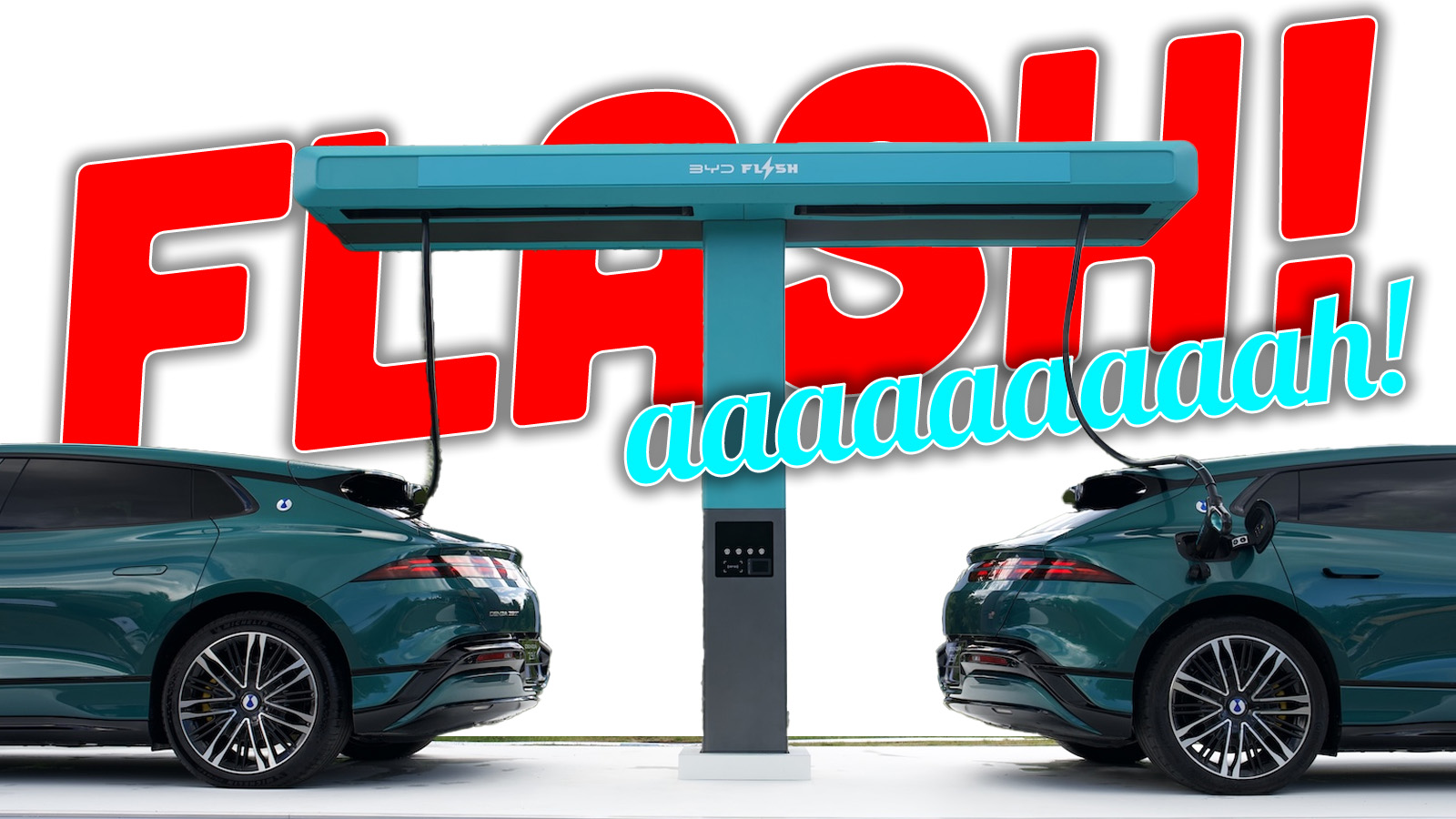
While electric cars are wonderful commuters if you’re able to charge at home, they still face some limitations when it comes to long-distance road trips. Even though DC fast charging in North America has come a long ways since the days of 50 kW CHAdeMO stations, fast charging an EV still takes far longer than filling up a combustion-powered car. On a properly long trip, that can add hours to the travel time, presenting a significant turn-off. However, that’s about to change in some parts of the world. Thanks to BYD, megawatt charging is starting to get surprisingly convenient.
Let’s start with the big number: 1,500 kW. That’s more than four times the power of the 350 kW stations generally considered to be the gold standard in America. It’s a big number for a charging station, but it’s only usable because of the wild C-ratings on BYD’s Blade battery 2.0 cells. A battery’s C-rating is a measure of how quickly it can charge or discharge, and BYD’s latest chemistry supports an 8C charge rating. That means these cells can theoretically charge from zero to 100 percent capacity eight times in an hour. We’ve seen megawatt charging before, but the big deal with BYD’s Flash Charging setup is that it can deliver all that power through one connector. Some previous megawatt charging setups required two cables for connection, and that just gets a bit cumbersome.


The other historical problem with megawatt charging is simply pulling that much power from the grid. Let’s say you have a bank of just two 1,500 kW DC fast chargers. If they’re just hooked up to the power system, each one only needs to see about four hours of use per day for the station to consume the same energy as the Walmart in Covina, Calif. before it received renovations to reduce power consumption in 2023. A big bank of megawatt chargers may require expensive direct transmission, but BYD’s using battery banks to spread the load.
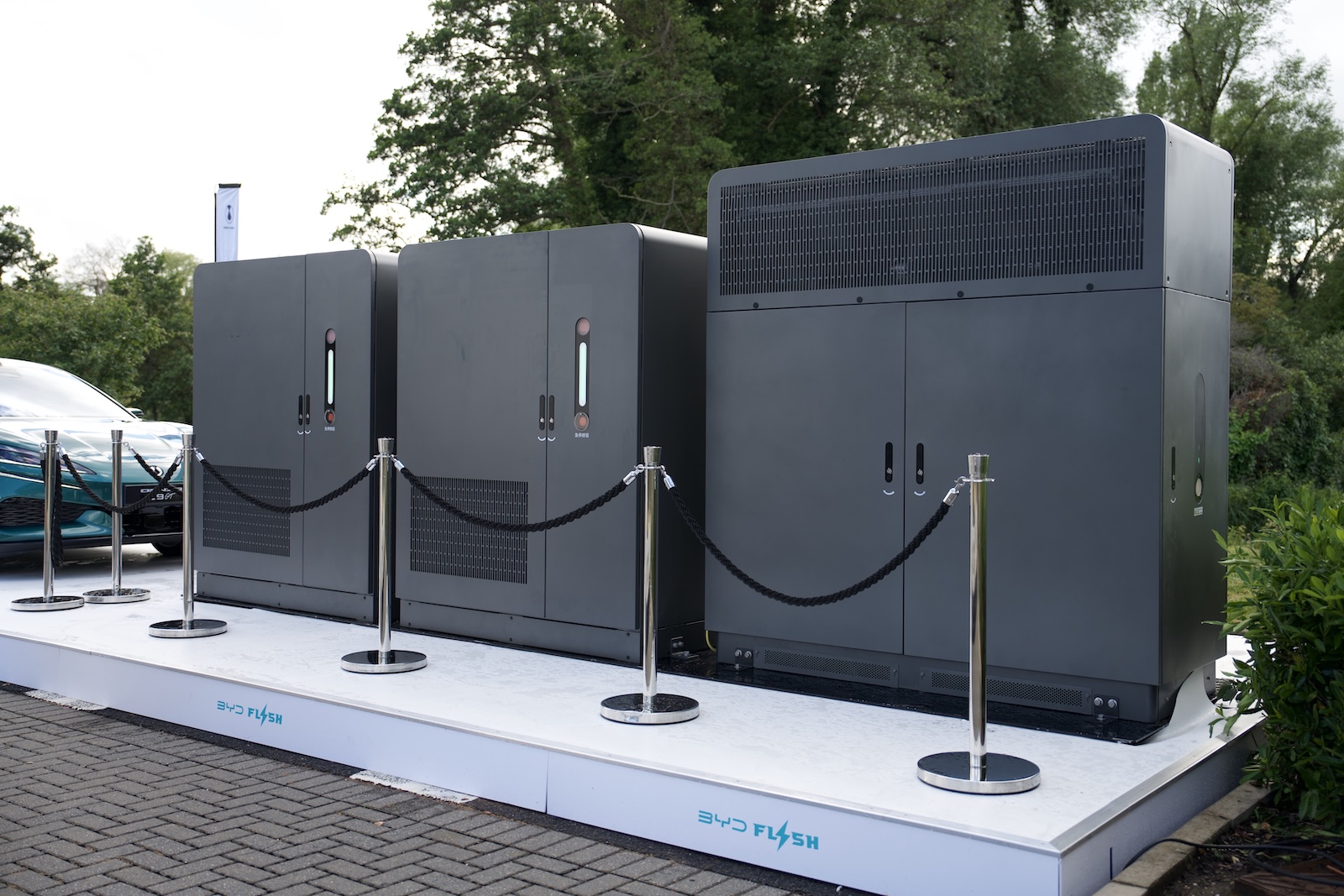
These battery banks can pull a maximum of 560 kW from the grid, and provide charging support while reducing power transmission needs. They top off when things aren’t tapped-out, then discharge when plugged-in EVs need a boost. We’ve seen this sort of system in use by many EV charging station companies, but BYD is taking it to a different scale.
This all results in charging speeds that seem like science-fiction come to life. With BYD’s Blade Battery 2.0 on this charging network, the marque claims five-to-70 percent in five minutes and 10-to-97 percent in nine minutes, with an extreme -22ºF (-30ºC) cold 20-to-97 percent charging session done in as little as 12 minutes. The thing is, BYD doesn’t cite battery pack sizing with this claim, but third parties have already tested these megawatt chargers with interesting results.
Out of Spec Reviews plugged a Flash charger into a slightly crashed Denza Z9 GT that was sitting around the back of a dealership in China and saw it charge the EV from 30 percent to 97 percent in eight minutes and 53 seconds. Impressive stuff for a 122 kWh battery pack. That’s hundreds of miles added in about the same time it takes to fill up a regular gasoline-powered car.
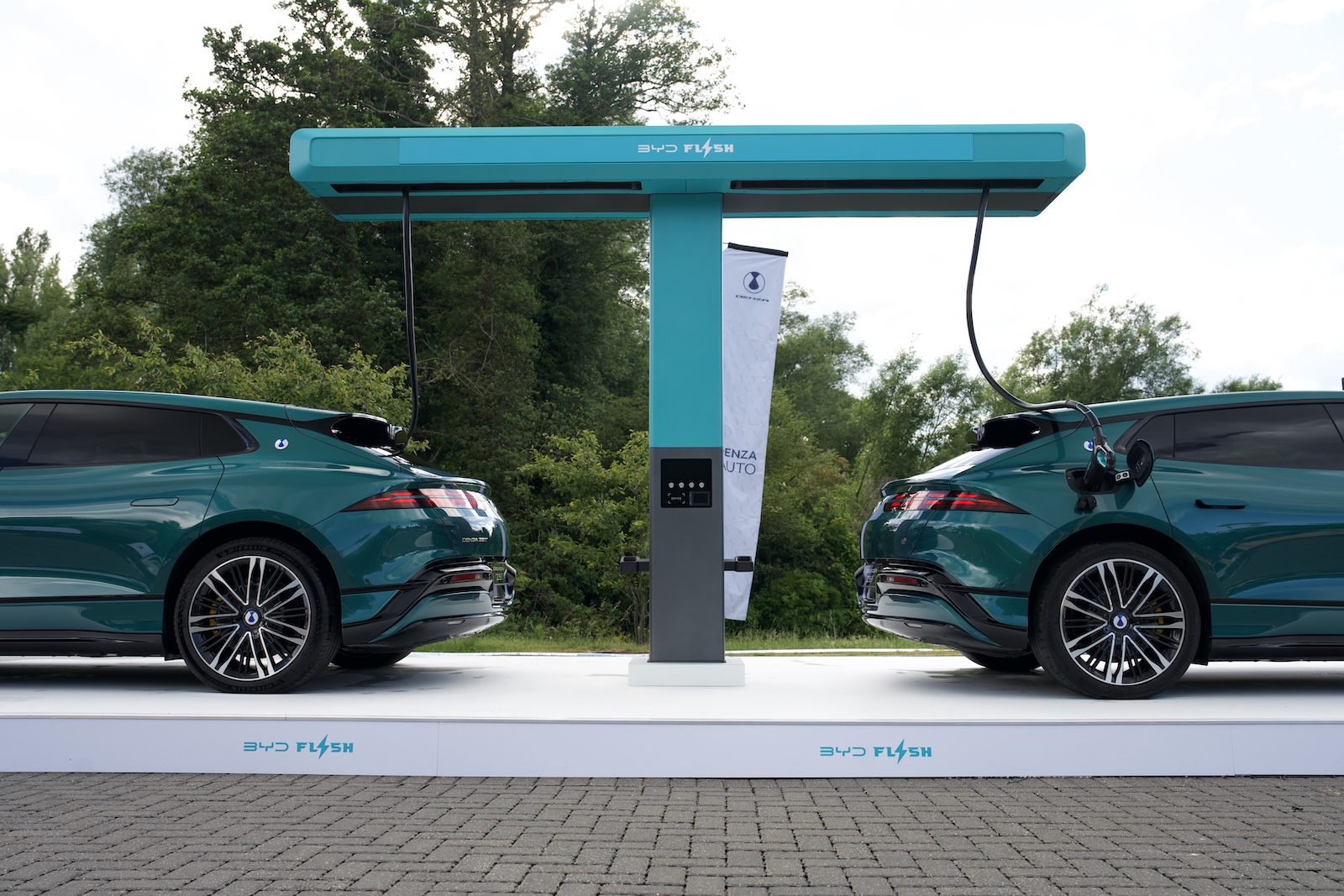
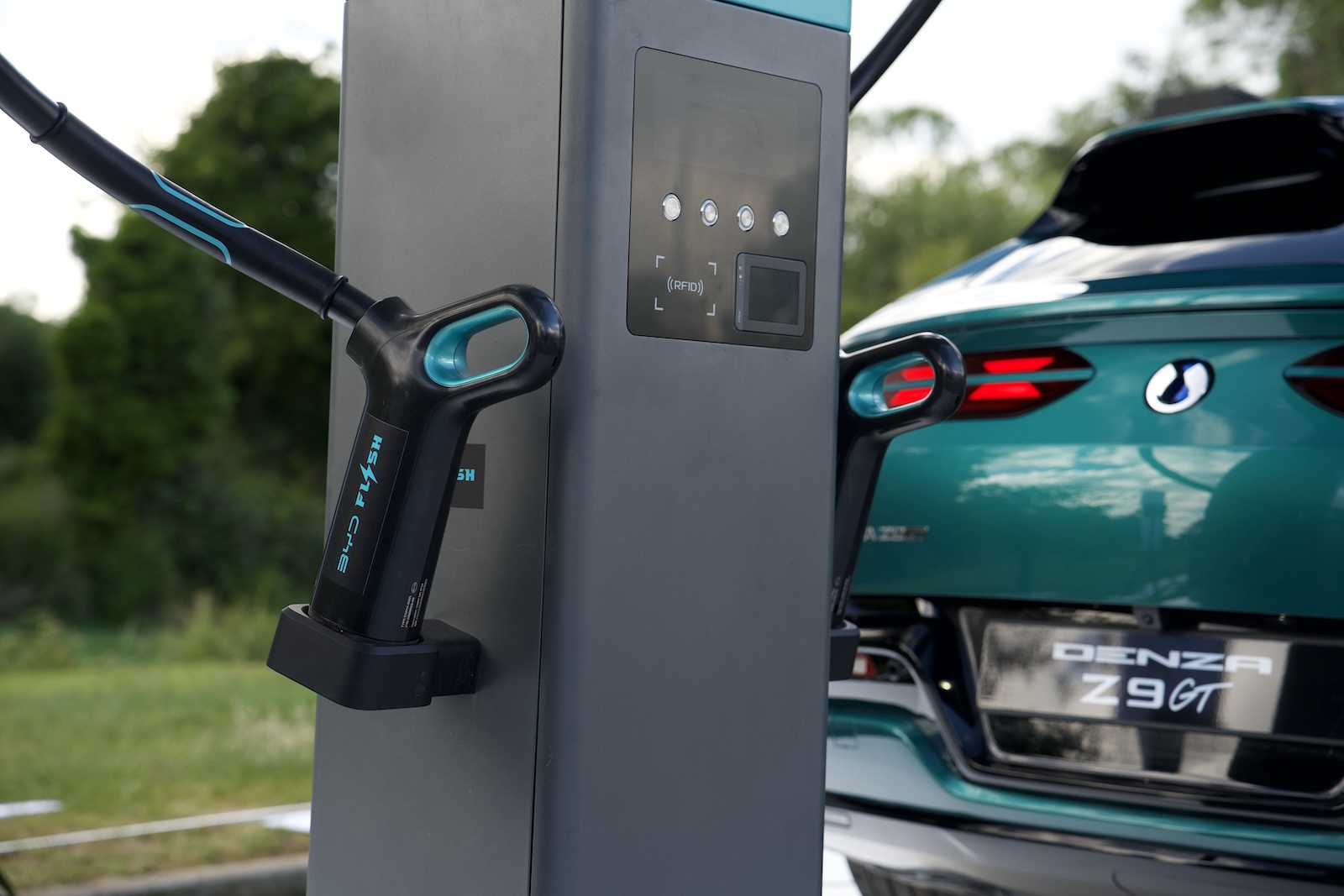
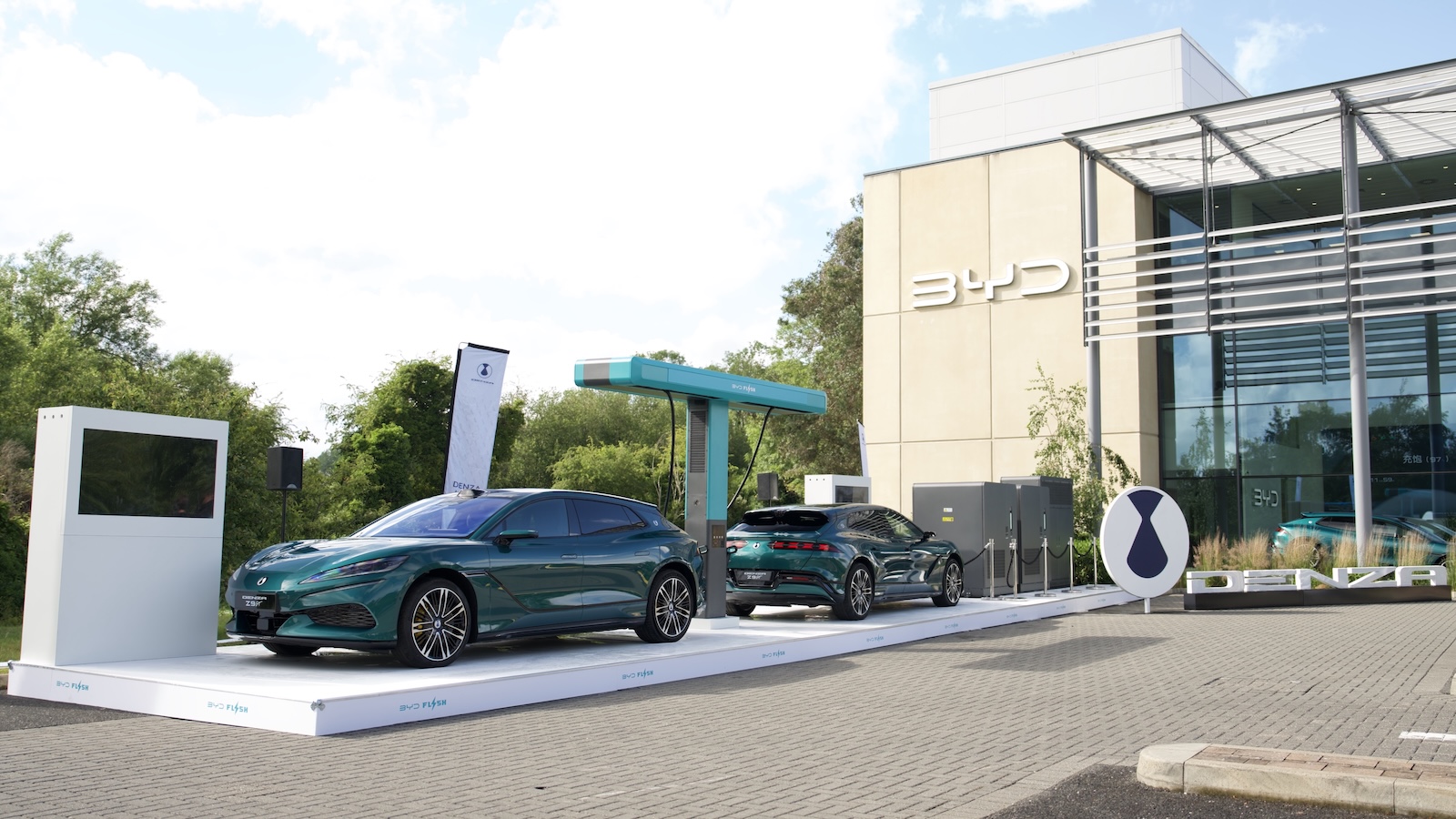
I’m also rather impressed by the design of the charging station itself. You’d expect something capable of flowing that sort of power to have a huge cabinet and a cable the diameter of a drainpipe. Not so. Instead, the cabinet’s a tall T-shaped thing with fairly normal-sized charging cables hanging down from above so they don’t drag on the ground and get dirty. Dual heads and relatively long cables should mean that no matter where on a car a charging port is, these charging stations will reach. The only miss is that cabinets in certain markets seem to lack credit card readers. Probably fine for a car you own with plug-and-charge capability, but it may make paying for a charge in a rental car more complex.
Ah yes, markets. It shouldn’t be surprising that the Flash charging setup first launched in China, but BYD’s been aggressive about expansion. Not only has the automaker recently opened its first Flash charging station in Germany, it just demonstrated its first megawatt charging station in Britain. A total of 300 megawatt stations are slated for the United Kingdom by the end of the year, with aggressive expansion also planned for other markets. Don’t be surprised if they end up coming to Canada soon enough, given how BYD’s been eyeing the Canadian market.
Pending rollout, it seems that the biggest dig against electric vehicles may now be solved. With megawatt charging, the time gap between charging up and filling up shrinks dramatically, and that should make long-distance road trips far easier. While BYD’s early to this thanks in part to its battery chemistry, it certainly won’t be the sole player in the megawatt charging field. Given how the technology’s already being deployed, it’s only a matter of time before the future becomes the present.
Top graphic image: BYD


Can we stop repeating the myth that “ fast charging an EV still takes far longer than filling up a combustion-powered car” and thus add hours to road trips?
I have taken my Ioniq 5 on many, many road trips and have not had to wait a single extra minute for it to finish charging before leaving.
Maybe some mysterious camel human hybrid with an all-day bladder can be on their way after 5 minutes, but I need to pee and get a snack/drink every 2.5-3 hours, and even if I don’t *need* to do either of those things, I *want* to because sitting in the car for much longer without a break is miserable.
I could see the usefulness of megawatt charging when towing stuff, and for semi trucks with gigantic batteries. For regular sized passenger vehicles, it seems unnecessary.
2.5 to 3 hours only? We regularly drive 3.5 to 4.5 hours without stopping.
Actually I just drove 4 hours continuously last week and used only 49% of my battery. NYC traffic…
However yes, driving for 3.5-4.5 hours without stopping at highway speeds is more than achievable.
LOL. I believe that. I once sat for an extended period on the freeway in NYC…at 2 in the morning. We were towing a 27 foot keel boat from Gilford, NH to Annapolis, MD.
Now I am out west. Speed limits range between 65 and 80. We don’t usually drive slower than the posted speed and I don’t spend much time in traffic.
This. Last month we drove down to the south of France from London in my ’21 Polestar 2. Which doesn’t exactly have the best range. But I was still wanting to get out and stretch my legs, and let our dogs have a pee, roughly when the car was needing charge. That car is listed as ~280 miles WLTP (IIRC), and I think I’d want a bit more range next car, but it’s really not too much of a problem.
Yeah, that was the point I was circuitously trying to make. Usually I run out of range before the car does.
Love the P2 btw; such a cool looking car! I rarely see them in person so very unique too.