

The overwhelming narrative about the car market seems to be that no one will ever be able to afford a car again unless they’re heirs to the Hy-Vee supermarket fortune. That’s not quite true. Cars are expensive, and the cost of financing cars has gone up with interest rates, but the majority of buyers who trade in cars are sitting on a bit of a superpower.
A rising tide lifts all prices, and the value of trade-ins remains way higher than anyone would have guessed. And, unlike the rest of the market, the best-positioned individuals are normal-car people.


While The Morning Dump will be attacking one bit of conventional wisdom, I can’t help but tap the Decade of the Hybrid sign once more with the news that hybrids are outselling EVs in our most EV-happy state. It’s such a rush that even Audi, eventually, is getting in on the hybrid game.
That doesn’t mean all is doom and gloom in the EV space, either, as Rivian’s move into a lower price tier seems to be paying divid … seems to be aiding the company’s financial position.
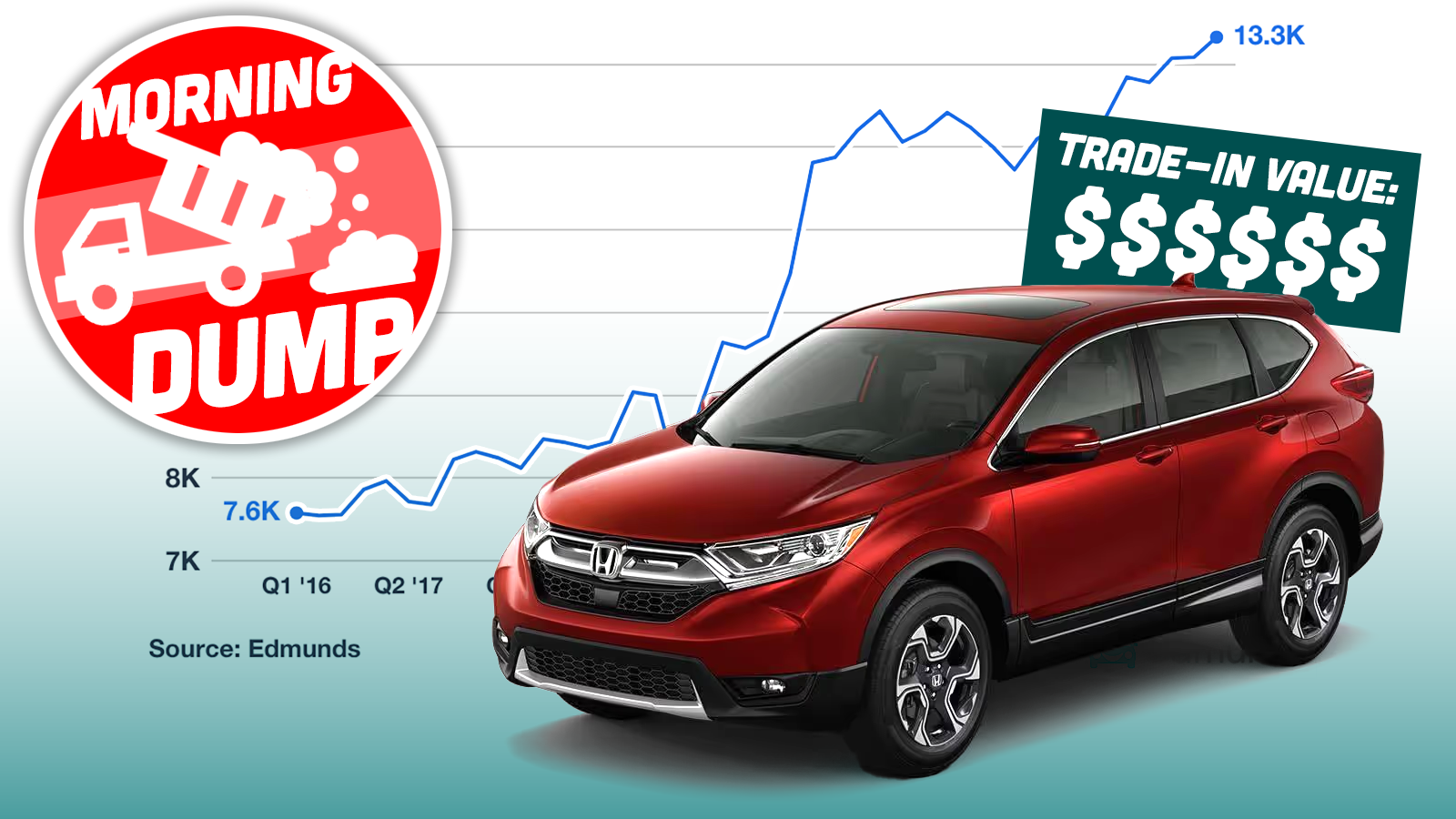
The Average Value Of A Trade-In Is $13,330, And That’s Because Of Mainstream Cars
Yesterday, I wrote about how the wealthiest are driving the car market, and asked how people felt about the economy. The general sense seems to be that people are doing okay, but that the increase in the cost of everything hasn’t been matched for everyone in an increase in earnings or wealth. There was also a lot of discussion that reflects the K-shaped economy, where stock market highs don’t seem to benefit everyone.

It’s a common point of reference here that, during the semiconductor shortage, prices of both new and used cars shot up. What most buyers have realized is that, while those new car prices have stabilized, they haven’t exactly come down as inventory has increased. There are various reasons for this, including the introduction of tariffs and costs associated with the EV headfake, but the overall lesson is that prices that go up generally don’t come back down so easily.
While affordability is a serious issue, I do think that the popularity of higher-trim models and large three-row crossovers like the Toyota Grand Highlander has skewed the average transaction price, giving a somewhat misleading view of the market (this is why I prefer to look at The Keating Line as a price reference).
Approximately half of all new car purchases involve a trade-in, and this is where there’s some good news for car buyers. While new car prices have mostly stabilized, the value of trade-ins has continued to increase. According to this Edmunds report, buyers trading in vehicles have a record $13,300 in positive equity.
Because of the pandemic, wild values for used cars led to 83.6% of all trade-ins in Q1 2022 having positive equity. That’s no longer the case, though the market is still above historical norms with 69% of trade-ins above water. The power that buyers with trade-ins have is that the values have never retreated. Why? Edmunds explains:
A big part of the explanation is the timeframe when vehicles were bought — during the pandemic, when inventory was so tight that paying sticker price or above was a reality for many. Those cars depreciated, but used-vehicle demand stayed strong enough that values didn’t fall as far or as fast as they normally would have. Buyers who rode that out are now sitting on more equity than the math would have suggested a few years ago.
Even better, it’s not the high-end models that are driving this value. Luxury cars are still depreciating at mostly normal rates, whereas the most mainstream vehicles are the ones holding high values:
The most frequent and consistent winners in today’s market are owners trading in “normal” vehicles around 7 years old. Drivers who bought mass-market models around 2019 — and signed up for conventional 60-or-72-month financing — have largely cleared the depreciation curve. Because secondary-market values for reliable used vehicles remain historically elevated, these average owners are routinely walking onto dealer lots with about $13,000 in positive equity.
The list of the 20 most commonly traded-in vehicles with positive equity is basically a list of the most popular cars, albeit slightly shuffled (the CR-V tops the F-150 and Silverado 1500). If you’re trading in a roughly 2019 CR-V, you can expect to get $10,545.
This tracks with my experience. While I didn’t do a conventional trade-in (I bought my car from Galpin Honda in LA and shipped it across the country), I was surprised that my 2016 Forester was worth more than $10,000 when I sold it to a dealer back in 2024. Literally every time I go to get my CR-V serviced, they ask if I want to sell them back the car, and because I put the value of my Subaru towards a down payment, I already have positive equity.
Obviously, if you don’t have anything to trade-in, this doesn’t apply to you, but for a large chunk of buyers trading in normal cars and buying normal cars, there’s a real opportunity to reduce the amount that has to be financed.
More California Buyers Are Opting For Hybrids Than EVs
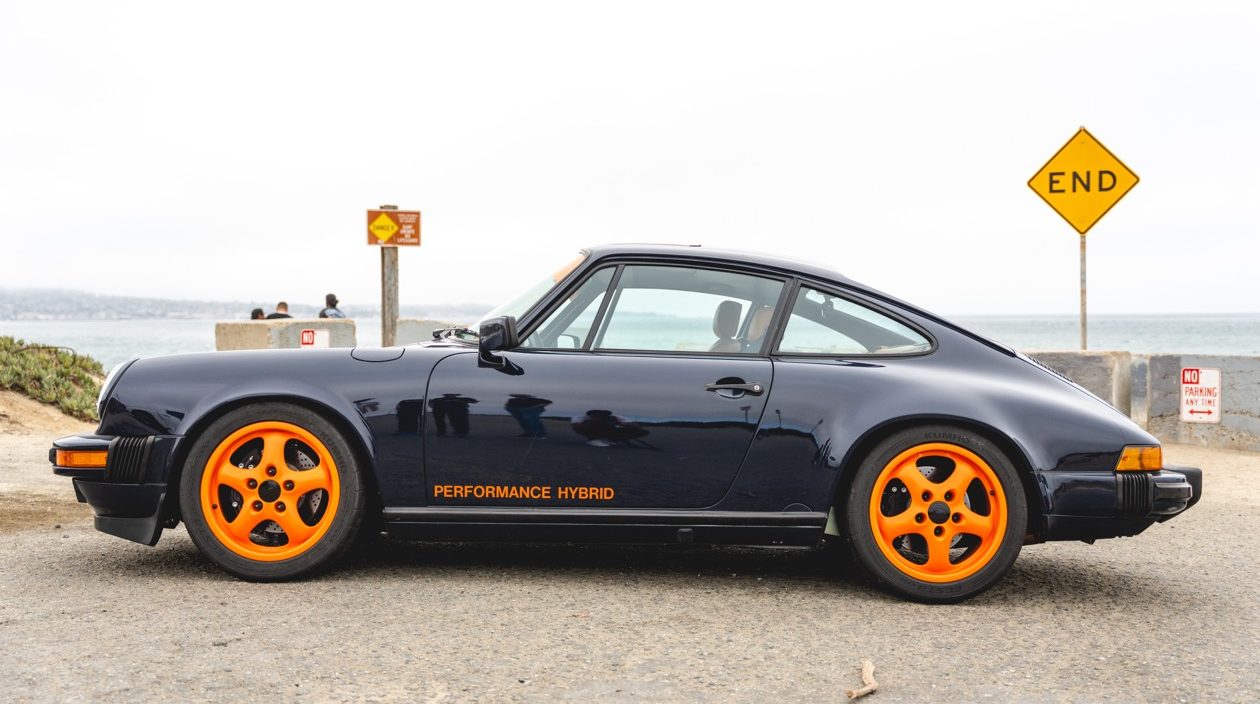
Guess what? People like hybrids. You’ll be shocked to discover this is happening if you’re a regular reader of TMD. Just kidding. I write about it all the time. Maybe too much!
I’m not stopping anytime soon, and a report from the California New Car Dealers Association shows that, for the first half of 2026, hybrids (excluding PHEVs) outsold EVs by a large margin. The market share YTD through June is still primarily gasoline (57.6%), with hybrids (22.1%) and BEVs (15.9%) in second and third place.
“Californians are buying the vehicles that fit their budgets and the way they drive, and right now that means a lot of hybrids,” said Jessie Dosanjh, Owner of Stevens Creek Chevrolet and CNCDA Chairman.
“Every hybrid registered in this state came through a franchised dealership. When a customer needs to compare options, work out financing, and know the vehicle will be serviced for the next ten years, they come to their local dealer. We support any rebates or state incentives that help buyers and move the market forward,” said Dosanjh.
This doesn’t mean EVs are failing. Some of this is just the impact of having so many EV sales pulled forward in Q2 and Q3 by the expiration of the IRA tax credit. California also has a new program focused on first-time EV buyers, and that might help increase sales in the second half of the year. The Model Y also remains the best-selling vehicle in California, followed by the Camry and CR-V Hybrid.
Audi Will Do Hybrids Again, Sort Of, Eventually

It’s hard to remember, but Audi has sold a few plug-in hybrids over the years. Then the brand went full-in on EVs. Now it’s retreating, and Audi of America President Vito Paladino told Automotive News that hybrids are going to happen again:
“We will have hybrids in our lineup,” Paladino told Automotive News at the introduction of the new Q9 crossover here. “We’re looking at which segments, which models do we need to further extend the offering.”
Paladino didn’t specify which models Audi is targeting or which form of hybrid technology ― PHEVs or full hybrids ― are planned for the U.S.
That’s … something.
Rivian Earnings Were Better Than Forecast
David wrote the ultimate Rivian R2 review and came away mostly impressed. The introduction of the model appears to be paying off for Rivian, which saw better-than-expected returns in Q2.
Rivian Automotive Inc. reported better-than-expected earnings as it began deliveries of a new midsize sport-utility vehicle, a positive sign while the company contends with a weakened market for electric vehicles in the US.
The adjusted loss before interest, taxes, depreciation and amortization was $379 million in the second quarter, down from a $667 million loss a year ago, Rivian said Thursday in a statement. The latest figure was smaller than the $548 million deficit anticipated on average in estimates compiled by Bloomberg. Its revenue also topped estimates.
There’s still a lot of work to be done, but the company told Bloomberg TV that the conversion from deposits to purchases remains high.
What I’m Listening To While Writing TMD
Glen Hansard passed away this week after a crash on a motorbike. I think most of us know him (and his creative partner Marketa Irglova) from this song “Falling Slowly” from the surprise hit romance Once.
The Big Question
Have you ever traded in a car? How did it go?
Top graphic images: Honda; Edmunds


Losing Glen Hansard so young is heartbreaking.
Of all the cars I have bought and sold (50+), I have only ever traded in ONE. I traded my ’16 BMW M235i for a ’17 GTI Sport. I had plenty of positive equity in the BMW (I bought it for ~$10K off MSRP due to incentives, dealer discount, and European Delivery pricing, plus a decent down-payment), it was worth significantly more than the GTI cost so I didn’t have to pay sales tax on the GTI – which is why it made sense to trade it rather than sell it privately. So that went just fine.
The only wrinkle was the dealer tried to reduce the trade-in value by the tax savings, to which I said nope, I will sell it to CarMax instead in that case and pay the tax, and they gave me the full amount. I am sure they made bank reselling it, being a nicely configured 2yo car with 19K on it. Can’t blame them for trying.
Otherwise, I have sold the vast majority privately, junked a couple, sold two to CarMax and now two to Carvana.
In 2019 I bought a ’16 Ford Focus for $10k, and in 2021, at the height of the chip shortage, a family member offered me a good deal on a newer Chevy Volt. So I figured I’d take the Focus around a few places and try to see what it’s worth. My very first stop, Carmax, offered me $13k and I parted with the car on the spot.
Yeah, dummy me sold my aforementioned ’17 GTI to Carvana for more than I paid for it new. Should have kept it. But in a scandal, sell after a pandemic, but still…
TBQ – I had to think about it, I don’t think I’ve traded in since around 1997 when I traded in the 90 Beretta GT I kinda hated for a 93 Eagle Talon that I ended up loving.
It went ok from what I remember, they even let me come back and remove some of the extra stereo stuff as long as I didn’t leave holes or something stupid.
After the Kia boys stole my Kia during the pandemic ( and damaged it in the process ), I got it back, had it repaired, and started shopping for it’s replacement. I bought a Certified Toyota ( bye Kia! ) and the Toyota dealership offered me a trade-in value GREATER than my original purchase price ( and I had driven that Kia for about 60,000 miles). Of course they didn’t budge much on the price of the Toyota.
I am car shopping now, and attempted to trade in my car.
I had a 2017 accord exl v6. Bought it in 2019 for 18. Nice shape, 128k on it. kbb had it ranged 9500-11500 trade in. Okay.
First dealer- “oh, we go by kbb. So we offer you 7500. Take it or leave it”
Second dealer- “7000, we eill do 8 if you finance through us”
I ended up selling to driveway (lithia auto group). I got 12k for it from them. Its now on their local dealer lot for 16k. After dealer fees and taxes, whoever buys it will pay what I did in 2019.
Still no new car though.
Traded it in via text message. Mostly just traded because I was so over it’s myriad issues and wanted to not deal with it.
Dealer I was buying the car from was desperate to close the deal before another dealer stole their inventory (I may have been the buyer from both dealers for the same car and thus engineered leverage with the dealer that physically had the car…).
I took pics of every single flaw and they didn’t care and were willing to give me the amount I wanted for the trade just to close the deal.
Usually when I trade in a car it’s because it’s reached the point where it is barely running and a road hazard. My last car was traded in because the engine was trashed, the electrical system ate batteries every 12 months, and the suspension needed a complete makeover. However, it looked great from 20ft away and the interior was near-showroom quality (as far as a 30 year old car could be), and it had a Stage 2 racing kit on it.
The payout was only a couple of thousand and last I heard of it, they had done over a month of repairs then auctioned it to a small shop in Scottsdale, whee it sold for the same price I bought it for in 2014.
I truly wish the new owners luck with that little money pit, and all the respect while hooning it around the streets.
And once more for the auto execs out there. Whoever builds the first Sprinter-scale hybrid will have folks lining up at their door. A large van camper buildout would make for the ideal boondocking vehicle. Come on already, we are waiting with hybrid breath!
When we found twins were pending, I drove into a subaru dealer with our ’84 300ZX and with no money changing hands, drove out with a new Subaru wagon.
We drove in with our one year old NIssan Quest van and drove out with a new ’00 4Runner.
I typically trade out of laziness. Until the car I’m in now, I’ve usually put so many miles on a car in such a relatively short time that the value looks terrible on paper. I’m also not into haggling. I know I’ve probably left a lot of money on the table over the years, though.
A few times, Last time it was easier to trade in a Hyundai Sonata that would not keep oil in it than try to sell it private sale. Let the dealership deal with it instead of us.
I am doomed.
That hyphen is pretty damning.
Twice, once for a VW with such low market value that it wasn’t worth the time and hassle of selling it privately for $1,500 more. The other time the dealer offered essentially private party value after a bit of negotiating.
Whichever way you go, having a popular lower-depreciation model helps.
TBQ: Yes – a few. It went fine? I find that the difference between trade-in values and private sale values isn’t that large when you account for sales tax, at least for typical vehicles. To me, the convenience is worth getting less money for my car. I don’t buy or sell cars to make money – if money was my primary concern I would drive a used Accord.
As for hybrids, the one thing I have noticed frequently over the last few months is how many average buyers still think of hybrids as a novel, untested technology. I have talked to several older (but not necessarily “old” – some of these individuals are in their early 50s) buyers who have talked about considering a hybrid, but worry about reliability and longevity. I always point out that mainstream hybrids have been around for decades and hybrids a proven technology, but most find this unconvincing.
My view is that hybrids probably are the best option available today for most drivers. I think they are less interesting than ICE vehicles, but the average car buyer doesn’t value “interesting” anyway. I have a hard time understanding why hybrids haven’t supplanted EVs as the default powertrain choice.
I wonder if part of the problem is that hybrids are trying to appeal to “normal” buyers? Is the problem with hybrids that they are too old to be new and interesting, but too new to be old and proven?
I think the biggest problem is that 5-8 years ago when the models on sale now were being developed, everyone was gung-ho about the supposed inevitable EV future and neglected hybrid development. The few hybrids that are on sale now seem pretty universally to be in high demand.
Yeah, that probably hurt hybrids a lot. I suspect that also contributed to buyers ceasing to view hybrids as new or interesting, in addition to getting manufacturers to neglect hybrid development.
I don’t like to bring up anything that sounds like politics here, but hybrids are a great cautionary tale for unintended consequences that can happen when the government tries to exert too much influence on the free market. Sure, some of the push for EVs was driven by honest enthusiasm, but a lot of it was driven by government incentives. I think it was well intentioned, but it didn’t change the fact that it prevented the right technology (i.e. hybrids) from reaching buyers.
I don’t typically do trade ins, I usually run them into the ground or private sale.
Sometimes I will do a trade when I know what I have is worth scrap and that’s basically what they offer. It saves me the hassle.
The one time I did a trade in of significant value, I knew they were low balling me. I pushed back and bumped the price up a bit, but eventually just got tired of the battle. My trade in was on the lot the next day, gone before the weekend. I should’ve just sold that one private too. But it was an Audi showing signs of turning into a PITA, so I was washing my hands ASAP.
I’ve traded vehicles in twice, neither were worth much because I tend to drive my vehicles until they are over 10 years old and have a lot of miles on them. Trade in value has never played a big factor in my new car purchases. I did manage to negotiate one from $1,500 to $3,000.
I just bought a new car. They offered me $5k to trade in my 8 year old Outback with 126k on it. They wouldn’t budge one bit on their offer. CarMax offered $8.5k. From what I see on Facebook Marketplace I think I can sell it for a hair over $10k. So I’ve currently got it listed for $11k (down from $12k). First person that offers more than $9.5k will take it. I plan on lowering it to $10k on the 10th, and if it isn’t sold by the 20th I’m just going to take it to CarMax and have them refresh their offer.
I had an offer for $10k on day two and I greedily said no. I might come to regret that.
The only time I traded in a vehicle was my 1.5 year old Xterra Pro4X. I bought it for like $28k new, and it was a bit “special” with the manual. They offered me $24k for it even though it had over 30,000 miles on it. Add in the tax savings and I jumped on it.
When I was getting rid of my old van to buy the Prius in late 2019, I had the dealership assess the van for shits & giggles.
Their verdict? $150. No, I’m not missing a zero.
I’ll concede 1) they’d send it to auction since it was too old (1997), and 2) it needed a new catalytic converter ($900). But they said their policy was to do detailing and some other stuff and that “we’d actually lose money on the deal”. I wish they’d outright refused or something, because damn, beyond the catalytic converter, I thought it was in great condition. Interior was immaculate, all other mechanicals addressed, etc.
Sold the van for $1800 on Facebook Marketplace within a couple weeks of that, and ultimately, I don’t regret buying the Prius. Was just an unfortunate thing. Assessing conversion van values must be hard.
Yeah, it does seem like the deciding factor is whether a dealer will wholesale the car or sell it on their lot.
My last three trades were a Model 3 (traded for a Jeep), a Jeep (traded for an F250), and a Leaf (considered trading but sold privately when I bought the Model 3). The Jeep and Model 3 both ended up on the dealer’s lot advertised for ~20% more than what I received in trade (both were priced high and presumably sold for less). I was offered $300 for the Leaf but sold it for $5000; they were upfront that the price was low because they would sell it at a wholesale auction.
It makes sense that a dealer will offer a lot more for a vehicle they can profit from of as opposed to a vehicle they have to go through the effort of disposing (i.e. through an auction). I like that the dealer I bought the Tesla from was honest that they offered me a pittance because they didn’t want it. I’m not sure why more dealers won’t be honest – I wasn’t bothered by the low offer and it overall made me feel better about the entire transaction.
Are trade in values increasing due to overall price of vehicles increasing?
Let’s see the chart based on trade-in value as a percentage of new vehicle cost.
That’s what I was wondering. Sort of like the housing market. I bought a house in 2012 in a rural community in north Alabama for $114,000. Sold it in 2021 with minimal upgrades (just kept it well-maintained) for $235,000. Sounds great, but every house within 50 miles of me had also gone up in value similarly. So the overall experience didn’t change in those 9 years, just the actual dollar amounts involved.
I’ve literally never traded in a car. Never been desperate enough to need the value of it immediately so I’ve always sold private party.
Serious question, has there ever been a discussion of offering a buying service deal with Galpin as part of a membership? Like flat invoice + $500 + delivery fee?
I just bought my car so I’m hopefully out of the market for the next decade but your mention of buying from Galpin seemed like it could be a win/win/win.
I’ve traded in a couple times, mostly when I was in an uncharacteristic rush to purchase something new and forgoing the extra money from a private sale was worth it.
Unless I’m blown away, or trading something so expensive that the sales tax factor comes into play, I don’t expect to do so again. Ultimately the dealer is offering a low enough price that they can flip it to the next guy. There’s no way around the fact that I’m leaving some money on the table by trading.