

Home » For Just Two Years, Toyota Sold The Old Corolla With A Diesel Engine So Efficient Its MPG Would Still Be Considered Decent Today

For Just Two Years, Toyota Sold The Old Corolla With A Diesel Engine So Efficient Its MPG Would Still Be Considered Decent Today

1984 Toyota Corolla Diesel Ts

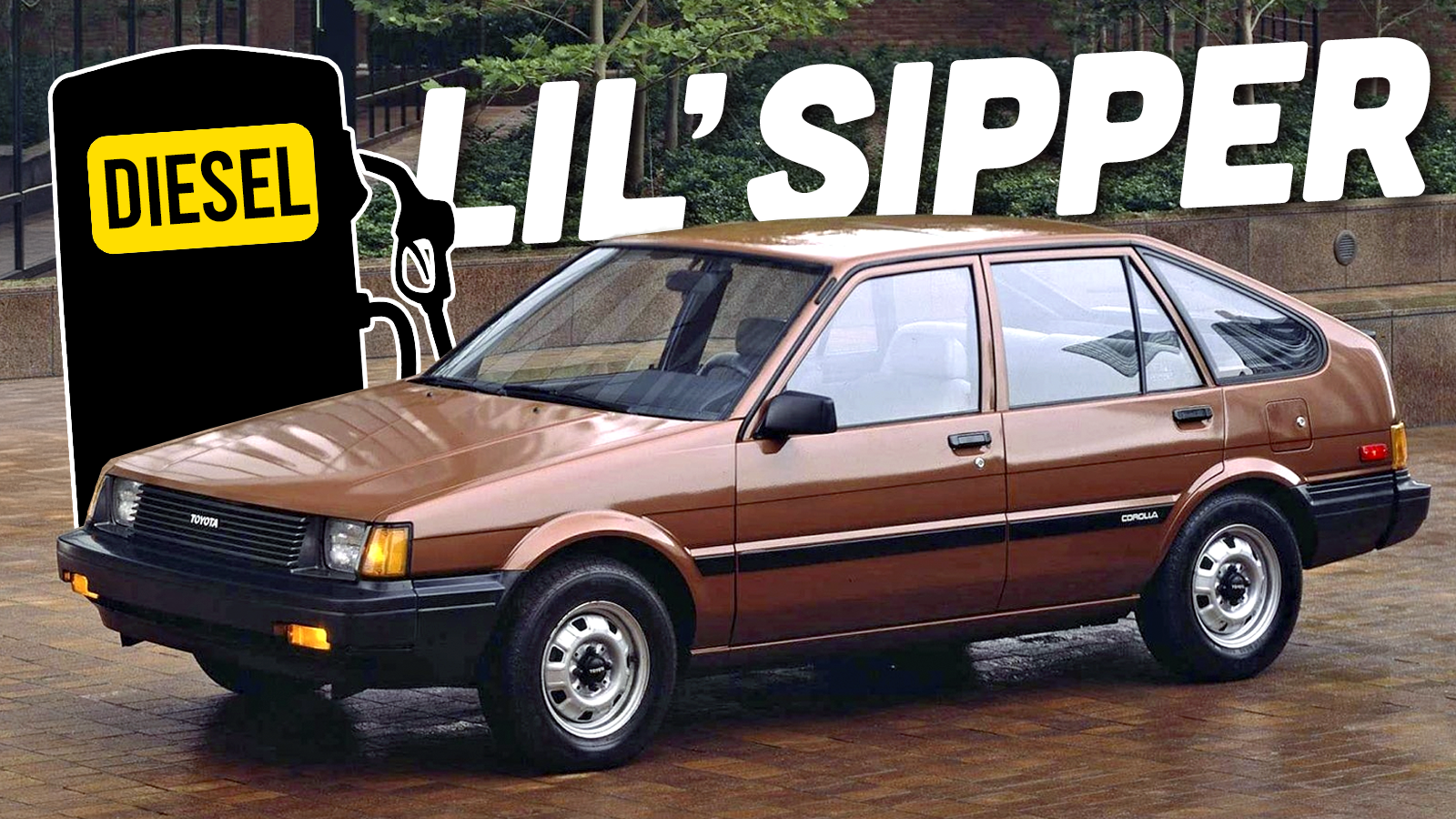
The multiple oil panics of the 1970s steered automotive development into a novel direction. The horsepower wars of the 1960s and 1970s were replaced with a race to make the most efficient vehicles possible. If gas was to be expensive, then automakers sought to ensure drivers didn’t have to visit the pump as often. Many automakers saw diesel as the secret sauce to excellent fuel economy, and Toyota was among them. For just two years in the 1980s, Toyota sold Americans a super-thrifty Corolla with a diesel engine that was claimed to get as much as 59 mpg, better than most cars can achieve today.

There was a brief period in the late 1970s through the mid-1980s when diesel cars held a solid share of the American market. A perfect storm of factors made conditions ripe for compression ignition engines. The economy had taken a battering through the decade with multiple oil crises, a loss of consumer confidence, and even political turmoil. At the same time, America made a grand effort to protect occupants in crashes and reduce air pollution. Cars were getting dramatically downsized, outfitted with emissions equipment, and adorned with bulky bumpers.


Vidframe Min Top
Vidframe Min Bottom

Gasoline prices were high, and Americans were feeling the crunch. Unfortunately, the gasoline engines of the era were only so efficient. While the 1970s did lead to exciting electric car developments, the EVs of back then were closer to novelties rather than practical transportation.

Comuta Car Electric Car
Electric Powered Vehicles

Automakers scrambled to find the next big thing in internal combustion. Many automakers toyed with Wankel engines just to find out that they weren’t nearly as economical or as clean as they hoped. Those same automakers and some others also set their sights on diesel power. Back in those days, the diesel engines that went into passenger cars and pickup trucks weren’t the powerhouses that they are today. Indeed, they often made only morsels of power. Instead, what those old diesels excelled at was fantastic fuel economy. Couple that great fuel economy with the fact that the price of diesel was considerably lower than the price of gasoline back then, and automakers had motivation to switch.

Diesel would become such a big deal in America that, at one point, General Motors sold more than two dozen models that had diesel engines as options. GM put diesels in everything from supposedly sporty coupes to luxurious land barges. They were popular with the public, too, with GM selling hundreds of thousands of diesel cars per year. GM was the market leader in passenger car diesels for years. But it wasn’t just GM, as Mercedes-Benz, Volkswagen, Peugeot, Isuzu, Ford, Lincoln, Nissan, and others all put diesels on the market in the 1970s and the 1980s.

1984 Toyota Corolla
Yes, this blurry photo is a real press shot! Credit: Toyota

Unfortunately, the delicate factors that favored diesel eventually faded away. But before diesel fell back into obscurity in America, some automakers managed to fire off a couple of diesel models into the market. One of those automakers was Toyota, which managed to sell both the Camry and the Corolla as diesels, if only for a blip of time. The two-year-only Corolla diesel was impressive for its ability to sip only drips of fuel better than most cars today.

Toyota Experiments With Diesel

L01 02 08 02 Img11
Toyota prototype Y diesel engine. Toyota

Toyota was late to adopt diesel power compared to brands from America and Europe. As Toyota says, its journey to diesel began in the 1930s when it studied the work of Junkers. But it would take some time before Toyota put its first diesel into production. From Toyota:

Toyota Motor Co., Ltd. had been conducting research on diesel engines from early on, and around 1939 began efforts to develop a diesel engine, studying the diesel engine made by Junkers. However, this engine did not lead to commercialization before the war because of various factors in the industry and Japanese government agencies. Around the spring of 1948, Toyota established a diesel engine research laboratory inside the Kamata Plant and began R&D on diesel engines anew, inviting such experts as Rihei Nagano and Takeshi Oka. As a result, five prototypes each of the Models Y and Z diesel engines were produced in 1950. During this period, due to a labor dispute that had begun in April 1950, the Kamata Plant was closed in June of that year, and research on diesel engines was moved to the Head Office in Koromo. In the same year, Toyota began testing the Model Y diesel engine using the revamped Model BM truck, and also conducted testing using the revamped Model BX truck in March 1951. Neither of these efforts, however, led to commercialization in the end and research on diesel engines was suspended once again.

Subsequently, diesel engine development was resumed in October 1954 and a prototype of the D diesel engine was completed in August 1955. A modified prototype truck was manufactured by installing this engine in the Model BA truck and, following various types of testing and improvements, was launched as the Model DA60 truck in March 1957. Manufacturing of the D diesel engine was accomplished through cooperation among various Toyota Group companies. Casting and machining of the cylinder block and the cylinder head was done by Toyoda Automatic Loom Works; machining of the crankshaft was performed by Toyoda Machine Works, Ltd.; machining of gears was done by Aichi Kogyo Co., Ltd.; the injection pump and electrical components for the diesel engine were made by Nippondenso Co., Ltd.; and vehicle assembly was performed by Toyota Motor Co., Ltd. Table 1-37 shows the specifications of the D diesel engine.

The performance of a diesel engine greatly depends on the performance of its fuel injection pump, which can be likened to the ‘heart’ of the engine. The D diesel engine used a fuel injection pump made by Nippondenso utilizing a technology introduced by Robert Bosch GmbH of West Germany. The idea of a technology introduction from Robert Bosch was brought to Kiichiro Toyoda, who had become a counselor in the autumn of 1951, by Dr. Tokushichi Mishima. Dr. Mishima was a classmate of Kiichiro from the Engineering Faculty at the Tokyo Imperial University and was a metallurgist known globally for his invention of MK magnetic steel. When the patent on MK magnetic steel was licensed to Robert Bosch, the company asked Dr. Mishima whether any Japanese corporations would be interested in forming a technical partnership. Because Dr. Mishima had served as a research advisor to Toyota Motor Co., Ltd. during its founding period, he brought the issue of technical partnership to Nippondenso via Kiichiro.

L01 02 08 02 Img12
Toyota

Nippondenso and Robert Bosch would collaborate on the design and manufacture of Toyota’s Model D engine (above). At first, Toyota’s prototype diesel sported fuel injection pumps and injection nozzles by Bosch, but when the Toyota Model DA60 5-ton truck went into production in 1957 with the 110 HP 5.9-liter Toyota Model D straight-six diesel engine, Nippondenso had managed to design pumps that performed the same as the Bosch ones. Toyota also set up a separate sales channel, the Toyota Diesel Store, just to sell its diesels.

Something Toyota didn’t note above is that it built its first prototype diesel car, the Toyota AE, in 1940. But World War II would derail further development and production at that time.

Toyota followed up the Model D with the larger 2D and the Model C engine (below), a 1.5-liter 40 HP four-cylinder diesel for passenger cars. The prototype for this engine had the distinction of being the world’s smallest diesel engine for a car, which earned Toyota a medal from the Japan Society of Mechanical Engineers.

L01 02 08 02 Img13
Toyota

This engine went into the 1959 Model CS20 diesel Crown sedan, but would ultimately be a commercial failure. What happened? In 1960, the Crown gained the option of the Model 3R gasoline engine, which offered 90 HP from its 1.9-liter displacement. Consumers overwhelmingly went with the more powerful gas engine, forcing Toyota’s engineers back to the drawing board. It was determined that the only way to up the Model C’s power was to redesign the block, and thus Toyota ended production of the Model C in 1961.

Toyota’s next generation of diesel came in 1964 with the 2.3-liter Model J inline-four, and that engine was notable for having the same output as a gasoline engine. The Model J was installed into the Dyna commercial truck and would become Toyota’s first diesel sales hit. From that point forward, Toyota became so dedicated to diesel power that it would eventually become one of the world’s largest diesel engine manufacturers by units.

Toyota

The Model J would be followed up by a variety of inline-four and inline-six diesels. America would get Toyota diesels in 1979 from the Toyota L diesel four-cylinder family, which powered the Pickup. That truck might be more familiar to our international audience by its other name, the Hilux. During this time, Toyota did bolt its diesels into some passenger cars, but those were usually larger sedans outside of the more compact “Popular-Size” category.

That would change in 1982 when Toyota made an announcement of a novel advancement in diesel engines.

Toyota’s Modern Diesel

1984 Toyota Corolla
Toyota

According to Toyota, there was a surging demand for diesel power in small cars. As I noted earlier, diesels were seen as a sort of cure for high gasoline prices. Diesel made big sedans and trucks more frugal, so why not put one into one of the most popular car segments?

In response, Toyota developed what some today call its first truly modern diesel engine, which went into the 1982 “Popular-Size” Corolla and Sprinter, as well as the Carina. From Toyota:

The new Corolla and Sprinter diesel models feature the 1C diesel engine, a superb Toyota development featuring the latest in automotive technology. Already highly reputed for its use in the Corona and Carina diesels, the 1C diesel yielded top level fuel economy values of 31 km/L over a set course at 60 km/h (maker notification values for Corolla Custom DX and Sprinter Special DX with 5-speed manual transmission), plus excellent driving performance and a whisper quiet ride.

Major Hightlights
1. All new Corolla and Sprinter diesel models feature the Toyota 1C diesel engine, with top features including:

– High Fuel Efficiency
The 1C diesel engine is a compact, lightweight, direct-drive OHC powerplant with aluminum alloy cylinder heads and other key advances that mean superb fuel efficiency―31 km/L in the Corolla Custom DX and Sprinter Special DX 5-speed manual transmission models over a set course at 60 km/h.
– Excellent Driving Performance
Both the Corolla and Sprinter diesel offer maximum power output of 65 ps/4,500 rpm and maximum torque of 11.5 kg-m/3,000 rpm. Impressive power added to lightweight vehicle bodies equals outstanding driving performance.
– Quiet Ride
Engine noise has been held to a bare minimum through use of small-size injection nozzles, a low-noise timing belt and mass-damper equipped engine mounts, to provide a luxuriously quiet, relaxing ride.
– Faster Starting
Major improvements in engine start-up time have been achieved through adoption of the Super Glow Control System with fast heating glow plugs. Cold starts have been improved by a device which automatically raises rpms in response to lower water temperatures.
Note: The models described in this release are available only in Japan.

2. To assure a quiet ride, besides curbing engine noise, Toyota has added extra insulation to the engine hood, instrument panel and dashboard.
3. Five sedans are available in both the Corolla and Sprinter series. Sedans in both series include three with 5-speed manual transmission and two with 4-speed automatic transmission with overdrive. Two Corolla commercial-use stations wagons are also offered.
4. The Corolla and Sprinter diesel models feature the same trim and equipment features as their gasoline-engine counterparts.
19830818 01 03
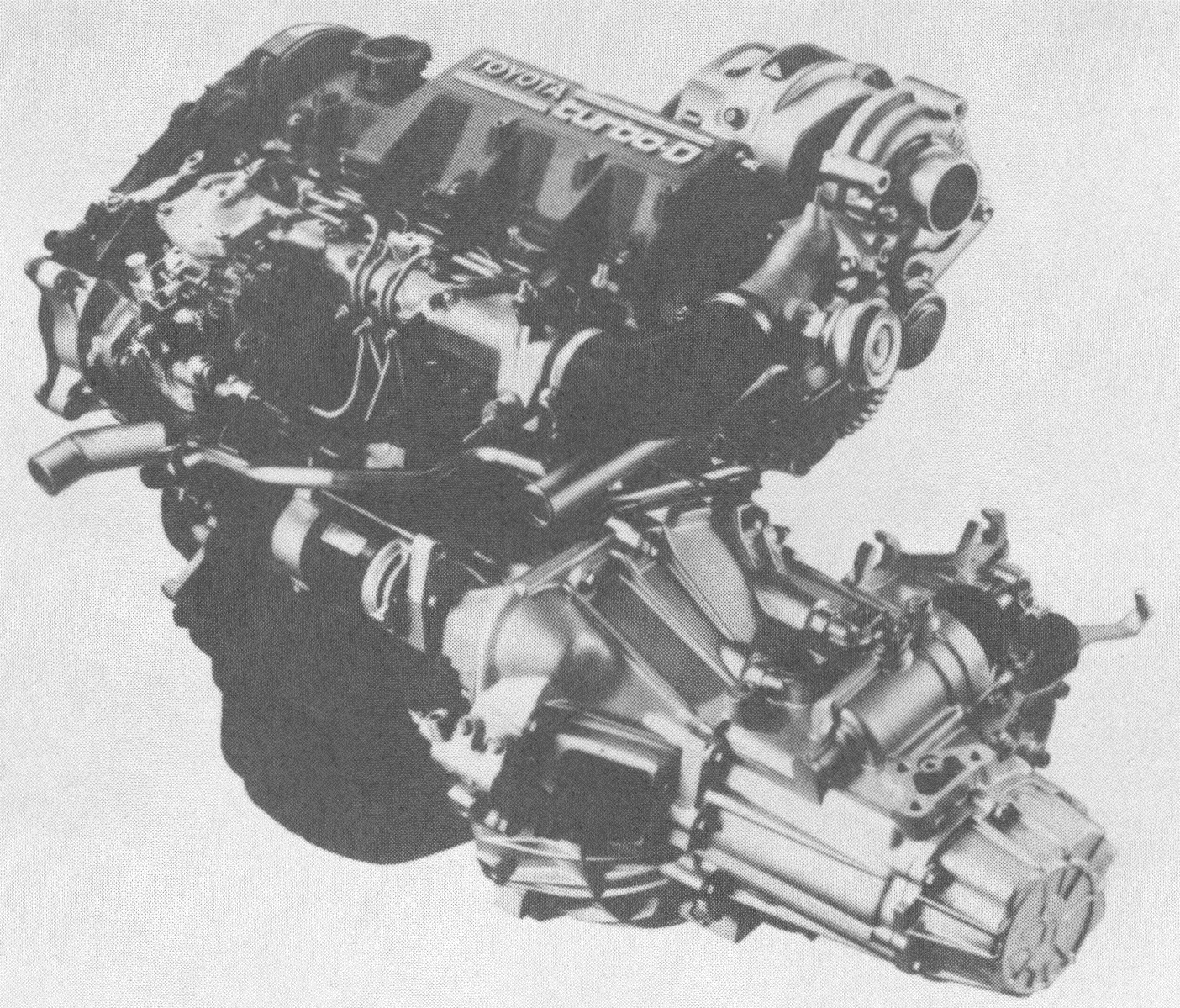
The turbocharged 1C. Credit: Toyota

Toyota’s developments don’t sound like much today. Pretty much any passenger car diesel made in the past couple of decades can start fast, get stellar fuel economy, and can be relatively quiet. However, Toyota’s developments were huge back then. Not too long before the 1C engine, diesels struggled hard to start in cold temperatures due to their sky-high compression ratios, low volatile fuel, and thick oil. Diesel owners tried every little hack, from parking in heated garages to using block heaters. If it was cold enough, you had to sit there waiting for several minutes for the glow plugs to do their job before your diesel would fire.

Toyota’s 1C diesel was among the flood of new-technology diesels that could heat its glow plugs and get the engine chugging in just a few seconds, even if the temperature was below zero outside.

The Perfect Host For A 59 MPG Diesel

488902893 1141313674702368 2522837405240367070 N
Facebook Listing

These engines went into a game-changing new car. In 1983, the Corolla and its Sprinter received a dramatic new generation that Toyota called the “World’s Most Advanced and Distinctive Cars.” The E80-generation Corolla eschewed rear-wheel-drive for a front-drive layout, and the body was designed around hyper-efficient space utilization. Toyota touted these as small cars sporting the kind of interior volume found in larger cars.

The Corolla and Sprinter also received the latest in aerodynamic tweaking. Japan’s Corolla Levin had a trick feature with its active aerodynamic grille. At normal engine temperatures, shutters in the grille closed, which aided in aerodynamic efficiency while also helping the car heat up faster in the winter. Once the coolant reached a high enough temperature, the shutters opened to feed more air to the radiator.

Toyota Corolla 5 Door Liftback Front Side 0 450827 Scaled
Toyota

Another addition that Toyota noted was that, in some five-door models, both the front and rear seats fold flat, turning the whole car into a bed. Toyota boasted that this was a first for Japan’s “Popular-Size” market. Meanwhile, Toyota said, the cars’ low, mostly flat floors added legroom while “special vibration-absorbing body construction” reduced road noise to a new low for Toyota.

Over here in America, the E80 Corolla was a huge deal as it was a part of the New United Motor Manufacturing, Inc. (NUMMI) joint venture between General Motors and Toyota. NUMMI let GM peek behind the curtain to get a look at Japan’s highly efficient car manufacturing practices. Toyota benefited, too, as it was able to better learn American culture and the car business in the country. NUMMI also punched out some interesting models like the Toyota-based Chevrolet Nova, the Geo Prizm, the Pontiac Vibe, the Toyota Matrix, and the Toyota Tacoma.

1984 Toyota Corolla Images 6
Toyota

If you were a car buyer at the time, Toyota was able to add a sweetener to the allure of an E80 Corolla. The brochure talked about an EPA-estimated 59 mpg on the highway or a still impressive 43 mpg combined. Of course, the catch was that you had to get the diesel to get such amazing numbers.

The Corolla Deluxe Diesel you got out of the other side was festooned with a 1.8-liter naturally-aspirated diesel with 56 HP and 76 lb-ft of torque on deck. That car rode on MacPherson struts in front and rear, had power front disc brakes, and carved corners using a variable ratio rack and pinion steering. The turning circle was a relatively tight 30.8 feet, too, making the Corolla a pretty maneuverable family car. Check out this MotorWeek review:

The caveat was the transmission. If you got your Deluxe Diesel as a sedan, you were saddled with a three-speed automatic. Weirdly, if you got the Corolla Deluxe Diesel as a liftback, an automatic wasn’t available at all, and your only choice was a five-speed manual.

One neat stat was that the diesel engine added less weight than you’d expect. A Corolla Deluxe Sedan weighed 2,081 pounds, and swapping the gas engine for a diesel upped that only to 2,275 pounds. The liftback started off with 2,110 pounds and weighs 2,275 with a diesel, or no heavier than the diesel sedan.

488799447 1141313018035767 2809287005291838107 N
Facebook Listing

These cars were fairly well-equipped, too, featuring options for cruise control, dual-stage air-conditioning, a power sunroof, a tilt steering wheel, alloy wheels, full carpeting, and a four-speaker stereo with a cassette system. Base price for the diesel was $7,398 ($24,330 in 2026) plus $630 ($2,071 in 2026) for air-conditioning and $415 ($1,364 today) for the aforementioned stereo. For comparison, a gas Corolla of the same vintage had a base price of $6,848 ($22,521 today). If you wanted a rear wiper, that was $95 ($312 today). If you wanted the car to have a fighting chance against rust with an undercoating, that was another $119.95 ($394.48 today).

The Corolla actually wasn’t the most fuel-efficient car of its day. The 1984 Volkswagen Rabbit claimed an even greater 61 mpg on the highway. However, the Toyota had two more doors and four extra ponies in the stable. While Toyota never published acceleration times, I would expect a Corolla Diesel to do the job at the high end of the teens. If you wanted a little more spice in your drive, Toyota also strapped a metal snail to the 1C and bolted that into the Camry. But that will be a story for another day.

As another note, while 59 mpg sounds extremely impressive and would beat most cars today, there are a few caveats. For one, there was a national speed limit of 55 mph back then, and modern speeds will hurt that fuel economy. Likewise, the EPA has also revised its testing standards, and the EPA now says that the 1984 Corolla Diesel is good for 43 mpg on the highway, provided you get the five-speed manual. But hey, that’s still pretty good by modern standards!

Toyota’s Diesels Arrived Too Late

1984 Toyota Corolla
Toyota

In 1984, the Morning Call reviewed a Corolla Diesel, and while it’s mostly complimentary, it also highlights why it sold from only 1984 to 1985:

The new front-wheel-drive Corolla also is the roomiest of all Corollas. With an EPA index of 105 cubic feet (85 passenger compartment and 20 trunk) the car falls right into the middle of the compact class (100-110 cubic feet). Front seat room is good. Back seat leg room, however, does get quite tight when the two front seats are extended all of the way back.

The interior of the test car was done up in that heavy Japanese vinyl, the sort of material that leaves a little to be desired in extremely hot or cold weather, but it wears forever. It is a much better choice of material for families with small children than cloth material. The kids can drop their Big Macs, spill their Slurpies or grind in their Binney & Smiths to their hearts content without any permanent, and very little temporary, damage.

[…]

The test car averaged 46 miles per gallon over Lehigh Valley highways. In addition to the cold temperatures, it was driven over ice, through snow and slush and under more ideal conditions mileage should be even better. The EPA estimates are 43 mpg city/59 mpg highway for the five-speed and 38 mpg/49 mpg for the three-speed automatic. The one drawback with a diesel these days is the high price of diesel fuel. At one time it was much cheaper than gasoline but now it is more expensive. And there are some real rip-off stations selling diesel fuel. I some at one station that had the outrageous price of $1.439 per gallon and this was a self-service station. I didn’t notice the price until I was almost finished pumping. I assumed (sometimes a dangerous thing to do) that since the prices listed for its gasolines (unleaded regular and premium and leaded regular) were reasonable, so was the diesel fuel. So, take my advice and look at the numbers before you start pumping. At the time diesel fuel at other stations sold for a low of $1.229 a gallon to an average of about $1.30 per gallon. Diesel fuel prices are tied in with the price of home heating oil, therefor, if it is a cold winter you’re going to pay more for diesel fuel as the price of home heating fuel goes up.

488968281 1141309244702811 192684283677014374 N
Facebook Listing

By the mid-1980s, the game had changed for diesel cars. The price of diesel shot up over the price of gasoline. Since diesel cars were already more expensive than gasoline cars, it now meant that buyers had to pay more for the car and pay more at the pump too.

The other factor holding back diesels in those days was that, by the mid-1980s, gasoline engines were closing the gap between diesels in fuel economy. A 1.6-liter four-cylinder gas engine Corolla was lighter, faster, cheaper, and still got an estimated 43 mpg. In other words, times had changed, and diesel lost its edge in the passenger car market. Most consumers just didn’t see the point of going diesel anymore unless they were buying a pickup truck.

So, one by one, most of the companies that went crazy for diesel cars in the 1970s and the 1980s gave up, leaving only weirdo holdouts like Mercedes-Benz and Volkswagen. Toyota came into the game too late and missed out on the great diesel car sales of the late 1970s.

A Weird ‘Regular’ Car Today

1986 Toyota Corolla
Toyota

Today, the diesels are so rare that I couldn’t even find one for sale to show you. Sadly, rust has taken so many Japanese cars from this era. A lot of these cars were also treated as expendable family cars, and were used up before being sent to the junkyard in the sky. Yet, the diesels aren’t particularly desirable among typical enthusiasts. People aren’t really clamoring for one of these like they are for the AE86. So, if you do find a diesel for sale, I wouldn’t expect it to cost a ton of cash. I found a rather clean example that sold for only $4,000 a year ago.

I think this story is a perfect encapsulation of what the car market was like for that short period following the economic turmoil of the 1970s. Automakers and car buyers were so desperate to save a buck that hundreds of thousands of diesels sold each year, and even Toyota couldn’t resist the call. Yet, the only reason that diesels even rose to power was that the conditions were just right.

Still, if you’re the kind of person who likes cars from the 1980s and wants something that’s just a little different than what everyone else has, maybe finding one of these diesels is the ticket. It seems that nobody is really chasing them down, and I think we’re at the point where even a well-maintained mundane car from the 1980s is going to get some attention. Only in your case, you’ll slowly pass by every gas pump in town as you make your way to the car show.

Top graphic images: Toyota; DepositPhotos.com


Share on facebook
Facebook
Share on whatsapp
WhatsApp
Share on twitter
Twitter
Share on linkedin
LinkedIn
Share on reddit
Reddit
Subscribe
Notify of
94 Comments
Inline Feedbacks
View all comments
Griznant
Member
Griznant
6 hours ago

My ’87 Nova (the same AE82 chassis as pictured) would get 44mpg with the stock 4ALC and 5-speed, so the platform was already pretty fuel-efficient. It would also cruise at 70mph+ so while it wasn’t fast, it wasn’t awful.

Bill C
Member
Bill C
6 hours ago

My ’25 Civic Hybrid gets about the same mileage as my ’83 Civic 1300FE did, usually better. But the cars themselves are night and day different.

Drunken Bum
Drunken Bum
7 hours ago

A bit over 40mpg highway, at 55mph, in a tinny, underpowered, death trap. Probably with the a/c off, of course.

I just got 37mpg on a 500 mile stretch of highway driving in my 2015 Sonata 2.4. 70-75mph, a/c on, satellite radio cranking away. Progress.

RAMbunctious
RAMbunctious
7 hours ago
Reply to  Drunken Bum

Yup, we would easily get 45mpg highway on road trips in my GF’s 2021 Elantra (non-hybrid).

Peter Spinale
Peter Spinale
5 hours ago
Reply to  Drunken Bum

Yeah as someone said before, those old MPG numbers are different than today.
Back then you got 59 MPG on a long flat road, like I10 from Cali to AZ. Today your 40 MPG is still maybe highway, but probably sea to sea. I get up to 46 in the GTI in the morning when traffic is smooth, maybe 41 in the afternoon when there’s some traffic. We can get these numbers in all kinds of conditions, while back in the day hitting the AC button (if it existed) blew the numbers completely. I think today we not only have higher MPG in a larger variety of vehicles, but the conditions don’t need to be perfect due to how far engine management has come.

Commercial Cook
Commercial Cook
8 hours ago

my 1988 super eta M20B27 engine is 2.7 liters and inline six. beasue it was made with focus on fuel efficiency it is like diesel, redline is 5000rpm and it has low-torque curve that allows it to be pretty comfortable driver even with automatic today. i get about 25-28MPG combined these days. I think it is still impressive for 6cylinder 2.7made in 80s

Nick Adams
Nick Adams
8 hours ago

Meh, I got 40mpg out of a rusty old 76 Datsun B210. Maxed out at 80mph, and I walked away unscratched when it was totalled. But sure, let’s make cars ridiculously heavy and expensive.

Nicholas Nolan
Nicholas Nolan
5 hours ago
Reply to  Nick Adams

Missing a mention of all the luck you burned walking away. The B210 failed every single crash test in 1979.

Phil
Phil
3 hours ago
Reply to  Nicholas Nolan

Granted, he didn’t say what totaled it. Could’ve been a Little Tykes Cozy Coupe some kid left out in the driveway. Or a pothole. Or one of those big-ass swallowtail butterflies.

Nick Adams
Nick Adams
1 hour ago
Reply to  Phil

Thanks for playing bot, I have a Turing test for you.

Phil
Phil
1 hour ago
Reply to  Nick Adams

Searing hot burn, Nick, no one’s ever called another internet user a bot before.

But really, you may want to ask yourself why you are taking a little joke about a Datsun 210’s crashworthiness so damn personally.

It’s weird.

Nick Adams
Nick Adams
24 minutes ago
Reply to  Phil

The fact that you constantly respond is equally telling about your need to be right. I’m just a troll, you’re insecure.

Nick Adams
Nick Adams
2 hours ago
Reply to  Nicholas Nolan

Jesus, first of all, which AI gave you that crash info, because nobody has any B210 facts off the top of their head. Second, I raced motorcycles, driving a B210 was the safest thing I ever did as a kid.

Phil
Phil
1 hour ago
Reply to  Nick Adams

https://www.nytimes.com/1979/10/17/archives/auto-crash-tests-hint-gains-in-new-small-models-seat-belt-problems.html

Datsun 210 drivers were apparently not expected to survive the new 35mph impact test, but then neither were the drivers in 12 similar cars. But maybe the ’76 B210 was somehow safer than the ’79, eh?

https://www.youtube.com/watch?v=3mCY1DiklIM

1:02
Look at the dummy eat that steering wheel with its face! Yum yum! He’s dead, Jim!

Nick Adams
Nick Adams
25 minutes ago
Reply to  Phil

Ah, you went and got your AI sources. Nice!

Hoser68
Hoser68
10 hours ago

Growing up, there were two problems with diesel that don’t exist today.

First, it wasn’t low sulfur. I think they intentionally added it. Any of you that have messed with EP grease. Imagine if you burned it while intentionally rolling coal, smoking a stoogie that was 50% pot and having a farting contest. That’s about 50% as bad as reality when you got behind a truck with dirty injectors.

Secondly, steel gas tanks. Almost all the underground tanks at the gas stations were steel. When the weather changed, these tanks would sweat and put water in the tank. If you got fuel from a station that was never busy, you would get a lot of water in the fuel. Diesel wasn’t commonly used outside of the interstate, so those tanks sat there sweating for a long time. The result was that if you had a diesel car, you could get what seemed to be half water with the diesel.

By the time the diesel was not as stinky and stored in plastic underground tanks so it wasn’t 50/50 water, the fuel crunch was over.

J G
Member
J G
9 hours ago
Reply to  Hoser68

“I think they intentionally added it” They didn’t…

Hoser68
Hoser68
7 hours ago
Reply to  J G

I’m sure they didn’t but it sure as hell smelled like they did.

One thing about back in the day, nobody wanted to roll coal. But because the fuel would tear up injectors, everyone did.

Today’s diesel has a smell, but nothing like yesterday’s.

JayJay
JayJay
13 hours ago

Pretty good, I “only” got 52 mpg in Citroën BX diesel station wagon on long drives at moderate speeds. Slightly larger engine 1.9 70hp and had to drive the hydraulic pump also, so makes sense 🙂

Albert Ferrer
Member
Albert Ferrer
15 hours ago

It’s amazing how much technology has adavnced. My hybrid hatchback can do 70mpg in ideal conditions with three times the power, and a lot more equipment and safety (and therefore weight).

Also the weight penalty is roughly equivalent to today’s difference between a petrol and diesel powered car. But in percentage terms it is much higher.

MrLM002
Member
MrLM002
19 hours ago

Honestly diesels that net me over 30 MPG are the only diesels that interest me.

TBH after getting my 3.0L I6 Ram with todays gas prices the same could be said about gas automobiles too.

RAMbunctious
RAMbunctious
7 hours ago
Reply to  MrLM002

How are you liking the Ram so far? I’m in love with that Hurricane, I’ve had mine for almost 8 months (8,500 miles) and I’m still impressed with how smooth and quick this thing is. I’m consistently averaging 20mpg combined with it, and mine came with the E load 33″ Duratracs.

MrLM002
Member
MrLM002
3 hours ago
Reply to  RAMbunctious

I like it quite a lot. However I’m getting under 19 MPG on average with the towing gears and air suspension with the stock 18″ wheels and tires.

I drive pretty gently but I’m at 7000+ft of elevation, and the highway speeds here are 70+ MPH.

Chris D
Chris D
22 hours ago

I love that generation of Corollas. Not sure why… but they were great cars, for what they were. So much better than most of what was available back then.

TDI in PNW
TDI in PNW
14 hours ago
Reply to  Chris D

I think the old Japanese designs are aging really well and this car still has attractive lines.

Hoser68
Hoser68
7 hours ago
Reply to  Chris D

The biggest problems that Japanese cars had back then was ultimately traced to Nippon Steel. Nippon Steel is the big steel supplier for Japan (duh). They admitted (eventually) falsifying the test data on the steel they were supplying. In the case of 70s and 80s Japanese cars, the steel was not even close to meeting the rust resistance that was specified. The manufacturers eventually figured out that what was happening and Nippon Steel got their act together, but by then millions of Japanese cars had dissolved in a light rain shower.

What’s interesting about Japanese culture is that if US Steel had been doing the same thing, there would have been lawsuits and the Big 3 pointing fingers and the like. But with Nippon Steel, the car manufactures and Nippon Steel just sort of hushed it up together and acted like it was just a learning experience or something.

Cars? I've owned a few
Member
Cars? I've owned a few
23 hours ago

GM put diesels in everything from supposedly sporty coupes to luxurious land barges.” Wasn’t there also a diesel Chevette? 

I knew a girl who had a Peugeot 504 diesel down in San Diego. Her dad had a 30-gallon auxiliary tank installed in the trunk and they’d go down to Tijuana every once in a while and fill up with super-cheap Pemex diesel.

I didn’t realize diesel and gas had flipped financial advantages back and forth even back in the 80s.

In the Seattle area, diesel was almost always cheaper per gallon than regular when I bought my ’01 Jetta TDI. For the first five years or so owning that car, diesel only reached parity during colder winters back east.

Also, how did M-B manage to get the Sprinter trademark if Toyota had already been there and done that?

Ford_Timelord
Ford_Timelord
23 hours ago

I’m pretty sure the Sprinter name was only used by Toyota in Japan for their JDM cars. For instance your former Tercel 4wd was a Sprinter Carib in Japan.

Cars? I've owned a few
Member
Cars? I've owned a few
22 hours ago
Reply to  Ford_Timelord

Awww. You remembered!

If I had known, I might have looked online for those badges for my Tercel! And Carib? I could see that if it didn’t have doors like a Mini Moke. I have seen a Nissan with Silvia badging here in Tacoma, but it looks like an Altima running around on an assumed name.

Ironically neither the M-B Sprinter, nor my Tercel were particularly swift.

FuzzyPlushroom
FuzzyPlushroom
20 hours ago

Yarii like mine, only French and with two more doors, were sold as Daihatsu Charades in Europe for a few years. I’ven’t found the badges for the right price yet.

Nlpnt
Member
Nlpnt
20 hours ago
Reply to  Ford_Timelord

Fun fact: the 80-series Sprinter sedan used the same 6-window body as the NUMMI Nova

Griznant
Member
Griznant
6 hours ago
Reply to  Nlpnt

Correct, and I’ve been trying to find the front/rear panels to make my Nova into a JDM Sprinter. There don’t seem to be many of them left to get parts from though. Sad.

Kevin Rhodes
Member
Kevin Rhodes
4 hours ago

There was indeed a diesel Chevette (and T1000). Isuzu diesel motor of 40-something horsepower.

My 504D that came from Palm Springs also had a giant aux tank originally, though it was gone by the time I bought the car. The plumbing was there, but not the tank itself. Must have been a thing in CA in the ’80s.

Mikey66
Member
Mikey66
23 hours ago

My dad had one of these, an ’84 Liftback with a 5 speed. It was quite torquey around town as I remember, but on the highway was kind of a dog. Yes the speed limit was 55 but in the mid west where I live nobody drove that slow, 65-70 on the highway was the norm. I helped a friend move from KC to St Louis and we had the car loaded down and even a roof top box and it got 58 mpg although with the roof box I kept the speed to 60 or below. My dad was all-in on diesels for a while except our other car was an Olds Cutlass diesel and was a disaster, never had any trouble with the Corolla.

AllCattleNoHat
AllCattleNoHat
1 day ago

So it was 59mpg but on today’s rating scale that would be very low 40s which is beaten by any number of vehicles today? And today’s Camry would have been rated at about 70mpg back then with less than twice the weight and about four times the HP? That’s probably the real story…

Interesting post and lots of good details but I would have also read it without the highly misleading headline. You guys really need to work on that, I am starting to just skip some posts based on the headlines…

Canopysaurus
Member
Canopysaurus
1 day ago

Toyota never published any acceleration data because they’re still waiting for the test car to complete the quarter mile or hit 60 mph, whichever comes first.

Last edited 1 day ago by Canopysaurus
Eggsalad
Member
Eggsalad
1 day ago

The preface about the rise in popularity of Diesel-powered cars and light trucks in the US was good, but you left off an important piece of the puzzle.

When the EPA started doing its thing with vehicles, 98% of cars and light trucks ran on gasoline. Wisely, the EPA focused its efforts on gasoline vehicles. But this meant that there were NO STANDARDS AT ALL for light Diesel vehicles.

From about 1980-1985, buyers of small cars had 2 choices for engines. They could get a gasoline engine, maybe still with a carburetor, and power-robbing and primitive emissions controls or they could choose a Diesel engine, with no emissions controls at all, and give up only about 10% of the horsepower, but get more torque and lots more MPG.

I’m pretty sure that Volkswagen sold more Diesel Rabbits in this era than gas ones, and there’s your reason.

Scoutdude
Scoutdude
22 hours ago
Reply to  Eggsalad

Yeah gas engines were getting all sorts of expensive items strapped on them, Catalytic converters, EGR, Air Injection, evap systems and on occasion an Anti-Diesel Solenoid. On top of that there was considerable time involved in getting everything properly calibrated so it met the standards and hopefully maintained something resembling drive-ability.

Meanwhile a diesel didn’t need any of that and drive-ability tuning was a breeze.

That made diesels very attractive to the automakers. It also made a for decent profit margin at a price point people were comfortable with.

Pat Rich
Pat Rich
1 day ago

It’s not a well known fact in our market, but Toyota has made at least a handful of the best diesel engines ever made. The 1HD and 1HZ engines, the KZ, KD, The 14B and 15B (Toyota’s 4BT) and of course the 1VD V8. The 1C was…a good effort, but Toyota really came into their stride with diesel after that, just not for North America.

Last edited 1 day ago by Pat Rich
Cerberus
Member
Cerberus
1 day ago

I don’t remember these at all and I always had a particularly keen nose for the smell of diesel exhaust, which I hate. I suppose I wasn’t very old then and New England winters took a heavy toll on Japanese cars, but they obviously didn’t sell many if they only offered them for such a short time. Probably about right on 0-60, though maybe low 20s. My 3AT FWD ’84 Subaru GL wagon ran the 1/4 in 19.6 @ 66 with 73 hp and 90 lbs/ft (@ 2400rpm—who needs a diesel?) and it must have weighed about the same. Incidentally, those numbers were exactly the same for several runs at New England Dragway. I should have done bracket racing, but they’d probably throw me out if I did too well as I’m sure it would have negatively affected attendance (and competitor throughput).

Urban Runabout
Member
Urban Runabout
1 day ago

It’s a sin and a shame that with the progress we’ve made after four plus decades that we can no longer get small, affordable, reliable, attractive, utilitarian, fuel efficient cars in the US anymore.

*Jason*
*Jason*
1 day ago
Reply to  Urban Runabout

The Corolla is still available and the gasoline model is rated at the same highway MPG as this old diesel. Comes as a hatch too for those that don’t want sedan.

Phil
Phil
1 day ago
Reply to  Urban Runabout

At $26K for the nifty SE hatchback and $25K for the hybrid sedan, the Corolla is the same price now as it was then.

What am I missing?

Kleinlowe
Member
Kleinlowe
1 day ago
Reply to  Phil

The new Corolla only comes with power windows, therefore it is terrible.

Cars? I've owned a few
Member
Cars? I've owned a few
22 hours ago
Reply to  Kleinlowe

I like power windows. And a/c. And a stereo. The prices of which back then were almost exploitive.

What I’d really like to see going forward is the option of cloth seats, particularly with the other things that make a car pleasant to drive. I don’t have any passengers that are going to spill or vomit anymore. And leather is initially hot or cold and once at the right temperature doesn’t breathe very well. My wife’s MDX had perforated leather seats, resistance heaters and fan-powered ventilation. She managed to melt some white chocolate into the perforations and it took me several attempts with a toothpick to clear that crap out. Cloth seats would not have been a good option for her.

Last edited 22 hours ago by Cars? I've owned a few
Phil
Phil
13 hours ago

Oh hell, the perforated leather…even if you don’t eat in the car there is always some kind of foreign particle perfectly sized to lodge right in the perforation. I hate that stuff. Ultrasuede middle sections with high quality leather or vinyl bolsters for the win, in my opinion.

The problem with most cloth seats in the last 15 years is the scratchy, unpleasant garbage quality of it. The “mouse fur” autojournos griped about 20 years ago was actually very nice stuff and I wish we had it back.

Taargus Taargus
Member
Taargus Taargus
11 hours ago
Reply to  Phil

Yes. Bring back the mouse fur. Automakers punish you these days for wanting cloth by only providing what I assume is burlap dyed in black.

Kleinlowe
Member
Kleinlowe
12 hours ago

But it saves $40! Per door!

Being sarcastic. I replaced a 93 econobox with a 12; AC is great, not having to pull over/hope for a traffic light to roll up the passenger window is great, and keyless entry and ignition is great.

But, you know, we must be performatively hairshirted. Get a horse! And whatnot.

Manwich Sandwich
Member
Manwich Sandwich
8 hours ago
Reply to  Kleinlowe

Oh look at Mr Fancy with his Horse.

Real Men ride Bulls to work!!!

Cheap Bastard
Member
Cheap Bastard
10 hours ago

I prefer cloth too, however I have read leather has become a byproduct of the beef industry and the leather goods market isn’t what it used to be. Assuming these things to be true I wonder if manufacturers pushing leather as a premium product isn’t just a way to upsell but also a way to cut their material costs.

TDI in PNW
TDI in PNW
15 hours ago
Reply to  Phil

Shall we actually count the cars like that from (say) 1983 and the ones (one?) we get to choose from now or just assume it’s not even comparable? I get sad just thinking about how bad it is now for the entry level market.

Phil
Phil
13 hours ago
Reply to  TDI in PNW

Fewer options, yes. But that’s a different argument. Urban’s wording above says we have no options at all. For 25-30K, what’s left look pretty good to me if I accept that manual transmissions are no more.

https://www.jalopnik.com/2161894/cars-for-sale-under-30000/

Urban Runabout
Member
Urban Runabout
10 hours ago
Reply to  Phil

How much less would that Corolla cost to purchase and maintain if it had simple black bumpers, simpler headlamps and no fake grilles, diffusers and strakes, no useless triangular pieces of plastic in it’s greenhouse, steelies with no covers, no center screen and simple gauges, manual HVAC controls, no cruise control or voice commands, a steering wheel with no buttons since those features it controls don’t exist, No “Service Connect”, “Safety Connect”, “Remote Connect”, “Drive Connect” or “WiFi Connect”, no Electronic Parking Brake and no “Hill Start Assist”?

A thousand dollars? Perhaps more?

Phil
Phil
10 hours ago
Reply to  Urban Runabout

And no AC, no stereo, no passenger side mirror, 2 speed wipers, no rear defrost, a non-adjustable steering wheel, no tachometer, no map lights, take it all out.

You’re asking for a car no one wants, no one would buy, and therefore it would be a specialty product that would cost more to produce in niche quantities.

If 1-2 thousand dollars is making the current one unaffordable, a lightly used one will solve that.

I’d like to see more choice in the compact sedan/hatch segment as well, but I’m not following this argument very well.

Urban Runabout
Member
Urban Runabout
9 hours ago
Reply to  Phil

I think you’re taking it to the extreme – You’re recommending pulling content that people use and feel the need of.

I’m recommending pulling content that does not affect 95% of the user experience, if at all.

And you may have heard – Financing a used car means higher interest rates, and no lease deals – making that slightly-used car which is only a couple thousand less than the new one as costly as a new one, but without the warranty.

Last edited 9 hours ago by Urban Runabout
Phil
Phil
9 hours ago
Reply to  Urban Runabout

I use my cruise control, steering wheel volume and track advance, bluetooth/voice all the time and I think cars with unpainted bumpers are sad-looking, so your list strikes me as extreme as well. Just riffing on it.

Your initial list of things to axe contains several that people do use regularly and several that would be unlikely to save costs (do we really think painted bumpers with fake molded in grills are adding significant cost?) and several that would add to the MSRP (screens are cheaper than manual HVAC controls–which the Corolla still has–and analog gauges). The bottom end of what people are willing to tolerate for a low MSRP has already been tested and it looks like the buying public is only willing to support a limited number of low cost entries. Despite the reduced competition, stalwarts like the Corolla and Civic really haven’t gained any sales in the last decade.

If a thousand dollars is making the ownership of a car unaffordable, then you can’t afford a car.

Jay Vette
Member
Jay Vette
9 hours ago
Reply to  Urban Runabout

True, it would cost less, but nobody but you would buy one. So they won’t make it because it won’t sell. Like it or not, people generally have higher expectations now than they did in the 80s. That’s why I’m interested to see how well or poorly the Slate truck will sell, since it’s the first truly bare-bones new vehicle in decades. Will people be okay with paying a premium for power windows or cruise control, which are normally standard features now?

Urban Runabout
Member
Urban Runabout
9 hours ago
Reply to  Jay Vette

Why would nobody buy a car with simplified styling and unpainted bumpers that actually protect the car and don’t cost hundreds or thousands to repair/replace when you have a minor bump or scrape?
Do people really use voice commands frequently – and how does that work with the stereo playing?
Are automatic climate controls really a requirement for a budget car?
What do all those in-car connected features really do to help drivers get from A to B?

Little things add up – and as many folks here talk about affordability, how are manufacturers supposed to do that without removing content which is largely unnecessary, unnoticed and/or unused?

Jay Vette
Member
Jay Vette
6 hours ago
Reply to  Urban Runabout

People are irrational, what can I say? They like the looks of painted bumpers vs unpainted. That’s why you barely see cars with plain black bumpers anymore. Sure, they’d be cheaper, but most people want them to look nice and are willing to spend a bit more money for it.

I use voice commands in my car whenever I’m calling someone because I want to keep my hands on the wheel and eyes on the road while I’m doing that. No, it doesn’t work perfectly well all the time, but I’m glad to have the feature. As for how it works with the stereo playing, it just pauses whatever you’re listening to while you’re using the voice control. Have you never encountered this before?

Automatic climate control is just nice to have, and at this point, it barely costs more than manual HVAC controls, so most cars have it. Connected features don’t really help anyone get from A to B, but all these little niceties can just make a car more enjoyable and easier to drive. Not everything about a car is purely about transportation, it’s good to have some things in there for comfort and safety. If it were, we’d still all be driving Model Ts with 20 hp, crank start, gas headlights, and no doors or windshields because it’s good enough to get you from A to B and everything else is just extra.

Kleinlowe
Member
Kleinlowe
7 hours ago
Reply to  Urban Runabout

Diffusers and strakes add to MPG, a screen is legally mandated, manual HVAC controls would cost more since we have a screen, cruise control and voice commands are essentially free because you have a screen, same with wifi, bluetooth, and the other connection methodology, electronic brake paul is cheaper and less failure prone than a cable brake, and hill start assist is built into the ABS computer.

So, we have less plastic trim, so we need new clips to fill the body holes, we need to engineer, validate, and find a supplier for our new headlights, and add extra manufacturing capacity and logistics to pull unpainted bumpers and grill pieces and install them on the correct vehicles.

Add in logistgics support for the stripper SKUs, I’m sure it would probably cost only $1500-$2000 more per unit to offer them!

PlugInPA
Member
PlugInPA
11 hours ago
Reply to  Urban Runabout

You can buy a brand new Chevrolet Bolt for $27k. Fueling it is nearly free if you have a plug in your garage.

Cheap Bastard
Member
Cheap Bastard
10 hours ago
Reply to  PlugInPA

I like to use the EPA website and a stable of PHEVs to do a direct comparison of what it costs to run EVs vs gassers. What I’ve found is that for PG&E customers in California overnight charging typically costs as much as filling up with regular, especially when charging losses are included which can be as much as 30% on level 1. Even with current California fuel prices our stupid high electrical rates don’t make EVs a slam dunk.

Surge pricing and non free public charging can double, even triple those charging costs but free workplace charging and home solar can slash charging prices so very literally; YMMV. Due diligence is a must and a reliable crystal ball is advised.

PlugInPA
Member
PlugInPA
10 hours ago
Reply to  Cheap Bastard

The Bolt specifically is much more efficient than most PHEVs or BEVs so that helps – but yeah I’m talking from a Northeastern perspective.

Cheap Bastard
Member
Cheap Bastard
6 hours ago
Reply to  PlugInPA

The Bolt gets 120 MPGe which translates to about 49-50 MPG on gas if it used a modern hybrid gas engine. There many regular hybrids that can do even better on gas than that. So where I live a hybrid is probably the better option for anyone who can’t get electricity cheaper.

JokesOnYou
JokesOnYou
1 day ago

was hoping that it was like 60 hp and 300 lbs of torque lol

Harvey Firebirdman
Member
Harvey Firebirdman
23 hours ago
Reply to  JokesOnYou

Maybe you can throw a turbo on it to get close to half of that 300 haha

Shooting Brake
Member
Shooting Brake
1 day ago

Toyota Tuesdays anyone?

*Jason*
*Jason*
1 day ago

No doubt these cars got good fuel economy but it is important to note when comparing cars across decades that the formula for EPA fuel economy that goes on the window sticker has changed dramatically over the years. fueleconomy.gov shows both the original window sticker and a new value using the current formula.

The most fuel efficient 1984 Corolla Diesel was the 4 speed manual.
The updated EPA rating is 35 mpg City / 41 mpg Highway / 38 mpg combined.

Ranwhenparked
Member
Ranwhenparked
1 day ago
Reply to  *Jason*

Yeah, the ratings were overly optimistic back then, I think the Plodge Omnirizon was rating at like 50mpg highway, which was something my parents absolutely never came anywhere close to in practice. Low 40s, maybe. Still, there’s no denying the diesel Toyotas were pretty damn fuel efficient, even if it was more like 50mpg instead of 59, that would still be impressive today for a non-hybrid

*Jason*
*Jason*
1 day ago
Reply to  Ranwhenparked

The Corolla I listed above was rated at 59 mpg highway when new. Today it is rated at 41 mpg highway. Back then the EPA window sticker was pretty much just the unmodified CAFE rating.

There are not a lot of gasoline cars rated at 41 mpg highway today but the regular gas non-hybrid 2026 Civic and Corolla manage it. The Jetta and Elantra come close at 40 mpg.

Ranwhenparked
Member
Ranwhenparked
1 day ago
Reply to  *Jason*

And, of course, the Prius is right there in the showroom at 57 mpg, I strongly suspect hybrids were the second biggest nail in the camel’s back for the brief diesel resurgence in the 21st century, after VW’s emissions thing

Albert Ferrer
Member
Albert Ferrer
15 hours ago
Reply to  Ranwhenparked

In some specific conditions diesels are still better in fuel economy (basically high speed motorway driving). But in every other aspect hybrids are vastly superior and also fuel prices have reduced this difference too.

Ranwhenparked
Member
Ranwhenparked
11 hours ago
Reply to  Albert Ferrer

Modern hybrids get better fuel economy on the highway than around town

Albert Ferrer
Member
Albert Ferrer
11 hours ago
Reply to  Ranwhenparked

Only if you stay below the speed limit. At 120km/h my hybrid will do around 4.7-5L/100KM. Whereas in town I can do 4L/100km or lower.

Ranwhenparked
Member
Ranwhenparked
10 hours ago
Reply to  Albert Ferrer

That’s strange, I put 123,000 miles on an Ioniq hybrid and typically saw 57-60 mpg in sustained highway driving with cruise control set for 5-10 mph over the limit, so, usually 75 or 80 mph, towing a camper some of the time

Albert Ferrer
Member
Albert Ferrer
10 hours ago
Reply to  Ranwhenparked

I guess it applies to “some hybrids” and “not others”? Also the Ioniq has a “conventional” 6 speed dual clutch, whereas the Clio has a four speed (with no clutches or syncros).

When the engine has to run it probably does at higher revs in the Renault than in the Hyundai.

If I cruise at 55-60mph I have seen up to 70mpg. At those lower speeds the Clio is really efficient.

*Jason*
*Jason*
11 hours ago
Reply to  Ranwhenparked

Hybrids no doubt helped kill off diesels in the light duty segment.

The cost: purchase price, fuel price, maintenance cost is moving the medium duty segment back to gasoline. If that segments get hybrid options I can’t see diesels surviving there either.

Cars? I've owned a few
Member
Cars? I've owned a few
22 hours ago
Reply to  Ranwhenparked

My ’17 V6 Accord (6A) was rated for 21 mpg city/33 mpg highway, but I routinely see 38-40 on long slogs on the interstates. Around town though, I am lucky to see 20.

Ranwhenparked
Member
Ranwhenparked
20 hours ago

Driving from Oklahoma back to the east coast, all Interstate with cruise control on, I got an average of 30 mpg out of two tanks in a Dodge Challenger R/T, against an official rating of 23. I don’t do trips like that often, so I probably won’t see that again for awhile, if ever

Nlpnt
Member
Nlpnt
1 day ago
Reply to  *Jason*

The pre 1985 “highway” number was a steady 45 mph, which is what the dynos of the day maxed out at. The tests were always run on a dyno to control variables.

Starting in ’85 a math formula was applied to the result for a more realistic number and that formula was changed again starting in ’08, along with running tests with the a/c on.

Scoutdude
Scoutdude
21 hours ago
Reply to  Nlpnt

The HWFET (and FTP75) test itself has always been the same, with an average speed of 48 mph and a couple of brief instances of 60 mph. https://www.epa.gov/sites/default/files/2015-10/hwfetdds.gif

Those tests give the raw CAFE numbers which is why they are still in use.

Meanwhile what now shows on the sticker is a weighted average of those original 2 tests plus 3 new ones and have had correction factors applied.

*Jason*
*Jason*
10 hours ago

No worries – I just thought it was important to note.

On a similar topic – it is important to not that CAFE is way higher than EPA MPG when talking about CAFE regulations and targets. Most people don’t understand the difference and CAFE is wildly inflated.

Kleinlowe
Member
Kleinlowe
11 hours ago
Reply to  *Jason*

People also need to know that, even with EPA rating changes, vintage MPG isn’t the same as modern MPG. I went from a 93 to a 12; the 93 will get 50mpg if: you drive it carefully, there isn’t any rain, or a headwind, it’s not too hot, it’s not too cold, there aren’t too many hills, or unsteady traffic, and the tires are inflated within ~5psi of max, and you have the right oil for the season.
My 12 will get 50mpg if: you drive.

Data
Data
1 day ago

I’ve never heard anyone refer to crayons (Crayola) as Binney & Smiths. I had to Google to figure out what that was all about.

Autonerdery
Member
Autonerdery
1 day ago
Reply to  Data

It took me a minute to remember the reference; at first I thought it was a brand of cigarettes, which gave the sentence an entirely different context!

Cerberus
Member
Cerberus
1 day ago
Reply to  Data

I assumed it was clothes, like Oshkosh B’Gosh (my first rebellion I remember was my refusal to wear them anymore when I was 4 or 5 and the name did it no favors).

Cerberus
Member
Cerberus
1 day ago

I don’t know if they offered anything else, but for me, it was dark blue denim overalls. I think they were good quality. The denim was heavy duty, the shoulder straps were secured with stylized metal loops that caught on protruding mushroom rivets that I think were embossed with the logo, and my mother spent money on that kind of stuff because my father had no concept of what that stuff costs and I’m not sure the cheap options we have now existed (to my father’s credit, he in theory wouldn’t have minded the higher quality as he had the attitude that you buy something decent quality and maintain it, but I know the reality of explaining that would have not been worth it for my mother especially as kids blow through clothes like Taco Bell through a colon). Anyway, I felt they made me look like a toddler and the name sounded like a “baby clothes” name, but most of all, using the bathroom was like entering and exiting a bio containment zone as you had to essentially strip down.

If the name did have a military link, it might have kept me in them another year.

Last edited 1 day ago by Cerberus
Gubbin
Member
Gubbin
1 day ago
Reply to  Data

At least it wasn’t Cockney rhyming slang.

Ranwhenparked
Member
Ranwhenparked
1 day ago
Reply to  Data

I don’t believe anyone ever really referred to Crayolas by the corporate name, even then, its just a writer trying to be a little creative, as automotive reviewers often do

Cars? I've owned a few
Member
Cars? I've owned a few
22 hours ago
Reply to  Data

Had the 64-color box with a little sharpener built into the box. I never took them in the car which had cloth seats back then.

PlugInPA
Member
PlugInPA
11 hours ago
Reply to  Data

Since the company headquarters (Easton, PA) was in the readership area of the newspaper writing the review Mercedes quoted, everyone reading that review when it was written would have known what it meant.

94
0
Would love your thoughts, please comment.x
()
x