

When it comes to planning summer trips, my family has been in an ongoing debate between driving and flying. Thankfully, I booked some of the flights before the War in Iran started. The rest of the trips? It seems like they’re going to be costly no matter what I do.
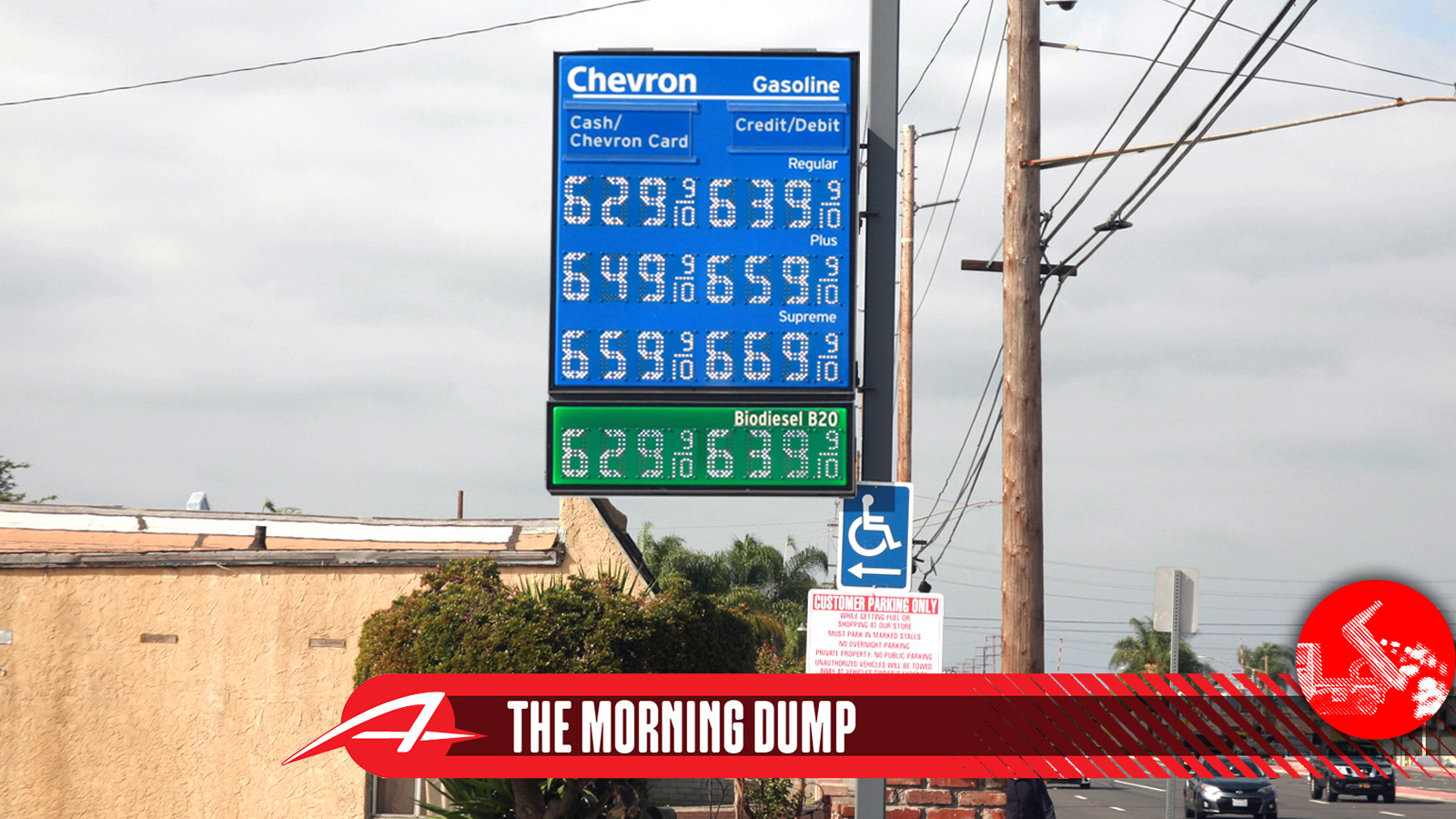
I suppose the silver lining for me is that none of my personal journeys are to California, where gas just shot up to above $6 a gallon. Some of that has to do with the War in Iran and the rest with some quirks specific to California. Average gas prices are up everywhere, of course, and it doesn’t look like it’ll be great for anyone.


The Morning Dump this week has been more dominated by quarterly financial reports than the war, and that includes the first-ever quarterly report from Stellantis. It’s, uh, it’s not great other than a windfall from tariff refunds. Ford’s report shows the company doing better, though it, too, will benefit from getting tariff money back.
You know who did great in Q1? Škoda! I know you’ve all been missing Škoda content.
Welcome To The New Fuel Crisis, Just Like The Old Fuel Crisis

According to GasBuddy, the average price of gas shot up to $4.31 a gallon today. That’s high. That’s the highest it’s been since the last fuel crisis that peaked in 2021 following the pandemic and the Russian invasion of Ukraine.
That’s a national average, though, and your fuel cost is going to depend a lot on where you live and what type of fuel you put into your car. I won’t get into crack spreads, but it’s gonna be a hard and long road for diesel owners for a while.
It’s going to be worse in California. It’s already worse in California, with prices going above $6 a gallon. On a national level, this is a direct result of the Iran War, which was started for… reasons. And while the United States has a lot oil, it’s more complicated than that.
For California, it’s way more complicated as Bloomberg mentions this morning:
California’s product supply is more challenging than for most of the rest of the US. No pipelines carry fuels into the state from the Gulf Coast, and the state has also seen two refineries shuttered since October 2025, eliminating roughly 20% of its capacity.
California is a bit of an energy island, and even if the Strait of Hormuz opens up tomorrow, prices aren’t going to immediately recover, at least according to oil market expert Phillip Verleger on his Substack:
California and the US West Coast can expect gasoline and diesel shortages soon. Extremely high prices (possibly above $10 per gallon) could be coming.
Several refineries in California have closed in the past year. The shutdowns have occurred as the state transitions away from gasoline. The transition is not expected to be easy, however. California Energy Commission Vice Chair Siva Gunda relayed this news to an audience on March 4, as OPIS reported:
“As we go down (in California refining capacity), this is not going to be a smooth transition,” Gunda said. “Demand is falling very smoothly between 1 and 2 percent. But when a refinery leaves, depending on the size of the refinery, it could be 15 percent, so you have that sudden imbalance.”
This is important for consumers, obviously, and for carmakers as well. Stellantis, Ford, and GM are banking on full-size truck sales and large crossovers to be profitable this year. Is that going to happen if $6 gas or $7 diesel becomes the norm outside California?
Stellantis Reports Profitable Q1, Large Tariff Refund
Prior to this year, Stellantis only reported half-year earnings. This means this is the first-ever Q1 report from the massive automaker known as Stellantis. Cool! Even better, the company is profitable:
“As we initiate quarterly reporting, the first three months of 2026 reflect the early results of our actions to return Stellantis to sustainable, profitable growth. The products we launched in 2025 have been well received and we’re confident that the 10 new vehicles planned for 2026 will build on this momentum. Our priority is clear: to put our customers back at the center of everything we do and we look forward to sharing more on this at our Investor Day on May 21 in Auburn Hills.”
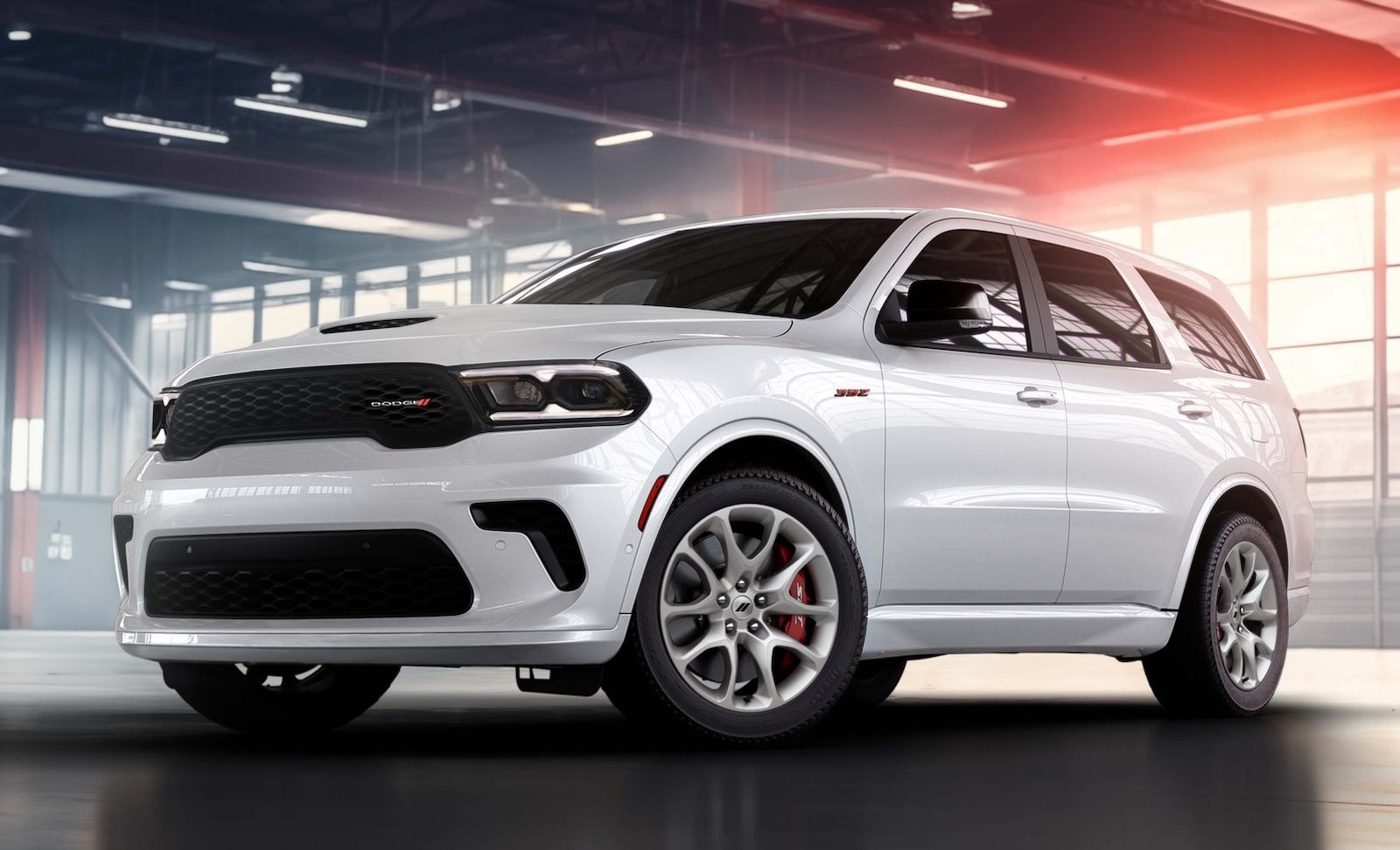
Earnings actually beat estimates, in part due to a $450 million tariff refund that the company is expecting this year. A lot of the rest of the growth came from RAM trucks and V8 Dodge Durangos. Why did the market seem to react negatively to this good news? Automotive News explains:
Shares in Stellantis on the Milan stock exchange were down as much as 10 percent in early trading, on weak cash flows and investors’ concerns about the sustainability of the turnaround in the North American market.
Industrial free cash flow was more than €1.9 billion negative in the quarter, although an improvement from a cash burn of more than €3 billion a year earlier.
It was “more negative than expected,” Oddo BHF analyst Michael Foundoukidis said, noting that it only included €700 million in charges out of a total of €1 billion expected for this year.
Stellantis will probably have to do more than pull a rabbit out of a hat one time to move the market.
Ford Also Profitable, Expects A $1.3 Billion Tariff Refund

The biggest tariff refund winner appears to be Ford, which is reporting a $1.3 billion expected return this year.
Our strong first-quarter results and raised full-year guidance reflect the momentum of the Ford+plan,” said Ford President and CEO Jim Farley. “We built the foundation for a more modern, resilient Ford, improving cost and quality and building our world-class team. We are well prepared to deliver for our customers and shareholders as we enter one of the most intensive product, software and physical services rollouts in our history.”
Added Ford CFO Sherry House: “The path to higher margins is clear, and the first-quarter demonstrates those building blocks in action. The strength in the quarter reflects strong execution in our profit pillars, and we remain on track to deliver our full-year cost reductions. When combined with accretive recurring revenue from software and physical services and decisive actions to improve our EV performance, we are driving a fundamentally more profitable business, allocating capital with extreme discipline, protecting our balance sheet, and positioning Ford to deliver consistently higher returns.”
Ford is, comparatively, in better shape than Stellantis. Margins are pointed in the positive direction, there are fewer drags on the business, and F-150 production should be able to kick up in the second half of the year.
Škoda Is The Second Most Popular Brand In Europe This Year

For all the troubles at Volkswagen, its Czech subsidiary Škoda is thriving. Would you believe that it’s the second best-selling brand in all of Europe, behind only Volkswagen and, as of Q1, ahead of Toyota? See, I’m not (that) crazy!
The company is also profitable, and just had its best quarter from a financial standpoint in its history.
“We carried the strong momentum of a record 2025 into the first quarter of 2026 to deliver the highest Q1 operating profit in Škoda Auto’s history. For the first time, Škoda has become Europe’s second best-selling car brand — a milestone we can be proud of in a highly competitive market.
Get down with your bad self, Klaus!
What I’m Listening To While Writing TMD
You ever discover a musician exists and you can’t imagine how you missed them? My new obsession is the latest album from the Icelandic jazz singer Laufey. That this is a thing, and that it’s apparently a thing popular with teenagers, is fascinating to me. I absolutely love it and have listened to the extended release of the album probably 100 times in the last two weeks. “Silver Lining” is my favorite track, which is very Patsy Cline in the absolutely best way.
The Big Question
How much did your last fill-up cost? If you have an EV, how much for your last full charge?
Top photo: DepositPhotos.com


Fuel in my part of Texas went back up from 3.39 to 3.69/3.79 at our local stations.
We charge our EV at DC fast charge stations almost exclusively. Those stations actually went down a bit in price the past 8 months as more stations opened and more competition has filled out.
I’ve been averaging 3.5-3.6 miles per kWh around town. with a $13 a month Tesla membership i can get prices as low as 16-17 cents a kwh at local stations, but 31 cents in the evening or 38 cents during the day.
I never completely fill the car, but my last 20-80% charge which is about 160 miles around town cost us about $7 with the tesla membership.
so my operating costs are running between 4.8 and 8.8 cents a mile since i avoid using the more expensive chargers that cost 50 cents a kwh or more, which would push my costs to 14.5 cents a mile. but our easiest to get charging usually runs 31 cents a kwh which is the 8.8 cents a mile.
so cost per mile as good as an 75+ mpg vehicle, or as bad as a 25mpg vehicle in my area.
Are you not able to charge at home? I can generally go for ~3¢/mi if I charge at home at southern Indiana prices.
no, i do not have access to home charging, if I did, it would be a bit cheaper still, but not as cheap as what you have access to, rates like that are few and far between.
I paid $2.54 for E85 in my truck the other day, and the price is basically unchanged now even sitting next to $4.99 regular and $5.99 premium.
Kind of crazy that my truck, which will struggle to reach double digit mpg on E85, is arguably the cheapest vehicle to drive per mile that I have right now.
E85! Living the Iowan dream.
Rarely makes financial sense, but when it does, it’s a nice alternative.
Having a stable alternative sounds pretty slick!
It won’t be stable for long. Ethanol prices tend to trail regular gas prices, but they’ll eventually catch up.
Prices for ethanol are based on corn and natural gas prices because those are the inputs. Natural gas is export limited so prices will remain low until heating season. Corn prices are still under $5 per bushel (enough to make 3 gallons) because there is a record amount in storage after farmers did not want to sell last year’s record harvest at a loss. The corn market is still over supplied. Eventually corn farmers are going to plant less acres and apply less fertilizer because of higher fertilizer and fuel prices, but not this year.
There’s no way ethanol prices stay low. They’re leaving money on the table if they continue to massively undercut regular gas.
One could argue that’s war profiteering, but somehow I don’t think anyone is too concerned about being prosecuted for corruption by this DoJ.
“They’re leaving money on the table”
This is assuming that the ethanol refineries were running at maximum capacity before the price spike. They were not. Instead of running at 70% output and making the most per gallon, they can produce more to maximize profit. Even if selling more requires a slightly higher discount, the overall profit is higher.
It is the same for my brother who has a V6 Silverado that he uses to tow his boat.
Kind of crazy that the manufacturers have done a pretty good job of selling trucks that can run E85, but have done a poor job of putting that technology into everything else. The 2026 Chevrolet Trax (and other 1.2L models) can run on E85, because GM decided to turn that part of the software on this year. Small displacement turbo engines are better suited for ethanol’s high octane rating, yet the manufacturers spend more money making it work in a 6.2L 16-valve V8.
I assume they got some sort of credit for doing it on the gas guzzlers.
Yeah exactly. The credit is worth more on low mpg vehicles.
Every car sold in Brazil has to be flex fuel. It is mandatory, so if GM wanted to sell any of their South Korea or Chinese built vehicles there it has to have the software. GM probably still only made small SUVs flex fuel in the US because of the credits, but only after they decided that the cost to obtain the credits was $0.
My Wife had the felx fuel option in her old 200S, it seemed odd to go the E85 route due to fuel economy differences, but we did on occasion do it. however, it was even more odd that the car ran particularly better on E85 as far as overall feel and strangely transmission engagement. I cannot and never did figure out why, but it made for trips into Gods country, aka Nebraska/Iowa much simpler as E15 and E85 were cheaper and seemingly more plentiful at the pumps.
$55-60 last fill up.
I know a bunch of people death gripping on to the phrase “but they were higher under Biden” I think a bunch of people think Biden was president for 248 1/2 years.
I was in Washington near Seattle just last week and (my company) paid $6.39 for midgrade. I know the block quote mentions the whole US west coast but everyone seems to just focus on California, but it do be crazy everywhere.
I filled up the Tacoma yesterday with the fuel light on for 10 miles, and it was $69.41 to the first click of the pump shutoff. Wish it wasn’t raining every day, would be less miserable to take the motorcycle which essentially doubles the trucks MPGs.
California is isn’t own thing because of their special blend for gasoline.
Oregon and Washington are also high because we do not have a pipeline to supply the refineries up in Washington. Oil comes in via ocean or rail. There is a gasoline pipeline that hits the northeast corner of Oregon and heads up into eastern Washington.
On some of my travel’s I’ve found gas is significantly cheaper in eastern Oregon. Looking at Love’s gas prices today today along I-84. Baker City, OR is $4.49 and Troutdale, OR is $5.19 for regular.
Thanks for the insight. Looking AAA’s website, King County (Seattle) is $5.83 avg and Asotin County in the very southeast is $4.87, which is quite the variation.
I’ve only ever been in the Puget Sound area in WA, would love to see more of it. The PNW has some of the coolest nature I’ve ever been too. I have a buddy in Oregon so I need to get out there eventually…
You should have filled up in Tacoma…gas is free there for Toyota Tacomas, right? Ha ha
Apparently not, AND they call the cops on you! Such BS. (I’m actually in Denver; maybe I should get a Kia, get some free gas down in Telluride).
I don’t worry about the cost of gas.
Mostly because we are “winning so bigly.”
Right?
And the Turd man is gonna send us all a 2K check to cover the increased costs, right?
BTW the huge orange Turd DNGAF about whether or not you can afford gas.
Or anything else for that matter.
We are truly fucked, again…
I filled my hybrid up at $3.50 a gallon last week it was $27 I think. I filled my daughters Subaru up for her it was $3.80 maybe 2 days later but there was a local refinery fire that always makes fuel go up. It was around $35. The leaf my wife mainly drives probably took around $3 to drive around and charge at home. Last time I took it to dcfc it was around $20 for a similar amount of energy.
I hope the ‘bros’ in the lifted diesel 1 ton commuter trucks finally get a feel for what they voted for…..
Filled up for $4.299 yesterday before everything spiked, but that doesn’t mean much when doing 700mi a week at 30mpg.
At that number my monthly vehicle cost is roughly $580/mo including insurance, maintenance, and registration. To make that math work in favor of a used EV, gas would have to be over $10/gal.
$133 for my namesake vehicle. Diesel here is almost $6 per gallon. Gasoline is ~$1 gallon less.
I’m not in California, but retailers here receive fuel from the California energy island Matt mentioned. We don’t have to drive too far to the east, relatively speaking, to find cheaper fuel that comes from eastern wholesale providers.
“Welcome To The New Fuel Crisis”
Given Canada is an oil exporter, I’m all for it. It’s a net benefit for Canada.
Oh sure, the people driving gas guzzling trucks and SUVs will get screwed. But most of those people drive those oversized vehicles because they WANT TO.
And that’s fine… it’s a free country. But they’ll get no sympathy from me when they whine about fuel prices. They made their choices… they get to live with the consequences of their choices.
I bought a C-Max Energi exactly because buying the most fuel efficient vehicle that suits my needs and budget is like an insurance policy against fuel price spikes like we are experiencing.
“How much did your last fill-up cost? “
My last fill-up (which was over 2 weeks ago) cost me about CAD$75… and I still have a half a tank of gas.
Note that I plug my C-Max in daily at home and elsewhere and at least two thirds of my driving is done in EV mode.
I’m so proud of what my country has accomplished
Ironically he may have just pushed more people into efficient vehicles and renewables than any polciy change could have done. So much winning.
If we had to split this post truth era into smaller periods, I’d call this one the play stupid games, win stupid prizes period.
MAGA FAFO
I would guess it cost me about $20 to put 6 gallons in my Prius. That was E15, which was well under $4 at the time, although that likely won’t last since E10 is up to $4.09 here.
I’m trying real hard to remember that I already daily a highly fuel efficient vehicle and I don’t need to knee-jerk buy an EV, but I do regularly wonder if I made a mistake passing on a very nicely priced Equinox EV near me. The good deals on used ones have all disappeared and at this point you might as well buy new.
And I fully expect things to get worse. Up until now we’ve still been receiving oil shipments from the Middle East that were in transit pre-Operation Epstein Fury, but I believe those have all landed now and there are no more coming behind them. Even if the Strait opens tomorrow, things could get ugly. I’m honestly a little concerned for my summer road trip this year. I normally tow my trailer to the mountains for a week, but if there’s a gas shortage I don’t know if I’ll be able to do that. Which doubly sucks because I won the recreation.gov lottery this year and actually got a good site at the super popular campground we stay at.
I’m not sure even the EV cost savings could get me to consider a Chevy over a Toyota.
FWIW, I’m on my second 3 year lease on Chevy Bolts with zero issues other than the battery recall on the first one. YMMV of course!
I was mostly being a typical snarky Toyota fan. I’ve actually heard mostly good things about Bolts and they wouldn’t scare me away if they fit my EV needs and were I EV shopping.
I’ve done a fair amount of forum reading for various EVs, and the biggest bugaboo with the Equinox seems to be the telematics module going out, which is annoying but won’t strand you. GPS and connectivity fail, but the car still works. Worst case, you use phone navigation until it’s fixed.
Also, the Prius is 20 years old and has lived its whole life in the rust belt. It’s getting to that age where even a Toyota starts to have regular failures just due to time. So far it hasn’t stranded me, but it has significantly inconvenienced me on a few trips. I was hoping to get another year or two out of it without any major failures, which was also part of my decision to pass on an EV for now. Trying to stick to my original plan, despite the temptation to make a snap decision.
Of course, the other side is that last time I planned to replace a vehicle was 2021. Because of the fun, world-altering events of that time period I ended up keeping it longer than I should have and did get stranded multiple times, then sold the thing for basically no profit because it needed so much work. At least the last part won’t be a problem with this car because it’s already basically worthless from a monetary perspective. 😉
I was mostly being snarky. Yes, even old Toyotas have a time when they should be put out to pasture. I’m still a bit wary of the Equinox EV, but they seemed to do mostly good with the Bolt and they should have learned a lot through that run. It’s priced reasonably.
16 gallons of 93 octane 2 weeks ago at the net Costco price of about $4.50 stung, but it works out to $0.19/mi, which isn’t THAT bad. It would get a lot worse if I had to do more city driving. It would get worse still if I had a car payment and/or something new and valuable enough to be depreciating.
Sometimes it feels like it is that bad, but then I look at how many years of savings can be cancelled out by a single turbo, high pressure fuel system, or high voltage electrical system failure and I’m happy with my N/A, port injected V6.
Just don’t tell me what a new dual mass flywheel costs.
$4.09 for gas here, and the wife’s Kia was just shy of $70 to fill it this morning.
Meanwhile, I charge my car once a week at home for about $4.
I just took a couple road trips in ID, OR, and WA. With the PHEV, the gas prices weren’t too painful (usually a bit over 35 mpg), but I was paying $4.39/gal to $4.99/gal for regular unleaded. My electric rates make my commute much cheaper than the road trips (just under 10 cents per kWh, and I get about 3.5 miles per kWh on my commute, generally). I haven’t used a public charger in a bit, but my workplace offers 15 cents per kWh, so it’s still a lot cheaper than gas, too.
Cheap hydropower really helps me out, at least until the big data centers build up and ruin that.
$27.00 for 7 gallons of 87 but on the 23rd at $3.96.9.
2015 Honda Fit averages 35 mpg.
The Si really wants premium, so my last fill up wat $57, two weeks ago. I had to do a bunch of running around yesterday so it’ll need gas again. Time to get the Lx back on the road so I can save over $20 a tank.
So far in north Alabama it’s hovering between $3.59 and $3.89. It tends to always be lower than the national average around here.
“How much did your last fill-up cost? If you have an EV, how much for your last full charge?”
I WFH and drive maybe 3,500 miles/yr.
Filled up the Corvette with premium 3 weeks ago for ~$60. Still have over 3/4 tank remaining.
Filled up the Pilot 2 weeks ago for ~$35 (with $1/gallon off from Kroger). Still have 3/4 tank remaining.
Bought my wife a 2026 Toyota BZ XLE Plus 3 weeks ago for her 40 mile daily commute. We are driving the ICE cars very infrequently now.
We are using a Level 1 charger until we can get a Level 2 installed.
Charging at .13 cents/KWH. Averaging 4.2 miles/KWH…I think. Still new to this EV thing.
It is a good day to ride my motorcyle with 60+ MPG. It just needs some new tires (not necessarily worn out, but are well over 10 years old) and an inspection.
Filled up the li’l pickup yesterday on a hay run for a little over $60, the 4-cylinder and stick-shift will happily haul 1/2T and get 24MPG. Gotta put air shocks on it though.
Woo Hoo! Today I got a full tank of gas for $25 🙂
It was for my lawnmower but I’m trying to stay positive. 😉
Ethanol free?
No, 10% Ethanol.
duplicate post deleted.
I am… starting to re-think using a Ram TRX as a daily driver… Honestly, if I didn’t have the incredible good fortune to have a job where I can work from home, I would have probably traded it for something much more economical by now, but I am hoping that by spreading out trips to the grocery store, I can make it last until we recover… hopefully…
If you can afford a TRX, gas prices shouldn’t really impact you.
It is a truck, just do the once a month costco run.
I filled up my ’66 Biscayne this morning with non-ethanol 87 at $4.54/gal. and it clicked off at $67.80 to fill it from 1/4 tank. I bumped it ahead to $67.89 because it made the numbers more fun. I also had to add a bottle of lead additive, which is now almost five bucks. Just driving to work and back, this should last about a week and a half.
I’m still looking to replace our 2012 Volt (now my wife’s car) with something fully electric. I’m actually surprised at some of the deals still around – particularly on Equinoxes. However the cheap, used local Bolts seem to have disappeared. Of course, there always seems to be new bill creeping up that reminds me how much I don’t want to get into another loan since I don’t have the cash on hand for what I want. This last week has been a doozy:
Some necessary tree work I was unable to do myself: $1,000
Unexpected plumbing work – cast iron pipe replacement: $1407
Infected cat tooth and re-upping shots plus flea meds for two little furballs: $340
Wife’s dentist visit: $440
Life, it gets expensive!
I hope you mean lead substitute and not actual lead additive.
Actual Lead additive is significantly more expensive than $5/tank.
“Actual Lead additive is significantly more expensive than $5/tank.”
And it should be so it’s only used in circumstances where it’s absolutely necessary… and then, used judiciously.
Correct – lead substitute, “MAG1” to be specific. It used to be around $2.50/bottle at the local Theisen’s, but suddenly jumped up past $4 sometime during the COVID supply disruptions. NBD compared to other price increases, but every little bit annoys.
Around here ethanol free is (or was a few days ago) $5.50 per gallon. Only 90 octane is available.
Ouch! We’re spoiled here in central Iowa: 87 non-ethanol, 91 non-ethanol, 87 E-10, E-88 (E-15 with its dumb and confusing marketing), and of course E-85. The only thing over $5/gal so far is diesel, also available at my local station where all of the above are options.
I’m generally buying for my lawnmower, so it’s not a big deal, but a bit of sticker shock when you compare it to regular (89 octane) at $4.00.
It was around $45 to fill a CR-V. I only paid $3.19/gal last week when it was cheaper since I got a discount using points through Murphy USA. Using their app, once a week you can acquire points for free. The most I save though is through the 7-11 app which I highly recommend. They don’t have all promotions all the time, but the last time about a month ago I was able to get 6 different discounts at once to save a total of .69 cents per gallon (nice)
-Text SAVE promo .25 cents/gal
-Loyalty deal .03 cents/gal
-Text DEAL offer .30 cents/gal
-Member deal .05 cents/gal
-Price Lock .03 cents/gal
-Wallet offer .03 cents/gal
(paid through 7-11 app)
Of course it helps that I’m in TX w/ a lot of refineries, it’s only around $3.70 right now
The cheapest gas is at Taco Bell!
Ha ha
“I can get 70 miles to the gallon on this hog!”