


The $24,950 Slate EV pickup truck’s most polarizing feature is its crank windows. It’s such a primitive, old-school feature that no other car in the U.S. offers it. So I, someone who has driven many cars with roll-down windows, decided to review that feature and see how it compares with manual windows of yore. It turns out, Slate’s crank windows are just as bad as pretty much any manual window from the 1980s and up.
I think the average person overstates how bad manual windows are. The truth is, back in the day, manual windows were actually quite good. They did suffer from the issue of being out of reach on every door except the driver’s, often yielding loud and uncomfortable buffeting at highway speeds. But outside of being tough to reach, the actual cranking of the window was legitimately easy and far less annoying than the big Power-Window-Lobby would have you think.


I know this because, for a decade, I owned a 1985 Jeep J10 whose manual windows required only 3.5 cranks to lower from top to bottom. That Jeep J10’s replacement, my 1992 Jeep Comanche, takes 5.5. In fact, pretty much every crank window-equipped post-1990 vehicle I have driven has required at least five cranks to raise or lower the window, and the reality is: Anything more than 4.5 turns and you run into the issue Kevin Hart so eloquently describes in this iconic Conan-Teaches-Staffer-To-Drive video:
Hart is right; it’s hard to look cool if, to lower your window, you have to lean down and crank a bunch of times, and I’m hereby declaring that “a bunch of times” is 4.5 or above. Let’s look at the Slate’s crank windows, which the company says it struggled to source, resorting to a single viable supplier from Brazil.


The handles, like most 1980+ window cranks, are plastic. They feature a grippy roller at their ends — a roller whose color you can personalize. Here’s an orange window crank roller:

And here are a couple more window crank roller colors (you can also see HVAC knob bezels and key fob trim):

The plastic handles feel OK for a modern car; not overly flimsy compared to newer cranks, reasonably grippy, and an OK size. But the bigger issue is the number of cranks required to raise or lower the windows: six.
How Many Cranks Required?: Vintage Cars vs. The Slate
View this post on Instagram
Six is totally acceptable for a modern manual window crank, to be sure. My brother’s 2023 Jeep Wrangler JL — the last vehicle prior to the Slate to offer manual windows in the U.S. — requires six, as well. And admittedly, I do know some older cars that require that many, too; I recently tried out a 1970s AMC Pacer and the number was about six, as well.
But many, many old cars land below that coolness threshold of four and a half. Take Jason’s Dodge Tioga RV; it only needs 3.5 cranks from full-up to full-down:
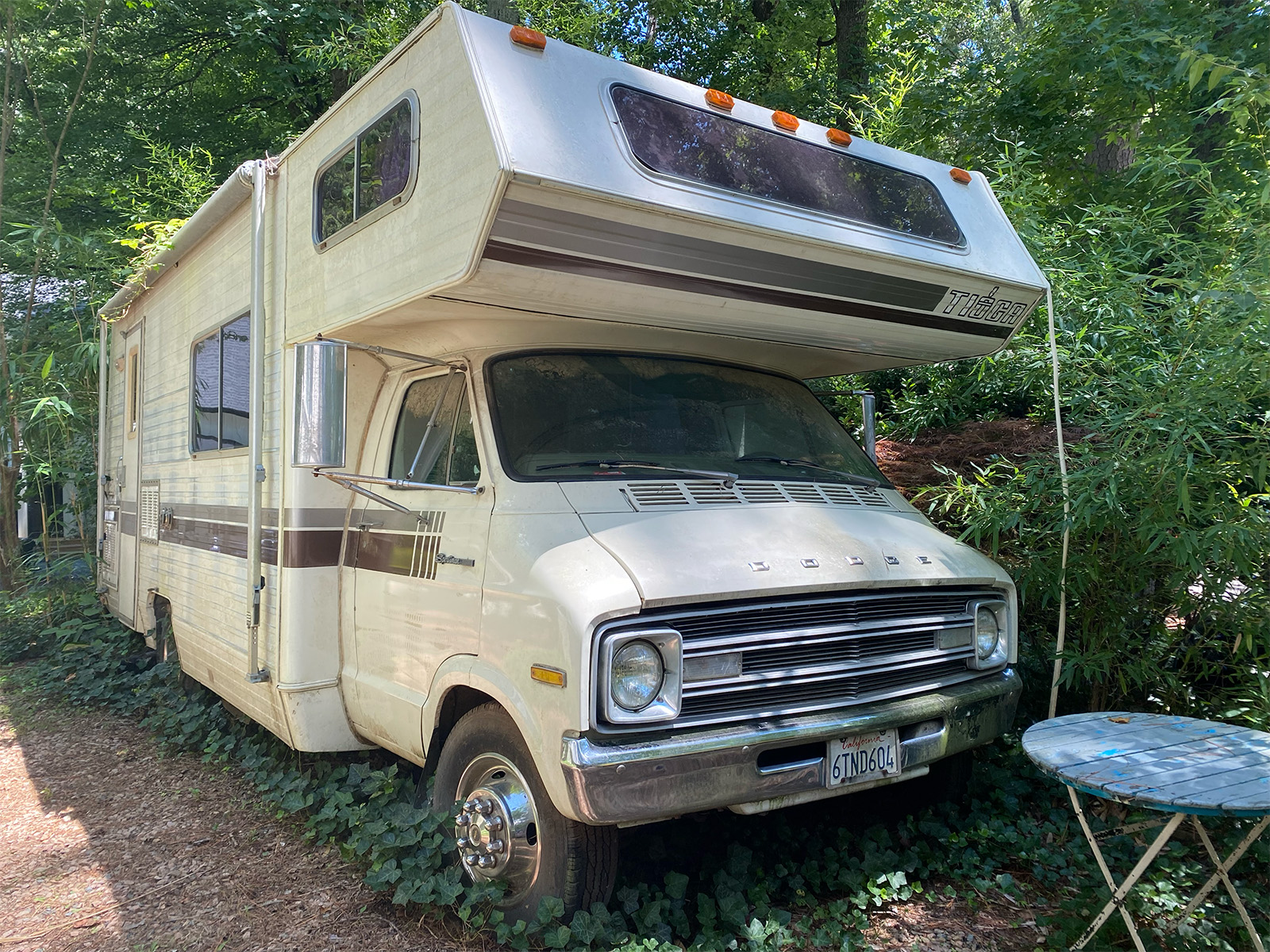
How about this Renault Dauphine? It also needs just 3.5 cranks between closed and open:

This old Nash Metropolitan (technically this is a Hudson) only needs 3.75:

It’s not really about looking cool; it’s just about usability. And lowering the manual windows on these vehicles is much, much more enjoyable than lowering the windows on the new Slate or a recent Jeep Wrangler or my Jeep Comanche. Nobody wants to have to crank a handle six times to get their In-N-Out.
Why Are Older Cars’ Window Cranks So Much Better?
I don’t know the definitive answer to the subheading above, admittedly, but I have a few theories. The main one is this: When power windows became popular, automakers wanted to fit the smallest, lowest torque motors into the doors as possible. Why waste space and pay extra for a torquier motor when you don’t have to? In order for a small, relatively low-torque motor to raise and lower a window, that motor has to leverage a mechanical advantage — something like a worm gear that takes lots and lots of rotations from the motor and turns it into a slight amount of up-down movement.
Since motors can spin quickly, even when lots of input rotation yields relatively little up-down motion, the window can still raise and lower quite quickly. The issue is, when someone chooses a base car with manual windows, rather than replace all the mechanisms in the window regulator, my theory is that automakers just put a crank where the motor’s output shaft was. So, since the small motor spun quickly to multiply its torque to raise and lower the window quite quickly, now your hand has to crank that window a bunch of times just to get the glass up and down.
That’s my theory; your hand makes tons of torque so it doesn’t need mechanical advantage, which is why you should have no issue raising and lowering a window with just a few cranks. But small motors (which are cheaper and offer packaging advantages) do need a mechanical advantage, which takes lots of rotational input and yields a little bit of window motion-output. Automakers replacing the motor with a window crank yielded a worse and much less cool looking experience for the user.
It’s also possible the change from the classic scissor-style mechanism to the pulley-style mechanism was the main reason behind the death of few-crank windows. I usually don’t embed random, humanless YouTube videos with animation and monotone narration, but the one above from Sabin Civil Engineering is actually legit.

It shows how an old-school scissor-style window crank works. You’ve got a handle that spins a pinion gear, which moves a partial ring gear attached at the center of its arc to an arm. That arm rotates about a pivot point, with the other end of that arm attached to the window track. So as you turn the crank (and thus pinion gear), the ring gear moves up, rotating the arm, pulling the window track and thus the window down. A second set of arms is added to stabilize the other wide of the window, hence the “scissor” name.

It’s a super basic system, and when electric motors joined the club, it was adapted to include a worm gear torque multiplier/mechanical advantage:

And the hand crank used this same worm gear to minimize complexity (and reduce overall vehicle cost):

The video also mentions that the worm gear may have been added to prevent theft (i.e. to make it so that the crank can raise and lower the window, but when the input is the window, the crank will not turn, and thus will prevent someone from trying to open the window by hand).
Obviously, the Slate doesn’t use the Scissor style mechanism shown above; pretty much every 1990+ car uses a pulley-style manual window. CarID (admittedly, not the best source, but it’s what I have and it seems plausible) describes why this style of window regulator became popular:
Cable-driven window regulators have become popular with automakers in recent decades because their compact size provides more room inside the door for safety beams and airbags, their lighter weight contributes to overall fuel economy, and the integrated assembly reduces manufacturing costs. However, they actually have more parts and are more complex than scissor type regulators.
Here’s a look at what this system looks like, per the aforementioned Sabin Civil Engineering YouTube video:

The motor spins a worm gear, which spins a round gear with an integrated pulley, which pulls a cable, which raises and lowers the window. The theory about parts-commonality between electric regulators and manual regulators contributing to too-many-hand-cranks still applies, though there may be some other element of the pulley-style design that is contributing to excessive cranking, as I rarely see modern, pulley-style cranks that are as efficient as old ones.
And by efficient, I mean, they take fewer rotations to move up and down; in terms of literal efficiency, the pulley-style mechanisms are better as there’s less friction. They’re actually quite smooth when they’ve been properly maintained, though the old mechanisms aren’t too bad, either, and based on my experience, I’ve found the older ones to hold up as well or better than pulley-style mechanisms due to their relative mechanical simplicity.
Not all 1990s+ cars use the pulley system. I just bought a new window regulator for my 1994 Jeep Grand Cherokee, and it’s the scissor-type:

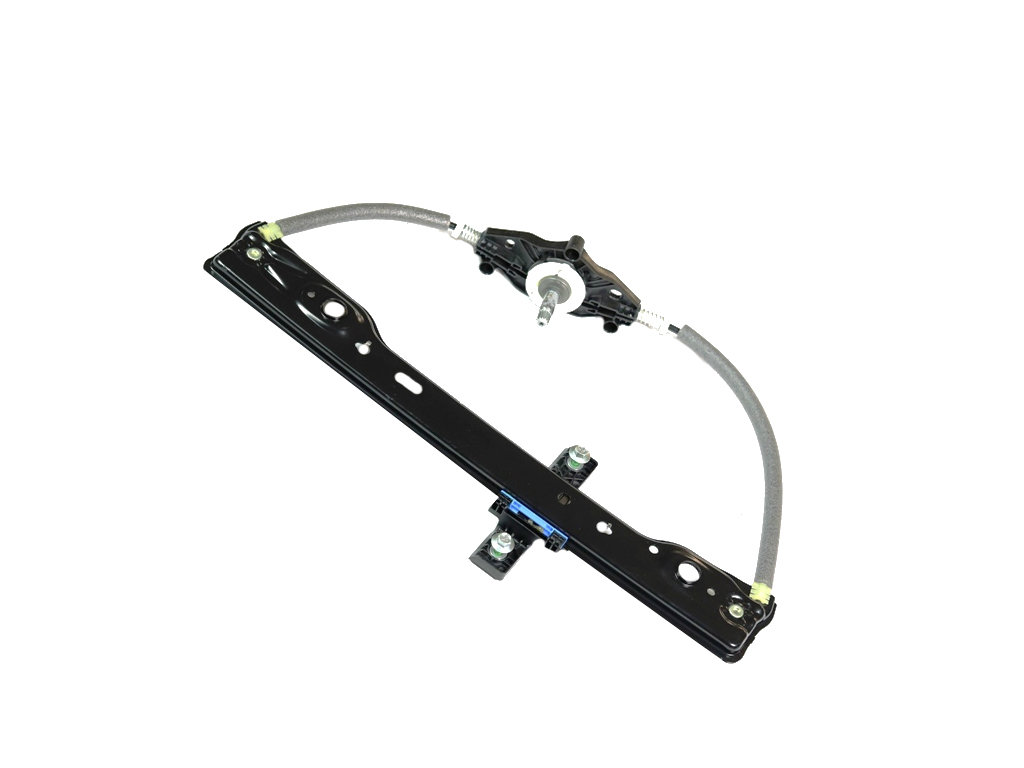
For reference, here’s a modern window regulator from the same Jeep Wrangler my brother owns (the one from the Instagram reel before):
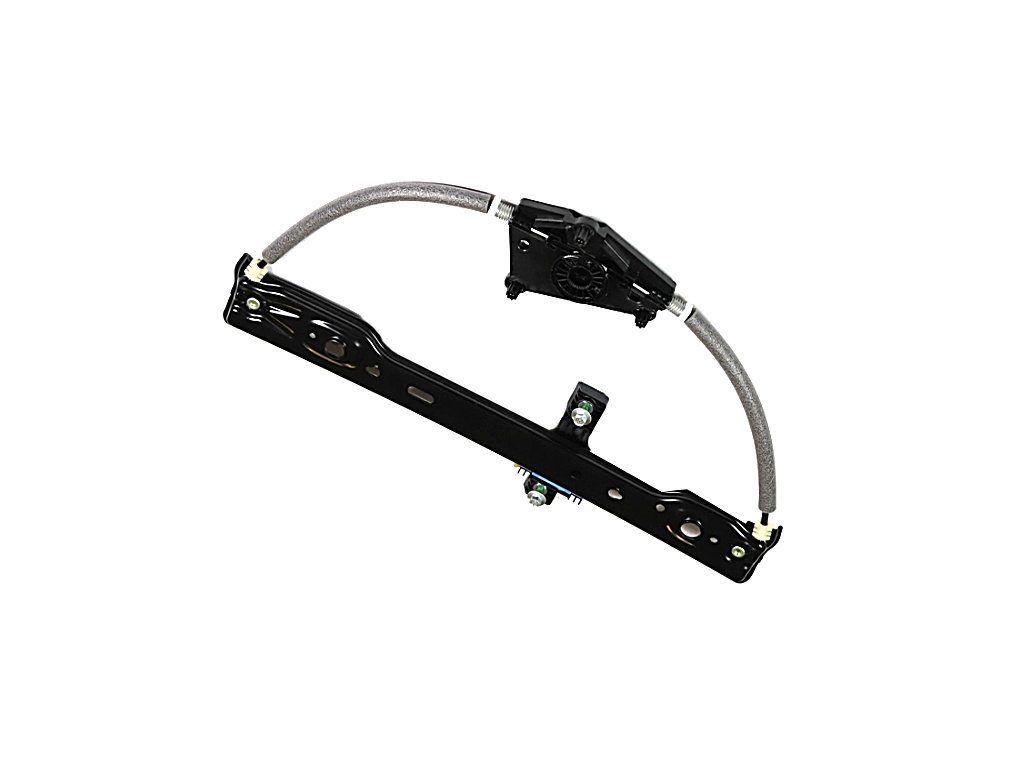
The power version of this regulator looks like this, if you’re curious:
Old-School Crank Handles Were Metal, New Ones Are Plastic
The video below — an excellent one that I highly recommend watching — shows a 2001 Toyota Camry, and it still utilizes the old-school scissor mechanism, too. It requires under five cranks from full-up to full-down, though as the narrator, speedkar99, points out, cranking the window “is a lot of work.”
It’s true. Scissor-style mechanisms aren’t as smooth, and what’s more, more cranks means less torque required to get the window up and down. That’s not a huge deal if the window crank isn’t short and if it’s made of something sturdy. That was the case back in the day; the window crank Jason is using in the Instagram video shown before is beautiful:

My J10’s window cranks were nice, too:

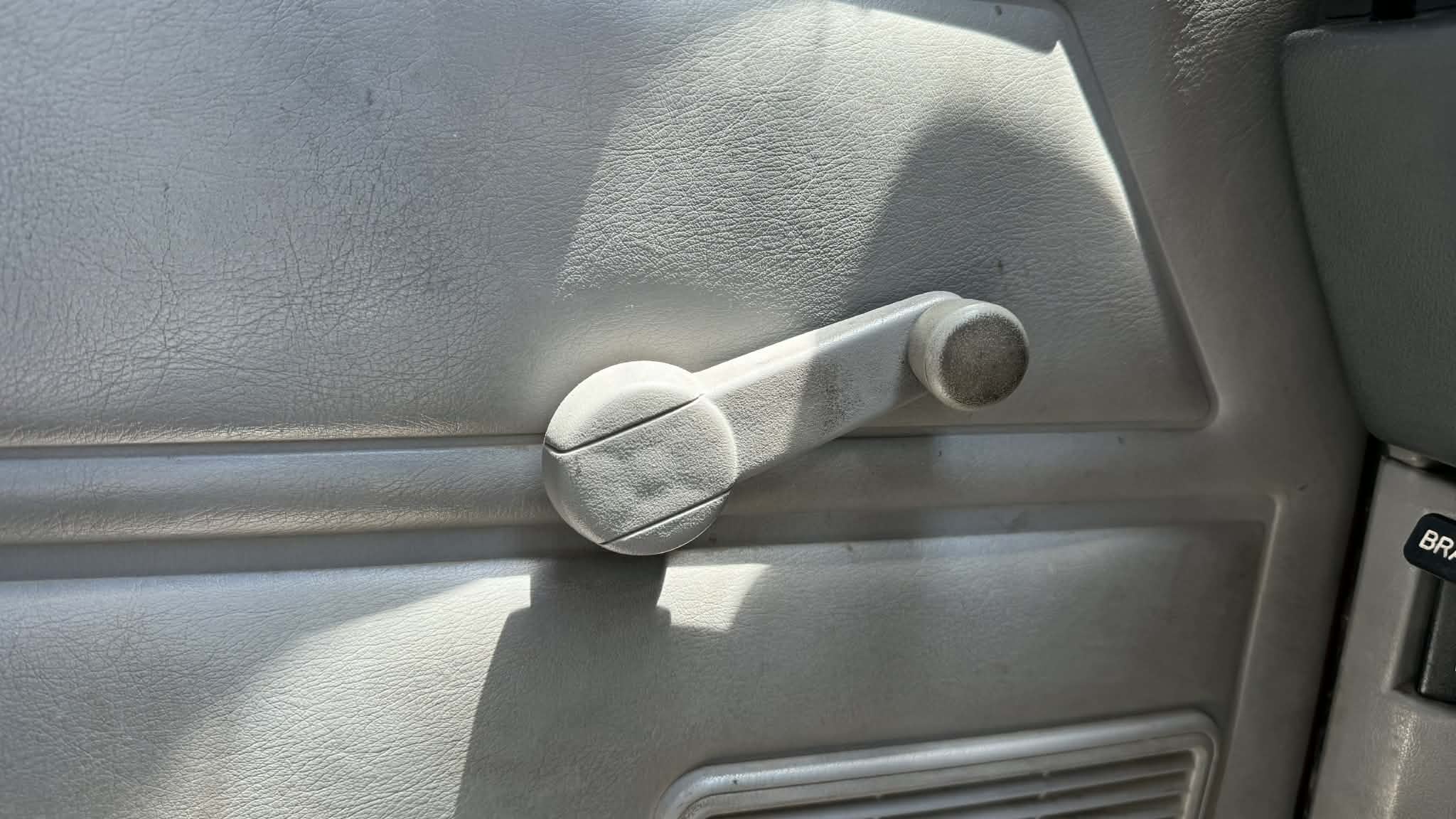
Meanwhile, look at the window crank on my 1992 Jeep Comanche — flimsy plastic garbage that I’ve had to replace once already:
I’m Still Happy There’s A Crank Window Option
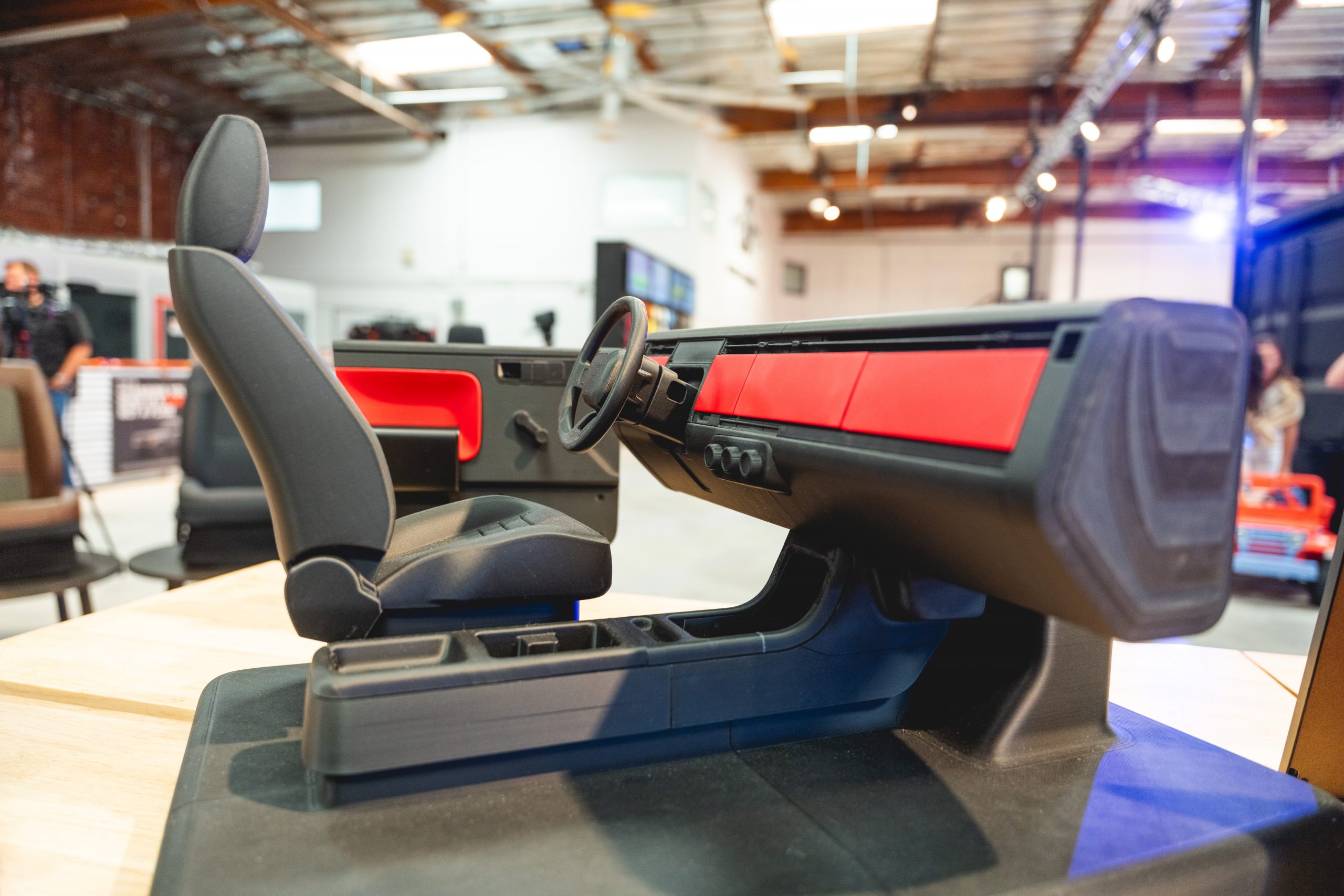
So yes, the Slate is bringing back crank windows, but not the ones you love. Still, even if the cranks are plastic and they have to be turned six times to get the window down, I’m grateful they exist, as simplicity is the key to longevity and low operating costs.
Update: It is worth noting that side impact safety may have played a role in the change of crank windows from scissor style to pulley style. Safety, of course, is much more important than window crank-ability.


When I lived in the caribs I had a 1990 Toyota Corolla Cielo with manual windows but I only had 1 hand crank so before every journey I would walk around the car rolling the windows down and then when parked do the same.
I’m good on hand crank windows, I don’t ever need to use one again unless the car is extremely cool.
I too was happy to see that tech go the way of the dodo (until the slate resurrected it).
Thanks for the deep dive into hand crank windows.
I am really surprised that SLATE pulled the option to add power windows in the initial release. though honestly I thought the ones I saw in early vids and pics looked like they came out of a JC Whitney catalog. Seems like a big miss and that alone would be a show-stopper for me, seeing there are/will be other options for entry level EVs, and/or low cost trucklets.
I’m still convinced going with power windows would have been a lower cost play from the get-go than going to a single-source supplier of manual cranks from Brazil. Power windows might be marginally less reliable than hand cranks, but they’re not exactly new tech and repairs, if ever needed, should be very simple. The very slight increase in repair probability is, IMHO, well worth it for the convenance of being able to open and close windows without having to contort and stretch.
Same for power mirrors. Another miss from SLATE (plus I’d add blind-side monitoring to the list, but that’s a different discussion).
Still never say never. I wish SLATE well, hope they make it, if for no other reason to keep all the other entries honest and competitive.
They had to skimp on power windows, but they can afford to get us all to stylize the name Slate as SLATE. If this thing is a flop, I foresee articles calling it stale. STALE?
I’m still not convinced that manual crank windows are less reliable than power ones. I’ve had to fart around fixing more manual crank windows in my life than power.
Time for a poll!
What’s next? Hand cranked sunroofs?
You say that like it’d be a bad thing. (Our Mazda GLC had one, worked great.)
Yes! I loved the hand crank sunroof in my ’81 GLC sedan.
My buddy’s hand crank sunroof in his XR4Ti still works. The electric one in my w126 did not.
Pish. The sunroof in my (long gone) ’64 VW bus was all manual. Cranks are for the lazy.
I love hand cranked sunroofs in older Volkswagen products! Charming.
See – mid 2000’s Ford Focus
Up until about last week I would have been in the same boat as most here saying that power window reliability has been solved, but considering the power passenger window on my 350Z refuses to come back up now I can see the appeal of crank windows.
Think the last car I drove that had them was my grandfathers 1990 F-150. Those had crappy plastic handles too, but they always worked despite the rest of the truck being rusty as hell.
Manual ones can break too.
And someone should tell BMW that the engineering has been solved and the regulators shouldn’t break anymore.
Just needs another gear or two between the crank and the mechanism, if there’s room.
It’d be fun to replace the cranks with metal machinery handwheels, like from a lathe. Possibly very unfun in an accident though.
I suppose you wouldn’t want a crank to have too much mechanical advantage, you wouldn’t want to squish a kid’s neck because the crank turned. No obstacle detection in a manual crank window.
There is absolutely obstacle detection when using a manual crank window.
Presumably, the person turning the crank would notice that they were strangling a child.
How about this: you’ve got a plastic handle and a metal mechanism. At some point, that plastic is going to break, precisely where it joins the metal. The amount of torque transmitted from plastic to metal probably has an outsized effect on handle failures.
Oh, and I remember electric windows from the 70s. Cranks can be more reliable, but not the ones they have today.
The self-lubricating plastic that the rollers or sliders were made of would eventually disintegrate. The same stuff that made the otherwise bulletproof Kodak slide projectors, Singer sewing machines, and anything else designed in the 60s and 70s with a cam mechanism fail with age. Pot metal would have cost pennies more and would still be working.
This.
Just take the handles off and keep a cheap rechargeable drill (Harbor Freight or craigslist drill maybe?) in the vehicle with the correct bit, and the windows roll down much more quickly and without resorting to armstrong power.
I love the idea of keeping some crappy Bauer drill with some awful Torx, or even better security Torx, or god help us e-torx (for the Germans, because nothing is good enough until it’s worse than it was before), bit on it.
Better invest in a good extension to get the passenger side while you’re at it.
That would make a great impression on a first date.
I once had a lady I was interested in, but had just met, give me a ride back to where I was staying. In the car she (mostly jokingly) warned me against acting a fool with a ball peen hammer, and that absolutely made me even more sure I was attracted to her.
Even better, a giant rod that connects driver and passenger side so you can roll both down at once!
That would make one go up and the other go down, unless they are like hot and cold water valves and are right and left handed.
Are window winders handed like knock off wheels, and 1960s Mopar lug nuts,
Now I’m going to have to investigate chirality in old car window winders. Looks out at the TR3 and VW Thing – well that’s no help.
Imagine connecting a bunch of swivels and extensions to make them both come out next to each other under the dash. Then you could use the good old DYMO label maker to make Driver and Passenger labels. 🙂
Another hypothesis: the scissor style window mechanism has a clock spring to act as a counterbalance. That reduces the effective weight of the window, meaning less force is needed to raise the window. With lower force required, less gear reduction is needed, and thus fewer cranks for full travel.
Seems like a spring based counterweight could be added to a cable system (like in most modern house windows) but that would take up space, add weight, and so on.
So the manual windows saved them $40. I find it hard to believe manual locks wouldn’t be cheaper than electric, but then I guess they couldn’t upsell you on the wireless keyfob.
Yeah, especially when power locks really aren’t different than manual ones, just without the actuator
All right, David, this makes two days in a row you’ve made me go outside and hand-crank windows!
Yesterday I determined that my 2010 GMC Canyon took around 5 cranks from full closed to full open. Compared to six with the Slate.
Now that I read this article, I had to check the 1977 MGB. – A smidge less than 2.25 cranks from full closed to full open. At exactly two cranks, the window is still up about an inch.
Both the MGB and my Canyon are easy to roll down the passenger window while driving just by reaching over. And I’m only about 5’10”. The best thing about the MGB is that not only can I roll down the passenger-side window while driving, once that window is lowered, I can reach out and adjust the passenger-side door mirror, too!
Woh woh woh. 2.25 cranks?!?!
Yep. I even went back out there and checked the passenger side. It’s the same. 2-1/4 turns from fully closed to fully opened, or stop-to-stop.
Small windows?
11-1/4″ from the top of the rubber seal on the door to the top of the glass when fully closed.
Yes, you made me go out there and measure it, but we are planning on taking it to the A&W drive in for dinner shortly so I had to go out there and take the car cover off of it anyway.
I remember my brother’s MGB and also his Jaguar 420 were at around 2 cranks. He loved getting BMW and Mercedes fans to try them…
How do you tell a stranger in the Internet you upvoted their comment because they went outside and made sure their MGB window really truly only required 2.25 cranks, a mere 810° of rotation, to go from full open to full close?
I think you just did. 🙂
1989 Ford F150 – 6.75 cranks
1971 Opel GT – 6.25 cranks
1996 Rover Mini – 4.75 cranks
If Autopian had gift subs like Twitch, I’d give you one for that.
My 2000 Saturn SL had crank windows. I don’t remember the number of turns, but I could definitely reach all 4 windows (and locks) from the driver’s seat!
Interesting stuff. What I remember from that era, more than actual rotation count, was mostly that some had smoother operation than others. Like, sometimes you had to really line up your hand-cranking on axis to get decent movement, while others would work fine with extremely approximate grips (eg fingertips, or sort of rolling the handle knob between index finger and thumb).
My ’86 Grand Am, mostly a crappy car, did have good cranks: in summer I could get in and roll down 3 of the 4 windows from the driver’s seat before leaving the parking lot, and then manage the 4th at a stop sign.
I kind of get what they were going for here but I think most people are not going to like this particular “feature”
I go back and forth on this “feature.” I regularly put my windows down, and these days even having to hold down the passenger switch in my car vs auto up/down on all four windows in my wife’s car gets on my nerves.
I am skeptical that manual windows are in any way more reliable than power windows. The switches are pretty simple and basically solved at this point. Since the internal regulator is still the same it’s not like that’s more or less reliable, and I’ve seen plenty of old cars with busted manual cranks or vice grips as cranks.
But I also like the nostalgia of it and think it would be fun to have my kids get that experience.
In the end, I think it was the right call in this. Not for practicality’s sake, but because of just how much attention people give it.
I’ve got assume that they think some old men and hipsters are gonna think the crank windows are cool (the hipsters) or more reliable (the old men) and not opt for power windows. Because assuming they don’t tie the power windows to some expensive option package, that’s the way everyone is going to go. Do a mind having manual windows? Not really. But for $200 I’ll check the box for power.
I’d bet the power windows become standard in the second year.
Brb gonna drink a bunch of beer then use the empties to sandcast some aluminum crank handles for my Slate in my backyard
Now that’s dedication. Making those molds must be tedious!
The mold making should be easy – pull off the handle and press it into the sand. Getting the chemistry right and avoiding inclusions – well, you could spend a lifetime making that better. Btw, holy shit do we have some hardcore folks in this commentariat!
I know you are making a funny, and I did laugh. However, I am curious how that would turn out. Those Beer cans contain 3 different Al alloys, none of which are suited for casting.
When I eventually do this, I will let folks know. I will probably buy some proper ingots to do some not-horrible casts first before the Redneck Engineering attempt.
I have a bunch of alloy wheels that I’m breaking down and melting for very similar purposes.
I’ve got something like 80kg of mostly-can aluminum that I need to do something with too. First step is probably to make a useful alloy of it.
Huh, the window regulators in my air-cooled Beetle don’t look anything like the ones posted. I haven’t had them out in like 18 years but I seem to recall a long metal tube, with coiled metal inside and some kind of plastic brush-type material within the coiled metal. I spent hours degreasing and lubricating them, and when I reinstalled them the windows were a bit easier to roll up. Rather than needing two hands, you could muscle them up with one. Not ideal, but I didn’t want to fuck with it any more. At least they’re easy to roll down.
I had to buy the high-quality German made window cranks, because using anything else resulted in the crank knob breaking off after a few months.
I’ve also had to replace a power window motor or two, which was infinitely easier than servicing the Beetle’s manual windows.
The window regulators in my Volvo 66 GL are also of that type. It works well enough until some of the coils develop flat spots and therefore no longer fully engage with the drive gear, resulting in dead sections of travel within which turning the handle produces a clicking sound but no additional movement of the glass:
https://dafhobby.com/wp-content/uploads/2021/10/261370G-1-1.jpg
That sounds like a sunroof drive cable.
The more and more we talk about the less sense it makes to have crank windows today.
Especially in a car that has power-other things, as demonstrated by the picture of the door showing power locks.
Isn’t this just one of the things they have done to be cool with car enthusiasts but not only nobody really wants, also it’s just worse?
I like manual windows even if they do make me cranky sometimes. In more than 50 years of car ownership, I never had a manual window mechanism fail (they can, I know; fixed a few when I worked in a garage). Power windows? Another story. Broken cables, burnt motors, shorted switches have all afflicted my power window cars at one time or another. Not frequently, by any means, but enough to make me miss the cranks. I wonder if longer metal cranks will be an option for the Slate?
I haven’t has as long a history of car ownership, but I have had a manual window fail and the worst I ever had with power windows was one that got slower. A couple power locks failed on me, though.
I will say that power window failure does seem to be worse than manual, when I’ve seen it. People will think they have the window locked in the up position and it just ends up down after a bit. Or it shorts and goes up and down whenever.
What I wouldn’t mind seeing is a manual driver window and a power passenger window. My dad had a log truck with that setup and it was pretty ideal. No reaching across, but manual on the side that’s going to see the most wear and tear. It’s unrealistic to expect it, given that it’s almost certainly going to be much cheaper to have them both the same either way, but it’s a nice setup.
I’m in agreement I’ve had 3 window motors and the entire pulley system that I’ve had to fix, never had a manual one break.
I hope they release power windows for this thing. Add it as an option for $200.
A good friend back in France in the early 90’s had trained his (very long) arms to smoothly crank the window up and down without moving his shoulder, to give the illusion to the outside world that his Mk2 Golf Gti had electric windows.
That one was fun. The one where he’d drive with all windows up in scorching heat to make people think his Golf had also had an AC was less so.
I trained my (also long) arms to smoothly steer and shift my friend’s Super Beetle from the passenger seat (along with my feet reaching over to the pedals).
It was always fun having him jump in the back and driving around looking like no one was driving.
That is hilarious!
On my list of things that concern me today, how many cranks to operate the Slate window is way down there. Like will the milk I buy this weekend have an expiration date of 7/10 or 7/11 level of worry. It has crank windows, cool.
I think there is actually an interesting connection between window cranks and steering mechanisms.
In my friend’s 1968 Plymouth there is no power steering. However, the car was designed with a set of gears in the steering box that provide very easy steering at the expense of making several (4-5?) turns of the wheel to go from lock to lock. The car also came with a large-diameter steering wheel to provide an additional mechanical advantage.
The result is a simple, reliable, and very-easy-to-actuate steering mechanism that would be awful for autocrossing but is quite nice for random driving around.
The original high-number-of-revolutions window cranks seem to be philosophical cousins of this type of manual steering.
Yeah, the steering wheel in my Super Beetle is so big it looks like it belongs on a bus or maybe a boat. The lack of power steering really isn’t bad, until you need to parallel park or maneuver at low speeds. Even without an engine up front, you’ve gotta put some work into turning the wheel when stopped or moving slowly.
Not-especially-fun fact: I broke the steering box on my ’72 Super Beetle by running 195/50-15s on the front.
(I had 195/50-15s on the back too, but I don’t believe they contributed meaningfully to the problem.)
As I learned the hard way on my 1967 C10, several turns and a large diameter wheel will indeed make it easier to turn the wheel, but if you’re driving off-road, make sure to keep your thumbs outside of the interior of that steering wheel. If you hit a rock or a rut, that wheel is going to spin so fast that your thumbs will pay the price if they’re inside when it spins.
Thanks for bringing back that painful memory. 🙂
Sorry about that 🙂
Though IIRC the thumbs-outside-the-wheel thing is recommended for all off-road shenanigans regardless of vehicle (not just on old manual steering boxes)
There’s a simple solution right in your kitchen.
https://youtu.be/1uG6grzdUf8?si=Rn6Jzdfc0bTM7vGW
I do not mind 3 or 7 turns. I will remind passengers to roll up the window before they leave.
My first car was a 69 Ford Galaxie 500 and the windows were bad from day one (grandparents bought it new) They bowed out when the door shut and they eventually pulled from the track and I just pulled the window out of the door and left it in the back seat when I needed the window open. That was all when the car was less than 18 years old.
Guarantee you that there will be aftermarket gears that users can replace to speed up the cranking time.
The Slate is aimed at the DIY crowd, and regardless of which mechanism this truck uses, I know my fellow makers will offer up a solution so the number of turns drops from 6+ to about 3.
I want a two foot crank with gearing that gets the window from down to up in 1/4 of a turn