


The $24,950 Slate EV pickup truck’s most polarizing feature is its crank windows. It’s such a primitive, old-school feature that no other car in the U.S. offers it. So I, someone who has driven many cars with roll-down windows, decided to review that feature and see how it compares with manual windows of yore. It turns out, Slate’s crank windows are just as bad as pretty much any manual window from the 1980s and up.
I think the average person overstates how bad manual windows are. The truth is, back in the day, manual windows were actually quite good. They did suffer from the issue of being out of reach on every door except the driver’s, often yielding loud and uncomfortable buffeting at highway speeds. But outside of being tough to reach, the actual cranking of the window was legitimately easy and far less annoying than the big Power-Window-Lobby would have you think.


I know this because, for a decade, I owned a 1985 Jeep J10 whose manual windows required only 3.5 cranks to lower from top to bottom. That Jeep J10’s replacement, my 1992 Jeep Comanche, takes 5.5. In fact, pretty much every crank window-equipped post-1990 vehicle I have driven has required at least five cranks to raise or lower the window, and the reality is: Anything more than 4.5 turns and you run into the issue Kevin Hart so eloquently describes in this iconic Conan-Teaches-Staffer-To-Drive video:
Hart is right; it’s hard to look cool if, to lower your window, you have to lean down and crank a bunch of times, and I’m hereby declaring that “a bunch of times” is 4.5 or above. Let’s look at the Slate’s crank windows, which the company says it struggled to source, resorting to a single viable supplier from Brazil.


The handles, like most 1980+ window cranks, are plastic. They feature a grippy roller at their ends — a roller whose color you can personalize. Here’s an orange window crank roller:

And here are a couple more window crank roller colors (you can also see HVAC knob bezels and key fob trim):

The plastic handles feel OK for a modern car; not overly flimsy compared to newer cranks, reasonably grippy, and an OK size. But the bigger issue is the number of cranks required to raise or lower the windows: six.
How Many Cranks Required?: Vintage Cars vs. The Slate
View this post on Instagram
Six is totally acceptable for a modern manual window crank, to be sure. My brother’s 2023 Jeep Wrangler JL — the last vehicle prior to the Slate to offer manual windows in the U.S. — requires six, as well. And admittedly, I do know some older cars that require that many, too; I recently tried out a 1970s AMC Pacer and the number was about six, as well.
But many, many old cars land below that coolness threshold of four and a half. Take Jason’s Dodge Tioga RV; it only needs 3.5 cranks from full-up to full-down:
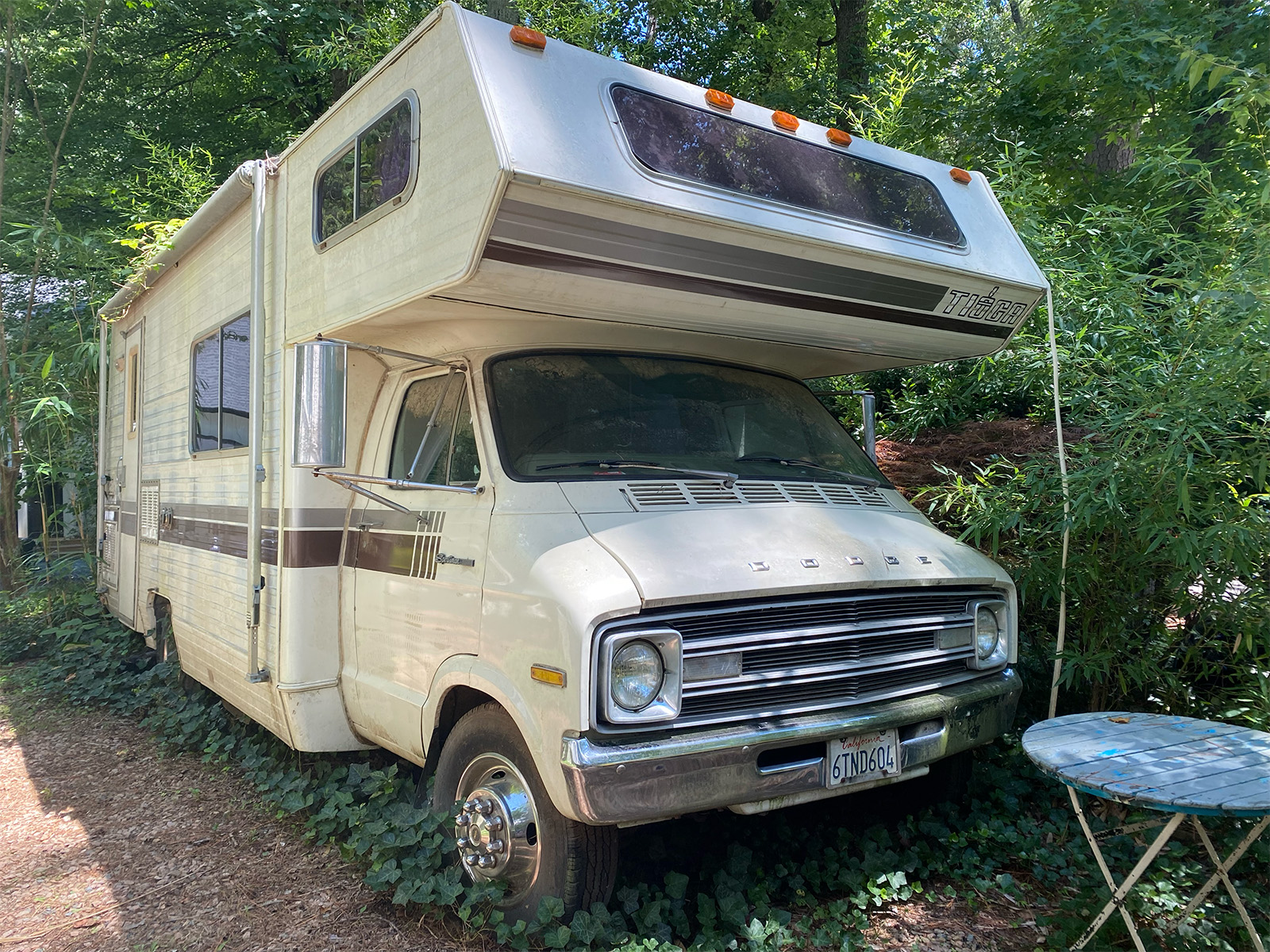
How about this Renault Dauphine? It also needs just 3.5 cranks between closed and open:

This old Nash Metropolitan (technically this is a Hudson) only needs 3.75:

It’s not really about looking cool; it’s just about usability. And lowering the manual windows on these vehicles is much, much more enjoyable than lowering the windows on the new Slate or a recent Jeep Wrangler or my Jeep Comanche. Nobody wants to have to crank a handle six times to get their In-N-Out.
Why Are Older Cars’ Window Cranks So Much Better?
I don’t know the definitive answer to the subheading above, admittedly, but I have a few theories. The main one is this: When power windows became popular, automakers wanted to fit the smallest, lowest torque motors into the doors as possible. Why waste space and pay extra for a torquier motor when you don’t have to? In order for a small, relatively low-torque motor to raise and lower a window, that motor has to leverage a mechanical advantage — something like a worm gear that takes lots and lots of rotations from the motor and turns it into a slight amount of up-down movement.
Since motors can spin quickly, even when lots of input rotation yields relatively little up-down motion, the window can still raise and lower quite quickly. The issue is, when someone chooses a base car with manual windows, rather than replace all the mechanisms in the window regulator, my theory is that automakers just put a crank where the motor’s output shaft was. So, since the small motor spun quickly to multiply its torque to raise and lower the window quite quickly, now your hand has to crank that window a bunch of times just to get the glass up and down.
That’s my theory; your hand makes tons of torque so it doesn’t need mechanical advantage, which is why you should have no issue raising and lowering a window with just a few cranks. But small motors (which are cheaper and offer packaging advantages) do need a mechanical advantage, which takes lots of rotational input and yields a little bit of window motion-output. Automakers replacing the motor with a window crank yielded a worse and much less cool looking experience for the user.
It’s also possible the change from the classic scissor-style mechanism to the pulley-style mechanism was the main reason behind the death of few-crank windows. I usually don’t embed random, humanless YouTube videos with animation and monotone narration, but the one above from Sabin Civil Engineering is actually legit.

It shows how an old-school scissor-style window crank works. You’ve got a handle that spins a pinion gear, which moves a partial ring gear attached at the center of its arc to an arm. That arm rotates about a pivot point, with the other end of that arm attached to the window track. So as you turn the crank (and thus pinion gear), the ring gear moves up, rotating the arm, pulling the window track and thus the window down. A second set of arms is added to stabilize the other wide of the window, hence the “scissor” name.

It’s a super basic system, and when electric motors joined the club, it was adapted to include a worm gear torque multiplier/mechanical advantage:

And the hand crank used this same worm gear to minimize complexity (and reduce overall vehicle cost):

The video also mentions that the worm gear may have been added to prevent theft (i.e. to make it so that the crank can raise and lower the window, but when the input is the window, the crank will not turn, and thus will prevent someone from trying to open the window by hand).
Obviously, the Slate doesn’t use the Scissor style mechanism shown above; pretty much every 1990+ car uses a pulley-style manual window. CarID (admittedly, not the best source, but it’s what I have and it seems plausible) describes why this style of window regulator became popular:
Cable-driven window regulators have become popular with automakers in recent decades because their compact size provides more room inside the door for safety beams and airbags, their lighter weight contributes to overall fuel economy, and the integrated assembly reduces manufacturing costs. However, they actually have more parts and are more complex than scissor type regulators.
Here’s a look at what this system looks like, per the aforementioned Sabin Civil Engineering YouTube video:

The motor spins a worm gear, which spins a round gear with an integrated pulley, which pulls a cable, which raises and lowers the window. The theory about parts-commonality between electric regulators and manual regulators contributing to too-many-hand-cranks still applies, though there may be some other element of the pulley-style design that is contributing to excessive cranking, as I rarely see modern, pulley-style cranks that are as efficient as old ones.
And by efficient, I mean, they take fewer rotations to move up and down; in terms of literal efficiency, the pulley-style mechanisms are better as there’s less friction. They’re actually quite smooth when they’ve been properly maintained, though the old mechanisms aren’t too bad, either, and based on my experience, I’ve found the older ones to hold up as well or better than pulley-style mechanisms due to their relative mechanical simplicity.
Not all 1990s+ cars use the pulley system. I just bought a new window regulator for my 1994 Jeep Grand Cherokee, and it’s the scissor-type:

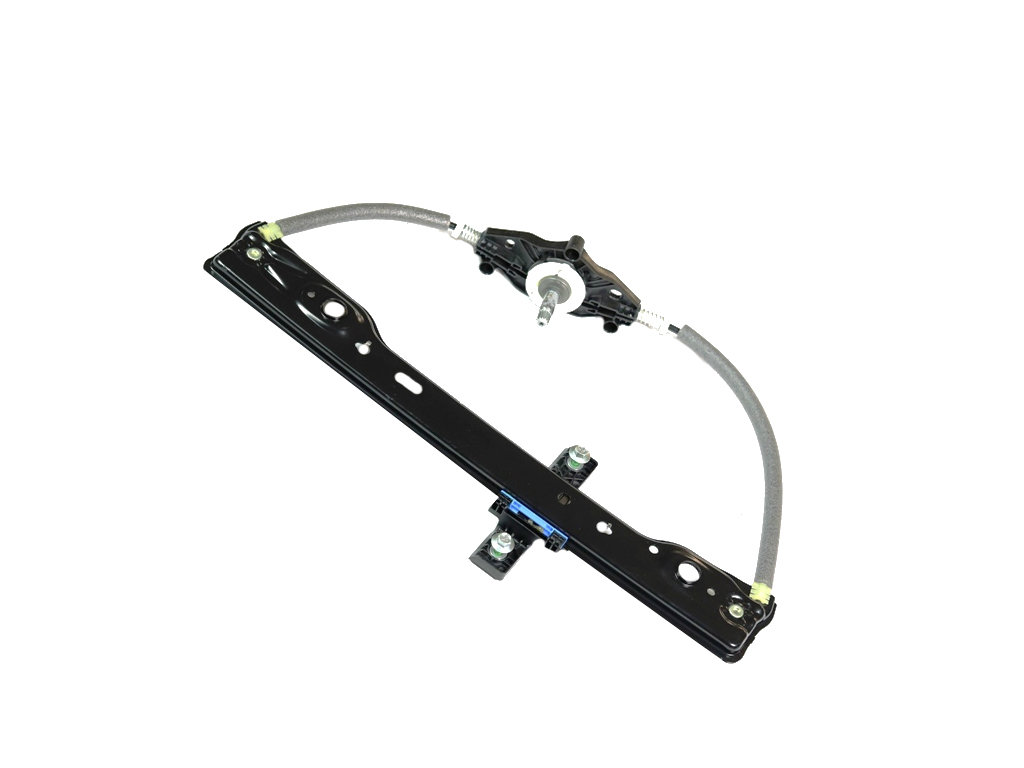
For reference, here’s a modern window regulator from the same Jeep Wrangler my brother owns (the one from the Instagram reel before):
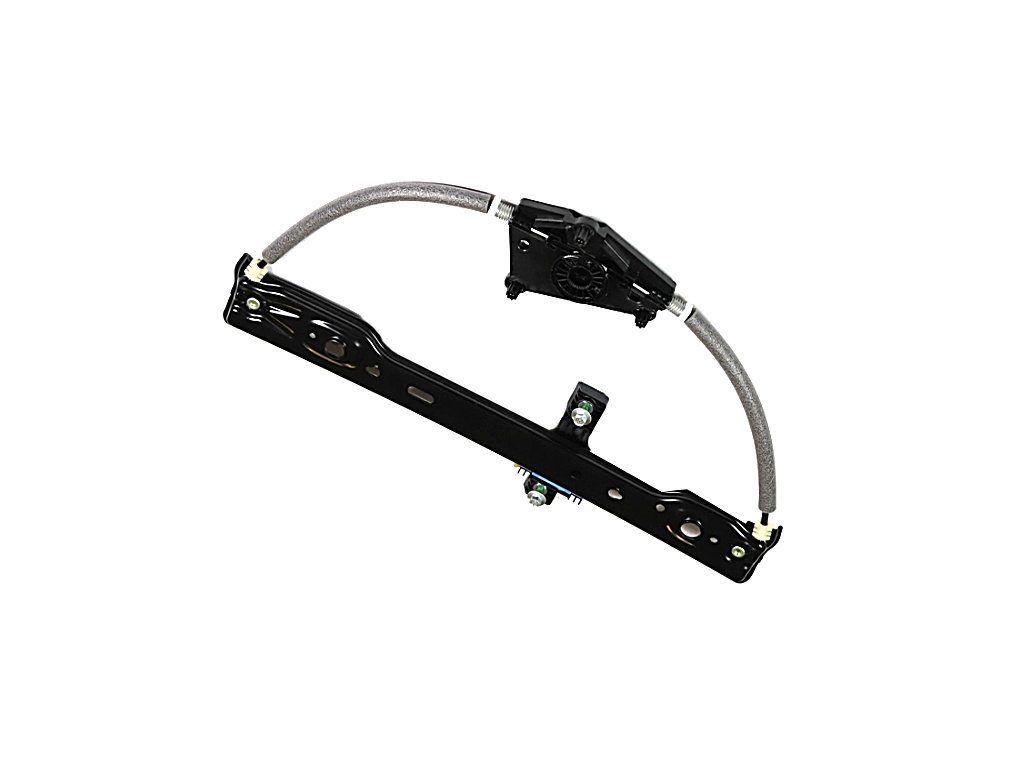
The power version of this regulator looks like this, if you’re curious:
Old-School Crank Handles Were Metal, New Ones Are Plastic
The video below — an excellent one that I highly recommend watching — shows a 2001 Toyota Camry, and it still utilizes the old-school scissor mechanism, too. It requires under five cranks from full-up to full-down, though as the narrator, speedkar99, points out, cranking the window “is a lot of work.”
It’s true. Scissor-style mechanisms aren’t as smooth, and what’s more, more cranks means less torque required to get the window up and down. That’s not a huge deal if the window crank isn’t short and if it’s made of something sturdy. That was the case back in the day; the window crank Jason is using in the Instagram video shown before is beautiful:

My J10’s window cranks were nice, too:

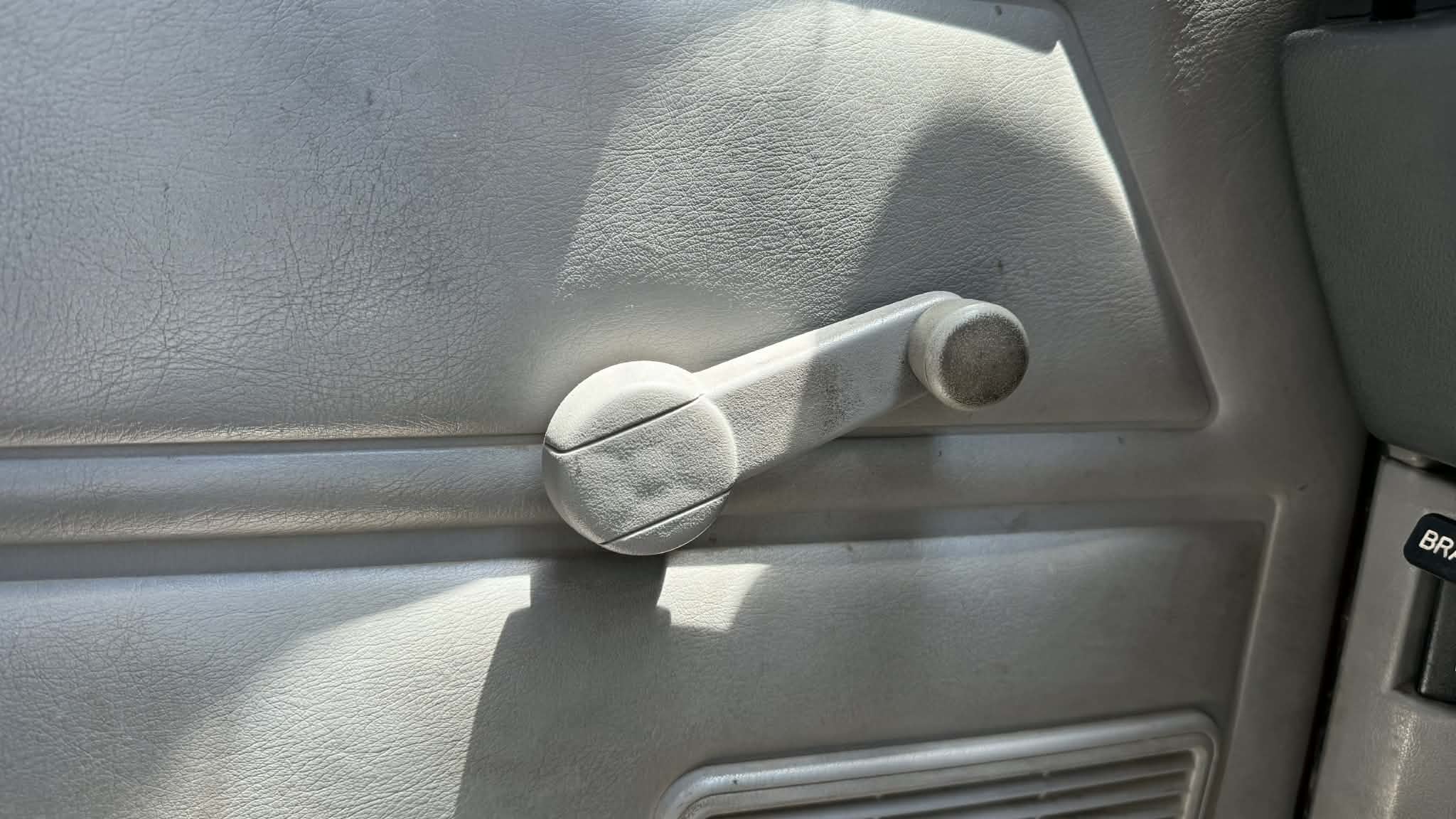
Meanwhile, look at the window crank on my 1992 Jeep Comanche — flimsy plastic garbage that I’ve had to replace once already:
I’m Still Happy There’s A Crank Window Option
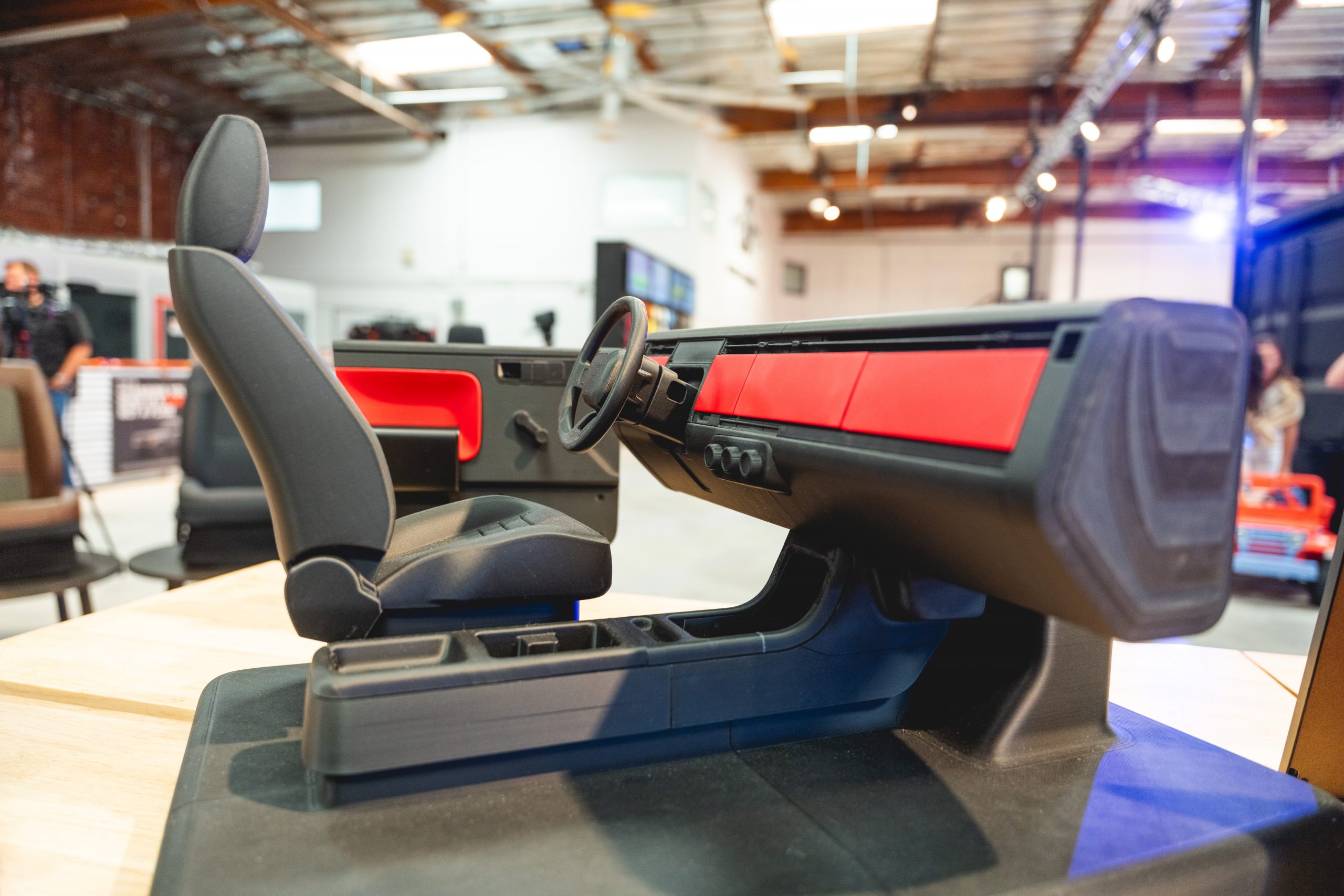
So yes, the Slate is bringing back crank windows, but not the ones you love. Still, even if the cranks are plastic and they have to be turned six times to get the window down, I’m grateful they exist, as simplicity is the key to longevity and low operating costs.
Update: It is worth noting that side impact safety may have played a role in the change of crank windows from scissor style to pulley style. Safety, of course, is much more important than window crank-ability.


All right, there may now be no better forum to bring up this delightful bit of engineering. my first car was a 63 ford galaxie500 -4 door hardtop, Its rear door windows performed some mechanical engineers fantasy articulated motion to fully disappear their _Giant Panes_ into the door. crank downward. first the front edge of the metal trimmed pane would dip down. More cranking and the rear of the pane would begin to dip & seemingly shift rearward before -near bottom of action- shifting back forward to disappear the entire thing. Had that car before access to anything other than 8mm film to record it. Would love if you can locate fullsize 63 or 64 FoMoCo 4D HT car & put up vid of its 2 model yr bodystyle specific rear door regulator to manage that glass in motion. It is a magical thing. Seems like an perfect “Mythic Quest” for Intrepid Autopians!
I bought a 1962 IH Scout for $850 (in 2010!) as a parts car for my 1963 IH Scout.
The driver’s side window regulator (crank) on the ’63 was pooched, and the cost of Scout parts were rapidly rising at that time.
The 1962 Scout was a postal service truck; Hey, Presto! Right hand drive! Nobody ever touched the left side door window regulator. Still in cosmoline.
So right there I had an $850 truck that came with a $350 window regulator.
I’m a slow learner.
My Bentley (1935ish) has a very trick thing. The drivers window drops at press of a button. The glass neatly and swiftly drops into the door whereupon it meets a felt lined channel, the scissor mechanism is two, a polite one(3.5 turns ) or a rude one (1.75 turns). The windows in the back are simple, moved up and down by leather straps. It is not a car that needs electric windows, in the years that I have had it the drivers side window has only stuck once about twebty years ago.
Sorry, for $80 more dollars, I would have made them motorized. $25,930. Worth it.
1994 Toyota Pickup: 4.1 cranks.
This is great. Now can you do a deep dive on where the broken broom handle I use to hold my rear hatch and front hood open is? I swear I put it right here. That damn thing keeps getting lost.
“I’m Still Happy There’s A Crank Window Option”
It’s not an option, right? I know Slate initially said electric windows would be extra, but they have since dropped that I believe.
I could reach and operate the cranks for all four windows of my ’84 Dodge Omni from the driver’s seat. No need for electric windows.
My 2000 Saturn SL
Also manual cranks. Could also reach all 4 from the driver’s seat.
A wise old owl told me 3 cranks was the proper number.
We need a Rube Goldberg competition, preferably steam punk style machine turned gears proudly displayed like a skeleton watch,mounted where the old crank was removed.
Something about Tootsie Pops? Still, it sounds right.
I’ve been trying to google it without luck, but I remember on the old site(?) there was an AMA with one of the engineers who worked on the then-upcoming new generation of the Miata – one of the answers that’s stuck with me was to the question ‘why no crank windows?’. The answer was that between not having multiple skus and the extra reinforcement needed on the door – a power window motor produces a fixed amount of torque, but you need to reinforce to survive against whatever the ape cranking on the handle at the limit might do – having only electrics saved on both weight and cost.
I wonder what’s different now.
I think that basically supports David’s hypothesis. If the door will only ever have crank, it’s one design (and cost and weight). If the door will only ever have electric, it’s another. If the door has to support either, that’s when it becomes not worth having a crank option.
I can’t wait to get custom 3d printed titanium crank handles. Then knurled titanium nubs on the end
I’m guessing someone already mentioned this BUT here goes: “Crank Yankers”
As someone else mentioned a big reason those old hand crankers used so few turns to get the job done is that big strong spring. It provides a good chunk of the lifting force so people didn’t have to. Now back then when they went power they still did the spring and went with big and heavy and slow motors.
Of course pressure to reduce weight in the wake of CAFE meant things had to change. That spring was an easy target as you could make up for it with more gear reduction and you didn’t need strong and heavy connection points for said spring.
At the same time those old school power window motors were big, heavy and low rpm. A smaller motor can make the same power as a larger motor by spinning faster. So additional gear reduction is there for that as wello
The other thing that some have done is optimize the motor by side. Often one side will have the motor spinning clockwise to raise while the other the motor spins anti-clockwise to raise. By altering the relationship of the coils to the commutators you can make a motor have a higher power peak in one direction vs another. For one example about that process in action look at the torque in reverse vs forward on battery powered impact wrenches. Many will make more torque in reverse than they do in forward.
For the record I drove my 02 F-150 yesterday and had to count the cranks because of you David. The answer is 6.
I used to drive a brazilian made renault kwid, the most bottom of the barrel basic car you can get in LATAM, only the front windows where powered, the rears are cranked, I have a hunch that the supplier for that mechanism is the same the Slate’s using.
I wonder if that is the provider for the rear windows of the base Dacia Sanderos, Citroën C3, Fiat Grande Pandas…
Not certain, but most probably
Man I was so imagining DT doing the count from Sesame Street to count the turns. But really am I the only person who when they first get in the car rolls down the window and sets the radio station and just leave both of them there until rain or distance forces a change? Same with seat position I set it when I bought it and it hasn’t been moved since. Why any of this needs computers or motor is beyond me.
I am the same, except I never drop the window unless it is absolutely necessary (for example at toll booths). My cars can go months without the windows being rolled down.
(Convertibles are different)
The seat, though if you share the car with someone it can be pretty annoying.
My theory was that the more cranks would cause less stress on the handles but you having to replace the one on the Comanche kind of disproves that.
I remember as a kid seeing several cars with vice grip pliers in place of the handles that had failed so it wasn’t just for style that most cars went to automatic.
I’m not sure how many cranks my Ranger had before I put in the aftermarket power windows but feel like it was less than 6, 6 is a lot.
But I get it, they’re trying to make a statement, and they were able to find them cheaper than power windows, it fits the vibe, they can stylize them cheap too, definitely is adding to press about them and no such thing as bad press.
As a argument against I am a cheap procrastinated. My passenger side electric window broke over 10 years ago. I have the parts but haven’t fixed it yet. Give me the crank it is so easy I would fix it
The crank windows in the Slate are mostly there as a statement of intent for the rest of the vehicle I believe. It’s more a symbol than anything.
Excellent article, but my big question is, dis the fact David is buying parts for the Grand Cherokee mean he is working on it, or that he just found a deal he couldn’t pass up?
White hot deal.
That’s what I guessed considering the eBay jeep project being pretty recent still.
I get it, but it’s fun to see others making progress on their projects, when I can’t pursue one of my own.
I wish. That’s the project I’m most excited about personally, but I don’t see how I’d find a sponsor for it given it’s a fairly random car and not something likely to get tons of mainstream eyes.
Thank you for sharing the deal. With your connection why don’t we see ads here that get us deals?
When I bought my 1990 Ram 50 two years ago, I jumped back into the wonderful world of crank windows (and vinyl door cards) for the first time since about 2001. I don’t believe power windows were even an option on those trucks.
Reading this article prompted me to go outside to check how many cranks those windows take to go up or down. It’s just about 4.5, so my truck meets David’s coolness standard, and my day is therefore made.
I remember our car had side curtains, and my uncle’s car had the fancy side curtains with a little sliding thing for paying tolls without opening the door. My mother thought that was hilariously decadent to have a door with a window in it that had a door in it
I remember our carriage had straps you had to pull up to raise the window – and you attached the straps to hooks on the door to keep it closed….
…but you had to be careful when you unhooked the straps not to just let go – because more than one window has broken inside the door when it was dropped that way.
Porsche was offering that option in the 911 pretty recently.
I’ve had to replace THREE VW power window regulators which were all the pulley-type of course (on a 2000 Golf TDI). The pulley/cable system seems more prone to issues as they age, but I’m merely an armchair engineer, not a real one like David is. 🙂 And the VW ones fail because VW uses the cheapest possible nylon (or some other white plasticy substance) for the bracket that actually holds the glass, and of course it breaks two weeks after the warranty expires per VW’s evil plan. So, it’s not the pulley/cable’s fault in that case, but the scissor mechanism just sees like it’d have less chance of ‘effin up a couple decades after the fact.
I was under the (quite possibly mistaken) impression that the power window upgrade/option in Slates was relatively cheapish, and that it was going to be user installable. I actually imagine a little box containing both the motor and switch that fits where the crank handle did, but that’s just my imagination and not based on anything I’ve seen.
PS: been watching a lot of Slate content on Youtube lately of course, and I did see a couple guys referring to it as a sort of ‘golf cart’ which seems harsh: yes, it’s small by modern truck standards, but when David was driving it/standing next to it, it didn’t seem comically undersized. In fact, it looks about the size and shape of any small/single cab/short bed Japanese pickup from the ’80s/90s IMO.
I’m 53, 5:6, and 300 poundsmy brother has a diesel Dodge 3500 that he has raised. He hasn’t put a step bar on it so I’m ridiculous looking trying to get into it. I’m fine with tiny pickups
My GR86 has scissor regulators. I think it’s a Subaru thing. While I haven’t worked on Subarus from this millennium (or “Subarus” as I think of them) besides mine (which shares a lot of parts with other models, though I don’t know if the regulator is one of them), I’m not aware of any that used the pulley system. I don’t recall ever seeing a scissor style fail (though a few needing lubrication), but plenty of the pulley kind. Cranks, too. They commonly broke back in the day, and not just plastic, but diecast metal ones that tended to snap at the post. They were sold in parts aisles of auto part stores with miscellaneous generic components for popular models, like fuses, lights, and radiator caps. While I have no idea how many they sold, that they were so commonly available speaks to there being a fairly substantial market. But whatever, this whole thing has been beaten to death now (which I’m certainly guilty of contributing to) and the Slate has a lot more issues if they hope to sell enough. Once again, as critical as I’ve been, I really hope they do make it even if only to send a message to the industry that enough people are tired of the excessive electrification or that EVs don’t have to be over complicated in every aspect so maybe they’ll start to sell more cars for them.
Having just rebuilt the scissors and replaced the felt in the front doors in my ’63 Travelall, I can say it is a very satisfying feeling to crank them up and down manually.
On the subject of electric windows, I had to buy an aftermarket repair kit for my ’98 Cherokee, because a tiny little plastic section of the worm gear had cracked and fallen off, rendering the electric motor useless. Instead of a $250 part (I had a somewhat rare 2-door Cherokee, which were very hard to find in parts yards) I found a guy online selling a kit and instructions for $20. Sometimes the internet is a good thing.
I think, but it’s really a guess, that frameless windows, like on a hardtop or convertible, need the scissor-style to keep the window in position, and if a car has those variants in the model lineup its simpiler to put them in all of them
They used to be called pantograph regulators, which more accurately describes the function, since the kinematics can keep the track and the windows parallel. There are some pantograph regulators that rotate the glass by changing the ratio of the arms. The rear windows in four-door hardtops did that for some reason.
A cable-style regulator needs a frame around the window to guide it, otherwise it would just flop around. The tracks in the frame have lots of friction and potential binding to overcome, so the cranking ratio may reflect that.
I just thought to myself, “I wonder what Miata uses?”, and the Miata uses a third kind of regulator that puts the window glass atop a rigid jack to keep it parallel. like so https://www.ebay.com/itm/355198683584
I bet an actual engineer who has designed these things can correct my errors of observation.
That’s a great observation and would explain (at least the older) Subarus and BRZ/86 using them as they were all hardtops. Subaru also used the kind that would rotate the window as it dropped, like the leading edges of the rear windows would dip to come down farther as the trailing edge was constrained by the rear wheel well. Not something that seemed necessary, but it was a detail I appreciated.
Calling it pentagraph because pentagram summons the devil and breaks the mechanism.
“So yes, the Slate is bringing back crank windows, but now the ones you love”
I think you meant to type ‘not’.
My 2002 Silverado RCLB had crank windows. The passenger door glass might as well have been fixed in position, as there was absolutely no way to operate it from the driver’s seat. Maybe the Slate is narrow enough to operate the passenger window from the driver’s seat, but if it isn’t, I’d happily forego the cranks.
Roll it down before you leave. Yeah not something most people would think of but I’m a friggin genius. Lol
Exactly. A lot of us pine for cranks, but we are remembering vehicles that were like 4 and half feet wide and we could reach over the passenger side from the driver seat. Modern vehicles, even non-trucks, are too big for this to work. But the Slate might be workable. It’s hard to tell from the numbers alone.
My 1st-gen GMC Canyon is still pretty easy to reach over and roll down the passenger side window. It’s a little wider (2-inches) than the Slate, though.
According to Google:
“The 2010 GMC Canyon is wider than the Slate pickup. The Canyon measures 68.6 inches in overall cab width (excluding mirrors), whereas the single-cab Slate measures 70.6 inches across its cab.“