


The $24,950 Slate EV pickup truck’s most polarizing feature is its crank windows. It’s such a primitive, old-school feature that no other car in the U.S. offers it. So I, someone who has driven many cars with roll-down windows, decided to review that feature and see how it compares with manual windows of yore. It turns out, Slate’s crank windows are just as bad as pretty much any manual window from the 1980s and up.
I think the average person overstates how bad manual windows are. The truth is, back in the day, manual windows were actually quite good. They did suffer from the issue of being out of reach on every door except the driver’s, often yielding loud and uncomfortable buffeting at highway speeds. But outside of being tough to reach, the actual cranking of the window was legitimately easy and far less annoying than the big Power-Window-Lobby would have you think.


I know this because, for a decade, I owned a 1985 Jeep J10 whose manual windows required only 3.5 cranks to lower from top to bottom. That Jeep J10’s replacement, my 1992 Jeep Comanche, takes 5.5. In fact, pretty much every crank window-equipped post-1990 vehicle I have driven has required at least five cranks to raise or lower the window, and the reality is: Anything more than 4.5 turns and you run into the issue Kevin Hart so eloquently describes in this iconic Conan-Teaches-Staffer-To-Drive video:
Hart is right; it’s hard to look cool if, to lower your window, you have to lean down and crank a bunch of times, and I’m hereby declaring that “a bunch of times” is 4.5 or above. Let’s look at the Slate’s crank windows, which the company says it struggled to source, resorting to a single viable supplier from Brazil.


The handles, like most 1980+ window cranks, are plastic. They feature a grippy roller at their ends — a roller whose color you can personalize. Here’s an orange window crank roller:

And here are a couple more window crank roller colors (you can also see HVAC knob bezels and key fob trim):

The plastic handles feel OK for a modern car; not overly flimsy compared to newer cranks, reasonably grippy, and an OK size. But the bigger issue is the number of cranks required to raise or lower the windows: six.
How Many Cranks Required?: Vintage Cars vs. The Slate
View this post on Instagram
Six is totally acceptable for a modern manual window crank, to be sure. My brother’s 2023 Jeep Wrangler JL — the last vehicle prior to the Slate to offer manual windows in the U.S. — requires six, as well. And admittedly, I do know some older cars that require that many, too; I recently tried out a 1970s AMC Pacer and the number was about six, as well.
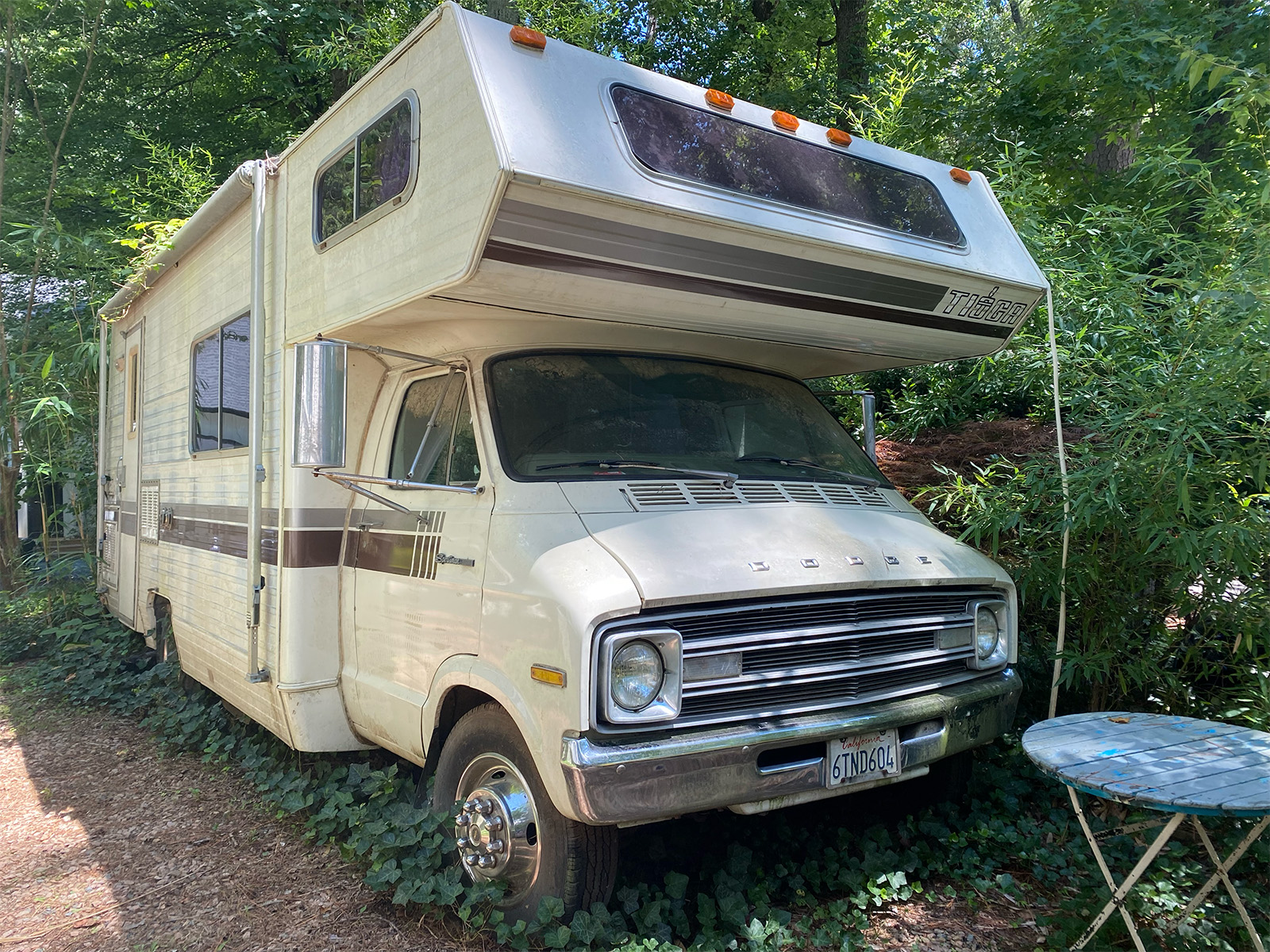
But many, many old cars land below that coolness threshold of four and a half. Take Jason’s Dodge Tioga RV; it only needs 3.5 cranks from full-up to full-down:
How about this Renault Dauphine? It also needs just 3.5 cranks between closed and open:

This old Nash Metropolitan (technically this is a Hudson) only needs 3.75:

It’s not really about looking cool; it’s just about usability. And lowering the manual windows on these vehicles is much, much more enjoyable than lowering the windows on the new Slate or a recent Jeep Wrangler or my Jeep Comanche. Nobody wants to have to crank a handle six times to get their In-N-Out.
Why Are Older Cars’ Window Cranks So Much Better?
I don’t know the definitive answer to the subheading above, admittedly, but I have a few theories. The main one is this: When power windows became popular, automakers wanted to fit the smallest, lowest torque motors into the doors as possible. Why waste space and pay extra for a torquier motor when you don’t have to? In order for a small, relatively low-torque motor to raise and lower a window, that motor has to leverage a mechanical advantage — something like a worm gear that takes lots and lots of rotations from the motor and turns it into a slight amount of up-down movement.
Since motors can spin quickly, even when lots of input rotation yields relatively little up-down motion, the window can still raise and lower quite quickly. The issue is, when someone chooses a base car with manual windows, rather than replace all the mechanisms in the window regulator, my theory is that automakers just put a crank where the motor’s output shaft was. So, since the small motor spun quickly to multiply its torque to raise and lower the window quite quickly, now your hand has to crank that window a bunch of times just to get the glass up and down.
That’s my theory; your hand makes tons of torque so it doesn’t need mechanical advantage, which is why you should have no issue raising and lowering a window with just a few cranks. But small motors (which are cheaper and offer packaging advantages) do need a mechanical advantage, which takes lots of rotational input and yields a little bit of window motion-output. Automakers replacing the motor with a window crank yielded a worse and much less cool looking experience for the user.
It’s also possible the change from the classic scissor-style mechanism to the pulley-style mechanism was the main reason behind the death of few-crank windows. I usually don’t embed random, humanless YouTube videos with animation and monotone narration, but the one above from Sabin Civil Engineering is actually legit.

It shows how an old-school scissor-style window crank works. You’ve got a handle that spins a pinion gear, which moves a partial ring gear attached at the center of its arc to an arm. That arm rotates about a pivot point, with the other end of that arm attached to the window track. So as you turn the crank (and thus pinion gear), the ring gear moves up, rotating the arm, pulling the window track and thus the window down. A second set of arms is added to stabilize the other wide of the window, hence the “scissor” name.

It’s a super basic system, and when electric motors joined the club, it was adapted to include a worm gear torque multiplier/mechanical advantage:

And the hand crank used this same worm gear to minimize complexity (and reduce overall vehicle cost):

The video also mentions that the worm gear may have been added to prevent theft (i.e. to make it so that the crank can raise and lower the window, but when the input is the window, the crank will not turn, and thus will prevent someone from trying to open the window by hand).
Obviously, the Slate doesn’t use the Scissor style mechanism shown above; pretty much every 1990+ car uses a pulley-style manual window. CarID (admittedly, not the best source, but it’s what I have and it seems plausible) describes why this style of window regulator became popular:
Cable-driven window regulators have become popular with automakers in recent decades because their compact size provides more room inside the door for safety beams and airbags, their lighter weight contributes to overall fuel economy, and the integrated assembly reduces manufacturing costs. However, they actually have more parts and are more complex than scissor type regulators.
Here’s a look at what this system looks like, per the aforementioned Sabin Civil Engineering YouTube video:

The motor spins a worm gear, which spins a round gear with an integrated pulley, which pulls a cable, which raises and lowers the window. The theory about parts-commonality between electric regulators and manual regulators contributing to too-many-hand-cranks still applies, though there may be some other element of the pulley-style design that is contributing to excessive cranking, as I rarely see modern, pulley-style cranks that are as efficient as old ones.
And by efficient, I mean, they take fewer rotations to move up and down; in terms of literal efficiency, the pulley-style mechanisms are better as there’s less friction. They’re actually quite smooth when they’ve been properly maintained, though the old mechanisms aren’t too bad, either, and based on my experience, I’ve found the older ones to hold up as well or better than pulley-style mechanisms due to their relative mechanical simplicity.
Not all 1990s+ cars use the pulley system. I just bought a new window regulator for my 1994 Jeep Grand Cherokee, and it’s the scissor-type:

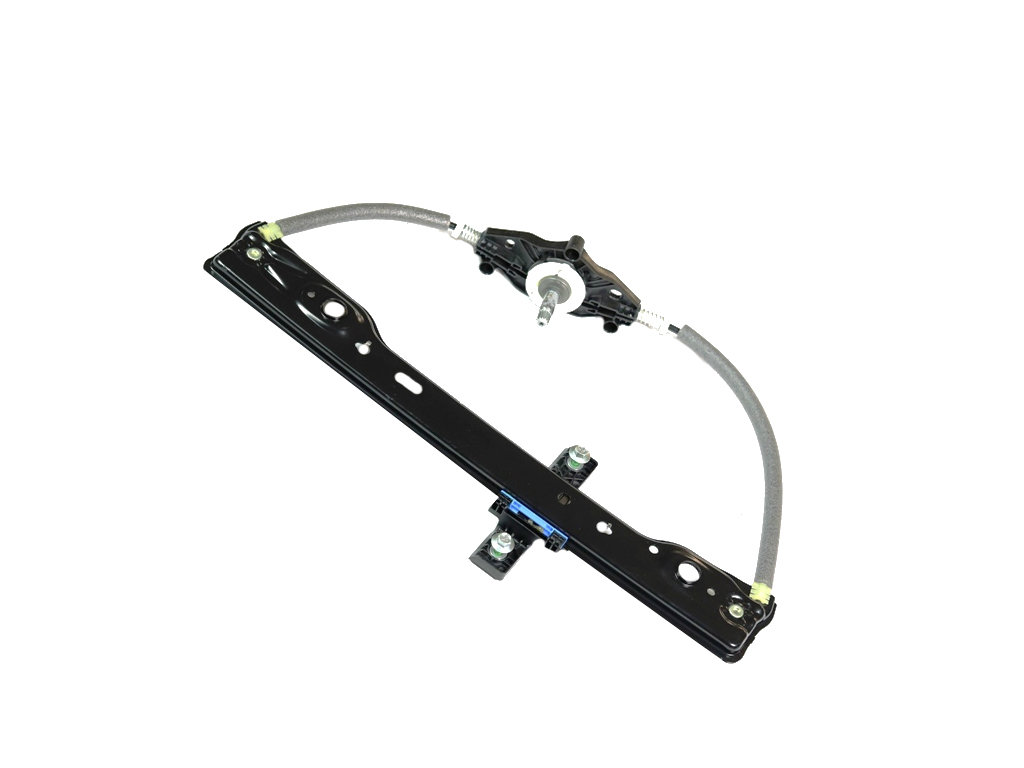
For reference, here’s a modern window regulator from the same Jeep Wrangler my brother owns (the one from the Instagram reel before):
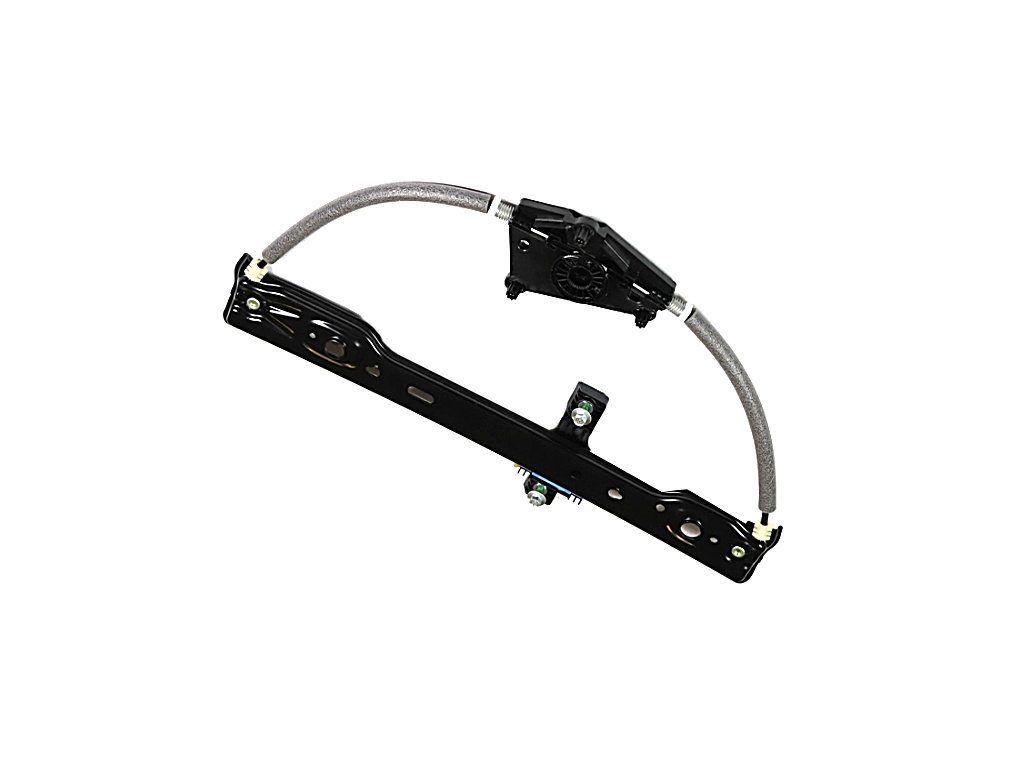
The power version of this regulator looks like this, if you’re curious:
Old-School Crank Handles Were Metal, New Ones Are Plastic
The video below — an excellent one that I highly recommend watching — shows a 2001 Toyota Camry, and it still utilizes the old-school scissor mechanism, too. It requires under five cranks from full-up to full-down, though as the narrator, speedkar99, points out, cranking the window “is a lot of work.”
It’s true. Scissor-style mechanisms aren’t as smooth, and what’s more, more cranks means less torque required to get the window up and down. That’s not a huge deal if the window crank isn’t short and if it’s made of something sturdy. That was the case back in the day; the window crank Jason is using in the Instagram video shown before is beautiful:

My J10’s window cranks were nice, too:

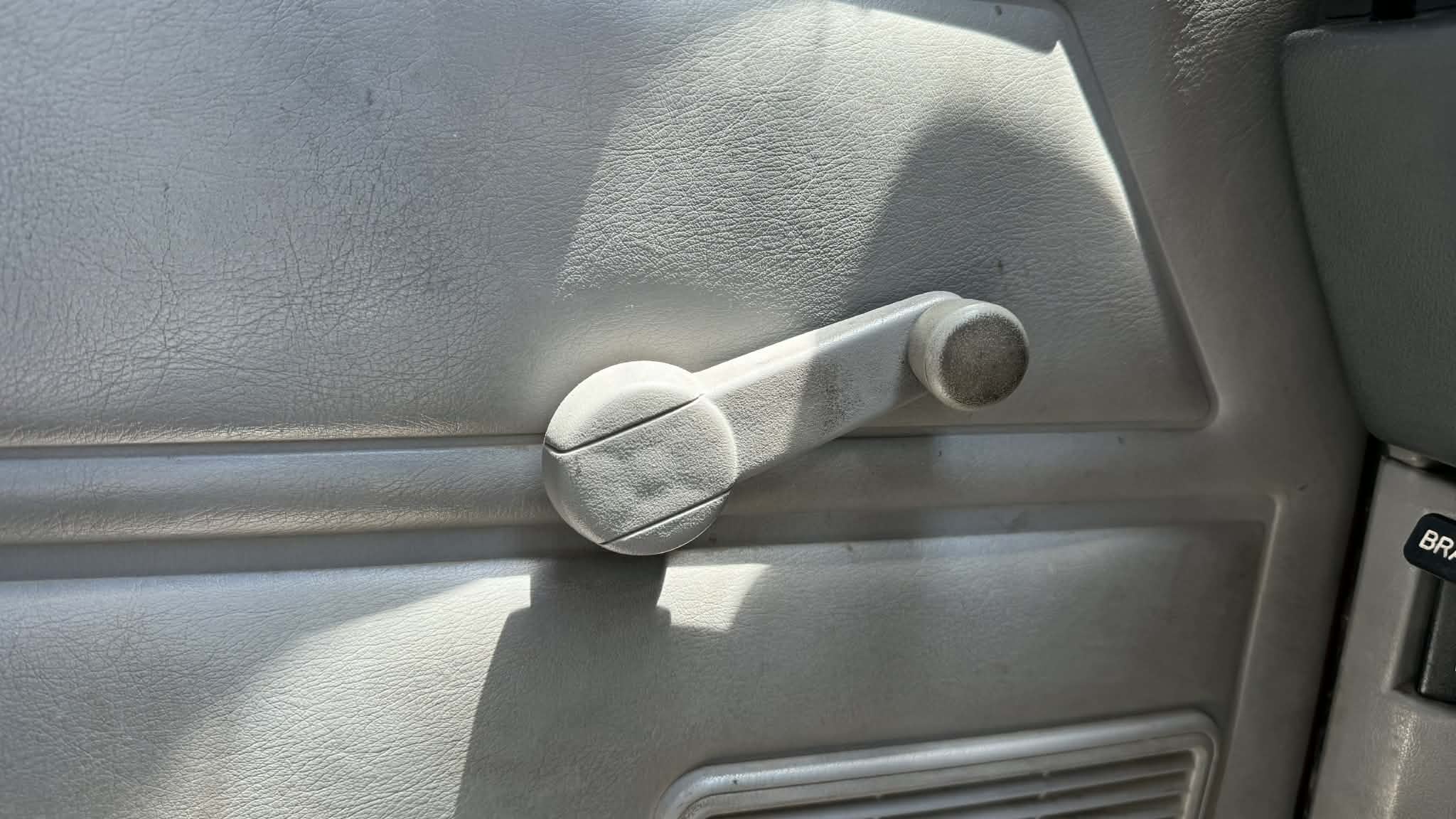
Meanwhile, look at the window crank on my 1992 Jeep Comanche — flimsy plastic garbage that I’ve had to replace once already:
I’m Still Happy There’s A Crank Window Option
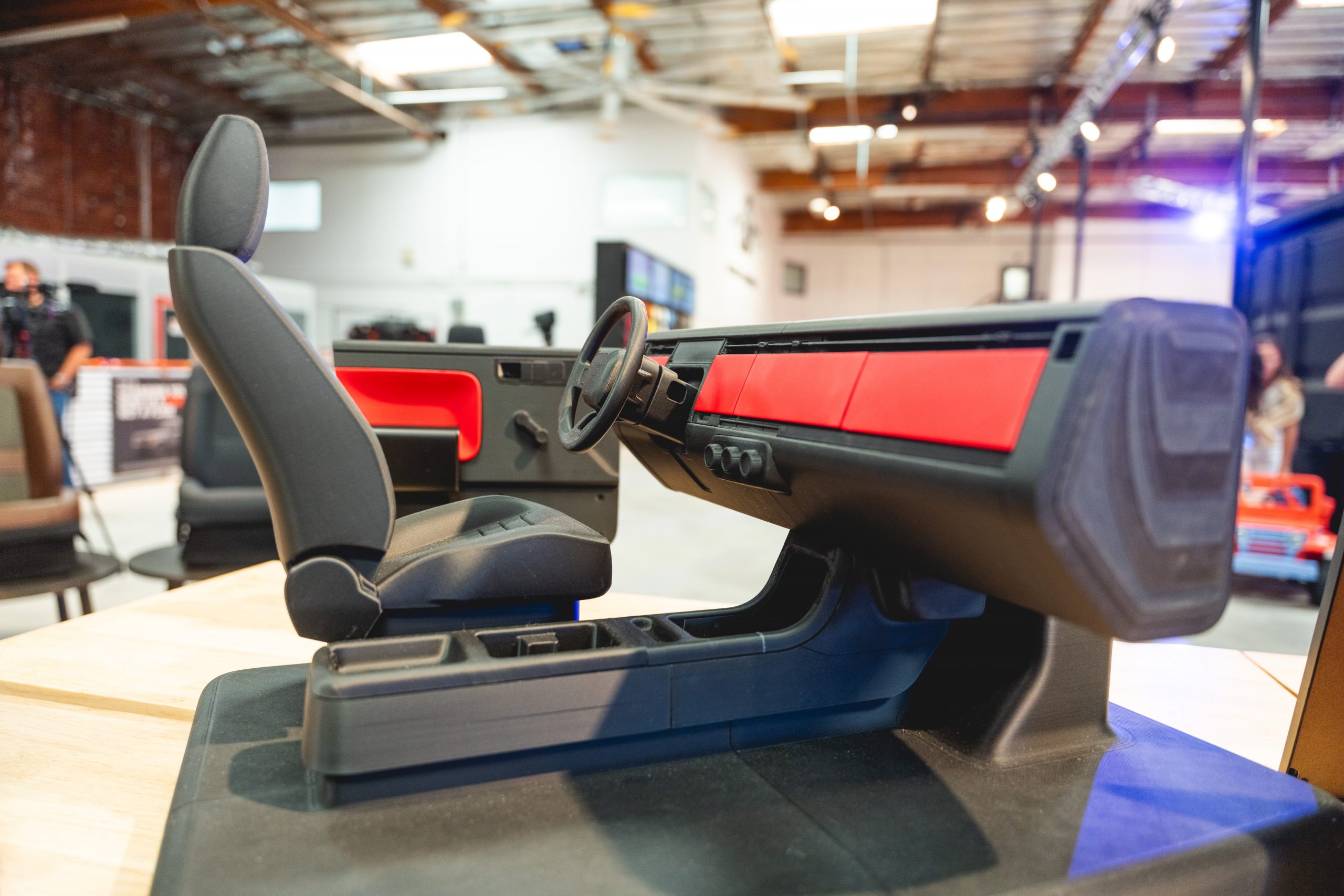
So yes, the Slate is bringing back crank windows, but not the ones you love. Still, even if the cranks are plastic and they have to be turned six times to get the window down, I’m grateful they exist, as simplicity is the key to longevity and low operating costs.
Update: It is worth noting that side impact safety may have played a role in the change of crank windows from scissor style to pulley style. Safety, of course, is much more important than window crank-ability.


First new car I ever bought had plastic crank windows and I broke the passenger one at least 3 times cranking from the driver’s seat. X1/9.
Missed opportunity. THey should have brought back the Vent window. I almost never use the crank windows in my old trucks if the vent window is an option. Hell I considered swapping in 67 Camaro doors on the 68 just to get said vent windows.
Not sure if the Slate has AC, but I would also suggest nut cooler vents under the glove box and steering wheel. no need for cooled seats when the duct is directed right where it needs to be.
I wish that the base trim of so many new 4 door passenger vehicles not having rear a/c and heat vents had as much discussion power as these crank windows – ones that don’t require you to move up a trim level to upgrade to electric.
Almost 7 turns to crank up the windows on the 92 F-250, though the windows are pretty tall. A full 7 turns for the 86 Vanagon, also tall windows. Not sure power windows were even an option.
They were optional in 92, I think they were actually being phased in as standard around that time. Once it was simply work trucks that had them, it became financially a deficit to engineer the crank setup when commodity of scale pricing on standardized window motor setups made it pretty close in price and people started expecting it, it just made sense I suppose.
Sorry, I meant to say I didn’t think power windows were an option on the Vanagon. My F-250 is the poverty spec Custom, rubber floor, 300-6, 4 speed, no tach.
I just don’t understand why such a significant user feature that affects daily usage would be chucked when an aftermarket retrofit kit is less than $100. That’s not the ONLY way to compare price, but jeez. The labor to install a power window motor vs crank at the oem level is trivially different. Let’s say, for whatever reason, using a non-generic part would cost $500 vs the $100 you can get a retrofit kit for right now on Amazon. That’s still gotta be the STUPIDEST $500 they cut from the Slate. I mean, shit, drop 1 battery cell (you won’t notice the range difference) and give me power windows.
Link:https://a.co/d/0evDjrtr
Its $65, actually.
Didn’t I read in the price reveal article that they told DT it was like $45 of savings to stick with crank windows?
Pretty sure my Spitfire needs VERY few cranks to put the windows up and down – I doubt more than three. I’ll have to check it out when I get back to Maine next week. And of course, the passenger side is easy to reach from the driver’s seat, at least if you have as long arms as I do. I have been in a Rolls-Royce that needed ONE turn, and the mechanism was absolutely silky smooth – had to be counterbalanced or something. That window regulator probably cost more than a Spitfire.
I’m trying to remember the last car I had with crank windows otherwise. My two Alfas both had electric windows. Probably my ’90 Jetta GLI – that would have been the newest car with them. Of my 13 Volvos, the only one with manual windows was my ’76 242. Oh, both ’69 Saab Sonetts did too, of course. Otherwise, going WAAY back, both my ’85 Jetta 2dr and ’84 Jetta GLI had DIY windows back in the ’80s. And my Peugeot 504s had crank windows in the back doors, but electric up front. The 505s all had electric, as have all my BMWs and Mercedes.
Now I get irritated when cars don’t have auto up/down. And infuriated when only the driver’s side does, like the K4 I had as a rental. How cheap can you be to not just have that on all four windows?
biggest issue I have with the smaller cars cranks is usually door position and if someone put the crank in a place that did not hit my knees. or my pants or shoes did not catch on them when exiting the vehicle.
LOL – funny you say that. When I got my Spitfire 30 years ago I had to reposition the window crank so it didn’t dig into my leg. No big deal to take it off and put it back on 180 degrees around. It must be an even number of turns because it’s in the same position window up or down.
I’ve had to replace pulley-style window regulators on multiple cars because the pulleys themselves were cheap plastic that got brittle with age and just crumbled one day.
The biggest reason scissor-style window refulator stopped being used was the implementation of side impact bars in doors in the mid 90’s.
The impact bar takes up too much space in the door for an old-style window regulator without having a door so thick it takes up interior volume.
Those bars are why the later bodystyle XJs have a more cramped interior
Okay, the scissor lever mechanism of the old crank windows actually makes me understand them as a concept better. I was intuitively thinking of the mechanism as something motor-friendly that turned a lot of rotations into steady movement…the idea of the big lever makes more sense.
No matter what, it can’t be worse than those WW2 aircraft where the pilot had to manually crank the landing gear without assistance. Now THAT was a lot of rotations.
Before I ever had them, I thought that “power” windows and locks were a silly extravagance. Who needs power assist to open a window or push/pull a lousy door lock? Then I got a car with them and realized that it was just because of the stupid name that American cars use for them. The Europeans called it “central locking”, and that clearly explains why they are so great: not that you don’t have to crank or grab, but because the driver can control the windows and locks from the driver’s seat. Particularly for locks, this is a massive convenience.
My 2014 Fiesta had the central lock button on the middle dash, none on the doors. But it still had manual crank windows, which were easy to reach in the front, and even the rear driver side passenger door by slipping my arm between the front seat and the B pillar. My 2007 Focus had all manual locks and windows. Now my current Subaru has all power windows and locks, which is great as I’m older now and cannot twist around, this way and that, as when I was younger. Time sucks.
In my 2015 Sienna, it cannot be more convenient to have all one-touch windows and even to operate third row vents. It is really hard to reach the front passenger door, and don’t even mention rear ones.
My Geo’s something like 5/6 cranks, but that’s a tall tall window. As long as it’s easy to crank, I’ll be cranking it all day, every day!
Is that a Tracker? After reading this article I felt like I needed to go outside and check the crank count on mine, but maybe you’ve saved me the effort!
Yeah! A 93. Driver’s side is a little more difficult but the passenger one you can do no effort at all.
That phrase is certainly worthy of a t-shirt or bumper sticker.
Today I saw the coolest little hand cranks. They were on a 1937 Cord Phaeton at a local car show. The Cord was cream colored instead of red, but they looked like these:
Cord hidden headlamps
From this article.
Could it be because the windows on later model cars are taller? I remember somewhere along the line of cars getting lower belt lines and thus taller windows resulting in better visibility
Why is this an issue? Its so assassinate! As long as it work reliably its fine! Frankly with more cranks I feel you have more control on where you want to stop the window and can’t aide with wind buffer and amount of air to get in!
The reason is simple. In the old days, cranks were so much longer.
I am saying this because I remember the cranks in the family station wagon when I was a litle kid.
Chairs and steps were also so much taller back then. The fact that I was 3 1/2 feet tall at the time in no way whatsoever has impaired my sense of perspective.
Next up: “This is the reason why your value menu fries aren’t as good as the ones from your favorite steakhouse.”
Can we just be thankful that ONE SOLITARY manufacturer is giving us utilitarian singlecab perverts the windey windows we crave? Sometimes cheap things are just cheap and that’s okay.
I’m more concerned that under the “audio” section there isn’t a factory -approved option for a single or double DIN radio hole.
I have a vintage car where the driver side window has a 30cm long handle for leverage because it needs less than half a turn to fully raise or lower the window. Perfect for quick hand signals – the 1930s equivalent of one shot down/up windows. The passenger’s side has a traditional short handle crank and needs about 4 turns to go up and down. I’ve never seen this on another car.
What is it?
The plastic roller-part on the end concerns me. I just hope that connection is designed to last awhile. On my ’79 Volare Duster it was broke off, causing the window roll-down process to be a partial turn, an awkward grab of the handle at a different angle, another partial turn, another awkward grab, etc. Each movement was accompanied by a loud squeak for extra cool.
Just wanted to say it is stories like this that make me happy to be a paying member of this site. Not in a million years would a clickbait site be able to justify a story like this.
What if the manual window crank decision was driven by a clever marketing department and not because of real cost savings? Think about all the articles and all the buzz about the crank windows…
Yes, this is the real win.
Yes, this was an active choice on their part and not about cost savings. With only one suitable supplier on Earth, there’s no competition for sourcing parts and likely they’re paying the same or more than a competitive bid for a power unit would yield.
And power windows are much better than in the past, so I’m not really buying the reliability issue. I’ve replaced many power window regulators in my time, but never in a vehicle made after 2005 and never once did I think “I’d rather have crank windows”.
Just came her to say thank you for that Conan/Hart/Cube/Diane clip… pure gold.
Yeah, but if they really wanted to be cool, they’d bring back vent windows.
Agree. FWIW I remember “steering” my 70 Bug as a kid by opening and closing the vent windows with a buddy.
Cranking windows, cranking hog… What’s the difference?
Am I right, fellas? Amirite!?!
THAT”S RITE HOSS,,,,
Does “cranking the hog” refer to spit-roasting a pig, or starting a Harley? I’ve never been able to figure it out
Okay, I just checked.
1972 Oldsmobile Delta 88 front window: 6.5 cranks
1972 Oldsmobile Delta 88 rear window: 4.25 cranks
1983 Chevrolet Monte Carlo SS front window: 5 cranks
Sounds like I’d get along just fine with the Slate.
Independent journalism right there!
This is the kind of thing I’ve wondered about when I experienced it, but didn’t put much thought to it (fortunately never had to pop a door card). I read every word. Now I’m ready to join the less crank lobby.