


The $24,950 Slate EV pickup truck’s most polarizing feature is its crank windows. It’s such a primitive, old-school feature that no other car in the U.S. offers it. So I, someone who has driven many cars with roll-down windows, decided to review that feature and see how it compares with manual windows of yore. It turns out, Slate’s crank windows are just as bad as pretty much any manual window from the 1980s and up.
I think the average person overstates how bad manual windows are. The truth is, back in the day, manual windows were actually quite good. They did suffer from the issue of being out of reach on every door except the driver’s, often yielding loud and uncomfortable buffeting at highway speeds. But outside of being tough to reach, the actual cranking of the window was legitimately easy and far less annoying than the big Power-Window-Lobby would have you think.


I know this because, for a decade, I owned a 1985 Jeep J10 whose manual windows required only 3.5 cranks to lower from top to bottom. That Jeep J10’s replacement, my 1992 Jeep Comanche, takes 5.5. In fact, pretty much every crank window-equipped post-1990 vehicle I have driven has required at least five cranks to raise or lower the window, and the reality is: Anything more than 4.5 turns and you run into the issue Kevin Hart so eloquently describes in this iconic Conan-Teaches-Staffer-To-Drive video:
Hart is right; it’s hard to look cool if, to lower your window, you have to lean down and crank a bunch of times, and I’m hereby declaring that “a bunch of times” is 4.5 or above. Let’s look at the Slate’s crank windows, which the company says it struggled to source, resorting to a single viable supplier from Brazil.


The handles, like most 1980+ window cranks, are plastic. They feature a grippy roller at their ends — a roller whose color you can personalize. Here’s an orange window crank roller:

And here are a couple more window crank roller colors (you can also see HVAC knob bezels and key fob trim):

The plastic handles feel OK for a modern car; not overly flimsy compared to newer cranks, reasonably grippy, and an OK size. But the bigger issue is the number of cranks required to raise or lower the windows: six.
How Many Cranks Required?: Vintage Cars vs. The Slate
View this post on Instagram
Six is totally acceptable for a modern manual window crank, to be sure. My brother’s 2023 Jeep Wrangler JL — the last vehicle prior to the Slate to offer manual windows in the U.S. — requires six, as well. And admittedly, I do know some older cars that require that many, too; I recently tried out a 1970s AMC Pacer and the number was about six, as well.
But many, many old cars land below that coolness threshold of four and a half. Take Jason’s Dodge Tioga RV; it only needs 3.5 cranks from full-up to full-down:

How about this Renault Dauphine? It also needs just 3.5 cranks between closed and open:

This old Nash Metropolitan (technically this is a Hudson) only needs 3.75:

It’s not really about looking cool; it’s just about usability. And lowering the manual windows on these vehicles is much, much more enjoyable than lowering the windows on the new Slate or a recent Jeep Wrangler or my Jeep Comanche. Nobody wants to have to crank a handle six times to get their In-N-Out.
Why Are Older Cars’ Window Cranks So Much Better?
I don’t know the definitive answer to the subheading above, admittedly, but I have a few theories. The main one is this: When power windows became popular, automakers wanted to fit the smallest, lowest torque motors into the doors as possible. Why waste space and pay extra for a torquier motor when you don’t have to? In order for a small, relatively low-torque motor to raise and lower a window, that motor has to leverage a mechanical advantage — something like a worm gear that takes lots and lots of rotations from the motor and turns it into a slight amount of up-down movement.
Since motors can spin quickly, even when lots of input rotation yields relatively little up-down motion, the window can still raise and lower quite quickly. The issue is, when someone chooses a base car with manual windows, rather than replace all the mechanisms in the window regulator, my theory is that automakers just put a crank where the motor’s output shaft was. So, since the small motor spun quickly to multiply its torque to raise and lower the window quite quickly, now your hand has to crank that window a bunch of times just to get the glass up and down.
That’s my theory; your hand makes tons of torque so it doesn’t need mechanical advantage, which is why you should have no issue raising and lowering a window with just a few cranks. But small motors (which are cheaper and offer packaging advantages) do need a mechanical advantage, which takes lots of rotational input and yields a little bit of window motion-output. Automakers replacing the motor with a window crank yielded a worse and much less cool looking experience for the user.
It’s also possible the change from the classic scissor-style mechanism to the pulley-style mechanism was the main reason behind the death of few-crank windows. I usually don’t embed random, humanless YouTube videos with animation and monotone narration, but the one above from Sabin Civil Engineering is actually legit.

It shows how an old-school scissor-style window crank works. You’ve got a handle that spins a pinion gear, which moves a partial ring gear attached at the center of its arc to an arm. That arm rotates about a pivot point, with the other end of that arm attached to the window track. So as you turn the crank (and thus pinion gear), the ring gear moves up, rotating the arm, pulling the window track and thus the window down. A second set of arms is added to stabilize the other wide of the window, hence the “scissor” name.

It’s a super basic system, and when electric motors joined the club, it was adapted to include a worm gear torque multiplier/mechanical advantage:

And the hand crank used this same worm gear to minimize complexity (and reduce overall vehicle cost):

The video also mentions that the worm gear may have been added to prevent theft (i.e. to make it so that the crank can raise and lower the window, but when the input is the window, the crank will not turn, and thus will prevent someone from trying to open the window by hand).
Obviously, the Slate doesn’t use the Scissor style mechanism shown above; pretty much every 1990+ car uses a pulley-style manual window. CarID (admittedly, not the best source, but it’s what I have and it seems plausible) describes why this style of window regulator became popular:
Cable-driven window regulators have become popular with automakers in recent decades because their compact size provides more room inside the door for safety beams and airbags, their lighter weight contributes to overall fuel economy, and the integrated assembly reduces manufacturing costs. However, they actually have more parts and are more complex than scissor type regulators.
Here’s a look at what this system looks like, per the aforementioned Sabin Civil Engineering YouTube video:

The motor spins a worm gear, which spins a round gear with an integrated pulley, which pulls a cable, which raises and lowers the window. The theory about parts-commonality between electric regulators and manual regulators contributing to too-many-hand-cranks still applies, though there may be some other element of the pulley-style design that is contributing to excessive cranking, as I rarely see modern, pulley-style cranks that are as efficient as old ones.
And by efficient, I mean, they take fewer rotations to move up and down; in terms of literal efficiency, the pulley-style mechanisms are better as there’s less friction. They’re actually quite smooth when they’ve been properly maintained, though the old mechanisms aren’t too bad, either, and based on my experience, I’ve found the older ones to hold up as well or better than pulley-style mechanisms due to their relative mechanical simplicity.
Not all 1990s+ cars use the pulley system. I just bought a new window regulator for my 1994 Jeep Grand Cherokee, and it’s the scissor-type:

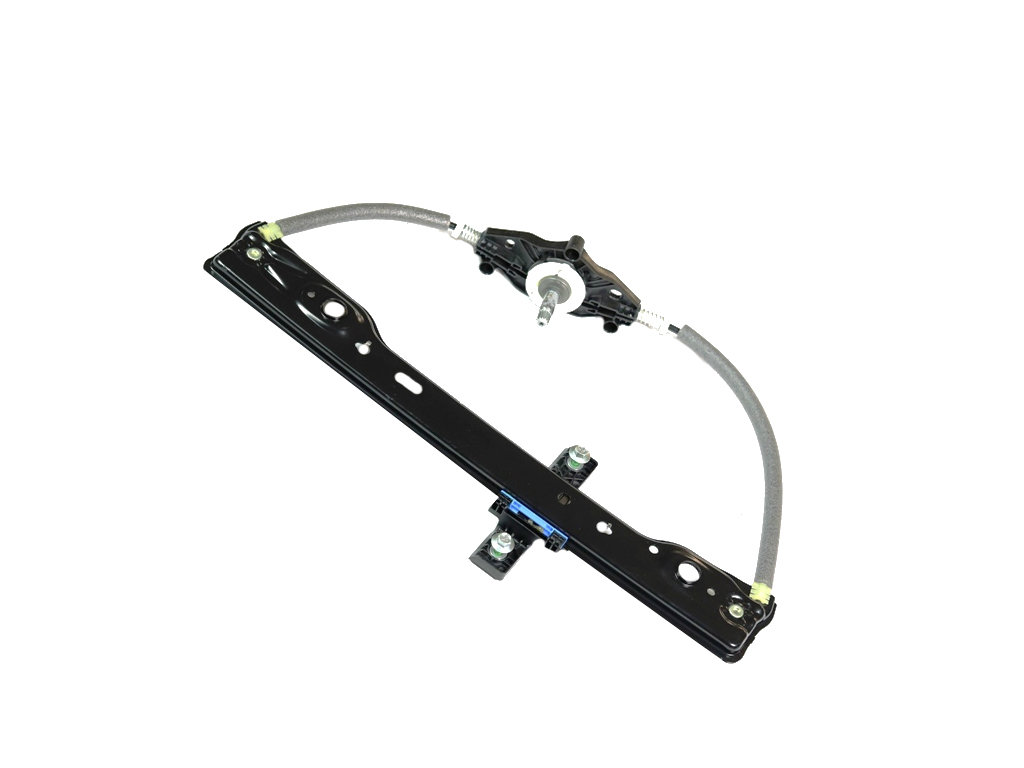
For reference, here’s a modern window regulator from the same Jeep Wrangler my brother owns (the one from the Instagram reel before):
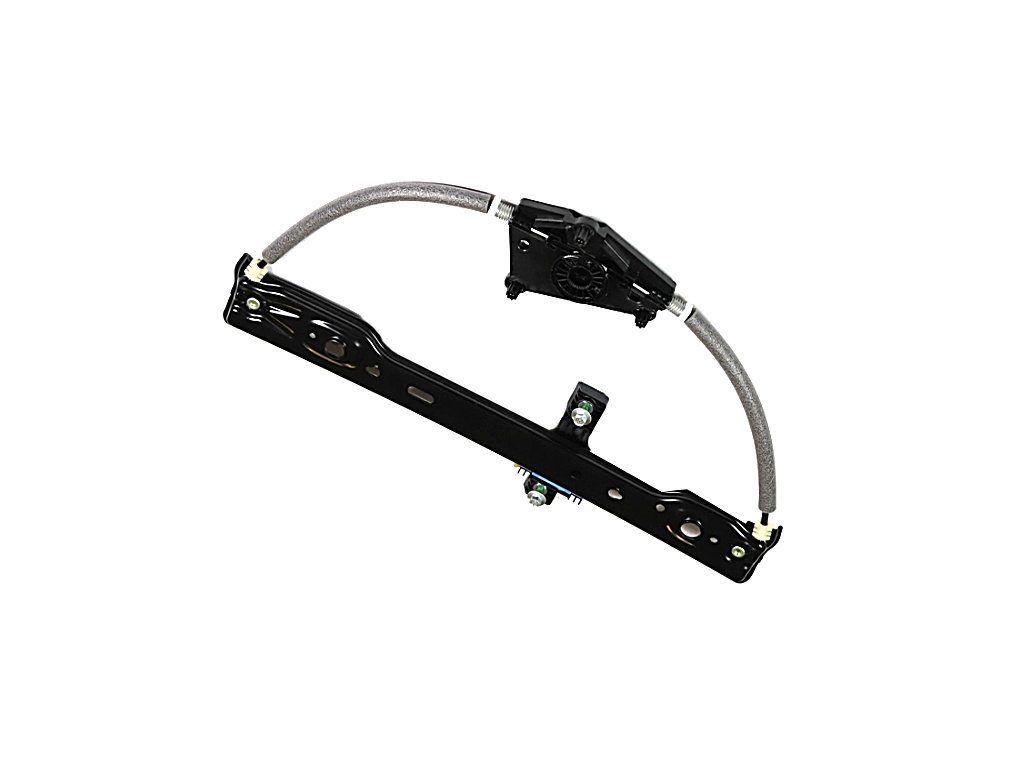
The power version of this regulator looks like this, if you’re curious:
Old-School Crank Handles Were Metal, New Ones Are Plastic
The video below — an excellent one that I highly recommend watching — shows a 2001 Toyota Camry, and it still utilizes the old-school scissor mechanism, too. It requires under five cranks from full-up to full-down, though as the narrator, speedkar99, points out, cranking the window “is a lot of work.”
It’s true. Scissor-style mechanisms aren’t as smooth, and what’s more, more cranks means less torque required to get the window up and down. That’s not a huge deal if the window crank isn’t short and if it’s made of something sturdy. That was the case back in the day; the window crank Jason is using in the Instagram video shown before is beautiful:

My J10’s window cranks were nice, too:

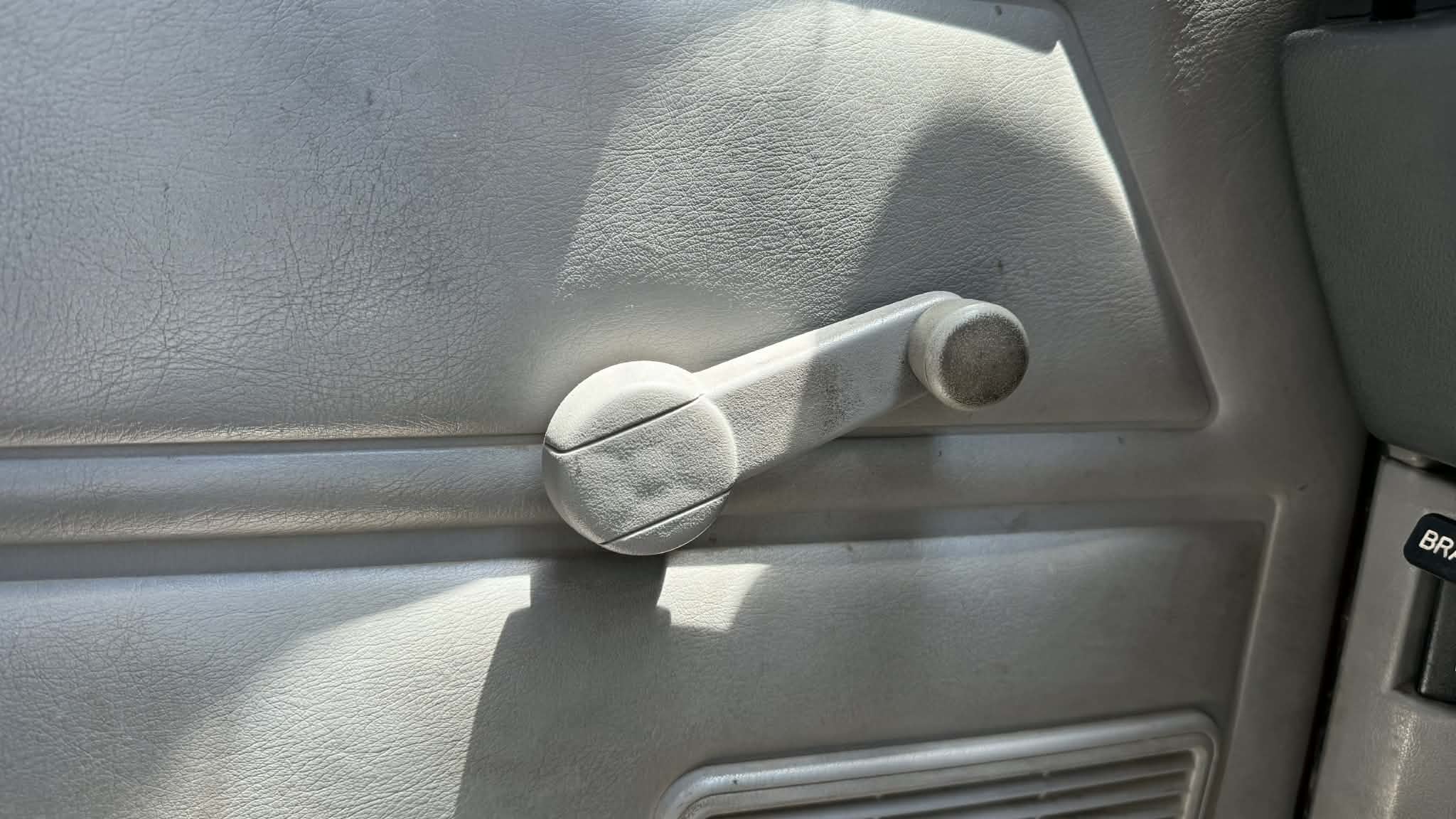
Meanwhile, look at the window crank on my 1992 Jeep Comanche — flimsy plastic garbage that I’ve had to replace once already:
I’m Still Happy There’s A Crank Window Option
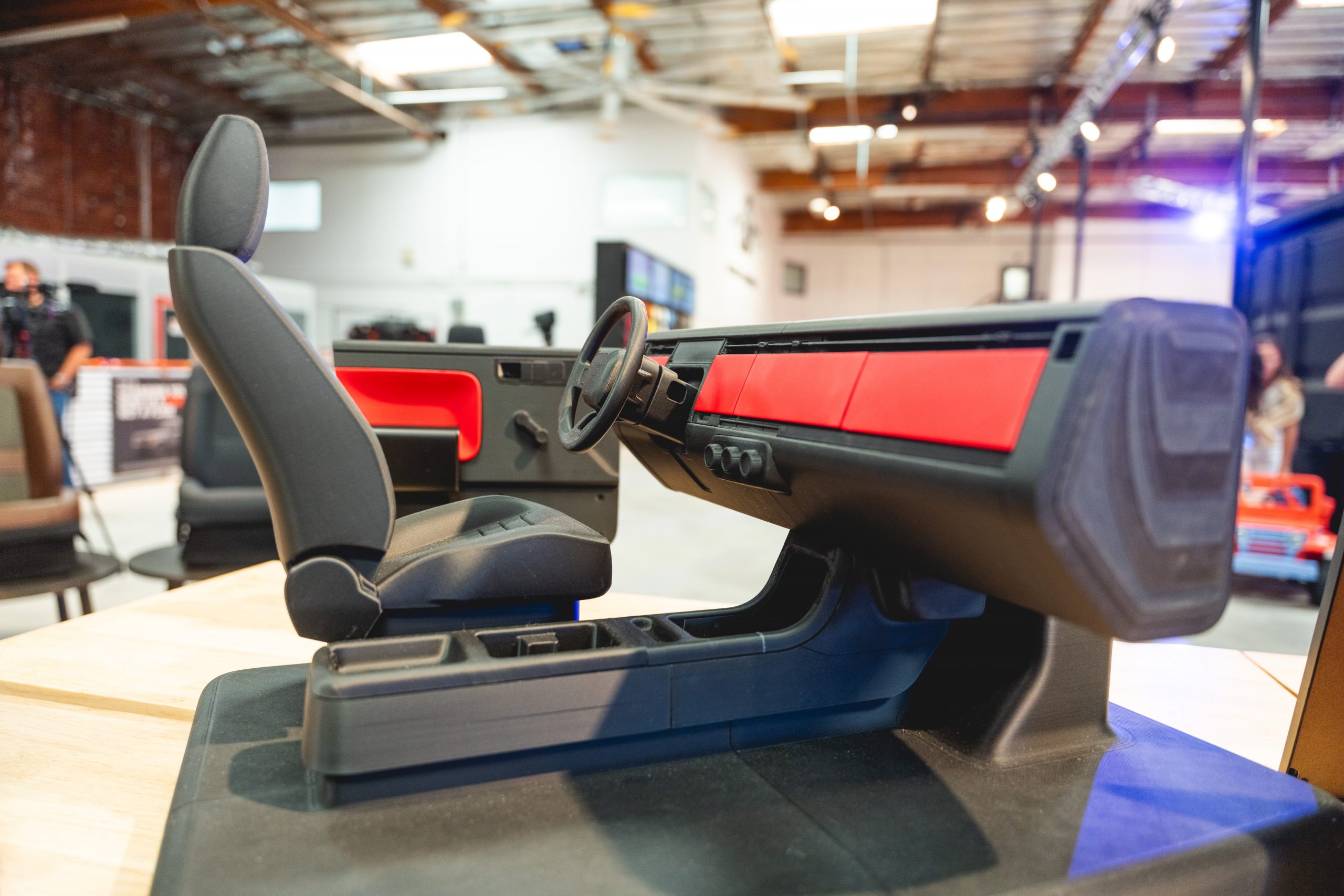
So yes, the Slate is bringing back crank windows, but not the ones you love. Still, even if the cranks are plastic and they have to be turned six times to get the window down, I’m grateful they exist, as simplicity is the key to longevity and low operating costs.
Update: It is worth noting that side impact safety may have played a role in the change of crank windows from scissor style to pulley style. Safety, of course, is much more important than window crank-ability.


im all for being particular and picky. but this is also a good look at how supply chains make no sense. with enough scale, the more complicated system, or a retrofitted version of the more complicated system in this case, ends up being cheaper in most cases. also goes to show how fast it can be forgotten how to make something the right way, really frustrating that we cant just do that. this all hinges on asking slate to open the door card and show what kind of mechanism they have tho…
TIL about carsized.com and quickly started playing around with it. It is a very cool automotive database though they definitely need to up their model count. I used to endlessly play with the comparison tool on cars.com to get similar information. Now, after reading this article, I think @davidtracy needs to spend thousands of his hard earned dollars to create the howmanycranks.com database to truly be able to compare all cars with manual windows. Because of him, I now have to go home and count how many cranks it takes my 2005 Jeep Wrangler and my 1968 Ford Mustang. He should definitely advertise this new online database with an owl saying “One, two-hoo, a-three!”.
Interesting point. 6 cranks is a lot.
I do like that manual windows are easier to adjust precisely. And If the vehicle has auto up/down power windows you can accidentally go a lot further than you expect, especially if the vehicle isn’t familiar to you.
If anyone’s curious, I’m reasonably sure they were still using this type for the ZJ refresh as well. I haven’t completely removed the one from my ’97, but I’ve made enough repair attempts that it seems very familiar.
Also, I shared this on Instagram, but a 2003 TJ window requires 4.5 cranks.