


I don’t think we’ll ever see a pickup that generates more publicity than Cybertruck, but the upcoming entry-level Slate EV is certainly making a strong effort at it. Unlike the Tesla, though, most of the opinions on the Slate appear to be quite positive. A lot of enthusiasts seem to be clamoring for a bare-bones vehicle that has an undeniable “cool” factor. That is, of course, if the price is right.
A recent leak has possibly revealed (but absolutely not confirmed) what the entry price of the Slate will be, and the frenzy begins anew. The big question now appears to be this: at $25,000, is the Slate going to be worth it? As with everything else, I think that’s a personal decision, but I have a few crazy ideas for Slate that could add some practical value and excitement that nobody else is offering. At least, not offering any more.


Luv And A Baby ‘Yota
Many have observed that the Slate is in some ways a throwback to the seventies through the early nineties, when the mini pickup was a major player in the market. Compact trucks like the Toyota Hilux and Datsun (Nissan) Lil’ Hustler were arguably the head honchos of the genre.


These two were joined by captive imports like the Isuzu-built Chevy Luv:

There was also the Mazda-built Ford Courier that I’ve written about before:
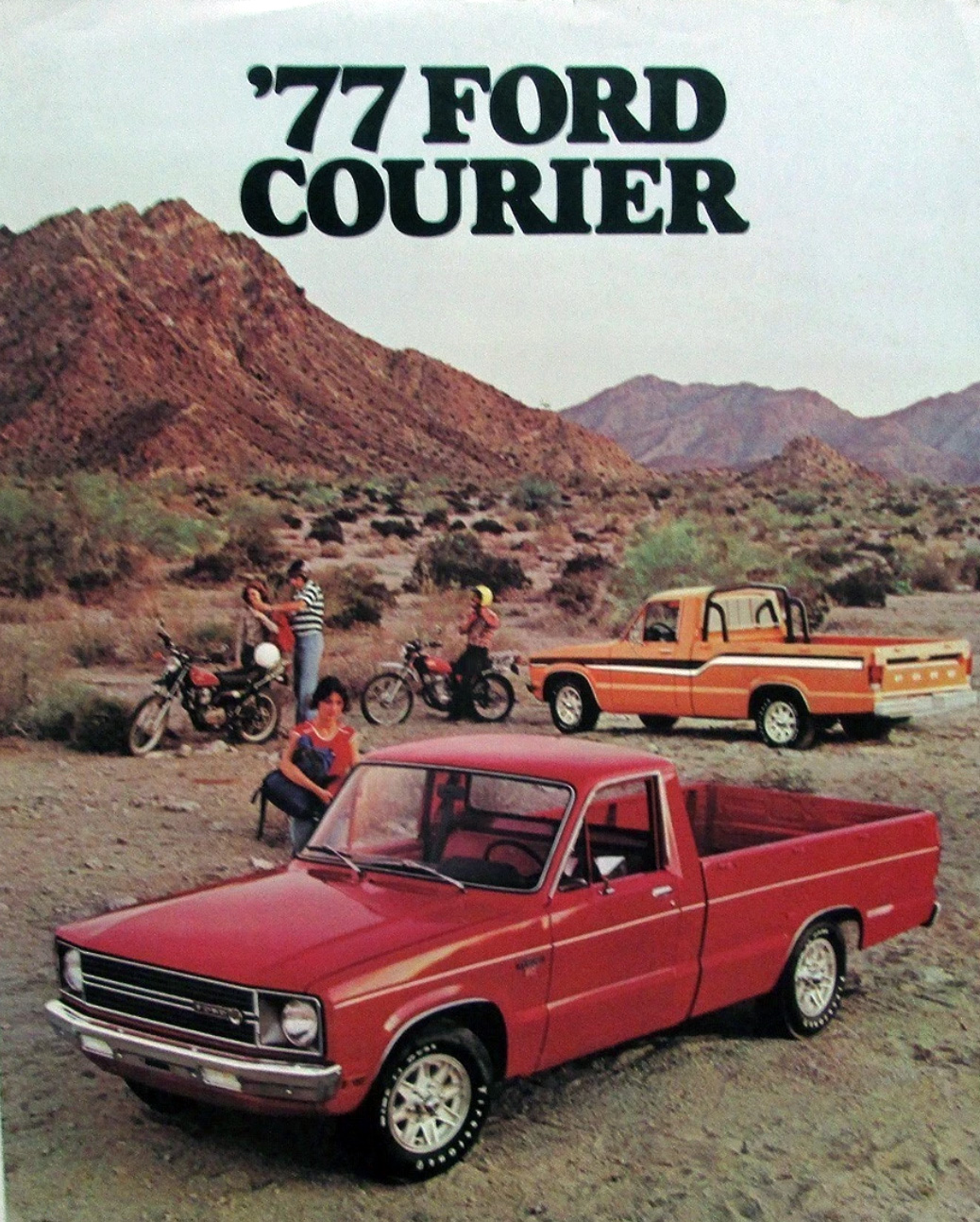
With gas-sipping four-cylinder motors, absolutely zero frills, and rock-bottom sticker prices, these were some of the most economical means of transport you could buy; the cargo bed was just an added bonus. As basic as they were, brands and buyers both found ways to customize and personalize these blank slates. Ignore the pun there – or don’t. Other than the gas motor, that description sure sounds a lot like a certain new EV truck we can’t stop talking about.
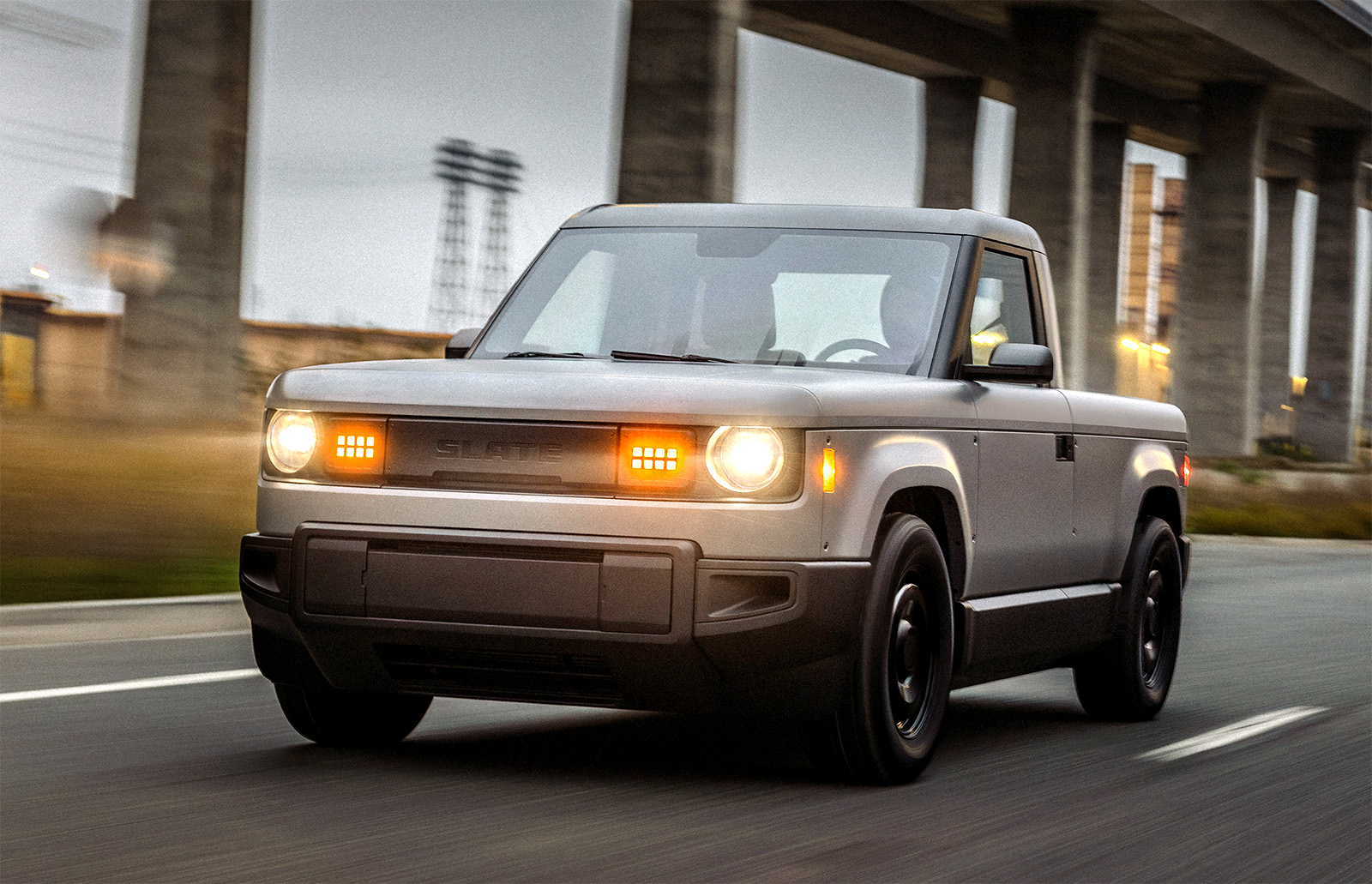
Just like the Slate, these old mini trucks had one obvious deficiency: a very cramped tin box of a cab. Back in the day, people had a couple of solutions to this issue. One was highly practical, the other was not, but both could be done for limited cash. The same low-cost tricks could be applied to the Slate and make it that much more appealing.
Cab’N Fever
You might be all on board with the Slate concept, but you need to be aware that with two passengers in place there is essentially no more room to be found for anything inside that you want out of the weather. Behind the seats? Is what you want to put there much thicker than a piece of paper? Yeah, put it on your lap or squeeze in your legs to put it at your feet. Back in the seventies, this was also a problem, one that Nissan (then called Datsun) was the first to find a workaround for. Their solution was the same as what Dodge had introduced on their new-for-1973 trucks: the extended cab.

Datsun’s was cleverly called the “King Cab,” and you can hear the “Datsun Voice Guy” with his endless enthusiasm talking about this “car and truck combined” game changer:
By today’s standards, it’s a bit of a joke, lacking enough room even for the side-facing “jump seats” that would appear on later examples. Still, as the ads showed, the King Cab provided room for groceries or any other things you didn’t want unlocked or out in the elements. Even better, the extra cab length let you recline your luxurious vinyl bucket seat or gave a passenger over six feet tall room to breathe. The Slate could benefit from the same thing.

Such a modification to the Slate appears to be easy to make; the structure is essentially open behind the front seats.
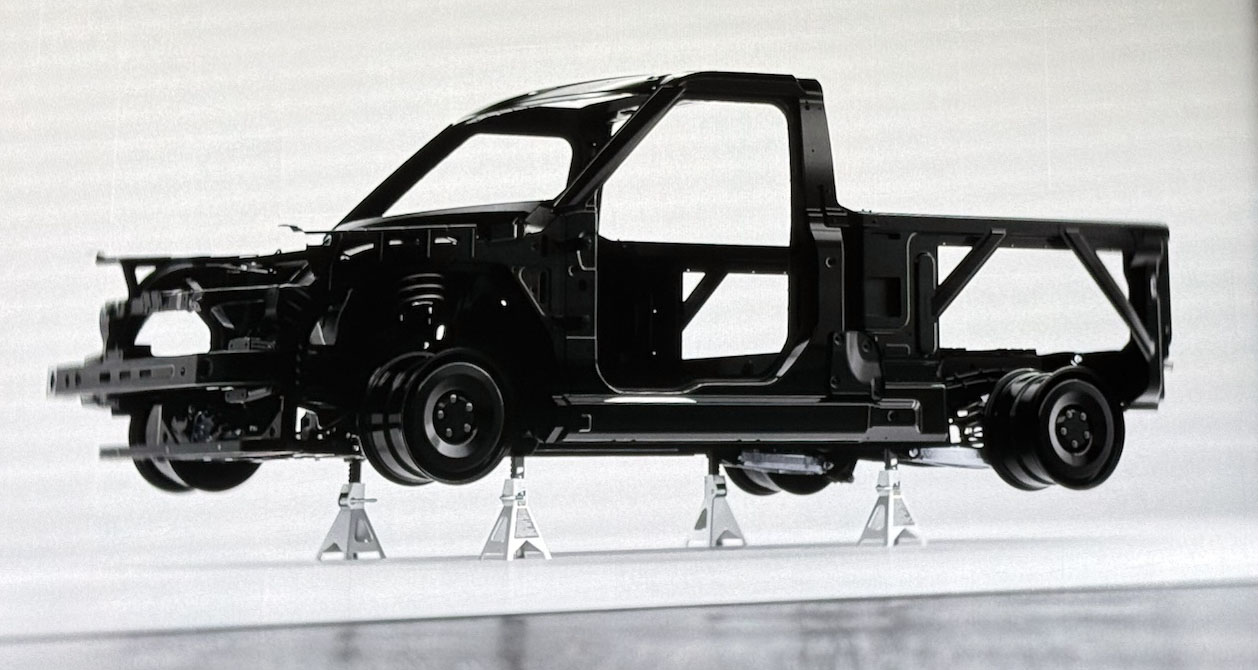
That’s because it currently allows for a conversion kit; Slate will offer an enclosure for the cargo bed and a rear seat to transform the pickup into an SUV. With rather awkward folding front seats and the possible squeak and rattle issues of big bolt-on panels, it seems like that’s not going to be the ideal incarnation of this vehicle. However, that doesn’t mean the cab couldn’t use some extra space as an option.

You can see from the Slate-provided picture that shows the rear structure that’s added on for the pickup version with the cargo bed wall and upper window frame:

We could develop a structure to bolt on and extend that wall back to make a King-Cab-style box that would add around a foot of length to the cabin. That’s about the same as the old Datsun and enough to fit something like carry-on-size suitcases but still not take much away from the bed space.

I’d call this add-on box the Caboom, and it could be in a matching color or contrasting finish, or maybe even all black with lights on top to make it almost look like a roll or sport bar.

If that bed length is still important to you at times, not a problem. The Caboom would have a removable or fold-down section of that rear wall and opening or detachable rear window glass to give you that extra bed length back for when you need it. You could even remove the rear window just for flow-through ventilation in the summer.

Hey, but what if I want more than just flow-through ventilation? I have just the answer.
Just Drop It
Small Japanese trucks arguably really hit their stride in the late eighties, when rustproofing and creature comforts had improved but we had yet to see overweight and overwrought examples. They were the first cars of a lot of us GenXers, and we knew we were cool rolling around in our Vuarnet shades and Hypercolor shirts while rowing through the five gears. Yeah, but we knew how we could make it even cooler: chop the top off!
Yes, Dodge offered a fabric-topped convertible truck in the late eighties, but us kids had no time or money for that. A number of companies offered kits to simply slice off your roof and provided the needed seals, door modifications, and latches to make it happen. You had to bring your own saw and be sure that you cut it just right.
I can see the Slate getting a similar treatment at the factory either standard or as an inexpensive option. Obviously, removing the roof would require a brace behind the rear seats to add back in rigidity, and it could be integrated with a roll hoop to hold the seat belts as well.

You can see how the bar would weld or bolt the side walls of the truck for strength. The CHMSL would be mounted to the bar so you’d still be legal with the roof off; a rubber trim baffle would press against the rear window when the top was installed so you wouldn’t get a cabin full of red light when you hit the brakes at night.

As with the old school conversions, the bed would have plenty of room to carry the detached roof, so you’d be prepared if the sky opened up. An optional holder would let you snap the top in place to stop it from getting scratched or going flying when you brake, turn, or accelerate. You’d likely want another person to help lift off and reinstall the roof, but that’s just part of the experience. Prefer a one-touch power top with twenty-two limit sensors, five motors, and six miles of wiring? Go find a six-figure convertible coupe. The whole idea here is to add value without really adding much money back into the product.
Welcome back to 1990. Who knows? Maybe dancing pickup beds will be back in style soon as well.
Yeah, maybe not. You never know, though.
Give ‘Em What They Can’t Get Anywhere Else
If you listened to Jason and David talking about the Slate on our emergency podcast, you’ll know that we really, really want it to succeed. Many Autopians appear happily willing to forgo a dashboard full of screens and power everything to get an easy-to-buy and maintain machine, but it might be challenging to get more casual enthusiasts to put their money where their mouth is.
Jason and David elaborated on the issues. If the Slate really is going to be $25,000 proposition, for a few dollars more each month, the upcoming $30,000 Ford EV pickup will apparently give you four doors, way better range, and “niceties” that even well-under-$25,000 Korean crossovers have standard. If you’re not terrified of previously owned choices, the Slate’s price will also get you a low-mileage under-warranty Maverick (or even a Toyota Tacoma) that essentially nobody will know that you bought used. It’s safe to say that none of those better-equipped alternate truck options have the “cool” factor of the Slate, but a buck is a buck. Oh, and let’s be honest: if you have a partner or spouse who is part of the buying decision and isn’t an enthusiast? Good luck on getting that Slate.
No, the Slate will need to succeed on “cool” as much as price, if not more so. A “King Cab” or a convertible option wouldn’t turn the Slate into a Maverick, but why should they? We don’t want this breath-of-fresh-air concept to be that. I’m just trying to find ways to add some more excitement and usefulness to one of the most interesting new trucks to come along in a long time and help the value proposition that it needs to make it.
Think about it. You’re about to pull the trigger on a new Slate when you (or your wife) see a Maverick at the Ford dealer across the street or, worse yet, a ’24 Maverick with low miles for the same money or less than this crank window and screenless grey truck. “Well,” says the salesman, “you realize that the top comes off this thing, right?” Sold. Where’s the paperwork?
These two ideas here are hardly new; but if they worked forty or fifty years ago, they could certainly do the same thing today.
Top graphic base image: Slate


Looking at the Slate chassis, it seems comparable to a Fiero or first generation Saturn in terms of construction but more modular. I wonder if there will be a lot of kit cars and rebody kits based on bolting new panels to the existing attachment points.
A series two Land Rover would be fun.
A 1950 Ford custom deluxe two door wooden station wagon! That’s what someone should make. I think the slate could morph into that.
A two door Nova wagon cosplay kit might work, or a Willies Wagon, or just lean into a general shooting brake look.
I’m tempted to buy one just to get the bed cover and make up a wooden station wagon wrap. How many days until we see that? I’m guessing Les than 30. A neighbor in park slope had a boxy Japanese car that I can’t remember wrapped in wood grain vinyl and it was awesome.
Maybe a tiny Citroen H truck?
Compact trucks with whitewalls look dorky. I imagine today’s brodozers would too.
I called Zoox yesterday.
A robot answered.
Not a joke, just what happened.
An extended cab makes some sense, but I think the interior has more free space than you’d expect. Partly because it’s electric, partly because of the minimalism.
There’s no glove box bin on the passenger side (not sure why that isn’t one of the Slate Maker options), and the center console isn’t standard so that can just be a tray. The dash panels also have a seemingly cavernous space under them, with some wiring for people to add electronics.
Also, none of the trucks from the 70s and 80s had frunks.
The lack of the fucking center console alone makes me want one. How I hate center consoles. If there isn’t a transmission living in it why is it there?
Well, it can’t just be empty space, that would look weird and cheap!
Thinking about it, Slate’s willingness/ability to leave empty space “unfilled” is probably a practicality/utility advantage.
Empty space on a vehicle that’s supposed to be all sealed off and finished looks wrong, but in a cabin with blank panels and t-rails available for every surface, that’s usable space that doesn’t look “out of place”.
Huh. I guess it also means there’s less need to use the passenger seat as a storage space, the place your backpack or fast food order goes…
Yeah, I’m on board with no center consoles now.
1970s Porsche 911s no console
Citroën DS, w114 Mercedes, keys about any pre 1980 front drive car I can think of.
They just are so in the way and make the car feel smaller.
Hmmmm.
Prologue: I have deposits down for both the Slate and Telo, but right now, I don’t expect to want to buy either one.
With that said, I dig the way the Slate looks: basic, boxy, and plain. In fact, despite all the accessories and wraps and tops and whatnot that it’s often dressed in (surely, a lot of their planned profit comes from that extra stuff and not the base truck) I almost always feel that the plain truck looks best.
Except shiny forest green non-metallic paint (wrap). When I see it like that, it looks like an scaled down Forest Service truck and I like that. But wraps seem to be about $5K to start for full vehicles more or less, and that’s too much. Grey plastic it is.
I dunno if the base Slate even has AC. If you have to add it (along with everything and anything else you might consider necessary) that might be an issue.
I know single-cab trucks aren’t much of a thing anymore, etc… we’ve been over that a zillion times (the reasons). Still, pretty much every truck looks better (to me, a guy with no kids) with a single cab, especially mini/midsize trucks. This opinion stands whether the truck in question has a short or long bed. JMHO.
AC is standard. They considered making it optional, decided that was a bridge too far in 2026.
Thank you for this Donald. That makes sense 100%. 🙂
Did they consider it? Or rather, did they consider it for any length of time, with the context that Slate’s team supposedly went over every option they could think of?
Either way, glad they didn’t. Needed for the battery anyways, but like, do not sell a vehicle for the US market without HVAC, there will be casualties.
No doubt. My ’94 Hilux lacked AC, which I occasionally regretted, but I was younger and SoCal was ever so slightly cooler back then. I won’t go without AC anymore.
I can’t remember where I heard it discussed that the Slate team tossed around the idea of making AC optional. Maybe the Jay Leno interview? Anyway, I seem to recall it wasn’t a snap decision.
The should make the Slate New Jack Hustler and have Ice T in the commercials
We need more vehicle models with “Lil’” in the name. Lil’ Hustler, Lil’ Sparrow, Lil’ AMG 63, Lil’ Luce… it’s a missed opportunity.
“Just like the Slate, these old mini trucks had one obvious deficiency: a very cramped tin box of a cab.”
A small regular-cab is not a deficiency, it’s actually an added bonus. The smaller cab makes it easier to heat in the winter months and quicker to cool during the summers. It also makes it easier to reach over and roll down the passenger side window. Plus, aftermarket stereos just sound better in a regular cab.
Agreed, but IMO the truck needs more bed to make up for the single cab.
I would prefer a 6-foot bed. My 2010 GMC Canyon hauls almost everything I need with its 6-foot bed, the side notches for the 2X4s, and the tailgate that stays open at an angle so the top is even with the top of the 2X4s. I can haul 4X8 sheets of drywall, plywood, insulation, paneling, etc. I also have a bed extender bar and bracket that plugs into the receiver hitch and I can even haul my 16-foot Mad River Canoe with that.
I’m curious to see if the Slate offers the adjustable tailgate and the notches for hauling 4X8 sheet goods.
I’m not buying the used truck competition argument, that’s true of every vehicle at every market level, and should never factor into the analysis of whether a vehicle will succeed. When recommending a car to a friend, I’ll absolutely tell them to look at used vehicles so they get a superior vehicle at the same price or the same car for less, but the new car market at large is not comprised of my friends, and they will not be dissuaded by used alternatives.
People want new vehicles, that’s a desirable feature in this market and, assuming the Slate can compete with other NEW vehicles, there will soon be gently used Slates floating around for 20k with a Kenwood in the dash anyway.
I love the idea of the slate as a diy platform. Hopefully Amazon’s business model of making money from other people’s business will encourage an explosion of body kits and accessories.
I also love the DIY platform idea… but is that going to fly given modern safety requirements and liability issues? I want to swap and change parts on this thing like its a bicycle.
In these times, low mileage, two to three year old vehicles are the sweet spot. “They won’t know you bought it used” – Who TF cares?
Except that for a couple of years there won’t be anything used you can buy in the US like a slate that’s less than 25 years by old.
Then of course you can buy used Slates. I wonder how much depreciation these will have. Less depreciation than most EVs I would imagine.
Neighbor of mine had a garaged 620 king cab he used only for duck hunting. Man I loved that truck. Perfect curves, still looked rugged. Round headlights. I should have let his wife know that I wanted it when he passed.
That roadster with roll bar would be sweet.
Now may I request the matra rancho version.
I’ve been getting a Citroën Méhari vibe from the get go.
Why not split the difference? Build a shelf 10″-12″ above the truck bed (to maintain the floor length) before stepping back 8″-10″ (to create the king cab)? Sure, there would be less interior storage, but you’d still be able to recline the seats.
By the time you purchase all this additional stuff to give it a tiny bit more room, you’ll have spent as much, if not more, than you would on a bare bones Maverick or likely even the upcoming small Ford EV pickup, and those also have radios and electric windows. I’d LOVE for Slate to succeed, and if they were closer to $20k, I’d likely get one myself. But if I’m going to spend close to $30k on a pickup with some extra space inside, I’d be more likely going with the established automaker who I know isn’t going to go out of business in a couple years because I’ll likely need repairs and maintenance done on it.
Don’t get me wrong, the whole “customize it however you want” aspect is incredibly intriguing. I just don’t see it as being a better value than options that already currently exist or are scheduled to soon.
What’s funny is the next manufacturer that introduces a bare-bones EV pickup will make a killing. There’s an advantage to being second out of the gate for a new concept – you didn’t have to do the marketing and R&D that the first team did.
Apple, and Henry Ford’s model T are good examples.
100%.
Ford didn’t invent the automobile; they developed the manufacturing process to make it quickly.
Apple didn’t invent the computer, the tablet, or the smartphone. They created an ecosystem for them to all work together.
Innovation, over a long enough timeframe, is public domain.
I don’t think it’s that kind of technology cycle. Slate is quite pointedly not using anything particularly new, and a lot of their concepts are pretty specific to their context as a business and brand.
If a company was copying Slate, they wouldn’t have much R&D advantage they couldn’t get by looking at cars made decades prior.
They would avoid some risks by seeing how the public receives a lot of Slate’s more polarizing ideas, but some of them are necessary for the bare-bones EV pickup concept to work anyways.
The theory is that it’s better to let someone else test the market first. If Slate creates a new market for bare bones EVs, the companies that improve pricing, distribution, and manufacturing processes (to lower turnaround time and operating costs) will be able to take advantage of its momentum.
If a legacy automaker could justify something so deeply contrary to their established investor narratives, long-term strategy, marketing, and business partnerships (suppliers, dealerships, software/AI vendors…), I think they could easily beat Slate on a lot of things, especially price. The difference in capital and negotiating power alone would probably be overwhelming.
I think the problem is, if Slate succeeded and legacy auto (or a company like Rivian/Tesla) tried to copy its success, they wouldn’t be able to make the choices that are supposed to make Slate “work”. It would be a sort of half-measure that doesn’t work well for anyone.
Another startup might actually do very well, especially if they target some of the form factors or applications that Slate isn’t currently covering. They wouldn’t have legacy resources though, and I imagine they wouldn’t be launching off of Slate’s momentum so much as following it. Would love to see more like Slate, regardless of whether they “make a killing” with second-mover advantage.
Yeah, I don’t see any of the big automakers doing the Slate business model correctly, either – leaving it to either a little guy who is new to the game, or possibly a new “stripped down with lots of available accessories” budget name plate in the vein of Scion?
When people say “Slate is just removing features and selling them back to you like a budget airline”, they’re ignoring the fact it’s designed as the minimal version, that is an intended final form of the vehicle.
If other automakers could do it without falling into the trap of making a fully-loaded version and leaving a bunch of “feature-shaped holes” to make sure they get their extra revenue, I’ll be surprised.
Can you imagine how much it would cost to modify a Maverick to be more like a Slate? It would at least double the price if you hired a shop to do it.
The Slate is more comparable to a Fiero or first generation Saturn really.
I’m confused. In what way could a Maverick be modified to be more like a Slate? It’s a dramatically different vehicle.
From 4 to 2-door? Not feasible with how the platform is structured (square-faced Ford Focus). FWD/AWD gas/hybrid to RWD EV? Removing tech?
I mean, I know at least one mod people had to do to make their Mavericks “more like a Slate”…never going to let go of the fact Ford gave the short-lived “cheap” Maverick a unique set of buttons and an ECU flag to “remove” cruise control.
That is my point. Talking about how much it would cost an owner to make a Slate more like a Maverick is a silly, yet apparently popular exercise,
I was simply pointing out absurd the whole notion is, unless you are doing it for fun impractical reasons like turning a Porsche Panamera into a pickup truck. If you want to do it, I’ll buy you a beer if you bring it by my house. If you think it’s a reasonable thing to do, I gently disagree, but I’m still up for a possibly redundant beer.
As much as I would like to see a single cab Maverick, I don’t want to cut and shunt a unibody like that. That usually does not end well.
The beer would definitely be redundant. If anyone showed up at your house with a Maverick-to-Slate, they’ve already taken their breakfast of cornflakes, vodka, and beer. It might be missing a wheel or tire and equipped with a furnace, too.
(“Trust Me, I’m an Engineer!”)
It’s a “popular exercise” because it’s the way to be able to compare apples to apples. This isn’t that complex of a concept for most people.
Why would anybody pay to modify a Maverick to have LESS or WORSE ability and functionality than it already does?
“Here’s some money to remove the rear seats or the pickup bed.”
“Can I pay you to change the standard electric windows to hand cranked ones?”
“How much would it cost me to have you remove the radio and speakers? I know I could just not turn them on, but I want them removed so it’s more like the Slate.”
“While you’re at it, strip all the paint off then wrap it in a vinyl I’ll have to replace every few years. I’ll pay you!”
“Is there any amount I could pay you to swap the established dealer repair network for some shoddy patchwork one?”
“Remove a couple doors while you’re at it!”
First, you’re kind of missing the point of the comment that it was silly to talk about how much it would cost to modify a Slate to be like a Maverick.
But since you asked:
,I’d love a 2 door Maverick,
Lots of people pay to have the truck beds removed, so much that there are two or three businesses locally that have hundreds of truck beds taken off pickups piled up. Mostly they have been replaced with stake beds, service bodies or fold down sides.
Charging extra for window motor delete? Stop by your Porsche dealer and see how much they charge for deleting winders.
No dealerships? Sign me up!
The “infotainment stacks” that you can’t replace are an abomination. The reason people get upset by not having CarPlay is because they hate the manufacturers’ offerings. I would pay money for a piece of plastic to replace the center console with some DIN holes, a place to put my phone, and maybe some Kleenex. There is no option for getting rid of the ugly center console in the Maverick.
Slate comes in gray rustproof easily replaceable panels. for $500 you can get any color you want. Or plaid, stripes, or pretty much anything you can take a picture of.
Maverick comes in five shades of gray (Oxford White, Space White Metallic, Shadow Black, Carbonized Gray Metallic,, and Marsh Gray) or blue.
For extra-cost you can get Azure Gray ($495)- when one of the other six grays isn’t gray enough I guess, Orange Fury ($495), Light Blue, and Ruby Red ($390)
If you want something else you can wrap the maverick. The clear coat will eventually fail if you don’t wrap over it and repainting is expensive.
The Maverick is going to rust and any body damage isn’t just ordering a new plastic panel and replacing it with a screwdriver,
The Slate front end looks pretty nice and the Maverick looks like it already hit something. It’s by not quite Lexus ugly but someone keeps coming by and whacking the front with the ugly stick. The first year wasn’t as bad.
Overall I like the Maverick compered to most other pickups, but like the Slate more
I wasn’t missing the point because it’s not silly. In order to compare apples to apples, if one of the things isn’t an apple, you have to figure out what needs to be modified to make it an apple. These are all items directly from the company, not some sort of unusual custom body work. Why you think that custom body work and off the shelf parts compare at all is beyond me.
To “remove” the truck bed from the Slate is to add seats and make it an SUV. With the Slate, you can not have both 4 seats AND a truck bed. With the Maverick, you get that for no additional cost.
I’ll sign you up for no dealerships! Then, when your Slate has an issue or needs any maintenance, have fun trying to figure out where to take it for the work!
I could get a Maverick wrapped in any color I wanted to for about the same price… if I wanted to reapply it every few years when it starts peeling off… on top of the paint that’s there that is less likely to start peeling in a few years. I’ve had many cars over the years. Some I’ve had for 10+ years. I’ve never had clearcoat start failing, so no idea what you’re on about there, either. I’ve also had a good number of vehicles in the last 15 years, and none of them have shown any rust. Most of that time, I lived near Chicago too, with it’s salty winter roads.
I do like the look of the Slate better. I like the small size and the drivetrain as well. The customization aspect is quite nice and unique! But my personal tastes don’t negate that the Maverick is just a better overall value. To bring the Slate up to as close as you can to a base level Maverick’s features, you’d have to spend WAY more than you would on the Maverick.