

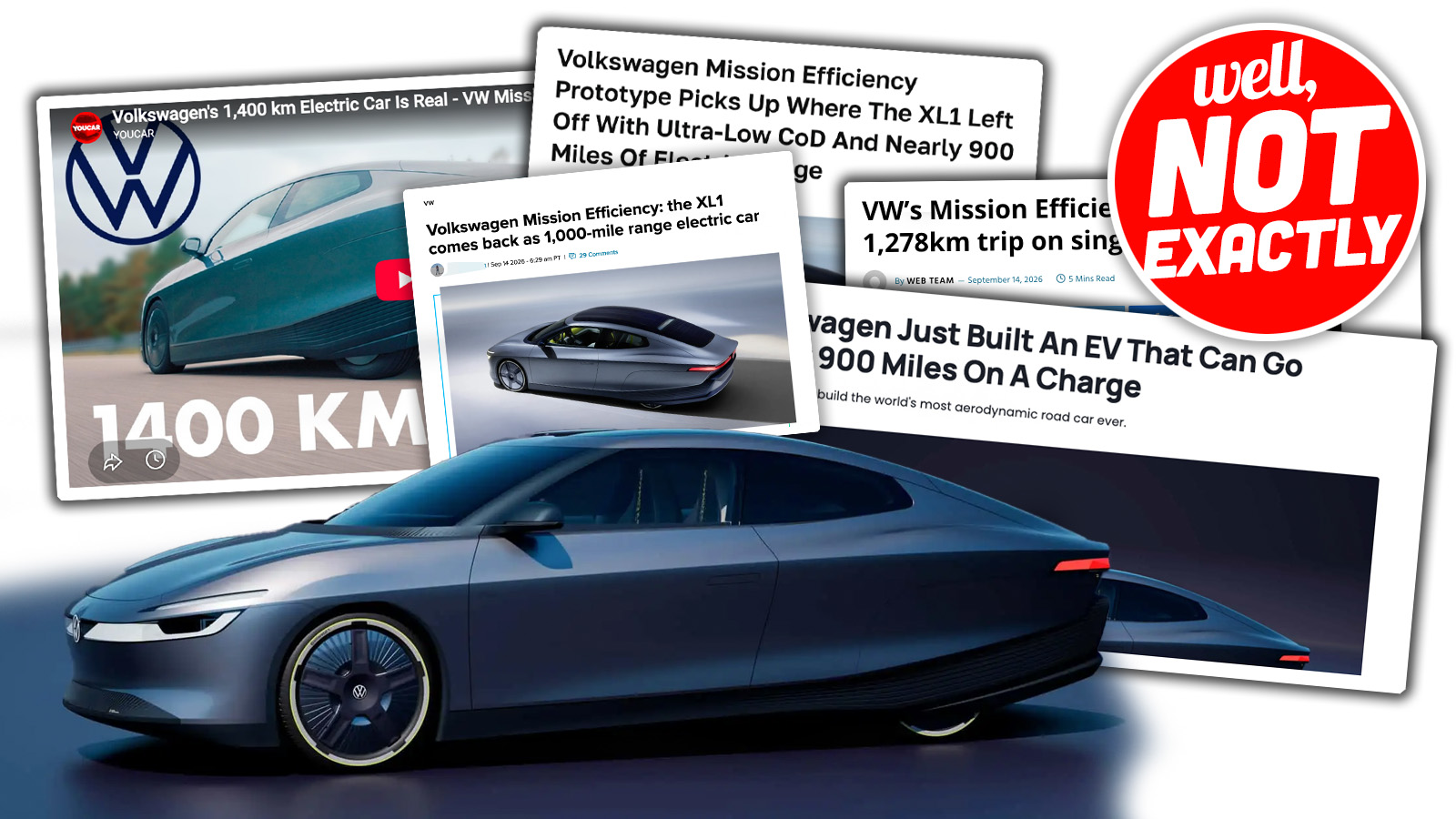
You may have seen a lot of stories floating around about how VW’s new Mission Efficiency concept has a range of about 900 miles; that isn’t true. It’s about half that, which is still quite good, but let’s talk about how we knew it was wrong.
Remember the Volkswagen XL1? Back in 2013, in the heady days before Dieselgate made everything so unsavory, VW showed off an incredible little car that looked like a sleek spaceship, a diesel plug-in hybrid with a drag coefficient of 0.189 (for comparison, the Lucid Air has the lowest Cd of 0.197, and a Tesla Model S has 0.208) and got somewhere in the neighborhood of 250 mpg. I got to drive one around Manhattan once, long ago! It felt pretty futuristic. Well, now that we are actually in the future, complete with everyone freaking out about a robot uprising, VW has provided a suitably updated new spaceship-like car, and this time it’s all-electric and even more of, well, everything, if “everything” is efficiency.


VW is calling this new car “Mission Efficiency” and describing it as “the world’s most efficient near-production electric car,” which is sort of a strange set of qualifiers. “Near-production” means, what, that they’re actually going to build these, and it’s not just a concept? They may mean “production” in the sense of how the XL1s were “production” where they only built 250 of them, though to VW’s credit, 200 of those were sold to retail customers. Oh, and they cost the equivalent of about $180,000 in today’s money.
Oh, and the Cd of Mission Efficiency is a shocking 0.158, which is a new record for a car approved to drive on normal roads. (The frontal area is 2.08 m², so if you want to calculate the drag at a given velocity at a given air density, you can for fun).
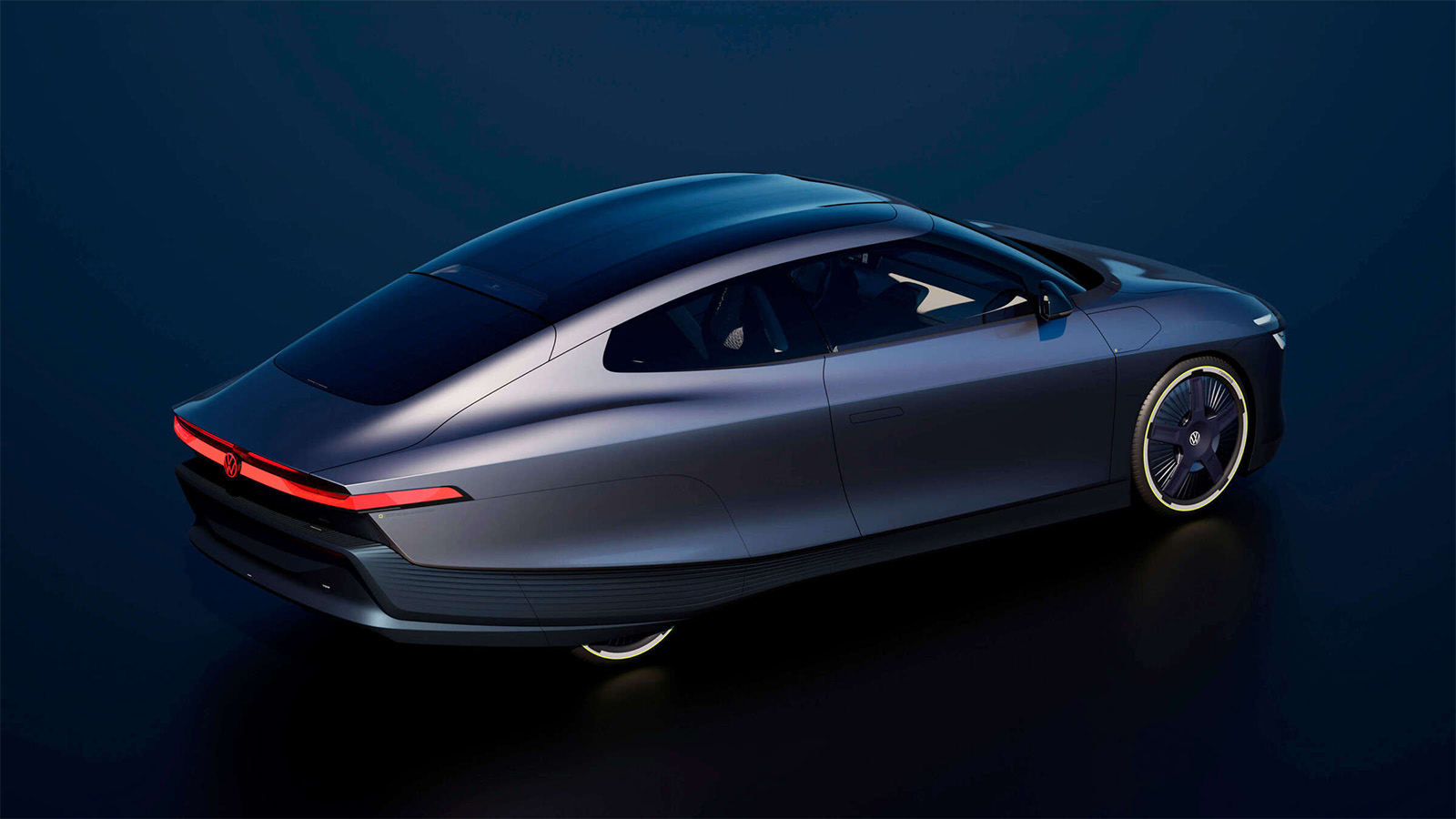
If this thing looks remarkably like the old XL1, there’s a reason for that, and that’s because the laws of aerodynamics haven’t changed in the past decade or so, which means the same basic shapes still are the most efficient.
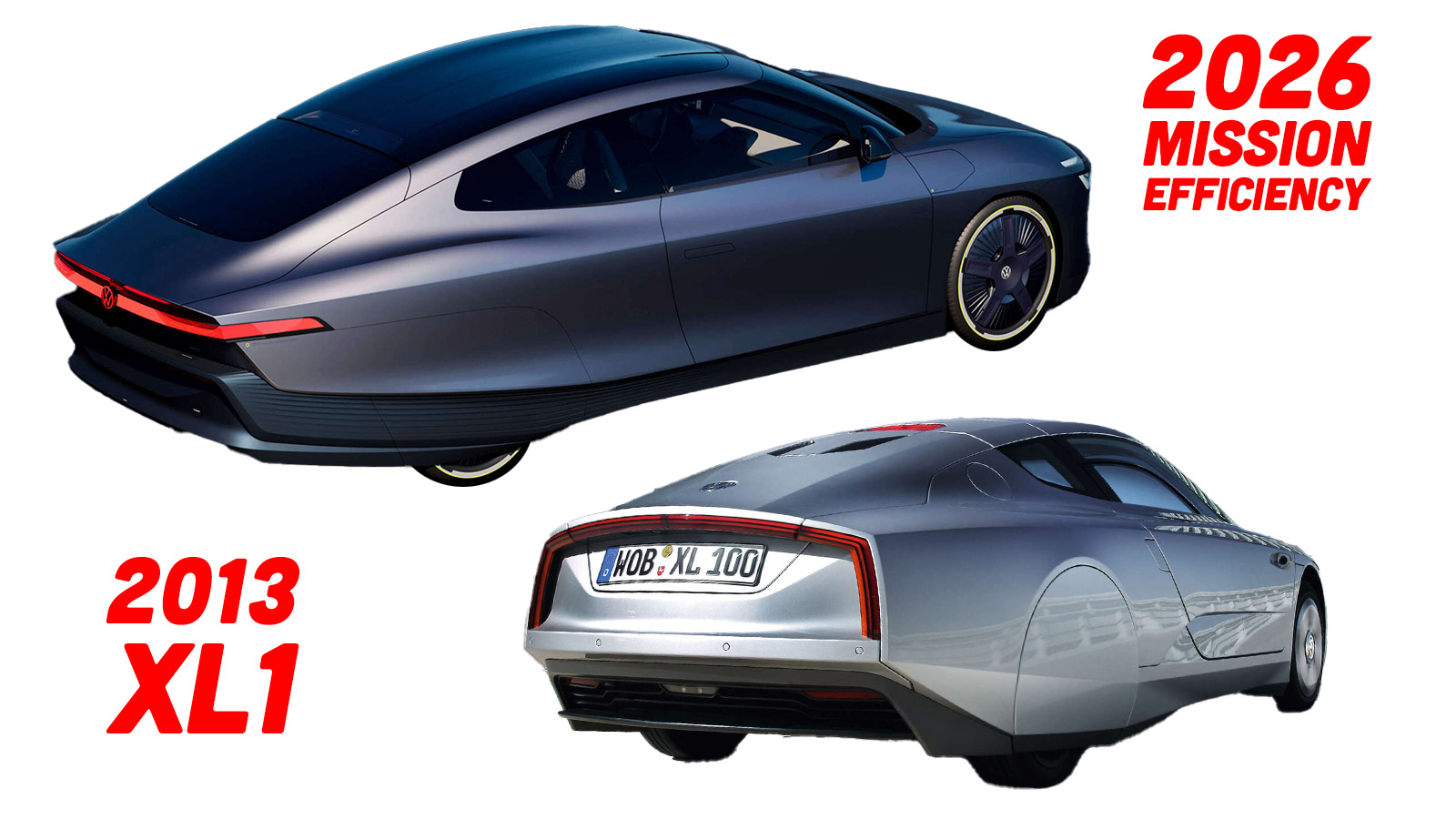
One of the more interesting differences between the Mission Efficiency and the XL1 has to do with the side mirrors; specifically, that the new car has them:
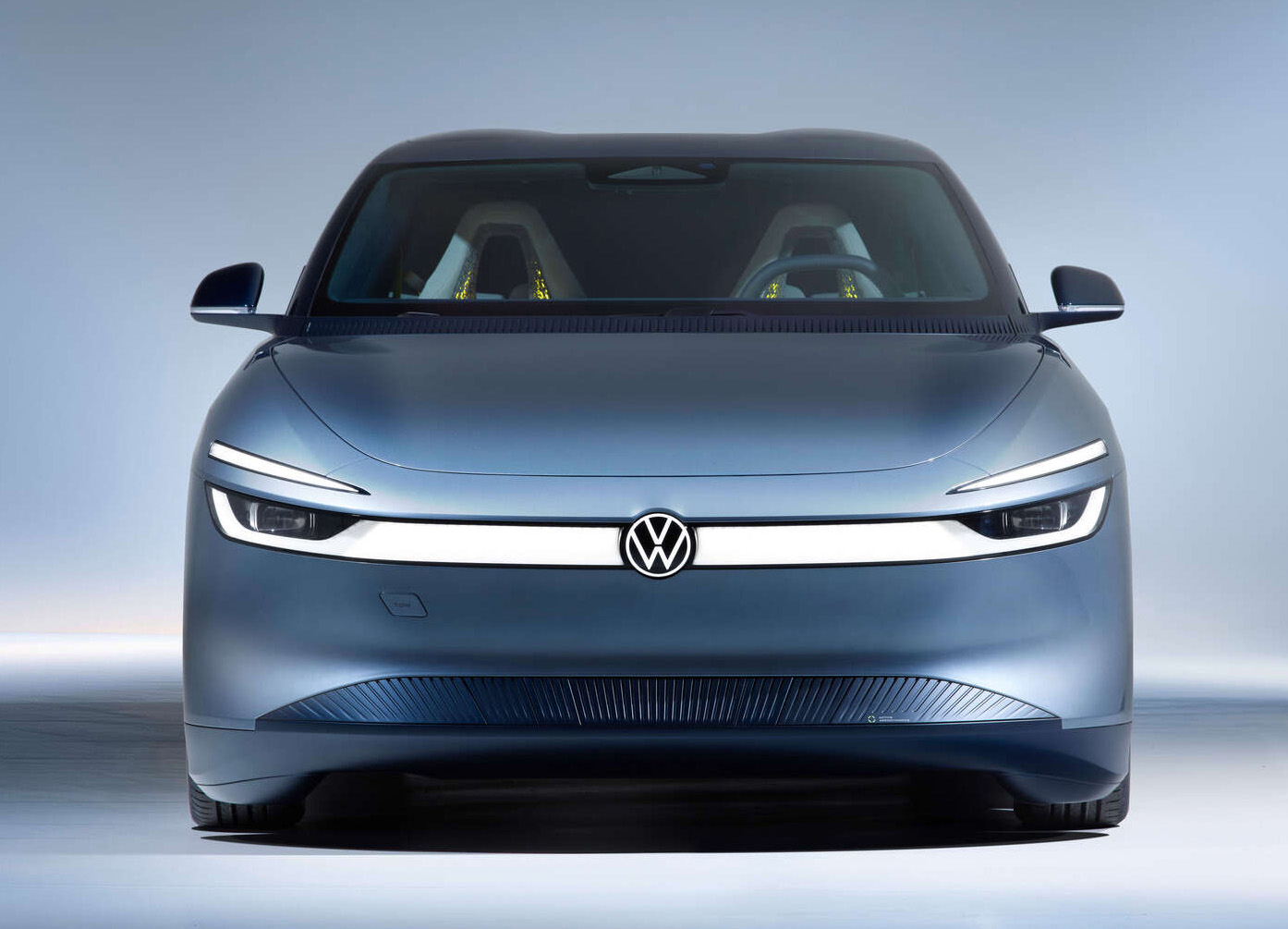
The older XL1 concept forwent (that’s a weird word) side mirrors in favor of cameras and screens, but it now seems that the hit taken by the external mirrors isn’t worth the cost, complexity, and energy draw of camera-based systems. Plus, camera side mirrors still aren’t legal in America.
Okay, let’s talk about the part VW is most excited about, the efficiency. VW took the existing front-wheel drive drivetrain from their ID.Polo, with its 133 hp electric motor and 54.9 kWh battery, so there’s no new exotic hardware under the hood, just stuff that is already in production, which is good. It’s even built on the same MEB+ platform.
VW took the Mission Efficiency on a test run of 1,278 km (794.11 miles) from Wolfsburg, Germany, to Vienna, Austria. When they arrived in Vienna, they had 164 km/102 miles of range left, which is where many media outlets are getting that roughly 900 mile range figure. But that’s not really what happened, and I almost made the same mistake myself, until our EIC David caught that something didn’t smell right about that sort of number from a 55 kWh battery.
[Ed Note: I don’t want to seem mean because I love many of these outlets, but unless there was a change in VW’s press release that I’m not aware of, saying it was confusing and that’s why so many got this wrong is being a bit generous. Any huge claim should always be approached with some amount of skepticism, and this should have been extremely obvious. 900 miles out of a 55 kWh battery means an efficiency of 16 mi/kWh. That’s three to four times the efficiency of even some of the slipperiest, lightest, smoothest-rolling cars on the road. This was obviously not right, especially since in VW’s own press release, it mentions an efficiency of 6.89 kWh/100 km, which is about 9 mi/kWH. It literally tells you how far it goes on a certain amount of battery capacity, and then it tells you the battery capacity. This thing goes about 9 mi/kWh*55kWh = 495 miles on a charge. Not 900. What’s more, it says clearly in the press release that the car charged once during that trip.
I’m fallible myself, but it’s the scale of this mistake that confuses me. The fact that somehow seemingly nobody read the press release and nobody thought “900 miles out of a 55 kWh battery. That doesn’t pass the laugh test” kinda worries me. But again, it’s possible I’m missing something, . -DT]

VW’s press release is worded in a somewhat confusing manner, but it notes that there was a stop to charge the car en route. Based on that, and using VW’s own numbers, which they proudly note in the press release:
On an officially documented consumption test drive over a distance of 1,278.36 km from Volkswagen’s German Development Centre in Wolfsburg via Poznań (Poland) and Olmütz (Czech Republic) to the Austrian capital Vienna, the Mission Efficiency achieved real consumption of 7.51 kWh/100 km including charging losses (6.89 kWh/100 km without charging losses). The route was completed with an average speed of 67.72 km/h; the top speed was 138 km/h. The 54.9 kWh battery (net) was only charged once during the journey. On arrival in Vienna, it had a remaining range of 164.0 km.
I did reach out to VW to confirm the range, and was told this:
On our test track in Wolfsburg under specific conditions (constant 68km/h), we reached out a range of 821km (7km remaining range) with one charge.
So, that’s a range of about 514.5 miles per charge at a constant speed of just over 42 mph, a way no one ever really drives. So, the 450 mile real-world number feels right to me.
Despite not being something absurdly high like 900 miles of range, the car is quite efficient, with VW noting that the Mission Efficiency is as efficient at 87 mph as the regular ID.Polo is at 62 mph. Still, to get there, VW also had to have some special tires; from the press release:
“The optimal tyre is another point of leverage for reducing fuel consumption and increasing the vehicle’s range. Working closely with Continental, Volkswagen developed a concept tyre based on the EcoContact 7 series tyre, which with a rolling resistance of 4.9 kilogrammes per tonne is about 25 per cent below the threshold for the EU’s best tyre label class A. Essentially, the sidewall and the tread compound have been optimised to minimise energy losses during rolling.”
VW did at least try to make the car somewhat practical, being a 2+2 instead of a strict two-seater like the XL1 was.
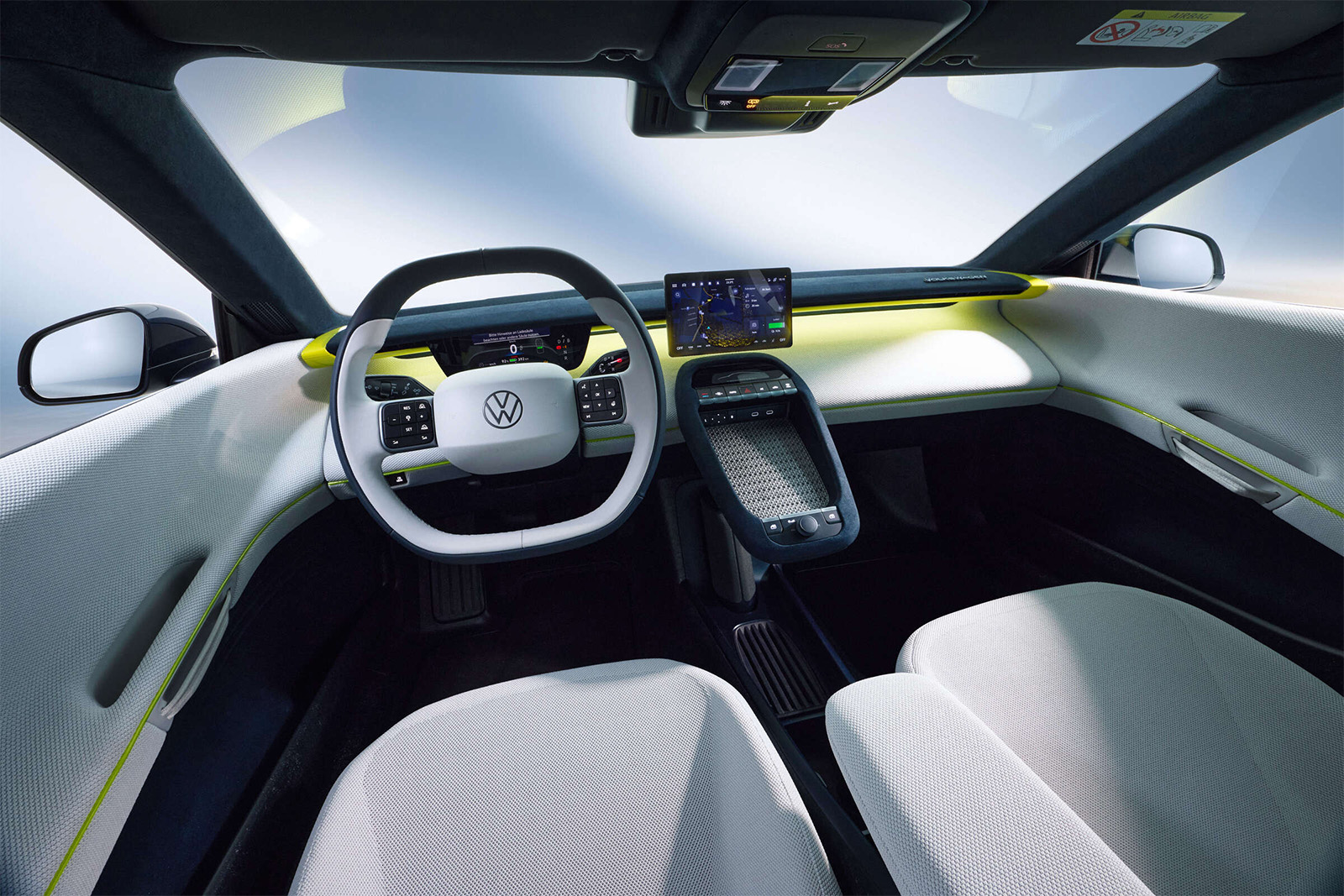
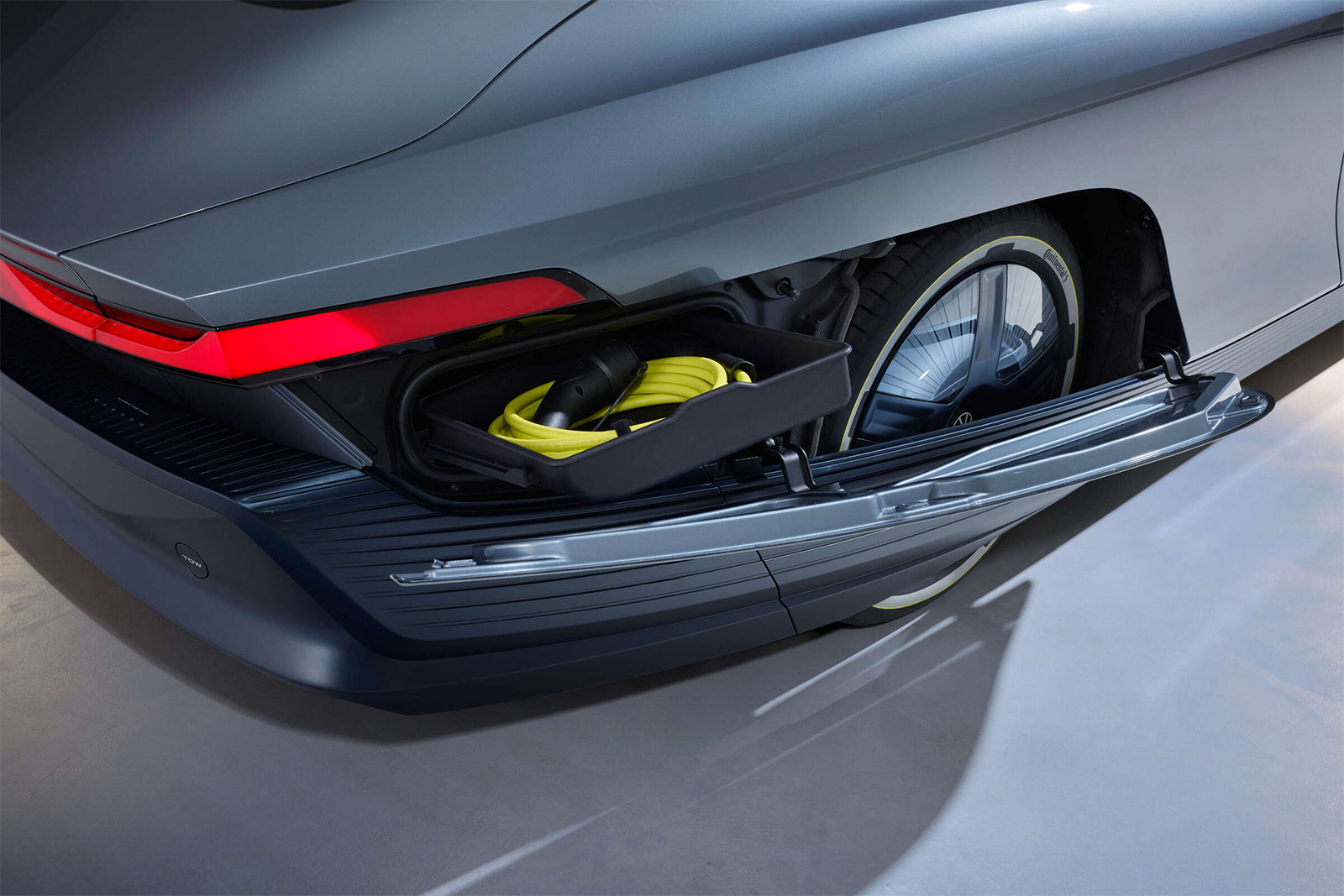
That urinal-shaped thing in the middle of the dash I guess is for storage, since there seems to be no glove box or anything. Actually, storage isn’t too terrible, with about 17 cubic feet of storage in a rear trunk, and while there’s no frunk, there are these nifty little storage cubbies aft of the rear wheels:
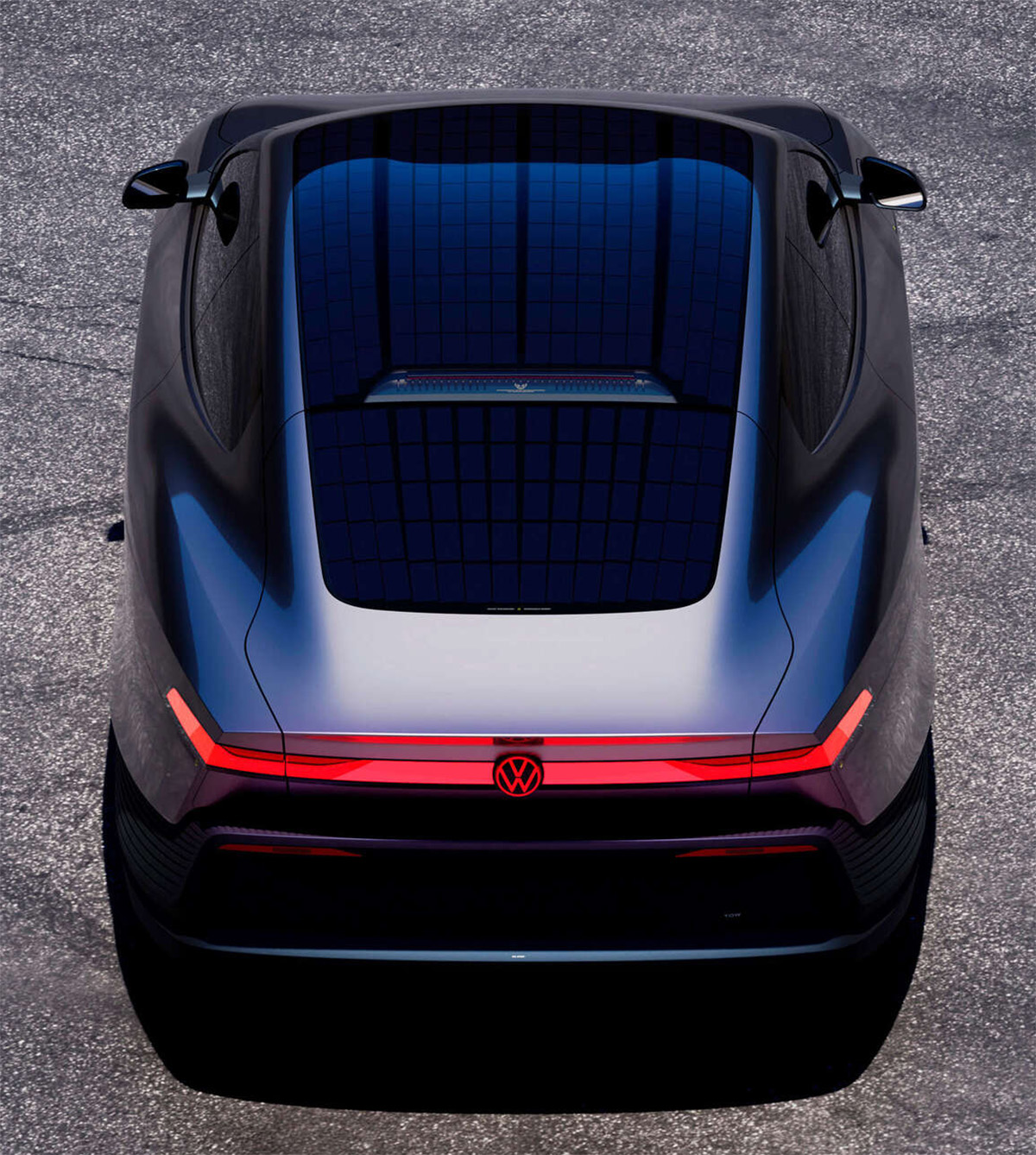
There’s also solar cells integrated into the glass roof and rear window, making a total of 370W of output, but that’s under ideal circumstances. They claim it can increase range by 30 km/day, but I’d take that with some salt.
VW is claiming a world record for the car’s run, but it is a very specific record:
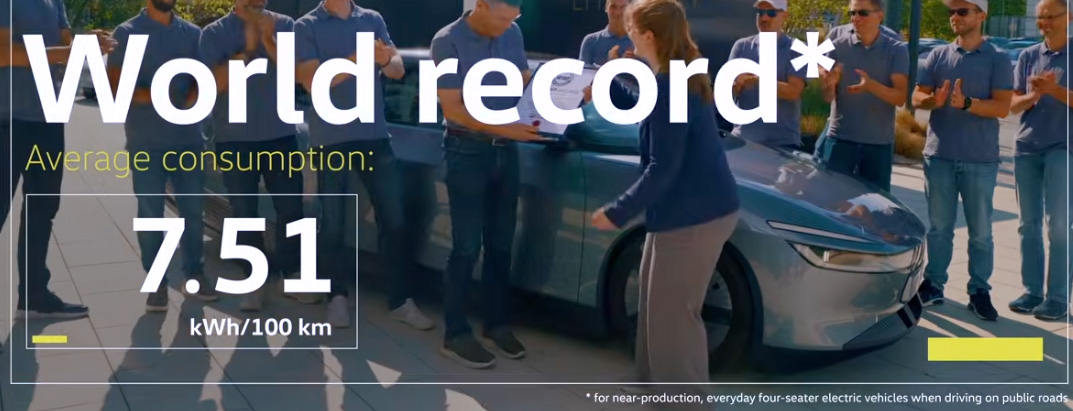
9 mi/kWh for a “near-production, everyday four-seater electric vehicle when driving on public roads” is good. So, sure, I guess they earned that.
As far as the overestimation of range that seems to have been everywhere, well, I make plenty of mistakes, too. But it’s a good reminder that things that sound too good to be true often are, and to 1. read the press release more closely and 2. do the math.


I am inclined to wonder how expensive the weight and drag reduction required to achieve additional range from a small battery is, vs the cost of putting a bigger battery in it.
You get faster charging, which isn’t nothing, but given that this range seems to have been achieved by sacrificing things normal humans generally are willing to pay for (space, SUV layout, styling, SUV layout, interior features, SUV layout, and materials perhaps?) in exchange for trying things we already knew work anyway (less power, drag, and frontal area yields greater efficiency), I’m not 100% sure what this exercise was for. Who’s going to pay extra money up front to buy a car that sacrifices the features they want to save them the money they spent already long-term?
Nobody reads anything in 2026.
I had a helpful LLM distill this article down to a bullet point list of emojis that were then transformed into a 10 second Youtube short.
I only watched the first 3 seconds so I may have missed something.
Your comment was TLDR
VW must be afraid of their imaginary xl1 makert getting eaten up by aptera and bolt.
Also “with one charge” they didn’t say when the charge was ? Was it at the beginning was it half way though? Weird way to say that. Might be innocent but also feels not innocent in the scheme of things.
I can’t help but think that if the original press release had used imperial units (including US gallons), rather than metric units, this whole misunderstanding would have been completely avoided.
There’s something that always bothers me when the XL1 is discussed, we all know it as the car that VW made as a science project to get maximum mpg out of a production capable vehicle. When they were done the car got 240mpg US. Except that number is highly misleading.
Per the wiki page for the XL1
In February 2013, Volkswagen announced that it expected the XL1 to achieve a fuel consumption of 0.9 L/100 km (260 mpg‑US; 310 mpg‑imp) and emissions of 21 g/100 km of CO2. The test cycle allows for a re-charge of the battery every 75 km (47 mi) which results in a high mpg value.
Using diesel alone the car is capable of up to 2.0 L/100 km (120 mpg‑US; 140 mpg‑imp).[5] One reviewer found that, in real-life traffic, with air conditioning on and without attempts at hypermiling, the car is able to reliably achieve 2.3 L/100 km (100 mpg‑US; 120 mpg‑imp).[25]
Still a highly impressive number, but it’s not exactly obvious that the stated number involves recharging the battery every 47mi, with real world being less than half of what VW touted.