

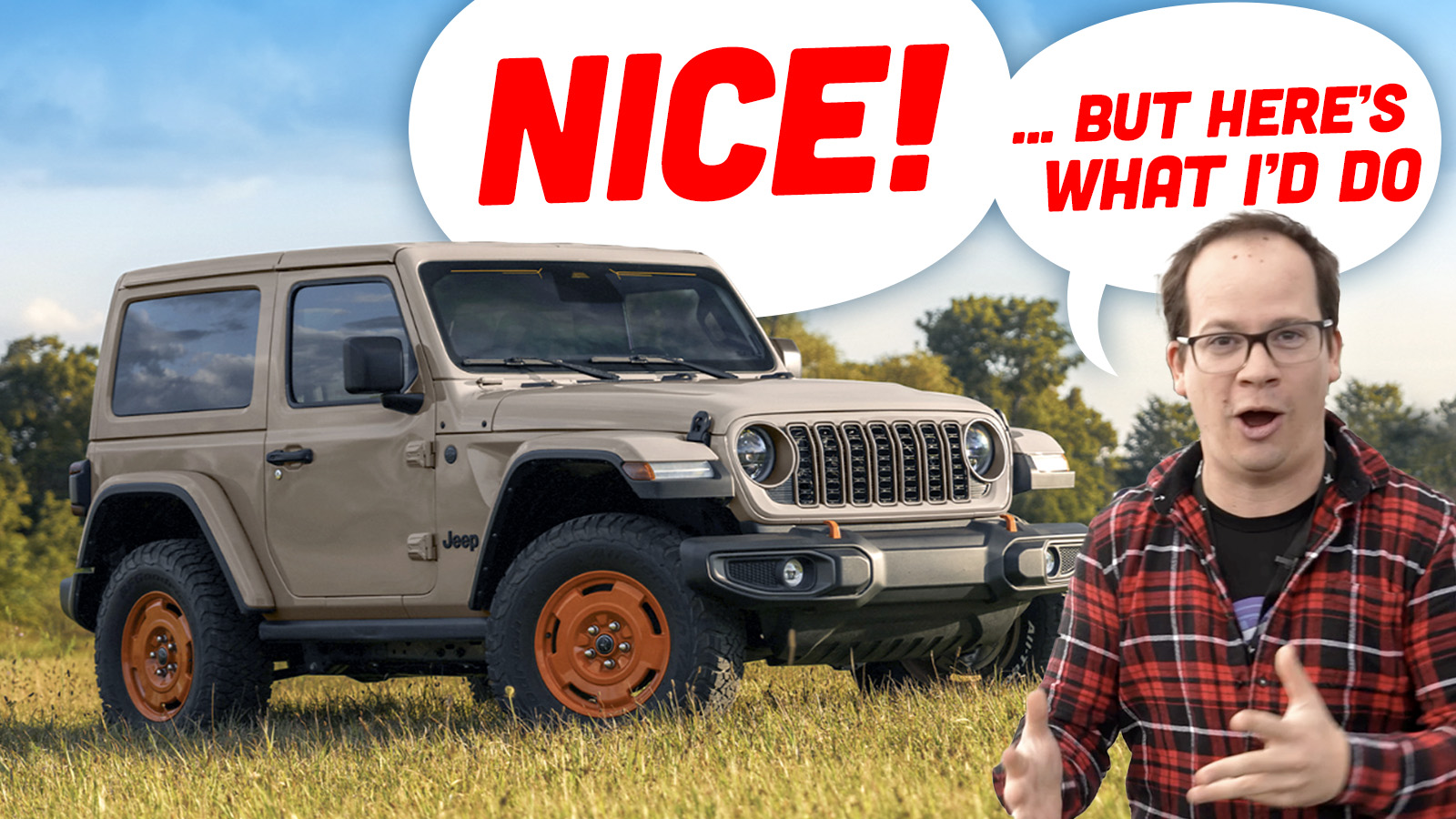
It’s a weird time for Jeep, who recently launched a ~$65,000 SUV that can only drive ~230 miles on a charge. The Wagoneer (the Grand one, the regular one, and the electric one) has been a bit of a dud, the Wrangler is so old now that it finally has a viable competitor in the Ford Bronco, the Gladiator ain’t selling without a big check on the hood, the Cherokee just returned after inexplicably leaving the most important market segment on earth, and wait…they still make the Compass? Jeep’s annual sales have been in freefall; here’s what the brand is doing to fix them, and here’s what I would do.
Last year I started writing a fun story about how I’d fix Jeep, but that languished in my drafts folder. Now there’s a new Jeep out, and I’m going to use that as a newspeg to present those fun ideas.


The newspeg: Jeep has “dropped” a new “JL-2A” Wrangler, which is the latest in the brand’s fun “12-for-12” lineup of 12 new Jeep Wrangler buzz-models “dropping” in 12 months. The JL name refers to the current Wrangler’s model code, while “-2A” is an homage to the first-ever Civilian Jeep, the CJ-2A. Jeep has been having fun with hits 12-for-12 vehicles, and the JL-2A is probably my favorite of the bunch. Check it out:
What’s especially great about this video is that among the AI-looking animations is my good friend Brandon driving one of the first CJ-2As ever built, a 1945 column shift vehicle, right near his property in rural Michigan. Brandon restored a 1946 CJ-2A back when he was 16; he’s as legit as they come, so to Jeep not only putting him in leadership positions at the company but also leveraging his expertise in commercials is just downright cool.
Also, the JL-2A is cool. 
Not only does it offer unique colors and unique wheels, but it also comes with an amazing brown interior. And not just brown seats, I mean a brown dash and brown doorcards; it’s a true, unique interior color option, like in the good ol’ days:

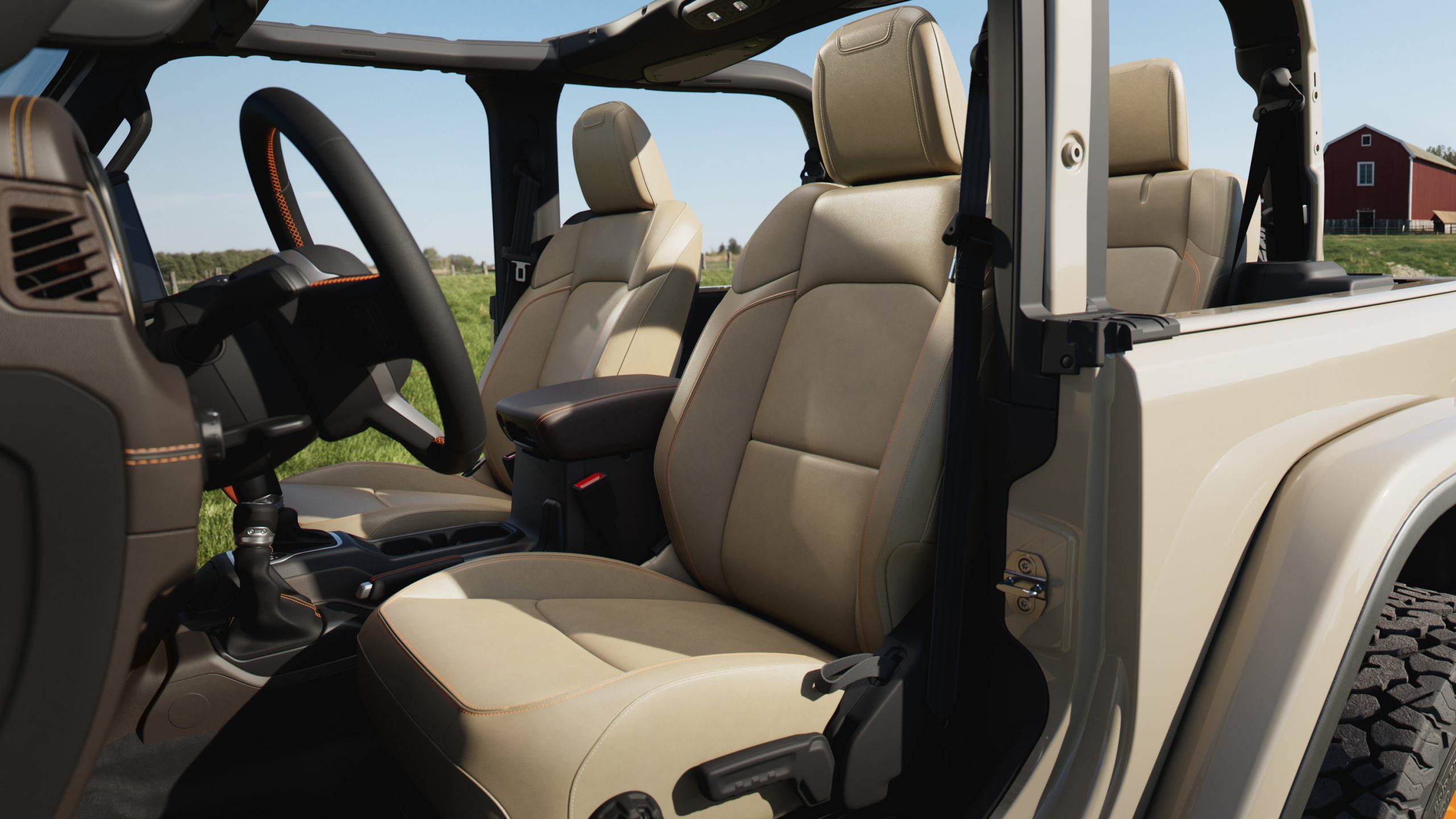
Per Jeep’s press release, the option costs $4,995. Given that the JL-2A is built on a Wrangler Rubicon (i.e. it has lockers front and rear, 4.10 axles, and a 4:10 transfer case low-range ratio), that means you get these cool looks and that sweet interior for just a few hundred bucks more than a Wrangler Rubicon equipped with similar options.

Honestly, Jeep has been crushing it with its 12-for-12 Wranglers. I recently went off-roading with my friends at the YouTube channel TFL, and they were in the Wrangler Willys 392 — a cheap (ish) way of getting a V8 in your Jeep Wrangler (it starts around $70 grand). It was epic.

Jeep’s comeback plan looks like a fun one that includes a new vehicle called the Jeep Scrambler. Per The Drive:
The Scrambler is a two-door Gladiator-based pickup truck. There are four seats and the doors will be slightly longer to enable easier access to those rear seats. There’s also a side step so you can just hop on in to those rear seats.
I say hop on in, because like the K5 Chevrolet Blazer, the hardtop is going to be removable on the rear end. The front hard top panels? They are “freedom panels” from the Wrangler and they pop off with a few twists of some latches. Even wilder is the fact that the second row of seats will be able to be (somehow, it’s unclear at the exact moment) turned around. So those seated in the rear can be facing backwards with the roof off, jump seat style.
[…]
The front end has a shark nose design and the top edge of the hood cants foward. The headlights are squarish.
From what I’ve read, this may be Jeep’s halo model, with a Hemi-powered SRT model being the desert-bashing Jeep of your dreams. It sounds awesome. Between this, the 12-for-12 Wranglers, the new Recon expected to get an ICE powertrain, newly adjusted pricing, revised naming for the Wagoneer, and the hybrid Cherokee, Jeep has been making some smart moves.
But let’s talk about some left-field moves I’d like to see as part of a Jeep comeback.
My Jeep Comeback Plan
First, let me say that this is a fun, rather pie-in-the-sky plan, and not one based on deep market research. That doesn’t mean it won’t work; the brilliant men and women working as executives and product planners for Jeep are looking all all the numbers, and they haven’t been able to make it work. So I’m going to shoot from the hip some wacky and some sensible ideas to try to get Jeep out of its hole.
And my god is it in a hole. Just look at the sales since the revised “JL” Wrangler debuted in 2018:

For a while it was a freefall; still better than any time before 2014, but six consecutive years of annual sales decreases qualifies as a freefall, even if 2025 narrowly beat out 2024 (2026 is year-to-date as ~the middle of the year). And while Jeep is in the middle of a comeback plan, allow me to present mine, starting with the wackiest idea.
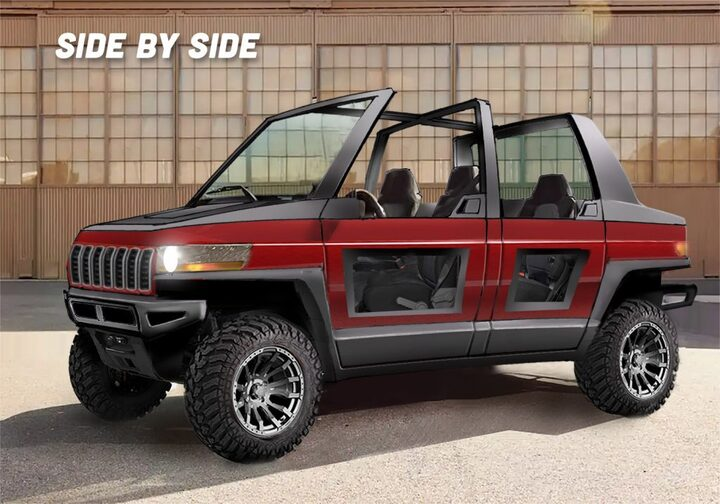
Offer A Side-By-Side And A Tiny 4×4 SUV

Recently, while walking around SEMA in Las Vegas, I saw Toyota’s new “Scion” side-by-side (see above), a UTV concept that looked remarkably ready for production. At that same show, I saw the Mahindra Roxor, an India-designed, USA-built side-by-side that is literally based on an old Willys Jeep, and that even has a number of interchangeable parts.
I even saw a Vanderhall Brawley electric UTV, whose front-end design is clearly cribbed from Jeep:

Jeep has not only been beaten to the side-by-side punch by a foreign company building Jeep’s own vehicle, but its design is being cribbed and it appears that Jeep is also about to be gapped by the slowest-to-market company there is, Toyota.
How the hell does this make any sense? Seriously, why would you ever want someone to have to look beyond your brand’s offerings to get an off-road vehicle? You gotta keep folks “in the Jeep family.”
To be clear, I realize there are some brilliant folks at Stellantis who likely peeked at this, but then again, having worked there, I wouldn’t be surprised if this didn’t get the full deep-dive it deserved. Thanks to growth in recreational usage and growth in areas outside of recreation — things like military and agriculture applications — the UTV space is a rapidly growing one, with market research and consulting company KBV research saying “The Global ATV and UTV Market size is expected to reach $17.6 billion by 2030, rising at a market growth of 7.6% CAGR during the forecast period.” From KBV:

Research and Markets has that figure at $14.41 billion, though by 2033 they say the market should be around $16 billion. That’s healthy; it’s hundreds of thousands of UTVs sold each year.
The marketing/brand-building aspect of this could be interesting. If Jeep can show that its a world-expert when it comes to off-road vehicle technology, with its brand on the best UTVs money can buy, that can only help get Jeep back into the hearts and minds of the American public.

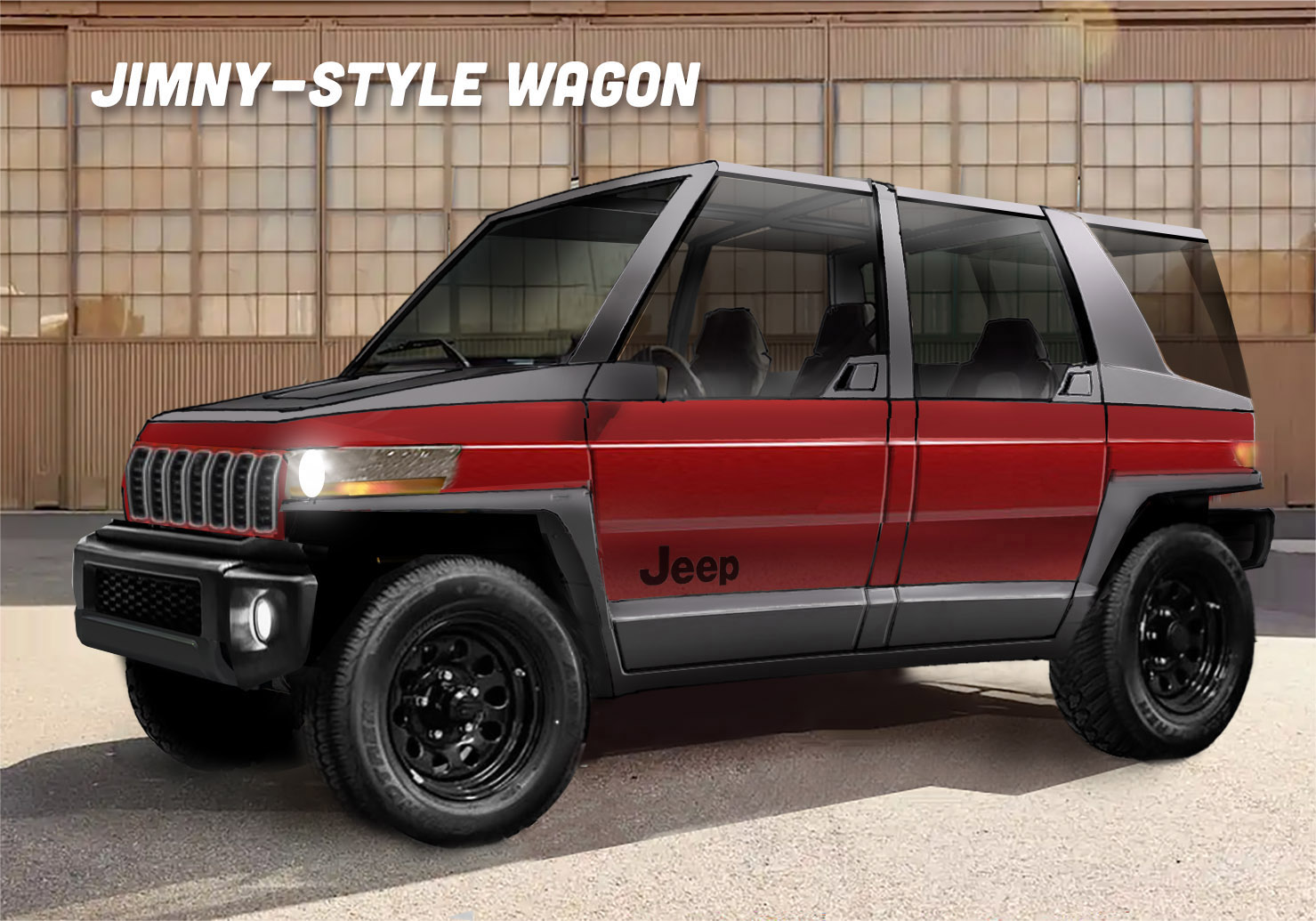
Or maybe the side-by-side doesn’t have to be state-of-the-art; just offer something. I’d love to see Jeep get back to its roots, and Jeep’s roots involve offering true off-road capability to the masses (in the 1990s, you could get a base Wrangler for the equivalent of about $28 grand; today’s base Wrangler starts around $37 grand). Especially with today’s affordability crisis, a vehicle like a Jimny would really hit the spot, and if Jeep could build such a vehicle on the same platform as an affordable UTV/side-by-side, that could help make the dollars and cents work out.
Enough of the ridiculously soft Jeep Compass/Patriot, which blend in with all the other boring crossovers but lack the quality/reliability of others in the segment. Think outside the box by offering a box like this:
Never, Ever Leave A Hole In The Midsize Crossover Space

This one is obvious, but it remains one of the biggest blunders in recent Stellantis/FCA/Chrysler history: The death of the KL Jeep Cherokee without a replacement ready to go.
This segment is the biggest on earth, with a guaranteed couple hundred thousand annual sales just by trying. The participation trophy in the midsize crossover segment is a Fabergé egg, and Jeep just decided not to even play along for two model-years. There is no 2024 or 2025 Jeep Cherokee. How this was allowed to happen I don’t know, but dealers were pissed, people inside Stellantis were pissed, and customers were pissed but only until they got to the front of the RAV4 waiting list, at which point they’ve been very happy with their reliable, high-resale-value SUV.
This can’t happen again. Ever.
Beating Japan Could Mean Joining Them, Offering Huge Conquest Incentives, Bolder Styling
The best selling car in the U.S. is the midsize SUV, and right now Jeep has the Compass and Cherokee. They’re OK, but they’re getting absolutely wiped by offerings from Toyota and Honda. This isn’t going to change through conventional means; competing with Japan in the crossover segment is hard.
I’ve got a few wacky ideas on this front. First, how about a massive incentive for former Toyota Rav4/Honda CR-V owners? If someone comes in with a 20 year old or newer RAV4 or CR-V, they get a humongous rebate — one that makes the deal impossible to pass up.
Pretty much anytime Jeep launches a new small SUV, the same thing happens: People get excited for it, and Jeep gets a few sales by leaning heavily on the vehicle’s Jeepness (not on its performance or quality), and as the vehicle gets older, more and more money gets thrown on the hood to keep sales going. Meanwhile, Toyota just cleans up year after year, usually with small, sensible updates, and maybe a new powertrain every now and again. Toyota can do this because its built a rapport, winning all sorts of quality/reliability/resale awards. These are important areas to consumers.
Consistency is key, and with all the starting and stopping, and all the quality woes, Jeep is basically decades behind when it comes to building the reputation RAV4/CR-V owners buy into. This is a huge barrier to entry for someone wanting to actually compete with the top-dogs, and there are a few ways to try to fix this. There’s the aforementioned incentives to try to get folks to give up their Toyotas and join into the Jeep family, and then there’s consistent execution. That ownership experience has to be excellent. Then when the next generation comes out, that one has to be equally as excellent. Then when the following generation hits the market, it has to kick butt, and on and on.
A crazy idea would be to partner with a Japanese brand like, say, Mazda or Subaru, and making it clear to buyers that there are Japanese bones under the sheetmetal:


And though those fine renderings from The Bishop above get the point across, I’d like to see bolder styling. The way I see it, there really are three ways to compete with the big-dogs in the biggest car segment in the world:
- Compete on quality and efficiency (maybe partner with a Japanese company; market the shit of this if you do)
- Beat them in price (by a lot)
- Offer something significantly cooler
I think number 3 is what Ford is doing with the Bronco Sport. The Escape is dead, presumably because it just didn’t offer the quality, the price delta, or the “cool factor” needed to win folks over from Toyota/Honda. The Bronco Sport at least offers the latter. It’s cool.

And for Jeep, I think the answer could be all of these. Offer huge incentives to get people out of their sensible Japanese SUVs, make sure your product is rock-solid reliability-wise so that customer comes back, maybe share platforms with a Japanese automaker, and just make sure the car looks cool and stands out among all the jellybean-like crossovers out there.
I will say that the new Jeep Cherokee looks like a step in the right direction, offering only a hybrid powertrain that gets solid fuel economy. But getting people to give Jeep a shot, and maintaining consistent reliability — those are the keys to long-term success.
The Gladiator On A Ram IFS Platform, A Ford Maverick-Fighter (Or Maybe Jeep Should Get Out Of Trucks)

The Jeep Gladiator being based on the Wrangler is a humongous compromise. I wrote about this a few years ago, but the short of it is: Using the Wrangler platform not only necessitated styling compromises (look at that rear door), but also significant off-road compromises. The truck’s absurd length is a result of using the Wrangler’s front end (plus adding a 5-foot bed), and that length really reduces off-road capability to the point where, in stock form, the solid axle is simply a liability.
Yes, the solid front axle makes it easier to install a much-needed lift kit, which is valuable. But as for the solid axle’s added articulation, it is really not that useful because before articulation really comes into play, the truck’s belly/rear end are dragging on the rocks. So the Gladiator makes significantly ride/handling/efficiency (a solid axle is bad for aero and it makes installing an EPS rack difficult) compromises, but it doesn’t get one of the main benefits of the solid axle: flex.
Get rid of it. Big trucks don’t need solid front axles, which is why the rock crawling performance of a Ranger Raptor and Colorado ZR2 is basically the same as that of the Gladiator (and the high-speed desert running performance of those trucks is significantly better).
Build a midsize Ram truck, and offer a Jeep variant. Don’t adapt an SUV platform, build a truck from the ground up so it doesn’t have to make so many compromises. The Ram version can be more powerful and maybe tow more, while the Jeep version can have the softer, flexier springs, higher ride height, and knobbier all-terrains.
I won’t expound further into details, but to me, a Ram midsizer makes sense, and a Wrangler-based pickup just doesn’t.

Switching gears, the Ford Maverick is a great way for someone to own a cool vehicle without having to make huge compromises. It’s a stylish little pickup that offers excellent fuel economy and utility at a great price. It’s awesome, and I’d love to see a Jeep version, perhaps built on a midsize unibody SUV platform. There is part of me that thinks Jeep should get out of the pickup truck business altogether, and that this should just be a Ram. Maybe that’s the case, and maybe the Gladiator should just bow out after the model-year.
Jeep’s Three-Row Should Be Cheap, Hybrid

I’m not convinced the Jeep Wagoneer and Grand Wagoneer were the right calls. When they launched, I wrote “The New Jeep Grand Wagoneer Isn’t Beautiful Enough For Its Name,” because it was an expensive SUV that really didn’t seem to set itself apart from the competition. The styling was bland, the price wasn’t that much cheaper than anyone else, and then the quality concerns started stacking up. “Jeep Wagoneer Sales Are Nosediving. Is It Too Late To Save It?” wrote The Drive last summer.
Jeep has since killed off the Wagoneer and cut the Grand Wagoneer’s base price by $20,000, per Cars.com. This fixes the naming confusion (apparently people though the Grand Wagoneer was bigger than the Wagoneer, when it was really just fancier). But I still think a $65,000 Jeep isn’t the answer Jeep needs right now. I’d like to see a Kia Telluride competitor.
Jeep currently offers the Grand Cherokee L, which starts around $60,000. Meanwhile you can buy this 8-passenger Telluride for $38,000:

I’d love to see a new boxy Commander that competes with the Telluride on price.
Grand Cherokee Should Be The Flagship, Offer Three Powertrain Options
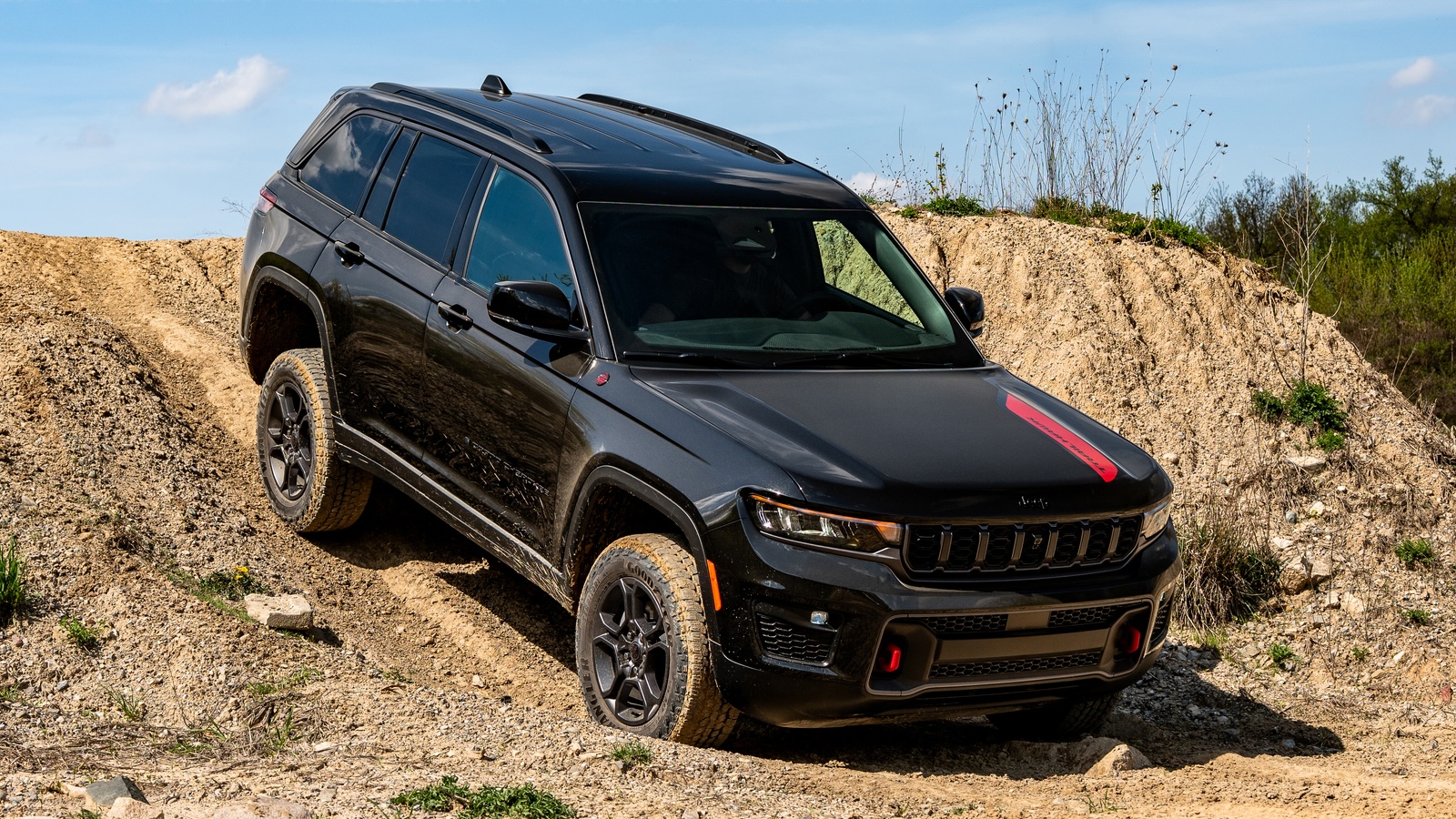
I really don’t know that Jeep should try to compete with Cadillac, which is why I’d probably just nix the Wagoneer and make the Grand Cherokee the flagship once again. As for electric offerings, I fear the Wagoneer EV and the new 2026 Jeep Recon EV are going to be huge money-losers.
But I do think Jeep should keep some toes in the EV space, because EV demand is only going up internationally, and eventually demand in the U.S. will make not having an EV a huge mistake. I recently wrote “Why All Electric Car Companies Including Tesla, Rivian And Lucid Should Start Offering Gas Range Extenders.” And I think that’s the direction Jeep should go with the Grand Cherokee (perhaps they’d use the Recon platform).
The base model should have a 55 kWh battery and a small gas generator (it should be a Scout with a Jeep badge, basically). It’ll go 120 or so miles per charge, and when you run out, it’ll just run on the gas generator. Offer a 120 kWh model just to have a BEV in the plan.
I was going to stop here, but looking at Grand Cherokee sales — a quarter million annually — I think it’d be foolish to stray away from traditional ICE powertrains entirely. For this reason, I think there should be some kind of high-performance hybrid powertrain as well.
Offer A 4×4 Camper Van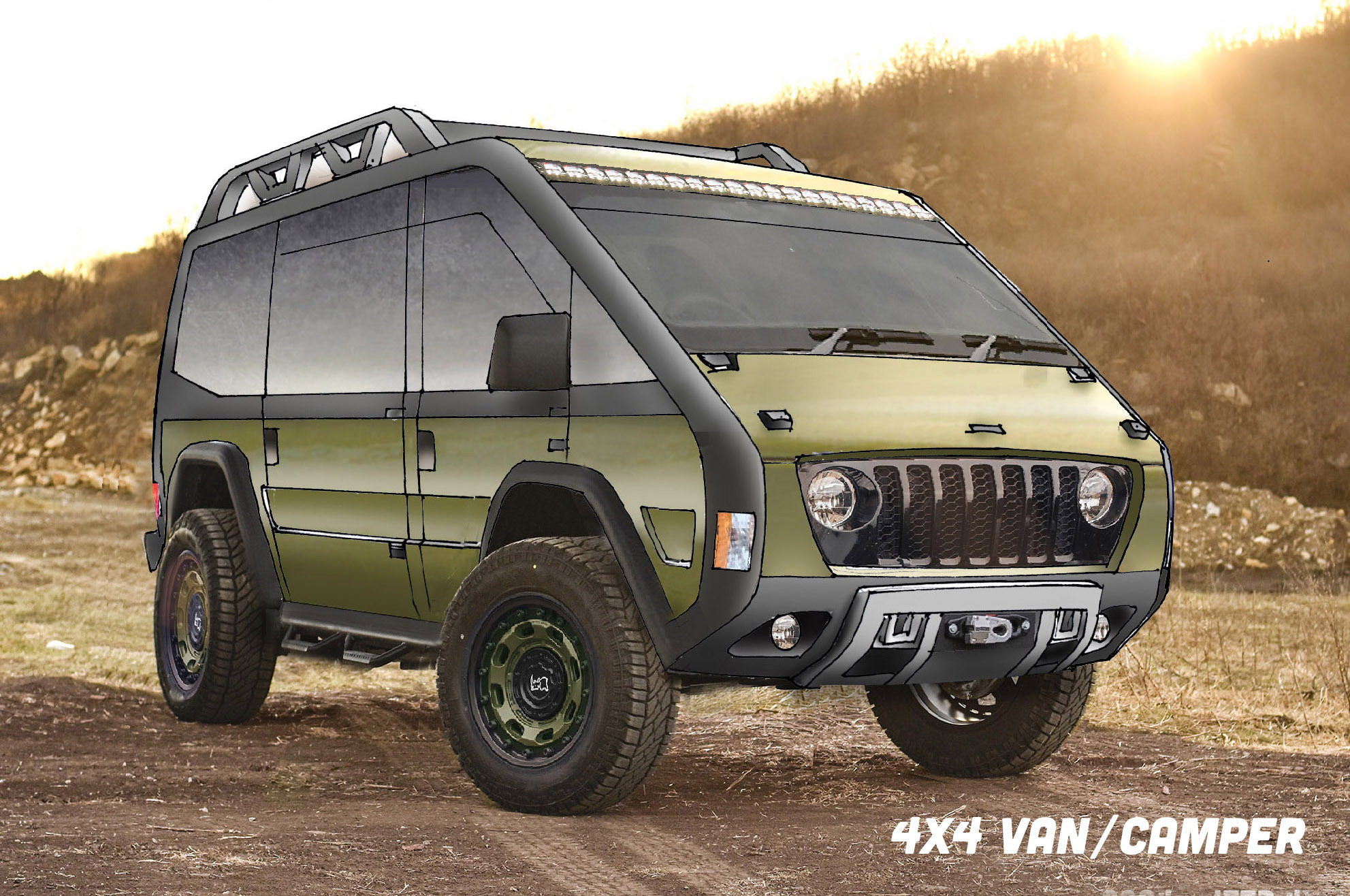
One thing I find surprising is just how viral “van life” has been for many years, and yet no major OEM offers a truly worthy “van life” machine. Far too many people are adapting cargo vans to be their adventuremobiles, but I think it’s time for a change.
Off-road icon Fred Williams one wrote for us “Jeep Needs To Build An Off-Road Van And Here’s How They Should Do It.” You should check that out, because Fred is right.
The Styling Has To Look ‘Jeep’
One thing I frequently ask myself is: Why do Rivians and Suzuki Jimnys look more like Jeeps than Jeeps?
This is an area in which Jeep needs to remain consistent. Every Jeep should look like one; at the very least, the design should remain boxy to the point where you look at a Jeep and know it’s part of the family. That hasn’t been the case for numerous Jeeps over the years (like the Compass, Wagoneer S and Cherokee), and it’s just not great for a brand.
The Next Wrangler Should Offer A ‘Wrangler Classic’ And An EREV Monster
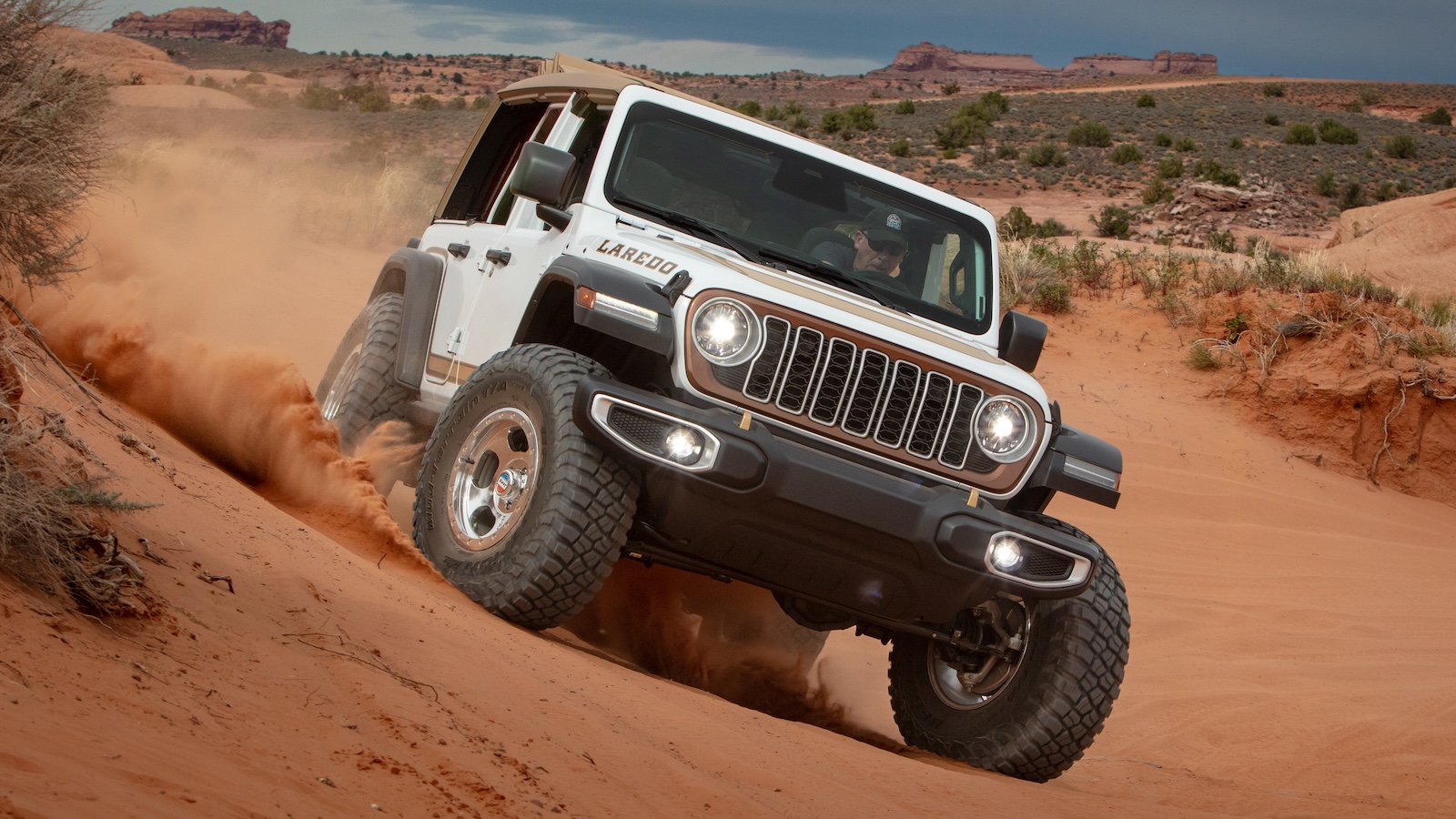
I can’t tell you exactly what Jeep should do with the next Wrangler. That’s the $1 billion question. Should it remain a gas-only vehicle? Should it go hybrid? Should there be an EV version? How do you hedge bets so you remain strong regardless of who’s in the White House?
I say keep the current JL platform a bit longer, and offer it as a Wrangler Classic; maybe add a hybrid powertrain. Then take that Recon platform, adapt it into something that can be fully convertible and outfitted as either a BEV or EREV, do what Scout is doing with its solid rear e-axle, and basically make a badass, range-extended Rivian/Scout competitor, but with a convertible top.


As far as Van life, something along the lines of the old Vanagon Synchro- narrow, fits in a garage, sleeps a comfy and is small enough to actually make it down a trail.
Here’s the completely full proof, known corporation lover NSane’s plan to save Jeep: stop charging so fucking much for bad cars
That’s it. The end. Give me my golden parachute, goddammit!
I like a lot of your takes. I would pair down the lineup.
Why not sell the Mahindra Roxor with true Jeep fascia as the ATV? You could have an EV one. That gives you a “Jeep” under $20,000 even if it can’t technically be driven on the road.
Next up: Maverick competitor, only it’s more like…well, a Jeep XJ. A Jeep can get away with being bare bones in a way that other vehicles can’t. Make it a small SUV that’s like a modern XJ but not scary in terms of safety and with an adequate hybrid motor and 4WD with true low range. Small size, but great looks and proportions. This vehicle would cap out at $29,999. It would be small—like an XJ. It may even be slightly smaller than the Maverick or Trax.
Then you really just need a good Cherokee that isn’t the mom car that just came out (think: Bronco Sport with authenticity) and give the Grand Cherokee more teeth—kind of like the last generation. Trailhawk, Trackhawk, and more. And you’d still have the Wrangler.
This is a 5 vehicle lineup and one of them isn’t even street legal. More emphasis on the core of the market. You’d still have a third row model in the GC L.
Where I would change it up beyond this simplification is by getting Jeep dealers into the custom build game. Customers can come in and order exactly what they want with way more customizations—and if they do, there is no haggling like how Saturn and Scion did it; they are after all picking out how expensive the car is. You would have access to all kinds of special accessories, customizations, colors, embroidery, gear, etc. and really make it a lifestyle brand kind of in the same vein as high end car brands but for more normal folk. This would make them desirable in a way that they haven’t been for some time and would probably lead to increased resale values on the customized ones, which would lift the whole brand. It would also help lift the Jeep dealers up from the doldrums where they currently are.
The JL-2A should be a much more basic JL- 3.6, manual, soft top.
Pretty much exactly what I’ve been echoing in the comments.
The screwed the pooch on the Cherokee relaunch. It’s 7k to high of a MSRP. Sure Im sure the OTD price will be dropped with incentives but people won’t even go to the dealership when they see the sticker vs a RAV4 or CRV.
Make a wrangler lite ala the geo tracker. Basically a manx but with aftermarket removeable cab or tops like the slate.
They need an affordable way to get kids in the door. Adventure is great but it needs to be attainable to build a solid foundation.
Your point is solid: get kids in the door.
Car brands used to have new cars that were cheap enough that they competed with used cars. It used to be cheaper to go get a brand new Nissan Sentra or Nissan Hardbody pickup than to get a used car.
Now everyone is such a douche that we think cars like that are beneath the collective ‘us’ even though the reality is they’re more ‘us’ than ever given the state of affairs of our economy.
How much would a brand new Suzuki Sidekick slap in today’s world?!
Admittedly I am not a Jeep fan. I have driven them, rented them, ridden in them, seen their stupid duck collections, and been generally unimpressed. I get the fun of offroading, beach bombing, running dunes, etc. But the absolute greed of manufacturers with such inflated prices sickens me. Jeep is a prime offender.
Price points with Jeep are another example of the common person being priced out of the market, whether for health insurance, health care costs, car prices, vacation prices, food prices, etc. Jeep has become a toy, a status symbol, an expensive male overcompensation therapy. Sad.
While I love the interior of the JL-2A, the prices on the JLs is just way, way too high. I’ll be sticking with my TJ for the foreseeable future.
Yeah. This comment is hard to swallow as “cheapish”. I would say instead it is expensive(ish)
That engine is old too, and all the tooling, etc. has long since been paid off. Dodge will now sell you a Durango with it for like 50 grand and a few years ago you could get a base Scat Pack with it off dealer lots for under $50,000.
…how in the name of god and all that is holy does it necessitate a $20,000+ premium? Stellantis probably has literal piles of these boat anchors laying around. It’s always cracked me up that all the new marketing is HURR DURRR WE PUT A HEMI BACK IN IT! Now pay us an extra 5 figures, you stupid fucking idiot!
It’s not a premium option. It’s not a premium powertrain. It’s a heavy, old, incredibly inefficient V8 that puts out good power and happens to sound fantastic. You can get a Chevy or Ford truck with a similarly potent V8 and an off-road/peacocking package for way, way less money than a V8 Wrangler.
While the average repeat Stellantis customer is not someone I have positive things to say about, the whole PAY US MORE, WE’RE THE V8 GUYS schtick is going to get old even with them. The core brands have barely changed in like 75 goddamn years!
“Oh the V8 Wrangler is a bargain at $70,000” is just hysterically out of touch.
Wrangler use to be the bottom of the line up. Jeep need to really reduce the prices and up the quality. They need to bring back the lifetime bumper to bumper warranty they use to sell.
Could they have gone the other direction and made a stripped down jeep -2a that was $4K LESS than the sport?
That would be far more in the spirt of the CJ-2A
The MSRP on a ’94 Wrangler was less than that year’s Corolla. If I could get a hardy runabout weekend vehicle with removable body panels (or a soft top) at don’t-think-twice pricing, I could overlook a lot of faults.
Jeep and Audi seem to share an intertwined fall from greatness: Both built a name on enhanced capability, but when the rest of the class caught up, they couldn’t figure out the next move.
Jeep (Stellantis) trying to get mileage out of an aging powertrain/trim/model/platform is the most on-brand thing.