

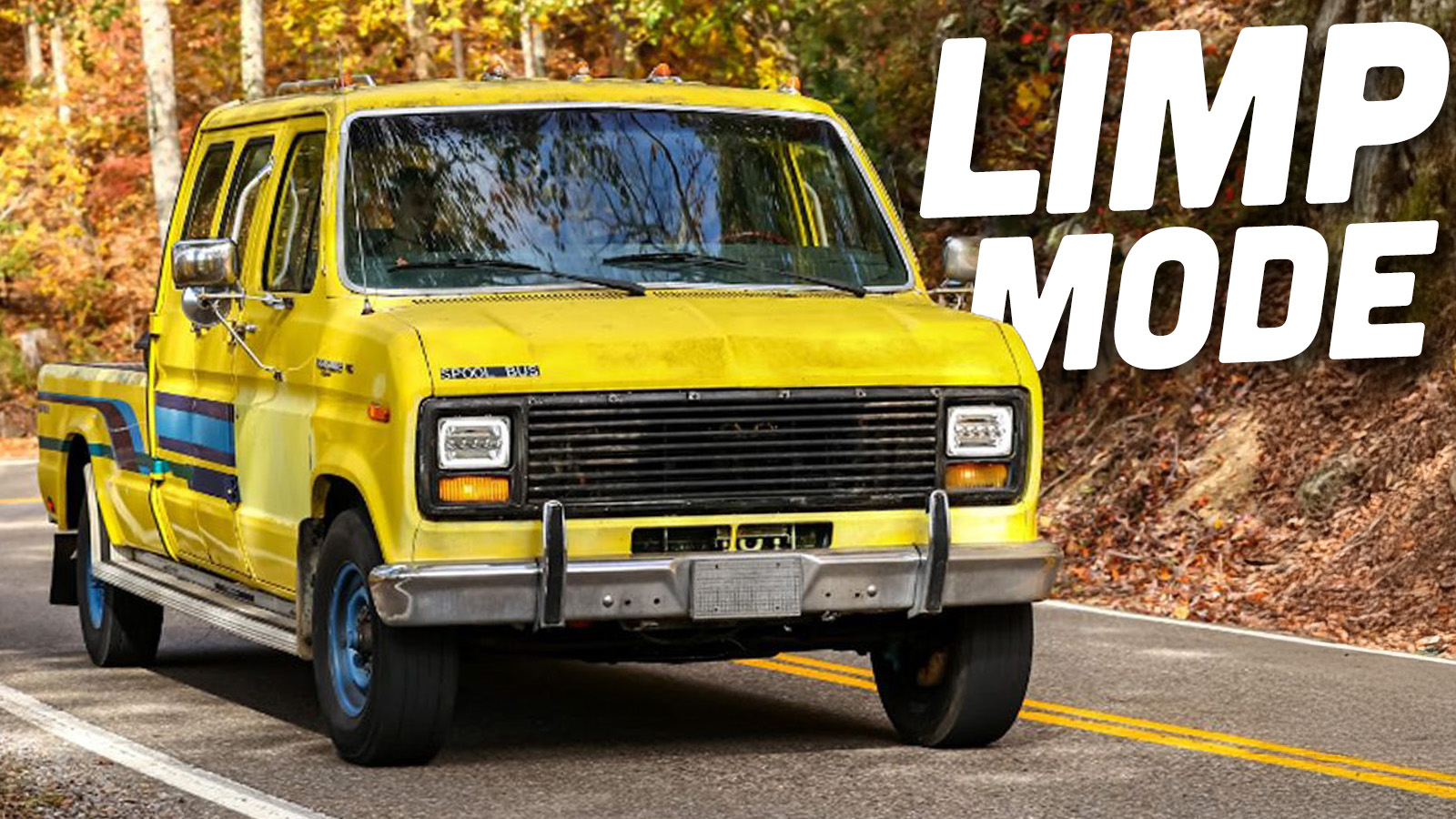
“I wonder what’s on fire this time,” said I, having become numb to having vans catch on fire under me for some reason. This time it was a little different: Here I was, streaking down I-285 in Atlanta at 75mph, without a means to stop and do something about it. Whatever happens, I thought, would make an interesting Autopian article. Or end up on the evening news.
First appearing in my introduction to our magnificent gearhead menagerie, Spool Bus is the member of my misshapen van fleet that actually does the truck stuff. When I came into ownership of it, it was already a used up and rusted out field ornament. I got it driving well within a few months, but didn’t do anything to address the rattiness. This is the (van?)truck I threw rocks and construction trash into and took to the county dump, that I loaded up with half a pallet of OSB from Home Depot… unlike its white elephant friend which hasn’t done a day of work since I bought it.


[Ed Note: If you don’t remember Charles Guan, he’s the MIT enginerd/battlebox car-nut who has an amazing obsession with diesel Ford Centurion vans. He is welcome to write here anytime because that’s the kind of madness I need injected into my veins. -DT].
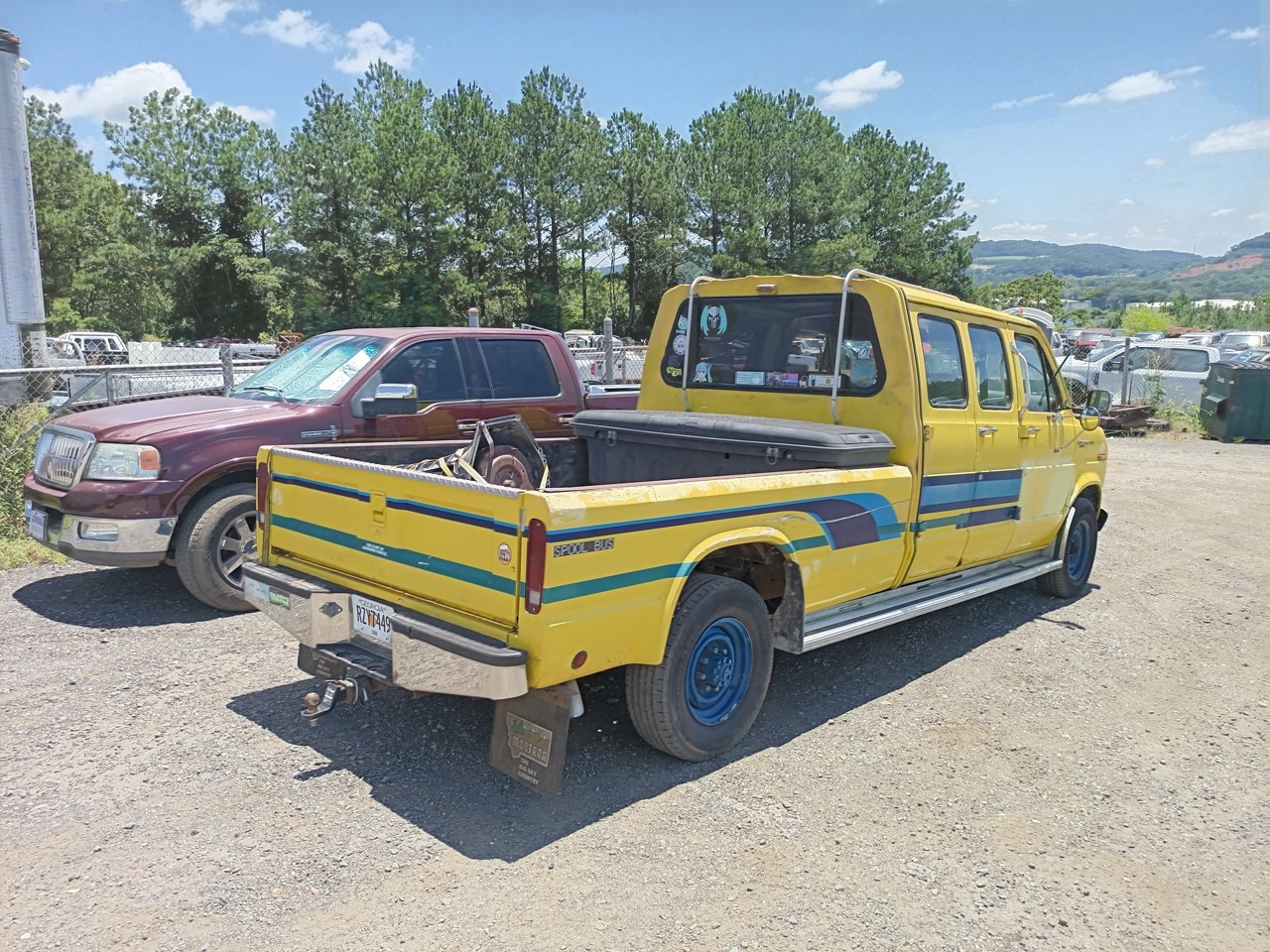
And so, when an opportunity to score a spare Ford E4OD transmission from a truck parts yard 60 miles out of town came up, I naturally fired Spool Bus up and hit the road. For my misfit gallery, the transmission had to be a narrow year range for drop-in compatibility – 1987 to 1991, during which both the F-series and E-series used shifter linkage rods. Transmissions made after 1991 switched to a Bowden cable shifter (not unlike the cable used for your bicycle’s brakes), and began relying on electronic speed sensors instead of the mechanical speedometer gear. The transmission would need to be fully dismantled to change all of those, so I wasn’t really keen on making an off-year one work, despite the E4OD’s production lasting until 1997 when it became the 4R100.
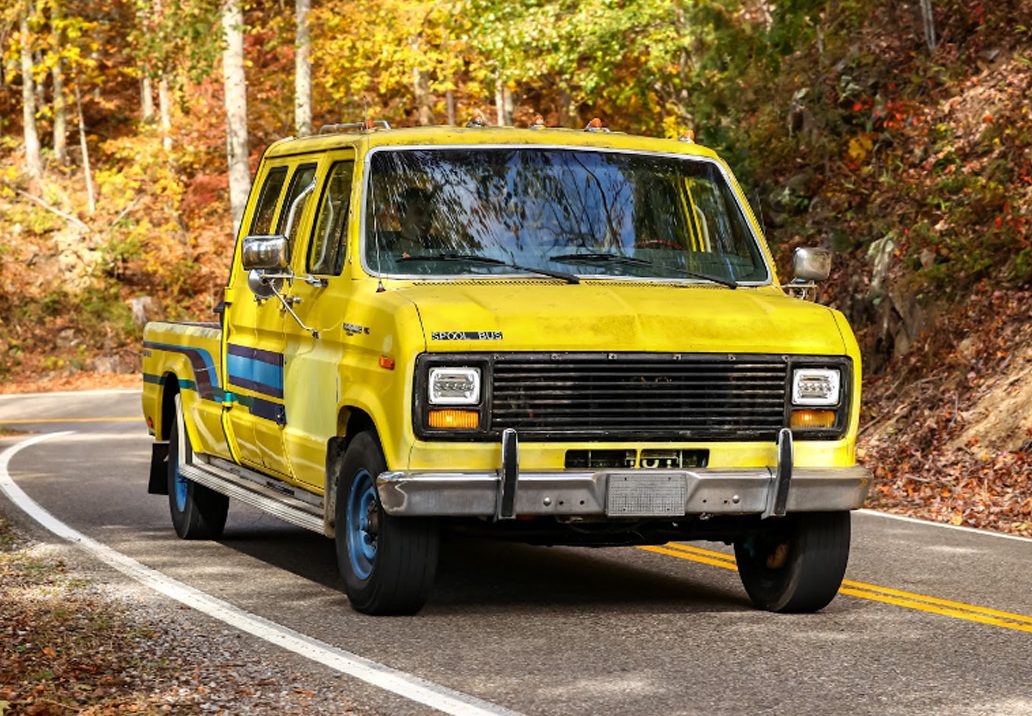
Now, to get back home day to day, I usually pass by the county water treatment facility located close to the river and the highway here in Atlanta. On a hot summer day, with the wind pointing the right way, it smells fresh. For some reason, the smell was extra spicy and chemical-tinged that day as I approached. Fine, I thought. Maybe they’re doing some kind of nuclear pool bombing operation, or perhaps deep cleaning the poop mash tuns. Except then the spicy smell began visibly collecting inside the cabin. It was then that I realized the odor was that of burning plastic and PVC wire insulation, not something typically pumped en-masse into poop distillation towers.
My mistake was hitting the brakes to pull over and inspect, which caused a massive smoke cloud to suddenly puff out from the hood vents and into the cabin. Also, this action did not produce any meaningful stopping. This means whatever was on fire was being fed by brake fluid being pumped onto it, like a really cursed waste oil heater. Here I was, ready to recreate a scene from that legendary action movie – I think it was called “The Bus That Couldn’t Slow Down.”
A Lamentation for Mechanical Parking Brakes
There has been some lively discussion on the Autopian lately about the merits of electronic parking brakes (here’s a link to that heresy), and about simulating the action of mechanical parking brakes with an electronically controlled system. I, however, am an unapologetic defender of the fully mechanical parking brake: A redundant path to stop your vehicle in certain situations that does not rely on proprietary software, closed-source control modules, and anti-consumer vendor lock-in by automotive OEMs. Why yes, I am on the pre-order list for a Slate.
Call me an engineer or call me old-fashioned with an ageless visage, but part of my love for decrepit mechanical things is the ability to force fallbacks and partial solutions instead of being locked behind manufacturer- and government-mandated hard-fails. Apollo 13 wouldn’t have been possible if they had to enter five submenus on a touchscreen, grab a firmware update over the air, visit an OEM service center, and get a dealer scan tool out there in time. After all, the Artemis crew had two Windows Outlook instances running, and neither were working.
Alright, enough proselytization. Back to the action! I carry a fire extinguisher in all of the van piles, so I wasn’t too worried about a catastrophic fire (Like… we weren’t at the billowing flames stage of things yet). I immediately dropped the transmission into 3rd gear from Overdrive, allowing engine braking to do most of the work. Then, I began modulating the parking brake pedal while keeping the release latch pulled out. This directly moved the rear drum brake shoes, and I was going only 45 mph on the Interstate in the right lane in short order.
After being confident that the electrical fire was no longer an issue, I dropped into 2nd gear and then simply crawled home slowly after getting off the highway at my exit. I modulated the unlatched parking brake pedal to come to a complete stop at red lights. Oh, woe is me, for I am classic truck, beset by mechanical problems! Hark, my hazard lanterns! Please don’t cut me off!
I suppose this would be a good moment to pour myself a stiff drink, but I wanted the battle damage assessment immediately.
Not Merely Mechanical Parking Brakes, but Mechanical Trailer Brakes
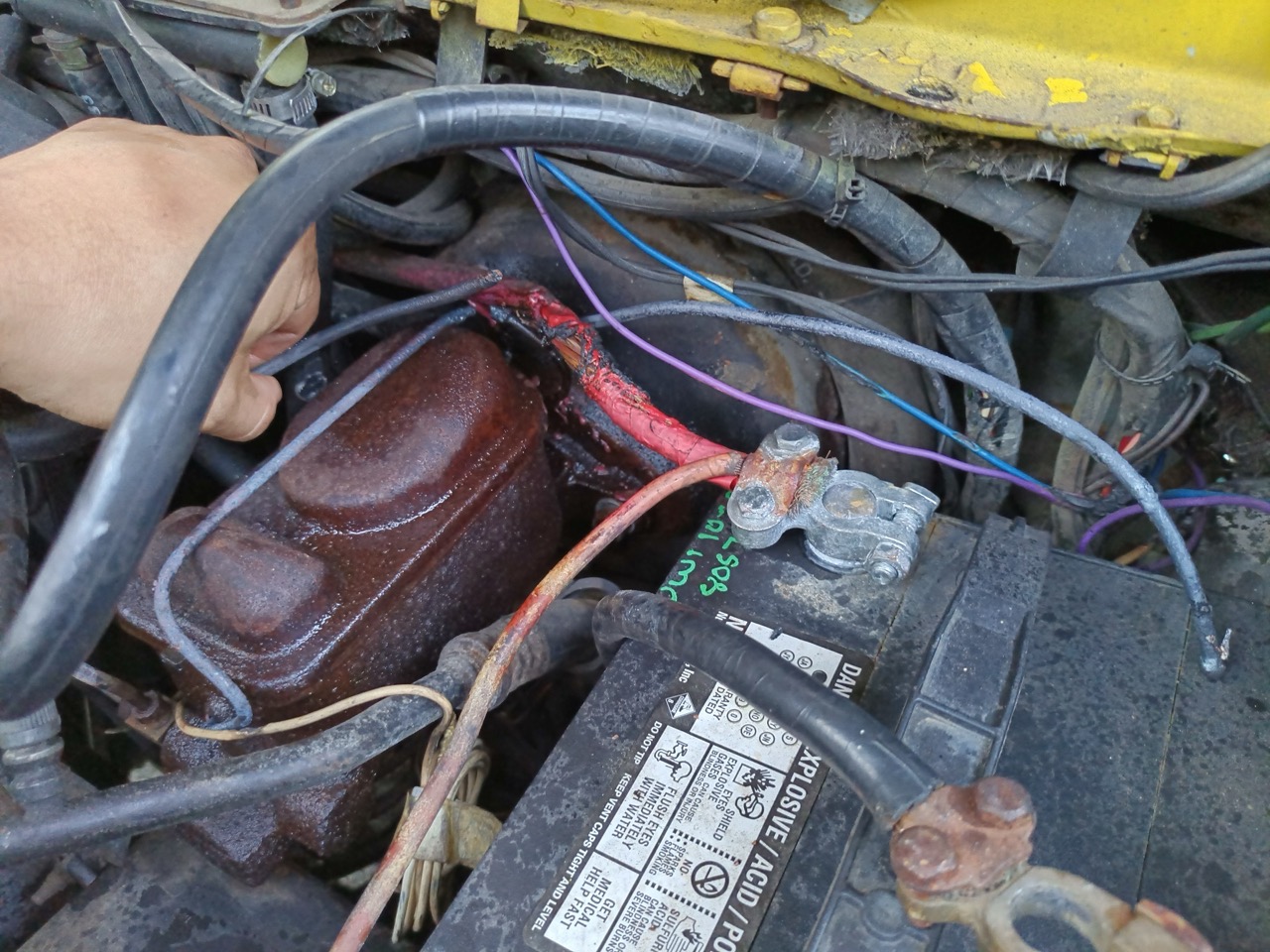
As soon as I popped the lid, it was apparent what had happened. On a lot of older trucks, there is a third brake line that is tapped from one of the master cylinder ports, typically the rear circuit. This extra line is routed inside the cabin to a trailer brake controller that is actuated by the pedal movement, and that is how power gets passed to the electric trailer brakes.

Check this thing out. This is a Kelsey-Hayes hydraulically actuated trailer brake controller, the exact one installed on Spool Bus. On the left is a large power resistor, usually called a rheostat, with exposed windings. Your truck’s battery voltage (V) is routed in through the red wire. The output is taken through the blue wire, which is attached to the flexible metal contact in the middle. Now, depending on where exactly the flexible contact touches the exposed windings of the rheostat, it creates a varying resistance (R). As physics E&M class taught, the current that can flow in this circuit is dictated by Ohm’s Law: I = V/R.
Current flows out of the blue wire and to your trailer brakes, magnetizing them and permitting you to descend the mountain while minimizing dying and screaming.
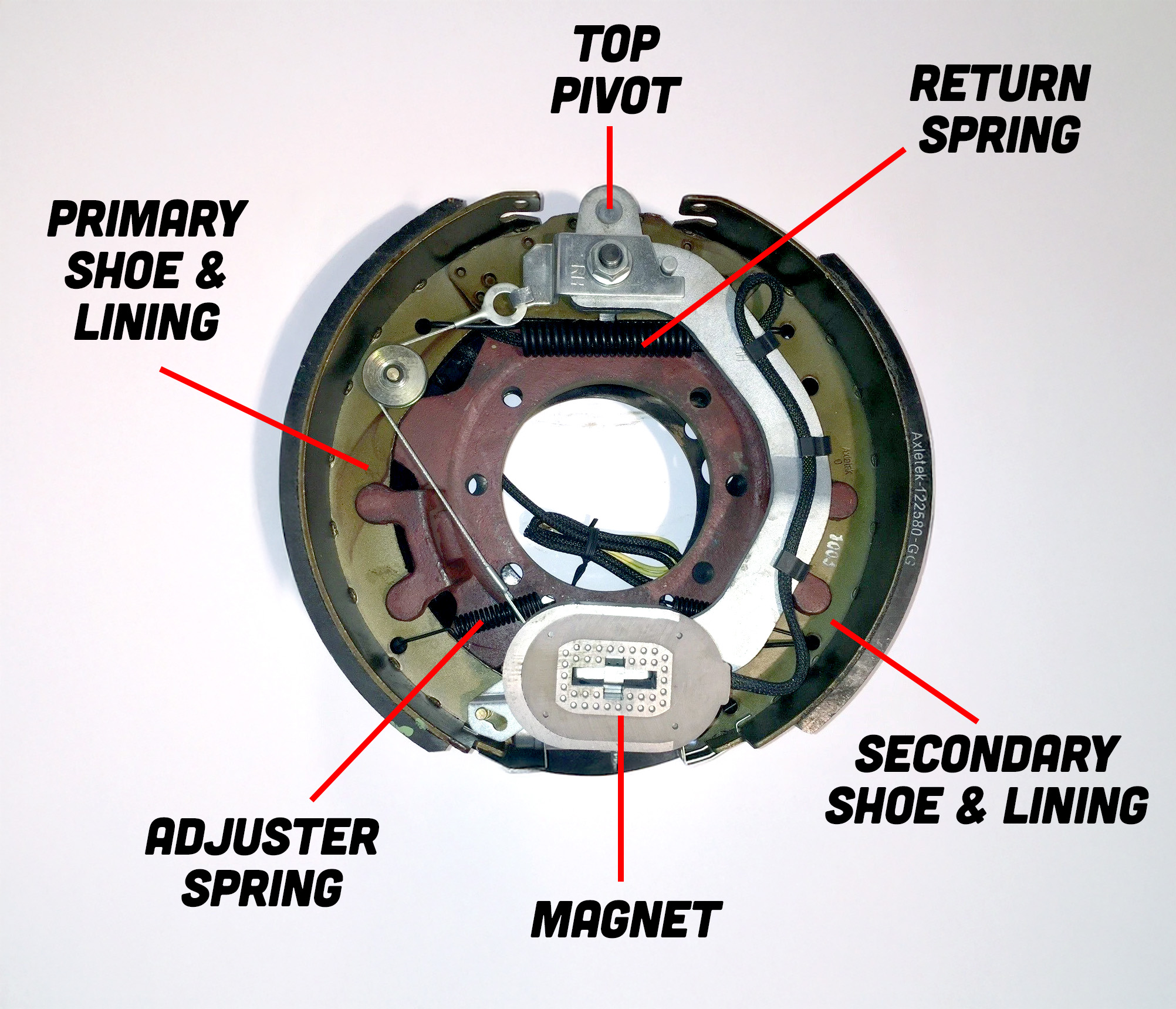
In real life, the electric trailer brake’s own magnetic coils have some resistance too, but the power fed into them is gated by this mechanical controller:
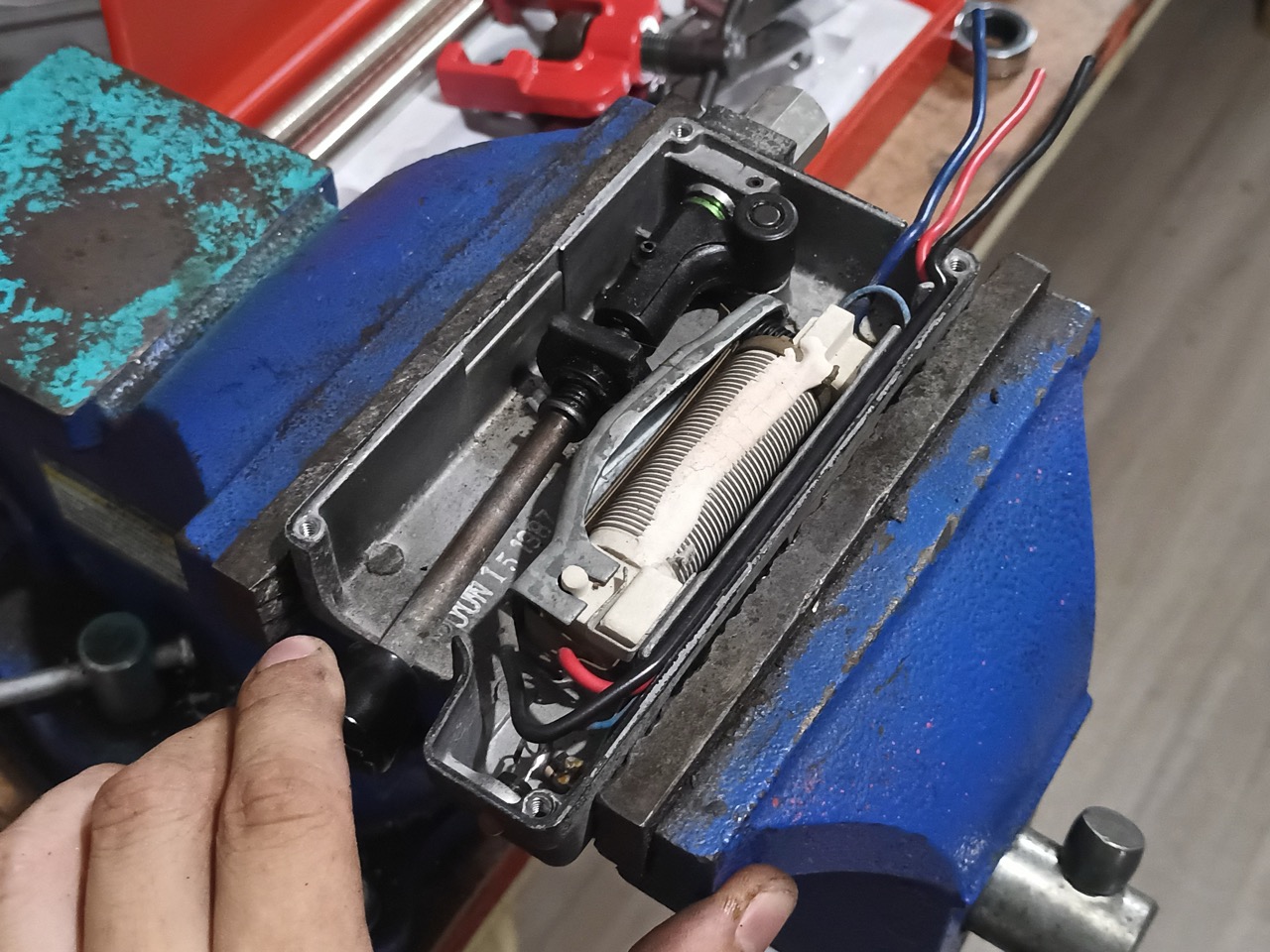
So how does it move with your brake pedal? There’s a tiny hydraulic cylinder attached to the plastic plunger and lever, which is where the third brake line comes in. When you step on the pedal, the brake fluid moves this cylinder a small amount: Enough to tilt the lever, which bends the flexible contact against the rheostat. The more you step on the pedal, the more the cylinder moves, and the closer to the battery the contact touches the rheostat! Less resistance equals more current flowing to the electromagnet in your rear drums, and the outcome is a stronger pull from your trailer.
The best part is, you can just grab the lever yourself (as I am doing in the demonstration photo) and trigger the trailer brakes. This is how you set the sensitivity: Twisting the knob changes where exactly the lever touches the flexible contact, by moving the plastic plunger piece up and down the lever body.

For maximum sensitivity, the plunger is all the way at the “hot side” (battery input) of the rheostat: Moving the lever even a little causes rapid engagement and high current flow. For low sensitivity, the plunger is moved all the way to the other end: A lot of pedal movement, but a lower current. This, of course, is the difference between having the trailer lock up and “Hey is this hill way steeper than I remem-“.
So anyways, people just tend to route these extra brake lines wherever. Spool Bus came with a particularly lazy routing, where it just went up and over the master cylinder and punched through the firewall somewhere on the driver’s side corner. What basically happened is at some point, the battery cable right above the master cylinder fell out of the old broken plastic cable tray, and on my trip home, finally wore through its cracked 40 year old insulation and grounded out through this trailer brake line.
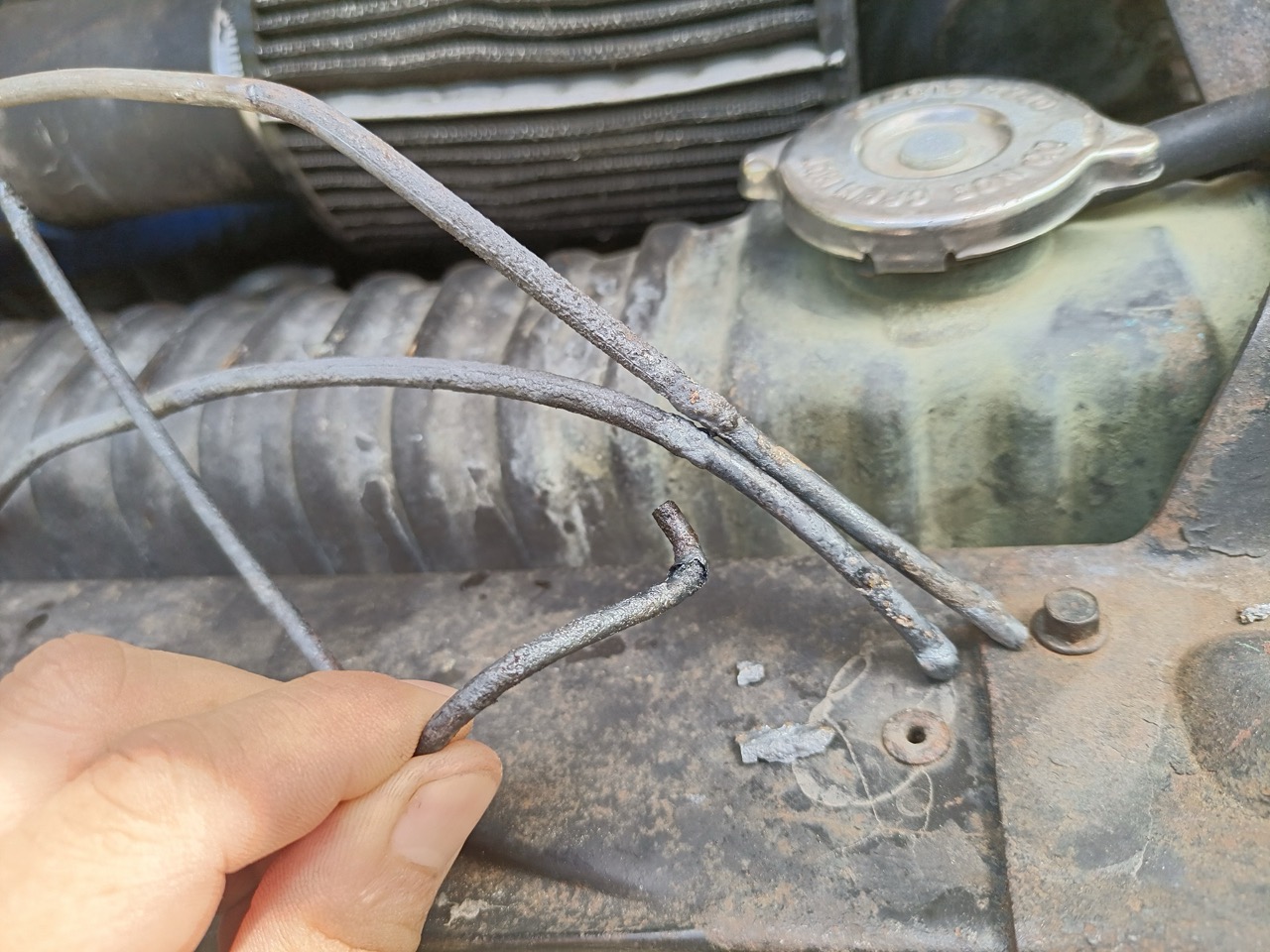
Check out these ends of the trailer brake line and the master cylinder’s lid strap! They look like they’d been used as stick welding electrodes which….. isn’t far from the truth.
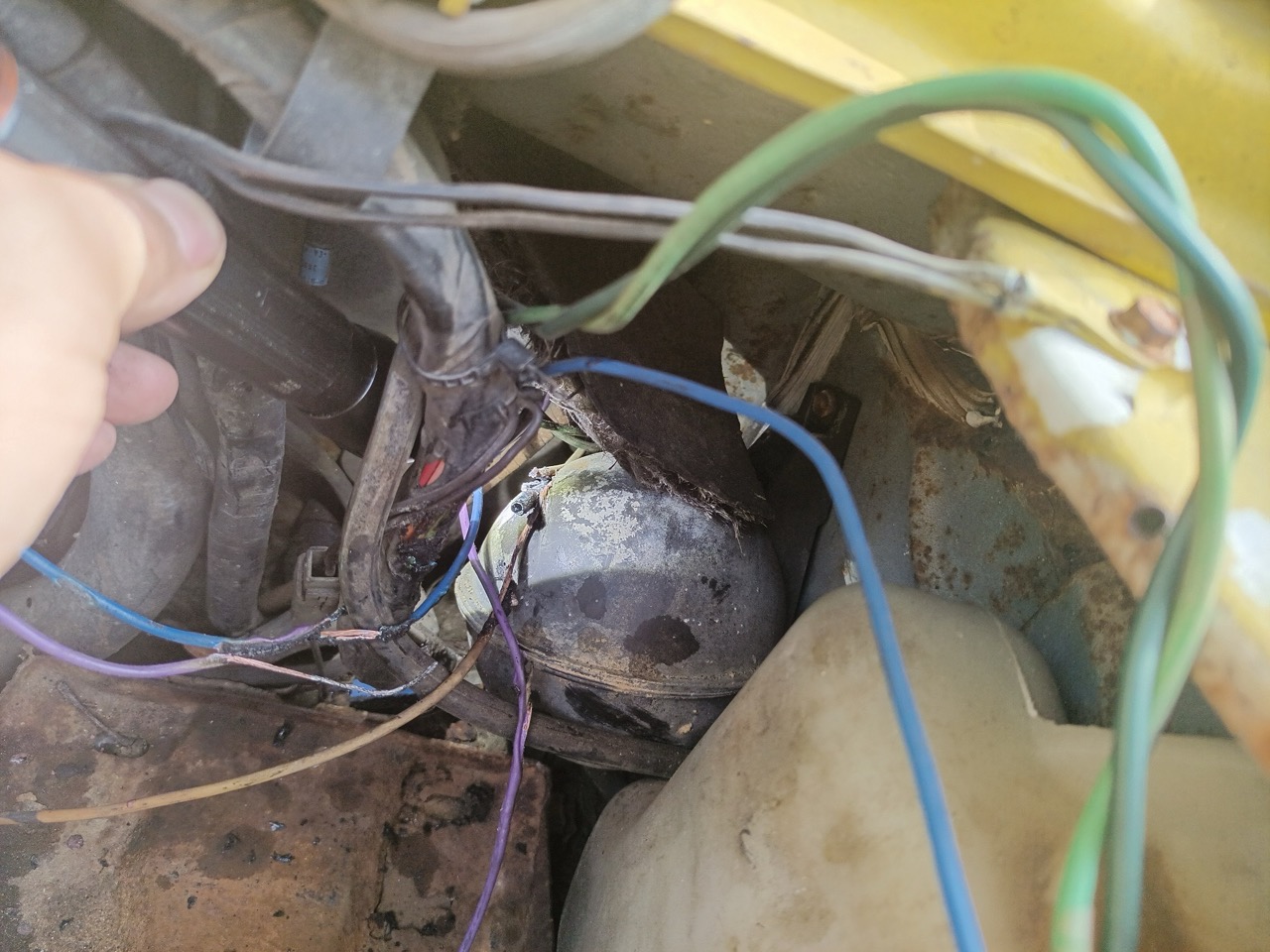
The probably red-hot trailer brake line melted through a bunch of things, unfortunately. Basically all of my appended wiring to bring back the overdrive unit and air purge solenoid valve, and a bit of the main engine wiring harness were damaged or burned through. The line also melted completely through the plastic vacuum reservoir.
I was staring down a whole lot of repair work. The damaged wiring had to be replaced, and at minimum I had to make new main battery cables. I was also out the brake master cylinder, and the trailer brake controller hard line. Well, at least I’m sitting here writing a smarmy article about it instead of there being an article in the newspaper about me, right?
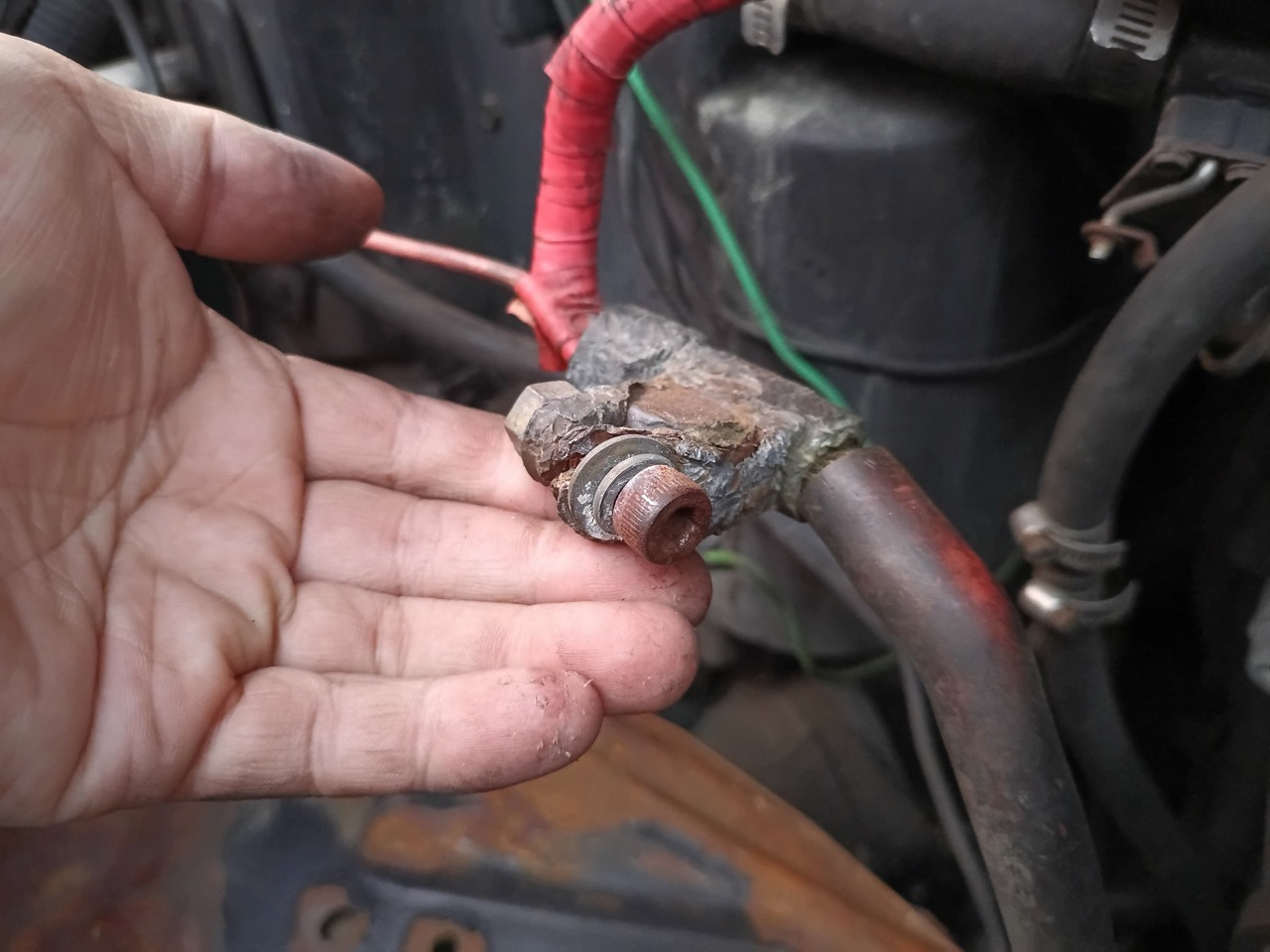
Honestly, it was time anyway. So many subsystems on Spool Bus are long past their expiration dates. Like look at this battery tee clamp. That’s 30+ years of being bent and pried and hammered back into the right shape, and it was so wallowed out it needed a spacer sleeve.
One of the tactics I’ve come to accept in the course of being a terrible van mechanic is it’s some times better to start over from scratch. I spent the following weekend excising all of the burnt wiring and old cables, old vacuum hoses and canisters, etc. and ordered things like new 2/0 size battery cable stock and all-copper double-crimp battery terminals.
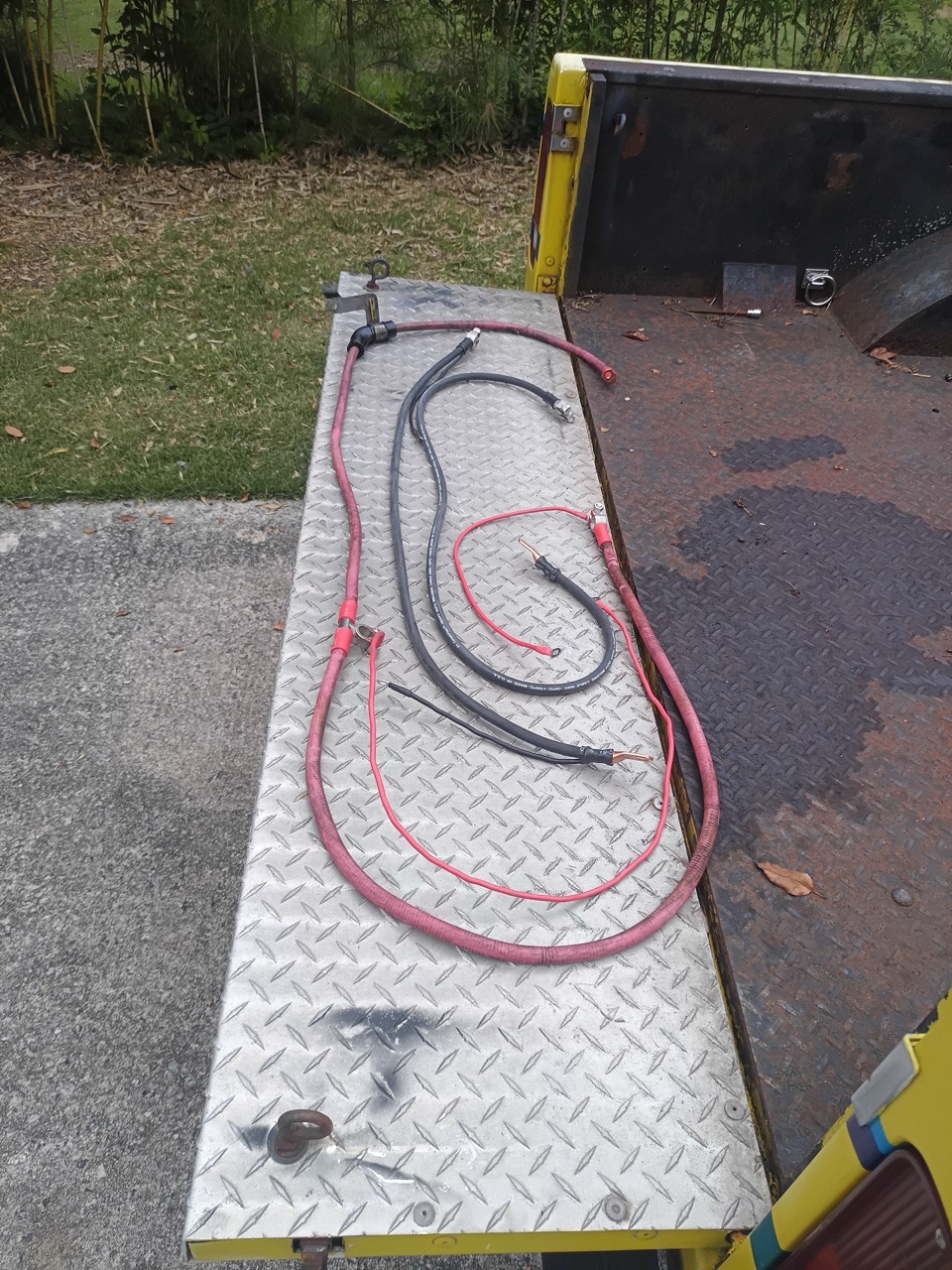
Using the old wires as templates, I cut and crimped the new cables along with their smaller-gauge accessory drops. I owned a few different hydraulic crimpers for big wiring lugs, so this was really the easy part. The more painful operation was going to be changing out the brake master cylinder, adapting the OEM hard lines to it, and then running a new trailer brake controller hard line.
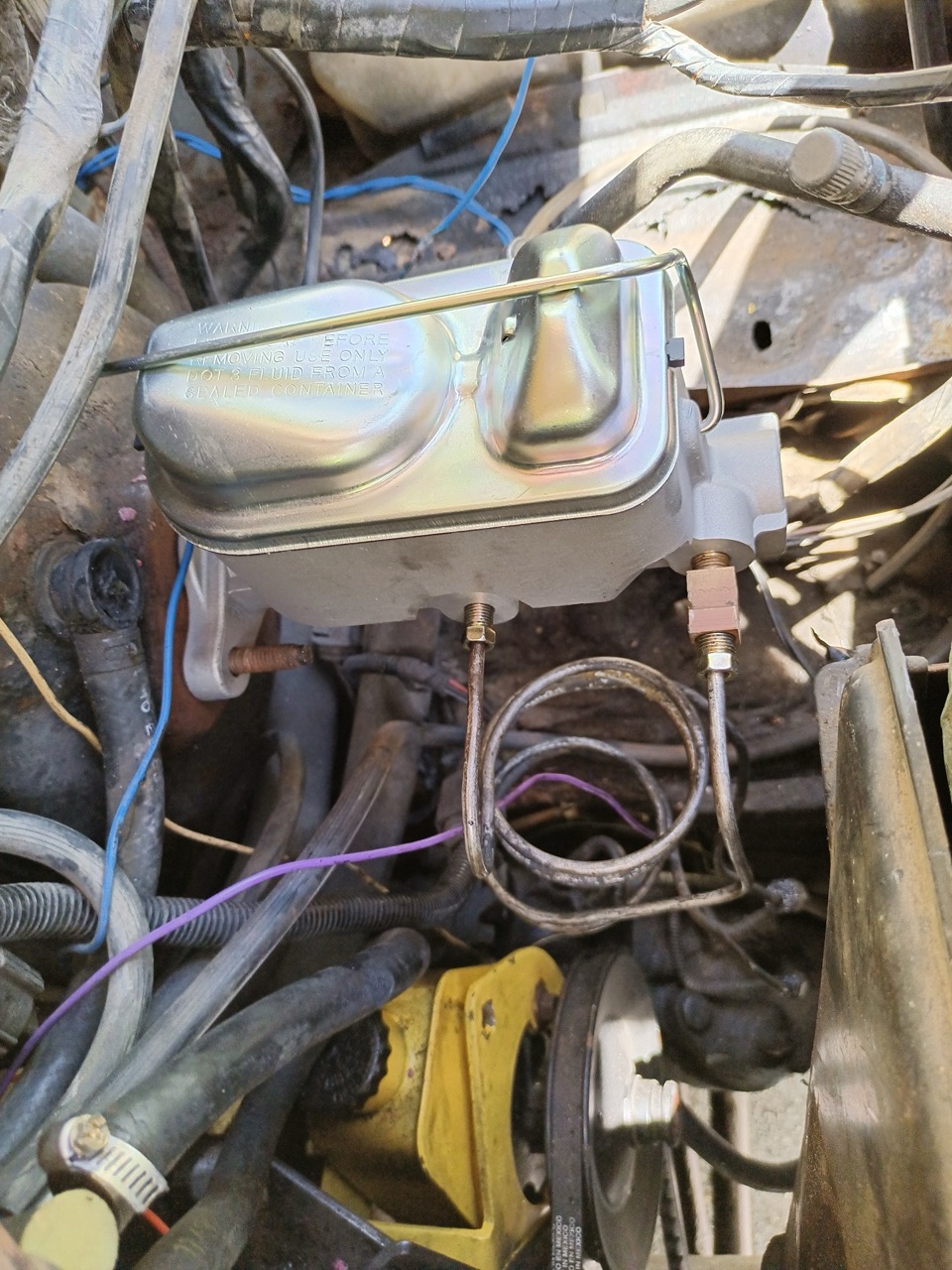
I was never a fan of this kind of old school cast iron master cylinder. I’ve only known them to leak from the lids because the metal rusts and no longer provides a good seal [Ed Note: Same! -DT]. It turns out they make exact replicas but in aluminum! I cut back and re-flared the factory brake lines with a manual double-flare tool, because the new master cylinder had different threads in the ports. Not only that, I discovered the fittings had corrosion at the flares too, which can easily cause leaks. So, new flare nuts were warranted anyway.
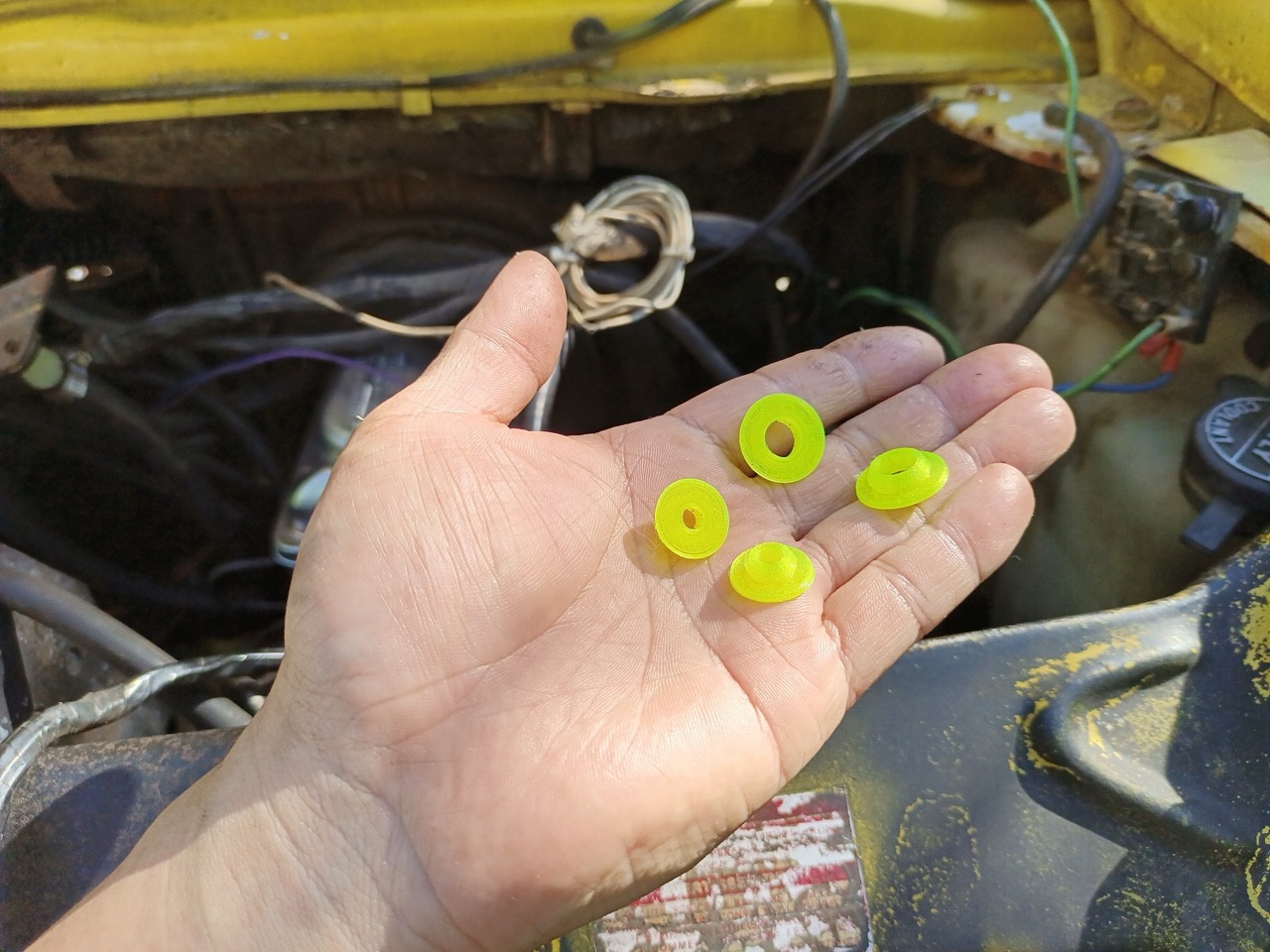
Most of the “aftermarket” wiring on Spool Bus was just pulled through holes drilled into the firewall, without any bushings or glands. It was just a matter of time before they all shorted out on stuff. I cleaned up most of the holes to one of two diameters, 1/2″ or 3/8″, and made these 3D printed TPU (thermoplastic urethane) press-in bushings to fit them.
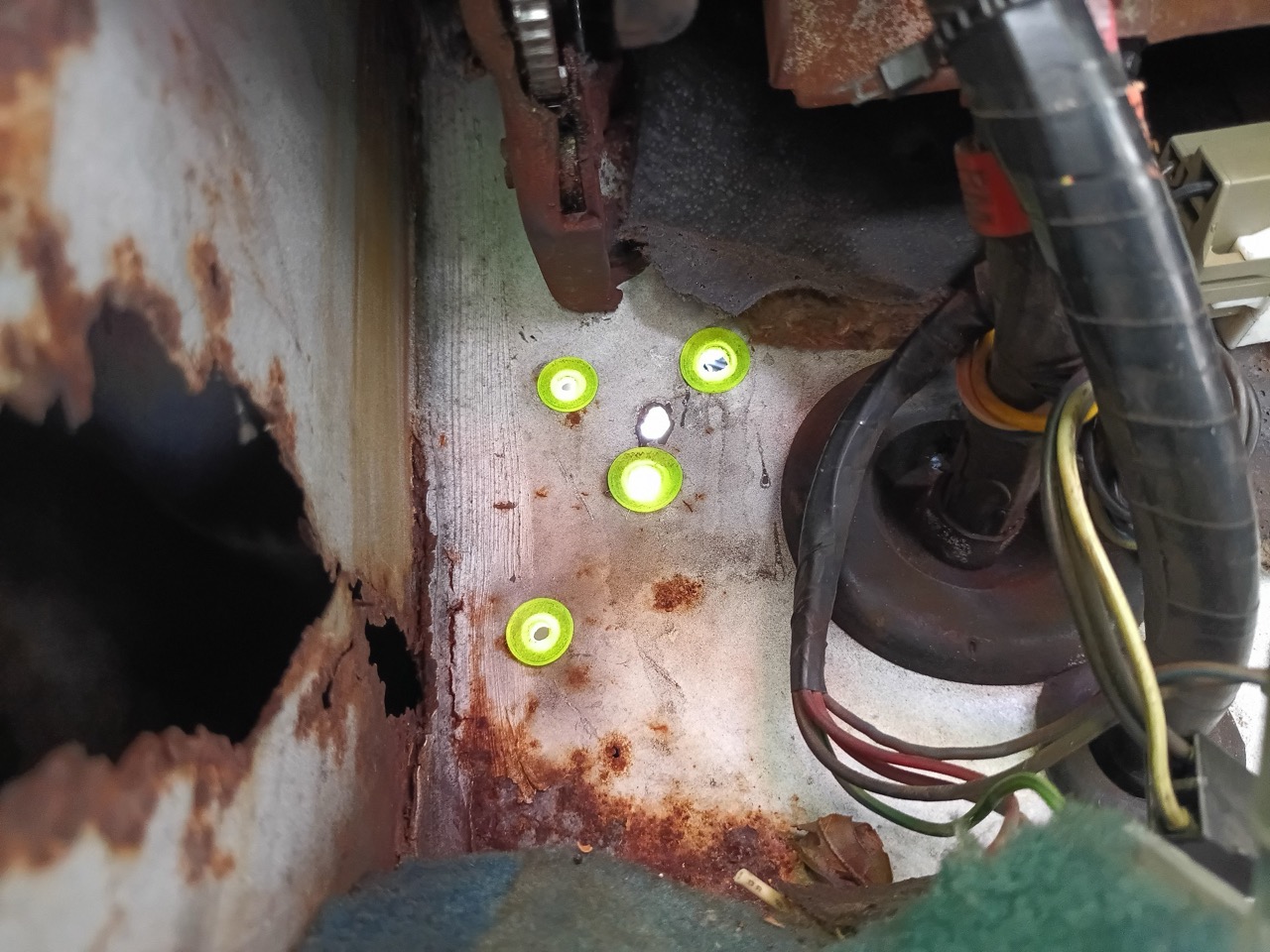
Rust hole or drilled hole? Who even knows at this point? Now I can have my pick of any number of different Rust-Or-Drilled holes to route the replacement accessory wiring through.
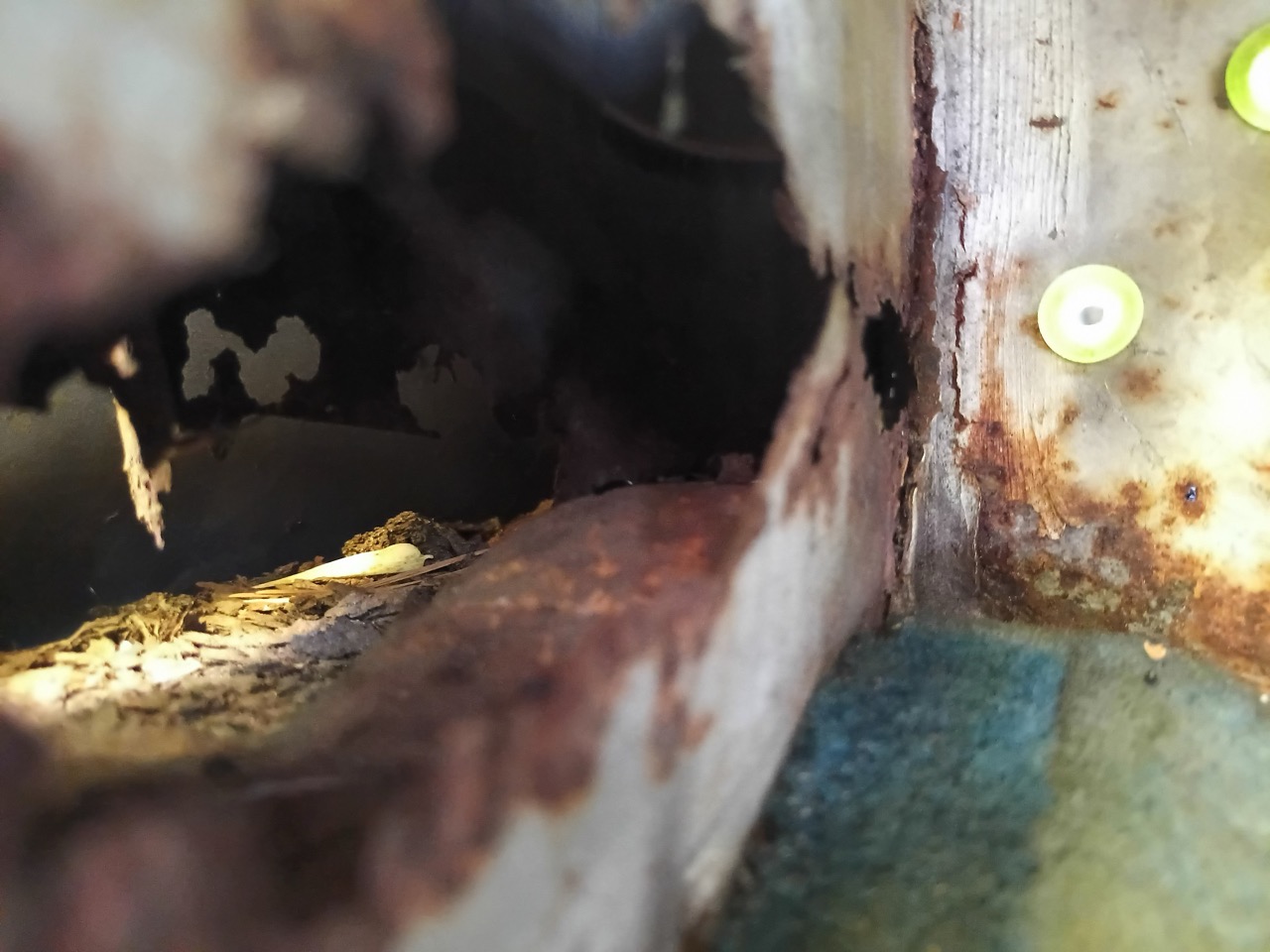
Also, you did NOT see this. There is no massive gaping rust cave, entirely through the inner cabin wall and fender apron wall. It definitely does not pour water through here if I drive in the rain. What an absurd concept.
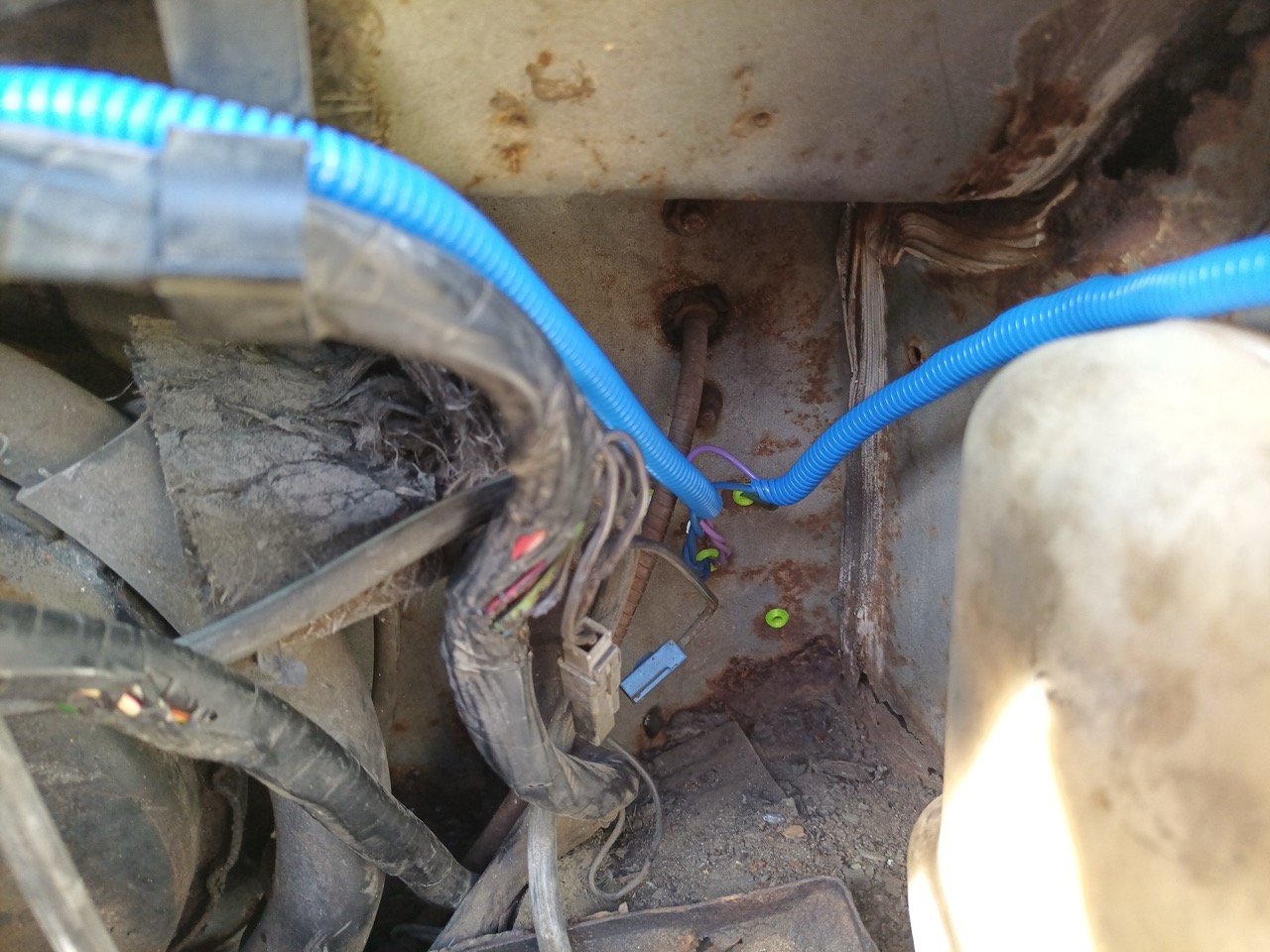
Newly re-cut and spliced wires for the overdrive shifter solenoid and the fuel system air-purging solenoid live inside looms, and pass through the now protected Rust-Or-Drilled holes. The OEM engine harness wasn’t as damaged as I initially thought, so I let it be after cutting back enough of the wire wrapping tape to assess it.
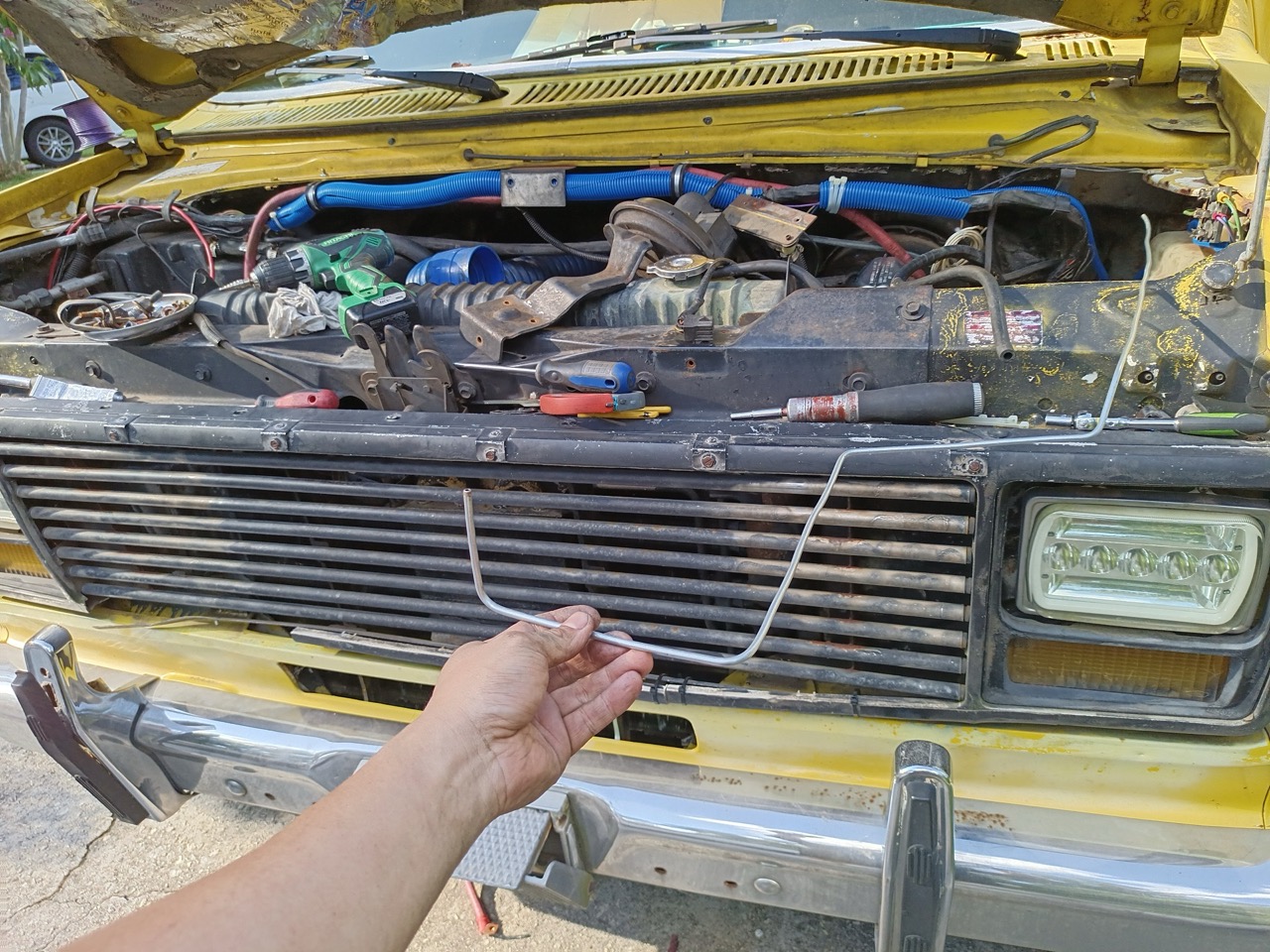
I cut and bent a new hard line for the trailer brake controller. This was done largely using eyeballing a small ruler I held at various orientations to get an idea of where it was going, plus or minus a bit of slop length. It actually ended up quite close to where I wanted it; nothing a little surreptitious bending out of sight didn’t fix.
The replacement battery cable and OEM engine harness travel through a large wire loom (the blue bundle) which I zipped to the upper firewall flange with some straps.The OEM wiring tray that crosses this area is always completely deformed, heat-damaged, and otherwise deteriorating, so this surgery has been something I have done to all my fine specimens. Obviously it wasn’t soon enough for Spool Bus!
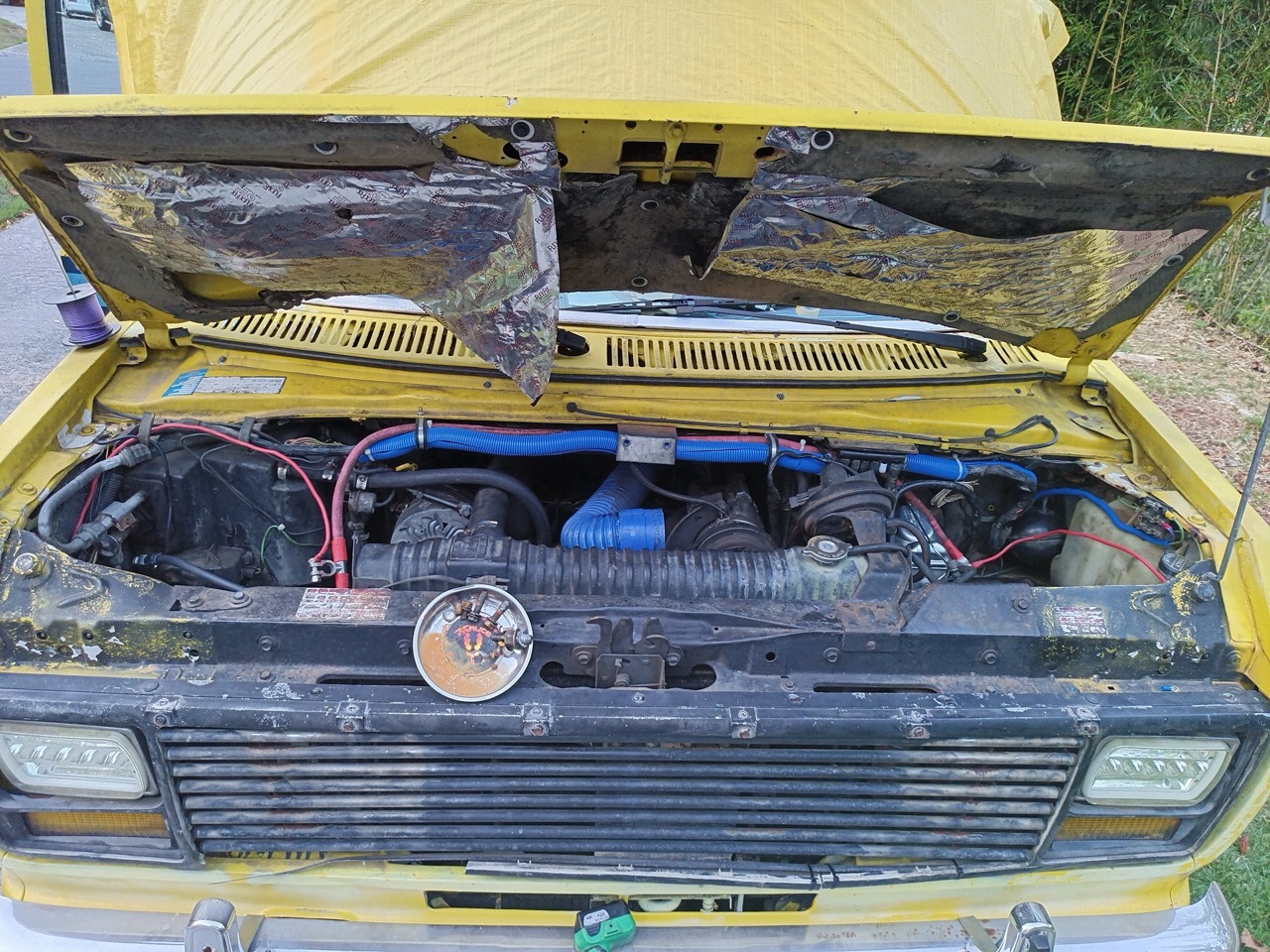
A final shot of my handiwork before I closed everything back up and bled the brake system. As I wrapped up the repair on a Friday night, my first inkling was to go get some food to road test it all. I stopped by the local gamer bar (which, sadly, has since closed because the area it’s in is one of those overpriced corporate developer hell projects).. I didn’t know it at the time, but it cost me $30 to park here for an hour and a half.
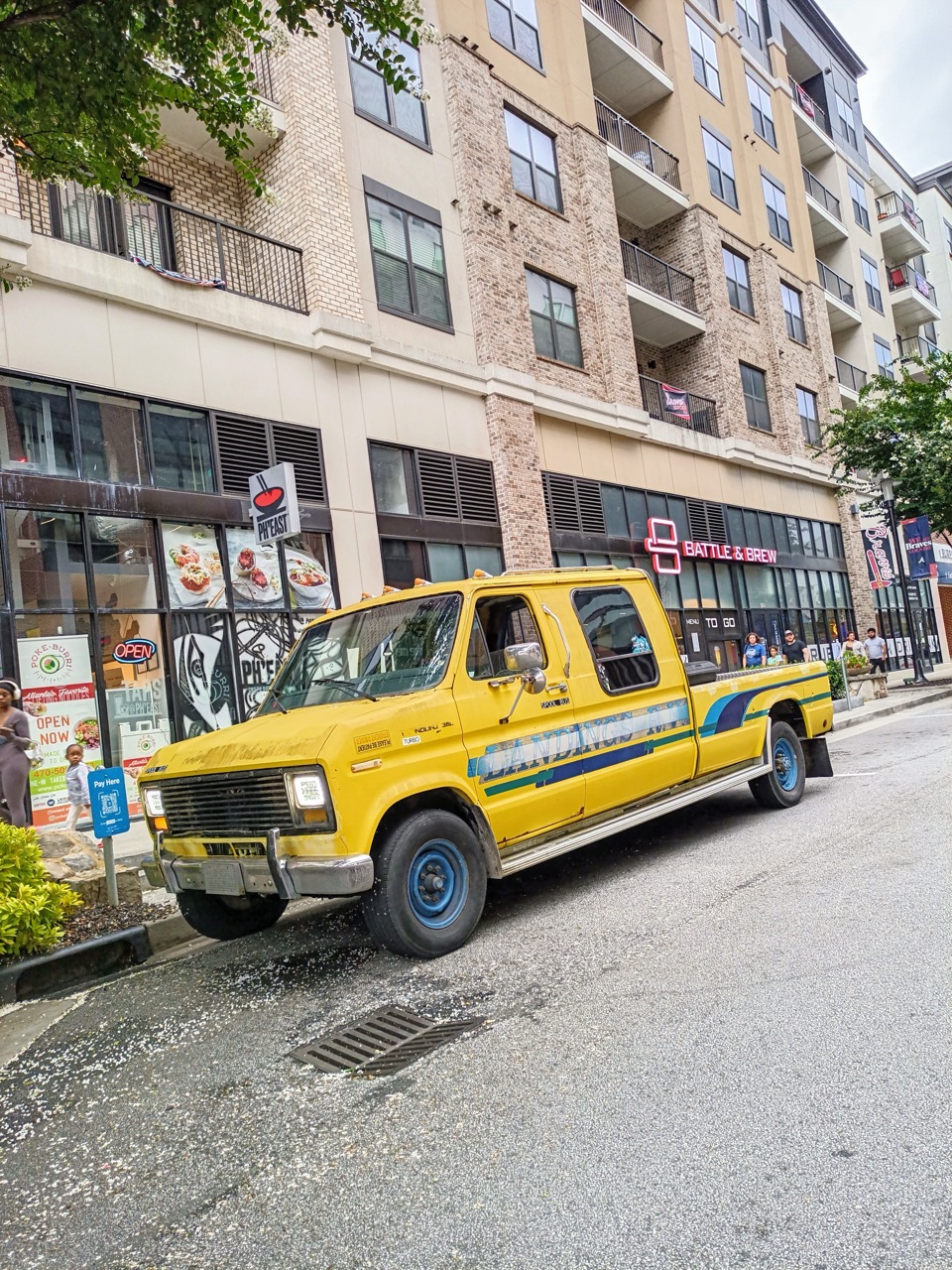
I’m proud to say Spool Bus can stop once more, and doesn’t try to MIG weld using brake lines either! Now it runs and drives well with confidence for future project-fetching missions.
It might still have a ton of little things wrong like a non-functional oil pressure gauge, and a fuel gauge that only reads under ¼ tank… which is just so very helpful (“BTW you’re about to air-lock the fuel system and stall at the next light”), but I think by the end of the summer it was at least in the upper 20th percentile of all trucks found in the South. I mean, it runs, drives, turns, stops, has lights, has wipers, has an HVAC blower (even if not any air conditioning left to back it up), isn’t profusely leaking one or more fluids, and you can even listen to crazy AM radio hosts. What else do you need, really?!
All Images: Charles Guan unless otherwise specified


I’m pretty sure I used to see the parking brake referred to as the emergency brake. As it was in this particular case. Definitely a strong case for a mechanical backup, although “my brake lines caught fire” is hopefully a very rare failure mode.
Speaking of failure modes – if the trailer brake was plumbed into the rear brake lines, shouldn’t you still have fronts? That’s the purpose of a dual circuit brake system.
I think, for the average person, electric park brakes are superior. For enthusiasts like me? I’ll take a mechanical one.
Yet another reason modern electric parking brakes suck.
I currently have a Subaru outback in my garage that I’m doing a bunch of stuff on, for a friend of a friend. One repair was replacing the pigtail for the RR electric ebrake. After soldering the wires together, I tested it by pushing down the ebrake button. About 5 minutes later I Googled how get it to release.
If this van’s alight, it won’t be alright?
If this van’s ablaze, it won’t go a ways?
There’s a good one in here, I just know it
I’m another fan of mechanical systems. Not everything needs to be computer.
I know a guy (definitely not me) that got an F-150 to the garage with downshifting and the parking brake when the regular brakes quit working. A panic stop probably wouldn’t have been possible, but it was surprisingly ok for regular careful driving.